Polyhydroxybutyrate (PHB): Critical Perspectives on Material Properties, Production Advances, and Challenges Toward Sustainable Commercialisation

 ,
,
Abstract
1. Introduction
2. Biobased and Biodegradable Polymers: Conceptual Framework and Implications for PHAs
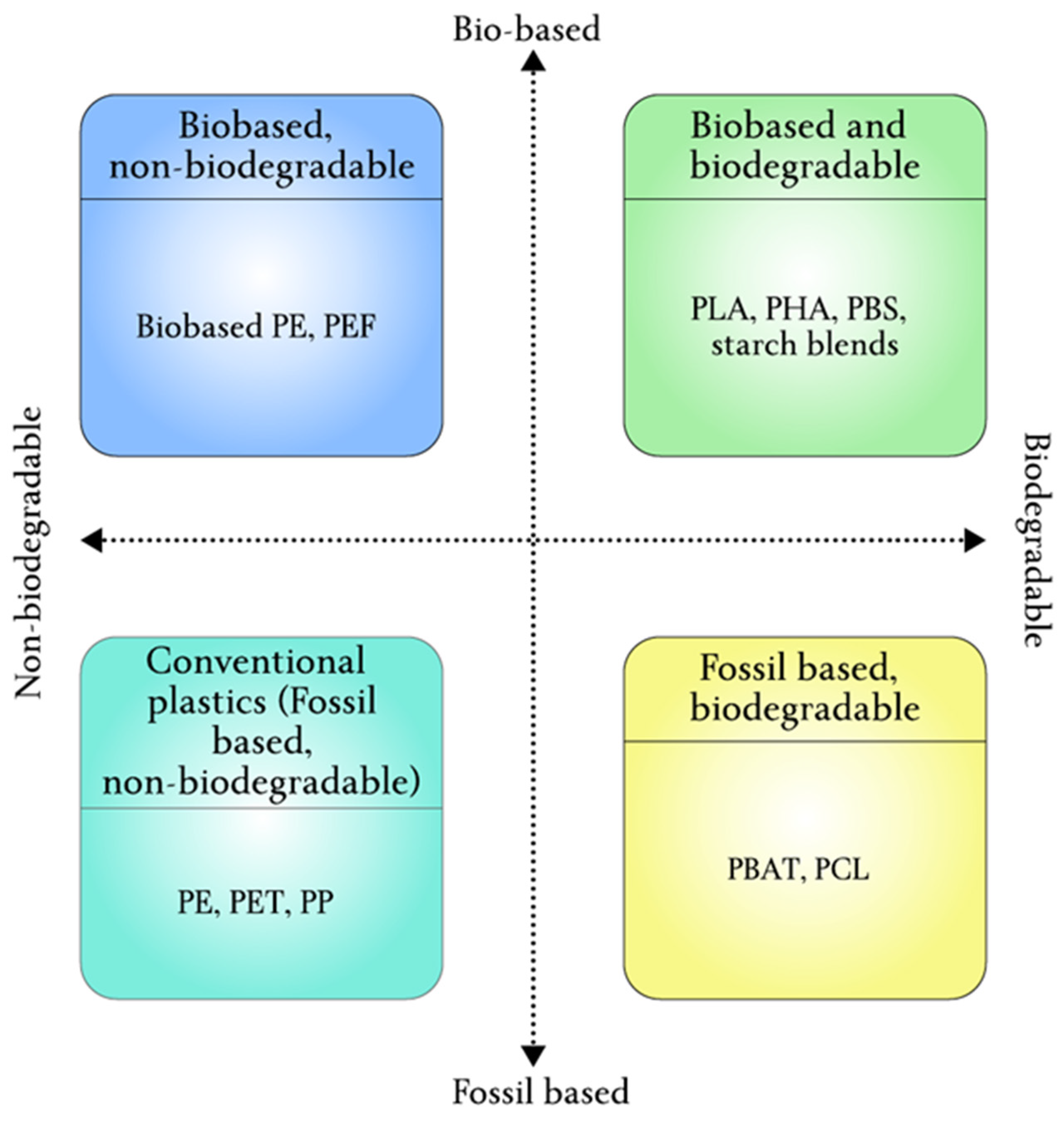
- Biobased but non-biodegradable: These include polyethylene (Bio-PE), polypropylene (Bio-PP), and polyethylene furanoate (Bio-PEF), which possess chemical structures identical to their petroleum-derived counterparts.
- Biobased and biodegradable: These include polylactic acid (PLA), polybutylene succinate (Bio-PBS), and PHB.
- Fossil-based but non-biodegradable: These include polyethylene (PE), polypropylene (PP), and polystyrene (PS).
- Fossil-based and biodegradable: These include polybutylene adipate terephthalate (PBAT) and polycaprolactone (PCL), which are conventional biodegradable polymers.
2.1. Polymer Biodegradation Process
2.2. Polyhydroxyalkanoates (PHAs)
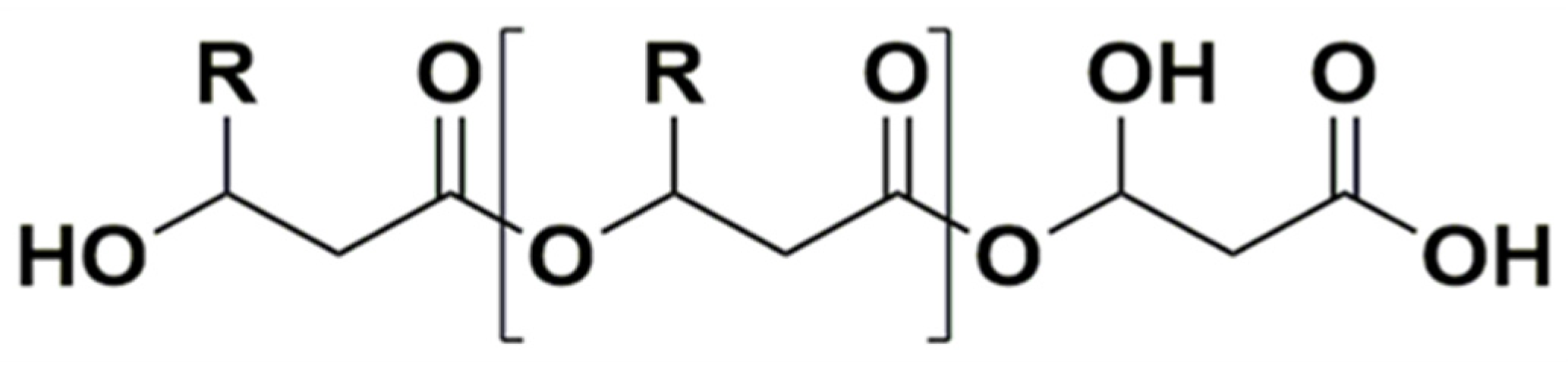
- Short-chain-length PHAs (scl-PHAs): containing 3–5 carbon atoms per monomer unit;
- Medium-chain-length PHAs (mcl-PHAs): containing 6–14 carbon atoms;
- Long-chain-length PHAs (lcl-PHAs): containing more than 14 carbon atoms.
3. Polyhydroxybutyrate (PHB)
3.1. Historical Development of PHB: From Discovery to Commercial Constraints
- Expensive carbon substrates;
- Low volumetric productivity;
- Energy-intensive downstream recovery processes.
3.2. Structure-Property Relationships of PHB and Implications for Processing
3.2.1. Crystal Structure of PHB
3.2.2. Physical Properties of PHB
3.3. Production of PHB: Bioprocesses, Feedstocks, and Cost Constraints
3.3.1. Microbial Biosynthesis of PHB
3.3.2. Upstream Processing Constraints: Feedstocks, Fermentation Strategies and Cost Drivers
3.3.3. Feedstock and Substrate Selection
- Agro-industrial By-products: Molasses, cheese whey, and starch hydrolysates offer excellent opportunities for biorefinery integration [11].
- Crude Glycerol: A major byproduct of biodiesel production [12].
- Lignocellulosic Biomass: Highly abundant and renewable, making it a viable long-term option for agricultural economies [10].
- Pretreatment Inhibitors: Lignocellulosic biomass requires energy-intensive pretreatment and hydrolysis to release fermentable sugars. These processes frequently generate microbial inhibitors, such as furfurals, weak organic acids and phenolics, which impair cell growth and PHB polymer synthesis [3,111]. Consequently, detoxification strategies such as overliming, activated carbon adsorption, ion-exchange resins, membrane separation, and biological detoxification are frequently employed to improve hydrolysate fermentability [112]. However, these additional processing steps increase both energy demand and operating costs, reinforcing pretreatment as one of the principal technoeconomic bottlenecks in lignocellulosic PHB production. Improving pretreatment efficiency, reducing chemical consumption, and integrating heat recovery therefore remain key priorities for enhancing the overall technoeconomic feasibility of lignocellulosic PHB production. Despite these challenges, continued advances in enzymatic hydrolysis, consolidated bioprocessing, and robust microbial strains capable of co-fermenting mixed sugars are expected to improve the commercial viability of second-generation feedstocks.
- Impurity and Compositional Volatility: Industrial by-products like crude glycerol and molasses suffer from variable composition and impurity profiles. For instance, residual methanol and salts in crude biodiesel glycerol inhibit microbial metabolism unless mitigated by upstream purification or strain adaptation [31].
- Process Reproducibility: Wastewater-derived carbon streams present extreme composition fluctuations and often necessitate mixed microbial cultures (MMCs), which can compromise process reproducibility and final polymer uniformity [109].
3.3.4. Downstream Processing Constraints and Commercialisation Implications
3.3.5. Technoeconomic Feasibility of PHB Production
3.4. Modification Strategies for Overcoming PHB Commercialisation Constraints
3.4.1. Copolymerisation Strategies: PHBV as the Benchmark PHB Copolymer
3.4.2. Polymer Blending Approaches
3.4.3. Plasticisers and Additives
3.4.4. Reinforcement Fillers and Nanocomposite Approach
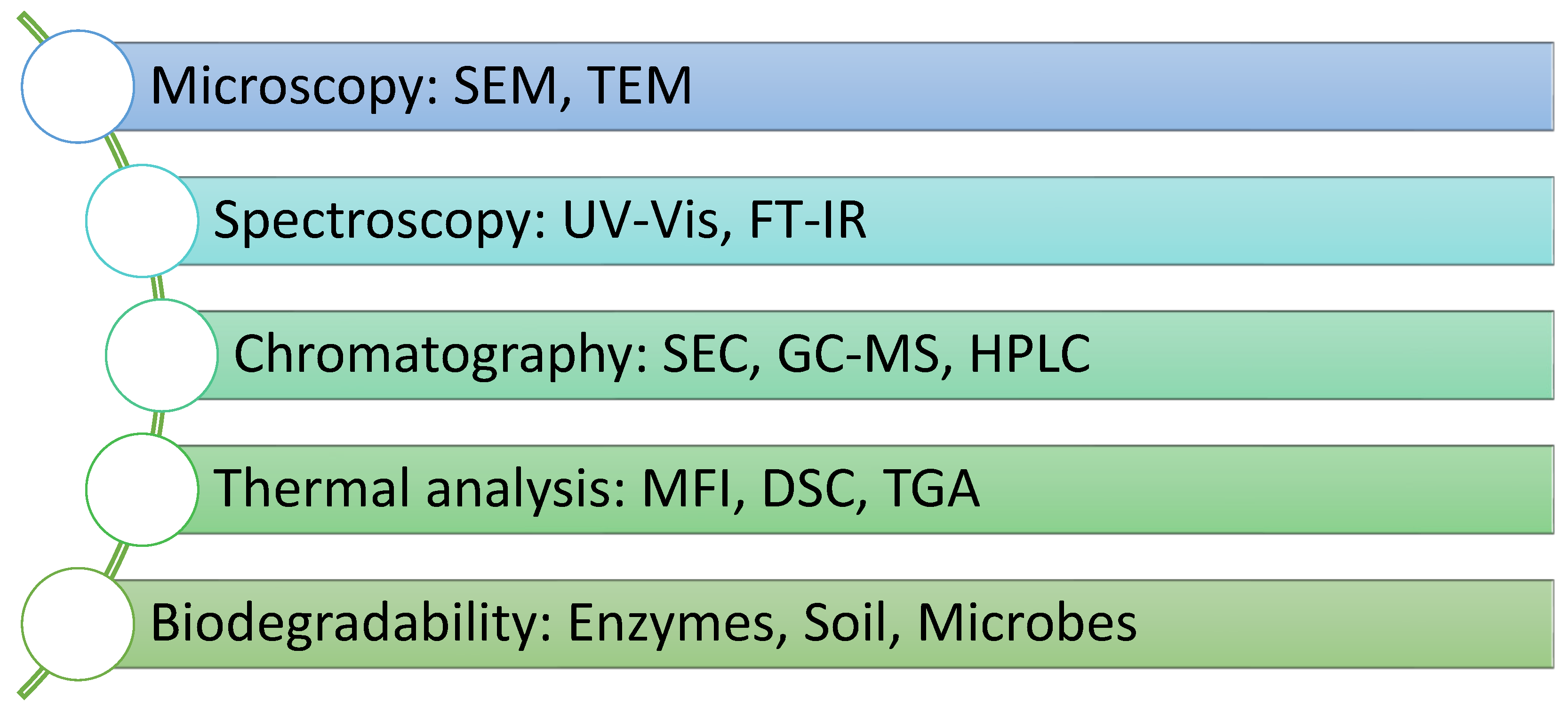
3.5. Characterisation of Microbially Derived PHB
3.6. Degradation Behaviour and Environmental Performance
3.6.1. Factors Influencing PHB Degradation
3.6.2. Environmental Advantage and Commercial Reality
3.7. Industrial Applications and Commercial Outlook
3.7.1. Packaging and Single Use
3.7.2. High-Value Biomedical Applications
3.7.3. PHB-Based Targeted Drug Delivery Systems
- Macrophage Targeting: PHB nanoparticles functionalized with mannosylated human α1-acid glycoprotein successfully target and enter macrophages.
- Tumour Targeting: PHB nanoparticles coated with human epidermal growth factor (hEGF) specifically bind to overexpressed receptors on hepatocellular carcinoma cells (BEL7402).
3.7.4. Emerging and Niche Applications
- (a)
- Controlled-Release Matrices and Agricultural Carriers
- ○
- Biomedicine: PHB matrices allow the targeted, sustained release of therapeutic drugs directly at pathological sites, minimising systemic side effects [176].
- ○
- Agriculture: Microbe-derived PHB matrices are used to encapsulate agrochemicals, pheromones, and fertilisers. These carriers release active ingredients into the soil over extended periods, drastically reducing environmental runoff and preventing the typical chemical wash-off caused by heavy rains [180].
- (b)
- Speciality Coatings
- (c)
- Biofuel Precursors
3.7.5. Commercial Outlook for PHB
4. Conclusions and Future Perspectives
4.1. Concluding Remarks
4.2. Future Perspectives
Author Contributions
Funding
Data Availability Statement
Conflicts of Interest
References
- Thomas, J.; Patil, R.S. Sustainability of Bioplastics: A Critique. In Circular Plastics Economy; Elsevier: Amsterdam, The Netherlands, 2026; pp. 281–307. [Google Scholar] [CrossRef]
- Samrot, A.V.; Samanvitha, S.K.; Shobana, N.; Renitta, E.R.; Senthilkumar, P.; Kumar, S.S.; Abirami, S.; Dhiva, S.; Bavanilatha, M.; Prakash, P.; et al. The Synthesis, Characterization and Applications of Polyhydroxyalkanoates (PHAs) and PHA-Based Nanoparticles. Polymers 2021, 13, 3302. [Google Scholar] [CrossRef] [PubMed]
- Li, D.; Yang, Y.; Liu, R.; Wu, Y.; Guo, F. Review of Biopolymer Polyhydroxybutyrate (PHB) and Blends: Modification of Thermal and Mechanical Properties via Additive Manufacturing Processing. Polymers 2025, 17, 3083. [Google Scholar] [CrossRef] [PubMed]
- Haddadi, M.H.; Asadolahi, R.; Negahdari, B. The Bioextraction of Bioplastics with Focus on Polyhydroxybutyrate: A Review. Int. J. Environ. Sci. Technol. 2019, 16, 3935–3948. [Google Scholar] [CrossRef]
- Gassner, F.; Owen, A.J. Physical Properties of Poly(β-Hydroxybutyrate)-Poly(ε-Caprolactone) Blends. Polymer 1994, 35, 2233–2236. [Google Scholar] [CrossRef]
- Zhai, X.; Han, J.; Chang, L.; Zhao, F.; Zhang, R.; Wang, W.; Hou, H. Effects of Starch Filling on Physicochemical Properties, Functional Activities, and Release Characteristics of PBAT-Based Biodegradable Active Films Loaded with Tea Polyphenols. Int. J. Biol. Macromol. 2024, 277, 134505. [Google Scholar] [CrossRef] [PubMed]
- Alvarez Chavez, B.; Raghavan, V.; Tartakovsky, B. A Comparative Analysis of Biopolymer Production by Microbial and Bioelectrochemical Technologies. RSC Adv. 2022, 12, 16105–16118. [Google Scholar] [CrossRef] [PubMed]
- Suriyamongkol, P.; Weselake, R.; Narine, S.; Moloney, M.; Shah, S. Biotechnological Approaches for the Production of Polyhydroxyalkanoates in Microorganisms and Plants—A Review. Biotechnol. Adv. 2007, 25, 148–175. [Google Scholar] [CrossRef] [PubMed]
- Lyshtva, P.; Kuusik, A.; Voronova, V. Degradation and Disintegration Behavior of PHBV- and PLA-Based Films Under Composting Conditions. Sustainability 2025, 17, 8657. [Google Scholar] [CrossRef]
- Senila, L.; Gál, E.; Kovacs, E.; Cadar, O.; Dan, M.; Senila, M.; Roman, C. Poly(3-Hydroxybutyrate) Production from Lignocellulosic Wastes Using Bacillus megaterium ATCC 14581. Polymer 2023, 15, 4488. [Google Scholar] [CrossRef] [PubMed]
- Kusuma, H.S.; Sabita, A.; Putri, N.A.; Azliza, N.; Illiyanasafa, N.; Darmokoesoemo, H.; Amenaghawon, A.N.; Kurniawan, T.A. Waste to Wealth: Polyhydroxyalkanoates (PHA) Production from Food Waste for a Sustainable Packaging Paradigm. Food Chem. Mol. Sci. 2024, 9, 100225. [Google Scholar] [CrossRef] [PubMed]
- Cavalheiro, J.M.B.T.; de Almeida, M.C.M.D.; Grandfils, C.; da Fonseca, M.M.R. Poly(3-Hydroxybutyrate) Production by Cupriavidus necator Using Waste Glycerol. Process Biochem. 2009, 44, 509–515. [Google Scholar] [CrossRef]
- Moreira, J.B.; Kuntzler, S.G.; Vaz, B.d.S.; da Silva, C.K.; Costa, J.A.V.; de Morais, M.G. Polyhydroxybutyrate (PHB)-Based Blends and Composites. In Biodegradable Polymers, Blends and Composites; Elsevier: Amsterdam, The Netherlands, 2022; pp. 389–413. [Google Scholar] [CrossRef]
- Muniyasamy, S.; Anstey, A.; Reddy, M.M.; Misra, M.; Mohanty, A. Biodegradability and Compostability of Lignocellulosic Based Composite Materials. J. Renew. Mater. 2013, 1, 253–272. [Google Scholar] [CrossRef]
- Langeveld, J.W.A.; Dixon, J.; Jaworski, J.F. Development Perspectives of the Biobased Economy: A Review. Crop Sci. 2010, 50, S-142–S-151. [Google Scholar] [CrossRef]
- European Bioplastics What Are Bioplastics? Material Coordinate System of Bioplastics. Available online: https://docs.european-bioplastics.org/publications/fs/EuBP_FS_What_are_bioplastics.pdf (accessed on 25 May 2026).
- Ramchuran, S.O.; O’Brien, F.; Dube, N.; Ramdas, V. An Overview of Green Processes and Technologies, Biobased Chemicals and Products for Industrial Applications. Curr. Opin. Green Sustain. Chem. 2023, 41, 100832. [Google Scholar] [CrossRef]
- Sudesh, K.; Iwata, T. Sustainability of Biobased and Biodegradable Plastics. Clean 2008, 36, 433–442. [Google Scholar] [CrossRef]
- Thakur, S.; Chaudhary, J.; Sharma, B.; Verma, A.; Tamulevicius, S.; Thakur, V.K. Sustainability of Bioplastics: Opportunities and Challenges. Curr. Opin. Green Sustain. Chem. 2018, 13, 68–75. [Google Scholar] [CrossRef]
- Anderson, A.J.; Dawes, E.A. Occurrence, Metabolism, Metabolic Role, and Industrial Uses of Bacterial Polyhydroxyalkanoates. Microbiol. Rev. 1990, 54, 450–472. [Google Scholar] [CrossRef] [PubMed]
- Kourmentza, C.; Plácido, J.; Venetsaneas, N.; Burniol-Figols, A.; Varrone, C.; Gavala, H.N.; Reis, M.A.M. Recent Advances and Challenges towards Sustainable Polyhydroxyalkanoate (PHA) Production. Bioengineering 2017, 4, 55. [Google Scholar] [CrossRef] [PubMed]
- Chanprateep, S.; Buasri, K.; Muangwong, A.; Utiswannakul, P. Biosynthesis and Biocompatibility of Biodegradable Poly(3-Hydroxybutyrate-Co-4-Hydroxybutyrate). Polym. Degrad. Stab. 2010, 95, 2003–2012. [Google Scholar] [CrossRef]
- Khanna, S.; Srivastava, A.K. Recent Advances in Microbial Polyhydroxyalkanoates. Process Biochem. 2005, 40, 607–619. [Google Scholar] [CrossRef]
- Volova, T.G.; Gladyshev, M.I.; Trusova, M.Y.; Zhila, N.O.; Kartushinskaya, M.V. Degradation of Bioplastics in Natural Environment. Dokl. Biol. Sci. 2004, 397, 330–332. [Google Scholar] [CrossRef] [PubMed]
- Jendrossek, D.; Knoke, I.; Habibian, R.B.; Steinbüchel, A.; Schlegel, H.G. Degradation of Poly(3-Hydroxybutyrate), PHB, by Bacteria and Purification of a Novel PHB Depolymerase from Comamonas sp. J. Environ. Polym. Degrad. 1993, 1, 53–63. [Google Scholar] [CrossRef]
- Allen, A.D.; Anderson, W.A.; Ayorinde, F.O.; Eribo, B.E. Biosynthesis and Characterization of Copolymer Poly(3HB-Co-3HV) from Saponified Jatropha curcas Oil by Pseudomonas oleovorans. J. Ind. Microbiol. Biotechnol. 2010, 37, 849–856. [Google Scholar] [CrossRef] [PubMed]
- Mitomo, H.; Barham, P.J.; Keller, A. Crystallization and Morphology of Poly(β-Hydroxybutyrate) and Its Copolymer. Polym. J. 1987, 19, 1241–1253. [Google Scholar] [CrossRef]
- Langford, A.; Chan, C.M.; Pratt, S.; Garvey, C.J.; Laycock, B. The Morphology of Crystallisation of PHBV/PHBV Copolymer Blends. Eur. Polym. J. 2019, 112, 104–119. [Google Scholar] [CrossRef]
- Rodriguez-Perez, S.; Serrano, A.; Pantión, A.A.; Alonso-Fariñas, B. Challenges of Scaling-up PHA Production from Waste Streams. A Review. J. Environ. Manag. 2018, 205, 215–230. [Google Scholar] [CrossRef] [PubMed]
- Elustondo, P.; Zakharian, E.; Pavlov, E. Identification of the Polyhydroxybutyrate Granules in Mammalian Cultured Cells. Chem. Biodivers. 2012, 9, 2597–2604. [Google Scholar] [CrossRef] [PubMed]
- McAdam, B.; Brennan Fournet, M.; McDonald, P.; Mojicevic, M. Production of Polyhydroxybutyrate (PHB) and Factors Impacting Its Chemical and Mechanical Characteristics. Polymers 2020, 12, 2908. [Google Scholar] [CrossRef] [PubMed]
- Suljovrujic, E.; Milicevic, D.; Djordjevic, K.; Rogic Miladinovic, Z.; Stamboliev, G.; Galovic, S. Structure–Property Relationship in Isotactic Polypropylene Under Contrasting Processing Conditions. Polymers 2025, 17, 1889. [Google Scholar] [CrossRef] [PubMed]
- El-Hadi, A.; Schnabel, R.; Straube, E.; Müller, G.; Henning, S. Correlation between Degree of Crystallinity, Morphology, Glass Temperature, Mechanical Properties and Biodegradation of Poly (3-Hydroxyalkanoate) PHAs and Their Blends. Polym. Test. 2002, 21, 665–674. [Google Scholar] [CrossRef]
- Williamson, D.H.; Wilkinson, J.F. The Isolation and Estimation of the Poly-β-Hydroxy-Butyrate Inclusions of Bacillus Species. J. Gen. Microbiol. 1958, 19, 198–209. [Google Scholar] [CrossRef] [PubMed]
- Yokouchi, M.; Chatani, Y.; Tadokoro, H.; Teranishi, K.; Tani, H. Structural Studies of Polyesters: 5. Molecular and Crystal Structures of Optically Active and Racemic Poly (β-Hydroxybutyrate). Polymer 1973, 14, 267–272. [Google Scholar] [CrossRef]
- Lin, J.; Jaiswal, A.K.; Jaiswal, S. A Critical Review of Consumer Perception and Environmental Impacts of Bioplastics in Sustainable Food Packaging. Sustainability 2025, 17, 1358. [Google Scholar] [CrossRef]
- Wang, B.; Sharma-Shivappa, R.R.; Olson, J.W.; Khan, S.A. Production of Polyhydroxybutyrate (PHB) by Alcaligenes latus Using Sugarbeet Juice. Ind. Crops Prod. 2013, 43, 802–811. [Google Scholar] [CrossRef]
- Palmeiro-Sánchez, T.; O’Flaherty, V.; Lens, P.N.L. Polyhydroxyalkanoate Bio-Production and Its Rise as Biomaterial of the Future. J. Biotechnol. 2022, 348, 10–25. [Google Scholar] [CrossRef] [PubMed]
- Barham, P.J.; Keller, A.; Otun, E.L.; Holmes, P.A. Crystallization and Morphology of a Bacterial Thermoplastic: Poly-3-Hydroxybutyrate. J. Mater. Sci. 1984, 19, 2781–2794. [Google Scholar] [CrossRef]
- Marchessault, R.H.; Coulombe, S.; Morikawa, H.; Okamura, K.; Revol, J.F. Solid State Properties of Poly-β-Hydroxybutyrate and of Its Oligomers. Can. J. Chem. 1981, 59, 38–44. [Google Scholar] [CrossRef]
- Lundgren, D.G.; Alper, R.; Schnaitman, C.; Marchessault, R.H. Characterization of Poly-β-Hydroxybutyrate Extracted from Different Bacteria. J. Bacteriol. 1965, 89, 245–251. [Google Scholar] [CrossRef] [PubMed]
- Iwata, T.; Tsunoda, K.; Aoyagi, Y.; Kusaka, S.; Yonezawa, N.; Doi, Y. Mechanical Properties of Uniaxially Cold-Drawn Films of Poly([R]-3-Hydroxybutyrate). Polym. Degrad. Stab. 2003, 79, 217–224. [Google Scholar] [CrossRef]
- Sim, S.J.; Snell, K.D.; Hogan, S.A.; Stubbe, J.; Rha, C.; Sinskey, A.J. PHA Synthase Activity Controls the Molecular Weight and Polydispersity of Polyhydroxybutyrate in Vivo. Nat. Biotechnol. 1997, 15, 63–67. [Google Scholar] [CrossRef] [PubMed]
- Karpova, S.; Varyan, I.; Olkhov, A.; Tyubaeva, P.; Popov, A. A Feature of the Crystalline and Amorphous Structure of Ultra Thin Fibers Based on Poly(3-Hydroxybutyrate) (PHB) Containing Minor Concentrations of Hemin and a Complex of Tetraphenylporphyrin with Iron. Polymers 2022, 14, 4055. [Google Scholar] [CrossRef] [PubMed]
- De Sousa Junior, R.R.; Cezario, F.E.M.; Antonino, L.D.; dos Santos, D.J.; Lackner, M. Characterization of Poly(3-Hydroxybutyrate) (P3HB) from Alternative, Scalable (Waste) Feedstocks. Bioengineering 2023, 10, 1382. [Google Scholar] [CrossRef] [PubMed]
- Wang, H.; Cui, J.; Li, S.; Tao, A.; Du, S.; Kan, Z. Fabrication of Functional and Biodegradable Scaffolds Using Nucleated Poly(4-Hydroxybutyrate) via 3D Printing for Bone Tissue Engineering. Polym. Test. 2023, 118, 107881. [Google Scholar] [CrossRef]
- Moore, T.; Adhikari, R.; Gunatillake, P. Chemosynthesis of Bioresorbable Poly(γ-Butyrolactone) by Ring-Opening Polymerisation: A Review. Biomaterials 2005, 26, 3771–3782. [Google Scholar] [CrossRef] [PubMed]
- Tang, H.J.; Neoh, S.Z.; Sudesh, K. A Review on Poly(3-Hydroxybutyrate-Co-3-Hydroxyhexanoate) [P(3HB-Co-3HHx)] and Genetic Modifications That Affect Its Production. Front. Bioeng. Biotechnol. 2022, 10, 1057067. [Google Scholar] [CrossRef] [PubMed]
- Conti, D.S.; Yoshida, M.I.; Pezzin, S.H.; Coelho, L.A.F. Phase Behavior of Poly(3-Hydroxybutyrate)/Poly(3-Hydroxybutyrate-Co-3-Hydroxyvalerate) Blends. Fluid Phase Equilib. 2007, 261, 79–84. [Google Scholar] [CrossRef]
- Alfano, S.; Doineau, E.; Perdrier, C.; Preziosi-Belloy, L.; Gontard, N.; Martinelli, A.; Grousseau, E.; Angellier-Coussy, H. Influence of the 3-Hydroxyvalerate Content on the Processability, Nucleating and Blending Ability of Poly(3-Hydroxybutyrate-co-3-Hydroxyvalerate)-Based Materials. ACS Omega 2024, 9, 29360–29371. [Google Scholar] [CrossRef] [PubMed]
- Bhati, R.; Mallick, N. Poly(3-Hydroxybutyrate-Co-3-Hydroxyvalerate) Copolymer Production by the Diazotrophic Cyanobacterium Nostoc muscorum Agardh: Process Optimization and Polymer Characterization. Algal Res. 2015, 7, 78–85. [Google Scholar] [CrossRef]
- Shishatskaya, E.I.; Demidenko, A.V.; Sukovatyi, A.G.; Dudaev, A.E.; Mylnikov, A.V.; Kisterskij, K.A.; Volova, T.G. Three-Dimensional Printing of Poly(3-Hydroxybutyrate-Co-3-Hydroxyvalerate) [P(3HB-Co-3HV)] Biodegradable Scaffolds: Properties, In Vitro and In Vivo Evaluation. Int. J. Mol. Sci. 2023, 24, 12969. [Google Scholar] [CrossRef] [PubMed]
- Iqbal, N.M.; Amirul, A.A. Synthesis of P(3HB-co-4HB) Copolymer with Target-specific 4HB Molar Fractions Using Combinations of Carbon Substrates. J. Chem. Technol. Biotechnol. 2014, 89, 407–418. [Google Scholar] [CrossRef]
- Dulac, L.; Gauthier, É.; Mathel, V.; Kedzierski, M.; Halley, P.; Vandi, L.-J.; Bruzaud, S. Processing of Poly(3-Hydroxybutyrate-Co-4-Hydroxybutyrate) (P(3HB-Co-4HB)) Using Acetic Acid: An Eco-Friendly Alternative to Chloroform. J. Polym. Environ. 2026, 34, 25. [Google Scholar] [CrossRef]
- Jo, M.; Jang, Y.; Lee, E.; Shin, S.; Kang, H.-J. The Modification of Poly(3-Hydroxybutyrate-Co-4-Hydroxybutyrate) by Melt Blending. Polymers 2022, 14, 1725. [Google Scholar] [CrossRef] [PubMed]
- Lemos de Morais, A.C.; da Silva Fortes, A.G.; Rodrigues de Abreu, I.; van Noordenne-Bos, C.; Voet, V.S.D.; Folkersma, R.; Loos, K. Blending PHBV with P(3HB-Co-4HB) for Superior Thermal Stability, Mechanical Strength, and Environmental Degradation. Faraday Discuss. 2026, 262, 68–93. [Google Scholar] [CrossRef] [PubMed]
- Volova, T.G.; Uspenskaya, M.V.; Kiselev, E.G.; Sukovatyi, A.G.; Zhila, N.O.; Vasiliev, A.D.; Shishatskaya, E.I. Effect of Monomers of 3-Hydroxyhexanoate on Properties of Copolymers Poly(3-Hydroxybutyrate-Co 3-Hydroxyhexanoate). Polymers 2023, 15, 2890. [Google Scholar] [CrossRef] [PubMed]
- Trakunjae, C.; Sudesh, K.; Neoh, S.Z.; Boondaeng, A.; Apiwatanapiwat, W.; Janchai, P.; Vaithanomsat, P. Biosynthesis of P(3HB-Co-3HHx) Copolymers by a Newly Engineered Strain of Cupriavidus necator PHB−4/PBBR_CnPro-PhaCRp for Skin Tissue Engineering Application. Polymers 2022, 14, 4074. [Google Scholar] [CrossRef] [PubMed]
- Tsuge, T.; Hamada, Y.; Watanabe, Y.; Tomizawa, S.; Yamamoto, T.; Abe, H. Characterization of Biosynthesized P(3HB-Co-3HA)s Swellable in Organic Solvents. Polym. Degrad. Stab. 2010, 95, 1345–1348. [Google Scholar] [CrossRef]
- Matsusaki, H.; Abe, H.; Doi, Y. Biosynthesis and Properties of Poly(3-Hydroxybutyrate-Co-3-Hydroxyalkanoates) by Recombinant Strains of Pseudomonas sp. 61-3. Biomacromolecules 2000, 1, 17–22. [Google Scholar] [CrossRef] [PubMed]
- Shin, N.; Kim, S.H.; Oh, J.; Kim, S.; Lee, Y.; Shin, Y.; Choi, S.; Bhatia, S.K.; Jeon, J.-M.; Yoon, J.-J.; et al. Evaluation of Blended Poly(3-Hydroxybutyrate-Co-3-Hydroxyhexanoate) Properties Containing Various 3HHx Monomers. Polymers 2024, 16, 3077. [Google Scholar] [CrossRef] [PubMed]
- Mubarak, Y.A. Thermal and Mechanical Properties of Biodegradable Isotactic Polypropylene. J. Thermoplast. Compos. Mater. 2022, 35, 2371–2394. [Google Scholar] [CrossRef]
- Hassan Awad, A.; El Gamasy, R.; Abd El Wahab, A.; Hazem Abdellatif, M. Mechanical and Physical Properties of PP and HDPE. Eng. Sci. 2019, 4, 34. [Google Scholar] [CrossRef]
- Amjadi, M.; Fatemi, A. Tensile Behavior of High-Density Polyethylene Including the Effects of Processing Technique, Thickness, Temperature, and Strain Rate. Polymers 2020, 12, 1857. [Google Scholar] [CrossRef] [PubMed]
- De Beukelaer, H.; Hilhorst, M.; Workala, Y.; Maaskant, E.; Post, W. Overview of the Mechanical, Thermal and Barrier Properties of Biobased and/or Biodegradable Thermoplastic Materials. Polym. Test. 2022, 116, 107803. [Google Scholar] [CrossRef]
- Leyva-Porras, C.; Esneider-Alcalá, M.A.; Toxqui-Terán, A.; Márquez-Lucero, A.; Aguilar-Martínez, J.A. Effect of Molding Parameters on Young’s Modulus of an Injection Molded Low-Density Polyethylene (LDPE). Ind. Eng. Chem. Res. 2013, 52, 5666–5671. [Google Scholar] [CrossRef]
- Pai, C.; Jeng, R.; Grossman, S.J.; Huang, J. Effects of Moisture on Thermal and Mechanical Properties of Nylon-6,6. Adv. Polym. Technol. 1989, 9, 157–163. [Google Scholar] [CrossRef]
- Kojima, Y.; Usuki, A.; Kawasumi, M.; Okada, A.; Fukushima, Y.; Kurauchi, T.; Kamigaito, O. Mechanical Properties of Nylon 6-Clay Hybrid. J. Mater. Res. 1993, 8, 1185–1189. [Google Scholar] [CrossRef]
- Amborski, L.E.; Flierl, D.W. Physical Properties of Polyethylene Terephthalate Films. Ind. Eng. Chem. 1953, 45, 2290–2295. [Google Scholar] [CrossRef]
- Singh, A.K.; Bedi, R.; Kaith, B.S. Composite Materials Based on Recycled Polyethylene Terephthalate and Their Properties—A Comprehensive Review. Compos. B Eng. 2021, 219, 108928. [Google Scholar] [CrossRef]
- Boey, J.Y.; Lee, C.K.; Tay, G.S. Factors Affecting Mechanical Properties of Reinforced Bioplastics: A Review. Polymers 2022, 14, 3737. [Google Scholar] [CrossRef] [PubMed]
- Choi, J.; Lee, S.Y.; Han, K. Cloning of the Alcaligenes latus Polyhydroxyalkanoate Biosynthesis Genes and Use of These Genes for Enhanced Production of Poly(3-Hydroxybutyrate) in Escherichia coli. Appl. Environ. Microbiol. 1998, 64, 4897–4903. [Google Scholar] [CrossRef] [PubMed]
- Kapritchkoff, F.M.; Viotti, A.P.; Alli, R.C.P.; Zuccolo, M.; Pradella, J.G.C.; Maiorano, A.E.; Miranda, E.A.; Bonomi, A. Enzymatic Recovery and Purification of Polyhydroxybutyrate Produced by Ralstonia eutropha. J. Biotechnol. 2006, 122, 453–462. [Google Scholar] [CrossRef] [PubMed]
- Olejnik, O.; Masek, A.; Zawadziłło, J. Processability and Mechanical Properties of Thermoplastic Polylactide/Polyhydroxybutyrate (PLA/PHB) Bioblends. Materials 2021, 14, 898. [Google Scholar] [CrossRef] [PubMed]
- Zainuddin, M.Z.; Abu Bakar, A.A.; Adam, A.N.; Abdullah, S.M.; Tamchek, N.; Alauddin, M.S.; Mahat, M.M.; Wiwatcharagoses, N.; Alforidi, A.; Ghazali, M.I.M. Mechanical and Structural Properties of Polyhydroxybutyrate as Additive in Blend Material in Additive Manufacturing for Medical Applications. Polymers 2023, 15, 1849. [Google Scholar] [CrossRef] [PubMed]
- Wang, S.; Daelemans, L.; Fiorio, R.; Gou, M.; D’hooge, D.R.; De Clerck, K.; Cardon, L. Improving Mechanical Properties for Extrusion-Based Additive Manufacturing of Poly(Lactic Acid) by Annealing and Blending with Poly(3-Hydroxybutyrate). Polymers 2019, 11, 1529. [Google Scholar] [CrossRef] [PubMed]
- Bhuwal, A.K.; Singh, G.; Aggarwal, N.K.; Goyal, V.; Yadav, A. Poly-β-Hydroxybutyrate Production and Management of Cardboard Industry Effluent by New Bacillus sp. NA10. Bioresour. Bioprocess. 2014, 1, 9. [Google Scholar] [CrossRef]
- Adnan, M.; Siddiqui, A.J.; Ashraf, S.A.; Snoussi, M.; Badraoui, R.; Alreshidi, M.; Elasbali, A.M.; Al-Soud, W.A.; Alharethi, S.H.; Sachidanandan, M.; et al. Polyhydroxybutyrate (PHB)-Based Biodegradable Polymer from Agromyces indicus: Enhanced Production, Characterization, and Optimization. Polymers 2022, 14, 3982. [Google Scholar] [CrossRef] [PubMed]
- Al Shehhi, A.; Al-Habsi, N.; Rahman, M.S.; Sivakumar, N. Enhanced Intracellular Polyhydroxybutyrate Accumulation by Cupriavidus necator Using Sunflower Oil-Based Waste Cooking Oil. Carbon Resour. Convers. 2026, 100433. [Google Scholar] [CrossRef]
- Thammasittirong, A.; Saechow, S.; Thammisittirong, S.N.-R. Efficient Polyhydroxybutyrate Production from Bacillus thuringiensis Using Sugarcane Juice Substrate. Turk. J. Biol. 2017, 41, 992–1002. [Google Scholar] [CrossRef] [PubMed]
- Rivera-Terceros, P.; Tito-Claros, E.; Torrico, S.; Carballo, S.; Van-Thuoc, D.; Quillaguamán, J. Production of Poly(3-Hydroxybutyrate) by Halomonas boliviensis in an Air-Lift Reactor. J. Biol. Res.-Thessalon. 2015, 22, 8. [Google Scholar] [CrossRef] [PubMed]
- Miranda, D.A.; Marín, K.; Sundman, O.; Hedenström, M.; Quillaguaman, J.; Gorzsás, A.; Broström, M.; Carlborg, M.; Lundqvist, J.; Romero-Soto, L.; et al. Production and Characterization of Poly(3-Hydroxybutyrate) from Halomonas boliviensis LC1 Cultivated in Hydrolysates of Quinoa Stalks. Fermentation 2023, 9, 556. [Google Scholar] [CrossRef]
- Miranda De Sousa Dias, M.; Koller, M.; Puppi, D.; Morelli, A.; Chiellini, F.; Braunegg, G. Fed-Batch Synthesis of Poly(3-Hydroxybutyrate) and Poly(3-Hydroxybutyrate-Co-4-Hydroxybutyrate) from Sucrose and 4-Hydroxybutyrate Precursors by Burkholderia sacchari Strain DSM 17165. Bioengineering 2017, 4, 36. [Google Scholar] [CrossRef] [PubMed]
- Sriyapai, T.; Chuarung, T.; Kimbara, K.; Samosorn, S.; Sriyapai, P. Production and Optimization of Polyhydroxyalkanoates (PHAs) from Paraburkholderia sp. PFN 29 under Submerged Fermentation. Electron. J. Biotechnol. 2022, 56, 1–11. [Google Scholar] [CrossRef]
- Yezza, A.; Fournier, D.; Halasz, A.; Hawari, J. Production of Polyhydroxyalkanoates from Methanol by a New Methylotrophic Bacterium Methylobacterium sp. GW2. Appl. Microbiol. Biotechnol. 2006, 73, 211–218. [Google Scholar] [CrossRef] [PubMed]
- Aslam, T.; Saeed, S.; Tayyab, M.; Mujahid, H.; Awan, A.R.; Firyal, S.; Hashmi, A. Bioconversion of Agricultural Wastes to Polyhydroxybutyrate by Azotobacter vinelandii. Pak. J. Zool. 2020, 52, 2227–2231. [Google Scholar] [CrossRef]
- Kritika, S.; Pragya, R.; Nandini, P.; Priti, S. Optimization of PHB (Poly-Hydroxybutyrate) Synthesis by Serratia Sp. Isolated from Soil. Int. J. Curr. Microbiol. Appl. Sci. 2016, 5, 665–673. [Google Scholar] [CrossRef]
- Penloglou, G.; Chatzidoukas, C.; Kiparissides, C. Microbial Production of Polyhydroxybutyrate with Tailor-Made Properties: An Integrated Modelling Approach and Experimental Validation. Biotechnol. Adv. 2012, 30, 329–337. [Google Scholar] [CrossRef] [PubMed]
- García-Torreiro, M.; Lu-Chau, T.A.; Lema, J.M. Effect of Nitrogen and/or Oxygen Concentration on Poly(3-Hydroxybutyrate) Accumulation by Halomonas boliviensis. Bioprocess Biosyst. Eng. 2016, 39, 1365–1374. [Google Scholar] [CrossRef] [PubMed]
- Lee, J.; Park, H.J.; Moon, M.; Lee, J.-S.; Min, K. Recent Progress and Challenges in Microbial Polyhydroxybutyrate (PHB) Production from CO2 as a Sustainable Feedstock: A State-of-the-Art Review. Bioresour. Technol. 2021, 339, 125616. [Google Scholar] [CrossRef] [PubMed]
- Aramvash, A.; Moazzeni Zavareh, F.; Gholami Banadkuki, N. Comparison of Different Solvents for Extraction of Polyhydroxybutyrate from Cupriavidus necator. Eng. Life Sci. 2018, 18, 20–28. [Google Scholar] [CrossRef] [PubMed]
- Rizki, W.O.S.; Ratnaningsih, E.; Hertadi, R. Enhanced Production of Polyhydroxybutyrate in Recombinant Escherichia coli for Sustainable Material. Next Mater. 2025, 9, 101050. [Google Scholar] [CrossRef]
- Vanessa, C.C.; Cleber, K.d.S.; Ana, L.T.; Jorge, A.V.C.; Michele, G.d.M. Polyhydroxybutyrate Production by Spirulina sp. LEB 18 Grown under Different Nutrient Concentrations. Afr. J. Microbiol. Res. 2015, 9, 1586–1594. [Google Scholar] [CrossRef]
- Kamravamanesh, D.; Lackner, M.; Herwig, C. Bioprocess Engineering Aspects of Sustainable Polyhydroxyalkanoate Production in Cyanobacteria. Bioengineering 2018, 5, 111. [Google Scholar] [CrossRef] [PubMed]
- Oliveira-Filho, E.R.; Silva, J.G.P.; de Macedo, M.A.; Taciro, M.K.; Gomez, J.G.C.; Silva, L.F. Investigating Nutrient Limitation Role on Improvement of Growth and Poly(3-Hydroxybutyrate) Accumulation by Burkholderia sacchari LMG 19450 from Xylose as the Sole Carbon Source. Front. Bioeng. Biotechnol. 2020, 7, 416. [Google Scholar] [CrossRef] [PubMed]
- Wang, Y.; Li, Y.-Q.; Wang, M.-J.; Luo, C.-B. Non-Sterilized Conversion of Whole Lignocellulosic Components into Polyhydroxybutyrate by Halomonas sp. Y3 with a Dual Anti-Microbial Contamination System. Int. J. Biol. Macromol. 2023, 241, 124606. [Google Scholar] [CrossRef] [PubMed]
- Nawab, S.; Keerio, H.A.; Li, X.; Chen, Y.; Wu, C.; Zhang, H.; Han, R.; Wang, H.; Liu, Y. Engineering Escherichia coli for High-Level Poly(3-Hydroxybutyrate) Production: Recent Advances and Future Perspective. Biotechnol. Adv. 2026, 89, 108858. [Google Scholar] [CrossRef] [PubMed]
- Zhang, L.; Jiang, Z.; Tsui, T.-H.; Loh, K.-C.; Dai, Y.; Tong, Y.W. A Review on Enhancing Cupriavidus necator Fermentation for Poly(3-Hydroxybutyrate) (PHB) Production from Low-Cost Carbon Sources. Front. Bioeng. Biotechnol. 2022, 10, 946085. [Google Scholar] [CrossRef] [PubMed]
- Zhou, Y.; Han, L.-R.; He, H.-W.; Sang, B.; Yu, D.-L.; Feng, J.-T.; Zhang, X. Effects of Agitation, Aeration and Temperature on Production of a Novel Glycoprotein GP-1 by Streptomyces Kanasenisi ZX01 and Scale-Up Based on Volumetric Oxygen Transfer Coefficient. Molecules 2018, 23, 125. [Google Scholar] [CrossRef] [PubMed]
- Jia, L.; Zhang, M.; Kumar, D.; Zhao, J. A Review of Polyhydroxybutyrate Biosynthesis by Different Microorganisms. ChemBioChem 2025, 26, e202500562. [Google Scholar] [CrossRef] [PubMed]
- Obruča, S.; Dvořák, P.; Sedláček, P.; Koller, M.; Sedlář, K.; Pernicová, I.; Šafránek, D. Polyhydroxyalkanoates Synthesis by Halophiles and Thermophiles: Towards Sustainable Production of Microbial Bioplastics. Biotechnol. Adv. 2022, 58, 107906. [Google Scholar] [CrossRef] [PubMed]
- Chouhan, A.; Tiwari, A. Production of Polyhydroxyalkanoate (PHA) Biopolymer from Crop Residue Using Bacteria as an Alternative to Plastics: A Review. RSC Adv. 2025, 15, 11845–11862. [Google Scholar] [CrossRef] [PubMed]
- Akkoyunlu, B.; Gabarre, C.; Daly, S.; Casey, E.; Syron, E. Process Modelling for Industrial Scale Polyhydroxybutyrate Production Using Fructose, Formic Acid and CO2: Assessing Carbon Sources and Economic Viability. Bioresour. Technol. 2024, 393, 130139. [Google Scholar] [CrossRef] [PubMed]
- Sirohi, R.; Prakash Pandey, J.; Kumar Gaur, V.; Gnansounou, E.; Sindhu, R. Critical Overview of Biomass Feedstocks as Sustainable Substrates for the Production of Polyhydroxybutyrate (PHB). Bioresour. Technol. 2020, 311, 123536. [Google Scholar] [CrossRef] [PubMed]
- Jiang, G.; Hill, D.; Kowalczuk, M.; Johnston, B.; Adamus, G.; Irorere, V.; Radecka, I. Carbon Sources for Polyhydroxyalkanoates and an Integrated Biorefinery. Int. J. Mol. Sci. 2016, 17, 1157. [Google Scholar] [CrossRef] [PubMed]
- Surendran, A.; Lakshmanan, M.; Chee, J.Y.; Sulaiman, A.M.; Van Thuoc, D.; Sudesh, K. Can Polyhydroxyalkanoates Be Produced Efficiently from Waste Plant and Animal Oils? Front. Bioeng. Biotechnol. 2020, 8, 169. [Google Scholar] [CrossRef] [PubMed]
- Zytner, P.; Kumar, D.; Elsayed, A.; Mohanty, A.; Ramarao, B.V.; Misra, M. A Review on Polyhydroxyalkanoate (PHA) Production through the Use of Lignocellulosic Biomass. RSC Sustain. 2023, 1, 2120–2134. [Google Scholar] [CrossRef]
- Du, C.; Wang, Z.; Zhuo, X.; Geng, R.; Liu, C.; Wang, H.; Chu, D.; Li, S.; Li, R.; Zheng, G.; et al. Biosynthesis of Polyhydroxyalkanoates (PHAs) from Organic Waste-Derived Volatile Fatty Acids (VFAs). Green Chem. 2025, 27, 1939–1968. [Google Scholar] [CrossRef]
- Espinosa Acosta, E.A.; Espinosa Hernández, A.; Cabeza, I.O.; Gracia, J.; Moreno-Sarmiento, N. Feast–Famine Enrichment of Mixed Microbial Cultures Enhances Wastewater Valorization into Bioplastics. Environ. Sci. Pollut. Res. 2026. [Google Scholar] [CrossRef] [PubMed]
- Ray, S.; Jin, J.-O.; Choi, I.; Kim, M. Recent Trends of Biotechnological Production of Polyhydroxyalkanoates from C1 Carbon Sources. Front. Bioeng. Biotechnol. 2023, 10, 907500. [Google Scholar] [CrossRef] [PubMed]
- Ananthakrishnan, K.; Froass, E.; Juneja, A.; Majumder, E.L.-W.; Therasme, O.; Volk, T.; Ramarao, B.V.; Kumar, D. Impact of Pretreatment Severity and Nutrient Parameters on Microbial PHB Production from Shrub Willow Hydrolysate Using Recombinant Escherichia coli. Biotechnol. Sustain. Mater. 2026, 3, 6. [Google Scholar] [CrossRef]
- Jönsson, L.J.; Martín, C. Pretreatment of Lignocellulose: Formation of Inhibitory by-Products and Strategies for Minimizing Their Effects. Bioresour. Technol. 2016, 199, 103–112. [Google Scholar] [CrossRef] [PubMed]
- Liang, X.; Cha, D.K.; Xie, Q. Properties, Production, and Modification of Polyhydroxyalkanoates. Resour. Conserv. Recycl. Adv. 2024, 21, 200206. [Google Scholar] [CrossRef]
- Amabile, C.; Abate, T.; Muñoz, R.; Chianese, S.; Musmarra, D. Production of Poly(3-Hydroxybutyrate) and Poly(3-Hydroxybutyrate-Co-3-Hydroxyvalerate) from Methane and Volatile Fatty Acids: Properties, Metabolic Routes and Current Trend. Sci. Total Environ. 2024, 927, 172138. [Google Scholar] [CrossRef] [PubMed]
- Garcia-Garcia, D.; Quiles-Carrillo, L.; Balart, R.; Torres-Giner, S.; Arrieta, M.P. Innovative Solutions and Challenges to Increase the Use of Poly(3-Hydroxybutyrate) in Food Packaging and Disposables. Eur. Polym. J. 2022, 178, 111505. [Google Scholar] [CrossRef]
- Gundlapalli, M.; Ganesan, S. Polyhydroxyalkanoates (PHAs): Key Challenges in Production and Sustainable Strategies for Cost Reduction within a Circular Economy Framework. Results Eng. 2025, 26, 105345. [Google Scholar] [CrossRef]
- Zuorro, A.; Lavecchia, R.; Contreras-Ropero, J.E.; García-Martínez, J.B.; Barajas-Solano, A.F. Natural Deep Eutectic Solvents for PHB Recovery: Mechanistic Insights and Implications for Sustainable Downstream Processing. Polymers 2026, 18, 169. [Google Scholar] [CrossRef] [PubMed]
- Didion, Y.P.; Vargas, M.V.G.A.; Tjaslma, T.G.; Woodley, J.; Nikel, P.I.; Malankowska, M.; Su, Z.; Pinelo, M. A Novel Strategy for Extraction of Intracellular Poly(3-Hydroxybutyrate) from Engineered Pseudomonas Putida Using Deep Eutectic Solvents: Comparison with Traditional Biobased Organic Solvents. Sep. Purif. Technol. 2024, 338, 126465. [Google Scholar] [CrossRef]
- Thiele, I.; Gläser, M.; Pérez, C.; Grimm, T.; Neubauer, P.; Riedel, S.L. Solvent-Free Extraction of Polyhydroxyalkanoates from Wet Biomass Using Mechanical Cell Disruption. Sep. Purif. Technol. 2025, 361, 131527. [Google Scholar] [CrossRef]
- Dedieu, I.; Peyron, S.; Gontard, N.; Aouf, C. The Thermo-Mechanical Recyclability Potential of Biodegradable Biopolyesters: Perspectives and Limits for Food Packaging Application. Polym. Test. 2022, 111, 107620. [Google Scholar] [CrossRef]
- Gnaim, R.; Unis, R.; Gnayem, N.; Gozin, M.; Gnaim, J.; Golberg, A. Techno-Economic Analysis of Poly(3-Hydroxybutyrate) Production Using Cobetia amphilecti from Celery Waste. Food Bioprod. Process. 2025, 150, 98–106. [Google Scholar] [CrossRef]
- Levett, I.; Birkett, G.; Davies, N.; Bell, A.; Langford, A.; Laycock, B.; Lant, P.; Pratt, S. Techno-Economic Assessment of Poly-3-Hydroxybutyrate (PHB) Production from Methane—The Case for Thermophilic Bioprocessing. J. Environ. Chem. Eng. 2016, 4, 3724–3733. [Google Scholar] [CrossRef]
- Hasan, M.R.; Davies, I.J.; Pramanik, A.; John, M.; Biswas, W.K. Advancing Circular Additive Manufacturing: Life Cycle Sustainability Assessment of Gears Made from Recycled Polylactic Acid. Mater. Today Sustain. 2026, 33, 101312. [Google Scholar] [CrossRef]
- Nosrati-Ghods, N.; Petersen, A.M.; Bosman, C.E.; Myburgh, M.W.; Favaro, L.; Viljoen-Bloom, M.; Görgens, J.F. Techno-Economic Assessment of Waste Poly(Lactic Acid) Enzymatic Hydrolysis and Recycling for Poly(Lactic Acid) Production. Biochem. Eng. J. 2025, 215, 109615. [Google Scholar] [CrossRef]
- Dnyandeo, A.A.; Shukla, R.N.; Immanuel, G.; Singh, A.K.; Mishra, A.A. Techno-Economic Evaluation of Polybutylene Adipate Terephthalate (PBAT)–Starch–Nanoclay Biodegradable Films for Sustainable Packaging Applications. J. Sci. Res. Rep. 2025, 31, 729–736. [Google Scholar] [CrossRef]
- Barletta, M.; Aversa, C.; Ayyoob, M.; Gisario, A.; Hamad, K.; Mehrpouya, M.; Vahabi, H. Poly(Butylene Succinate) (PBS): Materials, Processing, and Industrial Applications. Prog. Polym. Sci. 2022, 132, 101579. [Google Scholar] [CrossRef]
- García-Velásquez, C.; Leduc, S.; van der Meer, Y. Design of Biobased Supply Chains on a Life Cycle Basis: A Bi-Objective Optimization Model and a Case Study of Biobased Polyethylene Terephthalate (PET). Sustain. Prod. Consum. 2022, 30, 706–719. [Google Scholar] [CrossRef]
- Hernández, B.; Kots, P.; Selvam, E.; Vlachos, D.G.; Ierapetritou, M.G. Techno-Economic and Life Cycle Analyses of Thermochemical Upcycling Technologies of Low-Density Polyethylene Waste. ACS Sustain. Chem. Eng. 2023, 11, 7170–7181. [Google Scholar] [CrossRef]
- Neha, S.; Prasanna Kumar Ramesh, K.; Remya, N. Techno-Economic Analysis and Life Cycle Assessment of Microwave Co-Pyrolysis of Food Waste and Low-Density Polyethylene. Sustain. Energy Technol. Assess. 2022, 52, 102356. [Google Scholar] [CrossRef]
- Wu, W.; Xu, H.; Shi, B.; Kuo, P.-C. Techno-Economic Analysis of Plastic Wastes-Based Polygeneration Processes. Chem. Eng. Process. Process Intensif. 2023, 184, 109297. [Google Scholar] [CrossRef]
- Bhattarai, B.; Kusano, Y.; Cederberg, T.L.; Jensen, L.K.; Granby, K.; Pedersen, G.A. Chemical Characterization of Virgin and Recycled Polyethylene Terephthalate Films Used for Food Contact Applications. Eur. Food Res. Technol. 2024, 250, 533–545. [Google Scholar] [CrossRef]
- Mudliar, S.N.; Vaidya, A.N.; Suresh Kumar, M.; Dahikar, S.; Chakrabarti, T. Techno-Economic Evaluation of PHB Production from Activated Sludge. Clean Technol. Environ. Policy 2008, 10, 255–262. [Google Scholar] [CrossRef]
- Pavan, F.A.; Junqueira, T.L.; Watanabe, M.D.B.; Bonomi, A.; Quines, L.K.; Schmidell, W.; de Aragao, G.M.F. Economic Analysis of Polyhydroxybutyrate Production by Cupriavidus necator Using Different Routes for Product Recovery. Biochem. Eng. J. 2019, 146, 97–104. [Google Scholar] [CrossRef]
- Kervran, M.; Vagner, C.; Cochez, M.; Ponçot, M.; Saeb, M.R.; Vahabi, H. Thermal Degradation of Polylactic Acid (PLA)/Polyhydroxybutyrate (PHB) Blends: A Systematic Review. Polym. Degrad. Stab. 2022, 201, 109995. [Google Scholar] [CrossRef]
- Chan, C.M.; Vandi, L.-J.; Pratt, S.; Halley, P.; Ma, Y.; Chen, G.-Q.; Richardson, D.; Werker, A.; Laycock, B. Understanding the Effect of Copolymer Content on the Processability and Mechanical Properties of Polyhydroxyalkanoate (PHA)/Wood Composites. Compos. Part A Appl. Sci. Manuf. 2019, 124, 105437. [Google Scholar] [CrossRef]
- Larsson, M.; Markbo, O.; Jannasch, P. Melt Processability and Thermomechanical Properties of Blends Based on Polyhydroxyalkanoates and Poly(Butylene Adipate-Co-Terephthalate). RSC Adv. 2016, 6, 44354–44363. [Google Scholar] [CrossRef]
- Beber, V.; De Barros, S.; Banea, M.; Brede, M.; De Carvalho, L.; Hoffmann, R.; Costa, A.; Bezerra, E.; Silva, I.; Haag, K.; et al. Effect of Babassu Natural Filler on PBAT/PHB Biodegradable Blends: An Investigation of Thermal, Mechanical, and Morphological Behavior. Materials 2018, 11, 820. [Google Scholar] [CrossRef] [PubMed]
- Chang, C.C.; Trinh, B.M.; Mekonnen, T.H. Robust Multiphase and Multilayer Starch/Polymer (TPS/PBAT) Film with Simultaneous Oxygen/Moisture Barrier Properties. J. Colloid Interface Sci. 2021, 593, 290–303. [Google Scholar] [CrossRef] [PubMed]
- Javadi, A.; Srithep, Y.; Pilla, S.; Lee, J.; Gong, S.; Turng, L.-S. Processing and Characterization of Solid and Microcellular PHBV/Coir Fiber Composites. Mater. Sci. Eng. C 2010, 30, 749–757. [Google Scholar] [CrossRef]
- Zytner, P.; Pal, A.K.; Wu, F.; Rodriguez-Uribe, A.; Mohanty, A.K.; Misra, M. Morphology and Performance Relationship Studies on Poly(3-Hydroxybutyrate-Co-3-Hydroxyvalerate)/Poly(Butylene Adipate-Co-Terephthalate)-Based Biodegradable Blends. ACS Omega 2023, 8, 1946–1956. [Google Scholar] [CrossRef] [PubMed]
- Dias, E.; Chalse, H.; Mutha, S.; Mundhe, Y.; Ambhore, N.; Kulkarni, A.; Mache, A. Review on Synthetic/Natural Fibers Polymer Composite Filled with Nanoclay and Their Mechanical Performance. Mater. Today Proc. 2023, 77, 916–925. [Google Scholar] [CrossRef]
- Taamallah, S.; Douiri, S.; Keshk, S.M.A.S.; Ben Arfi, R.; Ghorbal, A.; Charradi, K.; Ben Hassen, R.; Attia, H.; Ghorbel, D. Comparative Effects of Various Plasticizers on the Physicochemical Characteristics of Polyhydroxybutyrate (PHB) Film for Food Packaging. Polymers 2025, 17, 3071. [Google Scholar] [CrossRef] [PubMed]
- Vieira, M.G.A.; da Silva, M.A.; dos Santos, L.O.; Beppu, M.M. Natural-Based Plasticizers and Biopolymer Films: A Review. Eur. Polym. J. 2011, 47, 254–263. [Google Scholar] [CrossRef]
- Zhou, Y.; Shi, K.; Liu, G.; Sun, H.; Weng, Y. Epoxidized Soybean Oil Toughened Poly(Lactic Acid)/Lignin-g-Poly(Lauryl Methacrylate) Bio-Composite Films with Potential Food Packaging Application. Polymers 2024, 16, 2025. [Google Scholar] [CrossRef] [PubMed]
- Hakkarainen, M.; Albertsson, A.-C.; Karlsson, S. Migration and Emission of Plasticizer and Its Degradation Products during Thermal Aging of Nitrile Rubber. Int. J. Polym. Anal. Charact. 2003, 8, 279–293. [Google Scholar] [CrossRef]
- Chen, X.; Li, X.; Qiao, Z.; Xiu, H.; Bai, H. Using an Aromatic Amide as Nucleating Agent to Enhance the Crystallization and Dimensional Stability of Poly(3-Hydroxybutyrate-Co-3-Hydroxyhexanate). Int. J. Biol. Macromol. 2023, 253, 127632. [Google Scholar] [CrossRef] [PubMed]
- Auriemma, M.; Piscitelli, A.; Pasquino, R.; Cerruti, P.; Malinconico, M.; Grizzuti, N. Blending Poly(3-Hydroxybutyrate) with Tannic Acid: Influence of a Polyphenolic Natural Additive on the Rheological and Thermal Behavior. Eur. Polym. J. 2015, 63, 123–131. [Google Scholar] [CrossRef]
- Dong, W.; Zou, B.; Yan, Y.; Ma, P.; Chen, M. Effect of Chain-Extenders on the Properties and Hydrolytic Degradation Behavior of the Poly(Lactide)/Poly(Butylene Adipate-Co-Terephthalate) Blends. Int. J. Mol. Sci. 2013, 14, 20189–20203. [Google Scholar] [CrossRef] [PubMed]
- Mallegni, N.; Cicogna, F.; Passaglia, E.; Gigante, V.; Coltelli, M.-B.; Coiai, S. Natural Antioxidants: Advancing Stability and Performance in Sustainable Biobased and Biodegradable Plastics. Compounds 2025, 5, 4. [Google Scholar] [CrossRef]
- Imre, B.; Pukánszky, B. Compatibilization in Bio-Based and Biodegradable Polymer Blends. Eur. Polym. J. 2013, 49, 1215–1233. [Google Scholar] [CrossRef]
- Panaitescu, D.M.; Uşurelu, C.-D.; Oprică, G.-M.; Nicolae, C.A.; Gabor, A.R.; Rădiţoiu, V.; Raduly, M.F.; Constantinescu-Aruxandei, D.; Stavarache, C.E.; Teodorescu, M.; et al. Poly(3-Hydroxybutyrate) (PHB) Oligomer as a Modifier in PHB/Nanocellulose Composites. Int. J. Biol. Macromol. 2026, 354, 151406. [Google Scholar] [CrossRef] [PubMed]
- Yang, J.; Ching, Y.; Chuah, C. Applications of Lignocellulosic Fibers and Lignin in Bioplastics: A Review. Polymers 2019, 11, 751. [Google Scholar] [CrossRef] [PubMed]
- Chen, X.; Yu, W.; Han, F.; Xue, L.; Hou, Z.; Liu, S.; Guan, S.; Zhang, X. Lecithin-Encapsulated ZrO2/HEDP Nanocomposites for Enhanced Anti-Scaling and Anti-Corrosion PTFE Coatings. Prog. Org. Coat. 2025, 208, 109503. [Google Scholar] [CrossRef]
- Han, S.; Fisher, J.P.; Mikos, A.G.; Hogan, K.J. Polymeric Nanomaterials in 3D Bioprinting for Tissue Engineering and Drug Delivery Applications. Bioprinting 2024, 40, e00345. [Google Scholar] [CrossRef]
- Maiti, P.; Batt, C.A.; Giannelis, E.P. New Biodegradable Polyhydroxybutyrate/Layered Silicate Nanocomposites. Biomacromolecules 2007, 8, 3393–3400. [Google Scholar] [CrossRef] [PubMed]
- Kausar, A.; Ahmad, I.; Aldaghri, O.; Ibnaouf, K.; Eisa, M. Nanoclay-Reinforced Nanocomposite Nanofibers—Fundamentals and State-of-the-Art Developments. Minerals 2023, 13, 817. [Google Scholar] [CrossRef]
- Eivazzadeh-Keihan, R.; Sadat, Z.; Lalebeigi, F.; Naderi, N.; Panahi, L.; Ganjali, F.; Mahdian, S.; Saadatidizaji, Z.; Mahdavi, M.; Chidar, E.; et al. Effects of Mechanical Properties of Carbon-Based Nanocomposites on Scaffolds for Tissue Engineering Applications: A Comprehensive Review. Nanoscale Adv. 2024, 6, 337–366. [Google Scholar] [CrossRef] [PubMed]
- Kim, J.; Gupta, N.S.; Bezek, L.B.; Linn, J.; Bejagam, K.K.; Banerjee, S.; Dumont, J.H.; Nam, S.Y.; Kang, H.W.; Park, C.H.; et al. Biodegradation Studies of Polyhydroxybutyrate and Polyhydroxybutyrate-Co-Polyhydroxyvalerate Films in Soil. Int. J. Mol. Sci. 2023, 24, 7638. [Google Scholar] [CrossRef] [PubMed]
- Koller, M.; Rodríguez-Contreras, A. Techniques for Tracing PHA-producing Organisms and for Qualitative and Quantitative Analysis of Intra- and Extracellular PHA. Eng. Life Sci. 2015, 15, 558–581. [Google Scholar] [CrossRef]
- Gasparyan, K.G.; Tyubaeva, P.M.; Varyan, I.A.; Vetcher, A.A.; Popov, A.A. Assessing the Biodegradability of PHB-Based Materials with Different Surface Areas: A Comparative Study on Soil Exposure of Films and Electrospun Materials. Polymers 2023, 15, 2042. [Google Scholar] [CrossRef] [PubMed]
- Doi, Y.; Kawaguchi, Y.; Koyama, N.; Nakamura, S.; Hiramitsu, M.; Yoshida, Y.; Kimura, H. Synthesis and Degradation of Polyhydroxyalkanoates in Alcaligenes eutrophus. FEMS Microbiol. Lett. 1992, 103, 103–108. [Google Scholar] [CrossRef]
- Volova, T.G.; Boyandin, A.N.; Vasiliev, A.D.; Karpov, V.A.; Prudnikova, S.V.; Mishukova, O.V.; Boyarskikh, U.A.; Filipenko, M.L.; Rudnev, V.P.; Bá Xuân, B.; et al. Biodegradation of Polyhydroxyalkanoates (PHAs) in Tropical Coastal Waters and Identification of PHA-Degrading Bacteria. Polym. Degrad. Stab. 2010, 95, 2350–2359. [Google Scholar] [CrossRef]
- Boondaeng, A.; Trakunjae, C.; Vaithanomsat, P.; Niyomvong, N. Isolation of Marine Bacteria with Potential for Polyhydroxyalkanoate Degradation and Optimization for Enzyme Production. Sci. Rep. 2025, 15, 15586. [Google Scholar] [CrossRef] [PubMed]
- Carlson, B. “Natural Plastics” Ripe with Potential. Biotechnol. Healthc. 2007, 4, 11–18. [Google Scholar] [PubMed]
- ASTM D6691-24a; Standard Test Method for Determining Aerobic Biodegradation of Plastic Materials in the Marine Environment by a Defined Microbial Consortium or Natural Sea Water Inoculum. ASTM International: West Conshohocken, PA, USA, 2024. [CrossRef]
- Weng, Y.-X.; Wang, X.-L.; Wang, Y.-Z. Biodegradation Behavior of PHAs with Different Chemical Structures under Controlled Composting Conditions. Polym. Test. 2011, 30, 372–380. [Google Scholar] [CrossRef]
- Borelbach, P.; Kopitzky, R.; Dahringer, J.; Gutmann, P. Degradation Behavior of Biodegradable Man-Made Fibers in Natural Soil and in Compost. Polymers 2023, 15, 2959. [Google Scholar] [CrossRef] [PubMed]
- Feijoo, P.; Marín, A.; Sánchez-Safont, E.; Tena-Medialdea, J.; García-March, J.R.; Gámez-Pérez, J.; Cabedo, L. Marine Degradation of Plastics in Western Mediterranean Sea: Comparison between Biodegradable and Conventional Polymers. Polym. Degrad. Stab. 2025, 234, 111222. [Google Scholar] [CrossRef]
- Pinnell, L.J.; Turner, J.W. Shotgun Metagenomics Reveals the Benthic Microbial Community Response to Plastic and Bioplastic in a Coastal Marine Environment. Front. Microbiol. 2019, 10, 1252. [Google Scholar] [CrossRef] [PubMed]
- Rueda, E.; Senatore, V.; Zarra, T.; Naddeo, V.; García, J.; Garfí, M. Life Cycle Assessment and Economic Analysis of Bioplastics Production from Cyanobacteria. Sustain. Mater. Technol. 2023, 35, e00579. [Google Scholar] [CrossRef]
- Wojnarowska, M.; Rychwalski, M.; Witko, T. Environmental Life Cycle Assessment of Poly(3-Hydroxybutyrate) (PHB): A Comparative Study with Petrochemical and Bio-Based Polymers. Resources 2025, 14, 162. [Google Scholar] [CrossRef]
- Carlos Bezerra, J.; Walker, T.R.; Clayton, C.A.; Adam, I. Single-Use Plastic Bag Policies in the Southern African Development Community. Environ. Chall. 2021, 3, 100029. [Google Scholar] [CrossRef]
- Soo, X.Y.D.; Muiruri, J.K.; Wu, W.; Yeo, J.C.C.; Wang, S.; Tomczak, N.; Thitsartarn, W.; Tan, B.H.; Wang, P.; Wei, F.; et al. Bio-Polyethylene and Polyethylene Biocomposites: An Alternative toward a Sustainable Future. Macromol. Rapid Commun. 2024, 45, 2400064. [Google Scholar] [CrossRef] [PubMed]
- Chen, G.-Q.; Wu, Q. The Application of Polyhydroxyalkanoates as Tissue Engineering Materials. Biomaterials 2005, 26, 6565–6578. [Google Scholar] [CrossRef] [PubMed]
- Cheng, S.; Chen, G.-Q.; Leski, M.; Zou, B.; Wang, Y.; Wu, Q. The Effect of d,l-β-Hydroxybutyric Acid on Cell Death and Proliferation in L929 Cells. Biomaterials 2006, 27, 3758–3765. [Google Scholar] [CrossRef] [PubMed]
- Michalak, M.; Marek, A.A.; Zawadiak, J.; Kawalec, M.; Kurcok, P. Synthesis of PHB-Based Carrier for Drug Delivery Systems with PH-Controlled Release. Eur. Polym. J. 2013, 49, 4149–4156. [Google Scholar] [CrossRef]
- Tebaldi, M.L.; Maia, A.L.C.; Poletto, F.; de Andrade, F.V.; Soares, D.C.F. Poly(-3-Hydroxybutyrate-Co-3-Hydroxyvalerate) (PHBV): Current Advances in Synthesis Methodologies, Antitumor Applications and Biocompatibility. J. Drug Deliv. Sci. Technol. 2019, 51, 115–126. [Google Scholar] [CrossRef]
- Nishitani, S.; Fukuhara, A.; Tomita, I.; Kume, S.; Shin, J.; Okuno, Y.; Otsuki, M.; Maegawa, H.; Shimomura, I. Ketone Body 3-Hydroxybutyrate Enhances Adipocyte Function. Sci. Rep. 2022, 12, 10080. [Google Scholar] [CrossRef] [PubMed]
- Yao, Y.-C.; Zhan, X.-Y.; Zhang, J.; Zou, X.-H.; Wang, Z.-H.; Xiong, Y.-C.; Chen, J.; Chen, G.-Q. A Specific Drug Targeting System Based on Polyhydroxyalkanoate Granule Binding Protein PhaP Fused with Targeted Cell Ligands. Biomaterials 2008, 29, 4823–4830. [Google Scholar] [CrossRef] [PubMed]
- Levett, I.; Liao, M.; Pratt, C.; Redding, M.; Pratt, S.; Laycock, B. Tailoring Agrichemical Release Kinetics through Material Design: Understanding the Counterintuitive Effect of Matrix Hydrophobicity. Chem. Eng. J. 2025, 525, 169725. [Google Scholar] [CrossRef]
- Choonut, A.; Yunu, T.; Pichid, N.; Sangkharak, K. The Optimization Conditions of Polyhydroxybutyrate Methyl Ester from Polyhydroxybutyrate via Acid-Catalyst. Energy Procedia 2017, 138, 435–440. [Google Scholar] [CrossRef]
- Matte Borges Machado, C.; Porto de Souza Vandenberghe, L.; de Mello, A.F.M.; Soccol, C.R. Corn or Soybean Oil as the Sole Carbon Source for Polyhydroxybutyrate Production in a Biofuel Biorefinery Concept. Polymers 2025, 17, 324. [Google Scholar] [CrossRef] [PubMed]
- Zamba, Z.Z.; Reshad, A.S. Synthesis of Fatty Acid Methyl Ester from Croton macrostachyus (Bisana) Kernel Oil: Parameter Optimization, Engine Performance, and Emission Characteristics for Croton macrostachyus Kernel Oil Fatty Acid Methyl Ester Blend with Mineral Diesel Fuel. ACS Omega 2022, 7, 20619–20633. [Google Scholar] [CrossRef] [PubMed]



| Number of Carbon Atoms | + R Group | Polyhydroxyalkanoate Types | Abbreviation |
|---|---|---|---|
* n = 1 | R = hydrogen (H) | Poly (hydroxy propionate) | P3HP |
| R = methyl (CH3) | Poly (3-hydroxy butyrate) | P3HB | |
| R = ethyl (C2H5) | Poly (3-hydroxy valerate) | P3HV | |
| R = propyl (C3H7) | Poly (3-hydroxy hexanoate) | P3HH | |
| R = pentyl (C5H11) | Poly (3-hydroxy octanoate) | P3HO | |
| R = nonyl (C10H10) | Poly (3-hydroxy dodecanoate) | P3HD | |
n = 2 | R = hydrogen (H) | Poly (4-hydroxy butyrate) | P4HB |
| R = methyl (CH3) | Poly (4-hydroxy valerate) | P4HV | |
n = 3 | R = hydrogen (H) | Poly (5-hydroxy valerate) | P5HV |
| R = methyl (CH3) | Poly (5-hydroxy hexanoate) | P5HH |
| Polymer | Young’s Modulus GPa | Tensile Strength MPa | Melting Temperature °C | Glass Transition Temperature °C | Elongation at Break % | Refs. |
|---|---|---|---|---|---|---|
| P(3HB) | 3–4 | 40 | 173–180 | 5–9 | 3–10 | [5,28,42,45] |
| P(4HB) | 0.15 | 104 | 53–60 | −50 | 1000 | [46,47] |
| P(3HB-co-3HV) (3 mol% 3HV) | 2.9 | 38 | 170 | 0–5 | 7 | [48,49,50] |
| P(3HB-co-3HV) (25 mol% 3HV) | 0.7 | 30 | 137 | −4 to −5 | 120–800 | [50,51,52] |
| P(3HB-co-4HB) (3 mol% 4HB) | 2–3.2 | 28 | 166 | 2–3 | 45 | [50,53] |
| P(3HB-co-4HB) (90 mol% 4HB) | 0.1 | 65 | 50 | −42 | 1080 | [54,55,56] |
| P(3HHx-co-3HO) | <0.01 | 1–10 | 40–60 | −30 to −40 | 100–300 | [48,57,58] |
| P(3HB-co-3HA) (6 mol% 3HA) | 0.5–1 | 20–30 | 133 | −1 to −5 | 680 | [59,60,61] |
| P(3HB-co-HP) (67 mol% HP) | <0.01 | 10–20 | 44 | <0 | 100–400 | [60] |
| Isotactic polypropylene | 1.0–1.8 | 30–40 | 160–166 | −10–0 | 100–600 | [32,60,62] |
| HDPE | 0.4–1.2 | 17.9–43 | 112–137 | −80 | 500–1000 | [63,64] |
| LDPE | 0.15–0.3 | 10–25 | 88–130 | −125 to −100 | 150–600 | [65,66] |
| Nylon-6,6 | 2.8–4 | 70–90 | 255–265 | 50–90 | 20–70 | [67,68] |
| Polyethylene-terethalate | 2.8–3.1 | 55–75 | 262 | ~70 | 50–300 | [69,70] |
| Category | Microorganism | Carbon Source | PHB Yield (% w/w) | Extraction Method | Key Insight | Refs. |
|---|---|---|---|---|---|---|
| High-yield industrial strains | Cupriavidus necator | Vegetable oil | ~93 | Solvent (cyclohexanone) | Benchmark organism; high yield but dependent on controlled conditions | [79] |
| Bacillus thuringiensis | Sugarcane juice | 60–72 | Solvent (chloroform) | Good yields on agro-based substrates; solvent recovery remains a challenge | [80] | |
| Substrate-flexible systems | Halomonas boliviensis | Starch hydrolysate|Quinoa stalks | ~56 | Solvent (chloroform) | Can utilise low-cost substrates; potential for non-sterile processing | [81] |
| Methylobacterium sp. | Methanol | ~38 | Solvent (chloroform) | Enables use of C1 feedstocks; introduces toxicity and process control challenges | [85] | |
| Serratia sp. | Xylose | ~37 | Solvent (methanol) | Compatible with lignocellulosic streams; require pretreatment | [87] | |
| Waste-derived/low-cost feedstock systems | Azotobacter vinelandii | Wheat bran | ~43 | Chemical digestion | Low-cost substrate but polymer purity may be compromised | [86] |
| Burkholderia sacchari | Glucose/Sucrose | 40–60 | Soxhlet extraction | Industrial potential but extraction method is energy-intensive | [83,84] | |
| Alternative/engineered systems | Escherichia coli BL21 | Glucose | ~80–87 | Enzymatic | Enables controlled synthesis; lower yield and higher cost | [92] |
| Low yield/niche systems | Spirulina platensis | CO2 | ~30 | Solvent (methanol) | Sustainable but not yet industrially viable | [93] |
| Feedstock Category | Examples | Advantages | Key Limitations | Commercial Relevance | Refs. |
|---|---|---|---|---|---|
| Refined sugars (1st Gen) | Glucose, sucrose, fructose | High yields; stable fermentation | High Cost; food competition | Benchmark substrate for high-purity PHAs but costly | [105] |
| Plant & waste oils | Vegetable oil, waste cooking oil (WCO) | High PHB accumulation. | Mass transfer & purification challenges | Strong near-term potential but requires specialised reactor design. | [106] |
| Lignocellulosic biomass (2nd gen) | Wheat straw, sugarcane bagasse, corn stover | Renewable non-food carbon source | Pretreatment & inhibitor formation | Sustainable but technically intensive | [102,107] |
| Industrial by-products | Crude glycerol, molasses, cheese whey | Low-cost waste valorisation | Impurities & metabolic constraints | Attractive for integrated biorefineries | [11] |
| Volatile fatty acids (VFAs) | Acetate, propionate, butyrate | Efficient metabolic precursors | Toxicity at high concentrations | Promising for waste-based PHB production | [108] |
| Wastewater streams | Municipal sewage, palm oil mill effluent | Simultaneous remediation & production | Variable composition & consistency | Suitable for mixed-culture systems. | [109] |
| C1 Substrates & Gases (3rd/4th Gen) | Methanol, CO2, CH4, syngas (CO/H2) | Enables carbon capture | Gas–liquid transfer and safety limitations | Emerging long-term platform | [110] |
| Material Category | Polymer Type | Estimated Market Price (USD. kg−1) | Approximate Commercial Position (2024–2026) | Key Commercial Limitation | Refs. |
|---|---|---|---|---|---|
| PHA Bioplastics | PHB | $3.5–11 | Emerging (<5% of bioplastics market) | High production & downstream recovery costs | [103,121,122] |
| Bioplastics | PLA (Polylactic Acid) | $1.8–3 | Dominant bioplastic (~32–37%) | Poor thermal resistance and brittleness | [123,124] |
| Starch Blends | $1.6–4.5 | Moderate market presence | Moisture sensitivity; reduced mechanical strength | [6] | |
| PBAT | $1.5–3.5 | Growing biodegradable polymer segment | Fossil-based origin and relatively high cost | [125] | |
| PBS | $2.5–5.0 | Niche market (<2%) | Limited production scale and relatively high cost | [126] | |
| Bio-PET | $1.4–2.0 | Major drop-in bioplastic (~24–26%) | Non-biodegradable despite partial biobased origin | [127] | |
| Fossil-based Plastics | LDPE | 0.9–1.5 | Commodity polymer | Non-biodegradable and fossil-derived | [128,129] |
| Polypropylene (PP) | $1.0–2.0 | Major commodity plastic | Environmental persistence and fossil dependence | [62,103] | |
| Polystyrene (PS) | $1.3–1.7 | Mature commodity polymer | Brittleness and poor environmental degradability | [130] | |
| PET (Virgin) | $1.0–1.5 | Major packaging polymer | Fossil-derived and persistent plastic waste generation | [103,131] |
| Polymer | Origin & Synthesis | Glass Transition (Tg) & Melting (Tm) Temperatures (°C) | Mechanical Profile | Role in PHB/PHBV Blends | Refs. |
|---|---|---|---|---|---|
| PLA (Polylactic Acid) | 100% biobased (ring-opening polymerisation of lactide) | Tg~55–60 Tm~150–180 | High strength (~60 MPa); High modulus; Low elongation at break (<10%); Highly brittle | Improves rigidity and tensile strength | [9,123,124,134] |
| PBAT (Polybutylene Adipate Terephthalate) | Aliphatic-aromatic copolyester (petroleum-based) | Tg~−30 Tm~110–120 | Low tensile strength (~20 MPa); High elongation at break (>500%); High tear toughness | Improves ductility, elongation and toughness | [13,136,137] |
| PBS (Polybutylene Succinate) | Aliphatic polyester (bio-succinic acid or petrochemical) | Tg~−32 Tm~114–115 | Moderate tensile strength (~34 MPa); Good impact resistance; Thermal stability | Improves processability and impact resistance | [3,13] |
| TPS (Thermoplastic Starch) | Destructured natural starch (plasticised with glycerol/water) | Dominated by plasticiser content (Tg < 0) | Highly hydrophilic; Lacks dimensional stability | Reduces material cost and improves sustainability profile | [3,138] |
| Company | Location | PHB Technology Platform | Production Scale (2025 Updates) | Primary Applications & Status |
|---|---|---|---|---|
| Newlight Technologies, Inc. | Huntington Beach, California, USA | AirCarbon® (PHB derived from greenhouse gases/methane) | Commercial Scale (Expanding) | High-end consumer goods; Packaging applications |
| Biomer GmbH | Krailling, Bavaria, Germany | PHB formulations: Biomer® P226/P209; Biomer® P263/P300 AND P304 | Pilot scale | Injection moulding & technical parts; Packaging applications; Biomedical devices |
| TianAn Biopolymer Co., Ltd. | Ningbo, Zhejiang, China | Pure PHB & PHBV blends | ~2000 t/a | Resins; Blends; Packaging applications |
| PHB Industrial S.A | Sao Paulo, Sao Paulo State, Brazil | Biocycle® (PHB from sugarcane molasses) | Pilot/Small Industrial | Eco-packaging & cosmetics. |
| Bluepha Co., Ltd. | Beijing, Beinjing Municipality, China | Bluepha® PHA (Mainly homopolymer PHB variants) | 25,000 t/a (Total site capacity) | Mass-market packaging |
| Genecis Bioindustries, Inc. | Toronto, Ontario, Canada | PHB from organic food waste | Pilot to Demo Scale | Circular packaging & resins |
| Full Cycle Bioplastics LLC | San Jose, Carlifonia, USA | PHB from cellulosic waste/organic waste | Pilot Scale | Licensing technology |
| CO2BioClean GmbH | Dusseldorf, North Rhine-Westphalia, Germany | PHB produced from industrial CO2 emissions | Pilot Scale | Biomedical & textiles. |
| KANEKA Corp. | Osaka, Osaka Prefecture, Japan | Green planet™ (PHBH product produced from plant oils) | 20,000 t/a | Packaging & films |
| Becton, Dickinson & Co Inc. | Franklin Lakes, New Jersey, USA | BD Phasix™ Mesh and GalaFLEX® Scaffold Portfolio produced from P4HB | Commercial Scale | Medical applications |
Disclaimer/Publisher’s Note: The statements, opinions and data contained in all publications are solely those of the individual author(s) and contributor(s) and not of MDPI and/or the editor(s). MDPI and/or the editor(s) disclaim responsibility for any injury to people or property resulting from any ideas, methods, instructions or products referred to in the content. |
© 2026 by the authors. Licensee MDPI, Basel, Switzerland. This article is an open access article distributed under the terms and conditions of the Creative Commons Attribution (CC BY) license.
Share and Cite
Ramdas, V.; Muniyasamy, S.; Njokweni, S.G.; Letsoalo, P.; Ramchuran, S.O. Polyhydroxybutyrate (PHB): Critical Perspectives on Material Properties, Production Advances, and Challenges Toward Sustainable Commercialisation. Materials 2026, 19, 3013. https://doi.org/10.3390/ma19143013
Ramdas V, Muniyasamy S, Njokweni SG, Letsoalo P, Ramchuran SO. Polyhydroxybutyrate (PHB): Critical Perspectives on Material Properties, Production Advances, and Challenges Toward Sustainable Commercialisation. Materials. 2026; 19(14):3013. https://doi.org/10.3390/ma19143013
Chicago/Turabian StyleRamdas, Veshara, Sudhakar Muniyasamy, Sesethu Gift Njokweni, Parsons Letsoalo, and Santosh Omrajah Ramchuran. 2026. "Polyhydroxybutyrate (PHB): Critical Perspectives on Material Properties, Production Advances, and Challenges Toward Sustainable Commercialisation" Materials 19, no. 14: 3013. https://doi.org/10.3390/ma19143013
APA StyleRamdas, V., Muniyasamy, S., Njokweni, S. G., Letsoalo, P., & Ramchuran, S. O. (2026). Polyhydroxybutyrate (PHB): Critical Perspectives on Material Properties, Production Advances, and Challenges Toward Sustainable Commercialisation. Materials, 19(14), 3013. https://doi.org/10.3390/ma19143013