Effect of Propylene Glycol Coolant pH on the Galvanic Corrosion Behavior of 6061 Aluminum Alloy/304 Stainless Steel


Abstract
1. Introduction
2. Materials and Methods
2.1. Experimental Materials and Coolant
2.2. Coolant Corrosion Test Method
2.3. Corrosion Testing and Analysis Methods
2.3.1. Corrosion-Induced Weight Loss
2.3.2. Characterization of Corrosion Products
2.3.3. Electrochemical Testing
2.3.4. Galvanic Corrosion Testing and Analysis
3. Results
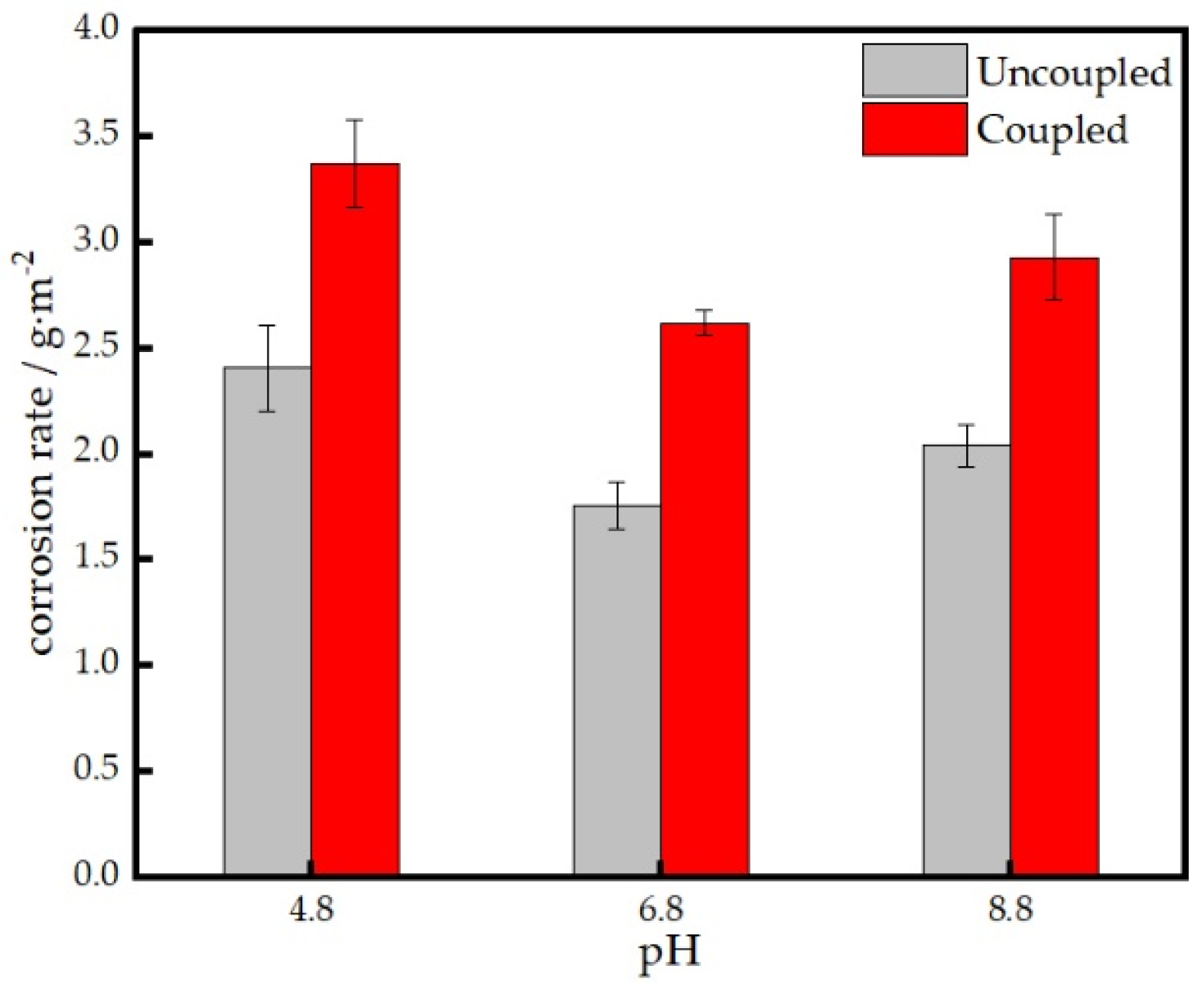
3.1. Corrosion-Induced Weight Loss
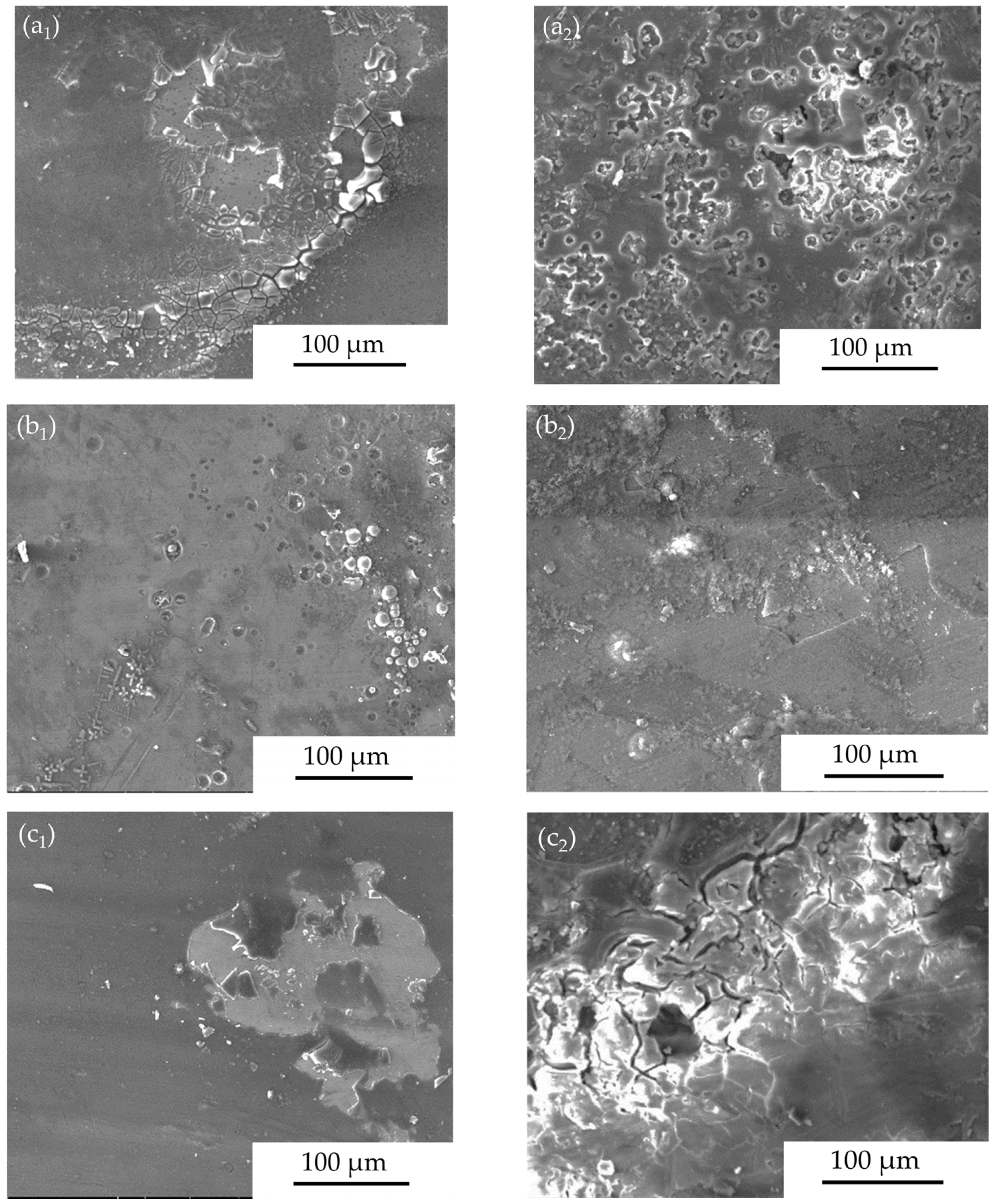
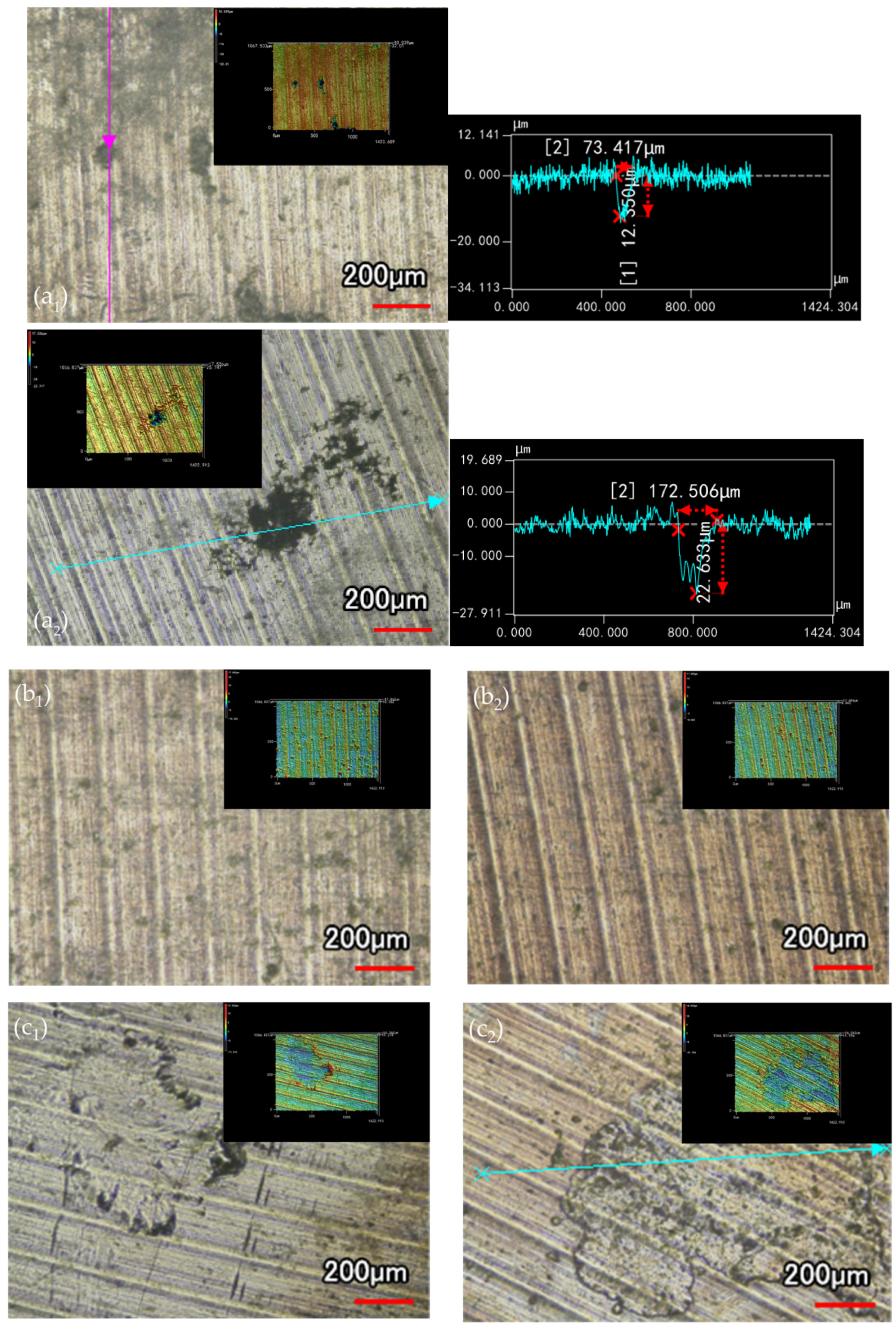
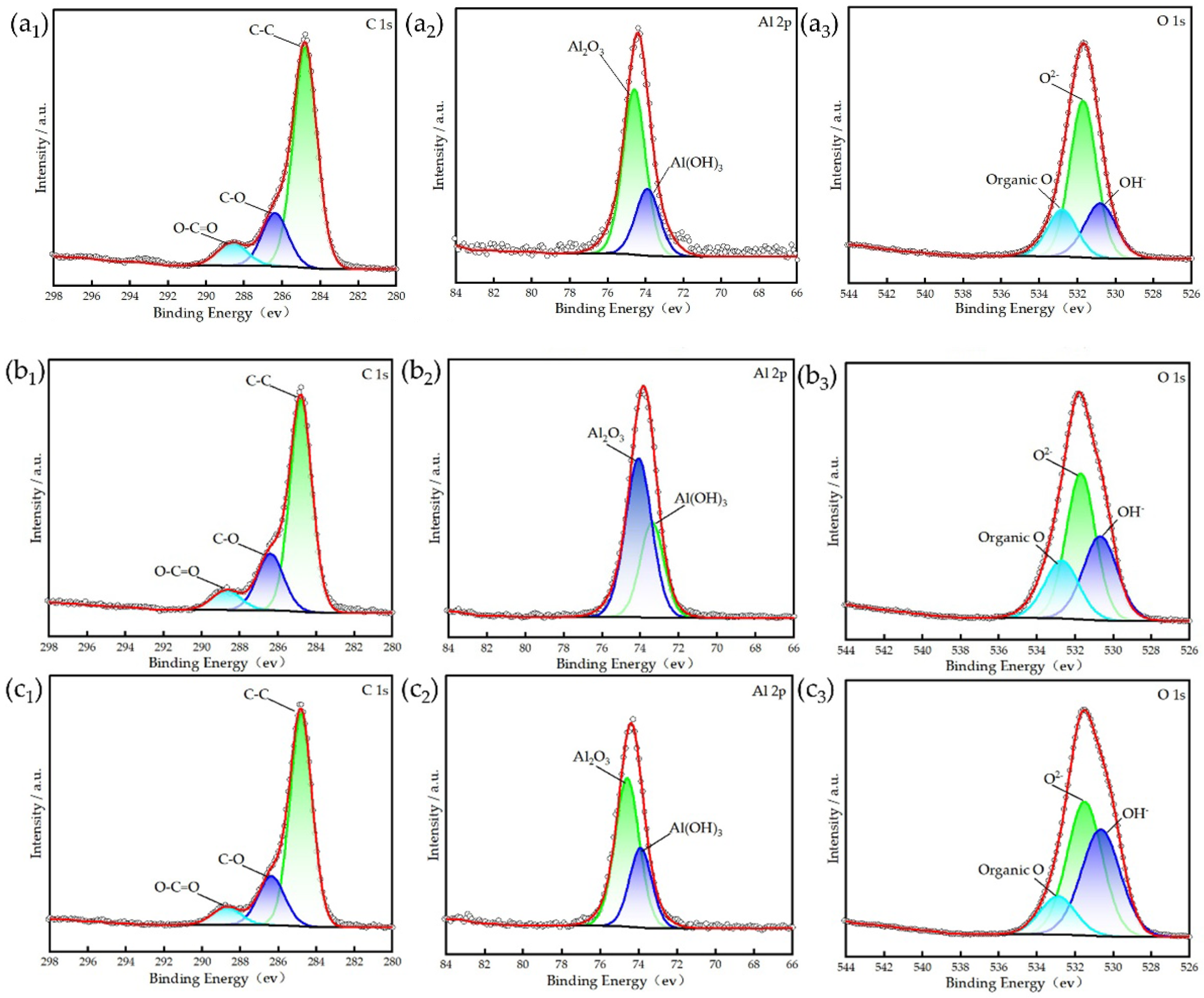
3.2. Corrosion Morphology and Product Analysis
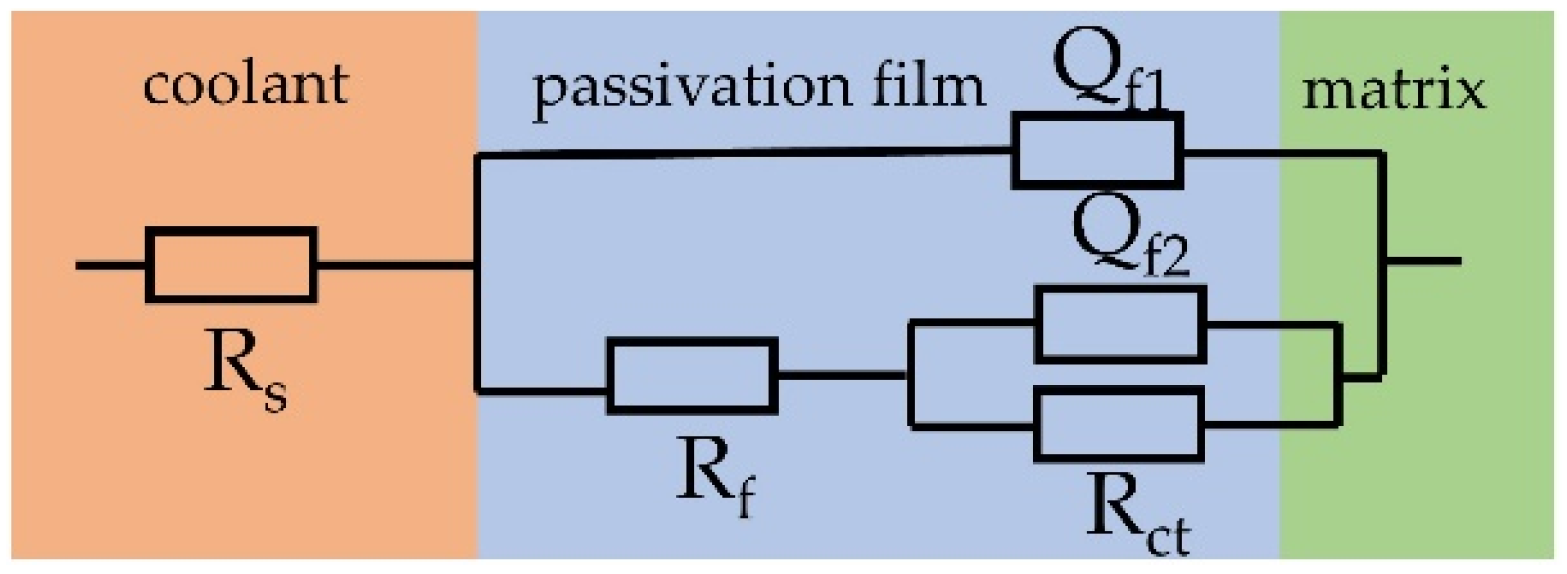
3.3. Electrochemical Analysis of Corrosion
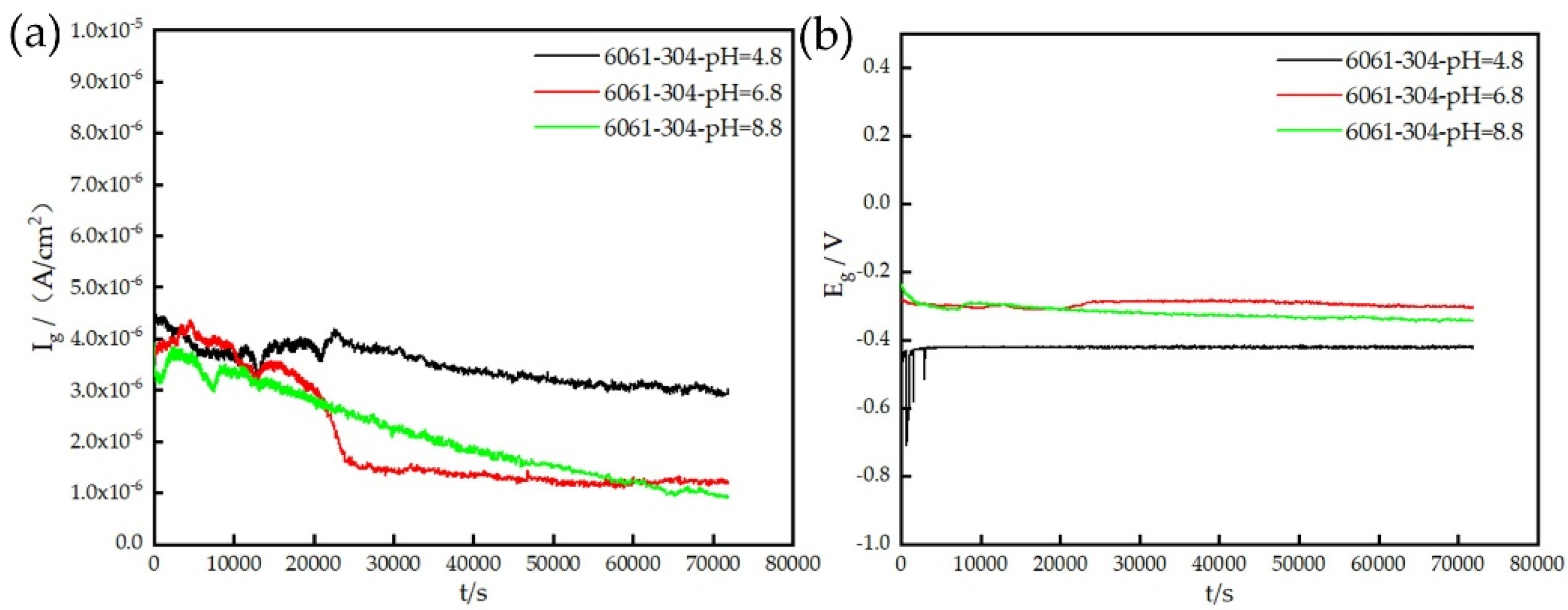
3.4. Evaluation of Galvanic Corrosion Sensitivity
4. Discussion
5. Conclusions
- (1)
- As the pH of the propylene glycol coolant increases, the corrosion resistance of 6061 aluminum alloy first increases and then decreases. The corrosion of 6061 aluminum alloy is most severe at pH = 4.8, weakest at pH = 6.8, and increases again at pH = 8.8. Compared with 6061 aluminum alloy, 304 stainless steel shows better corrosion resistance under all tested pH conditions.
- (2)
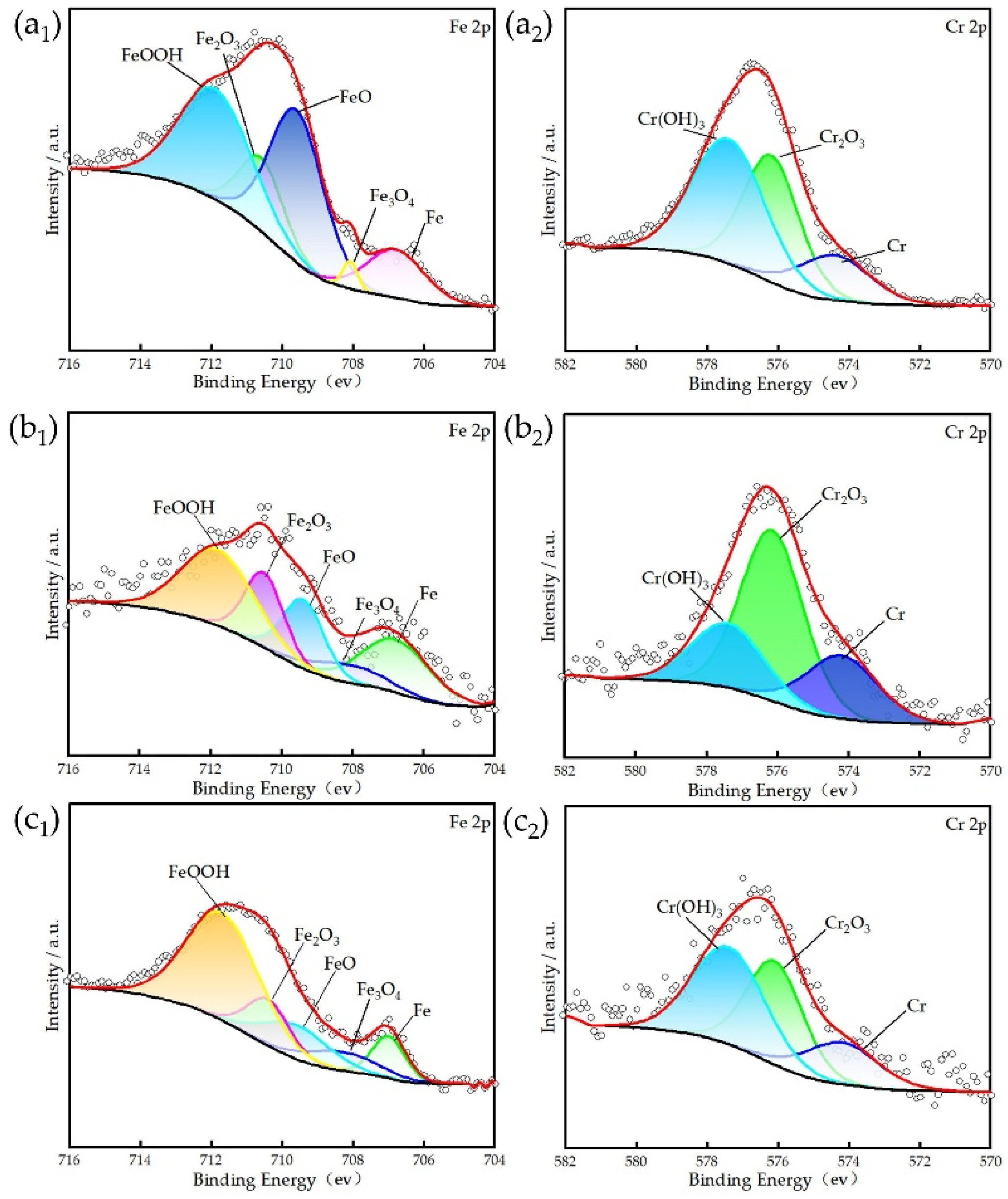
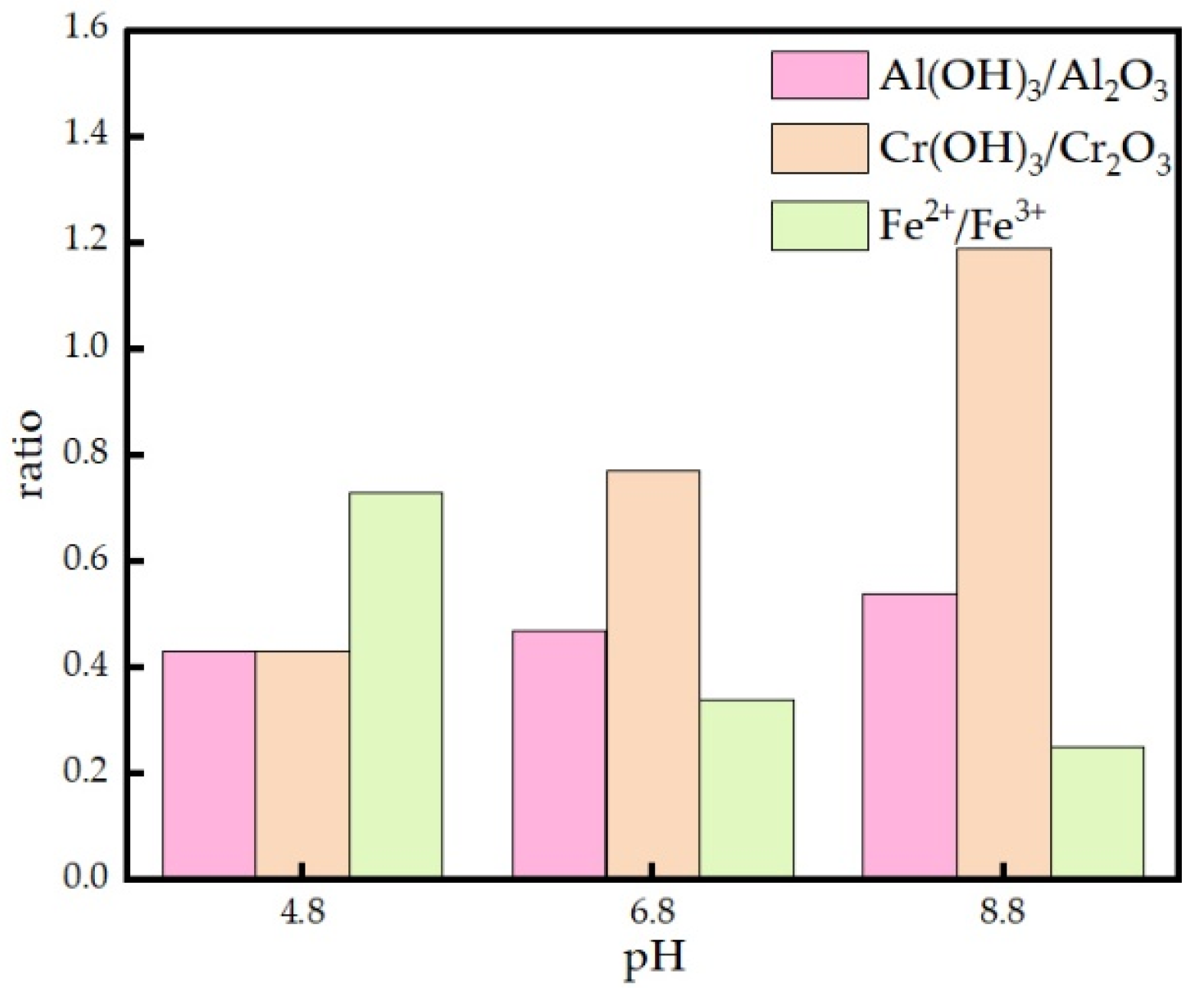
- XPS results indicate that as the pH of the propylene glycol coolant increases, the corrosion products of the 6061 aluminum alloy remain unchanged, consisting of Al(OH)3 and Al2O3; for 304 stainless steel, the main components of the passivation film remain unchanged under different pH conditions.
- (3)
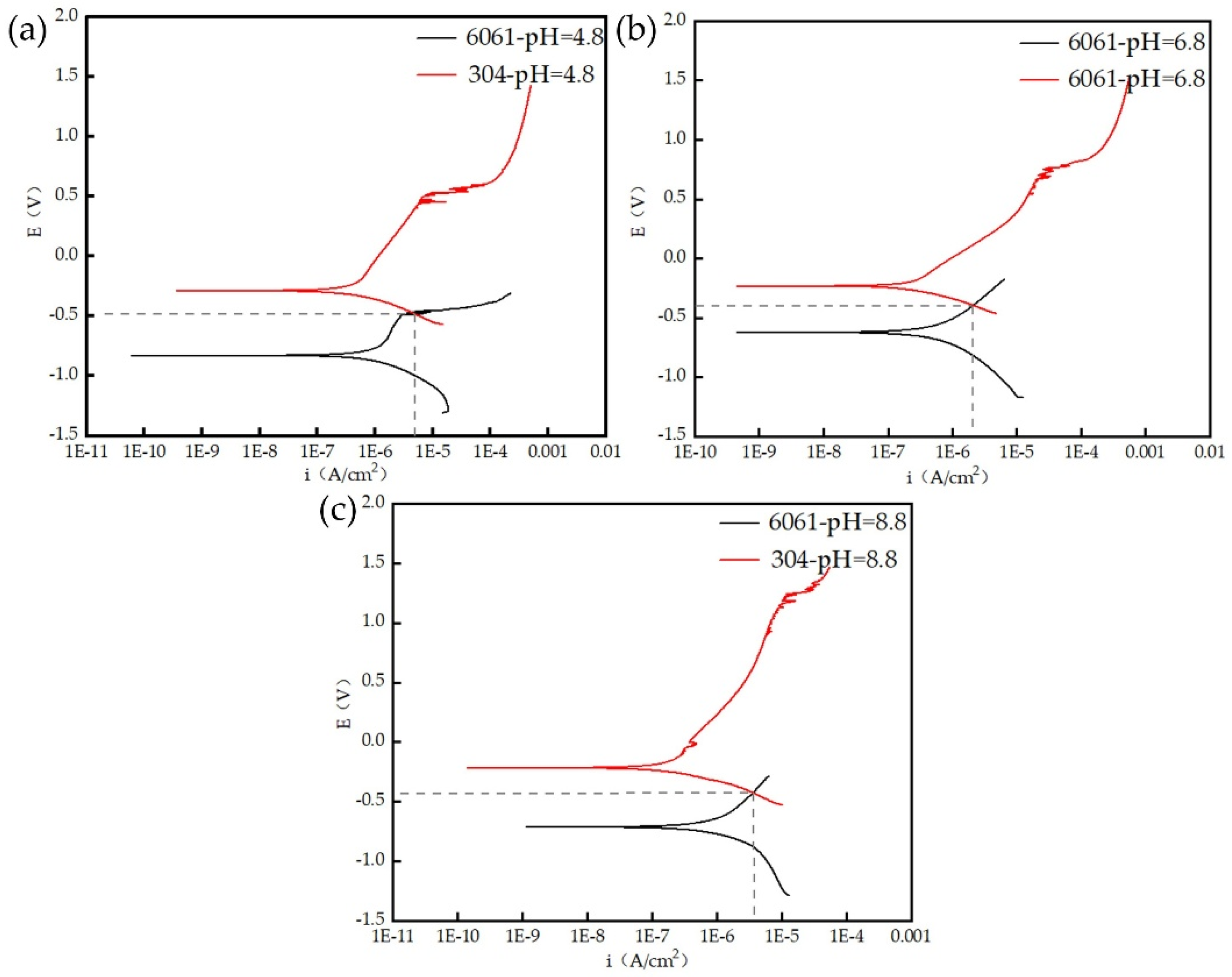
- As the pH of the propylene glycol coolant increases, the galvanic current between 6061 aluminum alloy and 304 stainless steel in the coolant first decreases and then increases, while the galvanic potential first increases and then decreases. Furthermore, 6061 aluminum alloy consistently acts as the anode and 304 stainless steel as the cathode in the galvanic couple, with no reversal of the anode and cathode occurring. For propylene glycol coolants at pH 4.8, 6.8, and 8.8, the corresponding galvanic corrosion sensitivity grades are Grade D, Grade C, and Grade C, respectively.
- (4)
- For mixed 6061 aluminum alloy/304 stainless steel propylene glycol cooling systems, the coolant pH should be maintained in a near-neutral range. Based on the tested results, pH 6.5–7.5 is recommended as the practical control range, with pH 6.8 as the preferred target value. Coolant acidification toward pH 4.8 should be avoided, and excessive alkalization toward pH 8.8 is not recommended for aluminum-containing systems.
6. Limitations and Future Work
Author Contributions
Funding
Data Availability Statement
Acknowledgments
Conflicts of Interest
References
- Bashkirtseva, N.; Sladovskaya, O.; Ovchinnikova, Y.; Vazetdinova, L.; Yusupov, S. Corrosion inhibitors for water–glycol based cooling systems. Chem. Technol. Fuels Oils 2017, 52, 751–755. [Google Scholar] [CrossRef]
- Shia, D.; Yang, J.; Sivapalan, S.; Soeung, R.; Amoah-Kusi, C. On cold plate corrosion with propylene glycol/water coolant. In Proceedings of the 2021 20th IEEE Intersociety Conference on Thermal and Thermomechanical Phenomena in Electronic Systems (iTherm), San Diego, CA, USA, 1–4 June 2021; pp. 212–219. [Google Scholar] [CrossRef]
- Shia, D.; Yang, J.; Sivapalan, S.; Soeung, R.; Amoah-Kusi, C. Corrosion study on single-phase liquid cooling cold plates with inhibited propylene glycol/water coolant for data centers. J. Manuf. Sci. Eng. 2021, 143, 111012. [Google Scholar] [CrossRef]
- Coelho, L.B.; Lukaczynska-Anderson, M.; Clerick, S.; Buytaert, G.; Lievens, S.; Terryn, H.A. Corrosion inhibition of AA6060 by silicate and phosphate in automotive organic additive technology coolants. Corros. Sci. 2022, 199, 110188. [Google Scholar] [CrossRef]
- Zhou, R.; Chen, Y.; Zhang, J.; Guo, P. Research progress in liquid cooling technologies to enhance the thermal management of LIBs. Mater. Adv. 2023, 4, 4011–4040. [Google Scholar] [CrossRef]
- Srinivasan, R.; Kollo, T. Predicting galvanic corrosion of aluminum using accelerated laboratory electrochemical experiments. ECS Meet. Abstr. 2023, MA2023-01, 1485. [Google Scholar] [CrossRef]
- Zuo, H.; Fan, J.; Liu, F.; Gong, M.; Zheng, X.; Meng, J.; Yang, G.; Liu, X. Corrosion behavior of 3A21 aluminum alloy in water–ethylene glycol coolant under simulated engine working conditions. Int. J. Electrochem. Sci. 2021, 16, 21062. [Google Scholar] [CrossRef]
- Huang, Z.; Zhu, Z.; Zhou, P.; Jiang, Y.; He, M.; Wang, Z. Corrosion characteristics of propylene glycol antifreeze in valve cooling system of converter station. J. Chin. Soc. Corros. Prot. 2022, 42, 471–478. [Google Scholar] [CrossRef]
- Zhang, G.A.; Xu, L.Y.; Cheng, Y.F. Investigation of erosion–corrosion of 3003 aluminum alloy in ethylene glycol–water solution by impingement jet system. Corros. Sci. 2009, 51, 283–290. [Google Scholar] [CrossRef]
- Liu, Y.; Cheng, Y.F. Effects of coolant chemistry on corrosion of 3003 aluminum alloy in automotive cooling system. Mater. Corros. 2010, 61, 574–579. [Google Scholar] [CrossRef]
- Liu, Y.; Cheng, Y.F. Characterization of passivity and pitting corrosion of 3003 aluminum alloy in ethylene glycol–water solutions. J. Appl. Electrochem. 2011, 41, 151–159. [Google Scholar] [CrossRef]
- Gong, A.; Zhou, M.; Wu, Q.; Wang, G. Study on the corrosion behavior of stainless steel in coolant. Proc. SPIE 2024, 13420, 1342008. [Google Scholar] [CrossRef]
- Monticelli, C.; Brunoro, G.; Frignani, A.; Zucchi, F. Corrosion behaviour of the aluminium alloy AA 6351 in glycol/water solutions degraded at elevated temperature. Mater. Corros. 1988, 39, 379–384. [Google Scholar] [CrossRef]
- Khomami, M.N.; Danaee, I.; Attar, A.A.; Peykari, M. Kinetic and thermodynamic studies of AISI 4130 steel alloy corrosion in ethylene glycol–water mixture in presence of inhibitors. Met. Mater. Int. 2013, 19, 453–464. [Google Scholar] [CrossRef]
- Fowles, J.R.; Banton, M.I.; Pottenger, L.H. A toxicological review of the propylene glycols. Crit. Rev. Toxicol. 2013, 43, 363–390. [Google Scholar] [CrossRef] [PubMed]
- Khutko, M.; Gordiienko, O.; Sydoruk, T.; Ransky, A. Cooling liquids with improved ecological and operating properties. Visnyk Vinnytsia Polytech. Inst. 2021, 156, 32–40. [Google Scholar] [CrossRef]
- Shahi, P.; Heydari, A.; Hinge, C.; Chinthaparthy, L.; Modi, H.; Miyamura, H.; Tradat, M.; Chowdhury, U.; Radmard, V.; Agonafer, D.; et al. Thermal, hydraulic and reliability analysis of single-phase liquid coolants for direct-to-chip cold plate cooling in high-performance computing systems. In Proceedings of the ASME 2023 International Technical Conference and Exhibition on Packaging and Integration of Electronic and Photonic Microsystems, San Diego, CA, USA, 24–26 October 2023. [Google Scholar] [CrossRef]
- He, F.; Wu, N.; Zhou, Z.; Wang, J. Experimental investigation on transpiration cooling using propylene glycol aqueous solution. Int. J. Therm. Sci. 2021, 164, 106890. [Google Scholar] [CrossRef]
- Shahroom, A.F.; Rahman, N.A.; Mansor, M.; Rahman, M.S.A. Modelling analysis of propylene glycol as a cooling media for battery thermal management system in electric vehicles. Arab. J. Sci. Eng. 2024, 50, 10541–10553. [Google Scholar] [CrossRef]
- Gündem, A.; Hoşöz, M.; Keklik, E. Performance comparison of propylene glycol–water and ethylene glycol–water mixtures as engine coolants in a flat-tube automobile radiator. Int. J. Automot. Sci. Technol. 2021, 5, 147–156. [Google Scholar] [CrossRef]
- Zhang, G.A.; Xu, L.Y.; Cheng, Y.F. Mechanistic aspects of electrochemical corrosion of aluminum alloy in ethylene glycol–water solution. Electrochim. Acta 2008, 53, 8245–8252. [Google Scholar] [CrossRef]
- Tian, Y.; Li, H.; Wang, S.; Fan, Y. Erosion–corrosion behavior of aluminum in a 50 °C ethylene glycol aqueous solution simulating cooling water in HVDC transmission. Mater. Corros. 2021, 72, 1899–1907. [Google Scholar] [CrossRef]
- Choi, G.S.; Kim, Y.M.; Park, C.J. Effects of corrosion inhibitor on corrosion of Al-based alloys in ethylene glycol-water coolant environment. Corros. Sci. Technol. 2023, 22, 305–313. [Google Scholar] [CrossRef]
- Rong, H.; Fan, W.; Shan, B.; Yang, J.; Ding, R.; Zhao, X. Galvanic corrosion behavior and numerical simulation of 5083 aluminum alloy and Q235 steel in 3.5% NaCl solution. Mater. Corros. 2023, 74, 766–776. [Google Scholar] [CrossRef]
- Li, Y.; Teng, J.; Wang, J.; Wang, H.; Liu, Q.; Lai, R.; Yang, B.; Wang, Z.; Li, Y. Interfacial corrosion behavior of aluminum/steel joints prepared by solid-state additive manufacturing. Corros. Sci. 2025, 244, 112650. [Google Scholar] [CrossRef]
- Peng, Y.; Zhao, J.; Liu, Y.; Han, R.; Liu, Z.; Gao, J. Galvanic corrosion between Al–Zn–Mg–Cu alloy and stainless steel in the salt-spray atmosphere. Mater. Chem. Phys. 2023, 294, 127009. [Google Scholar] [CrossRef]
- Bristow, J.; Yu, P.; Yaroch, K.; Clark, E.; Wondimu, B. Guidelines for Pre-Commission Preparation of Technology Cooling System (TCS) Row Manifolds in Liquid Cooled Data Centers; Open Compute Project: Austin, TX, USA, 2025; Available online: https://www.opencompute.org/documents/ocp-document-submission-guidelines-for-pre-commission-preparation-of-technology-cooling-system-tcs-row-manifolds-revq-pdf-1 (accessed on 15 May 2026).
- Glycol Sales Australia. GLY-PRO™ XD Engineering and Operating Guide; Glycol Sales Australia: Lilydale, VIC, Australia, 2025; Available online: https://www.glycolsales.com.au/wp-content/uploads/2025/02/GLY-PRO%E2%84%A2-XD-Engineering-Guide.pdf (accessed on 15 May 2026).
- Stajuda, L.; Levchenko, D.; Kubiak, P.; Siczek, K.; Bogusławski, G.; Kuchar, M.; Woźniak, M.; Szymczak, M.; Ozuna, G.; Siczek, K. Composition, features, problems, and treatment related to cooling fluid—A review. Combust. Engines 2024, 196, 106–125. [Google Scholar] [CrossRef]
- Ikeuba, A.I. AFM and EIS investigation of the influence of pH on the corrosion film stability of Al4Cu2Mg8Si7 intermetallic particle in aqueous solutions. Appl. Surf. Sci. Adv. 2022, 11, 100291. [Google Scholar] [CrossRef]
- Ikeuba, A.I.; Zhang, B.; Wang, J.; Han, E.H.; Ke, W. Electrochemical, TOF-SIMS and XPS studies on the corrosion behavior of Q-phase in NaCl solutions as a function of pH. Appl. Surf. Sci. 2019, 490, 535–545. [Google Scholar] [CrossRef]
- Miao, H.; Yu, H.; Wang, H.; Zheng, J.; Shao, C.; Xiao, K. Corrosion behavior of 7A09 aluminum alloy exposed to propylene glycol coolant at different conditions. Int. J. Electrochem. Sci. 2025, 20, 101105. [Google Scholar] [CrossRef]
- Zaid, B.; Saidi, D.; Benzaid, A.; Hadji, S. Effects of pH and chloride concentration on pitting corrosion of AA6061 aluminum alloy. Corros. Sci. 2008, 50, 1841–1847. [Google Scholar] [CrossRef]
- Zhang, X.; Liu, X.; Dong, W.; Hu, G.; Yi, P.; Huang, Y.; Xiao, K. Corrosion behaviors of 5A06 aluminum alloy in ethylene glycol. Int. J. Electrochem. Sci. 2018, 13, 10470–10479. [Google Scholar] [CrossRef]
- Kolics, A.; Besing, A.S.; Baradlai, P.; Haasch, R.; Wieckowski, A. Effect of pH on thickness and ion content of the oxide film on aluminum in NaCl media. J. Electrochem. Soc. 2001, 148, B251–B259. [Google Scholar] [CrossRef]
- Ruiz, A.; Ortiz, A.; Genesca, J.; Montoya, R. Numerical study of local pH variations in a galvanic carbon steel–aluminum alloy system under immersion conditions. Electrochem. Soc. Trans. 2021, 101, 373–381. [Google Scholar] [CrossRef]
- Ortiz, A.; Ruiz-Garcia, A.; Genesca, J.; Montoya, R. Acidification of the electrolyte in the carbon steel/aluminum alloys galvanic couple: Modeling and experimental study. In Proceedings of the CORROSION 2021, Virtual, 19–30 April 2021. [Google Scholar] [CrossRef]
- Ruiz-Garcia, A.; Esquivel-Peña, V.; Genesca, J.; Montoya, R. Advances in galvanic corrosion of aluminum alloys. Electrochim. Acta 2023, 456, 142227. [Google Scholar] [CrossRef]
- Liu, K.; Wu, Y.; Liu, H.; Chen, H.; Li, W. Numerical simulation of galvanic corrosion and electrical insulation for TC4/304 galvanic couple. Materials 2025, 18, 38. [Google Scholar] [CrossRef] [PubMed]
- Torres, V.; Mayen-Mondragon, R.; Genesca, J. Assessment of the galvanic corrosion of bi-metallic couple 7075-T6-aluminum alloy/microalloyed dual-phase steel. Mater. Corros. 2022, 73, 940–949. [Google Scholar] [CrossRef]
- Hu, Q.; Zhang, T.; Hu, K.; Chen, S.; Diao, T.; Wang, F. Modeling of galvanic corrosion in three-metal systems consisting of ZM5 magnesium alloy, 6XXX series aluminium alloy and 304 stainless steel under thin electrolyte layer by numerical simulation, electrochemical and salt spray test. Int. J. Electrochem. Sci. 2022, 17, 221297. [Google Scholar] [CrossRef]
- Shi, L.; Yang, X.; Song, Y.; Liu, D.; Dong, K.; Shan, D.; Han, E. Effect of corrosive media on galvanic corrosion of complicated tri-metallic couples of 2024 Al alloy/Q235 mild steel/304 stainless steel. J. Mater. Sci. Technol. 2019, 35, 1886–1893. [Google Scholar] [CrossRef]
- Sakairi, M.; Sasaki, R.; Kaneko, A.; Seki, Y.; Nagasawa, D. Evaluation of metal cation effects on galvanic corrosion behavior of the A5052 aluminum alloy in low chloride ion containing solutions by electrochemical noise impedance. Electrochim. Acta 2014, 131, 123–129. [Google Scholar] [CrossRef]
- GB 29743.2-2025; Motor Vehicle Coolant—Part 2: Electric Vehicle Coolant. Standards Press of China: Beijing, China, 2025.
- GB/T 16545-2025; Corrosion of Metals and Alloys—Removal of Corrosion Products from Corrosion Test Specimens. Standards Press of China: Beijing, China, 2025.
- HB 5374-1987; Method for Measuring Galvanic Current of Different Metals. Aviation Industry Press: Beijing, China, 1987.
- Yang, W.P. Resistance to pitting and chemical composition of passive films of a Fe–17%Cr alloy in chloride-containing acid solution. J. Electrochem. Soc. 1994, 141, 2669–2676. [Google Scholar] [CrossRef]
- Wang, Z.; Zhou, Z.Q.; Zhang, L.; Hu, J.Y.; Zhang, Z.R.; Lu, M.X. Effect of pH on the electrochemical behaviour and passive film composition of 316L stainless steel. Acta Metall. Sin. Engl. Lett. 2019, 32, 585–598. [Google Scholar] [CrossRef]



| Electrode Couple Current Density μA/cm2 | Electrochemical Couple Corrosion Sensitivity Rating |
|---|---|
| ig ≤ 0.3 | A |
| 0.3 < ig ≤ 1.0 | B |
| 1.0 < ig ≤ 3.0 | C |
| 3.0 < ig ≤ 10.0 | D |
| ig ≥ 10.0 | E |
| Test Environment | Material Proportion/% | |||||||
|---|---|---|---|---|---|---|---|---|
| Al | Cr | Fe | ||||||
| Al(OH)3 | Al2O3 | Cr | Cr(OH)3 | Cr2O3 | Fe | Fe2+ | Fe3+ | |
| pH = 4.8 | 30 | 70 | 23 | 23 | 54 | 12 | 37 | 51 |
| pH = 6.8 | 32 | 68 | 16 | 34 | 50 | 6 | 21 | 73 |
| pH = 8.8 | 35 | 65 | 19 | 44 | 37 | 10 | 18 | 72 |
| Material | pH | Corrosion Potential /mV | Mixed Potential/mV | Corrosion Current Density /nA·cm−2 | Coupling Current /nA·cm−2 |
|---|---|---|---|---|---|
| 6061 | 4.8 | −834 | −483 | 669 | 4933 |
| 6.8 | −625 | −397 | 332 | 2581 | |
| 8.8 | −717 | −425 | 483 | 3651 | |
| 304 | 4.8 | −289 | −483 | 190 | 4933 |
| 6.8 | −234 | −397 | 132 | 2581 | |
| 8.8 | −217 | −425 | 105 | 3651 |
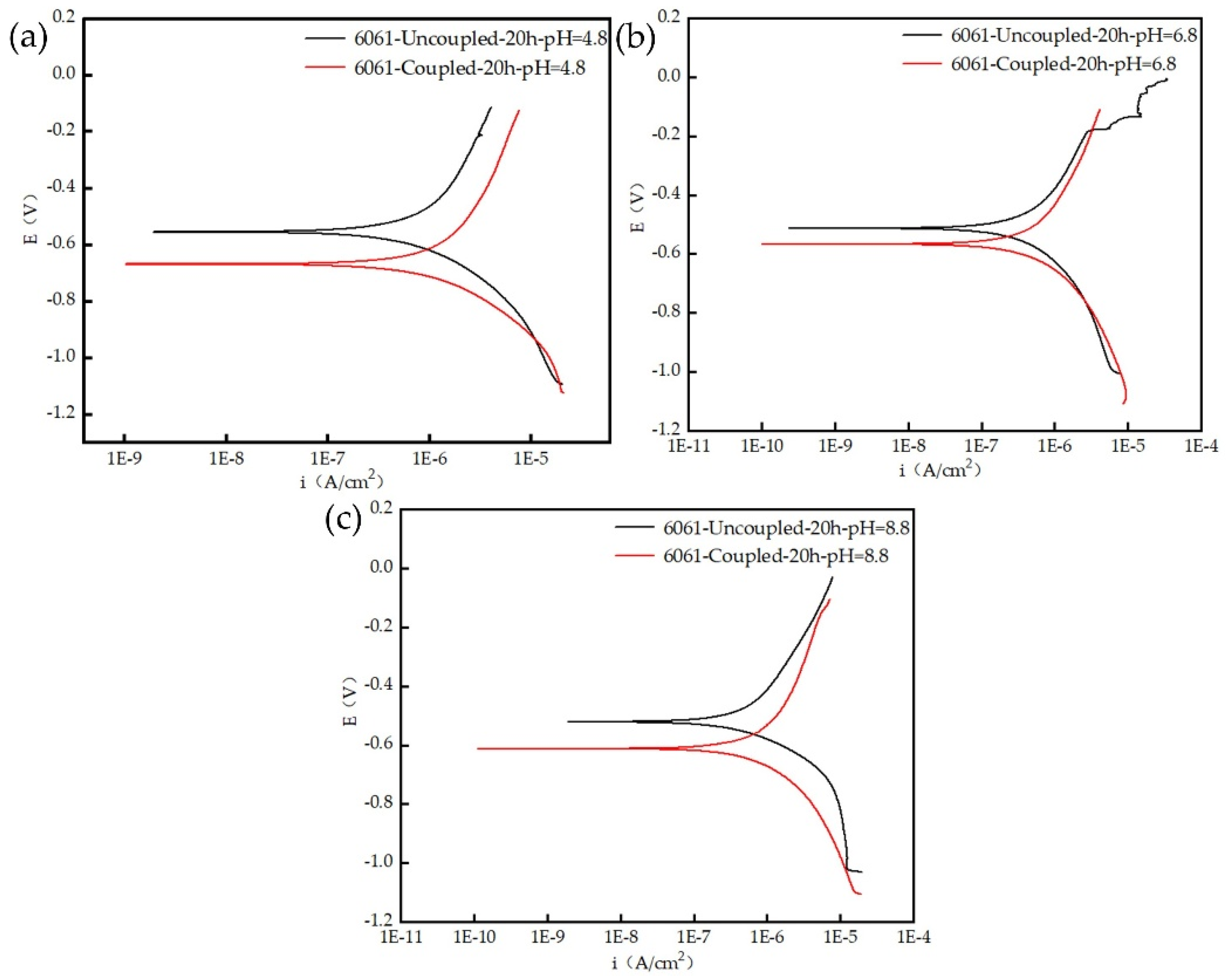
| Test Condition | pH | Corrosion Potential/mV | Corrosion Current Density /nA·cm−2 |
|---|---|---|---|
| Uncoupled | 4.8 | −554 | 431 |
| 6.8 | −515 | 246 | |
| 8.8 | −520 | 319 | |
| Coupled | 4.8 | −670 | 656 |
| 6.8 | −570 | 296 | |
| 8.8 | −612 | 394 |
| Test Condition | pH | Corrosion Potential/mV | Corrosion Current Density /nA·cm−2 |
|---|---|---|---|
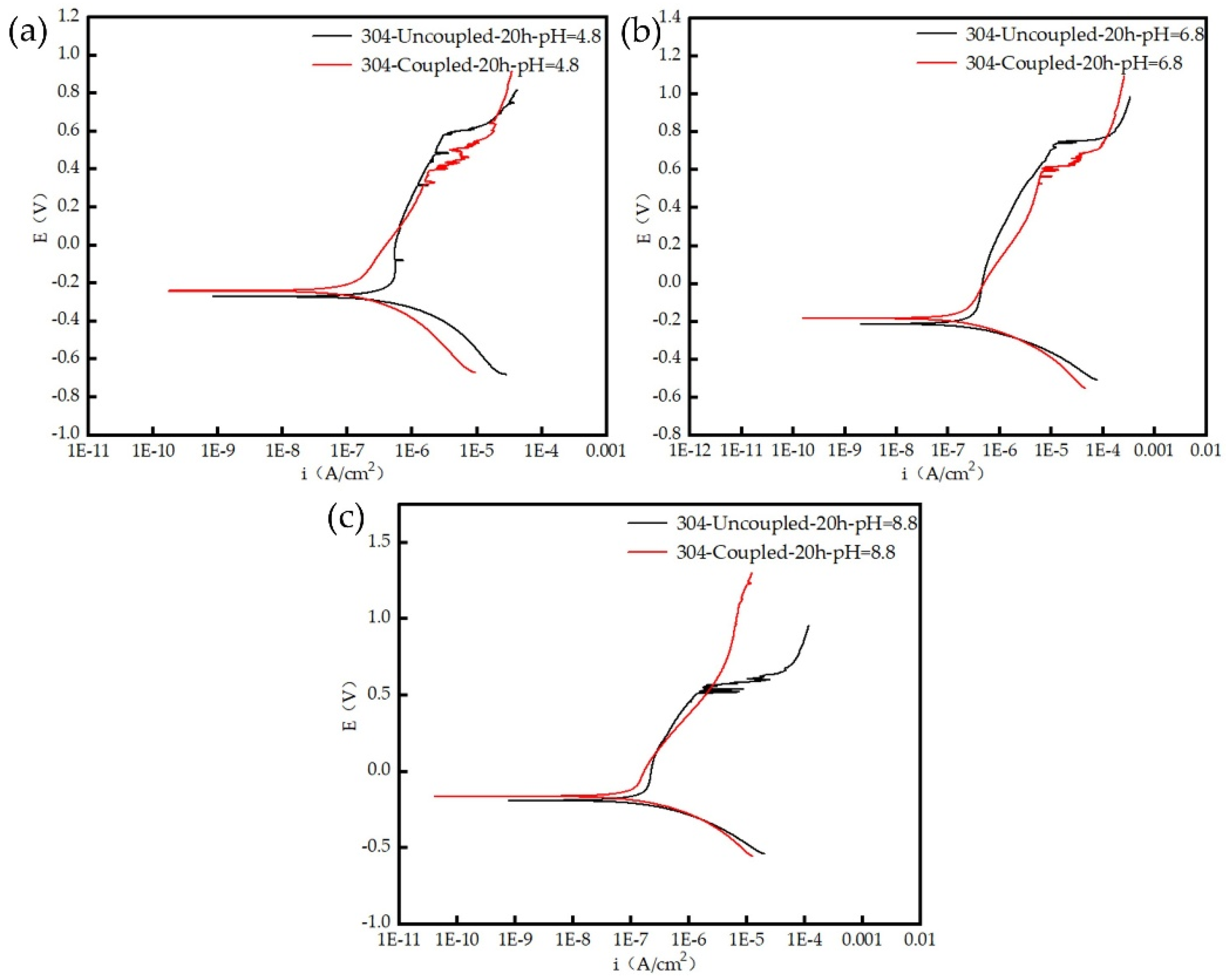
| Uncoupled | 4.8 | −280 | 174 |
| 6.8 | −214 | 130 | |
| 8.8 | −200 | 102 | |
| Coupled | 4.8 | −245 | 106 |
| 6.8 | −185 | 103 | |
| 8.8 | −165 | 80 |
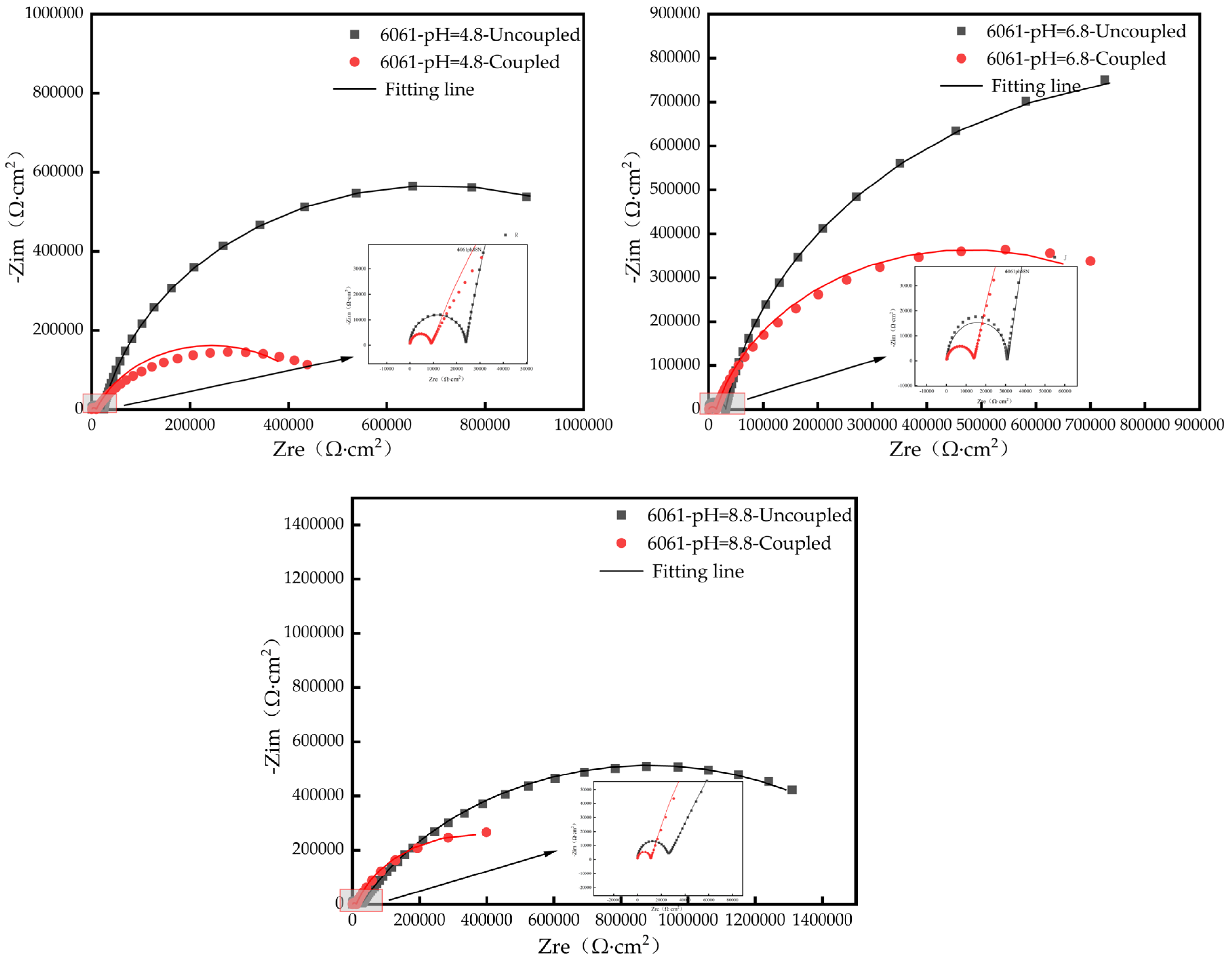
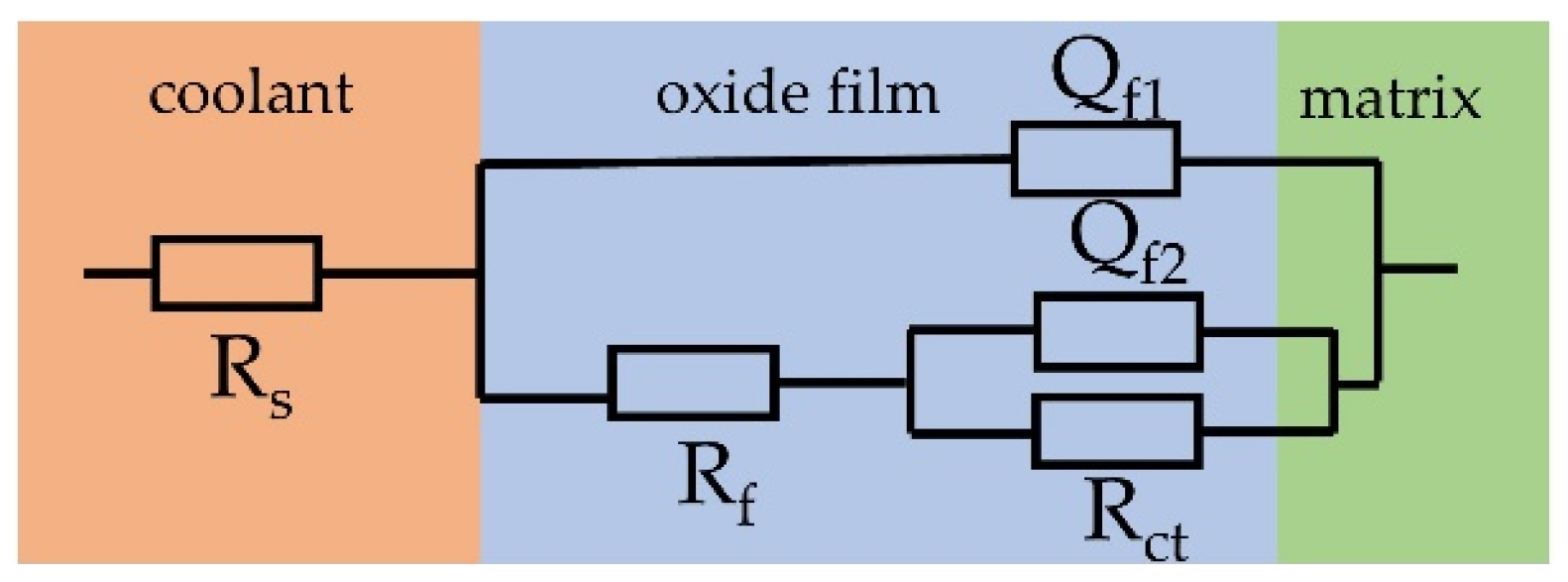
| pH | Condition | Rs/Ω·cm2 | Qf1 × 10−9/Ω−1·cm−2·Sn | n1 | Rf × 103/Ω·cm2 | Qf2 × 10−6/Ω−1·cm−2·Sn | n2 | Rct × 105/Ω·cm2 | Rp × 105/Ω·cm2 |
|---|---|---|---|---|---|---|---|---|---|
| 4.8 | Uncoupled | 135.15 | 1.28 | 0.98 | 23.93 | 1.80 | 0.69 | 13.56 | 13.80 |
| Coupled | 138.20 | 2.05 | 0.99 | 9.16 | 6.01 | 0.80 | 4.69 | 4.79 | |
| 6.8 | Uncoupled | 114.53 | 1.15 | 0.97 | 30.99 | 8.69 | 0.90 | 17.84 | 18.15 |
| Coupled | 168.37 | 8.70 | 0.90 | 13.93 | 6.93 | 0.85 | 9.27 | 9.41 | |
| 8.8 | Uncoupled | 145.96 | 2.01 | 0.95 | 25.65 | 6.11 | 0.89 | 17.15 | 17.41 |
| Coupled | 125.33 | 2.24 | 0.99 | 11.23 | 7.26 | 0.77 | 7.07 | 7.18 |
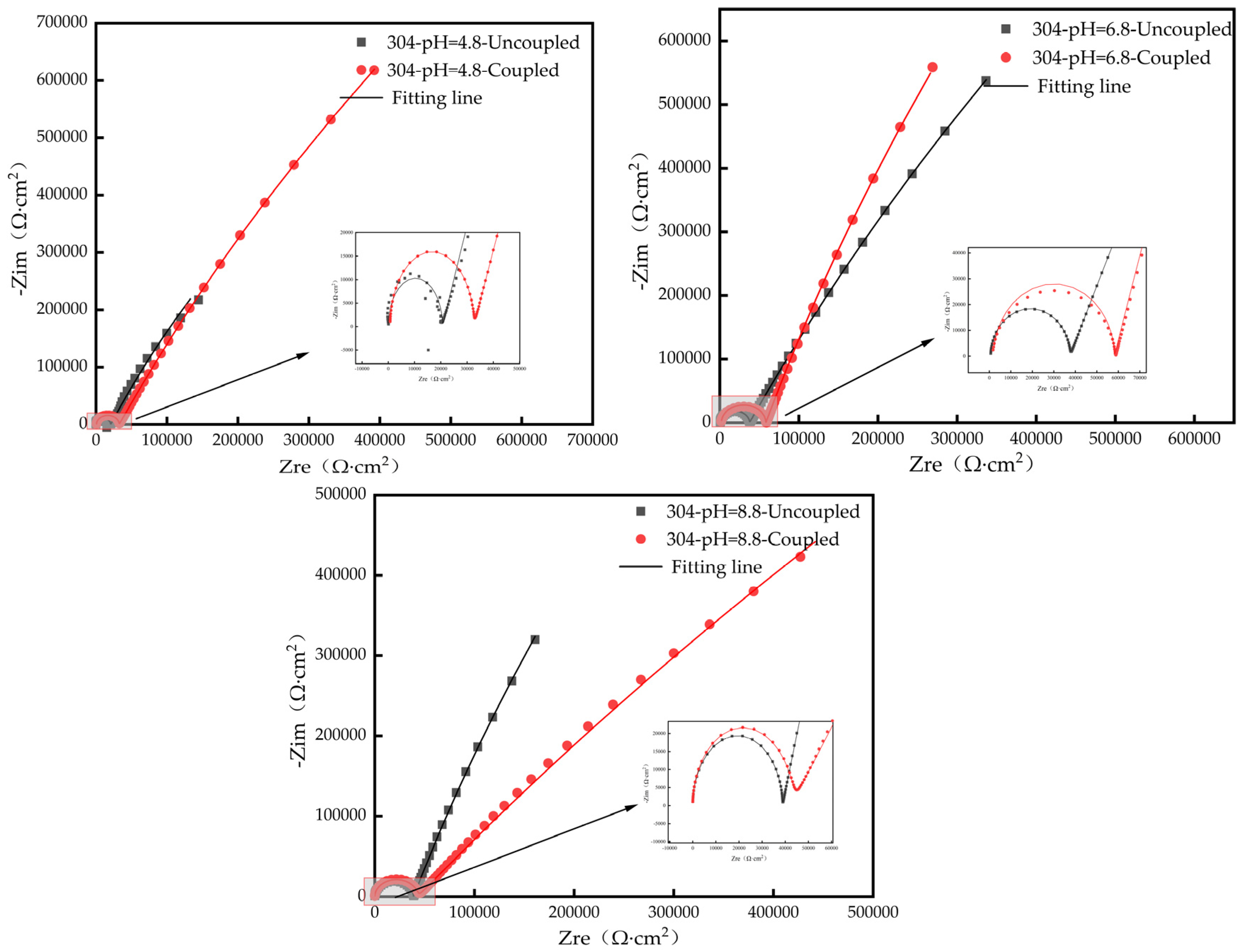
| pH | Condition | Rs/Ω·cm2 | Qf1 × 10−9/Ω−1·cm−2·Sn | n1 | Rf × 103/Ω·cm2 | Qf2 × 10−6/Ω−1·cm−2·Sn | n2 | Rct × 105/Ω·cm2 | Rp × 105/Ω·cm2 |
|---|---|---|---|---|---|---|---|---|---|
| 4.8 | Uncoupled | 145.12 | 1.53 | 0.98 | 20.65 | 8.10 | 0.57 | 32.48 | 32.69 |
| Coupled | 135.20 | 2.08 | 0.96 | 31.93 | 3.07 | 0.74 | 66.05 | 66.37 | |
| 6.8 | Uncoupled | 124.21 | 2.16 | 0.98 | 35.67 | 1.00 | 0.73 | 40.92 | 41.28 |
| Coupled | 136.52 | 1.54 | 0.94 | 36.86 | 2.65 | 0.81 | 69.08 | 69.50 | |
| 8.8 | Uncoupled | 158.25 | 1.90 | 0.95 | 38.79 | 1.51 | 0.82 | 57.10 | 57.49 |
| Coupled | 145.97 | 1.96 | 0.98 | 42.04 | 1.20 | 0.67 | 70.50 | 71.02 |
Disclaimer/Publisher’s Note: The statements, opinions and data contained in all publications are solely those of the individual author(s) and contributor(s) and not of MDPI and/or the editor(s). MDPI and/or the editor(s) disclaim responsibility for any injury to people or property resulting from any ideas, methods, instructions or products referred to in the content. |
© 2026 by the authors. Licensee MDPI, Basel, Switzerland. This article is an open access article distributed under the terms and conditions of the Creative Commons Attribution (CC BY) license.
Share and Cite
Miao, H.; Shao, C.; Zheng, J.; Yu, H.; Wang, H.; Xiao, K. Effect of Propylene Glycol Coolant pH on the Galvanic Corrosion Behavior of 6061 Aluminum Alloy/304 Stainless Steel. Materials 2026, 19, 2898. https://doi.org/10.3390/ma19132898
Miao H, Shao C, Zheng J, Yu H, Wang H, Xiao K. Effect of Propylene Glycol Coolant pH on the Galvanic Corrosion Behavior of 6061 Aluminum Alloy/304 Stainless Steel. Materials. 2026; 19(13):2898. https://doi.org/10.3390/ma19132898
Chicago/Turabian StyleMiao, Hao, Cong Shao, Jinqiao Zheng, Hao Yu, Heqian Wang, and Kui Xiao. 2026. "Effect of Propylene Glycol Coolant pH on the Galvanic Corrosion Behavior of 6061 Aluminum Alloy/304 Stainless Steel" Materials 19, no. 13: 2898. https://doi.org/10.3390/ma19132898
APA StyleMiao, H., Shao, C., Zheng, J., Yu, H., Wang, H., & Xiao, K. (2026). Effect of Propylene Glycol Coolant pH on the Galvanic Corrosion Behavior of 6061 Aluminum Alloy/304 Stainless Steel. Materials, 19(13), 2898. https://doi.org/10.3390/ma19132898