3.1. Synthesis and Characterization of Composite Materials Based on Humic Acids and MWCNTs
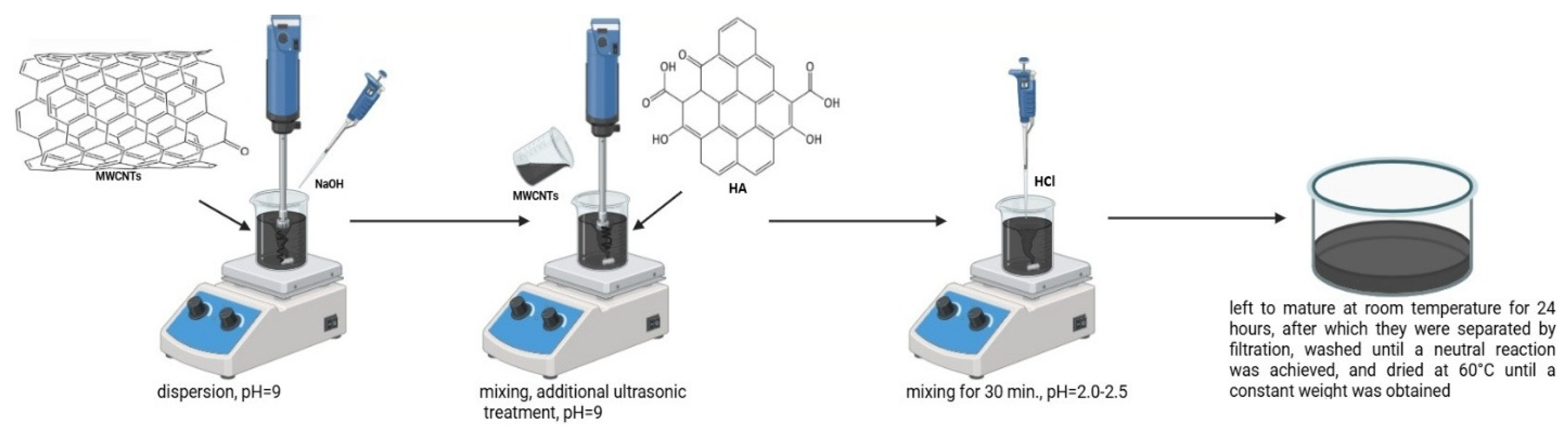
Figure 1 presents a schematic representation of the synthesis of the composite material.
The results of the chemical characterization of the synthesized composite materials are confirmed by elemental analysis, conductometric measurements, FTIR spectroscopy, thermogravimetric analysis, and scanning electron microscopy.
Table 2 presents the results of elemental analysis, the total content of functional groups Σ(COOH+OH), and the yields of the initial HA and composite materials obtained at different component mass ratios.
Based on the comparative evaluation of the synthesized composites, the HA:MWCNTs-20 sample demonstrated the most favorable combination of product yield, oxygen-containing functional groups, elemental composition, and structural stability. Therefore, this sample was selected for detailed physicochemical characterization and adsorption studies.
The initial HA is characterized by a high oxygen content (48.31 wt.%), which is attributed to the presence of oxygen-containing functional groups, including carboxyl and phenolic groups [
14,
15], and is confirmed by the maximum value of Σ(COOH+OH) equal to 5.00 mmol/g.
Upon formation of composites with multi-walled carbon nanotubes, an increase in the carbon content (from 47.34 to 59.15 wt.%) and a corresponding decrease in oxygen content are observed, which may be associated with the contribution of the carbon phase of MWCNTs to the composition of the composites.
The data presented in
Table 2 indicate that the values of Σ(COOH+OH) for the composites are in the range of 3.30–4.45 mmol/g, indicating the preservation of the functional groups of the humic component after ultrasound-assisted co-precipitation.
The highest value of Σ(COOH+OH) among the investigated composites was observed for HA:MWCNTs-20 (4.45 mmol/g), which may indicate greater accessibility of functional groups compared with the other investigated samples.
A comparative analysis shows that the transition from the initial HA (5.00 mmol/g) to the composites is accompanied by a decrease in Σ(COOH+OH): for HA:MWCNTs-10 to 3.83 mmol/g (24% decrease), for HA:MWCNTs-20 to 4.45 mmol/g (12% decrease), and for HA:MWCNTs-30 to 3.30 mmol/g (34% decrease).
The determination of Σ(COOH+OH) for each sample was performed in triplicate.
Table 2 presents the average values, while the deviations between parallel measurements did not exceed 1%, indicating good reproducibility of the experimental data.
The absence of a monotonic decrease in this parameter with increasing MWCNTs content indicates the complex nature of interfacial interactions between the composite components.
The obtained results suggest that the decrease in Σ(COOH+OH) values is associated not only with changes in the total content of functional groups but also with a possible decrease in their accessibility due to interactions between humic macromolecules and the MWCNTs surface.
The yields of HA:MWCNTs-10, HA:MWCNTs-20, and HA:MWCNTs-30 composites range from 80.28 to 89%, exceeding the yield of the initial HA (70.34%).
These results demonstrate the efficiency of the selected ultrasound-assisted co-precipitation method for the preparation of composite materials based on humic acids and multi-walled carbon nanotubes.
Overall, the results of elemental analysis and conductometric titration show that the incorporation of MWCNTs makes it possible to modify the elemental and functional composition of the composite materials while retaining a significant amount of oxygen-containing functional groups, which is of interest for their further application in sorption technologies [
23]. The observed changes in elemental composition and functional-group content indicate that incorporation of MWCNTs does not simply dilute the humic component but also affects the spatial arrangement of humic macromolecules. As a result, the accessibility of oxygen-containing functional groups depends not only on their overall content but also on the degree of dispersion and interfacial interactions within the composite structure.
3.2. Influence of Ultrasonic Treatment Time on the Content of Oxygen-Containing Functional Groups (Σ(COOH+OH)) and the Yield of Composite Materials
Table 3 shows the effect of ultrasonic treatment duration on the total content of oxygen-containing functional groups, Σ(COOH+OH), and the yield of HA:MWCNTs composites at different component mass ratios.
At an ultrasonic treatment duration of 15 min, all investigated composites (HA:MWCNTs-10, HA:MWCNTs-20, and HA:MWCNTs-30) exhibit the lowest values of Σ(COOH+OH) (3.00–3.90 mmol/g), while the composite yields range from 75.02 to 85.00%. The obtained results may be associated with an insufficient degree of MWCNTs dispersion and incomplete development of interfacial interactions between the system components during the initial stage of ultrasonic treatment.
An increase in the ultrasonic treatment duration to 30 min is accompanied by an increase in both Σ(COOH+OH) values and composite yields, which reach maximum values for all investigated compositions (3.36–4.45 mmol/g and 80.00–89.28%, respectively). The obtained data indicate that this treatment regime promotes the formation of composite materials with the highest values of the investigated parameters. Higher values of Σ(COOH+OH) may indicate increased accessibility of oxygen-containing functional groups. Within the investigated range of conditions, an ultrasonic treatment duration of 30 min may be considered the most favorable processing regime.
A further increase in ultrasonic treatment duration to 60 min results in a decrease in both Σ(COOH+OH) values and composite yields compared with the 30 min treatment regime. Under these conditions, the total content of oxygen-containing functional groups ranges from 3.13 to 4.11 mmol/g. The obtained results may indicate a decrease in the accessibility of a portion of the functional groups for analytical determination.
The observed changes in Σ(COOH+OH) as a function of ultrasonic treatment duration are likely caused by a combination of factors, including the degree of MWCNTs dispersion, changes in the spatial organization of humic macromolecules, and the characteristics of component interactions within the HA:MWCNTs system. Under moderate ultrasonic treatment, a more uniform distribution of the humic component over the nanotube surface may occur, contributing to increased accessibility of oxygen-containing functional groups.
When the ultrasonic treatment duration is increased to 60 min, the influence of acoustic cavitation effects becomes more pronounced. This may be accompanied by structural rearrangements of the humic phase and changes in the spatial organization of the system components without significant alteration of their chemical composition [
31]. Such changes may result in partial shielding of functional groups and a decrease in the measured value of Σ(COOH+OH).
Thus, the obtained results demonstrate that the duration of ultrasonic treatment has a significant influence on both the functional characteristics and the yield of the composite materials. The observed changes may be associated with the dispersion behavior of the components, the accessibility of oxygen-containing functional groups, and the nature of their interfacial interactions.
3.3. Analysis of FTIR Spectra of the Initial Compounds and the HA:MWCNTs Composites
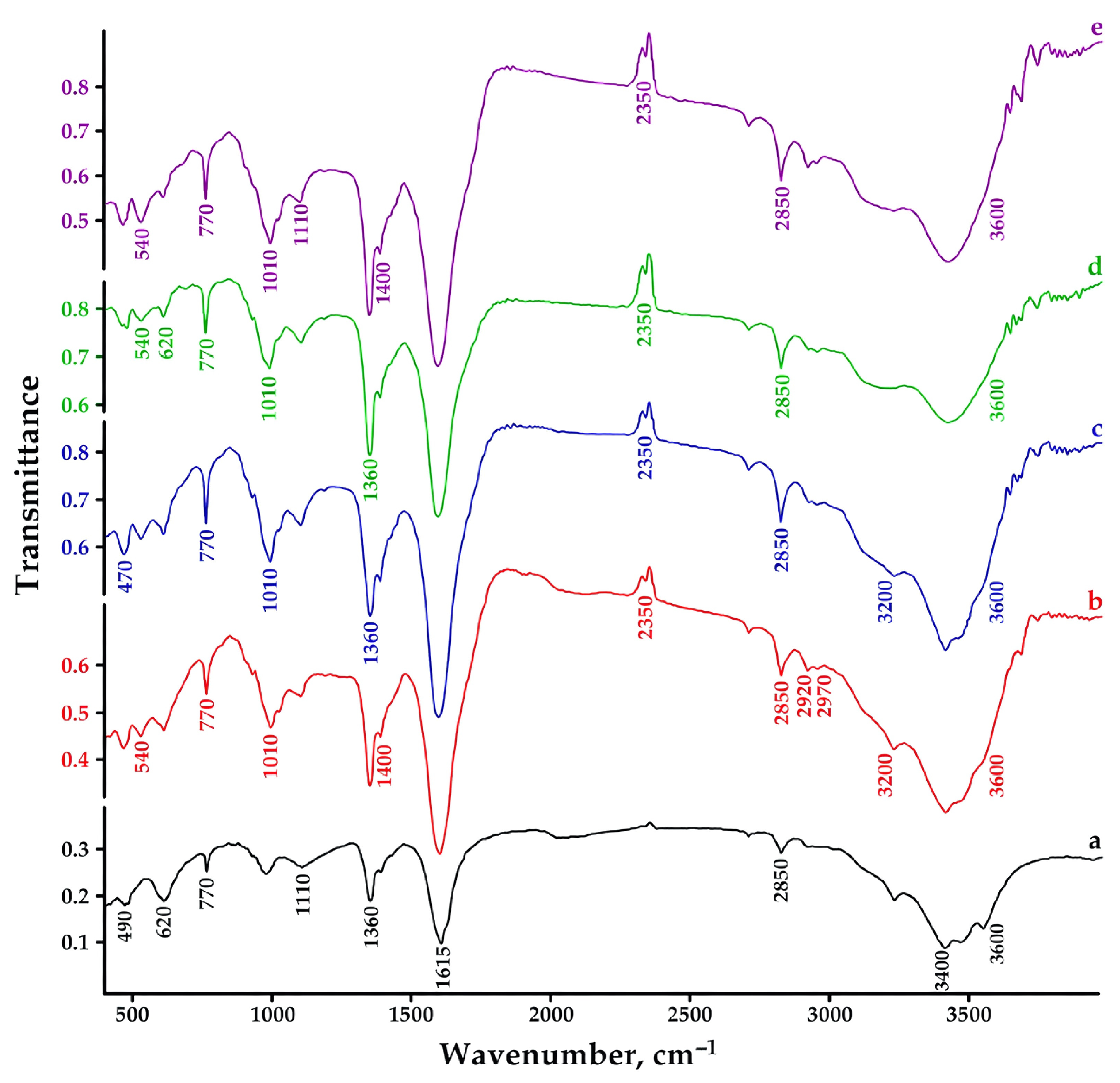
Figure 2 shows the FTIR spectra of the original multi-walled carbon nanotubes (a), humic acids (b), and HA:MWCNTs-20 composites obtained with different ultrasonic treatment times (c–e).
The IR spectrum of multiwalled carbon nanotubes (MWCNTs) contains characteristic absorption bands typical of graphite-like carbon materials. In the low-frequency region of 400–700 cm
−1, bands are observed that can be attributed to skeletal vibrations of the carbon framework of MWCNTs, likely related to the curvature of the sp
2-hybridized carbon network and the presence of structural defects. A weak band near 770 cm
−1 can be attributed to defect-related vibrations in the graphitic structure and possibly to out-of-plane deformation modes of aromatic C–H bonds. The band at 1615 cm
−1 may be associated with stretching vibrations of C=C bonds in the sp
2-hybridized carbon network [
32].
The presence of oxygen-containing groups on the MWCNTs surface is confirmed by bands in the 1000–1300 cm−1 region, particularly the band near 1110 cm−1, which may be associated with C–O vibrational modes of various oxidized surface functionalities. The band at ~1360 cm−1 may originate from defect-induced vibrations and/or symmetric stretching vibrations of carboxylate groups. Absorption bands in the 3400–3600 cm−1 region are attributed to O–H stretching modes of hydroxyl and carboxyl groups, including adsorbed water on the nanotube surface.
The IR spectra of humic acid (HA) and HA:MWCNTs composites exhibit absorption bands characteristic of aromatic and aliphatic structures, as well as oxygen-containing functional groups. The spectrum contains a band at ~1010 cm−1, which may be attributed to C–O stretching vibrations in phenolic, ester, or C–O–C fragments. A band in the 1700–1720 cm−1 region can be assigned to C=O stretching vibrations of carboxylic and carbonyl groups. The band at about 1400 cm−1 may reflect symmetric vibrations of carboxylate groups. Weak absorption observed near 2350–2400 cm−1 is attributed to atmospheric CO2. The bands in the 2850–2970 cm−1 region correspond to symmetric and asymmetric C–H stretching vibrations of aliphatic methyl and methylene groups. A broad band in the 3200–3600 cm−1 range reflects O–H stretching modes of hydroxyl groups, including phenols, alcohols, and adsorbed water.
Compared to pristine HA and MWCNTs, the FTIR spectra of the HA:MWCNTs composites exhibit noticeable changes in both band intensity and position. In particular, a slight shift and broadening of the O–H stretching band (3200–3600 cm−1) suggest enhanced hydrogen-bonding interactions between functional groups of humic acid and oxidized sites on the MWCNTs surface. Additionally, variations in the relative intensity of the bands in the ~1710–1600 cm−1 and 1000–1300 cm−1 regions indicate possible interactions involving carboxyl and phenolic groups of humic acid with the carbon nanotube surface. These spectral changes become more pronounced with increasing ultrasonic treatment time, suggesting stronger interfacial interactions and possibly improved dispersion of MWCNTs within the humic acid matrix. These observations are in good agreement with the conductometric titration results, which showed the highest accessibility of oxygen-containing functional groups for the composite prepared at US = 30 min. The combined FTIR and conductometric data therefore suggest that moderate ultrasonic treatment promotes more efficient interaction between humic acid macromolecules and MWCNTs without causing excessive structural rearrangement.
3.4. Thermogravimetric Analysis of Composite Materials
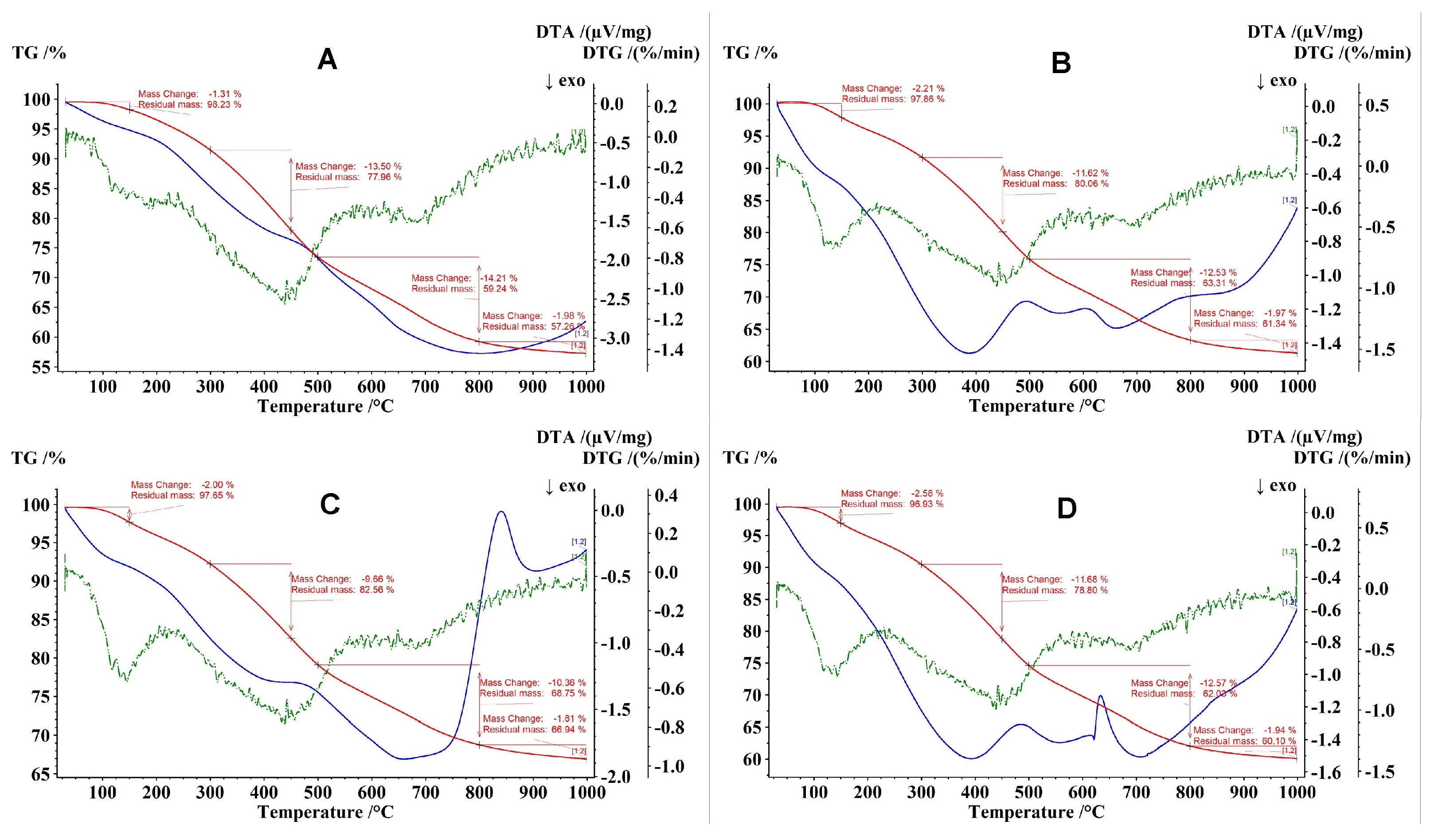
Figure 3 presents the TGA/DTG curves of the initial HA (A) and HA:MWCNTs-20 composites obtained at different ultrasonic treatment durations (B—15 min, C—30 min, D—60 min) over the temperature range up to 1000 °C. Analysis of the TGA/DTG curves shows that all investigated samples exhibit a multistage thermal decomposition behavior. In the temperature range of 120–150 °C, the removal of physically adsorbed moisture is observed. The main weight losses occur within the 300–450 °C range and are associated with the thermal decomposition of oxygen-containing functional groups of the humic component, including carboxyl and phenolic groups, as well as the destruction of less thermally stable organic structures. Within the 500–800 °C range, a further decrease in sample mass is observed, caused by the thermal transformation of more condensed aromatic fragments and structural rearrangement of the carbon matrix. In the 800–1000 °C region, mass changes are insignificant, indicating the preservation of a thermally stable carbonaceous residue and the completion of the main thermal degradation processes.
For the initial HA (
Figure 3A), the total weight losses in the temperature intervals 120–150, 300–450, 500–800, and 800–1000 °C are 1.31, 13.50, 14.21, and 2.00%, respectively. The residual mass at 1000 °C is 57.26%, indicating the presence of both thermolabile oxygen-containing functional groups and more thermally stable carbon fragments within the HA structure.
Compared with the initial HA, the HA:MWCNTs-20 composites are characterized by a higher residual mass at 1000 °C. For samples obtained at ultrasonic treatment durations of 15, 30, and 60 min, this parameter equals 61.34, 66.94, and 60.10%, respectively. The increase in residual mass may be associated with the presence of the thermally stable carbon phase of MWCNTs and changes in the structural organization of the composites.
The highest residual mass is observed for the composite obtained at US = 30 min (
Figure 3C). This sample is also characterized by the lowest weight losses within the 300–450 °C (9.66%) and 500–800 °C (10.36%) temperature ranges compared with the composites obtained at US = 15 min (
Figure 3B) and US = 60 min (
Figure 3D). The obtained results may indicate a higher thermal stability of the composite formed at this ultrasonic treatment duration.
For the composites obtained at US = 15 min and US = 60 min, the weight losses within the indicated temperature ranges are higher and amount to 11.62–11.68% and 12.53–12.57%, respectively. This may be associated with differences in the structural organization of the composites and the accessibility of oxygen-containing functional groups.
Comparison of the TGA/DTG results with the data on the content of oxygen-containing functional groups, Σ(COOH+OH), reveals a relationship between thermal stability and the structural-functional characteristics of the HA:MWCNTs-20 composites. The composite obtained at US = 30 min is characterized by both the highest residual mass and the highest content of accessible oxygen-containing functional groups among the investigated samples.
The obtained data suggest that ultrasonic treatment duration has a significant influence on the formation of the HA:MWCNTs composite structure. Within the investigated range of conditions, an ultrasonic treatment duration of 30 min provides the most favorable combination of thermal stability and preservation of functional groups. At shorter treatment durations, incomplete dispersion of the system components may occur, whereas prolonged ultrasonic treatment may be accompanied by structural rearrangements of the humic phase and changes in the accessibility of functional centers. The obtained results are consistent with the conductometric titration data and confirm the significant influence of ultrasonic treatment conditions on the properties of HA:MWCNTs composite materials. The improved thermal stability observed for the composite prepared at US = 30 min is likely associated with stronger interfacial interactions between the humic matrix and well-dispersed MWCNTs, which restrict thermal degradation of the organic phase and contribute to the formation of a more stable composite structure.
3.5. Investigation of the Surface Morphology of Composite Materials by SEM
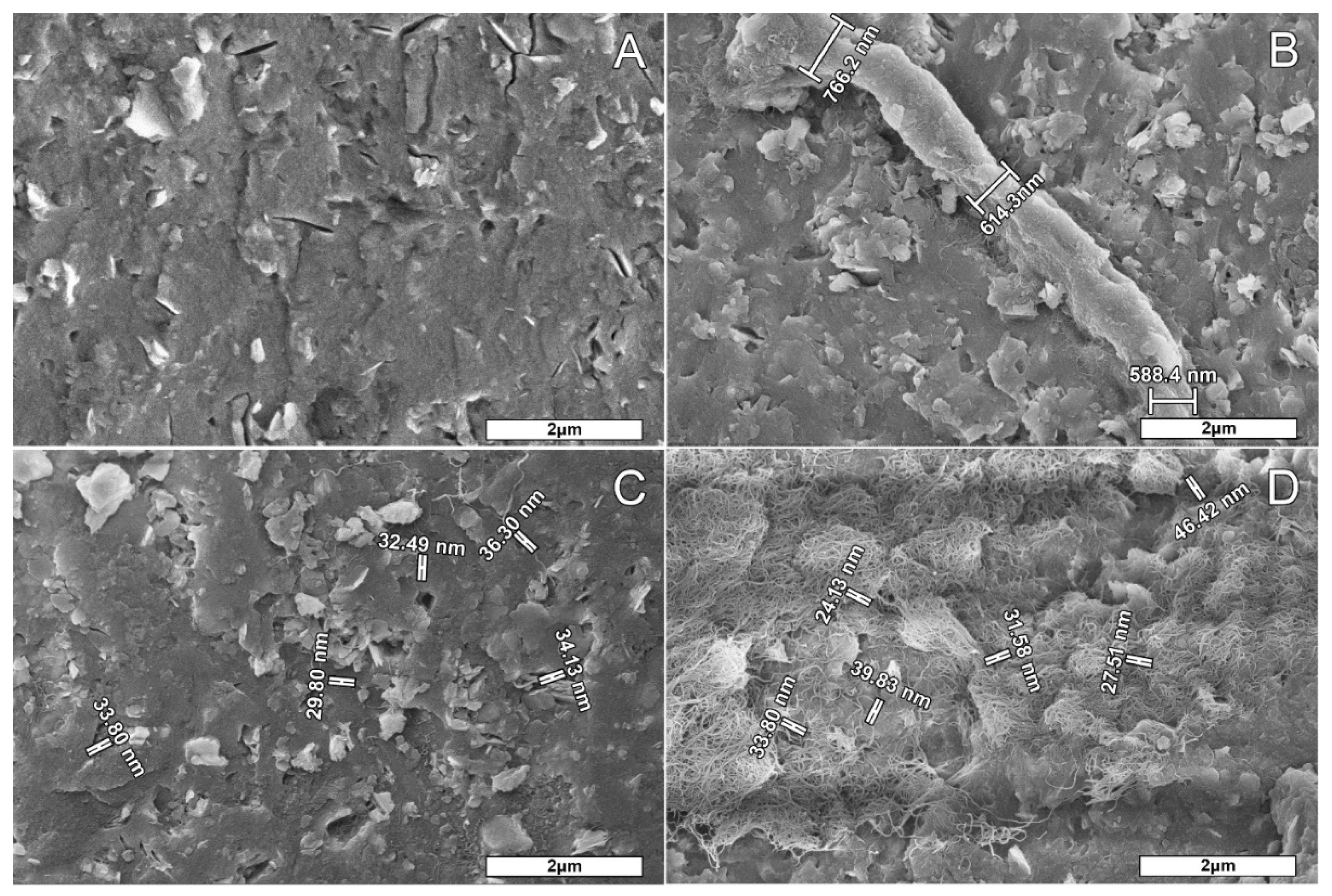
Electron microscopic images of the initial HA and HA:MWCNTs-20 composites obtained at different ultrasonic treatment durations are presented in
Figure 4A–D. Analysis of the SEM images showed that the morphology of the initial HA and the HA:MWCNTs-20 composites strongly depends on the duration of ultrasonic treatment. The initial HA (
Figure 4A) is characterized by a relatively dense surface containing individual plate-like structural fragments, local microcracks, and a poorly developed porous structure.
For the HA:MWCNTs-20 composite obtained at US = 15 min (
Figure 4B), large aggregated regions with a non-uniform distribution of fibrous MWCNTs elements are observed. The surface morphology is characterized by pronounced heterogeneity, while some areas exhibit densely packed structural formations. The obtained results may indicate an insufficient degree of MWCNTs dispersion within the humic matrix and the preservation of aggregated regions in the composite structure. The presence of such morphological heterogeneities may be associated with reduced accessibility of oxygen-containing functional groups, which is consistent with the decrease in the Σ(COOH+OH) value to 3.9 mmol/g compared with the initial HA (5.0 mmol/g).
Increasing the ultrasonic treatment duration to 30 min (
Figure 4C) results in the formation of a more homogeneous composite morphology and a more uniform distribution of fibrous MWCNTs elements. The characteristic dimensions of individual fibrous structures are approximately 21.39–36.30 nm. The obtained results are consistent with the data on the total content of oxygen-containing functional groups: this sample exhibits the highest Σ(COOH+OH) value among the investigated composites, equal to 4.45 mmol/g. Furthermore, according to the TGA results, this sample is characterized by the highest residual mass at 1000 °C, which may indicate enhanced thermal stability of the composite. The combination of these results suggests that an ultrasonic treatment duration of 30 min provides the most favorable balance between MWCNTs dispersion and preservation of the functional properties of the humic component.
For the sample obtained at US = 60 min (
Figure 4D), a well-developed fibrous network morphology with a non-uniform distribution of structural elements throughout the composite volume is observed, which is consistent with literature data reported for similar systems [
24]. Interwoven fibrous MWCNTs formations forming regions of increased structural density can be observed. The characteristic dimensions of individual fibrous elements are approximately 24.13–46.42 nm. At the same time, local regions of secondary MWCNTs aggregation and structural heterogeneity are detected, which may be associated with changes in the nature of component interactions during prolonged ultrasonic treatment. The obtained morphological data are consistent with the decrease in Σ(COOH+OH) to 4.11 mmol/g and a slight reduction in thermal stability compared with the sample treated for 30 min.
Thus, the results of SEM analysis, determination of Σ(COOH+OH), and TGA demonstrate that the duration of ultrasonic treatment has a significant influence on the morphology and properties of HA:MWCNTs composites. Among the investigated samples, the most favorable combination of morphological, functional, and thermal characteristics was observed for the composite obtained at US = 30 min. The obtained results suggest that this treatment regime promotes a more uniform distribution of the components and preserves the accessibility of oxygen-containing functional groups within the composite structure. The improved dispersion observed after 30 min of ultrasonic treatment is also consistent with the adsorption results discussed below, indicating that a more homogeneous composite structure provides better accessibility of active adsorption sites for phenol molecules.
3.6. Adsorption Properties of HA:MWCNT-20 Composites Depending on Ultrasonic Treatment Duration
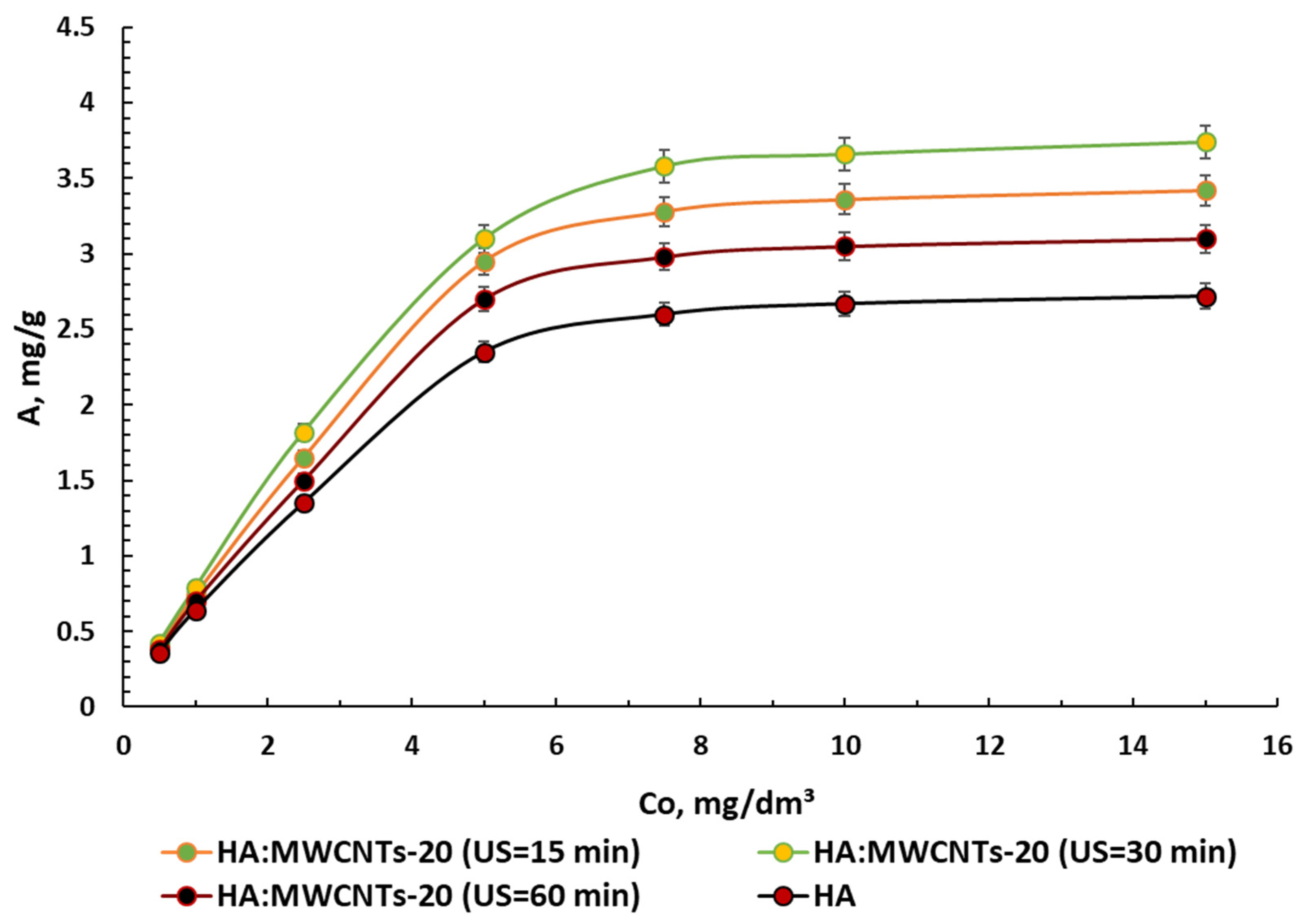
Figure 5 presents the phenol adsorption isotherms obtained for the initial HA and the HA:MWCNTs-20 composite synthesized at different ultrasonic treatment durations (15, 30, and 60 min). The HA:MWCNTs-20 composite was selected for phenol adsorption studies based on the preliminary comparative evaluation of the synthesized compositions. Among the investigated HA:MWCNTs ratios, this sample demonstrated the most favorable combination of product yield, elemental composition, and accessible oxygen-containing functional groups, which are important factors for interaction with phenol molecules. The HA:MWCNTs-10 composite contained a lower fraction of the carbon nanotube component, whereas HA:MWCNTs-30 showed a decrease in Σ(COOH+OH), which may be associated with partial shielding of humic functional groups at higher MWCNTs content. Therefore, HA:MWCNTs-20 was selected as the most promising composition for detailed adsorption studies and for evaluating the effect of ultrasonic treatment duration.
All obtained isotherms exhibit a characteristic convex shape with the appearance of a plateau as the equilibrium phenol concentration increases, indicating gradual saturation of the active adsorption sites of the sorbent. According to the Giles classification, the obtained dependences belong to L-type isotherms, which are characteristic of systems exhibiting pronounced adsorbate–adsorbent interactions. The observed shape of the isotherms also suggests that the adsorption process can be described using the Langmuir model.
Comparative analysis shows that modification of HA with MWCNTs enhances the adsorption capacity of the material toward phenol. Among the investigated samples, the highest adsorption capacity was observed for the HA:MWCNTs-20 composite obtained at US = 30 min. For this sample, the sorption capacity reaches 3.7–3.8 mg/g, exceeding the corresponding values for both the initial HA and the composites obtained at ultrasonic treatment durations of 15 and 60 min.
The composite synthesized at US = 15 min exhibits a somewhat lower adsorption capacity, which may be associated with an insufficient degree of MWCNTs dispersion and a less uniform distribution of nanotubes within the humic matrix, thereby limiting the accessibility of some adsorption-active sites. Increasing the ultrasonic treatment duration to 60 min results in a decrease in sorption capacity compared with the sample obtained at US = 30 min. The observed effect may be attributed to changes in the structural organization of the composite and a decrease in the accessibility of some oxygen-containing functional groups involved in interactions with phenol molecules.
The initial HA is characterized by the lowest adsorption capacity (2.6–2.7 mg/g), indicating the positive effect of MWCNTs incorporation on the sorption properties of the material. The enhanced adsorption performance of the composites may be associated with changes in surface structure and an expanded spectrum of interactions with phenol molecules, including π–π interactions, hydrogen bonding, and donor–acceptor interactions. The superior adsorption performance of the composite prepared at US = 30 min can therefore be explained by the combined effect of improved nanotube dispersion, higher accessibility of oxygen-containing functional groups, and enhanced structural homogeneity, as confirmed by the FTIR, SEM, conductometric titration, and thermogravimetric analyses.
The obtained results demonstrate that ultrasonic treatment duration has a significant influence on the adsorption properties of HA:MWCNTs composites. Among the investigated samples, the highest adsorption capacity was observed for the HA:MWCNTs-20 composite obtained at US = 30 min. The maximum sorption capacity of this composite is 3.7–3.8 mg/g, exceeding the values obtained for the initial HA and the composites synthesized at ultrasonic treatment durations of 15 and 60 min.
It should be noted that the obtained adsorption capacities were determined within the initial phenol concentration range of 0.5–15 mg/dm3, which was limited by the operating range of the analytical equipment used. The upper limit of the working range was 20 mg/dm3, which restricted the possibility of studying adsorption at higher phenol concentrations.
Therefore, the obtained results should not be directly compared with the sorption capacities of highly porous carbon adsorbents investigated at substantially higher phenol concentrations. According to literature data, activated carbons, multi-walled carbon nanotubes, and MWCNTs-based materials are capable of exhibiting considerably higher phenol adsorption capacities [
1,
6,
24,
33,
34]. The observed differences may be attributed to differences in the structure and surface chemistry of the sorbents, as well as variations in experimental conditions, including the phenol concentration range and adsorption parameters.
Thus, the HA:MWCNTs-20 composite should be considered a functional humic-carbon material that is promising for the removal of phenol from aqueous solutions at low contaminant concentrations. The obtained results indicate that the effectiveness of this material is determined by the combination of the humic matrix and MWCNTs, as well as by the possibility of regulating the accessibility of functional groups through variation of the ultrasonic treatment duration.
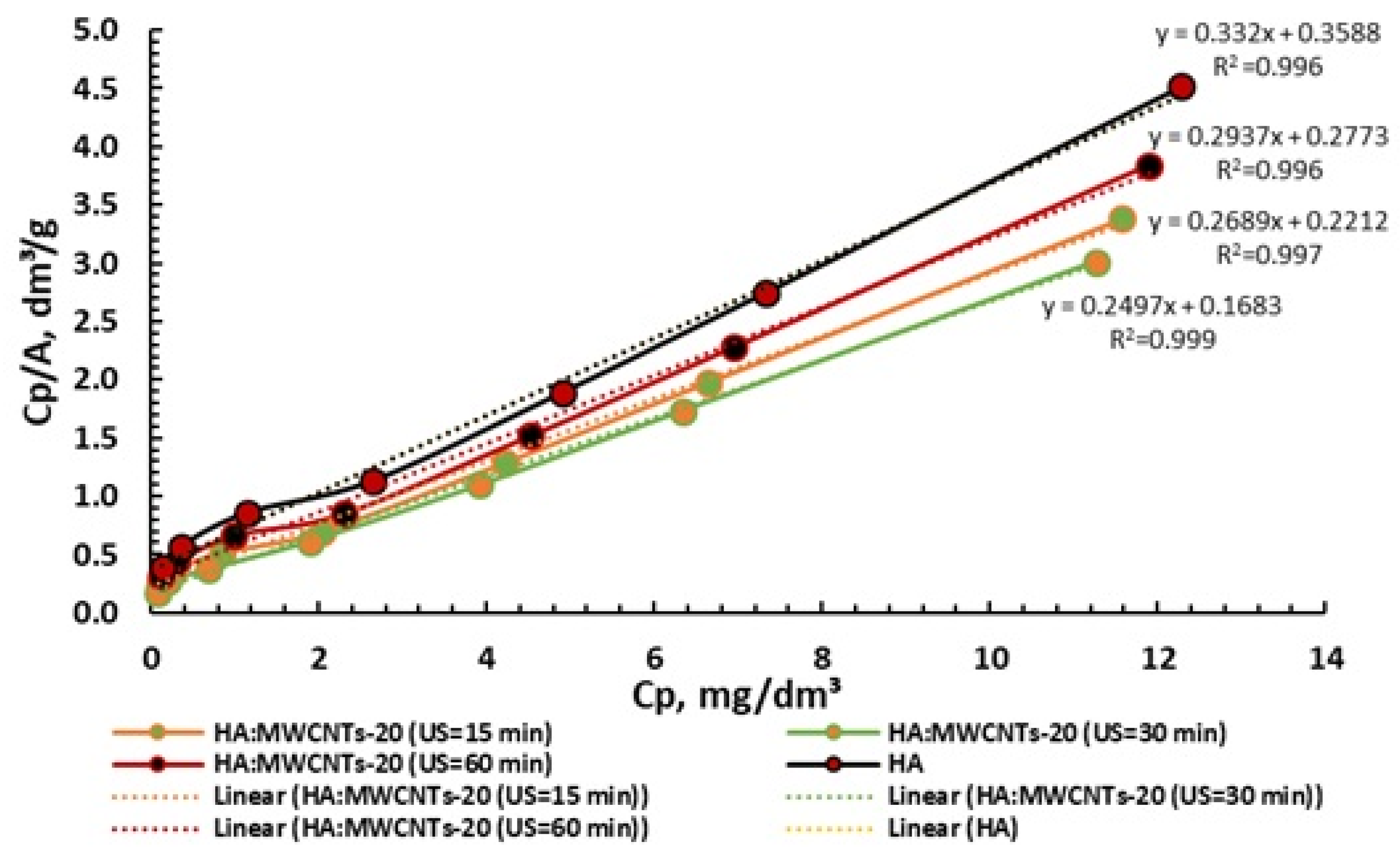
Figure 6 presents the experimental dependence of C
eq/A versus the equilibrium phenol concentration C
eq, plotted according to the linear form of the Langmuir equation.
For all investigated samples, a nearly linear relationship is observed in the coordinates of the Langmuir equation, indicating good applicability of this model for describing phenol adsorption on the investigated materials. The obtained dependence indicates the presence of a limited number of active adsorption sites and gradual filling of the surface by the adsorbate. At the same time, agreement with the Langmuir model should not be considered sufficient evidence for a strictly monolayer adsorption mechanism, since the process may also involve surface heterogeneity and intermolecular interactions between adsorbed molecules.
Comparative analysis of the slopes of the linear plots (1/Amax) demonstrates differences in the maximum sorption capacities of the investigated materials. The smallest slope, corresponding to the highest limiting adsorption capacity, is observed for the HA:MWCNTs-20 composite obtained at US = 30 min. This observation is consistent with the results obtained from the analysis of the experimental adsorption isotherms and indicates the highest adsorption performance of this sample toward phenol.
The initial HA exhibits a lower adsorption capacity compared with the composite materials. Modification of HA with multi-walled carbon nanotubes may contribute to increased accessibility of active sites and improvement of the sorption properties of the composites.
High correlation coefficients (r = 0.996–0.999) indicate excellent agreement between the experimental data and the Langmuir model and demonstrate its high applicability for describing phenol adsorption within the investigated concentration range. The obtained results suggest that adsorption proceeds predominantly on relatively homogeneous active sites of the surface. However, agreement with the Langmuir model should not be regarded as direct proof of a strictly monolayer adsorption mechanism.
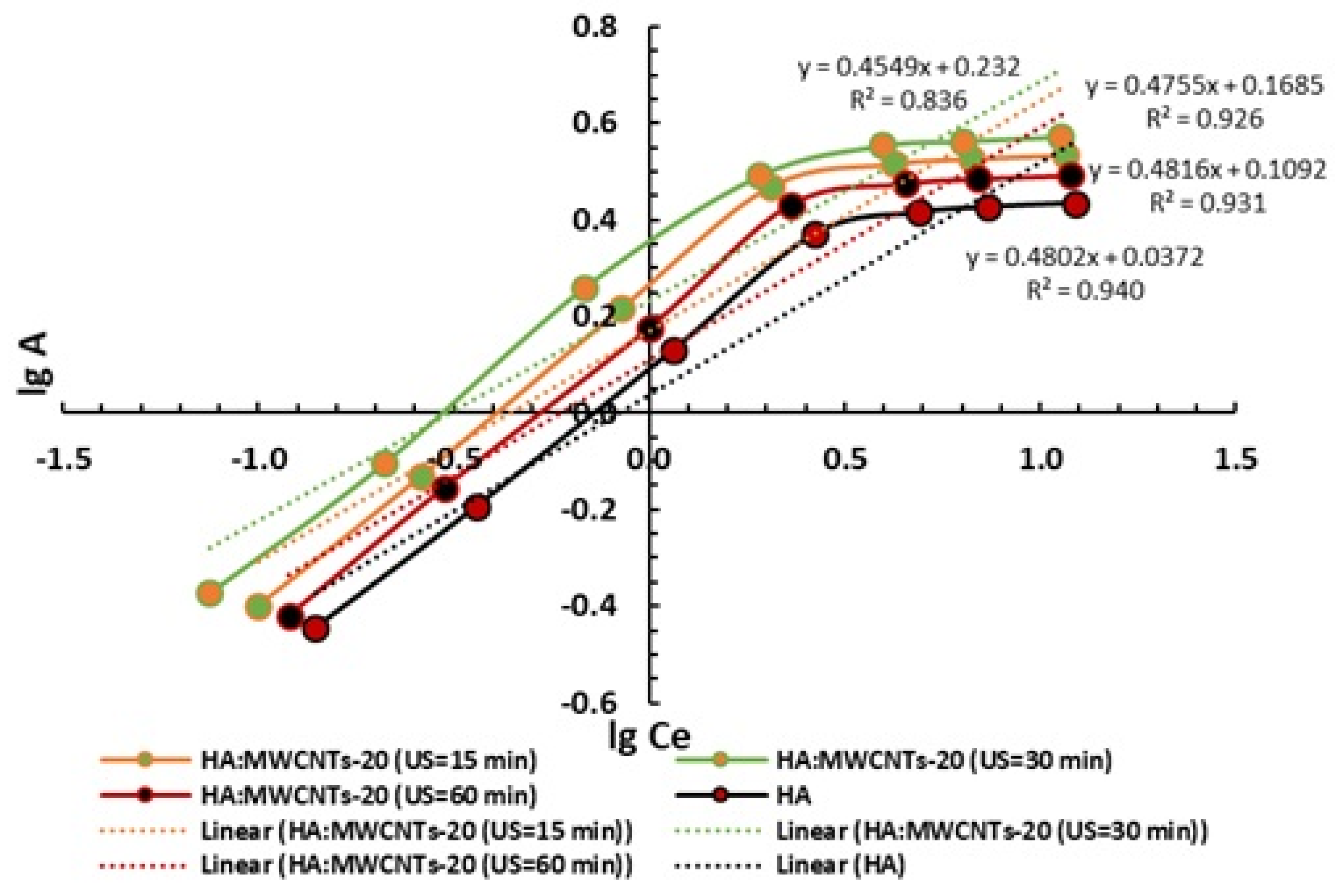
Figure 7 presents the phenol sorption isotherms on HA and HA:MWCNTs-20 composites plotted in the coordinates of the linear form of the Freundlich equation.
For all investigated samples, the Freundlich model provides a satisfactory description of the experimental data only within a limited concentration range. The correlation coefficients (r = 0.836–0.940) are lower than those obtained for the Langmuir model, indicating a less accurate agreement between the Freundlich model and the experimental data. The lower correlation coefficients and the observed deviations from linearity indicate the limited applicability of the Freundlich model for describing phenol adsorption within the investigated concentration range. Therefore, the results of the Freundlich approximation should be considered primarily as an additional characteristic of the energetic and structural heterogeneity of the adsorbent surface [
1].
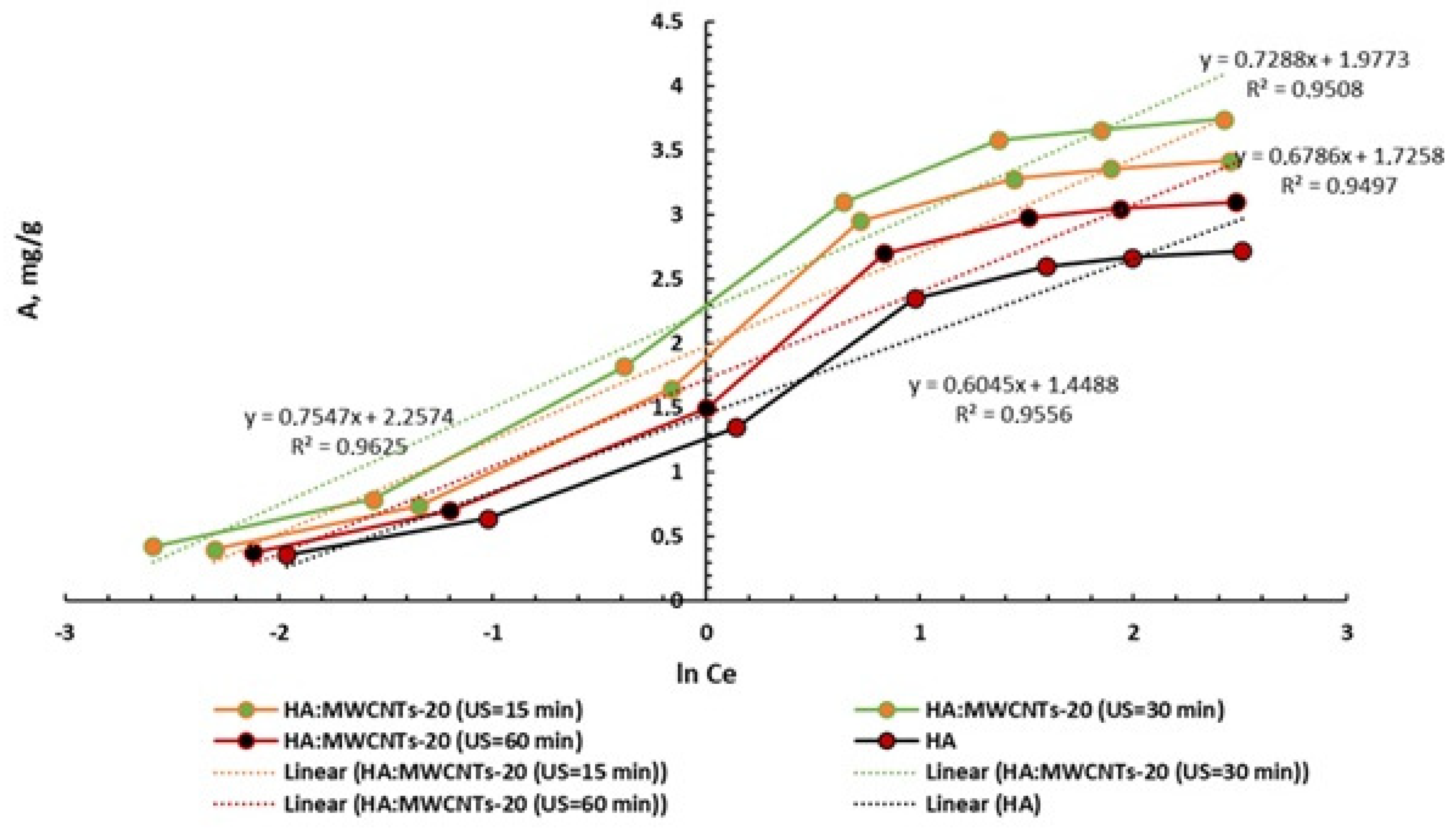
Figure 8 presents the phenol sorption isotherms on HA and HA:MWCNTs-20 composites obtained at different ultrasonic treatment durations in the coordinates of the linear form of the Temkin equation.
For additional evaluation of adsorbate–adsorbent interactions and the energetic heterogeneity of the surface, the experimental data were analyzed using the Temkin model. The linear relationships between A and ln Ceq obtained for all investigated samples are characterized by correlation coefficients in the range of r = 0.949–0.962, indicating satisfactory agreement between the experimental data and the Temkin model. The obtained results suggest a possible contribution of adsorbate–adsorbent interactions and a change in adsorption energy as the sorbent surface becomes progressively occupied.
Table 4,
Table 5 and
Table 6 present the results of the linear approximation of the experimental data for phenol adsorption on HA and HA:MWCNTs-20 composites obtained at different ultrasonic treatment durations, as well as the calculated parameters of the Langmuir, Freundlich, and Temkin models.
Comparative analysis of the linear approximation parameters and correlation coefficients presented in
Table 4,
Table 5 and
Table 6 demonstrates that the Langmuir model provides a better fit to the experimental data than the Freundlich and Temkin models. For all investigated samples, the correlation coefficients for the Langmuir model are in the range of r = 0.996–0.999, whereas for the Freundlich and Temkin models they fall within r = 0.836–0.940 and r = 0.950–0.963, respectively. These results indicate the higher applicability of the Langmuir model for describing the phenol adsorption process within the investigated concentration range.
The highest value of the limiting specific adsorption according to the Langmuir model was observed for the HA:MWCNTs-20 composite obtained at US = 30 min (A∞ = 4.0051 mg/g). This is accompanied by the maximum value of the adsorption equilibrium constant (KL = 1.4833 dm3/mg). The obtained results indicate a higher affinity of the surface of this composite toward phenol compared with the other investigated samples. For the composites obtained at US = 15 min and US = 60 min, the corresponding A∞ values are 3.7185 and 3.0490 mg/g, respectively, whereas for the initial HA, this parameter is 3.0124 mg/g.
The Freundlich model provides a satisfactory description of the experimental data only within a limited concentration range. At the same time, the parameters of the Freundlich model may be used as an additional characteristic of the energetic and structural heterogeneity of the adsorbent surface.
Compared with the Freundlich model, the Temkin model is characterized by higher correlation coefficients, which may indicate a significant contribution of adsorbate–adsorbent interactions and changes in adsorption energy as the surface becomes progressively occupied. Nevertheless, the highest correlation coefficients are observed for the Langmuir model, indicating its superior applicability for describing phenol adsorption on the investigated composite materials [
35].
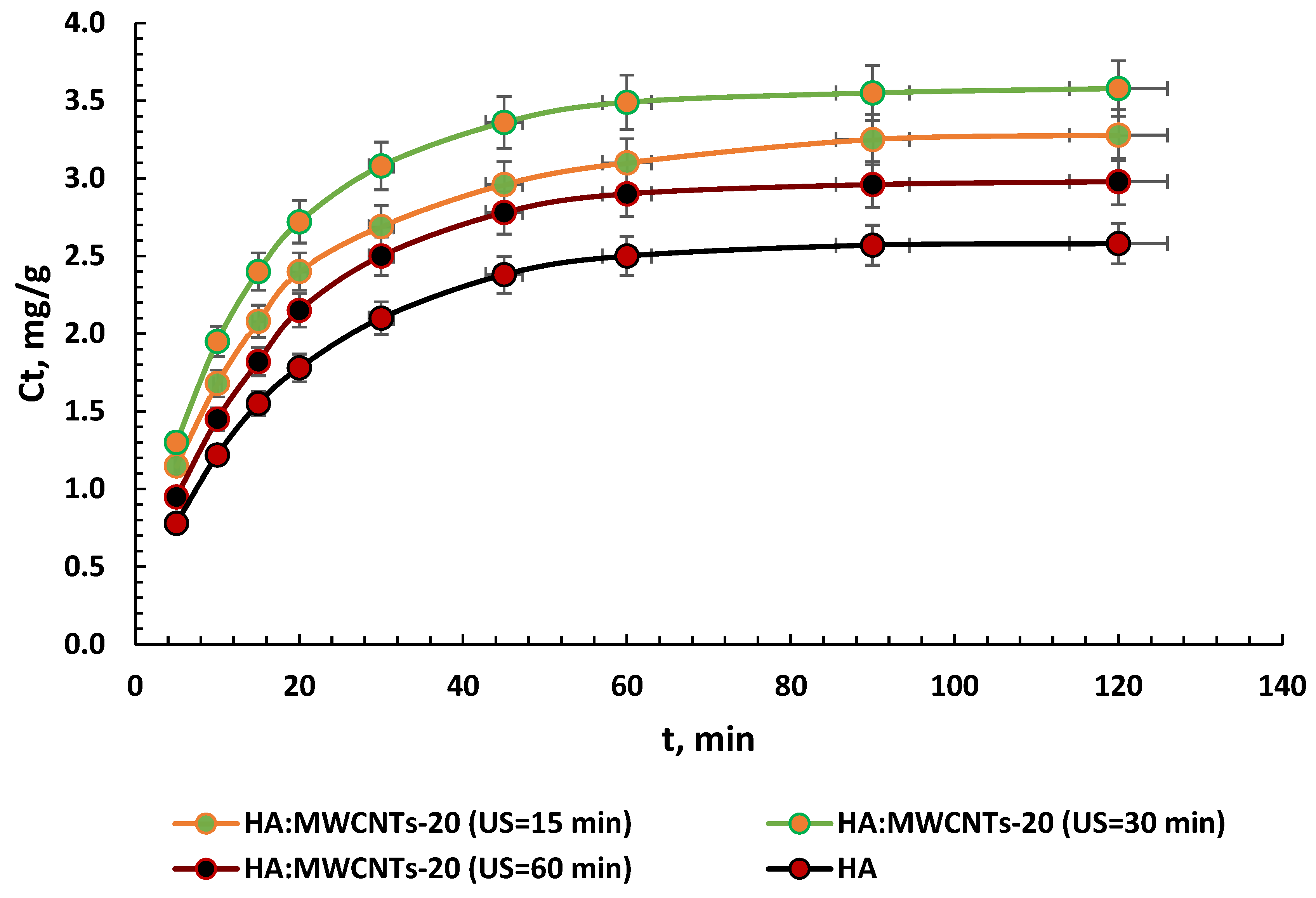
Figure 9 presents the time dependence of phenol adsorption on HA and HA:MWCNTs-20 composites obtained at different ultrasonic treatment durations.
Based on the experimental data, the parameters of three kinetic models were calculated and the corresponding correlation coefficients were determined, as presented in
Table 7.
Analysis of the kinetic data showed that phenol adsorption on HA and HA:MWCNTs-20 composites obtained at different ultrasonic treatment durations is most satisfactorily described by the pseudo-second-order model. For all investigated samples, the correlation coefficients of this model are the highest and fall within the range of r = 0.9979–0.9996, whereas for the pseudo-first-order and Weber-Morris models the corresponding values are r = 0.9593–0.9866 and r = 0.7990–0.8461, respectively.
The highest value of the pseudo-second-order rate constant (k2 = 0.0294) was observed for the composite obtained at US = 30 min, indicating the best agreement between the experimental data and this kinetic model. For the composites obtained at ultrasonic treatment durations of 15 min and 60 min, the corresponding k2 values are 0.0267 and 0.0273, respectively, while for the initial HA, this parameter equals 0.0281.
Thus, the obtained results demonstrate that modification of HA with MWCNTs leads to an increase in the adsorption capacity of the materials toward phenol. The results also indicate a significant influence of ultrasonic treatment duration on the formation of the structure and sorption properties of HA:MWCNTs-20 composites. It was established that the HA:MWCNTs-20 composite obtained at US = 30 min possesses the highest sorption characteristics among the investigated samples.
The obtained results are in agreement with the literature data, according to which the pseudo-second-order model provides higher correlation coefficients than the pseudo-first-order model and therefore more satisfactorily describes the kinetics of phenol adsorption. The Weber-Morris plots do not pass through the origin, indicating that intraparticle diffusion contributes to the adsorption process but is not the sole rate-limiting step [
33,
34].





 ,
,