High-Temperature Properties of Magnesium Ammonium Phosphate Cement Modified with Gold Tailings

 , ,
, , 
Abstract
1. Introduction
2. Materials and Methods
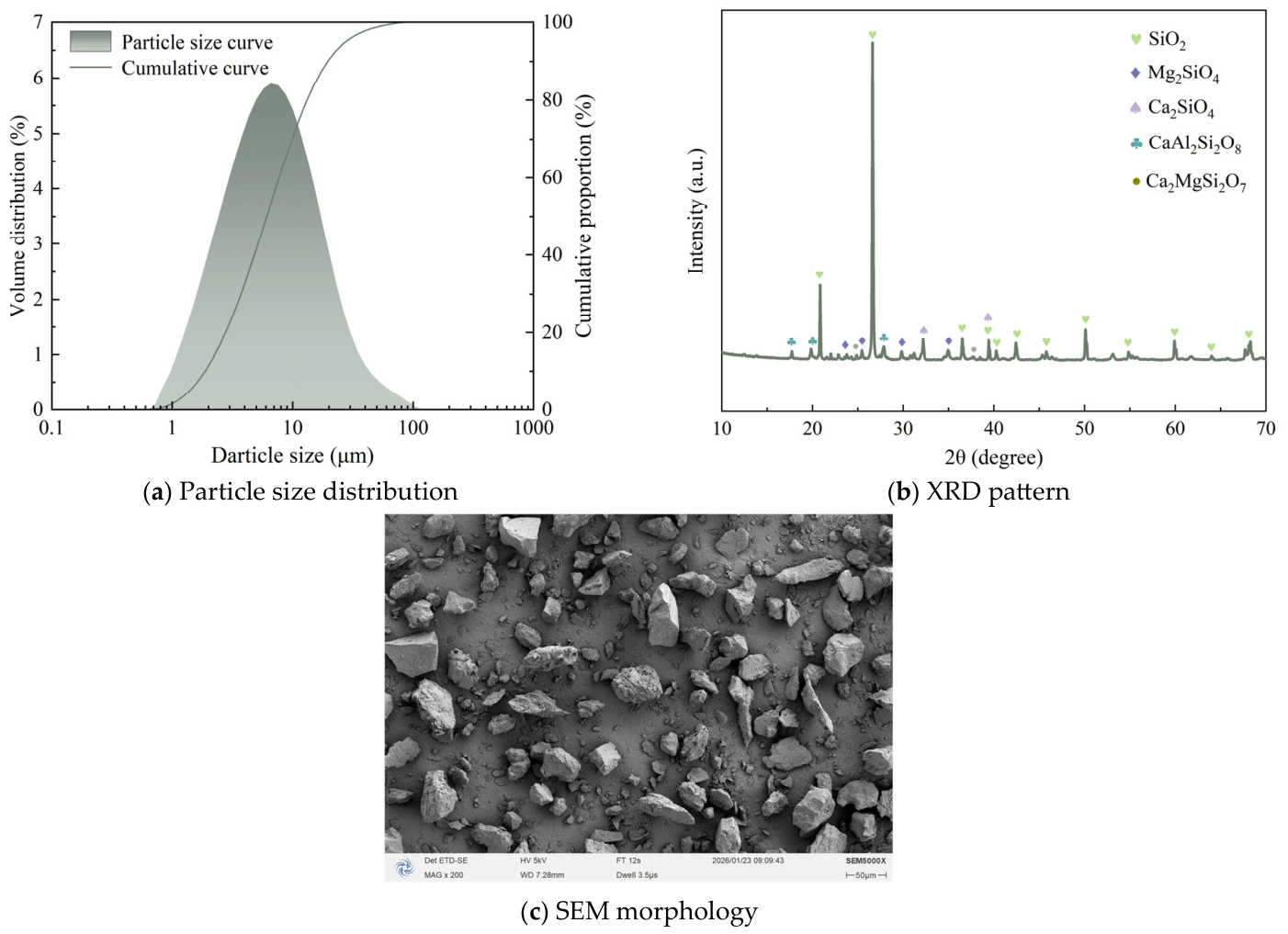
2.1. Raw Materials
2.2. Mix Proportions and Specimen Preparation
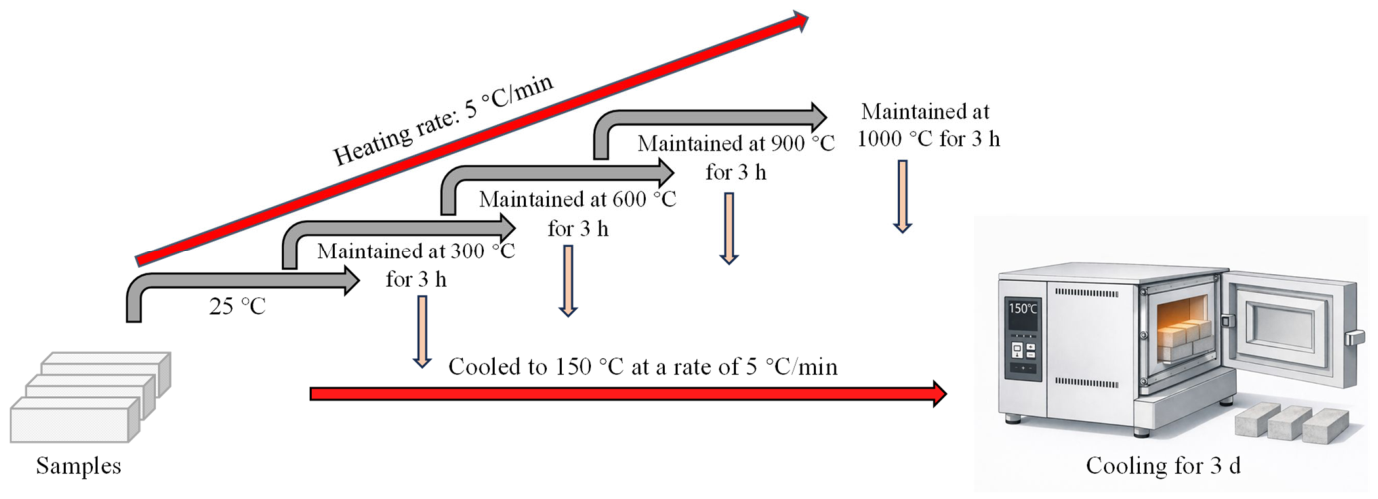
2.3. High-Temperature Exposure Regime
2.4. Test Methods
2.4.1. Setting Time
2.4.2. Fluidity
2.4.3. Mass Loss Rate
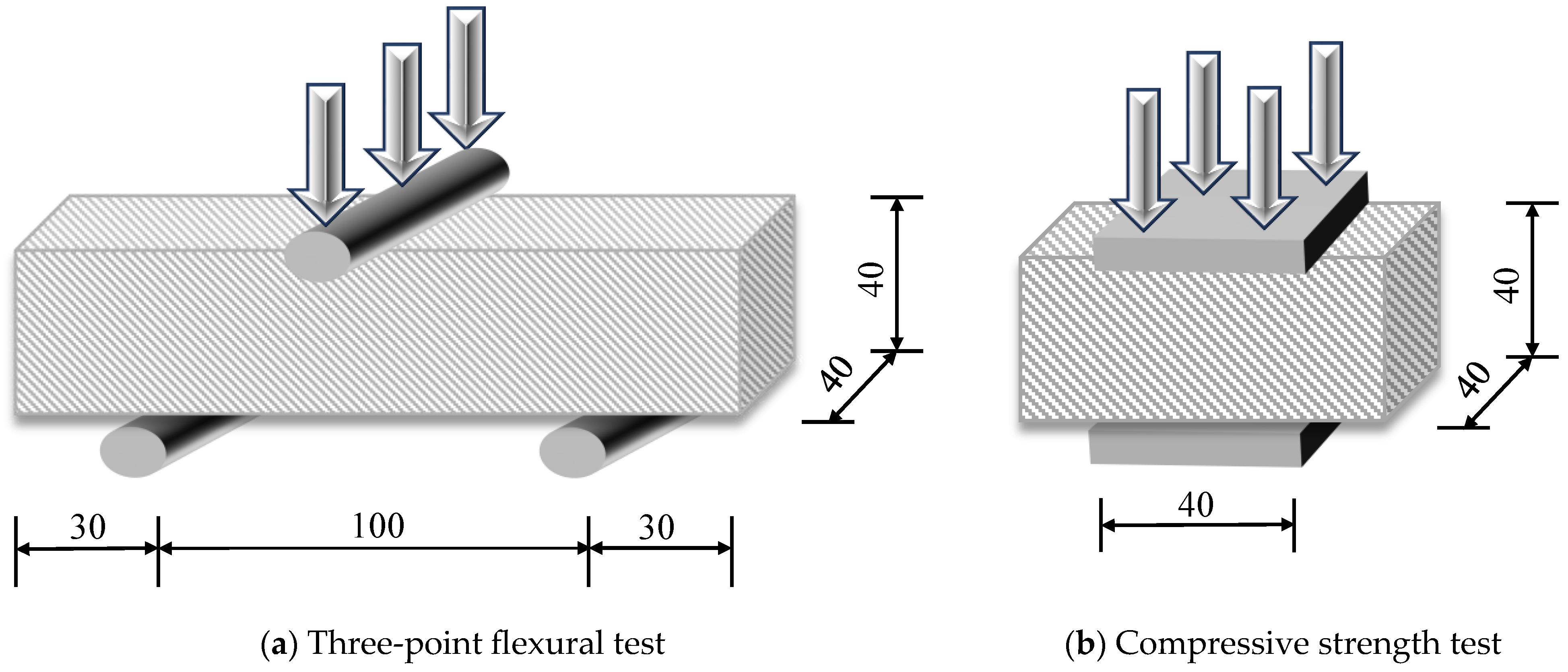
2.4.4. Strength Testing
2.4.5. XRD and SEM Tests
3. Results and Discussion
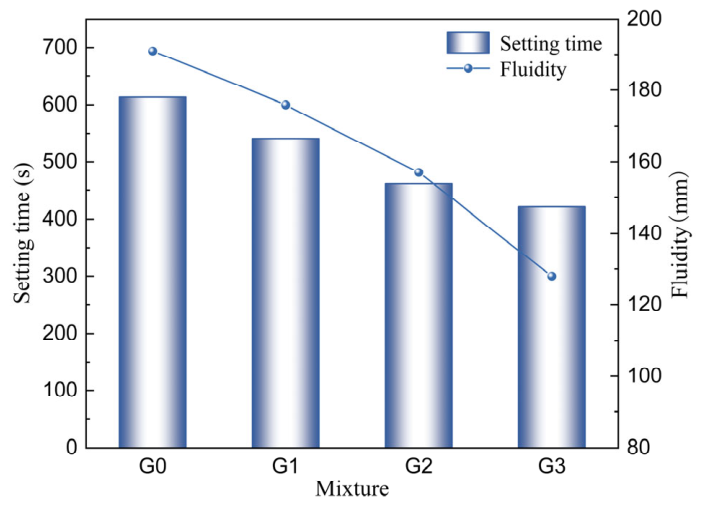
3.1. Setting Time and Fluidity
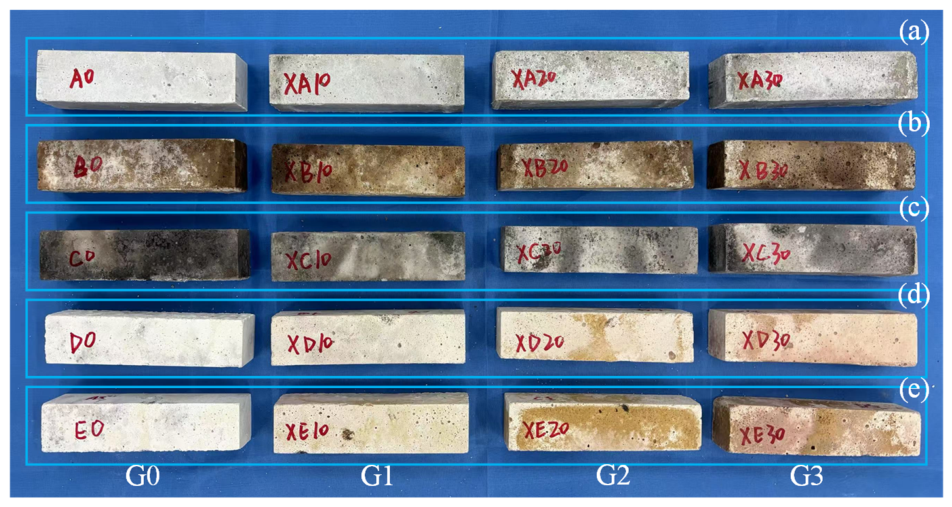
3.2. Visual Appearance
3.3. Mechanical Properties
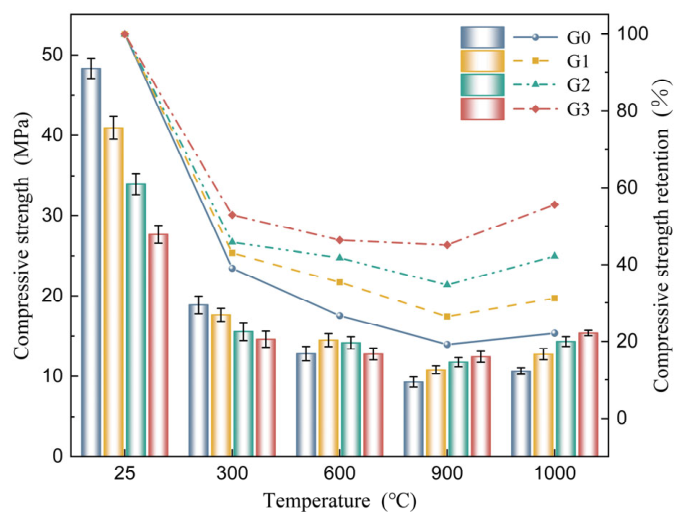
3.3.1. Compressive Strength
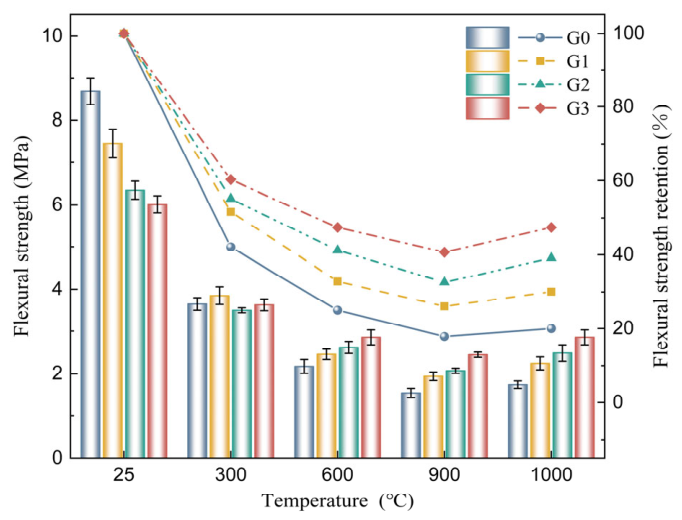
3.3.2. Flexural Strength
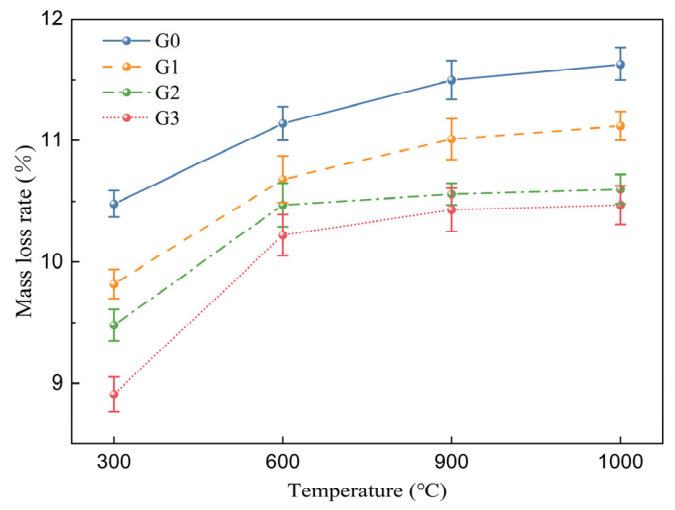
3.4. Variation in Mass Loss Rate
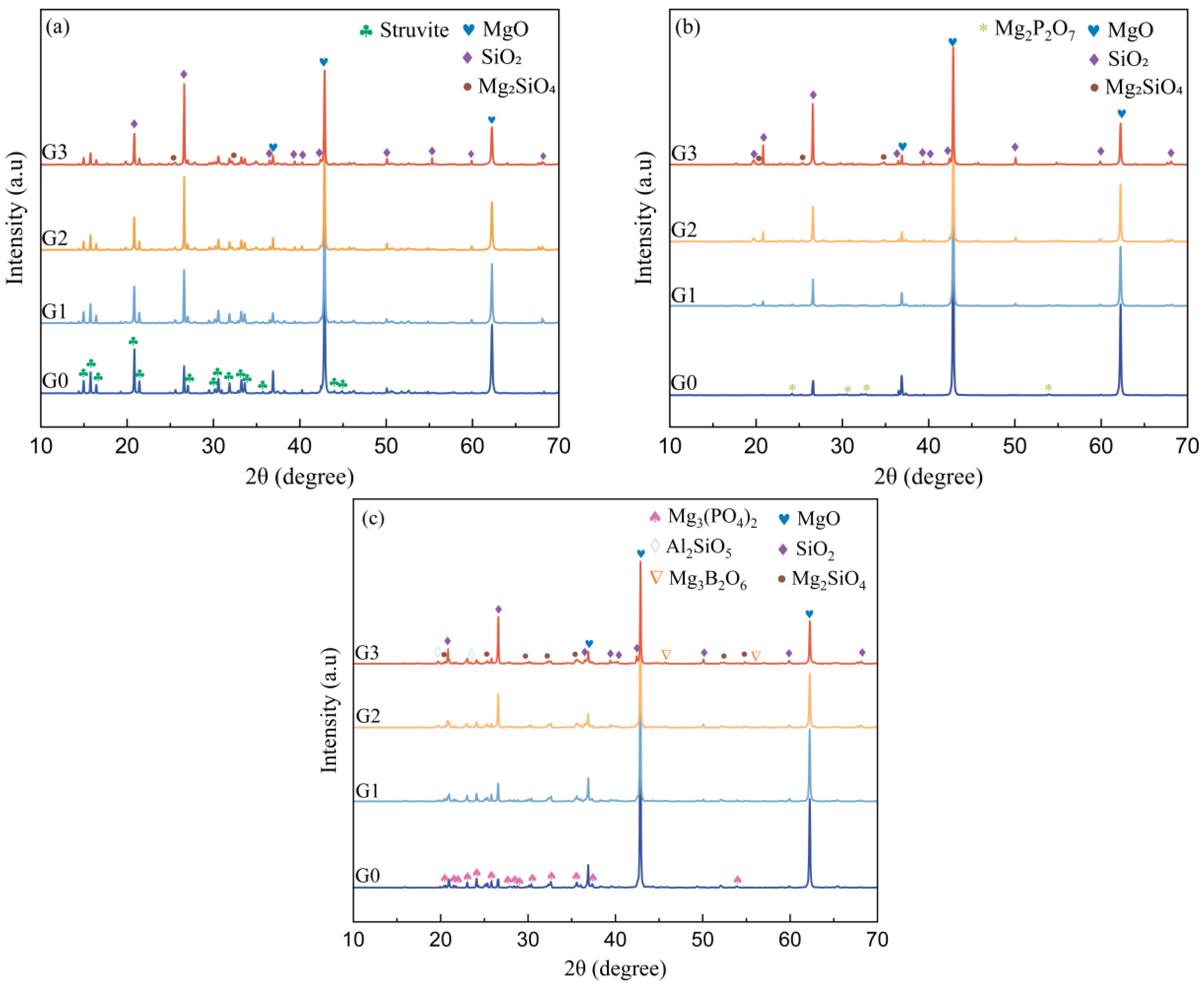
3.5. XRD Phase Analysis
3.5.1. Qualitative Phase Identification
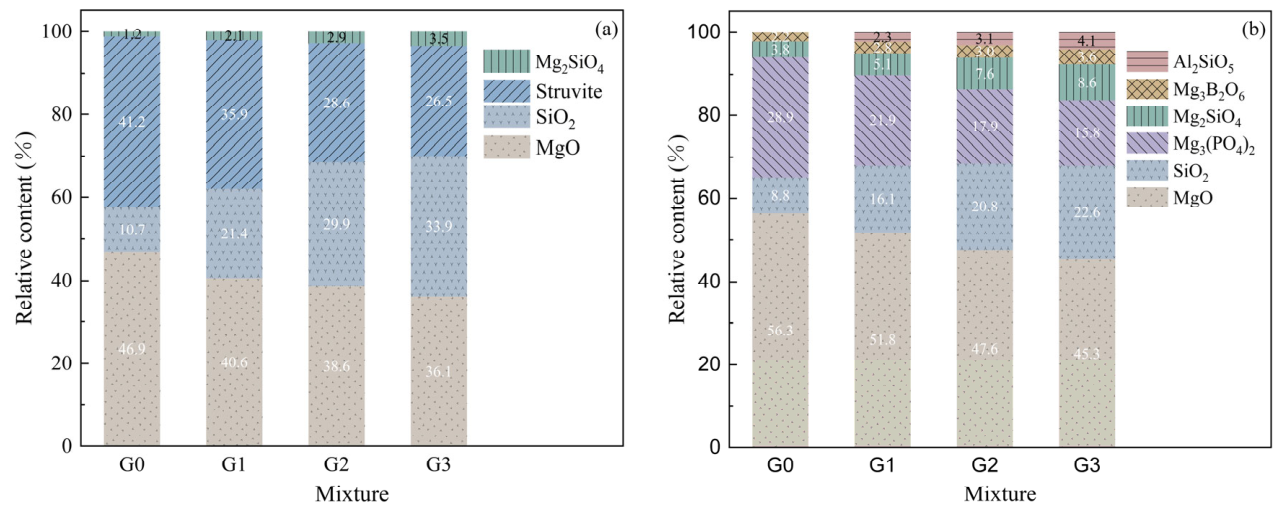
3.5.2. Semi-Quantitative Phase Analysis
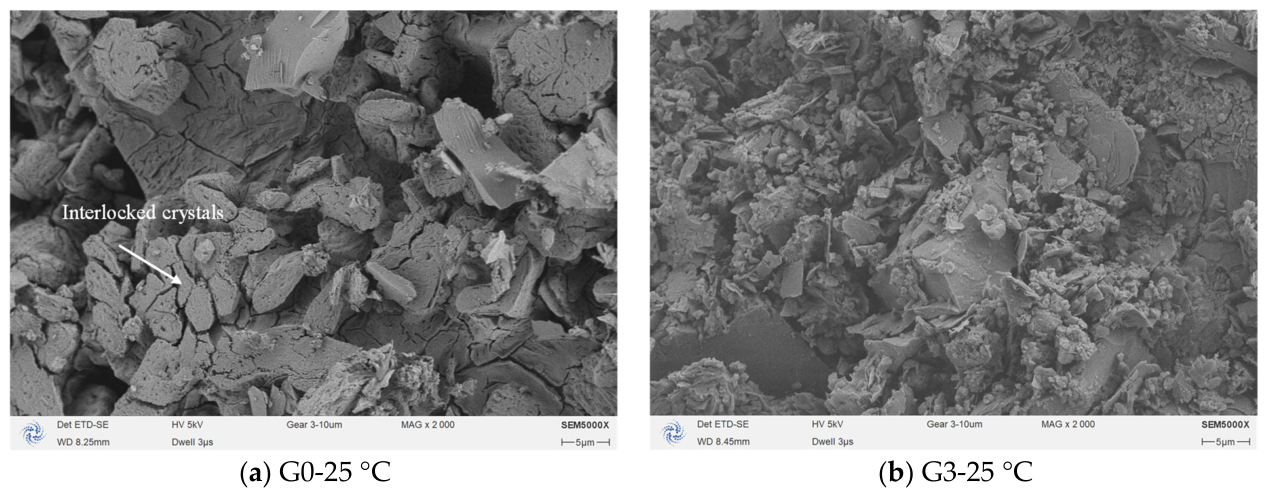
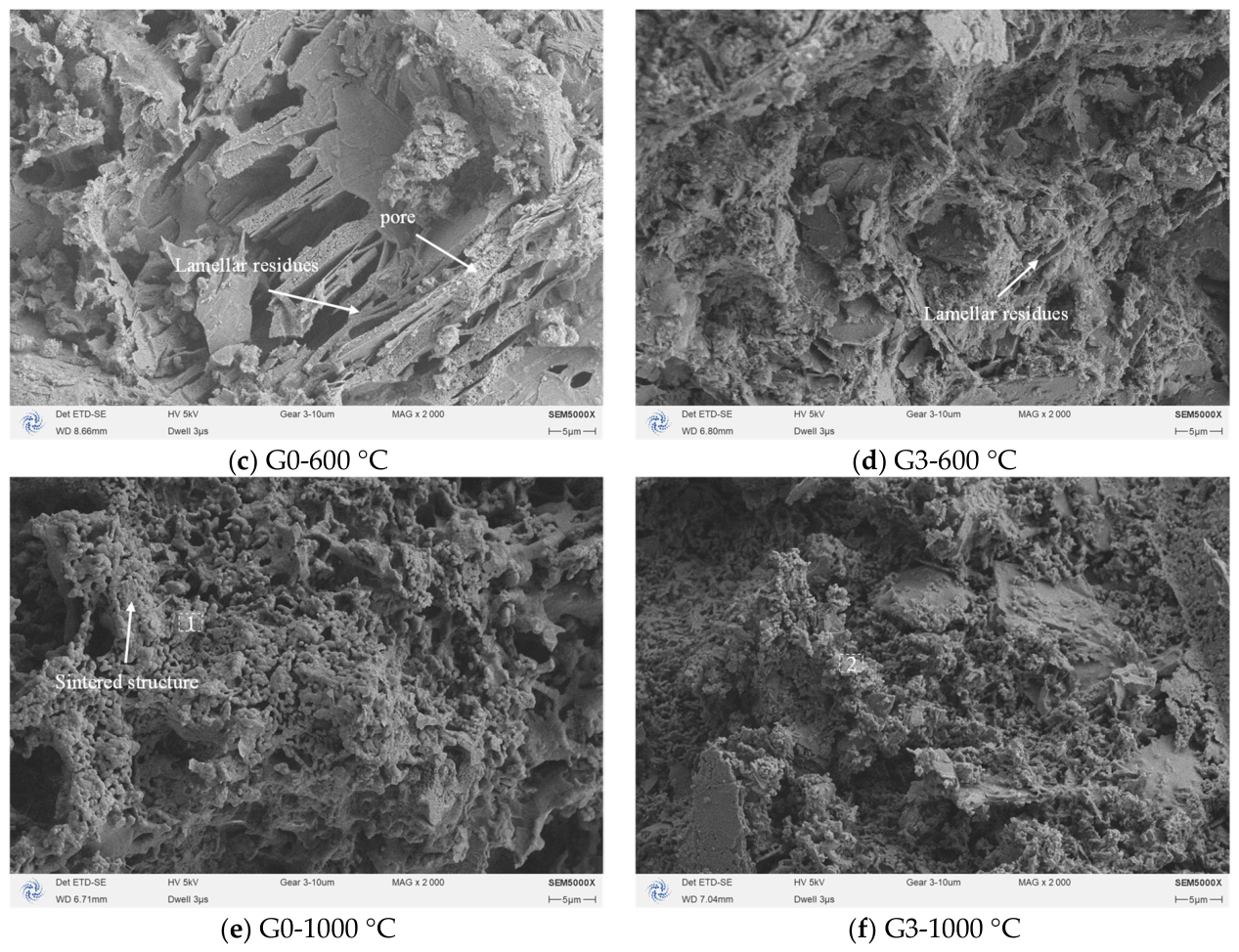
3.6. SEM Microstructural Analysis
4. Conclusions
- GT incorporation shortened the setting time of MAPC and reduced its fluidity. These changes may be related to MgO dissolution, variations in the retarding effect, the irregular morphology of GT particles, and increased interparticle friction.
- The surface color of MAPC specimens was mainly governed by temperature and changed noticeably with increasing temperature. At the same temperature, the GT-containing specimens appeared to exhibit less severe surface deterioration, which was beneficial for maintaining the visual integrity of the specimens after exposure to elevated temperatures.
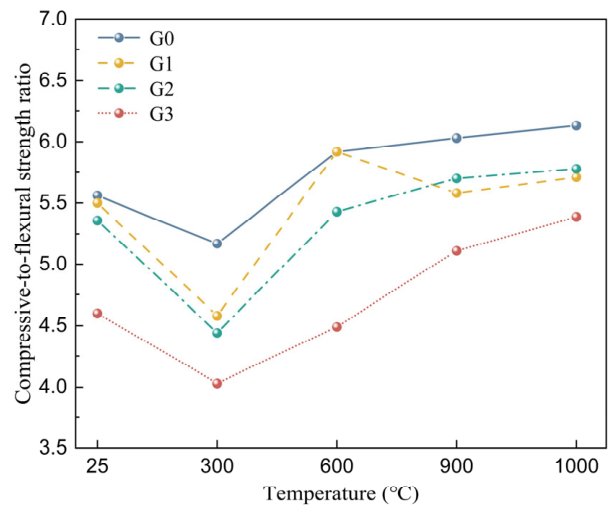
- At room temperature, the mechanical strength of MAPC decreased with increasing GT content, mainly owing to the reduced formation of the struvite binding phase and the decreased continuity of the crystalline binding skeleton. After exposure to elevated temperatures, MAPC exhibited marked strength degradation in the range of 300–600 °C. At 900 °C and above, the GT-containing specimens showed higher strength retention. At 1000 °C, the compressive strength of G3 was 15.37 MPa, which was approximately 44.0% higher than that of G0, and its flexural strength retention reached 47.42%.
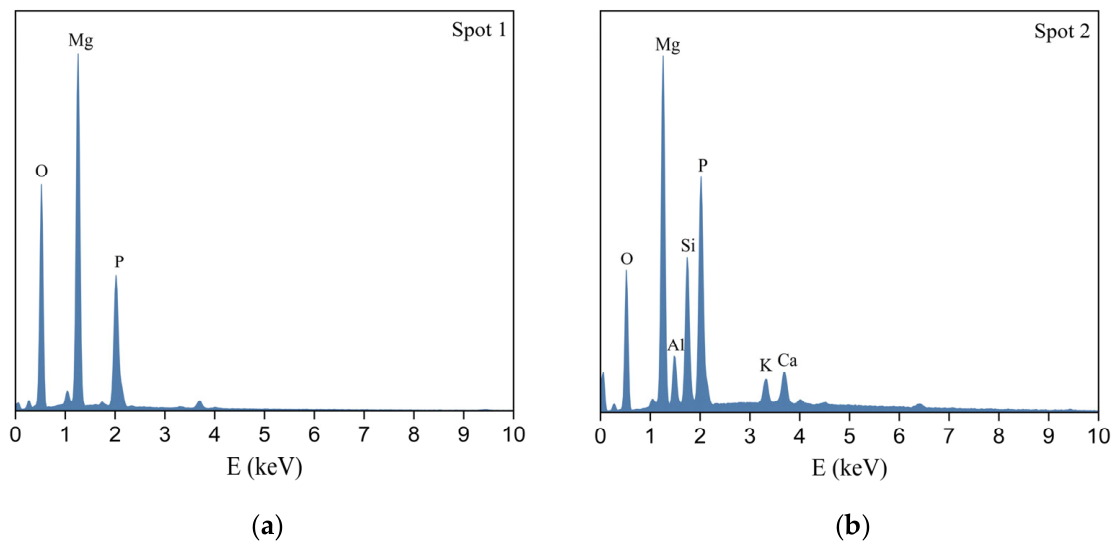
- The thermal decomposition of struvite and the release of volatile components, such as NH3 and water of crystallization, were important causes of the increased mass loss rate and strength deterioration of MAPC. At 1000 °C, the formation of thermally stable phases, including Mg3(PO4)2, Mg2SiO4, and aluminosilicates, may have contributed to the recovery in strength.
- Within the experimental scope of this study, GT incorporation improved the residual mechanical properties of MAPC after exposure to elevated temperatures, and the specimen containing 30% GT showed comparatively superior performance. A GT content of 20–30% can be considered as a reference range for the further optimization of MAPC-based heat-resistant repair materials.
Author Contributions
Funding
Data Availability Statement
Acknowledgments
Conflicts of Interest
References
- Sugama, T.; Kukacka, L. Magnesium monophosphate cements derived from diammonium phosphate solutions. Cem. Concr. Res. 1983, 13, 407–416. [Google Scholar] [CrossRef] [Scilit]
- Walling, S.A.; Provis, J.L. Magnesia-based cements: A journey of 150 years, and cements for the future? Chem. Rev. 2016, 116, 4170–4204. [Google Scholar] [CrossRef] [Scilit] [PubMed]
- Dabarera, A.; Fernández, R.; Provis, J.L. A systematic review of engineering properties of magnesium potassium phosphate cement as a repair material. Front. Mater. 2024, 11, 1451079. [Google Scholar] [CrossRef] [Scilit]
- Xu, B.; Lothenbach, B.; Winnefeld, F. Influence of wollastonite on hydration and properties of magnesium potassium phosphate cements. Cem. Concr. Res. 2020, 131, 106012. [Google Scholar] [CrossRef] [Scilit]
- Li, Y.; Sun, J.; Chen, B. Experimental study of magnesia and M/P ratio influencing properties of magnesium phosphate cement. Constr. Build. Mater. 2014, 65, 177–183. [Google Scholar] [CrossRef] [Scilit]
- Zhang, X.; Li, G.; Niu, M.; Song, Z. Effect of calcium aluminate cement on water resistance and high-temperature resistance of magnesium-potassium phosphate cement. Constr. Build. Mater. 2018, 175, 768–776. [Google Scholar]
- Tan, Y.; Gardner, L.J.; Walkley, B.; Hussein, O.H.; Ding, H.; Sun, S.; Yu, H.; Hyatt, N.C. Optimization of magnesium potassium phosphate cements using ultrafine fly ash and fly ash. ACS Sustain. Chem. Eng. 2023, 11, 3194–3207. [Google Scholar] [CrossRef] [Scilit] [PubMed]
- Chhaiba, S.; Martinez-Sanchez, S.; Husillos-Rodriguez, N.; Palomo, Á.; Kinoshita, H.; Garcia-Lodeiro, I. Durability of magnesium potassium phosphate cements (MKPCs) under chemical attack. Materials 2024, 17, 4252. [Google Scholar] [CrossRef] [Scilit] [PubMed]
- Soudée, E.; Péra, J. Mechanism of setting reaction in magnesia-phosphate cements. Cem. Concr. Res. 2000, 30, 315–321. [Google Scholar] [CrossRef] [Scilit]
- Yang, Y.; Liu, Y.; Yan, Z.; Chen, Z. High-temperature resistance of modified potassium magnesium phosphate cement. Materials 2022, 15, 8967. [Google Scholar] [CrossRef] [Scilit] [PubMed]
- Yu, J.; Qian, J.; Chen, H.; Ji, Y.; Kuang, D.; Jia, X.; Guan, B. Behavior of magnesium phosphate cement with addition of sulphoaluminate cement at elevated temperatures. Constr. Build. Mater. 2023, 401, 132932. [Google Scholar] [CrossRef] [Scilit]
- Dai, X.; Zhang, P.; Gao, Z.; Qian, J. Improving volume stability of magnesium phosphate cement at high temperatures by adding alumina-bearing admixtures. Constr. Build. Mater. 2025, 487, 142088. [Google Scholar] [CrossRef] [Scilit]
- Li, Y.; Shi, T.; Chen, B.; Li, Y. Performance of magnesium phosphate cement at elevated temperatures. Constr. Build. Mater. 2015, 91, 126–132. [Google Scholar] [CrossRef] [Scilit]
- Neiman, R.; Sarma, A.C. Setting and thermal reactions of phosphate investments. J. Dent. Res. 1980, 59, 1478–1485. [Google Scholar] [CrossRef] [Scilit] [PubMed]
- Runqing, L.; Wei, W.; Dingwen, Q.; Yuanquan, Y. Static and dynamic mechanical properties of magnesium phosphate cement modified by metakaolin after high-temperature treatment. Constr. Build. Mater. 2023, 392, 131933. [Google Scholar] [CrossRef] [Scilit]
- Fang, Y.; Cui, P.; Ding, Z.; Zhu, J.-X. Properties of a magnesium phosphate cement-based fire-retardant coating containing glass fiber or glass fiber powder. Constr. Build. Mater. 2018, 162, 553–560. [Google Scholar] [CrossRef] [Scilit]
- Çelik, Ö.; Elbeyli, I.Y.; Piskin, S. Utilization of gold tailings as an additive in Portland cement. Waste Manag. Res. 2006, 24, 215–224. [Google Scholar] [CrossRef] [Scilit] [PubMed]
- Araujo, F.S.; Taborda-Llano, I.; Nunes, E.B.; Santos, R.M. Recycling and reuse of mine tailings: A review of advancements and their implications. Geosciences 2022, 12, 319. [Google Scholar] [CrossRef] [Scilit]
- Zhao, Z.; Ji, C.; Wang, J.; Zhu, L.; Wang, D.; Tošić, N. Investigation of gold mine tailings as supplementary cementitious material: Performance and carbon footprint. J. Clean. Prod. 2025, 518, 145933. [Google Scholar] [CrossRef] [Scilit]
- Tapfuma, A.; Mutimutema, P.; Bazhko, O.; Nkabinde, S.; Ledwaba, M.; Kabangu, J.M.; Chiwaye, N.; Muller, E.; Ndlovu, G. Gold tailing metal extraction and sustainable end-use: A closed-loop review. Miner. Eng. 2026, 239, 110075. [Google Scholar]
- Zhang, Y.; Wan, Z.; Wang, L.; Guo, B.; Ma, B.; Chen, L.; Tsang, D.C. Designing magnesium phosphate cement for stabilization/solidification of Zn-rich electroplating sludge. Environ. Sci. Technol. 2022, 56, 9398–9407. [Google Scholar] [CrossRef] [Scilit] [PubMed]
- Padin, J.M.B.; Balayo, K.L.P.; Rapanot, E.M.S.; Logrosa, G.T. Material reusability in mine waste: A review on utilization of gold ore tailings in concrete production. Sustain. Chem. One World 2026, 9, 100159. [Google Scholar] [CrossRef] [Scilit]
- Xu, C.; Han, J.; Yang, Y. A review on magnesium potassium phosphate cement: Characterization methods. J. Build. Eng. 2024, 82, 108284. [Google Scholar] [CrossRef] [Scilit]
- Meng, X.; Jiang, Y.; Chen, B.; Wang, L. Research progress on the setting time and solidification mechanism of magnesium phosphate cement: A review. Constr. Build. Mater. 2023, 408, 133612. [Google Scholar] [CrossRef] [Scilit]
- Zhang, Z.; Ruan, W.; He, X.; Cai, M.; Liu, J.; She, Y.; Yan, M.; Li, K.; Liao, J. Comparative study on the effect of bauxite tailings on properties of magnesium-phosphate-cement-based materials before and after calcination. Constr. Build. Mater. 2024, 411, 134665. [Google Scholar]
- Zhu, Y.; Wang, Z.; Li, Z.; Yu, H. Experimental research on the utilization of gold mine tailings in magnesium potassium phosphate cement. J. Build. Eng. 2022, 45, 103313. [Google Scholar] [CrossRef] [Scilit]
- Qin, L.; Xie, Q.; Yang, J.; Bao, J.; Song, Q.; Wang, S.; Yu, Q.; Niu, D.; Zhang, P. Effect of coal fly ash and CO2 curing on performance of magnesium potassium phosphate cement. J. CO2 Util. 2024, 86, 102921. [Google Scholar] [CrossRef] [Scilit]
- Gelli, R.; Tonelli, M.; Martini, F.; Calucci, L.; Borsacchi, S.; Ridi, F. Effect of borax on the hydration and setting of magnesium phosphate cements. Constr. Build. Mater. 2022, 348, 128686. [Google Scholar] [CrossRef] [Scilit]
- GB/T 1346-2011; Test Methods for Water Requirement of Normal Consistency, Setting Time and Soundness of Portland Cement. Standards Press of China: Beijing, China, 2011.
- JC/T 2537-2019; Magnesium Phosphate Repairing Mortar. China Building Materials Press: Beijing, China, 2019.
- GB/T 17671-1999; Method of Testing Cements—Determination of Strength. Standards Press of China: Beijing, China, 1999.
- Xu, B.; Winnefeld, F.; Kaufmann, J.; Lothenbach, B. Influence of magnesium-to-phosphate ratio and water-to-cement ratio on hydration and properties of magnesium potassium phosphate cements. Cem. Concr. Res. 2019, 123, 105781. [Google Scholar] [CrossRef] [Scilit]
- Li, Y.; Chen, B. Factors that affect the properties of magnesium phosphate cement. Constr. Build. Mater. 2013, 47, 977–983. [Google Scholar] [CrossRef] [Scilit]
- Xu, B.; Lothenbach, B.; Leemann, A.; Winnefeld, F. Reaction mechanism of magnesium potassium phosphate cement with high magnesium-to-phosphate ratio. Cem. Concr. Res. 2018, 108, 140–151. [Google Scholar] [CrossRef] [Scilit]
- Le Rouzic, M.; Chaussadent, T.; Platret, G.; Stefan, L. Mechanisms of k-struvite formation in magnesium phosphate cements. Cem. Concr. Res. 2017, 91, 117–122. [Google Scholar] [CrossRef] [Scilit]
- Zhang, T.; Chen, H.; Li, X.; Zhu, Z. Hydration behavior of magnesium potassium phosphate cement and stability analysis of its hydration products through thermodynamic modeling. Cem. Concr. Res. 2017, 98, 101–110. [Google Scholar] [CrossRef] [Scilit]
- Yue, Y.; Ren, J.; Yang, K.; Wang, D.; Qian, J.; Bai, Y. Investigation and optimisation of the rheological properties of magnesium potassium phosphate cement with response surface methodology. Materials 2022, 15, 6815. [Google Scholar] [CrossRef] [Scilit] [PubMed]
- Zhang, H.; Zhang, Q.; Tang, S.; Pei, Y.; Skoczylas, F. Effects of fly ash and silica fume on the rheological properties of magnesium phosphate cement-emulsified asphalt (MPC-EA) composite repair materials. Constr. Build. Mater. 2024, 433, 136708. [Google Scholar]
- Gao, X.; Zhang, A.; Li, S.; Sun, B.; Zhang, L. The resistance to high temperature of magnesia phosphate cement paste containing wollastonite. Mater. Struct. 2016, 49, 3423–3434. [Google Scholar]
- Gardner, L.; Lejeune, V.; Corkhill, C.; Bernal, S.; Provis, J.; Stennett, M.; Hyatt, N. Evolution of phase assemblage of blended magnesium potassium phosphate cement binders at 200 and 1000 °C. Adv. Appl. Ceram. 2015, 114, 386–392. [Google Scholar]
- Qian, W.; Sun, W.; Li, R.; Wang, J.; Zhan, S. Study on the high temperature performance of magnesium and potassium phosphate cement mixed with sucrose and its mechanism of action. Constr. Build. Mater. 2024, 449, 138523. [Google Scholar] [CrossRef] [Scilit]
- Frost, R.; Weier, M.; Erickson, K.L. Thermal decomposition of struvite. J. Therm. Anal. Calorim. 2004, 76, 1025–1033. [Google Scholar] [CrossRef] [Scilit]
- Sierra-Beltran, M.G.; Jonkers, H.; Schlangen, E. Characterization of sustainable bio-based mortar for concrete repair. Constr. Build. Mater. 2014, 67, 344–352. [Google Scholar] [CrossRef] [Scilit]
- Sarkar, A. Hydration/dehydration characteristics of struvite and dittmarite pertaining to magnesium ammonium phosphate cement systems. J. Mater. Sci. 1991, 26, 2514–2518. [Google Scholar] [CrossRef] [Scilit]
- Gardner, L.J.; Walling, S.A.; Corkhill, C.L.; Bernal, S.A.; Lejeune, V.; Stennett, M.C.; Provis, J.L.; Hyatt, N.C. Temperature transformation of blended magnesium potassium phosphate cement binders. Cem. Concr. Res. 2021, 141, 106332. [Google Scholar] [CrossRef] [Scilit]
- Liu, Y.; Chen, Z.; Ni, H.; Liu, K.; He, J. High-temperature properties of fly ash and silica fume composite magnesium potassium phosphate cement. Constr. Build. Mater. 2024, 441, 137487. [Google Scholar] [CrossRef] [Scilit]
- Lavanya, A. Investigation of thermal degradation pathway and kinetics of struvite recovered from dairy wastewater via thermogravimetric studies. J. Therm. Anal. Calorim. 2026, 151, 1349–1357. [Google Scholar]
- Lahalle, H.; Coumes, C.C.D.; Mesbah, A.; Lambertin, D.; Cannes, C.; Delpech, S.; Gauffinet, S. Investigation of magnesium phosphate cement hydration in diluted suspension and its retardation by boric acid. Cem. Concr. Res. 2016, 87, 77–86. [Google Scholar] [CrossRef] [Scilit]
- Lahalle, H.; Coumes, C.C.D.; Mercier, C.; Lambertin, D.; Cannes, C.; Delpech, S.; Gauffinet, S. Influence of the w/c ratio on the hydration process of a magnesium phosphate cement and on its retardation by boric acid. Cem. Concr. Res. 2018, 109, 159–174. [Google Scholar] [CrossRef] [Scilit]
- Wang, N.; Bi, W.; Guo, F.; Guan, Y.; Li, J. Effect of silica fume on the properties of magnesium ammonium phosphate cement at room temperature and high temperatures. J. Mater. Civ. Eng. 2024, 36, 04024221. [Google Scholar] [CrossRef] [Scilit]
- Hefney, S.; Awotoye, D.T.; Fairley, N.; Laskin, A.; Baltrusaitis, J. In Situ ATR-FTIR Nonisothermal Kinetic Analysis of Struvite–Dittmarite Thermal Transformation. ACS Earth Space Chem. 2026, 10, 815–828. [Google Scholar] [CrossRef] [Scilit] [PubMed]
- Preobrazhenskiy, I.I.; Deyneko, D.V.; Murashko, A.M.; Klimashina, E.S.; Filippov, Y.Y.; Evdokimov, P.V.; Putlayev, V.I. Ceramic materials based on magnesium orthophosphate for biomedical applications. Mendeleev Commun. 2025, 35, 614–616. [Google Scholar] [CrossRef] [Scilit]
- Zhang, S.; Li, L.; Lv, X. Synthesis and characterization of a novel Mg3(PO4)2 ceramic with low dielectric constant. J. Mater. Sci. Mater. Electron. 2017, 28, 1620–1623. [Google Scholar]







| Raw Material | SiO2 | Al2O3 | Fe2O3 | K2O | MgO | CaO | Na2O | Others |
|---|---|---|---|---|---|---|---|---|
| GT | 68.51 | 17.20 | 5.07 | 4.90 | 1.57 | 1.41 | 0.96 | 0.38 |
| MgO | 0.65 | 0.21 | 0.16 | - | 96.68 | 2.06 | - | 0.24 |
| Mixture | Binder Composition (%) | B/M | W/C | S/C | ||
|---|---|---|---|---|---|---|
| MgO | NH4H2PO4 | GT | ||||
| G0 | 80 | 20 | 0 | 0.05 | 0.18 | 1 |
| G1 | 72 | 18 | 10 | |||
| G2 | 64 | 16 | 20 | |||
| G3 | 56 | 14 | 30 | |||
Disclaimer/Publisher’s Note: The statements, opinions and data contained in all publications are solely those of the individual author(s) and contributor(s) and not of MDPI and/or the editor(s). MDPI and/or the editor(s) disclaim responsibility for any injury to people or property resulting from any ideas, methods, instructions or products referred to in the content. |
© 2026 by the authors. Licensee MDPI, Basel, Switzerland. This article is an open access article distributed under the terms and conditions of the Creative Commons Attribution (CC BY) license.
Share and Cite
Zeng, Z.; Yu, P.; Chen, Z.; Zhou, J.; Xin, H.; Yu, L.; Lin, A. High-Temperature Properties of Magnesium Ammonium Phosphate Cement Modified with Gold Tailings. Materials 2026, 19, 2684. https://doi.org/10.3390/ma19122684
Zeng Z, Yu P, Chen Z, Zhou J, Xin H, Yu L, Lin A. High-Temperature Properties of Magnesium Ammonium Phosphate Cement Modified with Gold Tailings. Materials. 2026; 19(12):2684. https://doi.org/10.3390/ma19122684
Chicago/Turabian StyleZeng, Zhenhai, Peng Yu, Zhuoyi Chen, Jiale Zhou, Haohui Xin, Lie Yu, and Anqing Lin. 2026. "High-Temperature Properties of Magnesium Ammonium Phosphate Cement Modified with Gold Tailings" Materials 19, no. 12: 2684. https://doi.org/10.3390/ma19122684
APA StyleZeng, Z., Yu, P., Chen, Z., Zhou, J., Xin, H., Yu, L., & Lin, A. (2026). High-Temperature Properties of Magnesium Ammonium Phosphate Cement Modified with Gold Tailings. Materials, 19(12), 2684. https://doi.org/10.3390/ma19122684