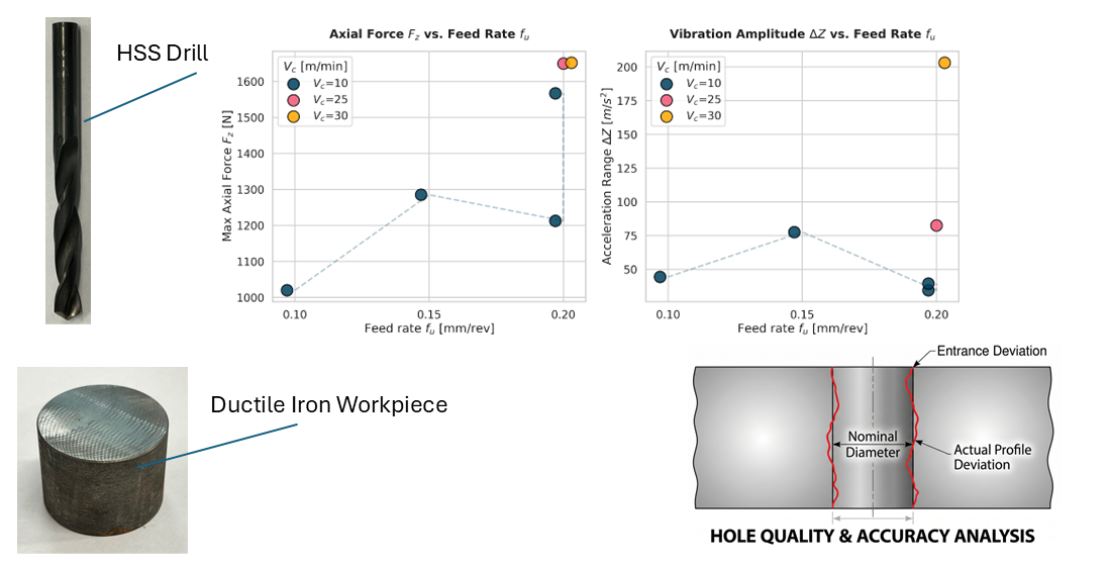
Accuracy Analysis of Holes Drilled in Ductile Cast Iron with an HSS Helical Drill Bit

 , , , ,
Abstract
1. Introduction
2. Materials and Methods
2.1. Experimental Design
2.2. Tool Characteristics
2.3. Workpiece Material
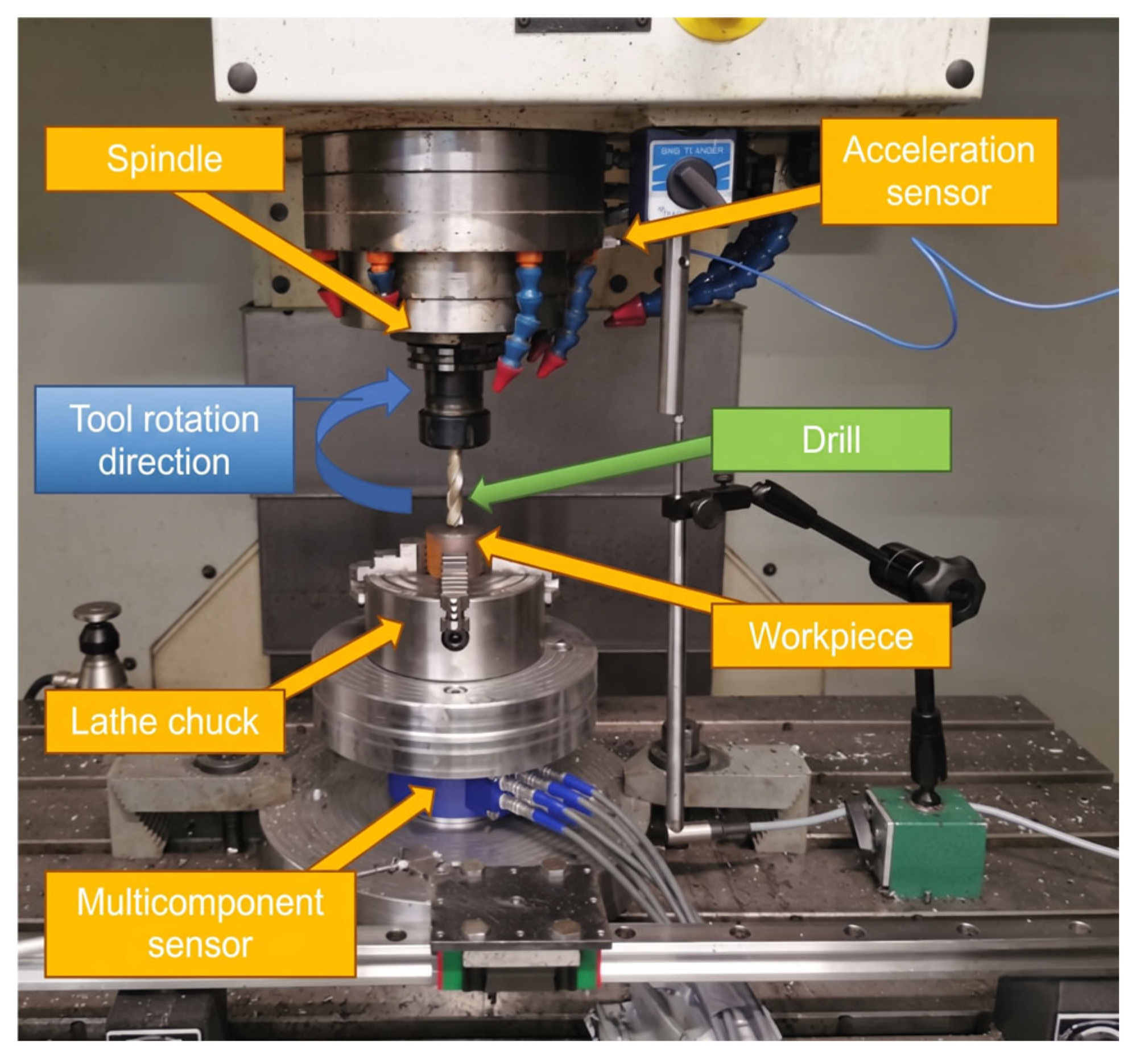
2.4. Test Rig and Instrumentation
2.5. Machine Tool
2.6. Measurement Equipment and Measurement Uncertainty
3. Results
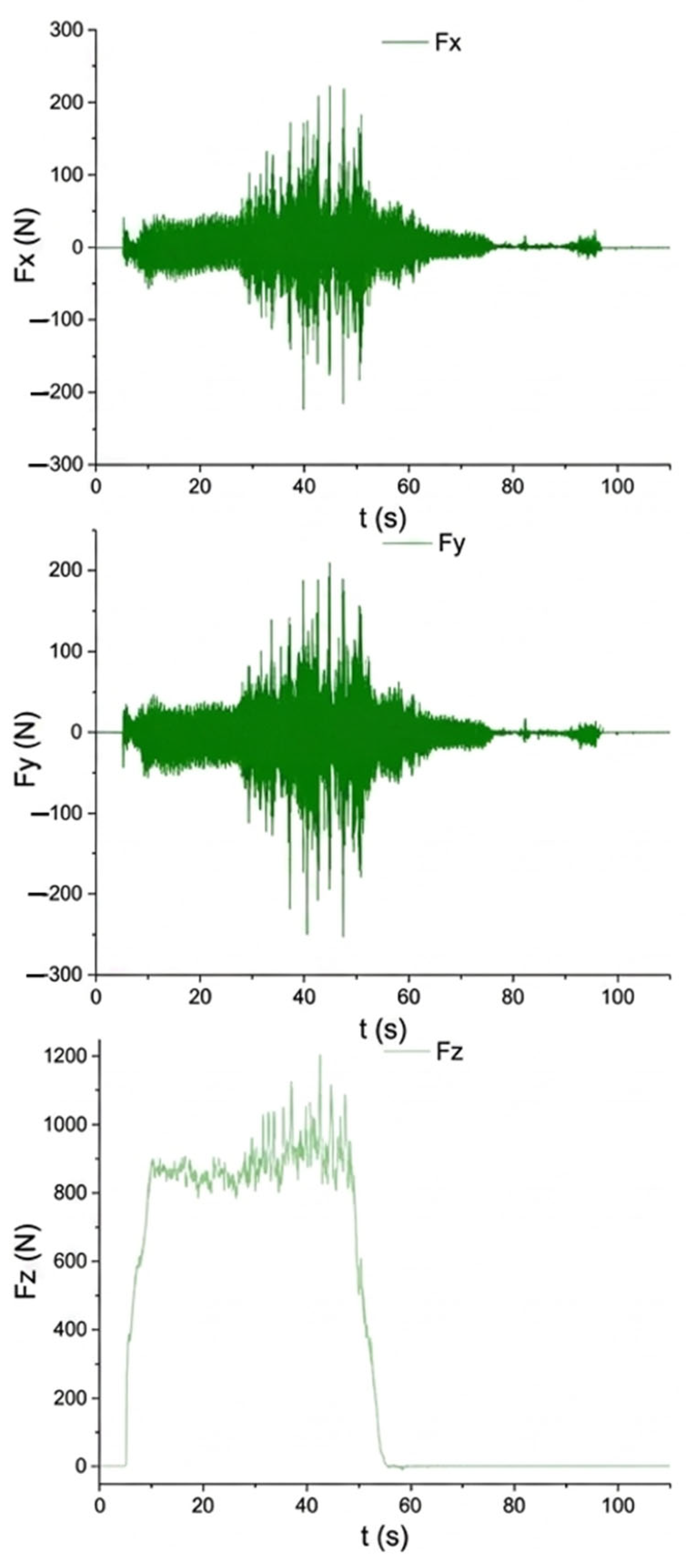
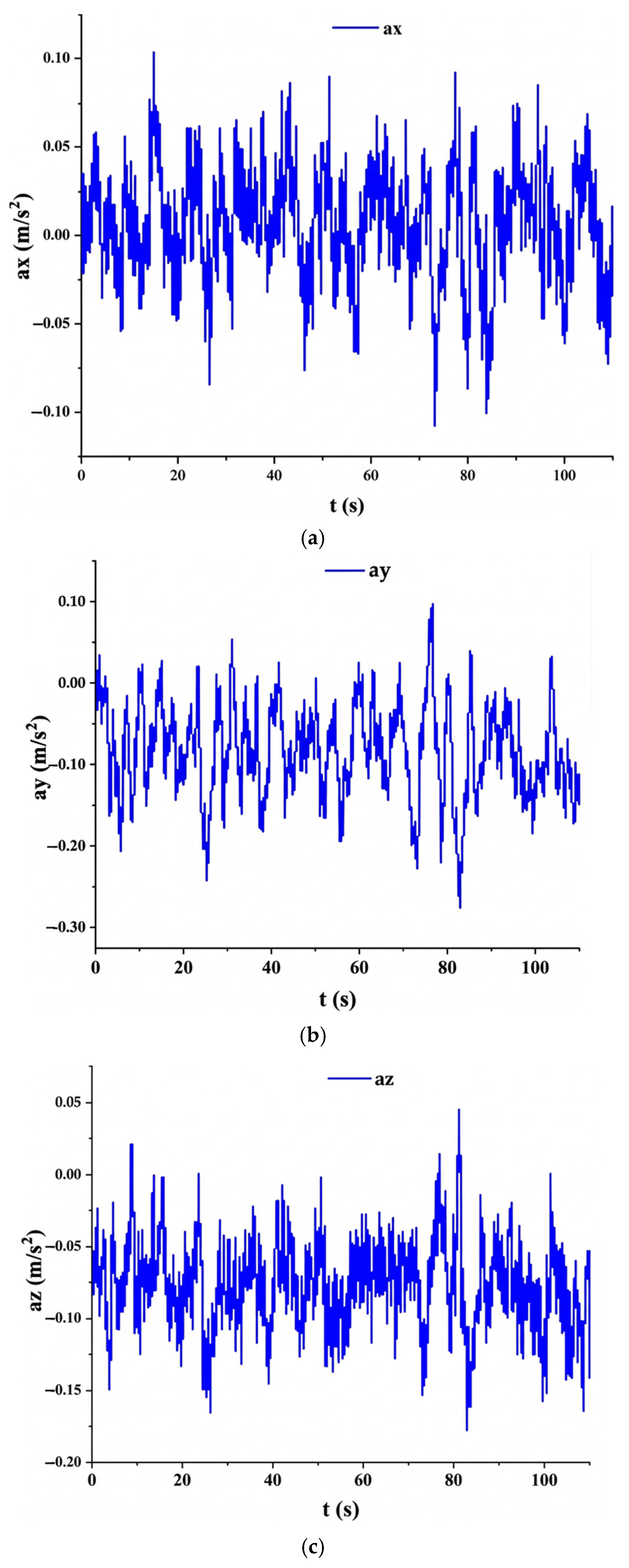
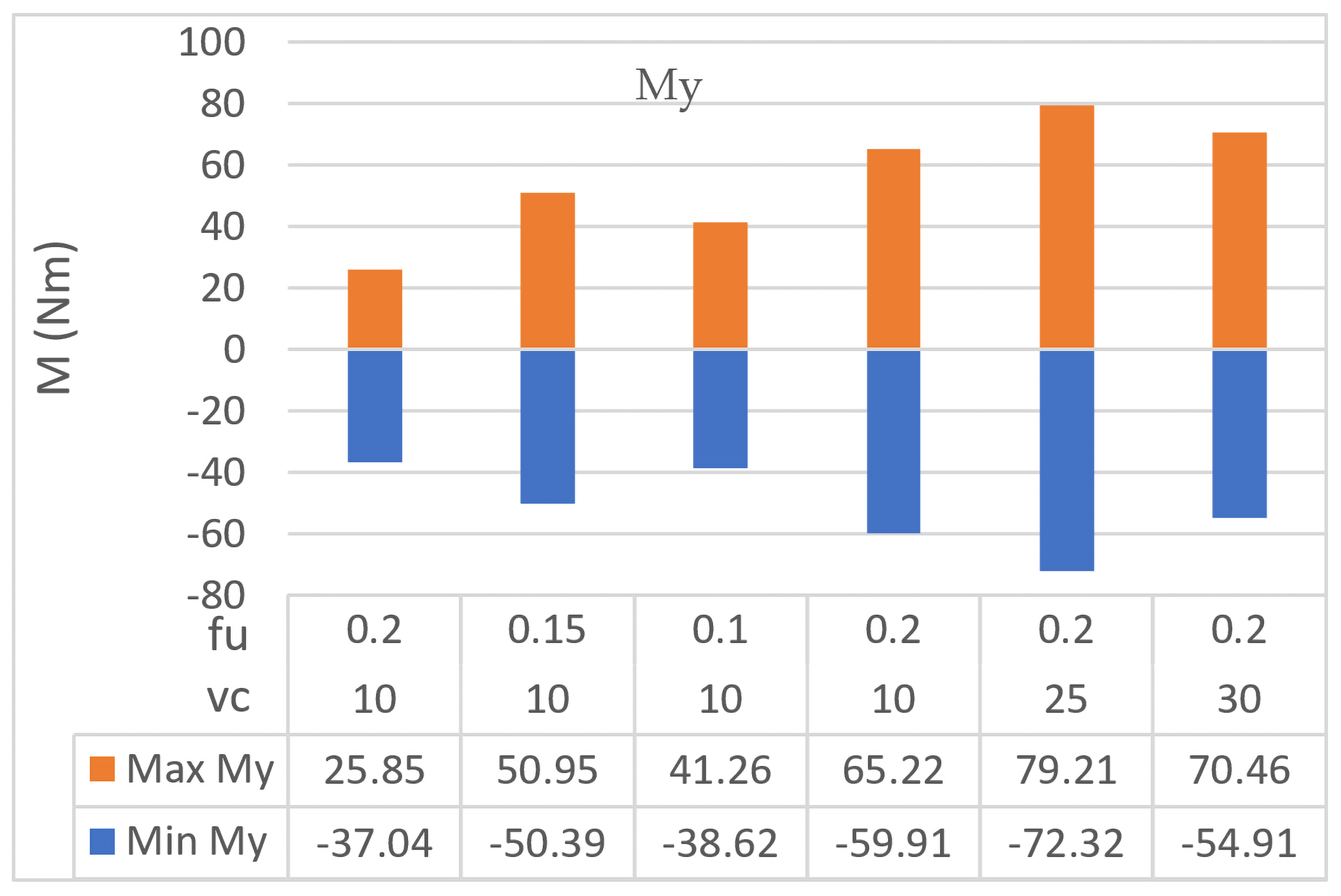
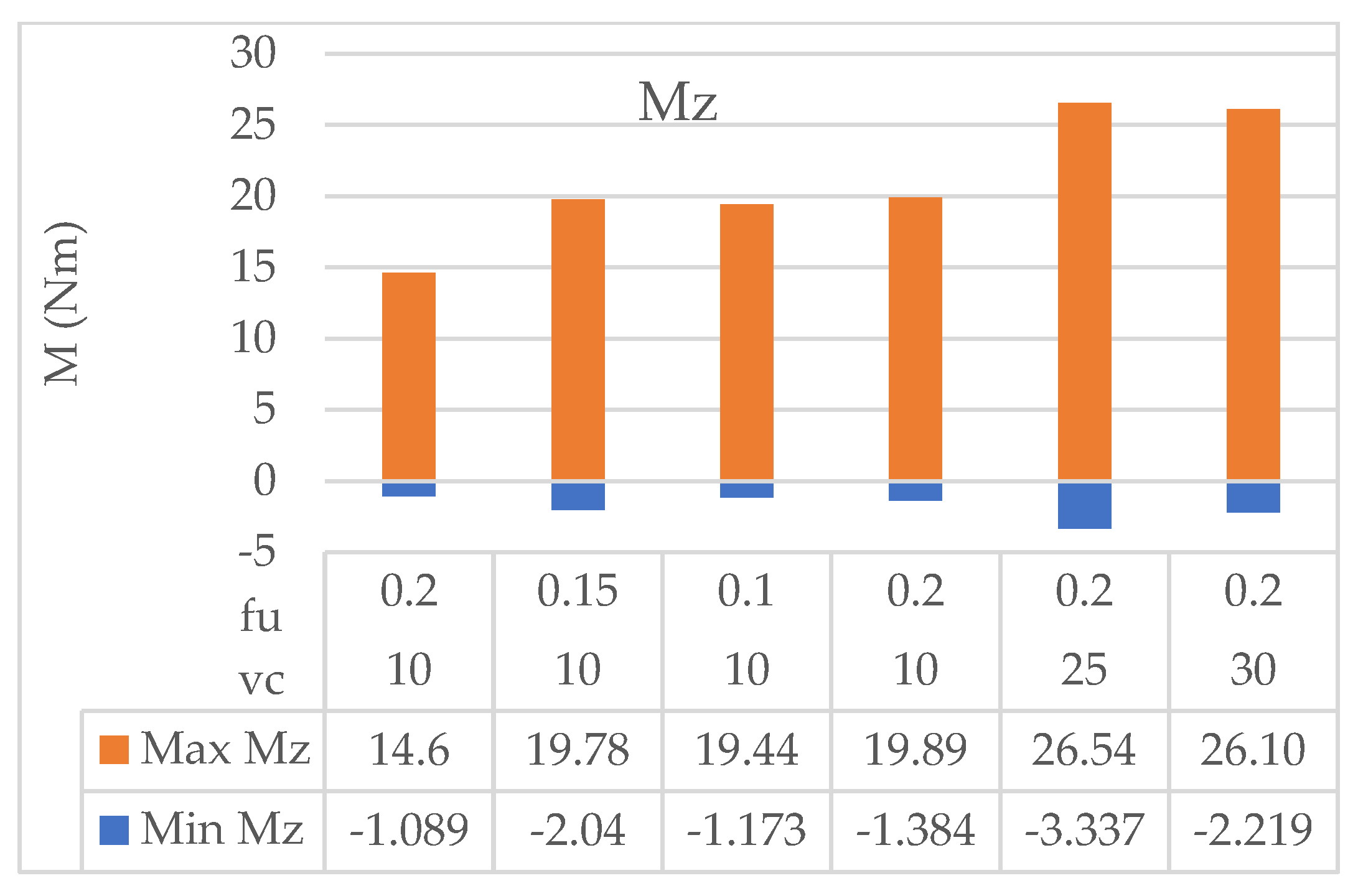
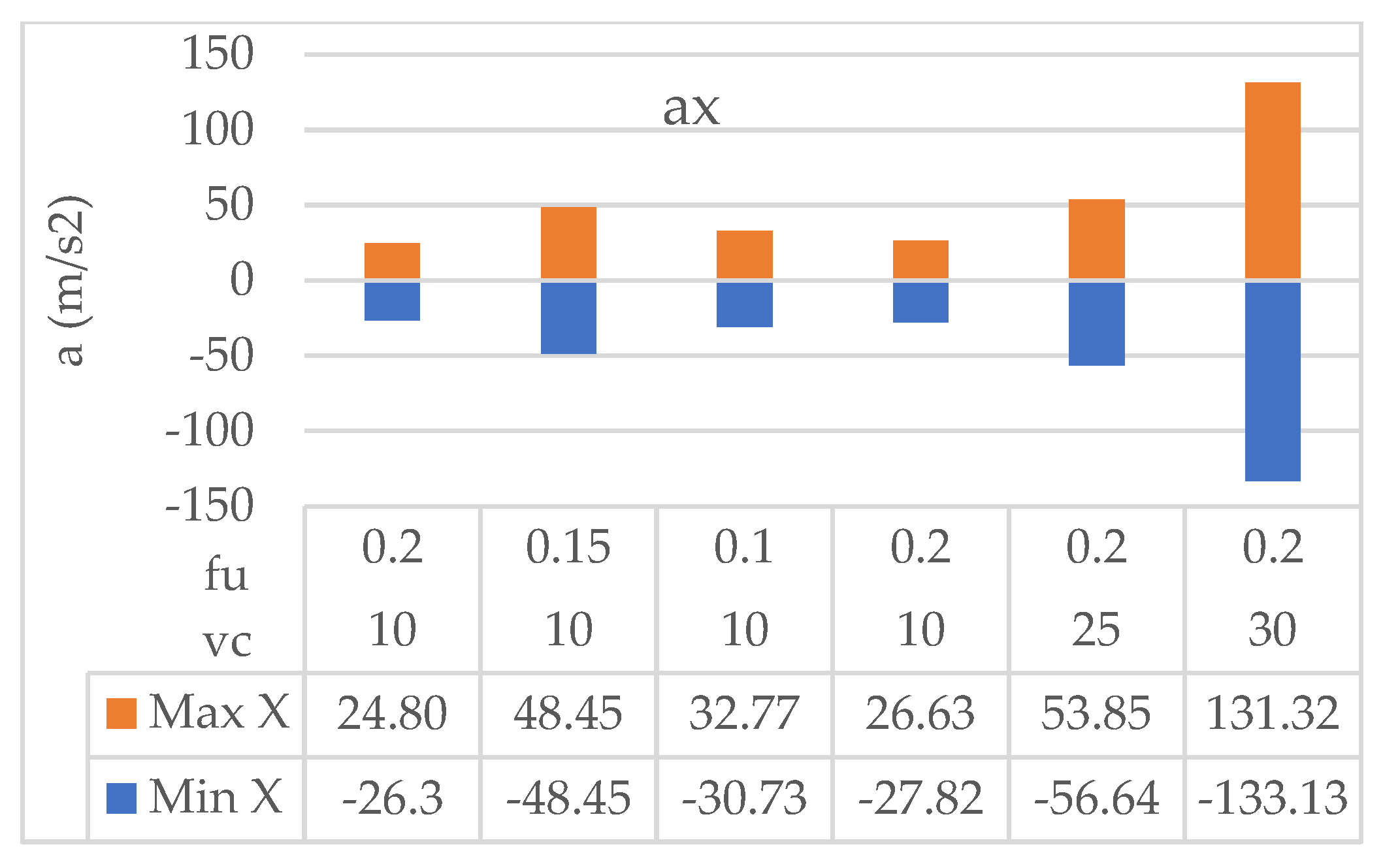
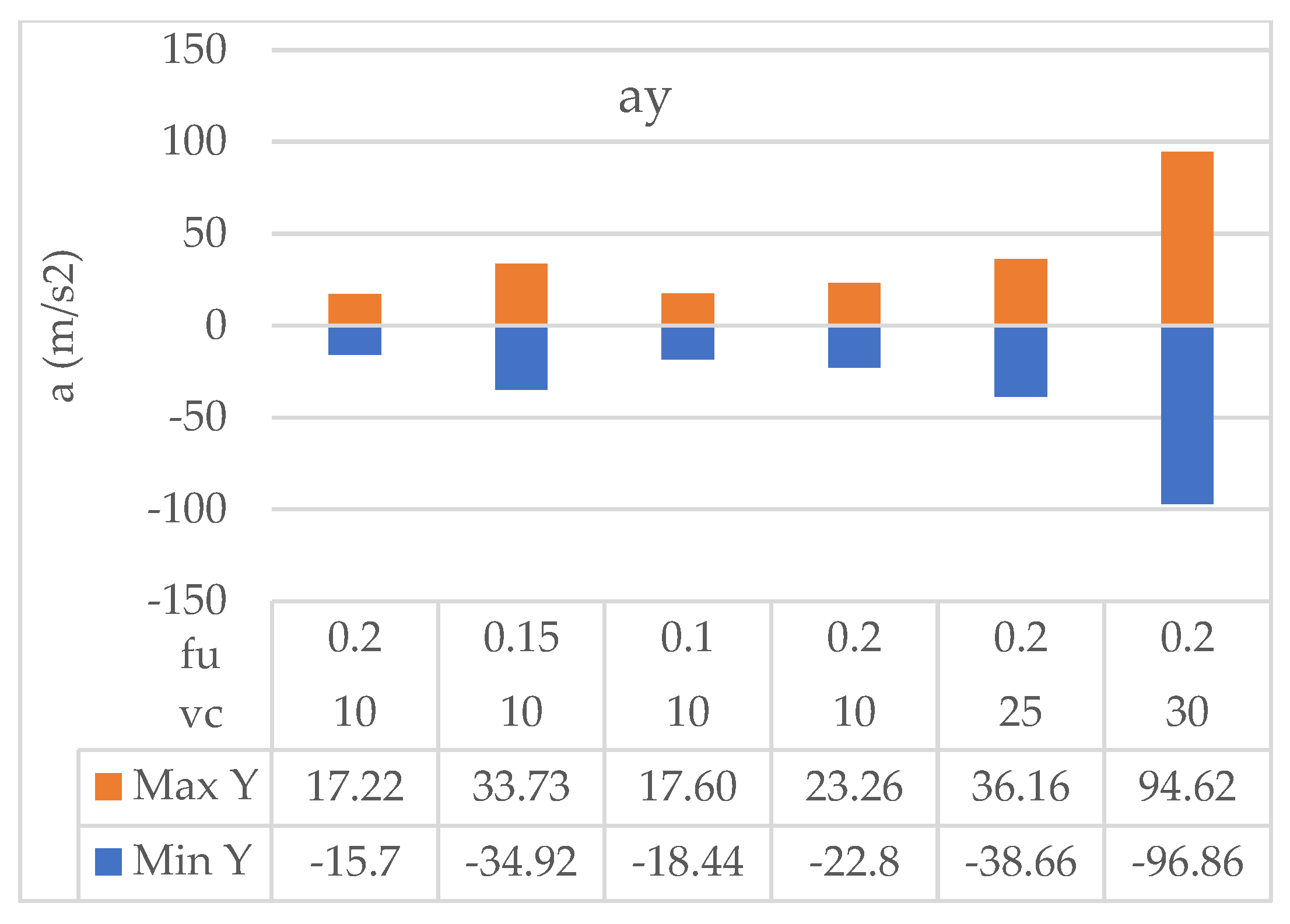
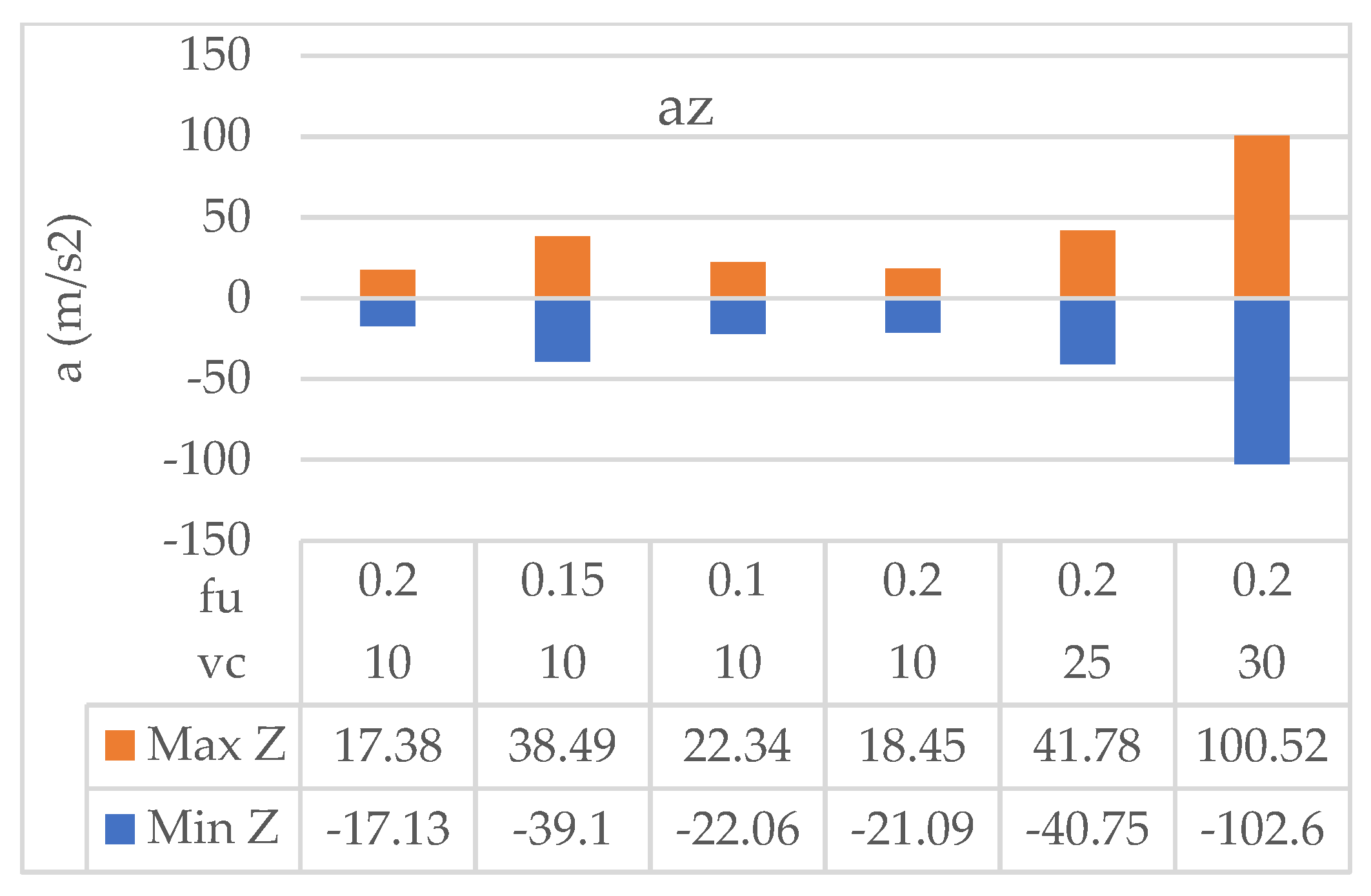
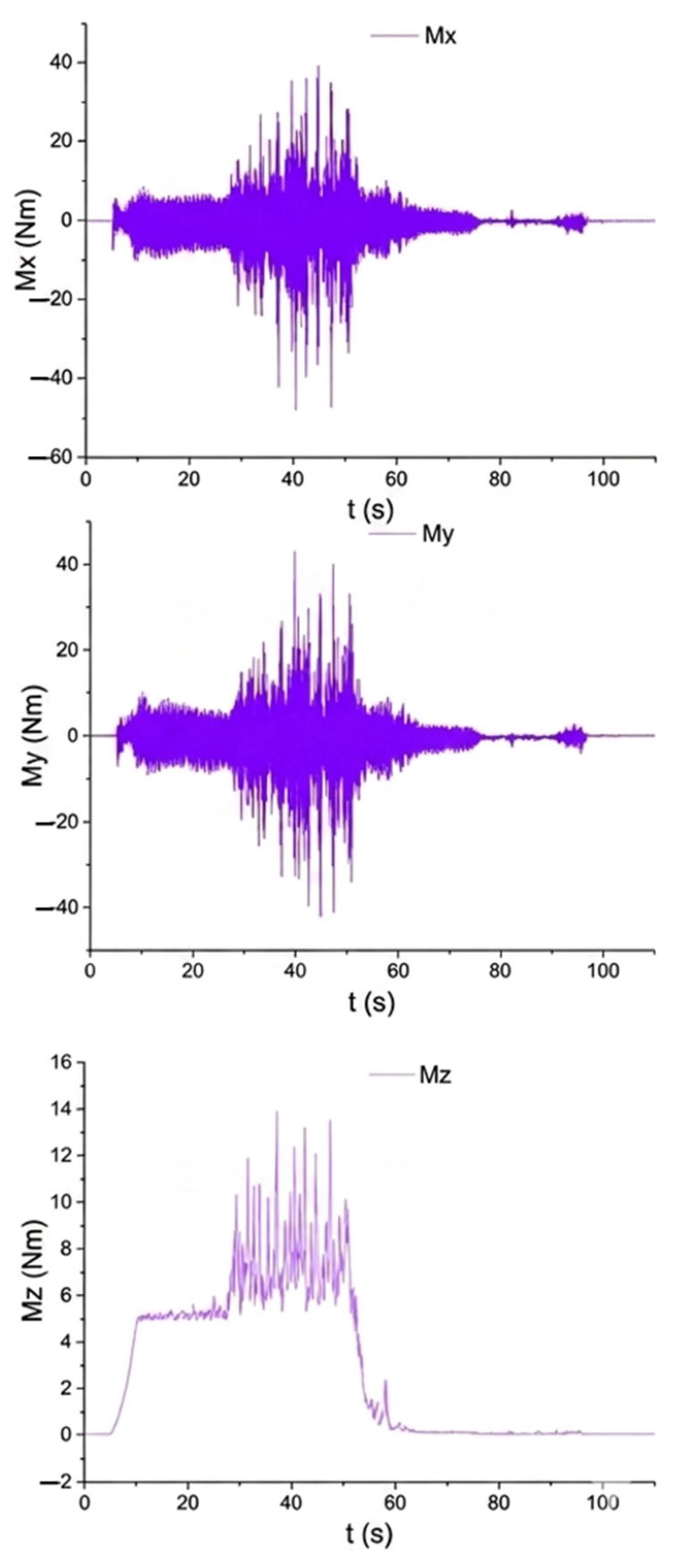
3.1. Cutting Forces, Torques, and Accelerations
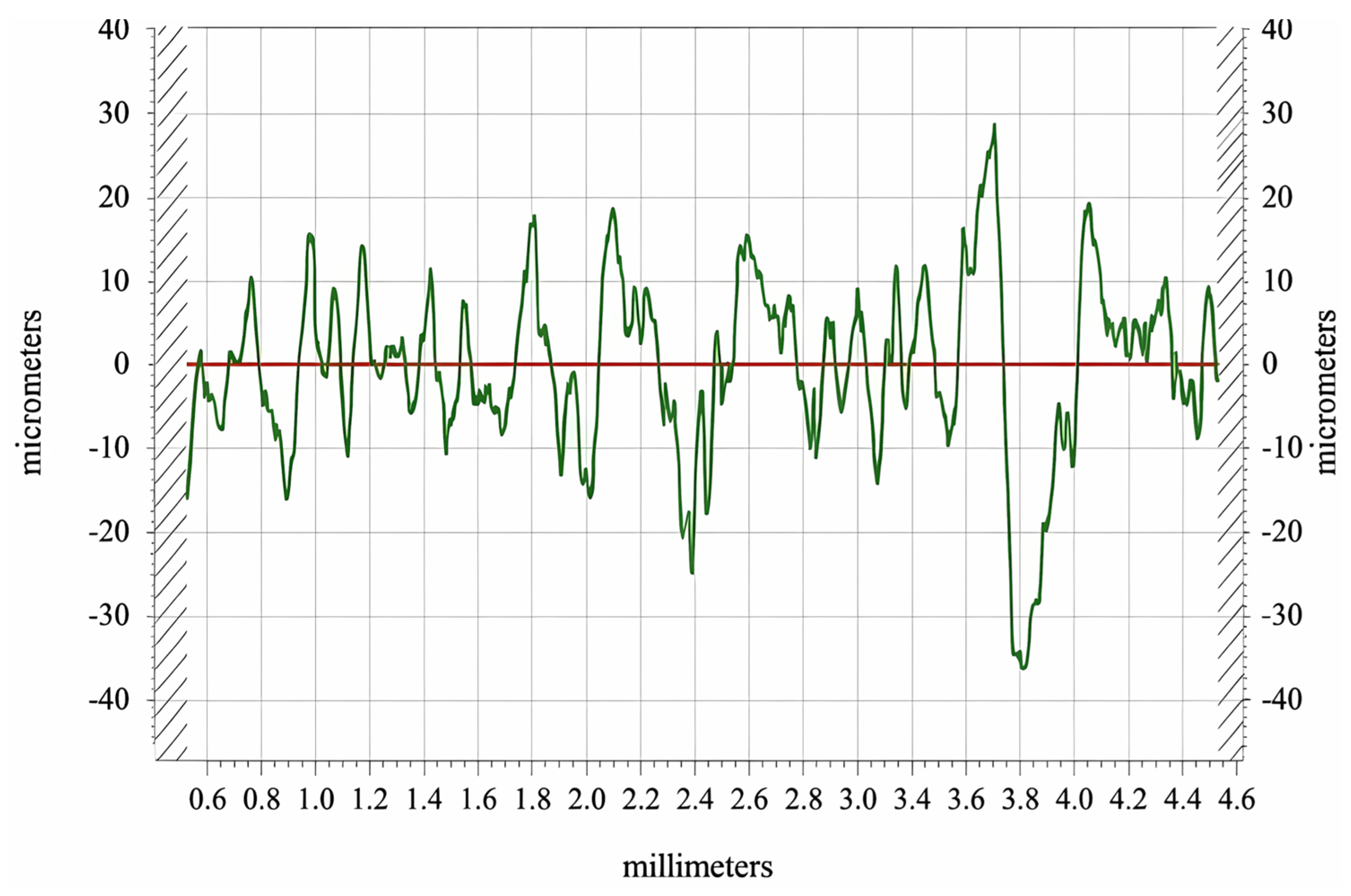
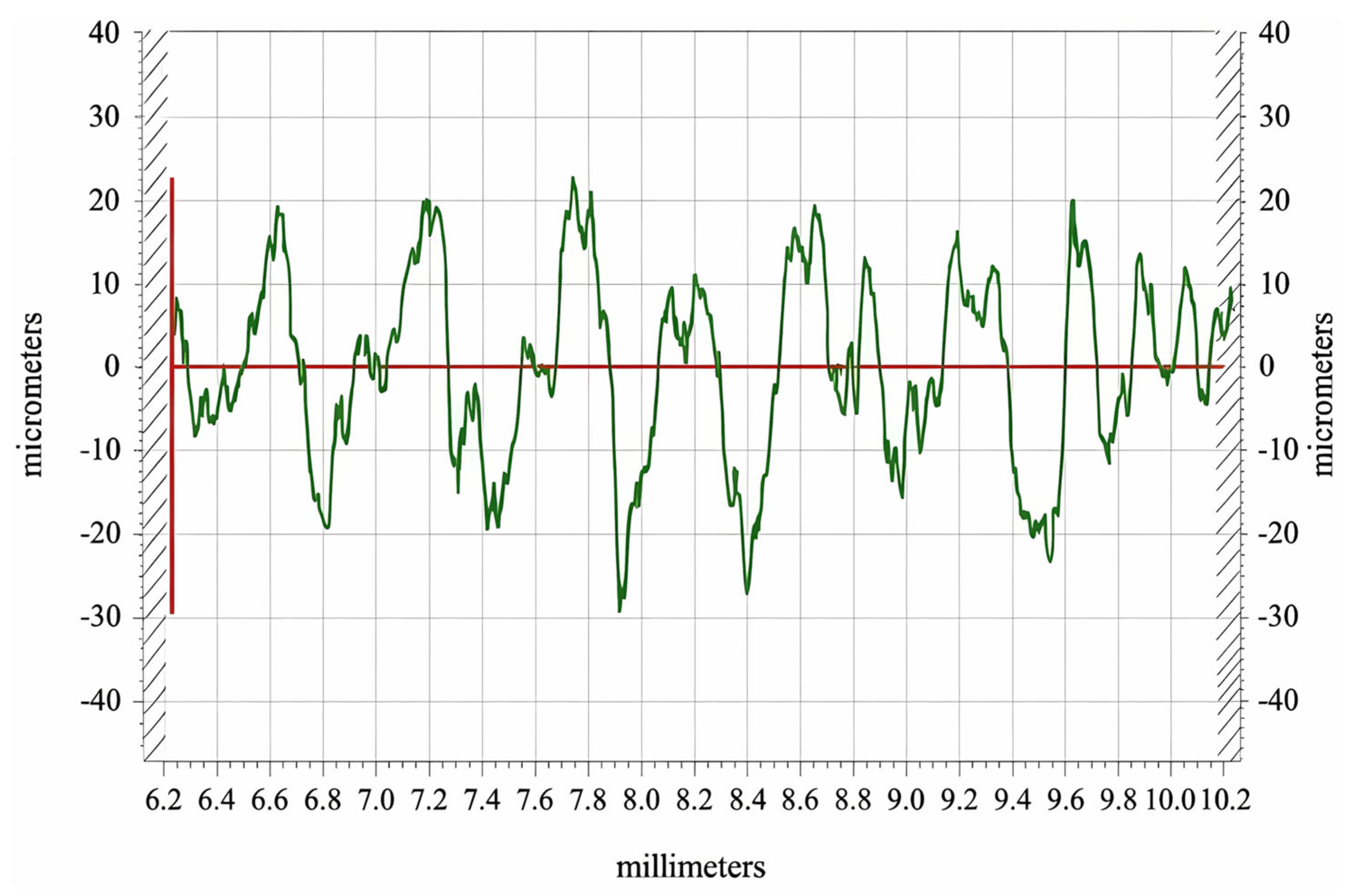
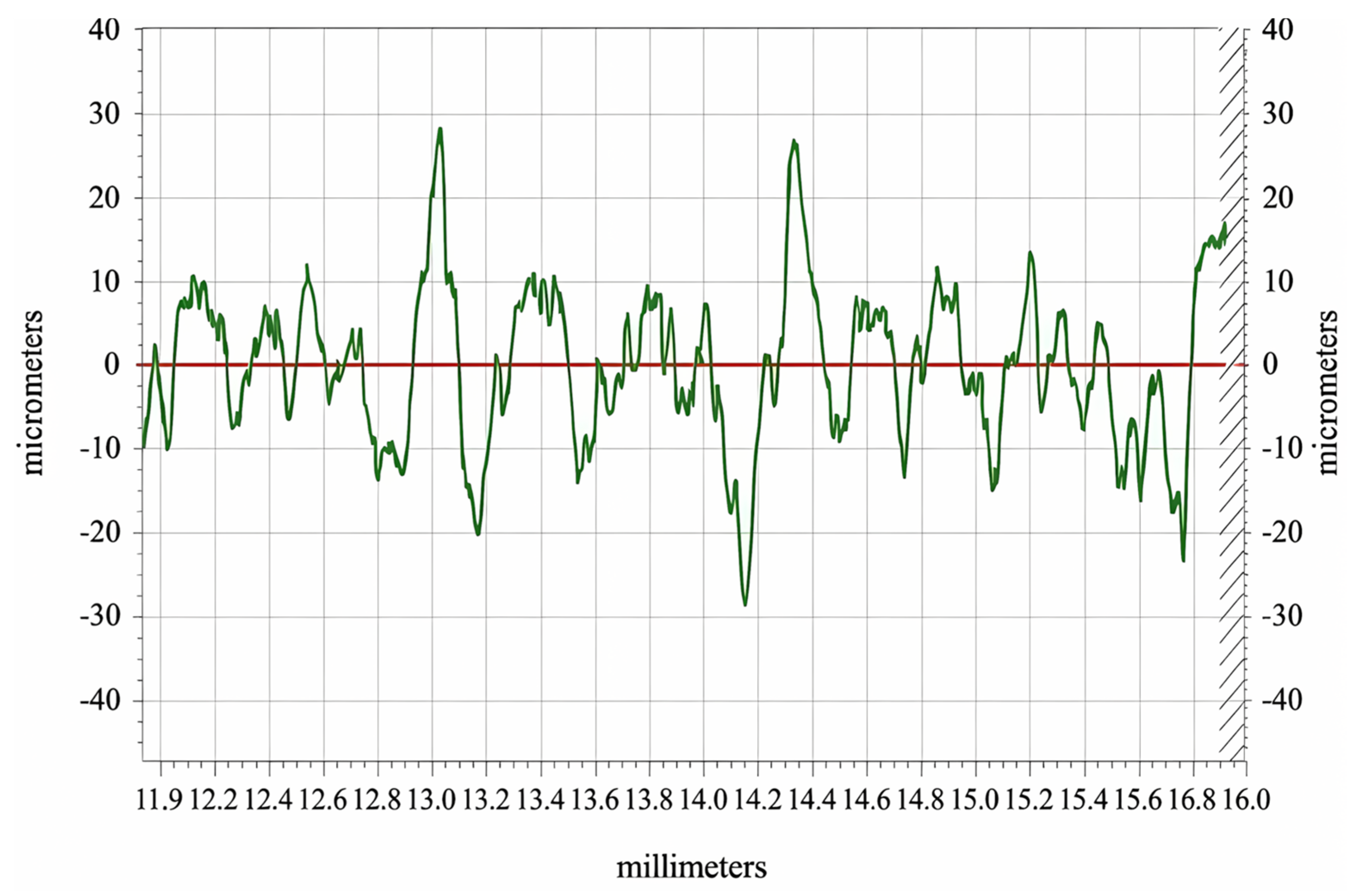
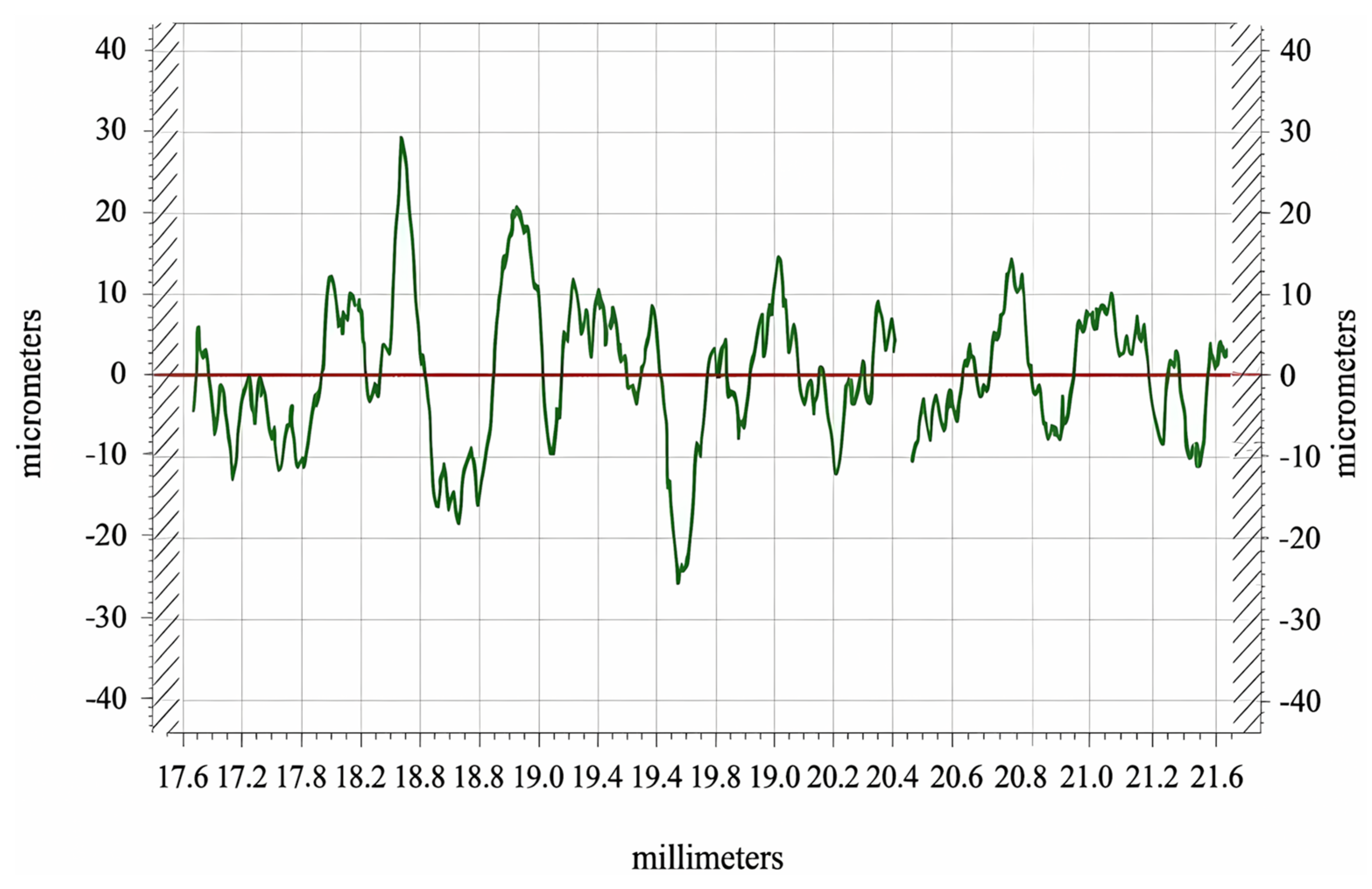
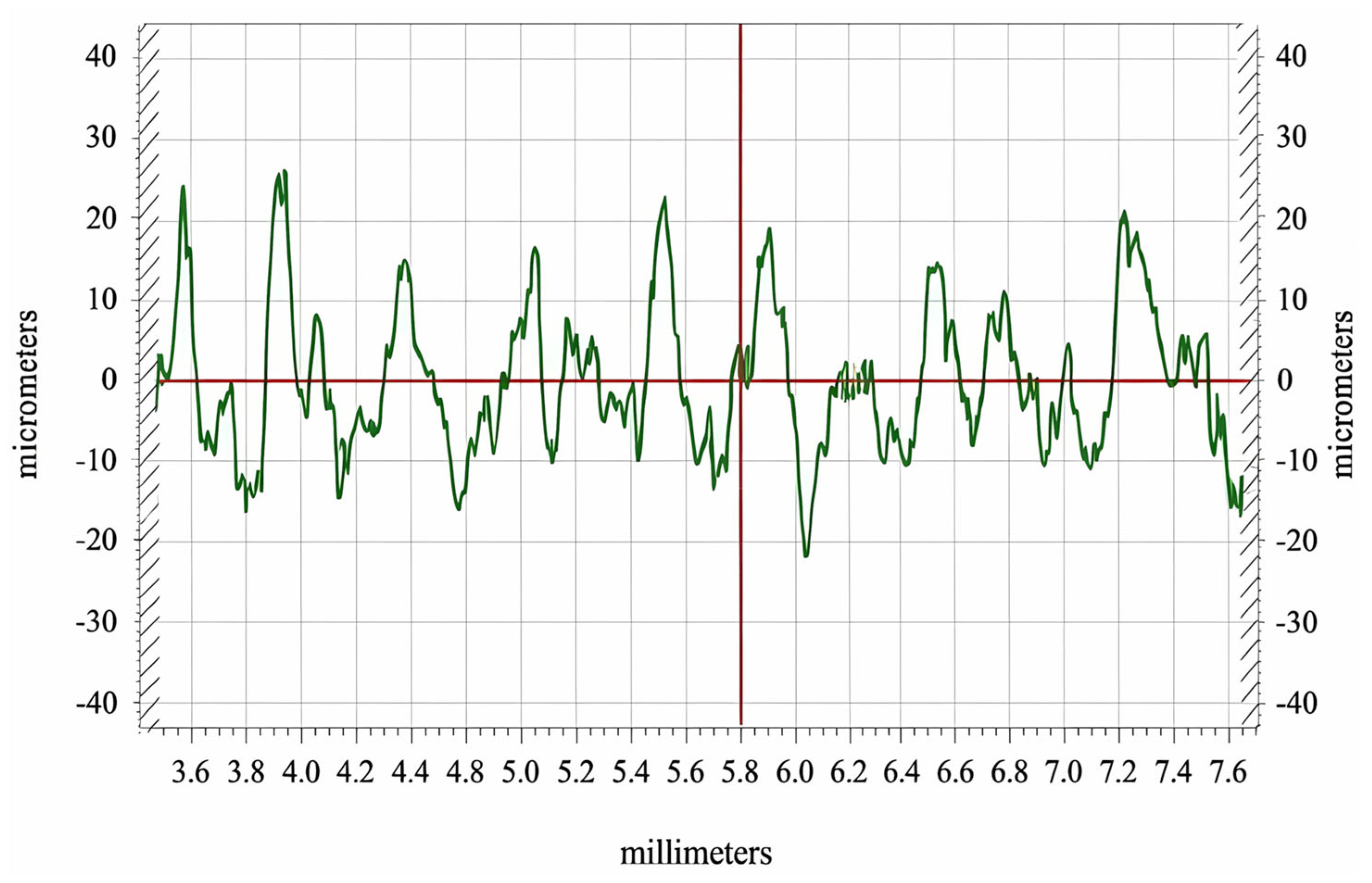
3.2. Surface Roughness
3.3. Dimensional Accuracy—Hole Diameter
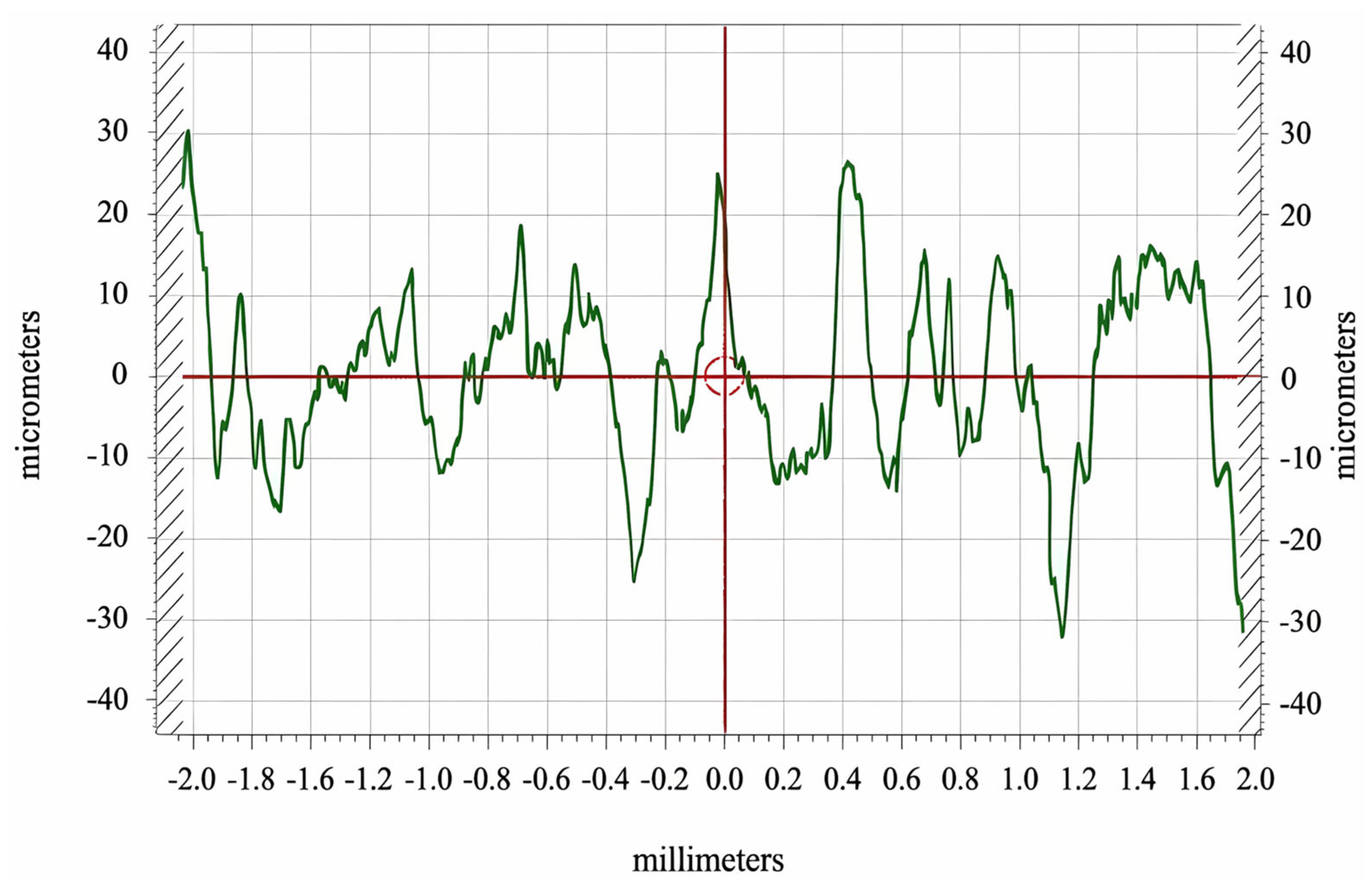
3.4. Shape Accuracy—Circularity, Cylindricity, and Straightness
4. Discussion
5. Conclusions
- All drilled holes exhibited dimensional oversize exceeding the IT12 tolerance boundary (PN-EN 22768-1:1999, grade c, ±0.50 mm) for at least some axial positions. The smallest oversize (+0.26 mm for the fitted cylinder) was recorded at vc = 10 m/min, while the largest (+0.57 mm at 10 mm depth) was obtained at vc = 30 m/min. HSS helical drilling in DCI requires subsequent reaming or boring for precision applications.
- Cutting speed is the dominant factor affecting both diameter oversize and cylindricity. Increasing vc from 10 to 30 m/min increased the cylindricity error by 60% (from 0.10 to 0.16 mm) and cylinder diameter oversize by 77% (+0.26 to +0.46 mm). These trends are statistically significant relative to the estimated measurement uncertainty (UR = ±0.021 mm for cylindricity, and ±0.07 mm for diameter).
- Within the tested feed range (0.10–0.20 mm/rev) at a constant vc = 10 m/min, no statistically significant effect on cylindricity or diameter oversize was found; the observed differences fall within the expanded measurement uncertainty. The surface roughness Ra showed a non-monotonic dependence on the feed rate, with the highest value (9.1 µm) at fn = 0.15 mm/rev.
- Vibration accelerations increased nonlinearly between vc = 25 and 30 m/min (by a factor of 2.4–2.6×), indicating an approach to a resonance condition of the drill–spindle system. This resonance behaviour is the primary mechanism behind the disproportionate degradation in cylindricity at vc = 30 m/min.
- The best surface finish (Ra = 6.6 µm) was achieved at vc = 25 m/min with fn = 0.20 mm/rev. For applications prioritising both the minimum diameter oversize and minimum roughness, vc = 25 m/min and fn = 0.20 mm/rev are recommended within the tested range.
- Future work should employ a full 3 × 3 factorial design with replicated measurements to enable the ANOVA-based separation of the main and interaction effects, and should include a quantified tool wear assessment and frequency-domain analysis of vibration signals.
Author Contributions
Funding
Data Availability Statement
Conflicts of Interest
References
- Demir, Z. An experimental investigation of the effects of point angle on the high-speed steel drills performance in drilling. Meas. Control 2018, 51, 417–430. [Google Scholar] [CrossRef]
- Kurt, M.; Bagci, E.; Kaynak, Y. Application of Taguchi methods in the optimization of cutting parameters for surface finish and hole diameter accuracy in dry drilling processes. Int. J. Adv. Manuf. Technol. 2009, 40, 458–469. [Google Scholar] [CrossRef]
- Chen, W.-C.; Tsao, C.-C. Cutting performance of different coated twist drills. J. Mater. Process. Technol. 1999, 88, 203–207. [Google Scholar] [CrossRef]
- Thakre, A.A.; Soni, S. Modeling of burr size in drilling of aluminum silicon carbide composites using response surface methodology. Eng. Sci. Technol. 2016, 19, 1199–1210. [Google Scholar] [CrossRef]
- Çiçek, A.; Kıvak, T.; Ekici, E. Optimization of drilling parameters using Taguchi technique and RSM in drilling of AISI 304 steel with cryogenically treated HSS drills. J. Intell. Manuf. 2015, 26, 295–305. [Google Scholar] [CrossRef]
- Samy, G.S.; Kumaran, S.T. Measurement and analysis of temperature, thrust force and surface roughness in drilling of AA 6351–B4C composite. Measurement 2017, 103, 1–9. [Google Scholar] [CrossRef]
- Khashaba, U.A.; Abd-Elwahed, M.S.; Eltaher, M.A.; Najjar, I.; Melaibari, A. Thermo-mechanical and delamination properties in drilling GFRP composites by various drill angles. Polymers 2021, 13, 1884. [Google Scholar] [CrossRef] [PubMed]
- Miko, E.; Nowakowski, Ł.; Skrzyniarz, M. The analysis of relative oscillation during face milling. In Proceedings of the 23rd International Conference Engineering Mechanics 2017, Svratka, Czech Republic, 15–18 May 2017. [Google Scholar]
- Miko, E.; Nowakowski, Ł.; Skrzyniarz, M. The assessment of the impact of the installation of cutting plates on the size of generated vibrations and the geometrical structure of the surface. Procedia Eng. 2012, 39, 405–413. [Google Scholar] [CrossRef][Green Version]
- Prasanna, J.; Karunamoorthy, L.; Venkat Raman, M.; Prashanth, S.; Raj Chordia, D. Optimization of process parameters of small hole dry drilling in Ti–6Al–4V using Taguchi and grey relational analysis. Measurement 2014, 48, 346–354. [Google Scholar] [CrossRef]
- Biermann, D.; Bleicher, F.; Heisel, U.; Klocke, F.; Möhring, H.-C. Deep hole drilling. CIRP Ann. 2018, 67, 673–694. [Google Scholar] [CrossRef]
- Eraslan, D.; Balcı, A.; Çetin, B.; Uçak, N.; Çiçek, A. Machinability evaluations of austempered ductile iron and cast steel with similar mechanical properties under eco-friendly milling conditions. J. Mater. Res. Technol. 2021, 11, 1443–1456. [Google Scholar] [CrossRef]
- Aized, T.; Amjad, M. Quality improvement of deep-hole drilling process of AISI D2. Int. J. Adv. Manuf. Technol. 2013, 69, 2493–2503. [Google Scholar] [CrossRef]
- Endres, W.J.; Kountanya, R.K. The effects of corner radius and edge radius on tool flank wear. J. Manuf. Process. 2002, 4, 89–96. [Google Scholar] [CrossRef]
- Klocke, F.; Klöpper, C.; Lung, D.; Essig, C. Fundamental wear mechanisms when machining austempered ductile iron (ADI). CIRP Ann. 2007, 56, 73–76. [Google Scholar] [CrossRef]
- Meena, A.; El Mansori, M. Specific cutting force, tool wear and chip morphology characteristics during dry drilling of austempered ductile iron (ADI). Int. J. Adv. Manuf. Technol. 2013, 69, 2833–2841. [Google Scholar] [CrossRef]
- Grzesik, W.; Kiszka, P.; Kowalczyk, D.; Rech, J.; Claudin, C. Machining of Nodular Cast Iron (PF-NCI) Using CBN Tools. Procedia CIRP 2012, 1, 483–487. [Google Scholar] [CrossRef]
- Theunissen, H.; Hattingh, D.G.; Maczek, J.; Els-Botes, A. A critical evaluation of residual stresses in spheroidal graphite cast iron due to mechanical testing. WIT Trans. Eng. Sci. 1999, 25, 1. [Google Scholar] [CrossRef]
- Zhang, C.; Ge, F.; Hou, Y.; Yang, S.; Li, Y.; Yu, P.; Wang, Z.; Yu, Z.; Xu, J. Wear Characteristics of Textured Tool with Micro-holes for Compacted Graphite Iron Micro-drilling. J. Mater. Eng. Perform. 2025, 34, 21465–21479. [Google Scholar] [CrossRef]
- Tusset, F.; Consalter, L.A.; Durán, O. The effects of microgeometries in carbide twist drill on dry drilling of cast iron. Int. J. Adv. Manuf. Technol. 2016, 87, 3123–3135. [Google Scholar] [CrossRef]
- Tofana, G.V.; Popa, M.S.; Sattel, S. Solid carbide tool wear monitoring and evaluation in drilling processes. Int. J. Mod. Manuf. Technol. 2013, 5, 113–120. [Google Scholar]
- Zhu, Z.; Shih, A.J.; Chen, L. Investigation of the drill temperature distributions in high-throughput dry drilling of compacted graphite iron. J. Manuf. Process. 2025, 150, 74–87. [Google Scholar] [CrossRef]
- Kakino, Y. High Speed and High Productive Drilling by Intelligent Machine Tools; Transactions on Engineering Sciences; WIT Press: Southampton, UK, 1999; Volume 23. [Google Scholar] [CrossRef]
- ISO 4288:1996; Geometrical Product Specifications (GPS)—Surface Texture: Profile Method—Rules and Procedures for the Assessment of Surface Texture. International Organization for Standardization: Geneva, Switzerland, 1996.
- ISO 1302:2002; Geometrical Product Specifications (GPS)—Indication of Surface Texture in Technical Product Documentation. International Organization for Standardization: Geneva, Switzerland, 2002.





| Specimen | vc (m/Min) | fn (mm/rev) | n (rpm) | vf (mm/Min) | Series |
|---|---|---|---|---|---|
| 1 | 10 | 0.20 | 270 | 54.0 | Feed/Speed ref. |
| 2 | 10 | 0.15 | 270 | 40.5 | Feed |
| 3 | 10 | 0.10 | 270 | 27.0 | Feed |
| 4 | 10 | 0.20 | 270 | 54.0 | Repeatability |
| 5 | 25 | 0.20 | 674 | 134.8 | Speed |
| 6 | 30 | 0.20 | 809 | 161.9 | Speed |
| Technical Data | Value |
|---|---|
| Drill diameter | 11.8 mm |
| Tool material | HSS |
| Overall length | 142 mm |
| Working depth | 94 mm |
| Usable length | 59 mm |
| Number of flutes | 2 |
| Point angle | 118° |
| Toolmaking standard | DIN 338 |
| Catalogue designation | N.11.80.R.5D.DIN338 VAP |
| C | Si | Cu | Mg | Mn | P | S | Cr | Zn | Fe |
|---|---|---|---|---|---|---|---|---|---|
| 3.78 | 2.46 | 0.01 | 0.05 | 0.32 | 0.038 | 0.065 | 0.031 | 0.004 | Bal. |
| Parameter | Sp. 1 | Sp. 4 | |Δ| | Rel. (%) | UR (k = 2) |
|---|---|---|---|---|---|
| Ra (µm) | 7.5 | 8.8 | 1.3 | 16.5 | ±0.92 µm |
| Rq (µm) | 10.1 | 11.0 | 0.9 | 8.6 | ±0.64 µm |
| Rz (µm) | 40.5 | 43.5 | 3.0 | 7.2 | ±2.12 µm |
| Cylinder diam. (mm) | 12.06 | 12.16 | 0.10 | 0.83 | ±0.07 mm |
| Cylindricity (mm) | 0.10 | 0.07 | 0.03 | 33.3 | ±0.021 mm |
| Mean straightness (mm) | 0.045 | 0.055 | 0.010 | 22.2 | ±0.007 mm |
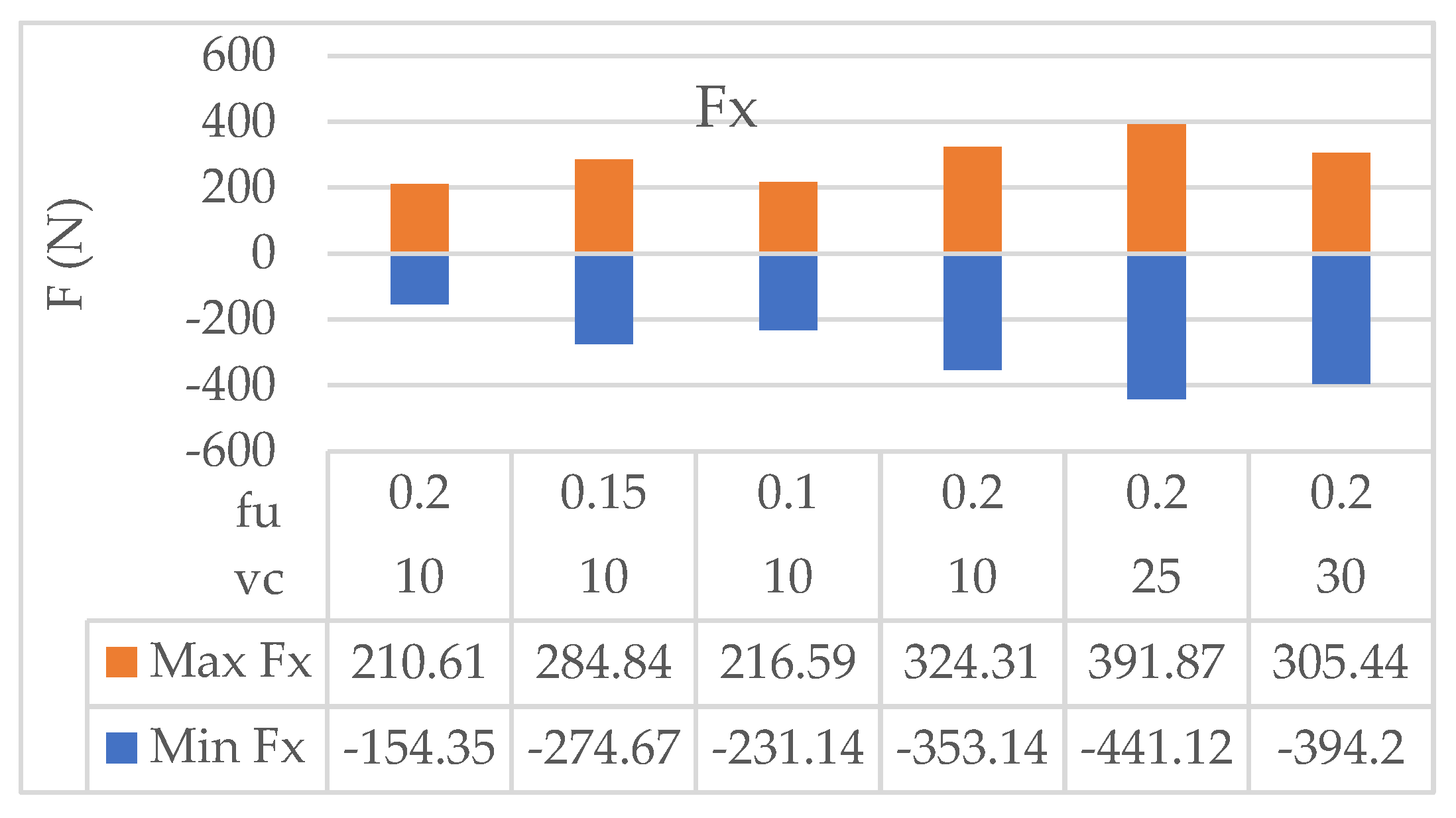
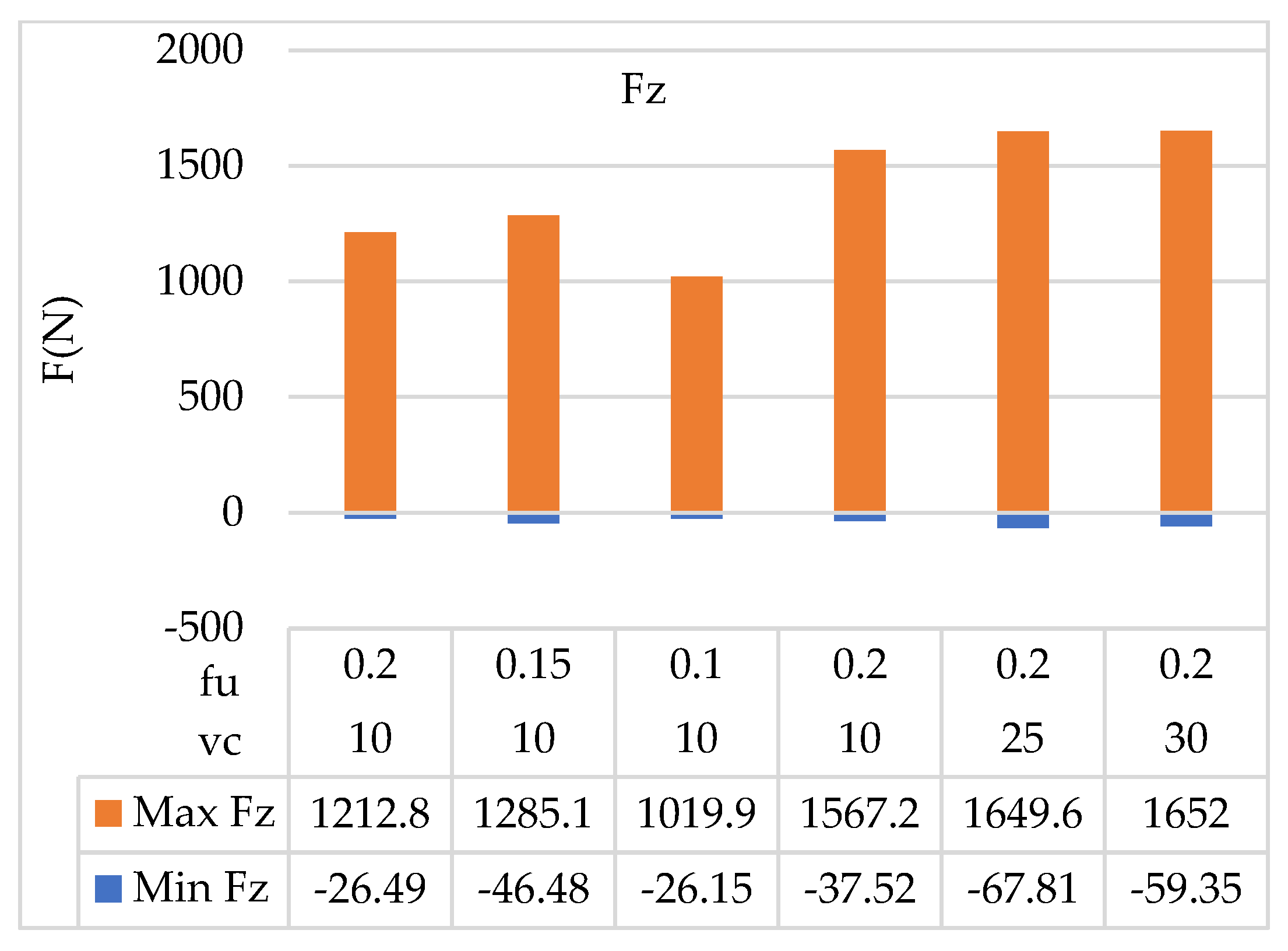
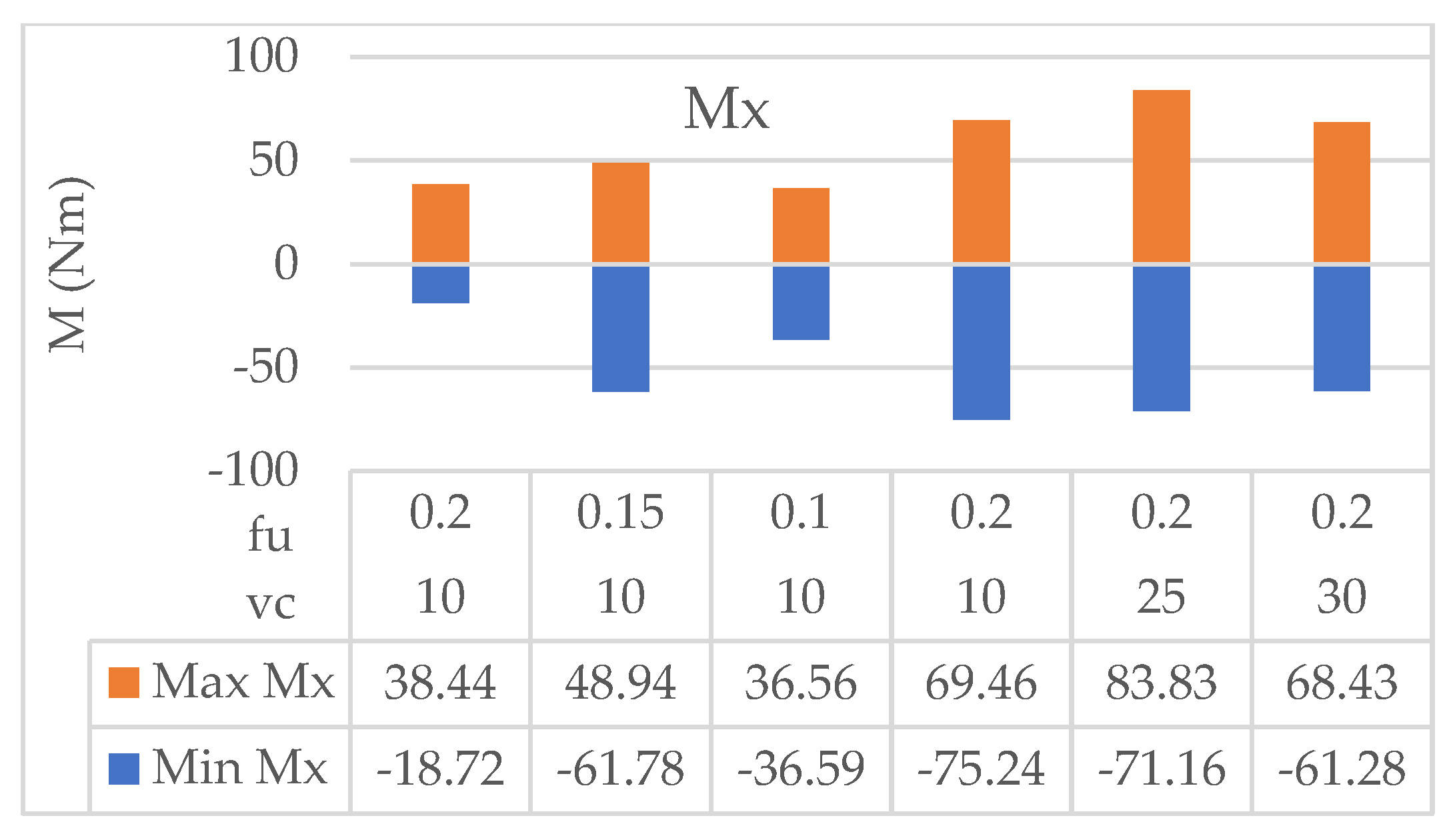
| Sp. | Fx_max (N) | Fz_max (N) | Mx_max (Nm) | Mz_max (Nm) | ax_max (m/s2) | ay_max (m/s2) | az_max (m/s2) | Series |
|---|---|---|---|---|---|---|---|---|
| 1 | 210.6 | 1212.8 | 38.4 | 14.6 | 24.8 | 17.2 | 17.4 | ref. |
| 2 | 284.8 | 1285.1 | 48.9 | 19.8 | 48.5 | 33.7 | 38.5 | Feed |
| 3 | 216.6 | 1019.9 | 36.6 | 19.4 | 32.8 | 17.6 | 22.3 | Feed |
| 4 | 324.3 | 1567.2 | 69.5 | 19.9 | 26.6 | 23.3 | 18.5 | Repeat |
| 5 | 391.9 | 1649.6 | 83.8 | 26.5 | 53.9 | 36.2 | 41.8 | Speed |
| 6 | 305.4 | 1652.0 | 68.4 | 26.1 | 131.3 | 94.6 | 100.5 | Speed |
| Sp. | Ra (µm) | Rp (µm) | Rq (µm) | Rsk (–) | RSm (mm) | Rt (µm) | Rz (µm) |
|---|---|---|---|---|---|---|---|
| 1 | 7.5 | 19.5 | 10.1 | 0.70 | 0.250 | 64.6 | 40.5 |
| 2 | 9.1 | 19.9 | 11.1 | 0.20 | 0.302 | 52.0 | 41.4 |
| 3 | 7.2 | 21.9 | 9.2 | 0.02 | 0.268 | 56.9 | 41.2 |
| 4 | 8.8 | 23.5 | 11.0 | 0.07 | 0.333 | 62.5 | 43.5 |
| 5 | 6.6 | 18.3 | 8.4 | 0.10 | 0.326 | 54.7 | 34.4 |
| 6 | 7.2 | 20.5 | 9.1 | 0.50 | 0.307 | 48.0 | 38.2 |
| Measurement | Sp. 1 | Sp. 2 | Sp. 3 | Sp. 4 | Sp. 5 | Sp. 6 |
|---|---|---|---|---|---|---|
| Diameter at 5 mm | 12.13 | 12.20 | 12.13 | 12.18 | 12.14 | 12.36 |
| Diameter at 10 mm | 12.06 | 12.27 | 12.20 | 12.18 | 12.20 | 12.37 |
| Diameter at 15 mm | 12.05 | 12.24 | 12.16 | 12.16 | 12.21 | 12.29 |
| Diameter at 20 mm | 12.04 | 12.16 | 12.11 | 12.17 | 12.20 | 12.18 |
| Diameter at 25 mm | 12.01 | 12.11 | 12.07 | 12.11 | 12.08 | 12.10 |
| Cylinder diameter | 12.06 | 12.20 | 12.13 | 12.16 | 12.17 | 12.26 |
| Oversize vs. Ø11.80 mm | +0.26 | +0.40 | +0.33 | +0.36 | +0.37 | +0.46 |
| Parameter (mm) | Sp. 1 | Sp. 2 | Sp. 3 | Sp. 4 | Sp. 5 | Sp. 6 |
|---|---|---|---|---|---|---|
| Circularity at 5 mm | 0.03 | 0.03 | 0.02 | 0.02 | 0.02 | 0.02 |
| Circularity at 10 mm | 0.02 | 0.02 | 0.04 | 0.03 | 0.04 | 0.02 |
| Circularity at 15 mm | 0.02 | 0.02 | 0.03 | 0.02 | 0.03 | 0.02 |
| Circularity at 20 mm | 0.02 | 0.02 | 0.02 | 0.02 | 0.05 | 0.03 |
| Circularity at 25 mm | 0.03 | 0.05 | 0.03 | 0.02 | 0.03 | 0.01 |
| Cylindricity | 0.10 | 0.11 | 0.10 | 0.07 | 0.12 | 0.16 |
| Parameter (mm) | Sp. 1 | Sp. 2 | Sp. 3 | Sp. 4 | Sp. 5 | Sp. 6 |
|---|---|---|---|---|---|---|
| Straightness—gen. 1 | 0.04 | 0.05 | 0.04 | 0.05 | 0.05 | 0.05 |
| Straightness—gen. 2 | 0.04 | 0.06 | 0.05 | 0.06 | 0.07 | 0.05 |
| Straightness—gen. 3 | 0.05 | 0.06 | 0.05 | 0.04 | 0.05 | 0.06 |
| Straightness—gen. 4 | 0.05 | 0.04 | 0.07 | 0.07 | 0.07 | 0.06 |
| Mean straightness | 0.045 | 0.053 | 0.053 | 0.055 | 0.060 | 0.055 |
Disclaimer/Publisher’s Note: The statements, opinions and data contained in all publications are solely those of the individual author(s) and contributor(s) and not of MDPI and/or the editor(s). MDPI and/or the editor(s) disclaim responsibility for any injury to people or property resulting from any ideas, methods, instructions or products referred to in the content. |
© 2026 by the authors. Licensee MDPI, Basel, Switzerland. This article is an open access article distributed under the terms and conditions of the Creative Commons Attribution (CC BY) license.
Share and Cite
Sójka, R.; Ziarkowski, P.; Klamczyński, K.; Kowalska, N.; Blasiak, S.; Nowakowski, L.; Skrzyniarz, M. Accuracy Analysis of Holes Drilled in Ductile Cast Iron with an HSS Helical Drill Bit. Materials 2026, 19, 2606. https://doi.org/10.3390/ma19122606
Sójka R, Ziarkowski P, Klamczyński K, Kowalska N, Blasiak S, Nowakowski L, Skrzyniarz M. Accuracy Analysis of Holes Drilled in Ductile Cast Iron with an HSS Helical Drill Bit. Materials. 2026; 19(12):2606. https://doi.org/10.3390/ma19122606
Chicago/Turabian StyleSójka, Radosław, Piotr Ziarkowski, Kamil Klamczyński, Natalia Kowalska, Slawomir Blasiak, Lukasz Nowakowski, and Michal Skrzyniarz. 2026. "Accuracy Analysis of Holes Drilled in Ductile Cast Iron with an HSS Helical Drill Bit" Materials 19, no. 12: 2606. https://doi.org/10.3390/ma19122606
APA StyleSójka, R., Ziarkowski, P., Klamczyński, K., Kowalska, N., Blasiak, S., Nowakowski, L., & Skrzyniarz, M. (2026). Accuracy Analysis of Holes Drilled in Ductile Cast Iron with an HSS Helical Drill Bit. Materials, 19(12), 2606. https://doi.org/10.3390/ma19122606