Prediction of the Compressive Strength of Tailings-Based Cement Material Using Machine Learning Models with Experimental Validation

 ,
,
Abstract
1. Introduction
2. Research Methods
2.1. Machine Learning Algorithms
2.1.1. The Principle of Limit Gradient Boosting (Xgboost)
2.1.2. Random Forest (Rf)
2.1.3. Support Vector Regression (Svr)
2.1.4. Back Propagation Neural Network (Bpnn)
2.2. Particle Swarm Optimization (PSO)
2.3. Shap Principle
2.4. Experimental Verification
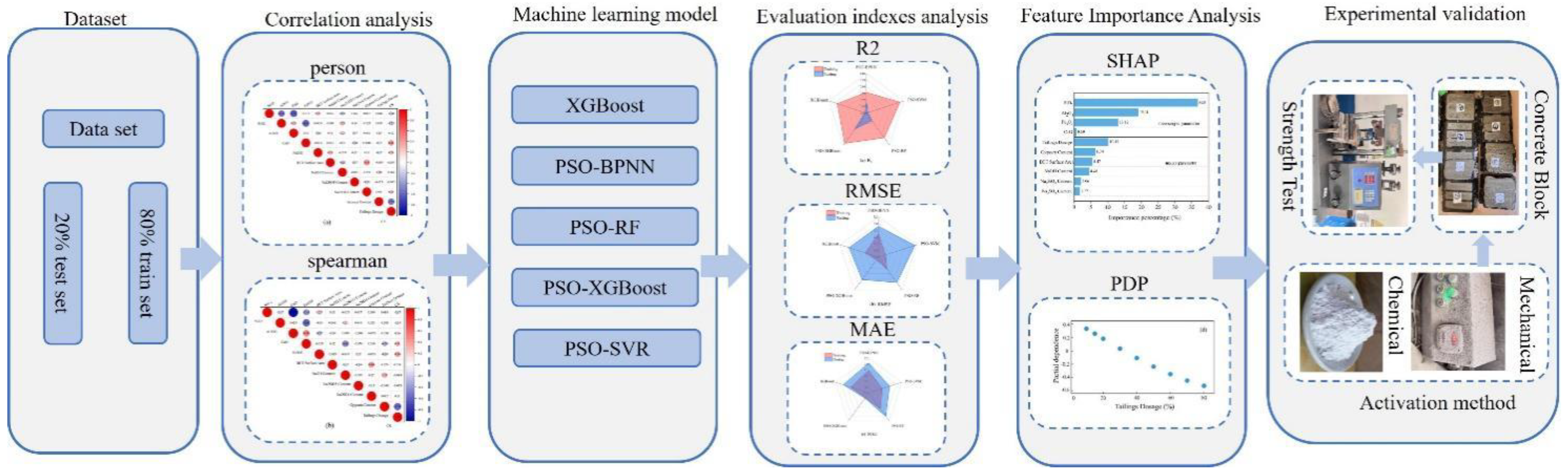
2.5. Implementation Process
3. Creation and Analysis of Data Sets
3.1. Dataset Creation
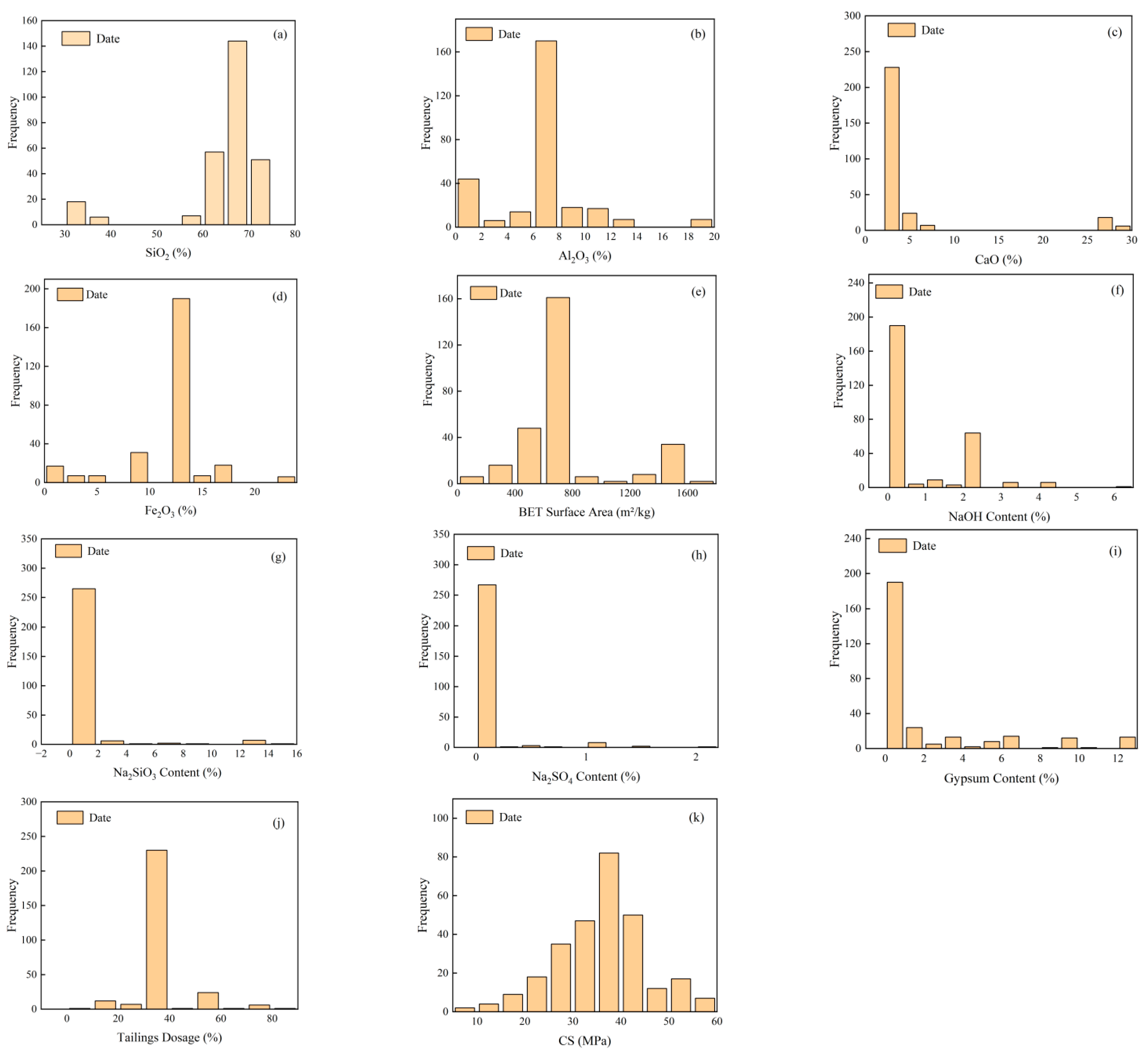
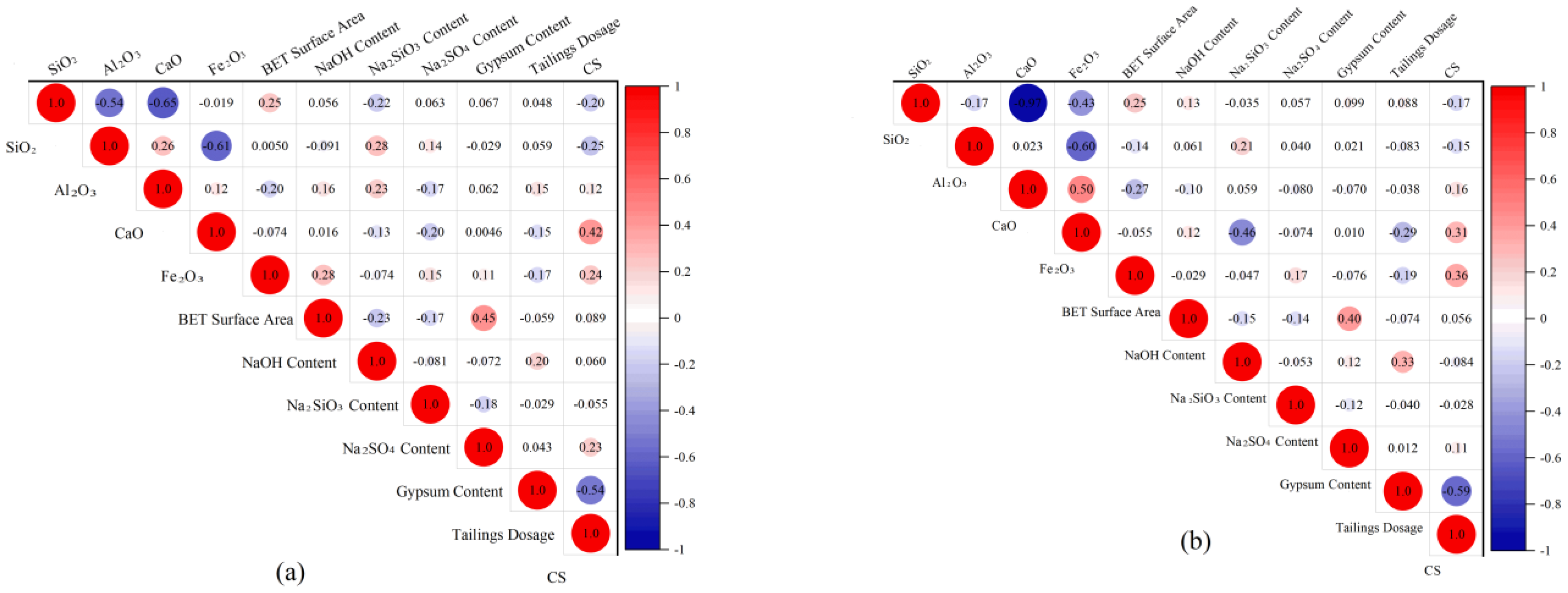
3.2. Data Set Processing and Analysis
4. Results and Discussion
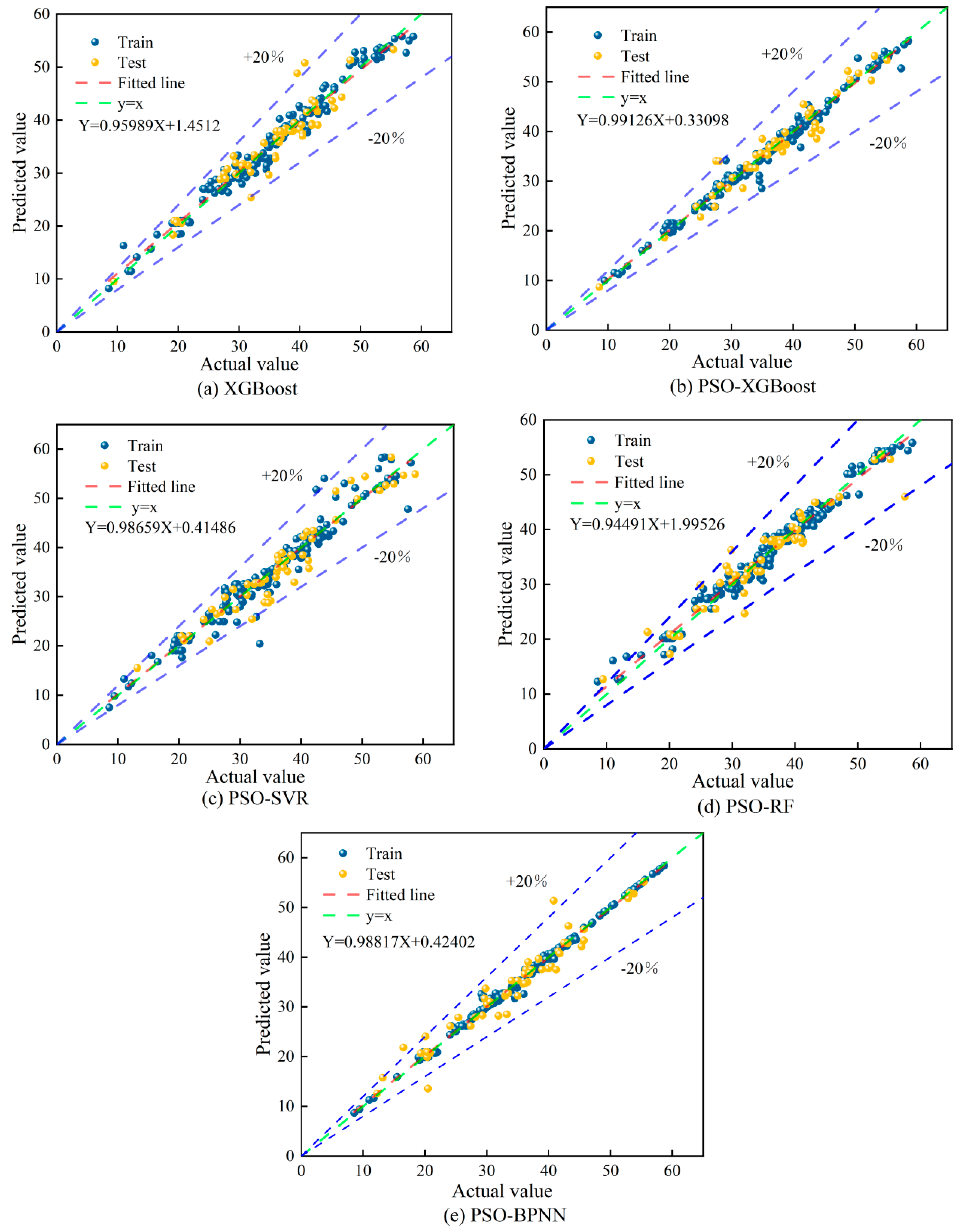
4.1. Analysis of Prediction Results
4.2. Feature Importance Analysis
4.3. Experimental Verification
5. Conclusions
Supplementary Materials
Author Contributions
Funding
Data Availability Statement
Conflicts of Interest
References
- Saedi, A.; Jamshidi-Zanjani, A.; Darban, A.K. A review on different methods of activating tailings to improve their cementitious property as cemented paste and reusability. J. Environ. Manag. 2020, 270, 110881. [Google Scholar] [CrossRef]
- Simonsen, A.M.T.; Solismaa, S.; Hansen, H.K.; Jensen, P.E. Evaluation of mine tailings’ potential as supplementary cementitious materials based on chemical, mineralogical and physical characteristics. Waste Manag. 2020, 102, 710–721. [Google Scholar] [CrossRef]
- Maruthupandian, S.; Chaliasou, A.; Kanellopoulos, A. Recycling mine tailings as precursors for cementitious binders–Methods, challenges and future outlook. Constr. Build. Mater. 2021, 312, 125333. [Google Scholar] [CrossRef]
- Zhu, Q.; Yuan, Y.; Chen, J.; Lv, Y.; Sun, X.; Duan, J. Bond performance between deformed bars and concrete containing iron tailing sand exposed to high temperature. Structures 2023, 56, 104940. [Google Scholar] [CrossRef]
- Bai, J.; Ma, J.; Feng, G.; Cui, B.; Wu, Y. Mechanical characteristic and microstructural properties of tailing cemented paste backfill under uniaxial compression. Structures 2025, 82, 110651. [Google Scholar] [CrossRef]
- Gu, X.; Zhang, W.; Zhang, X.; Li, X.; Qiu, J. Hydration characteristics investigation of iron tailings blended ultra high performance concrete: The effects of mechanical activation and iron tailings content. J. Build. Eng. 2022, 45, 103459. [Google Scholar] [CrossRef]
- Saedi, A.; Jamshidi-Zanjani, A.; Mohseni, M.; Darban, A.K.; Nejati, H. Mechanical activation of lead–zinc mine tailings as a substitution for cement in concrete construction. Constr. Build. Mater. 2023, 364, 129973. [Google Scholar] [CrossRef]
- Zhang, M.; Lv, H.; Jiang, Q.; Wu, Y.; Yang, Y.; Dai, H. Study on flexural behavior of laminated slabs constructed with composite limestone powder-tailings mixed sand concrete. Structures 2025, 77, 109169. [Google Scholar] [CrossRef]
- Pazouki, G.; Saeed, N.; Tao, Z.; Kang, W.H. Proposing an optimised data-efficient artificial neural network model for estimating the compressive strength of concrete containing SCMs. Structures 2025, 79, 109531. [Google Scholar] [CrossRef]
- Zhu, T.; Chen, Z.; Wang, Z.; Cao, J.; Hao, J.; Zhou, Z. Energy damage evolution and mesoscopic failure mechanism of cemented waste rock tailing backfill under axial compression. Structures 2025, 71, 108057. [Google Scholar] [CrossRef]
- Mohammed, H.X.; Mohammed, A.S.; Hassan, A.M.T. Soft computing models to evaluate the effect of fly ash and ground granulated blast furnace slag (GGBS) on the compressive strength of concrete in normal and high strength ranges. Structures 2023, 58, 105459. [Google Scholar] [CrossRef]
- Yao, G.; Wang, Q.; Wang, Z.; Wang, J.; Lyu, X. Activation of hydration properties of iron ore tailings and their application as supplementary cementitious materials in cement. Powder Technol. 2020, 360, 863–871. [Google Scholar] [CrossRef]
- Li, K.; Yao, J.; Li, X.; Li, S.; Min, N.; Li, Z.; Li, X. Activating silicic gangue tailings via high-Ca/Si ratio all-solid-waste cementitious materials: Constructing low-carbon, high-performance cemented backfill and mechanisms. Miner. Eng. 2026, 235, 109847. [Google Scholar] [CrossRef]
- Saedi, A.; Jamshidi-Zanjani, A.; Mohseni, M.; Darban, A.K. Effect of mechanochemical activation on hydration properties of lead-zinc sulfide tailings for concrete construction. Case Stud. Constr. Mater. 2023, 18, e01996. [Google Scholar] [CrossRef]
- Zhang, Y.; Xi, M.; Liu, J.; Wang, W.; Lyu, X. Axial compressive capacity prediction of coal gangue concrete-filled steel tube stub columns: Genetic programming-augmented code calibration and Bayesian-optimized machine learning. Structures 2025, 80, 110119. [Google Scholar] [CrossRef]
- Philip, S.; Marakkath, N. An interpretable machine learning approach with graphical user interface for strength prediction of sustainable slag-based geopolymer concrete. Structures 2025, 81, 110281. [Google Scholar] [CrossRef]
- Jafari, A.; Mollaali, M.; Ma, L.; Shahmansouri, A.A.; Zhou, Y.; Dugnani, R. Brittle fracture strength prediction via XML with reliability considerations. Eng. Fract. Mech. 2025, 328, 111555. [Google Scholar] [CrossRef]
- Hasan, M.; Hassan, M.S.; Hasan, K.; Tushar, F.H.; Khan, M.; Jaya, R.P. Interpretable machine learning approach for predicting the workability and mechanical properties of betel nut husk fiber-reinforced concrete. Structures 2025, 81, 110152. [Google Scholar] [CrossRef]
- Wang, Z.; Liu, S.; Liang, W.; Liu, J.; Zhou, Y.; Lei, K.; Gao, Y.; Ou, W. Predictive Modeling of Compressive Strength in Tailings Concrete Using Explainable Machine Learning Approaches. Results Eng. 2025, 27, 105516. [Google Scholar] [CrossRef]
- Alyami, M.; Onyelowe, K.; AlAteah, A.H.; Alahmari, T.S.; Alsubeai, A.; Ullah, I.; Javed, M.F. Innovative hybrid machine learning models for estimating the compressive strength of copper mine tailings concrete. Case Stud. Constr. Mater. 2024, 21, e03869. [Google Scholar] [CrossRef]
- Sobuz, M.H.R.; Alzlfawi, A.; Hakeem, I.Y.; Tilak, M.K.C.; Kabbo, M.K.I.; Jameel, M.; Abubakar, S.A. Machine learning-based modeling to predict and parametrically optimize the compressive strength of nanomaterial concrete composites exposed to elevated temperatures. Case Stud. Constr. Mater. 2025, 25, e05546. [Google Scholar] [CrossRef]
- Chi, B.; Wang, S.; Zhu, F.; Quan, Y.; Yang, X.; Wang, F. Optimized Prediction of the Compressive Strength of Hollow Concrete Masonry Prisms Using Unified Mortar Index and Hybrid Machine Learning Models. Constr. Build. Mater. 2025, 505, 144800. [Google Scholar] [CrossRef]
- Miao, Q.; Gao, Z.; Zhu, K.; Guo, Z.; Sun, Q.; Zhou, L. Interpretable machine learning model for compressive strength prediction of self-compacting concrete with recycled concrete aggregates and SCMs. J. Build. Eng. 2025, 108, 112965. [Google Scholar] [CrossRef]
- Alyami, M.; Ullah, I.; AlAteah, A.H.; Alsubeai, A.; Alahmari, T.S.; Farooq, F.; Alabduljabbar, H. Machine learning models for predicting the compressive strength of cement-based mortar materials: Hyper tuning and optimization. Structures 2025, 71, 107931. [Google Scholar] [CrossRef]
- Yılmaz, Y.; Nayır, S. Machine learning based prediction of compressive and flexural strength of recycled plastic waste aggregate concrete. Structures 2024, 69, 107363. [Google Scholar] [CrossRef]
- Yadav, A.A.; Hirekhan, S.G.; Bhandari, P.S.; Bhagat, R.M.; Ranit, A.B.; Shelare, S.; Soudagar, M.E.M.; Sharma, S.; Raja, V.B.; Mahapatro, A.; et al. AI-driven sustainable concrete mix design: Hybrid deep Q-Learning and genetic algorithms-based multi-objective machine learning optimizations for high structural strength, low cost, and low carbon footprints. Structures 2025, 82, 110443. [Google Scholar] [CrossRef]
- Wijesundara, S.; Wijesundara, K.; Bandara, S. Machine learning approach for predicting the compressive strength of ultra-high performance fiber reinforced concrete (UHPFRC). Structures 2025, 75, 108704. [Google Scholar] [CrossRef]
- Chen, T.; Guestrin, C. Xgboost: A scalable tree boosting system. In Proceedings of the 22nd ACM SIGKDD International Conference on Knowledge Discovery and Data Mining, San Francisco, CA, USA, 13–17 August 2016; pp. 785–794. [Google Scholar]
- Boulesteix, A.L.; Janitza, S.; Kruppa, J.; König, I.R. Overview of random forest methodology and practical guidance with emphasis on computational biology and bioinformatics. Wiley Interdiscip. Rev. Data Min. Knowl. Discov. 2012, 2, 493–507. [Google Scholar] [CrossRef]
- Awad, M.; Khanna, R. Support Vector Regression. In Efficient Learning Machines: Theories, Concepts, and Applications for Engineers and System Designers; Apress: Berkeley, CA, USA, 2015; pp. 67–80. [Google Scholar]
- Asaad, R.R.; Ali, R.I. Back Propagation Neural Network (BPNN) and sigmoid activation function in multi-layer networks. Acad. J. Nawroz Univ. 2019, 8, 216. [Google Scholar] [CrossRef]
- Wang, D.; Tan, D.; Liu, L. Particle swarm optimization algorithm: An overview. Soft Comput. 2018, 22, 387–408. [Google Scholar] [CrossRef]
- Van den Broeck, G.; Lykov, A.; Schleich, M.; Suciu, D. On the tractability of SHAP explanations. J. Artif. Intell. Res. 2022, 74, 851–886. [Google Scholar] [CrossRef]
- GB/T 17671-2021; Test Method of Cement Mortar Strength (ISO Method). National Standards of China: Beijing, China, 2021.
- Alavi, S.A.; Noel, M. Uncertainty and prediction intervals of new machine learning approach for non-destructive evaluation of concrete compressive strength. Buildings 2025, 15, 544. [Google Scholar] [CrossRef]
- Yang, M.; Sun, J.; Yuan, J.; Li, H.; Xu, D.; Zhang, R.; Ma, X. Iron tailing Powder in Cement-Based Composites: Evaluating Filling Effect from Particle-Size Distribution. Case Stud. Constr. Mater. 2025, 23, e04919. [Google Scholar] [CrossRef]
- Yanning, S.; Qiong, F.; Hongxia, Q.; Chao, W. Study on mechanically activated ferrous extraction tailing of nickel slag as cementitious materials: Physical and chemical properties, mechanical properties and reaction mechanism. Constr. Build. Mater. 2024, 422, 135748. [Google Scholar] [CrossRef]
- Wang, Z.; Chu, H.; Wang, J.; Feng, E.; Zhang, Y.; Lyu, X. Mechanical activation of siliceous tailings and its application as cement admixtures. Miner. Eng. 2022, 177, 107366. [Google Scholar] [CrossRef]


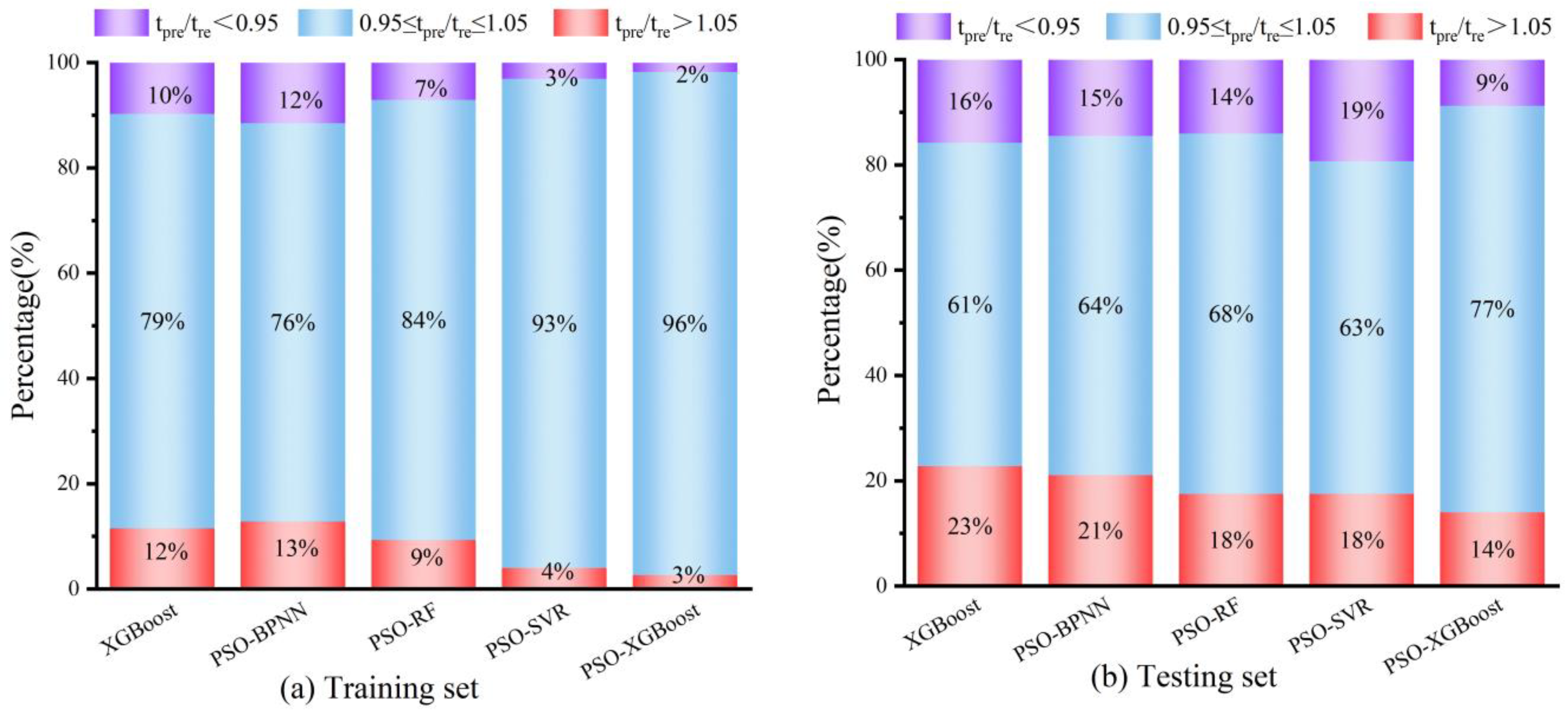
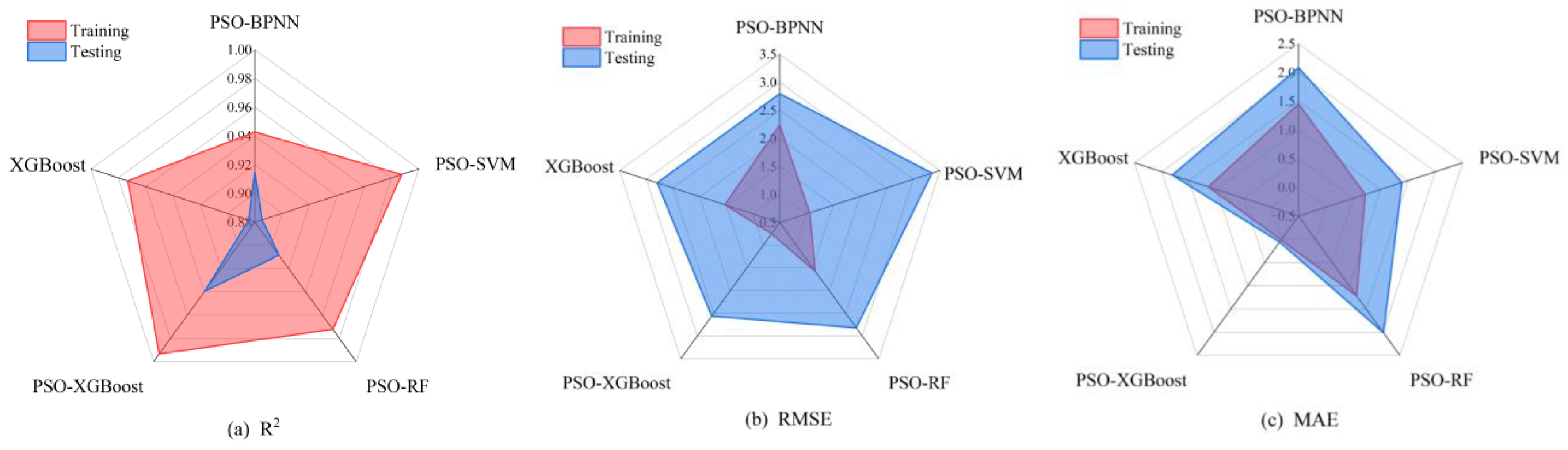
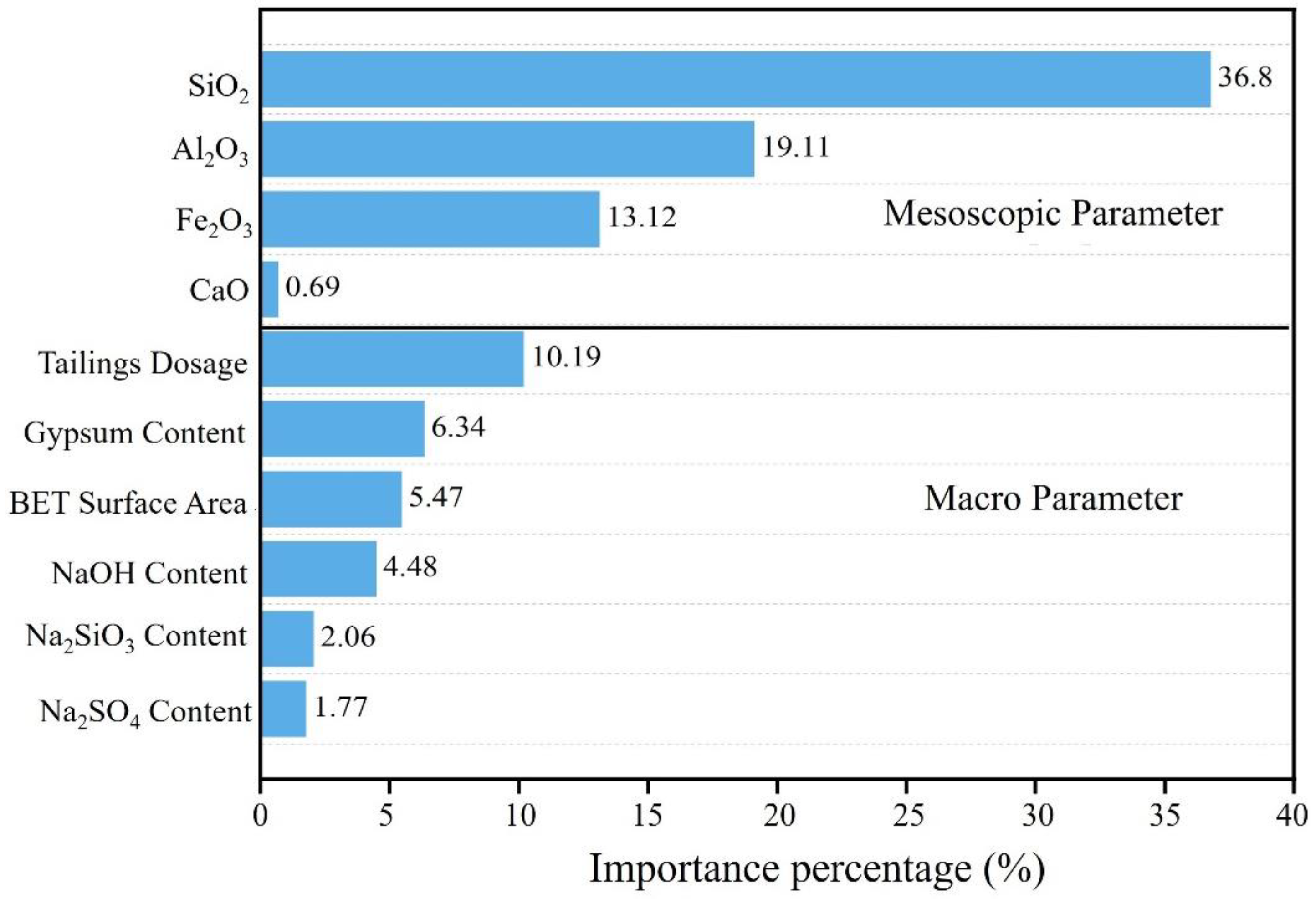
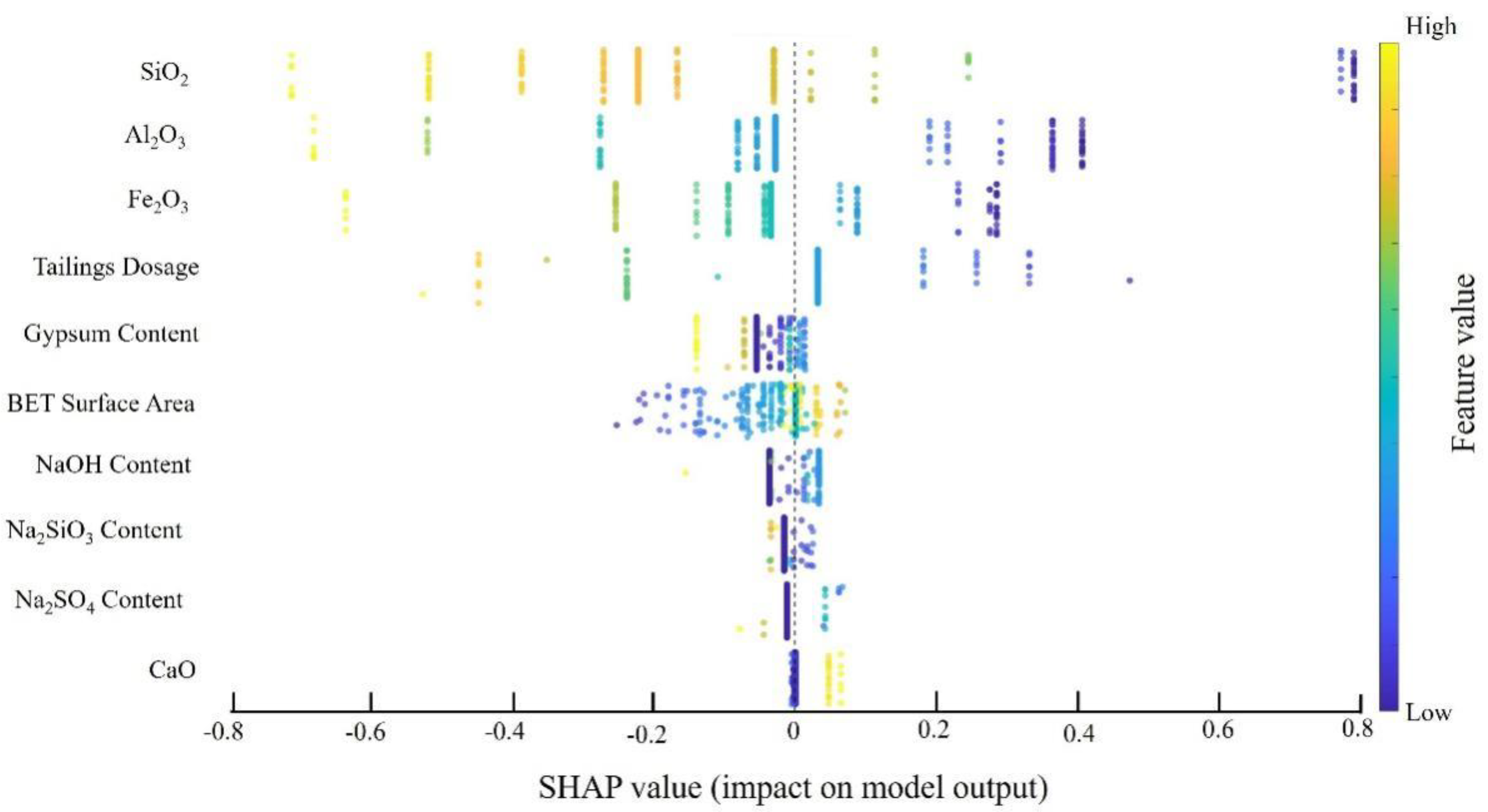

| SiO2 | CaO | MgO | Fe2O3 | Al2O3 | SO3 | Others |
|---|---|---|---|---|---|---|
| 64.71 | 3.69 | 6.89 | 12.17 | 7.59 | 0.19 | 4.76 |
| Input Characteristics and Output Variables | Minimum Value | Maximum Value | Average Value | Median | Standard Deviation |
|---|---|---|---|---|---|
| SiO2 (%) | 30.42 | 74.89 | 64.48 | 67.71 | 10.34 |
| Al2O3 (%) | 0.76 | 19.65 | 7.05 | 7.59 | 3.45 |
| CaO (%) | 2.1 | 29.21 | 5.65 | 3.69 | 6.97 |
| Fe2O3 (%) | 1.89 | 22.14 | 11.46 | 12.17 | 3.77 |
| BET Surface Area (m2/g) | 45.6 | 1617 | 782.43 | 770 | 339.45 |
| NaOH Content (%) | 0 | 6 | 0.68 | 0 | 1.08 |
| Na2SiO3 Content (%) | 0 | 15 | 0.53 | 0 | 2.21 |
| Na2SO4 Content (%) | 0 | 2 | 0.054 | 0 | 0.24 |
| Gypsum Content (%) | 0 | 12 | 1.76 | 0 | 3.29 |
| Tailings Dosage (%) | 0 | 80 | 31.77 | 30 | 9.81 |
| CS (MPa) | 8.57 | 58.7 | 35.83 | 36.6 | 9.44 |
| Model | Data Set | R2 | RMSE (MPa) | MAE (MPa) |
|---|---|---|---|---|
| PSO-BPNN | Train | 0.9428 | 2.24 | 1.45 |
| Test | 0.9149 | 2.80 | 2.08 | |
| PSO-SVM | Train | 0.9874 | 1.06 | 0.72 |
| Test | 0.8854 | 3.35 | 1.39 | |
| PSO-RF | Train | 0.9722 | 1.57 | 1.22 |
| Test | 0.9084 | 2.82 | 2.01 | |
| PSO-XGBoost | Train | 0.9933 | 0.75 | 0.36 |
| Test | 0.9393 | 2.56 | 0.59 | |
| XGBoost | Train | 0.9731 | 1.53 | 1.15 |
| Test | 0.8846 | 2.79 | 1.81 |
| Mechanical grinding time (min) | 0 | 20 | 40 | 60 | 80 |
| Specific surface area (m2/g) | 420 | 580 | 640 | 770 | 670 |
| Factors | Code | Level | ||
|---|---|---|---|---|
| −1 | 0 | 1 | ||
| Mechanical grinding time (min) | A | 40 | 60 | 80 |
| NaOH content (%) | B | 1 | 2 | 3 |
| Gypsum content (%) | C | 6 | 9 | 12 |
| NO | A | B | C | Test Strength (MPa) | Prediction Strength (MPa) | Relative Error (%) |
|---|---|---|---|---|---|---|
| 1 | 40 | 1 | 9 | 40.74 | 39.61 | 2.77 |
| 2 | 80 | 1 | 9 | 40.14 | 39.62 | 1.29 |
| 3 | 40 | 3 | 9 | 40.89 | 39.64 | 3.05 |
| 4 | 80 | 3 | 9 | 40.62 | 39.64 | 2.41 |
| 5 | 40 | 2 | 6 | 40.69 | 40.44 | 0.61 |
| 6 | 80 | 2 | 6 | 40.87 | 40.47 | 0.98 |
| 7 | 40 | 2 | 12 | 41.22 | 40.59 | 1.53 |
| 8 | 80 | 2 | 12 | 40.57 | 40.73 | 0.39 |
| 9 | 60 | 1 | 6 | 41.24 | 42.26 | 2.47 |
| 10 | 60 | 3 | 6 | 41.53 | 42.32 | 1.90 |
| 11 | 60 | 1 | 12 | 41.16 | 42.37 | 2.94 |
| 12 | 60 | 3 | 12 | 41.45 | 42.5 | 2.53 |
| 13 | 60 | 2 | 9 | 43.75 | 39.94 | 8.70 |
| 14 | 60 | 2 | 9 | 41.36 | 39.94 | 3.43 |
| 15 | 60 | 2 | 9 | 42.56 | 39.94 | 6.16 |
| 16 | 60 | 2 | 9 | 42.3 | 39.94 | 5.58 |
| 17 | 60 | 2 | 9 | 43.04 | 39.94 | 7.20 |
Disclaimer/Publisher’s Note: The statements, opinions and data contained in all publications are solely those of the individual author(s) and contributor(s) and not of MDPI and/or the editor(s). MDPI and/or the editor(s) disclaim responsibility for any injury to people or property resulting from any ideas, methods, instructions or products referred to in the content. |
© 2026 by the authors. Licensee MDPI, Basel, Switzerland. This article is an open access article distributed under the terms and conditions of the Creative Commons Attribution (CC BY) license.
Share and Cite
Zhong, Z.; Deng, S.; Liu, T.; Li, X.; Ye, X.; Yang, W.; Yang, J. Prediction of the Compressive Strength of Tailings-Based Cement Material Using Machine Learning Models with Experimental Validation. Materials 2026, 19, 2557. https://doi.org/10.3390/ma19122557
Zhong Z, Deng S, Liu T, Li X, Ye X, Yang W, Yang J. Prediction of the Compressive Strength of Tailings-Based Cement Material Using Machine Learning Models with Experimental Validation. Materials. 2026; 19(12):2557. https://doi.org/10.3390/ma19122557
Chicago/Turabian StyleZhong, Zhanming, Senrui Deng, Tao Liu, Xiuxin Li, Xin Ye, Weijun Yang, and Jianyu Yang. 2026. "Prediction of the Compressive Strength of Tailings-Based Cement Material Using Machine Learning Models with Experimental Validation" Materials 19, no. 12: 2557. https://doi.org/10.3390/ma19122557
APA StyleZhong, Z., Deng, S., Liu, T., Li, X., Ye, X., Yang, W., & Yang, J. (2026). Prediction of the Compressive Strength of Tailings-Based Cement Material Using Machine Learning Models with Experimental Validation. Materials, 19(12), 2557. https://doi.org/10.3390/ma19122557