Thermo-Mechanical Degradation Behavior of the Base–Subgrade Interface in Airport Pavements: A Sequentially Coupled Cohesive-Zone Study

 ,
,  and
and
Highlights
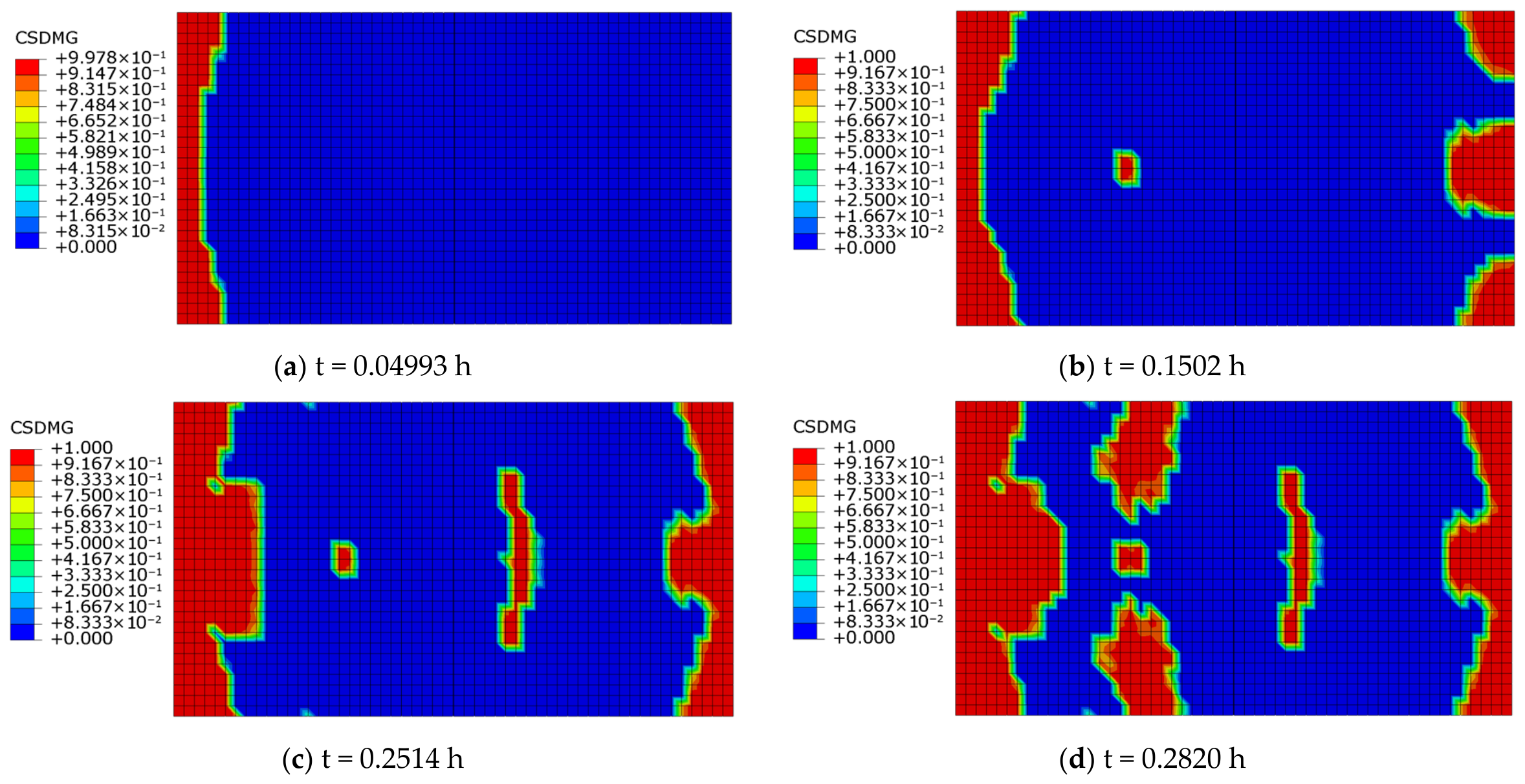
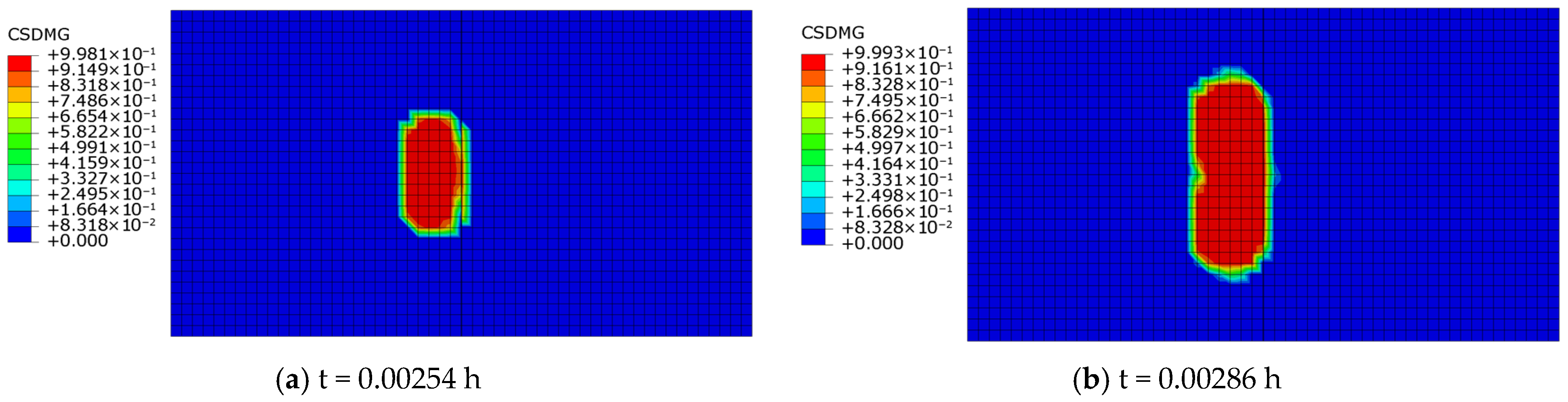
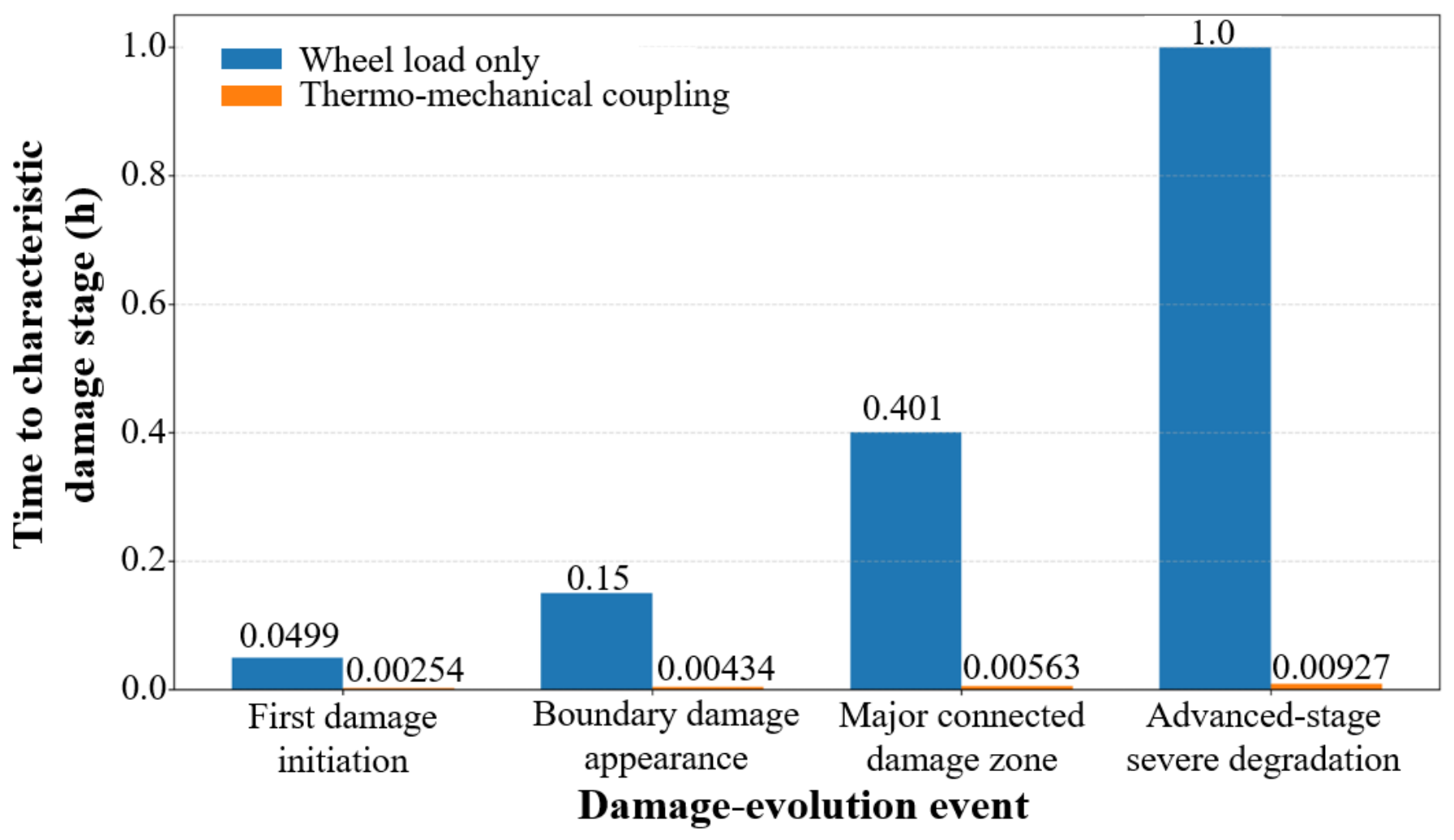
- Thermo-mechanical coupling advances first debonding from 0.04993 h to 0.00254 h.
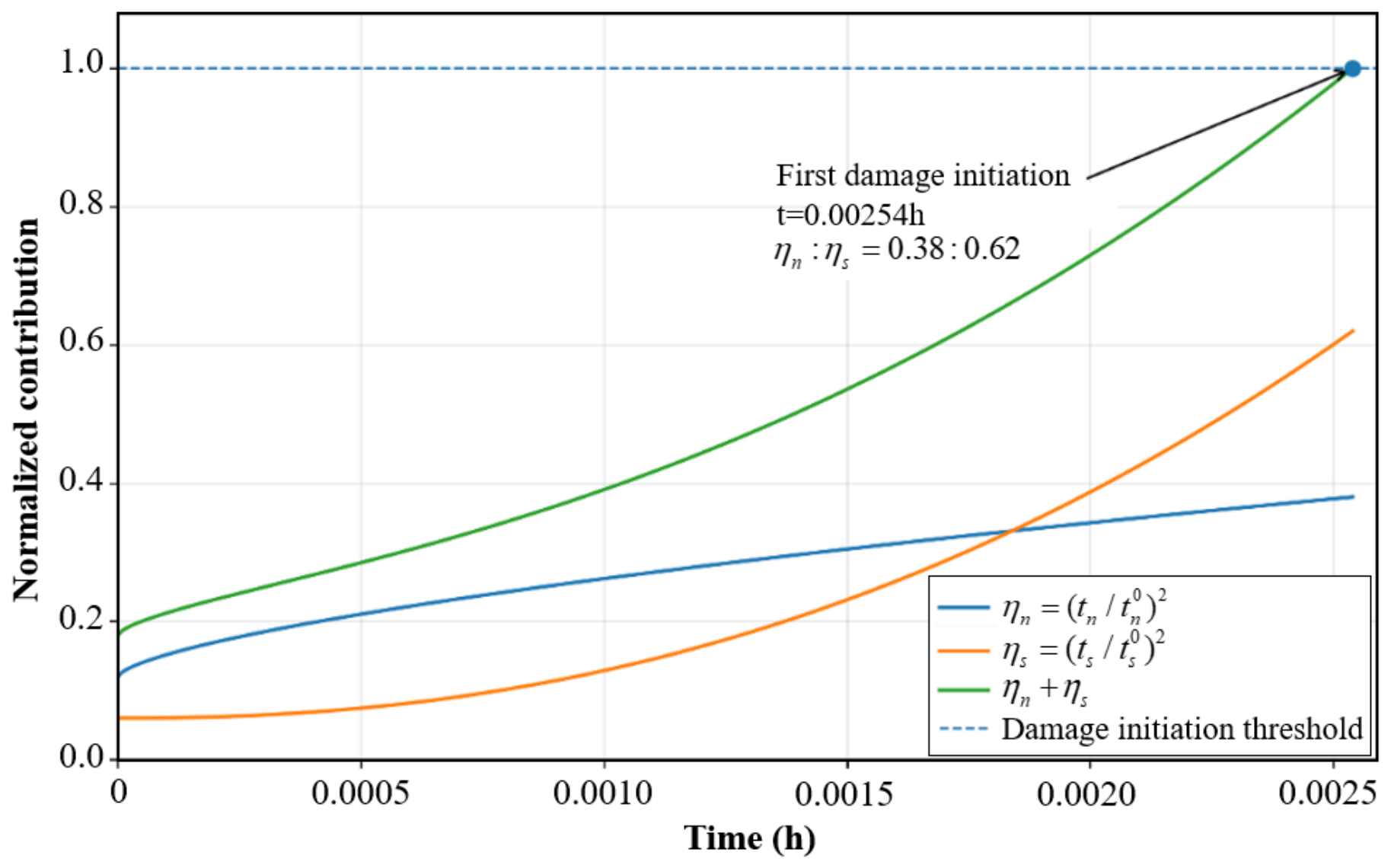
- Mixed-mode initiation governs first damage, with (tn/tn0)2:(ts/ts0)2 = 0.38:0.62.
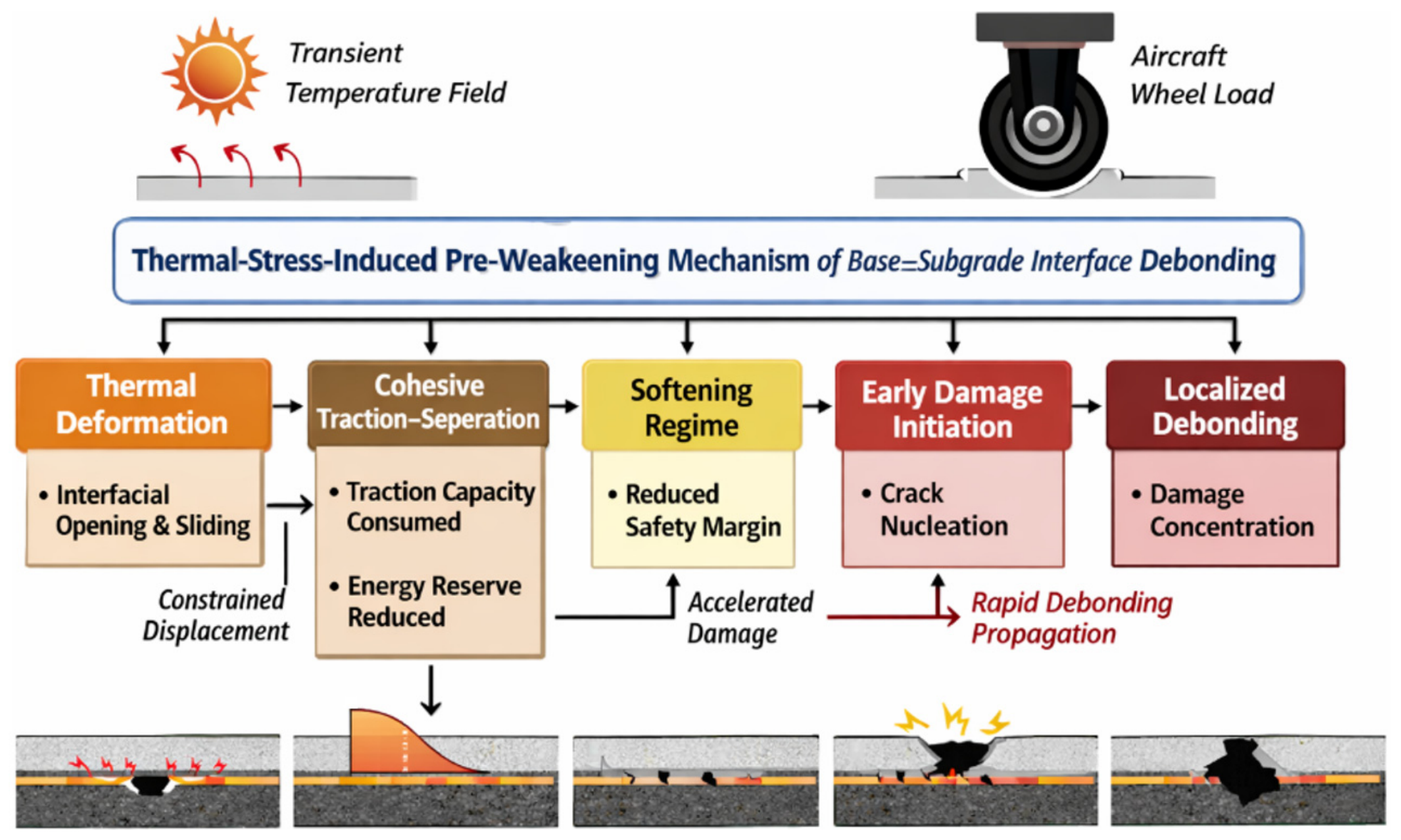
- Thermal pre-weakening shifts the interface closer to the damage threshold before wheel loading.
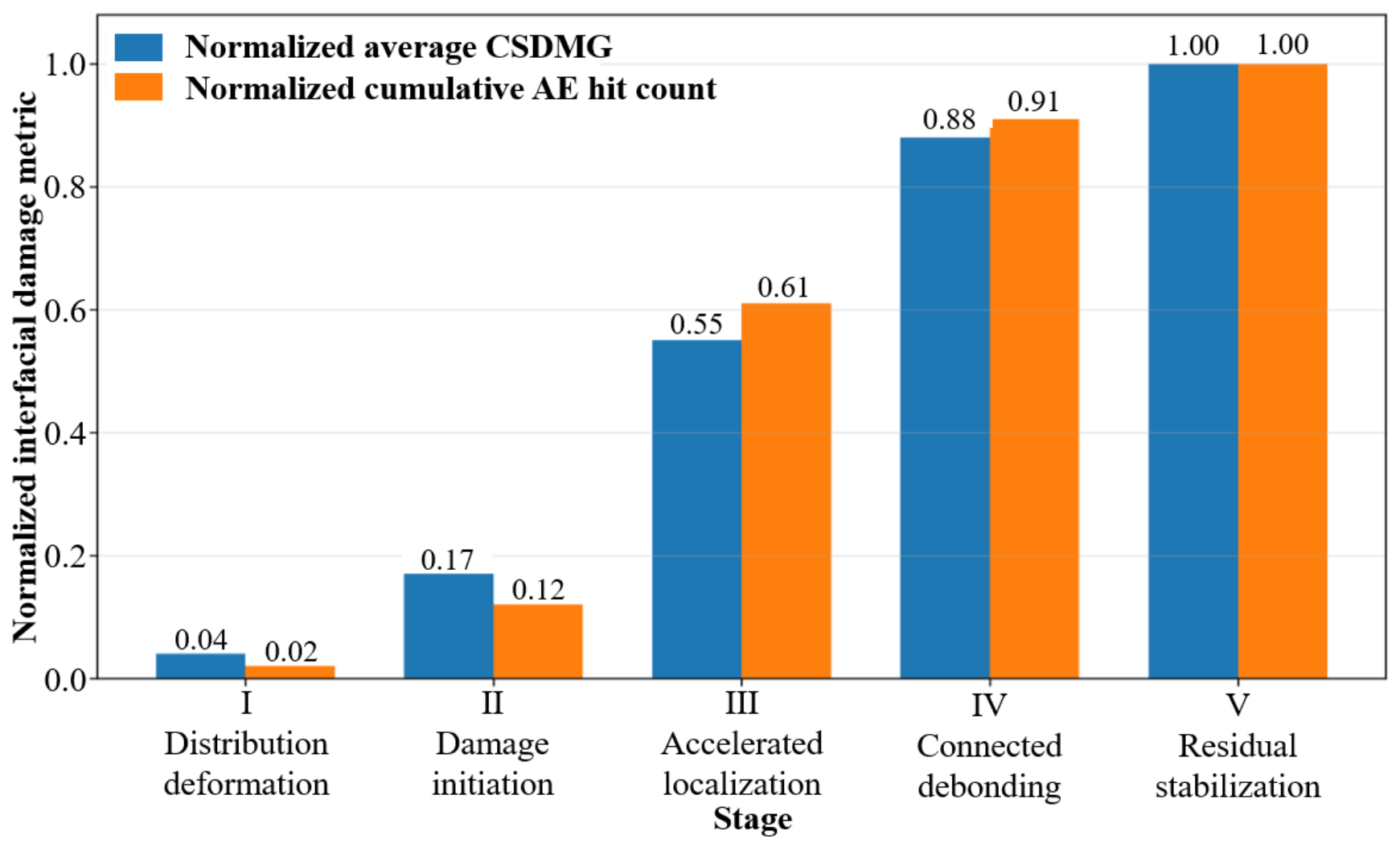
- Simulated average CSDMG and cumulative AE hits show consistent stage evolution.
- The base–subgrade interface should be treated as a temperature-sensitive weak layer.
Abstract
1. Introduction
2. Methods
2.1. Model Geometry and Material Properties
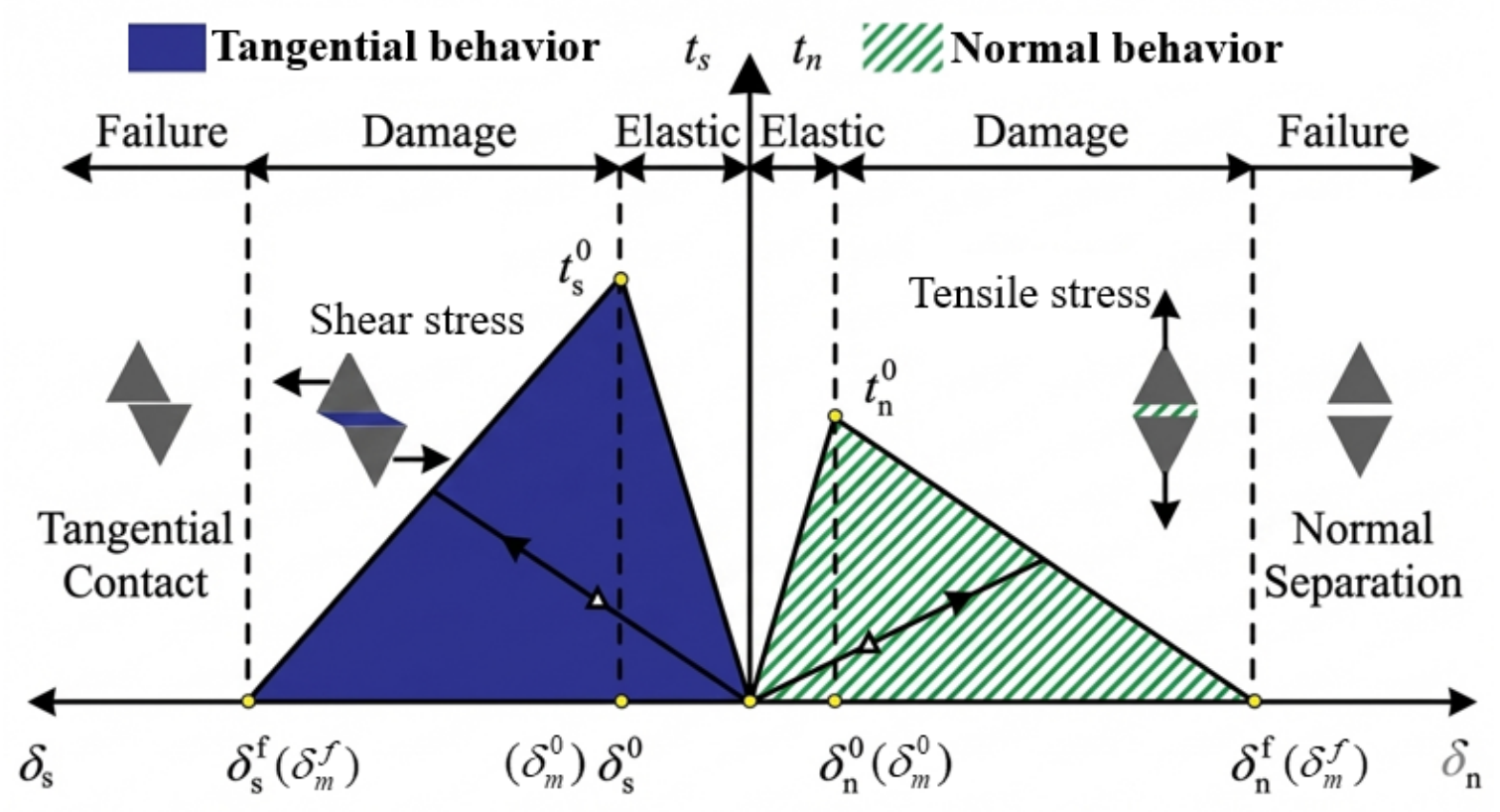
2.2. Bilinear Cohesive Interface Model and Boundary Conditions
2.3. Temperature Field Simulation
- (1)
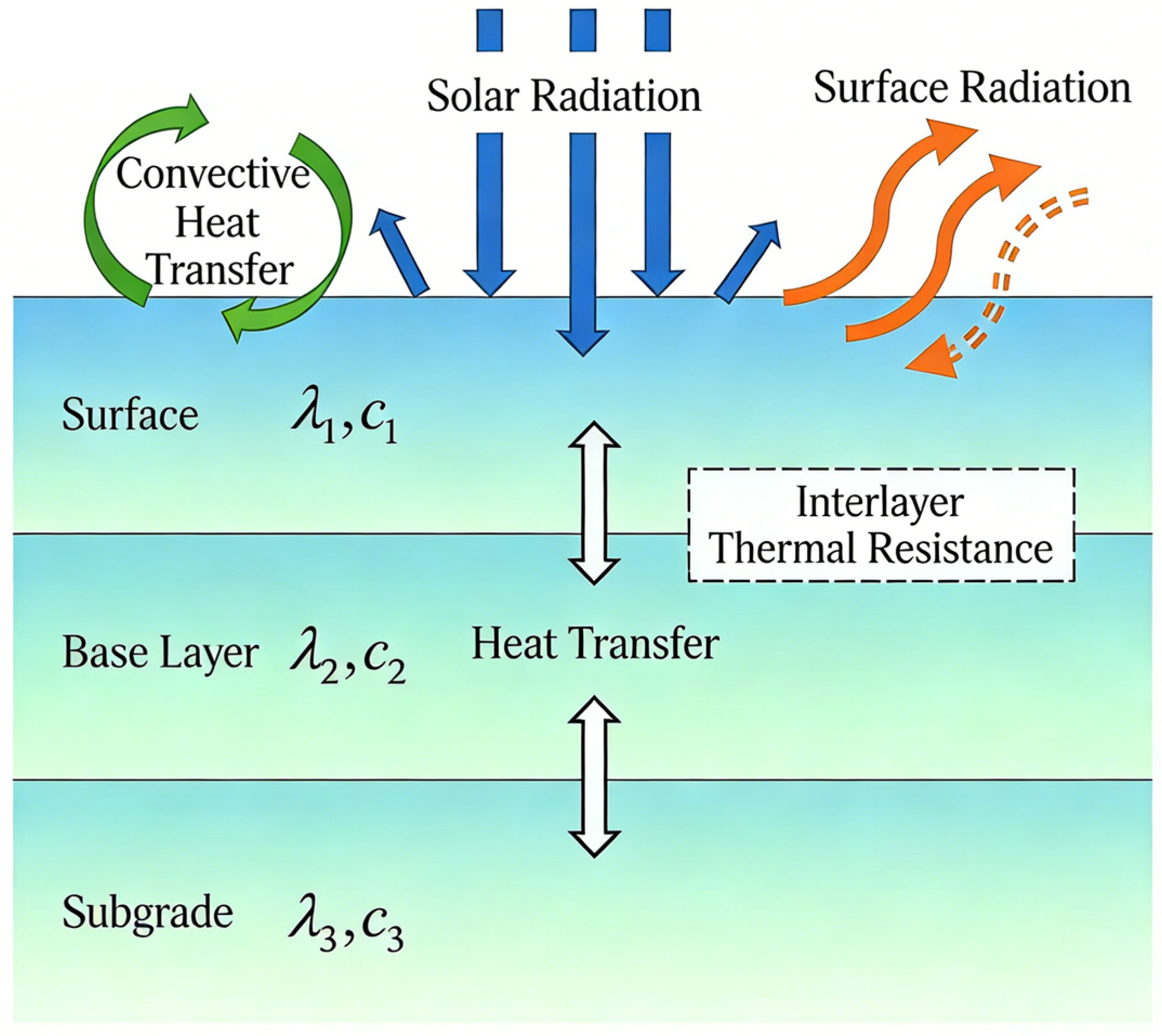
- Surface convection with ambient air
- (2)
- Total shortwave solar radiation
- (3)
- Effective longwave (net) gray-body radiation
- (4)
- Interlayer thermal resistance
- (5)
- Initial condition treatment
2.4. Thermal Mechanical Coupling
3. Result
3.1. Interface Response Under Aircraft Wheel Loading Only
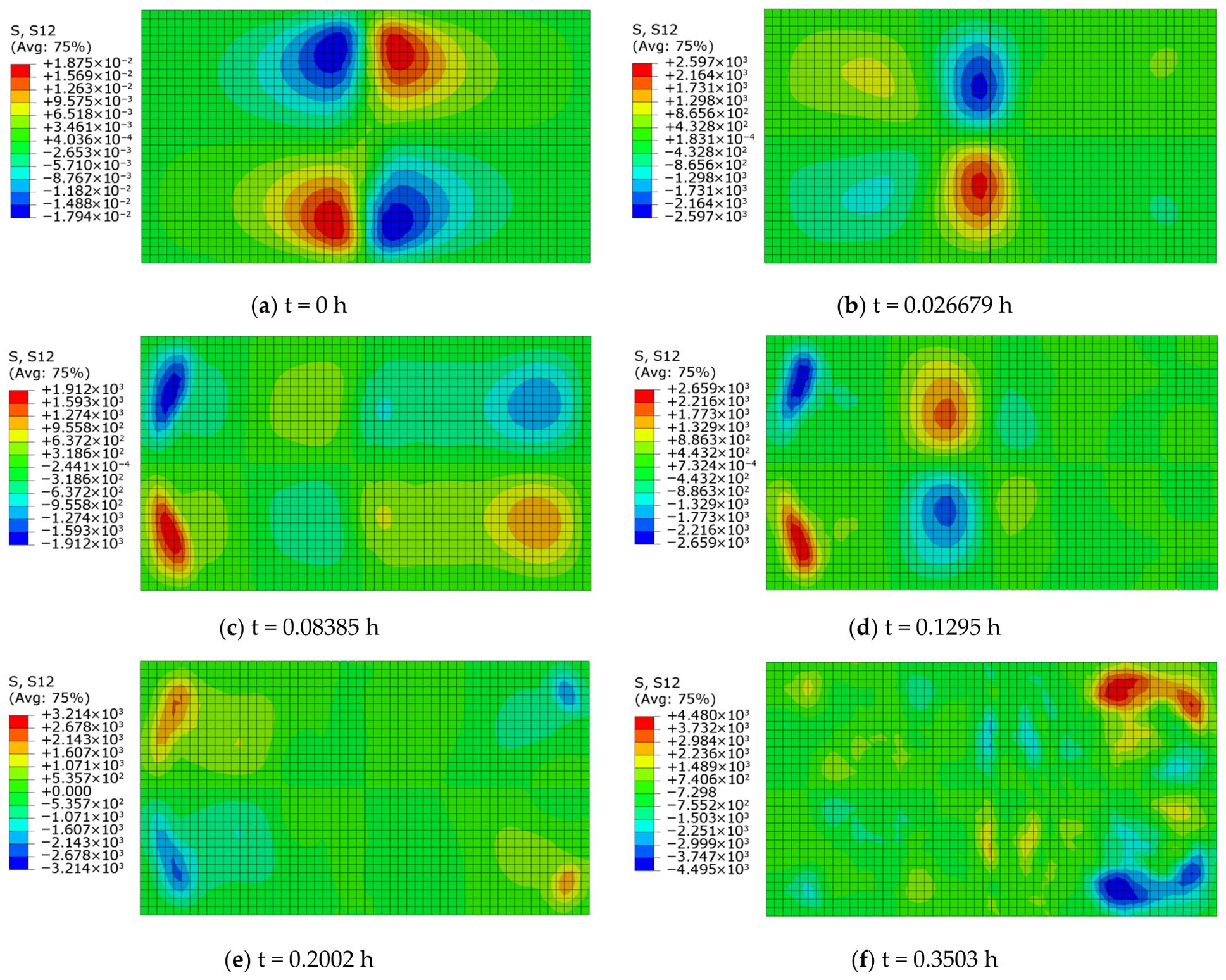
3.1.1. Evolution of Interfacial Shear Stress During Wheel-Track Translation
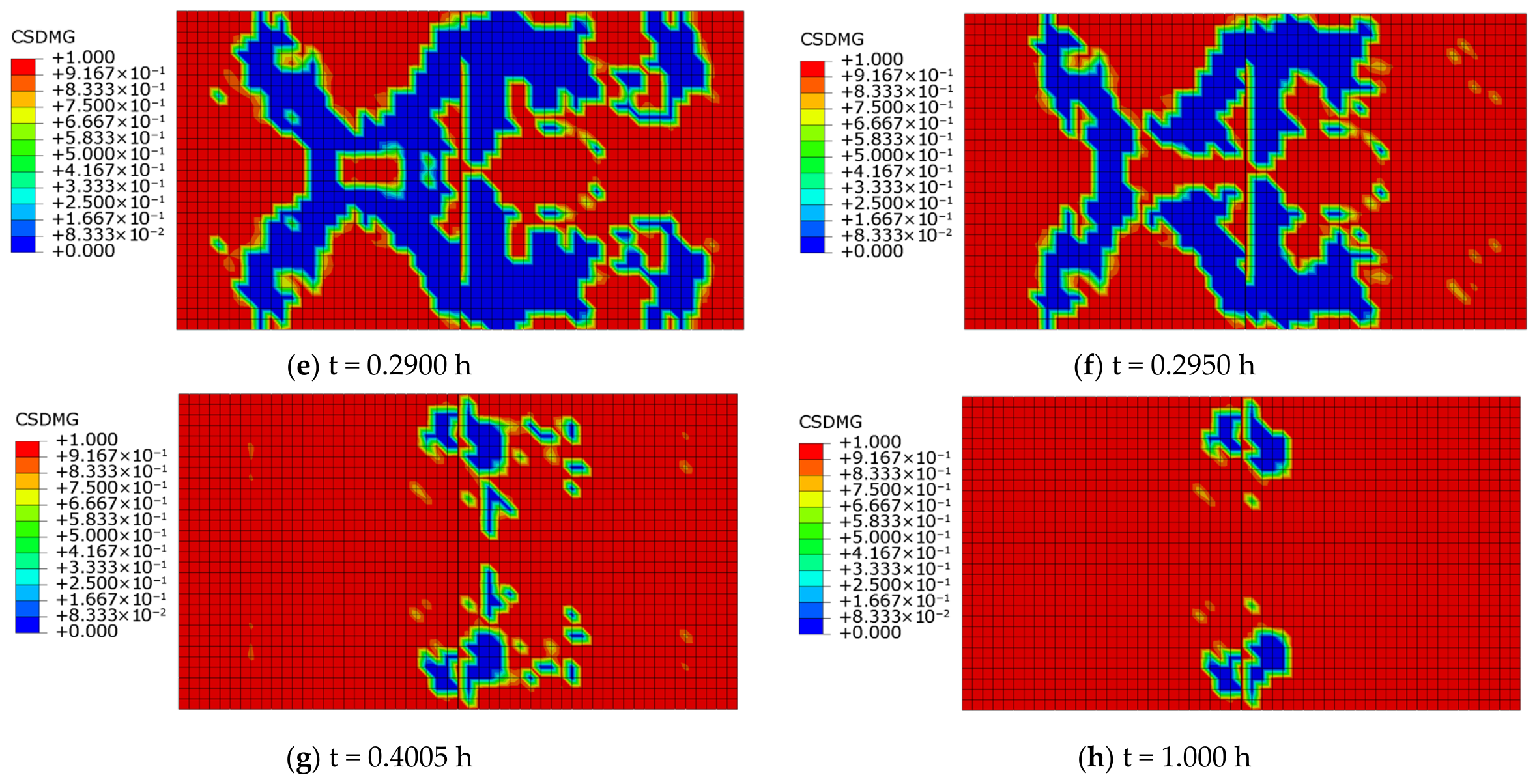
3.1.2. Interfacial Damage Evolution Under Wheel Loading Only
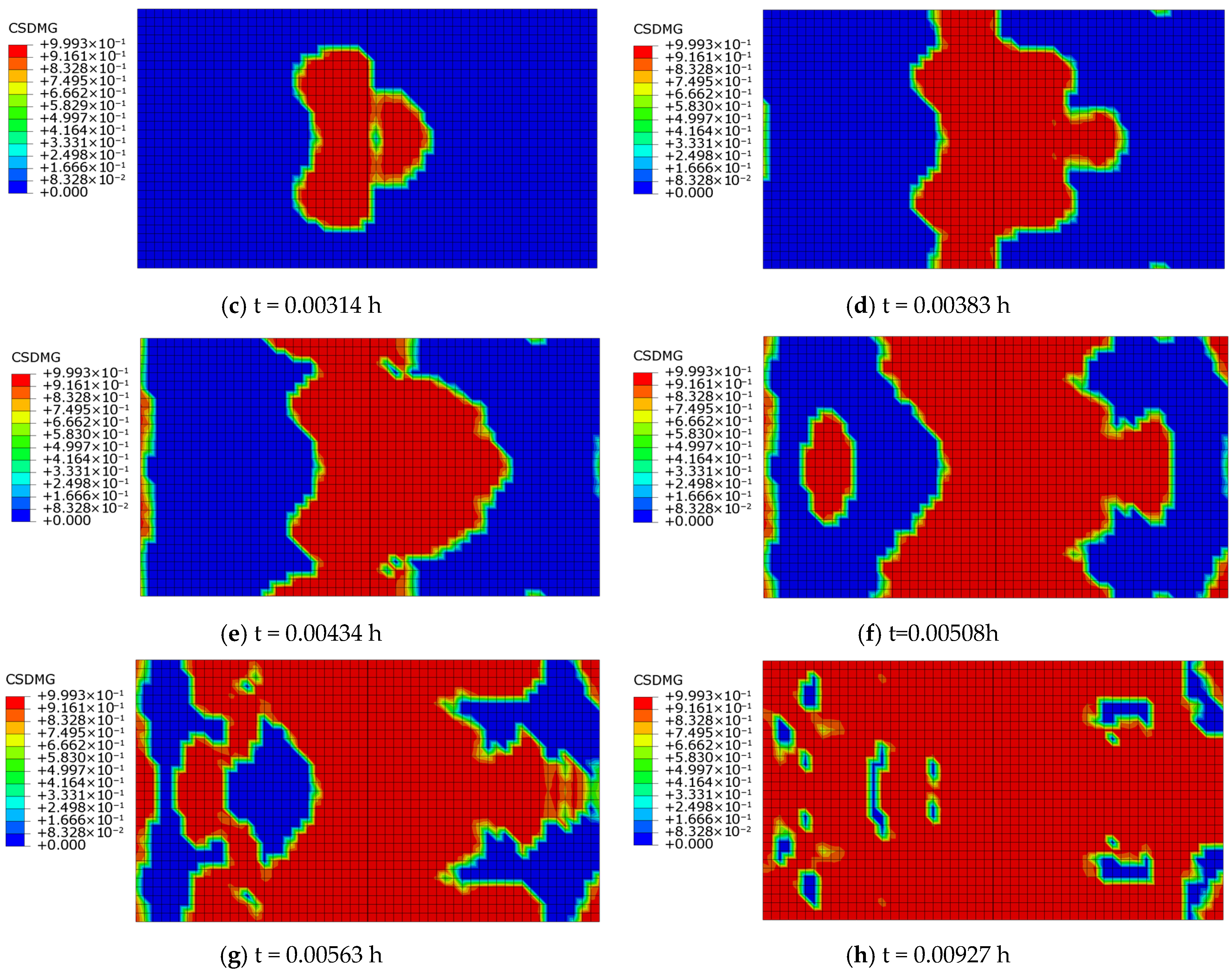
3.2. Interfacial Damage Evolution Under Thermo-Mechanical Coupling
3.3. Quantitative Comparison of Damage Evolution Under Different Loading Conditions
4. Discussion
4.1. Thermal Stress “Pre-Weakening” of the Interface
4.2. Stress Superposition and Joint-Driven Localization Under Thermo-Mechanical Coupling
4.3. Engineering Implications for Airport Pavement Design and Assessment
5. Conclusions
- (1)
- Compared with the wheel-loading-only case, thermo-mechanical coupling advances the first damage initiation from 0.04993 h to 0.00254 h and shortens the severe-degradation stage from 1.000 h to 0.00927 h, demonstrating that thermal action significantly compresses the time scale of debonding evolution.
- (2)
- The decomposition of the quadratic initiation criterion shows that, at the first damage instant, the normalized contribution ratio is (tn/tn0)2:(ts/ts0)2 = 0.38:0.62. This indicates that the first damage event is not caused by pure tensile or pure shear action alone, but by synergistic normal–shear interaction, with wheel-induced shear as the dominant trigger and thermally induced tensile opening as substantial preconditioning assistance.
- (3)
- The accelerated failure is governed by a thermal stress “pre-weakening” mechanism. By consuming part of the available cohesive resistance through constrained thermal deformation, the temperature field shifts the interface closer to the damage threshold before wheel loading is applied, thereby promoting earlier entry into the softening regime and faster subsequent degradation evolution.
- (4)
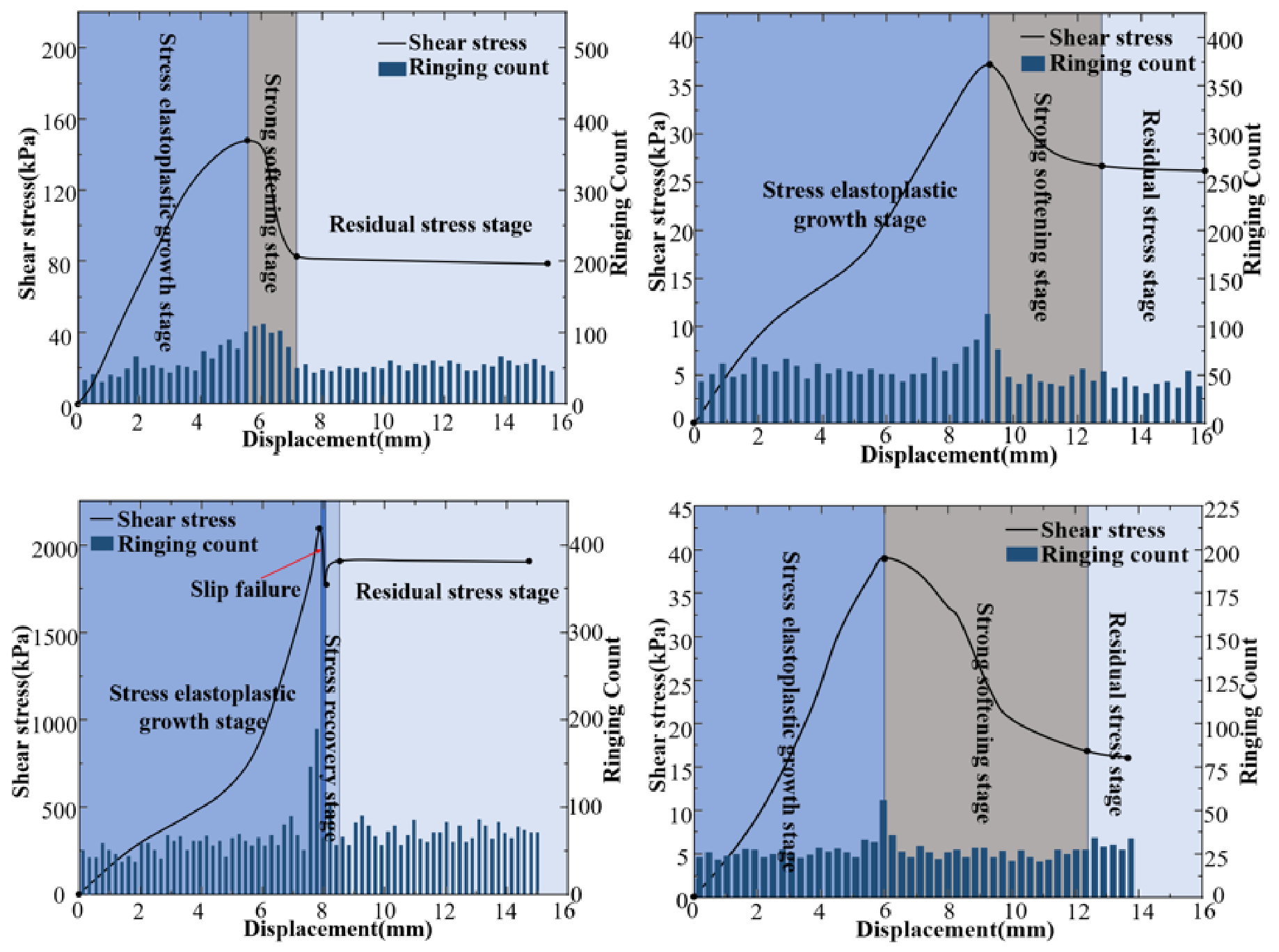
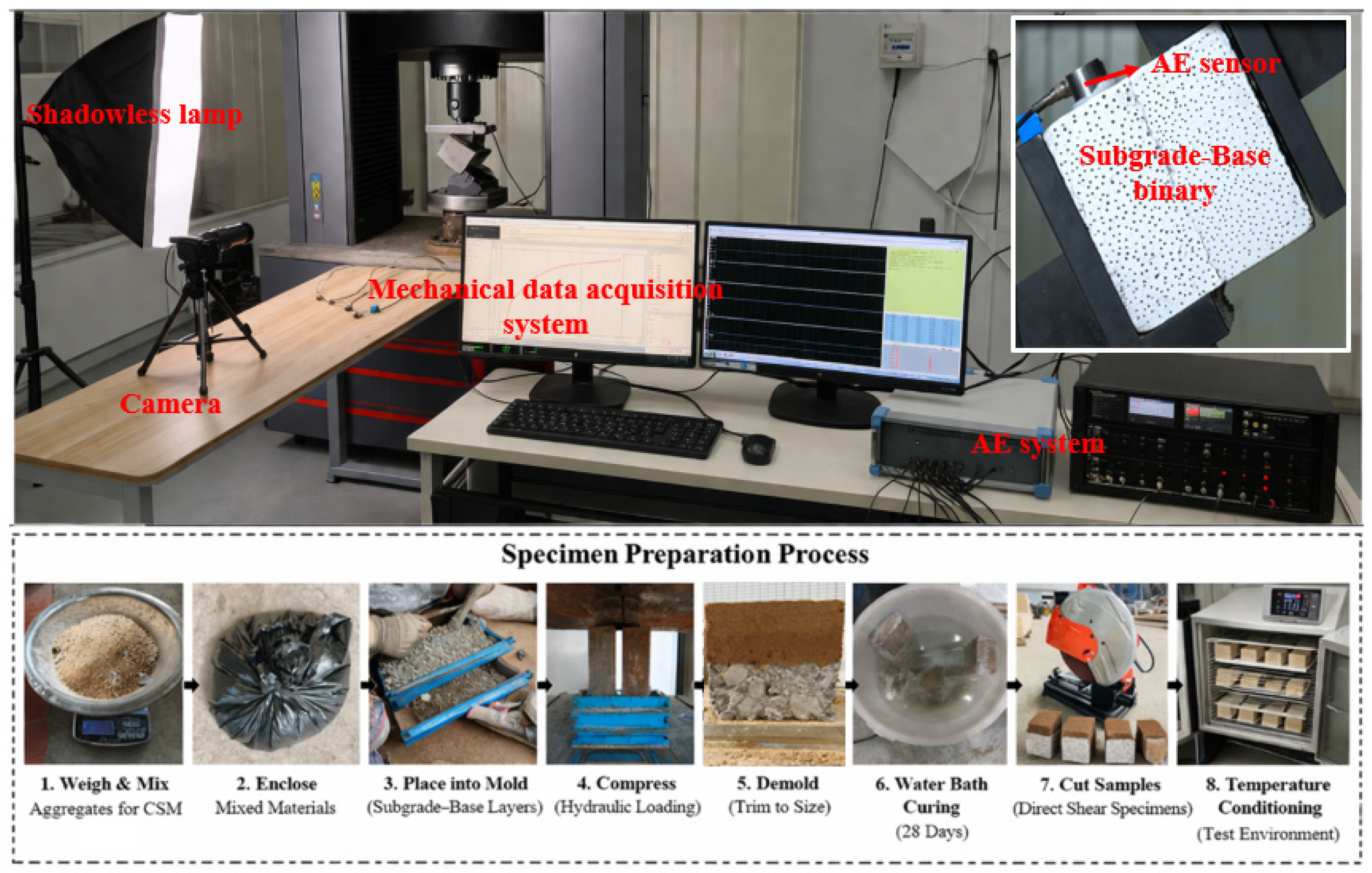
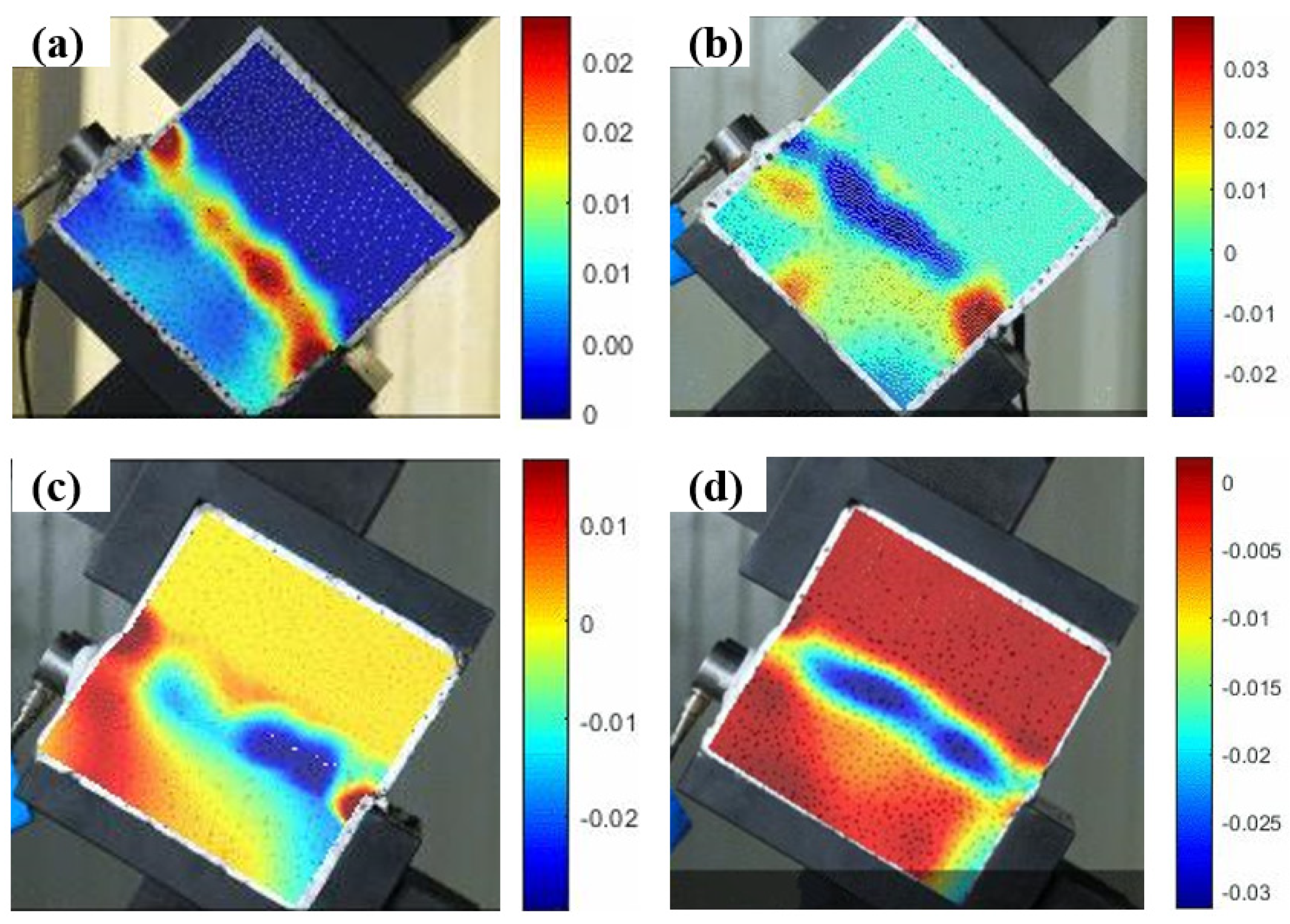
- Companion experiments provide consistent mechanistic support for interpreting interface debonding as a localization-controlled instability process. The shear stress–displacement and AE responses indicate that failure is governed not only by peak resistance, but also by post-peak evolution and energy release characteristics, while the DIC observations reveal a transition from diffuse deformation to concentrated strain localization. This is physically consistent with the rapid CSDMG concentration and damaged-zone coalescence obtained in the coupled simulations.
- (5)
- From an engineering perspective, temperature should be regarded primarily as a state-regulating and damage-accelerating factor rather than only a peak-strength-reducing factor. Neglecting environmental preconditioning may therefore lead to non-conservative evaluation of interfacial stability, and thermo-mechanical coupling should be explicitly considered in the design assessment and maintenance planning of airport pavements, especially near joints and other discontinuity-prone regions.
- (6)
- Because the model adopts literature-based cohesive parameters, elastic idealization for the slab and base course, simplified boundary conditions, and no explicit residual post-failure friction, the present simulations are best interpreted as revealing the relative degradation trend and governing mechanisms of interface debonding. Future work should include material-specific parameter calibration, sensitivity analysis, viscoelastic constitutive refinement, and residual friction modeling to improve predictive capability.
Author Contributions
Funding
Data Availability Statement
Acknowledgments
Conflicts of Interest
References
- Westergaard, H.M. Analysis of Stresses in Concrete Pavements Due to Variations of Temperature. In Highway Research Board Proceedings; National Academy of Sciences—National Research Council (Highway Research Board): Washington, DC, USA, 1927. [Google Scholar]
- Liang, R.Y.; Niu, Y. Temperature and Curling Stress in Concrete Pavements: Analytical Solutions. J. Transp. Eng. 1998, 124, 91–100. [Google Scholar] [CrossRef]
- Tian, K.; King, D.; Yang, B.; Kim, S.; Alhasan, A.; Ceylan, H. Impact of Curling and Warping on Concrete Pavement: Phase II; Iowa S U P F; Iowa State University Institute for Transportation: Ames, IA, USA, 2023. [Google Scholar]
- Yang, B.; Tian, K.; King, D.; Ceylan, H.; Kim, S. Assessment of the Effects of Temperature and Moisture Gradients on Curling and Warping Behavior of Jointed Plain Concrete Pavements. In Airfield and Highway Pavements; ASCE Press: Reston, VA, USA, 2023; pp. 108–117. [Google Scholar]
- Asbahan, R.E.; Vandenbossche, J.M. Effects of Temperature and Moisture Gradients on Slab Deformation for Jointed Plain Concrete Pavements. J. Transp. Eng. 2011, 137, 563–570. [Google Scholar] [CrossRef]
- Somani, P.; Gaur, A. Evaluation and reduction of temperature stresses in concrete pavement by using phase changing material. Mater. Today Proc. 2020, 32, 856–864. [Google Scholar] [CrossRef]
- Mahfuda, A.; Siswosukarto, S.; Suhendro, B. The Influence of Temperature Variations on Rigid Pavement Concrete Slabs. J. Civ. Eng. Forum 2023, 9, 139–150. [Google Scholar] [CrossRef]
- Ling, J.; Wei, F.; Zhao, H.; Tian, Y.; Han, B.; Chen, Z. Analysis of airfield composite pavement responses using full-scale accelerated pavement testing and finite element method. Constr. Build. Mater. 2019, 212, 596–606. [Google Scholar] [CrossRef]
- Bharti, S.; Nallasivam, K.; Wani, K.U.F. Static Analysis of Rigid Pavement Runway under the Influence of Aircraft Loading by Finite Element Technique. Comput. Eng. Phys. Model. 2022, 5, 79–101. [Google Scholar] [CrossRef]
- Shen, Z.; Zhang, Y.; Zhou, G.; Wu, Z. Essential characteristics of rigid concrete airport pavements under cyclic traffic loading revealed from a thermodynamic perspective. Constr. Build. Mater. 2024, 411, 134283. [Google Scholar] [CrossRef]
- Bao, K.; Zhang, G.; Lv, J.; Li, J.; Chen, Z.; Yuan, J. Bonding Performance and Microstructural Mechanism between Rapid Repair Materials and Old Concrete Pavement. Buildings 2024, 14, 2156. [Google Scholar] [CrossRef]
- Syed, M.; GuhaRay, A.; Chukka, S.K.; Ahmad, S. A laboratory investigation and numerical modeling on fiber reinforced lime and alkaline binder stabilized pavement subgrade soil. Case Stud. Constr. Mater. 2024, 20, e03000. [Google Scholar] [CrossRef]
- Liu, F.; Wang, B.; Zhou, C.; Chen, Z.; Fan, C. Investigating the interfacial vertical shear behavior of BFPMPC mortar and cement concrete with pothole repair. J. Build. Eng. 2024, 97, 110992. [Google Scholar] [CrossRef]
- Wang, M.; Tian, S.; Zou, L.; Li, M.; Huang, J.; Zhi, J. Development and Performance Evaluation of Solid-Liquid Two-Component Coatings for Airport Cement Pavement Focused on Texture Reconstruction. Materials 2025, 18, 5171. [Google Scholar] [CrossRef] [PubMed]
- Yang, J.; Zheng, Z.; Guo, J.; Li, L.; Ma, X.; Li, Y. Polymer-modified cement-based materials for airport pavement repair: Enhancement of interfacial bonding and freeze-thaw resistance. Constr. Build. Mater. 2026, 506, 145037. [Google Scholar] [CrossRef]
- Kim, H.; Buttlar, W.G. Finite element cohesive fracture modeling of airport pavements at low temperatures. Cold Reg. Sci. Technol. 2009, 57, 123–130. [Google Scholar] [CrossRef]
- Niu, K.; Li, C. Numerical Simulation of Low-temperature Shrinkage Cracking of Asphalt Pavement Based on Cohesive Zone Model. J. Highw. Transp. Res. Dev. 2012, 29, 11–15, 21. [Google Scholar] [CrossRef]
- Wollny, I.; Hartung, F.; Kaliske, M. Numerical modeling of inelastic structures at loading of steady state rolling. Comput. Mech. 2016, 57, 867–886. [Google Scholar] [CrossRef]
- Liu, P.; Chen, J.; Lu, G.; Wang, D.; Oeser, M.; Leischner, S. Numerical Simulation of Crack Propagation in Flexible Asphalt Pavements Based on Cohesive Zone Model Developed from Asphalt Mixtures. Materials 2019, 12, 1278. [Google Scholar] [CrossRef]
- Yang, Z.; Yang, H.; Wang, L.; Cao, D. The development and application of an interfacial cohesive zone model of the pavement interlayer considering the characteristics of adhesive materials. Case Stud. Constr. Mater. 2023, 18, e01775. [Google Scholar] [CrossRef]
- Jelagin, D.; Olsson, E.; Raab, C.; Partl, M.N. Experimental and numerical modelling of shear bonding between asphalt layers. Road Mater. Pavement Des. 2023, 24, 176–191. [Google Scholar] [CrossRef]
- Liu, P.; Hu, J.; Wang, D.; Oeser, M.; Leischner, S.; Falla, G.C. Characterization of the thermo-mechanical behaviour of the asphalt mixture by microstructural analysis and FE simulation. Bauingenieur 2019, 94, 102–113. [Google Scholar] [CrossRef]
- Dong, W.; Liu, C.; Bao, X.; Xiang, T.; Chen, D. Advances in the Deformation and Failure of Concrete Pavement under Coupling Action of Moisture, Temperature, and Wheel Load. Materials 2020, 13, 5530. [Google Scholar] [CrossRef] [PubMed]
- Hernandez, J.; Al-Qadi, I.L. Effect of joint rotation on curling responses in airfield rigid pavements. Int. J. Pavement Eng. 2022, 23, 1832–1839. [Google Scholar] [CrossRef]
- Balaban, M.; Erdem, S. Development and thermo-mechanical behavior of cement-based composite for the runway concrete of F-35B joint strike fighter. Case Stud. Constr. Mater. 2022, 17, e01270. [Google Scholar] [CrossRef]
- Sahin, Y.; Gunduz, Y. PCMs with perlite aggregate for snow melting applications. Sustain. Energy Technol. Assess. 2024, 62, 103617. [Google Scholar] [CrossRef]
- Beheshti, M.; Ozer, H. Viscoelastic Computational Fracture Mechanics Approach for the Analysis of Thermal Reflective Cracking in Asphalt Overlaid Jointed Concrete Airfield Pavements. J. Transp. Res. Board 2025, 2679, 823–843. [Google Scholar] [CrossRef]
- Zhang, P.; Yang, C.; Hou, S.; Du, X. A mesoscopic numerical method for simulating soil-rock mixture based on cohesive zone element. Rock Soil Mech. 2025, 46, 1620–1631. [Google Scholar] [CrossRef]
- Zhang, Y.; Wu, K.; Gao, L.; Yan, S.; Cai, X. Study on the interlayer debonding and its effects on the mechanical properties of CRTS II slab track based on viscoelastic theory. Constr. Build. Mater. 2019, 224, 387–407. [Google Scholar] [CrossRef]
- Yang, S.; Ceylan, H.; Gopalakrishnan, K.; Kim, S.; Taylor, P.C.; Alhasan, A. Characterization of environmental loads related concrete pavement deflection behavior using Light Detection and Ranging technology. Int. J. Pavement Res. Technol. 2018, 11, 470–480. [Google Scholar] [CrossRef]
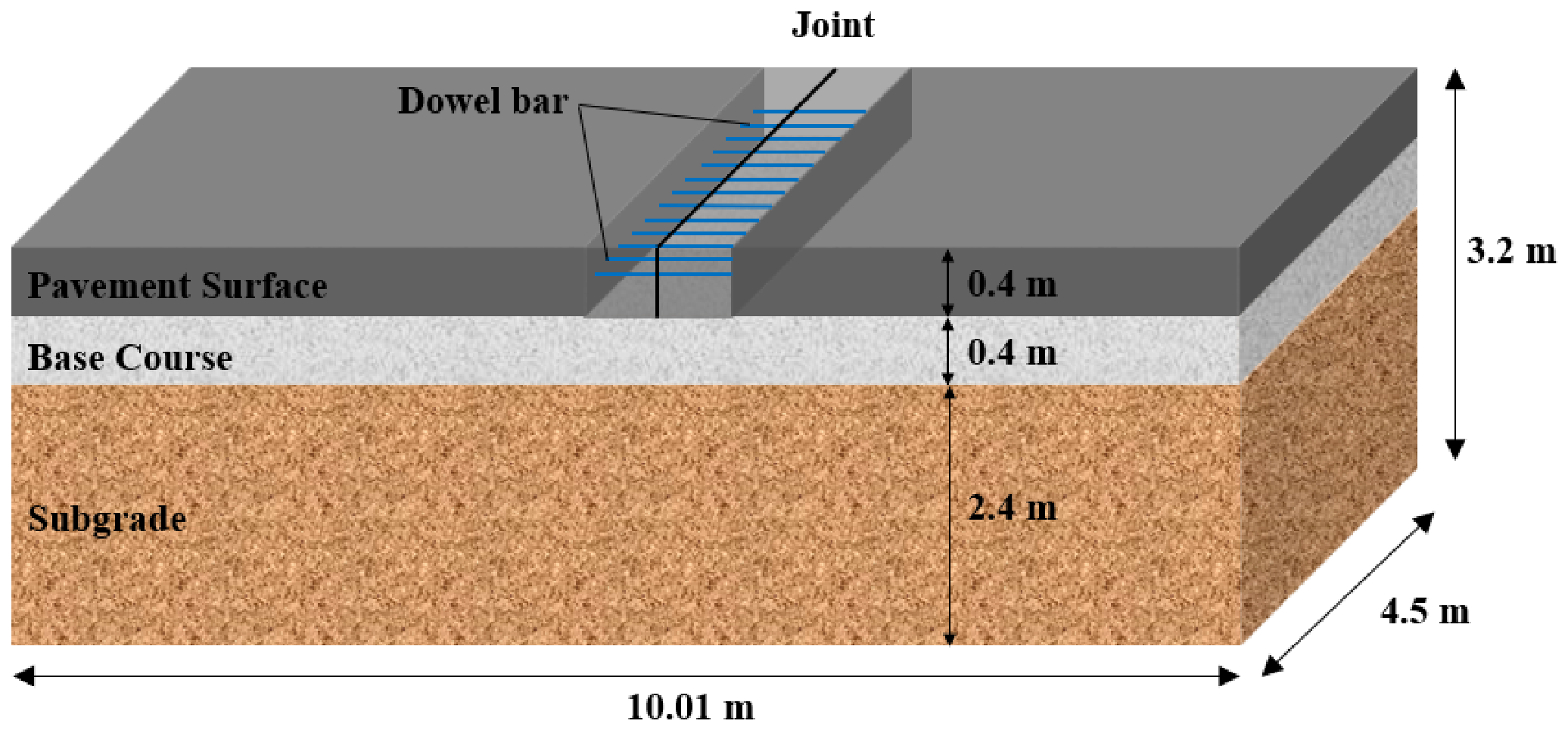








| Parameter | Pavement Surface | Base Course | Subgrade | Dowel Bar | Jointing Material |
|---|---|---|---|---|---|
| Elastic Modulus/GPa | 36 | 1.5 | 0.08 | 210 | 1 |
| Thickness/m | 0.4 | 0.4 | 2.4 | 0.6 | — |
| Density/kg·m−3 | 2500 | 2000 | 1700 | 7850 | 2500 |
| Poisson Ratio | 0.15 | 0.25 | 0.35 | 0.3 | 0.25 |
| Conductivity | 8000 | 6700 | 6300 | 1440 | 360 |
| Expansion Coeff | 1 × 10⁻⁵ | 9.8 × 10⁻⁶ | 4 × 10⁻⁶ | 6 × 10⁻⁵ | 9 × 10⁻⁵ |
| Specific Heat | 960 | 910 | 1040 | 900 | 600 |
| Main Landing Gear Type | Main Landing Gear Spacing/m | Wheel Spacing/m | Single Wheel Load/kN | Contact Pressure/MPa | Area of Wheel Print/m2 | Size of Wheel Print | |
|---|---|---|---|---|---|---|---|
| Length/m | Width/m | ||||||
| Single axle and two wheels | 5.72 | 0.86 | 184.54 | 1.47 | 0.126 | 0.427 | 0.294 |
Disclaimer/Publisher’s Note: The statements, opinions and data contained in all publications are solely those of the individual author(s) and contributor(s) and not of MDPI and/or the editor(s). MDPI and/or the editor(s) disclaim responsibility for any injury to people or property resulting from any ideas, methods, instructions or products referred to in the content. |
© 2026 by the authors. Licensee MDPI, Basel, Switzerland. This article is an open access article distributed under the terms and conditions of the Creative Commons Attribution (CC BY) license.
Share and Cite
Yan, W.; Guo, C.; Li, X.; Zhang, W.; Wang, Y.; Qin, L.; Pei, L. Thermo-Mechanical Degradation Behavior of the Base–Subgrade Interface in Airport Pavements: A Sequentially Coupled Cohesive-Zone Study. Materials 2026, 19, 2541. https://doi.org/10.3390/ma19122541
Yan W, Guo C, Li X, Zhang W, Wang Y, Qin L, Pei L. Thermo-Mechanical Degradation Behavior of the Base–Subgrade Interface in Airport Pavements: A Sequentially Coupled Cohesive-Zone Study. Materials. 2026; 19(12):2541. https://doi.org/10.3390/ma19122541
Chicago/Turabian StyleYan, Weihong, Chengchao Guo, Xinrui Li, Wenqiang Zhang, Yiteng Wang, Lei Qin, and Leiyang Pei. 2026. "Thermo-Mechanical Degradation Behavior of the Base–Subgrade Interface in Airport Pavements: A Sequentially Coupled Cohesive-Zone Study" Materials 19, no. 12: 2541. https://doi.org/10.3390/ma19122541
APA StyleYan, W., Guo, C., Li, X., Zhang, W., Wang, Y., Qin, L., & Pei, L. (2026). Thermo-Mechanical Degradation Behavior of the Base–Subgrade Interface in Airport Pavements: A Sequentially Coupled Cohesive-Zone Study. Materials, 19(12), 2541. https://doi.org/10.3390/ma19122541