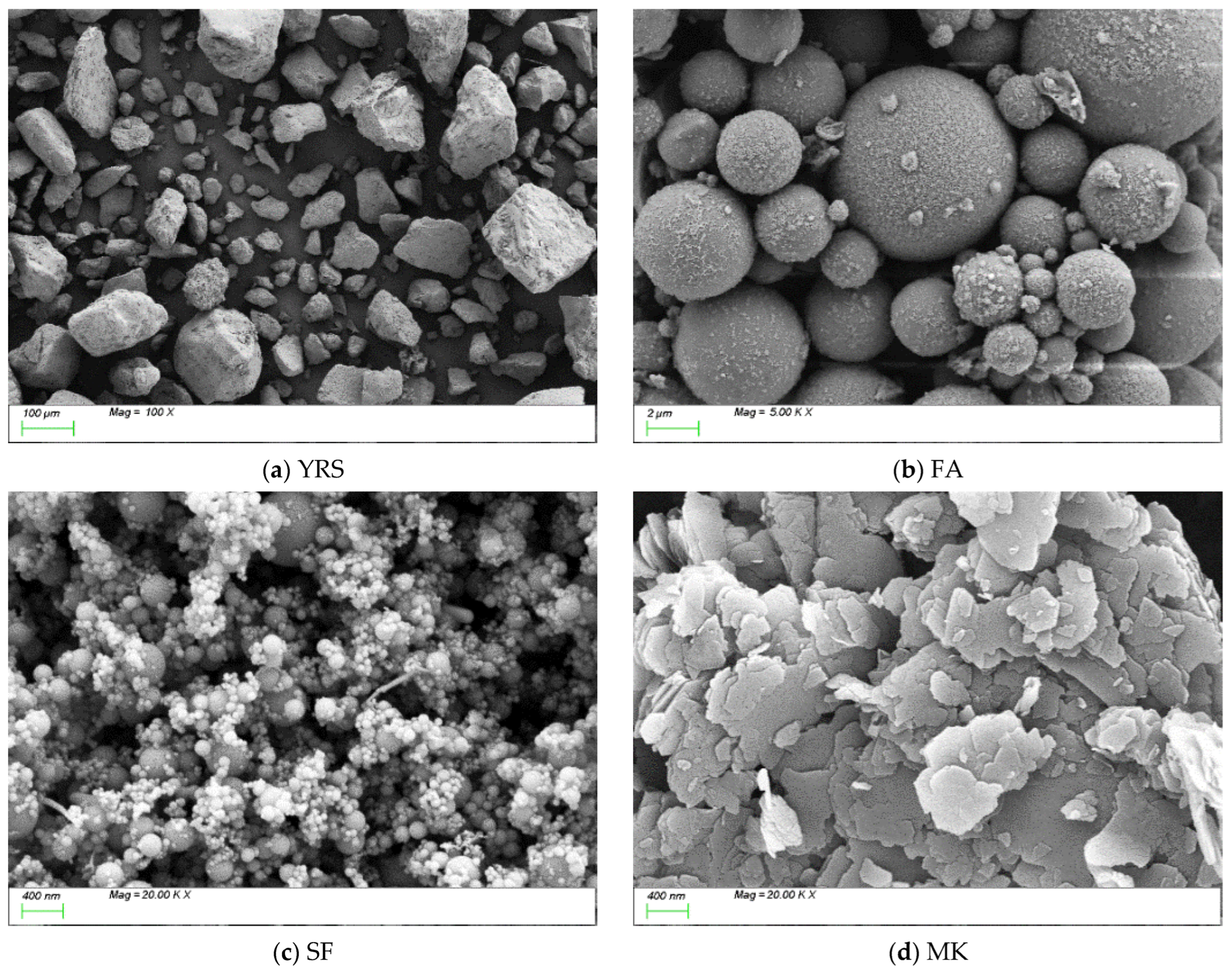
Study on the Influence Mechanism of Mineral Admixtures on Hydration and Microstructure of Yellow River Sediment-Based Shotcrete

 and
and
Abstract
1. Introduction
2. Materials and Methods
2.1. Constituent Materials and Mix Design
2.1.1. Raw Material
2.1.2. Mix Proportion
2.2. Experimental Methodology
2.2.1. Setting Time Test
2.2.2. Workability Test
2.2.3. Mechanical Property Testing
2.2.4. Infrared Spectroscopy Analysis
2.2.5. X-Ray Diffraction Analysis
2.2.6. Thermogravimetric Analysis
2.2.7. Scanning Electron Microscopy Test
3. Experiment Results and Analysis
3.1. Setting Time
3.2. Workability
3.2.1. Pumpability
3.2.2. Shootability
3.3. Strength
3.3.1. Compressive Strength
3.3.2. Splitting Tensile Strength
3.3.3. Tension–Compression Ratio
3.4. Five-Dimensional Evaluation
4. Microstructural Mechanism Analysis
4.1. Hydration Product Characteristics
4.2. Matrix Microstructure
4.2.1. Effect of FA Content on Matrix Microstructure
4.2.2. Effect of SF Content on Matrix Microstructure
4.2.3. Effect of MK Content on Matrix Microstructure
5. Conclusions
- (1)
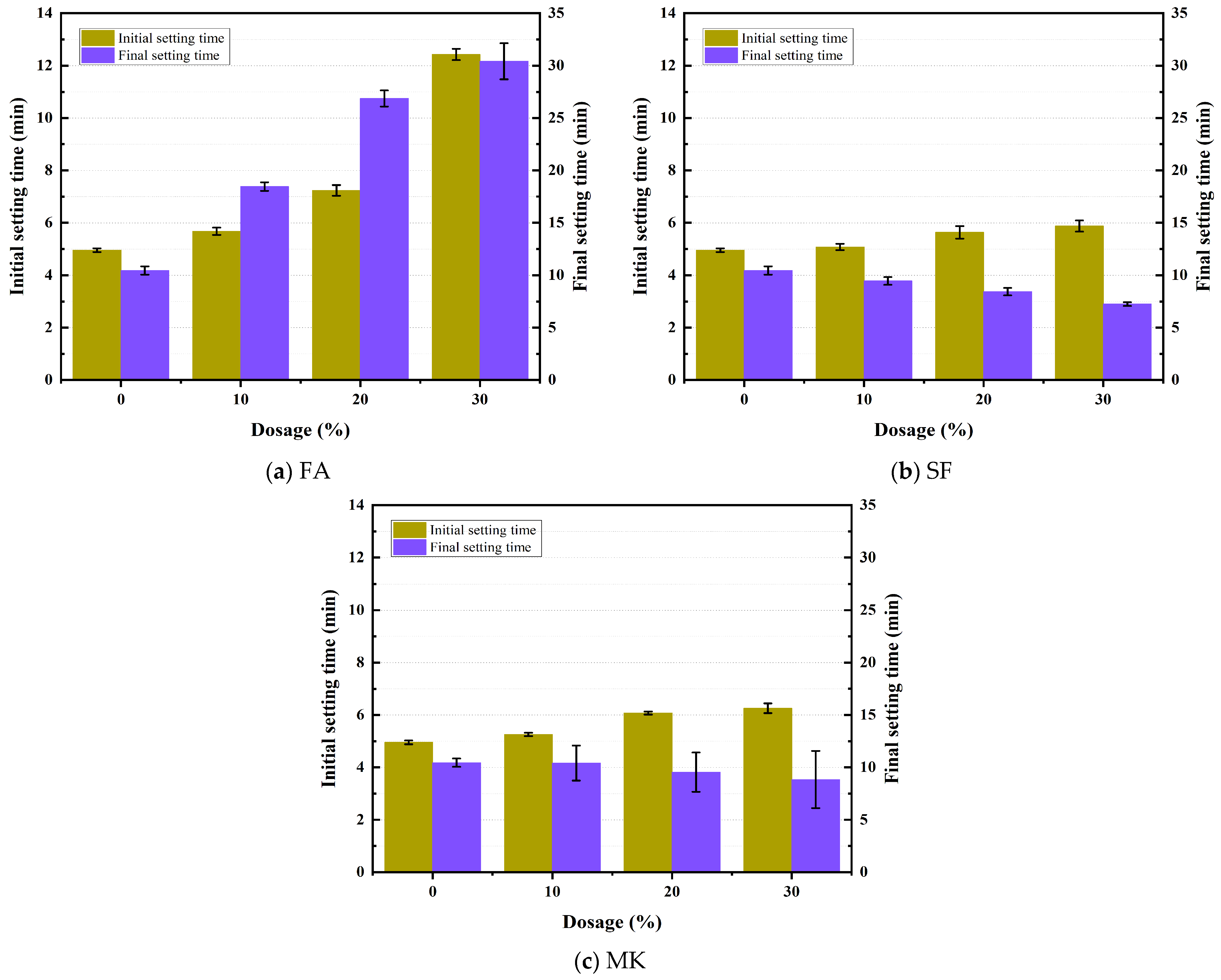
- The type and dosage of mineral admixtures significantly affect the setting behavior of YRS-based shotcrete. FA, with low pozzolanic reactivity and a “ball-bearing effect,” prolongs both initial and final setting times as dosage increases. SF accelerates hydration, while MK shortens the final setting time due to its plate-like morphology and water adsorption. Both SF and MK have a limited effect on the initial setting time.
- (2)
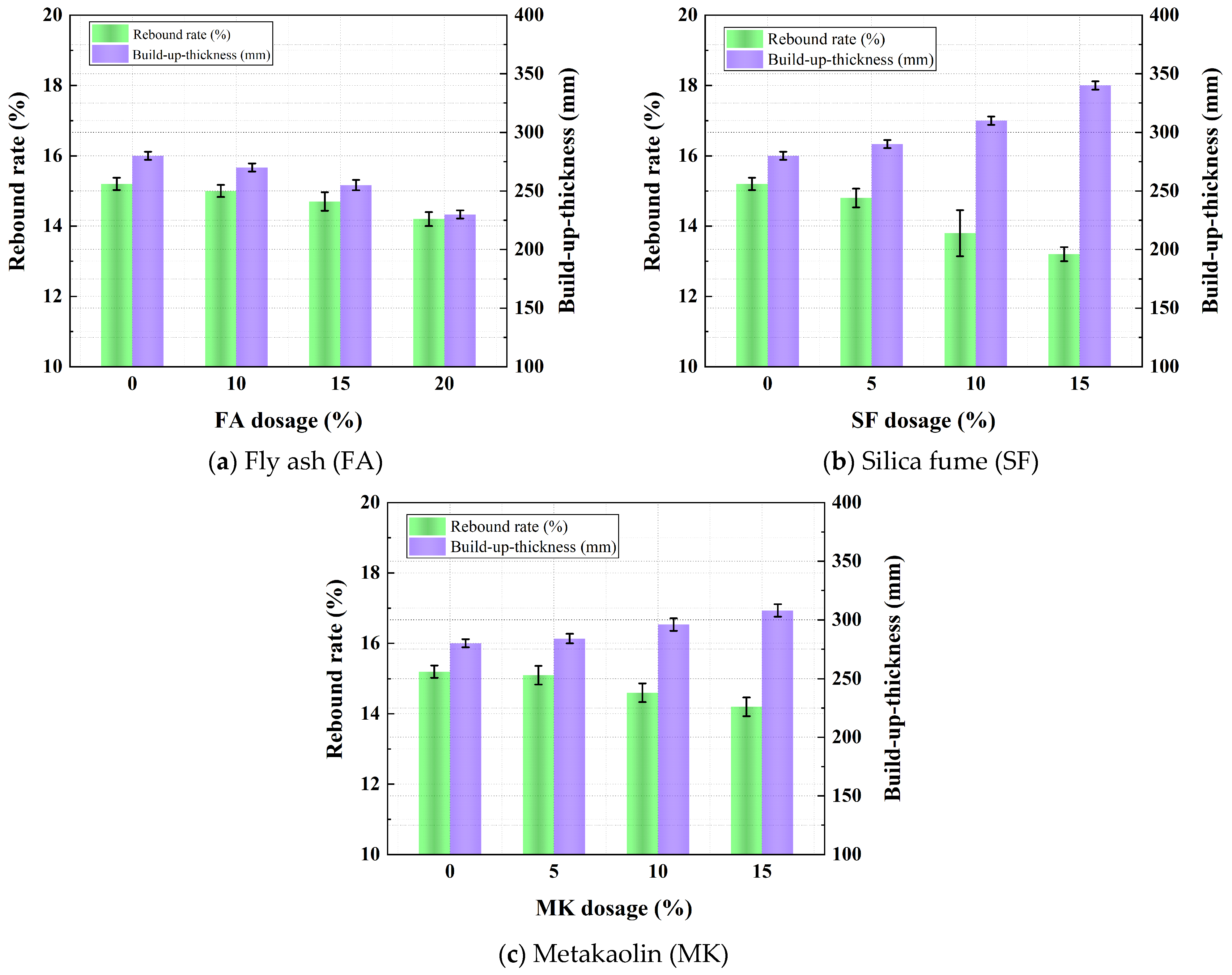
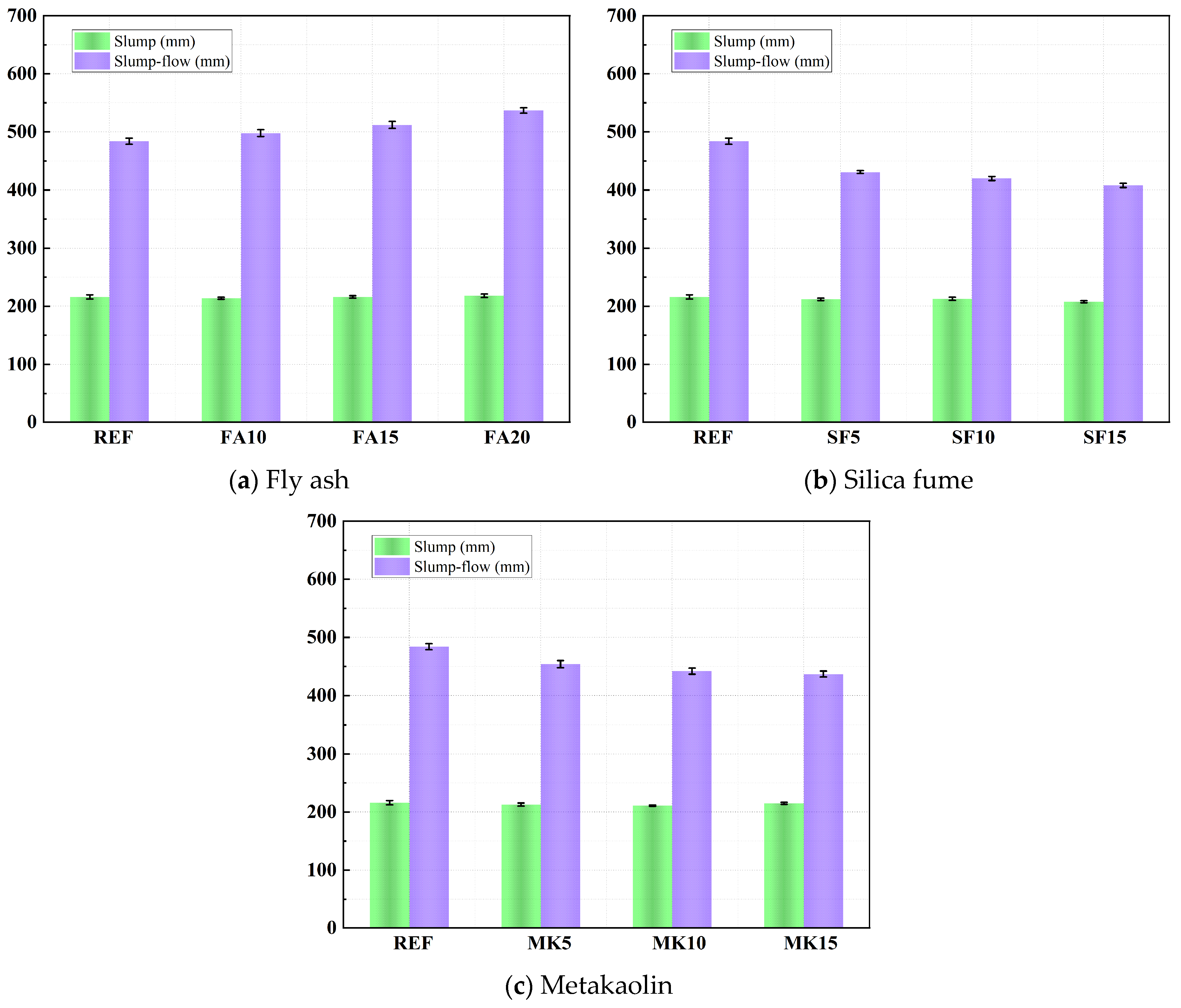
- FA improves slump and flow spread, enhancing pumpability, but reduces build-up thickness during spraying. SF and MK reduce flowability, due to high surface area and water demand, but lower rebound and increase build-up thickness. SF shows the greatest improvement in shootability, with a 21.4% increase at 15% dosage. Recommended dosages are ≤20% for FA and ≤15% for SF and MK.
- (3)
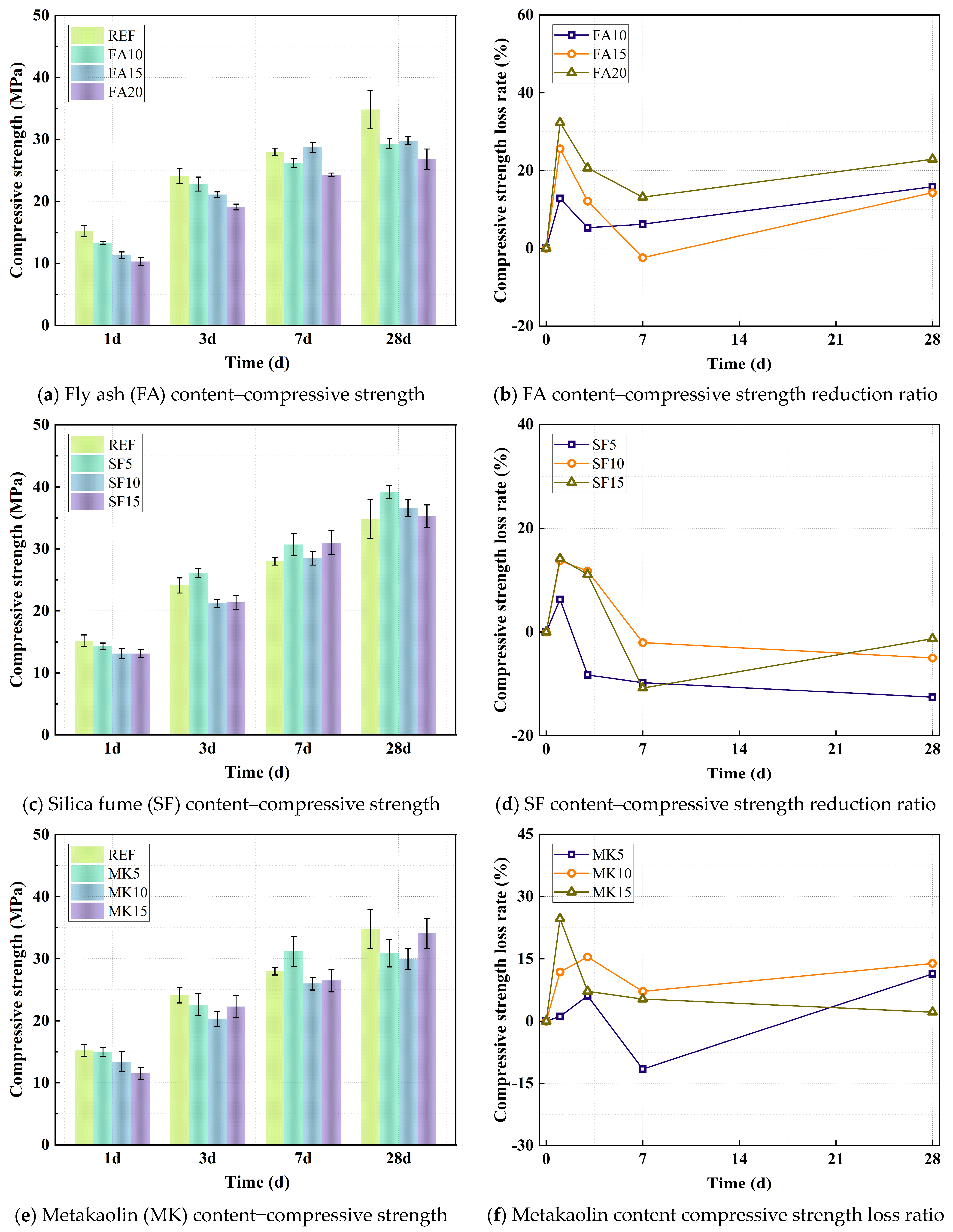
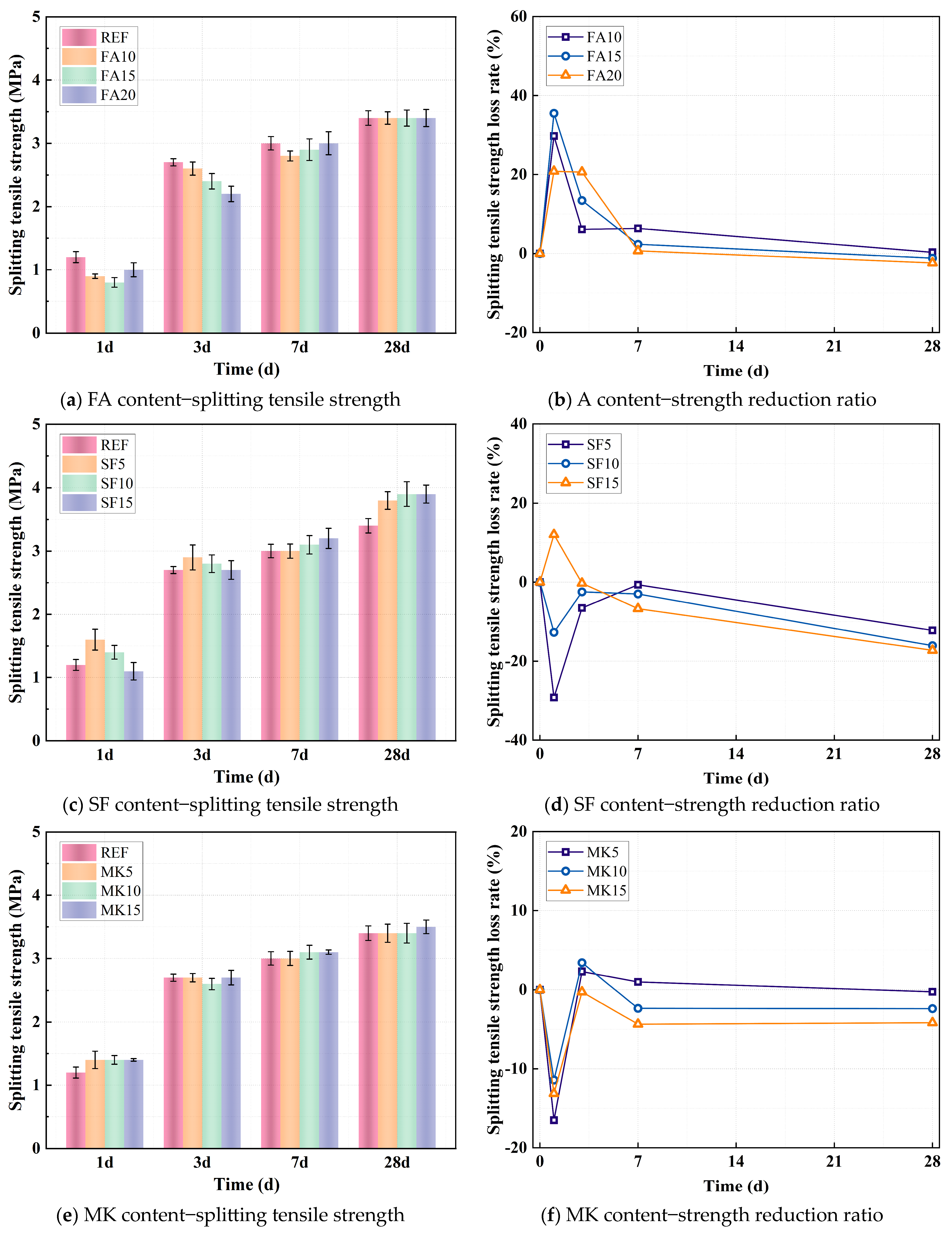
- FA consistently reduces compressive strength, though its effect on splitting tensile strength decreases over time, with 28-day values close to the reference. SF enhances later-age strength through pozzolanic reactions; at 5% dosage, compressive strength exceeds the reference after 3 days and reaches 39.2 MPa at 28 days, with improved splitting tensile strength. MK shows delayed strength development, achieving 28-day compressive strength comparable to the reference at 15% dosage, while improving early-age splitting tensile strength.
- (4)
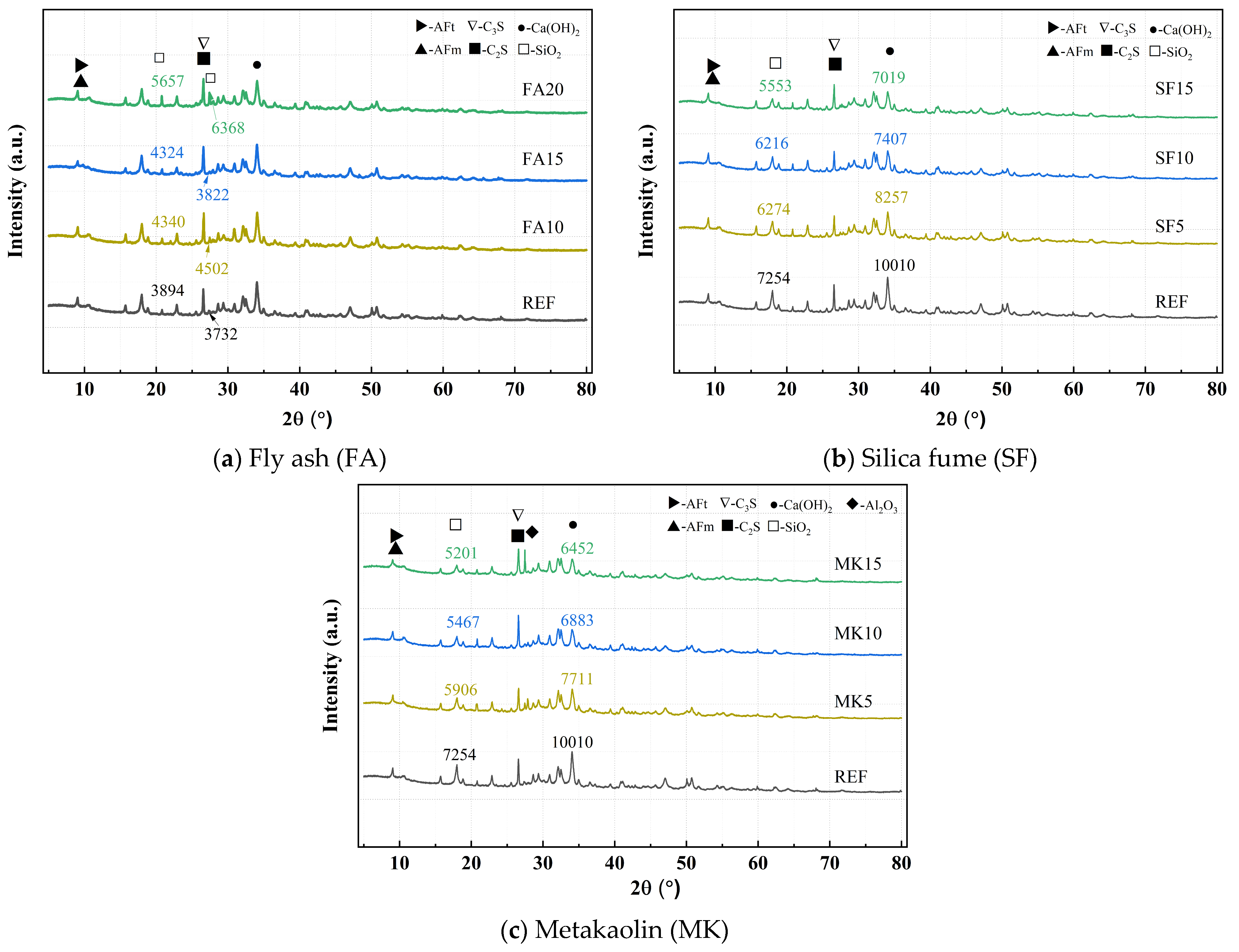
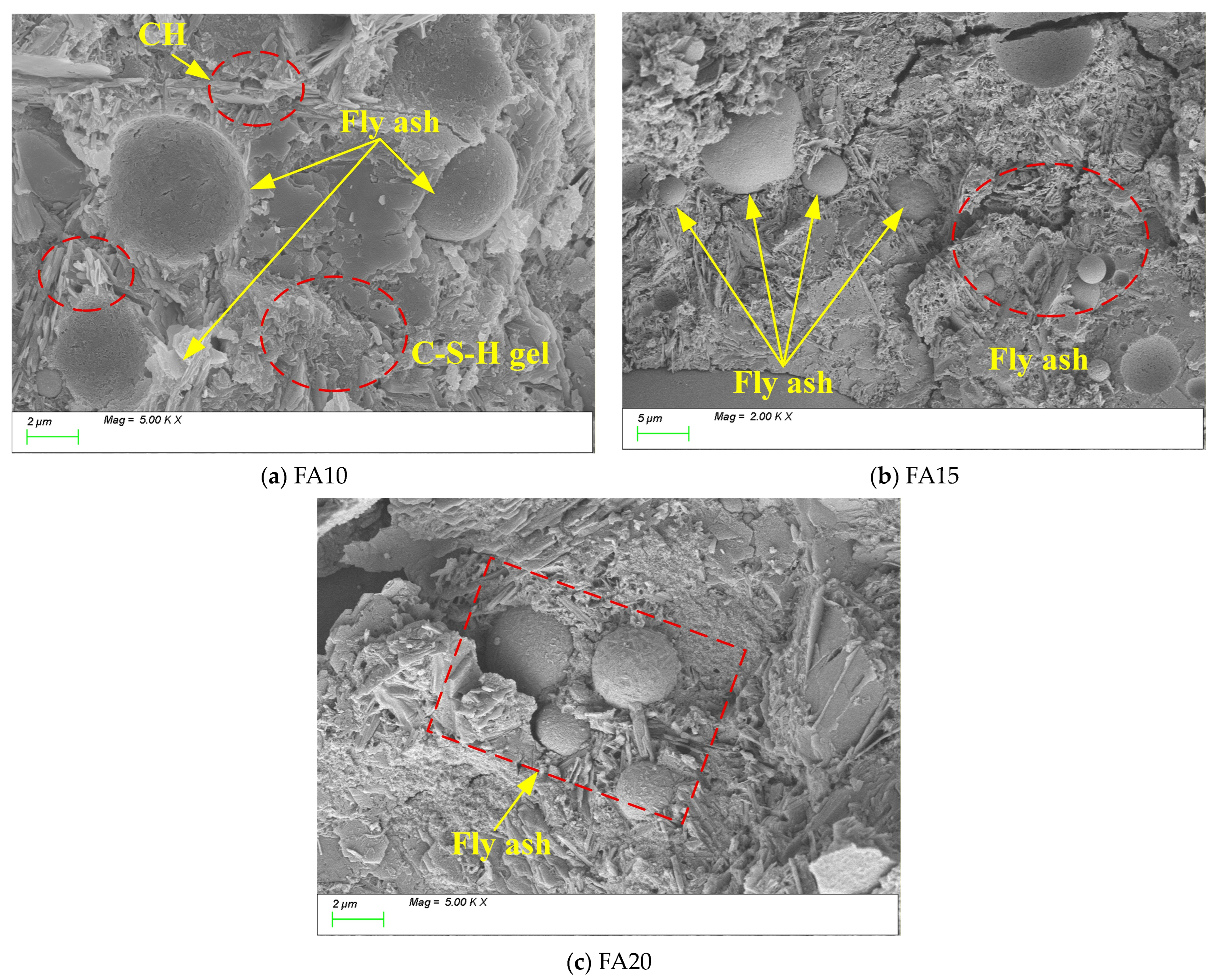
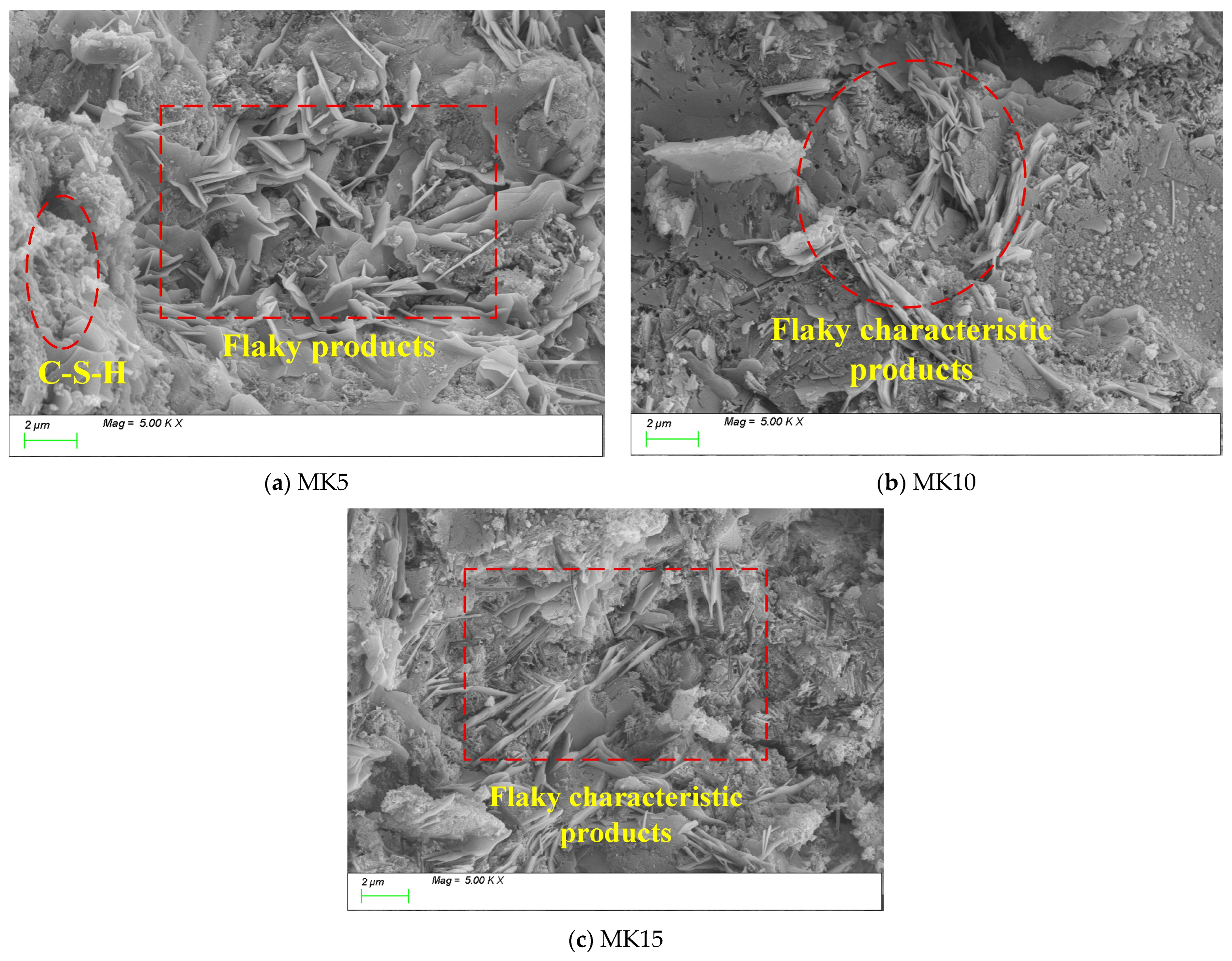
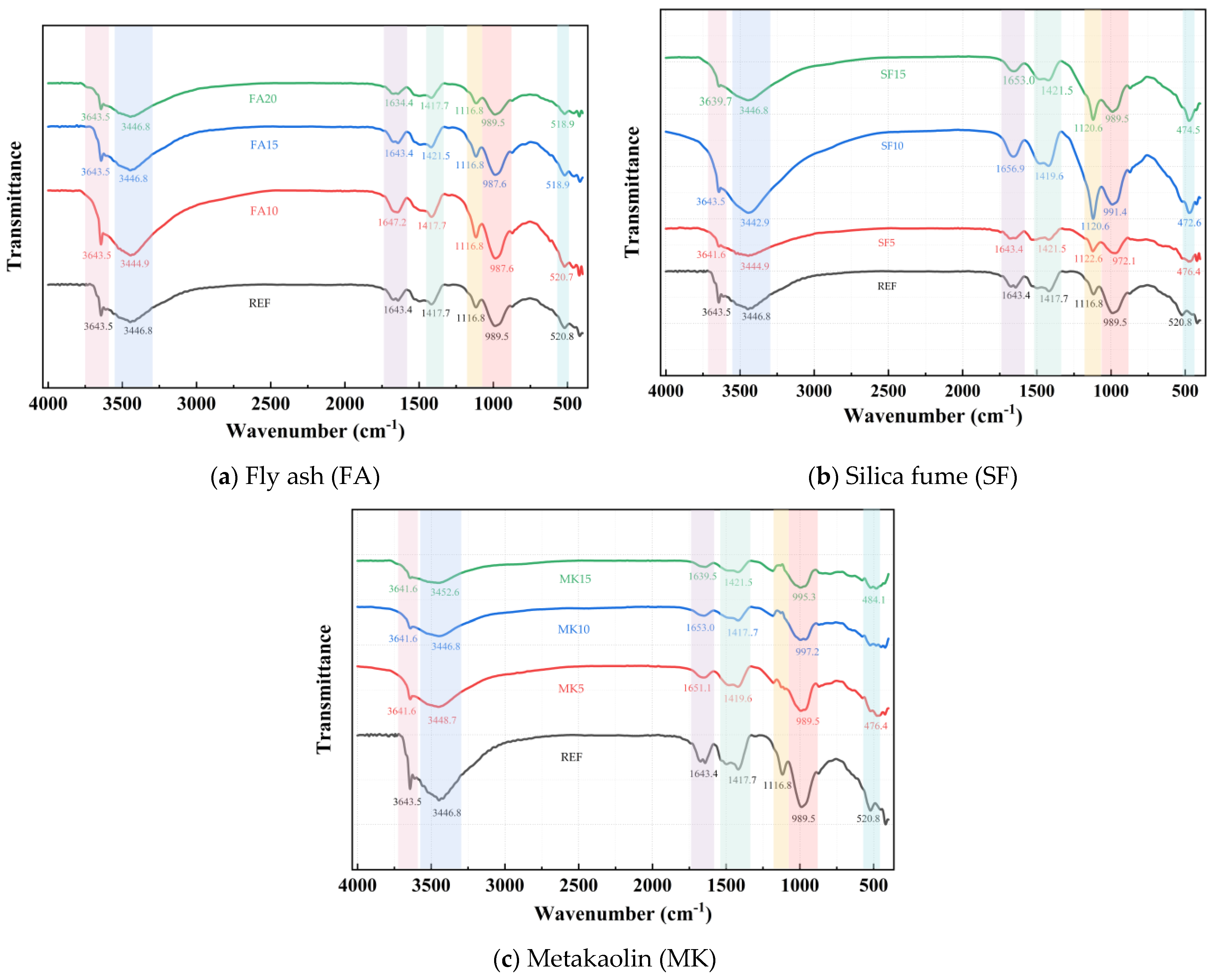
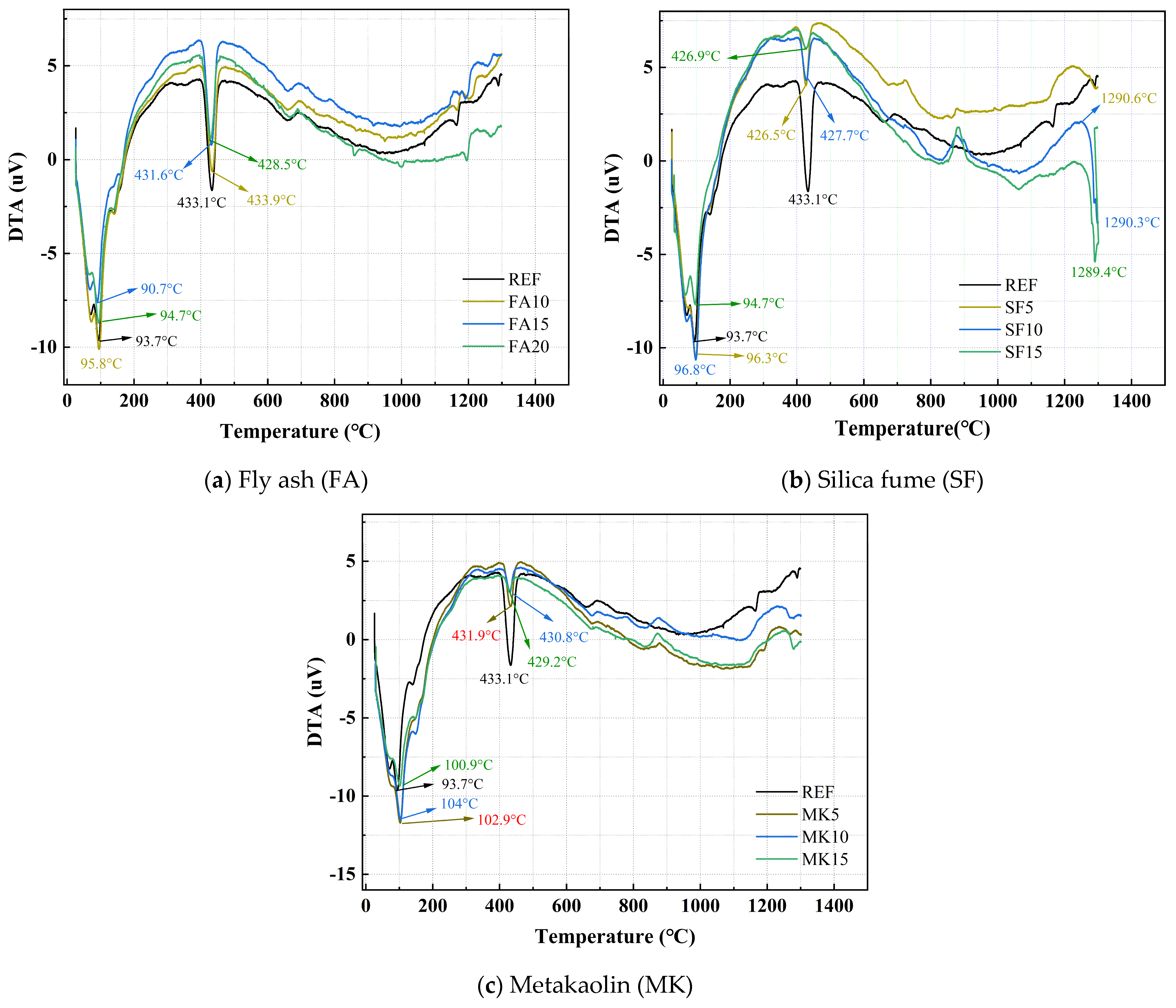
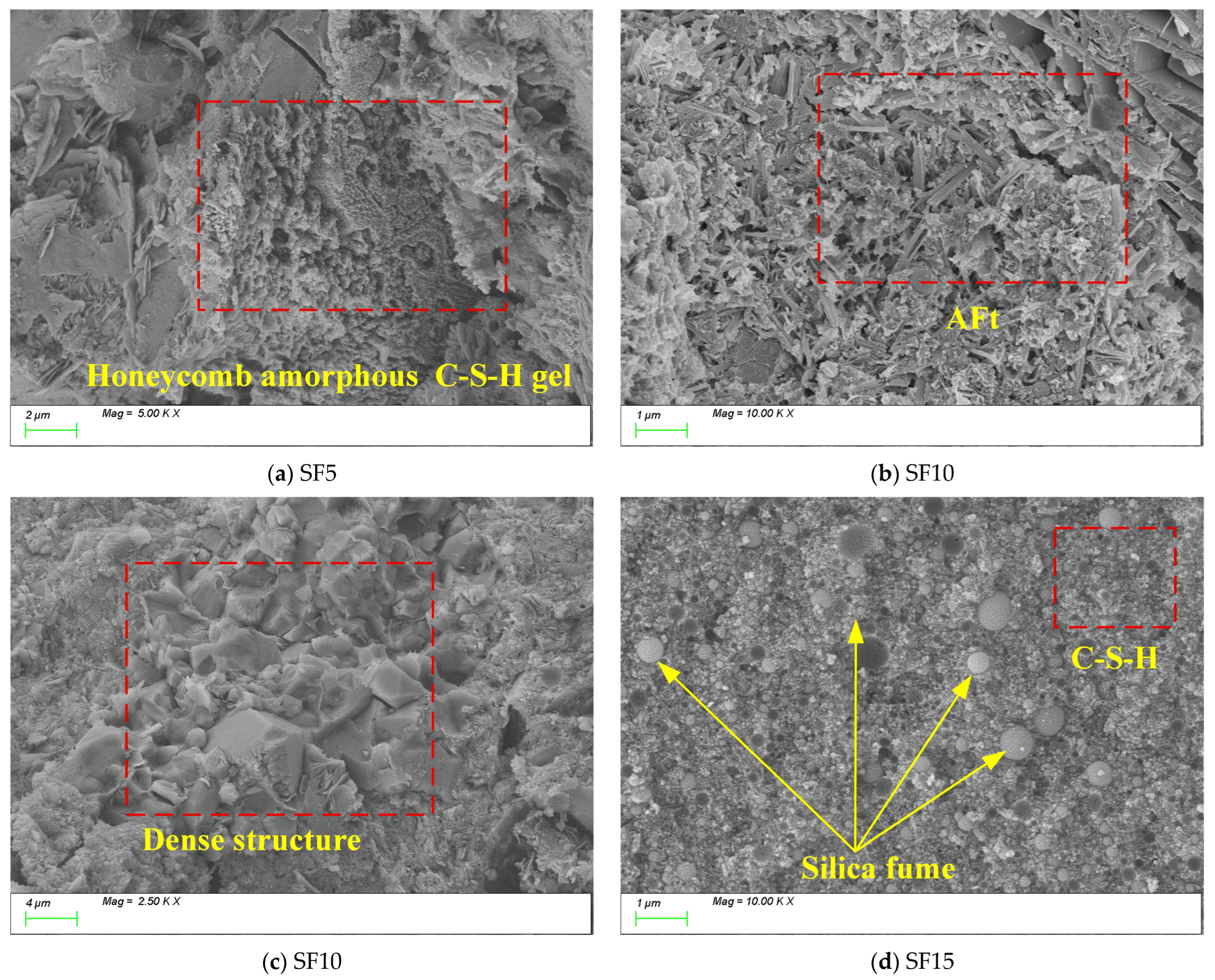
- Microstructural analyses revealed that SF and MK promoted the consumption of Ca(OH)2 and the formation of additional C–(A)–S–H/C–S–H gels, resulting in a denser matrix and improved interfacial transition zone. Excessive FA led to unreacted particles and microcracks.
- (5)
- From a microstructural perspective, FA promotes the formation of C–(A)–S–H gel through pozzolanic reactions, although excessive FA results in unreacted particles and microcracks. SF enhances the formation of low Ca/Si ratio C–S–H gel, producing a denser matrix and a refined interfacial transition zone (ITZ).
- (6)
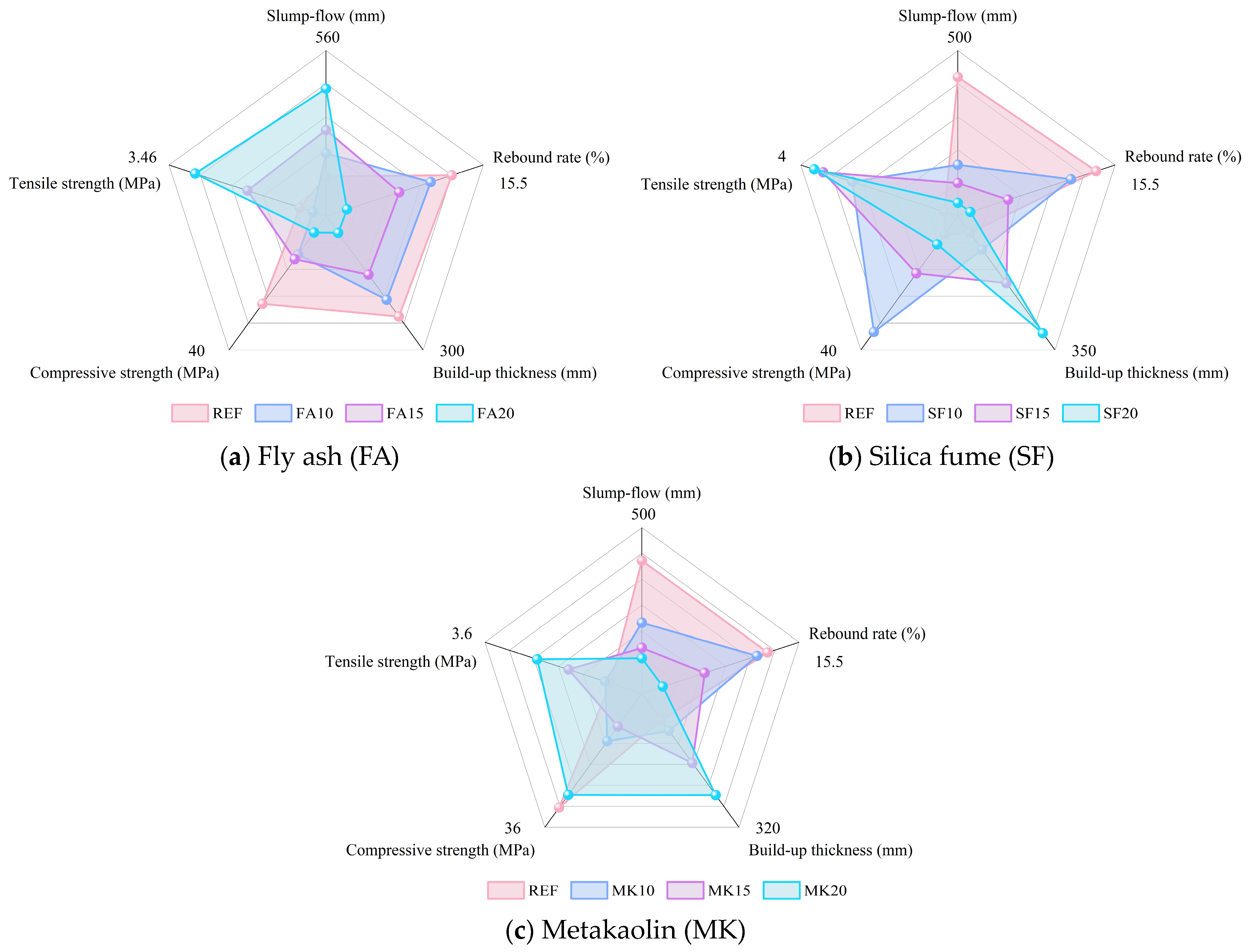
- Based on the experimental results obtained in this study, the mixture incorporating YRS with 10% silica fume (SF10) exhibited the most balanced overall performance among the investigated mixtures. This superior performance can be attributed to its relatively rapid setting behavior, enhanced mechanical strength, improved shootability, and denser microstructure. However, this recommendation is derived from laboratory-scale observations under the specific experimental conditions of the present study. Since long-term durability, field spraying performance, and practical construction adaptability were not evaluated, further durability assessments and field-scale validation are still required before this mixture can be confidently recommended for practical engineering applications.
- (7)
- Compared with these conventional mineral admixtures, Yellow River sediment is characterized by finer particles and a relatively high clay content. These characteristics may reduce the workability, strength development, and overall performance of shotcrete to some extent. Therefore, although the utilization of Yellow River sediment provides a feasible approach for resource recycling and sustainable shotcrete production, further performance enhancement is still required. Accordingly, the development of high-performance Yellow River sediment-based shotcrete will be an important direction for future research.
Author Contributions
Funding
Data Availability Statement
Conflicts of Interest
References
- Hemphill, G.B. Practical Tunnel Construction; John Wiley & Sons: Hoboken, NJ, USA, 2012. [Google Scholar]
- Guler, S.; Öker, B.; Akbulut, Z.F. Workability, strength and toughness properties of different types of fiber-reinforced wet-mix shotcrete. Structures 2021, 31, 781–791. [Google Scholar] [CrossRef]
- Xie, H.; Liu, X.; Wang, H.; Yu, Z.; Shao, L.; Wang, W.; Hong, J.; Wang, C.; Feng, P. Novel strategies for ultra-early strengthening of shotcrete: Stage-wise kinetic control of hydration products. Cem. Concr. Res. 2025, 193, 107880. [Google Scholar] [CrossRef]
- Zou, H.Y.; Zhong, W.L.; Zhao, X.; Fan, L. Optimizing geopolymer mortar for shotcrete applications by focusing on flowability and early-age mechanical characteristics. Constr. Build. Mater. 2024, 418, 135290. [Google Scholar] [CrossRef]
- Massone, L.M.; Nazar, F. Analytical and experimental evaluation of the use of fibers as partial reinforcement in shotcrete for tunnels in Chile. Tunn. Undergr. Space Technol. 2018, 77, 13–25. [Google Scholar] [CrossRef]
- Wang, J.; Niu, D.; Zhang, Y. Mechanical properties, permeability and durability of accelerated shotcrete. Constr. Build. Mater. 2015, 95, 312–328. [Google Scholar] [CrossRef]
- Zhang, W.; Hao, R.; Men, Z.; He, J.; Zhang, Y.; Hu, W. Optimizing Recycled Tunnel Boring Machine (TBM)-Excavated Materials as Aggregates in Shotcrete Mix Design. Buildings 2025, 15, 1483. [Google Scholar] [CrossRef]
- Nassiri, S.; Butt, A.A.; Zarei, A.; Roy, S.; Filani, I.; Pandit, G.A.; Mateos, A.; Haider, M.; Harvey, J.T. Opportunities for supplementary cementitious materials from natural sources and industrial byproducts: Literature insights and supply assessment. Buildings 2025, 15, 3099. [Google Scholar] [CrossRef]
- Mia, M.; Karikar, B.A.; Mohibul, S.; Ali, M.I.; Khanam, N.; Siddiqui, L. Environmental and Socio-economic Impacts of River Sand and Gravel Mining: A Review. Environ. Manag. 2026, 76, 76. [Google Scholar] [CrossRef]
- Vijerathne, D.; Wahala, S.; Illankoon, C. Impact of crushed natural aggregate on environmental footprint of the construction industry: Enhancing sustainability in aggregate production. Buildings 2024, 14, 2770. [Google Scholar] [CrossRef]
- Mehta, V. Sustainable approaches in concrete production: An in-depth review of waste foundry sand utilization and environmental considerations. Environ. Sci. Pollut. Res. 2024, 31, 23435–23461. [Google Scholar] [CrossRef]
- Manju, U. I-sand: An environment friendly alternative to river sand in Reinforced Cement Concrete constructions. Constr. Build. Mater. 2016, 125, 1152–1157. [Google Scholar] [CrossRef]
- Dian, Z.; Changxing, S. Sedimentary causes and management of two principal environmental problems in the lower Yellow River. Environ. Manag. 2001, 28, 749–760. [Google Scholar] [CrossRef]
- Hu, C.H.; Zhang, S.; Zhang, X. Research on water and sediment regulation of the Yellow River under new situation. J. Strateg. Study CAE 2022, 24, 122–130. [Google Scholar] [CrossRef]
- Raza, A.; Zhang, J.; Xu, S.; Umar, M.; Yuan, C. Experimental analysis of frost resistance and failure models in engineered cementitious composites with the integration of Yellow River sand. Sci. Eng. Compos. Mater. 2024, 31, 20240017. [Google Scholar] [CrossRef]
- Randle, T.J.; Morris, G.L.; Tullos, D.D.; Weirich, F.H.; Kondolf, G.M.; Moriasi, D.N.; Annandale, G.W.; Fripp, J.; Minear, J.T.; Wegner, D.L. Sustaining United States reservoir storage capacity: Need for a new paradigm. J. Hydrol. 2021, 602, 126686. [Google Scholar] [CrossRef]
- Idrees, M.B. Storage depletion of surface water reservoirs due to sediment deposition and possible management options. In Water and Environment for Sustainability: Case Studies from Developing Countries; Springer International Publishing: Cham, Switzerland, 2023; pp. 131–144. [Google Scholar]
- Yuan, C.; Raza, A.; Manan, A.; Ahmad, S.; Chao, W.; Umar, M. Numerical and experimental study of Yellow River sand in engineered cementitious composite. Proc. Inst. Civ. Eng.-Eng. Sustain. 2025, 178, 3–20. [Google Scholar]
- Yang, Z.X.; Zeng, L.Y. Research on the current situation of mining management of national sandy and stony soil mines. Nat. Resour. Econ. China 2020, 33, 44–50. [Google Scholar]
- Niyonyungu, F.; Ogra, A.; Ngcobo, N. Foundry Sand in Sustainable Construction: A Systematic Review of Environmental Performance, Contamination Risks, and Regulatory Frameworks. Constr. Mater. 2025, 5, 57. [Google Scholar] [CrossRef]
- Wang, Q.; Chen, S.; Qu, T. Differences in carbon intensity of energy consumption and influential factors between Yangtze River economic Belt and Yellow River Basin. Sustainability 2024, 16, 2363. [Google Scholar] [CrossRef]
- Zhou, M.; Deng, J.; Lin, Y.; Zhang, L.; He, S.; Yang, W. Evaluating combined effects of socio-economic development and ecological conservation policies on sediment retention service in the Qiantang River Basin, China. J. Clean. Prod. 2021, 286, 124961. [Google Scholar] [CrossRef]
- Elegbede, I.O.; Fakoya, K.A.; Adewolu, M.A.; Jolaosho, T.L.; Adebayo, J.A.; Oshodi, E.; Hungevu, R.F.; Oladosu, A.O.; Abikoye, O. Understanding the social–ecological systems of non-state seafood sustainability scheme in the blue economy. Environ. Dev. Sustain. 2025, 27, 2721–2752. [Google Scholar] [CrossRef]
- Liu, X.; Li, L.; Yang, Y. Development status of coal mining in China. J. South. Afr. Inst. Min. Metall. 2023, 123, 19–28. [Google Scholar] [CrossRef]
- Yanjia, W.; Chandler, W. The Chinese nonferrous metals industry—Energy use and CO2 emissions. Energy Policy 2010, 38, 6475–6484. [Google Scholar] [CrossRef]
- Eissen, M.; Metzger, J.O.; Schmidt, E.; Schneidewind, U. 10 years after Rio—Concepts on the contribution of chemistry to a sustainable development. Angew. Chem. Int. Ed. 2002, 41, 414–436. [Google Scholar] [CrossRef]
- Akhtar, M.N. Prospective assessment for long-term impact of excessive solid waste generation on the environment. Environment 2000, 6, 39–45. [Google Scholar]
- Dudeney, A.W.L.; Chan, B.K.C.; Bouzalakos, S.; Huisman, J. Management of waste and wastewater from mineral industry processes, especially leaching of sulphide resources: State of the art. Int. J. Min. Reclam. Environ. 2013, 27, 2–37. [Google Scholar] [CrossRef]
- Zhang, G.; Li, K.; Shi, H.; Chen, C.; Yuan, C. Study on the Effects and Mechanisms of Fly Ash, Silica Fume, and Metakaolin on the Properties of Slag–Yellow River Sediment-Based Geopolymers. Materials 2025, 18, 1845. [Google Scholar] [CrossRef] [PubMed]
- Tian, S.; Li, Z.; Wang, Z.; Jiang, E.; Wang, W.; Sun, M. Mineral composition and particle size distribution of river sediment and loess in the middle and lower Yellow River. Int. J. Sediment Res. 2021, 36, 392–400. [Google Scholar] [CrossRef]
- Yao, Q.; Wang, X.; Jian, H.; Chen, H.; Yu, Z. Characterization of the particle size fraction associated with heavy metals in suspended sediments of the yellow river. Int. J. Environ. Res. Public Health 2015, 12, 6725–6744. [Google Scholar] [CrossRef] [PubMed]
- Sun, H.; Hu, Z.; Wang, S. A study of the physical and mechanical properties of Yellow River sediments and their impact on the reclamation of coal-mined subsided land. Sustainability 2024, 16, 439. [Google Scholar] [CrossRef]
- Jiang, P.; Zhang, Z.; Wang, H.; Huang, J.; Luo, X.; Xu, F. Experimental research on mechanical and impact properties of lightweight aggregate fiber shotcrete. Constr. Build. Mater. 2022, 333, 127402. [Google Scholar] [CrossRef]
- Leung, C.K.Y.; Lai, R.; Lee, A.Y.F. Properties of wet-mixed fiber reinforced shotcrete and fiber reinforced concrete with similar composition. Cem. Concr. Res. 2005, 35, 788–795. [Google Scholar] [CrossRef]
- Chen, J.; Yao, T.; Luo, J.; Xu, G.; Cai, J.; Zhang, C.; Li, F. Effect of paste volume on the performance of UHPC under the optimum grading of Yellow River sand. Case Stud. Constr. Mater. 2026, 24, e05819. [Google Scholar] [CrossRef]
- Tan, B.; Raza, A.; Zhang, G.; Yuan, C. Experimental Study on Interface Bonding Performance of Frost-Damaged Concrete Reinforced with Yellow River Sedimentary Sand Engineered Cementitious Composites. Materials 2025, 18, 3278. [Google Scholar] [CrossRef]
- Wang, S.; Yang, L.; Ma, X.; Mei, R.; Li, C.; Sun, Z. The formation of porous light ceramsite using Yellow River sediment and its application in concrete masonry production. Case Stud. Constr. Mater. 2022, 17, e01340. [Google Scholar] [CrossRef]
- GB 8076; Concrete Admixtures. Standardization Administration of China: Beijing, China, 2025.
- GB/T 35159; Flash Setting Admixtures for Shotcrete. The Standardization Administration of the People’s Republic of China: Beijing, China, 2017. (In Chinese)
- GB/T50081-2019; Standard for Test Methods of Concrete Physical and Mechanical Properties. China Architecture & Building Press: Beijing, China, 2019.
- Raza, A.; Memon, B.A.; Oad, M. Effect of Curing Types on Compressive Strength of Recycled Aggregates Concrete. Quest Res. J. 2019, 17, 7–12. [Google Scholar]









| Minerals | SiO2 | Al2O3 | Fe2O3 | K2O | TiO2 | MgO | CaO | Other |
|---|---|---|---|---|---|---|---|---|
| YRS | 68.64 | 12.33 | 3.25 | 2.55 | 0.74 | 2.05 | 8.40 | 2.04 |
| Cement | 22.64 | 4.68 | 3.57 | — | — | 2.94 | 64.88 | 1.29 |
| FA | 45.89 | 20.25 | 16.45 | 4.27 | 2.41 | 0.22 | 7.24 | 3.34 |
| SF | 98.87 | 0.96 | 0.07 | 0.78 | — | 0.36 | 0.41 | 0.75 |
| MK | 53.52 | 44.52 | 0.92 | 0.74 | 0.18 | 0.07 | — | 0.07 |
| No. | Cement | CP | FA | SF | MK | Accelerator | Water | SP |
|---|---|---|---|---|---|---|---|---|
| REF | 0.685 | — | — | — | — | 0.055 | 0.260 | — |
| FA10 | 0.548 | 0.068 | 0.068 | — | — | 0.055 | 0.260 | — |
| FA20 | 0.479 | 0.068 | 0.137 | — | — | 0.055 | 0.260 | — |
| FA30 | 0.411 | 0.068 | 0.205 | — | — | 0.055 | 0.260 | — |
| SF10 | 0.541 | 0.068 | — | 0.068 | — | 0.054 | 0.257 | 0.014 |
| SF20 | 0.473 | 0.068 | — | 0.135 | — | 0.054 | 0.257 | 0.014 |
| SF30 | 0.405 | 0.068 | — | 0.203 | — | 0.054 | 0.257 | 0.014 |
| MK10 | 0.544 | 0.068 | — | — | 0.068 | 0.054 | 0.259 | 0.007 |
| MK20 | 0.476 | 0.068 | — | — | 0.136 | 0.054 | 0.259 | 0.007 |
| MK30 | 0.408 | 0.068 | — | — | 0.204 | 0.054 | 0.259 | 0.007 |
| No. | YRS | Sand | Cement | FA | SF | MK | Accelerator | Water | SP |
|---|---|---|---|---|---|---|---|---|---|
| REF | 0.398 | 0.100 | 0.341 | — | — | — | 0.027 | 0.127 | 0.007 |
| FA10 | 0.398 | 0.100 | 0.307 | 0.034 | — | — | 0.027 | 0.127 | 0.007 |
| FA15 | 0.398 | 0.100 | 0.290 | 0.051 | — | — | 0.027 | 0.127 | 0.007 |
| FA20 | 0.398 | 0.100 | 0.273 | 0.068 | — | — | 0.027 | 0.127 | 0.007 |
| SF5 | 0.397 | 0.099 | 0.323 | — | 0.017 | — | 0.027 | 0.127 | 0.011 |
| SF10 | 0.397 | 0.099 | 0.306 | — | 0.034 | — | 0.027 | 0.127 | 0.011 |
| SF15 | 0.397 | 0.099 | 0.289 | — | 0.051 | — | 0.027 | 0.127 | 0.011 |
| MK5 | 0.397 | 0.099 | 0.323 | — | — | 0.017 | 0.027 | 0.127 | 0.011 |
| MK10 | 0.397 | 0.099 | 0.306 | — | — | 0.034 | 0.027 | 0.127 | 0.011 |
| MK15 | 0.397 | 0.099 | 0.289 | — | — | 0.051 | 0.027 | 0.127 | 0.011 |
| No. | Cement | CP | FA | SF | MK | Accelerator | Water | SP |
|---|---|---|---|---|---|---|---|---|
| REF | 0.685 | — | — | — | — | 0.055 | 0.260 | — |
| FA10 | 0.548 | 0.068 | 0.068 | — | — | 0.055 | 0.260 | — |
| FA15 | 0.514 | 0.068 | 0.103 | — | — | 0.055 | 0.260 | — |
| FA20 | 0.479 | 0.068 | 0.137 | — | — | 0.055 | 0.260 | — |
| SF5 | 0.574 | 0.068 | — | 0.034 | — | 0.054 | 0.257 | 0.014 |
| SF10 | 0.541 | 0.068 | — | 0.068 | — | 0.054 | 0.257 | 0.014 |
| SF15 | 0.507 | 0.068 | — | 0.101 | — | 0.054 | 0.257 | 0.014 |
| MK5 | 0.578 | 0.068 | — | — | 0.034 | 0.054 | 0.259 | 0.007 |
| MK10 | 0.544 | 0.068 | — | — | 0.068 | 0.054 | 0.259 | 0.007 |
| MK15 | 0.510 | 0.068 | — | — | 0.102 | 0.054 | 0.259 | 0.007 |
| Properties | Performance Index | Specimen Size | Quantity |
|---|---|---|---|
| Setting time | initial setting time | — | 30 |
| final setting time | — | 30 | |
| Pumpability | slump | — | 30 |
| slump flow | — | 30 | |
| Shootability | rebound rate | — | 30 |
| Build-up-thickness | — | 30 | |
| Strength | compressive strength | ||
| splitting tensile strength | 100 mm | 240 | |
| Characteristic products | TGA | 40 mm | 30 |
| XRD | 40 mm | 30 | |
| Infrared spectroscopy analysis | 40 mm | 30 | |
| Microstructural properties | scanning electron microscopy | 40 mm × 40 mm × 40 mm | 30 |
Disclaimer/Publisher’s Note: The statements, opinions and data contained in all publications are solely those of the individual author(s) and contributor(s) and not of MDPI and/or the editor(s). MDPI and/or the editor(s) disclaim responsibility for any injury to people or property resulting from any ideas, methods, instructions or products referred to in the content. |
© 2026 by the authors. Licensee MDPI, Basel, Switzerland. This article is an open access article distributed under the terms and conditions of the Creative Commons Attribution (CC BY) license.
Share and Cite
Zhang, G.; Chen, C.; Dong, Z.; Li, J.; Li, K.; Raza, A.; Yuan, C. Study on the Influence Mechanism of Mineral Admixtures on Hydration and Microstructure of Yellow River Sediment-Based Shotcrete. Materials 2026, 19, 2532. https://doi.org/10.3390/ma19122532
Zhang G, Chen C, Dong Z, Li J, Li K, Raza A, Yuan C. Study on the Influence Mechanism of Mineral Admixtures on Hydration and Microstructure of Yellow River Sediment-Based Shotcrete. Materials. 2026; 19(12):2532. https://doi.org/10.3390/ma19122532
Chicago/Turabian StyleZhang, Ge, Chen Chen, Zekun Dong, Jialing Li, Kunpeng Li, Ali Raza, and Chengfang Yuan. 2026. "Study on the Influence Mechanism of Mineral Admixtures on Hydration and Microstructure of Yellow River Sediment-Based Shotcrete" Materials 19, no. 12: 2532. https://doi.org/10.3390/ma19122532
APA StyleZhang, G., Chen, C., Dong, Z., Li, J., Li, K., Raza, A., & Yuan, C. (2026). Study on the Influence Mechanism of Mineral Admixtures on Hydration and Microstructure of Yellow River Sediment-Based Shotcrete. Materials, 19(12), 2532. https://doi.org/10.3390/ma19122532