Effects of Particle Size and Replacement Ratio of Ceramsite on Permeability Characteristics of Lightweight Concrete via Pore Structure and Fractal Approach




Abstract
1. Introduction
2. Materials and Methods
2.1. Materials
2.2. Methods
2.2.1. Specimen Preparation
2.2.2. Laboratory Experiment
- (1)
- Compression test
- After curing, the specimens were removed from the curing chamber and covered with a damp cloth to minimize moisture loss before testing.
- Prior to loading, the specimen surfaces were wiped dry and the dimensions were measured with an accuracy of 1 mm.
- The specimens were then centrally positioned on the lower platen of the testing machine to ensure geometric alignment.
- A loading rate of 0.5 MPa/s was applied continuously until failure. When rapid deformation occurred near the failure stage, the loading adjustment was stopped until the specimen was completely damaged, and the ultimate load was recorded.
- (2)
- Permeability test
- After the test piece surface is thoroughly dried, apply rubber bands and sealant on both sides to ensure a good sealing performance. The sealant is prepared by mixing cement and butter in a ratio of 2:1 by weight. Additionally, two rubber bands are fixed at one-third and two-thirds of the height of the specimen respectively to further enhance the sealing effect.
- After sealing, the specimens were slowly pressed into the test mold using a hydraulic press until the bottom surface of the specimen was flush with the edge of the mold. The mold assembly was then installed onto the impermeability apparatus.
- Before installation, it is necessary to perform an exhaust treatment on the anti-seepage device to remove the internal air and avoid interfering with the test results.
- During testing, the initial water pressure was set to 0.1 MPa and automatically increased by 0.1 MPa every 8 h. The specimen surfaces were continuously monitored throughout the test. When water seepage appeared on the top surfaces of three out of six specimens, the corresponding water pressure was recorded and the test was terminated. If no seepage occurred after maintaining the designed pressure level for 8 h, the concrete was considered to satisfy the impermeability requirement.
- (3)
- Mercury pressure test (MIP)
- (4)
- Scanning electron microscopy (SEM)
3. Experimental Investigation for Permeability Properties
4. Experimental Investigation of Pore Structure
4.1. Distribution of Pore Size
4.2. Pore Structure Parameters
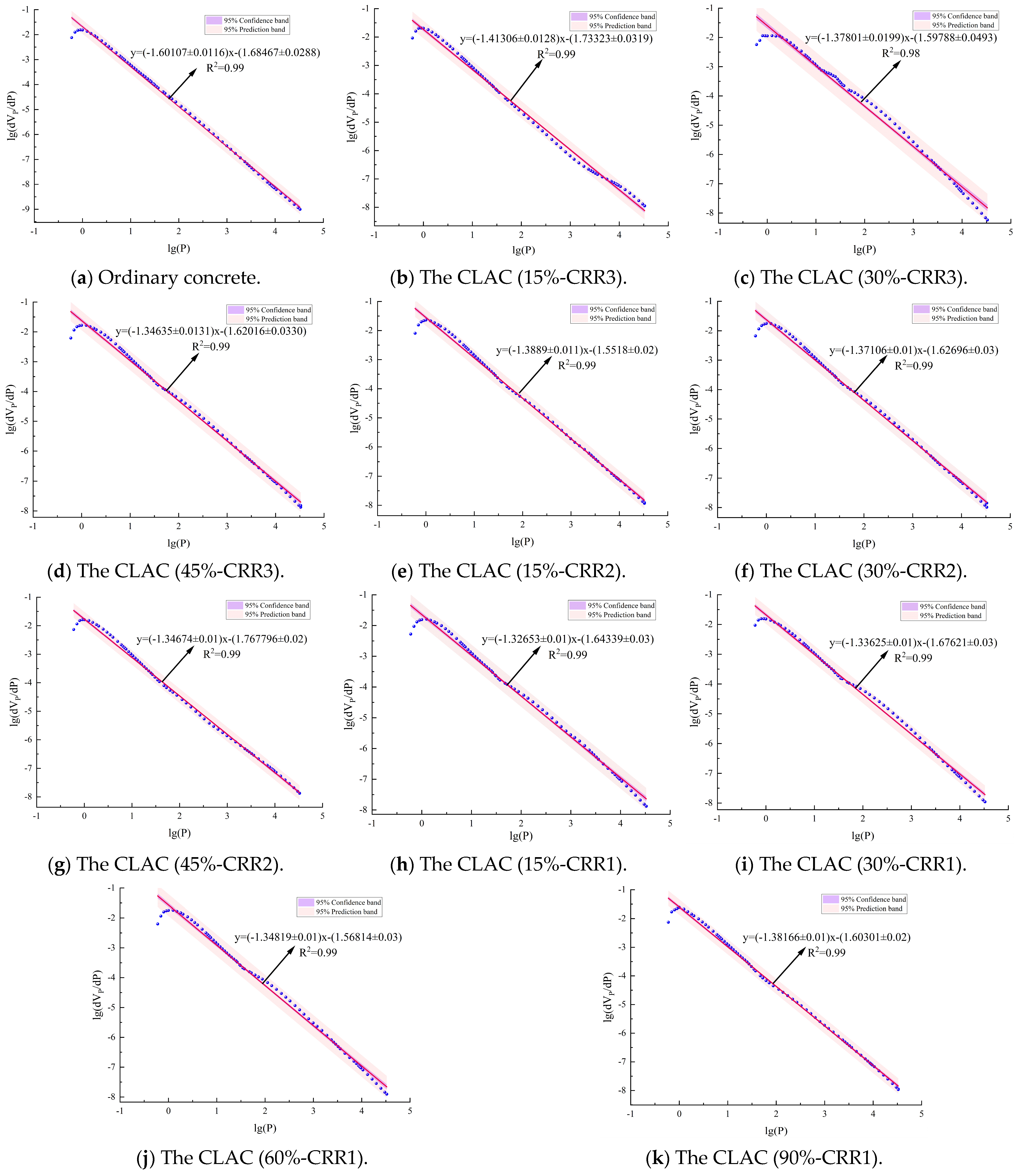
5. Fractal Approach for Pore Structure
5.1. Fractal Dimension
5.2. Analysis of Fractal Dimension Characteristics
- Region One: macroscopic pores (>1000 nm),
- Region Two: capillary pores (100–1000 nm),
- Region three: transition holes (10–100 nm),
- Region Four: gel pores (<10 nm).
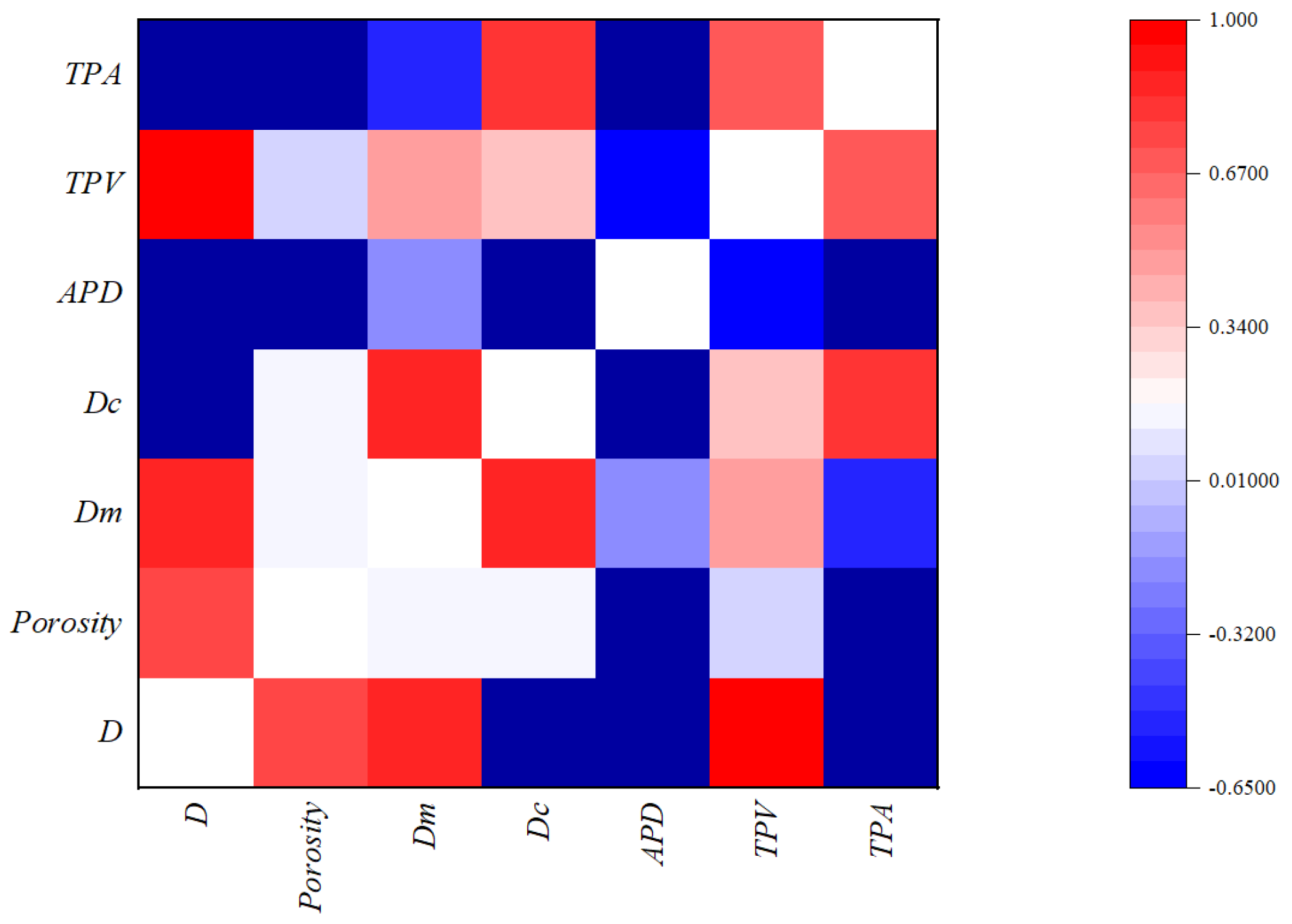
5.3. The Interrelationship Among Pore Parameters
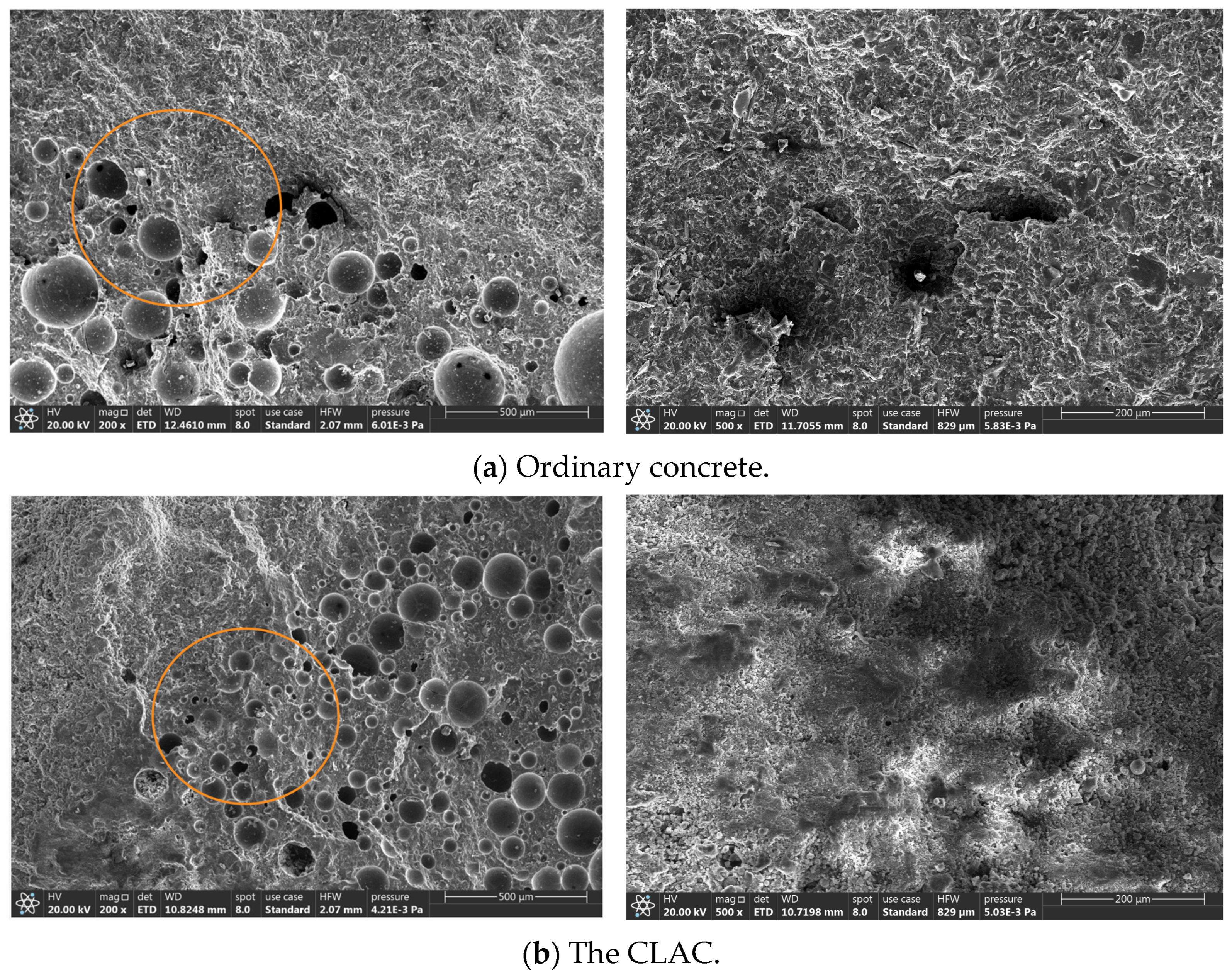
6. Micro-Structure
7. Conclusions
- (1)
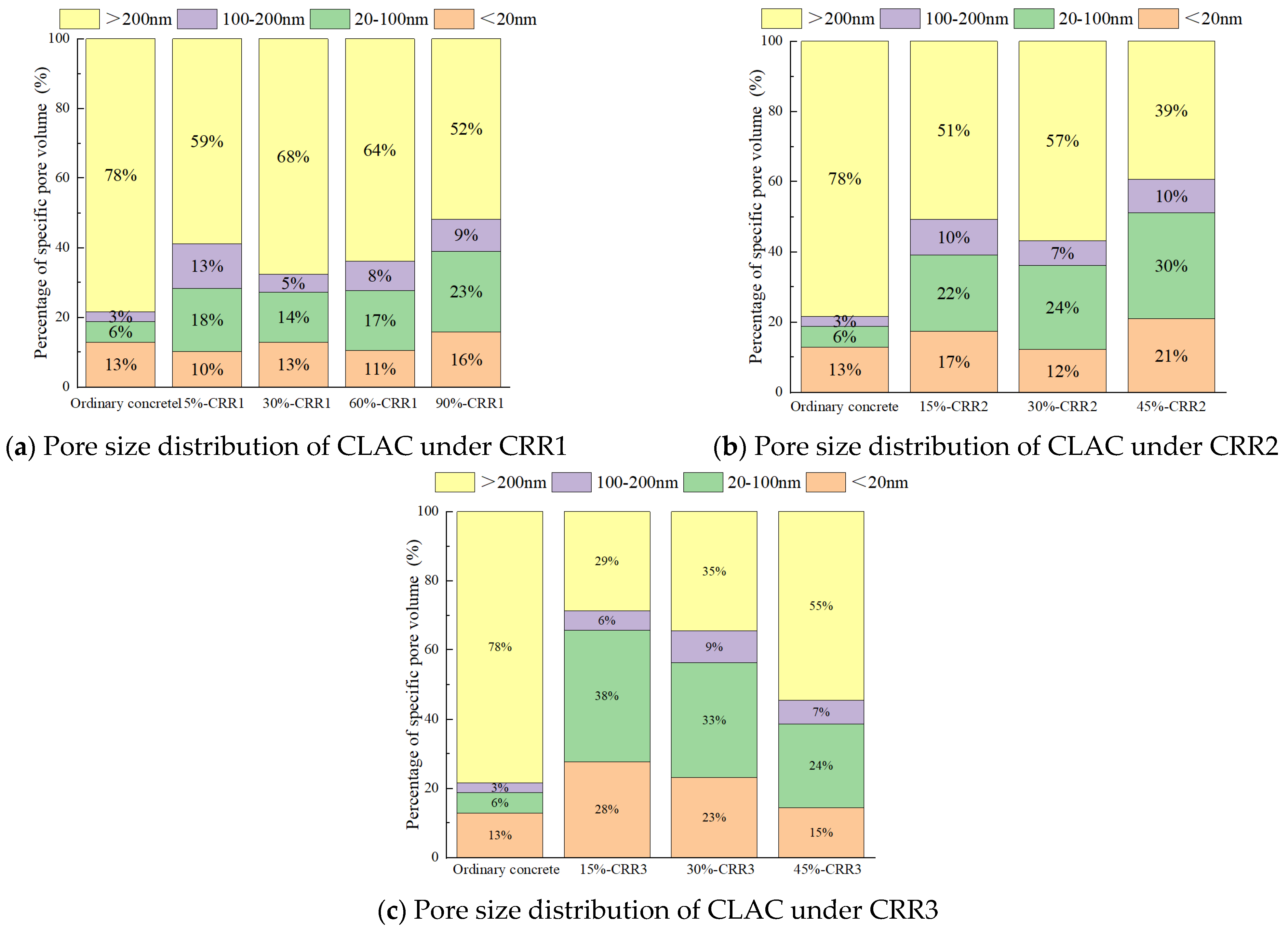
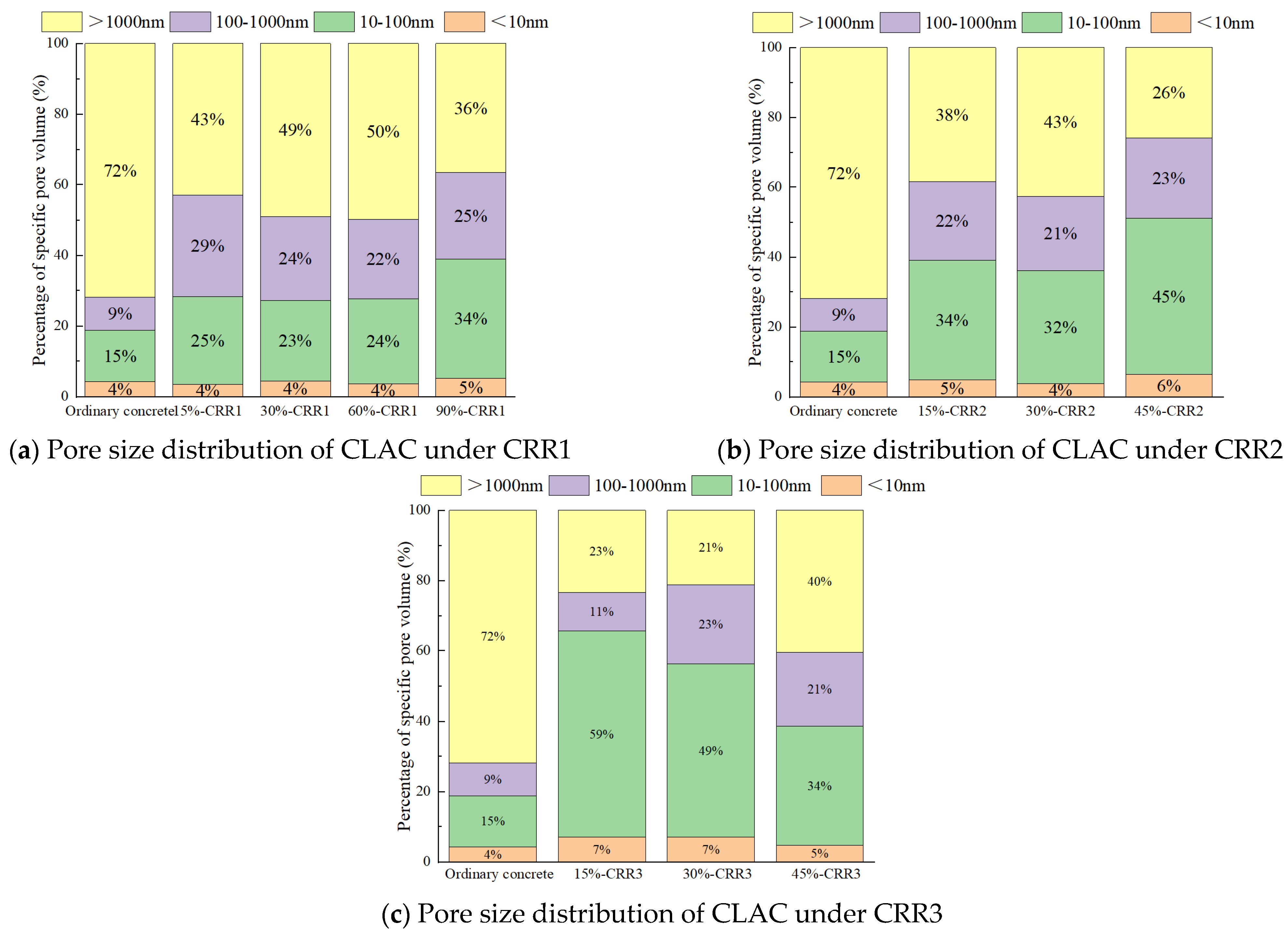
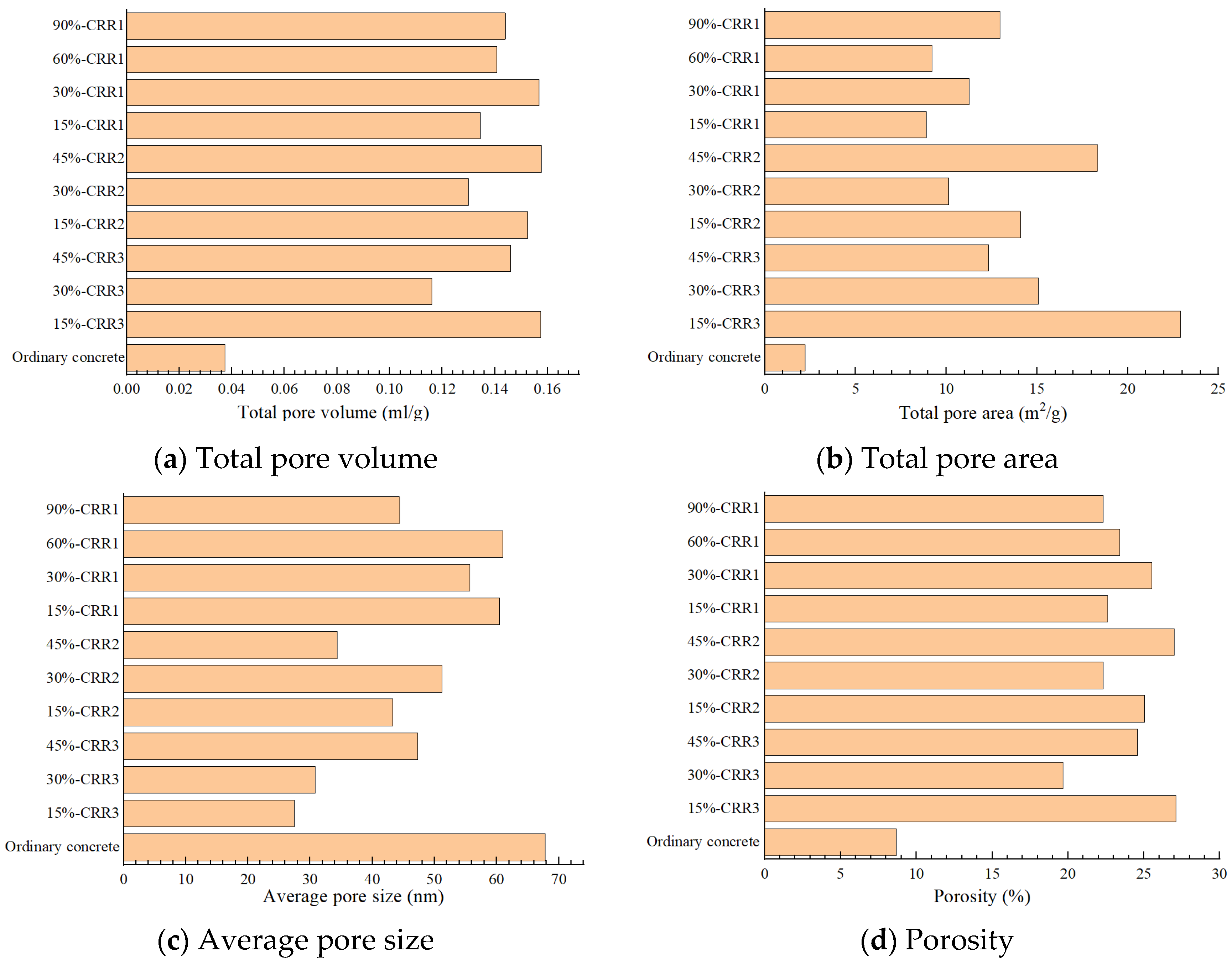
- The incorporation of ceramsite changed the accessible pore structure of CLAC, as characterized by MIP. At moderate ceramsite replacement levels, the fraction of harmful pores may decrease while harmless and less harmful pores increase; however, excessive ceramsite replacement can lead to an increase in harmful and macropores. Therefore, the pore structure evolution depends strongly on ceramsite particle size and replacement ratio. With increasing ceramsite content, total pore volume, total pore area, and overall porosity rise, while the average pore diameter shows a decreasing tendency. This further demonstrates that ceramsite contributes to the refinement of concrete internal pore structure.
- (2)
- The introduction of ceramsite has significantly enhanced the surface irregularity of internal pores and cracks in concrete. The surface fractal dimension of CLAC increases with increasing CRR2 and CRR3, but decreases with increasing CRR1.
- (3)
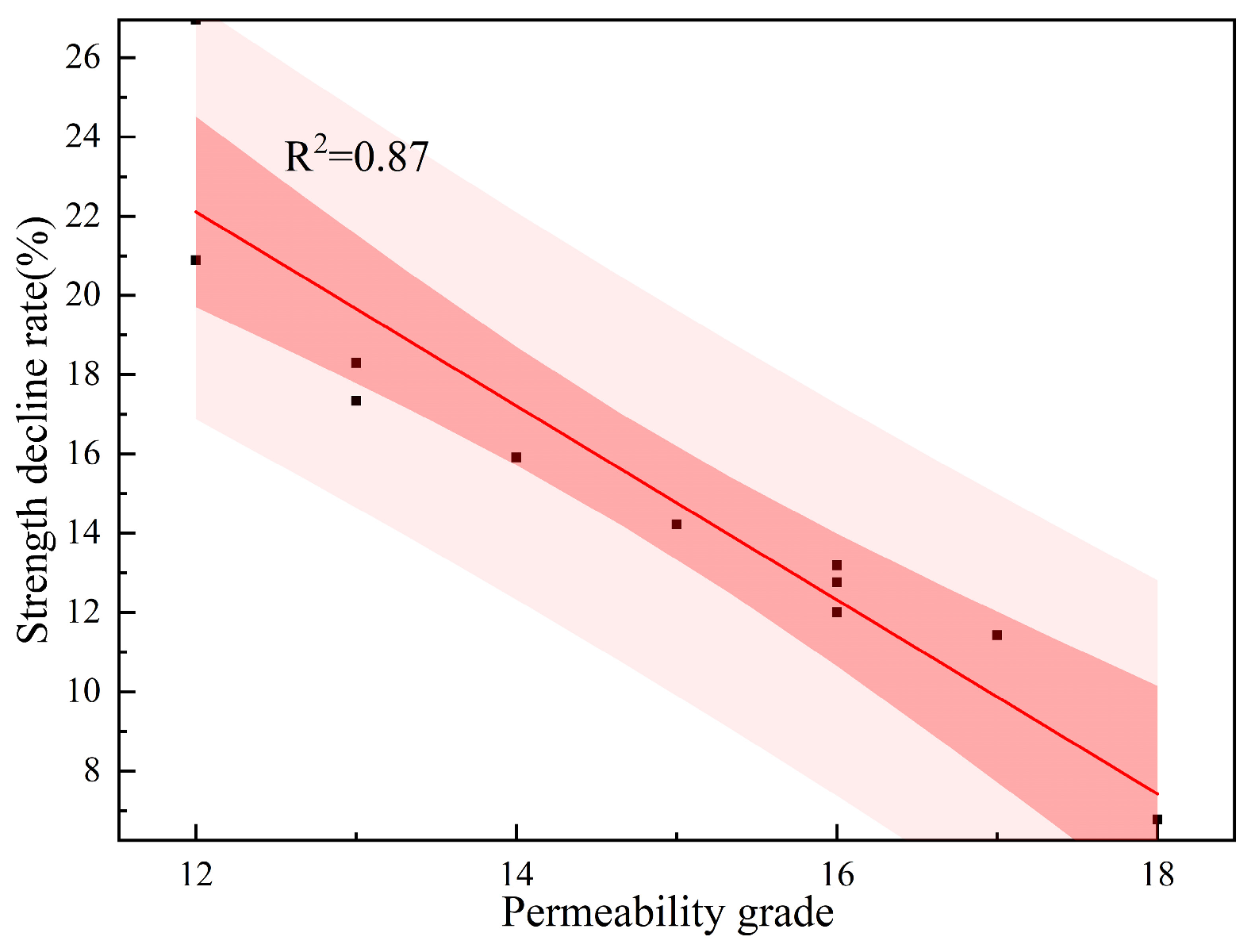
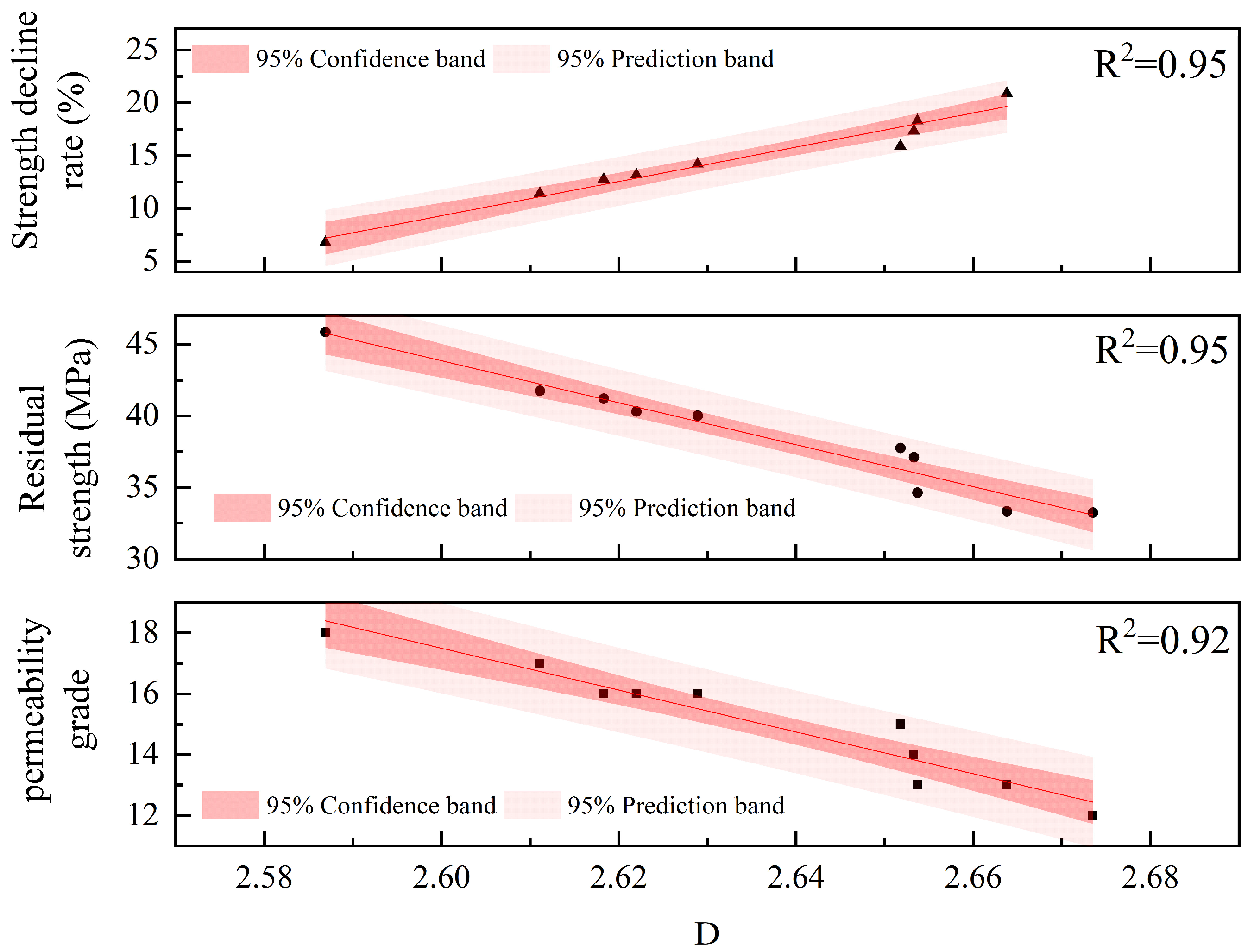
- The surface fractal dimension is negatively correlated with the permeability grade and residual strength, and positively correlated with the strength decay rate. The correlation coefficient between the surface fractal dimension and the permeability grade is 0.92, and the correlation coefficients with residual strength and strength decay rate are both 0.95, indicating that the surface fractal dimension exhibits strong correlations with all performance parameters.
- (4)
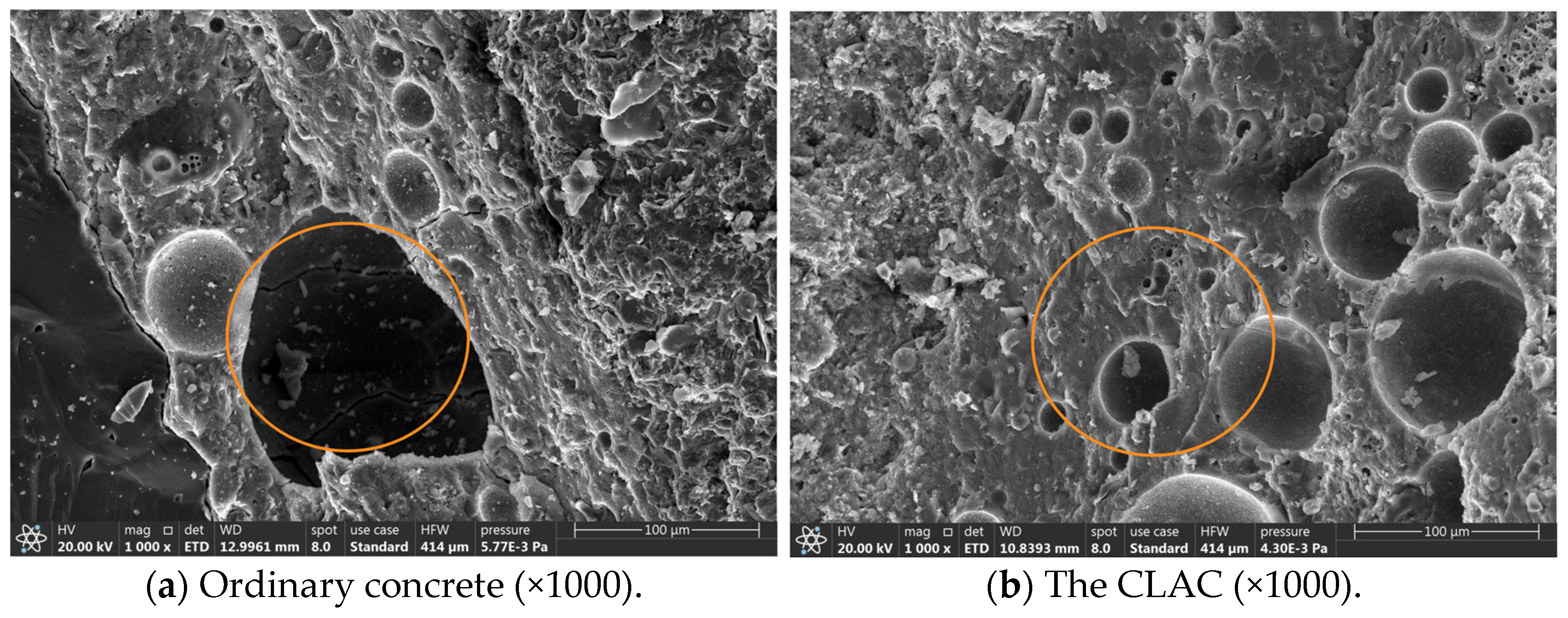
- There are differences in the microscopic morphology of the aggregate–mortar interface transition zone between ordinary concrete and the ceramsite aggregate lightweight aggregate concrete. The interior of ceramsite aggregate lightweight aggregate has a porous characteristic structure, mainly small pores, which are not interconnected with each other. In contrast, the internal pore diameter of ordinary aggregate is larger and there is a situation of interconnection.
- (5)
- The fractal dimension used in this study not only characterizes pore size variation, but also comprehensively reflects the complexity, tortuosity, and spatial heterogeneity of the pore network. Compared with traditional pore structure parameters such as porosity and average pore diameter, fractal analysis provides a more effective approach for linking microscopic pore characteristics with macroscopic durability-related properties.
- (6)
- Among the tested mixtures, appropriate ceramsite replacement showed a favorable trend in permeability grade and residual strength. However, since only permeability grade was measured in this study, the results should be interpreted as permeability-related performance rather than comprehensive durability improvement.
Author Contributions
Funding
Institutional Review Board Statement
Informed Consent Statement
Data Availability Statement
Conflicts of Interest
References
- Aslam, M.; Shafigh, P.; Nomeli, M.A.; Jumaat, M.Z. Manufacturing of high-strength lightweight aggregate concrete using blended coarse lightweight aggregates. J. Build. Eng. 2017, 13, 53–62. [Google Scholar] [CrossRef]
- Haller, T.; Scherb, S.; Beuntner, N.; Thienel, K.C. Renewable construction with lightweight concrete—Reclaimed recycled material systems with CO2-absorption. Constr. Build. Mater. 2025, 466, 140339. [Google Scholar] [CrossRef]
- Chen, L.; Yang, F.; Hong, Y.H.; Feng, W.H.; Li, X. Dynamic mechanical properties and failure mechanism of sustainable lightweight aggregate rubber concrete. J. Mater. Res. Technol. 2025, 35, 1982–1995. [Google Scholar] [CrossRef]
- Lee, B.; Kim, G.; Nam, J.; Cho, B.; Hama, Y.; Kim, R. Compressive strength, resistance to chloride-ion penetration and freezing/thawing of slag-replaced concrete and cementless slag concrete containing desulfurization slag activator. Constr. Build. Mater. 2016, 128, 341–348. [Google Scholar] [CrossRef]
- Oz, H.O. Properties of pervious concretes partially incorporating acidic pumice as coarse aggregate. Constr. Build. Mater. 2018, 166, 601–609. [Google Scholar] [CrossRef]
- Bu, C.M.; Zhu, D.X.; Lu, X.Y.; Liu, L.; Sun, Y.; Yu, L.W.; Zhang, W.T.; Xiao, T. Optimization of the water-cement ratio of rubberized ceramsite concrete. J. Rubber Res. 2023, 26, 27–36. [Google Scholar] [CrossRef]
- Huang, C.H.; Yuan, N.N.; He, X.S.; Wang, C.H. Ceramsite made from drinking water treatment residue for water treatment: A critical review in association with typical ceramsite making. J. Environ. Manag. 2023, 328, 117000. [Google Scholar] [CrossRef]
- Li, M.; Wang, Y.J.; Ren, J.L.; Zhao, H.B.; Zhuang, S.H.; Wang, J. Evaluation and prediction of fatigue life for ceramsite lightweight concrete considering the effects of ceramsite aggregate size and content. Case Stud. Constr. Mater. 2024, 21, e03613. [Google Scholar] [CrossRef]
- Sun, W.W.; Wu, Y.Q.; Yuan, J.; Gao, X.D.; Jia, K.L.; Zhang, Y.X.; Cui, X.Y.; Cui, C.; Feng, J. Experimental and simulation studies on the anti-penetration performance of high-strength concrete incorporated with new green ceramsite aggregate. Constr. Build. Mater. 2025, 489, 142173. [Google Scholar] [CrossRef]
- Liu, P.; Luo, A.; Liu, L.; Li, Y.L.; Zhang, S.L.; Zhi, W.T.; Pan, D.; Chen, Y.; Yu, Z.W. Study on the preparation and performances analysis of lightweight high strength ceramsite aerated concrete. J. Mater. Res. Technol. 2023, 25, 6672–6683. [Google Scholar] [CrossRef]
- Han, T.Y.; Wang, Z.B.; Jing, G.Y.; Wang, D.M.; Cheng, S.Y.; Shan, R.L. Coal gangue ceramsite high-strength concrete with lightweight characteristics: Towards deep shaft linings in the drilling method. Constr. Build. Mater. 2025, 505, 144768. [Google Scholar] [CrossRef]
- Palanisamy, M.; Kolandasamy, P.; Awoyera, P.; Gobinath, R.; Muthusamy, S.; Krishnasamy, T.R.; Viloria, A. Permeability properties of lightweight self-consolidating concrete made with coconut shell aggregate. J. Mater. Res. Technol. 2020, 9, 3547–3557. [Google Scholar] [CrossRef]
- Bulut, H.A. Examination of mechanical, permeability, and durability properties of sustainable lightweight concrete composites with natural perlite aggregate. IJST-T Civ. Eng. 2024, 48, 1329–1352. [Google Scholar] [CrossRef]
- Chao, Z.M.; Wang, H.Y.; Hu, S.Y.; Wang, M.; Xu, S.K.; Zhang, W.B. Permeability and porosity of light-weight concrete with plastic waste aggregate: Experimental study and machine learning modelling. Constr. Build. Mater. 2024, 411, 134465. [Google Scholar] [CrossRef]
- Aragoncillo, A.M.M.; Cleary, D.B.; Lomboy, G.R. Estimating the permeability of porous aggregate concretes using electrical resistivity based tests. Constr. Build. Mater. 2023, 364, 129909. [Google Scholar] [CrossRef]
- Atmaca, N.; Abbas, M.L.; Atmaca, A. Effects of nano-silica on the gas permeability, durability and mechanical properties of high-strength lightweight concrete. Constr. Build. Mater. 2017, 147, 17–26. [Google Scholar] [CrossRef]
- Dao, P.L.; Thai, K.C.; Pham, D.T.; Vu, M.N.; Nguyen-Sy, T.; Le, Q.V.; Tran, T.T. Chloride diffusivity of lightweight expanded clay aggregate concretes under compressive stress. Mater. Today Commun. 2023, 35, 105917. [Google Scholar] [CrossRef]
- Zamri, N.A.; Ismail, S.; Husin, A. Assessment of permeability and dry shrinkage in oil palm shell concrete enhanced by surface treatment with styrene acrylic emulsion. Mater. Constr. 2025, 75, e365. [Google Scholar] [CrossRef]
- Beytekin, H.E.; Altun, O.B.; Mardani, A.; Sezer, F.S. Innovative lightweight concrete: Effect of fiber, bacteria and nanomaterials. Iran. Polym. J. 2024, 33, 1327–1350. [Google Scholar] [CrossRef]
- Guneyise, E. Axial compressive strength of square and rectangular CFST columns using recycled aggregate concrete with low to high recycled aggregate replacement ratios. Constr. Build. Mater. 2023, 367, 130319. [Google Scholar] [CrossRef]
- Fan, L.D.; Zhang, Z.J.; Yu, Y.Q.; Li, P.T.; Cosgrove, T. Effect of elevated curing temperature on ceramsite concrete performance. Constr. Build. Mater. 2017, 153, 423–429. [Google Scholar] [CrossRef]
- Li, M.; Wang, Y.J.; Zhang, M.Z.; Zhang, L.; Xu, Y.S.; Zhao, H.B.; Zhao, J.L. Experimental investigation and Bayesian assessment for permeability characteristics of lightweight ceramsite concrete. Materials 2024, 17, 4112. [Google Scholar] [CrossRef]
- Gao, S.; Huang, K.; Chu, W.; Wang, W. Feasibility study of pervious concrete with ceramsite as aggregate considering me-chanical properties, permeability, and durability. Materials 2023, 16, 5127. [Google Scholar] [CrossRef] [PubMed]
- Li, S.L.; Cui, H.H.; Wang, H.H.; Wang, W.S.; Sui, Y.; Dong, L.Y.; Wang, J.X. Preparation and performance investigation of epoxy resin-based permeable concrete containing ceramsite. Polymers 2024, 15, 4704. [Google Scholar]
- Kong, L.J.; Du, Y.B. Effect of lightweight aggregate and the interfacial transition zone on the durability of concrete based on grey correlation. Indian J. Eng. Mater. Technol. 2015, 22, 111–119. [Google Scholar]
- Salvini, S.; Coletti, C.; Maritan, L.; Massironi, M.; Balsamo, F.; Mazzoli, C. Exploring the pore system of carbonate rocks through a multi-analytical approach. Environ. Earth Sci. 2023, 82, 564. [Google Scholar] [CrossRef]
- Rani, S.D.; Rahul, A.V.; Santhanam, M. A multi-analytical approach for pore structure assessment in historic lime mortars. Constr. Build. Mater. 2021, 272, 121905. [Google Scholar] [CrossRef]
- Pap, M.; Mahler, A.; Illés, Z.; Nehme, S.G.; Biro, A. Comparative assessment of pore structure and water retention in concrete using MIP, CT, SEM, and dewpoint techniques. Period. Polytech. Civ. Eng. 2025, 69, 1203–1215. [Google Scholar] [CrossRef]
- Varzaneh, A.S.; Naderi, M.; Din, S. Determining the permeability coefficient of concrete using new fractal model and examining the effect of different thermal cycles on concrete permeability. Iran. J. Sci. Technol. Trans. Civ. Eng. 2025, 49, 2619–2632. [Google Scholar] [CrossRef]
- Aghililotf, M.; Ramezanianpour, A.M.; Bamshad, O.; Hajimohammadi, A. Long-term performance of recycled aggregate concrete incorporating natural zeolite. Struct. Concr. 2025, 26, 7816–7846. [Google Scholar]
- Rieg, A.F.; Pinheiro, I.G.; Pinheiro, A. Analysis of the porous system structure, permeability coefficient and mechanical resistance of pervious concrete. Materia 2025, 30, e20240570. [Google Scholar] [CrossRef]
- Abousnina, R.; Aljuaydi, F.; Benabed, B.; Almabrok, M.H.; Vimonsatit, V. A state-of-the-art review on the influence of porosity on the compressive strength of porous concrete for infrastructure applications. Buildings 2025, 15, 2311. [Google Scholar] [CrossRef]
- Yavuz, D. Effect of scoria powder on the strength and porosity of porous concrete produced with recycled porous concrete aggregate. Eng. Sci. Technol. 2025, 69, 102141. [Google Scholar] [CrossRef]
- GB/T 50080-2016; Standard for Test Method of Performance on Ordinary Fresh Concrete. National Standard of People’s Republic of China: Beijing, China, 2016.
- JTG 3420; Testing Methods of Cement and Concrete for Highway Engineering. Ministry of Transport of the People’s Republic of China: Beijing, China, 2020. (In Chinese)
- Yang, K.Q.; Zhuang, S.H.; Wang, Y.J.; Li, J.S.; Zhou, S.; Ren, J.L. Crack propagation of ceramsite lightweight concrete under four-point bending fatigue conditions. Materials 2025, 18, 2957. [Google Scholar] [CrossRef] [PubMed]
- Khudair, S.A.; Basher, M.A. Production of efficient lightweight pumice aggregate concrete. AIP Conf. Proc. 2023, 2839, 030013. [Google Scholar]
- Zhang, M.; Jia, S.; Guan, J.F.; Han, R.C.; Xie, Y.C.; Xie, C.P.; Li, L.L.; Liu, B. Research progress on macroscopic properties of concrete based on microporous structure and exploration of fracture models. Case Stud. Constr. Mater. 2025, 23, e05240. [Google Scholar] [CrossRef]
- Fan, Y.H.; Tai, W.S.; Wang, P.H.; Xu, P.; Li, Y. Experimental study on the low creep deformation of recycled coarse aggregate concrete. Constr. Build. Mater. 2025, 496, 143760. [Google Scholar] [CrossRef]
- Tian, Z.H.; Zheng, X.W.; Song, J.D.; Wang, J.B. Performance tests of concrete poured with controlled permeability formwork. J. Build. Mater. 2008, 11, 160. [Google Scholar]
- Li, Y.; Shen, A.Q.; Wu, H. Fractal dimension of basalt fiber reinforced concrete (bfrc) and its correlations to pore structure, strength and shrinkage. Materials 2020, 13, 3238. [Google Scholar] [CrossRef] [PubMed]
- Zhang, P.; Ding, J.Y.; Guo, J.J.; Wang, F. Fractal analysis of cement-based composite microstructure and its application in evaluation of macroscopic performance of cement-based composites: A Review. Fractal Fract. 2024, 8, 304. [Google Scholar] [CrossRef]
- Kim, J.; Hong, G.; Oh, S.; Choi, S. Application of various fractal models in characterizing the morphology of pore structures of hydrating cement pastes. J. Mater. Res. Technol. 2022, 20, 3818–3835. [Google Scholar] [CrossRef]
- Han, X.; Wang, B.M.; Feng, J.J. Relationship between fractal feature and compressive strength of concrete based on MIP. Constr. Build. Mater. 2022, 322, 126504. [Google Scholar] [CrossRef]
- Guo, J.J.; Yan, Y.; Wang, J.; Xu, Y.Q. Strength analysis of cement mortar with carbon nanotube dispersion based on fractal dimension of pore structure. Fractal Fract. 2022, 6, 609. [Google Scholar] [CrossRef]
- Han, X.; Feng, J.J.; Wang, B.M. Relationship between fractal feature and compressive strength of fly ash-cement composite cementitious materials. Cem. Concr. Comp. 2023, 139, 105052. [Google Scholar] [CrossRef]
- Ye, Y.C.; Gu, Z.Y.; Zhu, C.H.; Yang, J. Effects of Carbonation Conditions and Sand-to-Powder Ratio on Compressive Strength and Pore Fractal Characteristics of Recycled Cement Paste–Sand Mortar. Buildings 2025, 15, 2906. [Google Scholar] [CrossRef]
- Yu, M.Y.; Chen, W.; Hou, J. Intelligent quantitative assessment of concrete cracks: Adaptive data-driven dynamic segmentation model and damage grading architecture. Measurement 2025, 256, 118274. [Google Scholar] [CrossRef]
- Zhao, M.; Qing, H.B.; Wang, Y.X.; Liang, J.; Zhao, M.Y.; Geng, Y.L.; Liang, J.Z.; Lu, B.H. Superelastic behaviors of additively manufactured porous NiTi shape memory alloys designed with Menger sponge-like fractal structures. Mater. Des. 2021, 200, 109448. [Google Scholar] [CrossRef]
- Bushuev, Y.G. Effects of size and porosity on the hydrophobicity of hierarchical nanoparticles. Nano. Lett. 2025, 25, 3351–3356. [Google Scholar] [CrossRef]
- Lin, J.F.; Zhang, Y.; Guo, Z.H.; Du, H.J. Impact of synthetic fibers on spalling and intrinsic pore structure of ultra-high performance concrete (UHPC) under elevated temperatures. Constr. Build. Mater. 2024, 439, 137325. [Google Scholar] [CrossRef]
- Yu, Z.Q.; Ma, J.; Ye, G.; van Breugel, K.; Shen, X.D. Effect of fly ash on the pore structure of cement paste under a curing period of 3 years. Constr. Build. Mater. 2017, 144, 493–501. [Google Scholar] [CrossRef]
- Zhang, Y.R.; Xu, S.X.; Gao, Y.H.; Guo, J.; Cao, Y.H.; Zhang, J.Z. Correlation of chloride diffusion coefficient and microstructure parameters in concrete: A comparative analysis using NMR, MIP, and X-CT. Front. Struct. Civ. Eng. 2020, 14, 1509–1519. [Google Scholar] [CrossRef]
- Zhou, J.; Dong, Y.D.; Qiu, T.; Lv, J.J.; Guo, P.; Liu, X. The microstructure and modification of the interfacial transition zone in lightweight aggregate concrete: A Review. Buildings 2025, 15, 2748. [Google Scholar] [CrossRef]





| No. | Water–Binder Ratio | Fly Ash | Silica Fume | Ceramsite Replacement Ratio | ||
|---|---|---|---|---|---|---|
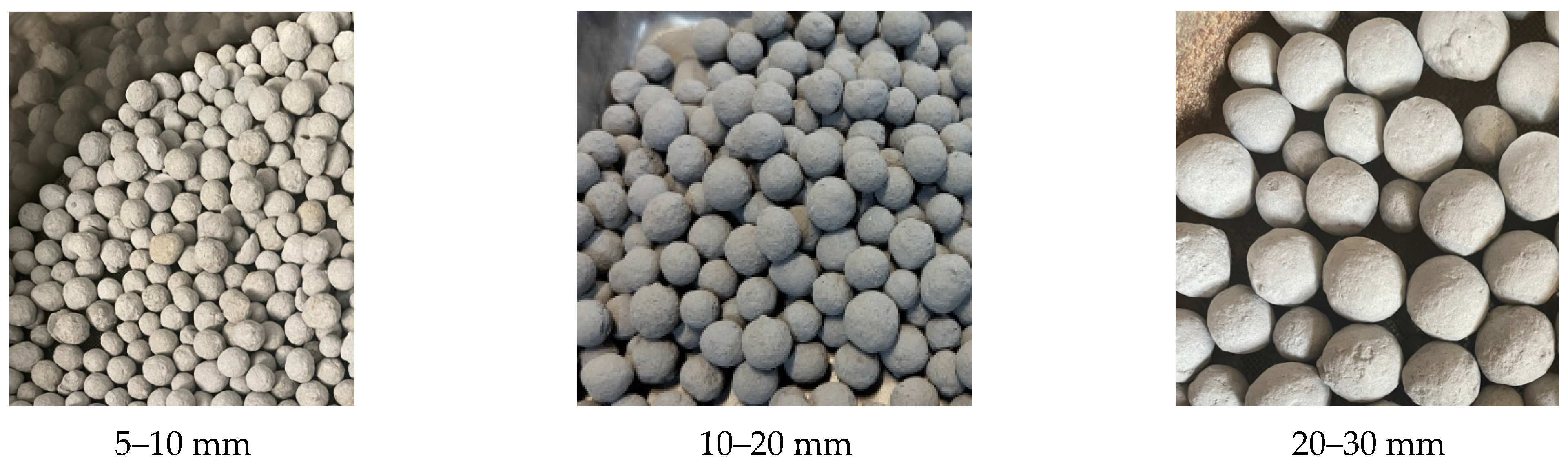
| 5–10 mm | 10–20 mm | 20–30 mm | ||||
| 1 | 0.28 | 15% | 10% | 0% | 0% | 0% |
| 2 | 0.28 | 15% | 10% | 0% | 0% | 15% |
| 3 | 0.28 | 15% | 10% | 0% | 0% | 30% |
| 4 | 0.28 | 15% | 10% | 0% | 0% | 45% |
| 5 | 0.28 | 15% | 10% | 0% | 15% | 0% |
| 6 | 0.28 | 15% | 10% | 0% | 30% | 0% |
| 7 | 0.28 | 15% | 10% | 0% | 45% | 0% |
| 8 | 0.28 | 15% | 10% | 15% | 0% | 0% |
| 9 | 0.28 | 15% | 10% | 30% | 0% | 0% |
| 10 | 0.28 | 15% | 10% | 60% | 0% | 0% |
| 11 | 0.28 | 15% | 10% | 90% | 0% | 0% |
| No. | Compressive Strength (MPa) | Permeability Grade | Residual Strength (MPa) | Strength Decline Rate (%) |
|---|---|---|---|---|
| 1 | 47.50 | 12 | 34.70 | 26.95 |
| 2 | 47.48 | 16 | 41.22 | 13.19 |
| 3 | 44.14 | 14 | 37.12 | 15.91 |
| 4 | 42.03 | 12 | 33.25 | 20.89 |
| 5 | 46.16 | 16 | 40.32 | 12.64 |
| 6 | 44.02 | 15 | 37.76 | 14.22 |
| 7 | 42.40 | 13 | 34.64 | 18.30 |
| 8 | 40.33 | 13 | 33.34 | 17.34 |
| 9 | 45.89 | 16 | 40.03 | 12.76 |
| 10 | 47.10 | 17 | 41.76 | 11.43 |
| 11 | 49.21 | 18 | 45.87 | 6.78 |
| No. | <20 nm | 20–100 nm | 100–200 nm | >200 nm |
|---|---|---|---|---|
| 1 | 12.86% | 5.98% | 2.80% | 78.36% |
| 2 | 27.80% | 37.88% | 5.65% | 28.68% |
| 3 | 23.24% | 33.01% | 9.25% | 34.50% |
| 4 | 14.50% | 24.13% | 6.85% | 54.52% |
| 5 | 17.39% | 21.80% | 10.13% | 50.67% |
| 6 | 12.23% | 23.88% | 7.10% | 56.79% |
| 7 | 20.96% | 30.16% | 9.53% | 39.34% |
| 8 | 10.25% | 18.03% | 12.87% | 58.85% |
| 9 | 12.86% | 14.34% | 5.28% | 67.53% |
| 10 | 10.52% | 17.27% | 8.42% | 63.80% |
| 11 | 15.84% | 23.17% | 9.23% | 51.76% |
| No. | <10 nm | 10–100 nm | 100–1000 nm | >1000 nm |
|---|---|---|---|---|
| 1 | 4.28% | 14.56% | 9.31% | 71.85% |
| 2 | 7.11% | 58.57% | 10.96% | 23.36% |
| 3 | 7.14% | 49.11% | 22.66% | 21.09% |
| 4 | 4.75% | 33.88% | 21.00% | 40.37% |
| 5 | 4.91% | 34.28% | 22.38% | 38.42% |
| 6 | 3.83% | 32.29% | 21.30% | 42.58% |
| 7 | 6.41% | 44.72% | 23.00% | 25.86% |
| 8 | 3.57% | 24.70% | 28.87% | 42.84% |
| 9 | 4.46% | 22.74% | 23.86% | 48.94% |
| 10 | 3.64% | 24.15% | 22.48% | 49.73% |
| 11 | 5.28% | 33.73% | 24.50% | 36.49% |
| No. | Dm | R2 | Dc | R2 | Dt | R2 | Dg | R2 |
|---|---|---|---|---|---|---|---|---|
| 1 | 2.5524 | 0.981 | 2.2990 | 0.999 | 2.3060 | 0.999 | 2.3706 | 0.999 |
| 2 | 2.5633 | 0.979 | 2.4663 | 0.999 | 3.0467 | 0.997 | 2.4770 | 0.999 |
| 3 | 2.9158 | 0.958 | 2.3838 | 0.999 | 2.2728 | 0.999 | 2.1000 | 0.999 |
| 4 | 2.7745 | 0.960 | 2.5289 | 0.999 | 2.5412 | 0.999 | 2.6073 | 0.911 |
| 5 | 2.6860 | 0.969 | 2.5459 | 0.999 | 2.5424 | 0.999 | 2.4542 | 0.999 |
| 6 | 2.7391 | 0.964 | 2.5223 | 0.999 | 2.5554 | 0.999 | 2.9626 | 0.999 |
| 7 | 2.6513 | 0.973 | 2.7723 | 0.999 | 2.7070 | 0.999 | 2.4058 | 0.999 |
| 8 | 2.8081 | 0.950 | 2.6059 | 0.998 | 2.4523 | 0.999 | 2.3425 | 0.999 |
| 9 | 2.7871 | 0.978 | 2.5476 | 0.999 | 2.4216 | 0.999 | 2.3751 | 0.999 |
| 10 | 2.8151 | 0.955 | 2.4972 | 0.999 | 2.4536 | 0.999 | 2.3452 | 0.999 |
| 11 | 2.6586 | 0.970 | 2.6028 | 0.999 | 2.5472 | 0.999 | 2.3346 | 0.994 |
Disclaimer/Publisher’s Note: The statements, opinions and data contained in all publications are solely those of the individual author(s) and contributor(s) and not of MDPI and/or the editor(s). MDPI and/or the editor(s) disclaim responsibility for any injury to people or property resulting from any ideas, methods, instructions or products referred to in the content. |
© 2026 by the authors. Licensee MDPI, Basel, Switzerland. This article is an open access article distributed under the terms and conditions of the Creative Commons Attribution (CC BY) license.
Share and Cite
Liu, Z.; Xu, Y.; Zhuang, S.; Ren, J. Effects of Particle Size and Replacement Ratio of Ceramsite on Permeability Characteristics of Lightweight Concrete via Pore Structure and Fractal Approach. Materials 2026, 19, 2305. https://doi.org/10.3390/ma19112305
Liu Z, Xu Y, Zhuang S, Ren J. Effects of Particle Size and Replacement Ratio of Ceramsite on Permeability Characteristics of Lightweight Concrete via Pore Structure and Fractal Approach. Materials. 2026; 19(11):2305. https://doi.org/10.3390/ma19112305
Chicago/Turabian StyleLiu, Zhe, Yinshan Xu, Shenghan Zhuang, and Jiaolong Ren. 2026. "Effects of Particle Size and Replacement Ratio of Ceramsite on Permeability Characteristics of Lightweight Concrete via Pore Structure and Fractal Approach" Materials 19, no. 11: 2305. https://doi.org/10.3390/ma19112305
APA StyleLiu, Z., Xu, Y., Zhuang, S., & Ren, J. (2026). Effects of Particle Size and Replacement Ratio of Ceramsite on Permeability Characteristics of Lightweight Concrete via Pore Structure and Fractal Approach. Materials, 19(11), 2305. https://doi.org/10.3390/ma19112305