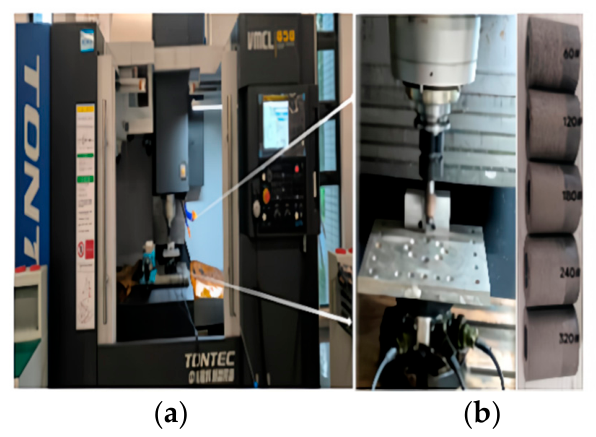
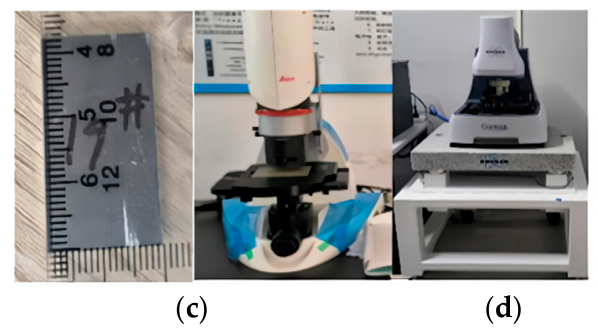
1. Introduction
With the rapid development of industries such as automotive, aerospace, optical precision instruments and electronic packaging, metal matrix composite materials have completely replaced a variety of traditional materials in the high-tech field due to their superior performance, among which aluminum-based silicon carbide (SiCp/Al) composites are particularly prominent, offering high strength, wear resistance, corrosion resistance and a low expansion coefficient [
1,
2]. SiCp/Al is a composite material in which SiC reinforcing particles are introduced into an aluminum matrix, resulting in severe tool wear and more complex surface topography than that of conventional single-phase metals after machining. The measurement and characterization of the surface topography of parts can play a link function in the industry [
3]. During processing, the presence of these reinforcing particles can induce various surface defects such as voids and cracks compromising surface quality and making SiCp/Al a challenging material to machine [
4,
5]. In the mold design and manufacturing of SiCp/Al composite materials, the measurement and characterization of part surface topography can play an important linking role in manufacturing and performance evaluation. On the one hand, the characteristics can be reflected to the processing link and the manufacturing process can be optimized; on the other hand, the quantifiable functions can be applied to the application link, and the service performance of parts can be evaluated to complete the closed cycle system of overall quality control [
6]. Measurement and characterization of surface topography is an important means of quality control, and surface roughness is one of the important technical indicators for evaluating surface quality [
7]. Traditional two-dimensional roughness parameters cannot fully capture the influence of deep voids and cracks, and the surface roughness results of different directions and positions are quite different, which cannot fully characterize the surface topography of the workpiece and cannot accurately reflect the service characteristics of the workpiece. For example, the surface lubricity of the inner and outer rings of precision bearings and the tightness of electronic packages [
8]. Three-dimensional (3D) roughness parameters can reflect the surface shape and performance characteristics of the workpiece more comprehensively, accurately and intuitively from the horizontal and longitudinal aspects, which is suitable for characterizing the precision devices made from these composite materials [
9,
10], This area presents significant research opportunities.
Grinding has become a common machining method for SiCp/Al composites with its advantages of low cost, high material removal rate and good surface quality. Dong et al. investigated the removal mechanism of SiCp/Al materials involved in ultrasonic-assisted grinding (UAG) and conventional grinding (CG), examining grinding force, surface integrity, sub-surface damage, and grinding wheel wear [
11]. Godino et al. established a correlation between grinding wheel topography, grinding wheel wear, and three-dimensional functional roughness parameters [
12]. Duan et al. elucidated the formation mechanism of SiCp/Al surface defects and established a roughness extraction method based on the dual-tree complex wavelet transform (DT-CWT) [
13]. Wang et al. carried out a rotating ultrasonic side grinding experiment on a 45% volume fraction SiCp/Al composite material, studying the effects of spindle speed, feed speed, cutting depth, and ultrasonic vibration amplitude on surface roughness [
14]. Furthermore, Wang et al. selected typical 2D (
Ra (arithmetic mean roughness),
Rp (maximum peak height)) and 3D (
Sa (arithmetical mean height),
Sq (root mean square height)) surface roughness parameters to evaluate the influence of grinding parameters on the surface quality of aluminum alloys, detailing the three-dimensional surface topography [
15]. Moreover, surface roughness is not merely a geometric descriptor, but an important surface integrity indicator that may influence wear behavior, contact performance, fatigue response, and corrosion susceptibility in service. The significance of comprehensive surface quality evaluation in predicting service performance has been broadly recognized across diverse engineering materials [
16]. Therefore, improving the 3D surface topography of SiCp/Al composites is important for their functional reliability in precision applications.
Current research on SiCp/AI composite grinding mainly focuses on the coupled effects of various processing parameters on grinding force, surface roughness and surface topography [
17,
18,
19]. Wang Jinfeng et al. used the Taguchi method to accurately predict the two-dimensional roughness parameters of SiCp/Al composites under different processing parameters [
20]. Chuanmin Zhu et al. employed the Non-dominated Sorting Genetic Algorithm II (NSGA-II) to predict the two-dimensional roughness of SiCp/Al surfaces, achieving some improvement in grinding surface quality [
21]. Zheng et al. effectively characterized the surface morphology and surface quality of SiCp/Al composites using the 3D parameter Scr, and effectively optimized the ultrasonic grinding process parameter using the NSGA-II [
22]. Sun Hao et al. adopted neural network model to effectively improve the prediction accuracy of composite surface roughness [
23]. Jinfeng Wang et al. used polynomial regression equation to predict the optimal surface roughness and its corresponding parameters, achieving good agreement with experimental results [
24].
Existing prediction methods for workpiece surface roughness often rely on theoretical analysis, which may not fully capture the complex interactions of various machining factors. Experimental analysis requires extensive data collection and may lack generalization. However, artificial intelligence methods offer many advantages. For example, the backpropagation (BP) algorithm can obtain relevant grinding experimental data to establish a mapping between process parameters and surface roughness, enabling real-time prediction [
25]. Peng Gu et al. used a particle swarm optimization-backpropagation (PSO-BP) neural network to predict the energy consumption in the grinding process of SiCp/Al composites, with high prediction accuracy [
26].
Compared to previously published studies that predominantly rely on conventional two-dimensional roughness parameters (such as Ra) and standard analytical models, the value-added contribution of this research is twofold. First, this study extends the application of conventional 2D roughness evaluation toward 3D functional parameters in the context of SiCp/Al grinding. These 3D parameters (e.g., Sbi (surface bearing index), Sci (core fluid retention index)) volumetrically quantify actual component load-bearing capacity and core fluid retention—metrics that are critical for the anti-corrosion and tribological performance of precision SiCp/Al parts but remain entirely invisible to 2D traces. Second, traditional backpropagation networks are notoriously susceptible to becoming trapped in local minima when trained on the highly variable, stochastic datasets generated by composite grinding (due to random SiC particle fracture). To address this, the current research introduces a hybrid particle swarm optimization-backpropagation (PSO-BP) neural network. The PSO algorithm acts as a global metaheuristic regularizer, improving the robustness and stability of the prediction compared to conventional BP models. By integrating structured orthogonal experiments with this advanced hybrid prediction model, this study provides a practical and quantitative framework for optimizing the machining surface quality of high-volume fraction SiCp/Al composites.
2. Identification of 3D Parameters for 3D Surface Roughness Evaluation
The University of Birmingham, UK, laid the foundational work in three-dimensional roughness characterization, proposing a set of evaluation standards known as the Birmingham 14 parameters. These parameters encompass four main aspects of surface characteristics: amplitude information (Sq, Ssk (skewness), Sku (kurtosis), Sz (maximum height)), spatial information (Sds (density of summits), Str (texture aspect ratio), Sal (auto-correlation length), Std (texture direction)), complex information (S△q (root mean square gradient), Ssc (arithmetic mean summit curvature), Sdr (developed interfacial area ratio)), and functional information (Sbi, Sci, Svi (valley fluid retention index)).
Three-dimensional roughness parameters have many influences on surface properties, as shown in
Table 1 below. Under different influence degrees, some three-dimensional roughness parameters were selected to characterize the surface of SiCp/Al composites.
As can be seen from
Table 1, amplitude parameters have significant effects on all surface properties. The most commonly used three-dimensional roughness parameter Sa is an extension of the two-dimensional roughness parameter Ra. Therefore, amplitude parameters (Sa, Sq, Ssk, Sku) are selected to characterize the surface quality of SiCp/Al composites. The functional parameters reflect the surface micro-geometric characteristics and have a significant impact on all surface properties. The functional parameters (Sbi, Sci, Svi) are selected to characterize the workpiece surface. Although spatial and hybrid parameters theoretically influence certain surface functionalities, they were deliberately excluded from the prediction model due to specific physical and metrological constraints associated with SiCp/Al composites. From a physical perspective, SiCp/Al is a highly heterogeneous two-phase material. The random distribution of SiC particles and their stochastic pull-out mechanisms create highly irregular micro-defects. Consequently, spatial parameters (such as Sal and Str) primarily reflect the random phase distribution of the composite matrix rather than the deterministic kinematics of the grinding process. From a metrological perspective, hybrid parameters (such as Sdq and Sdr) are calculated based on the numerical spatial derivatives of the surface profile. Metrological studies have proven that these derivative-based parameters are extremely sensitive to high-frequency optical noise. During white-light interferometry, the steep edges of the pulled-out SiC pits inevitably induce high-frequency optical artifacts, which exponentially amplify the error in hybrid parameters. Therefore, relying exclusively on robust amplitude and functional parameters prevents the neural network from overfitting to metrological noise.
2.1. Amplitude Parameters
The amplitude parameter Sa (arithmetic mean deviation) refers to the arithmetic average distribution of the absolute height deviations within the measured surface roughness. The roughness is evaluated in the three-dimensional evaluation area, which has the characteristics of integrity and can effectively detect the height characteristics of the entire sample selection area.
The amplitude parameter Sq (root mean square deviation) is a statistical amplitude parameter, defined as the root mean square value of the measured surface roughness deviation from the reference standard in the sampling area, which can compare the micro-morphology changes of the parts before and after use.
The amplitude parameter Ssk (skewness) is the measurement of the symmetry of the surface deviation relative to the reference surface, and the measured roughness shape (concave and convex) tendency is judged by the Ssk value, reflecting the surface’s bearing properties.
Amplitude parameter Sku (kurtosis) is a measure of the kurtosis of the topography height distribution. Together with skew, it is proposed to describe the shape of the topography height distribution and identify the stability of the ground surface.
2.2. Function Parameters
The functional parameter Sbi (surface bearing index) is used to characterize the load-bearing performance of a surface. Generally, a flattened surface profile with truncated peaks yields a higher Sbi value, which corresponds to superior resistance to mechanical wear and contact deformation during service.
The functional parameter Sci (core fluid retention index) characterizes the capacity of the surface to retain fluids or lubricants in the central kinematic region. A larger Sci value indicates a greater void volume at the core, significantly enhancing the material’s anti-corrosion properties and hydrodynamic film maintenance.
The functional parameter Svi (valley fluid retention index) is used to characterize the fluid retention capacity specifically within the deep foundational valleys of the surface topography. A larger Svi value corresponds to enhanced deep-valley oil storage performance, which is vital for preventing catastrophic boundary lubrication failure in precision moving parts.
4. Test Analysis
4.1. Specimen Surface Morphology
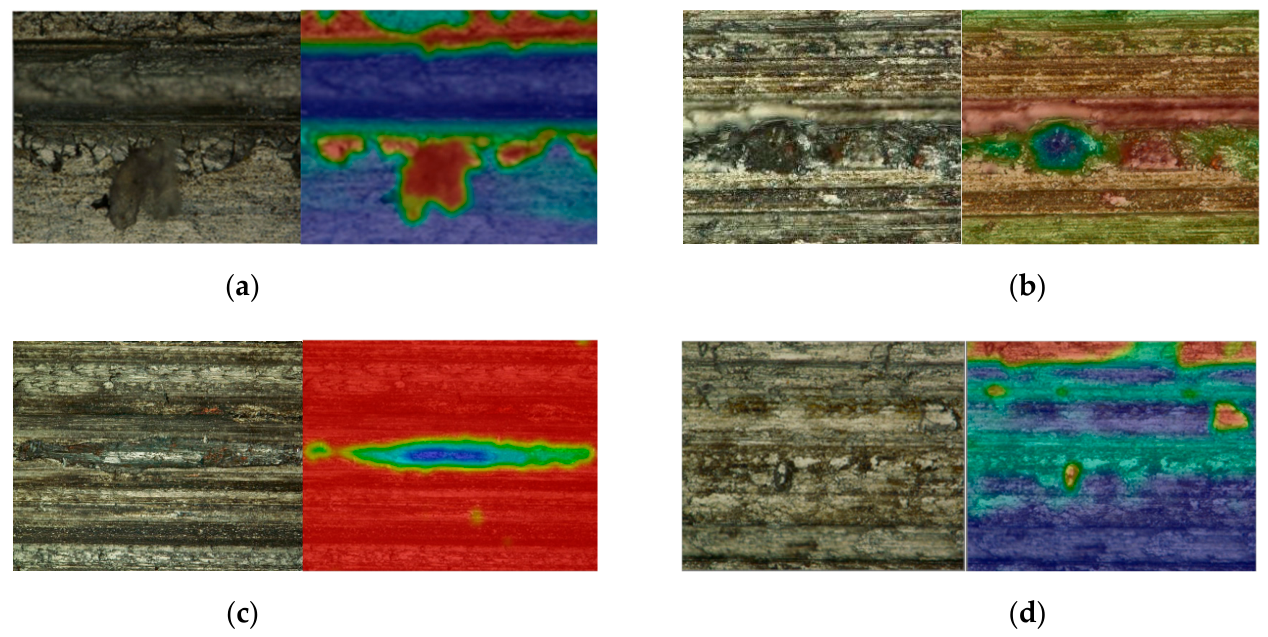
In the process of grinding SiCp/Al, grinding wheel wear, crushing wear, etc., the aluminum matrix undergoes plastic deformation, SiC particles undergo brittle deformation, and combined deformation occurs under grinding heat and grinding forces in different directions. The surface morphology of the specimens has various defects, some of which are shown in
Figure 5. The diamond abrasive tip is located in different positions of SiC particles, and has different degrees of brittle deformation, such as micro-crushing, fracture, crushing and falling off of SiC particles; the aluminum matrix has different plastic deformation under different conditions. The grinding heat generated during processing causes the aluminum matrix to melt and form the residual surface of molten slag. The surface temperature drops sharply and micro-cracks appear. The abrasive particles of the grinding wheel move across the aluminum matrix to create grooves.
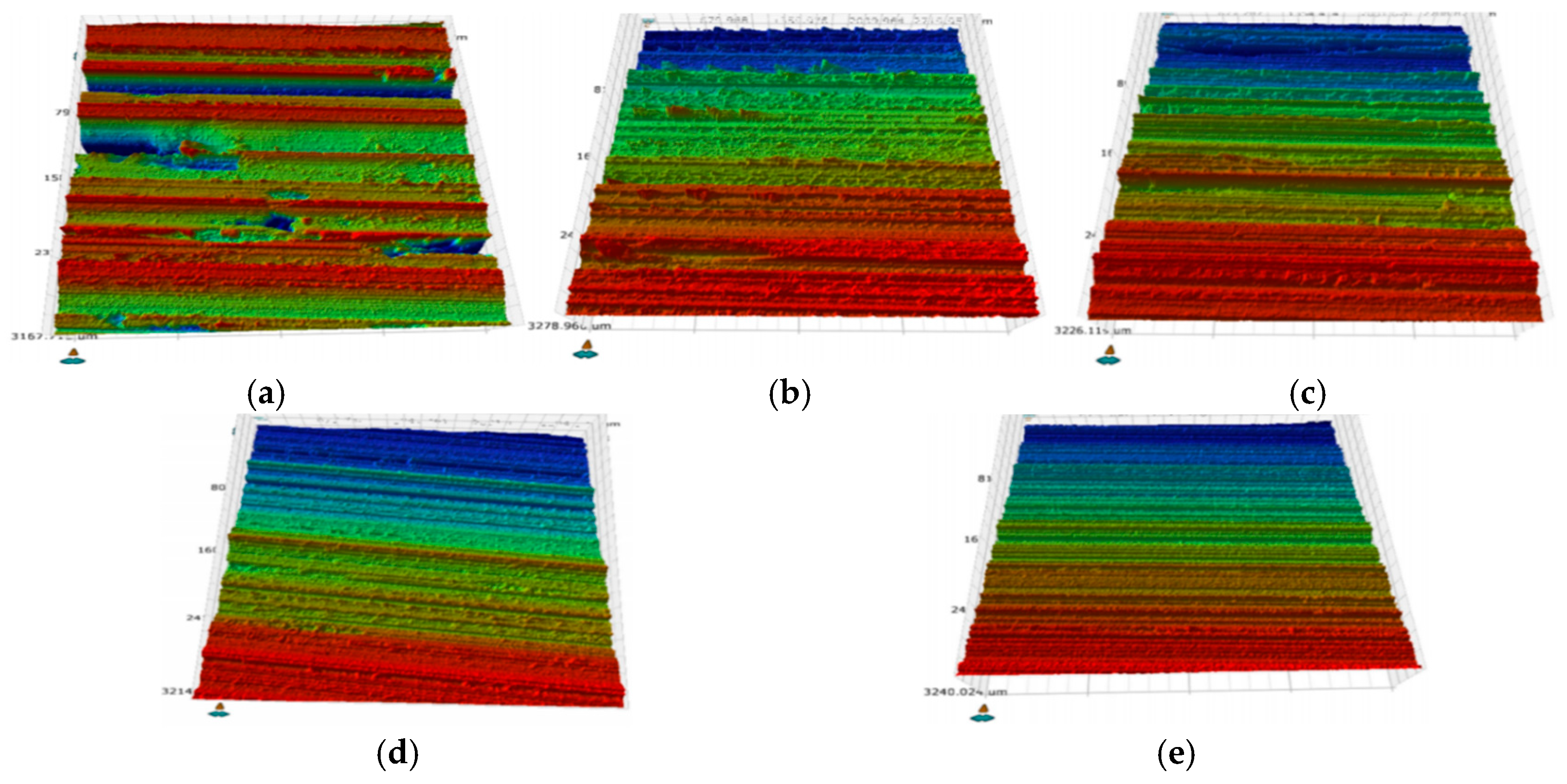
The SiCp/Al grinding surface is formed under the interaction of diamond grinding particles, the aluminum matrix and SiC particles. The size of the grinding particles directly affects the surface morphology, and the grinding particles of different grinding wheel numbers have different effects on the surface. The results of the influence of different grinding numbers on SiCp/Al grinding surface are shown in
Figure 6.
In
Figure 6a, with a 60# grinding wheel, the larger diameter diamond abrasives primarily perform cutting with some sliding. This results in significant irregular pits on the surface due to the pulling out of SiC particles. In
Figure 6b–d, with the grinding wheel 120#–240#, the thinner the grinding, the cutting and shearing actions become less pronounced, while the effect of the resin binder begins to enhance. This leads to a flattening of peaks and valleys, with grinding and groove marks becoming more evident. In
Figure 6e (320# grinding wheel), the surface is mainly treated by slip brush, mainly resin binder sliding across the aluminum matrix. On the surface, clear scratches are visible. As the number of the grinding wheel increases (the finer the diamond grinding grain), the defective volume and the quantity of the surface of the test piece decreases, the grinding grain scratch becomes obvious, and the surface morphology improves, so the number of the grinding wheel significantly affects the surface morphology of SiCp/Al.
4.2. Three-Dimensional Roughness Parameter
4.2.1. Influence of Spindle Speed on 3D Parameters of SiCp/Al Surface Under Different Wheel Counts
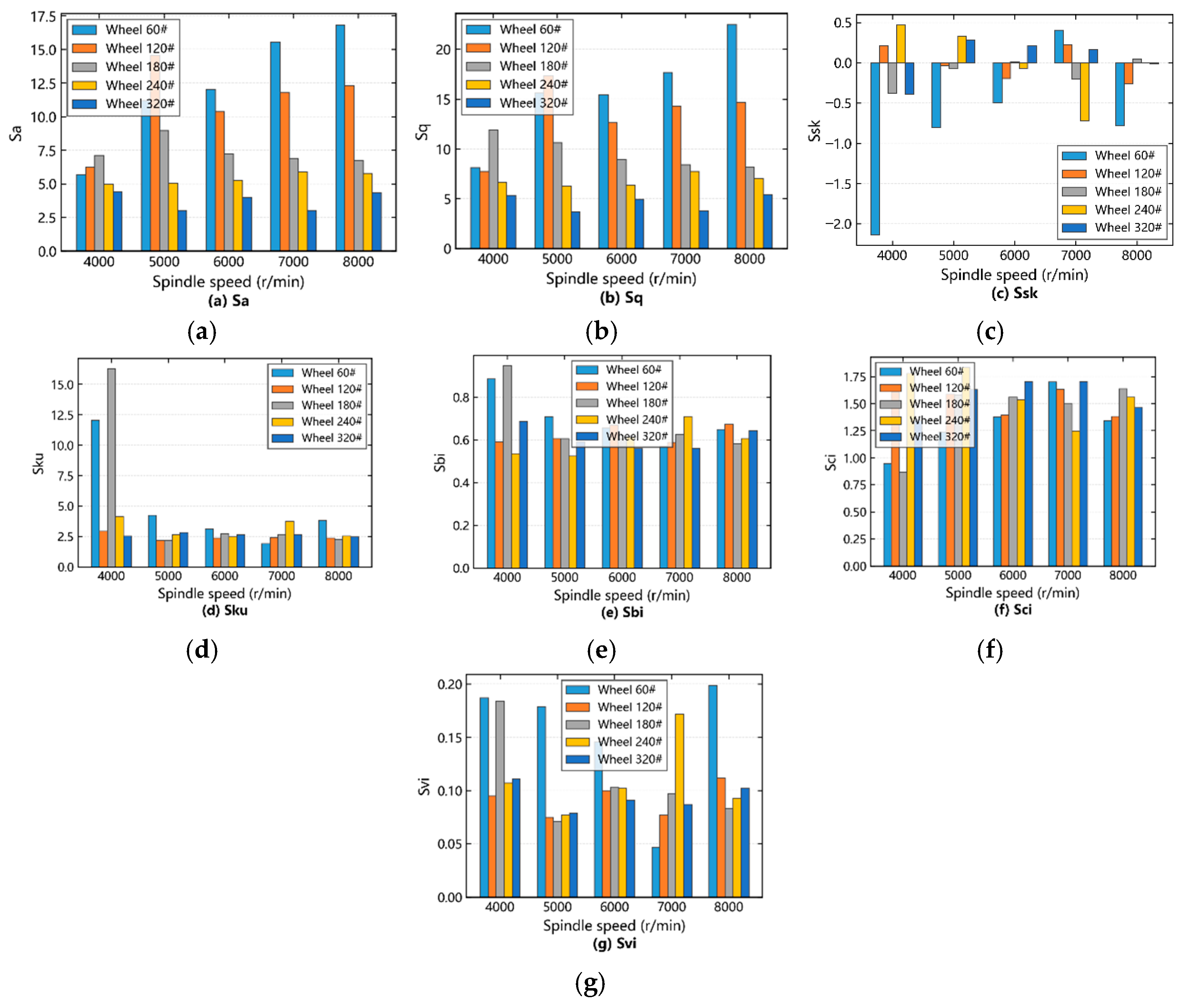
Using the 3D data of SiCp/Al surfaces, the change rules of 3D roughness parameters under different grinding process parameters are analyzed. In the above section, the grinding wheel number is an important factor obviously affecting the surface morphology, and the influence of the grinding parameters on 3D parameters under different grinding wheel numbers is analyzed from the numerical perspective. First, the influence of spindle speed on SiCp/Al surface amplitude and functional parameters under different numbers of grinding wheels was analyzed, as shown in
Figure 7.
By analyzing the influence of different grinding wheel grits on the SiCp/Al surface amplitude parameters, (refer to the gray, purple, blue, orange, and green rectangles in
Figure 7a–d), it can be observed that
Sa and
Sq tend to decrease with increasing grinding wheel grit size, and the functional characteristics of the surface are negatively correlated with
Sa and
Sq. The flatter the surface of the specimen is, the better the functional characteristics are, and the better the surface quality is. The distance between
Ssk and 0 becomes smaller,
Sku moves around 3, the surface height is symmetrically distributed, the sharp parts coexist, and the surface quality improves.
The influence of different grinding wheel counts on SiCp/Al surface functional parameters was analyzed. The gray, purple, blue, orange and green rectangles in
Figure 7e–g were observed. As the number of grinding wheel counts increased, the influence of grinding wheel counts on functional parameters (
Sbi and
Sci) was less obvious than that of amplitude parameters (
Sa and
Sq). With the increase of wheel mesh number, the
Sbi part increased, the
Sci part decreased, the surface support was enhanced, the corrosion was not easy, the surface quality was better, the
Svi range was 0.05–0.2, the oil storage performance was good, and the surface height of the specimen was in line with the normal distribution of Gaussian surfaces. Although the degree of change of
Ssk,
Sku,
Svi also changes with the grinding process parameters, the value is generally changed around 0, 3, 0.11. According to the definition, it is necessary to have a certain understanding of the surface of its numerical characterization, and then there is no need to discuss further the change law of
Ssk,
Sku,
Svi.
The influence of spindle speed on SiCp/Al surface functional parameters was analyzed. In
Figure 7e,f, gray and green rectangles are observed when the grinding wheel was 60# and 320#. When the spindle speed was 4000–7000 r/min, the motion path of abrasive particles became shorter, the surface had large grooves along the feed direction,
Sbi decreased,
Sci increased, and the surface quality deteriorated. When the spindle speed is 7000–8000 r/min, the abrasive motion trajectory becomes longer, the ironing effect on the surface is enhanced, the
Sbi is increased, the
Sci is reduced, and the surface quality is improved. When the grinding wheel is 120#, the purple rectangle is observed. When the spindle speed is 4000–6000 r/min and 7000–8000 r/min,
Sbi increases,
Sci decreases, and the surface quality improves. When the spindle speed is 6000–7000 r/min,
Sbi decreases,
Sci increases, and surface quality deteriorates. When the spindle speed is 4000–5000 r/min and 7000–8000 r/min,
Sbi decreases,
Sci increases, and surface quality deteriorates. When the spindle speed is 5000–7000 r/min,
Sbi increases,
Sci decreases, and surface quality improves.
To physically explain the observed, and in some cases fluctuating, trends of Sbi and Sci as a function of spindle speed, a consistent physical model based on the competition between ‘SiC brittle pull-out’ and the ‘thermal-plastic ironing effect’ is proposed. The parameter Sbi characterizes the surface bearing capacity (flattened peaks), while Sci represents the core void volume for fluid retention (deep pits and grooves). At low-to-medium spindle speeds (e.g., 4000–7000 r/min for 60# and 320# wheels), the increasing kinetic impact of abrasives exacerbates the brittle fracture and pull-out of SiC particles without generating sufficient heat to melt the aluminum matrix. The dragged SiC fragments create deep scratches, which increases the core void volume (Sci increases) and reduces the flat bearing area (Sbi decreases). However, as the spindle speed enters the high-speed regime (7000–8000 r/min), extreme localized grinding heat is generated, causing the soft aluminum matrix to undergo severe thermal-plastic softening. In this regime, the ‘ironing and smearing effect’ dominates. The abrasive grains and the wheel bond iron the softened aluminum, smearing it over the previously formed SiC pull-out pits and grooves. This thermal-plastic smearing effectively fills the surface voids (Sci decreases) and flattens the profile peaks, drastically improving the load-bearing capacity (Sbi increases). The fluctuating trend observed with the 120# wheel (at 6000–7000 r/min) reflects a transitional zone where the intermediate abrasive size creates a highly sensitive competition between these two material removal mechanisms.
4.2.2. Effect of Grinding Depth on 3D Parameters of SiCp/Al Surface Under Different Wheel Counts
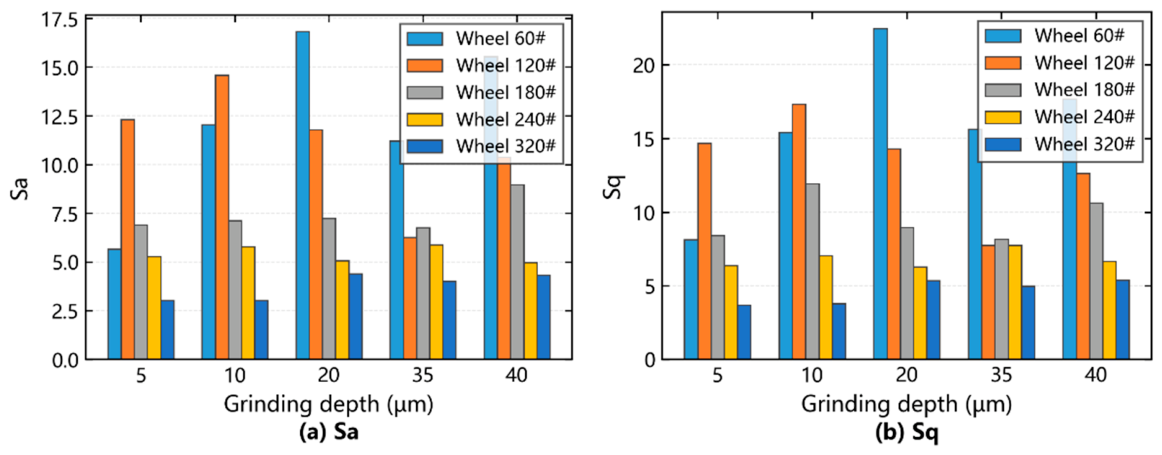
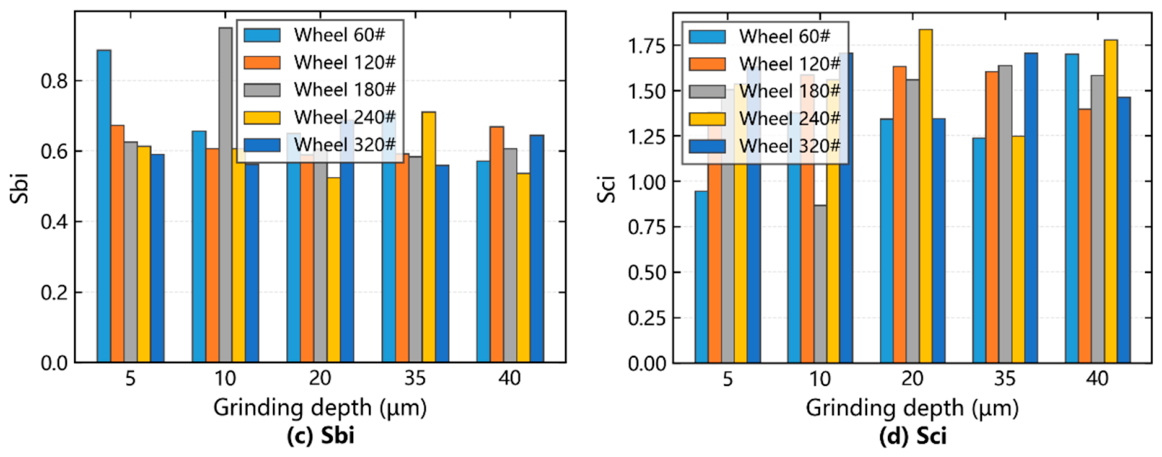
The variation rules of grinding depth on amplitude and functional parameters under different wheel counts were analyzed, as shown in
Figure 8.
The influence of grinding depth on SiCp/Al surface amplitude parameters was analyzed. In
Figure 8a,b, the gray rectangle was observed when the grinding wheel was 60#. When the grinding depth was 5 μm, 10 μm and 20 μm, the SiC particles changed from micro-crushing to brittle fracture and finally to complete brittle removal, and the surface quality of
Sa and
Sq deteriorated during the increasing stage. The average size of SiC particles was 35 μm. When the grinding depth is 35 μm, more SiC particles are pulled out,
Sa and
Sq decrease, and the surface quality improves. When the grinding depth is 40 μm, the SiC particles are micro-broken, the surface quality deteriorates, and the
Sa and
Sq increase, but they are not higher than the
Sa and
Sq at the grinding depth of 20 μm. When the grinding wheel is 120#, observe the purple rectangle. When the grinding depth is 5–10 μm, SiC particles are broken more,
Sa and
Sq increase, and the surface quality deteriorates. When the grinding depth is 10–35 μm, SiC particles are mostly broken and pulled out,
Sa and
Sq decrease, and the surface quality improves. When the grinding depth is 35–40 μm, the amplitude parameter changes the same as the grinding wheel 60#. When the grinding wheel is 180#–320#, the blue, orange and green rectangles are observed, the abrasive grit becomes finer, the surface is mainly scratched, the SiC particles are cut more, and the amplitude parameter changes are small.
The influence of grinding depth on SiCp/Al surface functional parameters was analyzed. In
Figure 8c,d, the gray rectangle was observed when the grinding wheel was 60#. When the grinding depth was 5–10 μm and 35–40 μm, SiC particles were broken more,
Sbi decreased,
Sci increased, and surface quality deteriorated. When the grinding depth is 10–35 μm,
Sbi increases,
Sci decreases, and surface quality improves. When the grinding wheel is 120#, observe the purple rectangle. When the grinding depth is 5–20 μm,
Sbi decreases,
Sci increases, and the surface quality deteriorates, but when the grinding depth is 20–40 μm,
Sbi increases,
Sci decreases, and surface quality improves. When the grinding wheel is 180#, observe the blue rectangle. When the grinding depth is 5–10 μm and 35–40 μm,
Sbi increases,
Sci decreases, and the surface quality improves, but when the grinding depth is 10–35 μm,
Sbi decreases,
Sci increases, and surface quality deteriorates. When the grinding wheel is 240#, the orange rectangle is observed. When the grinding depth is 5–20 μm and 35–40 μm,
Sbi decreases,
Sci increases, and surface quality deteriorates, butwhen the grinding depth is 20–35 μm,
Sbi increases,
Sci decreases, and surface quality improves. When the grinding wheel is 320#, the green rectangle is observed. When the grinding depth is 5–10 μm and 20–35 μm,
Sbi decreases,
Sci increases, and surface quality deteriorates, but when the grinding depth is 10–20 μm and 35–40 μm,
Sbi increases,
Sci decreases, and surface quality improves.
4.2.3. Influence of Feed Speed on 3D Parameters of SiCp/Al Surface Under Different Wheel Counts
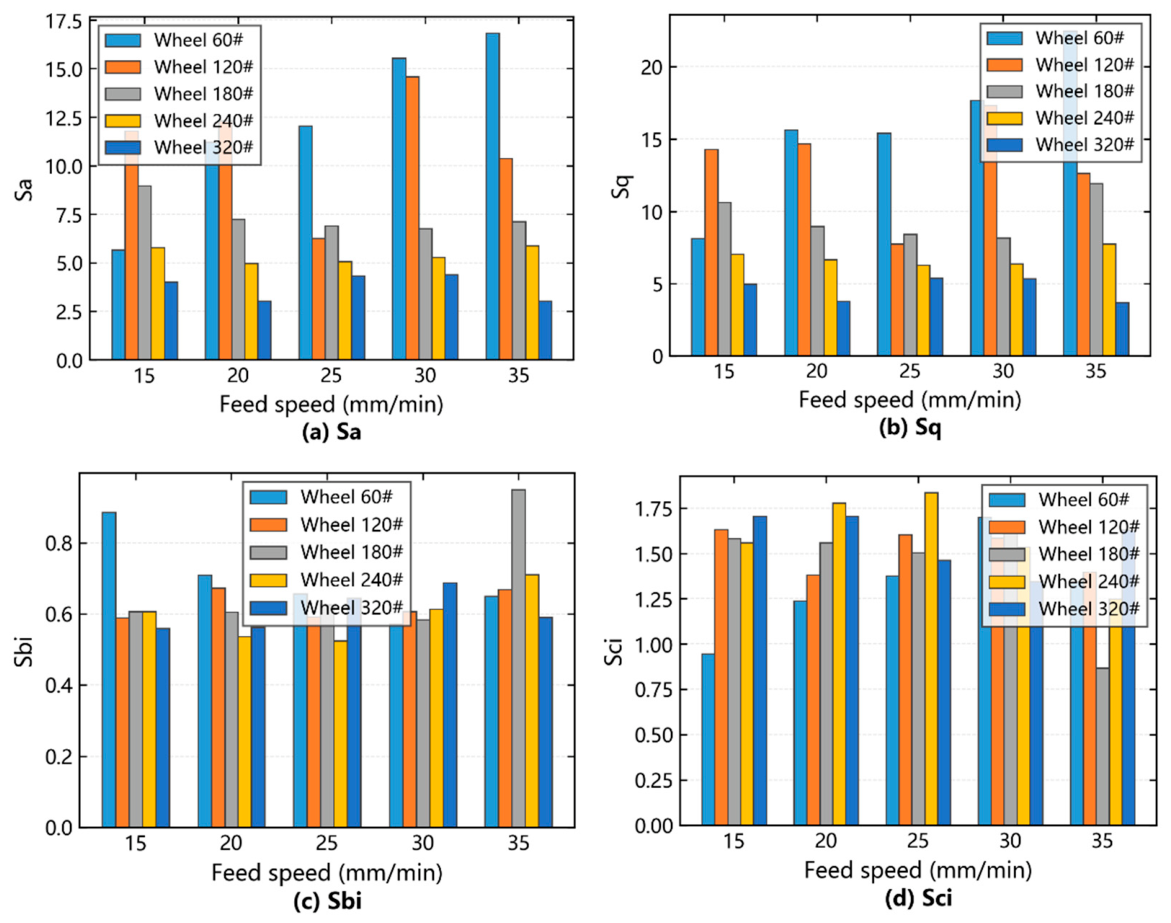
The variations in amplitude and functional parameters of the SiCp/Al surface due to feed speed under different grinding wheel grits were analyzed, as shown in
Figure 9.
The influence of feed speed on SiCp/Al surface amplitude parameters was analyzed. In
Figure 9a,b, when the grinding wheel was 60#, the gray rectangle was observed. When the feed speed was 15–20 mm/min and 25–30 mm/min, the interaction between abrasive particles was small, the grooves were deep and wide,
Sa and
Sq were increased, and the surface quality was poor. Conversely, at feed speeds of 20–25 mm/min and 30–35 mm/min, the abrasive particles act on the surface for a long time, the tracks between different abrasive particles are superimposed, the surface grooves are shallow and narrow, the multi-fine network is convex peaks and pits,
Sa and
Sq decrease, and the surface quality is improved. When the grinding wheel is 120# processing, observe the purple rectangle. When the feed speed is 15–20 mm/min, the abrasive action time on SiC particles is short, SiC particles are broken more,
Sa and
Sq increase, and the surface quality is degraded. When the feed speed is 20–35 mm/min, multiple abrasive particles act on SiC particles, SiC particles are cut more,
Sa and
Sq decrease, and the surface quality improves. When the grinding wheel is 180#–320#, observe the blue, orange and green rectangles; the feed speed increases, and the amplitude parameter changes gradually decrease.
The influence of feed speed on SiCp/Al surface functional parameters was analyzed. In
Figure 9c,d, the gray rectangle was observed when the grinding wheel was 60#. When the feed speed was 15–20 mm/min and 25–30 mm/min, the interaction between abrasive particles was small,
Sbi decreased,
Sci increased, and the surface quality was poor. When the feed speed is 20–25 mm/min and 30–35 mm/min, the abrasive particles act on it for a longer time, the grooves on the machining surface are shallow and narrow, the
Sbi increases, the
Sci decreases, and the surface quality is better. When the grinding wheel is 120#, observe the purple rectangle; when the feed speed is 15–25 mm/min,
Sbi increases,
Sci decreases, and the surface quality improves, but when the feed speed is 25–35 mm/min,
Sbi decreases,
Sci increases, and surface quality deteriorates. When the grinding wheel is 180# and 240#, observe the blue and orange rectangles. When the feed speed is 15–20 mm/min, when the grinding wheel is 180#,
Sbi decreases,
Sci increases, and the surface quality deteriorates, while for the 240# wheel at feed speeds of 20–30 mm/min,
Sbi increases,
Sci decreases, and surface quality improves. When the feed speed is 30–35 mm/min,
Sbi decreases,
Sci increases, and surface quality deteriorates. With a grinding wheel of 320#, observe the green rectangle; when the feed speed is 15–20 mm/min and 25–35 mm/min,
Sbi increases,
Sci decreases, and the surface quality is better, but when the feed speed is 20–25 mm/min,
Sbi decreases,
Sci increases, and surface quality deteriorates.
4.3. Effects of Different Grinding Processes on 3D Parameters
From the numerical point of view, the influence of each grinding process parameter on the three-dimensional parameters under different grinding wheel counts was directly analyzed. Subsequently, the influence weight of grinding process parameters on the three-dimensional parameters was analyzed based on the range analysis; on the other hand, the optimal combination of factors corresponding to the comprehensive index of three-dimensional parameters was found based on factor analysis, and the influence of different grinding processes on the three-dimensional roughness parameters was studied and analyzed.
4.3.1. The Influence Weight of Grinding Process Parameters on 3D Parameters
The range analysis is the most commonly used method to analyze orthogonal test data, where the range value indicates the degree of influence of each factor on the test index, and can be used to judge the primary and secondary order of processing factors. As can be seen from the analysis content in the above section, it is not necessary to conduct in-depth analysis on parameters
Ssk,
Sku and
Svi, and the variation range of parameters
Sbi and
Sci is too small. Therefore, this paper analyzes the influence weight index w (weight) of grinding process parameters on amplitude parameters
Sa and
Sq based on the quantitative index of range analysis, namely:
where
is the influence weight of factor i on the three-dimensional parameter index in the experiment of group n; n is the number of factors; and
is the average value of test data under the level j factor in group n.
According to the orthogonal experiment scheme, the weights of various factors and levels on the amplitude parameters
Sa and
Sq in each group of tests were calculated. The results showed that although the grinding process parameters had slightly different w of the amplitude parameters
Sa and
Sq at different levels, the w of
Sa and
Sq were very similar. In addition, because the grinding wheel counts are significantly different from other process parameters in terms of amplitude parameters
Sa and
Sq w at different levels, the mean values of each grinding process parameter to amplitude parameter
Sa under different grinding wheel counts are calculated, as shown in
Figure 10.
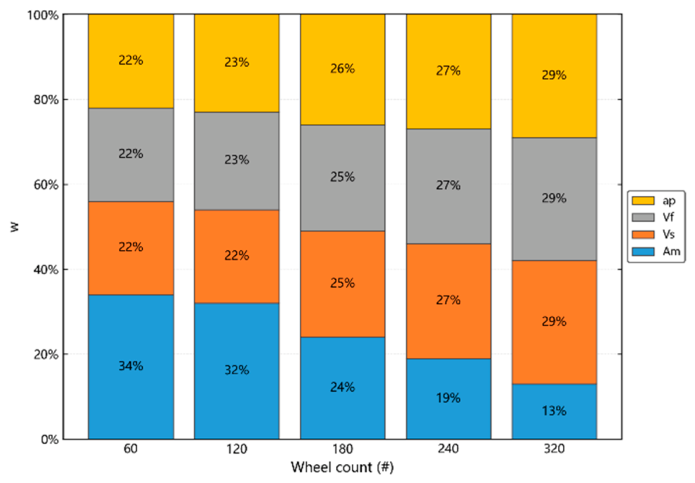
With the increase of the number of grinding wheels, observe the pink rectangle in
Figure 10, and the number of grinding wheels decreases from 34% to 13% of the amplitude parameter
Sa; observe the yellow, green and blue rectangles in
Figure 10, and the spindle speed, feed speed and grinding depth gradually increase from the initial 22% to 29%. When the grinding wheel is 60# and 120#, compared with other grinding process parameters, the number of grinding wheel eyes of the pink rectangle has the largest effect on the amplitude parameter
Sa, and when the grinding wheel is 180#, 240# and 320#, the number of grinding wheel eyes has the smallest effect on the amplitude parameter. When the grinding wheel is 180#, the grinding process parameters are more uniform to the amplitude parameters, and the value is about 25%.
4.3.2. Comprehensive Index of 3D Parameters
Each 3D parameter has different meanings, and the optimal combination of processing parameters for each group of orthogonal tests is also different. A comprehensive parameter index is needed to characterize each 3D parameter. The factor analysis method extracts objective weights based on intrinsic information enrichment. The calculated Kaiser–Meyer–Olkin (KMO) and Bartlett’s test results are listed in
Table 3, and the extracted component weights after rotation are presented in
Table 4.
The comprehensive index (CI) physically acts as a holistic ‘surface integrity score’. In machining, individual 3D parameters often present multi-objective conflicts (e.g., minimizing amplitude
Sa might inadvertently degrade the functional fluid retention
Sci). The CI mathematically integrates these distinct amplitude and functional dimensions into a single scalar, allowing for the identification of a global optimal grinding state. To avoid subjective human bias, factor analysis was employed to objectively extract the weights (
Wi) based on intrinsic variance. As shown in
Table 3, the Kaiser–Meyer–Olkin (KMO) measure is 0.51. Although the KMO value is relatively low, it still satisfies the minimum acceptable threshold for factor analysis. It is a predictable and logical mathematical consequence of our rigorous experimental design. Specifically, the low KMO value reflects the fact that the 25 samples were generated via a highly uncorrelated L25 orthogonal array, and the selected 3D parameters were deliberately chosen to represent independent physical traits (minimizing redundant collinearity). Despite the inherently low common variance induced by this orthogonal design, the Bartlett’s test of sphericity remains statistically significant (
p < 0.05), validating that the correlation matrix is strictly adequate for extracting objective weights.
The 3D parameters of different attributes, orders of magnitude and units are processed with unified transformation methods and formulas, so that these indicators are in the same order, and these indicators are pulled to a unified baseline for comprehensive weighted evaluation operation. After processing the amplitude parameters (
Sa,
Sq,
Ssk,
Sku) and functional parameters (
Sbi,
Sci,
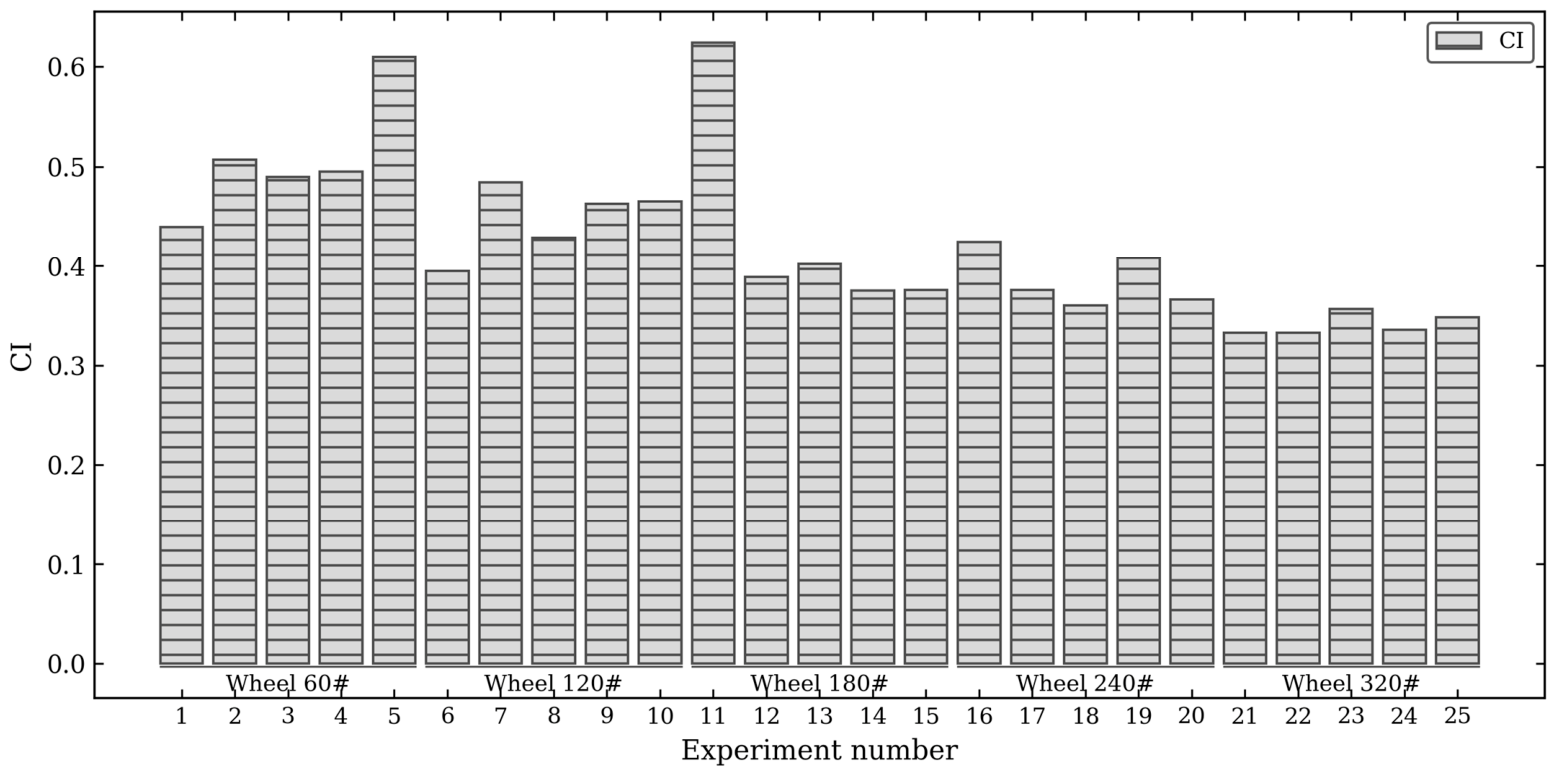
Svi), the 3D parameter comprehensive index CI is shown in Formula (2), and the results after calculation according to the formula are shown in
Figure 11.
where
is the i th three-dimensional parameter of the n group test,
and
are the minimum and maximum values of the i th three-dimensional parameter of the n group test, and Wi is the weight of the i th three-dimensional parameter in
Table 4.
According to the pink rectangle observed in
Figure 11, the larger the number of the wheel mesh, the better the surface quality. Meanwhile, the CI values corresponding to 120#, 240# and 320# of the wheel did not change much, and the surface quality of the specimen was relatively stable. The test number corresponding to the minimum CI in
Figure 12 is group 21, which is the combination of optimal grinding processing parameters: the number of grinding wheels is 320#, the spindle speed is 4000 r/min, the feed speed is 20 mm/min, and the grinding depth is 20 μm.
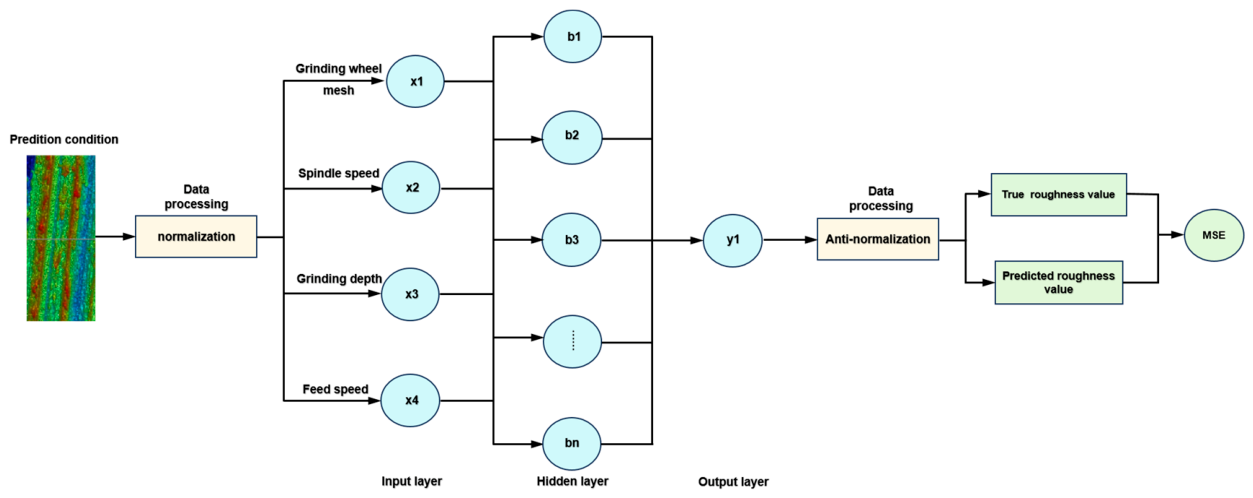
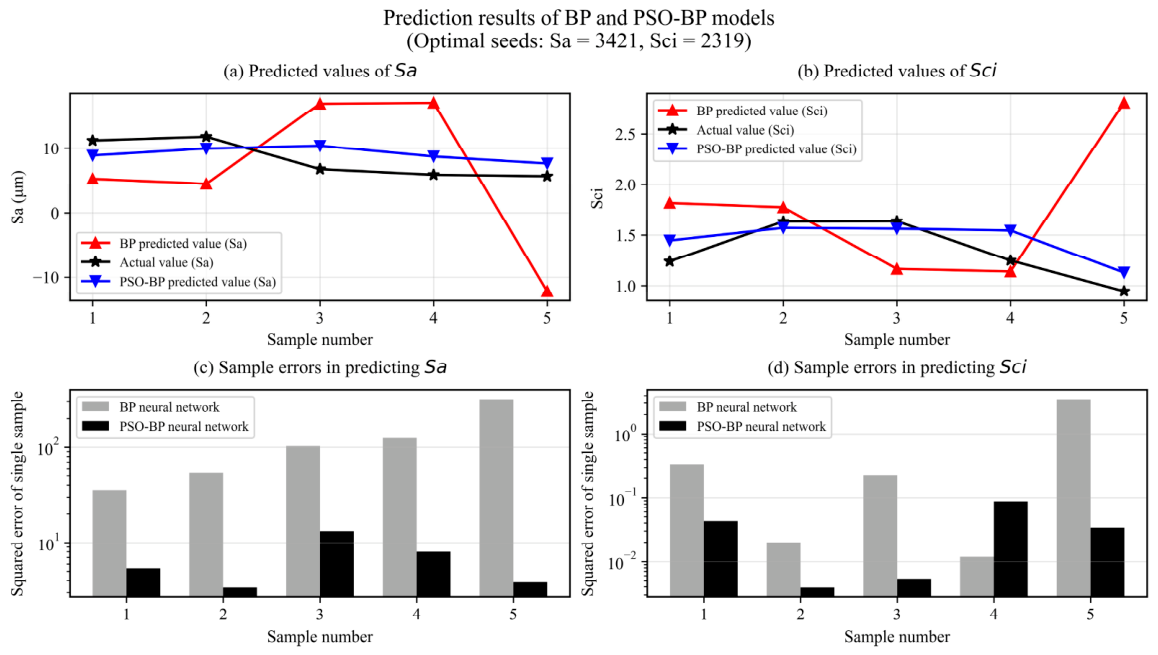
4.4. Analysis of Neural Network Prediction Results
The results of the 3D parameters under different grinding processes show that the variation of Sa in amplitude parameters is similar to Sq, and the values of Ssk and Sku are not suitable for prediction. The variation of Sbi in functional parameters is opposite to Sci, and the value of Svi is not suitable for prediction. The most commonly used three-dimensional parameter in previous studies is Sa, and there are many studies on the corrosive function of specimens, so the neural network is selected to predict the three-dimensional parameters Sa and Sci.
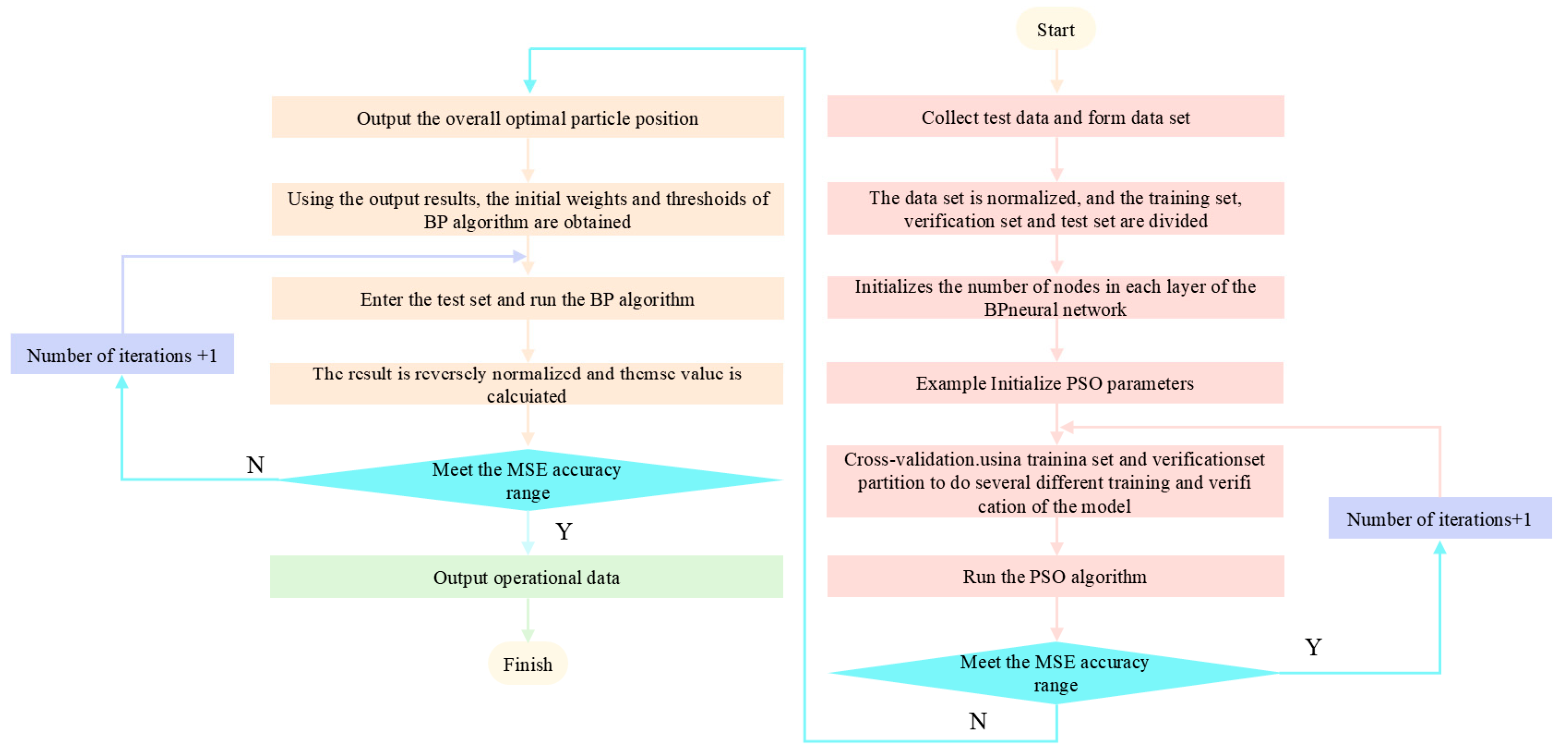
Because the grinding wheel grit size significantly influences the surface in other grinding processes, one dataset was randomly selected from each grinding wheel mesh number in five groups of test samples, and suitable model configurations were established after repeated training through the BP and PSO-BP neural network model training sample data. For example, the number of hidden nodes, the number of iterations, the learning rate, the activation function, the MSE accuracy range, etc., the predicted value, the true value and the MSE value of the three-dimensional parameters of the network model were obtained.
The BP and PSO-BP neural network models were trained to obtain the predicted values, true values and
MSE values of three-dimensional parameters
Sa and
Sci, as shown in
Figure 12.
It can be seen from
Figure 12 that the predictions of 3D roughness parameters
Sa and
Sci obtained by the PSO-BP model are significantly closer to the experimental values than those obtained by the BP network. As indicated by the marked regions in the figure, the mean squared error (MSE) of the PSO-BP network is drastically lower than that of the BP network.
The quantitative results show that the test MSE values of the BP network for Sa and Sci were 126.9568 and 0.8110, respectively. In contrast, the PSO-BP model reduces the MSE to 6.7657 (for Sa) and 0.0347 (for Sci), corresponding to error reductions of 94.7% and 95.7%.
The BP neural network establishes a nonlinear mapping between grinding parameters (wheel mesh size Am, spindle speed Vs, feed speed Vf, grinding depth ap) and 3D roughness parameters Sa and Sci. However, random initialization of weights and biases tends to cause large fluctuations and poor generalization.
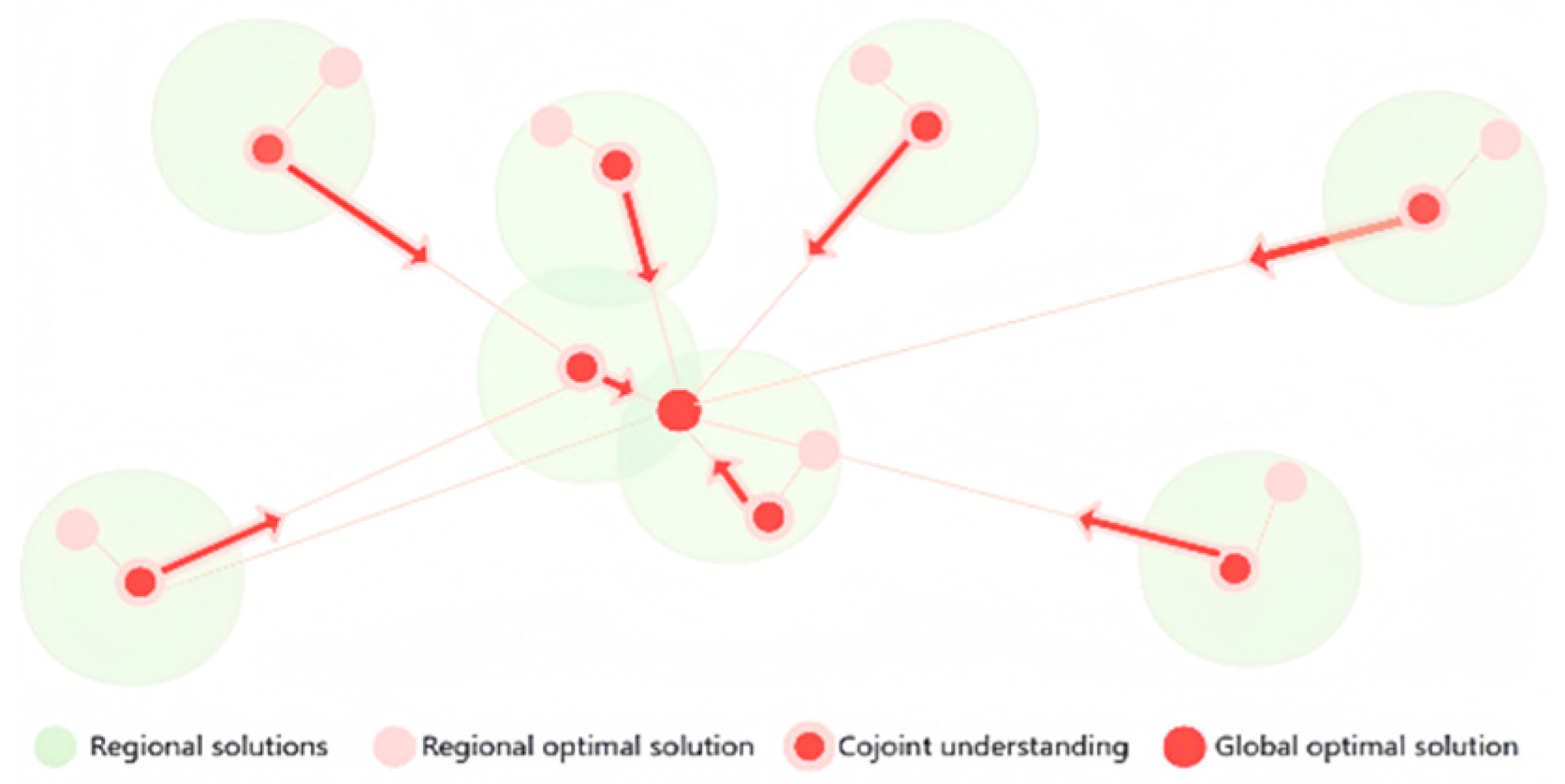
The PSO algorithm optimizes the initial weights and biases of the BP network to avoid local optima and enhance stability. With optimized initial parameters (optimal random seeds: 3421 for Sa prediction, 2319 for Sci prediction), the PSO-BP model achieves more robust and accurate prediction, which effectively suppresses the interference of random factors in the grinding process. Furthermore, because conducting multiple physical repetitions for all 25 severe grinding runs is economically and practically prohibitive due to extreme diamond tool wear when machining SiCp/Al, the model-based prediction uncertainty was quantified using the out-of-sample root mean square error (RMSE) derived from the blind test set. The RMSE serves as an unbiased statistical estimator of the measurement and process noise. For the identified optimal parameter combination, the 1 prediction uncertainty ranges are established at approximately for the amplitude parameter Sa (derived from MSE = 6.7657) and for the functional parameter Sci (derived from MSE = 0.0347). These narrowly bounded uncertainty intervals confirm that the established optimal grinding state is highly stable against the inherent stochasticity of SiC particle pull-out.