
Wood-Waste-Based Artificial Aggregates for Extrusion 3D-Printed Cementitious Composites: Hydration, Printability, and Mechanical Performance
 , and
, and 
Abstract
1. Introduction
2. Materials and Methods
2.1. Binders
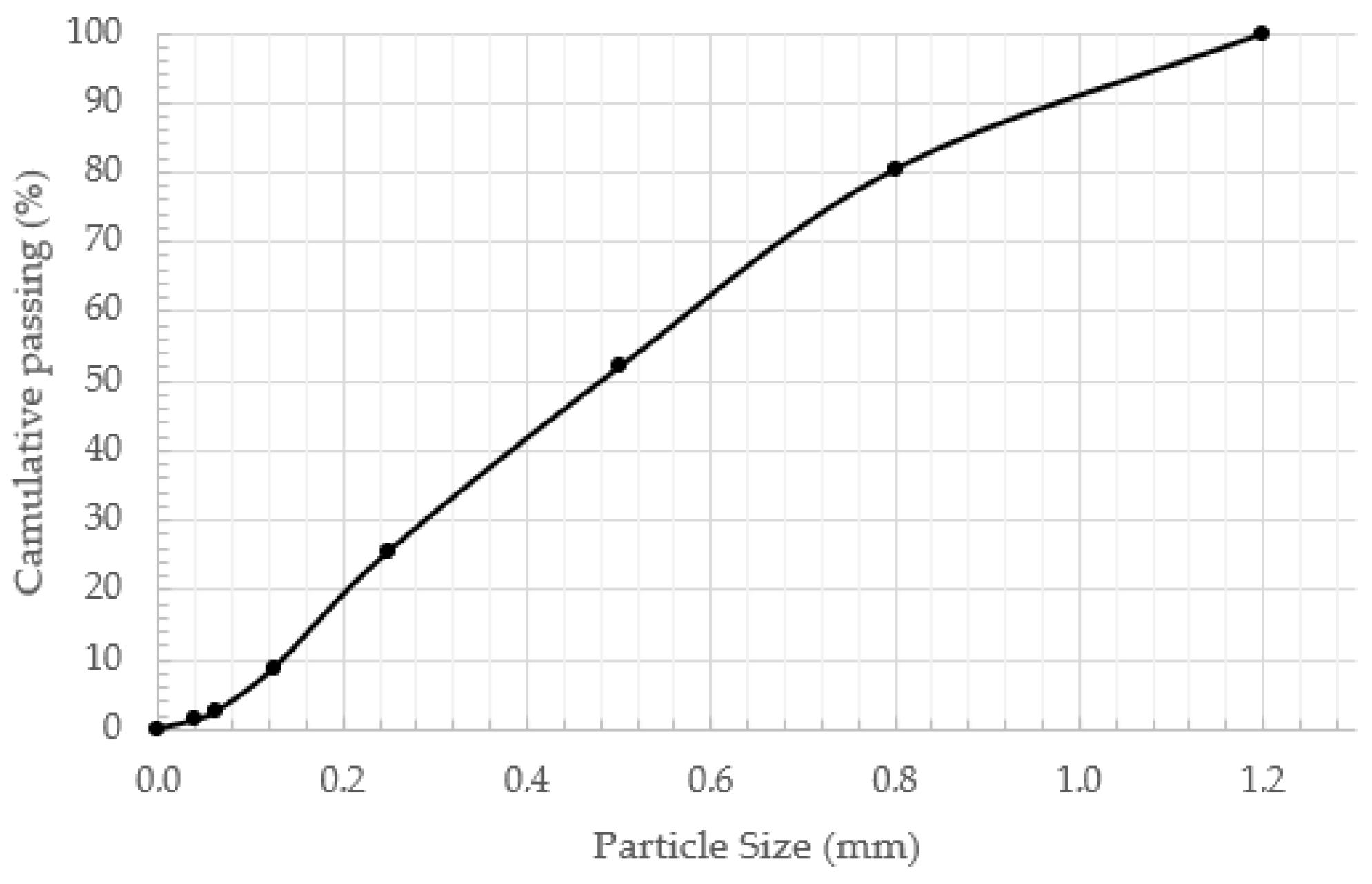
2.2. Aggregate and Admixture
2.3. Test Methods
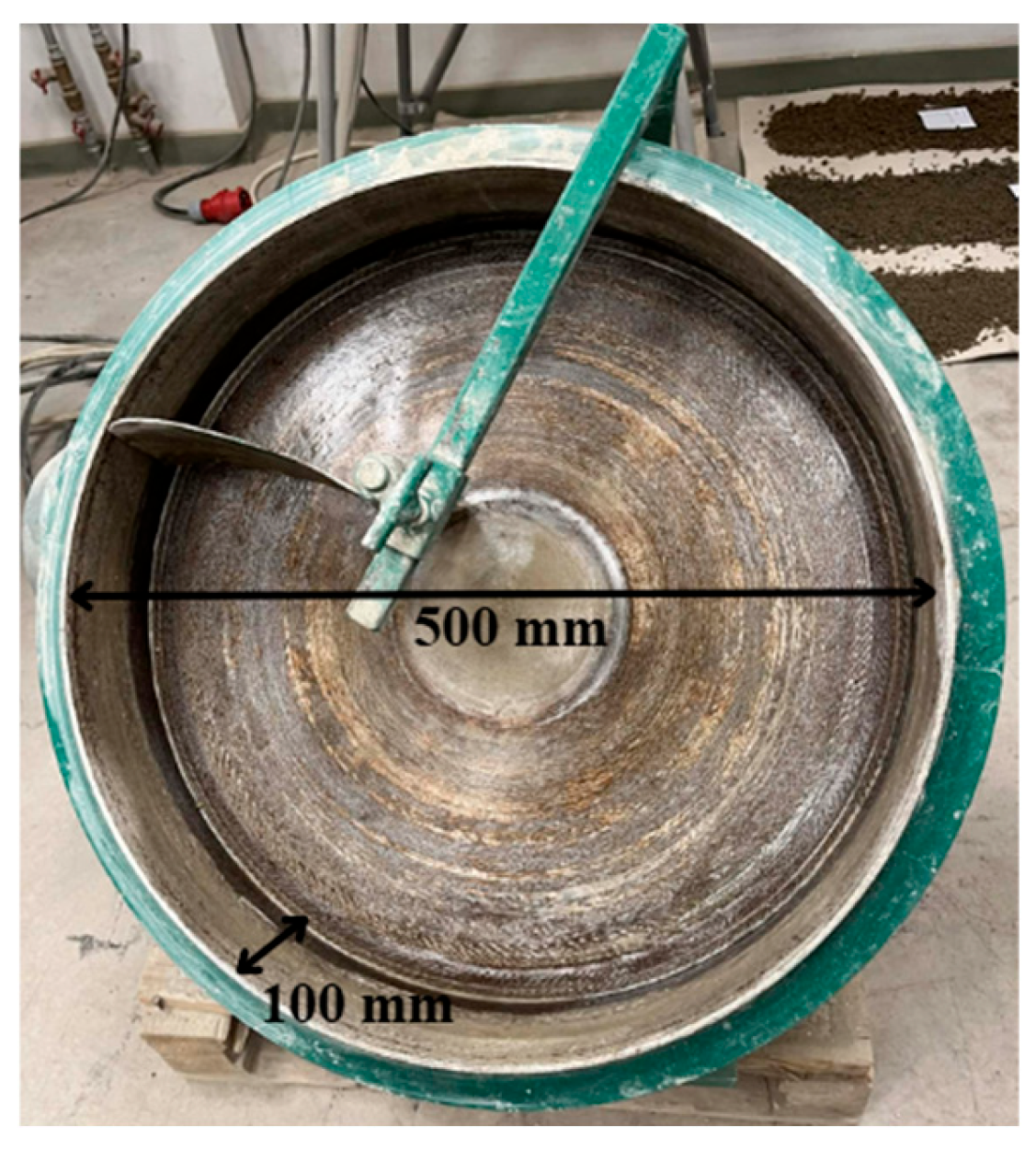
2.3.1. Granulation
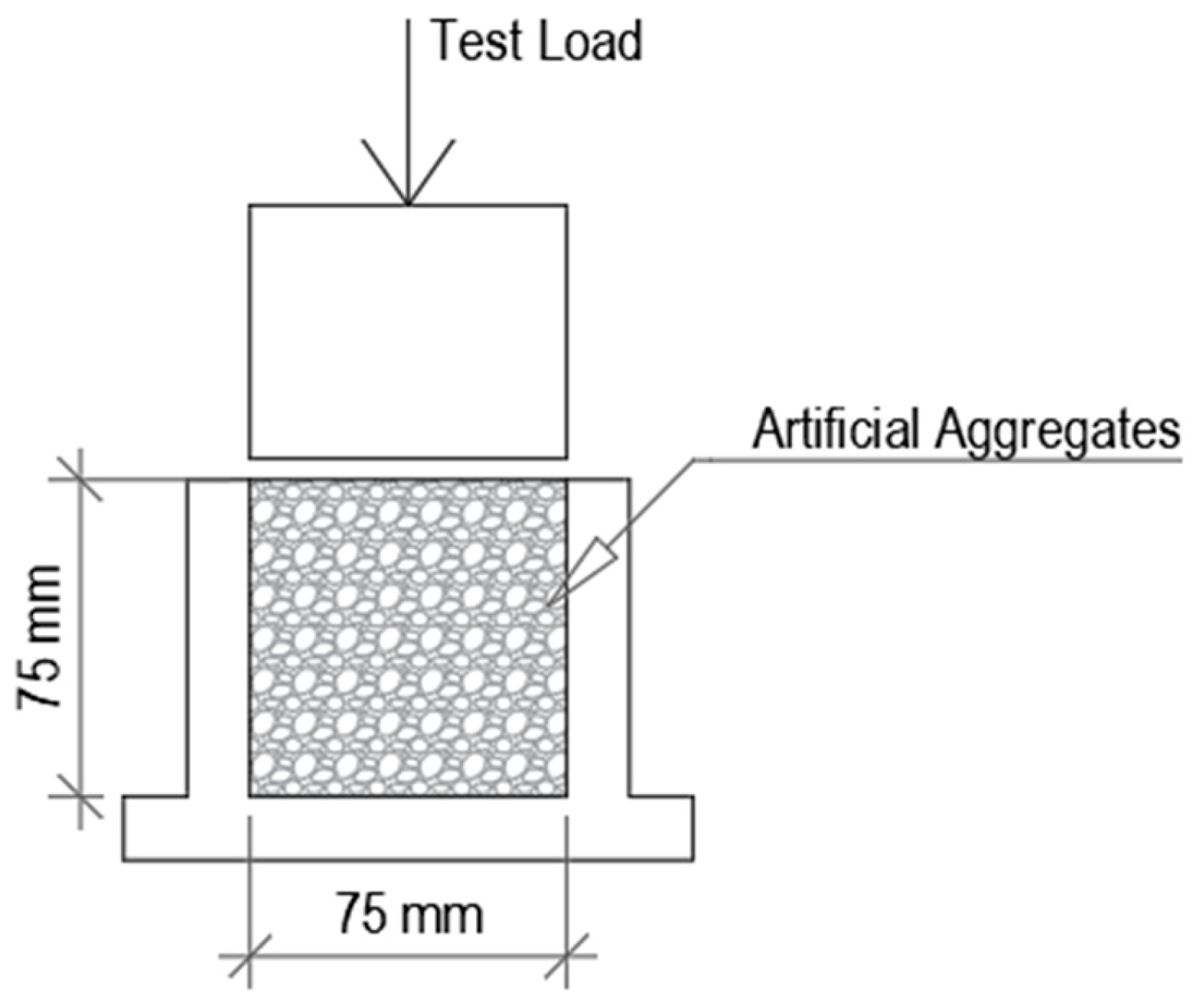
2.3.2. Artificial Aggregate Crushing Strength
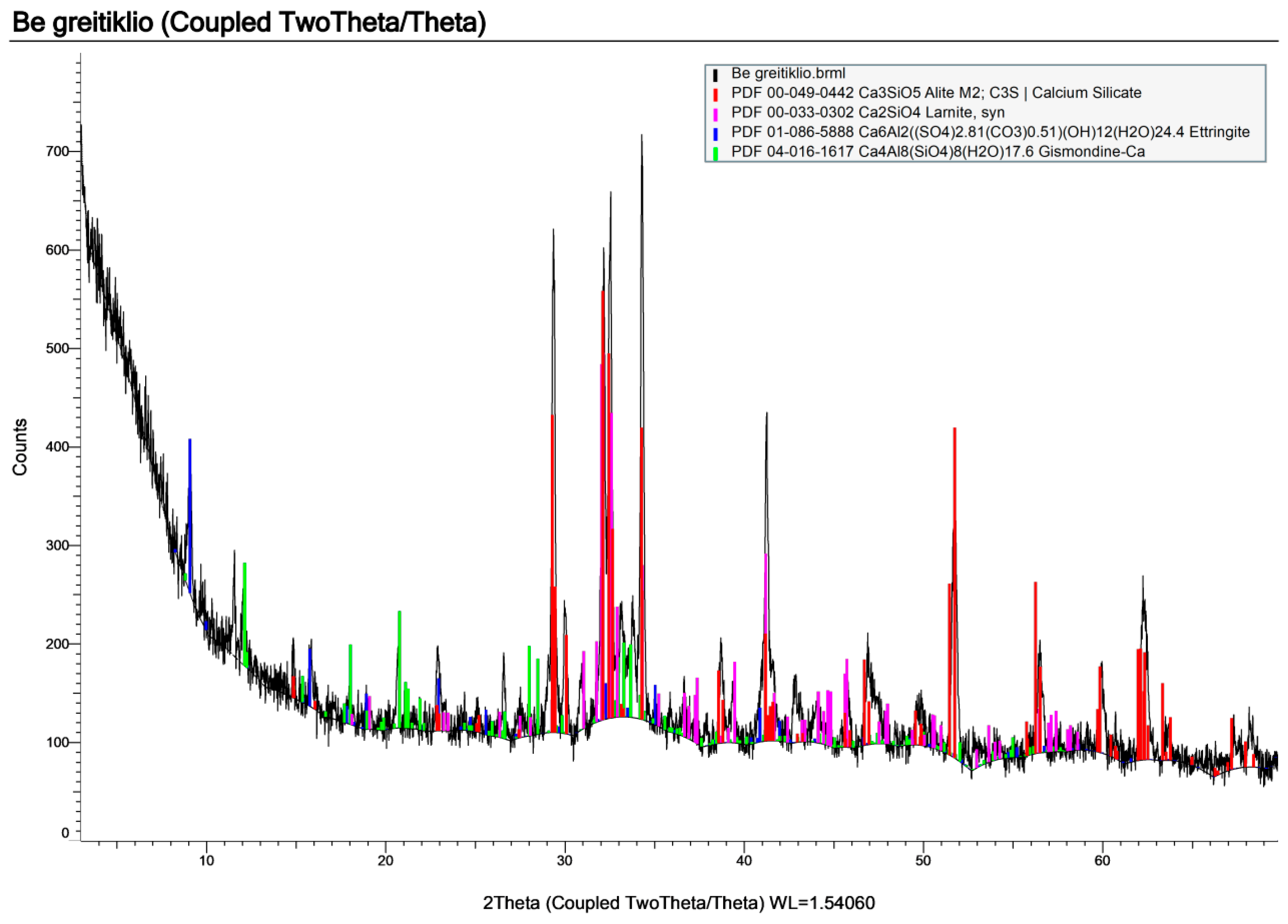
2.3.3. XRD Test
2.3.4. TGA/DSC Test
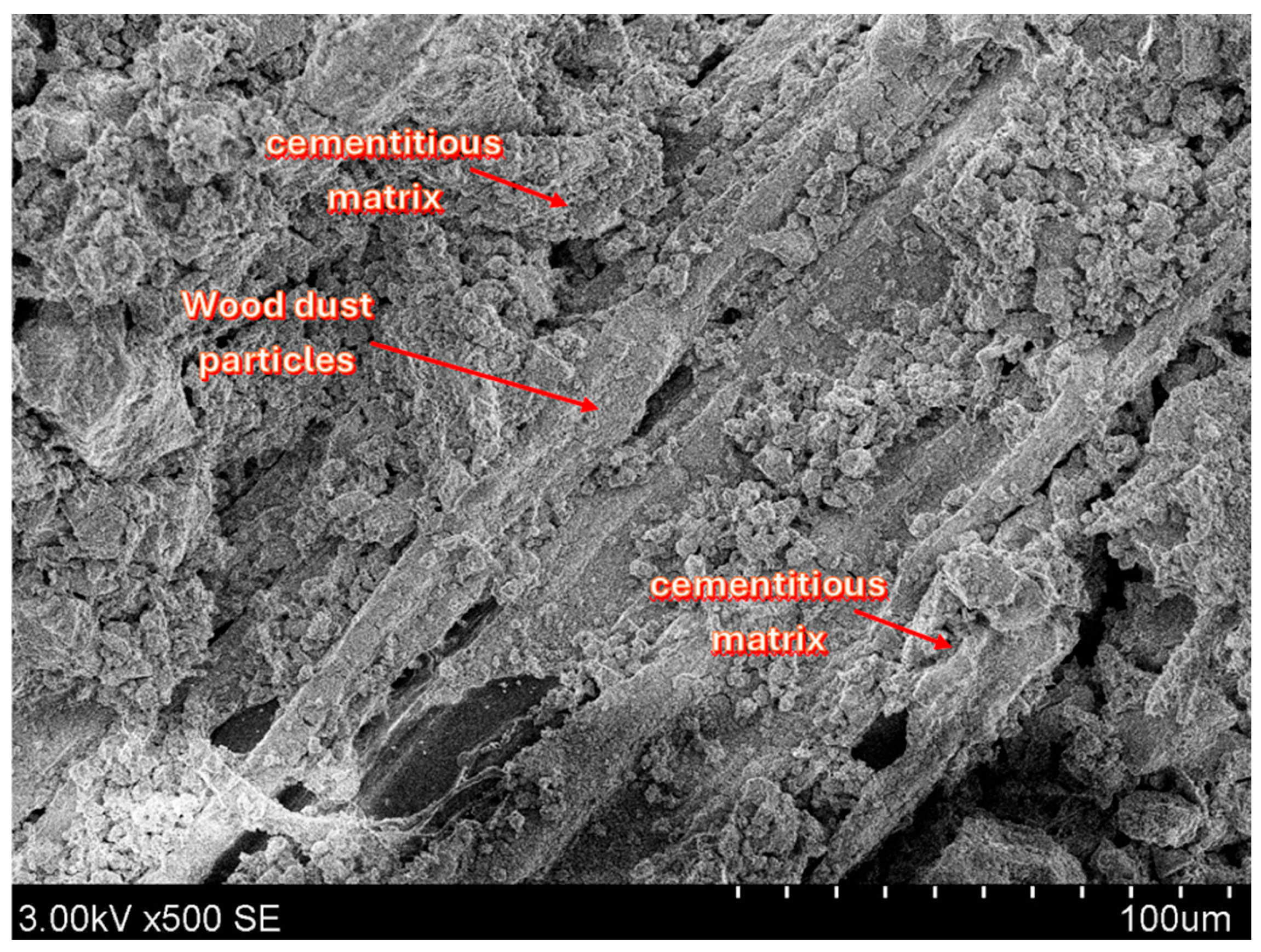
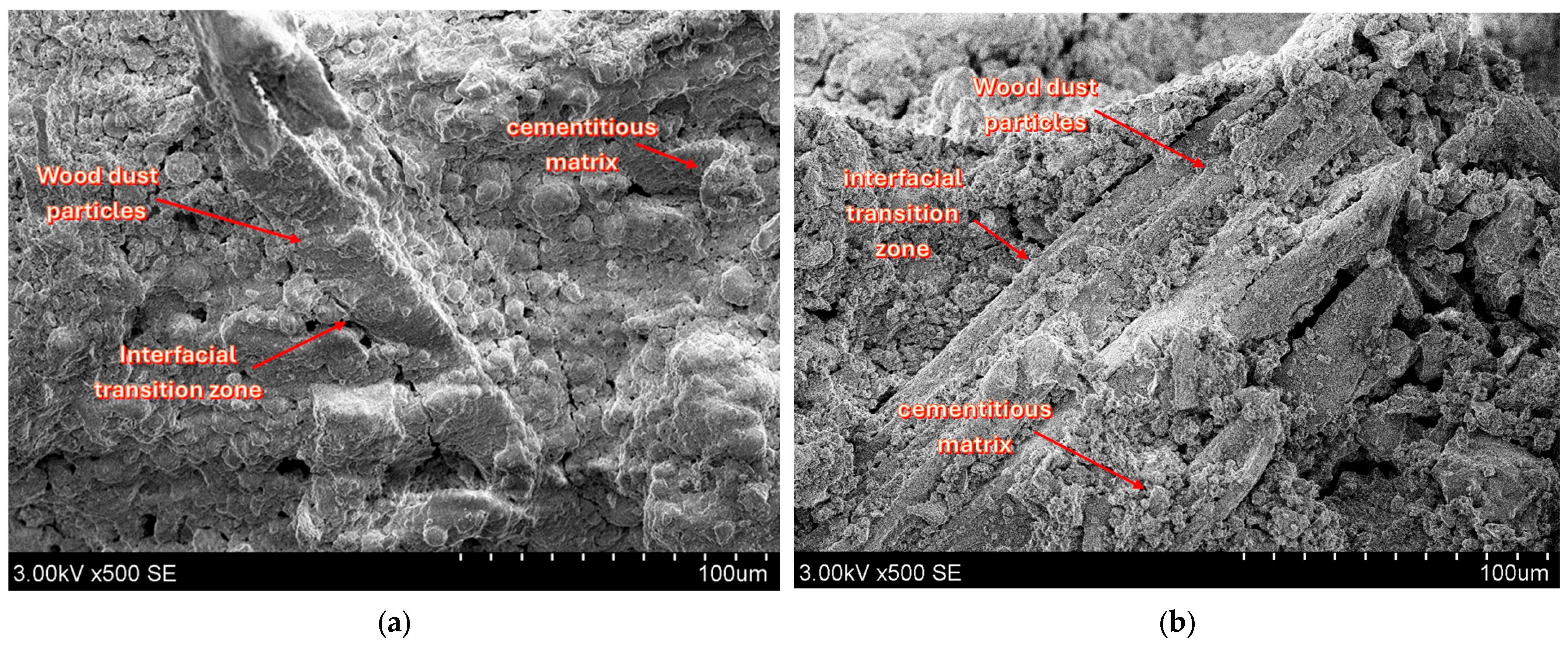
2.3.5. SEM Test
2.3.6. Tests for Fresh State Composition
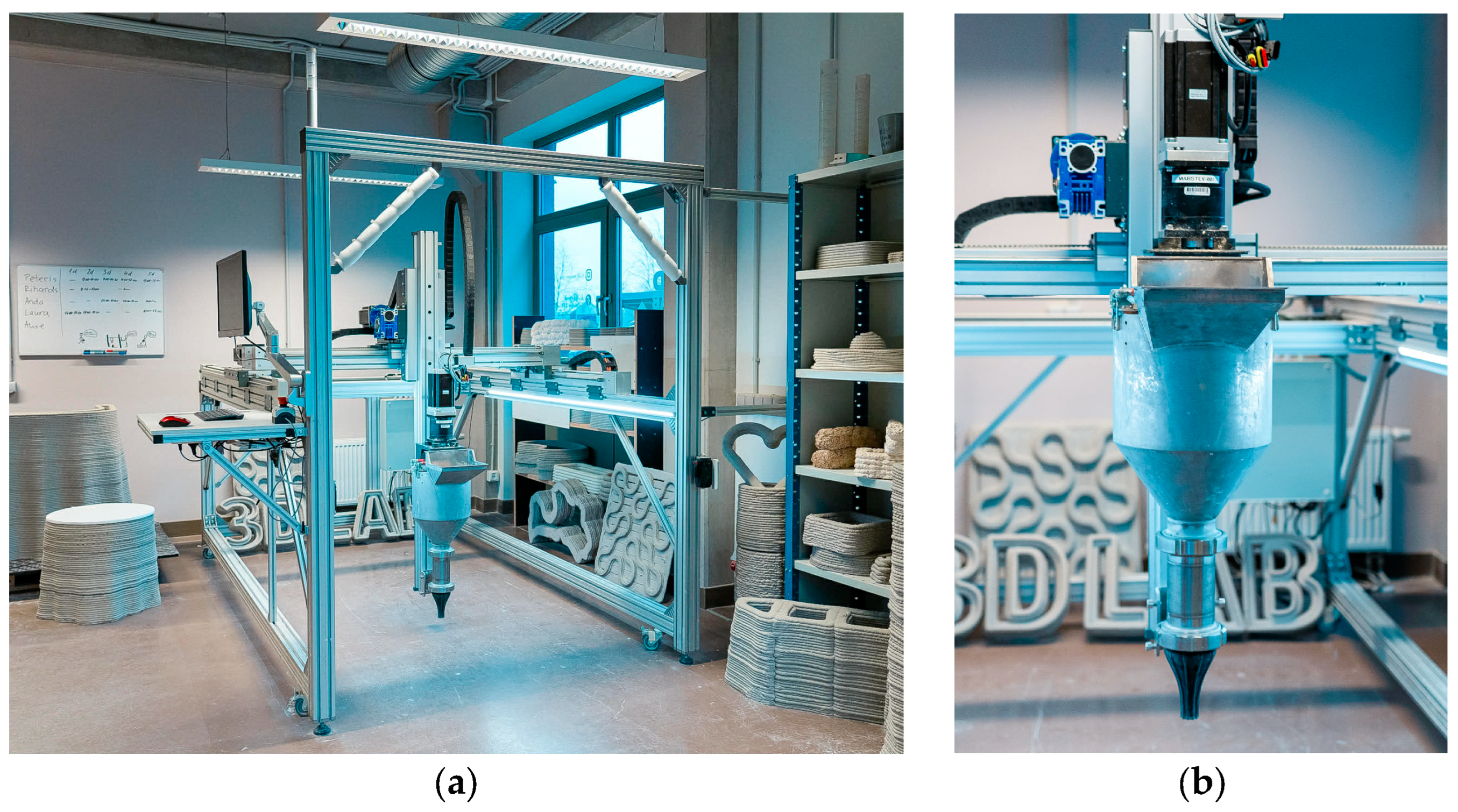
2.3.7. Three-Dimensional Printer
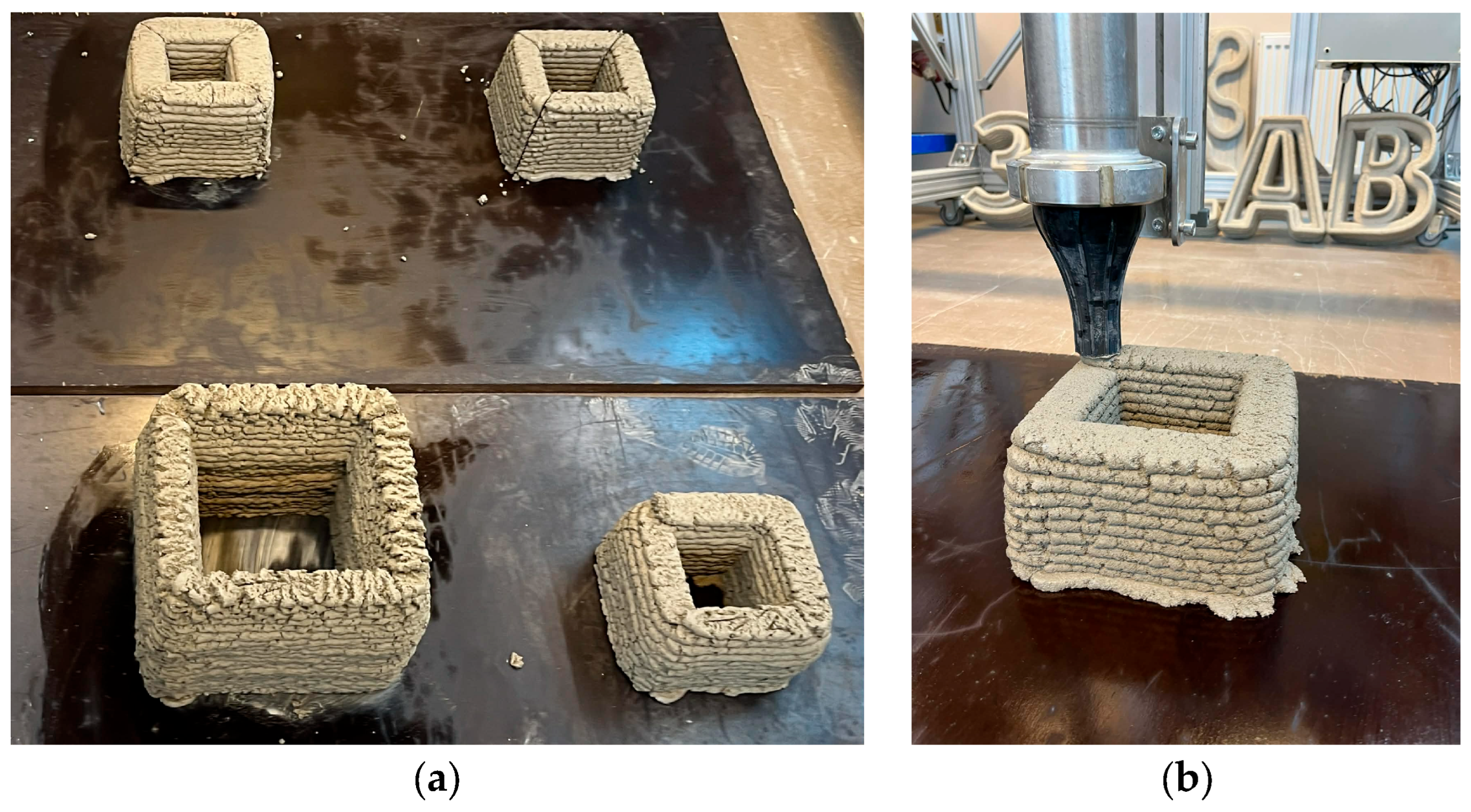
2.3.8. Three-Dimensional Printing and Curing
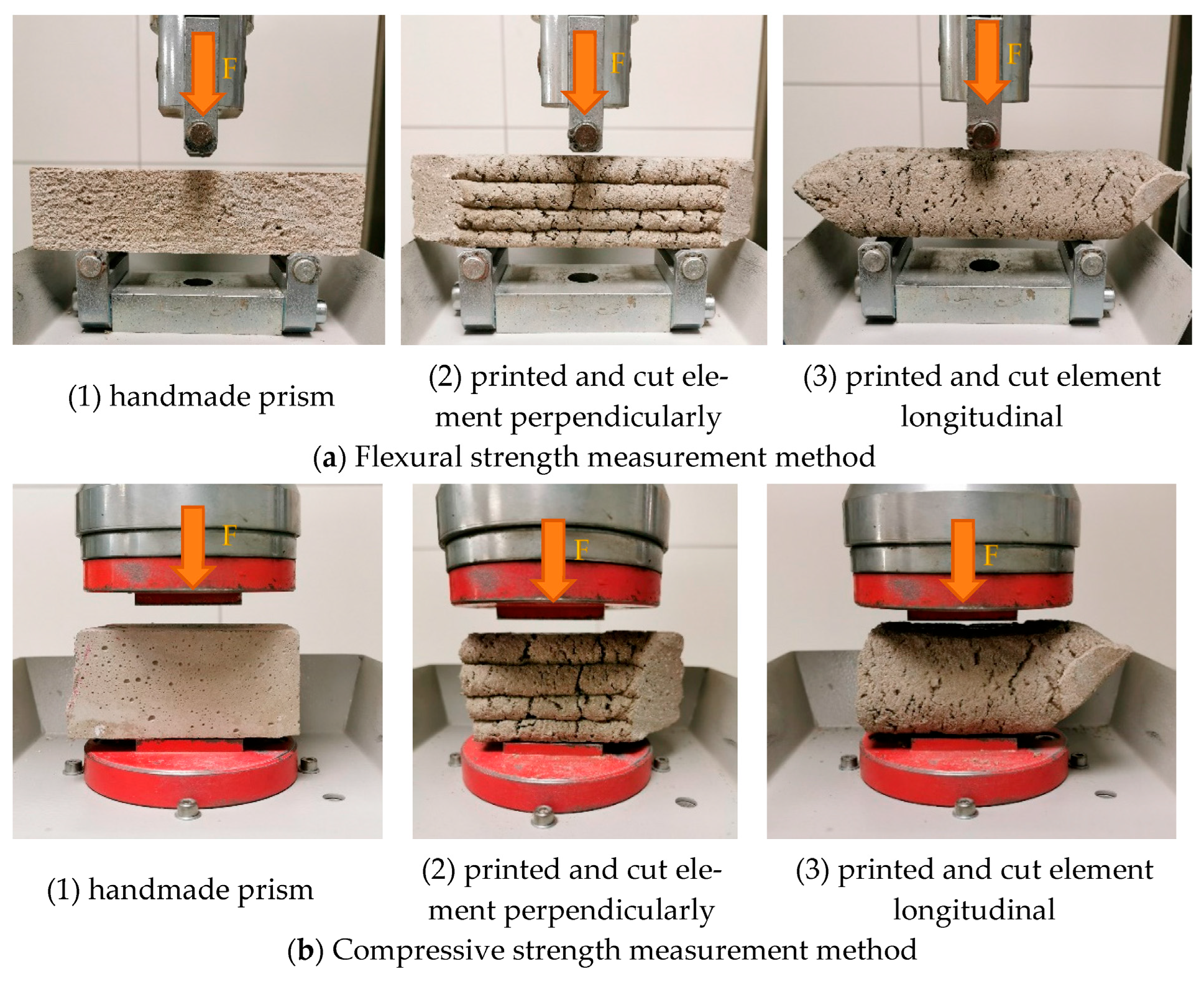
2.3.9. Tests for Printed Objects
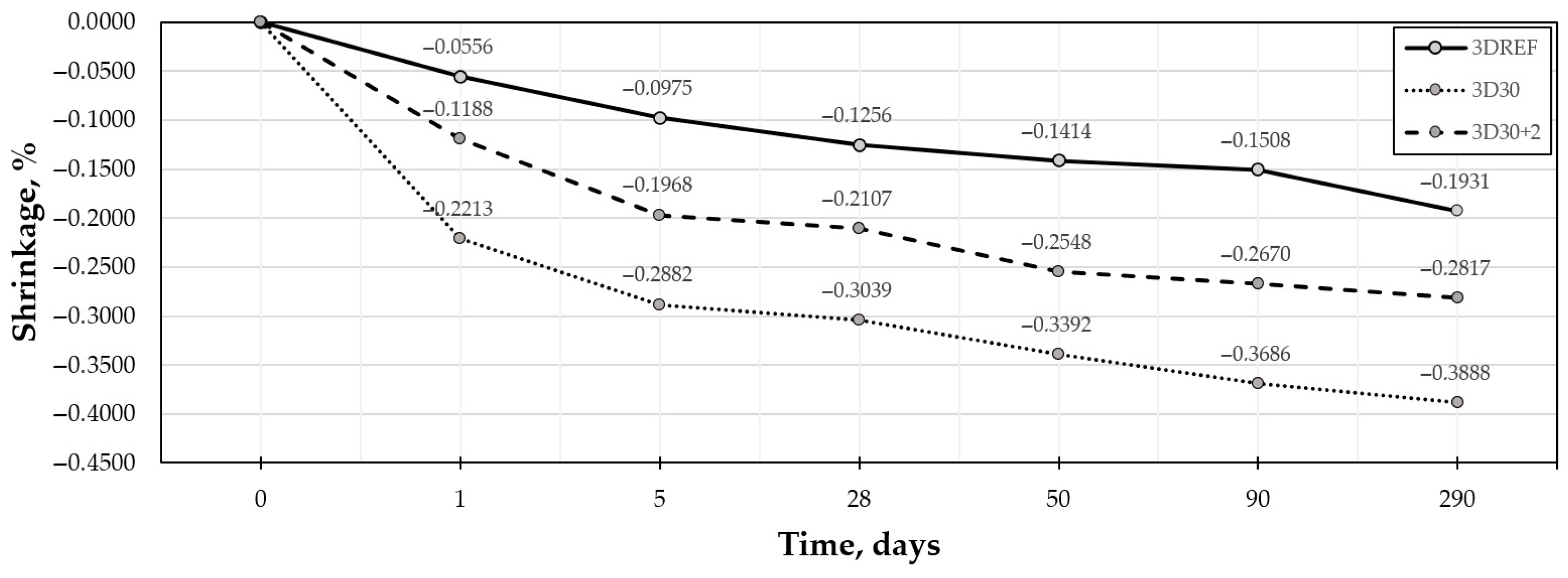
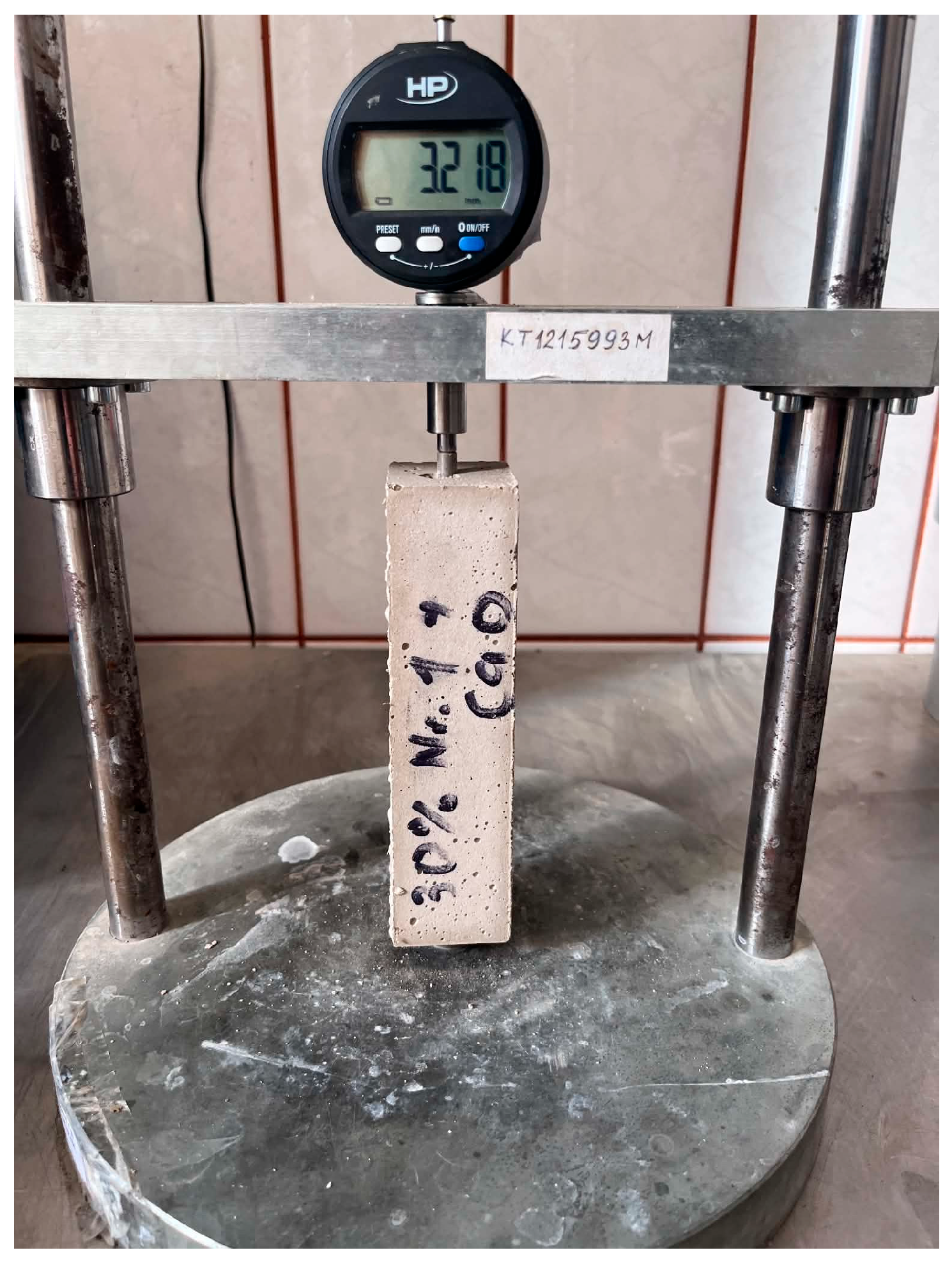
2.3.10. Shrinkage Measurement
3. Results
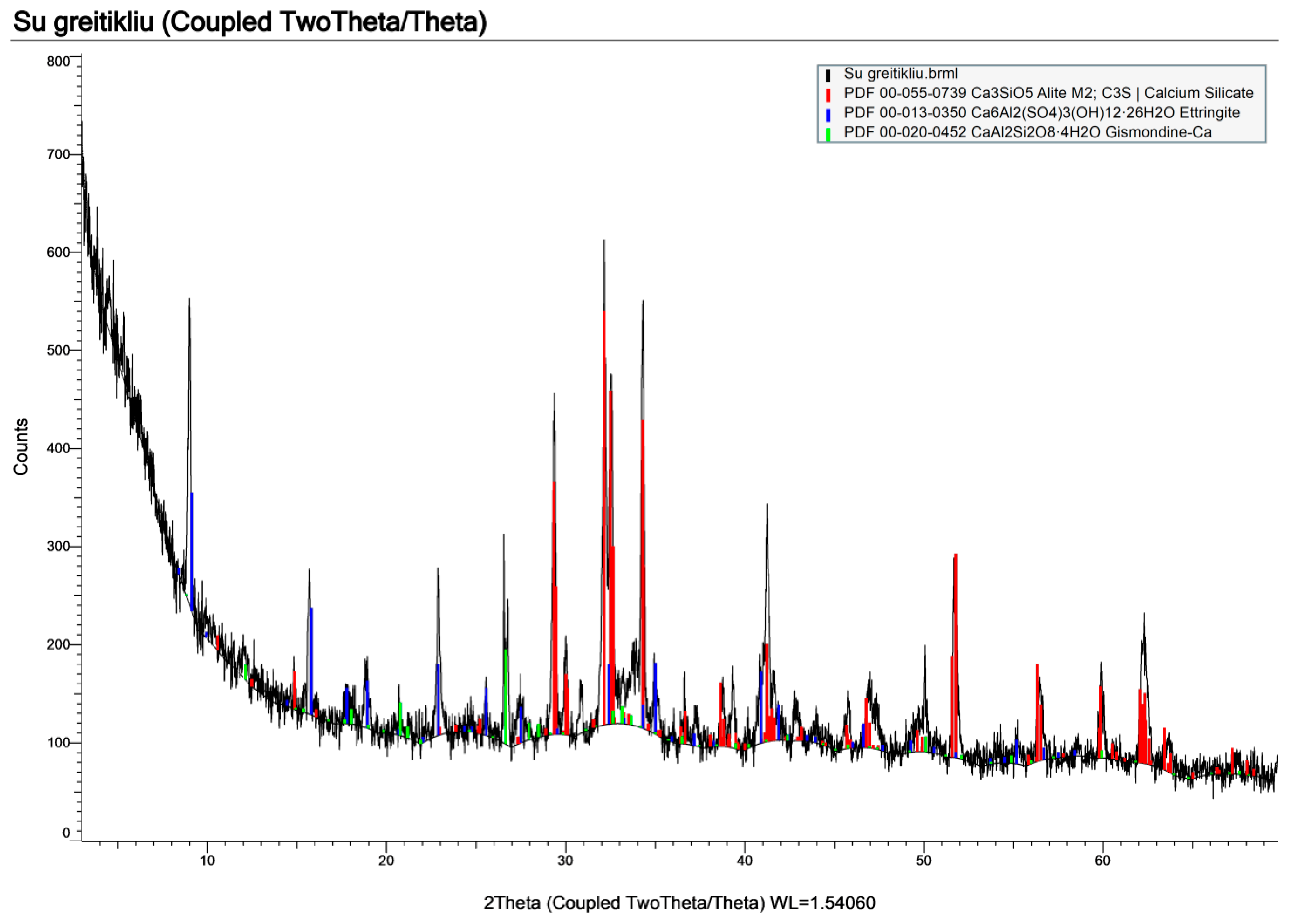
3.1. XRD Test Results
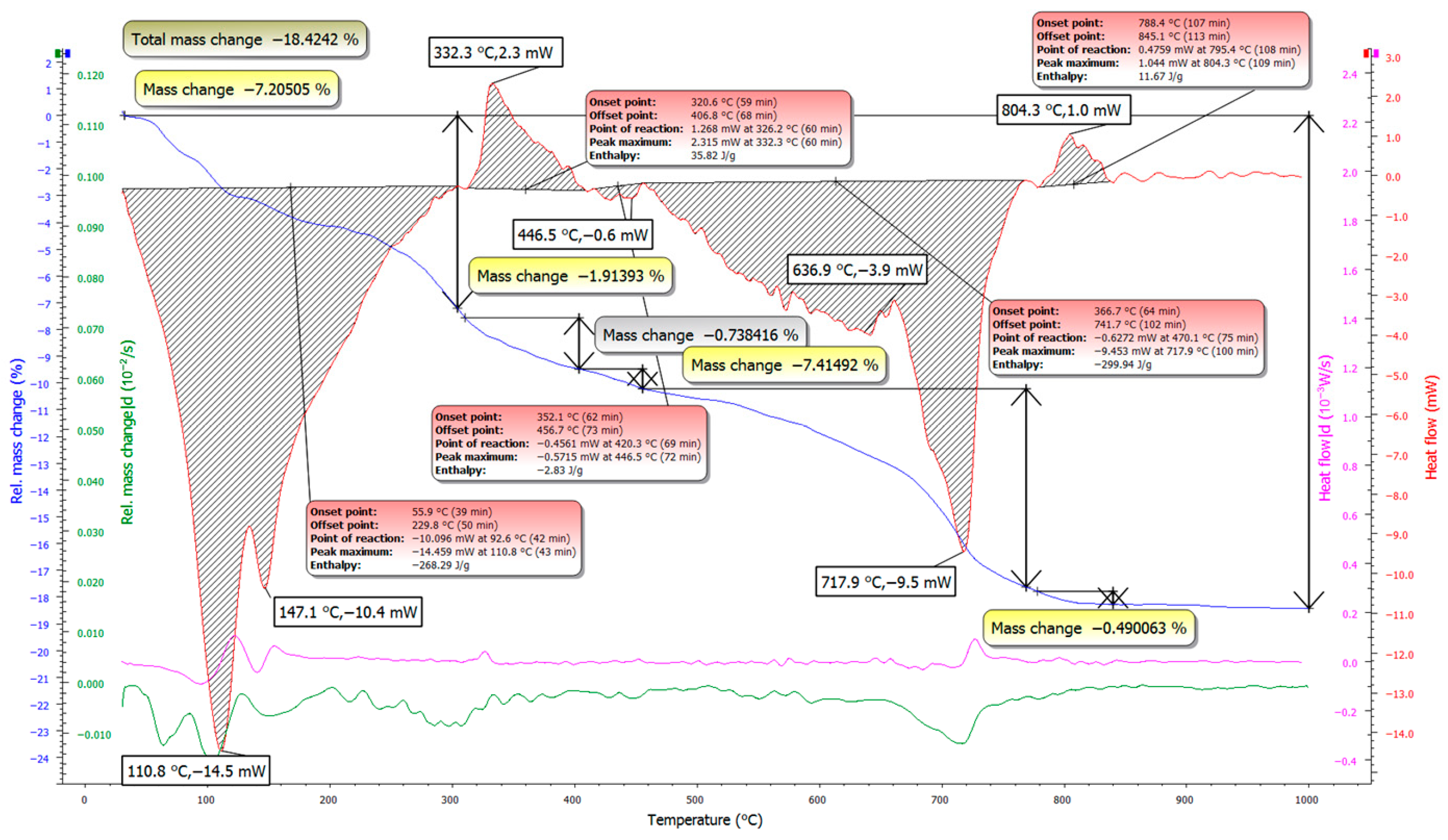
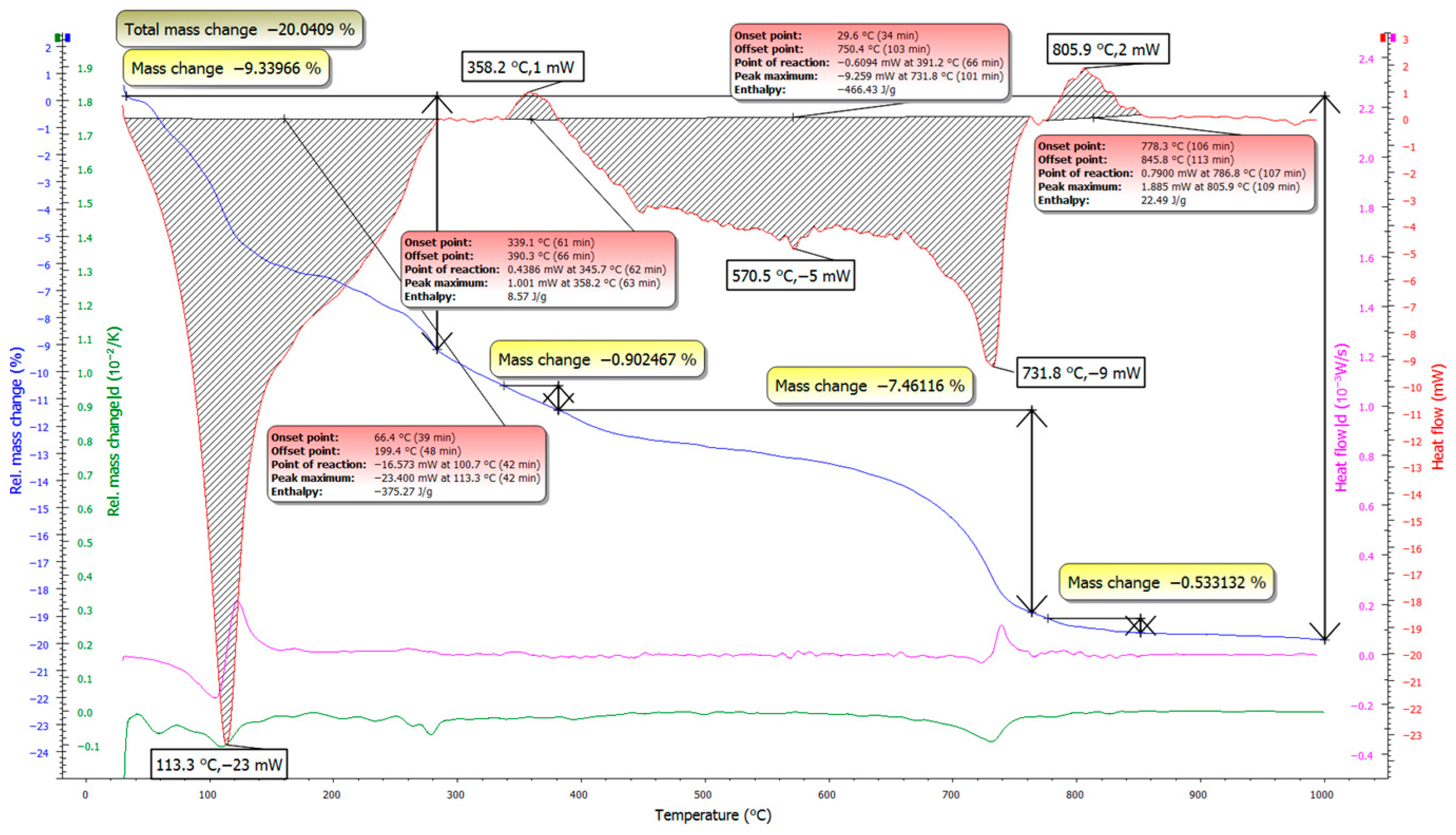
3.2. TG/DSC Test Results
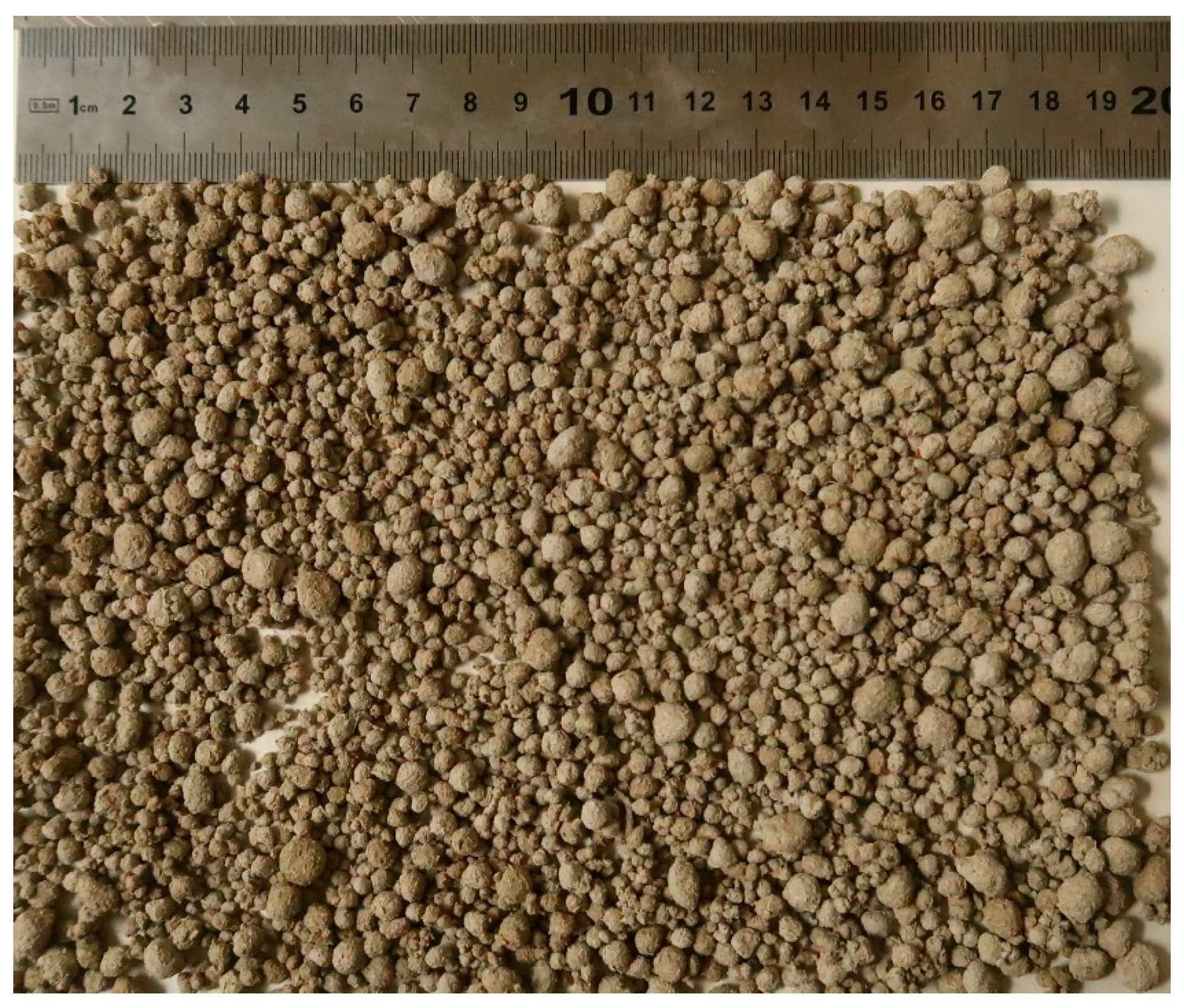
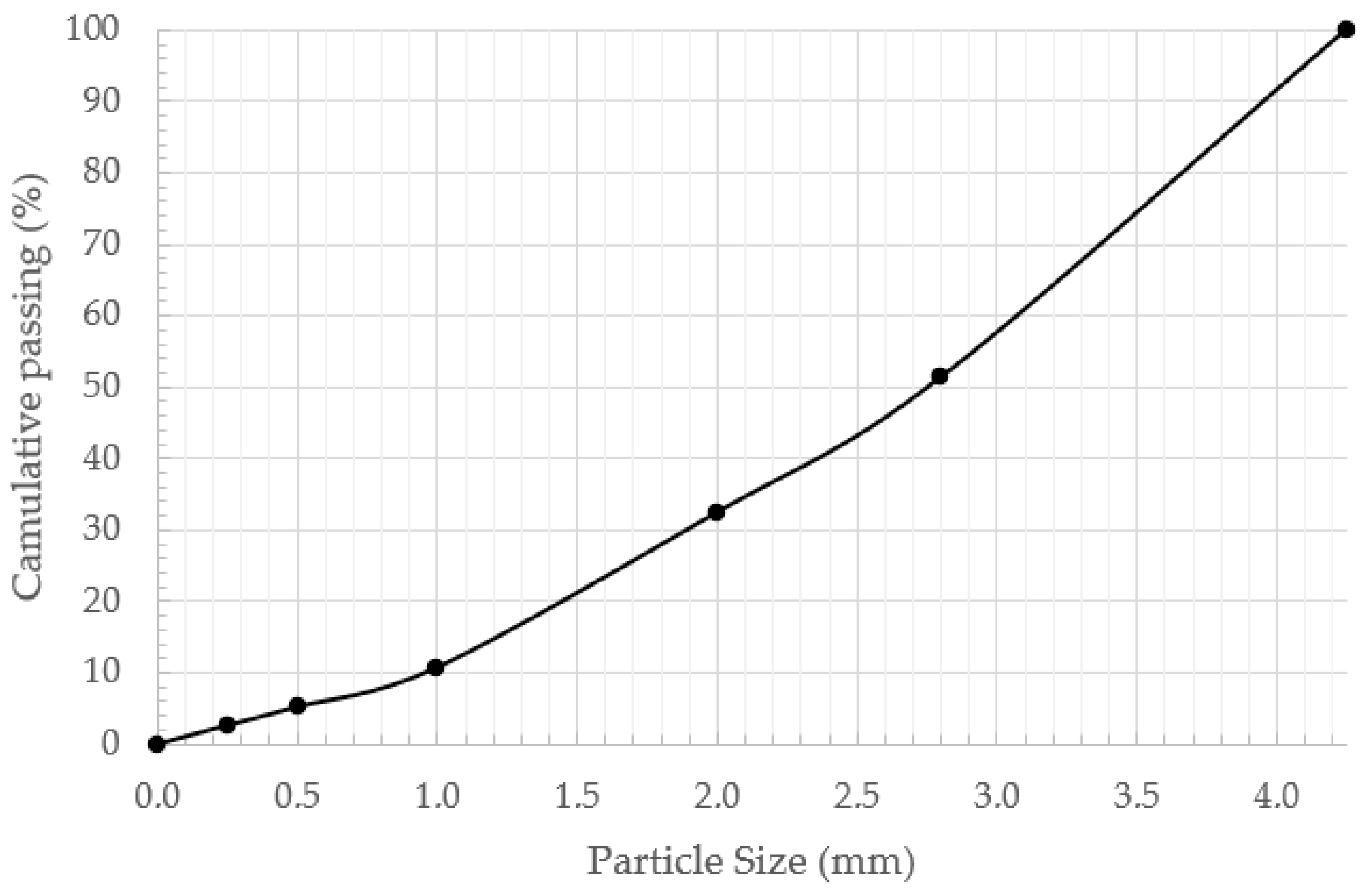
3.3. Artificial Aggregate Test Results
3.4. SEM Test Results
3.5. Three-Dimensional Printing
3.6. Three-Dimensional Printing Results
3.7. Shrinkage Measurement Results
4. Conclusions
- Artificial aggregates were successfully produced from fine wood waste using a granulation process. The resulting particles demonstrated adequate mechanical strength for handling, mixing, and use in cement-based mixtures. These results indicate that fine wood waste can be effectively repurposed as a functional component in 3D-printable composite materials.
- The calcium nitrate-based accelerator improved the hydration behavior of the wood–cement system. XRD and TG/DSC results indicated a more developed hydration response in the accelerated mixture, suggesting improved compatibility between the organic particles and the cementitious matrix.
- The incorporation of artificial aggregates reduced the density of the printable mixtures while maintaining suitable fresh-state properties for extrusion. This shows that wood-waste-based artificial aggregates can be used as a lightweight component in 3D printable cementitious composites.
- The mixtures containing artificial aggregates had lower compressive and flexural strength compared with the reference mixture. However, the differences between the longitudinal and perpendicular testing directions were reduced, indicating a more uniform mechanical response of the printed elements. This suggests that artificial aggregates may contribute to reduced anisotropy in 3D-printed composites.
- Shrinkage measurements showed that the mixture containing artificial aggregates had higher deformation than the reference mixture. The addition of CaO reduced this effect, indicating its potential to improve the dimensional stability of mixtures containing organic artificial aggregates.
- Overall, the results demonstrate that chemically modified wood waste artificial aggregates can be incorporated into extrusion-based 3D printable cementitious composites. This approach supports the valorization of fine wood waste and may contribute to the development of more sustainable lightweight construction materials. However, the study was limited to laboratory-scale testing and initial material characterization. Further research should focus on long-term durability, water absorption, biological resistance, full-scale printing performance, and the mechanisms responsible for the reduced anisotropy observed in printed elements.
Author Contributions
Funding
Institutional Review Board Statement
Informed Consent Statement
Data Availability Statement
Conflicts of Interest
References
- Scrivener, K.L.; John, V.M.; Gartner, E.M. Eco-efficient cements: Potential economically viable solutions for a low-CO2 cement-based materials industry. Cem. Concr. Res. 2018, 114, 2–26. [Google Scholar] [CrossRef]
- Nehdi, M.L.; Marani, A.; Zhang, L. Is net-zero feasible: Systematic review of cement and concrete decarbonization technologies. Renew. Sustain. Energy Rev. 2024, 191, 114169. [Google Scholar] [CrossRef]
- Leone, R.; La Scalia, G.; Saeli, M. A critical review on reuse potentials of wood waste for innovative products and applications: Trends and future challenges. Sustain. Futures 2025, 10, 100869. [Google Scholar] [CrossRef]
- Karade, S.R. Cement-bonded composites from lignocellulosic wastes. Constr. Build. Mater. 2010, 24, 1323–1330. [Google Scholar] [CrossRef]
- Zimmer, A.; Bachmann, S.A.L. Challenges for recycling medium-density fiberboard (MDF). Results Eng. 2023, 19, 101277. [Google Scholar] [CrossRef]
- Vololonirina, O.; Augé–Collomb, L.; Delfau, A.; De La Croix Vaubois, T.; De Mengin Fondragon, F. Sustainable use of MDF waste in construction. Clean. Waste Syst. 2025, 12, 100329. [Google Scholar] [CrossRef]
- Maier, D.; Manea, D.L.; Tămaș-Gavrea, D.; Țiriac, A.; Costin, P. Long-Term Performance of Wood–Cement Composites: Stabilization Versus Degradation Driven by Waste Type. Buildings 2025, 15, 4137. [Google Scholar] [CrossRef]
- Olofin, I. Nano-Cement Engineered Wood-boards (NCEW)—A review on wood-cement composite, materials, new technologies and future perspectives. J. Build. Eng. 2025, 99, 111571. [Google Scholar] [CrossRef]
- Rusu, M.M.; Faux, D.; Ardelean, I. Monitoring the Effect of Calcium Nitrate on the Induction Period of Cement Hydration via Low-Field NMR Relaxometry. Molecules 2023, 28, 476. [Google Scholar] [CrossRef]
- Huang, B.; Ge, Y.; Wang, X.; Wang, Y.; Wang, J.; Song, C.; Zhu, J.; Amaechi, C.V.; Sun, J. Recycled ceramic brick powder utilization in fiber reinforced 3D printing concrete: An eco-friendly substitute to conventional fine aggregates. J. Build. Eng. 2024, 98, 111441. [Google Scholar] [CrossRef]
- Zhu, R.; Egbe, K.I.; Salehi, H.; Shi, Z.; Jiao, P. Eco-friendly 3D printed concrete with fine aggregate replacements: Fabrication, characterization and machine learning prediction. Constr. Build. Mater. 2024, 413, 134905. [Google Scholar] [CrossRef]
- Ivaniuk, E.; Friedrich Eichenauer, M.; Tošić, Z.; Müller, S.; Lordick, D.; Mechtcherine, V. 3D printing and assembling of frame modules using printable strain-hardening cement-based composites (SHCC). Mater. Des. 2022, 219, 110757. [Google Scholar] [CrossRef]
- Mim, N.J.; Shaikh, F.U.A.; Sarker, P.K. Sustainable 3D printed concrete incorporating alternative fine aggregates: A review. Case Stud. Constr. Mater. 2025, 22, e04570. [Google Scholar] [CrossRef]
- Rahul, A.V.; Mohan, M.K.; De Schutter, G.; Van Tittelboom, K. 3D printable concrete with natural and recycled coarse aggregates: Rheological, mechanical and shrinkage behaviour. Cem. Concr. Compos. 2022, 125, 104311. [Google Scholar] [CrossRef]
- Ambily, P.S.; Kaliyavaradhan, S.K.; Sebastian, S.; Shekar, D. Sustainable 3D Printable Concrete mix using copper slag. J. Build. Eng. 2025, 101, 111950. [Google Scholar] [CrossRef]
- Butkutė, K.; Vaitkevičius, V.; Adomaitytė, F. Eco-Friendly 3D-Printed Concrete Made with Waste and Organic Artificial Aggregates. Materials 2024, 17, 3290. [Google Scholar] [CrossRef]
- Serelis, E.; Vaitkevicius, V.; Korat Bensa, L.; Serjun, V.Z.; Sinka, M.; Bajare, D.; Grinys, A.; Butkute, K. Effect of chemical and physico-chemical activation on the properties of 3D printed concrete with a low-cement multicomponent binder. J. Build. Eng. 2026, 123, 115850. [Google Scholar] [CrossRef]
- Liu, M.; Zhou, M.; Chen, J.; Gao, Y.; Che, D.; Guo, Y.; Ma, Y.; Ouyang, X. The effect of wood fiber powder on the rheology, hydration, and strength of cement paste: A multiscale investigation. Constr. Build. Mater. 2025, 479, 141534. [Google Scholar] [CrossRef]
- Gigar, F.Z.; Khennane, A.; Liow, J.; Tekle, B.H.; Li, Z. From Portland cement to alkali-activated system: Advances in wood-cement composites for sustainable building applications. Clean. Mater. 2026, 19, 100365. [Google Scholar] [CrossRef]
- Duan, Z.; Yang, W.; Zou, S.; Liu, H.; Zhao, W.; Chen, W. A critical review on cold-bonded artificial aggregate developed from solid wastes: From granulation analysis to performance evaluation. J. Build. Eng. 2025, 99, 111588. [Google Scholar] [CrossRef]
- EN 13055:2016; Lightweight Aggregates. LSD: Vilnius, Lithuania, 2018.
- EN 1015-3:2002; Methods of Test for Mortar for Masonry—Part 3: Determination of Consistence of Fresh Mortar (by Flow Table). LSD: Vilnius, Lithuania, 2002.
- EN 1015-11:2020; Methods of Test for Mortar for Masonry—Part 11: Determination of Flexural and Compressive Strength of Hardened Mortar. LSD: Vilnius, Lithuania, 2020.
- Butkute, K.; Vaitkevicius, V.; Sinka, M.; Augonis, A.; Korjakins, A. Influence of Carbonated Bottom Slag Granules in 3D Concrete Printing. Materials 2023, 16, 4045. [Google Scholar] [CrossRef]
- Zhang, L.; Ma, Y.; Ouyang, X.; Fu, J.; Li, Z. Effect of CaO on the shrinkage and microstructure of alkali-activated slag/fly ash microsphere. Constr. Build. Mater. 2024, 421, 135672. [Google Scholar] [CrossRef]
- Chiaia, B.; Fantilli, A.P.; Ventura, G. A chemo-mechanical model of lime hydration in concrete structures. Constr. Build. Mater. 2012, 29, 308–315. [Google Scholar] [CrossRef]






| Components | Quantity, % | |
|---|---|---|
| CEMII/B-M (P-LL) | BOSA | |
| CaO | 57.5 | 37.81 |
| SiO2 | 18.4 | 29.5 |
| SO3 | 3.42 | 10.38 |
| Al2O3 | 3.29 | 6.52 |
| Fe2O3 | 3.03 | 2.79 |
| MgO | 2.90 | 4.0 |
| K2O | 0.88 | 3.34 |
| TiO2 | 0.24 | 0.35 |
| Na2O | 0.13 | 0.26 |
| P2O5 | - | 0.18 |
| Cl | - | 0.48 |
| Component | Content by Mass (%) |
|---|---|
| Cement CEM II/B-M (S-LL) 52.5 N | 20 |
| Sand (0–2 mm) | 66 |
| Fly ash | 5 |
| Metakaolin | 8 |
| Chemical admixtures | 1 |
| Binder-to-sand ratio | 0.30 |
| Water-to-binder ratio | 0.55 |
| Water-to-cement ratio | 0.90 |
| Material | Sieve Mesh Diameter, mm and Residue in % | |||||||
|---|---|---|---|---|---|---|---|---|
| 1.2 | 0.8 | 0.5 | 0.25 | 0.125 | 0.063 | 0.04 | 0.00 | |
| Wood dust | 0 | 19.5 | 28.5 | 26.4 | 16.8 | 6.2 | 1.3 | 1.3 |
| Materials | Specimen’s Name and Amount of Materials (kg/m3) | |
|---|---|---|
| Without Accelerator | With Accelerator | |
| Portland Cement CEM II | 435 | 345 |
| Wood Dust | 260 | 210 |
| Water | 305 | 240 |
| Calcium Nitrate accelerator | - | 205 |
| Materials | Artificial Aggregate Name and Amount of Materials (kg/m3) |
|---|---|
| AA1 | |
| Portland Cement CEM II | 165 |
| Burnt Oil Shale Ash | 335 |
| Wood Dust | 165 |
| Water | 210 |
| Calcium Nitrate accelerator | 125 |
| AA Name | Sieve Mesh Diameter, mm and Residue in % | ||||||
|---|---|---|---|---|---|---|---|
| 4.25 | 2.8 | 2.0 | 1.0 | 0.5 | 0.25 | 0.00 | |
| AA1 | 0.0 | 48.7 | 18.9 | 21.7 | 5.5 | 2.6 | 2.6 |
| Materials | Composite Name and Materials Amount (%) | ||
|---|---|---|---|
| 3DREF | 3D30 | 3D30+2 | |
| Commercial 3D concrete mixture | 100 | 70 | 68 |
| Artificial Aggregate AA1 | - | 30 | 30 |
| Quicklime (CaO) | - | - | 2 |
| Composite Number | Water Amount L/kg | Flow Table Results, cm | Bulk Density, kg/m3 |
|---|---|---|---|
| 3DREF | 0.09 | 15.2 | 2125 |
| 3D30 | 0.11 | 15.2 | 1870 |
| 3D30+2 | 0.12 | 15.7 | 1890 |
| Composite Number | 3D-Printed and Cut Elements | Cast Prisms | ||||
|---|---|---|---|---|---|---|
| Longitudinal | Perpendicular | Bending Strength (MPa) | Compressive Strength (MPa) | |||
| Bending Strength (MPa) | Compressive Strength (MPa) | Bending Strength (MPa) | Compressive Strength (MPa) | |||
| 3DREF | 4.81 | 45.9 | 5.29 | 57.0 | 6.04 | 82.8 |
| 3D30 | 4.16 | 29.8 | 4.48 | 32.0 | 4.57 | 57.6 |
| 3D30+2 | 3.17 | 26.1 | 3.68 | 28.2 | 4.16 | 59.1 |
| Type of Strength | Direction | Shapiro–Wilk Test | Levene’s Test | One-Way ANOVA | Kruskal–Wallis Test | ||
|---|---|---|---|---|---|---|---|
| 3DREF | 3D30 | 3D30+2 | |||||
| Compressive strength | Perpendicular | 0.0283 | 0.4447 | 0.6947 | 0.3716 | 0.0011 | 0.0338 |
| Longitudinal | 0.3452 | 0.2284 | 0.5262 | 0.2020 | 7.18 × 10⁻⁸ | 0.0017 | |
| Bending strength | Perpendicular | 0.2342 | 0.3125 | 0.4723 | 0.7177 | 0.0228 | 0.0510 |
| Longitudinal | 0.3244 | 0.4068 | 0.9676 | 0.4471 | 0.2230 | 0.2881 | |
Disclaimer/Publisher’s Note: The statements, opinions and data contained in all publications are solely those of the individual author(s) and contributor(s) and not of MDPI and/or the editor(s). MDPI and/or the editor(s) disclaim responsibility for any injury to people or property resulting from any ideas, methods, instructions or products referred to in the content. |
© 2026 by the authors. Licensee MDPI, Basel, Switzerland. This article is an open access article distributed under the terms and conditions of the Creative Commons Attribution (CC BY) license.
Share and Cite
Kavaliauskienė, F.; Vaitkevičius, V.; Butkutė, K.; Sinka, M.; Korjakins, A. Wood-Waste-Based Artificial Aggregates for Extrusion 3D-Printed Cementitious Composites: Hydration, Printability, and Mechanical Performance. Materials 2026, 19, 2013. https://doi.org/10.3390/ma19102013
Kavaliauskienė F, Vaitkevičius V, Butkutė K, Sinka M, Korjakins A. Wood-Waste-Based Artificial Aggregates for Extrusion 3D-Printed Cementitious Composites: Hydration, Printability, and Mechanical Performance. Materials. 2026; 19(10):2013. https://doi.org/10.3390/ma19102013
Chicago/Turabian StyleKavaliauskienė, Fausta, Vitoldas Vaitkevičius, Karolina Butkutė, Maris Sinka, and Aleksandrs Korjakins. 2026. "Wood-Waste-Based Artificial Aggregates for Extrusion 3D-Printed Cementitious Composites: Hydration, Printability, and Mechanical Performance" Materials 19, no. 10: 2013. https://doi.org/10.3390/ma19102013
APA StyleKavaliauskienė, F., Vaitkevičius, V., Butkutė, K., Sinka, M., & Korjakins, A. (2026). Wood-Waste-Based Artificial Aggregates for Extrusion 3D-Printed Cementitious Composites: Hydration, Printability, and Mechanical Performance. Materials, 19(10), 2013. https://doi.org/10.3390/ma19102013