The Influence of Particle Shape and Surface Roughness of Fine Aggregates on the Technological Properties of Glass-Fiber-Reinforced Thin-Layer Concrete


Abstract
1. Introduction
2. Materials and Methods
3. Results and Discussion
4. Conclusions
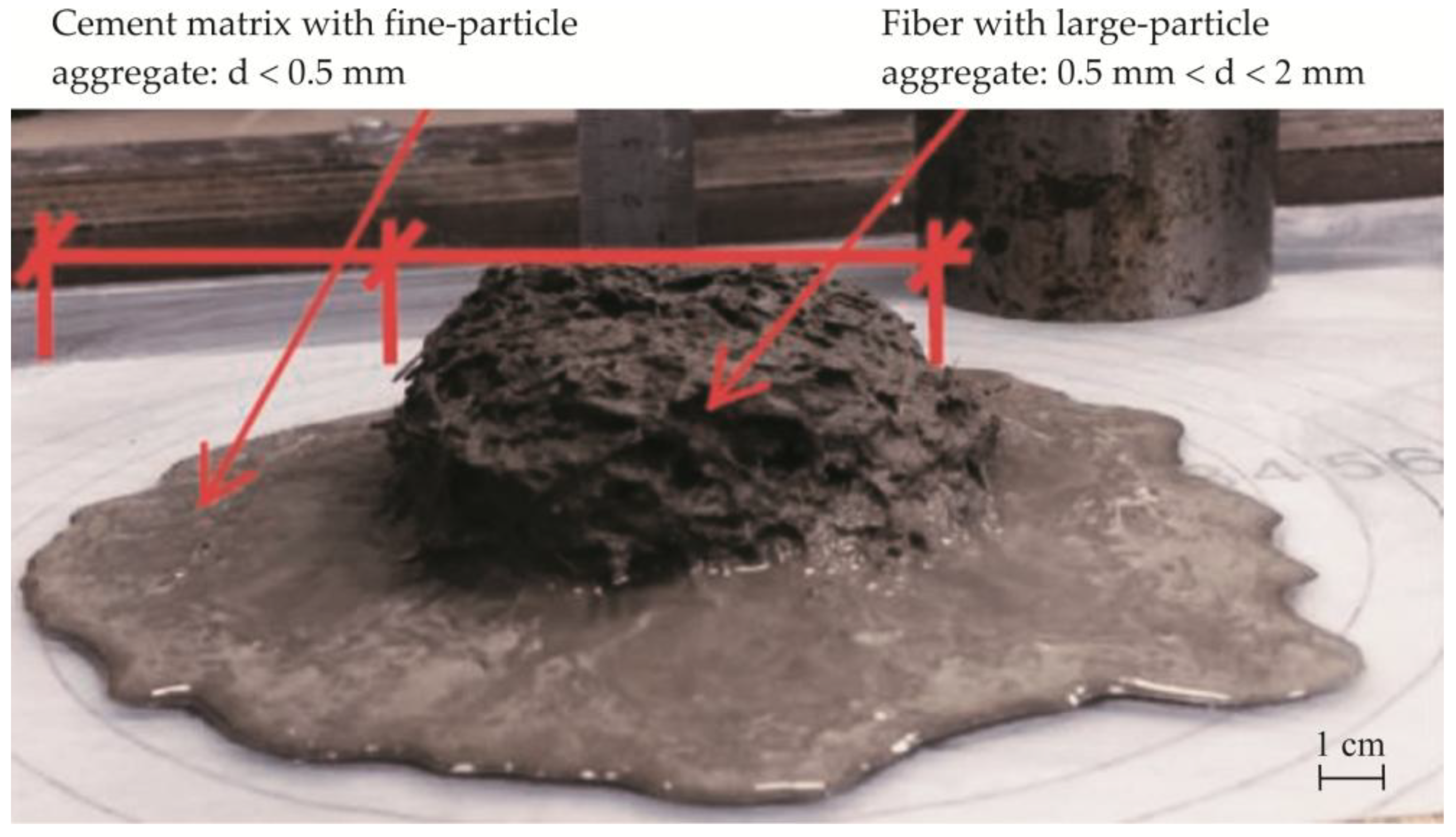
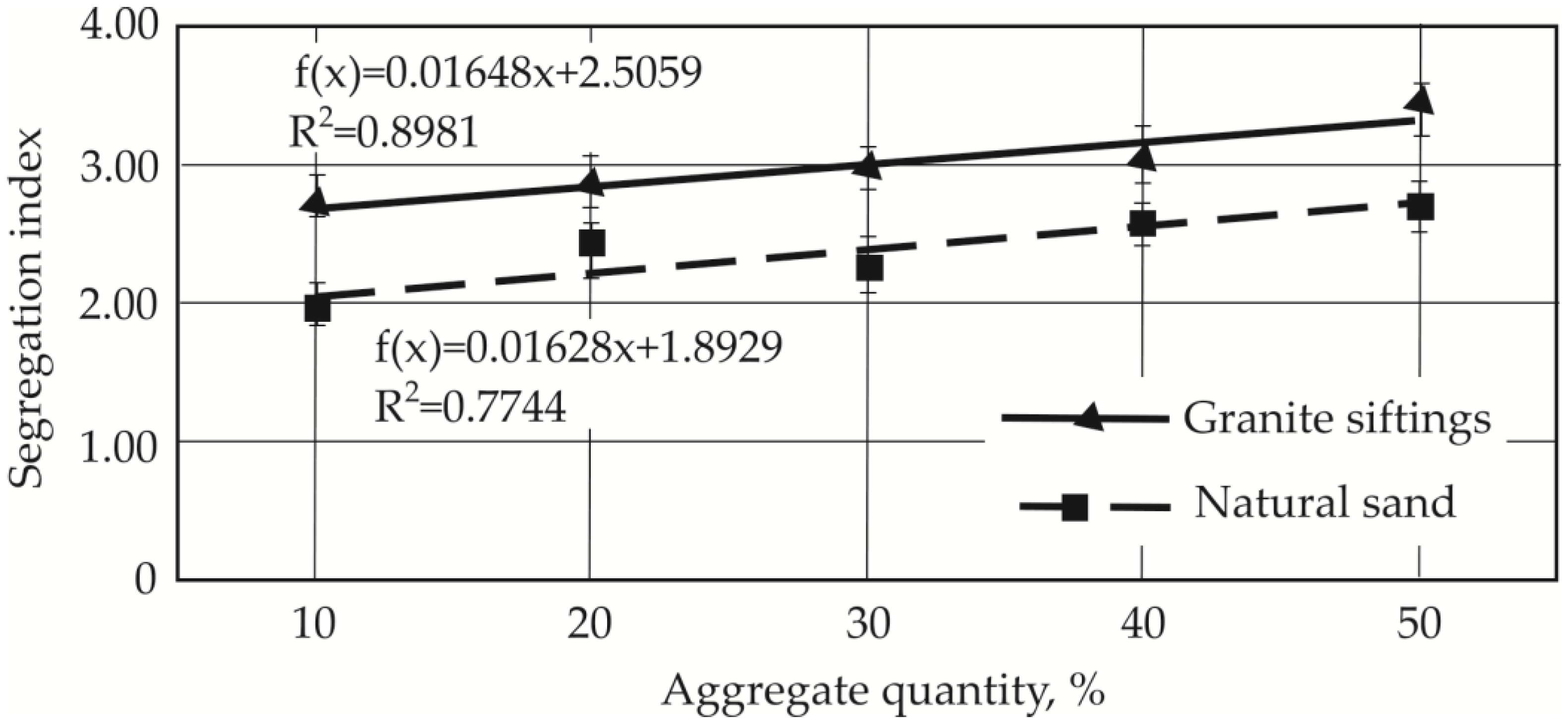
- When different aggregates are used, fiberglass-dispersion-reinforced fine-grained concrete is characterized by layering of the mixture, leading to the separation of the fiberglass and fine aggregates from the cement matrix. Layering depends on the aggregate’s particle shape. As the aggregate particle elongation index increases from 1.4 to 1.64, the segregation index of the concrete mix varies from 1.9 to 3.5.
- The highest concrete mixture flow diameter was obtained with quartz sand and a particle elongation index equal to 1.4. An acceptable value for the segregation index of the mix can be achieved when replacing up to 50% of the quartz sand with granite siftings or natural sand.
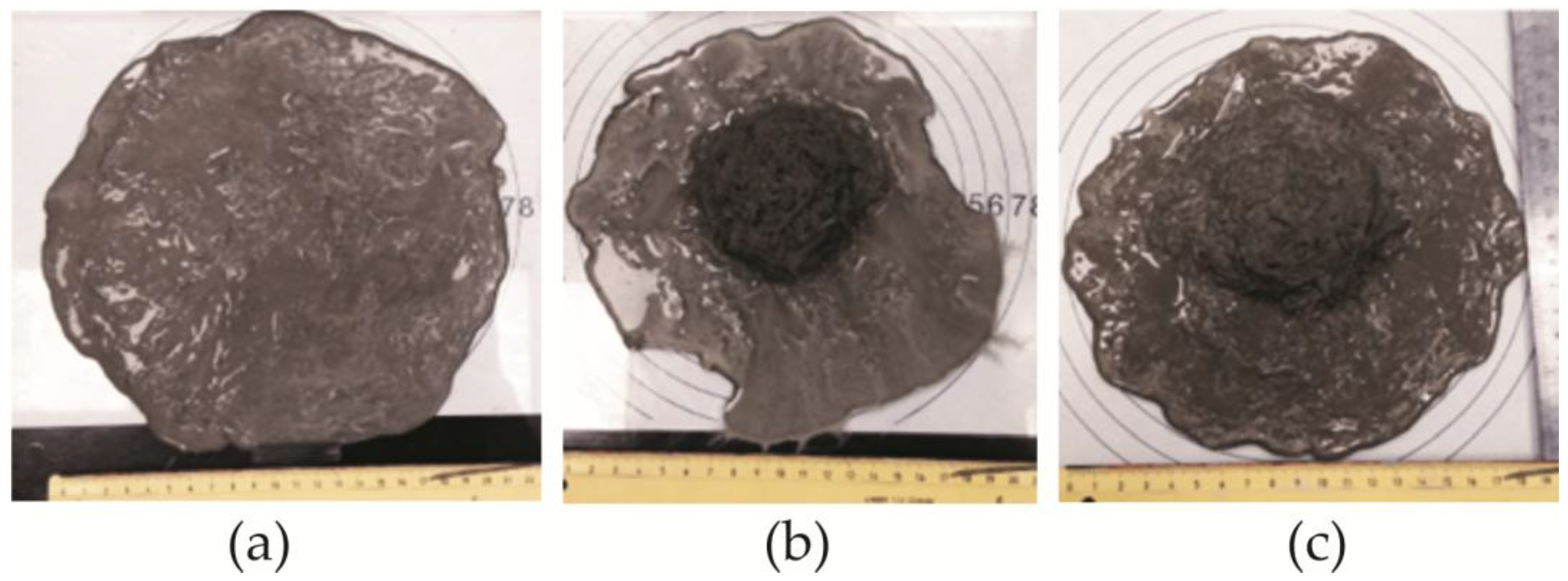
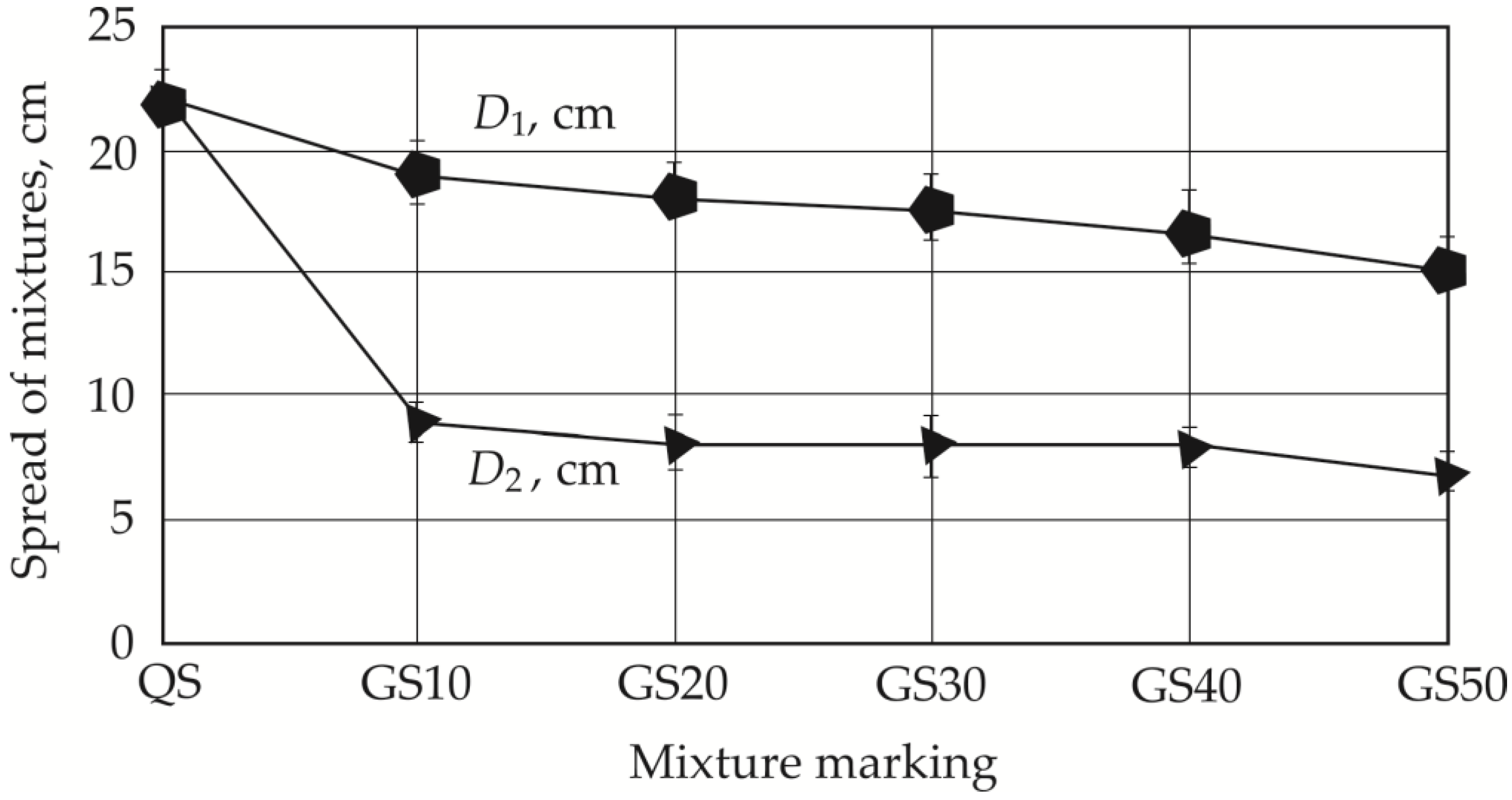
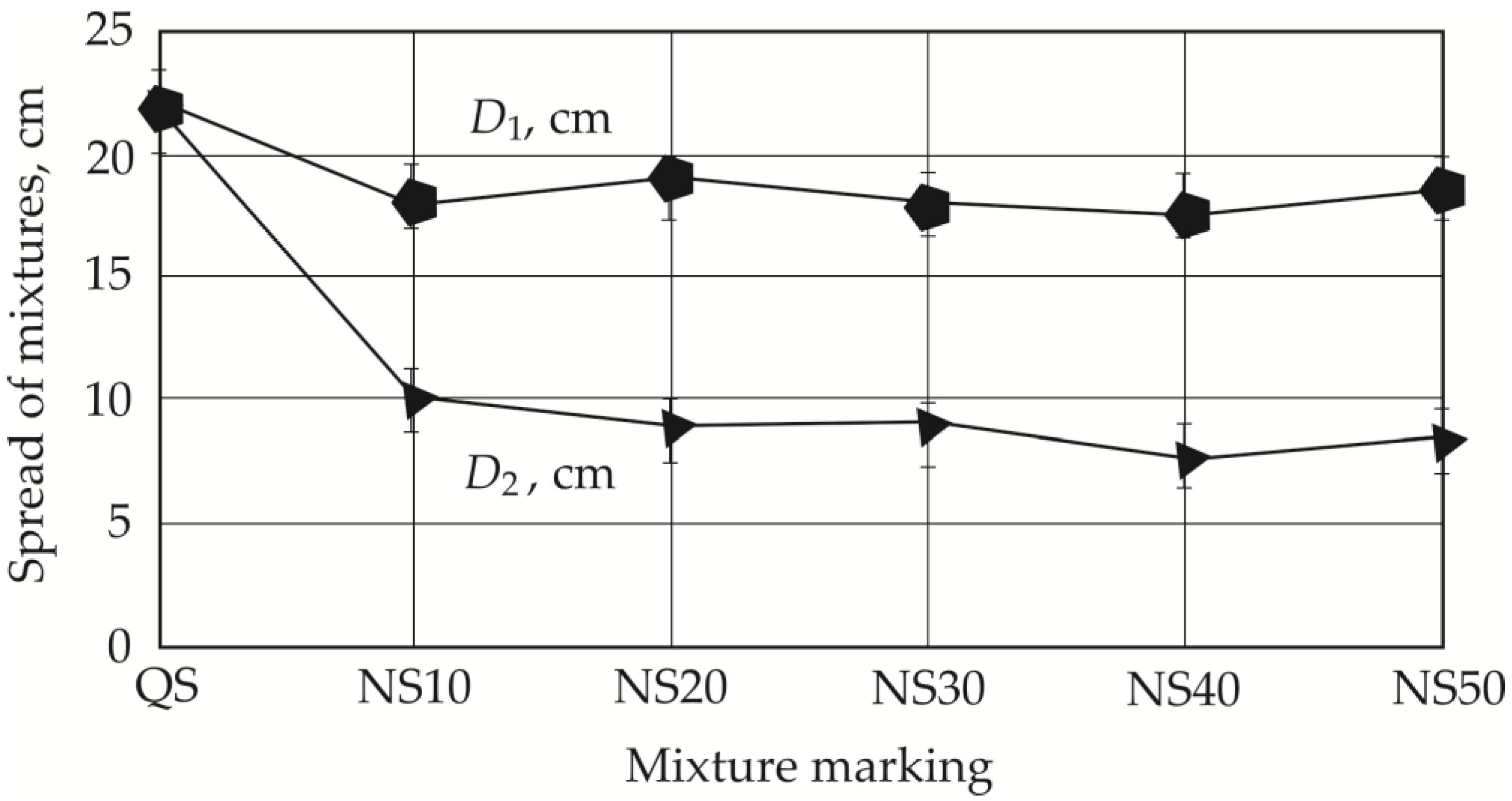
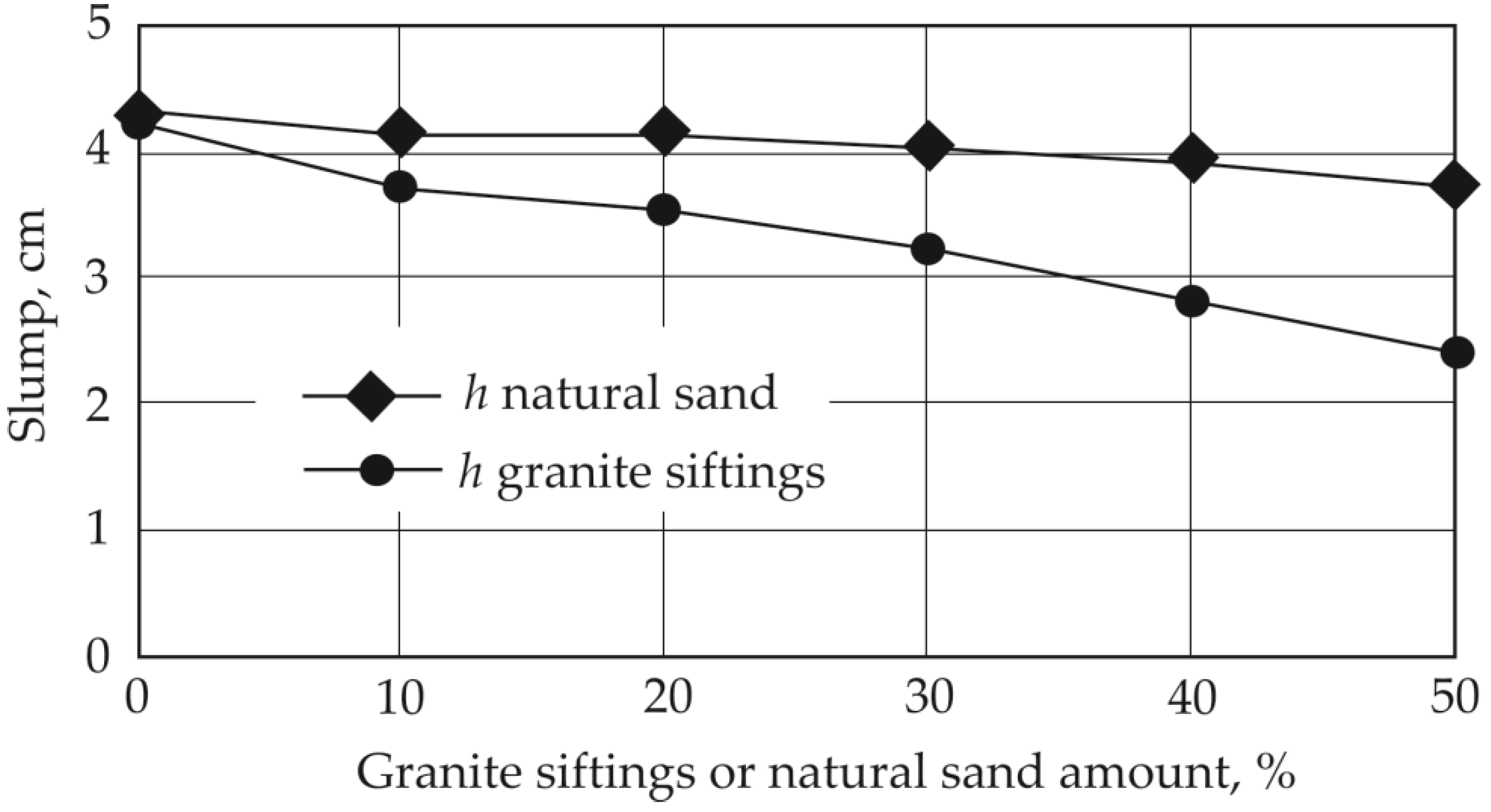
- The workability and segregation of a fine-grained fiberglass-reinforced concrete mix depend on aggregate particle shape, described by the elongation index and expressed as the ratio of the longer side of the particle to the shorter side. As the elongation index increases, workability worsens and segregation increases. An increase in the aggregate elongation index of 3% reduces the spread of the mixture by 10% when natural sand is used instead of quartz sand. When an irregularly shaped aggregate (granite siftings) is used, the particle elongation index increases by 33% compared to quartz sand and the spread of the mixture decreases to 50%, accordingly. Increasing the amount of substitution from 10% to 50% further increases the segregation index from 1.9 to 2.6 and 2.6 to 3.5, respectively, for natural sand and granite siftings.
- An even spread of cement matrix and fiber is ensured for fine-grained fiberglass-reinforced concrete mixes when aggregates with spherical particles (i.e., an elongation index of no more than 1.4 based on acceptable segregation levels and technological parameters) are used. The segregation index is also important for these mixtures and needs to be assessed during technological operations. The index can be calculated according to the method proposed in this paper.
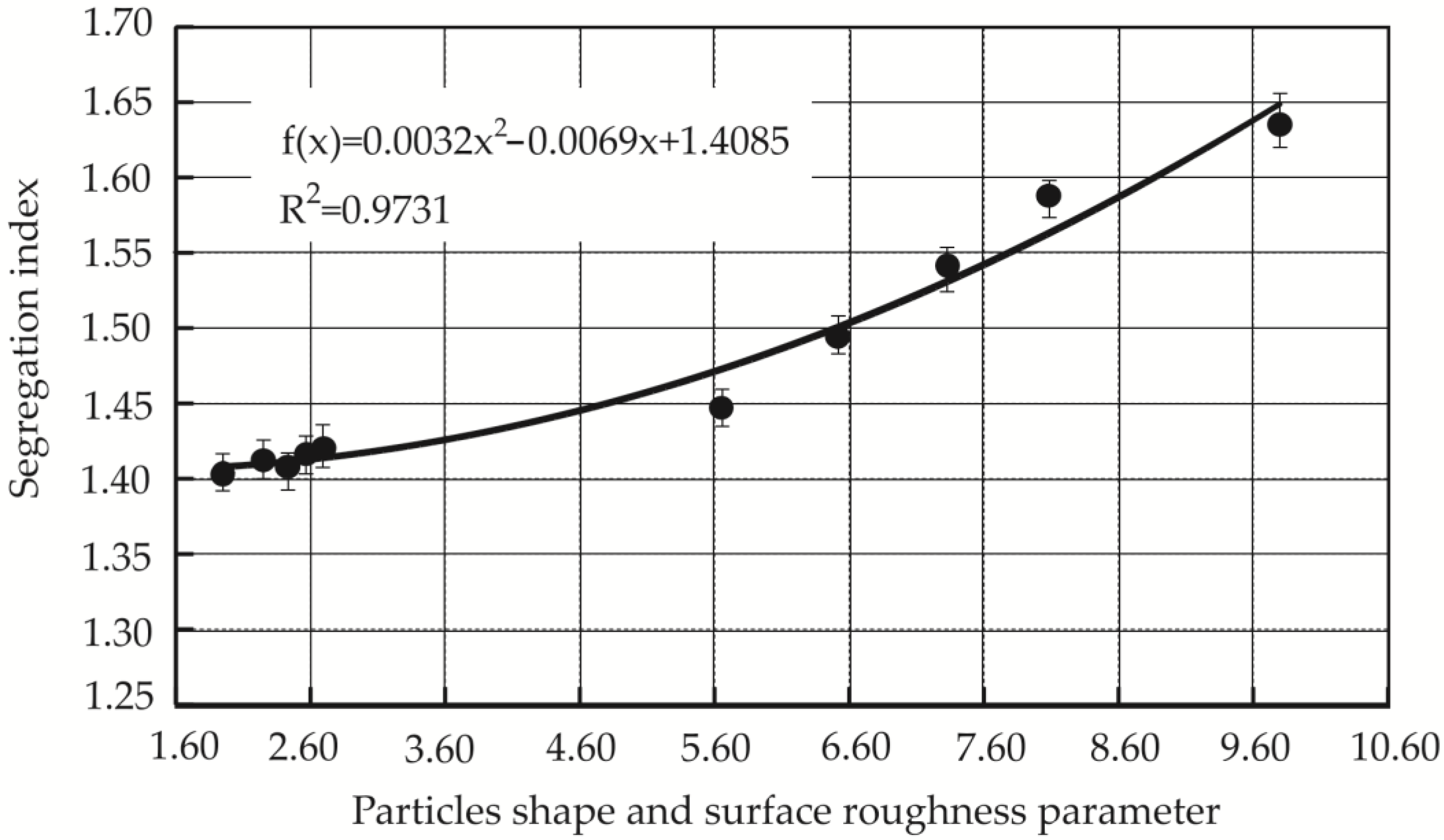
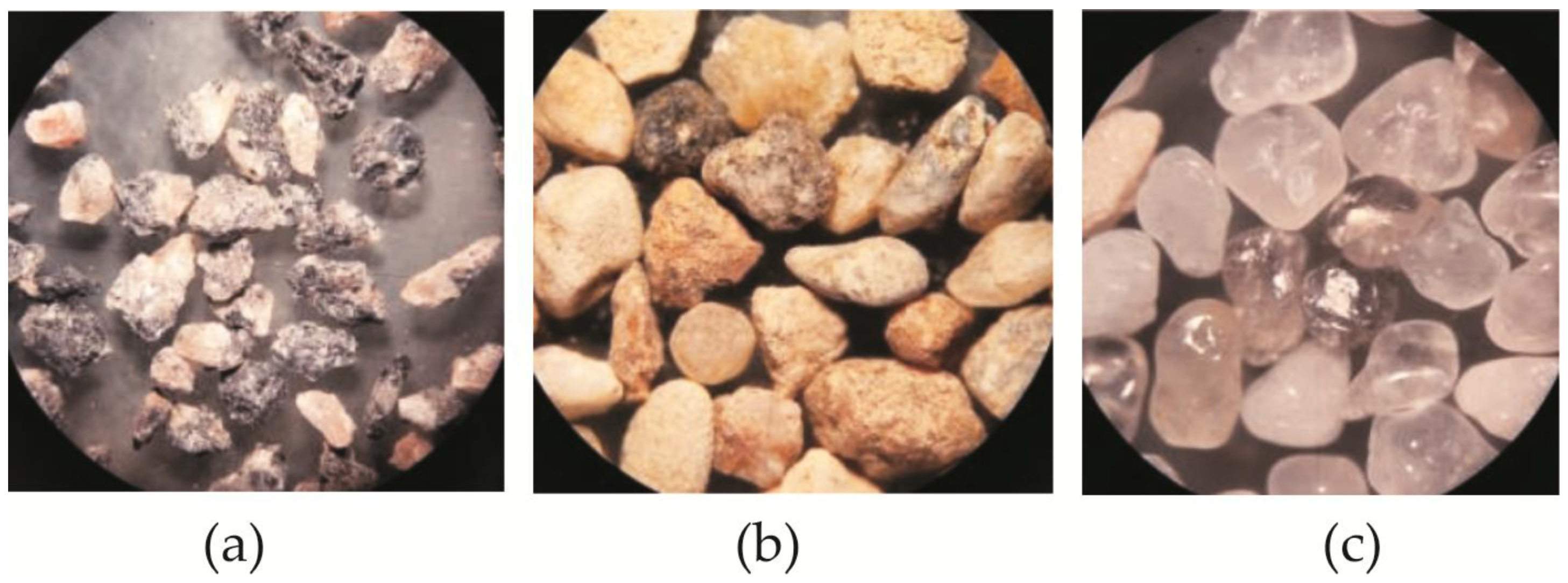
- Aggregates with spherical particles that ensure the even spread of the cement matrix and fiber are more suitable for GRC concrete. The shape and surface roughness of aggregate particles have a decisive influence on concrete mixture segregation. This dependence is described by a square function.
- In addition to increasing the angularity of the aggregate particles, an increase in the surface roughness of the aggregates significantly increases the segregation index of a mix.
- The possibility of using granite siftings or natural sand instead of quartz sand has been investigated. These aggregates have different physical surface characteristics that significantly affect the consistency of concrete mixtures. Therefore, in the future, when using fine aggregates with different surface parameters, different methods of mixture compaction must be applied, taking into account the possibility of segregation.
Author Contributions
Funding
Institutional Review Board Statement
Informed Consent Statement
Data Availability Statement
Conflicts of Interest
References
- Zingg, T. Beitrag zur Schotteranalyse. Schweiz. Min. Petrogr. Mitt. 1935, 15, 39–140. [Google Scholar]
- Wadell, H.A. Volume, shape and roundness of rock particles. J. Geol. 1932, 40, 443–451. [Google Scholar] [CrossRef]
- Kowalkowski, A.; Degórski, M. Wskaźniki Dawnych i Aktualnych Środowisk Kształtujących Cechy Eksturaln Powierzchni Ziarn Piasku Kwarcowego Przy Zastosowaniu Skaningowej Mikroskopii Elektrownej Roczniki Gleboznawcze; Polskie Towarzystwo Gleboznawcze: Warsaw, Poland, 2008; pp. 160–174. [Google Scholar]
- Zheng, J.; Hryciw, R.D. Traditional soil particle sphericity, roundness and surface roughness by computational geometry. Géotechnique 2015, 65, 494–506. [Google Scholar] [CrossRef]
- Krumbein, W.C. Measurement and geological significance of shape and roundness of sedimentary particles. J. Sediment. Res. 1941, 11, 64–72. [Google Scholar] [CrossRef]
- Powers, M.C. A new roundness scale for sedimentary particles. SEPM J. Sediment. Res. 1953, 23, 117–119. [Google Scholar]
- Krumbein, W.C.; Sloss, L.L. Stratigraphy and Sedimentation, 2nd ed.; W.H. Freeman and Company: San Francisco, CA, USA, 1963. [Google Scholar]
- Cho, G.C.; Dodds, J.; Santamarina, J.C. Particle shape effects on packing density, stiffness, and strength: Natural and crushed sands. J. Geotech. Geoenviron. Eng. 2006, 132, 591–602. [Google Scholar] [CrossRef]
- Cepuritis, R.; Wigum, J.; Garbozci, E.J.; Mørtsell, E.; Jacobsen, S. Filler from crushed aggregate for concrete: Pore structure, specific surface, particle shape and size distribution. Cem. Concr. Compos. 2014, 54, 2–16. [Google Scholar] [CrossRef]
- Blott, S.J.; Pye, K. Particle shape: A review and new methods of characterization and classification. Sedimentology 2007, 55, 31–63. [Google Scholar] [CrossRef]
- Kwan, A.K.H.; Mora, C.F.; Chan, H.C. Particle shape analysis of coarse aggregate using digital imagine processing. Cem. Concr. Res. 1999, 29, 1403–1410. [Google Scholar] [CrossRef]
- Yamei, H.; Lihua, W. China Effect of Particle Shape of Limestone Manufactured Sand and Natural Sand on Concrete. In Proceedings of the 6th International Workshop on Performance, Protection & Strengthening of Structures under Extreme Loading, PROTECT2017, Guangzhou, China, 11–12 December 2017. [Google Scholar]
- Shilstone, J.M., Sr. Concrete Mixture Optimization. Concr. Int. Des. Constr. 1990, 12, 33–39. [Google Scholar]
- Bartos, P.J.M. Glassfiber Reinforced Concrete: Principles, Production, Properties and Applications; Whittles Publishing: Suginami City, Japan, 2017; p. 183. [Google Scholar]
- Abe, J.; Takeuchi, Y.; Imai, K. Development of Self-Compacting Premix GRC. In Proceedings of the GRCA Symposium, Istanbul, Turkey, 6 September 2011. [Google Scholar]
- Kaplan, M.F. Flexural and Compressive Strength of Concrete as Affected by the Properties of Coarse Aggregates. Proc. Am. Concr. Inst. 1959, 55, 1193–1208. [Google Scholar]
- Paktiawal, A.; Alam, M. Experimental evaluation of sorptivity for high strength concrete reinforced with zirconia rich glass fiber and basalt fiber. Mater. Today Proc. 2021, 49, 1132–1140. [Google Scholar] [CrossRef]
- Li, B.X.; Ke, G.J.; Zhou, M.K. Influence of manufactured sand characteristics on strength and abrasion resistance of pavement cement concrete. Constr. Build. Mater. 2011, 25, 3849–3853. [Google Scholar] [CrossRef]
- Ji, T.; Chen, C.-Y.; Zhuang, Y.-Z.; Chen, J.-F. A mix proportion design method of manufactured sand concrete based on minimum paste theory. Constr. Build. Mater. 2013, 44, 422–626. [Google Scholar] [CrossRef]
- Altuki, R.; Ley, M.T.; Cook, D.; Gudimettla, M.J.; Paul, M. Increasing sustainable aggregate usage in concrete by quantifying the shape and gradation of manufactured sand. Constr. Build. Mater. 2022, 321, 125593. [Google Scholar] [CrossRef]
- Sharma, R.; Senthil, K. An investigation on mechanical and microstructural properties of hybrid fiber reinforced concrete with manufactured sand and recycled coarse aggregate. J. Build. Eng. 2023, 69, 106236. [Google Scholar] [CrossRef]
- Nanthagopalan, P.; Santhanam, M. Fresh and hardened properties of self-compacting concrete produced with manufactured sand. Cem. Concr. Compos. 2011, 33, 353–358. [Google Scholar] [CrossRef]
- ERMCO. The European Guidelines for Self-Compacting Concrete; ERMCO: Dyersburg, TN, USA, 2005. [Google Scholar]
- Wang, W.; Shen, A.; Lyu, Z.; He, Z.; Nguyen, K.T.Q. Fresh and rheological characteristics of fiber reinforced concrete—A review. Constr. Build. Mater. 2021, 296, 123734. [Google Scholar] [CrossRef]
- El-Dieb, A.S.; Taha, M.M.R. Flow characteristics and acceptance criteria of fiber-reinforced self-compacted concrete (FR-SCC). Constr. Build. Mater. 2012, 27, 585–596. [Google Scholar] [CrossRef]
- Güneyisi, E.; Atewi, Y.R.; Hasan, M.F. Fresh and rheological properties of glass fiber reinforced self-compacting concrete with nanosilica and fly ash blended. Constr. Build. Mater. 2019, 211, 349–362. [Google Scholar] [CrossRef]
- ACI 544.1R-96; State-of-the-Art Report on Fiber Reinforced Concrete. ACI: Chiyoda, Tokyo, 2002.
- Kasagani, H.; Rao, C.B.K. Effect of graded fibers on stress strain behavior of Glass Fiber Reinforced Concrete in tension. Constr. Build. Mater. 2018, 183, 592–604. [Google Scholar] [CrossRef]
- Libre, N.A.; Mehdipour, I.; Alinejad, A.; Nour, N. Rheological properties of glass fiber reinforced highly flowable cement paste. In Proceedings of the 3rd ACF International Conference-ACF/VCA 2008, Hochiminh City, Vietnam, 11–12 November 2008. [Google Scholar]
- Jobaer, U.M.; Hasnat, A.S.; Islam, M.F.; Ahmad, S. Glass fiber polymer on the fresh and hardened properties of concrete. In Proceedings of the International Structural Engineering and Construction, Beirut, Lebanon, 23–28 July 2018. [Google Scholar]
- Murugan, R.B.; Haridharan, M.K.; Natarajan, C.; Jayasankar, R. Influence of glass fiber on fresh and hardened properties of self compacting concrete. IOP Conf. Ser. Earth Environ. Sci. 2017, 80, 012004. [Google Scholar] [CrossRef]
- Mehdipoura, I.; Libreb, A.L.; Shekarchib, M.; Khanjanic, M. Effect of workability characteristics on the hardened performance of FRSCCMs. Constr. Build. Mater. 2013, 40, 611–621. [Google Scholar] [CrossRef]
- Ferrara, L.; Park, Y.-D.; Shah, S.P. A method for mix-design of fiber-reinforced self-compacting concrete. Cem. Concr. Res. 2007, 37, 957–971. [Google Scholar] [CrossRef]
- LST EN 197-1:2011; Cement—Part 1: Composition, Specifications and Conformity Criteria for Common Cements. Lithuanian Standardization Department: Vilnius, Lithuania, 2011.
- Moceikis, R. Investigation of Technological and Performance Characteristics of Decorative Concrete with Disperse Reinforcement. Doctoral Dissertation, Vilnius Gediminas Technical University, Vilnius, Lithuania, 2021. [Google Scholar]
- Peter, I.D.; Crocker, I. Further Investigations into Premix GRC. In Proceedings of the GRCA Symposium, Dubai, United Arab Emirates, 19–21 April 2015. [Google Scholar]
- LST EN 1170-1:2002; Precast Concrete Products—Test Method for Glass-Fibre Reinforced Cement—Part 1: Determination of Consistency of Fresh Cement Slurry (Slump Test Method). Lithuanian Standardization Department: Vilnius, Lithuania, 2002.
- Cordeiro, C.G.; Soares, L.M.; Rocha, C.A.A. Rheological and mechanical properties of concrete containing crushed granite fine aggregate. Constr. Build. Mater. 2016, 111, 766–773. [Google Scholar] [CrossRef]
- Shen, W.; Yang, Z.; Cao, L.; Cao, L.; Liu, Y.; Yang, H.; Lu, Z.; Ba, J. Characterization of manufactured sand: Particle shape, surface texture and behavior in concrete. Constr. Build. Mater. 2016, 114, 595–601. [Google Scholar] [CrossRef]
- Soni, N.; Shukla, D.K. Analytical study on mechanical properties of concrete containing crushed recycled coarse aggregate as an alternative of natural sand. Constr. Build. Mater. 2021, 266, 120595. [Google Scholar] [CrossRef]
- Repka, J.; Vlach, T.; Laiblova, L.; Hajek, P.; Zenisek, M.; Kokos, P. Thin Lightweight Panels Made of Textile Reinforced Concrete. Solid State Phenom. 2017, 259, 238–243. [Google Scholar] [CrossRef]
- Yang, S.L.; Millard, S.G.; Soutsos, M.N.; Barnett, S.J.; Le, T.T. Influence of aggregate and curing regime on the mechanical properties of ultra-high performance fibre reinforced concrete (UHPFRC). Constr. Build. Mater. 2009, 23, 2291–2298. [Google Scholar] [CrossRef]




| Aggregate | Main Characteristics | |||||
|---|---|---|---|---|---|---|
| CaCO3 + MgCO3, % | Al2O3, % | SiO2, % | Specific Density, kg/m3 | Bulk Density, kg/m3 | dmax, mm | |
| Natural sand < 2 | 5.16 | <3.0 | 90–93 | 2600 | 1550 | 12.9 |
| Granite siftings < 2 | 0 | 14.4 | 70–75 | 2750 | 1530 | 2 |
| Quartz sand <1.25 | 0 | <0.6 | >98.5 | 2650 | 1640 | 1.25 |
| CaO | SiO2 | Al2O3 | Fe2O3 | MgO | SO3 | K2O | Na2O | Cr |
|---|---|---|---|---|---|---|---|---|
| 63.99 | 19.84 | 5.24 | 2.99 | 1.55 | 3.05 | 0.78 | 0.76 | 0.062 |
| C3S | C2S | C3A | C4AF |
|---|---|---|---|
| 53.56 | 17.23 | 1.43 | 10.4 |
| Changed Content of Quartz Sand, % | |||||
|---|---|---|---|---|---|
| 10 | 20 | 30 | 40 | 50 | |
| Cement CEM I 52.5R, kg/m3 | 853 | 853 | 853 | 853 | 853 |
| Quartz sand, kg/m3 | 767 | 682 | 597 | 512 | 427 |
| Granite siftings or regular sand kg/m3 | 86 | 171 | 256 | 341 | 427 |
| Superplasticizer, 1.1% by weight of binder, kg/m3 | 9.38 | 9.38 | 9.38 | 9.38 | 9.38 |
| W/C (water/cement ratio) | 0.36 | 0.36 | 0.36 | 0.36 | 0.36 |
| Glass fibers, 2.9% by weight of solids, kg/m3 | 49.5 | 49.5 | 49.5 | 49.5 | 49.5 |
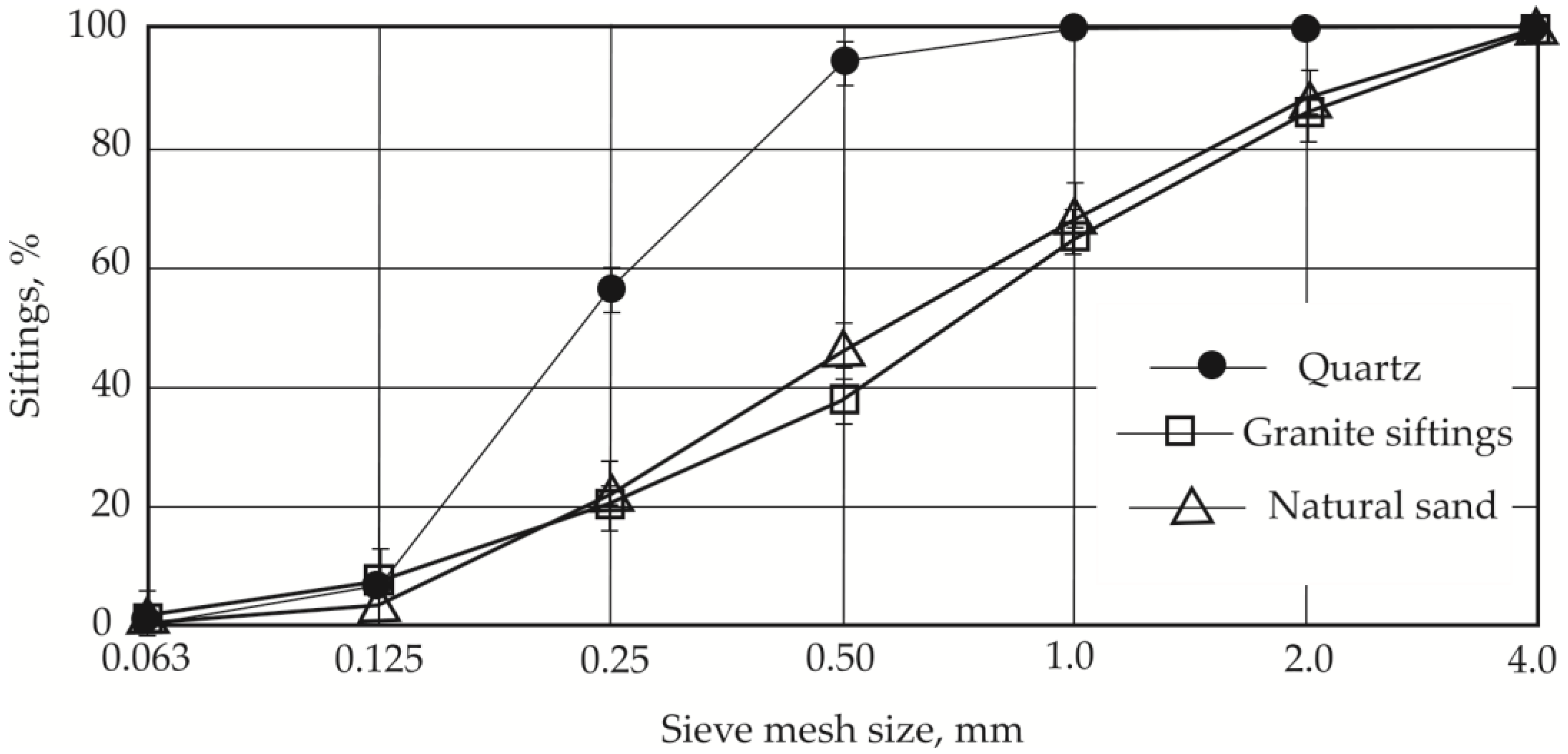
| Fraction, mm | Quartz Sand | Natural Sand | Granite Siftings | |||
|---|---|---|---|---|---|---|
| Quantity, % | Elongation Index Iq | Quantity, % | Elongation Index Ins | Quantity, % | Elongation Index Igs | |
| 2–4 | - | - | 11.8 | 1.38 | 13.9 | 2.00 |
| 1–2 | 0.3 | 1.21 | 20.0 | 1.31 | 20.7 | 2.20 |
| 0.5–1 | 5.2 | 1.37 | 22.3 | 1.32 | 27.6 | 1.76 |
| 0.25–0.5 | 37.6 | 1.34 | 23.3 | 1.69 | 17.0 | 1.59 |
| 0.125–0.25 | 49.5 | 1.42 | 19.0 | 1.45 | 12.9 | 1.97 |
| 0.063–0.125 | 7.4 | 1.56 | 3.6 | 1.4 | 8.0 | 1.61 |
| Total aggregate | 100 | 1.40 | 100 | 1.44 | 100 | 1.87 |
Disclaimer/Publisher’s Note: The statements, opinions and data contained in all publications are solely those of the individual author(s) and contributor(s) and not of MDPI and/or the editor(s). MDPI and/or the editor(s) disclaim responsibility for any injury to people or property resulting from any ideas, methods, instructions or products referred to in the content. |
© 2026 by the authors. Licensee MDPI, Basel, Switzerland. This article is an open access article distributed under the terms and conditions of the Creative Commons Attribution (CC BY) license.
Share and Cite
Zurauskiene, R.; Kičaitė, A.; Moceikis, R. The Influence of Particle Shape and Surface Roughness of Fine Aggregates on the Technological Properties of Glass-Fiber-Reinforced Thin-Layer Concrete. Materials 2026, 19, 214. https://doi.org/10.3390/ma19010214
Zurauskiene R, Kičaitė A, Moceikis R. The Influence of Particle Shape and Surface Roughness of Fine Aggregates on the Technological Properties of Glass-Fiber-Reinforced Thin-Layer Concrete. Materials. 2026; 19(1):214. https://doi.org/10.3390/ma19010214
Chicago/Turabian StyleZurauskiene, Ramune, Asta Kičaitė, and Rimvydas Moceikis. 2026. "The Influence of Particle Shape and Surface Roughness of Fine Aggregates on the Technological Properties of Glass-Fiber-Reinforced Thin-Layer Concrete" Materials 19, no. 1: 214. https://doi.org/10.3390/ma19010214
APA StyleZurauskiene, R., Kičaitė, A., & Moceikis, R. (2026). The Influence of Particle Shape and Surface Roughness of Fine Aggregates on the Technological Properties of Glass-Fiber-Reinforced Thin-Layer Concrete. Materials, 19(1), 214. https://doi.org/10.3390/ma19010214