Article

Phase Evolution by Annealing of Mechanically Activated Ni, Mn, and Sn Elemental Powders Mixture with the Ni2MnSn Heusler Compound Ratio


by
Florin Popa
1,2,*,
Andra Teodora Anastasia Man
1,
Traian Florin Marinca
1,2 and
Ionel Chicinaș
1,2
1
Materials Science and Engineering Department, Technical University of Cluj-Napoca, 103-105 Muncii Avenue, 400641 Cluj-Napoca, Romania
2
EUT+ Institute of Nanomaterials & Nanotechnologies-EUTINN, European University of Technology, European Union
*
Author to whom correspondence should be addressed.
Materials 2025, 18(24), 5642; https://doi.org/10.3390/ma18245642
Submission received: 19 November 2025 / Revised: 6 December 2025 / Accepted: 10 December 2025 / Published: 15 December 2025
(This article belongs to the Special Issue Powder Metallurgy and Advanced Materials)

Abstract

A Ni2MnSn Heusler alloy composition of elemental powders was high-energy milled for a short time for powder activation. The milling times were chosen to be 1 and 4 h to study how mechanical mixing triggers the phase formation in the Ni-Mn-Sn system. After milling, the samples were analyzed by differential scanning calorimetry and the thermal events of Ni2MnSn L21 phase formation were investigated. The milled samples were compacted at 700 MPa and annealed in a vacuum for 10 min at different temperatures (230 °C, 330 °C, and 600 °C). The annealing temperatures were chosen to emphasize the activated powders’ behavior before and after Sn melting on L21 Structure formation. Using X-ray diffraction and Rietveld analysis, the phase quantity was computed, showing that the largest L21 phase (63%) can be obtained from the elemental powder mixture due to Sn melting during the annealing. For milled samples, a Ni3Sn4 phase was obtained by milling, and by annealing this phase, along with the remaining element, it reacts to form a Ni2MnSn L21 phase and a Ni3Sn2 phase. The microstructural evolution of the phase was illustrated by backscattering electron microscopy for milled and subsequent annealed samples, and, by image analysis, a correlation of the phase’s amount was performed. The results of the image analysis were correlated with the X-ray diffraction patterns.

1. Introduction

Heusler alloys, discovered in the early 20th century, are a class of multifunctional materials with promising applications in fields such as spintronics and thermoelectric and energy technologies [1]. This class of alloy is attracting scientific interest because the properties are given by its structure, since in some cases the alloy has magnetic properties even if its constituent atoms are nonmagnetic [2]. These ternary alloys can exist in two slightly different stoichiometries: 1-1-1, called Half Heusler, or 2-1-1, called Full Heusler type [3,4]. Assigning into one or another class of material is difficult for the Heusler alloys, since they can be metals or semiconductors, but their properties can be predicted based on the valence electrons number [5,6,7]. By adjusting the chemical composition, the band gap width can be adjusted over a wide range (0–4 eV), making them versatile materials with multiple potential uses [2,8,9]. Similarly, the magnetic properties can be tailored by composition or by the valence electron number [7,10,11,12]. In the case of the Heusler alloys, another aspect is found, that the valence electrons number can be influenced by crystallographic transformations and all together modify the transition temperatures [13].
The Heusler alloy’s crystal lattice can be described as face-centered cubic, L21 if all atoms are ordered [1]. Having such a complex structure, sometimes it is difficult to obtain the structure and the ways of influencing the properties by applying heat treatments with the purpose of increasing the ordered L21 structure are open [1,14]. The ordered structure is the desired one, since in the unordered structures the magnetic properties are weaker [15]. In the large and complex ordered structure, the properties can be tuned by applying pressure on the material, as depicted in reference [16]. Furthermore, atomic order and structure influence the transport properties (electrical resistivity, Seebeck coefficient, thermal conductivity) [17].
Heusler alloys can be obtained by several synthesis methods, the most commonly used being electric arc melting [14] and mechanical alloying [18,19,20,21]. Other methods of obtaining the alloys are rapid quenching [22], thin films [23], or by laser-induced melting [24].
The benefits of Ni2MnSn composition are of particular interest, since it was found to possess a high magnetic moment (about 4µB) [25,26], a value that can be tuned by applying pressure or internal stress. Having this large magnetic moment, given by the Mn atoms’ interaction, and having a Curie temperature close to room temperature [23], makes this composition of particular interest for magnetic refrigeration studies [27,28]. To be of further interest, the properties of the Ni-Mn-Sn alloy are largely tunable by composition shifts [29] or by phase purity [30]. It worth adding that the microstructure of the Ni2MnSn Heusler alloys has an important effect on reducing the required magnetic field to produce a larger magnetic refrigeration effect [31]. The research on the formation of the Ni-Mn-Sn phase have also found an undesired effect, namely, obtaining additional Ni-Sn or Mn-Sn phases alongside the desired ordered phase (L21) [30].
With the problems occurring by the melting of components, especially for Mn, an alternative is sought, one being found to be mechanical alloying. Mechanical alloying (MA) is an out-of-equilibrium method of alloy synthesis in a solid state. In MA experiments, an elemental powder mixture is activated by the energy transfer through collision events between the balls confined into a vial subjected to high speed [32]. This process involves repeated events of fracture and welding for the powder particles, leading to elemental mixing and eventually to the elements’ reaction [33].
The preparation of the Ni2MnSn by mechanical alloying was tested and it was found that, in the first hours of milling, a broadening of the elemental powders occurs, followed by a reaction and formation of the Heusler phase [34]. By switching the milling parameters, a more complex formation is found in [35], where, for short milling times, intermediate Ni-Sn phases are reported. It was found that annealing enhances the L21 Heusler structure formation, but the undesired Ni-Sn phase cannot be removed [35].
The aim of this research is to fill the gap in the formation study by mechanical alloying, looking at very short-milled samples (0, 1, and 4 h). Another direction is to apply heat treatment near the Sn melting point to observe the effect of liquid Sn on the L21 Heusler structure formation for these short milling times. The study thus analyses the effects of powder activation and fresh surface creation by high-energy milling and subsequent annealing. By this approach, we try to understand the kinetics of the Ni-Sn phase formation and to gain a control mechanism that will lead directly to Ni2MnSn Heusler phase formation, without additional NixSny phases.
The annealing times are applied for a short duration for the whole sample volume thermal homogeneity only, and not to develop other thermal events. To properly facilitate the reaction of the samples, the powders were compacted before annealing. Since multiple phases were obtained, by milling and temperature-combined effect, phase microstructures are described, visualizing the phases mixing and their modification by low-temperature heating.

2. Materials and Methods

Elemental Ni (Vale, 3.5–4.5 µm, 99.8% metal basis), Mn (Alpha Aesar,−325 mesh, 99.3% metal basis) and Sn (Alpha Aesar,−325 mesh, 99.8% metal basis) powders in the Ni2MnSn Heusler alloy composition were short milled in a planetary ball mill, Pulveristte 6 Fritch, operating at 350 rpm main disk speed. For the milling experiment, a 250 mL volume hardened steel vial was used, filled with 20 hardened steel balls with 14 mm diameter. The ball-to-powder mass ratio (BPR) was chosen to be 7.2:1 and to avoid oxidation, and the milling was performed in argon atmosphere.
The milled samples were compacted at 700 MPa pressure in cylindrical shapes and subsequently heated at 230 °C, 330 °C, and 600 °C for 10 min in a vacuum. The selected annealing temperatures were chosen based on the differential scanning calorimetry (DSC) curves and this will be explained in the discussions of Figure 2. For the DSC experiments, Labsys Setaram Equipment (Setaram Instrumentation, Caluire-et-Cuire, France) was used. The samples were heated in argon atmosphere flux up to 600 °C with a rate of 10 °C/min. The structural studies were performed by X-ray diffraction, using an INEL 3000 Equinox diffractometer (INEL SAS, Artenay, France), operating with a CoKα wavelength (1.7906 Å) in the 20–110 two theta range. The diffraction patterns were analyzed by means of the Rietveld method [36,37] implemented in the Winplotr software (version April 2023) [38,39].
Scanning electron microscopy (Jeol JSM 5600LV) (JEOL Ltd., Tokyo, Japan) was conducted using a backscattering signal to visualize the microstructures which resulted after annealing. On the recorded images, chemical analysis and elemental map distribution were recorded using an UltimMAX 65 Energy dispersive X-ray spectrometer (EDX) from Oxford Instruments (Oxford Instruments NanoAnalysis, High Wycombe, UK). The data were collected and analyzed by Aztec 4.2 software. The scanning electron microscopy (SEM) images were processed by ImageJ software (version 1.54g) to compute the phase weight for each sample.

3. Results and Discussion

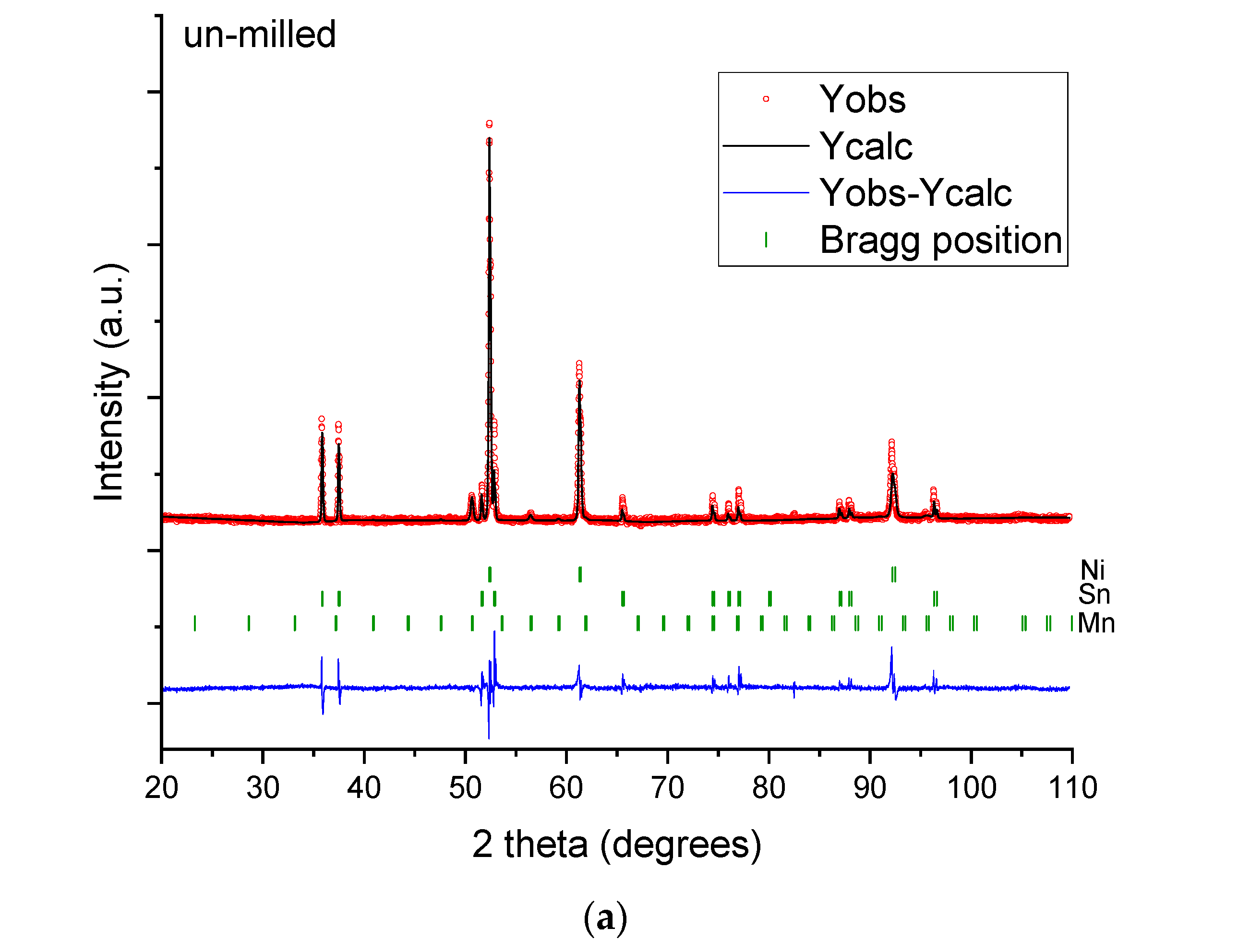
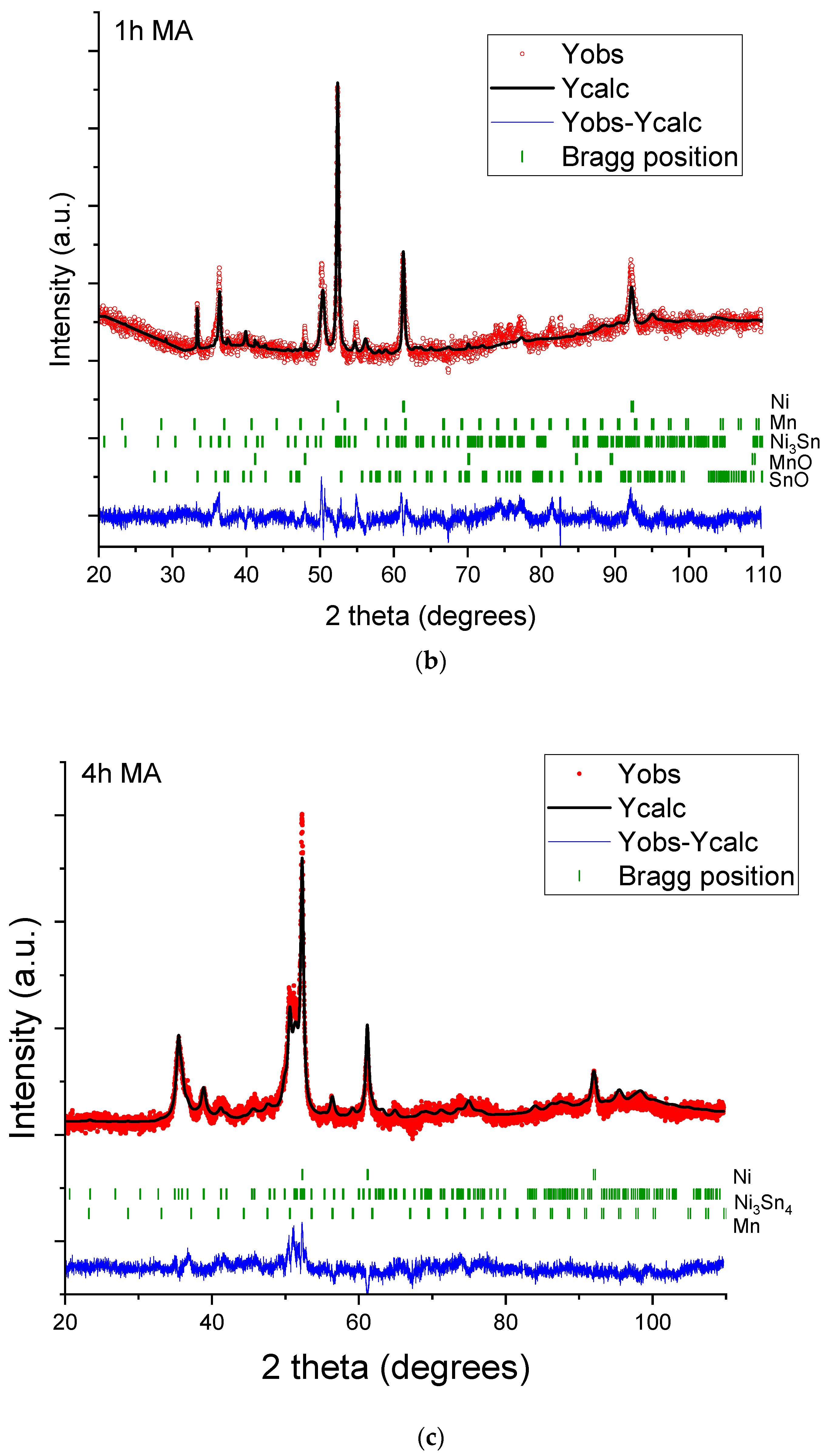
The effect of short milling times on the elemental Ni, Mn, and Sn powders is presented in Figure 1. In this figure, a clear evolution of diffraction peaks is seen from the initial mixture to 4 h of milling.
In Figure 1a, all the diffraction peaks for the elemental powders are seen for the unmilled sample. As the milling is started, the elemental powders start to be mixed and the intensity of the milling leads to the initiation of a solid-state reaction between Ni and Sn, and by this the Ni3Sn4 phase is obtained. The reaction is initiated by the fracture event on the initial powder particles, which create fresh surfaces with increased reactivity. This observation is confirmed by the affinity of Sn and Ni and its formation energy [40]. Unfortunately, this type of fresh un-passivated surface had a negative impact, since the surfaces of Sn and Mn are prone to oxidize, as the indexation of the diffraction pattern indicates. After 1 h of milling, the diffraction peaks of Sn have disappeared, with only the peaks of Ni and Mn being recorded. The effect of milling from 0 to 4 h has a different impact on the powders. Now, only two phases are recorded, the initial Ni phase and the newly obtained Ni3Sn4 one. The Mn powders are therefore fragmented and incorporated into the Ni and Ni3Sn4 matrix.
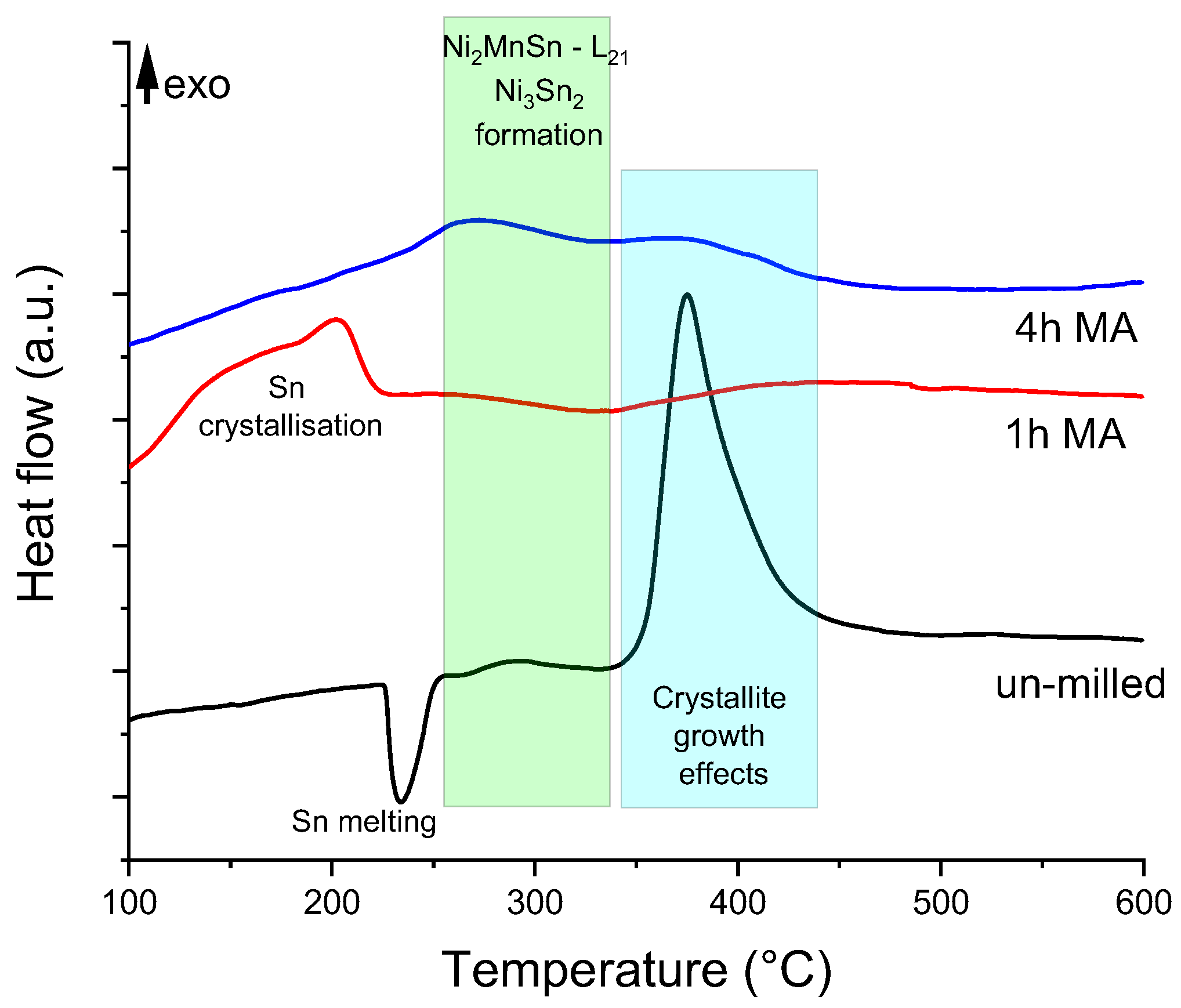
Using these three powders, annealing was considered. To properly choose the annealing temperature, DSC curves were recorded. The obtained curves are presented in Figure 2.
The recorded DSC curves show three different behaviors for the samples, depending on their milling period. The un-milled sample is expected to show the Sn melting at a temperature of about 230 °C, as recorded. Further behavior of this sample is controlled by the reaction of melted Sn with Ni and Mn. At the beginning, the reaction forms two compounds: the Ni2MnSn Heusler and the Ni3Sn2, followed by a very sharp exothermic event, at 375 °C, associated with the crystallite growth of these phases. The sample milled for 1 h has a different path; first, the Sn mixed by milling develops crystallite growth, as the exothermic thermal event at 200 °C indicates. This event is then followed by another one, assigned to the Ni3Sn2 phase formation, a very broad one. The last thermal event is associated with recrystallisation, probably for the phases containing Mn.
The third curve, for the 4 h milled sample, since it is milled for a longer time, has a first peak around 270 °C, corresponding to the Ni3Sn2 and Ni2MnSn phase formation. The curve has a second peak corresponding to the recrystallisation temperature of the above formed phases [35,41].
Based on the DSC measurements, the annealing temperatures were chosen to be at 230 °C (before Sn melts), 330 °C (after Sn melting), and 600 °C (after crystallite growth temperature).
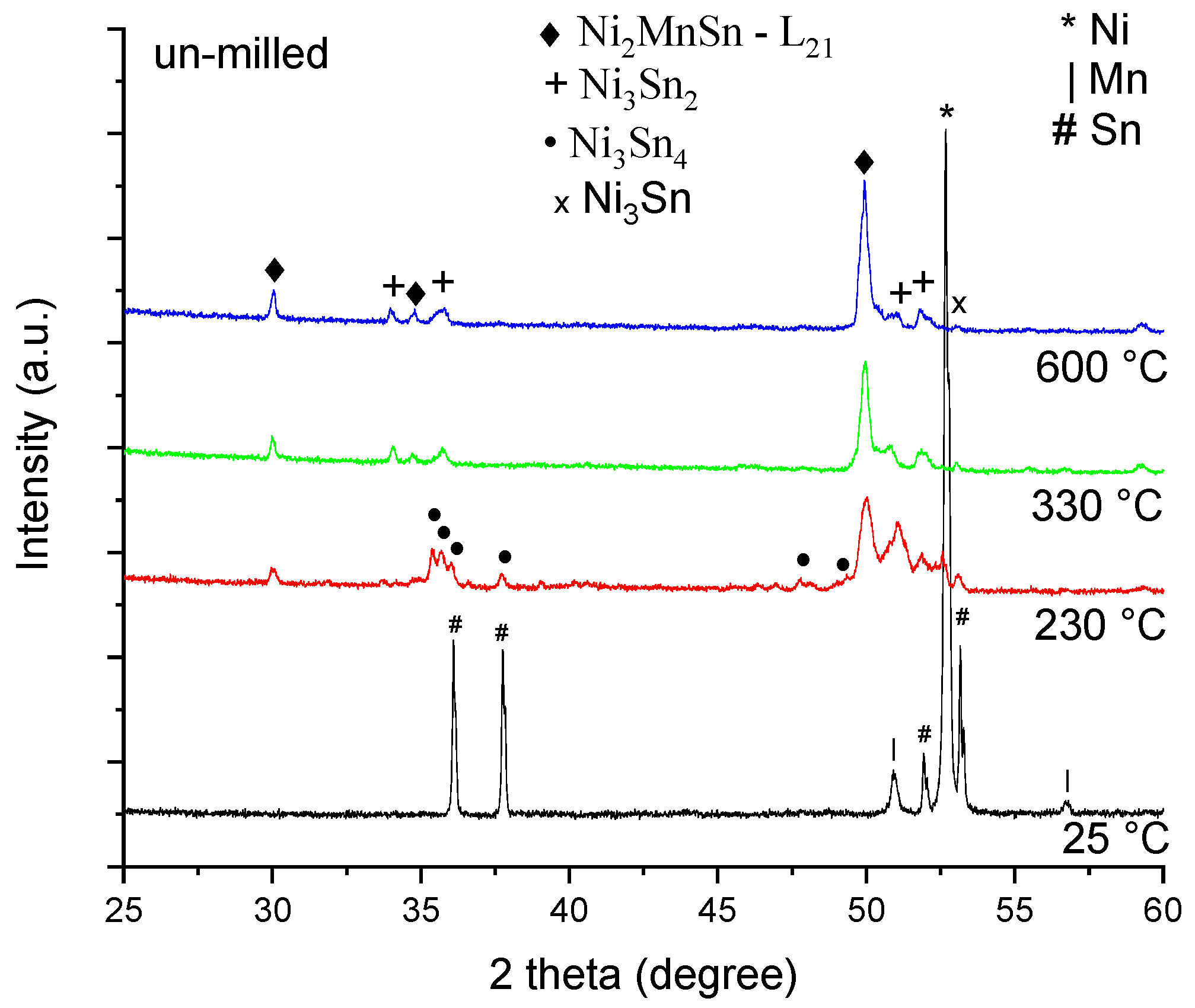
Figure 3 shows the phase evolution of the un-milled sample, annealed for 10 min at different temperatures.
Analyzing the diffraction patterns by means of the Rietveld refinement, the following phases and amounts were found, as presented in Table 1.
Table 1 shows the elemental powder reaction as the temperature increases, with a sharp change as the Sn is melting at around 235 °C. As the Sn melts, it creates conditions to promote a reaction between the elements, and the Ni2MnSn Heusler compound is formed. As a secondary phase, the Ni3Sn4 one is also formed [35,41]. Heating above Sn melting temperature, a larger amount of the Ni2MnSn phase is formed, reaching more than 55% of the sample, and the Ni3Sn2 phase is promoted as a secondary phase, instead of Ni3Sn4. Heating up to 600 °C has the effect of forming more of the Ni2MnSn phase (up to 63%) and consuming the elemental powders. At this heating temperature, only the Mn and Ni phases are visible.
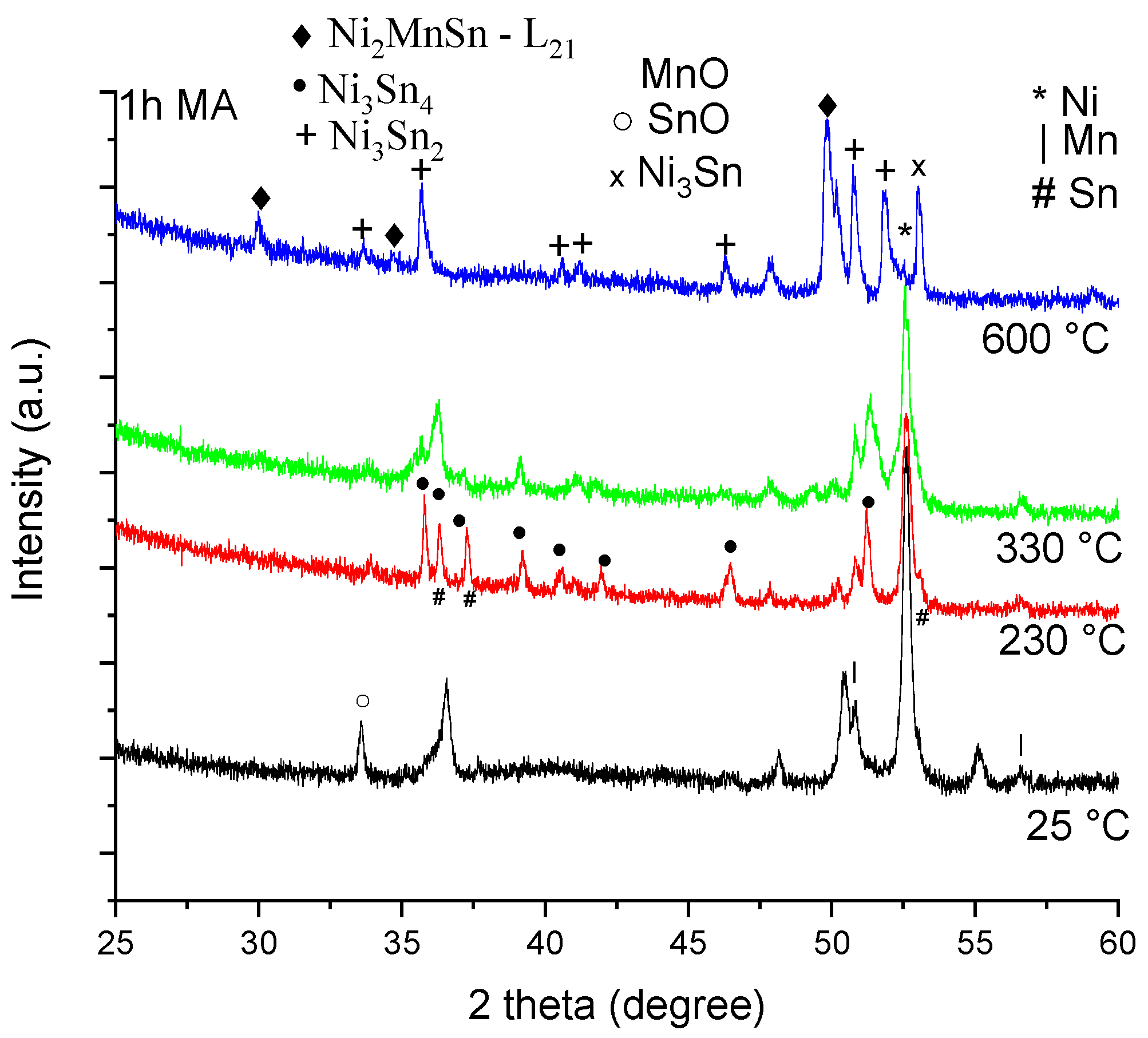
Figure 4 shows the phase recorded upon annealing the 1 h milled sample, with the purpose of investigating the effect of mechanically activated powders.
Analyzing the diffraction patterns by means of the Rietveld refinement, the following phases and amounts were found, as presented in Table 2.
The phases resulting from 1 h of milling and subsequent annealing are very interesting, reflecting the initial stage of mechanical alloying, namely, the powder fracture and the exposing of a fresh surface ready to react. Therefore, the 1 h milled sample is very hard to handle in air, since the fresh surfaces of Sn and Mn will quickly react with air to form oxides [42]. However, a careful handling in a protective atmosphere, followed by annealing, overcomes this sensitivity of the Mn in particular. By careful handling, after annealing at 230 °C, the unreacted Sn melts and is again visible in the diffraction patterns, and now the only promoted phase is Ni3Sn4. After annealing at 330 °C, the Ni3Sn2 phase also starts to form, as does the Ni2MnSn phase, in a very small amount. Increasing the temperature up to 600 °C, the Ni2MnSn phase amount grows, reaching an amount of 36%, alongside the Ni3Sn2 phase (36%) and the Ni3Sn phase (17%). At this temperature, a larger MnO phase occurs. At first, it seems that activating the powders increases the energy of the Ni2MnSn phase formation, since an amount of thermal energy is directed to the initial powder recrystallisation (Sn) and the internal stress removal induced by milling.
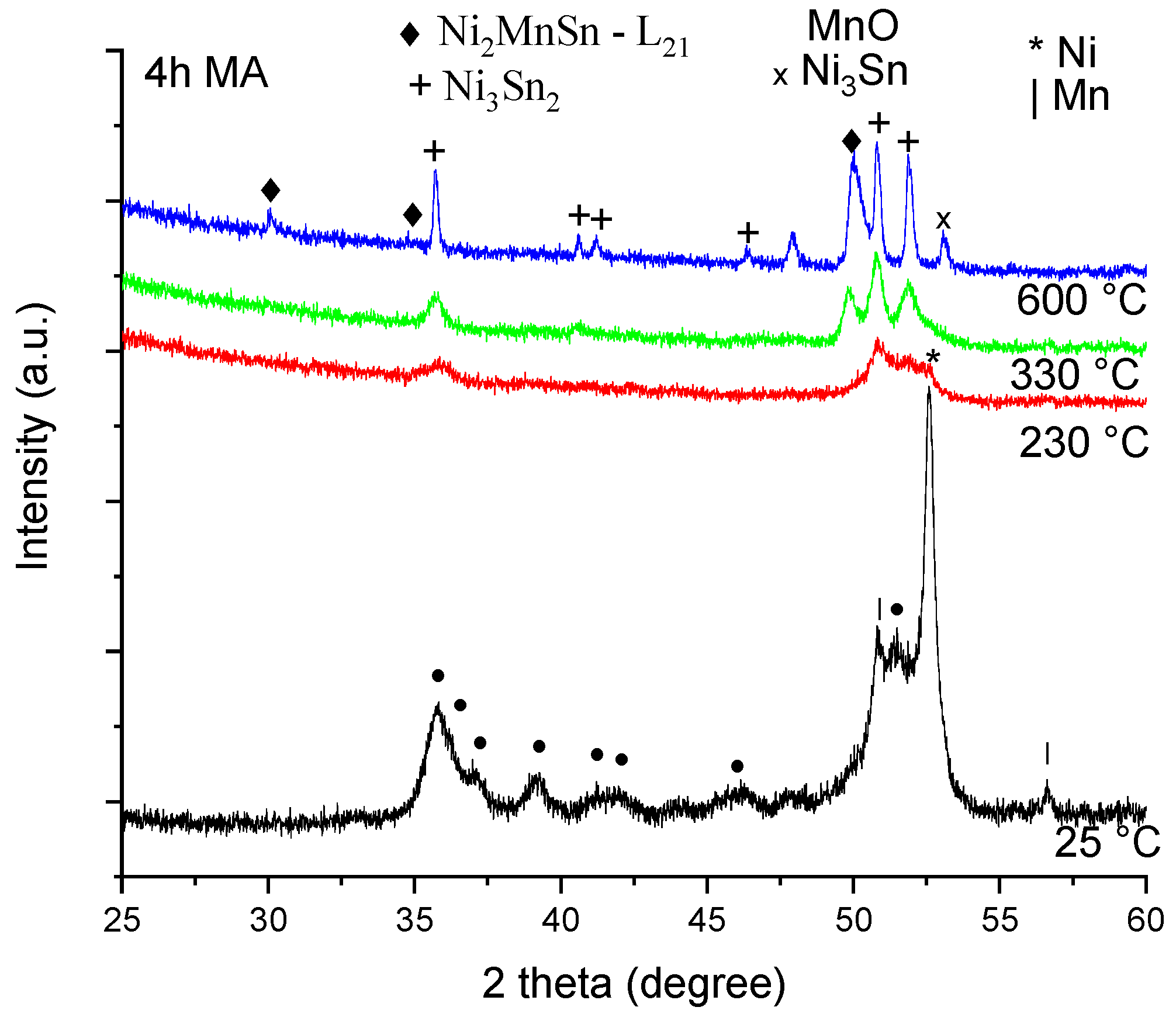
The phase evolution of the 4 h milled and subsequently annealed sample is presented in Figure 5.
Analyzing the diffraction patterns by means of the Rietveld refinement, the following phases and amounts were found, as presented in Table 3.
Milling the sample up to 4 h leads to complete Sn disappearance and the formation of the Ni3Sn4 phase. Heating the sample at 230 °C leads to a complete Mn reaction and the formation of a large Ni3Sn4 quantity (about 72%). There is visibly a large shift in the phases between the as-milled and 230 °C annealed sample, where the consumption of the Mn and Ni is clearly visible. Continuing the heating at 330 °C, all elemental powders are reacted. The Ni2MnSn phase germinates as well, and the Ni3Sn4 phase is transformed into the Ni3Sn2 phase. At an even higher temperature, the formation of the Ni2MnSn phase continues, reaching 37% by consuming the Ni3Sn2 phase. Unfortunately, other secondary phases are obtained (Ni3Sn and MnO).
Analyzing the data obtained after DSC and X-ray diffraction studies upon the annealed samples, a reaction kinetic can be deduced (Equation (1)). The data from our study are correlated with other available data on the compounds’ formation energy in the Ni-Sn system [19,43,44].
Ni3Sn4 + Mn + Ni → Ni3Sn2 + Ni2MnSn
The findings are consistent with the behavior of the powders in the first hours of milling, where a small Sn layer is formed on the Ni particles, leading to Ni3Sn4 formation, as reported in [45], followed by increasing the contact surface between Ni3Sn4 and Ni particles. In this stage, the low temperature can initiate the Ni3Sn2 phase formation [46]. At the same time, by adding Mn, the Heusler phase Ni2MnSn is obtained.
In conclusion, the thermal treatment of the samples has a large effect on the unmilled sample, leading to a large Ni2MnSn Heusler compound. By milling, the activation formation of the Ni2MnSn Heusler phase is hindered, since lower quantities are obtained at similar temperatures. But the milling has a positive effect on reducing the Ni-Sn phase number present in the milled and annealed samples.
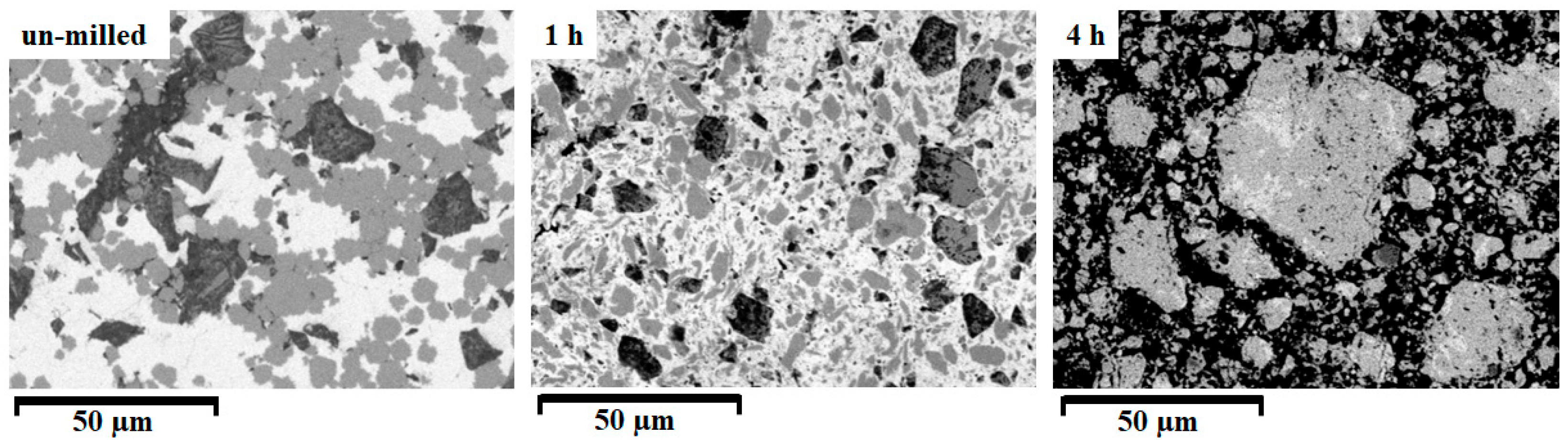
The mixing and the reaction of the elemental powder can be observed easily by scanning electron microscopy, using a backscattered signal for the milled samples, as presented in Figure 6.
The electron images, exposing the compositional contrast, show for the un-milled sample a compact and sharp color for each element: with gray for Sn, dark gray for Ni, and black for Mn. Due to the components’ plasticity, no pores were observed for the un-milled and 1 h milled samples. As the milling starts, the distribution of colors changes, since the elemental powders are mixed and incipient reactions occur between them. The particles at this stage are rather large, since the cold-welding events predominate. After 4 h of milling, a different picture is seen: the whiter areas have almost disappeared, attesting to the Sn reaction, and a new gray area is observed, corresponding (as the X-ray diffraction indicates) to a Ni3Sn4 alloy. Some small areas with gray (corresponding to unreacted Ni) and black (corresponding to unreacted Mn) are still visible. It is worth noting that after 4 h of milling the particle size is reduced, compared with the 1 h milled sample.
Next, the milled samples were analyzed by scanning electron microscopy for different annealing temperatures.
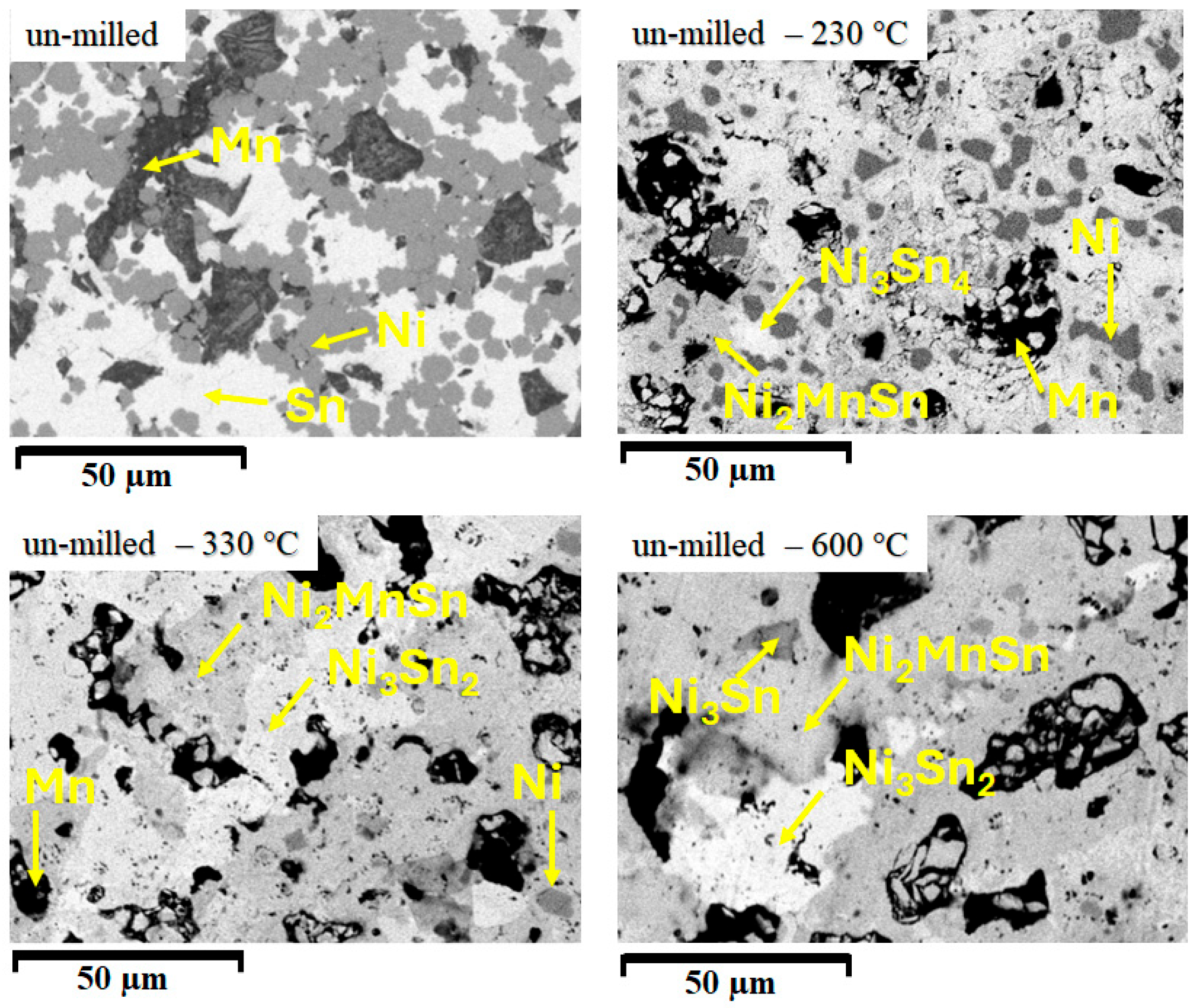
Figure 7 shows the microstructures obtained for the un-milled sample.
The phase distribution confirms the results of the X-ray diffraction study and shows how a reaction occurs upon heating the initial mixture of powders. After 10 min of annealing at 230 °C, a temperature very close to the pure Sn melting temperature has as an effect the reaction of Ni with Sn and the formation of a Ni-Sn alloy. Near the Sn melting temperature, the heating energy provides sufficient energy to promote a reaction between the elements, leading to the formation of the Ni2MnSn and Ni3Sn4 phase. Upon heating above the Sn melting temperature, the Ni3Sn4 phase transforms into the Ni3Sn2 phase as an effect of formation energy change [40], and, by consuming the Mn areas, extends the area size of the Ni2MnSn Heusler phase. When the temperature increases to 600 °C, the Heusler phase becomes the dominant phase, surrounding areas of Ni3Sn2 and Ni3Sn phase that are also forming at his temperature. As a short conclusion, only by heating at 600 °C a compacted mixture of Ni, Sn and Mn powders can form a large amount of Ni2MnSn Heusler phase.
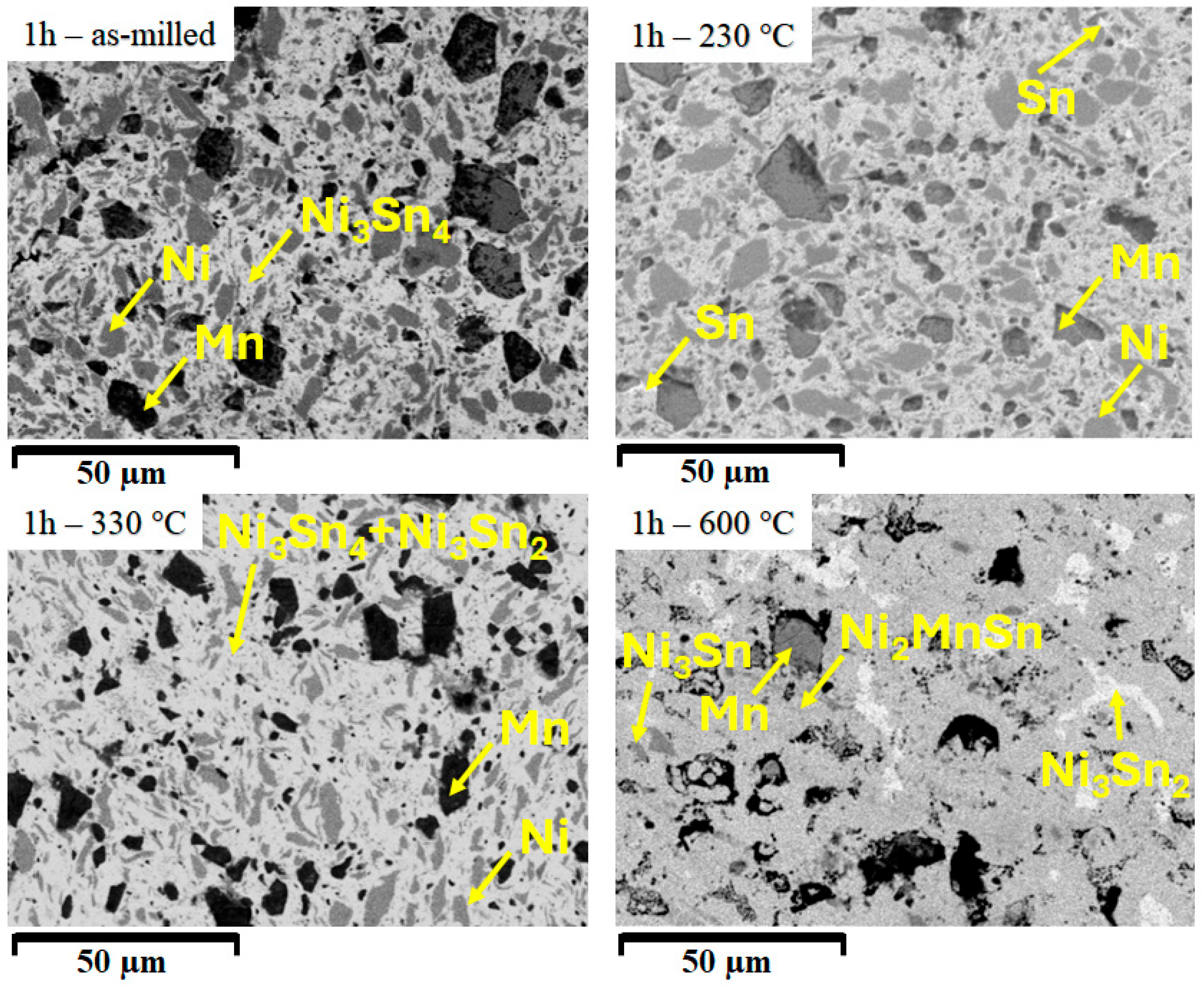
The picture of the thermal influence on the powders is now studied (Figure 8) by applying the heat treatment to a mechanically activated sample, that is to say, the sample milled for only 1 h.
At 1 h of milling, the as-milled sample shows a mixture of Ni, Mn, and Ni3Sn4. The larger part of the sample is composed of the Ni3Sn4 phase, which embeds clusters of Ni and Mn. Heating the sample at 230 °C has the effect of increasing the Ni3Sn4 quantity, but also Sn recrystallisation, as indicated by some faint white areas in Figure 8. Increasing the temperature up to 330 °C modifies the phase content, but at a microstructural level only the Sn areas have disappeared. At 600 °C, the temperature forms the Heusler phase, Ni2MnSn by dissolving the remaining Ni and has the effect of clustering Ni3Sn2 phase and the formation of Ni3Sn phase.
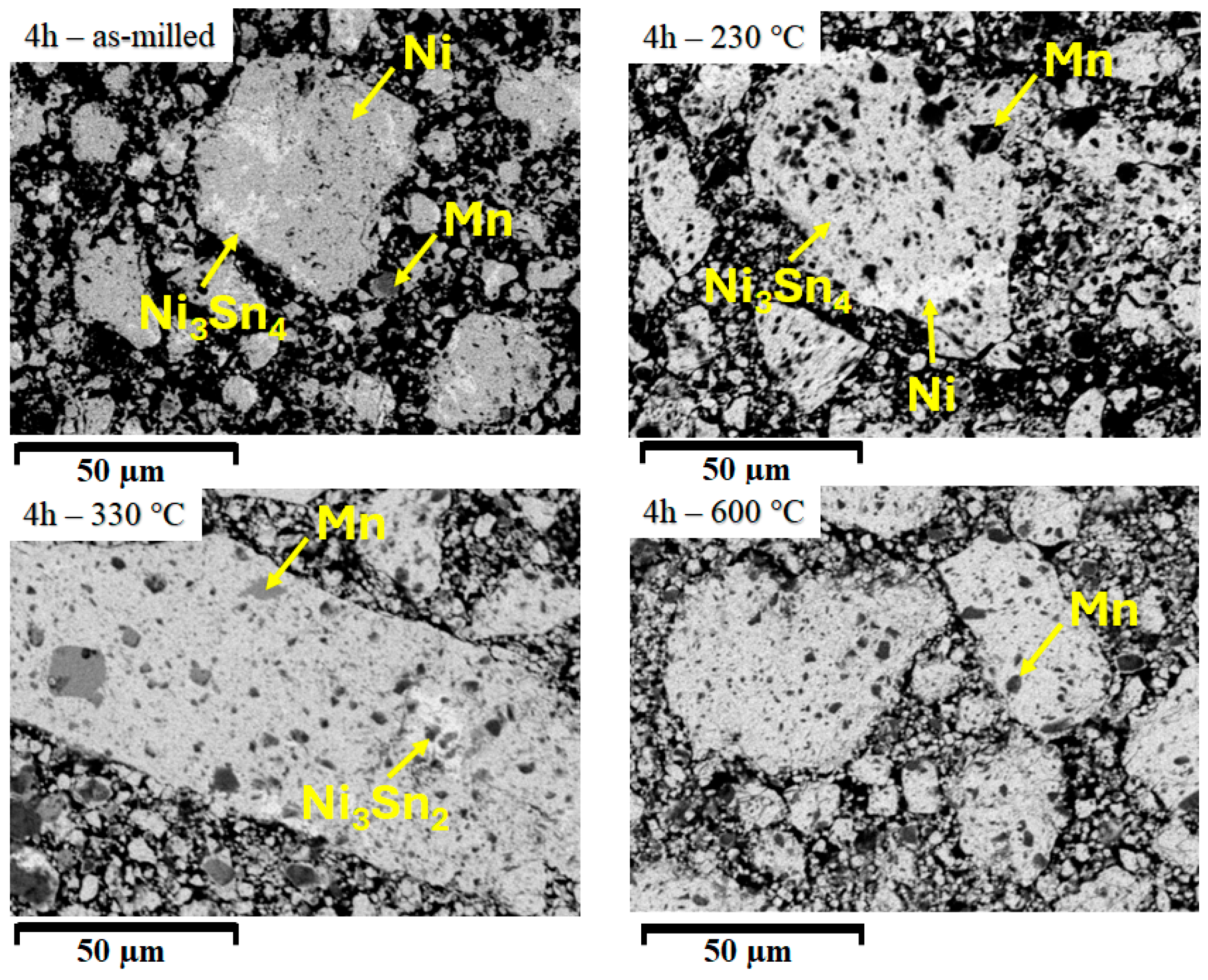
The formation of the phases for the 4 h milling time sample is less dynamic than in previously milled samples, as the images from Figure 9 display.
For the as-milled sample, three types of areas are visible, corresponding to elemental Ni, Mn, and the Ni3Sn4 formed phase. Heating at 230 °C and 330 °C has little impact on the observed phases, except that, as the X-ray diffraction has shown, the Ni3Sn4 phase is replaced by the Ni3Sn2 one. All the samples have Mn clusters, which do not react by the combined action of milling and temperature.
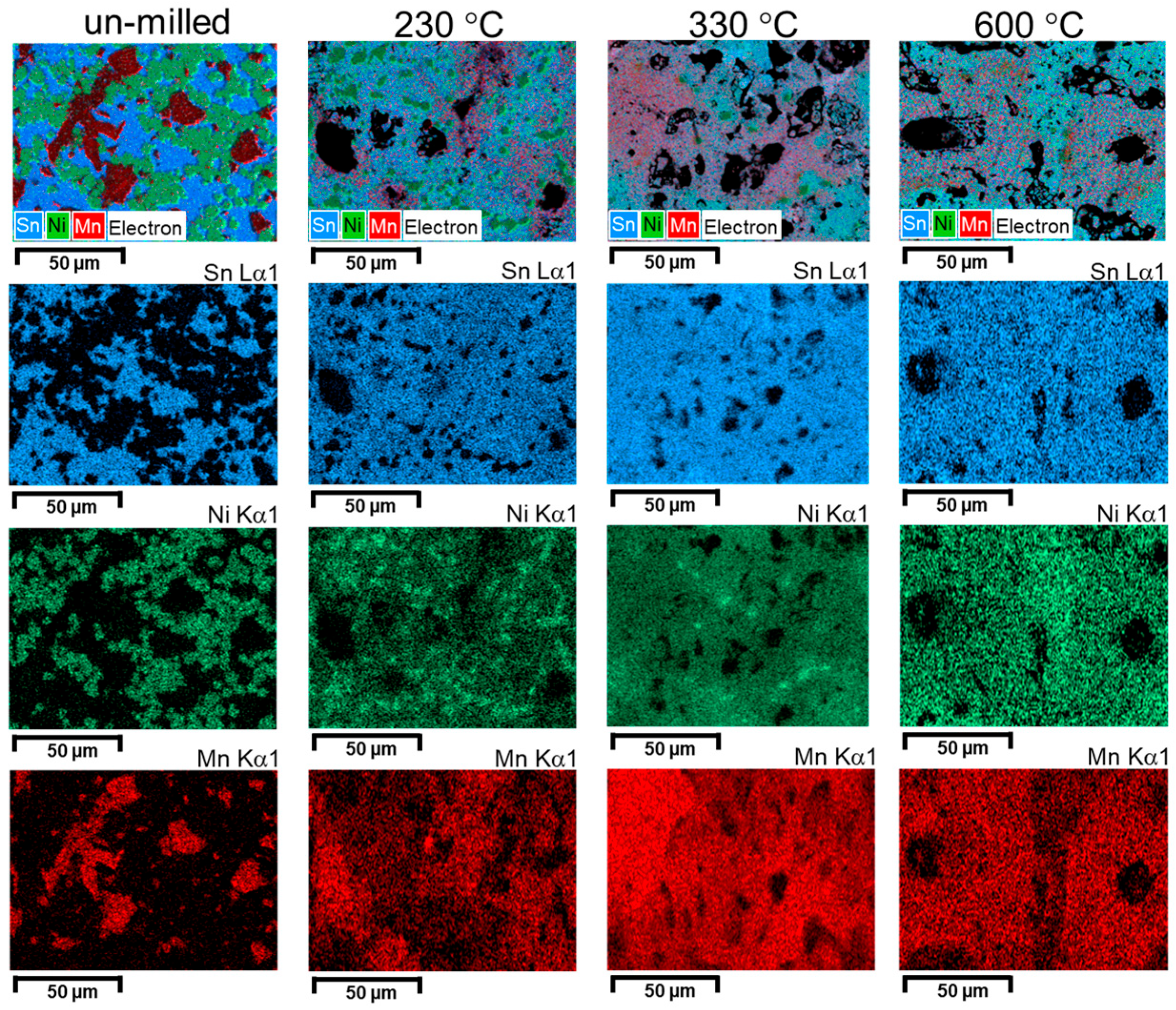
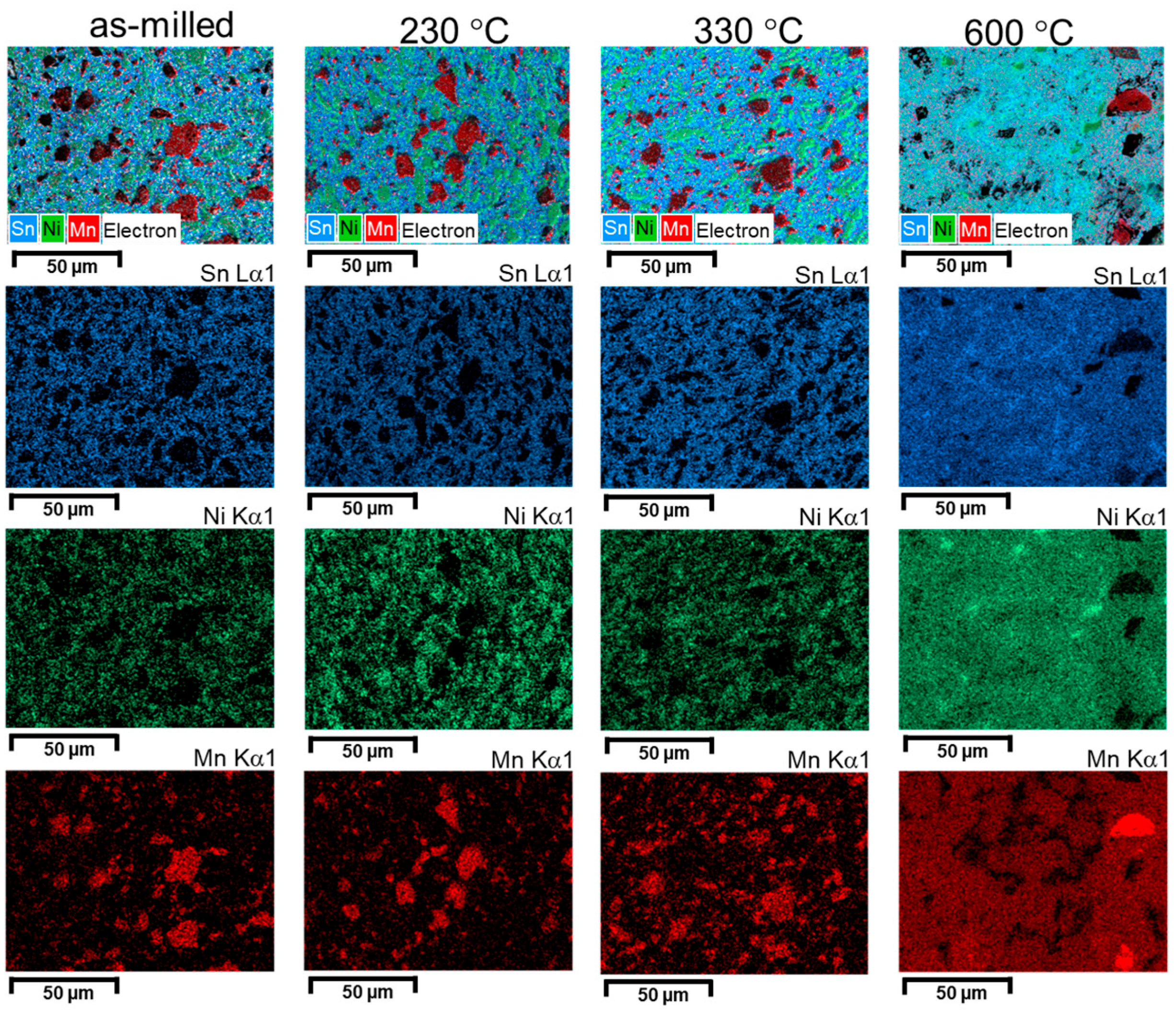
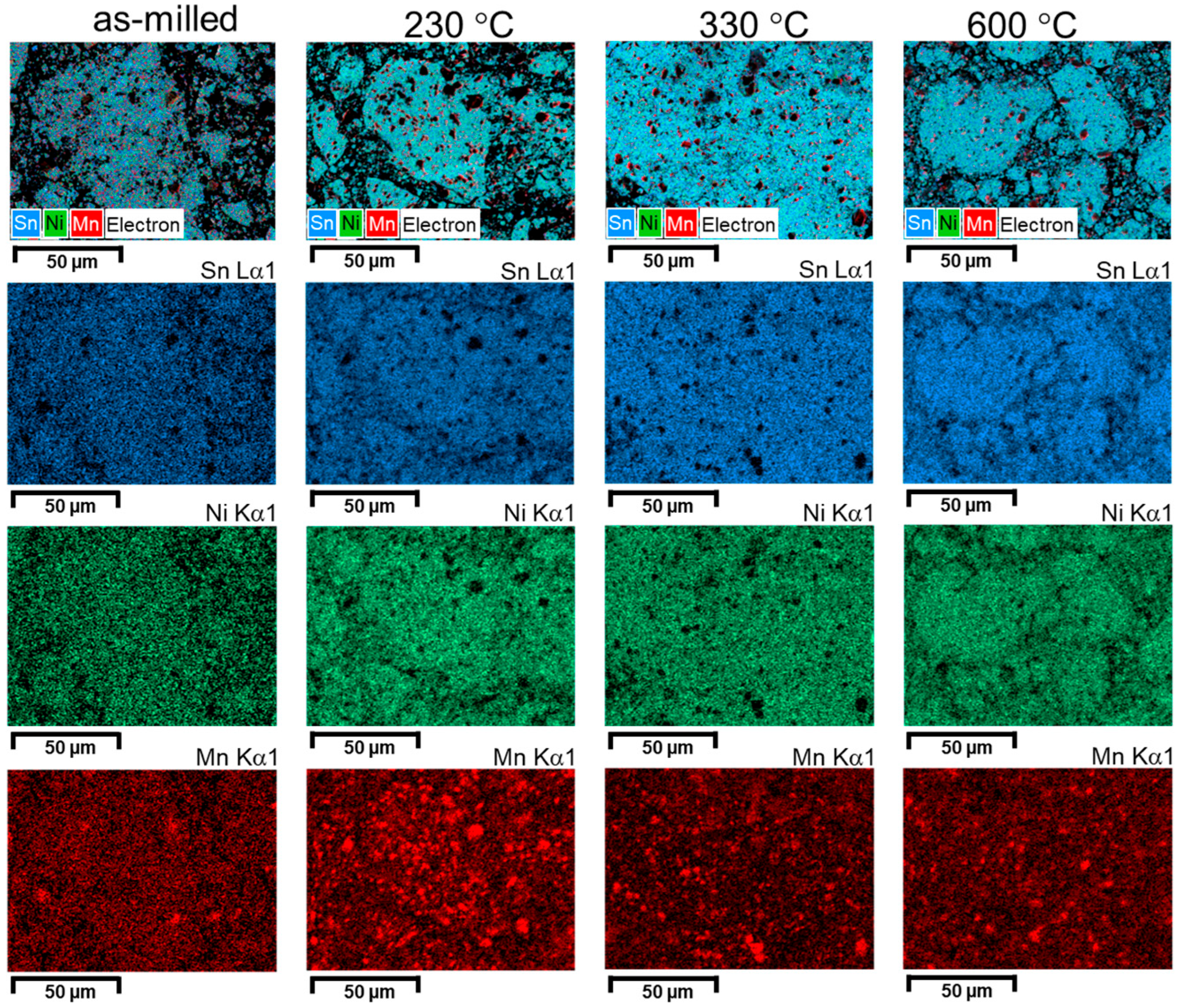
The evolution of the phases can be visually described by showing elemental map distribution images (Figure 10, Figure 11 and Figure 12).
Analyzing the elemental distribution maps, it can be seen that, for the un-milled sample, the annealing has the effect of consuming the Ni particles. This effect is visible by the size reduction in the Ni areas. In addition, the diffusion is seen by the Mn area extension on the analyzed area. However, at high temperature (600 °C), a new agglomeration of Ni particles can be seen, revealing Ni2MnSn phase formation. As the milling is started, and a good dispersion of elemental powders particles is made, increasing the temperature has the effects of phase formation between Ni and Sn, and Mn clustering. If the milling is even higher (4 h), the dispersion by milling is enough to homogenize distributions for Sn and Ni and to reduce the size of the Mn clusters. As a short conclusion, the study of elemental distribution maps as a function of milling and annealing visualizes the effect of completing the elemental reaction, especially when elemental Sn exists in the sample if the temperature is higher than its melting temperature. For the milled sample, a clustering effect is noticed when passing from 330 °C to 600 °C. The effect is more visible for Mn.
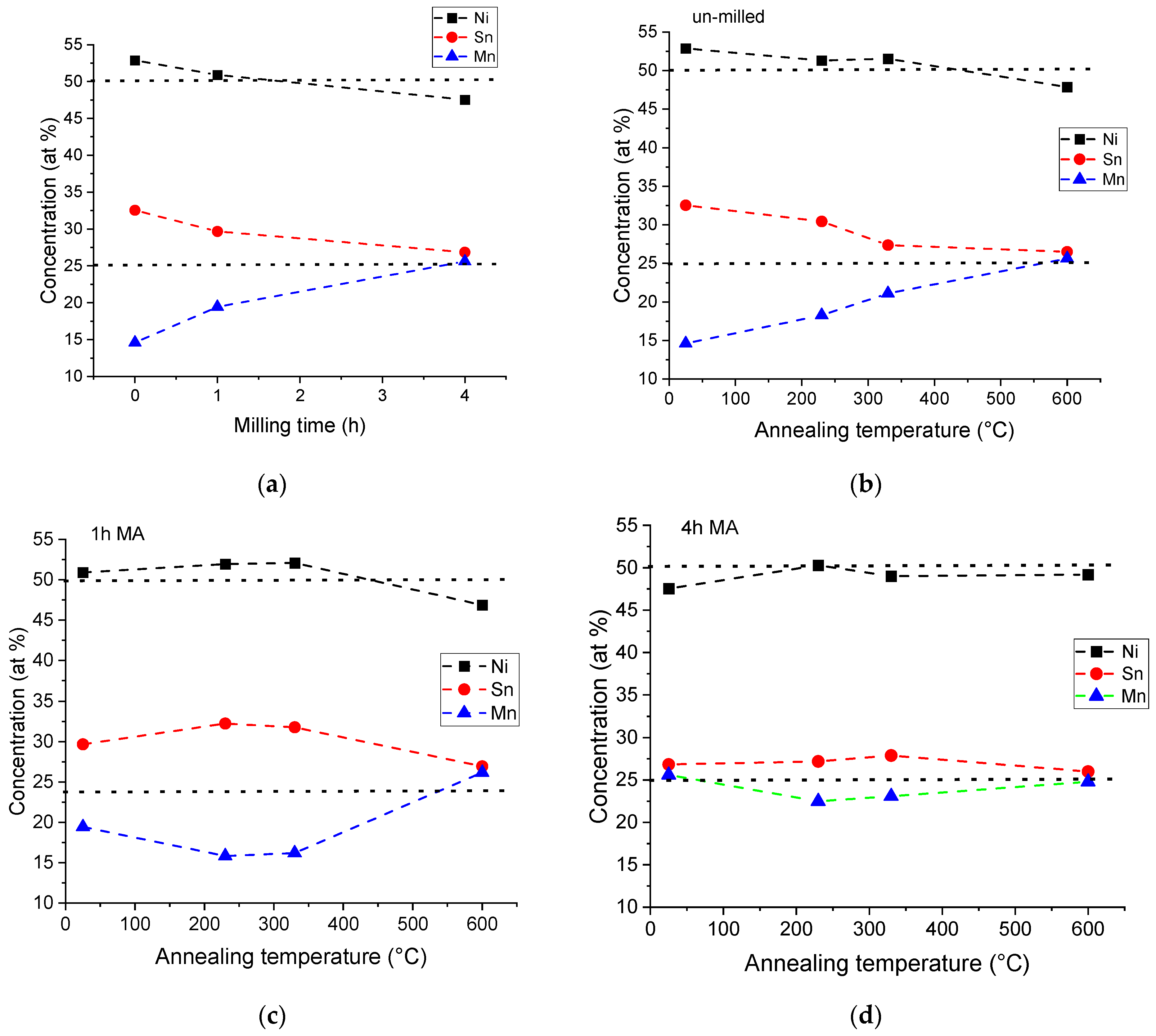
Since several local chemical analyses were performed to properly assign the observed phases in the microstructural images, a plot of the global amounts of the percent of each element was computed. The evolution of elemental quantity distribution with milling time and annealing temperature was computed, as Figure 13 shows.
From this analysis, it is visible that, as the milling time is increasing, the composition goes towards the desired one. Concerning the annealing temperature and milling time, the process is similar; only the way the composition reaches the desired one is slightly different.
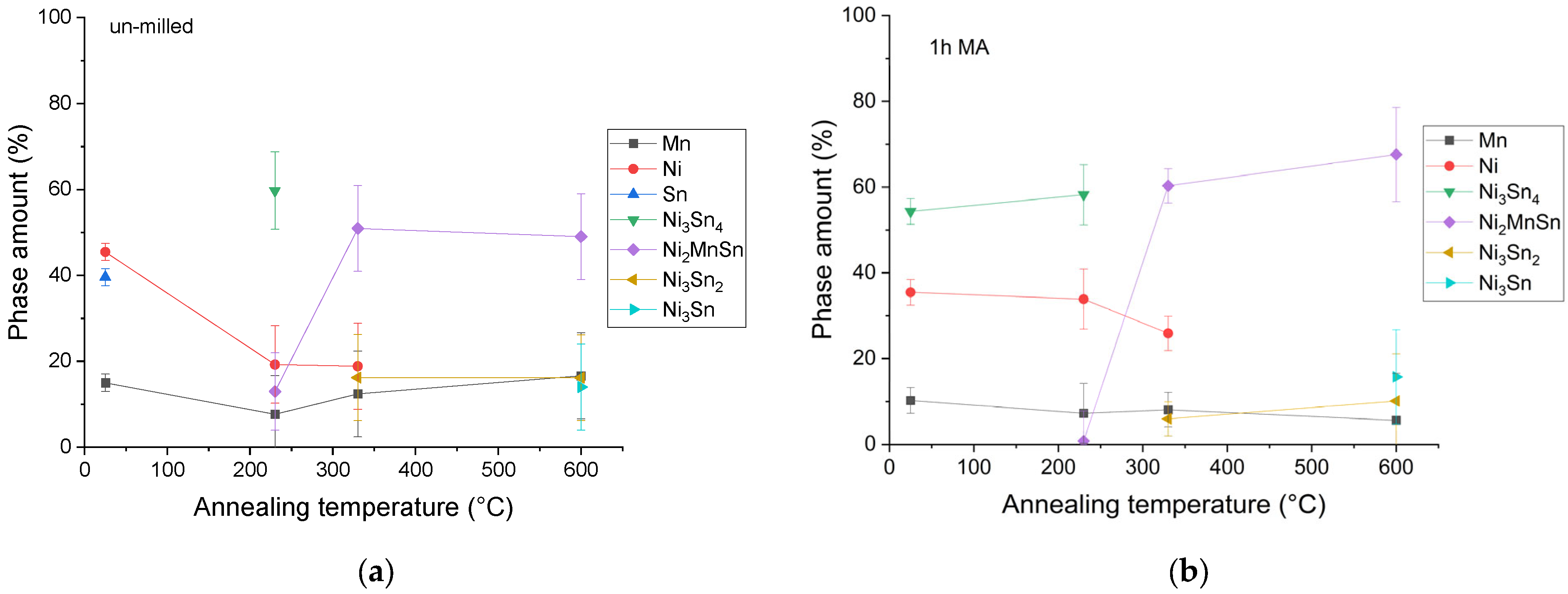
For the un-milled and 1 h of milling, the phases are plotted versus temperature in Figure 14. Since the 4 h milled sample has smaller variation in compositions and contains a large porosity (up to 20% of the sample), its phase ratio was not computed by this method.
The computed phases underline the continuous decrease in the elemental powder ratio and the increase in the Ni-Sn phase, and the Ni2MnSn Heusler one in particular. For samples annealed at 600 °C, the Heusler phase reaches values higher than 50–60% of the sample.

4. Conclusions

Ni2MnSn Heusler alloy formation was studied by using a combined method of short mechanical alloying and subsequent low-temperature annealing. By short milling, powder particle surface activation was promoted, leading to elemental mixing and reaction. The thermal study of the milled samples showed that, in the very short milling times, a Sn crystallization occurs and the formation of the Ni2MnSn L21 structure is an exothermic event, occurring around 300 °C. The melting of Sn in the un-milled sample has a large impact on the formation of the Ni2MnSn L21 phase; this phase can reach up to 63% if the annealing is performed at 600 °C for 10 min. In the milled samples, first, the Ni3Sn4 phase is formed, and, by annealing, this phase and the unreacted elements transform into the Ni3Sn2 and Ni2MnSn L21 phase. The microstructural evolution of the phase was illustrated by backscattering electron microscopy for milled and subsequent annealed samples, and, by image analysis, a correlation of the phases was performed. The results of the image analysis are well correlated with the X-ray diffraction patterns.

Author Contributions

Conceptualization, F.P.; methodology, F.P.; validation, I.C. and T.F.M.; investigation, F.P., A.T.A.M. and T.F.M.; writing—original draft preparation, F.P. and A.T.A.M.; writing—review and editing, I.C. and T.F.M.; project administration, F.P.; funding acquisition, F.P. All authors have read and agreed to the published version of the manuscript.

Funding

This work was funded by a grant of the Ministry of Research, Innovation and Digitization, CNCS–UEFISCDI, project number PN-IV-P1-PCE-2023-0969, within PNCD IV.

Institutional Review Board Statement

Not applicable.

Informed Consent Statement

Not applicable.

Data Availability Statement

The original contributions presented in this study are included in the article. Further inquiries can be directed to the corresponding author.

Conflicts of Interest

The authors declare no conflicts of interest.

References

  1. Graf, T.; Felser, C.; Parkin, S.S.P. Simple rules for the understanding of Heusler compounds. Prog. Solid State Chem. 2011, 39, 1–50. [Google Scholar] [CrossRef]
  2. Wederni, A.; Daza, J.; Mbarek, W.B.; Saurina, J.; Escoda, L.; Suñol, J. Crystal Structure and Properties of Heusler Alloys: A Comprehensive Review. Metals 2024, 14, 688. [Google Scholar] [CrossRef]
  3. Graf, T.; Winterlik, J.; Müchler, L.; Fecher, G.H.; Felser, C.; Parkin, S.S.P. Magnetic Heusler Compounds. In Handbook of Magnetic Materials; Elsevier: Amsterdam, The Netherlands, 2013. [Google Scholar] [CrossRef]
  4. Tavares, S.; Yang, K.; Meyers, M.A. Heusler alloys: Past, properties, new alloys, and prospects. Prog. Mater. Sci. 2023, 132, 101017. [Google Scholar] [CrossRef]
  5. Zhao, Y.; Yan, H.; Xiang, H.; Jia, N.; Yang, B.; Li, Z.; Zhang, Y.; Esling, C.; Zhao, X.; Zuo, L. Valence electron concentration and ferromagnetism govern precipitation in NiFeGa magnetic shape memory alloys. Acta Mater. 2024, 264, 119592. [Google Scholar] [CrossRef]
  6. Kulkova, S.E.; Eremeev, S.V.; Kakeshita, T.; Kulkov, S.S.; Rudenski, G.E. The Electronic Structure and Magnetic Properties of Full- and Half-Heusler Alloys. Mater. Trans. 2006, 47, 599–606. [Google Scholar] [CrossRef]
  7. Gupta, Y.; Sinha, M.M.; Verma, S.S. First-principles investigation on the electronic, mechanical and lattice dynamical properties of novel AlNiX (X = As and Sb) half-Heusler alloys. Mater. Today Commun. 2021, 26, 101885. [Google Scholar] [CrossRef]
  8. Ashraf, M.; Afaq, A.; Bakar, A. Physica B: Condensed Matter Band gap engineering and physical properties of half heusler alloy ScNiSb: A DFT insights. Phys. B Condens. Matter 2025, 720, 418005. [Google Scholar] [CrossRef]
  9. Zarkevich, N.A.; Singh, P.; Smirnov, A.V.; Johnson, D.D. Effect of substitutional doping and disorder on the phase stability, magnetism, and half-metallicity of Heusler alloys. Acta Mater. 2022, 225, 34–36. [Google Scholar] [CrossRef]
  10. Barton, L.S.; Lazott, R.T.; Marsten, E.R. Magnetic properties of full Heusler alloys Ni2MnGa1−xZx with Z = Sn or Zn. J. Appl. Phys. 2014, 115, 17A908. [Google Scholar] [CrossRef]
  11. Elhani, A.; Lafhal, A.; Mouhrach, T.; Choubabi, E.B.; El Bouziani, M. Co2MnGe ferromagnetic Heusler alloys: Magnetic characteristics and hysteretic behavior by mean field theory. Eur. Phys. J. B 2025, 98, 197. [Google Scholar] [CrossRef]
  12. Liu, G.D.; Dai, X.F.; Liu, H.Y.; Chen, J.L.; Li, Y.X.; Xiao, G.; Wu, G.H. Mn2CoZ (Z = Al,Ga,In,Si,Ge,Sn,Sb) compounds: Structural, electronic, and magnetic properties. Phys. Rev. B 2008, 77, 014424. [Google Scholar] [CrossRef]
  13. Brzoza, A.; Wierzbicka-Miernik, A.; Czeppe, T.; Cesari, E.; Szczerba, M.J. Composition dependence of martensitic transformation and crystal structure in Ni50Mn25Ga25-xCux Heusler alloys. Intermetallics 2019, 109, 157–161. [Google Scholar] [CrossRef]
  14. Khan, R.A.A.; Ghomashchi, R.; Xie, Z.; Chen, L. Ferromagnetic shape memory Heusler materials: Synthesis, microstructure characterization and magnetostructural properties. Materials 2018, 11, 988. [Google Scholar] [CrossRef]
  15. Taylor, R.C.; Tsuei, C.C. Amorphous Heusler alloys the effect of annealing on structure and magnetic and transport properties. Solid State Commun. 1982, 41, 503–506. [Google Scholar] [CrossRef]
  16. Song, J.; Zhang, J. The structural, electronic, magnetic and elastic properties of the binary Heusler alloys Mn2Z (Z = As, Sb, Bi): A first-principles study. Mater. Res. Express 2017, 4, 116501. [Google Scholar] [CrossRef]
  17. Rabin, D.; Fuks, D.; Gelbstein, Y. Alloying effect on the lattice thermal conductivity of MNiSn half-Heusler alloys. Phys. Chem. Chem. Phys. 2023, 25, 520–528. [Google Scholar] [CrossRef]
  18. Popa, F.; Marinca, T.F.; Sechel, N.A.; Frunzӑ, D.I.; Chicinaș, I. Influence of Long Milling Time on the Electrical Resistivity of Nanocrystalline Ni2MnSn Heusler Alloy Obtained by Mechanosynthesis. Nanomaterials 2024, 14, 1156. [Google Scholar] [CrossRef] [PubMed]
  19. Popa, F.; Cebotari, V.; Marinca, T.F.; Isnard, O.; Chicinaș, I. Crystallographic and magnetic analysis of ordered-disordered Ni51Mn34Sn15 Heusler alloy obtained by mechanical alloying and annealing. J. Alloys Compd. 2023, 964, 171275. [Google Scholar] [CrossRef]
  20. Kamarád, J.; Kaštil, J.; Friák, M.; Turek, I.; Kubíčková, L.; Kaman, O.; Schneeweiss, O.; Arnold, Z. Magnetization and exchange-bias effect in powders of the Heusler Ni2MnSn-based alloys. J. Alloys Compd. 2024, 976, 173157. [Google Scholar] [CrossRef]
  21. Hakimi, M.; Kameli, P.; Salamati, H.; Mazaheri, Y. Evolution of microstructural and mechanical properties of nanocrystalline Co2FeAl Heusler alloy prepared by mechanical alloying. Powder Met. 2013, 56, 111–116. [Google Scholar] [CrossRef]
  22. Nazmunnahar, M.; Ryba, T.; Del Val, J.J.; Ipatov, M.; González, J.; Hašková, V.; Szabó, P.; Samuely, P.; Kravcak, J.; Vargova, Z.; et al. Half-metallic Ni2MnSn Heusler alloy prepared by rapid quenching. J. Magn. Magn. Mater. 2015, 386, 98–101. [Google Scholar] [CrossRef]
  23. Elphick, K.; Frost, W.; Samiepour, M.; Kubota, T.; Takanashi, K.; Sukegawa, H.; Mitani, S.; Hirohata, A. Heusler alloys for spintronic devices: Review on recent development and future perspectives. Sci. Technol. Adv. Mater. 2021, 22, 235–271. [Google Scholar] [CrossRef]
  24. Yao, Y.; Sun, Y.; Sun, J.; Bai, J. Enhancing magnetocaloric performance of Ni50Mn35Sn15 Heusler alloys: Comparative analysis of arc melting and laser induced melting. Mater. Res. Express 2024, 11, 095008. [Google Scholar] [CrossRef]
  25. Chieda, Y.; Kanomata, T.; Fukushima, K.; Matsubayashi, K.; Uwatoko, Y.; Kainuma, R.; Oikawa, K.; Ishida, K.; Obara, K.; Shishido, T. Magnetic properties of Mn-rich Ni2MnSn Heusler alloys under pressure. J. Alloys Compd. 2009, 486, 51–54. [Google Scholar] [CrossRef]
  26. Helmholdt, R.B.; Buschow, K.H.J. Crystallographic and magnetic structure of Ni,MnSn and NiMnSn. J. Less-Common Met. 1987, 128, 167–171. [Google Scholar]
  27. Liu, J.; Gottschall, T.; Skokov, K.P.; Moore, J.D.; Gutfleisch, O. Giant magnetocaloric effect driven by structural transitions. Nat. Mater. 2012, 11, 620–626. [Google Scholar] [CrossRef]
  28. Krenke, T.; Duman, E.; Acet, M.; Wassermann, E.F.; Moya, X.; Manosa, L.; Planes, A. Inverse magnetocaloric effect in ferromagnetic Ni-Mn-Sn alloys. Nat. Mater. 2005, 4, 450–454. [Google Scholar] [CrossRef] [PubMed]
  29. Cavazzini, G.; Cugini, F.; Gruner, M.E.; Bennati, C.; Righi, L.; Fabbrici, S.; Albertini, F.; Solzi, M. Tuning the magnetic and magnetocaloric properties of austenitic Ni-Mn-(In,Sn) Heuslers. Scr. Mater. 2019, 170, 48–51. [Google Scholar] [CrossRef]
  30. Dan, N.H.; Duc, N.H.; Yen, N.H.; Thanh, P.T.; Bau, L.V.; An, N.M.; Anh, D.T.K.; Bang, N.A.; Mai, N.T.; Anh, P.K.; et al. Magnetic properties and magnetocaloric effect in Ni-Mn-Sn alloys. J. Magn. Magn. Mater. 2015, 374, 372–375. [Google Scholar] [CrossRef]
  31. Bruno, N.M.; Huang, Y.J.; Dennis, C.L.; Li, J.G.; Shull, R.D.; Ross, J.H.; Chumlyakov, Y.I.; Karaman, I. Effect of grain constraint on the field requirements for magnetocaloric effect in Ni45Co5Mn40Sn10 melt-spun ribbons. J. Appl. Phys. 2016, 120, 075101. [Google Scholar] [CrossRef]
  32. Suryanarayana, C. Mechanical Alloying: A Novel Technique to Synthesize Advanced Materials. Research 2019, 2019, 4219812. [Google Scholar] [CrossRef]
  33. Gaffet, E.; Le Caër, G. Mechanical Processing for Nanomaterials. In Encyclopedia of Nanoscience and Nanotechnology; American Scientific Publishers: Stevenson Ranch, CA, USA, 2004. [Google Scholar]
  34. Dhanal, S.V.; Ghaste, A.; Akkimardi, V.G.; Kori, S.A. Study of the effect of mechanical alloying on the structure of Ni-Mn-Sn Heusler alloy. J. Mech. Sci. Technol. 2020, 34, 149–154. [Google Scholar] [CrossRef]
  35. Popa, F.; Chicinaş, H.F.; Marinca, T.F.; Chicinaş, I. Influence of mechanical alloying and heat treatment processing on the Ni2MnSn Heusler alloy structure. J. Alloys Compd. 2017, 716, 137–143. [Google Scholar] [CrossRef]
  36. Langford, J.I. The use of the Voigt function in determining microstructural properties from diffraction data by means of pattern decomposition. In Proceedings of the International Conference Accuracy in Powder Diffraction II, Gaithersburg, MD, USA, 26–29 May 1992. [Google Scholar]
  37. Vives, S.; Gaffet, E.; Meunier, C. X-ray diffraction line profile analysis of iron ball milled powders. Mater. Sci. Eng. A 2004, 366, 229–238. [Google Scholar] [CrossRef]
  38. Roisnel, T.; Rodríguez-Carvajal, J. WinPLOTR: A windows tool for powder diffraction pattern analysis. Mater. Sci. Forum 2001, 378–381, 118–123. [Google Scholar] [CrossRef]
  39. Rodríguez-Carvajal, J. Recent advances in magnetic structure determination by neutron powder diffraction. Phys. B Phys. Condens. Matter 1993, 192, 55–69. [Google Scholar] [CrossRef]
  40. Dybkov, V.I. Effect of dissolution on the Ni3Sn4 growth kinetics at the interface of Ni and liquid Sn-base solders. Solid State Phenom. 2008, 138, 153–158. [Google Scholar] [CrossRef]
  41. Glibin, V.P.; Vorobyova, T.N.; Kuznetsov, B.V. New thermodynamic assessment of nickel-tin solid and liquid alloys. Thermochim. Acta 2010, 507–508, 35–44. [Google Scholar] [CrossRef]
  42. Panda, S.A.; Barala, S.; Hazra, A.; Gangopadhyay, S. Formation of All Tin Oxide p–n Junctions (SnO–SnO2) during Thermal Oxidation of Thin Sn Films. Phys. Status Solidi 2025, 2400698. [Google Scholar] [CrossRef]
  43. Liu, H.S.; Wang, J.; Jin, Z.P. Thermodynamic optimization of the Ni-Sn binary system, Calphad Comput. Coupling Phase Diagr. Thermochem. 2004, 28, 363–370. [Google Scholar] [CrossRef]
  44. Yin, M.; Nash, P.; Chen, W.; Chen, S. Standard enthalpies of formation of selected Ni2YZ Heusler compounds. J. Alloys Compd. 2016, 660, 258–265. [Google Scholar] [CrossRef]
  45. Tsai, M.H.; Chen, W.M.; Tsai, M.Y.; Kao, C.R. Sn concentration effect on the formation of intermetallic compounds in high-Pb/Ni reactions. J. Alloys Compd. 2010, 504, 341–344. [Google Scholar] [CrossRef]
  46. Tang, W.M.; He, A.Q.; Liu, Q.; Ivey, D.G. Solid state interfacial reactions in electrodeposited Ni/Sn couples. Int. J. Miner. Met. Mater. 2010, 17, 459–463. [Google Scholar] [CrossRef]
Figure 1. X-ray diffraction patterns for the Ni2MnSn Heusler alloy milled (a) 0 h, (b) 1 h, (c) 4 h.
Materials 18 05642 g001aMaterials 18 05642 g001b
Figure 2. Differential scanning calorimetry curves recorded at heating for the elemental mix of powders, 1 and 4 h milled samples of Ni2MnSn Heusler alloy.
Materials 18 05642 g002
Figure 3. Un-milled sample X-ray diffraction patterns for the Ni2MnSn Heusler ratio powder mixture, annealed for 10 min in vacuum at 230 °C, 330 °C, and 600 °C.
Materials 18 05642 g003
Figure 4. X-ray diffraction patterns for the Ni2MnSn sample milled for 1 h, and annealed in vacuum for 10 min at 230 °C, 330 °C, and 600 °C.
Materials 18 05642 g004
Figure 5. X-ray diffraction patterns for the Ni2MnSn sample milled 4 h, and annealed in vacuum for 10 min at 230 °C, 330 °C, and 600 °C.
Materials 18 05642 g005
Figure 6. Backscattered scanning electron images for un-milled, 1 and 4 h milled Ni2MnSn Heusler alloy samples, ×1000.
Materials 18 05642 g006
Figure 7. Scanning electron microstructures for the un-milled Ni2MnSn Heusler alloy and for compacted sample, annealed at 230 °C, 330 °C, and 600 °C.
Materials 18 05642 g007
Figure 8. Scanning electron microstructures for the 1 h Ni2MnSn Heusler alloy milled and compacted sample, annealed at 230 °C, 330 °C, and 600 °C.
Materials 18 05642 g008
Figure 9. Scanning electron microstructures for the 4 h Ni2MnSn Heusler alloy milled and compacted sample, annealed at 230 °C, 330 °C, and 600 °C.
Materials 18 05642 g009
Figure 10. Elemental map distribution for Ni, Mn, and Sn for the Ni2MnSn un-milled sample and annealed at 230 °C, 330 °C, and 600 °C.
Materials 18 05642 g010
Figure 11. Elemental map distribution for Ni, Mn, and Sn for the Ni2MnSn sample milled 1h and annealed at 230 °C, 330 °C, and 600 °C.
Materials 18 05642 g011
Figure 12. Elemental map distribution for Ni, Mn, and Sn for the Ni2MnSn sample milled 4 h and annealed at 230 °C, 330 °C, and 600 °C.
Materials 18 05642 g012
Figure 13. Local area chemical analysis of the compacts for different milling times (a) and for different temperatures of the annealed sample, un-milled sample (b) and milled for, (c) 1 h and 4 (d) 4 h, respectively.
Materials 18 05642 g013
Figure 14. Phase amount evolution as computed by phase color distribution for the un-milled (a) and 1 h milled sample (b) and annealed at different temperatures.
Materials 18 05642 g014
Table 1. The identified phases and computed amounts for the un-milled Ni2MnSn sample.
Annealing Temperature
(°C)
Ni
(wt. %)
Sn
(wt. %)
Mn
(wt. %)
Ni2MnSn
L21
(wt. %)
Ni3Sn4
(wt. %)
Ni3Sn2
(wt. %)
Ni3Sn
(wt. %)
as mixed40.340.818.9
23010.91.727.630.029.8
3305.8 14.255.62.818.43.2
6008.3 7.463.32.916.61.5
Table 2. The identified phases and computed amounts for the 1h milled Ni2MnSn sample.
Annealing Temperature
(°C)
Ni
(wt. %)
Sn
(wt. %)
Mn
(wt. %)
Ni2MnSn
L21
(wt. %)
Ni3Sn4
(wt. %)
Ni3Sn2
(wt. %)
Ni3Sn
(wt. %)
MnO
(wt. %)
SnO
(wt. %)
as milled53.2 27.4 15.3 1.72.7
23048.03.427.7 21.0
33032.3 15.10.924.222.0
600 35.9 36.417.410.3
Table 3. The identified phases and computed amounts for the 1 h milled Ni2MnSn sample.
Annealing Temperature
(°C)
Ni
(wt. %)
Mn
(wt. %)
Ni2MnSn
L21
(wt. %)
Ni3Sn4
(wt. %)
Ni3Sn2
(wt. %)
Ni3Sn
(wt. %)
MnO
(wt. %)
as milled43.422.9 33.7
23027.9 72.1
330 23.2 76.8
600 37.7 39.78.114.4
Disclaimer/Publisher’s Note: The statements, opinions and data contained in all publications are solely those of the individual author(s) and contributor(s) and not of MDPI and/or the editor(s). MDPI and/or the editor(s) disclaim responsibility for any injury to people or property resulting from any ideas, methods, instructions or products referred to in the content.