


Abstract
This study evaluated how raw-material compounding strategies affect the high-temperature compressive strength of ferro-coke. Ferro-coke was prepared using varying additions of iron-carbon-containing dust (ICD) and different gasification temperatures. High-temperature experiments were conducted to study the reactivity (CRI) and hot strength of ferro-coke, and fracture morphologies were examined by microscopy and Micro-CT. The results show that both the increase in ICD addition amount and gasification temperature would increase the reactivity and decrease the high temperature of ferro-coke. As ICD addition increased from 5% to 20%, the reactivity of the ferro-coke rose from 58.70% to 76.32%, and high-temperature strength decreased from 3260 N to 1954 N at 800 °C. This trend is attributed to catalytic components in ICD (e.g., Fe, Zn), which would accelerate gasification, increase porosity, and reduce high-temperature strength. Similarly, increasing the gasification temperature from 1000 °C to 1200 °C enhanced reactivity from 51.95% to 65.51%, but the hot strength was reduced. The higher carbon gasification rate at elevated temperature increases porosity and weakens the coke matrix, lowering compressive strength.
1. Introduction
Low-carbon blast furnace ironmaking is critical for energy conservation, emission reduction, and sustainable development in the steel industry [1,2]. The carbon-reduction potential achievable through conventional burden preparation, operation, and management is nearing its limit; deep decarbonization therefore requires the precise design of novel burden materials and smelting schemes tailored to the functional roles of raw materials in a blast furnace [3,4]. Ferro-coke, as a highly reactive coke that can comprehensively utilize iron-bearing and coal-based resources while effectively enhancing the energy-saving and emission reduction potential of blast furnaces, is currently a key focus of research and development. Metallurgical dust and sludge are major solid by-products of the steel industry, output of which typically accounts for 8–12% of crude steel production. Given the high Fe and C contents, dust and sludge are suitable feedstock for ferro-coke, which would contribute to energy-saving and emission reduction targets [5,6]. Ferro-coke that couples iron-bearing and coal-based resources and exhibits high reactivity, is thus a promising route to improve blast furnace efficiency and lower emissions [7].
For the application of ferro-coke that contains iron ore fines in a blast furnace, laboratory trials, pilot-scale trials, and industrial trials have all been conducted and reported. Wang et al. [8,9] hot-pressed Shenfu coal with iron ore fines and asphalt binder followed by carbonization, producing ferro-coke with an initial reaction temperature of 665.3 °C and an average cold compressive strength of 5.89 MPa. Chu et al. [10,11] proposed a shaft furnace process for the production of ferro-coke. By hot-pressing the mixture of anthracite, bituminous coal, and iron ore fines at 300 °C and carbonizing the briquettes at 1000 °C for 4 h, ferro-coke with compressive strength of 5049 N, CRI of 61.08%, and CSR of 51.23% could be produced. A cold-press route was further developed to mitigate environmental and safety issues during hot pressing. Bi et al. [12] added iron ore fines to a standard coking coal blend (fat coal, coking coal, gas-fat coal, lean coal) and produced ferro-coke that has a CRI of 64.07% and a CSR of 21.63% by using a 5 kg pilot coke oven. Ren et al. [13] used a 40 kg oven to produce ferro-coke by using a blend of 10% iron ore fines and 90% one-third coking coal; the product has a CRI of 42.5%. Zhang et al. [14,15] employed a 2 kg oven to study the effects of different iron oxides on coking behavior and properties of ferro-coke. Japan has led ferro-coke research and scale-up. Nippon Steel produced ferro-coke in a conventional coke oven and applied it in a blast furnace; industrial trials reduced the thermal reserve zone temperature by 186 °C and increased furnace efficiency by 6.8% [16]. JFE Steel used a shaft furnace to produce 2500 t of ferro-coke, which was then charged into a 5153 m3 blast furnace, achieving stable operation and significant fuel savings. The above results validated the feasibility of using ferro-coke in blast furnace applications, while the investigation and application of dust-rich ferro-coke remain relatively uncommon [17].
In the previous work by authors’ research group [18,19,20,21], ferro-coke that contains metallurgical dust and weakly caking coal was prepared in laboratory. The strength of ferro-coke after reaction and volume evolution during the gasification process were investigated, while the change patterns of the ferro-coke’s strength during gasification and the associated fragmentation mechanisms have not yet been studied. For coke used in a blast furnace, extensive research has linked coke strength and fragmentation to intrinsic factors (pore architecture, mineral matter, internal cracks) and extrinsic factors (mechanical loads, thermal stresses, and gas–solid reactions), which provide a foundation for the further study of dust containing ferro-coke’s strength.
Therefore, this study aims to investigate the variation in high-temperature compressive strength of dust-containing ferro-coke under the different blending strategies of ICD and weakly caking coal (e.g., blending ratios and briquetting parameters). The objectives are to identify the determinants of ferro-coke’s high-temperature fragmentation and to further reveal the underlying response mechanisms triggered by gasification. These findings will provide a theoretical basis for suppressing the pulverization of dust-containing ferro-coke and enhancing its utilization rate within the blast furnace charge layer, thereby guiding the targeted regulation of ferro-coke strength for blast furnace applications.
2. Materials and Methods
2.1. Raw Materials
The coal powder (RM for short) and binder coal tar pitch (LQ for short) were sourced from a Chinese steel plant. The iron-carbon-containing dust (ICD for short) was collected from the dedusting system of the same plant.
As shown in Table 1, RM coal has a fixed carbon content of 66.30%, an ash content of 12.13%, and a volatile matter content of 21.57%. Ultimate analysis conducted in accordance with GB/T 31391-2015 [22] “Elemental analysis of coal” using an elemental analyzer (Vario MACRO cube, Germany) shows that the C, H, N, S, and O element content of RM is 77.14%, 4.28%, 2.48%, 1.328%, and 2.74%, respectively. Composition of ash was determined by X-ray fluorescence (XRF), and the results are listed in Table 2.
Table 1.
Proximate analysis and elemental analysis of SM (Air-dried basis; wt.%).
Table 2.
Composition analysis of coal ash (wt %).
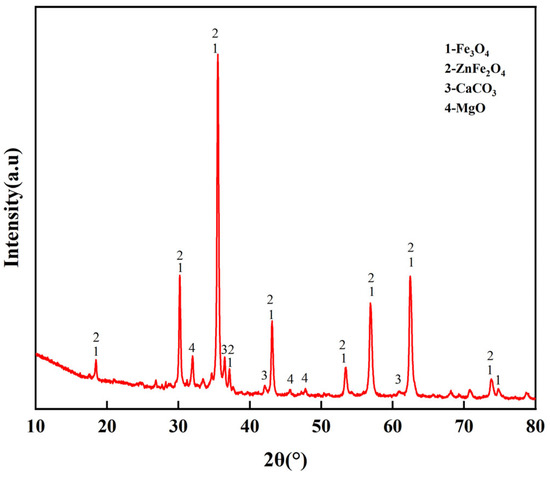
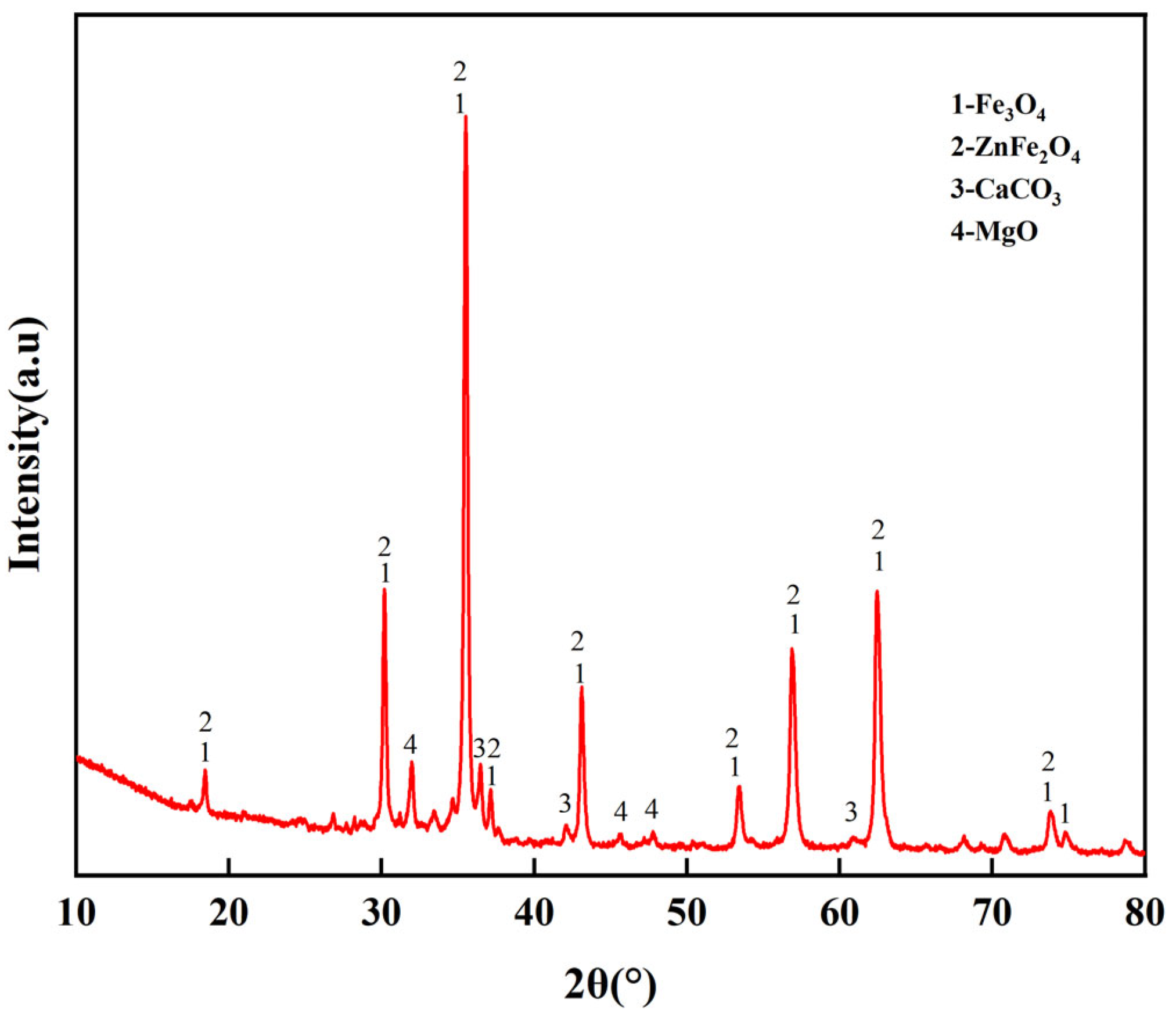
As indicated by Table 3 and the XRD pattern of ICD (Figure 1), Fe occurs as iron oxides with mixed valence (magnetite, Fe3O4 and wüstite, FeO), and as zinc ferrites formed by reactions between ZnO and iron oxides (e.g., ZnFe2O4, ZnO·Fe2O3), which are the principal Zn carriers. Since ferro-coke is produced under high temperatures, basic and acidic oxides in the dust–coal matrix can form complex silicates (e.g., 2CaO·SiO2).
Table 3.
Chemical composition of iron-carbon-containing dust (ICD) (wt.%).
Figure 1.
XRD of ICD.
The compositions of refining dust and EAF dust were analyzed using XRD and XRF, with the results presented in Table 3 and Figure 1. The EAF dust is primarily composed of iron, whereas the refining dust contains relatively higher proportions of Ca and Mg, but low total iron (TFe) content. In the EAF dust, iron mainly exists in the forms of iron oxides (Fe3O4, FeO) and zinc ferrite spinel (ZnFe2O4). The refining dust is predominantly composed of MgO, Ca(OH)2, CaCO3, Ca3SiO5, and Fe3O4.
The data in the table represent the main chemical composition analysis results of the iron-carbon-containing dust (ICD) (expressed in oxide forms). The balance consists primarily of carbon, volatile matter, and trace elements.
2.2. Experimental Methods
2.2.1. Sample Preparation
RM coal powder was first crushed to a particle size below 0.074 mm using a laboratory roll crusher. It was then mixed with coal tar pitch and ICD according to predetermined mass ratios. The resulting mixture was pressed into cylindrical briquettes (abbreviated as CDB) using a 25 mm diameter die at a pressure of 30 MPa, with a holding time of 30 s. Ferro-coke was subsequently produced through further carbonization of the CDB.
2.2.2. Carbonization and Gasification Tests
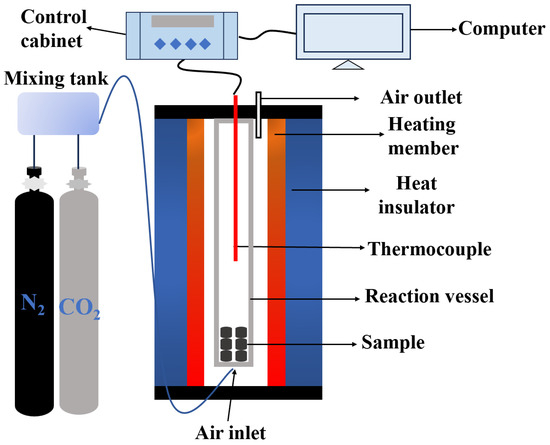
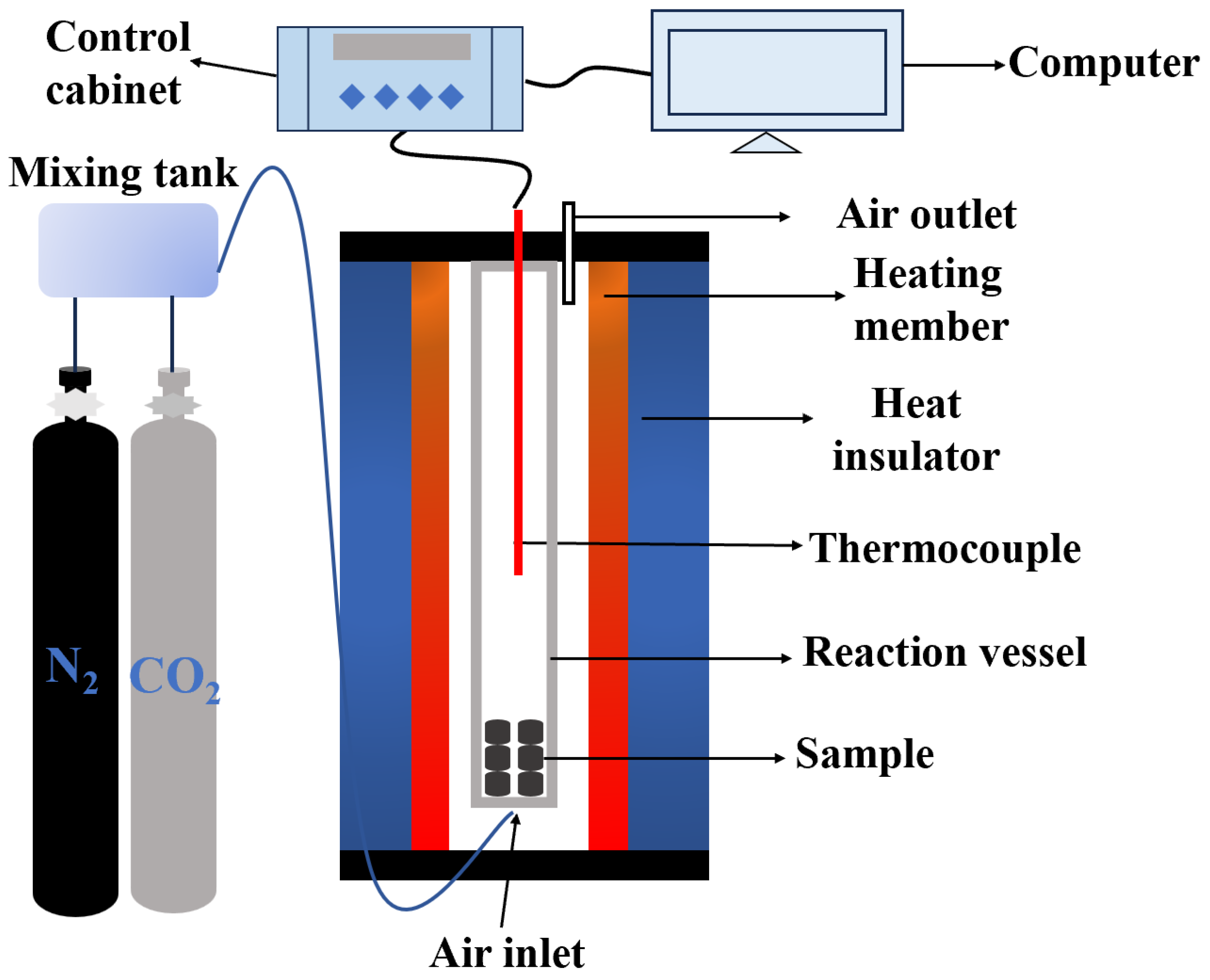
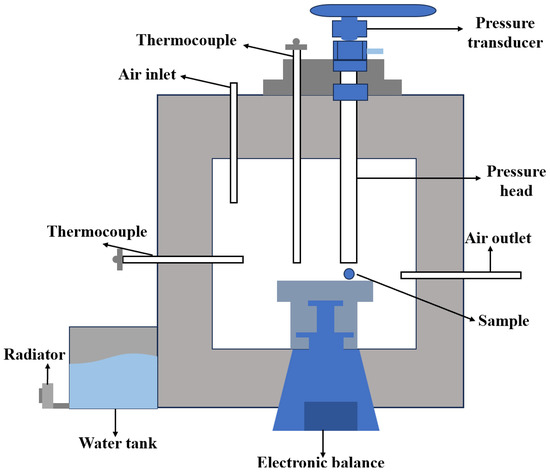
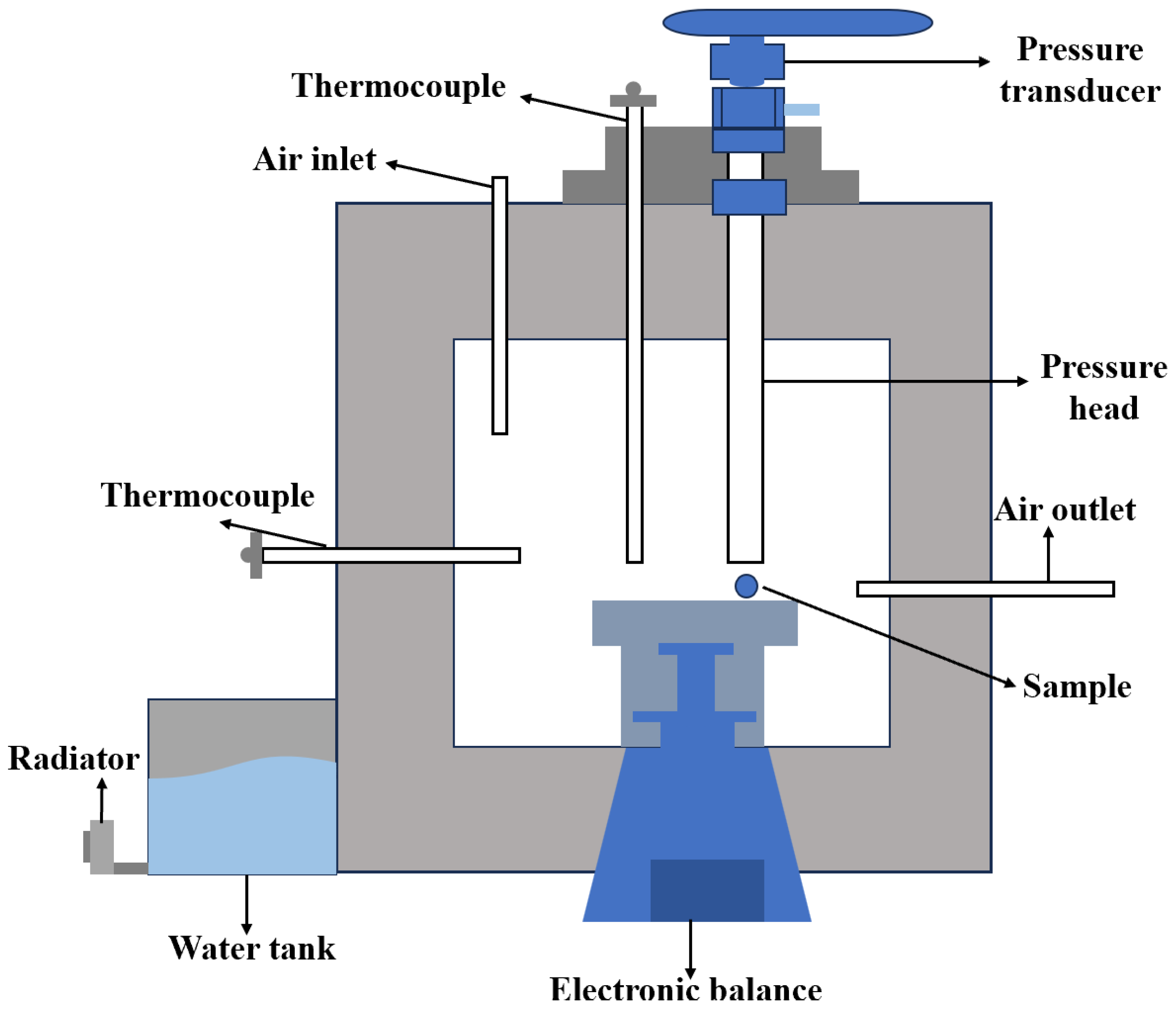
Carbonization of CDB and gasification of ferro-coke were performed on an SYD-224I dual furnace, the structure of which is shown in Figure 2.
Figure 2.
Schematic diagram of the carbonization and gasification furnace.
The carbonization process of CDB: A CDB was placed in a graphite crucible (outer diameter 30 mm, inner diameter 27 mm, height 50 mm). A cylindrical iron weight (25 mm × 25 mm) was placed on top to apply a uniform dead load. The crucible was inserted into the reaction tube and heated at 10 °C/min to the target temperature, then held for 20 min. High-purity N2 (2 L/min) was purged throughout to ensure an inert atmosphere. During this process, the CDB was carbonized in the crucible and produced ferro-coke.
The gasification process of ferro-coke: The furnace was heated at 10 °C/min under N2 (2 L/min) to the set temperature, then switched to CO2 at the same temperature for 2 h. The ferro-coke (carbonized CDB) was put into the furnace for gasification. After gasification, heating stopped and N2 purging (2 L/min) resumed for cooling.
Two factors that influence ferro-cokes’ high-temperature strength were investigated: ICD addition amount and gasification temperature. The experimental conditions are shown in Table 4. To assess the effect of ICD addition amount, ferro-coke containing different mass fractions of ICD (5%, 10%, 15%, 20%) were gasified under identical temperature (1100 °C), then high-temperature strength was measured at specified test temperatures to determine the relationship between ICD addition and maximum hot strength (800 °C, 900 °C, 1000 °C, 1100 °C). To assess the effect of gasification temperature, ferro-coke with the same ICD addition (10%) was gasified at different temperatures (25 °C, 1000 °C, 1100 °C, 1200 °C), then high-temperature strength was measured at specified test temperatures.
Table 4.
Experimental conditions for the high-temperature compressive strength tests of ferro-coke samples.
2.2.3. High-Temperature Strength Test
The maximum high-temperature compressive strength of ferro-coke after gasification was measured using a self-developed high-temperature strength test device. Cylindrical ferro-coke specimens were oriented horizontally, and load was applied laterally via an alumina indenter while an industrial camera monitored fracture (Figure 3). The peak load when the ferro-coke was crushed was recorded.
Figure 3.
Schematic diagram of high-temperature strength test device.
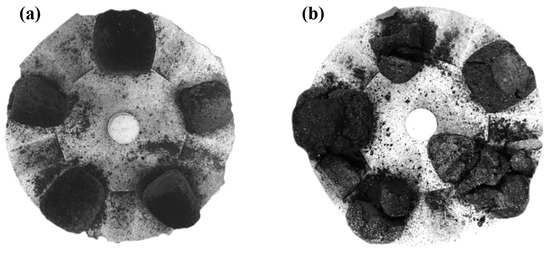
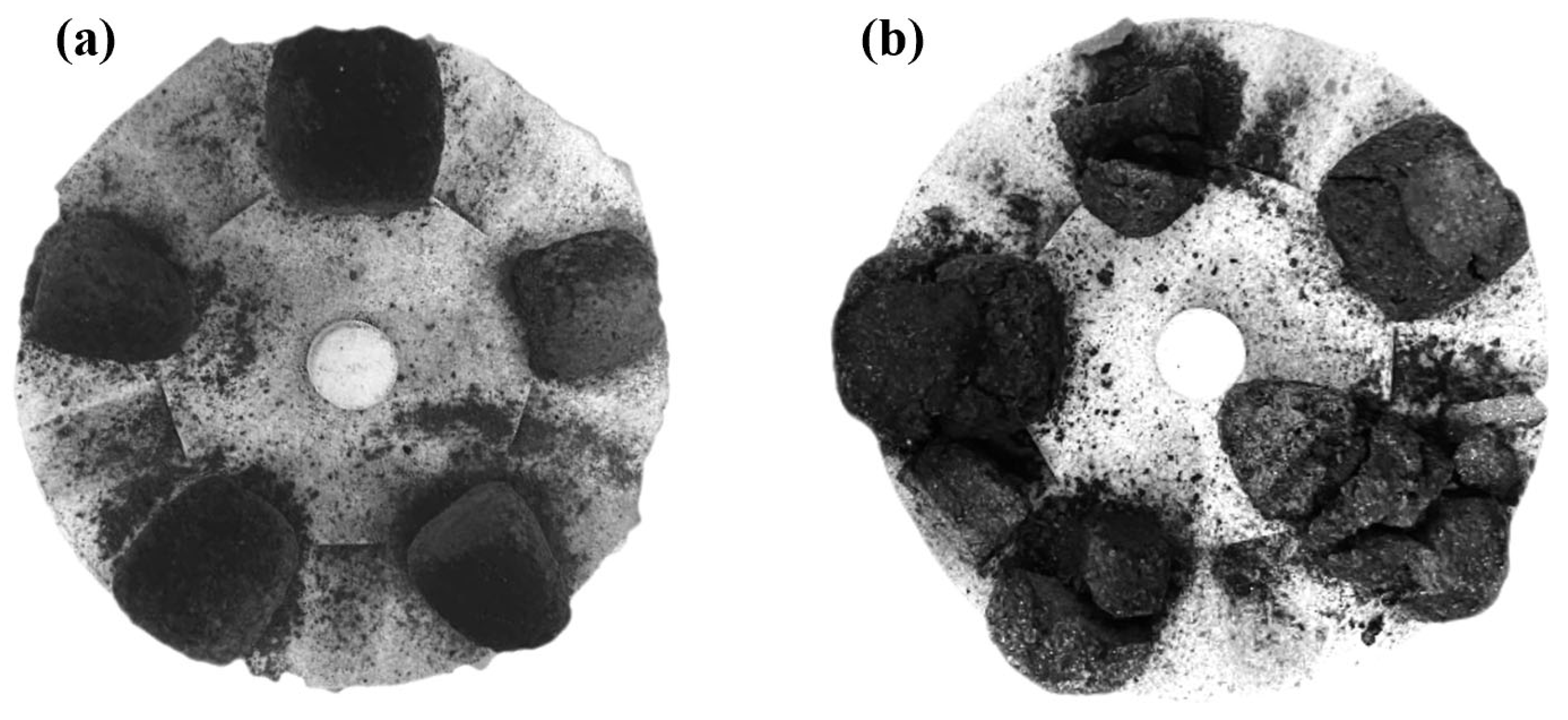
Place up to five samples onto the rotating sample carrier (Figure 4a), then insert the carrier into the test device and align the recess preceding the first sample with the viewing port; after that, set the heating profile and protective gas flow rate in the control software. Preheat the device to the target temperature under the protection of cooling water and N2, then rotate the carrier to position the first sample in the viewing window. Apply a continuous load (e.g., ~4 N to ~20 N) to the sample upon audible fracture and visible cracking, record the maximum load, and repeat the test procedure for all samples. Cool down the test device under N2 purging until the furnace cools to 300 °C. Take out the samples when they are cooled to room temperature (Figure 4b). Each test in Table 4 was carried out four times to ensure reproducibility, and the results are reported as mean ± standard deviation.
Figure 4.
Ferro-coke (a) before hot-temperature strength test; (b) after hot-temperature strength test.
2.2.4. 3D CT Analysis
In order to more accurately and comprehensively explore the internal microstructural changes of the ferro-coke during the gasification process, X-ray micro-computed tomography (micro-CT) was used to analyze the distribution of pores and minerals at different positions within the sample. In this study, ferro-coke samples with varying dust addition levels were scanned using a Micro-CT system (FF35 CT, YXLON, Hamburg, Germany) with a slice interval of 15 μm. The acquired image stacks were subsequently reconstructed into three-dimensional models using Avizo software version 2022.1 for further analysis.
2.2.5. Ultra-Precise 3D Microscopy
In this study, a 3D digital microscope with extended depth of field (Model: VHX-6000, Keyence Corporation, Osaka, Japan) was used to characterize the surface morphology and conduct 3D analysis of the cross-section of ferro-coke after thermal cracking. The sample was securely mounted on the stage, and images were captured using a 20× objective under ring light illumination. By setting the software-defined Z-axis scan range (start and end positions), the system automatically acquired a stack of images along sequential focal planes, and an integrated focus-stacking algorithm was applied to generate an all-in-focus 2D image and the corresponding 3D surface model. All dimensional measurements were performed based on the all-in-focus image and the 3D model. Prior to measurements, the system was calibrated using a certified stage micrometer.
3. Results and Discussion
3.1. Reactivity of Ferro-Coke
3.1.1. Effect of Iron-Carbon Containing Dust Addition
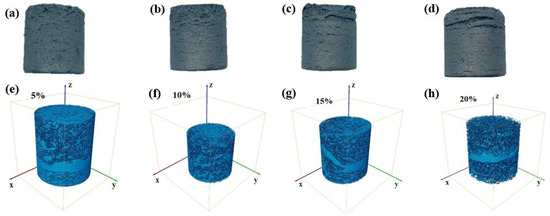
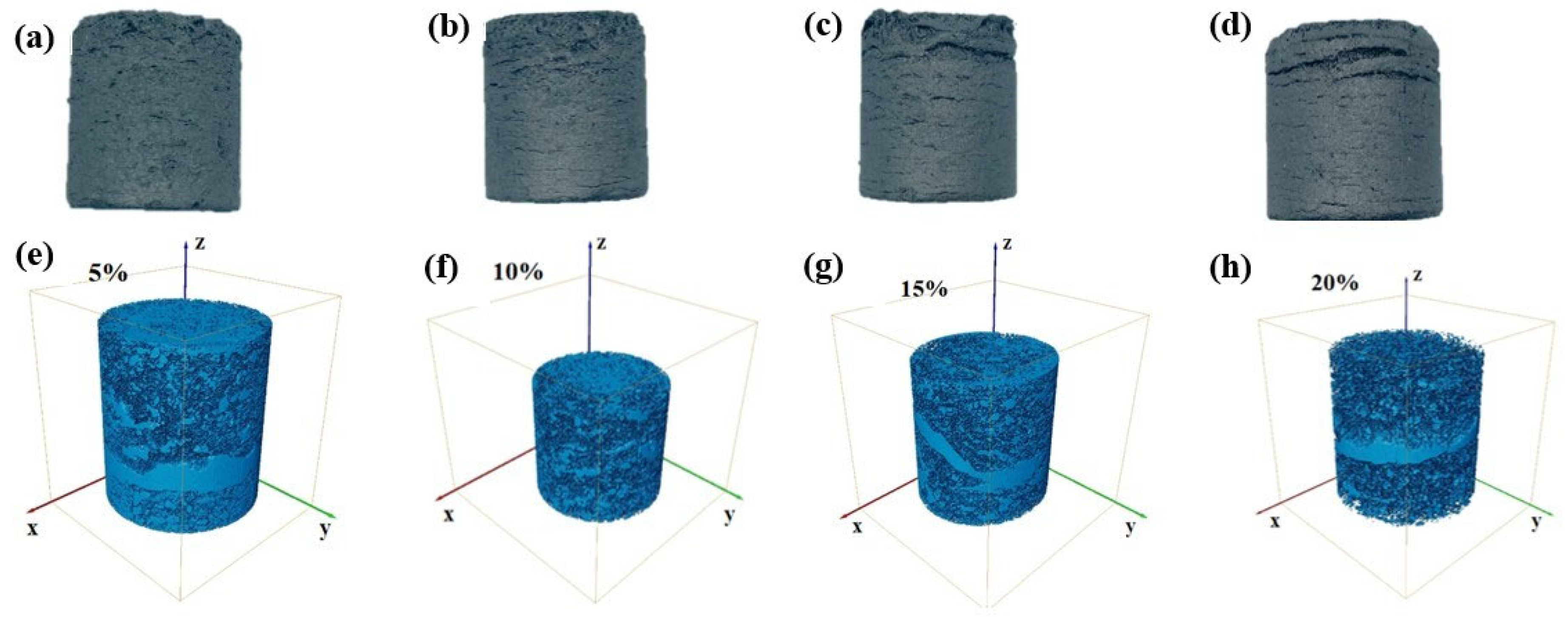
Figure 5 and Figure 6 show the morphology and pore structure of ferro-coke with ICD additions of 5%, 10%, 15%, and 20%. The ferro-coke surfaces display few pores and some top-edge cracks at low addition amount, both pore number and size, as well as crack density increase as the ICD addition increases. As shown in Figure 5, the 3D pore architecture of ferro-coke depends on and correlates positively with the ICD addition. The porosity of ferro-coke is 16.02% at 5% addition, and increases to 27.08% at 10%, 31.20% at 15%, and 33.33% at 20%. The increasing trend of porosity clearly reflects the progressive structural evolution of ferro-coke.
Figure 5.
Macroscopic morphologies and pore structure of ferro-coke with different ICD addition amount (a) Morphology-5%; (b) Morphology-10%; (c) Morphology-15%; (d) Morphology-20%; (e) Pore structure-5%; (f) Pore structure-10%; (g) Pore structure-15%; (h) Pore structure-20%.
Figure 6.
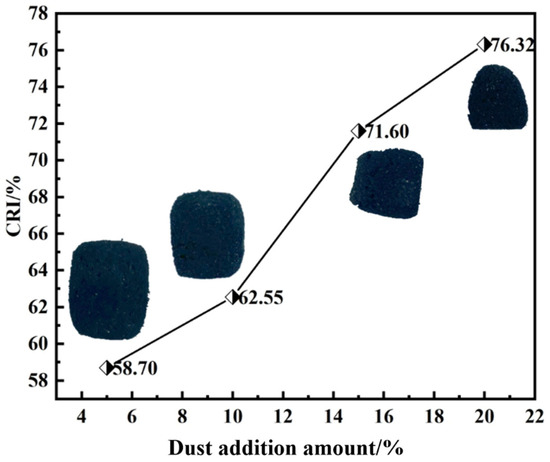
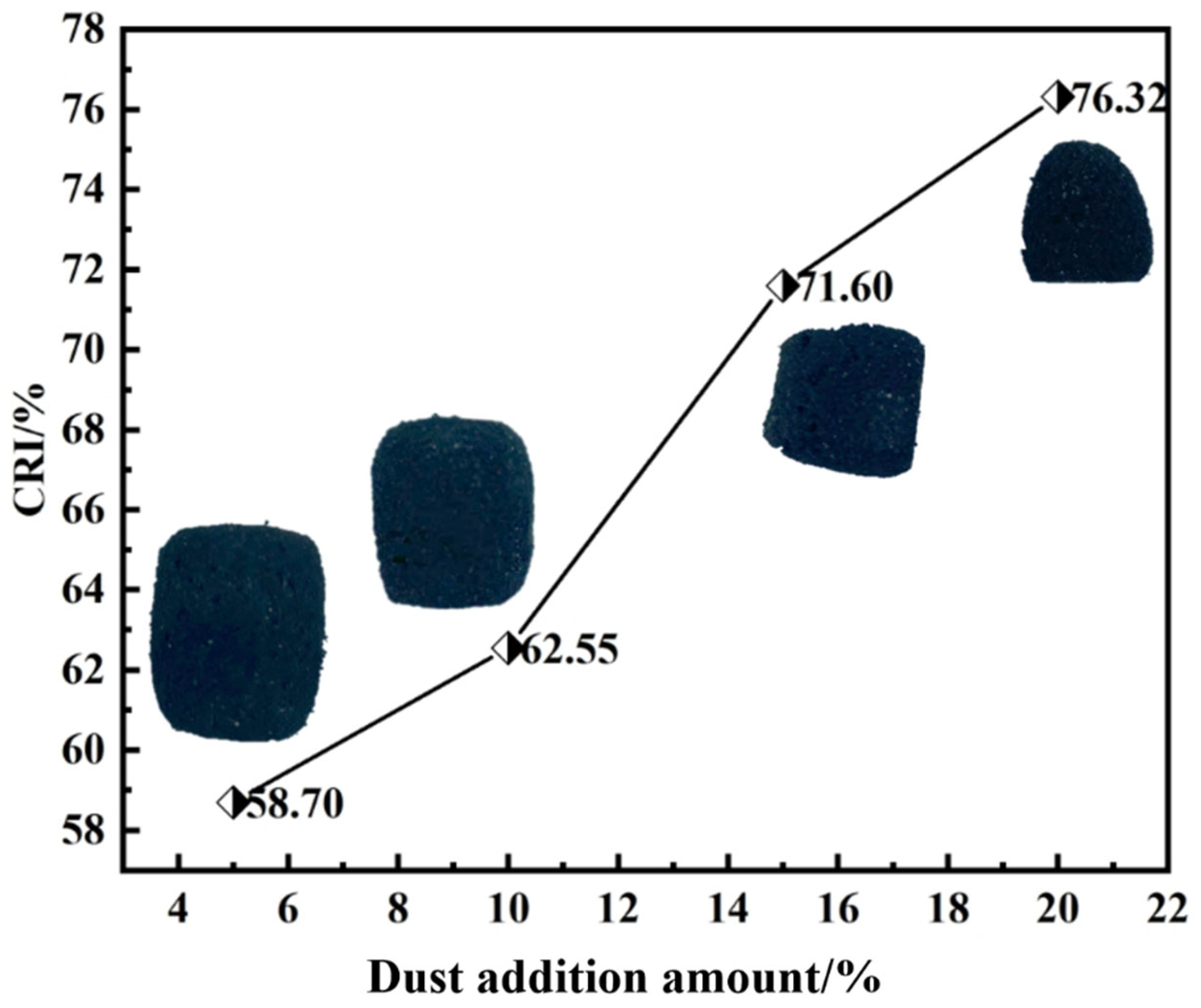
Change in ferro-coke’s reactivity index and post-gasification morphology with ICD addition.
Figure 6 shows the change in ferro-coke’s reactivity index (CRI) and post-gasification morphology with ICD addition. When the ICD addition amount increases from 5% to 10%, the CRI of ferro-coke rises from 58.7% to 62.6%, indicating a modest enhancement. A further increase to 15% and 20% raises the CRI to 71.6% and 76.3%, maintaining the upward trend. The post-gasification morphologies of ferro-coke show a clear volume decrease with higher addition; the result is in consistent with increased reactivity.
According to Figure 1, Fe in the added ICD exists primarily as Fe3O4 and ZnFe2O4. A prior work reports [23,24] that zinc acts mainly via ZnO as an oxygen-transfer medium in blast furnace reaction systems. In the oxygen migration framework, ZnO decomposition releases active oxygen that reacts readily with the carbon in ferro-coke and promotes ferro-coke’s gasification. Concurrently, Zn2+ formed on carbon surfaces modifies oxygen adsorption, consistent with electron-transfer theory, which lowers the chemisorption barrier for O2 on carbon, reduces activation energy, and accelerates the O-C reaction. Zinc also exhibits distinct reductive behavior. At high temperature, ZnO is preferentially reduced by ferro-coke to Zn vapor, which escapes with the gas stream. This alters the internal composition and, via a local volumetric-change effect, increases the porosity of the ferro-coke during the gasification process. The resulting porous structure promotes subsequent gasification by the following: (i) increasing specific surface area and active sites, and (ii) improving permeability and gas diffusion to reaction interfaces, thereby enhancing overall kinetics. Therefore, the addition of ICD in ferro-coke would result in the increase in CRI.
3.1.2. Effect of Gasification Temperature
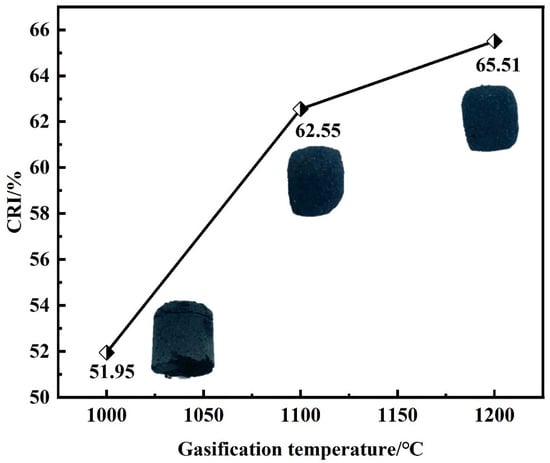
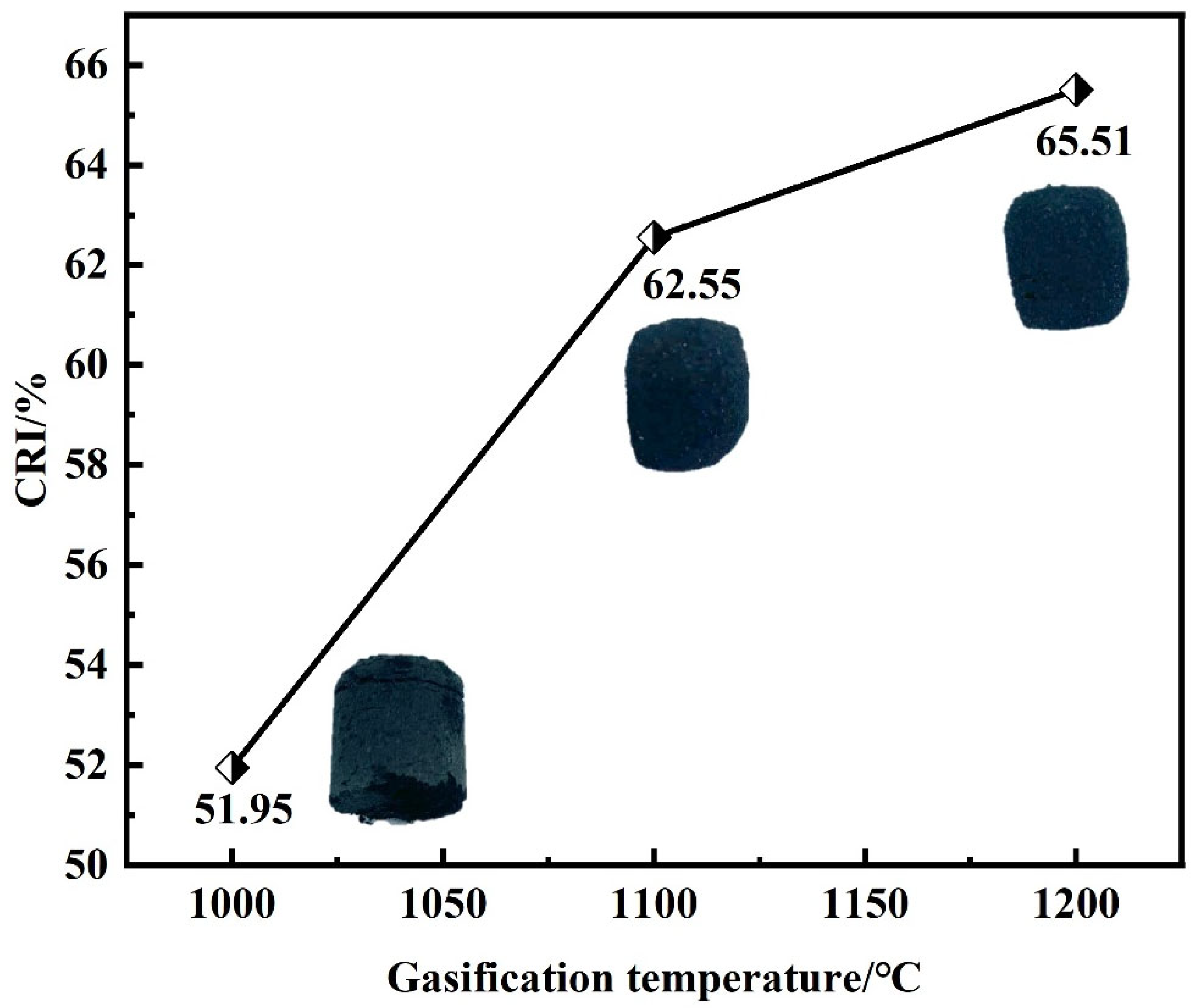
Figure 7 shows the change in ferro-coke’s reactivity index (CRI) and post-gasification morphology with gasification temperature. When gasification temperature increases from 1000 °C to 1100 °C, CRI rises from 51.95% to 62.55%, indicating a substantial enhancement. A further increase from 1100 °C to 1200 °C raises CRI from 62.55% to 65.51%, which maintains an increasing trend, but the trend tends to level off. High temperature promotes the decomposition of ZnO and accelerates the O-C reaction, thus raising the CRI of ferro-coke. The post-gasification morphologies of ferro-coke show a clear volume decrease with higher gasification temperatures; this result is consistent with increased reactivity.
Figure 7.
Change in ferro-coke’s reactivity index and post-gasification morphology with gasification temperature.
3.2. High-Temperature Compressive Strength of Ferro-Coke
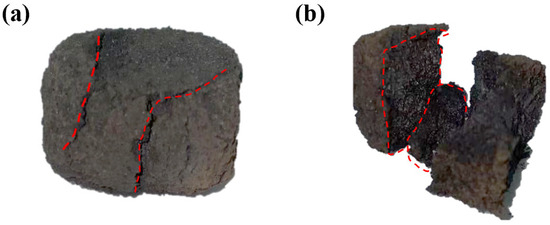
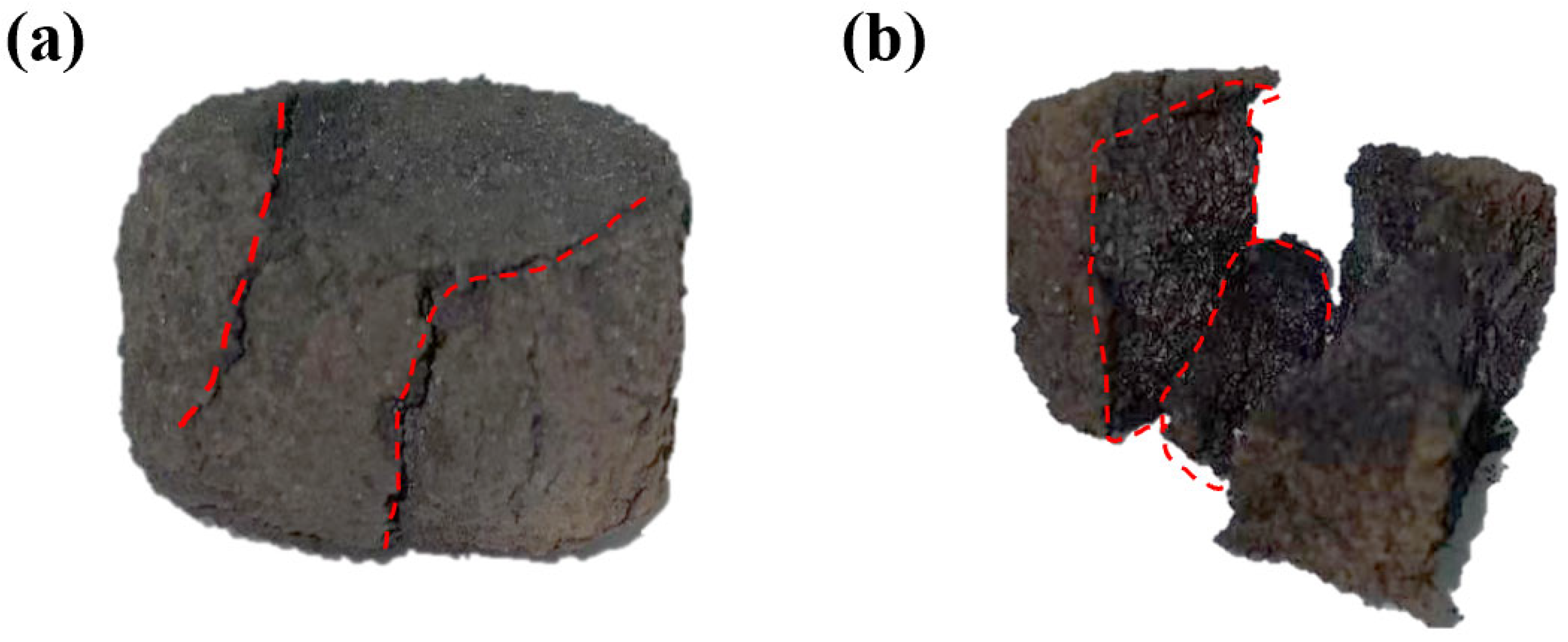
Figure 8 shows the cross-section morphologies of ferro-coke after thermal cracking at different ICD additions. At 5% ICD (Figure 8a) addition, the specimen remains largely intact at the peak load, with only a single long crack in the circled region, while at 15% ICD (Figure 8b) addition, the specimen shatters into small fragments at maximum load and loses its original shape. This contrast reflects that ferro-coke has higher compressive strength at lower ICD additions, and so preserves a more integral morphology.
Figure 8.
Morphology of ferro-coke sample after hot splitting (a) 5%; (b) 15%.
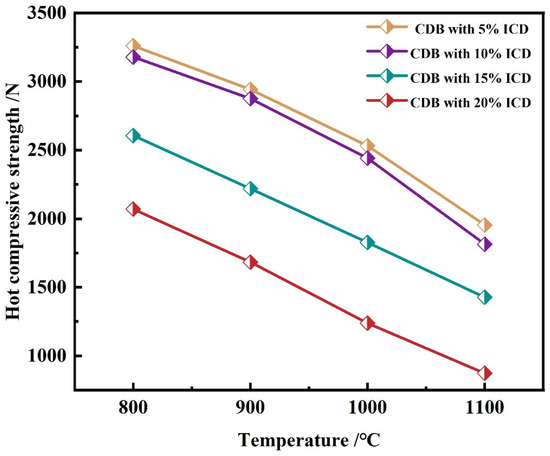
Figure 9 summarizes the maximum high-temperature strength at different test temperatures and ICD additions. The high-temperature strength of ferro-coke consistently declines with increasing ICD addition, which is in line with the change in ferro-coke’s reactivity. At 5% ICD addition, strengths are 3260 N, 2943 N, 2532 N, and 1954 N at the test temperatures of 800 °C, 900 °C, 1000 °C, and 1100 °C, respectively. At 20% ICD addition, the corresponding strength continuously decreases to 2070 N, 1684 N, 1239 N, and 873 N.
Figure 9.
Compressive strength of samples with different ICD addition amounts at different temperatures.
According to the plastic coking principle, metallic iron is encapsulated by the liquid caking phase during coke formation and participates in the generation of pore walls. At high temperatures, molten iron interacts with coal-derived binder components and is fixed by the physical encapsulation effect of the coke matrix. Upon cooling, the encapsulated iron migrates toward pore walls, co-forming a composite skeleton with the carbon framework and a hierarchical pore structure. This 3D network of metallic iron and carbon provides mechanical reinforcement to ferro-coke.
During the high-temperature gasification process, ferro-coke undergoes expansion and increased internal porosity. An increased iron oxide content reduces coal expansibility. Once iron oxides exceed a threshold, swelling during the thermoplastic stage is suppressed, and the caking phase cannot fully coat all iron ore particles, leaving some exposed particles at high temperature. These uncoated particles are prone to polymorphic or phase transformations during cooling, disrupting the carbon skeleton. The resulting structural defects lead to lower compressive strength and reduced abrasion resistance in the final ferro-coke. Meanwhile, as ICD content in ferro-coke rises, porosity increases more significantly, as explained in Section 3.1.1, disrupting the 3D network structure of ferro-coke and resulting in lower high-temperature compressive strength.
Effect of Gasification Temperature
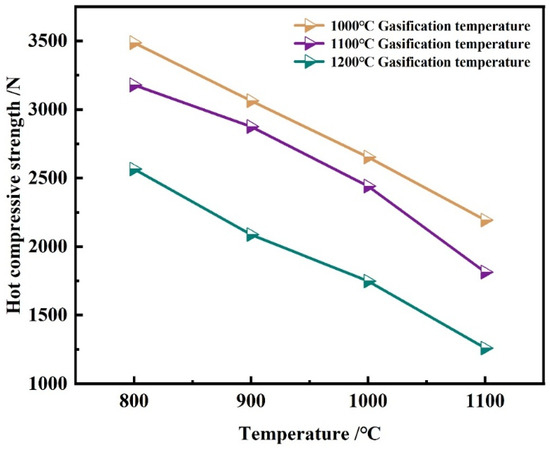
Figure 10 reports the maximum high-temperature strength of ferro-coke after gasification at different temperatures. The strength decreases monotonically with increasing gasification temperature, consistent with ferro-coke’s reactivity. When testing the high-temperature strength at 800 °C, for the ferro-coke after gasification under 1000 °C, 1100 °C, and 1200 °C, the strengths are 3487 N, 3179 N, and 2565 N, respectively. The reason can be contributed that, under high-temperature gasification conditions, carbon-based materials in ferro-coke are consumed, leading to the destruction of the network structure and a reduction in the strength. Furthermore, as the gasification temperature increases, the consumption of carbon-based materials rises, causing more severe damage to the 3D network structure and a further decline in high-temperature strength properties.
Figure 10.
Compressive strength of samples with different gasification temperatures at different temperatures.
3.3. Microstructure of Ferro-Coke After Gasification and Thermal Cracking
3.3.1. Effect of Iron-Carbon-Containing Dust Addition
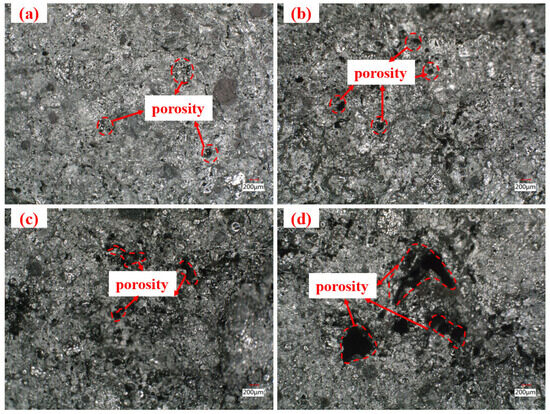
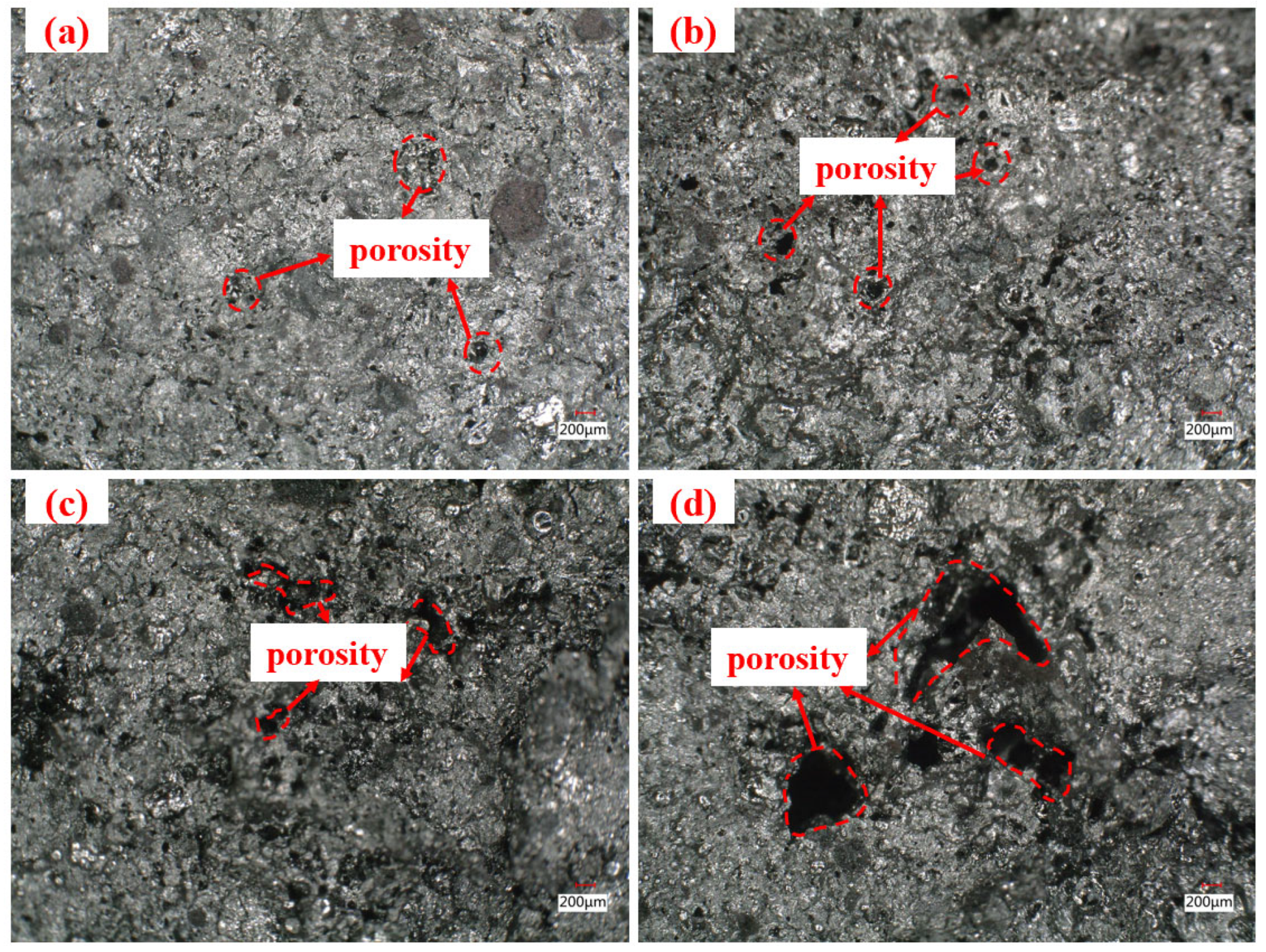
Fracture surfaces of ferro-coke after thermal cracking were examined using a 3D ultra-depth microscope (Figure 11). With increasing ICD addition, sectional porosity increases, small pores are progressively replaced by medium or large pores, and pore walls become thinner. Both the pore number and the size of 5% ICD ferro-coke are clearly lower than that in 20% ICD ferro-coke; this result is consistent with the hot-temperature strength trends in Figure 9.
Figure 11.
Cross-sectional morphology of ferro-coke samples with different ICD addition amounts (obtained using an ultra-depth microscope): (a) 5%; (b) 10%; (c) 15%; (d) 20% (magnification: ×50).
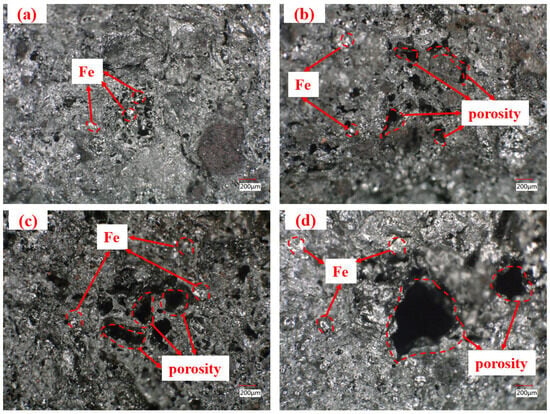
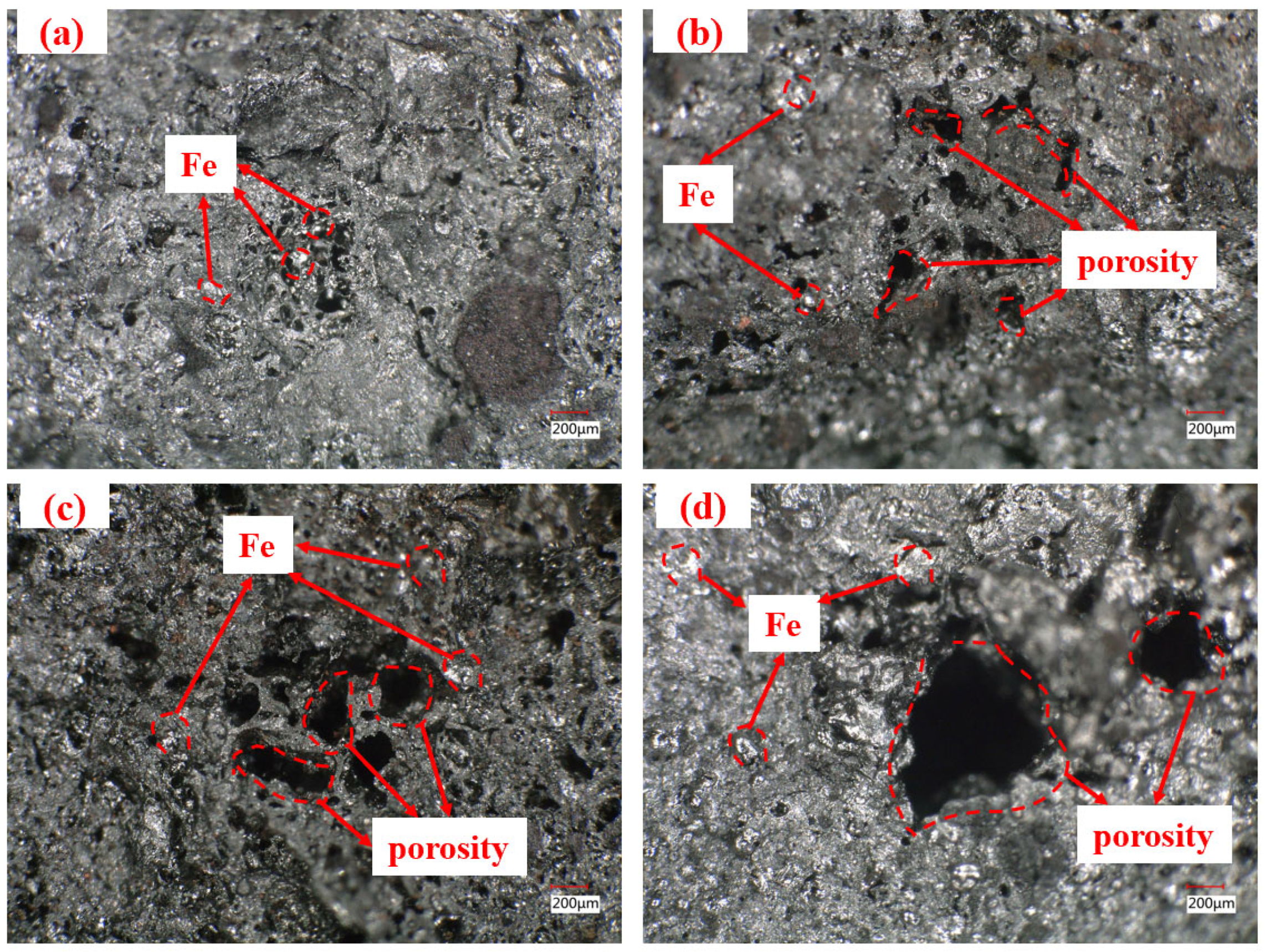
Figure 12 shows a distinct particle interface between ICD and coal particles, with numerous iron-rich pore features distributed around the boundary. This occurs because zinc oxides in ICD are reduced to metallic Zn during carbonization, volatilizes (at about 907 °C), and escapes as vapor from the ferro-coke matrix. By this stage, the coal-derived caking phase has transformed into a carbon matrix and lost its binding ability, so it cannot fill the voids left by evaporated Zn. As dust addition increases, pore density rises and pore size expands. Meanwhile, solid reduction products from the dust form physical barriers in interparticle gaps, hindering effective bonding between coal particles. The poor cohesive properties result in a discrete particle distribution, with structural cracks even forming in certain areas.
Figure 12.
Cross-sectional pore morphology of ferro-coke samples with different ICD addition amounts (obtained using an ultra-depth microscope) (a) 5%; (b) 10%; (c) 15%; (d) 20% (magnification ×100.0).
3.3.2. Effect of Gasification Temperature
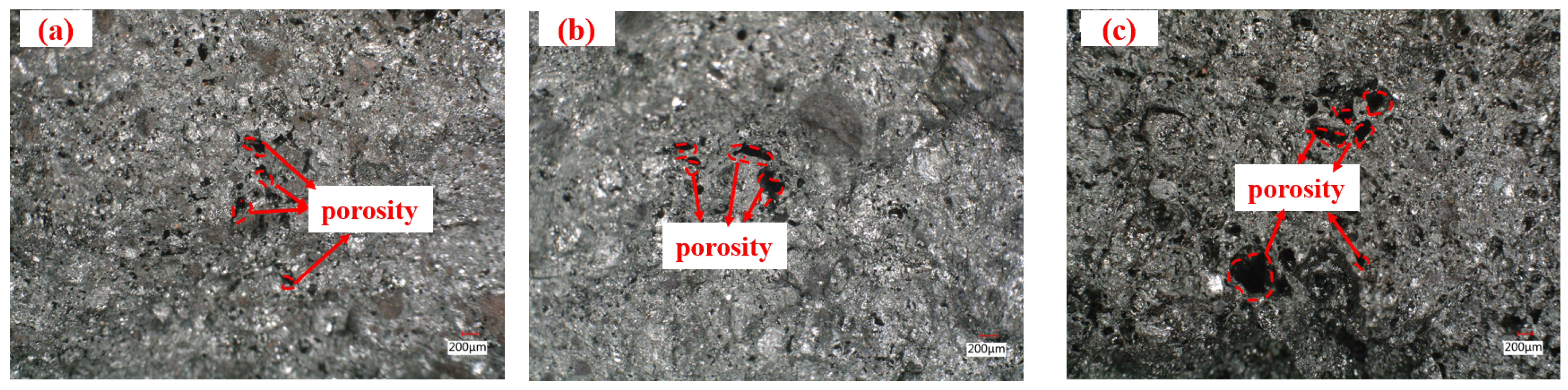
Fracture surfaces of ferro-coke samples gasified under different temperatures after thermal cracking were further examined, and the result is shown in Figure 13. With increasing gasification temperature, similar to the effect of ICD addition amount, sectional porosity increases, small pores are progressively replaced by medium and large pores, and pore walls become thinner. In Figure 13a (ferro-coke gasified at 1000 °C), both pore number and size are clearly lower than in Figure 13c (gasified at 1200 °C), which is consistent with the high-temperature strength results in Figure 10.
Figure 13.
Cross-section of ferro-coke samples at different gasification temperatures (obtained using an ultra-depth microscope) (a) 1000 °C; (b) 1100 °C; (c) 1200 °C (Magnification ×50.0).
4. Conclusions
This study examines the influence of raw-material compounding on the high-temperature strength of ferro-coke by varying the iron-containing dust (ICD) addition and the gasification temperature, assessing reactivity (CRI) and high-temperature strength, and analyzing fracture morphologies. The main findings are as follows:
- (1)
- Increasing the ICD addition elevates the CRI of ferro-coke. As the ICD addition increases from 5% to 20%, the CRI rises from 58.70% to 76.32%, while the high-temperature strength of ferro-coke after gasification decreases from 3260 N to 1954 N at 800 °C. Iron and zinc in the dust catalyze gasification, intensify internal erosion, and thereby reduce high-temperature strength.
- (2)
- Increasing the gasification temperature also raises CRI. When the gasification temperature increases from 1000 °C to 1200 °C, the CRI increases from 51.95% to 65.51%, accompanied by a decrease in high-temperature strength. Higher gasification temperatures enhance reactivity, increase porosity, and diminish the high-temperature strength.
- (3)
- At 5–10% ICD addition and a gasification temperature of 1100 °C, ferro-coke exhibits comparable strengths, indicating a balance between metallic iron contributing to the load-bearing skeleton and its suppression of coal expansibility. The high-temperature strength reduction in ferro-coke stems from the following two factors: (i) Zn catalyzes carbon gasification; (ii) Zn volatilizes at high temperature, generating additional porosity, enlarging specific surface area, and further accelerating carbon gasification.
- (4)
- Based on the comprehensive analysis of high-temperature compressive strength, reactivity, and structural evolution, an ICD addition of 10 wt.% appears to offer the best balance. Within this range, the beneficial catalytic effect on gasification is present without causing excessive structural degradation or zinc-induced weakening, thereby optimally mitigating high-temperature fragmentation for blast furnace application.
Author Contributions
Conceptualization, R.W. and R.X.; Methodology, R.W. and R.X.; Validation, R.X., S.L. and Y.Z. (Yuchen Zhang); Formal Analysis, R.W., S.L., R.X. and J.Z.; Investigation, Y.Z. (Yu Zeng), Y.Z. (Yuchen Zhang), B.W. and Y.Y.; Resources, R.W.; Data curation, R.W. and S.L.; Writing—Original Draft Preparation, R.W. and S.L.; Writing—Review and Editing, R.X. and J.Z.; Supervision, R.X. and J.Z.; Project Administration, R.X.; Funding Acquisition, R.X. and J.Z. All authors have read and agreed to the published version of the manuscript.
Funding
The authors gratefully acknowledge financial support from the National Natural Science Foundation of China (No. 52274316(R.X.), U24A20102(J.Z.)); Major Science and Technology -Special Plan “Unveiling and Leading” Project of Shanxi Province (No. 202201050201011(R.W.)).
Data Availability Statement
The original contributions presented in this study are included in the article. Further inquiries can be directed to the corresponding author.
Conflicts of Interest
Author Yu Zeng was employed by the company Angang Steel Company Limited. The remaining authors declare that the research was conducted in the absence of any commercial or financial relationships that could be construed as a potential conflict of interest.
References
- Li, Q.; Wang, J.S.; She, X.F.; Xue, Q.G.; Guo, Z.C.; Wang, G.; Zuo, H.B. Principles and support technologies of low-carbon ironmaking for blast furnace. Renew. Sustain. Energy Rev. 2025, 211, 115363. [Google Scholar] [CrossRef] [Scilit]
- Sun, M.; Pang, K.; Jiang, Z.; Meng, X.; Gu, Z. Development and problems of fluidized bed ironmaking process: An overview. J. Sustain. Metall. 2023, 9, 1399–1416. [Google Scholar] [CrossRef] [Scilit]
- Sun, M.; Pang, K.; Barati, M.; Meng, X. Hydrogen-based reduction technologies in low-carbon sustainable ironmaking and steelmaking: A review. J. Sustain. Metall. 2024, 10, 10–25. [Google Scholar] [CrossRef] [Scilit]
- Wang, J.; Wang, W.; Chen, X.; Bao, J.; Hao, Q.; Zheng, H.; Xu, R. Role of iron ore in enhancing gasification of iron coke: Structural evolution, influence mechanism and kinetic analysis. Int. J. Miner. Metall. Mater. 2025, 32, 58–69. [Google Scholar] [CrossRef] [Scilit]
- Yang, Y.; Xu, R.; Zhang, J.; Wang, W.; Wang, R.; Shi, J.; Dong, Y.; Huang, Y.; Ye, Y. Effect of Biochar Addition on the Strength Properties of Metallurgical Dust Briquettes. J. Sustain. Metall. 2025, 11, 529–541. [Google Scholar] [CrossRef] [Scilit]
- Liu, Z.-J.; Cao, M.-H.; Zhang, J.-L.; Xu, R.-S.; Wang, Y.-Z.; Yu, J.-Y.; Zhang, Y.-C. Synergistic reaction behavior of pyrolysis and reduction of briquette prepared by weakly caking coal and metallurgical dust. J. Iron Steel Res. Int. 2023, 30, 1367–1380. [Google Scholar] [CrossRef] [Scilit]
- Xu, R.; Dai, B.; Wang, W.; Schenk, J.; Xue, Z. Effect of iron ore type on the thermal behaviour and kinetics of coal-iron ore briquettes during coking. Fuel Process. Technol. 2018, 173, 11–20. [Google Scholar] [CrossRef] [Scilit]
- Wang, H.; Chu, M.; Bao, J.; Liu, Z.; Tang, J.; Long, H. Experimental study on impact of iron coke hot briquette as an alternative fuel on isothermal reduction of pellets under simulated blast furnace conditions. Fuel 2020, 268, 117339. [Google Scholar] [CrossRef] [Scilit]
- Wang, H.-T.; Chu, M.-S.; Zhao, W.; Liu, Z.-G. Effect of process parameters on the compressive strength of iron coke hot briquette. J. Northeast. Univ. Nat. Sci. 2016, 37, 810. [Google Scholar]
- Wang, H.-T.; Chu, M.; Wang, Z.; Zhao, W.; Liu, Z.; Tang, J.; Ying, Z. Research on the Post-reaction Strength of Iron Coke Hot Briquette Under Different Conditions. JOM 2018, 70, 1929–1936. [Google Scholar] [CrossRef] [Scilit]
- Wang, H.; Zhao, W.; Chu, M.; Liu, Z.; Tang, J.; Ying, Z. Effects of coal and iron ore blending on metallurgical properties of iron coke hot briquette. Powder Technol. 2018, 328, 318–328. [Google Scholar] [CrossRef] [Scilit]
- Li, P.; Liu, W.; Zhang, H.; Bi, X.; Shi, S. Impact of Potassium on Gasification Reaction and Post-Reaction Strength of Ferro-coke. ISIJ Int. 2017, 57, 592–597. [Google Scholar] [CrossRef] [Scilit]
- Xu, R.-S.; Deng, S.-L.; Zheng, H.; Wang, W.; Song, M.-M.; Xu, W.; Wang, F.-F. Influence of initial iron ore particle size on CO2 gasification behavior and strength of ferro-coke. J. Iron Steel Res. Int. 2020, 27, 875–886. [Google Scholar] [CrossRef] [Scilit]
- Shi, S.-Z.; Sun, C.-Q.; Bi, X.-G. Experimental research of effect of iron ore powders ratio on ferro-coke quality. Iron Steel 2014, 49, 7. [Google Scholar]
- Zhang, H.-X.; Bi, X.-G.; Shi, S.-Z.; Wu, Q.; Sun, C.; Ma, Y.; Cheng, X.; Li, P. Influence of iron ore addition into coal blend for coke-making on coke properties. J. Wuhan Univ. Sci. Technol. Nat. Sci. Ed. 2014, 37, 91–96. [Google Scholar]
- Xu, R.; Zheng, H.; Wang, W.; Schenk, J.; Xue, Z. Influence of Iron Minerals on the Volume, Strength, and CO2 Gasification of Ferro-coke. Energy Fuels 2018, 32, 12118–12127. [Google Scholar] [CrossRef] [Scilit]
- Zhang, Y.; Xu, R.; Zhang, J.; Conejo, A.; Wu, B.; Wang, L.; Xu, Q. Effect of Zinc-Containing Dust on the Thermal Behavior and Kinetics of Coal–Dust Briquettes During Co-coking Process. Metall. Mater. Trans. B 2025, 56, 6575–6591. [Google Scholar] [CrossRef] [Scilit]
- Uchida, A.; Yamazaki, Y.; Matsuo, S.; Saito, Y.; Matsushita, Y.; Aoki, H.; Hamaguchi, M. Effect of HPC (Hyper-coal) on Strength of Ferro-coke during Caking Temperature. ISIJ Int. 2017, 57, 1524–1530. [Google Scholar] [CrossRef] [Scilit]
- Gornostayev, S.; Härkki, J. Mechanism of Physical Transformations of Mineral Matter in the Blast Furnace Coke with Reference to Its Reactivity and Strength. Energy Fuels 2006, 20, 2632–2635. [Google Scholar] [CrossRef] [Scilit]
- Kubota, Y.; Nomura, S.; Arima, T.; Kato, K. Effects of Coal Inertinite Size on Coke Strength. ISIJ Int. 2008, 48, 563–571. [Google Scholar] [CrossRef] [Scilit]
- Andriopoulos, N.; Dukino, R.; Sakurovs, R. The strength controlling properties of coke and their relationship to tumble drum indices and coal type. ACARP Proj. C 2002, C, 9060. [Google Scholar]
- GB/T31391-2015; Ultimate Analysis of Coal. Standardization Administration of the People’s Republic of China: Beijing, China, 2015.
- Zhang, Y.; Xu, R.; Zhang, J.; Conejo, A.; Wu, B.; Yang, Y.; Dong, Y. Effect of pore structure and dust ratio on mechanical and metallurgical properties of ferro-coke: Based on CT and 3D reconstruction technology. Powder Technol. 2026, 467, 121445. [Google Scholar] [CrossRef] [Scilit]
- Ye, S.; Zhao, R.; Kitagawa, K.; Wang, K.; Guo, Z.; Xie, Y. Study on utilizing zinc and lead-bearing metallurgical dust as sulfur absorbent during briquette combustion. Energy 2005, 30, 2251–2260. [Google Scholar] [CrossRef] [Scilit]

Disclaimer/Publisher’s Note: The statements, opinions and data contained in all publications are solely those of the individual author(s) and contributor(s) and not of MDPI and/or the editor(s). MDPI and/or the editor(s) disclaim responsibility for any injury to people or property resulting from any ideas, methods, instructions or products referred to in the content. |
© 2025 by the authors. Licensee MDPI, Basel, Switzerland. This article is an open access article distributed under the terms and conditions of the Creative Commons Attribution (CC BY) license (https://creativecommons.org/licenses/by/4.0/).