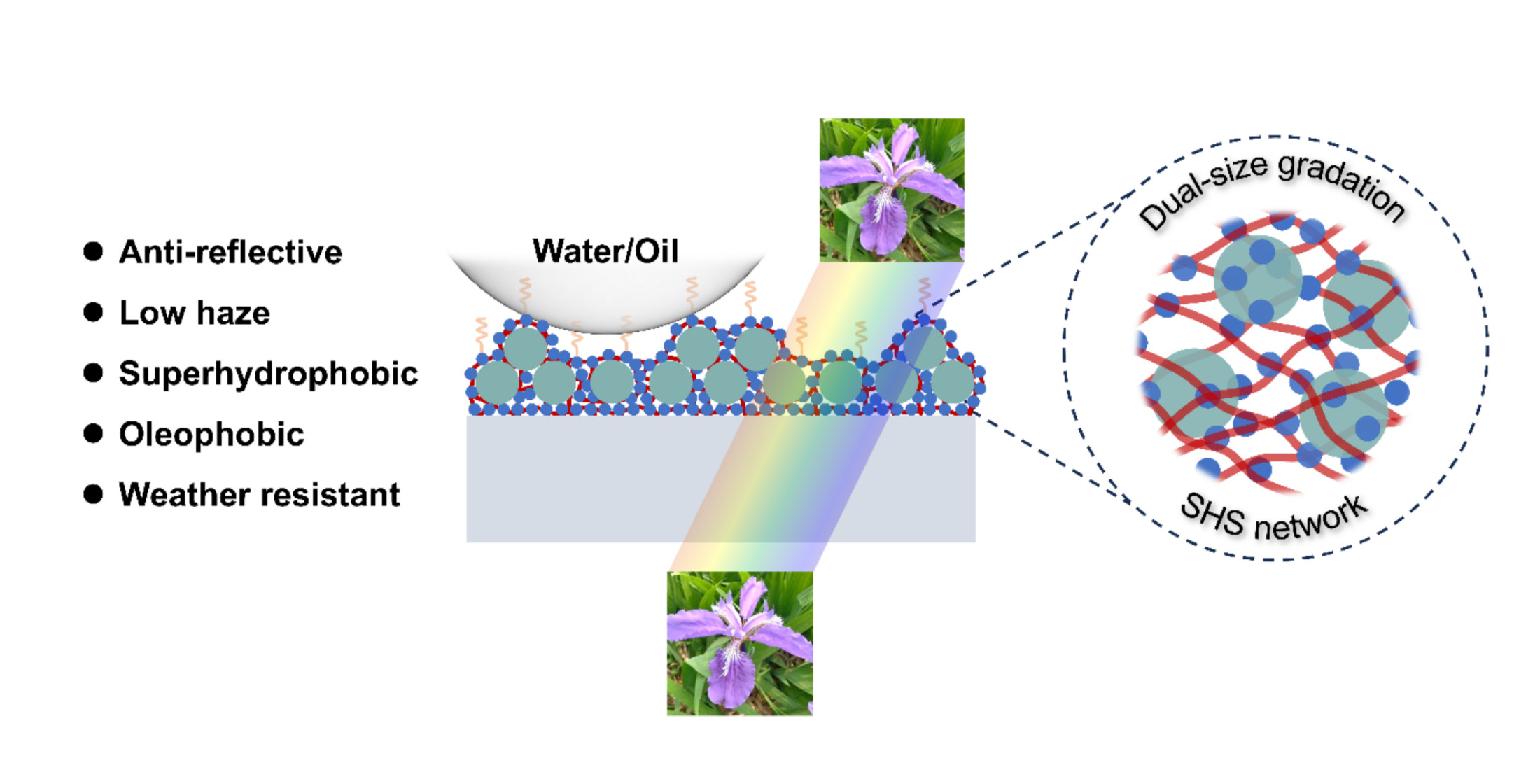
Concertation of Anti-Reflective, Superhydrophobic Surface Based on Rational Assembly of Dual-Size Silica

Abstract
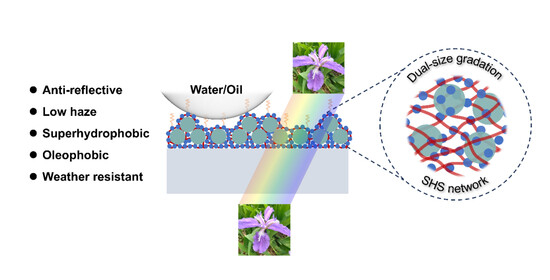
1. Introduction
2. Materials and Methods
2.1. Materials
2.2. Synthesis of Silica Sol with Different Nanoparticle Size (NPs)
2.3. Synthesis of Semi-Hydrolyzed Silica Sol
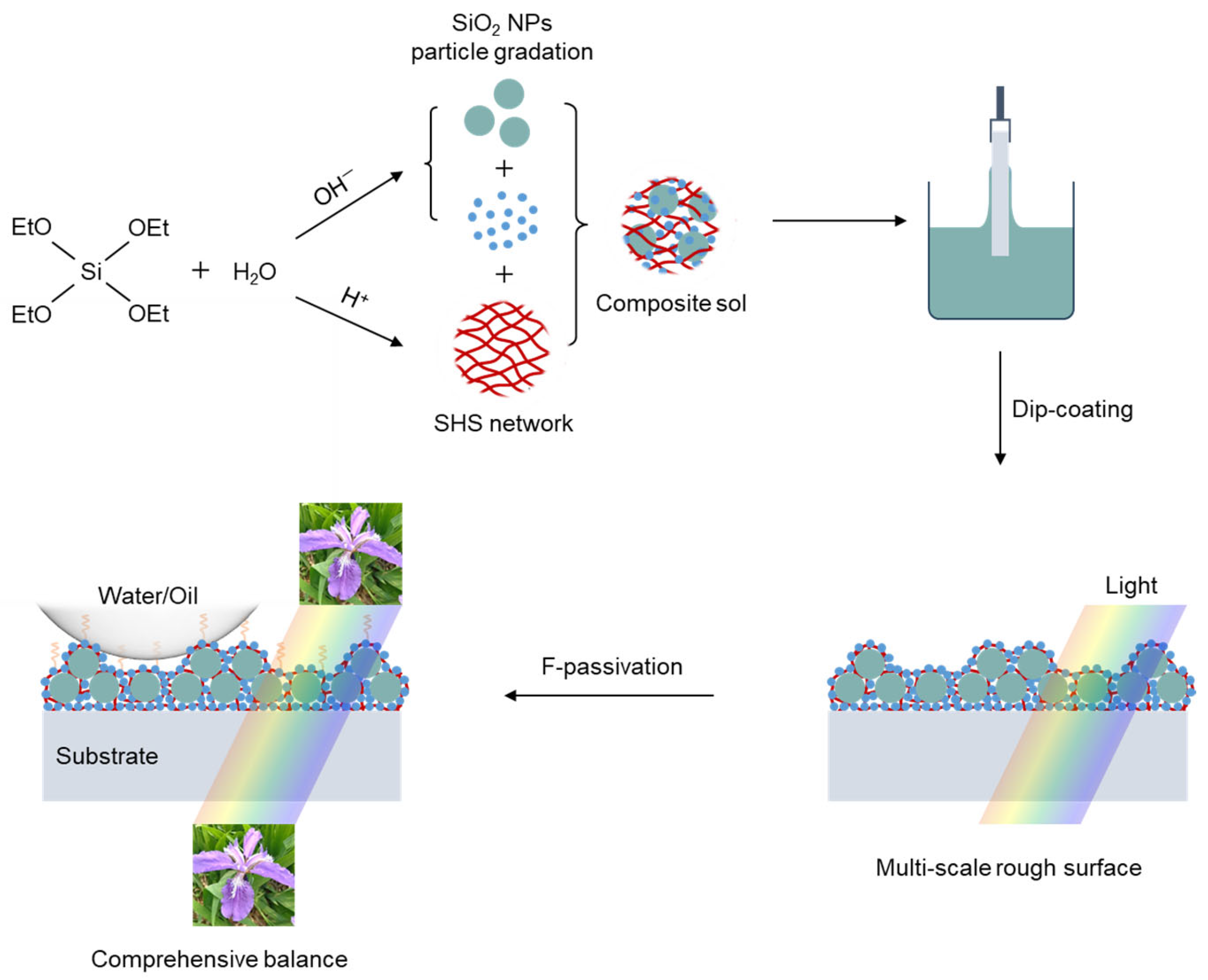
2.4. Preparation of Dual-Scale Assembled Silica Coatings
2.5. Characterizations
3. Results
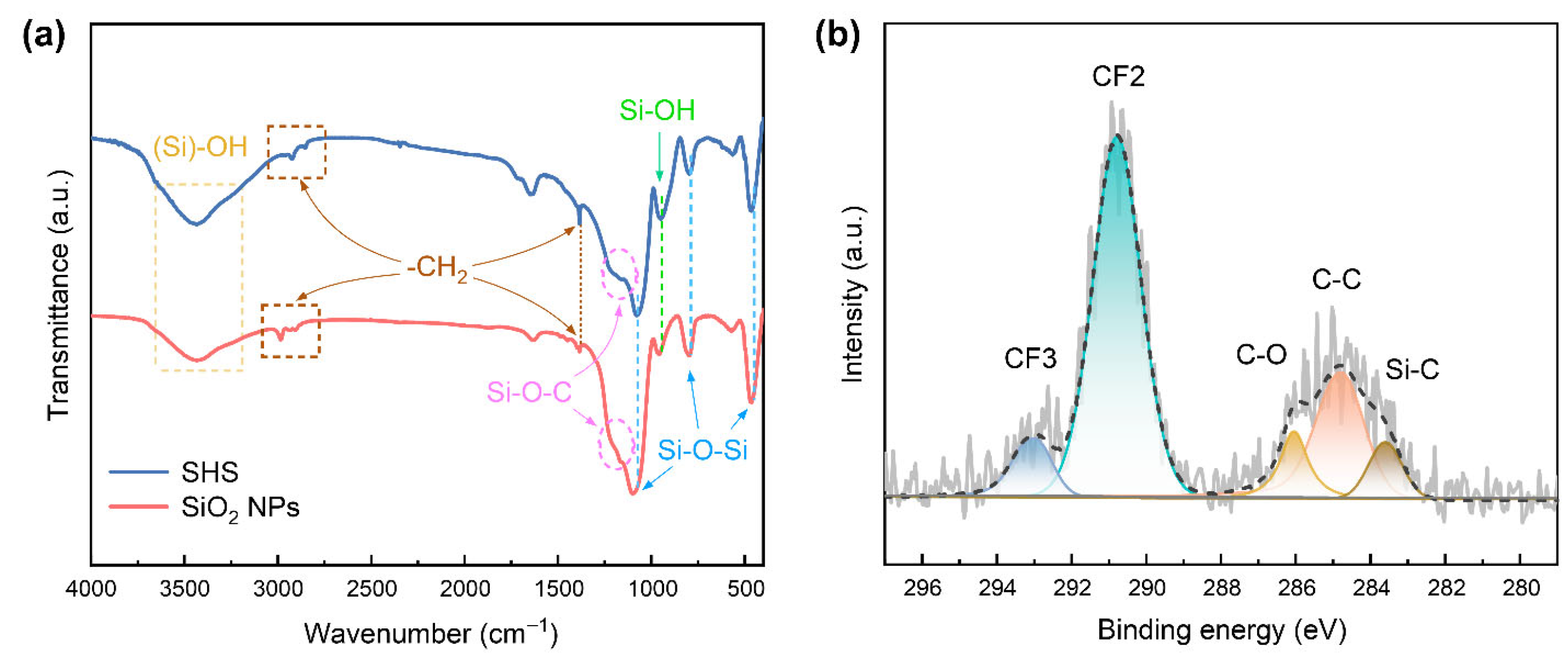
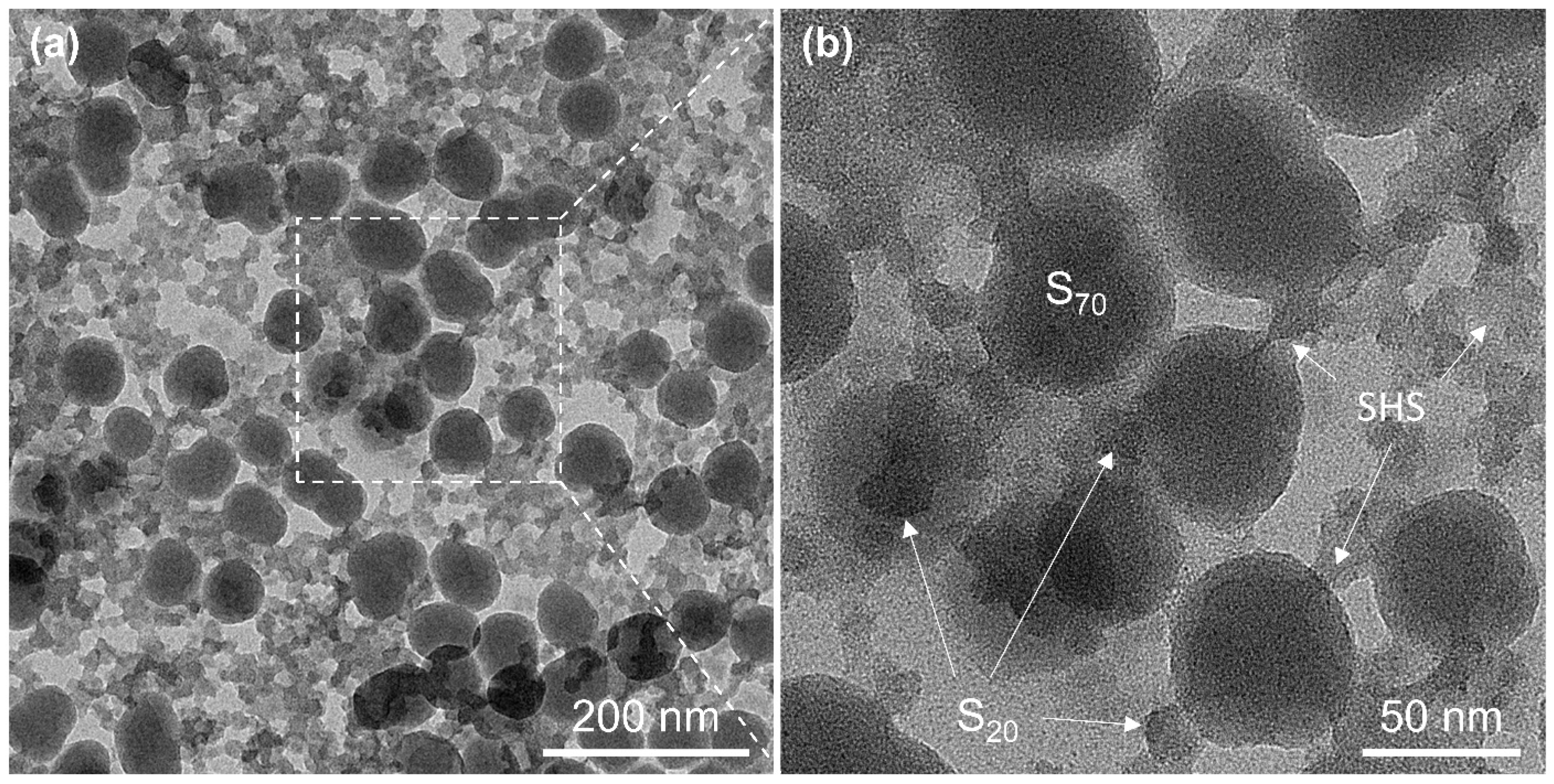
3.1. Structure and Components of the Prepared Coatings
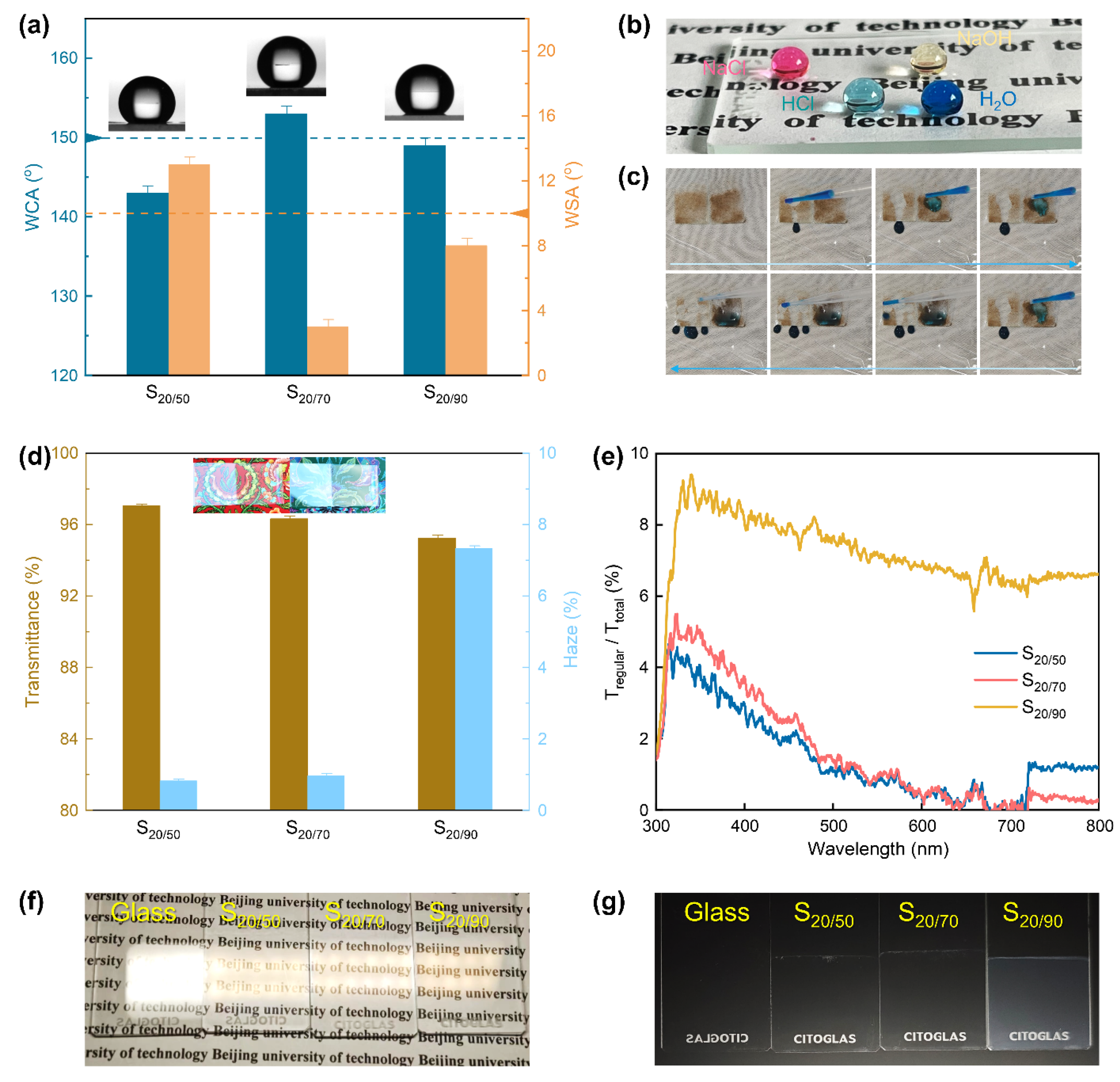
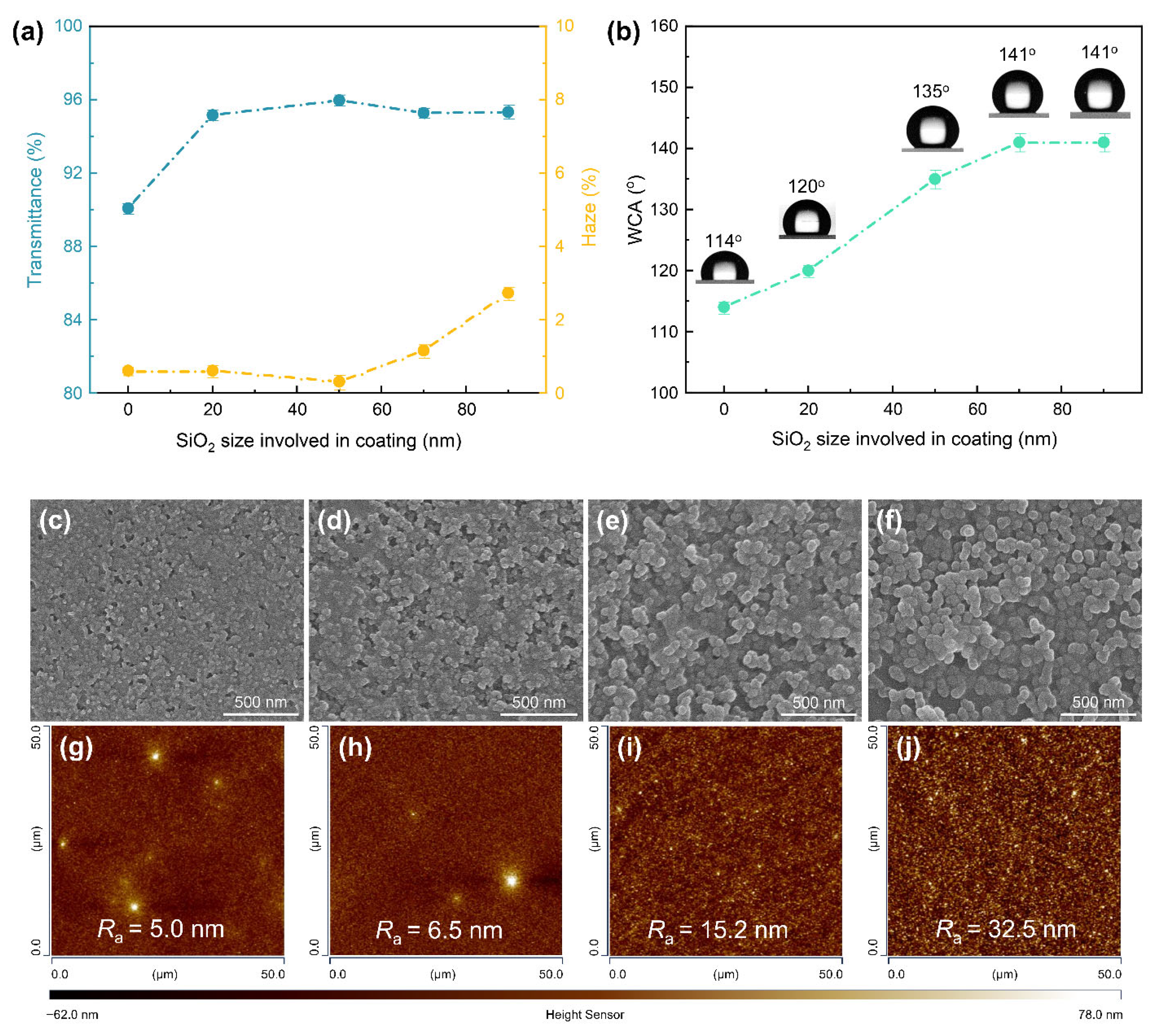
3.2. Optical Properties and Wettability of the Single-Size Derived Coatings
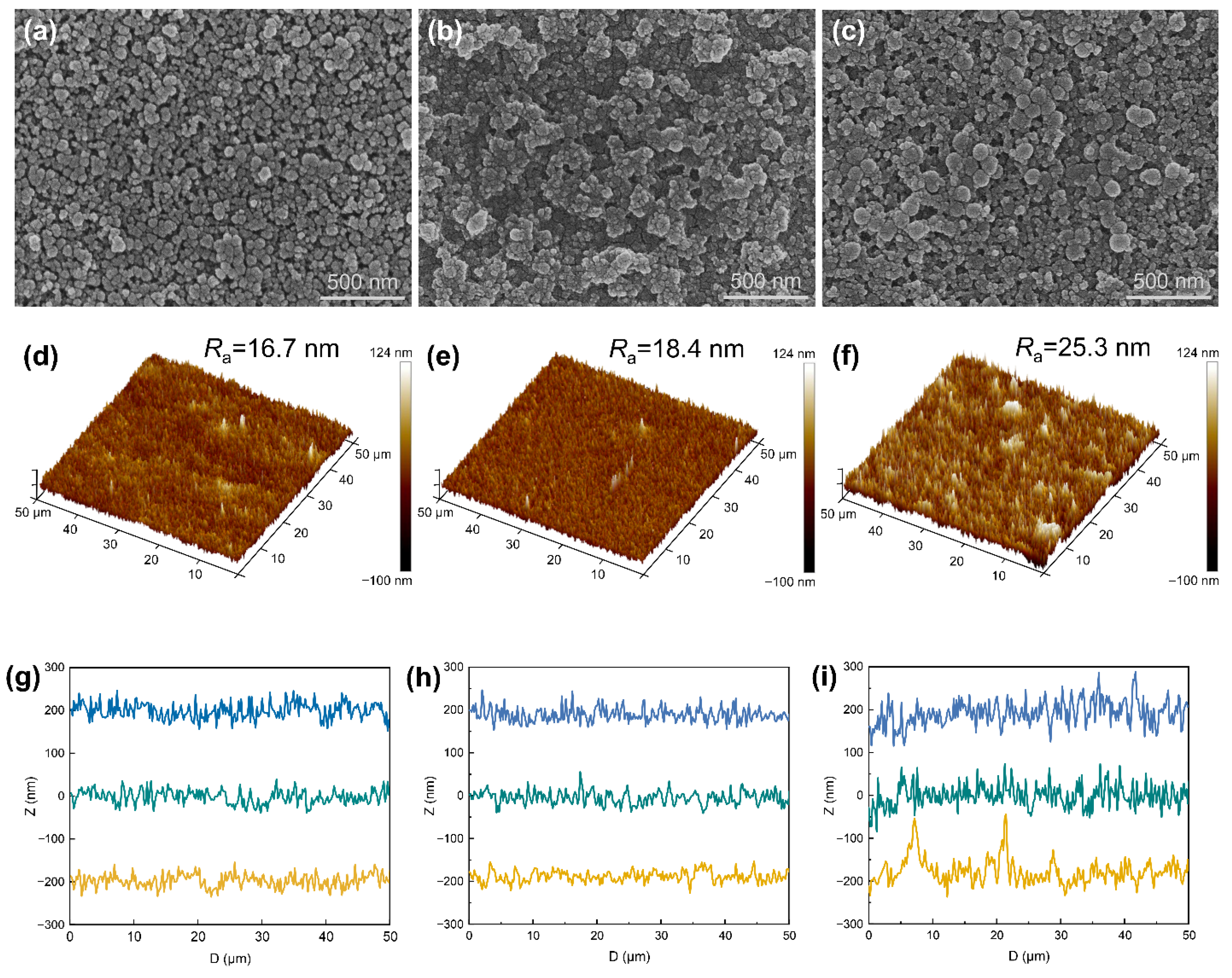
3.3. Optical Properties and Wettability of the Dual-Size Assembled Coatings
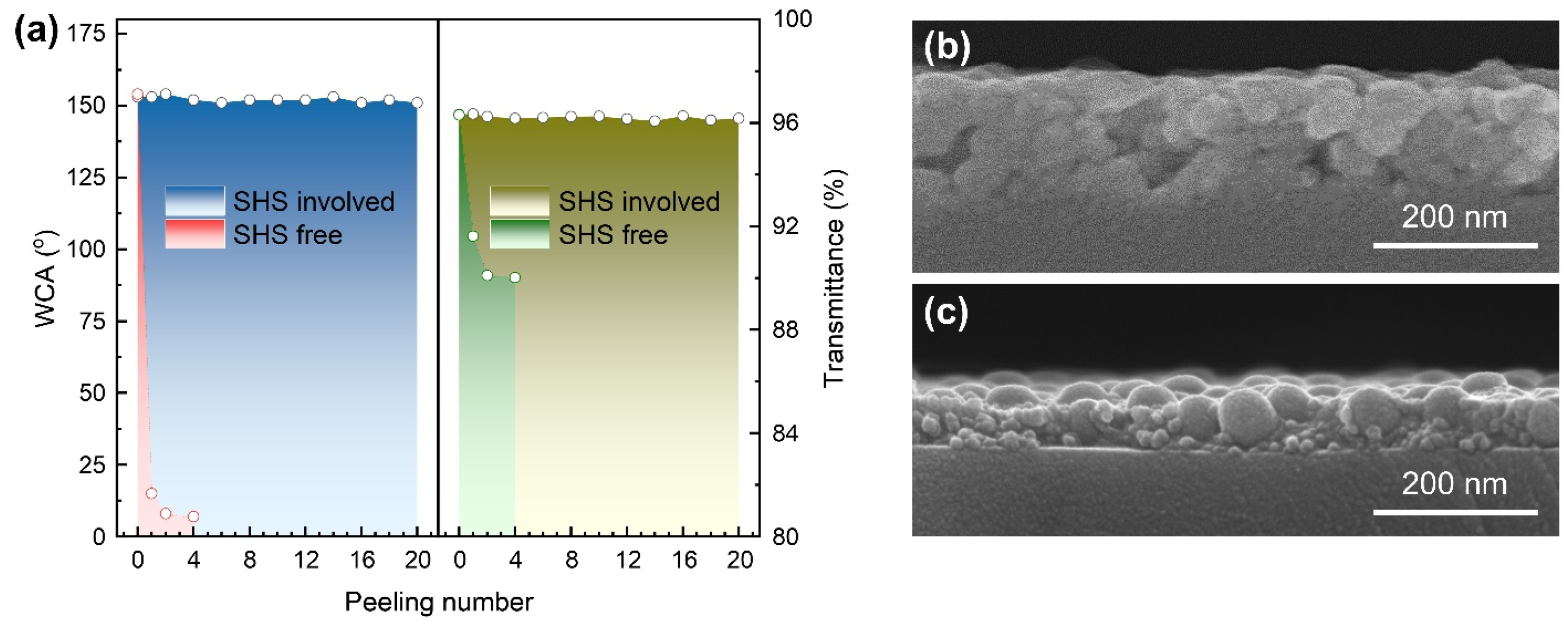
3.4. Effect of SHS on Properties of the Dual-Size Derived Coatings
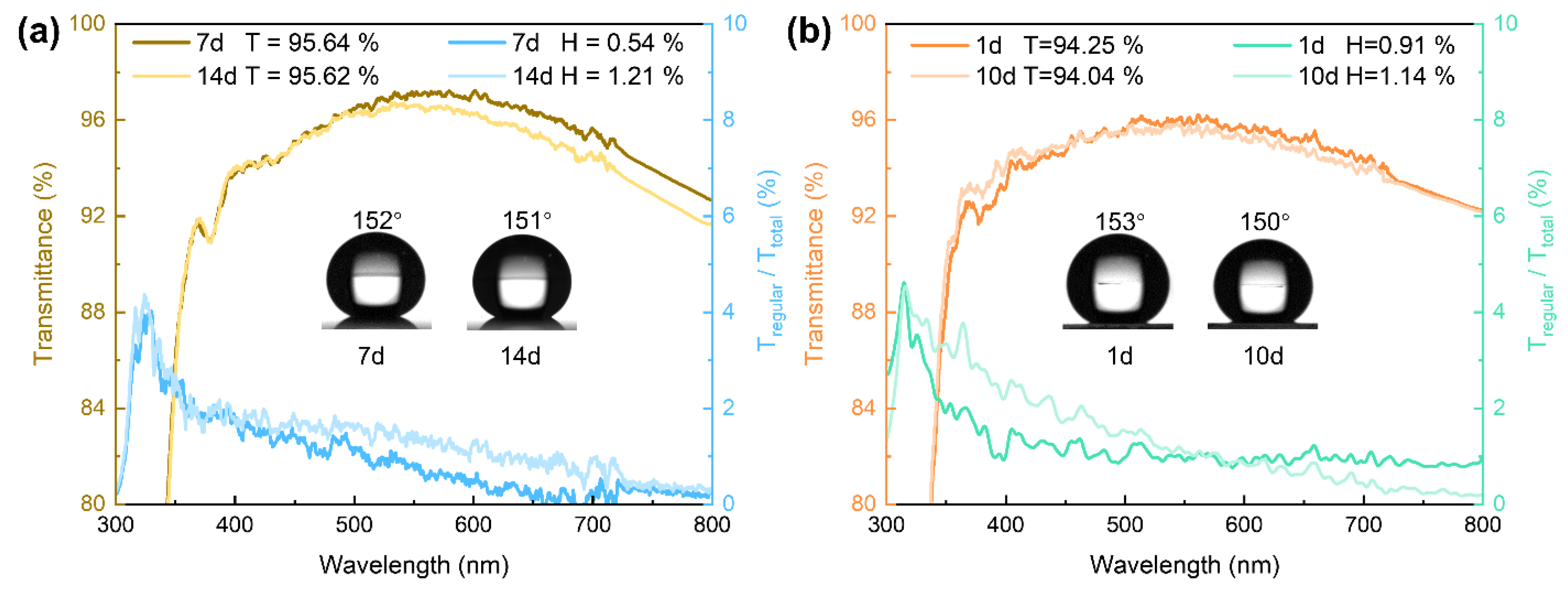
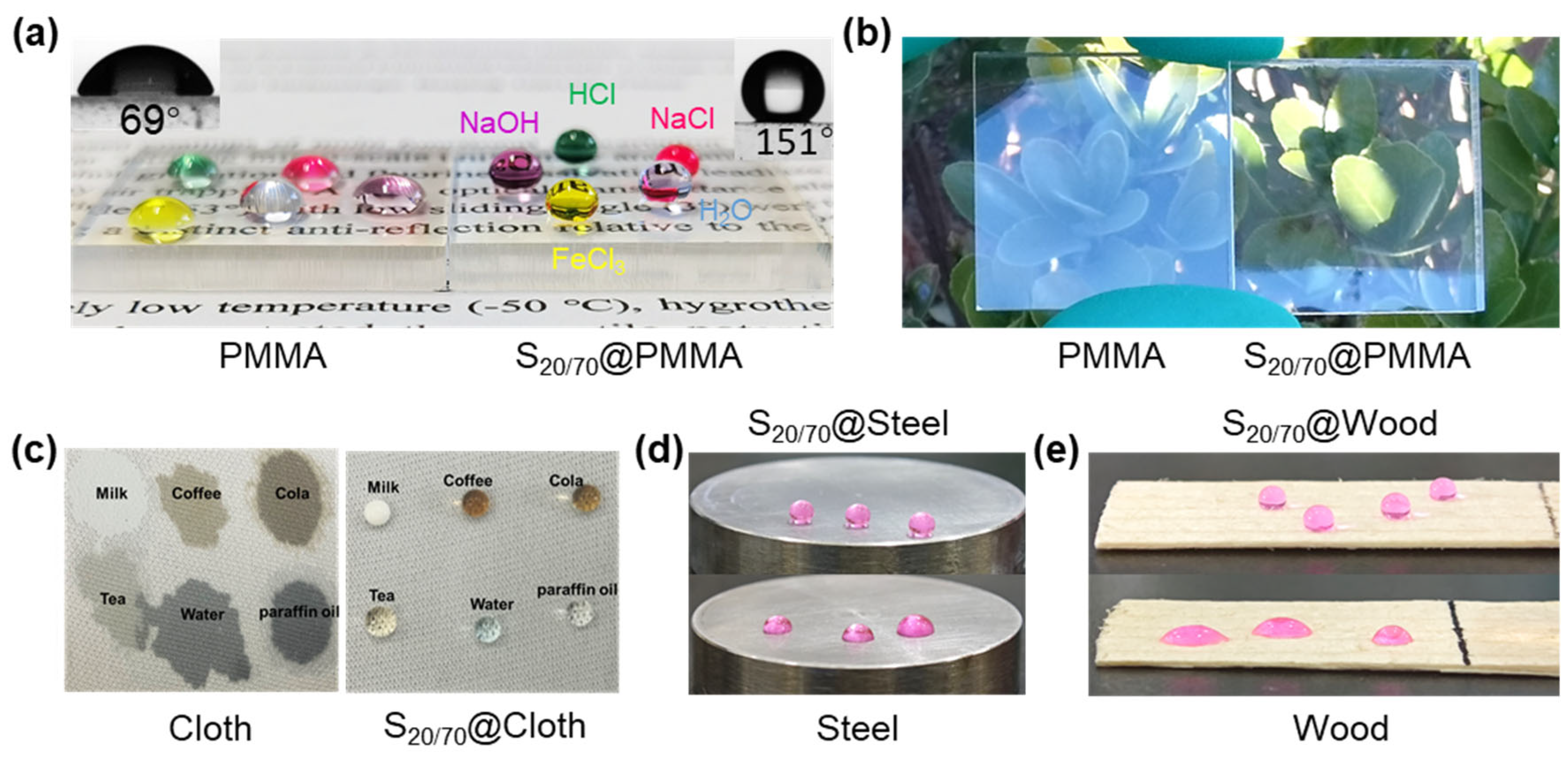
3.5. Robustness and Versatility of the Coatings
4. Conclusions
Supplementary Materials
Author Contributions
Funding
Data Availability Statement
Conflicts of Interest
References
- Chen, Q.; Ying, D.; Chen, Y.; Xie, H.; Zhang, H.; Chang, C. Highly transparent, hydrophobic, and durable anisotropic cellulose films as electronic screen protectors. Carbohydr. Polym. 2023, 311, 120735. [Google Scholar] [CrossRef] [Scilit] [PubMed]
- Fu, Q.; Tu, K.; Goldhahn, C.; Keplinger, T.; Adobes-Vidal, M.; Sorieul, M.; Burgert, I. Luminescent and Hydrophobic Wood Films as Optical Lighting Materials. ACS Nano 2020, 14, 13775–13783. [Google Scholar] [CrossRef] [Scilit] [PubMed]
- Rossi, G.; Altavilla, C.; Scarfato, P.; Ciambelli, P.; Incarnato, L. Durability study of transparent and flexible nanolayer barrier for photovoltaic devices. Polym. Degrad. Stab. 2015, 112, 160–166. [Google Scholar] [CrossRef] [Scilit]
- Li, D.; Wang, X.; Xia, L.; Luo, Q.; Xu, Y.; Zeng, B.; Luo, W.; Dai, L. Semi aromatic colorless polyimide coatings for dual electrochromic and electrofluorochromic displays and its potential for information encryption. Prog. Org. Coat. 2023, 184, 107867. [Google Scholar] [CrossRef] [Scilit]
- Ozdemir, R.; Van Avermaet, H.; Erdem, O.; Schiettecatte, P.; Hens, Z.; Aubert, T. Quantum Dot Patterning and Encapsulation by Maskless Lithography for Display Technologies. ACS Appl. Mater. Interfaces 2023, 15, 9629–9637. [Google Scholar] [CrossRef] [Scilit] [PubMed]
- Tan, Q.; Chang, Y.; He, Q.; Tong, H.; Miao, X. Enhanced stretchability towards a flexible and wearable reflective display coating using chalcogenide phase change materials. Opt. Express 2023, 31, 75–85. [Google Scholar] [CrossRef] [Scilit]
- Fievez, M.; Singh Rana, P.J.; Koh, T.M.; Manceau, M.; Lew, J.H.; Jamaludin, N.F.; Ghosh, B.; Bruno, A.; Cros, S.; Berson, S.; et al. Slot-die coated methylammonium-free perovskite solar cells with 18% efficiency. Sol. Energy Mater. Sol. Cells 2021, 230, 111189. [Google Scholar] [CrossRef] [Scilit]
- Leng, M.; Chen, C.; Xue, D.-J.; Gong, J.; Liu, Y.; Li, K.; Xiao, X.; Wang, G.; Tang, J. Sb2Se3 solar cells employing metal-organic solution coated CdS buffer layer. Sol. Energy Mater. Sol. Cells 2021, 225, 111043. [Google Scholar] [CrossRef] [Scilit]
- Thornber, T.; Game, O.S.; Cassella, E.J.; O’Kane, M.E.; Bishop, J.E.; Routledge, T.J.; Alanazi, T.I.; Togay, M.; Isherwood, P.J.M.; Infante-Ortega, L.C.; et al. Nonplanar Spray-Coated Perovskite Solar Cells. ACS Appl. Mater. Interfaces 2022, 14, 37587–37594. [Google Scholar] [CrossRef] [Scilit]
- Zhang, X.; Shen, L.; Baral, P.; Vijayaraghavan, S.N.; Yan, F.; Gong, X.; Wang, H. Blade-coated inverted perovskite solar cells in an ambient environment. Sol. Energy Mater. Sol. Cells 2022, 246, 111894. [Google Scholar] [CrossRef] [Scilit]
- Li, F.; Huang, T.; Pasic, P.; Easton, C.D.; Voelcker, N.H.; Heath, D.E.; O’Brien-Simpson, N.M.; O’Connor, A.J.; Thissen, H. One step antimicrobial coatings for medical device applications based on low fouling polymers containing selenium nanoparticles. Chem. Eng. J. 2023, 467, 143546. [Google Scholar] [CrossRef] [Scilit]
- Piedade, A.P.; Pinho, A.C.; Branco, R.; Morais, P.V. Evaluation of antimicrobial activity of ZnO based nanocomposites for the coating of non-critical equipment in medical-care facilities. Appl. Surf. Sci. 2020, 513, 145818. [Google Scholar] [CrossRef] [Scilit]
- Ashoka, A.H.; Kong, S.H.; Seeliger, B.; Andreiuk, B.; Soares, R.V.; Barberio, M.; Diana, M.; Klymchenko, A.S. Near-infrared fluorescent coatings of medical devices for image-guided surgery. Biomaterials 2020, 261, 120306. [Google Scholar] [CrossRef] [Scilit] [PubMed]
- Grzeczkowicz, A.; Lipko, A.; Kwiatkowska, A.; Strawski, M.; Bacal, P.; Wieckowska, A.; Granicka, L.H. Polyelectrolyte Membrane Nanocoatings Aimed at Personal Protective and Medical Equipment Surfaces to Reduce Coronavirus Spreading. Membranes 2022, 12, 946. [Google Scholar] [CrossRef] [Scilit]
- Zheng, Y.; Gao, X.; Jiang, L. Directional adhesion of superhydrophobic butterfly wings. Soft Matter 2007, 3, 178–182. [Google Scholar] [CrossRef] [Scilit]
- Li, F.; Du, M.; Zheng, Q. Dopamine/silica nanoparticle assembled, microscale porous structure for versatile superamphiphobic coating. ACS Nano 2016, 10, 2910–2921. [Google Scholar] [CrossRef] [Scilit]
- Tian, Y.; Su, B.; Jiang, L. Interfacial Material System Exhibiting Superwettability. Adv. Mater. 2014, 26, 6872–6897. [Google Scholar] [CrossRef] [Scilit]
- Cassie, A.; Baxter, S. Wettability of porous surfaces. Trans. Faraday Soc. 1944, 40, 546–551. [Google Scholar] [CrossRef] [Scilit]
- Leão, A.G.; Soares, B.G.; Silva, A.A.; Pereira, E.C.L.; Souto, L.F.C.; Ribeiro, A.C. Transparent and superhydrophobic room temperature vulcanized (RTV) polysiloxane coatings loaded with different hydrophobic silica nanoparticles with self-cleaning characteristics. Surf. Coat. Technol. 2023, 462, 129479. [Google Scholar] [CrossRef] [Scilit]
- Mendel, N.; Wu, H.; Mugele, F. Electrowetting-Assisted Generation of Ultrastable High Charge Densities in Composite Silicon Oxide–Fluoropolymer Electret Samples for Electric Nanogenerators. Adv. Funct. Mater. 2021, 31, 2007872. [Google Scholar] [CrossRef] [Scilit]
- Kim, K.T.; Woo, J.; Kim, Y.S.; Sung, S.; Park, C.; Lee, C.; Park, Y.J.; Lee, H.W.; Park, K.; Jung, Y.S. Ultrathin Superhydrophobic Coatings for Air-Stable Inorganic Solid Electrolytes: Toward Dry Room Application for All-Solid-State Batteries. Adv. Energy Mater. 2023, 13, 2301600. [Google Scholar] [CrossRef] [Scilit]
- Jeon, Y.; Nagappan, S.; Li, X.H.; Lee, J.H.; Shi, L.; Yuan, S.; Lee, W.K.; Ha, C.S. Highly Transparent, Robust Hydrophobic, and Amphiphilic Organic-Inorganic Hybrid Coatings for Antifogging and Antibacterial Applications. ACS Appl. Mater. Interfaces 2021, 13, 6615–6630. [Google Scholar] [CrossRef] [Scilit] [PubMed]
- Kim, H.M.; Sohn, S.; Ahn, J.S. Transparent and super-hydrophobic properties of PTFE films coated on glass substrate using RF-magnetron sputtering and Cat-CVD methods. Surf. Coat. Technol. 2013, 228, S389–S392. [Google Scholar] [CrossRef] [Scilit]
- Suzuki, R. Fabrication of a porous SiO2 thin film with an ultralow refractive index for anti-reflective coatings. J. Sol-Gel Sci. Technol. 2023, 106, 860–868. [Google Scholar] [CrossRef] [Scilit]
- Li, F.; Du, M.; Zheng, Z.; Song, Y.; Zheng, Q. A Facile, Multifunctional, Transparent, and Superhydrophobic Coating Based on a Nanoscale Porous Structure Spontaneously Assembled from Branched Silica Nanoparticles. Adv. Mater. Interfaces 2015, 2, 1500201. [Google Scholar] [CrossRef] [Scilit]
- Su, Y.; He, J. Rational Design of Highly Comprehensive Liquid-Like Coatings with Enhanced Transparency, Concerted Multi-Function, and Excellent Durability: A Ternary Cooperative Strategy. Adv. Mater. 2024, 36, 2405767. [Google Scholar] [CrossRef] [Scilit]
- Rahmawan, Y.; Xu, L.; Yang, S. Self-assembly of nanostructures towards transparent, superhydrophobic surfaces. J. Mater. Chem. A 2013, 1, 2955–2969. [Google Scholar] [CrossRef] [Scilit]
- Karunakaran, R.G.; Lu, C.-H.; Zhang, Z.; Yang, S. Highly transparent superhydrophobic surfaces from the co-assembly of nanoparticles (≤100 nm). Langmuir 2011, 27, 4594–4602. [Google Scholar] [CrossRef] [Scilit]
- Lee, Y.; You, E.A.; Ha, Y.G. Transparent, self-cleaning and waterproof surfaces with tunable micro/nano dual-scale structures. Nanotechnology 2016, 27, 355701. [Google Scholar] [CrossRef] [Scilit]
- Zhao, X.; Park, D.S.; Choi, J.; Park, S.; Soper, S.A.; Murphy, M.C. Robust, transparent, superhydrophobic coatings using novel hydrophobic/hydrophilic dual-sized silica particles. J. Colloid Interface Sci. 2020, 574, 347–354. [Google Scholar] [CrossRef] [Scilit]
- Liu, Y.; Tan, X.; Li, X.; Xiao, T.; Jiang, L.; Nie, S.; Song, J.; Chen, X. Eco-Friendly Fabrication of Transparent Superhydrophobic Coating with Excellent Mechanical Robustness, Chemical Stability, and Long-Term Outdoor Durability. Langmuir 2022, 38, 12881–12892. [Google Scholar] [CrossRef] [Scilit]
- Chen, B.; Popov, S.; Berglund, L.A. Ray scattering in fiber-reinforced transparent wood composites—Wood microstructural effects and virtual camera simulation. Opt. Mater. 2025, 162, 116953. [Google Scholar] [CrossRef] [Scilit]
- Busato, S.; Kremer, D.; Perevedentsev, A. Imaging-Based Metrics Drawn from Visual Perception of Haze and Clarity of Materials. I. Method, Analysis, and Distance-Dependent Transparency. Macromol. Mater. Eng. 2021, 306, 2100045. [Google Scholar] [CrossRef] [Scilit]
- Xu, X.; Zhou, J.; Jiang, L.; Lubineau, G.; Ng, T.; Ooi, B.S.; Liao, H.-Y.; Shen, C.; Chen, L.; Zhu, J.Y. Highly transparent, low-haze, hybrid cellulose nanopaper as electrodes for flexible electronics. Nanoscale 2016, 8, 12294–12306. [Google Scholar] [CrossRef] [Scilit] [PubMed]
- Lin, J.; Zheng, C.; Ye, W.; Wang, H.; Feng, D.; Li, Q.; Huan, B. A facile dip-coating approach to prepare SiO2/fluoropolymer coating for superhydrophobic and superoleophobic fabrics with self-cleaning property. J. Appl. Polym. Sci. 2015, 132, 41458. [Google Scholar] [CrossRef] [Scilit]
- Xu, L.; Karunakaran, R.G.; Guo, J.; Yang, S. Transparent, Superhydrophobic Surfaces from One-Step Spin Coating of Hydrophobic Nanoparticles. ACS Appl. Mater. Interfaces 2012, 4, 1118–1125. [Google Scholar] [CrossRef] [Scilit]
- Latthe, S.S.; Rao, A.V. Superhydrophobic SiO2 micro-particle coatings by spray method. Surf. Coat. Technol. 2012, 207, 489–492. [Google Scholar] [CrossRef] [Scilit]
- Muhumuza, R.; Eames, P.C. Super-liquid-repellent thin film materials for low temperature latent heat thermal energy storage: A comprehensive review of materials for dip-coating. Energy Storage 2024, 6, e641. [Google Scholar] [CrossRef] [Scilit]
- ISO 13468-2:1999; Plastics—Determination of the Total Luminous Transmittance of Transparent Materials—Part 2: Double-Beam Instrument. ISO: Geneva, Switzerland, 1999.
- EN 673:2021; Glass in Building—Determination of Thermal Transmittance (U Value)—Calculation Method. CEN: Brussels, Belgium, 2021.
- Wang, D.; Li, Y.; Wen, Y.; Li, X.; Du, X. Simple and low-cost fabrication of large area nanocoatings with mechanical robustness, enhanced broadband transmittance and antifogging. Colloids Surf. A 2021, 629, 127522. [Google Scholar] [CrossRef] [Scilit]
- Gao, X.; Zhu, Y.; Zhao, X.; Wang, Z.; An, D.; Ma, Y.; Guan, S.; Du, Y.; Zhou, B. Synthesis and characterization of polyurethane/SiO2 nanocomposites. Appl. Surf. Sci. 2011, 257, 4719–4724. [Google Scholar] [CrossRef] [Scilit]
- Nishino, T.; Meguro, M.; Nakamae, K.; Matsushita, M.; Ueda, Y. The lowest surface free energy based on -CF3 alignment. Langmuir 1999, 15, 4321–4323. [Google Scholar] [CrossRef] [Scilit]
- Li, Z.; He, H.; Wang, X.; Shou, C.; Huang, M.; Jin, S.; Du, X. Robust SiO2@TiO2 nanocoatings with antireflection and photocatalytic self-cleaning properties by introducing commercial P25 TiO2. Colloids Surf. A 2023, 664, 131176. [Google Scholar] [CrossRef] [Scilit]
- Womack, G.; Isbilir, K.; Lisco, F.; Durand, G.; Taylor, A.; Walls, J.M. The performance and durability of single-layer sol-gel anti-reflection coatings applied to solar module cover glass. Surf. Coat. Technol. 2019, 358, 76–83. [Google Scholar] [CrossRef] [Scilit]
- Chan, L.W.; Morse, D.E.; Gordon, M.J. Moth eye-inspired anti-reflective surfaces for improved IR optical systems & visible LEDs fabricated with colloidal lithography and etching. Bioinspir. Biomim. 2018, 13, 041001. [Google Scholar]
- Nguyen, N.B.; Ly, N.H.; Tran, H.N.; Son, S.J.; Joo, S.W.; Vasseghian, Y.; Osman, S.M.; Luque, R. Transparent oil–water separating spiky SiO2 nanoparticle supramolecular polymer superhydrophobic coatings. Small Methods 2023, 7, 2201257. [Google Scholar] [CrossRef] [Scilit]
- Wang, R.; Hu, C.; Li, J.; Lin, X.; Zhang, W. Nanoparticle diffusion and fixation for the preparation of durable transparent superhydrophobic coatings. ACS Appl. Polym. Mater. 2023, 5, 5230–5237. [Google Scholar] [CrossRef] [Scilit]



Disclaimer/Publisher’s Note: The statements, opinions and data contained in all publications are solely those of the individual author(s) and contributor(s) and not of MDPI and/or the editor(s). MDPI and/or the editor(s) disclaim responsibility for any injury to people or property resulting from any ideas, methods, instructions or products referred to in the content. |
© 2025 by the authors. Licensee MDPI, Basel, Switzerland. This article is an open access article distributed under the terms and conditions of the Creative Commons Attribution (CC BY) license (https://creativecommons.org/licenses/by/4.0/).
Share and Cite
Xu, L.; Niu, L.; Chen, S.; He, T.; Wu, J.; Ai, J.; Li, Y. Concertation of Anti-Reflective, Superhydrophobic Surface Based on Rational Assembly of Dual-Size Silica. Materials 2025, 18, 5601. https://doi.org/10.3390/ma18245601
Xu L, Niu L, Chen S, He T, Wu J, Ai J, Li Y. Concertation of Anti-Reflective, Superhydrophobic Surface Based on Rational Assembly of Dual-Size Silica. Materials. 2025; 18(24):5601. https://doi.org/10.3390/ma18245601
Chicago/Turabian StyleXu, Lu, Lei Niu, Shuqun Chen, Ting He, Junshu Wu, Jianbo Ai, and Yongli Li. 2025. "Concertation of Anti-Reflective, Superhydrophobic Surface Based on Rational Assembly of Dual-Size Silica" Materials 18, no. 24: 5601. https://doi.org/10.3390/ma18245601
APA StyleXu, L., Niu, L., Chen, S., He, T., Wu, J., Ai, J., & Li, Y. (2025). Concertation of Anti-Reflective, Superhydrophobic Surface Based on Rational Assembly of Dual-Size Silica. Materials, 18(24), 5601. https://doi.org/10.3390/ma18245601