3.2.1. Improvement in Cutting Performance
The obtained surface roughness values were filled in the orthogonal test table and the analyzed results are shown in
Table 6.
From an intuitive analysis of
Table 6, it can be seen that the order of the range R of the surface roughness in the cutting experiment is RC > RA > RB. In the analysis of the orthogonal test, the larger the range, the greater the influence of this factor on the test. Therefore, the order of influence of the factors is feed rate > cutting speed > depth of cut. In addition, the mean values under different factors can reflect the optimal parameters of this factor, and the minimum value is K2 in column A, K1 in column B, and K1 in column C. Therefore, it is concluded that the optimal parameters of the cutting experiment are A2B1C1, i.e., the cutting speed is 200 m/min, the back-eating amount is 0.1 mm, and the feed amount is 0.1 mm/r.
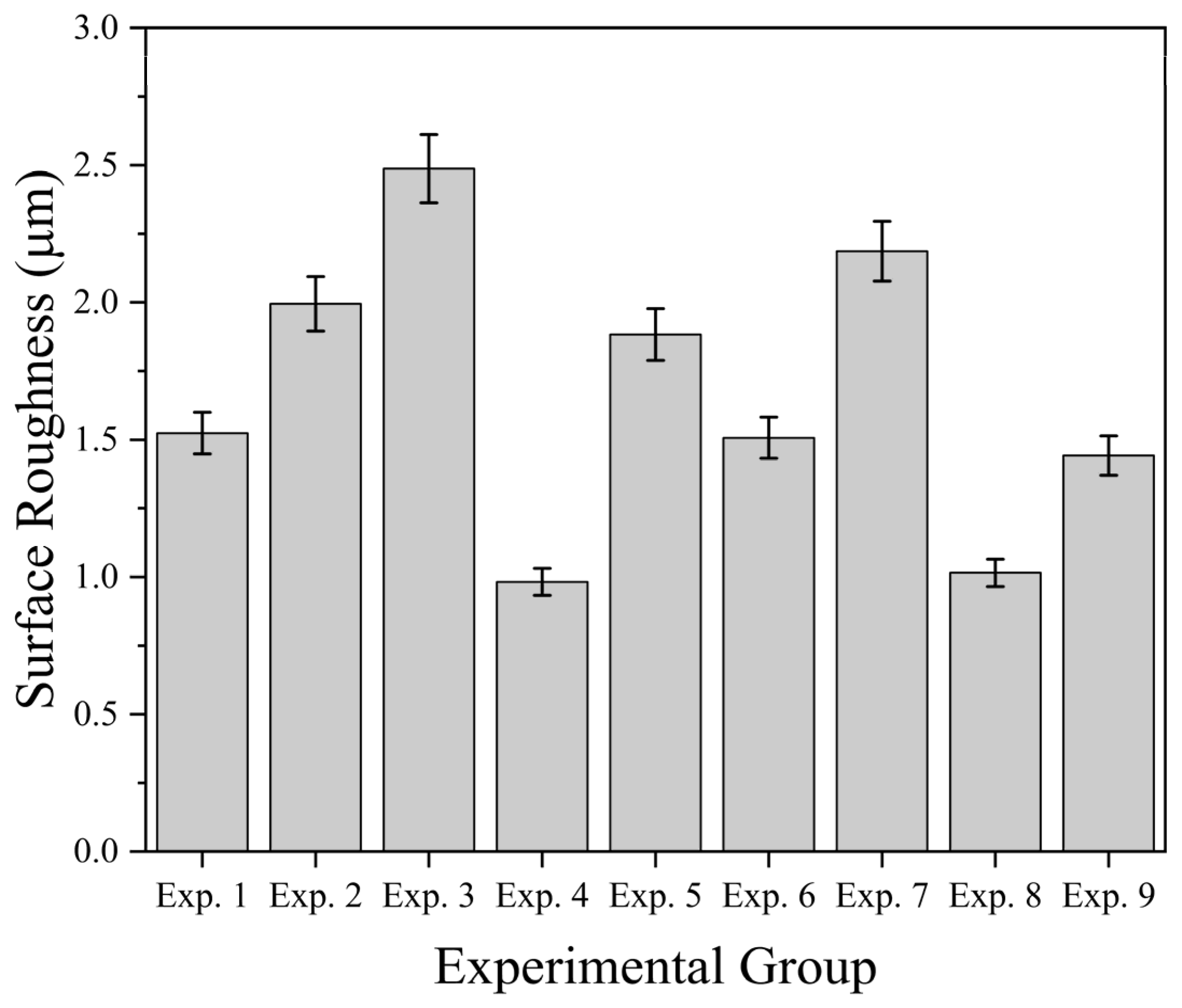
Figure 6 shows the surface roughness corresponding to the nine sets of cutting experiments shown in
Table 6.
To further analyze the impact of various factors on the results and minimize the influence of errors, an analysis of variance was conducted on the data. In
Table 7, S is the sum of squared deviations (i.e., mean square) and “a” represents the mean square of the error, which was chosen to be 0.1 for this study. After calculating the mean square, if the value for a factor is less than or equal to that of the error (i.e., S ≤ a), they are categorized as errors constituting a new error. It can be seen that the sum of the squares of the deviations for factor B is less than the mean square of the error, requiring factor B to be categorized as an error and forming a new error.
In the variance calculation process, when the F-ratio is greater than the F-critical value, it indicates that the factor has a significant impact on the experiment; otherwise, it does not. Generally speaking, the greater the gap between the F-ratio and the F-critical value, the more significant the influence of this factor on the test results, or the more important this factor is [
29]. According to the variance analysis results in
Table 7, the F-ratio for factor C (feed rate) exceeds the critical value, while the F-ratios for factors A (cutting speed) and B (depth of cut) are both lower than the critical value. This indicates that the feed rate has a significant effect on the surface roughness of the workpiece, while the effects of cutting speed and depth of cut are not significant. This may be due to the limited variation range of cutting speed and depth of cut in the experimental design, which prevented their effects on the surface quality from fully manifesting.
Cutting force is a key factor in the cutting process, directly affecting the material deformation and removal process, as well as influencing the surface quality of the workpiece and the tool life [
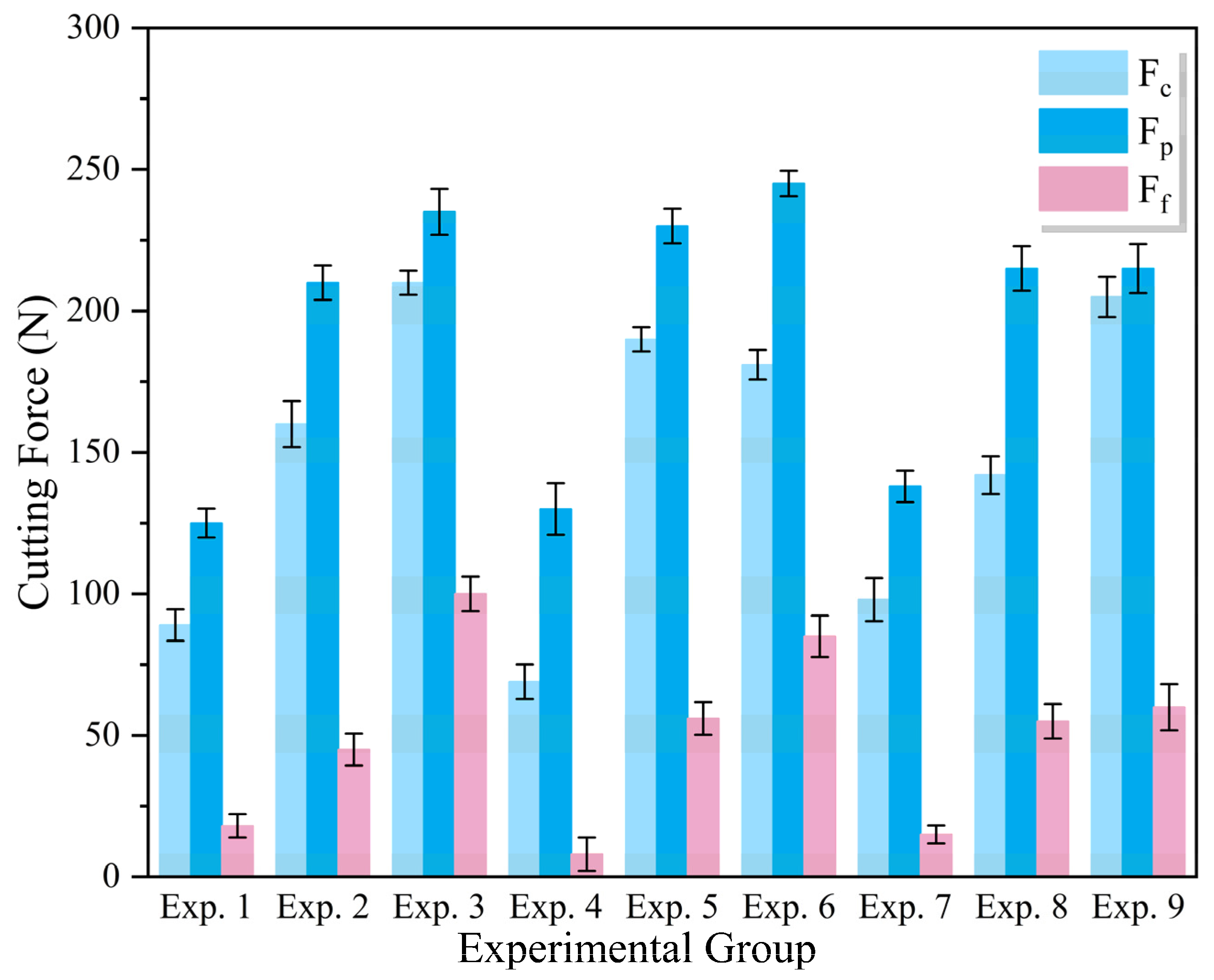
30]. In the cutting process described in this paper, three types of cutting forces can be measured: tangential force,
, radial force,
, and axial force,
. The experimental data in
Figure 7 show that the cutting force values for all conditions are concentrated within the range of 0–250 N, with the three force components following a stable ranking order:
>
>
.
As the main cutting force,
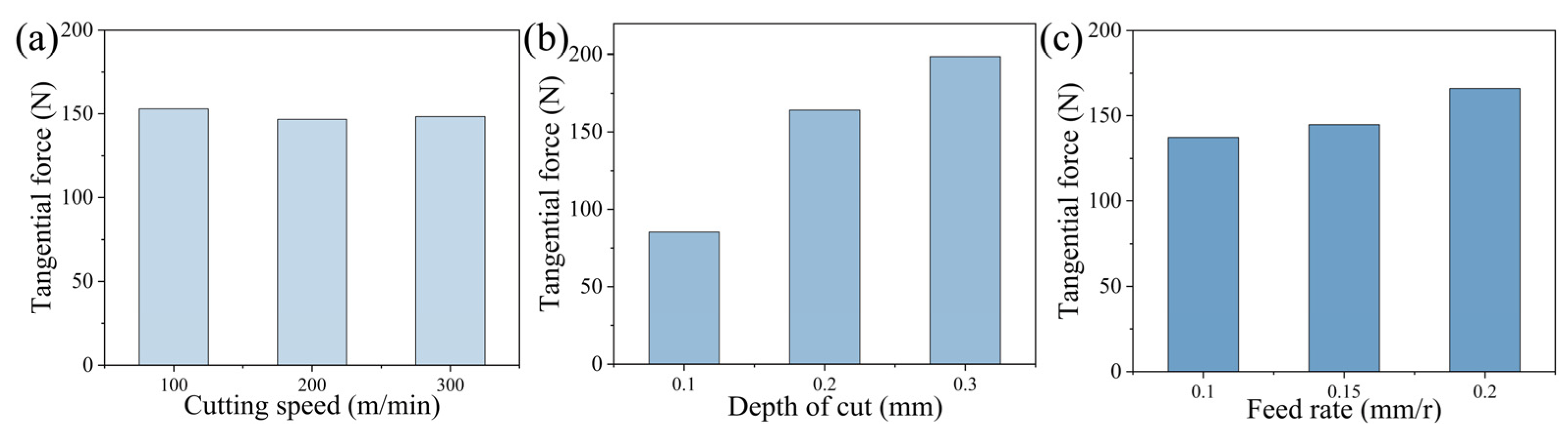
intuitively reflects the relationship between cutting force and cutting parameters, thus it was used as the evaluation index for analysis. The analysis in
Figure 8 with
as the evaluation index shows that during the process of increasing the cutting speed, the tangential force remains stable. The increase in the depth of cut and feed rate raises the tangential force value, among which the change in the depth of cut is particularly sensitive. This mechanical response is due to the expansion of the cutting area and the intensification of cutting deformation caused by adjustments in the process parameters, ultimately leading to an increase in the magnitude of the cutting force.
According to the analysis of the previous orthogonal experiments, the optimal parameters for cutting 304 stainless steel with ceramic tools are cutting speed of 200 m/min, back draft of 0.1 mm, and feed of 0.1 mm/r. This group of parameters was not experimentally verified in the existing experimental setups, and therefore additional tests need to be conducted.
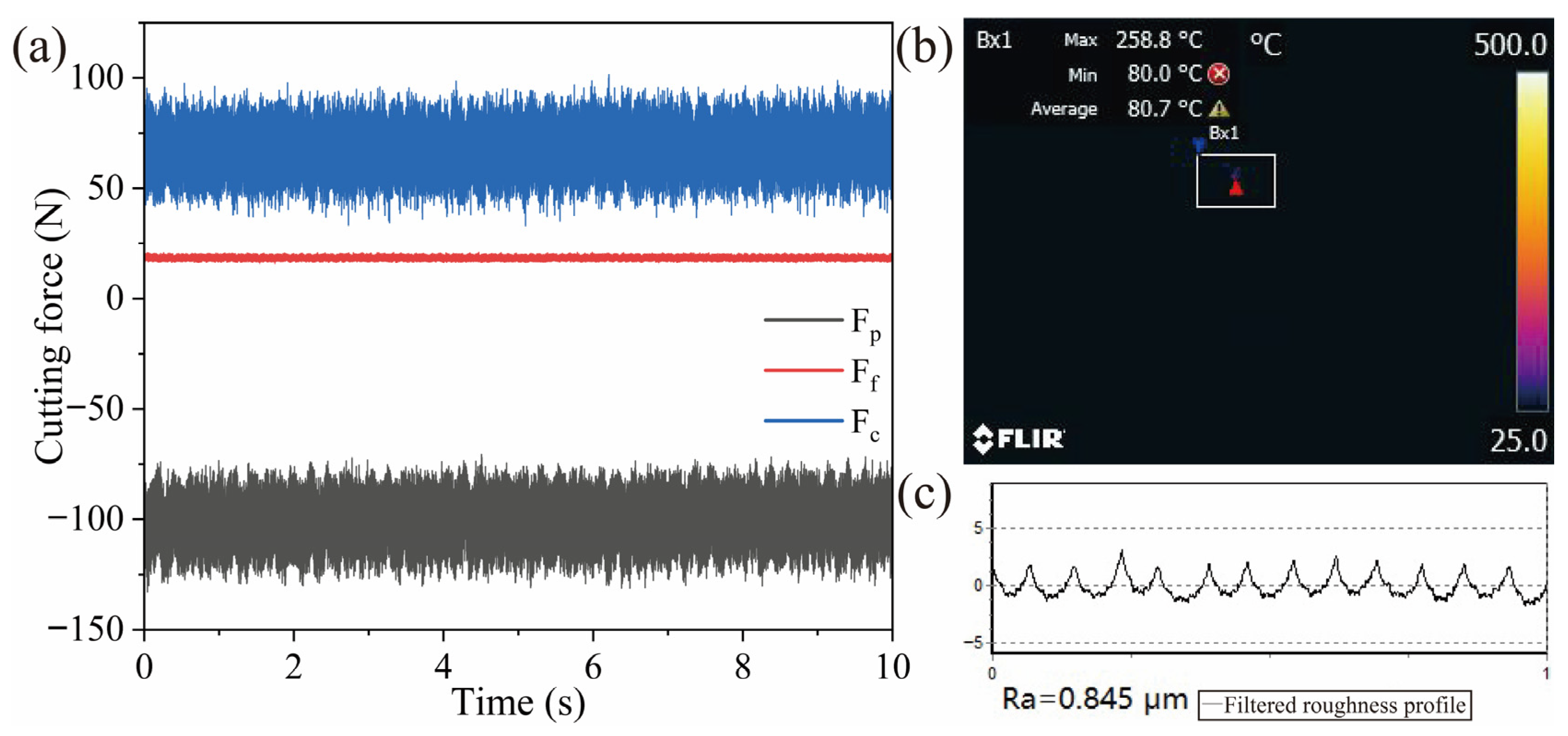
Figure 9 shows the cutting force, cutting temperature and surface roughness data under the optimal cutting parameters, and
Figure 9a shows the three-way cutting force in the stable cutting process. It can be seen that the cutting force under the optimal parameters is relatively lower than that under other parameters, and the cutting process is more stable, with the tangential force
stabilized near 70 N, the radial force
stabilized near −100 N, and the radial force is relatively small, about 18 N. At the same time, the cutting temperature of the tool is also relatively low under this cutting condition, the temperature is only 258 °C during stable cutting, the surface roughness is only 0.845 μm, and the waveform is stable, indicating that the cutting process is more stable.
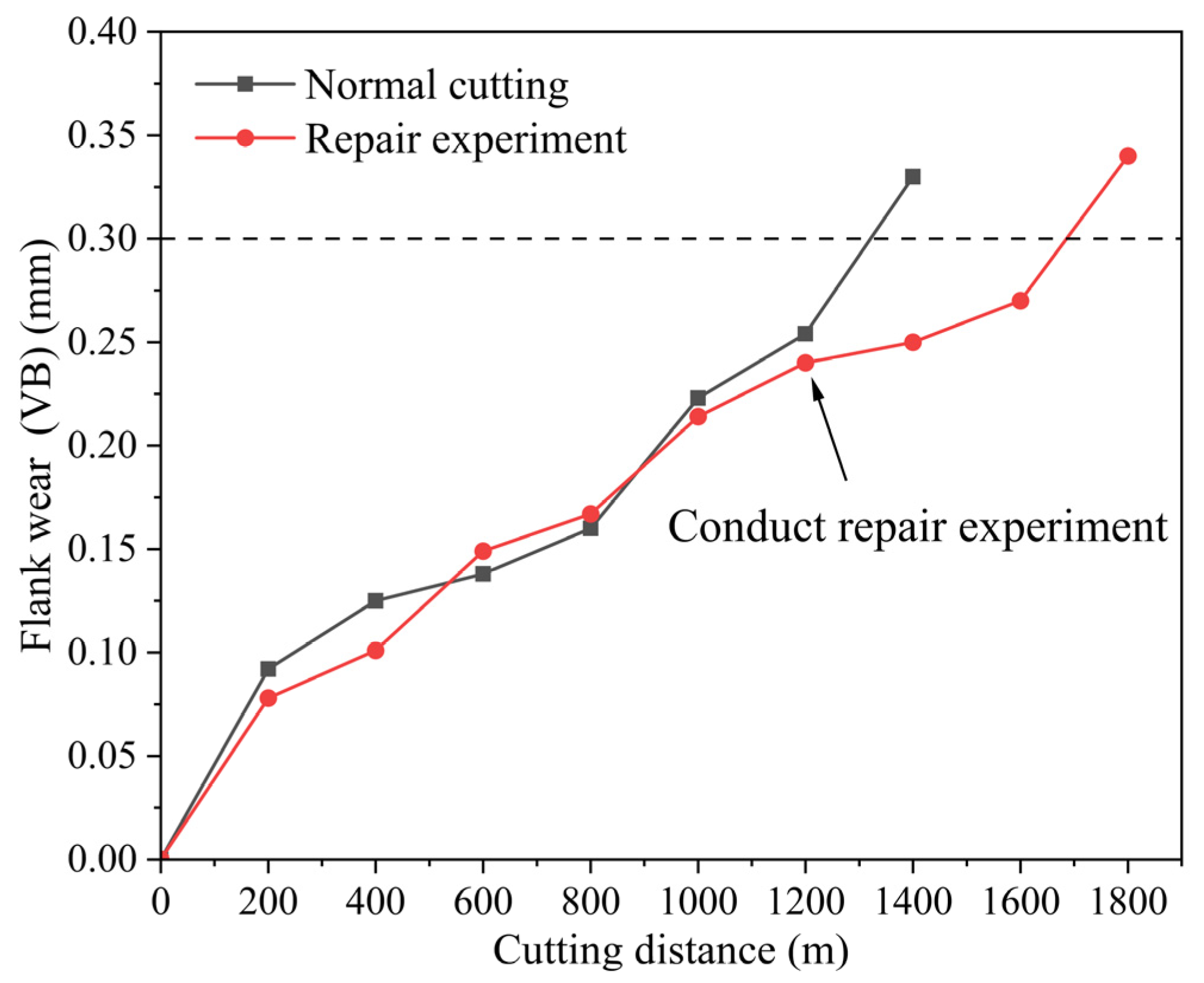
In tool life assessment, the wear of the tool flank is an important indicator for evaluating tool life. During tool use, friction causes wear on the tool surface, leading to changes in the tool’s dimensions and shape. When the wear reaches a certain level, it results in a decline in the cutting performance of the tool, thereby reducing the surface quality and efficiency of the machining process. Therefore, this study uses a flank wear of VB = 0.3 mm as the criterion for tool failure.
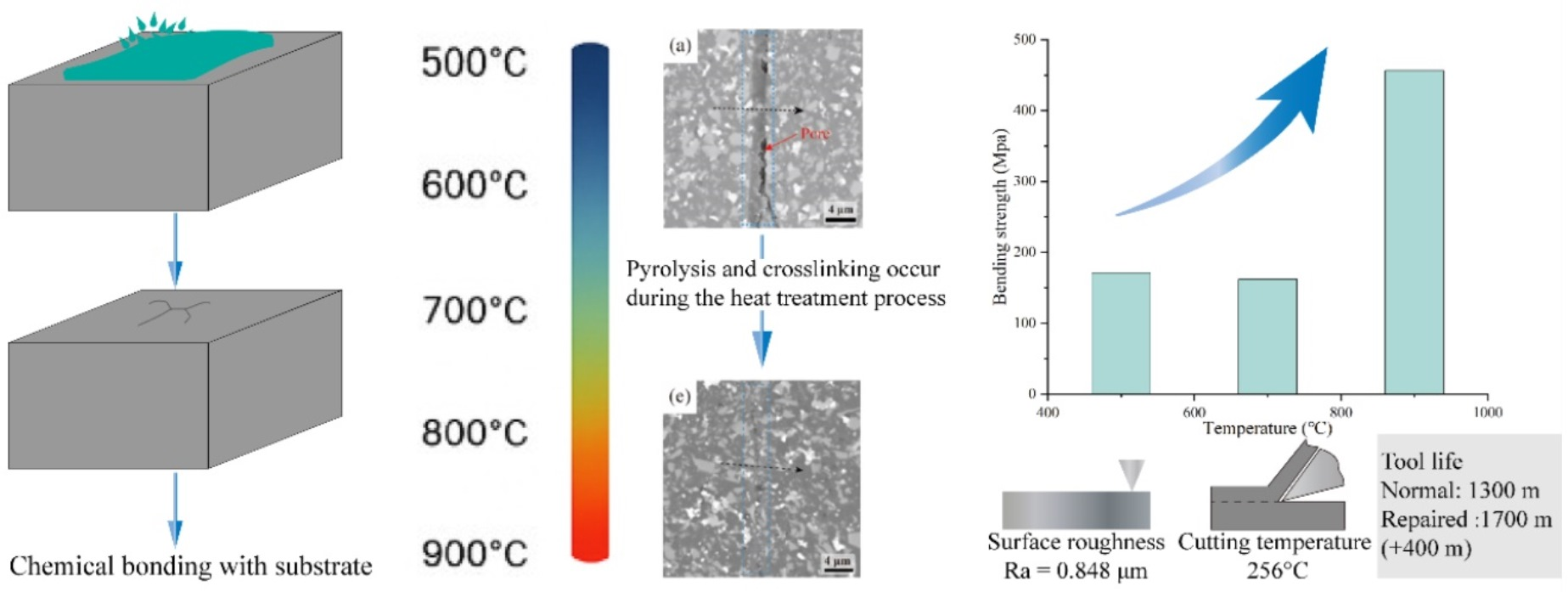
Figure 10 shows a comparison of cutting tool life experiments. It can be observed that, during normal cutting, the tool reaches a flank wear of 0.3 mm after a cutting distance of approximately 1300 m, indicating the end of the tool’s service life. In the repair experiment, when the flank wear reaches around 0.25 mm, the tool undergoes heat treatment repair. The results show that the repair experiment slows down the wear on the tool flank and extends its service life. Compared to the normal cutting process, the repair experiment can extend the cutting distance by about 400 m, with the maximum cutting distance reaching approximately 1700 m.
3.2.2. Surface Morphology Analysis
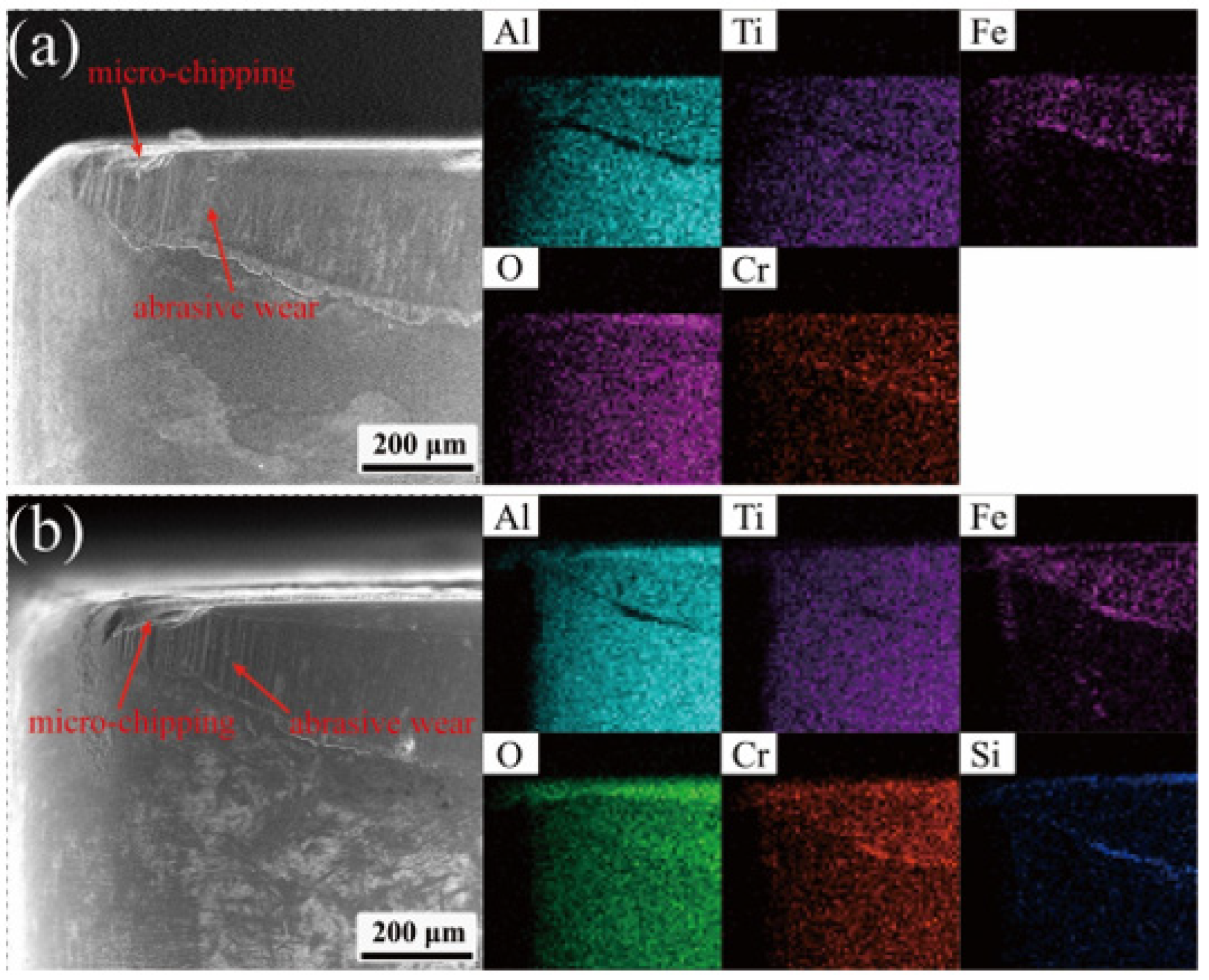
To further analyze the wear patterns during the tool cutting process and compare the surface differences before and after repair, surface morphology and elemental analysis were performed on both the front and rear faces of the tool.
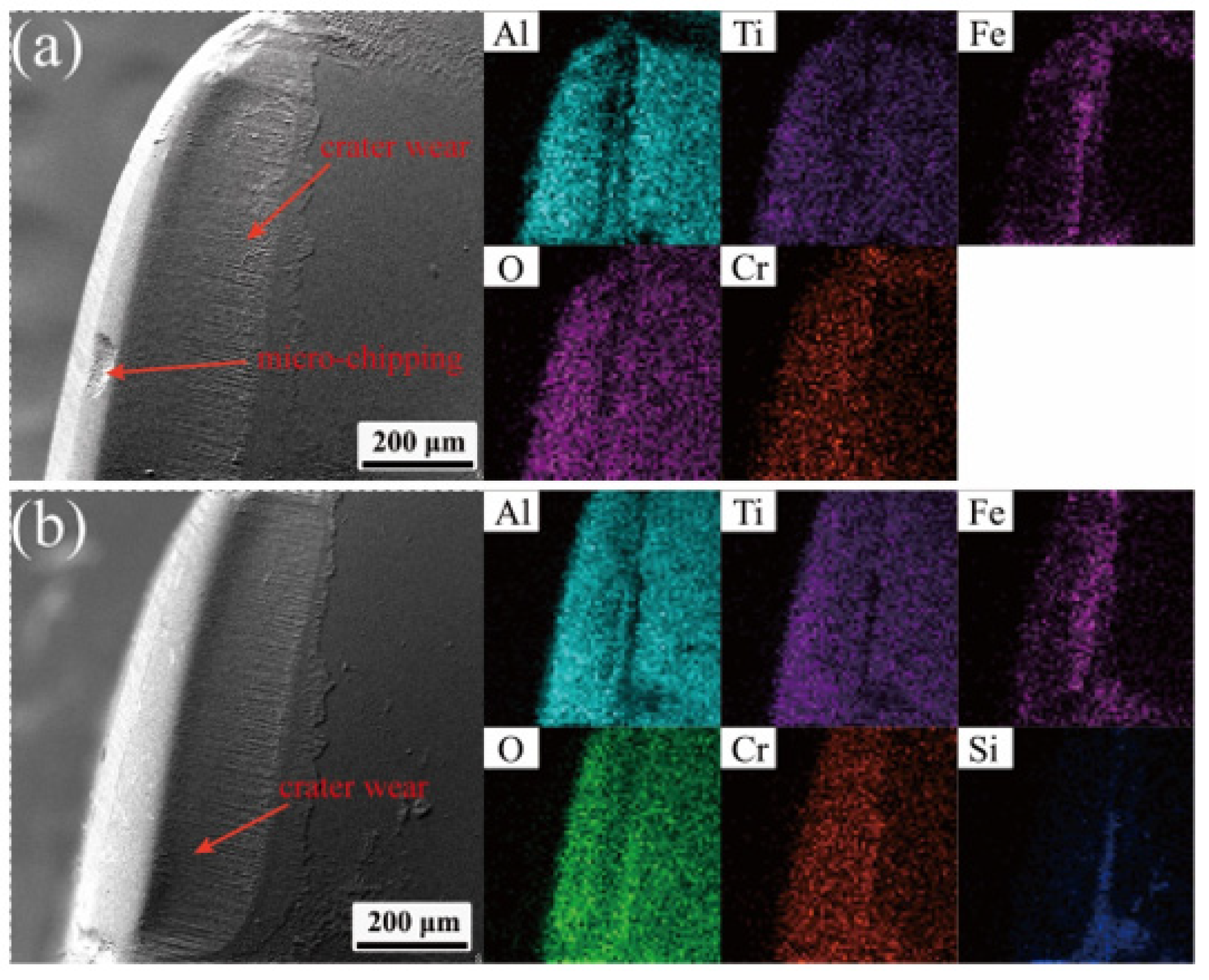
As can be seen in
Figure 11, the rake face of the ceramic tool showed a narrow stripping area, forming an irregular crater wear area, while there was impact-induced chipping at the tip position. From its elemental distribution, it can be seen that there are Fe element and Cr element adhered to the tip and crater position, indicating the existence of bonding wear on the rake face, while there are obvious particle scratches on the crater, which is the main manifestation of abrasive wear. Compared to the element distribution in normal cutting, the repaired craters had the presence of the element Si which had not yet been worn away, and which was mainly derived from the repair agent.
Figure 12 shows the wear morphology and element distribution of the flank of normal cutting and post-repaired cutting, from which it can be seen that the flank of the ceramic tool has obvious groove scratches, the reason is that the hard particles in the workpiece in the cutting process in the surface of the tool led to scratching. And it can be seen from its elemental distribution map, the tool flank wear area has a large number of Fe, Cr elements of aggregation. This is due to the cutting process. The cutting position at the high temperature and high-pressure environment leads to the workpiece and the tool bonding to each other, which is one of the manifestations of the tool-bonded wear. In addition, there was significant chipping at the tip position, which was caused by the impact on the tool during the cutting process. Comparison of the elemental distribution of the rear flank before and after repair shows that there is an obvious aggregation of Si elements around the wear area of the rear flank after repair, because the cutting process after repair wears out the repair agent on the rear flank, so that the elements of the repair agent are only distributed around the wear area of the rear flank.
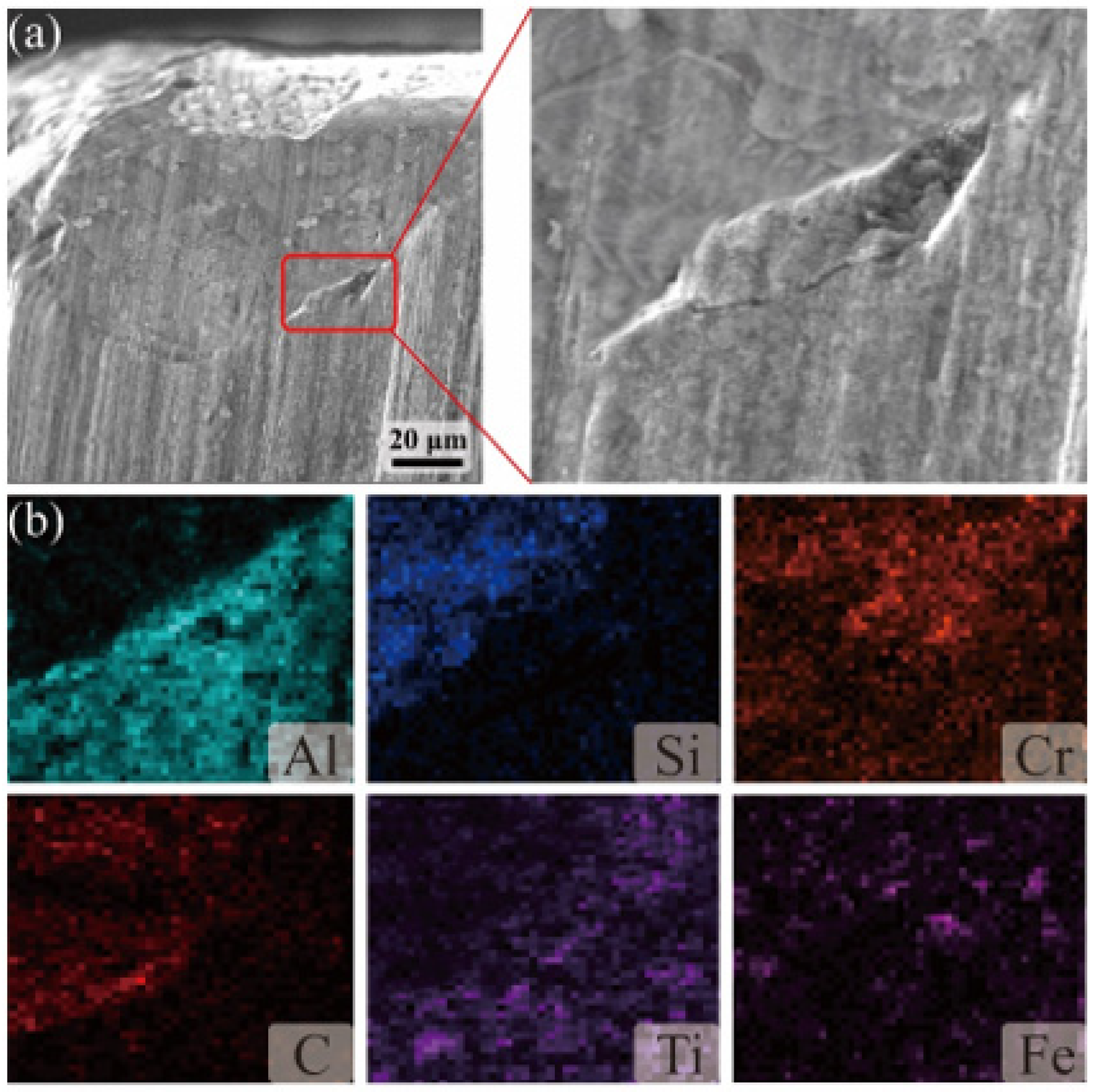
As shown in
Figure 13a, after the repair experiment, the repair agent can fill and repair the position of the chipped edge of the flank, restore the original tool morphology, and replace the ceramic tool for cutting, so as to extend the cutting life of the tool; as can be seen from its local magnification, the repair agent is able to slow down the expansion of the crack, and realize the repair of the crack. Combined with
Figure 13b, it can be seen that the filler elements at the chipped edge location are mainly Si, C and Ti elements, and the wear forms after repair are mainly abrasive and bonded wear.



 ,
,