Multi-Field Coupling- and Data-Driven-Based Optimization of Cooling Process Parameters for Planetary Rolling Rolls

Highlights
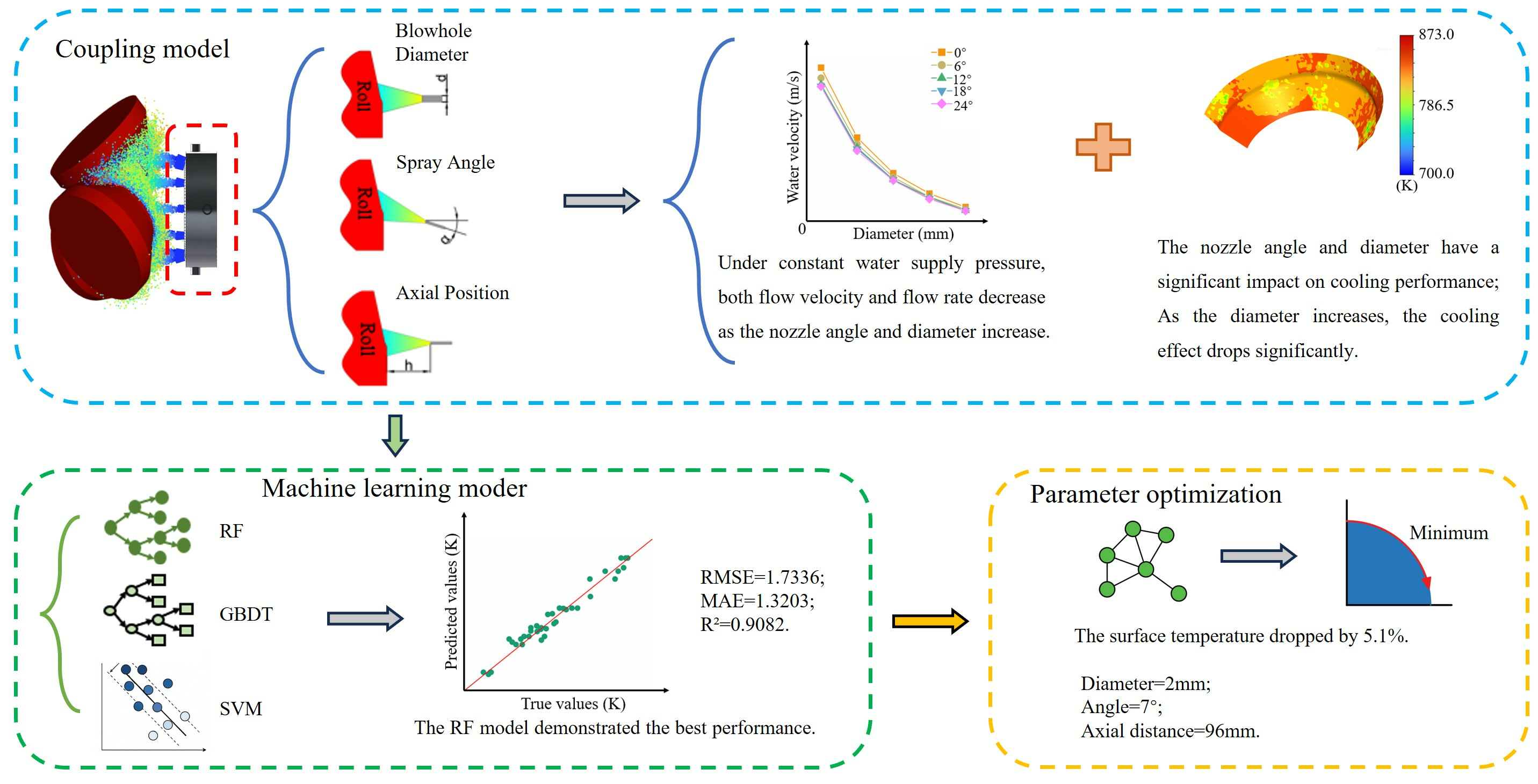
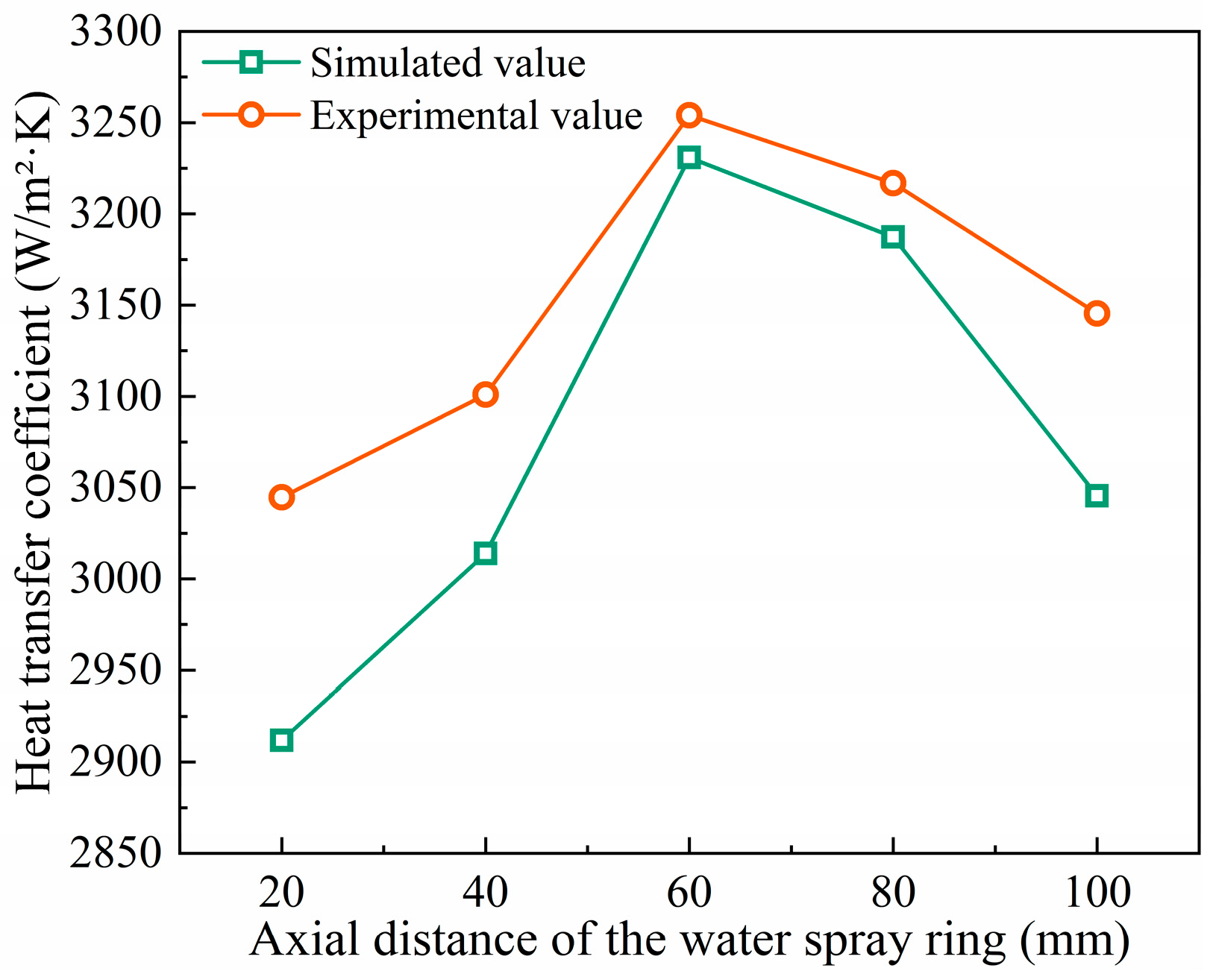
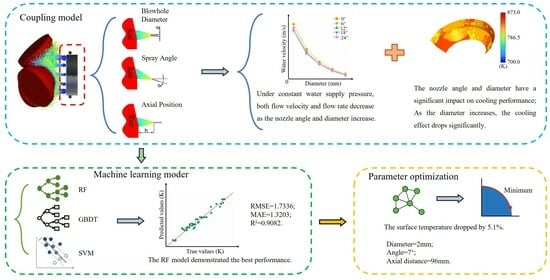
- The error between the model and the experiment is less than 5%.
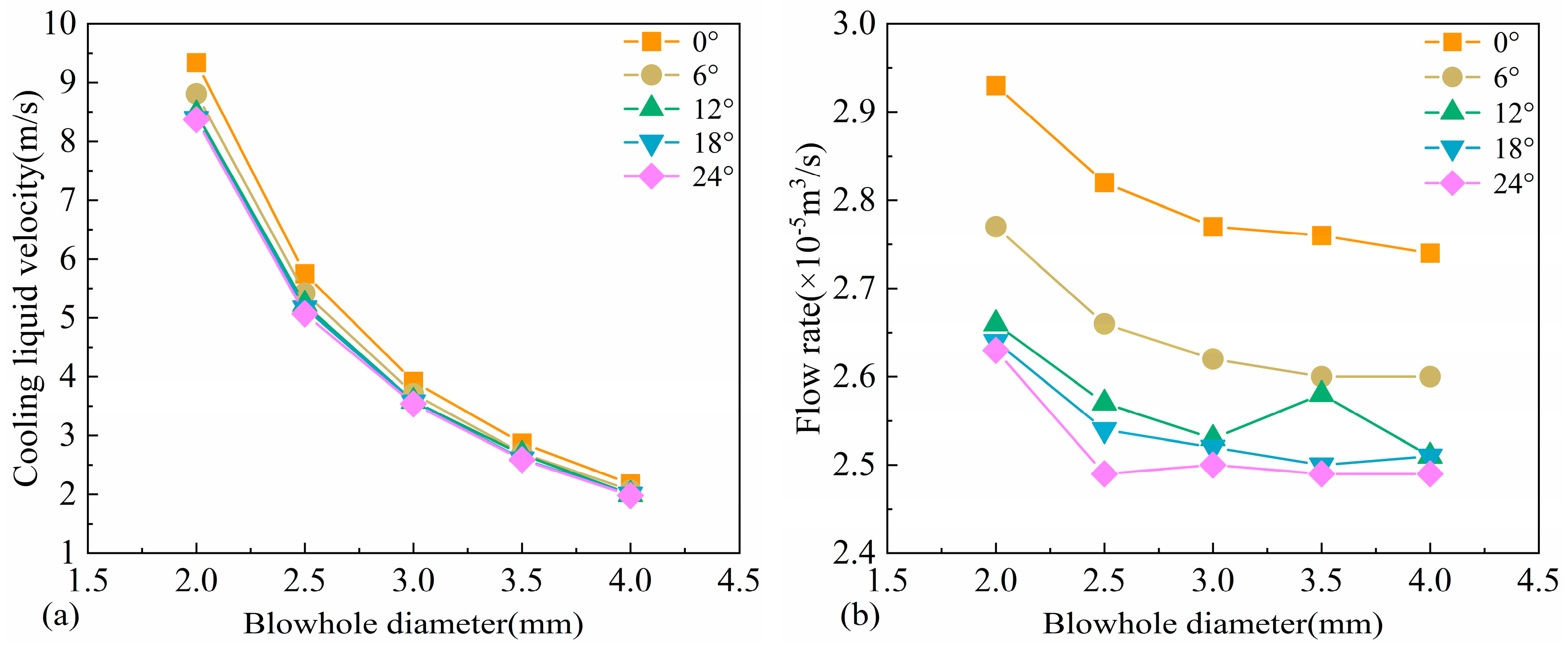
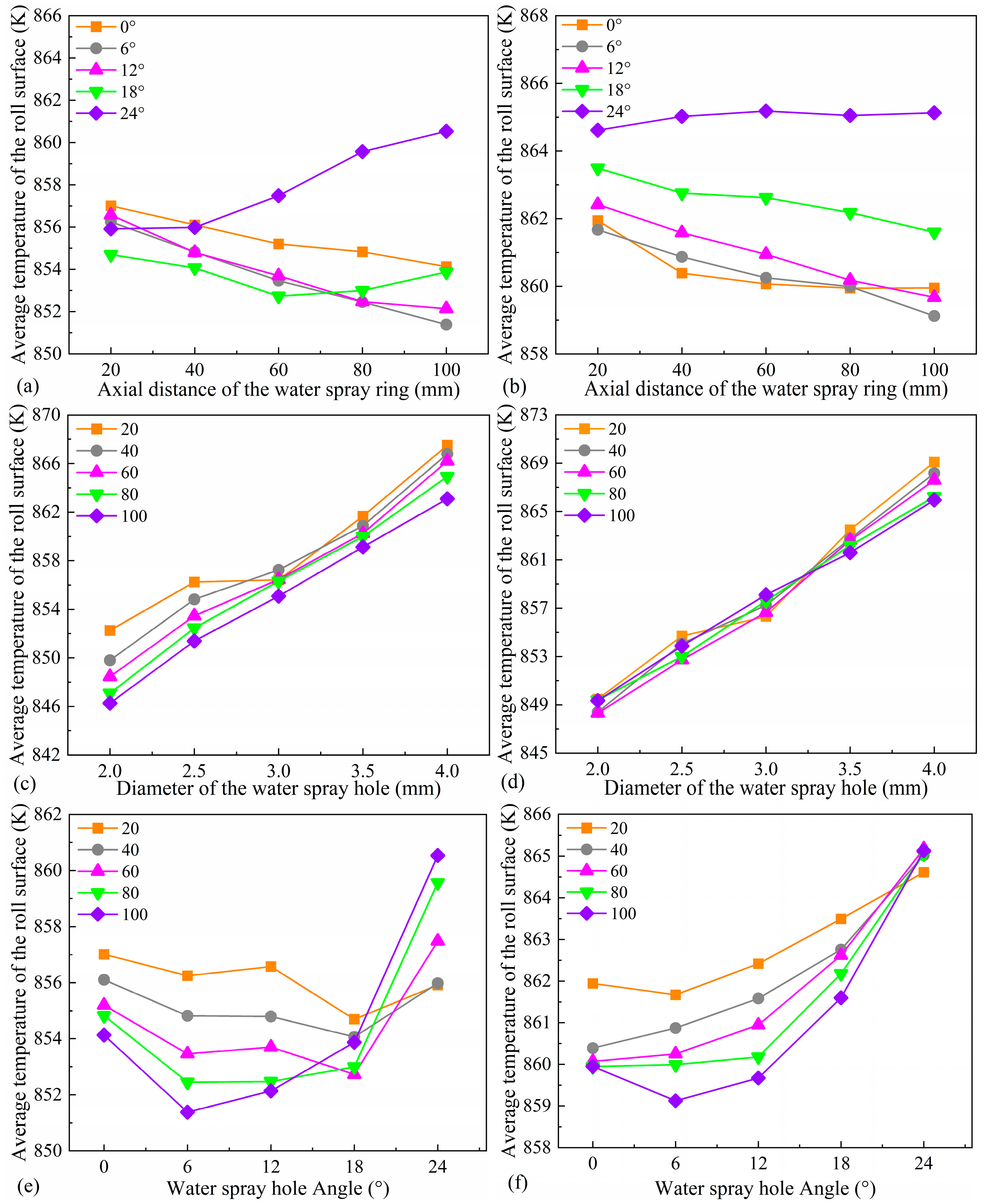
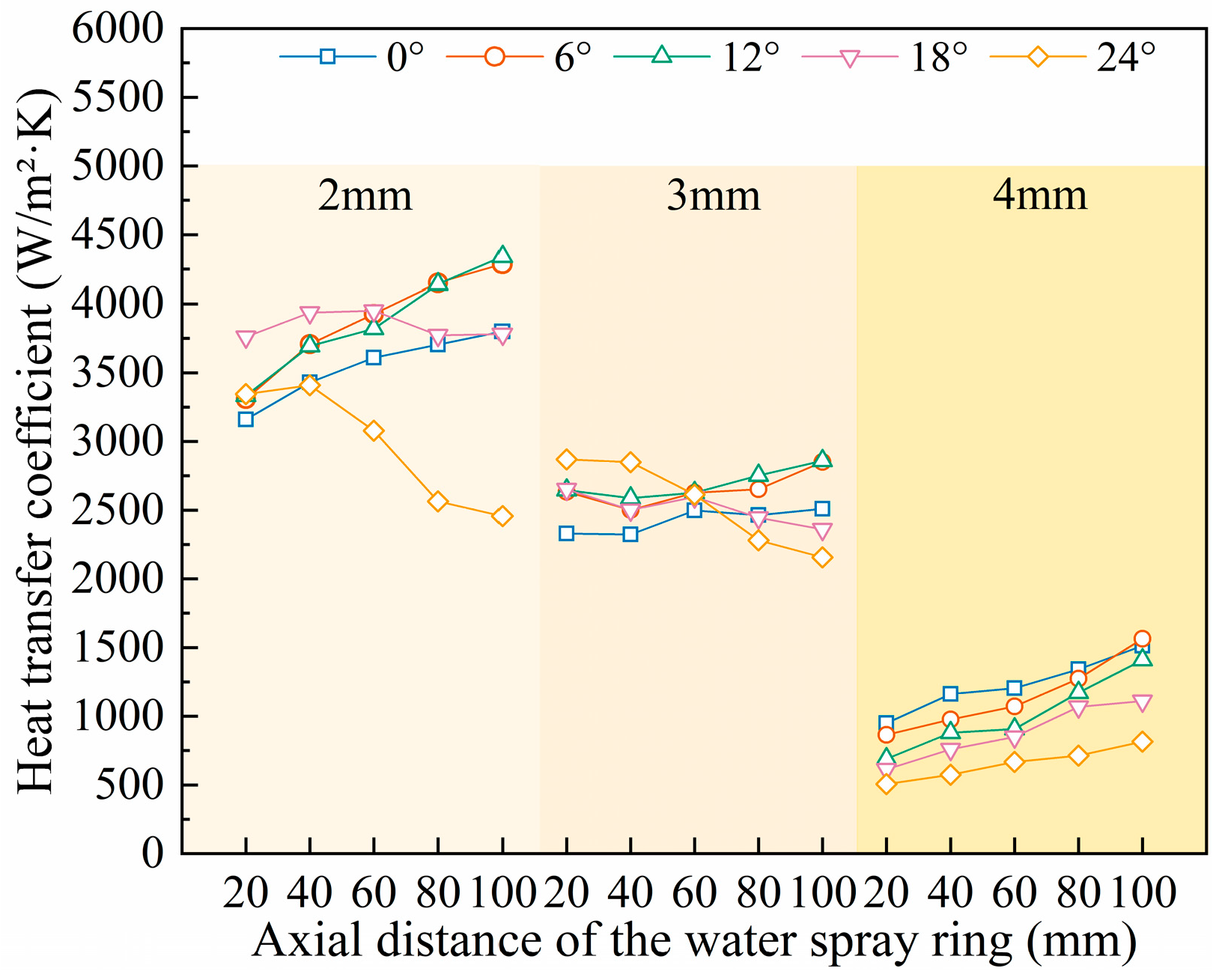
- Cooling worsens as nozzle diameter grows from 2 mm to 4 mm.
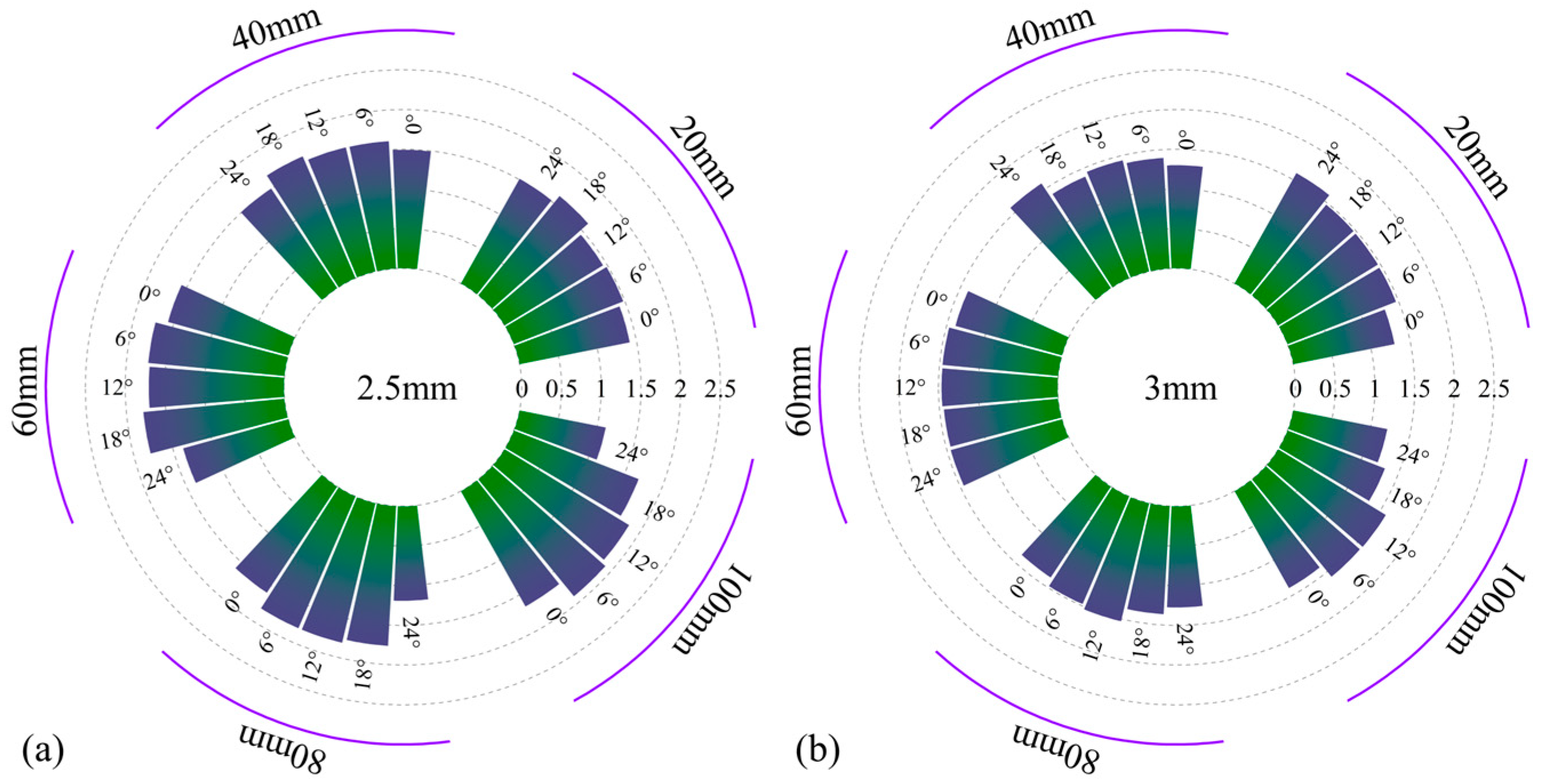
- Cooling effect is highly sensitive to nozzle angle and diameter.
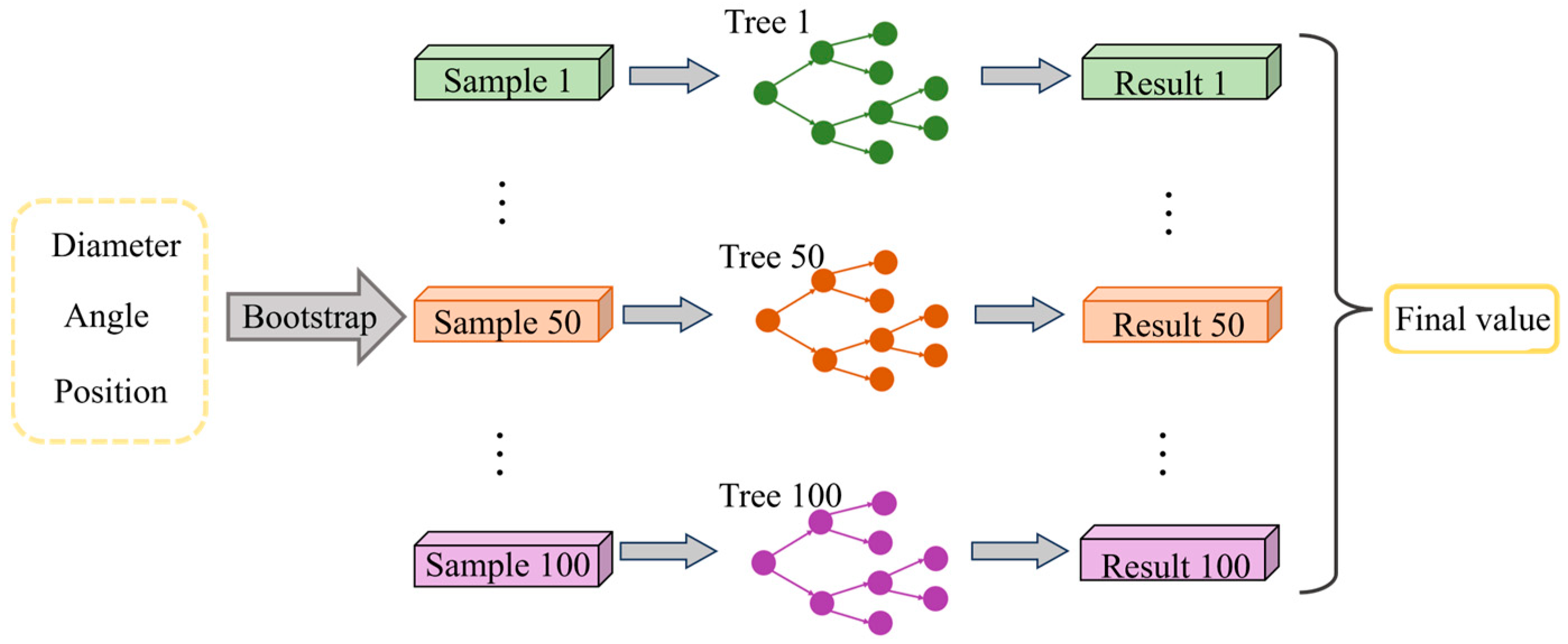
- RF model best predicts roll temp., outperforming GBDT and SVM.
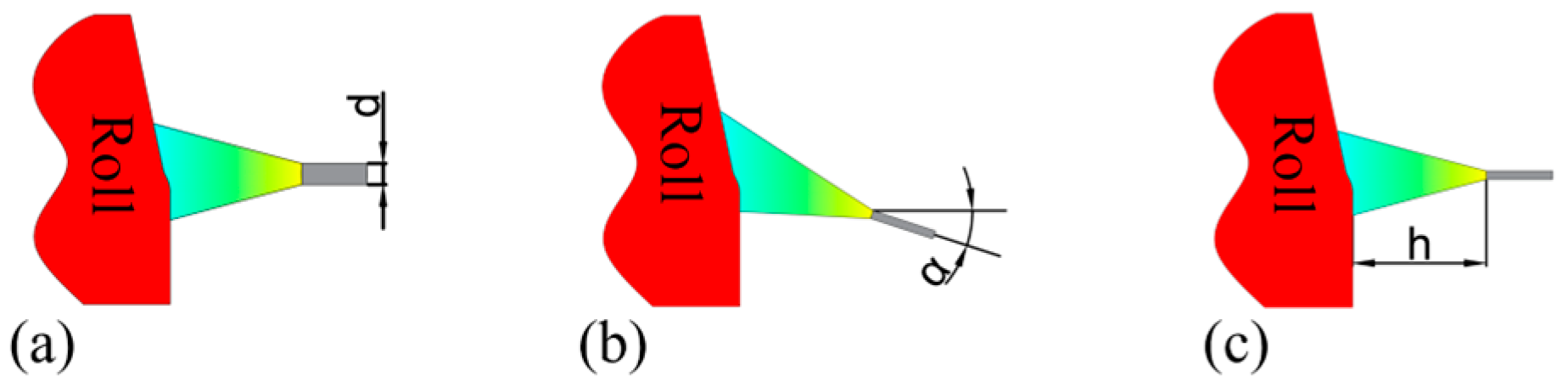
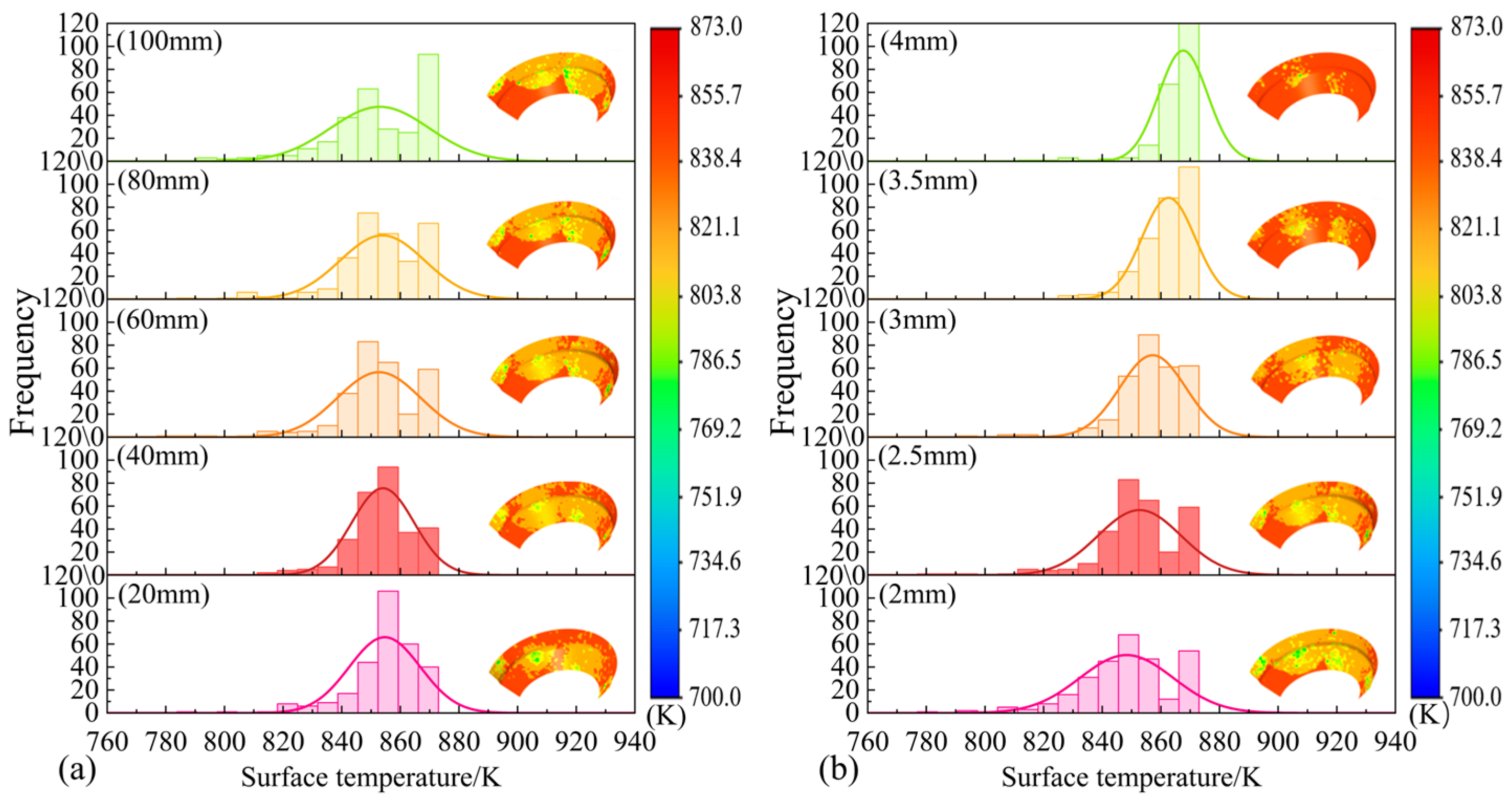
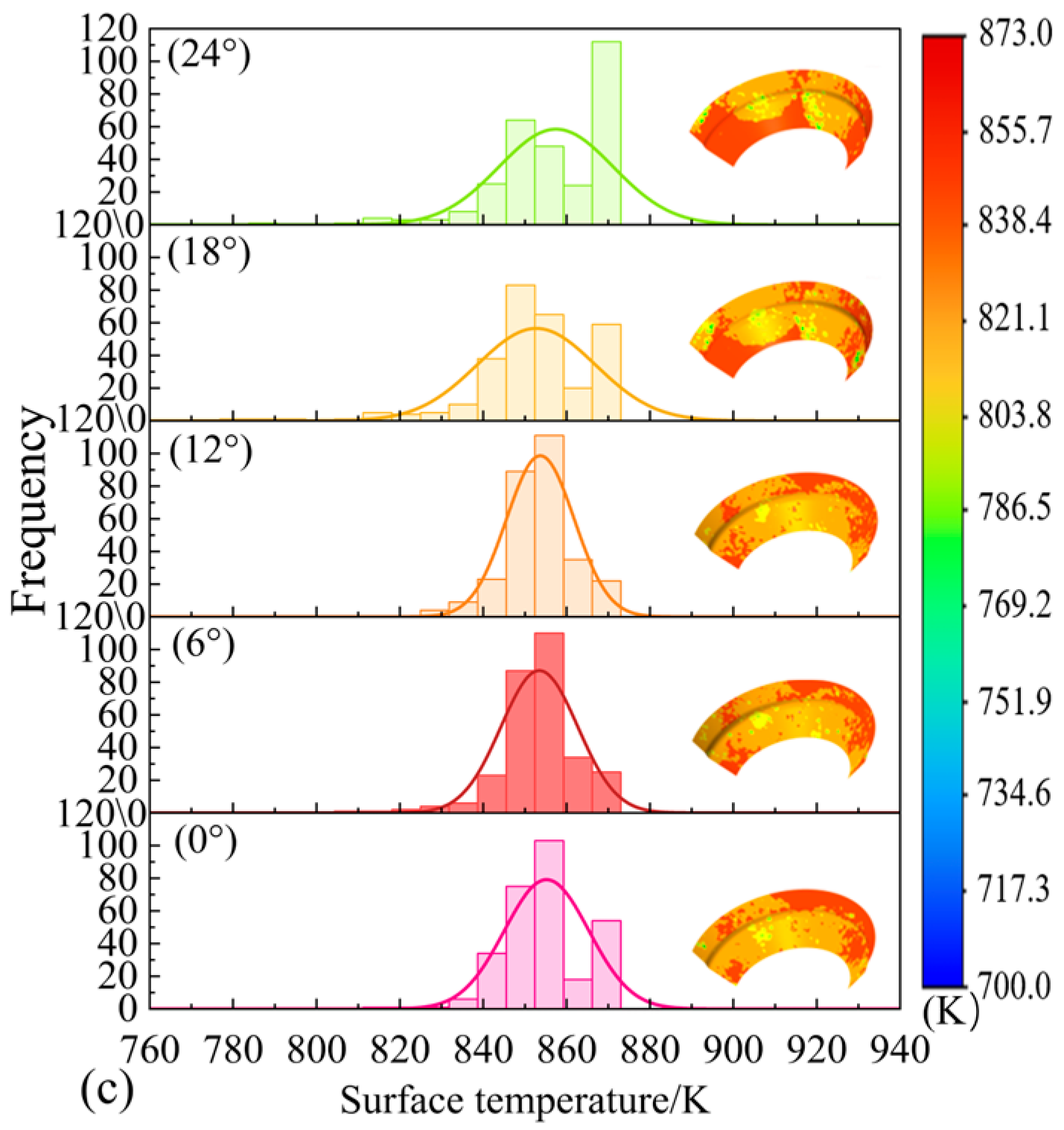
- Optimal spray angle is 7°, with 2 mm nozzle and 96 mm axial distance.
Abstract
Share and Cite
Yue, F.; Shao, Y.; Sun, H.; Liu, J.; Chen, D.; Sha, Z. Multi-Field Coupling- and Data-Driven-Based Optimization of Cooling Process Parameters for Planetary Rolling Rolls. Materials 2025, 18, 4111. https://doi.org/10.3390/ma18174111
Yue F, Shao Y, Sun H, Liu J, Chen D, Sha Z. Multi-Field Coupling- and Data-Driven-Based Optimization of Cooling Process Parameters for Planetary Rolling Rolls. Materials. 2025; 18(17):4111. https://doi.org/10.3390/ma18174111
Chicago/Turabian StyleYue, Fengli, Yang Shao, Hongyun Sun, Jinsong Liu, Dayong Chen, and Zhuo Sha. 2025. "Multi-Field Coupling- and Data-Driven-Based Optimization of Cooling Process Parameters for Planetary Rolling Rolls" Materials 18, no. 17: 4111. https://doi.org/10.3390/ma18174111
APA StyleYue, F., Shao, Y., Sun, H., Liu, J., Chen, D., & Sha, Z. (2025). Multi-Field Coupling- and Data-Driven-Based Optimization of Cooling Process Parameters for Planetary Rolling Rolls. Materials, 18(17), 4111. https://doi.org/10.3390/ma18174111