Quartz Crystal Microbalance Analysis of Antimicrobial Protein Adsorption onto Zirconia


Abstract
1. Introduction
2. Materials and Methods
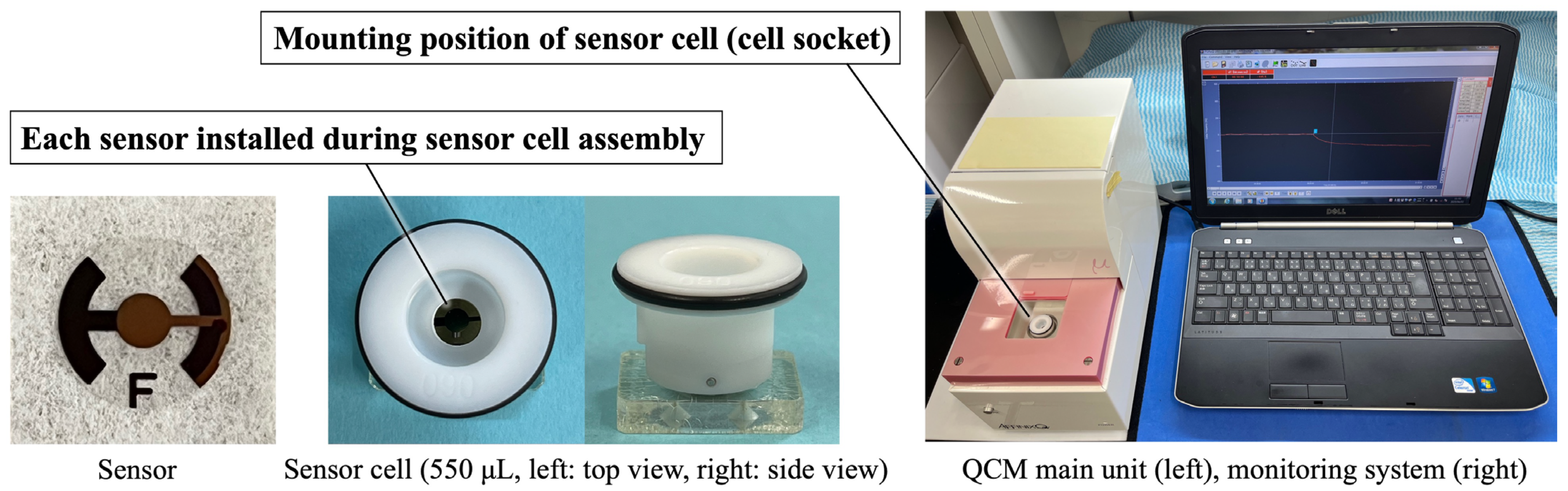
2.1. QCM Device and Sensors
2.2. Morphologies and Surface Roughness Values of Au and ZrO2 Sensors
2.3. Surface Wettability of Au and ZrO2 Sensors
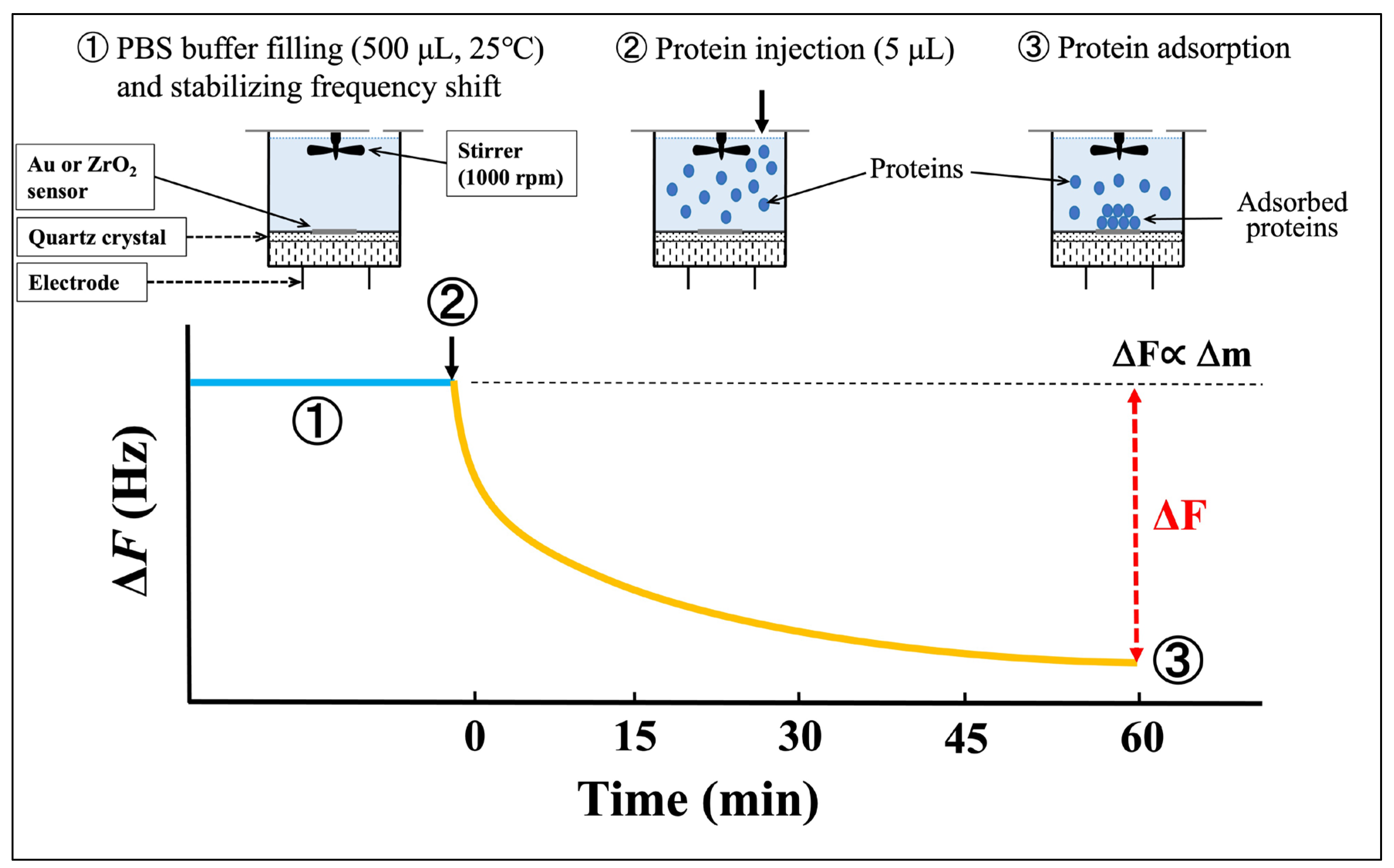
2.4. QCM Measurement and Procedure
2.5. Statistical Analysis
3. Results
3.1. Characterizations of Au and ZrO2 Sensors
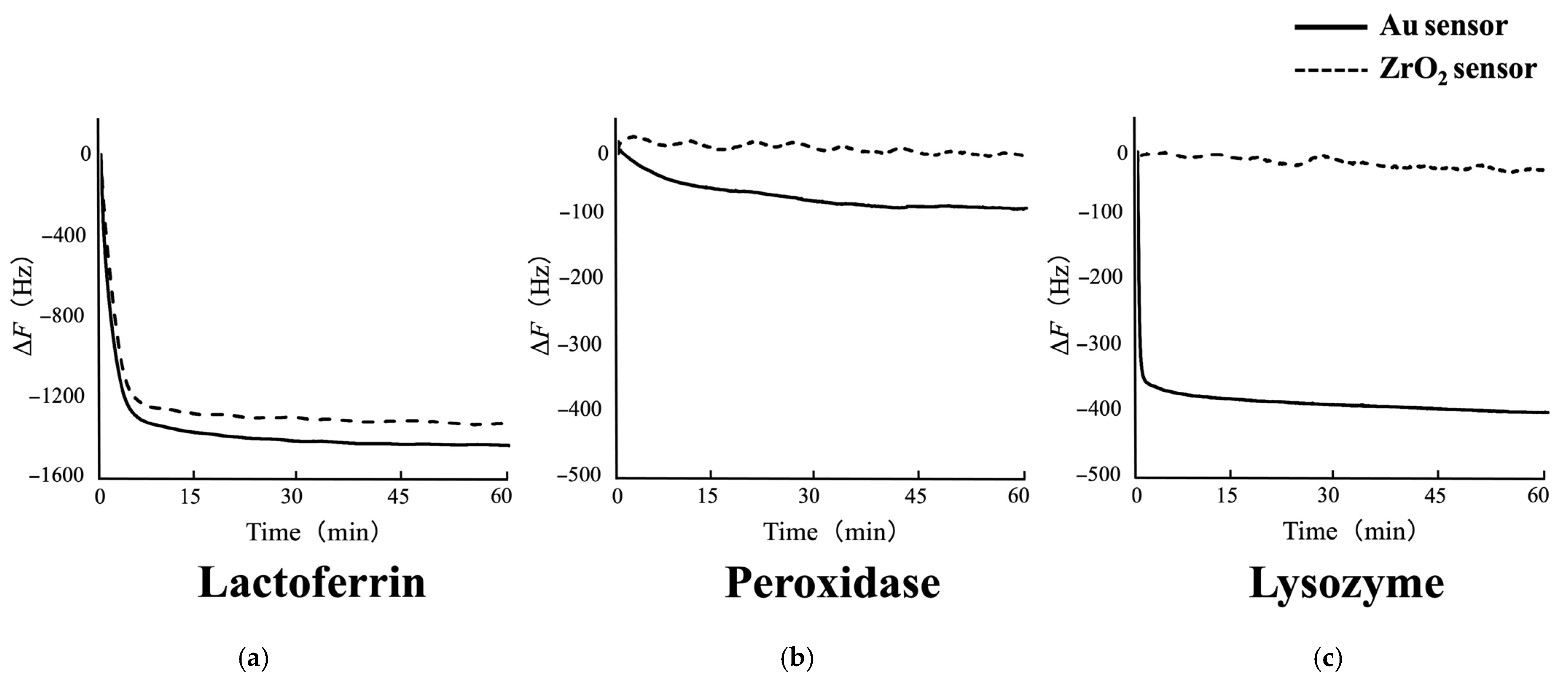
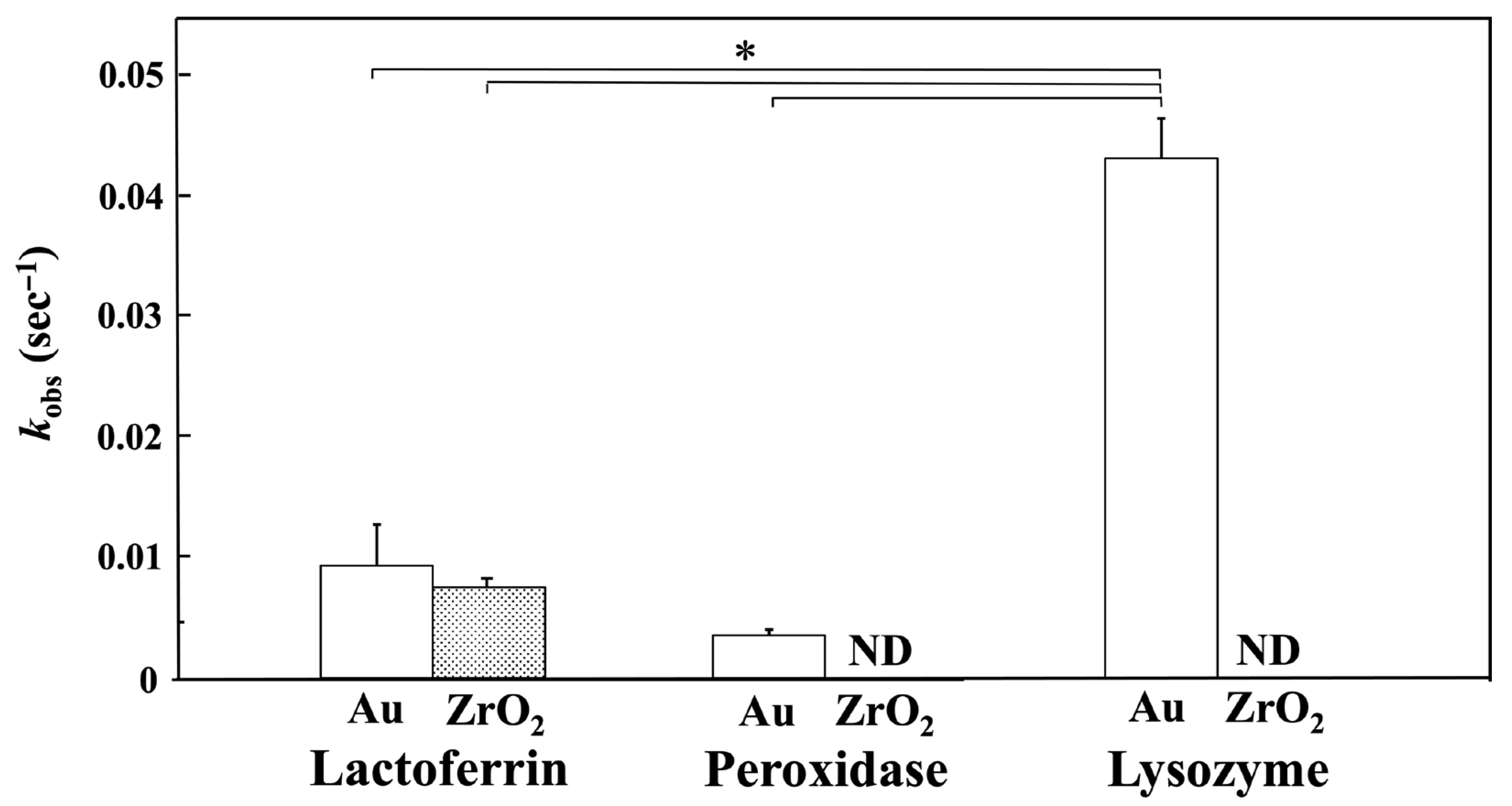
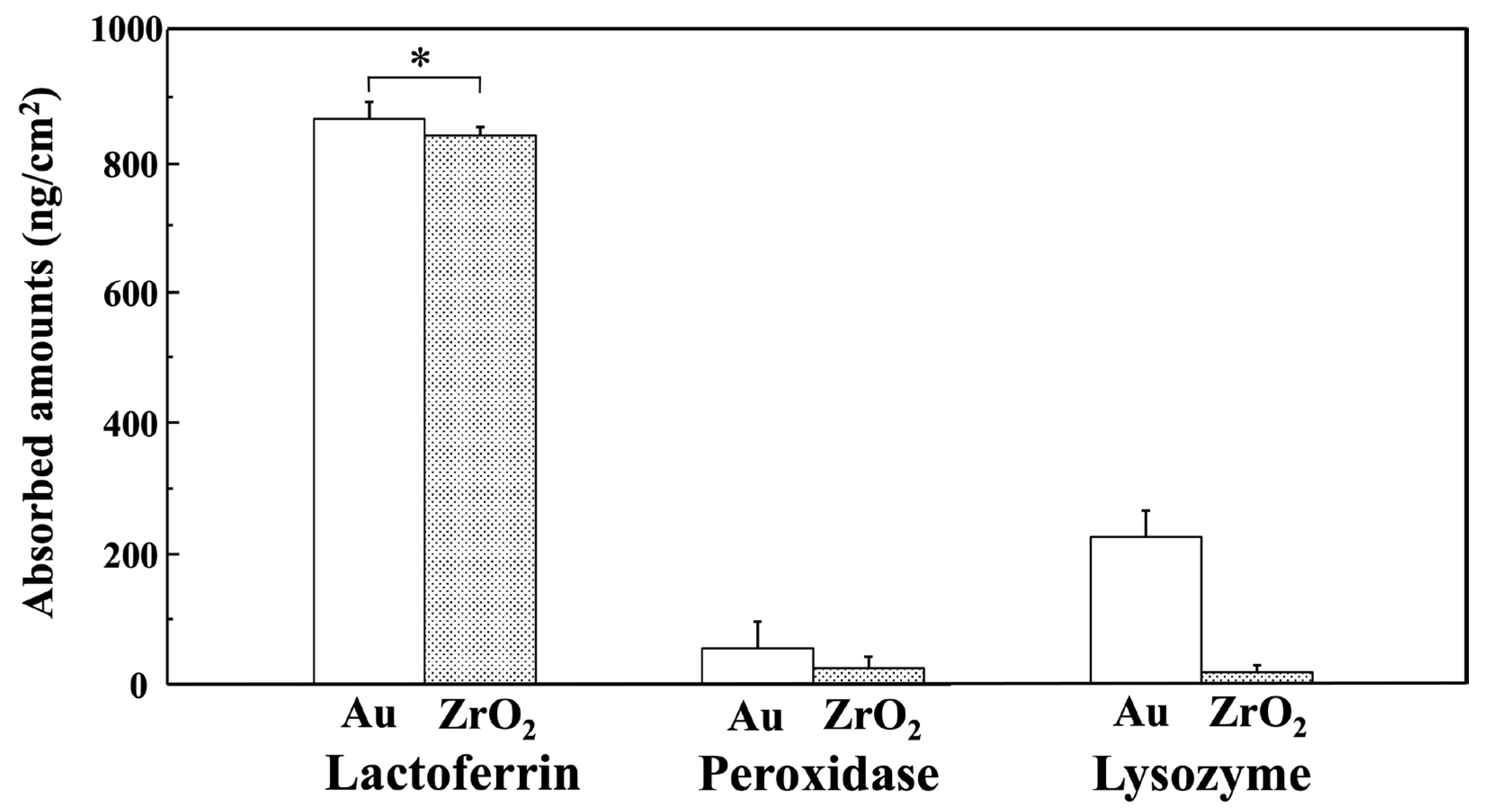
3.2. QCM Measurements
4. Discussion
5. Conclusions
Author Contributions
Funding
Institutional Review Board Statement
Informed Consent Statement
Data Availability Statement
Acknowledgments
Conflicts of Interest
Abbreviations
| ZrO2 | Partially stabilized zirconia |
| QCM | Quartz crystal microbalance |
| UV | Ultraviolet |
| AFM | Atomic force microscope |
| Sa | Surface roughness parameter (the 3D arithmetic height) |
| PBS | Phosphate-buffered saline |
References
- Casar, P.F.; de Paula Miranda, R.B.; Santos, K.F.; Scherrer, S.S.; Zhang, Y. Recent advances in dental zirconia: 15 years of material and processing evolution. Dent. Mater. 2024, 40, 824–836. [Google Scholar] [CrossRef] [Scilit]
- Miura, S.; Fujita, T.; Fujisawa, M. Zirconia in fixed prosthodontics: A review of the literature. Odontology 2025, 113, 466–487. [Google Scholar] [CrossRef] [Scilit] [PubMed]
- Kui, A.; Manziuc, M.; Petruțiu, A.; Buduru, S.; Labuneț, A.; Negucioiu, M.; Chisnoiu, A. Translucent zirconia in fixed prosthodontics—An integrative overview. Biomedicines 2023, 11, 3116. [Google Scholar] [CrossRef] [Scilit] [PubMed]
- Ban, S. Classification and properties of dental zirconia as implant fixtures and superstructures. Materials 2021, 14, 4879. [Google Scholar] [CrossRef] [Scilit] [PubMed]
- Huang, B.; Chen, M.; Wang, J.; Zhang, X. Advances in zirconia-based dental materials: Properties, classification, applications, and future prospects. J. Dent. 2024, 147, 105111. [Google Scholar] [CrossRef] [Scilit]
- Matsui, K.; Hosoi, K.; Feng, B.; Yoshida, H.; Ikuhara, Y. Ultrahigh toughness zirconia ceramics. Proc. Natl. Acad. Sci. USA 2023, 120, e2304498120. [Google Scholar] [CrossRef] [Scilit]
- Yoshinari, M. Future prospects of zirconia for oral implants—A review. Dent. Mater. J. 2020, 39, 37–45. [Google Scholar] [CrossRef] [Scilit]
- Hirota, M.; Hayakawa, T. Adsorption behaviors of salivary pellicle proteins onto denture base metals using 27-MHz quartz crystal microbalance. Biomed. Mater. Eng. 2022, 33, 1–11. [Google Scholar] [CrossRef] [Scilit]
- Van Brakel, R.; Cune, M.S.; van Winkelhoff, A.J.; de Putter, C.; Verhoeven, J.W.; van der Reijden, W. Early bacterial colonization and soft tissue health around zirconia and titanium abutments: An in vivo study in man. Clin. Oral. Implants Res. 2011, 22, 571–577. [Google Scholar] [CrossRef] [Scilit]
- Re, D.; Pellegrini, G.; Francinetti, P.; Augusti, D.; Rasperini, G. In vivo early plaque formation on zirconia and feldspathic ceramic. Minerva. Stomatol. 2011, 60, 339–348. [Google Scholar]
- Rimondini, L.; Cerroni, L.; Carrassi, A.; Torricelli, P. Bacterial colonization of zirconia ceramic surfaces: An in vitro and in vivo study. Int. Oral. Maxillofac. Implants 2002, 17, 793–798. [Google Scholar]
- Scarano, A.; Piattelli, M.; Caputi, S.; Favero, G.A.; Piattelli, A. Bacterial adhesion on commercially pure titanium and zirconium oxide disks: An in vivo human study. J. Periodontol. 2004, 75, 292–296. [Google Scholar] [CrossRef] [Scilit]
- Hanawa, T. Zirconia versus titanium in dentistry: A review. Dent. Mater. J. 2020, 39, 24–36. [Google Scholar] [CrossRef] [Scilit] [PubMed]
- Lee, D.J.; Ryu, J.S.; Shimono, M.; Lee, K.W.; Lee, J.M.; Jung, H.S. Differential healing patterns of mucosal seal on zirconia and titanium implant. Front. Physiol. 2019, 10, 796. [Google Scholar] [CrossRef] [Scilit]
- Tokunaga, Y.; Hirota, M.; Hayakawa, T. Influence of the surface chemical composition differences between zirconia and titanium with the similar surface structure and roughness on bone formation. Nanomaterials 2022, 12, 2478. [Google Scholar] [CrossRef] [Scilit] [PubMed]
- Hirota, M.; Osawa, K.; Sakurai, T.; Nagai, H.; Ohkubo, C.; Hayakawa, T. Bone and soft-tissue compatibility of thin ZrO2 film coated implant with same surface topography as titanium substrate. J. J. Dent. Mater. 2025, 44, 29. [Google Scholar]
- Kasemo, B.; Lausmaa, J. The biomaterial-tissue interface and its analogues in surface science and technology. In The Bone-Biomaterial Interface; Davis, J.E., Ed.; University of Toronto Press: Toronto, ON, Canada, 1991; pp. 19–32. [Google Scholar]
- Trindade, R.; Albrektsson, T.; Tengvall, P.; Wennerberg, A. Foreign body reaction to biomaterials: On mechanisms for buildup and breakdown of osseointegration. Clin. Implant Dent. Relat. Res. 2016, 18, 192–203. [Google Scholar] [CrossRef] [Scilit]
- Kolenbrander, P.E.; Andersen, R.N.; Blehert, D.S.; Egland, P.G.; Foster, J.S.; Palmer, R.J., Jr. Communication among oral bacteria. Microbiol. Mol. Biol. Rev. 2002, 66, 486–505. [Google Scholar] [CrossRef] [Scilit]
- Pohanka, M. Quartz crystal microbalance (QCM) sensing materials in biosensors development. Int. J. Electrochem. Sci. 2021, 16, 211220. [Google Scholar] [CrossRef] [Scilit]
- Yoshida, E.; Hayakawa, T. Adsorption study of pellicle proteins to gold, silica and titanium by quartz crystal microbalance method. Dent. Mater. J. 2013, 32, 883–887. [Google Scholar] [CrossRef] [Scilit]
- Yoshida, E.; Hayakawa, T. Adsorption analysis of lactoferrin to titanium, stainless steel, zirconia, and polymethyl methacrylate using the quartz crystal microbalance method. Biomed. Res. Int. 2016, 2016, 3961286. [Google Scholar] [CrossRef] [Scilit]
- Pedersen, A.M.L.; Belstrøm, D. The role of natural salivary defences in maintaining a healthy oral microbiota. J. Dent. 2019, 80, S3–S12. [Google Scholar] [CrossRef] [Scilit]
- Courtoris, P. Oral peroxidases: From antimicrobial agents to ecological actors (Review). Mol. Med. Rep. 2021, 24, 500. [Google Scholar] [CrossRef] [Scilit]
- Tonoyan, L.; Montagner, D.; Friel, R.; O’Flaherty, V. Antimicrobials offered from nature: Peroxidase-catalyzed systems and their mimics. Biochem. Pharmacol. 2020, 182, 114281. [Google Scholar] [CrossRef] [Scilit] [PubMed]
- Wakabayashi, H.; Yamauchi, K.; Kobayashi, T.; Yaeshima, T.; Iwatsuki, K.; Yoshie, H. Inhibitory Effects of Lactoferrin on Growth and Biofilm Formation of Porphyromonas gingivalis and Prevotella intermedia. Antimicrob. Agents. Chemother. 2009, 53, 3308–3316. [Google Scholar] [CrossRef] [Scilit] [PubMed]
- Mori, M.; Takeuchi, H.; Sato, M.; Sumitomo, S. Antimicrobial peptides in saliva and salivary glands: Their roles in the oral defense system. Oral. Med. Pathol. 2006, 11, 1–17. [Google Scholar] [CrossRef] [Scilit]
- Yoshida, E.; Hayakawa, T. Quantitive analysis of apatite formation on titanium and zirconia in a simulated body fluid solution using the quartz crystal microbalance method. Adv. Mater. Sci. Eng. 2017, 2017, 7928379. [Google Scholar] [CrossRef] [Scilit]
- Kusakawa, Y.; Yoshida, E.; Hayakawa, T. Protein adsorption to titanium and zirconia using a quartz crystal microbalance method. Biomed. Res. Int. 2017, 2017, 1521593. [Google Scholar] [CrossRef] [Scilit]
- Hirota, M.; Hayakawa, T. QCM analysis of stepwise adsorption of albumin and fibronectin onto the zirconia surface. Adv. Mater. Sci. Eng. 2021, 2021, 2492387. [Google Scholar] [CrossRef] [Scilit]
- Suzumura, T.; Matsuura, T.; Komatsu, K.; Sugita, Y.; Maeda, H.; Ogawa, T. Vacuum ultraviolet (VUV) light photofunctionalization to induce human oral fibroblast transmigration on zirconia. Cells 2023, 12, 2542. [Google Scholar] [CrossRef] [Scilit]
- Kumagami, H.; Furusawsa, H. Real-time monitoring of a nucleic acid amplification reaction using a mass sensor based on a quartz-crystal microbalance. Biosensors 2024, 14, 155. [Google Scholar]
- Yoshimine, H.; Sasaki, K.; Furusawsa, H. Pocketable biosensor based on quartz-crystal microbalance and its application to DNA detection. Sensors 2023, 23, 281. [Google Scholar] [CrossRef] [Scilit]
- Sauerbrey, G. Verwendung von schwingquarzen zur wägung dünner schichten und zur mikrowägung. Z. Phys. 1959, 155, 206–222. [Google Scholar] [CrossRef] [Scilit]
- Stachiv, I.; Kuo, C.Y.; Li, W. Protein adsorption by nanomechanical mass spectrometry: Beyond the real-time molecular weighting. Front. Mol. Biosci. 2023, 9, 1058441. [Google Scholar] [CrossRef] [Scilit]
- Mulki, S.; Prakash, G.P.; Pushparaj, S. Salivary protein concentration, flow rate, buffer capacity and pH estimation: A comparative study among young and elderly subjects, both normal and with gingivitis and periodontitis. J. Indian Soc. Periodontol. 2013, 17, 42–46. [Google Scholar] [CrossRef] [Scilit] [PubMed]
- Müller, C.; Lüders, A.; Hoth-Hanning, W.; Hanning, M.; Ziegler, C. Initial bioadhesion on dental materials as a function of contact time, pH, surface wettability, and isoelectric point. Langmuir 2010, 26, 4136–4141. [Google Scholar] [CrossRef] [Scilit] [PubMed]
- Venturoli, D.; Rippe, B. Ficoll and dextran vs. globular proteins as probes for testing glomerular permselectivity: Effects of molecular size, shape, charge, and deformability. Am. J. Physiol. Renal. Physiol. 2005, 288, F605–F613. [Google Scholar] [CrossRef] [Scilit]
- Bokkhim, H.; Bansal, N.; Grøndahl, L.; Bhandari, B. Physico-chemical properties of different forms of bovine lactoferrin. Food Chem. 2013, 141, 3007–3013. [Google Scholar] [CrossRef] [Scilit] [PubMed]
- Li, Z.; Huang, X.; Tang, Q.; Ma, M.; Jin, Y.; Sheng, L. Functional properties and extraction techniques of chicken egg white proteins. Foods 2022, 11, 2434. [Google Scholar] [CrossRef] [Scilit]
- Salgin, S.; Salgin, U.; Soyer, N. Streaming potential measurements of polyethersulfone ultrafiltration membranes to determine salt effects on membrane zeta potential. Int. J. Electrochem. Sci. 2013, 8, 4073–4084. [Google Scholar] [CrossRef] [Scilit]
- Giesbers, M.; Kleijn, J.M.; Stuart, M.A.C. The electrical double layer on gold probed by electrokinetic and surface force measurements. J. Colloid. Interface. Sci. 2002, 248, 88–95. [Google Scholar] [CrossRef] [Scilit] [PubMed]
- Awotunde, O.; Okyem, S.; Chikoti, R.; Driskell, J.D. Role of free thiol on protein adsorption to gold nanoparticles. Langmuir 2020, 36, 9241–9249. [Google Scholar] [CrossRef] [Scilit] [PubMed]
- Nezu, T.; Masuyama, T.; Sasaki, K.; Saitoh, S.; Taira, M.; Araki, Y. Effect of pH and addition of salt on the adsorption behavior of lysozyme on gold, silica, and titania surfaces observed by quartz crystal microbalance with dissipation monitoring. Dent. Mater. J. 2008, 27, 573–580. [Google Scholar] [CrossRef] [Scilit]
- Kawai, K.; Urano, M. Adherence of plaque components to different restorative materials. Oper. Dent. 2001, 26, 396–400. [Google Scholar]
- Pradhan, A.; Shrestha, K.; Aryal, S.; Shrestha, S. Dental biofilm accumulation and gingival health of teeth with fixed single prosthesis fabricated by various prosthetic materials. Kathmandu Univ. Med. J. 2024, 22, 27–30. [Google Scholar]
- Teichroeb, J.H.; Forrest, J.A.; Jones, L.W.; Chan, J.; Dalton, K. Quartz crystal microbalance study of protein adsorption kinetics on poly(2-hydroxyethylmethacrylate). J. Colloid. Interface Sci. 2008, 325, 157–164. [Google Scholar] [CrossRef] [Scilit]

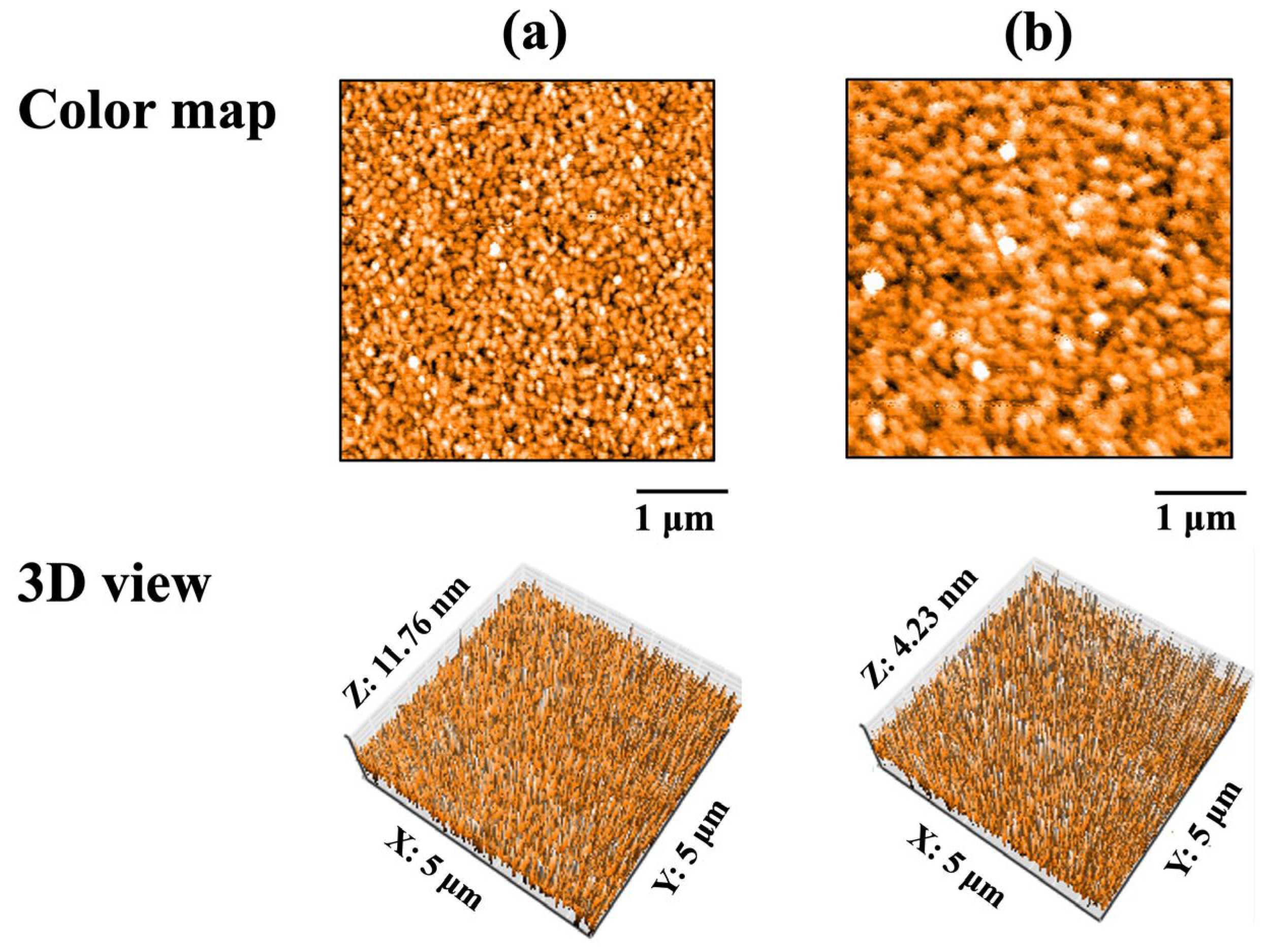



| Sensor | Contact Angle (°) | Surface Roughness (Sa, nm/25 μm2) |
|---|---|---|
| Au | 30.94 (2.89) a | 2.23 (0.04) A |
| ZrO2 | 8.22 (0.74) b | 2.07 (0.09) A |
Disclaimer/Publisher’s Note: The statements, opinions and data contained in all publications are solely those of the individual author(s) and contributor(s) and not of MDPI and/or the editor(s). MDPI and/or the editor(s) disclaim responsibility for any injury to people or property resulting from any ideas, methods, instructions or products referred to in the content. |
© 2025 by the authors. Licensee MDPI, Basel, Switzerland. This article is an open access article distributed under the terms and conditions of the Creative Commons Attribution (CC BY) license (https://creativecommons.org/licenses/by/4.0/).
Share and Cite
Hirota, M.; Yamamoto, T. Quartz Crystal Microbalance Analysis of Antimicrobial Protein Adsorption onto Zirconia. Materials 2025, 18, 3856. https://doi.org/10.3390/ma18163856
Hirota M, Yamamoto T. Quartz Crystal Microbalance Analysis of Antimicrobial Protein Adsorption onto Zirconia. Materials. 2025; 18(16):3856. https://doi.org/10.3390/ma18163856
Chicago/Turabian StyleHirota, Masatsugu, and Takatsugu Yamamoto. 2025. "Quartz Crystal Microbalance Analysis of Antimicrobial Protein Adsorption onto Zirconia" Materials 18, no. 16: 3856. https://doi.org/10.3390/ma18163856
APA StyleHirota, M., & Yamamoto, T. (2025). Quartz Crystal Microbalance Analysis of Antimicrobial Protein Adsorption onto Zirconia. Materials, 18(16), 3856. https://doi.org/10.3390/ma18163856