Article

Study of the Scale Effect on the Mechanical Properties of High-Strength Concrete

by
Marek Miazgowicz
1,* and
Lucyna Domagała
2
1
CUT Doctoral School, Faculty of Civil Engineering, Cracow University of Technology, 31-155 Kraków, Poland
2
Faculty of Civil Engineering, Cracow University of Technology, 31-155 Kraków, Poland
*
Author to whom correspondence should be addressed.
Materials 2025, 18(16), 3795; https://doi.org/10.3390/ma18163795

Submission received: 16 June 2025 / Revised: 1 August 2025 / Accepted: 8 August 2025 / Published: 13 August 2025
(This article belongs to the Section Construction and Building Materials)

Abstract

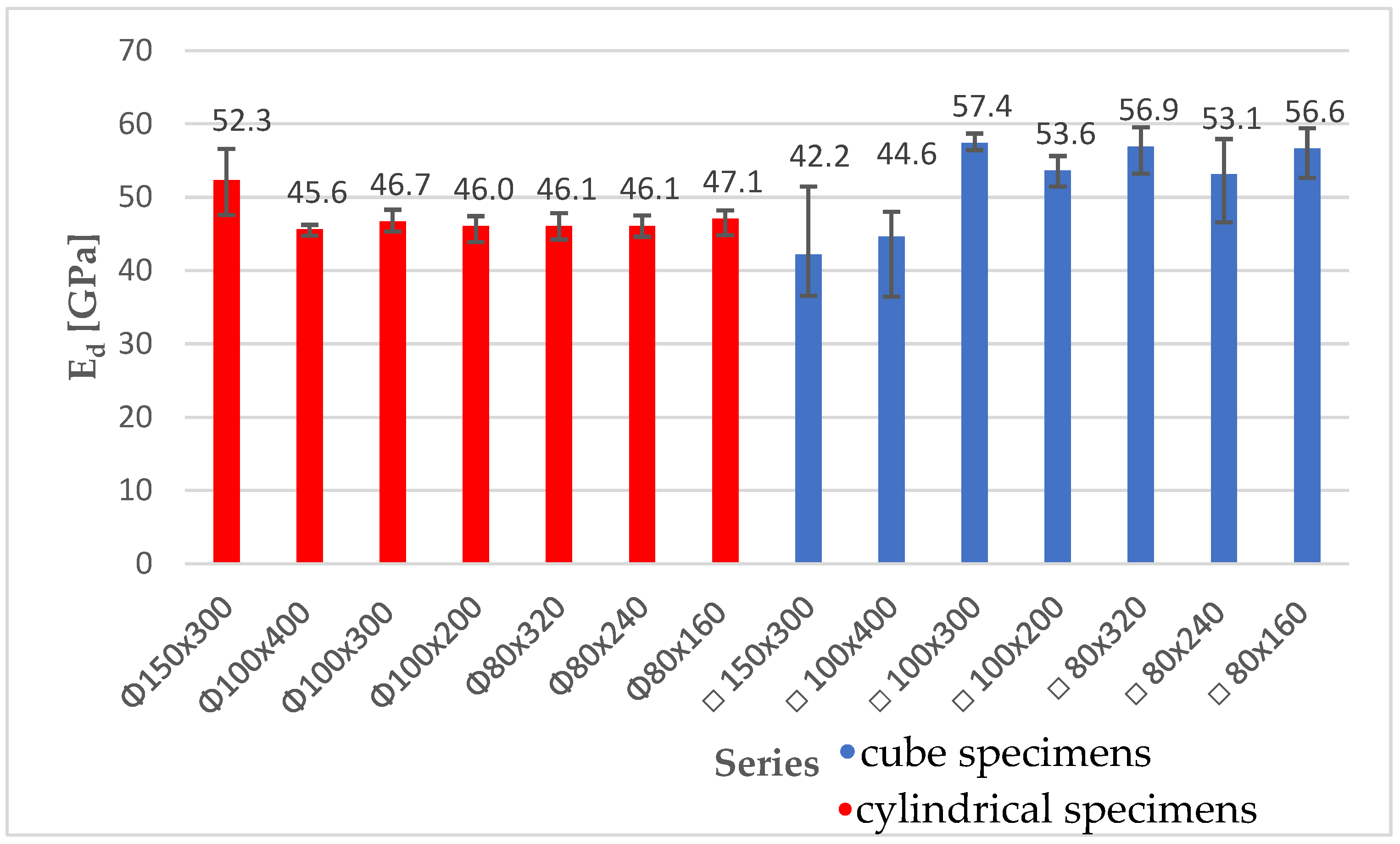
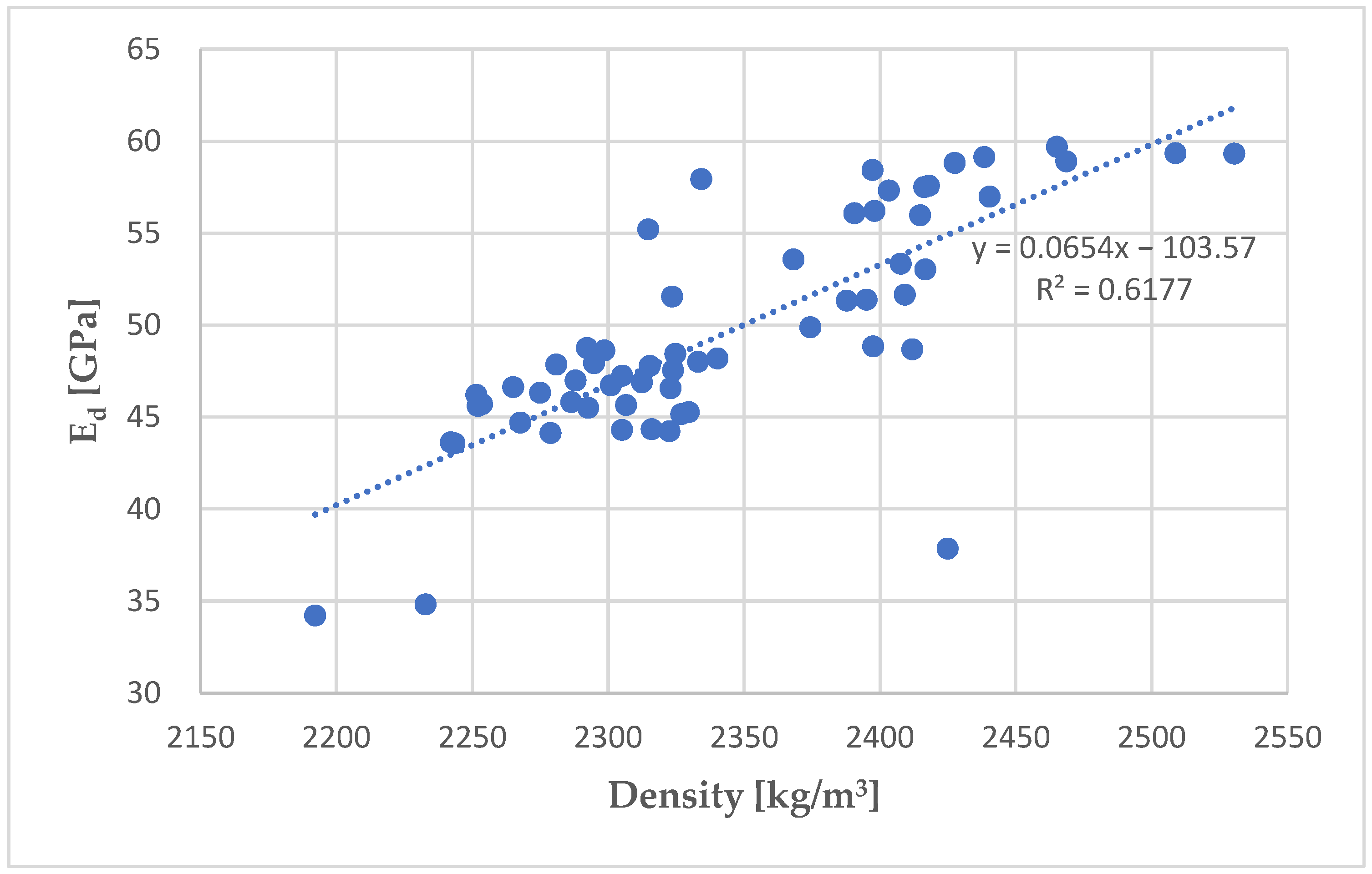
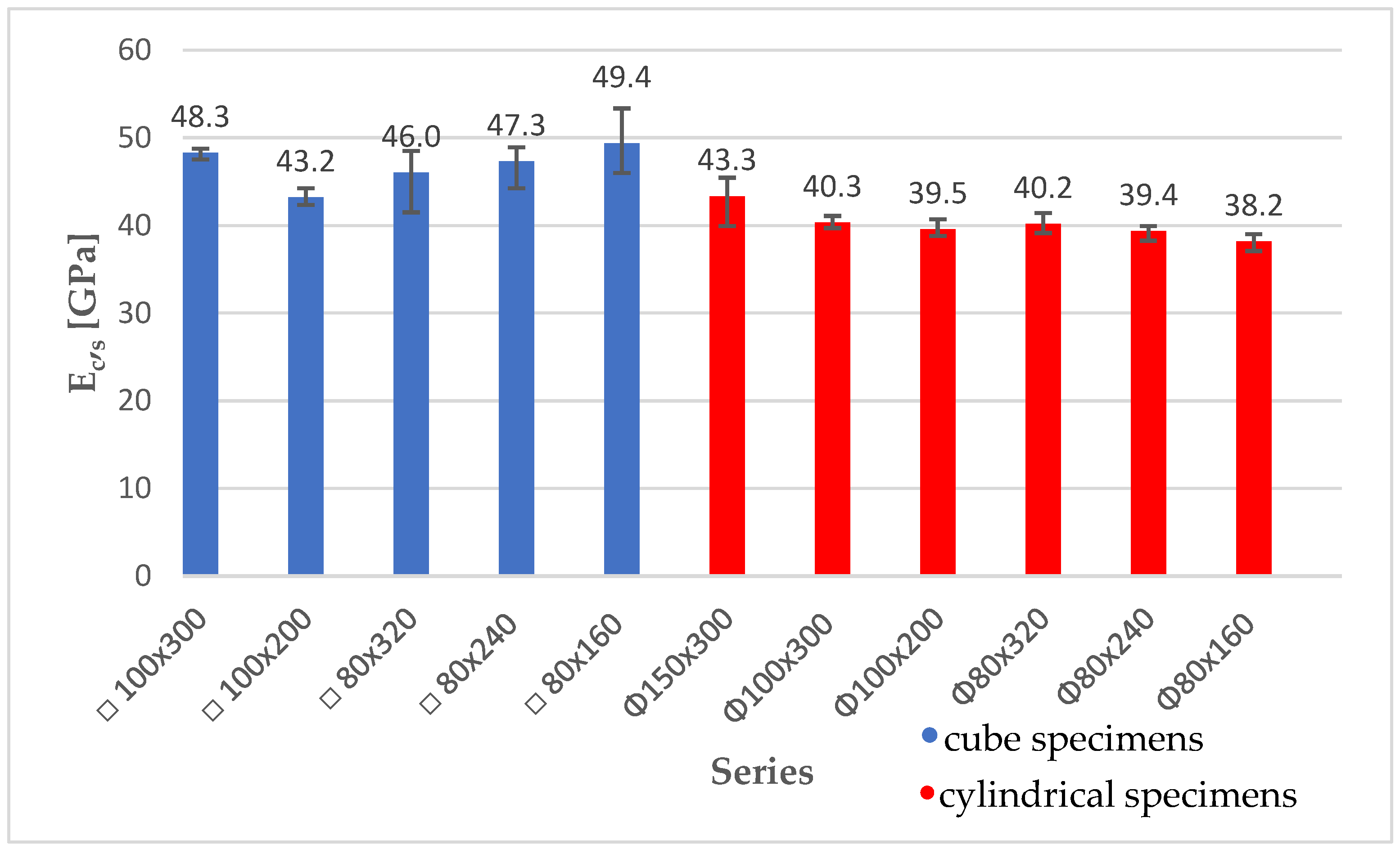
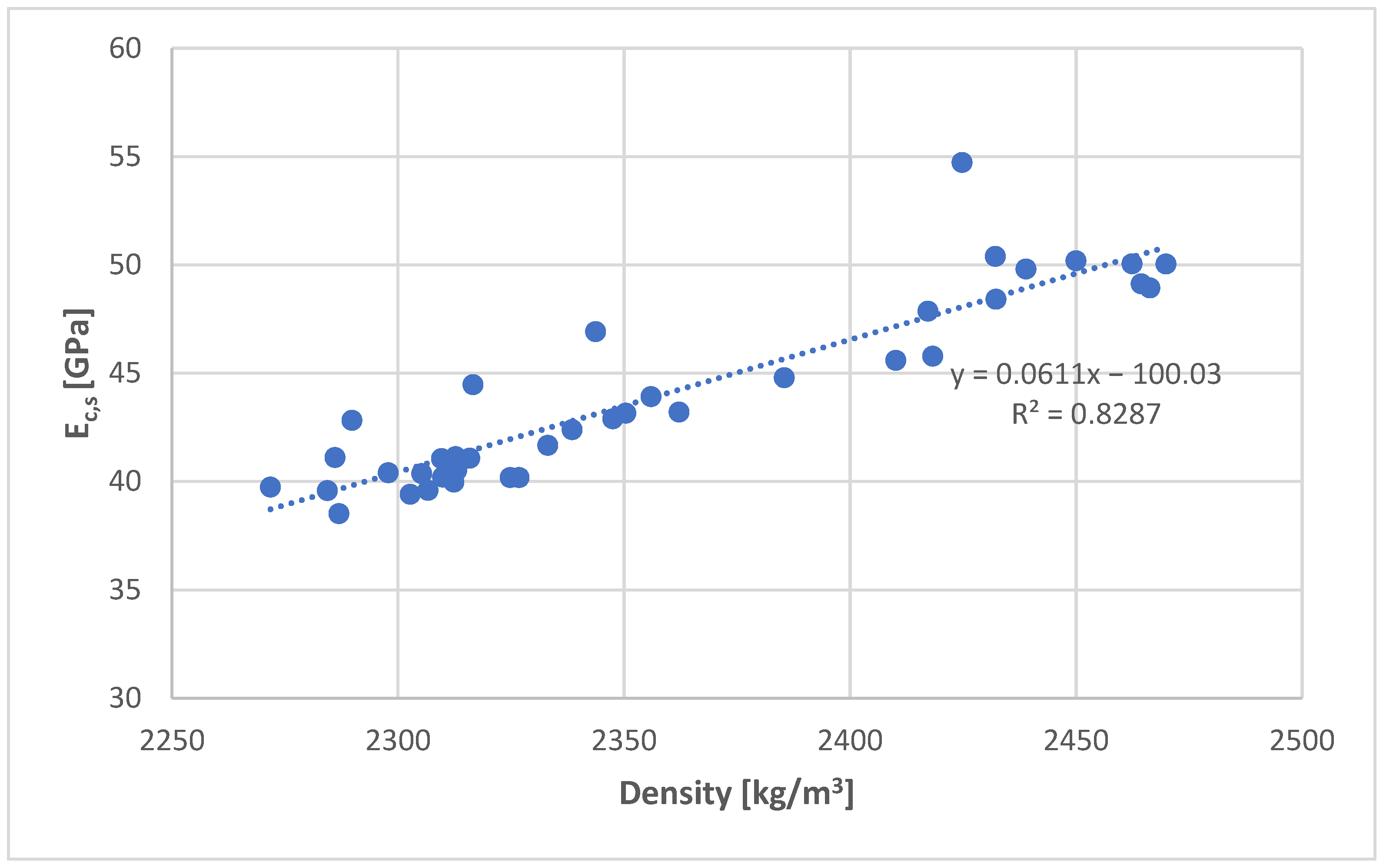
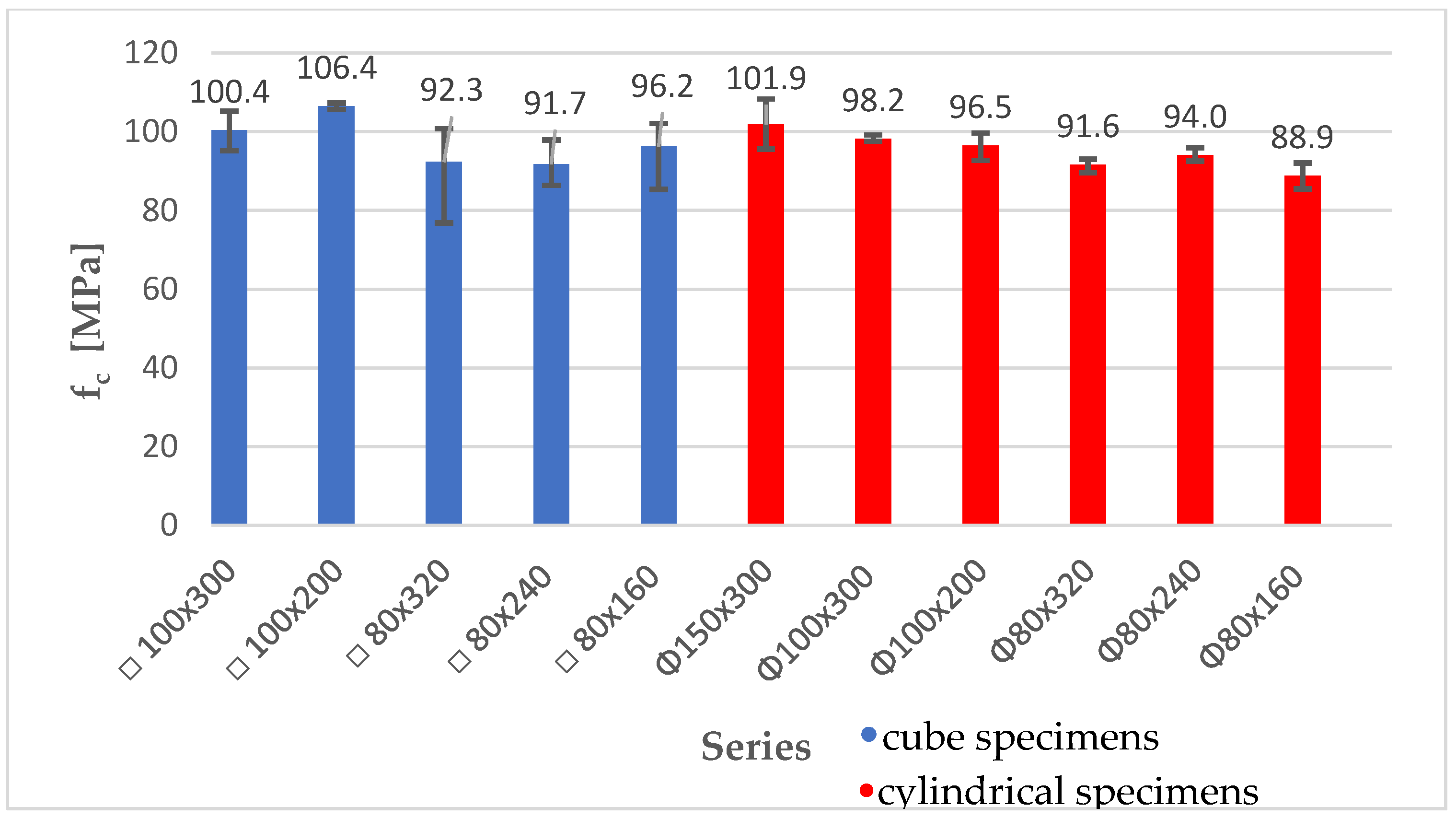
This paper presents the effect of specimens’ shape and size on the modulus of elasticity and compressive strength of high strength concrete. The European Standard EN 12390-13 allows not only for different procedures but also for different shapes and sizes of test specimens. However, it does not provide a relationship between specimen size and shape and elastic modulus. The aim of the research was to determine the influence of the shape and size of specimens on the measured values of the secant and dynamic modulus of elasticity and compressive strength. The analysis was carried out on cube and cylindrical specimens of various sizes and slenderness. Concrete with the mean strength of fcm,cyl = 101.9 MPa was used for the tests. The research used 64 specimens of various sizes and shapes. Compared to the results obtained for the basic cylindrical specimen (150 × 300), the differences reached 19% for Ed and 14% for Ec,s. The results indicate that in the case of the tested composite the key factor influencing the value of the elastic modulus and compressive strength of specimens is its individual structure that determines its density, while the scale and shape of the specimens have less effect on the mechanical properties.
Keywords: modulus of elasticity; compressive strength; high-strength concretes; dynamic modulus of elasticity; scale effect modulus of elasticity; compressive strength; high-strength concretes; dynamic modulus of elasticity; scale effect