Article

Recycling Waste Agricultural Nets as Cement Composites

1
Faculty of Agricultural Sciences, University of Siedlce, B. Prusa 14, 08-110 Siedlce, Poland
2
Department of Natural Resources and Agricultural Engineering, Agricultural University of Athens, Leof. Athinon 51, 104 47 Athens, Greece
*
Author to whom correspondence should be addressed.
Materials 2024, 17(8), 1828; https://doi.org/10.3390/ma17081828
Submission received: 12 February 2024 / Revised: 11 April 2024 / Accepted: 12 April 2024 / Published: 16 April 2024
(This article belongs to the Special Issue Environmentally Friendly Composites Incorporating Waste Materials)

Abstract

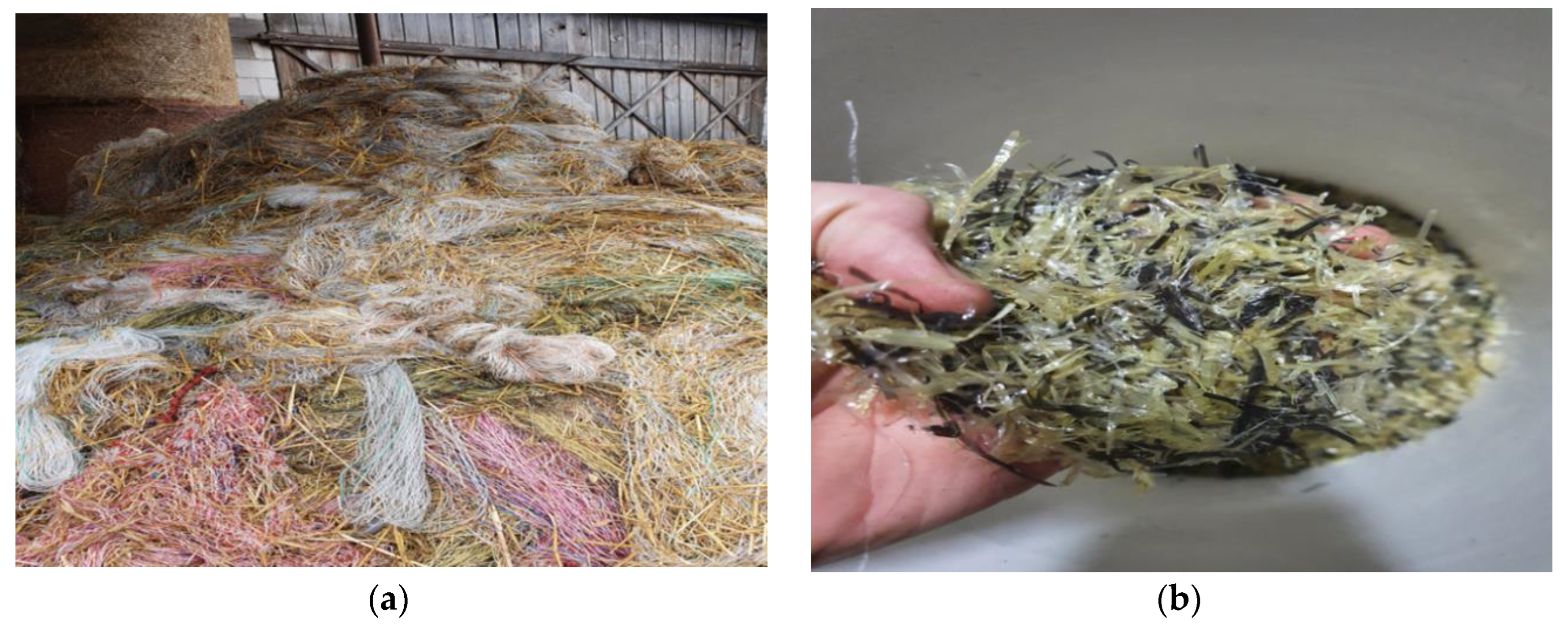
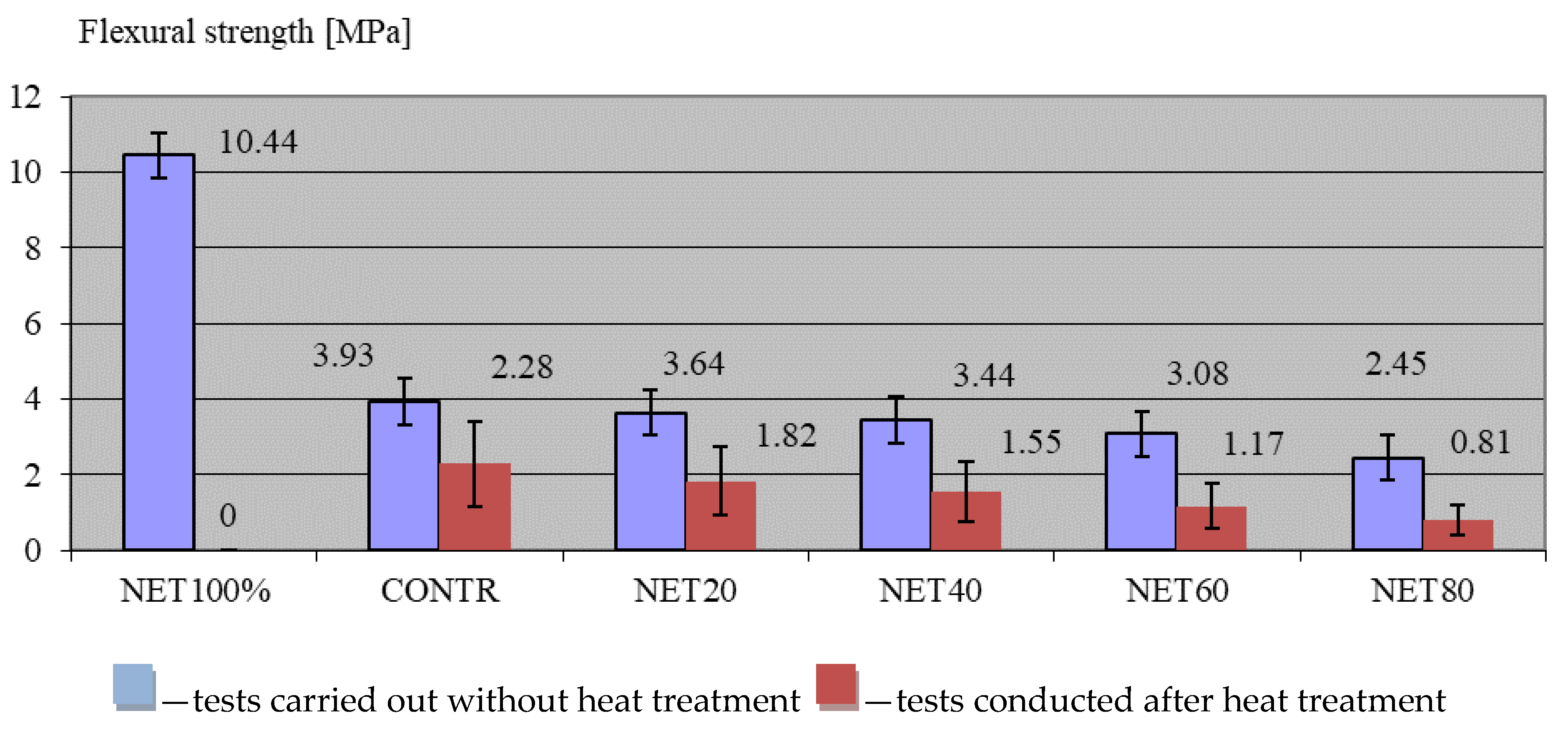
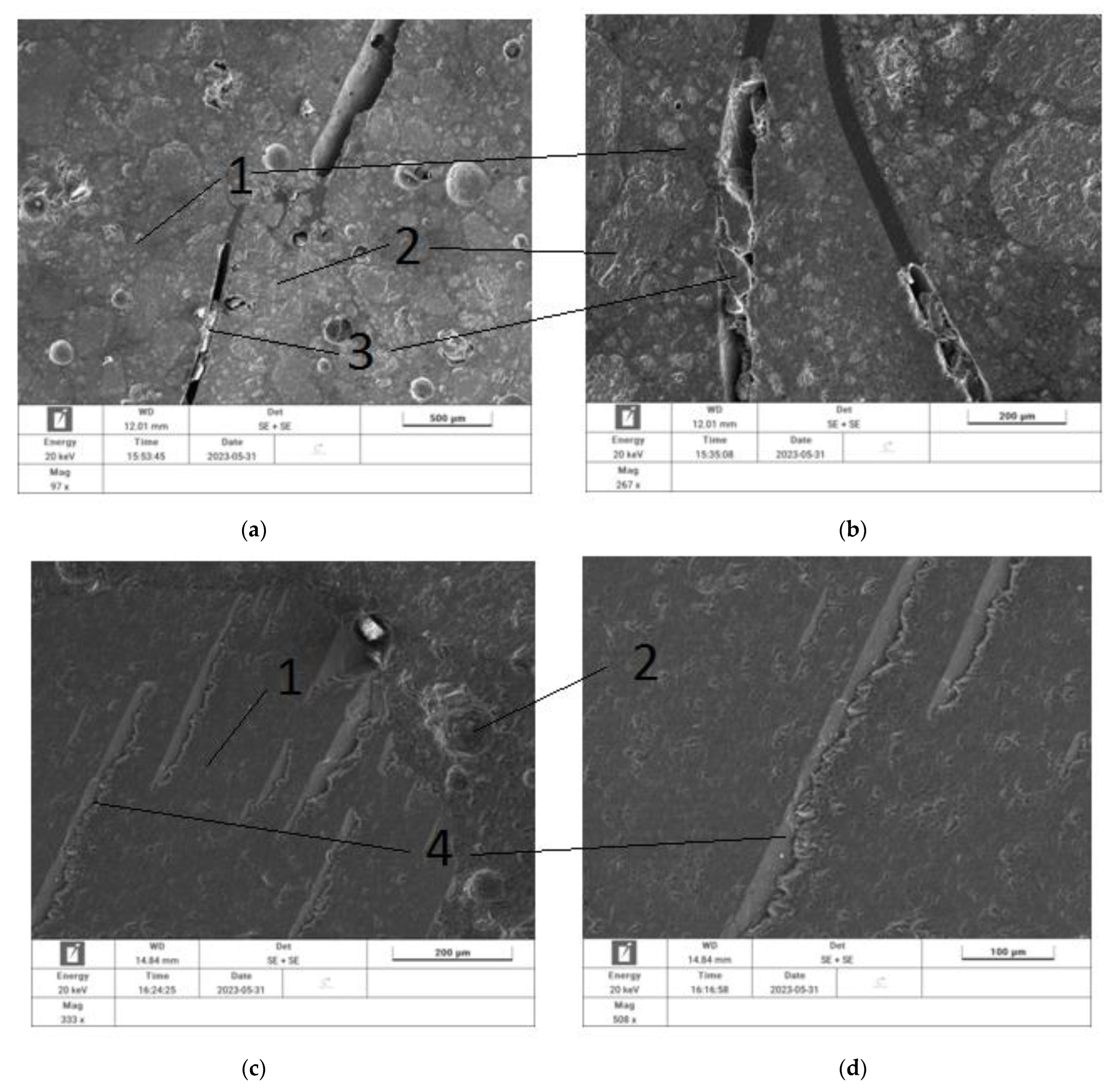
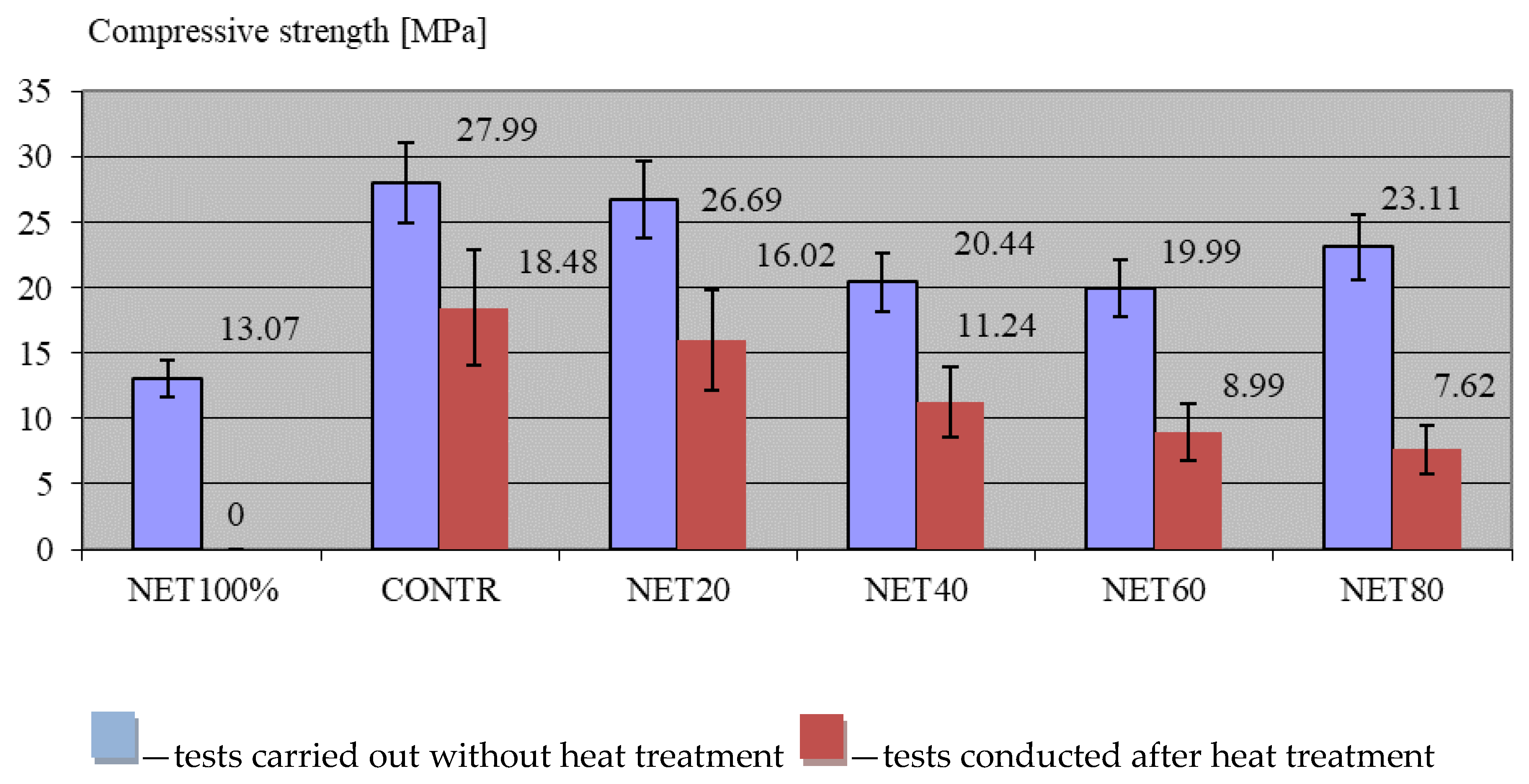
The advancement of agricultural mesh technology has contributed to its improved properties. As a result, agricultural nets are widely adopted in large-scale farming applications, for example, in cereal crop farming. However, a consequence of this increased use of agricultural nets is the accumulation of large amounts of waste. The current paper focuses on the recycling of agricultural nets used in wrapping straw bales to develop additives and fillers in cement composites. The research details an analysis of the use of waste agricultural meshes as an ingredient in cement composites. Six test series of different mixtures were conducted. In the first four series, agricultural waste was utilised as an additive in a composite comprising aggregate and cement slurry (the amounts of wasted nets were 20, 40, 60, and 80 kg/m3). In the last test series, the recyclate utilised comprised a mixture of cement slurry and waste only. The composites were subjected to standard tests and thermal resistance tests. The results showcased that that the addition of a net worsened the workability of the concrete mixture, and with increasing amounts of addition, the consistency of the mixture could change from liquid to dense plastic. The flexural strength of the composite decreased with increasing amounts of recyclate. In subsequent test series, the flexural strength value was lower than that of the control (3.93 MPa), from 7.38% (3.64 MPa) for the composite with 20 kg/m3 of recyclate to 37.66% (2.45 MPa) for the composite with of 80 kg/m3 recyclate. The flexural strength value of the net-filled composite without aggregate was very high (10.44 MPa), where the value obtained for the control composite was 62.36% lower. The results of the compressive strength test showed a decrease in this parameter with increasing amounts of additive. The value assessed for the control composite was 27.99 MPa. As expected, the composite that had no aggregate and consisted of only recycled filler had the lowest compressive strength. The value of this parameter was 13.07 MPa, and it was 53.31% lower than that of the control composite. The results of the tests of resistance to temperatures were similar to those recorded for the composites with polypropylene fibres. All composites demonstrated a significant decrease in their compressive and flexural strength after annealing. SEM imaging showed that the net fibres were closely bonded to the cement stone. Finally, it was concluded that recyclates performed best as fillers in lightweight composites with a low density, low absorption, high flexural strength, and satisfactory compressive strength.
Keywords: agricultural nets; straw bale wraps; waste; recycling; filler; additive; cement composite agricultural nets; straw bale wraps; waste; recycling; filler; additive; cement composite