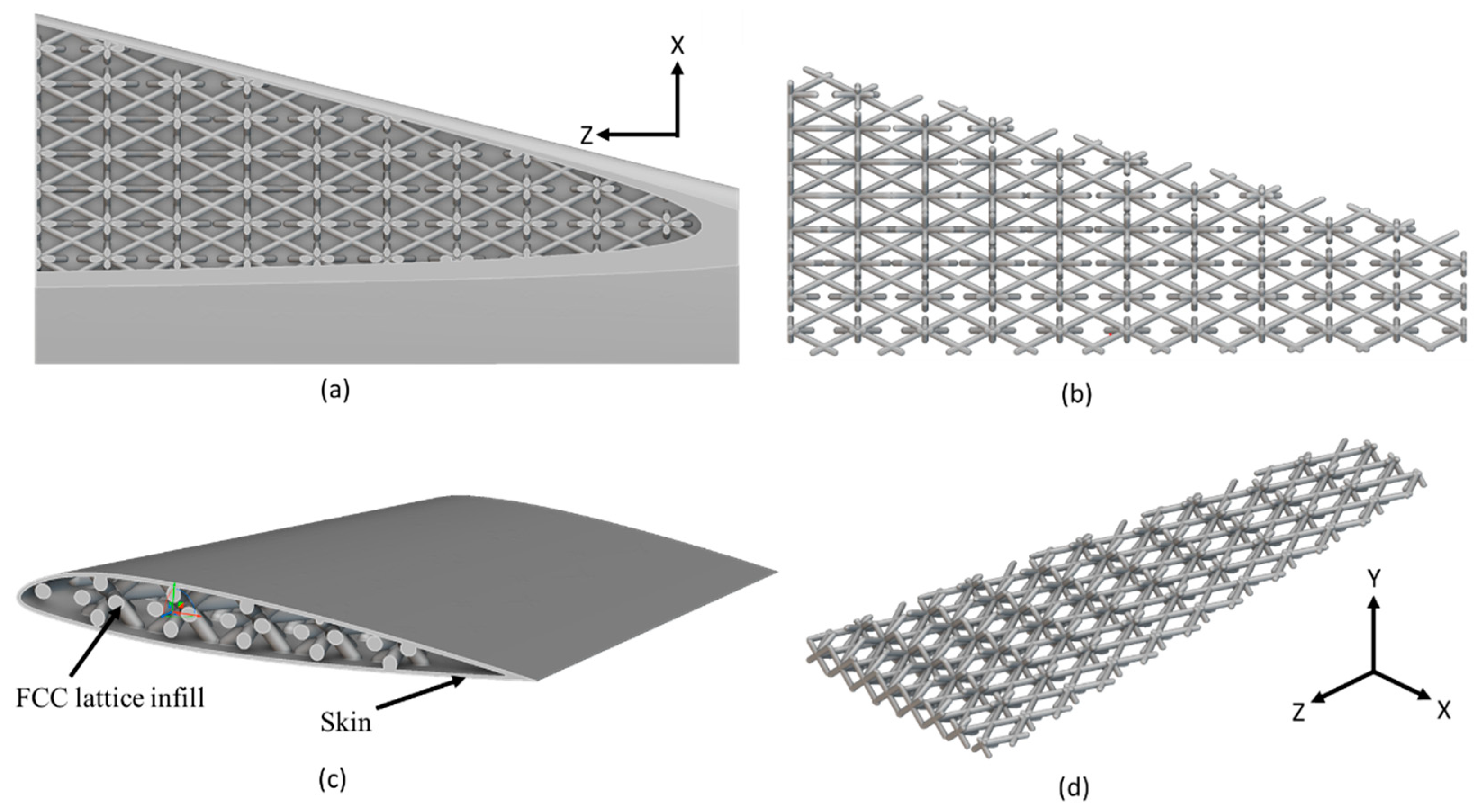
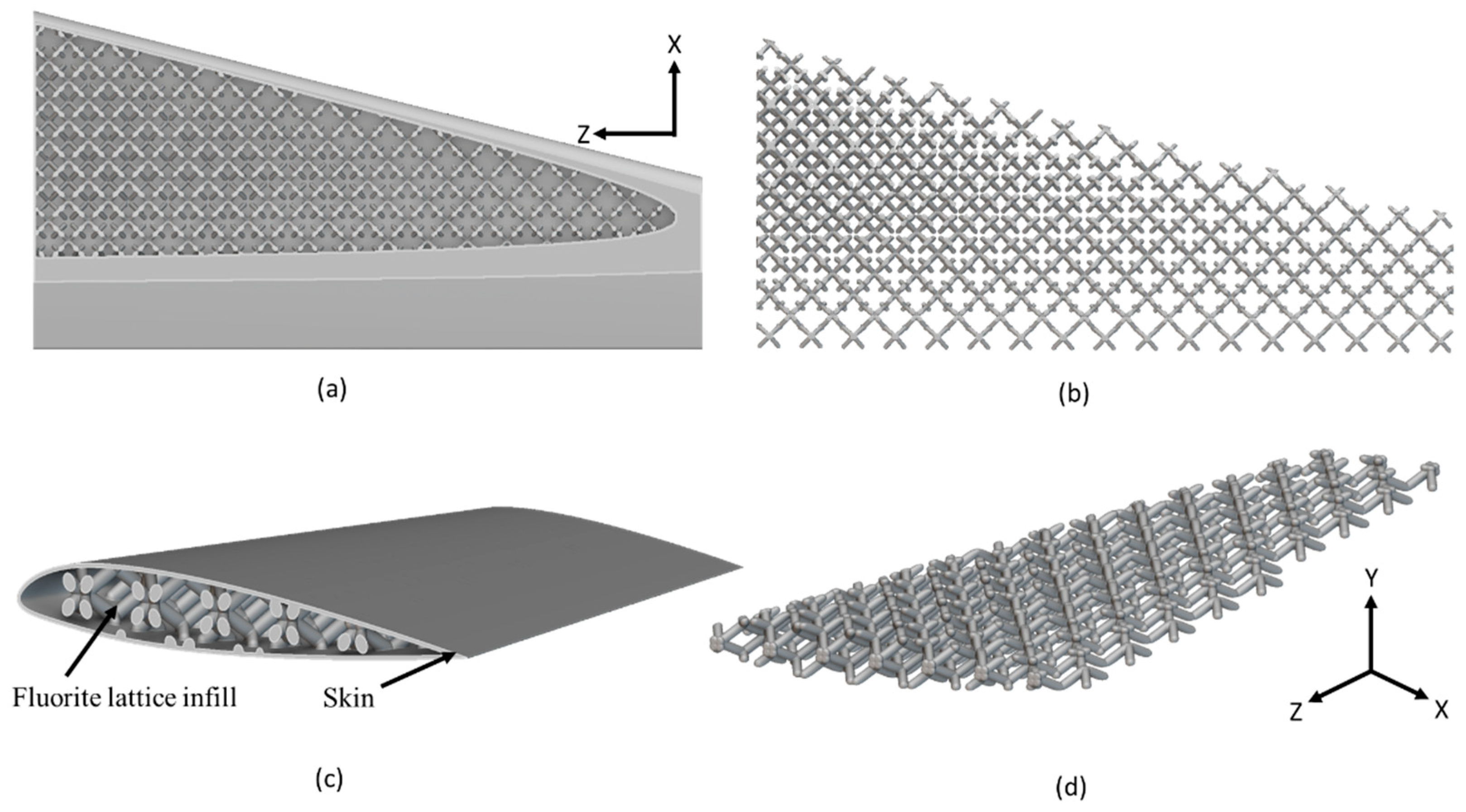
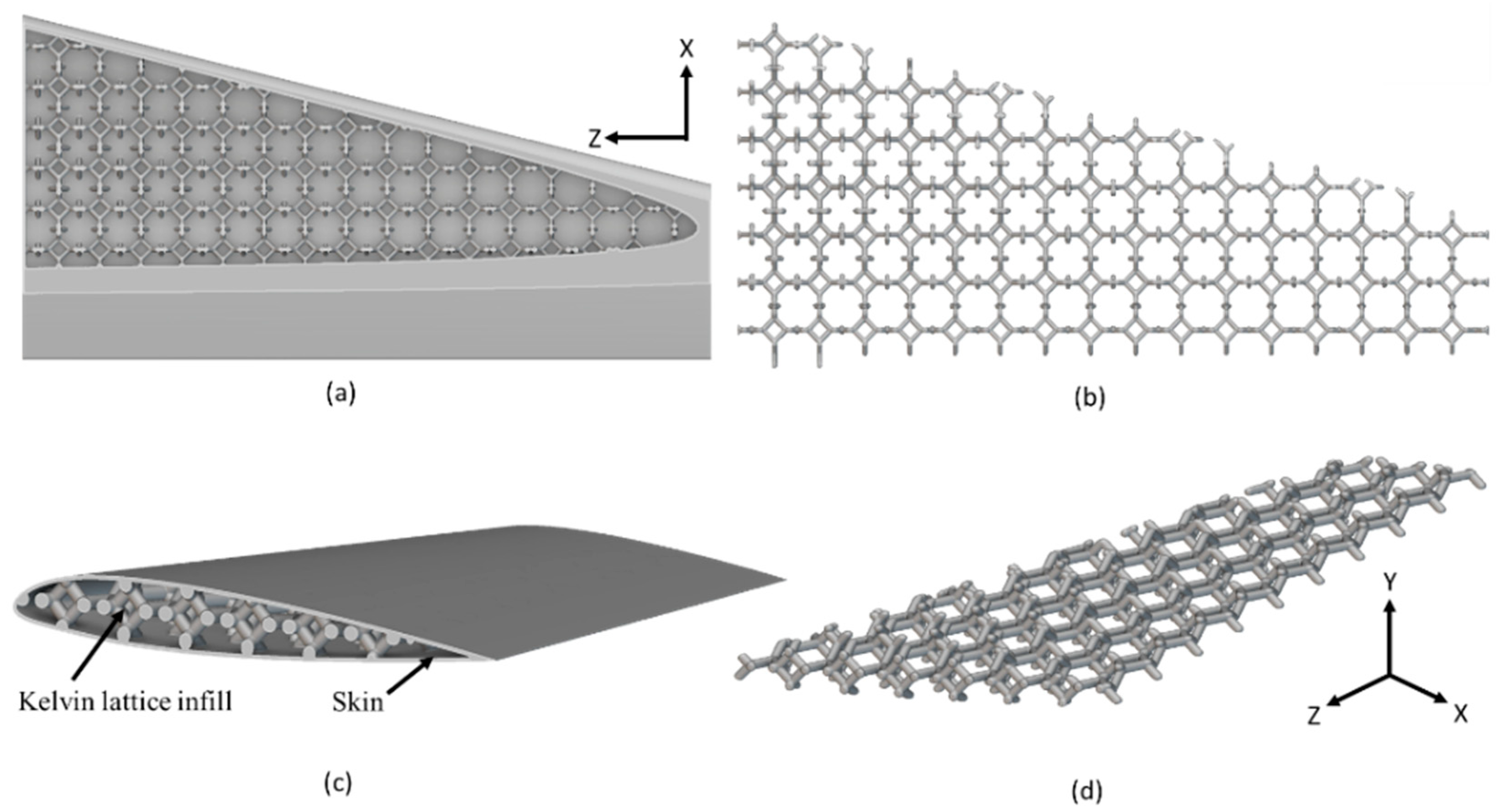
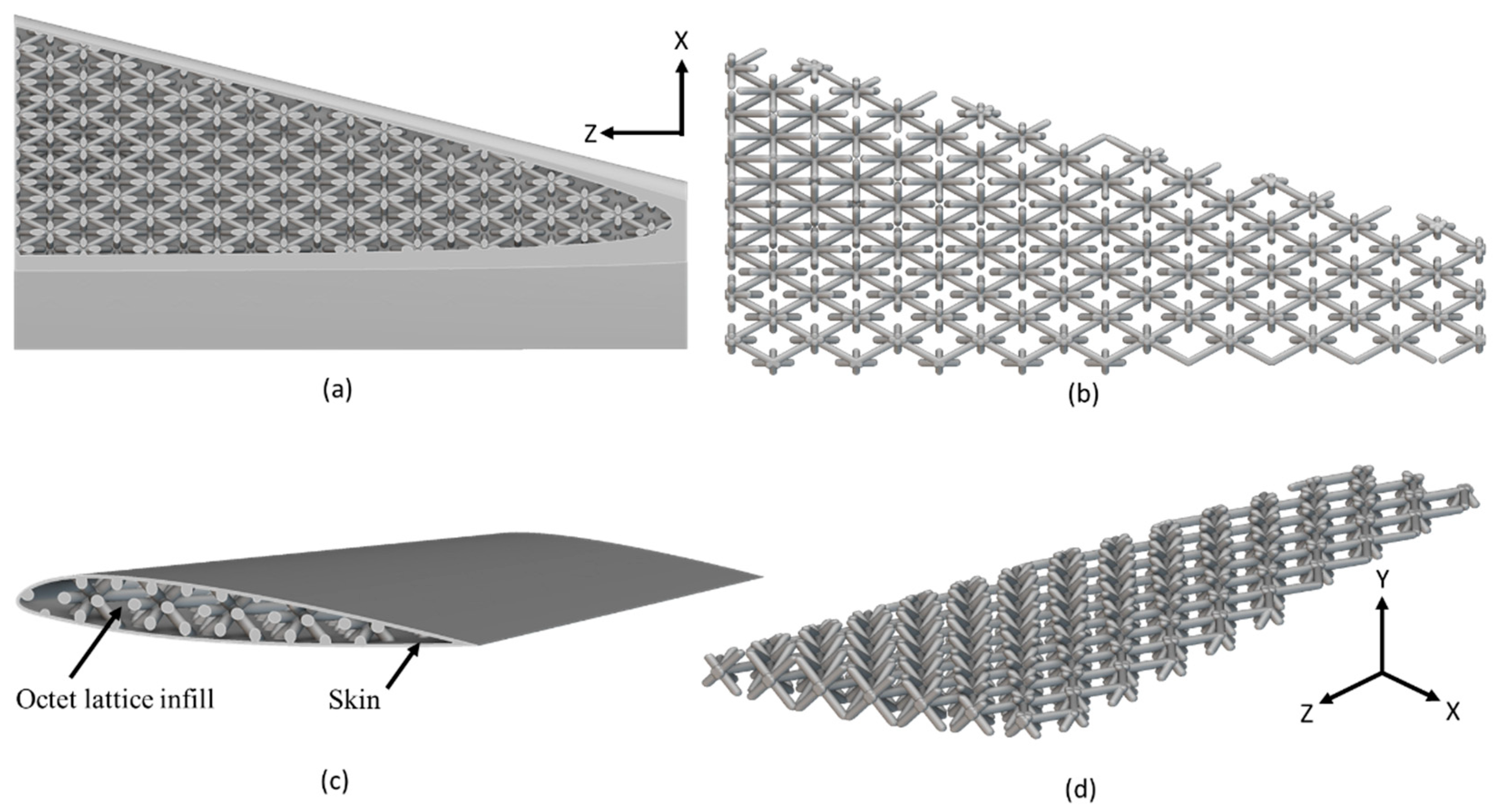
Non-Conventional Wing Structure Design with Lattice Infilled through Design for Additive Manufacturing



Abstract
Share and Cite
Khan, N.; Acanfora, V.; Riccio, A. Non-Conventional Wing Structure Design with Lattice Infilled through Design for Additive Manufacturing. Materials 2024, 17, 1470. https://doi.org/10.3390/ma17071470
Khan N, Acanfora V, Riccio A. Non-Conventional Wing Structure Design with Lattice Infilled through Design for Additive Manufacturing. Materials. 2024; 17(7):1470. https://doi.org/10.3390/ma17071470
Chicago/Turabian StyleKhan, Numan, Valerio Acanfora, and Aniello Riccio. 2024. "Non-Conventional Wing Structure Design with Lattice Infilled through Design for Additive Manufacturing" Materials 17, no. 7: 1470. https://doi.org/10.3390/ma17071470
APA StyleKhan, N., Acanfora, V., & Riccio, A. (2024). Non-Conventional Wing Structure Design with Lattice Infilled through Design for Additive Manufacturing. Materials, 17(7), 1470. https://doi.org/10.3390/ma17071470