Article

Prediction Method for High-Speed Laser Cladding Coating Quality Based on Random Forest and AdaBoost Regression Analysis

1
School of Mechanical Engineering, Xinjiang University, Urumqi 830017, China
2
Institute of New Materials, Guangdong Academy of Sciences, National Engineering Laboratory for Modern Materials Surface Engineering Technology, Guangdong Provincial Key Laboratory of Modern Surface Engineering Technology, Guangzhou 510651, China
*
Authors to whom correspondence should be addressed.
Materials 2024, 17(6), 1266; https://doi.org/10.3390/ma17061266
Submission received: 1 December 2023 / Revised: 6 January 2024 / Accepted: 10 January 2024 / Published: 8 March 2024
(This article belongs to the Section Materials Simulation and Design)

Abstract

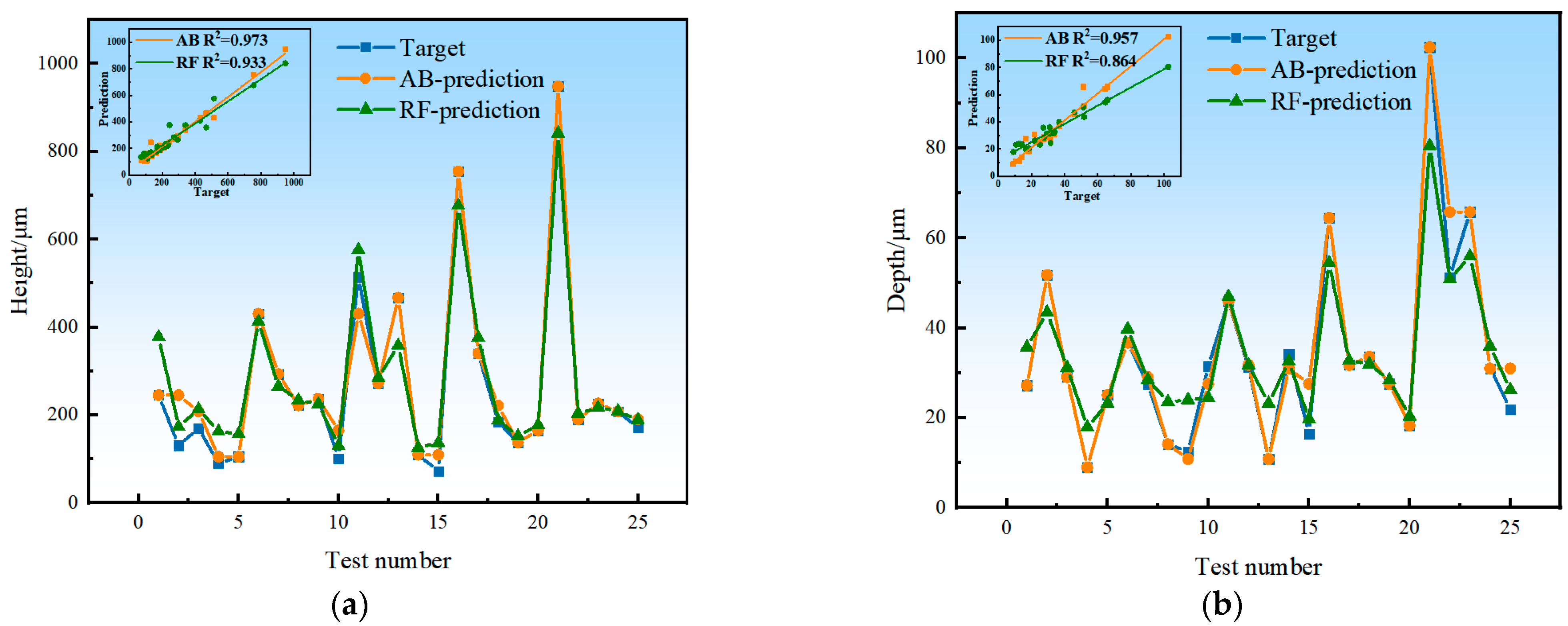
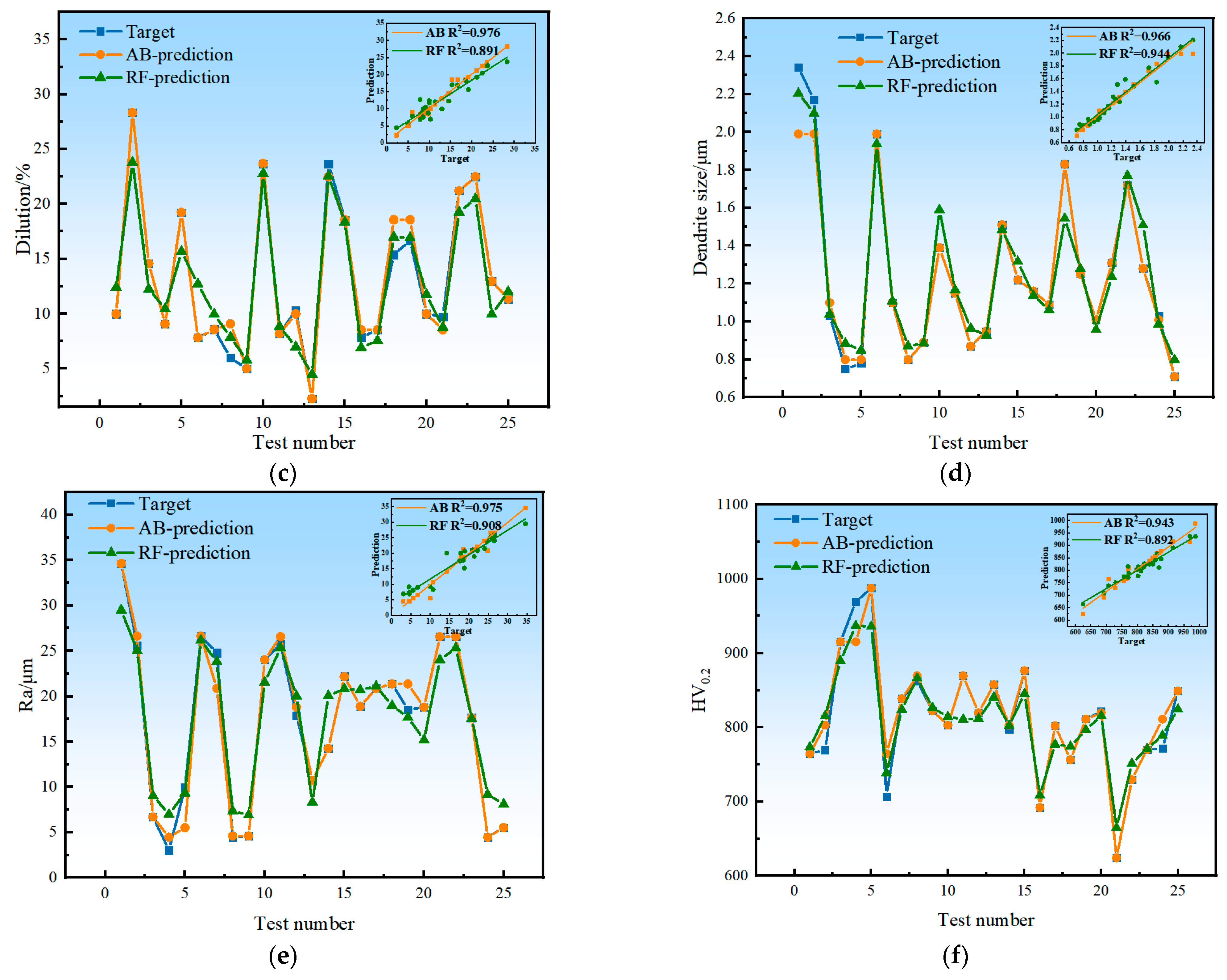
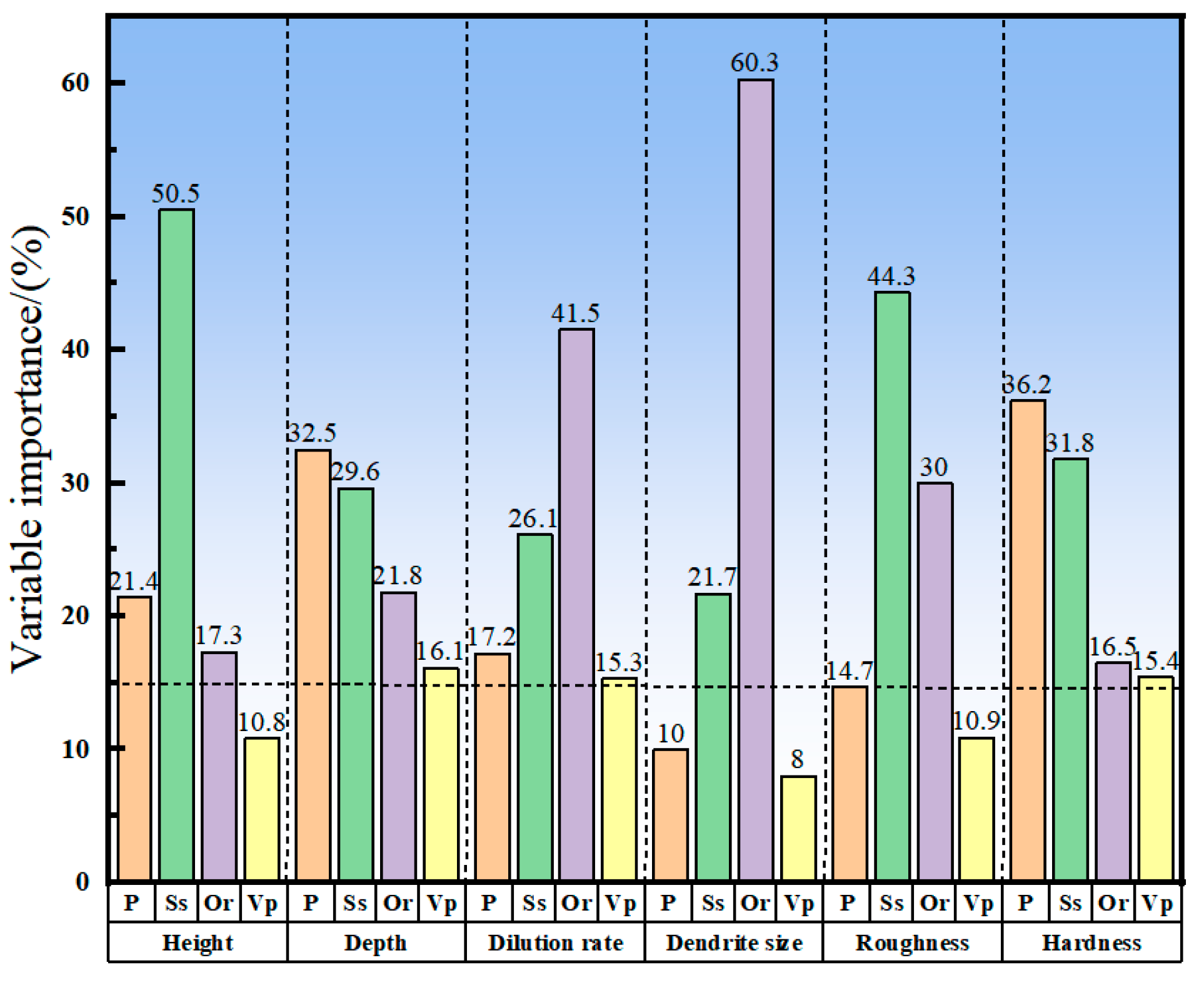
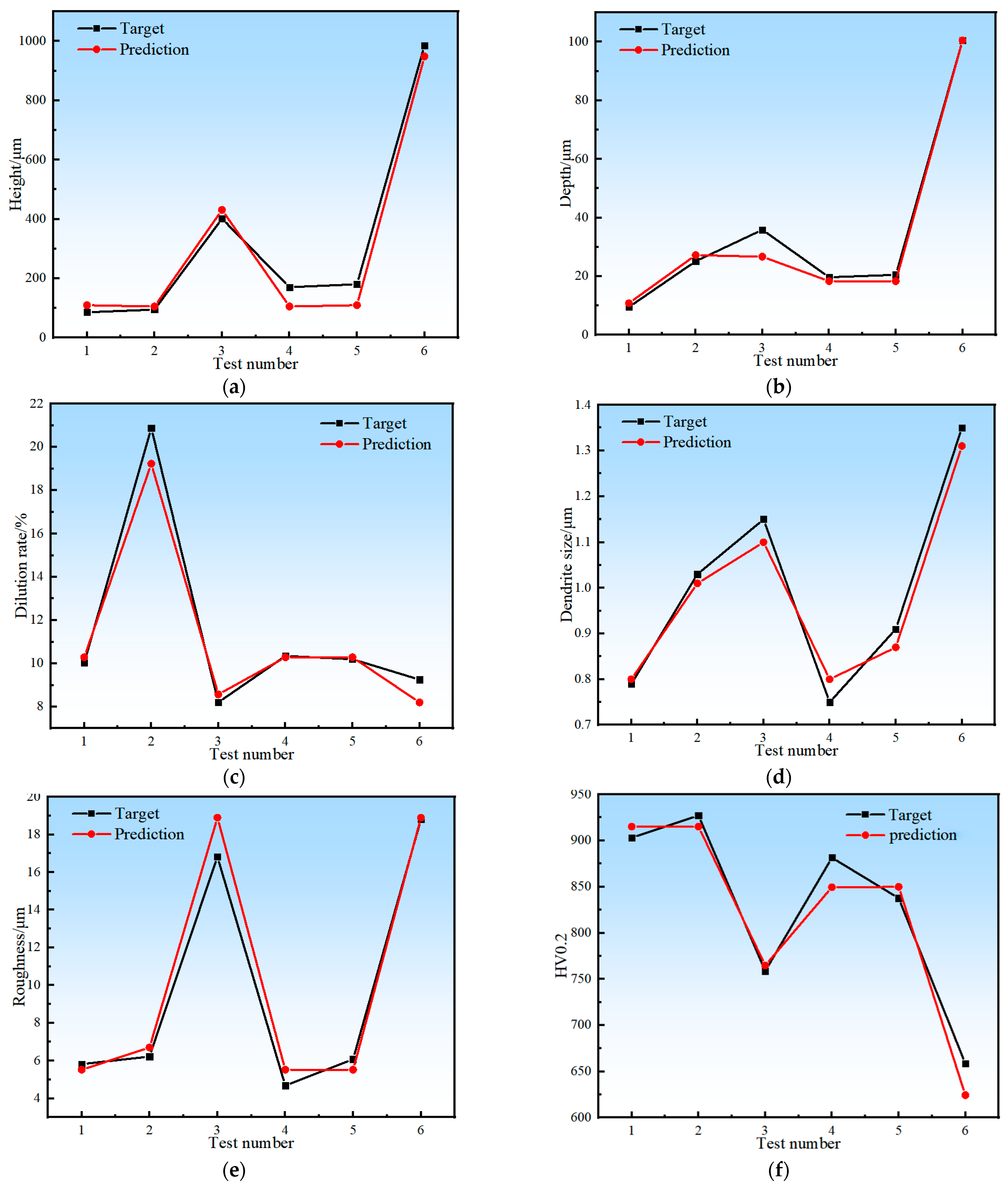
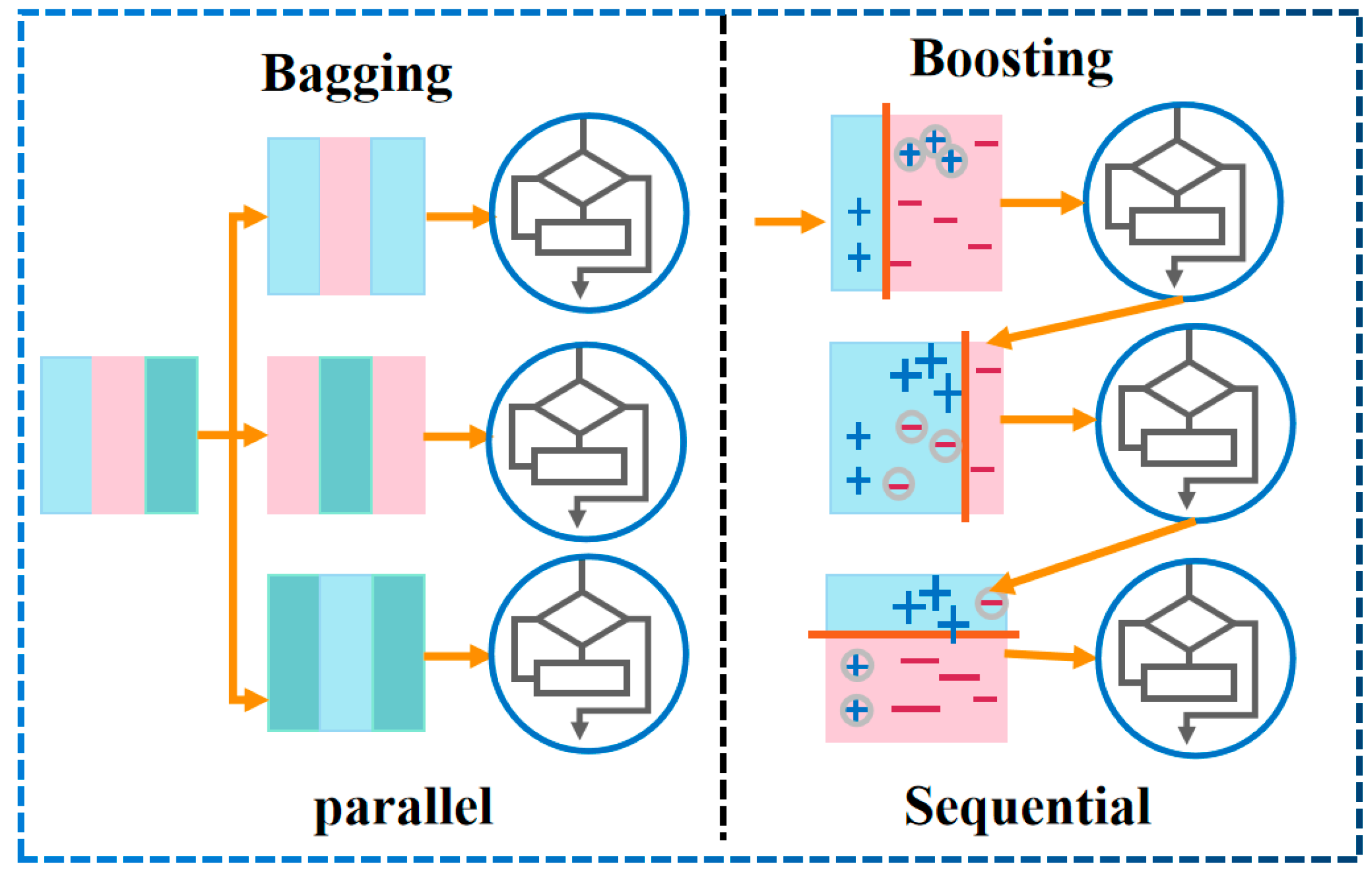
The initial melting quality of a high-speed laser cladding layer has an important impact on its post-treatment and practical application. In this study, based on the repair of hydraulic support columns of coal mining machines, the influence of high-speed laser cladding process parameters on the quality of Fe-Cr-Ni alloy coatings was investigated to realize the accurate prediction of coating quality. The Taguchi orthogonal method was used to design the L25(56) test. The prediction models of the relationship between the cladding process and the coating quality were established using the Random Forest (RF) and AdaBoost (Adaptive Boosting, AB) algorithms, respectively. Then, the prediction accuracy of the two models was compared, and the process parameter features were screened for importance evaluation. The results show that the AB prediction model is more accurate than the RF prediction model and more sensitive to abnormal data. The importance evaluation based on the AdaBoost model shows that the scanning speed has a great influence on the height and surface roughness of the coating. On the other hand, the overlap rate is the most important factor in controlling the dilution ratio and near-surface grain size of high-speed laser melting coatings. In addition, the micro-hardness of the coating and the thermal effect of the substrate can be effectively enhanced by adjusting the laser power and scanning speed. Finally, it was verified that the AB prediction model could accurately estimate the quality indexes of the coating with a prediction error less than 6%. The results show that it is feasible to predict the quality of high-speed laser cladding with the AB algorithm. It provides a basis for the adjustment of process parameters in the subsequent quality control process of cladding.
Keywords: high-speed laser cladding; random forest; AdaBoost; regression analysis; coating quality prediction high-speed laser cladding; random forest; AdaBoost; regression analysis; coating quality prediction