Article

Effect of Sand Addition on Laterite Soil Stabilization
by
Bárbara Drumond Almeida
1,*,†,
Lisley Madeira Coelho
1,†,
Antônio Carlos Rodrigues Guimarães
1 and
Sergio Neves Monteiro
2
1
Department of Fortification and Construction, Military Institute of Engineering-IME, Praça General Tibúrcio, 80, Urca, Rio de Janeiro 22290-270, Brazil
2
Department of Materials Science, Military Institute of Engineering-IME, Praça General Tibúrcio, 80, Urca, Rio de Janeiro 22290-270, Brazil
*
Author to whom correspondence should be addressed.
These authors contributed equally to this work.
Materials 2024, 17(24), 6033; https://doi.org/10.3390/ma17246033
Submission received: 5 November 2024 / Revised: 3 December 2024 / Accepted: 5 December 2024 / Published: 10 December 2024
(This article belongs to the Special Issue Advance in Sustainable Construction Materials, Second Volume)

Abstract

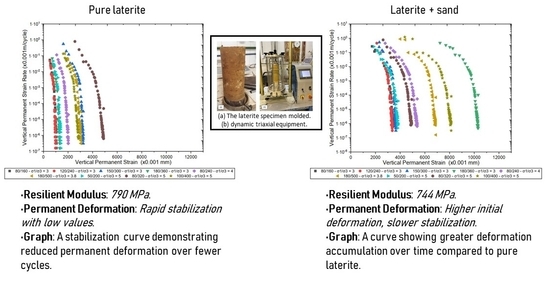
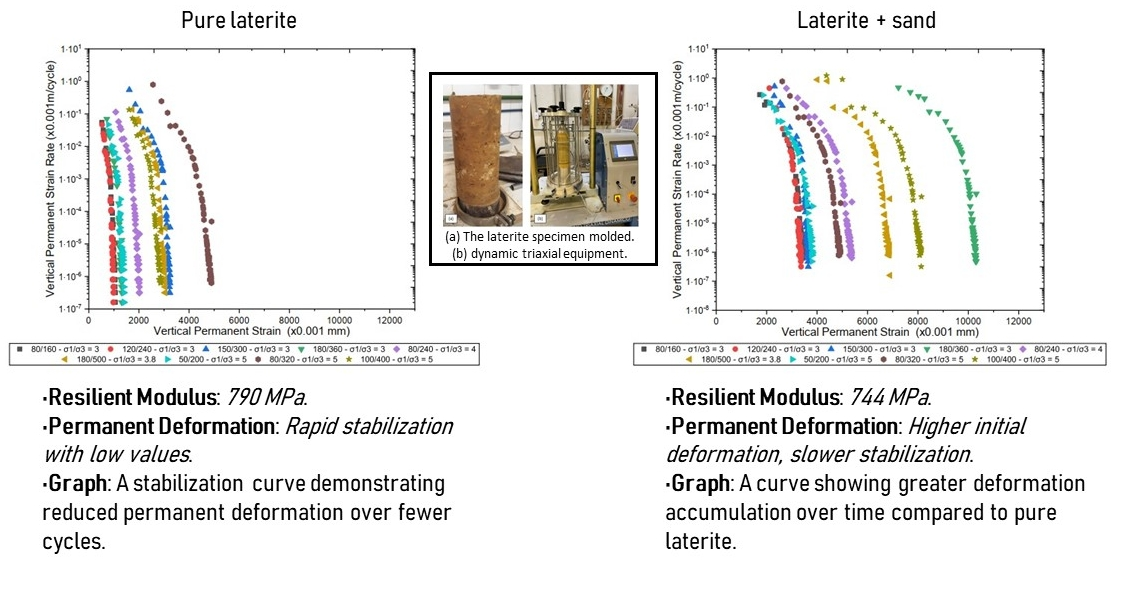
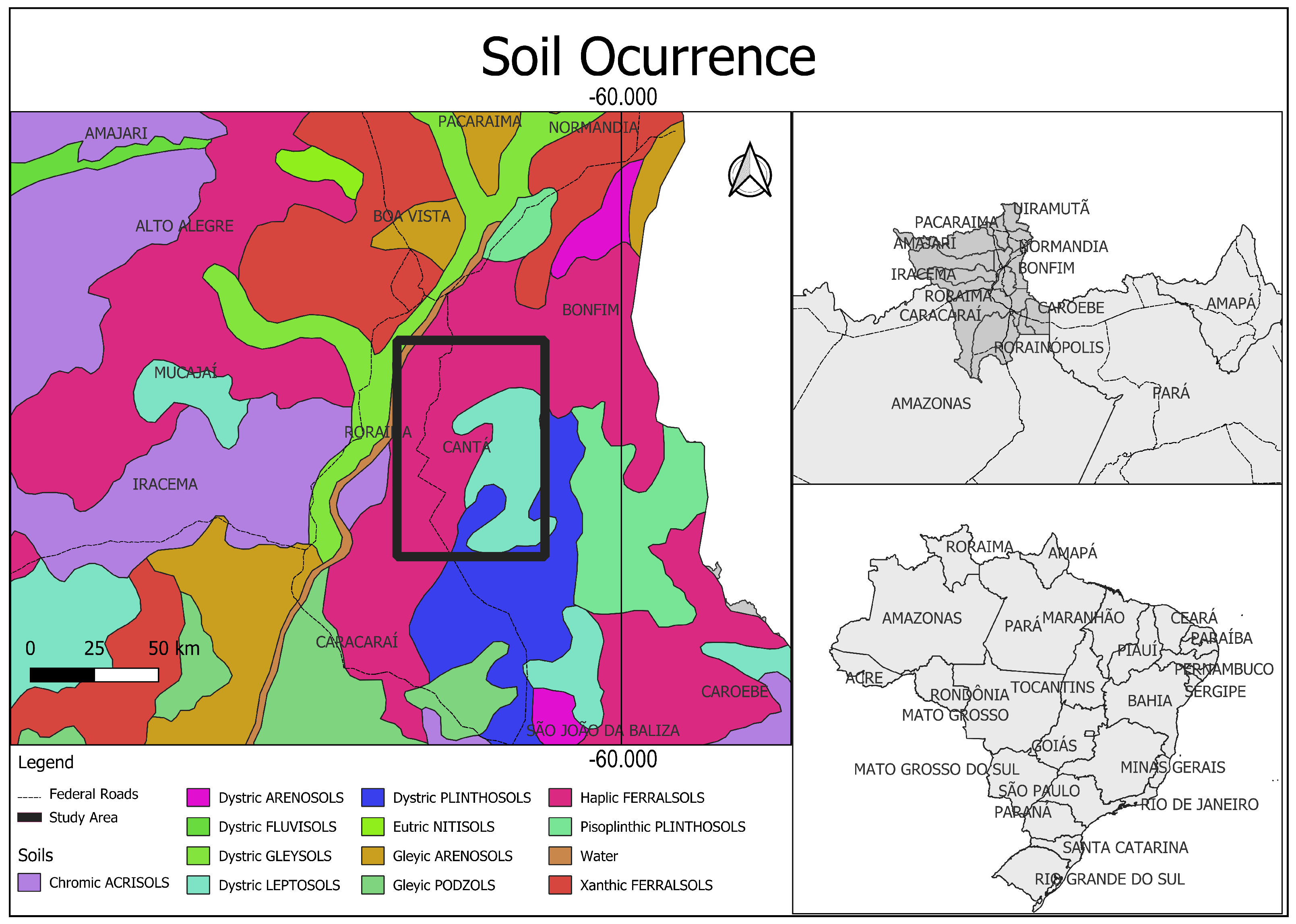
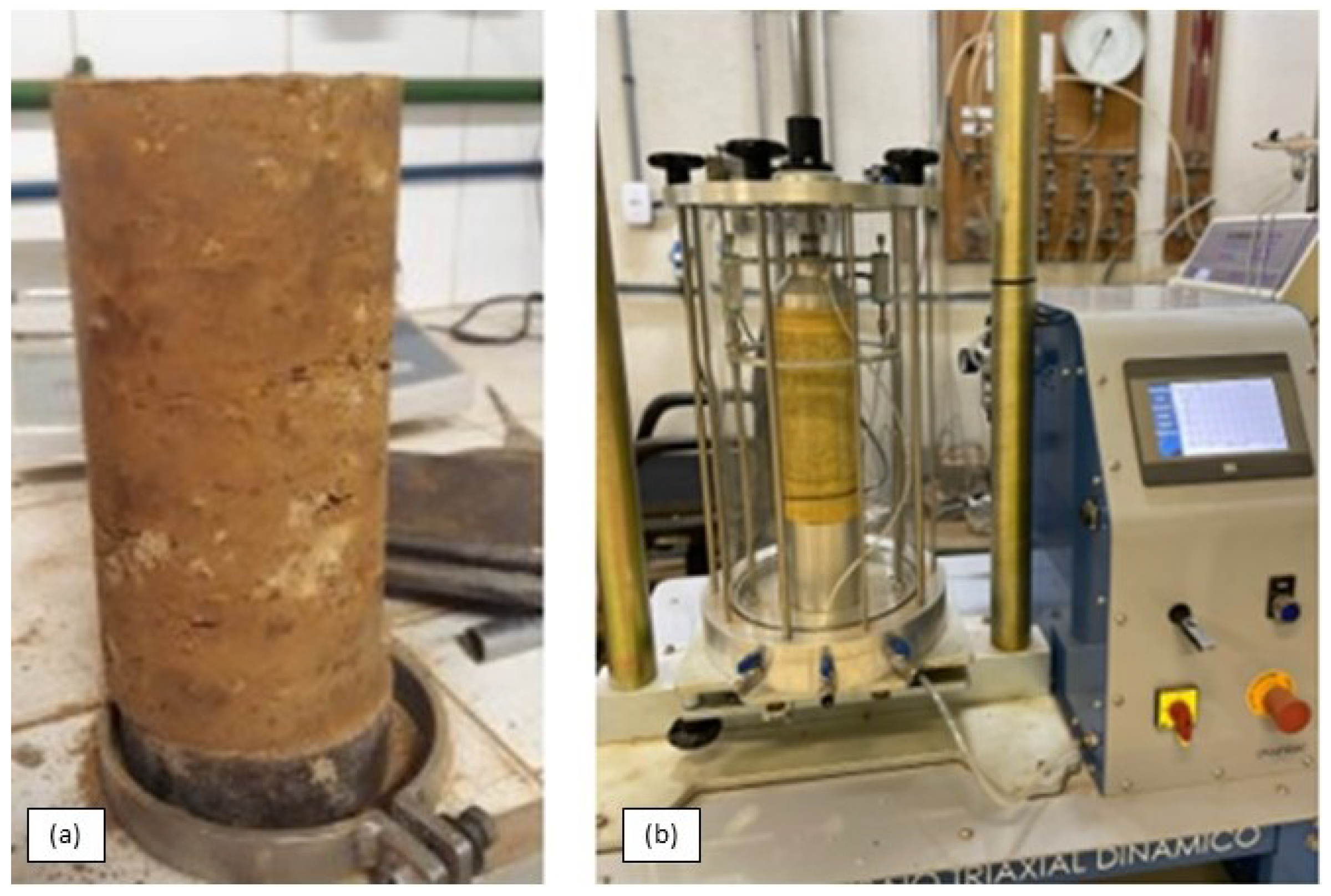
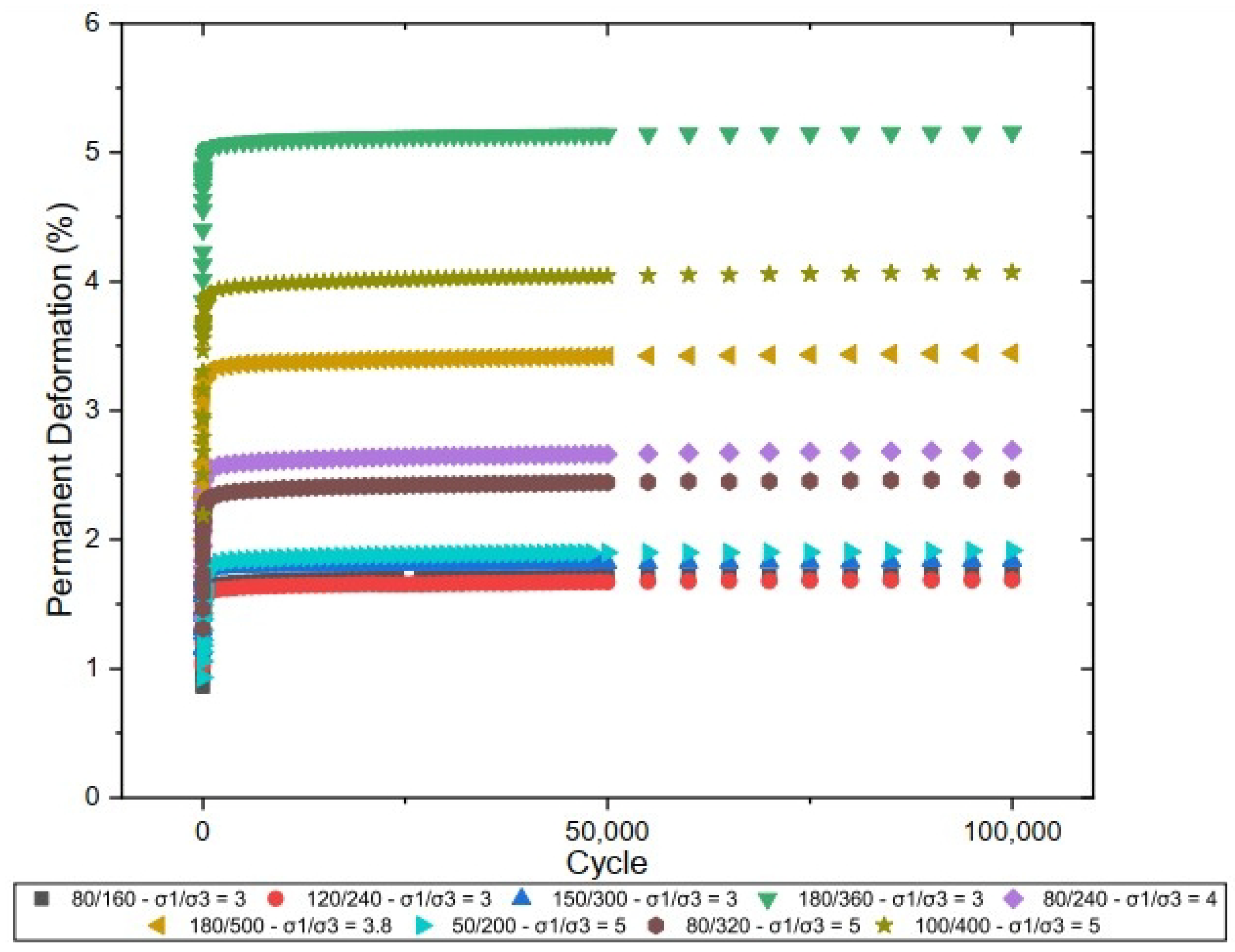
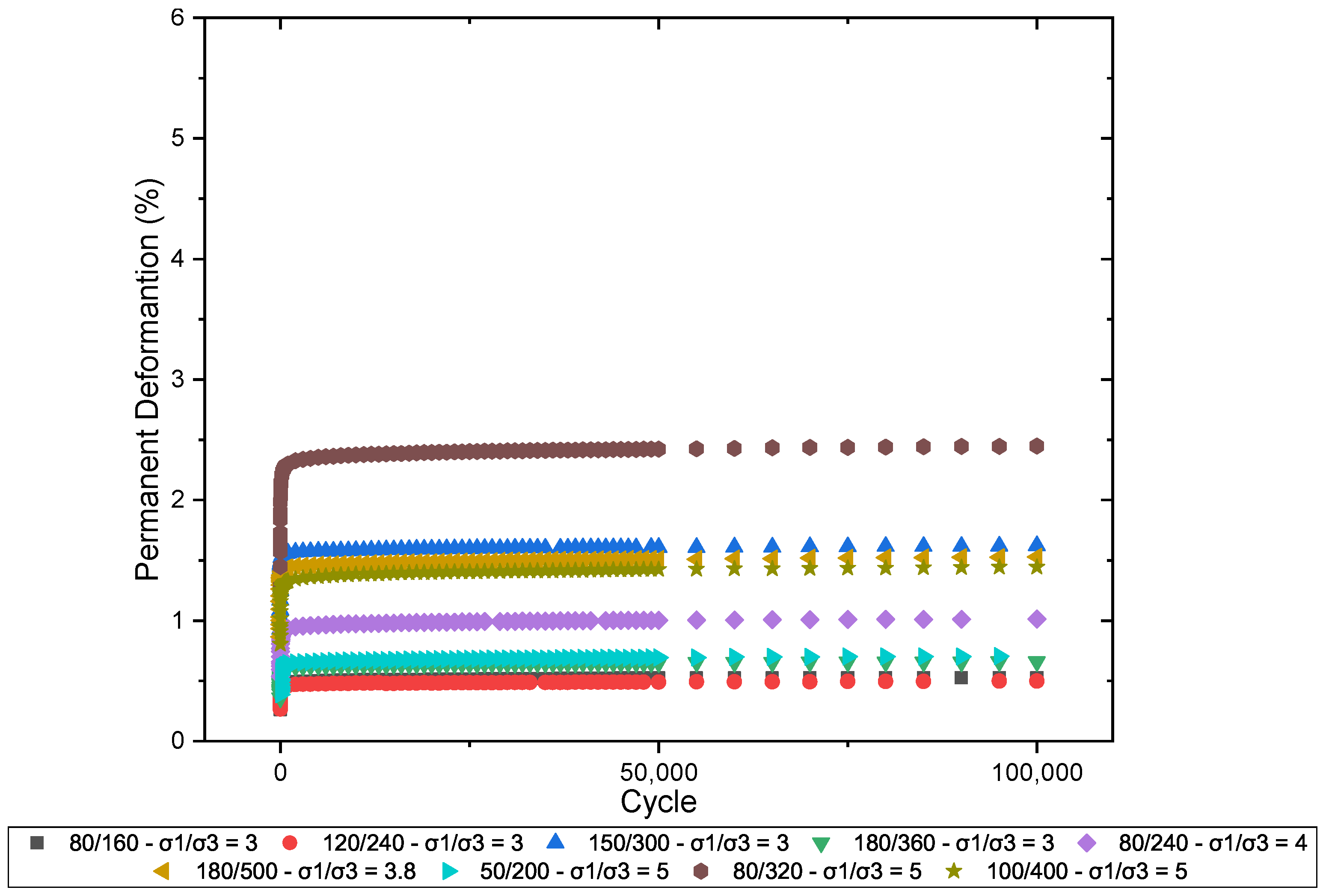
Lateritic soils, particularly abundant in tropical regions, have been successfully used in the construction of unbound layers of flexible pavements in Brazil since the 1970s. Despite their potential, these soils are often discarded or only recommended after stabilization processes, based on traditional parameters such as gradation requirements and Atterberg limits. This study investigates the mechanical characteristics of a lateritic soil from Roraima, focusing on its resilient modulus and permanent deformation properties, assessed through repeated load triaxial tests. Specifically, this research examines the effect of adding 20% sand on the mechanical behavior of the material. The results indicate that sand addition did not significantly improve the mechanical performance. The laterite–sand mixture exhibited an average resilient modulus (RM) of 744 MPa, lower than the 790 MPa of pure lateritic soil, suggesting that pure laterite remains suitable for pavement applications. Furthermore, the permanent deformation analysis revealed that the mixture with sand experienced nearly twice the plastic strain compared to pure laterite, which demonstrated superior accommodation under repeated loading. In the shakedown analysis, pure laterite exhibited a more stable performance, indicating greater durability in pavement applications. These findings highlight the importance of understanding the mechanical behavior of lateritic soils beyond conventional testing methods, emphasizing the potential of pure laterite as a viable alternative to enhance the strength and durability of pavement structures.
Keywords: soil stabilization; laterite; sand; mechanical behavior soil stabilization; laterite; sand; mechanical behavior
Graphical Abstract