Article

Multi-Objective NSGA-II Optimization of Single- and Dual-Fluid ORC–VCC Systems Using Butane and Isobutane


by
Łukasz Witanowski
Institute of Fluid-Flow Machinery, Polish Academy of Sciences, 80-231 Gdańsk, Poland
Materials 2024, 17(23), 5839; https://doi.org/10.3390/ma17235839
Submission received: 30 October 2024 / Revised: 18 November 2024 / Accepted: 26 November 2024 / Published: 28 November 2024
(This article belongs to the Section Energy Materials)

Abstract

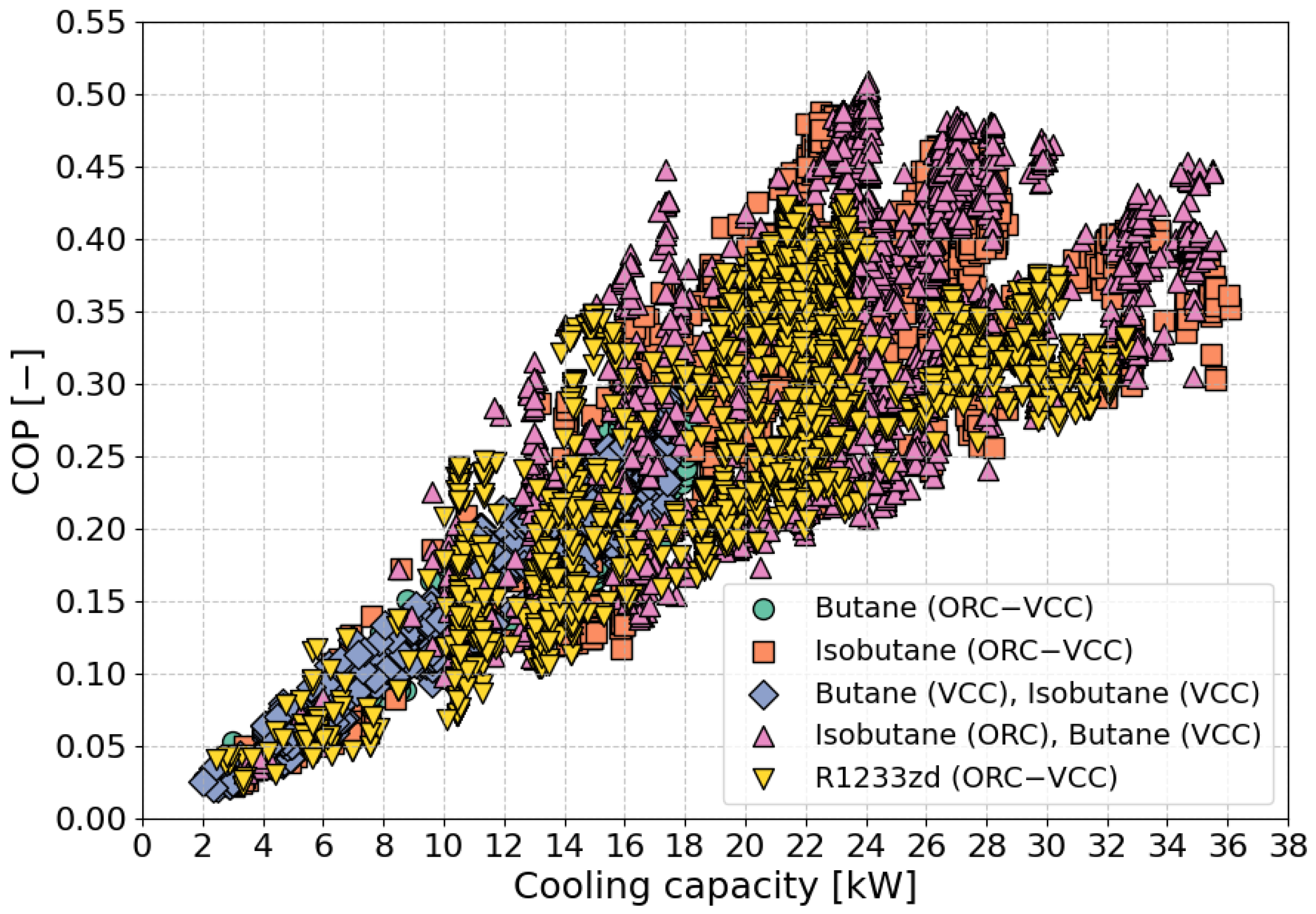
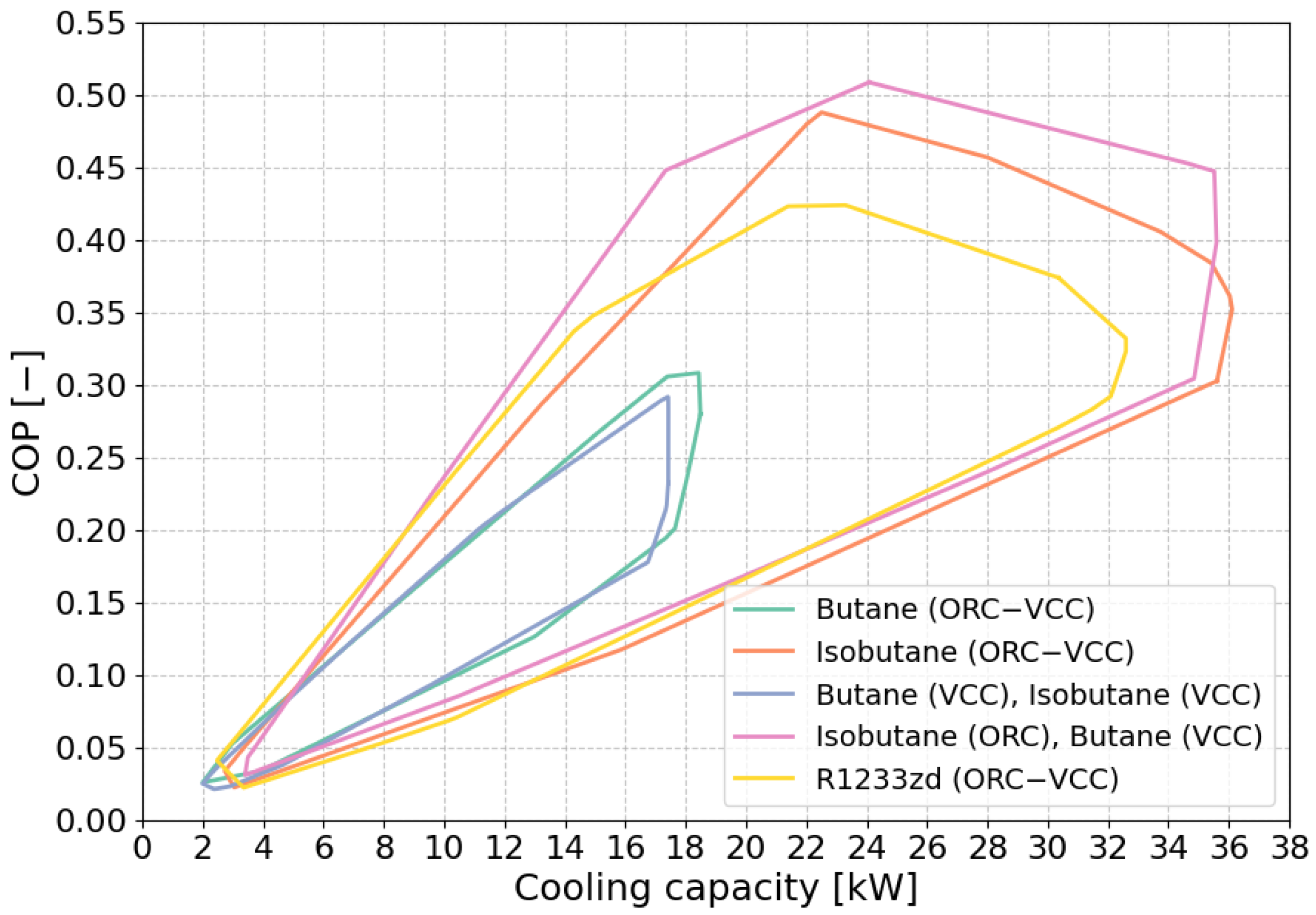
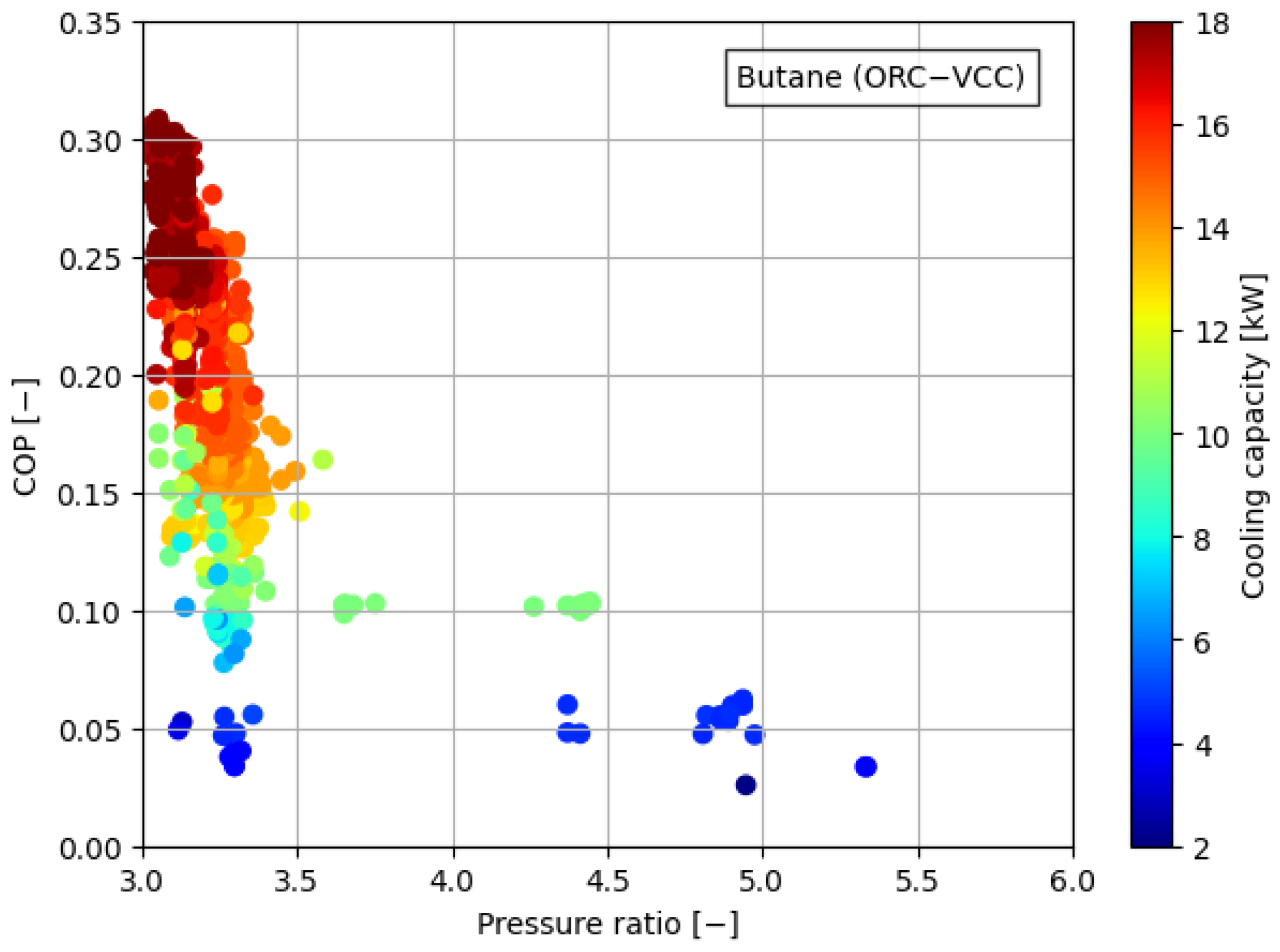
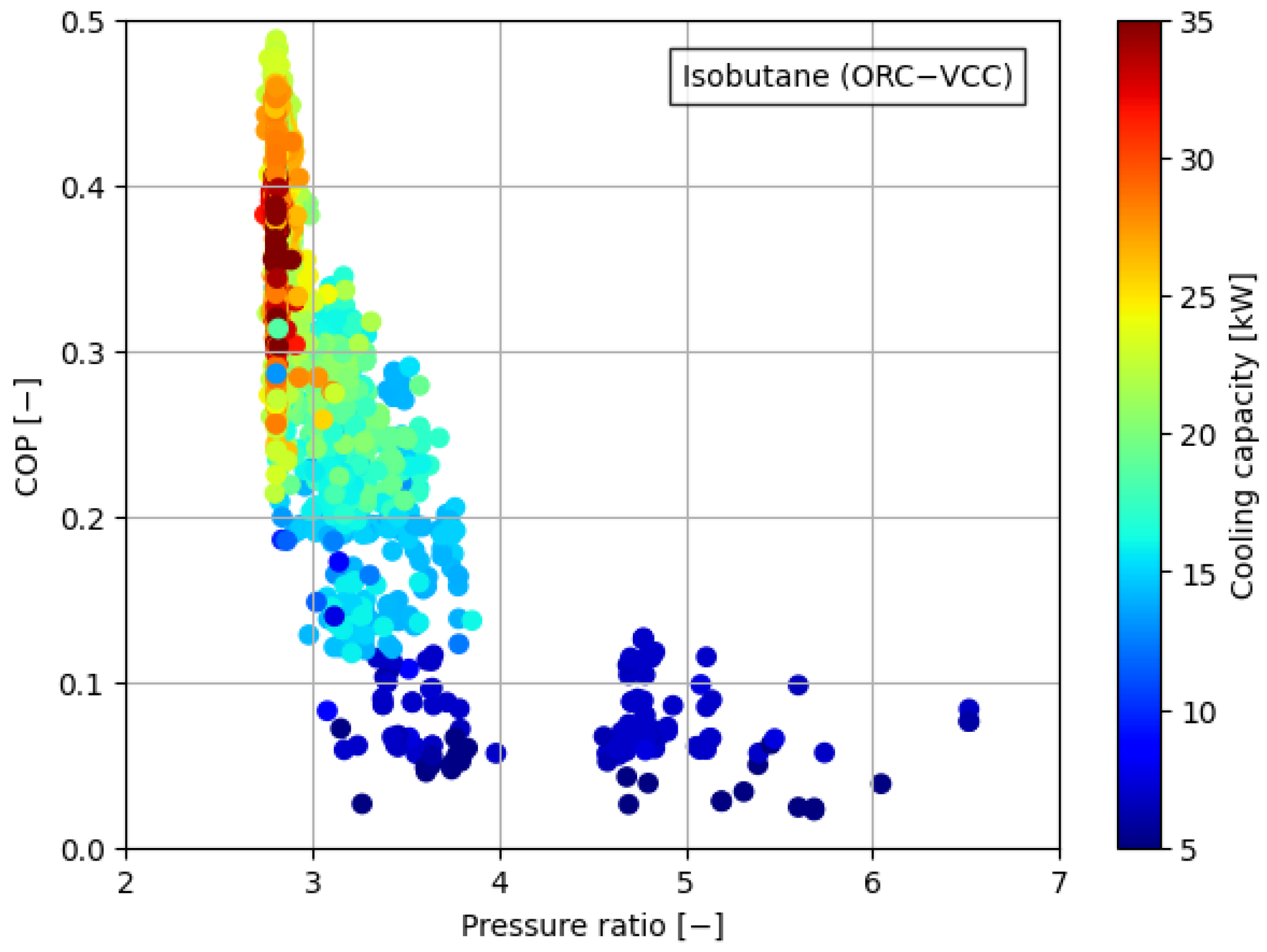
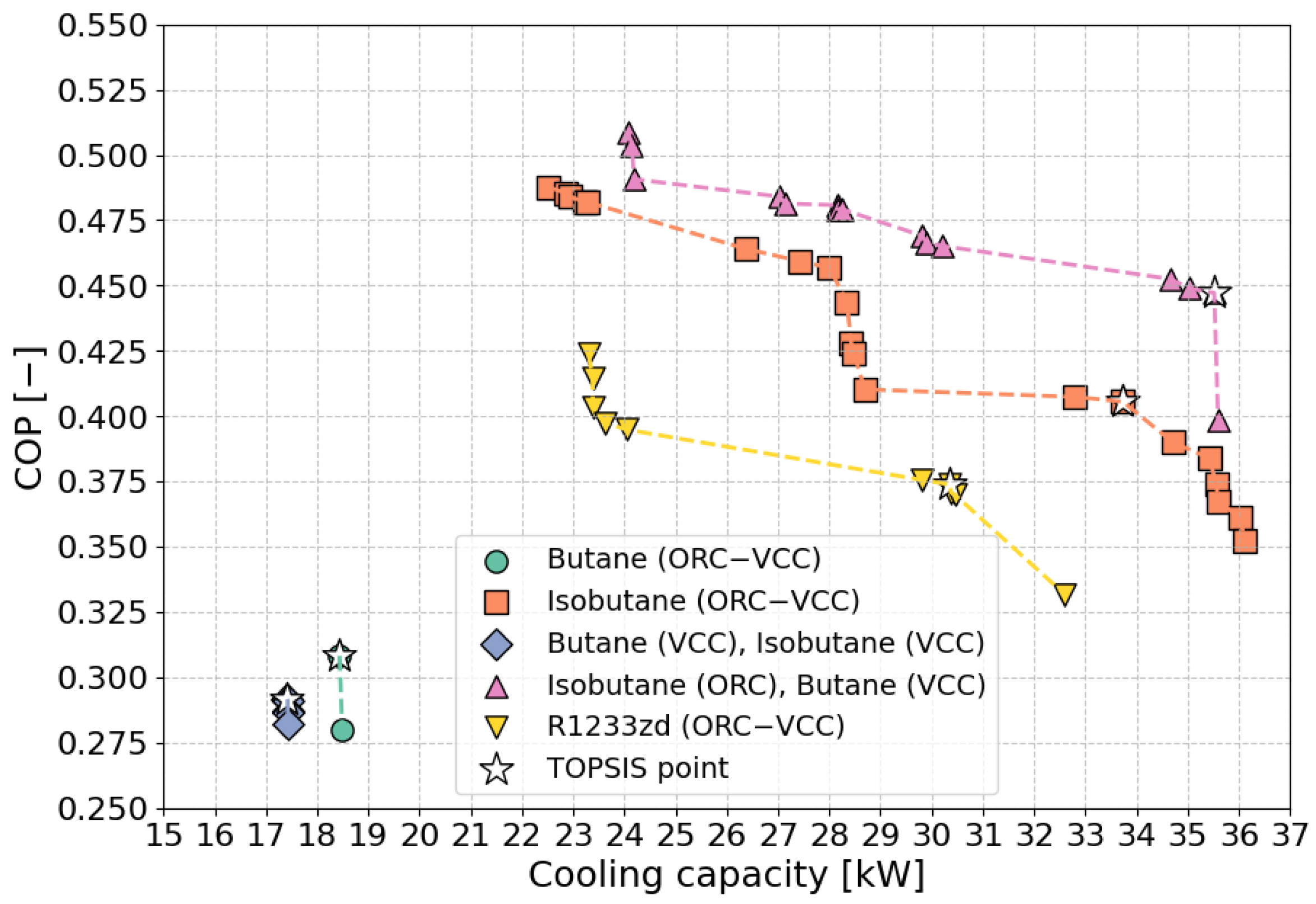
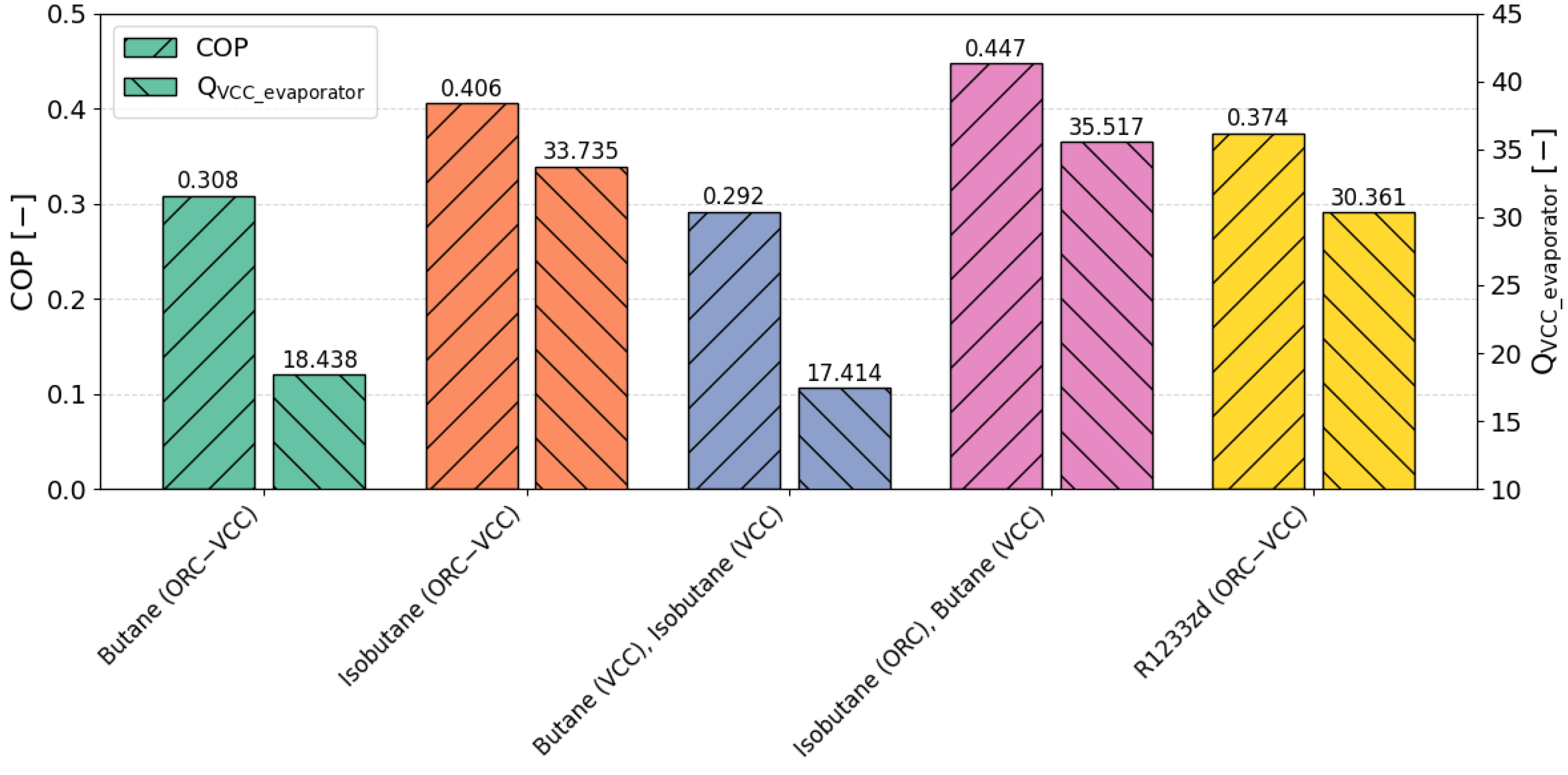
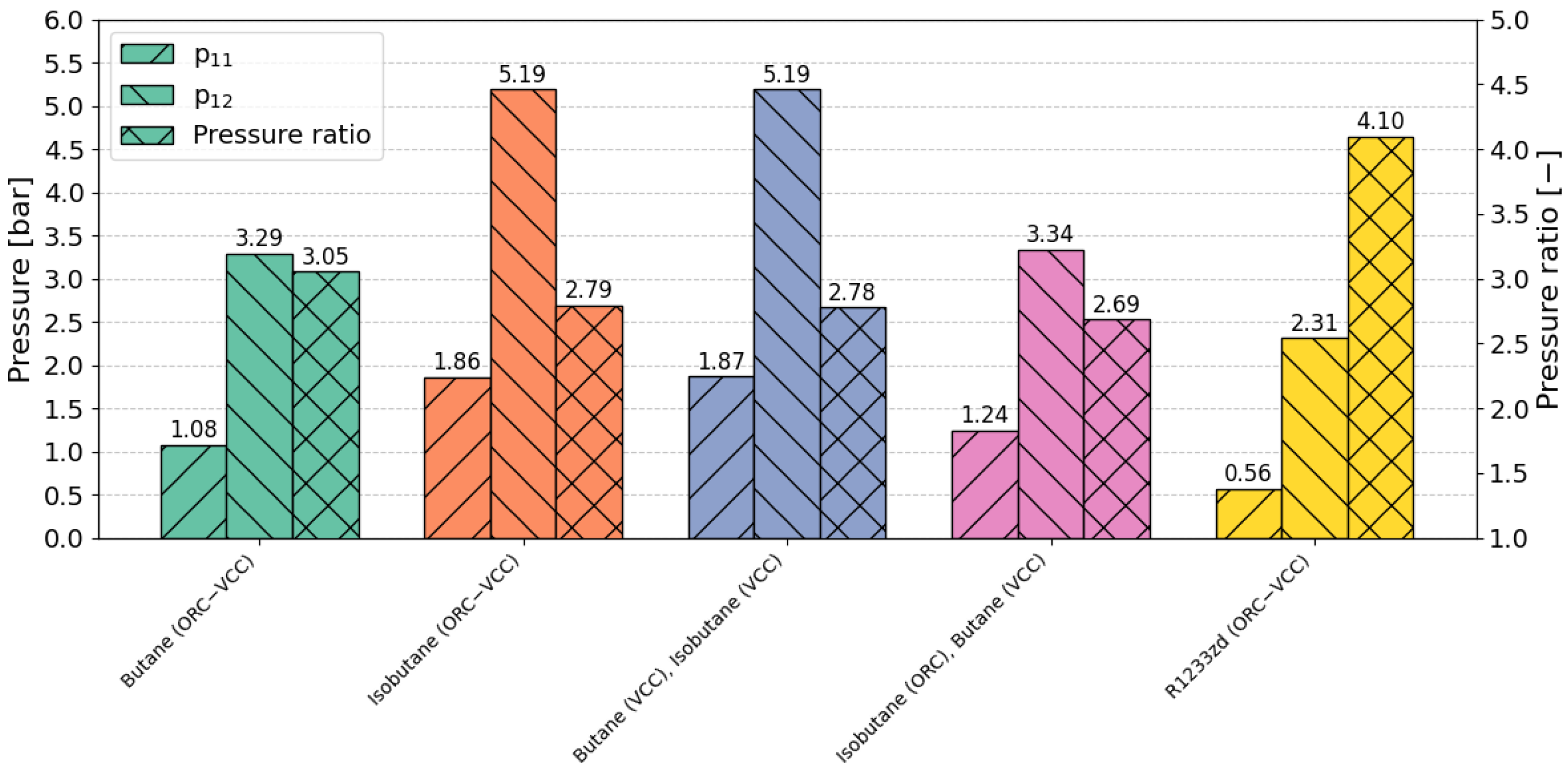
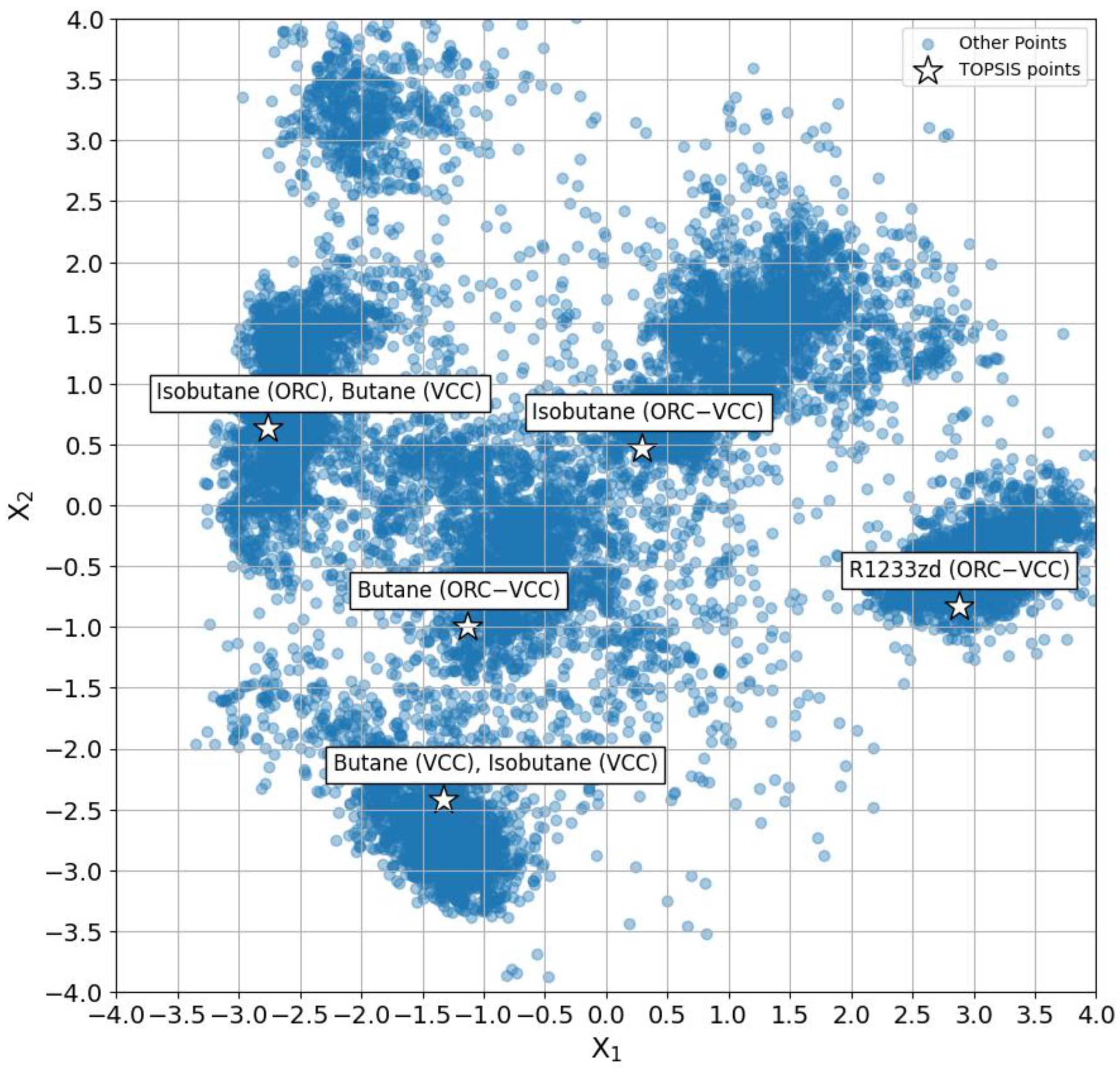
The urgent need for environmentally sustainable cooling technologies, driven by global regulatory constraints, has intensified the search for natural refrigerants with low global warming potential. This study evaluates the potential of natural refrigerants, specifically butane and isobutane, in advanced single- and dual-fluid Organic Rankine Cycle–Vapor Compression Cycle (ORC–VCC) systems to enhance energy efficiency and environmental sustainability. Using the Non-dominated Sorting Genetic Algorithm II (NSGA-II) within a multi-objective framework, the optimization maximizes key performance metrics such as coefficient of performance (COP) and cooling power, while the Technique for Order Preference by Similarity to Ideal Solution (TOPSIS) method enables a refined ranking of optimal solutions. Findings reveal that the isobutane (ORC)–butane (VCC) dual-fluid configuration achieves the highest overall COP of 0.447 and a cooling capacity of 35.517 kW, surpassing the reference fluid R1233zd, which attains a COP of 0.374 and a cooling capacity of 30.361 kW. Isobutane-based configurations consistently deliver higher COP and cooling capacities than R1233zd, highlighting isobutane’s suitability for applications demanding high energy efficiency. Pressure analysis revealed that R1233zd exhibits the highest pressure ratio of 4.10, necessitating more complex compressor designs. In contrast, isobutane configurations offer favorable pressure ratios and similar pressure parameters in both single and dual setups, simplifying compressor design requirements. This research provides valuable guidance for developing sustainable ORC–VCC systems by combining effective fluid selection and advanced multi-objective optimization techniques to meet both environmental and operational criteria.
Keywords: multi-objective optimization; natural refrigerants; butane; isobutane; waste heat utilization; cooling; turbine; compressor multi-objective optimization; natural refrigerants; butane; isobutane; waste heat utilization; cooling; turbine; compressor