Article

Effects of Graphene Reinforcement on Static Bending, Free Vibration, and Torsion of Wind Turbine Blades


1
Department of Mechanical Engineering, University College London, London WC1E 7JE, UK
2
Department of Naval Architecture and Ocean Engineering, Hongik University, Sejong 30016, Republic of Korea
*
Author to whom correspondence should be addressed.
Materials 2024, 17(13), 3332; https://doi.org/10.3390/ma17133332
Submission received: 2 June 2024 / Revised: 28 June 2024 / Accepted: 2 July 2024 / Published: 5 July 2024
(This article belongs to the Special Issue Nanoarchitectonics in Materials Science)

Abstract

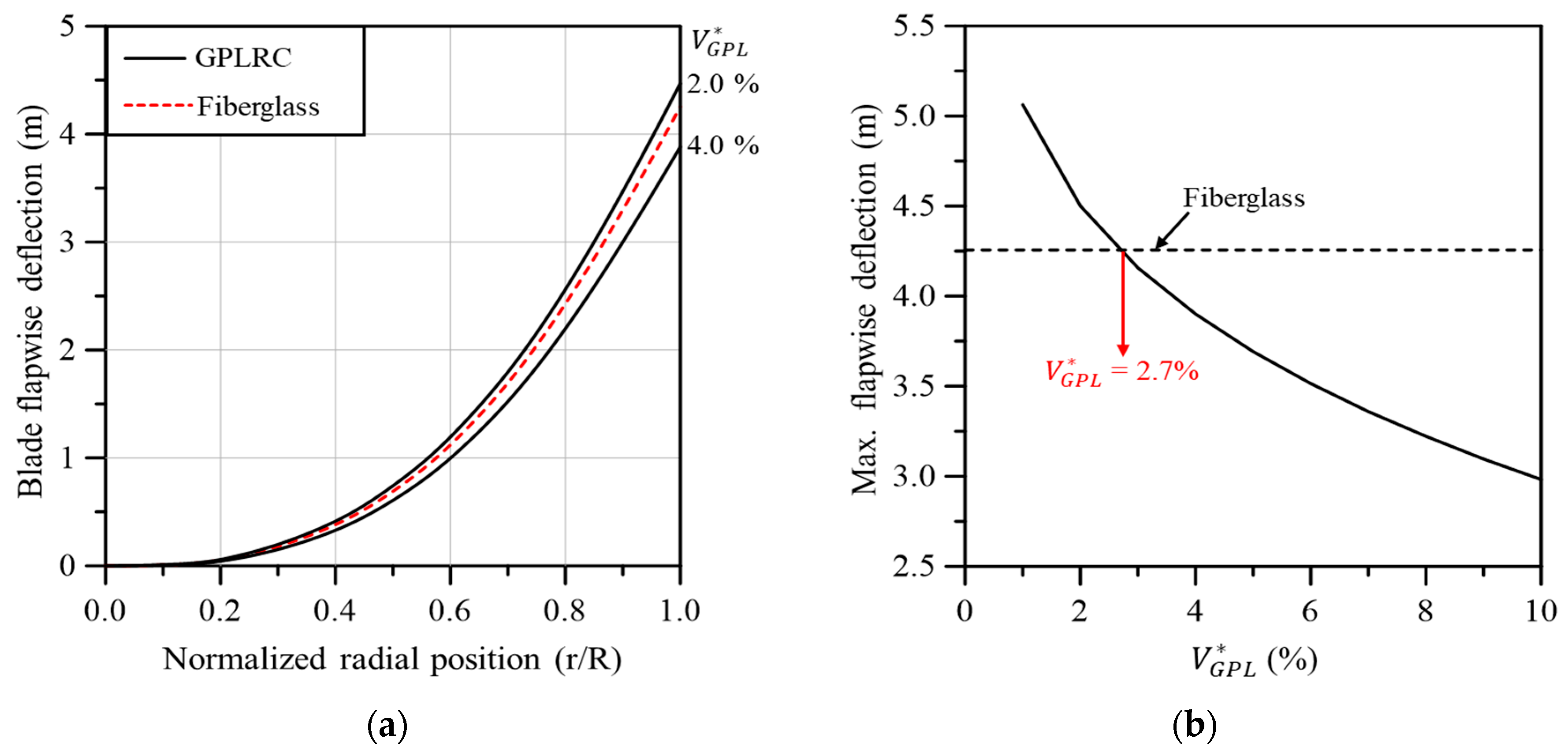
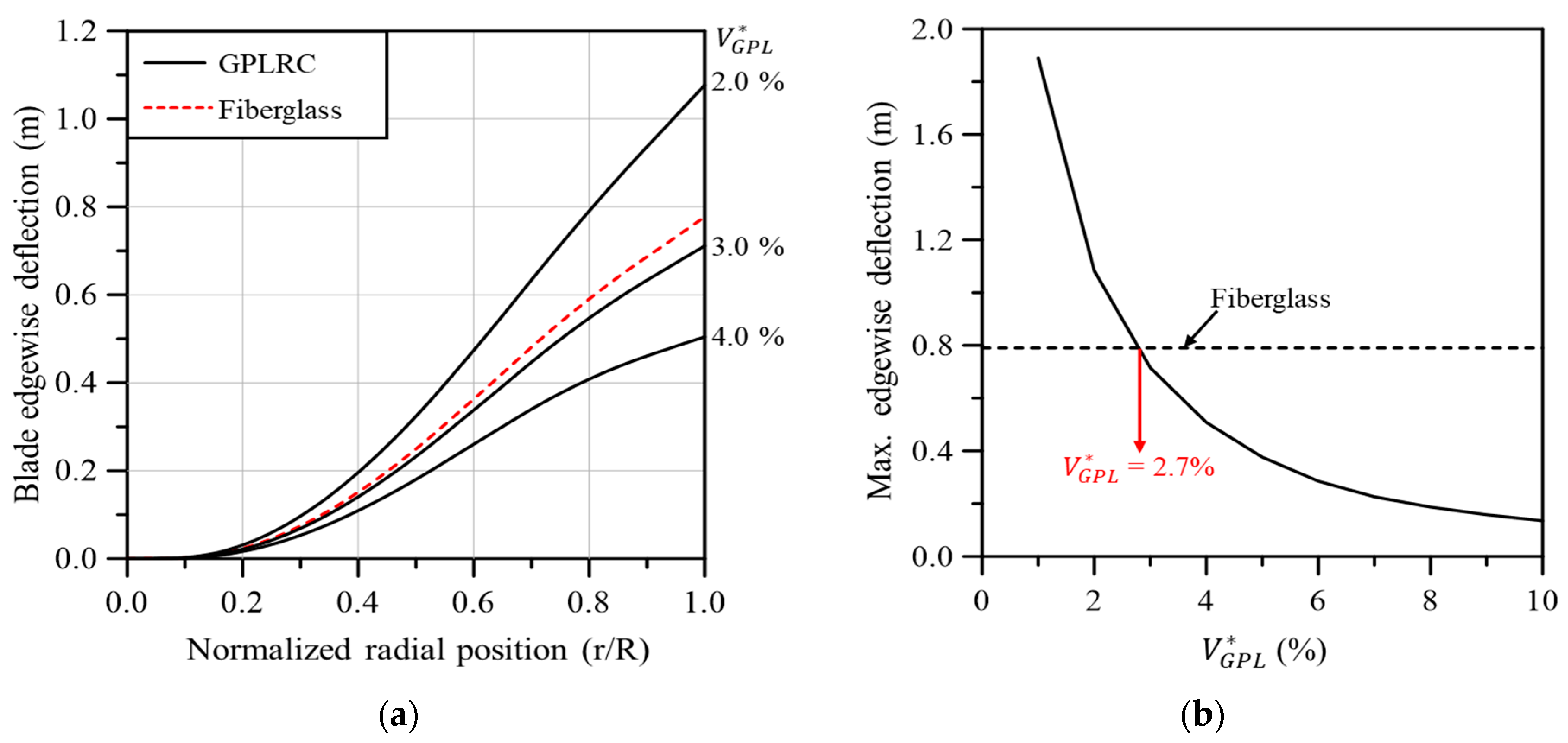
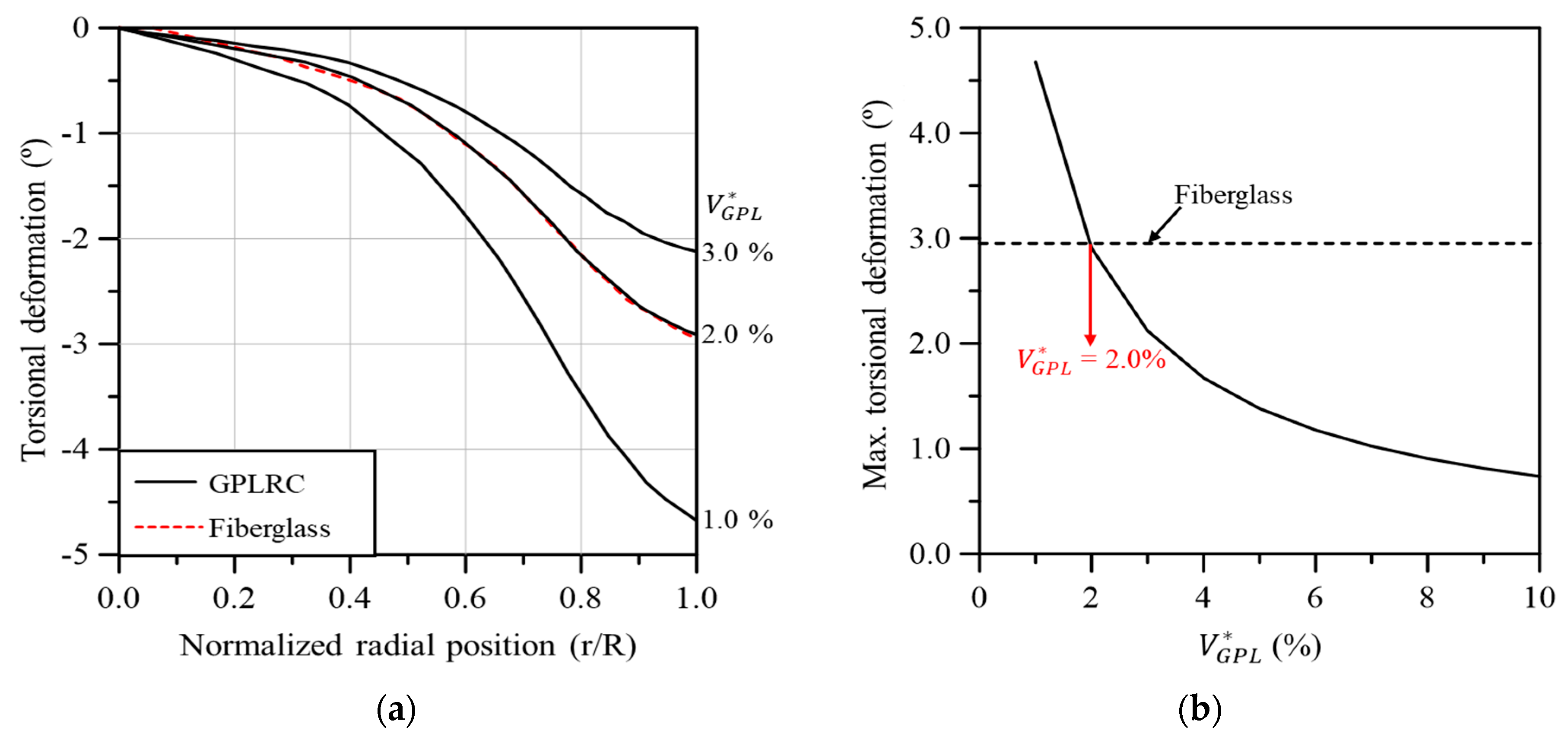
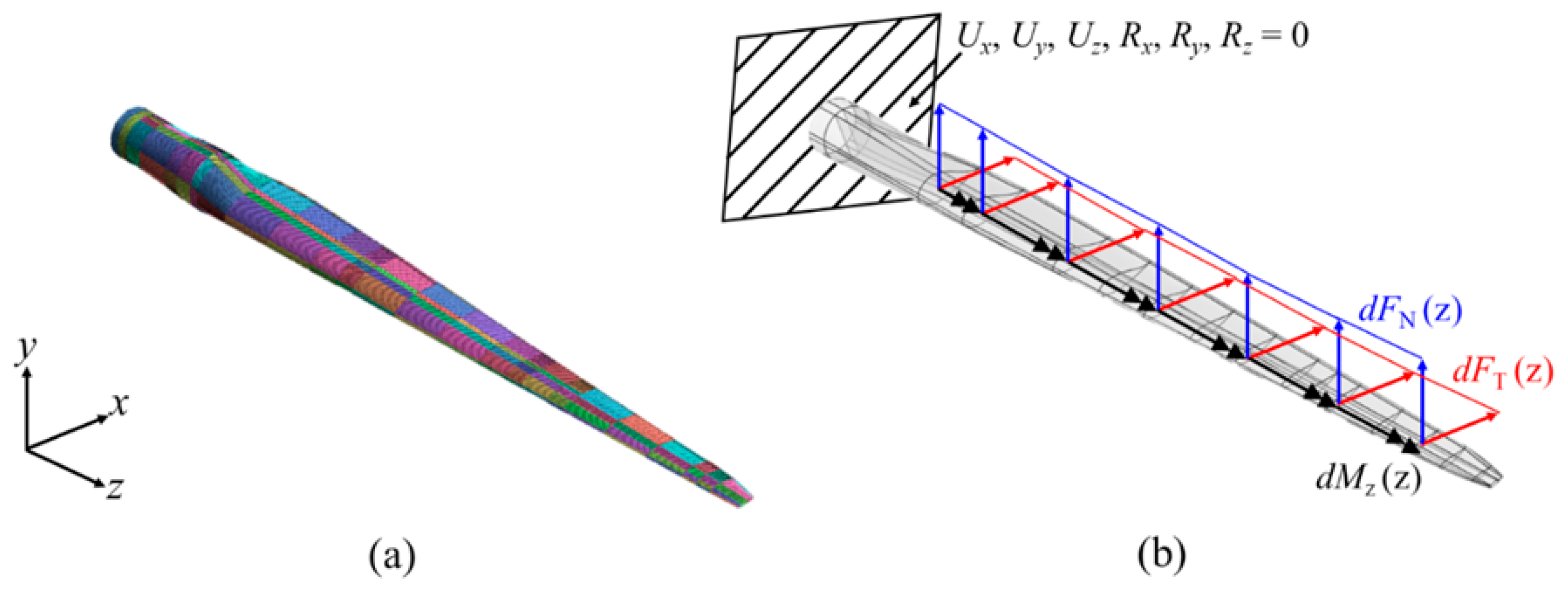
Renewable energy markets, particularly wind energy, have experienced remarkable growth, predominantly driven by the urgent need for decarbonization in the face of accelerating global warming. As the wind energy sector expands and turbines increase in size, there is a growing demand for advanced composite materials that offer both high strength and low density. Among these materials, graphene stands out for its excellent mechanical properties and low density. Incorporating graphene reinforcement into wind turbine blades has the potential to enhance generation efficiency and reduce the construction costs of foundation structures. As a pilot study of graphene reinforcement on wind turbine blades, this study aims to investigate the variations of mechanical characteristics and weights between traditional fiberglass-based blades and those reinforced with graphene platelets (GPLs). A finite element model of the SNL 61.5 m horizontal wind turbine blade is used and validated by comparing the analysis results with those presented in the existing literature. Case studies are conducted to explore the effects of graphene reinforcement on wind turbine blades in terms of mechanical characteristics, such as free vibration, bending, and torsional deformation. Furthermore, the masses and fabrication costs are compared among fiberglass, CNTRC, and GPLRC-based wind turbine blades. Finally, the results obtained from this study demonstrate the effectiveness of graphene reinforcement on wind turbine blades in terms of both their mechanical performance and weight reduction.
Keywords: wind turbine blades; graphene reinforcement; graphene platelet-reinforced composites (GPLRC); mechanical characteristics; finite element structural analysis wind turbine blades; graphene reinforcement; graphene platelet-reinforced composites (GPLRC); mechanical characteristics; finite element structural analysis