Review

Ferroelectric Material in Triboelectric Nanogenerator

1
Center for Green Innovation, School of Mathematics and Physics, University of Science and Technology Beijing, Beijing 100083, China
2
National Institute of Metrology China, National Institute of Metrology, Beijing 100029, China
*
Author to whom correspondence should be addressed.
Materials 2024, 17(12), 2834; https://doi.org/10.3390/ma17122834
Submission received: 17 May 2024 / Revised: 6 June 2024 / Accepted: 7 June 2024 / Published: 10 June 2024
(This article belongs to the Special Issue Nanoarchitectonics in Materials Science)

Abstract

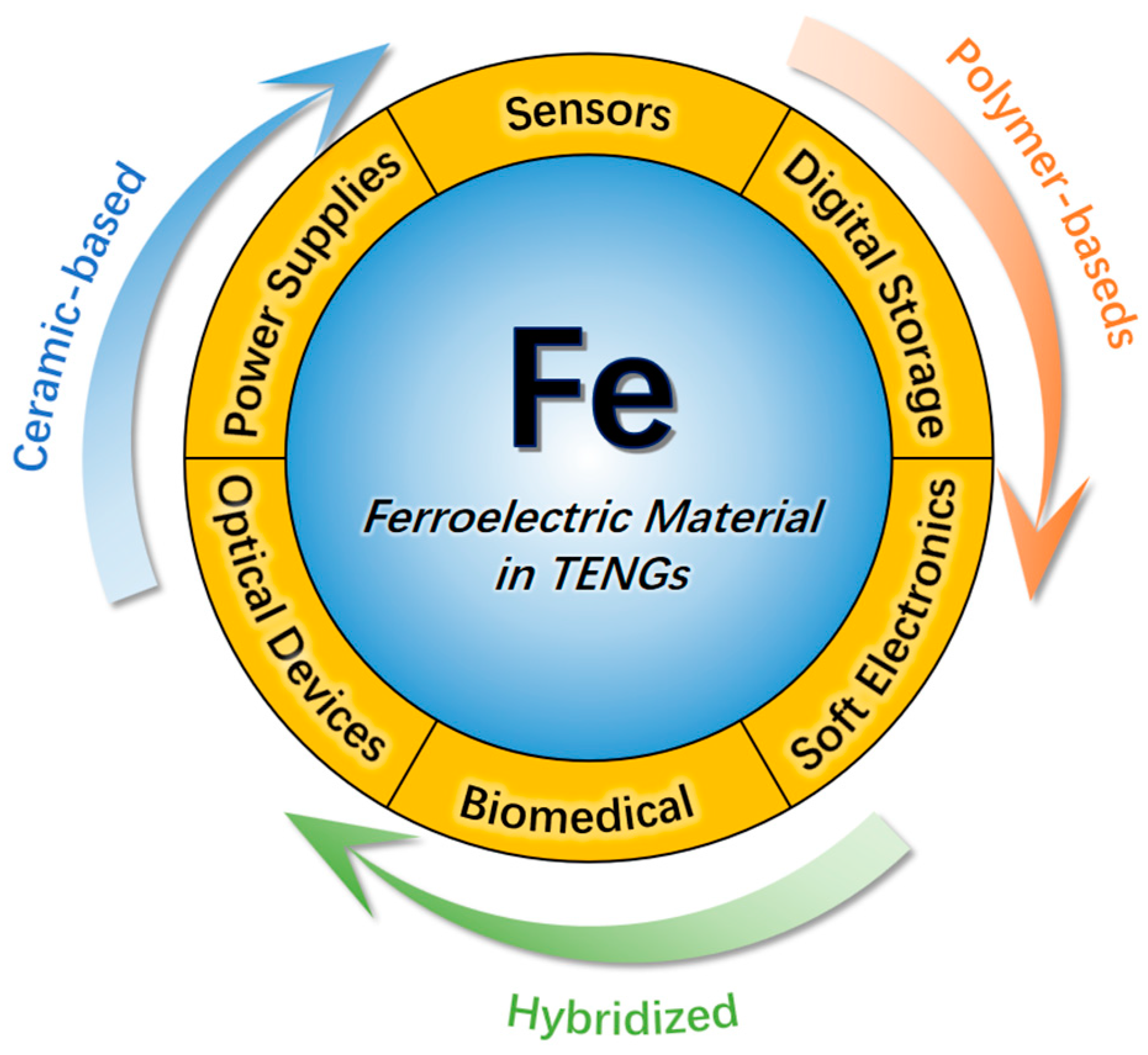
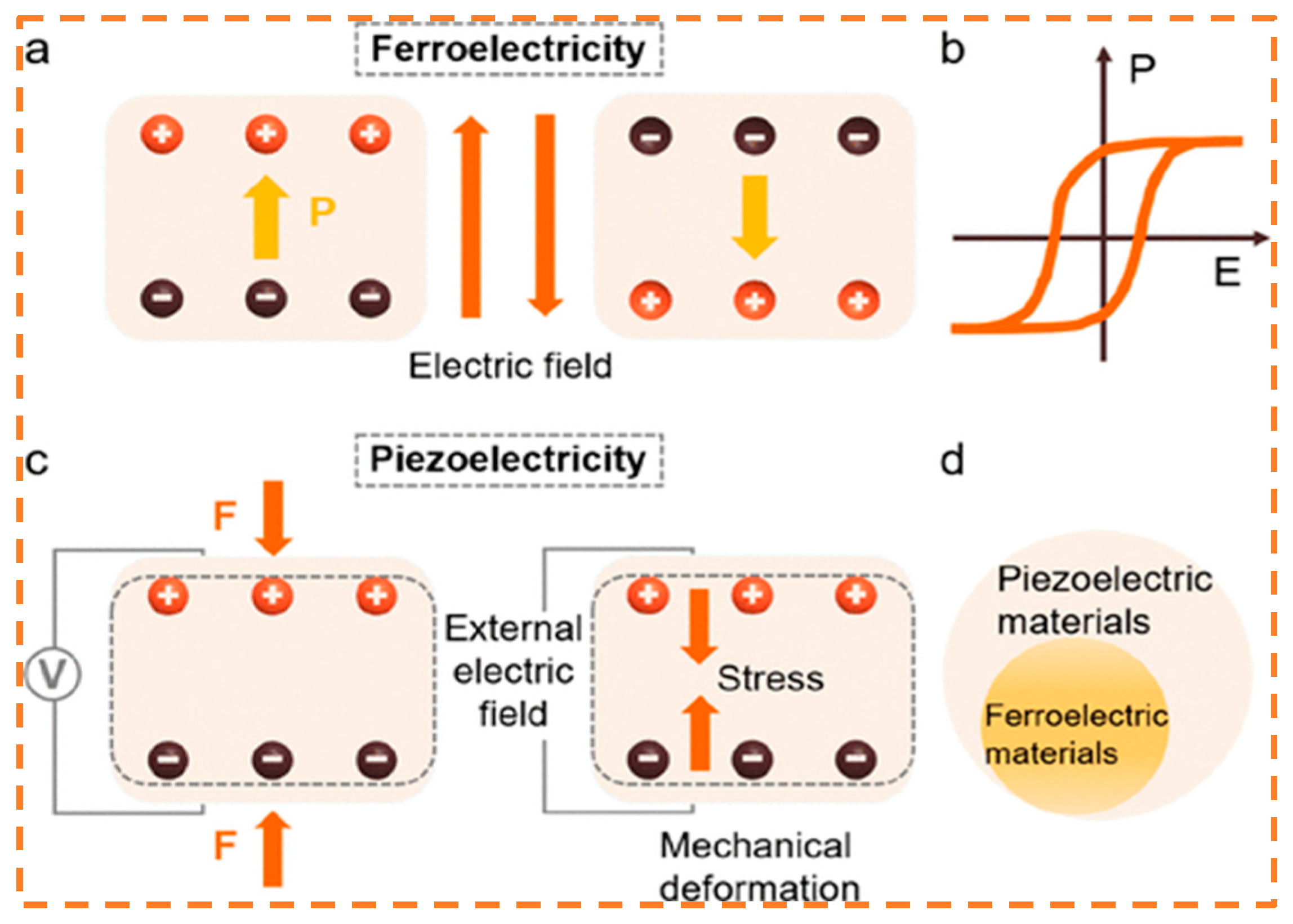
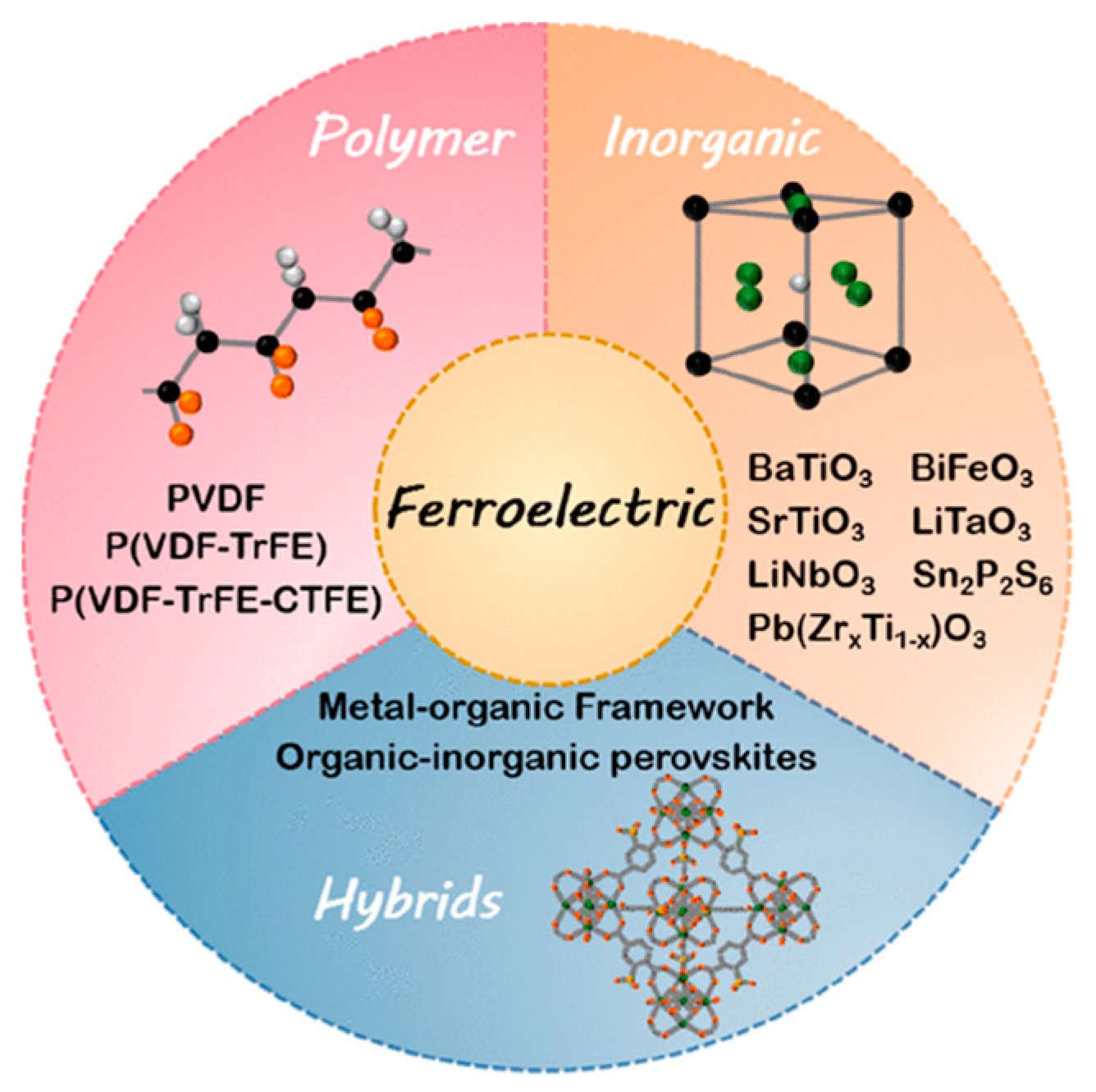
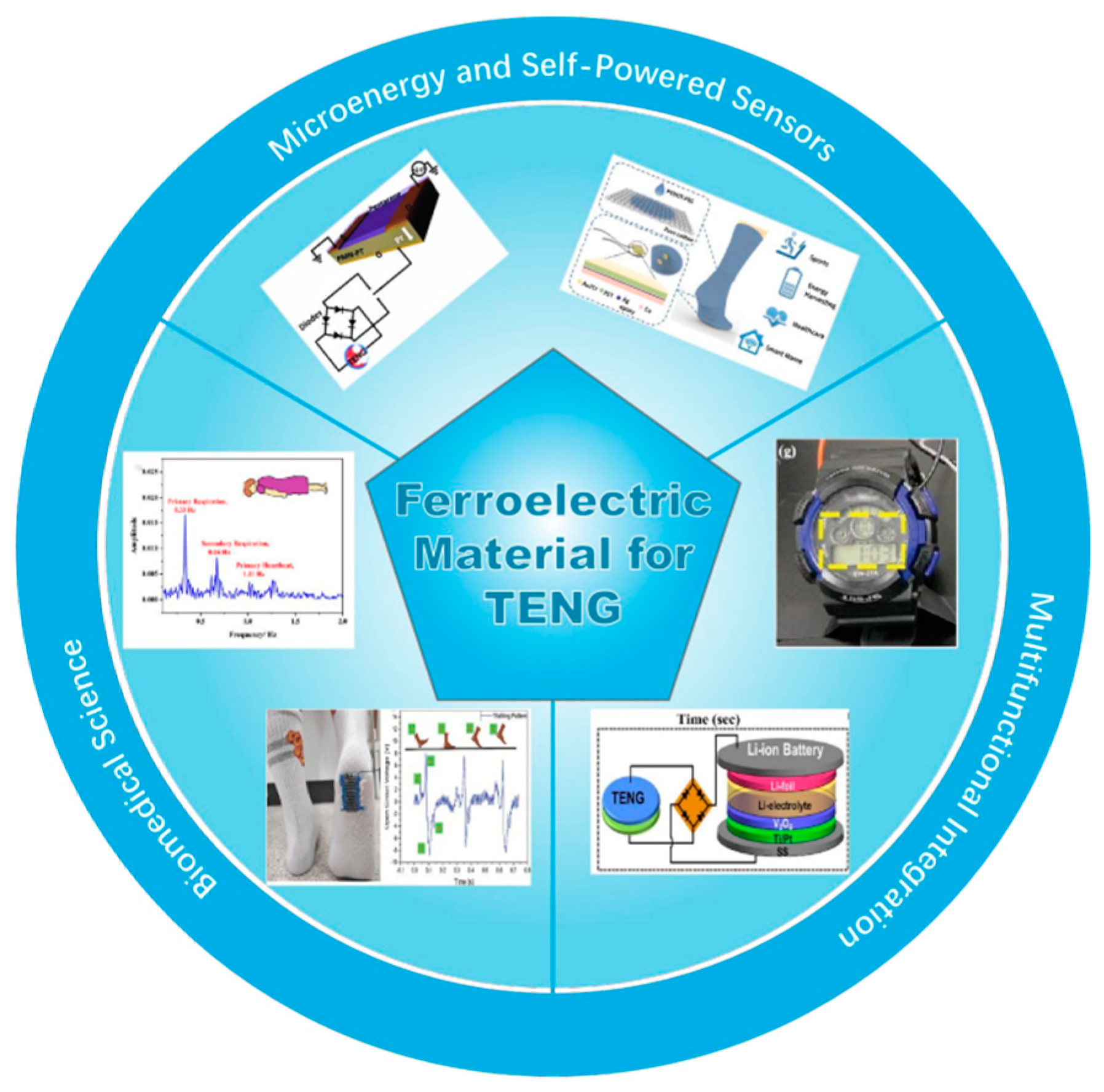
Ferroelectric materials, with their spontaneous electric polarization, are renewing research enthusiasm for their deployment in high-performance micro/nano energy harvesting devices such as triboelectric nanogenerators (TENGs). Here, the introduction of ferroelectric materials into the triboelectric interface not only significantly enhances the energy harvesting efficiency, but also drives TENGs into the era of intelligence and integration. The primary objective of the following paper is to tackle the newest innovations in TENGs based on ferroelectric materials. For this purpose, we begin with discussing the fundamental idea and then introduce the current progress with TENGs that are built on the base of ferroelectric materials. Various strategies, such as surface engineering, either in the micro or nano scale, are discussed, along with the environmental factors. Although our focus is on the enhancement of energy harvesting efficiency and output power density by utilizing ferroelectric materials, we also highlight their incorporation in self-powered electronics and sensing systems, where we analyze the most favorable and currently accessible options in attaining device intelligence and multifunctionality. Finally, we present a detailed outlook on TENGs that are based on ferroelectric materials.
Keywords: triboelectric nanogenerator; ferroelectric material; energy harvesting; multifunctionality; self-powered system triboelectric nanogenerator; ferroelectric material; energy harvesting; multifunctionality; self-powered system