Article

Study on Fracture Characteristics of Layered Sandstone under Asymmetric Loading

by
Ruiqing Hao
1,2,*,
Yuguo Zhou
1,
Lin Liao
1,
Nathan Saye Teah
1,
Wanwen Xue
1 and
Zhiling Liao
1
1
Department of Underground Engineering, College of Mining Engineering, Taiyuan University of Technology, 79 Yingze West Street, Taiyuan 030024, China
2
Shanxi Coal Import and Export Group Co., Ltd., Taiyuan 030032, China
*
Author to whom correspondence should be addressed.
Materials 2024, 17(10), 2328; https://doi.org/10.3390/ma17102328
Submission received: 3 April 2024 / Revised: 29 April 2024 / Accepted: 8 May 2024 / Published: 14 May 2024

Abstract

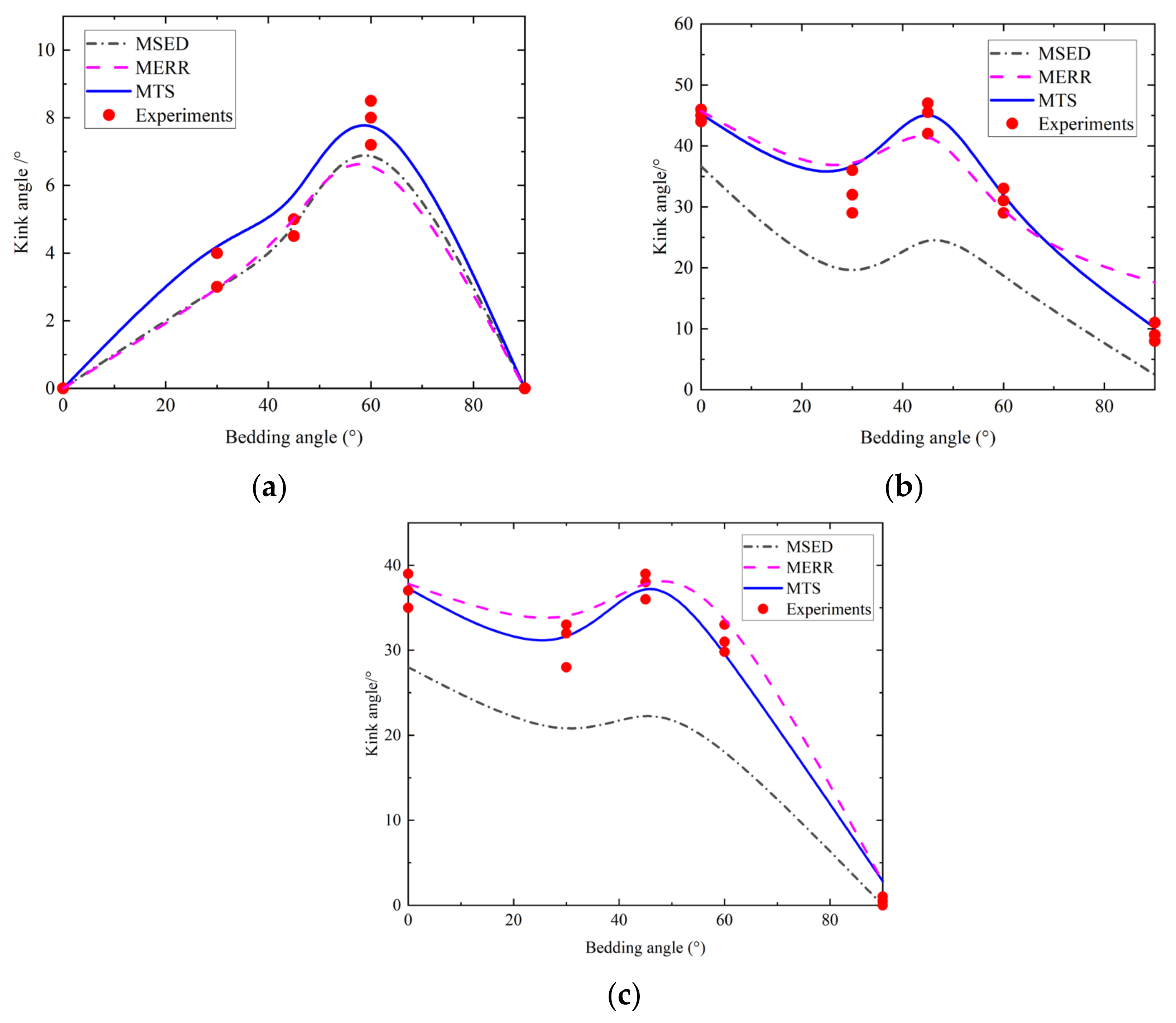
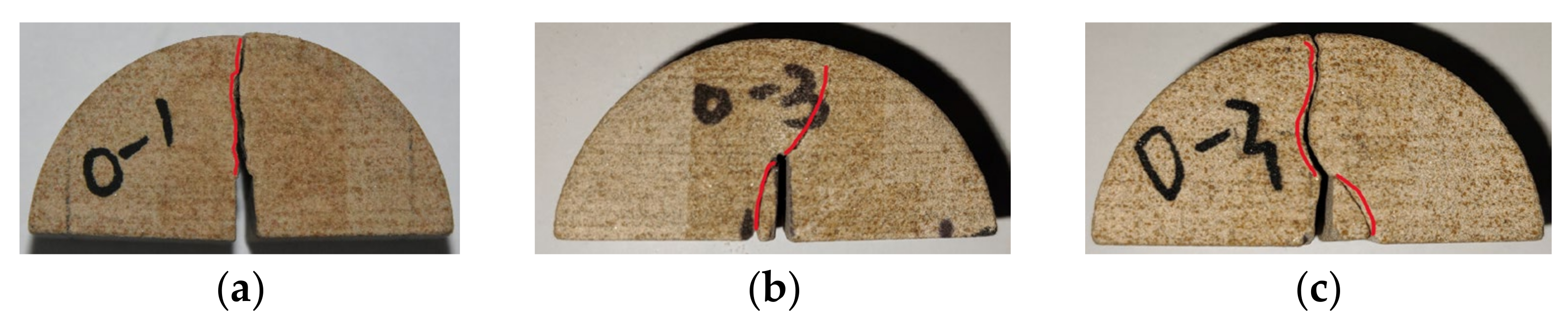
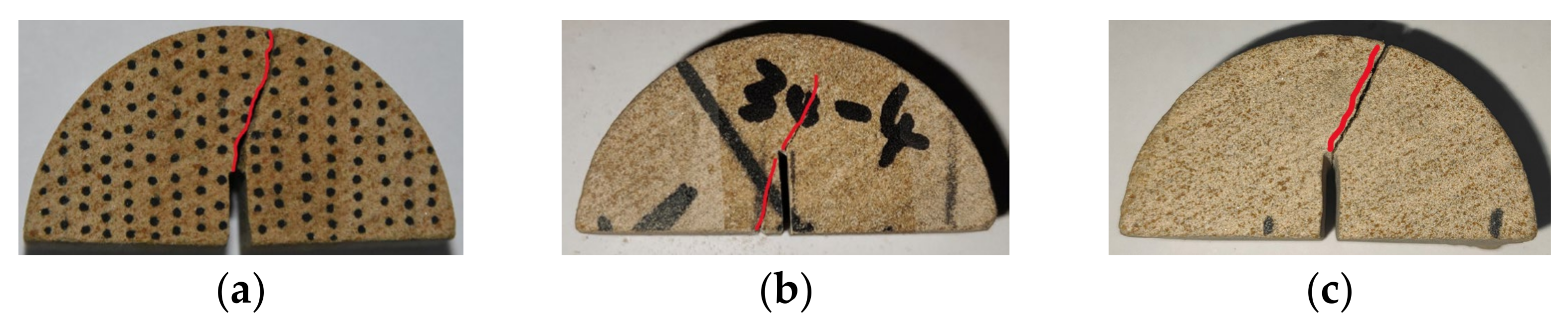
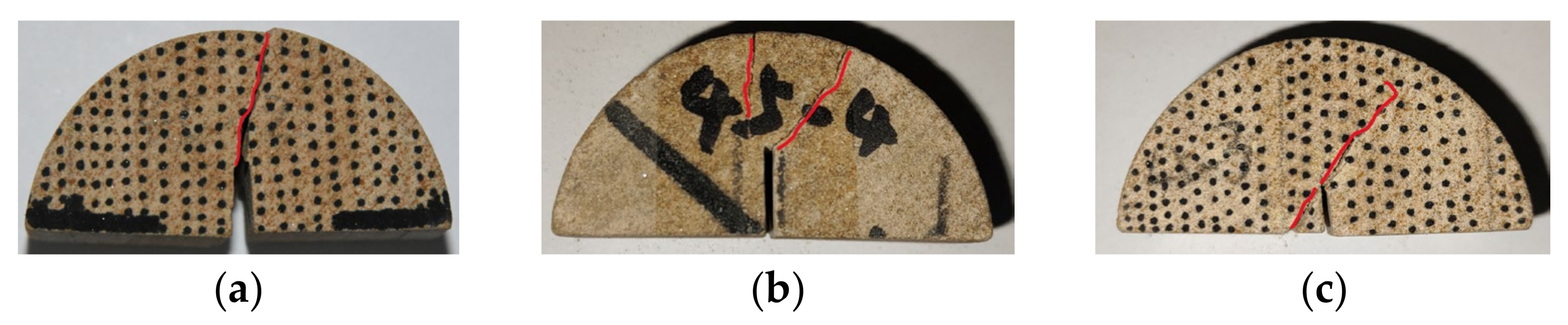
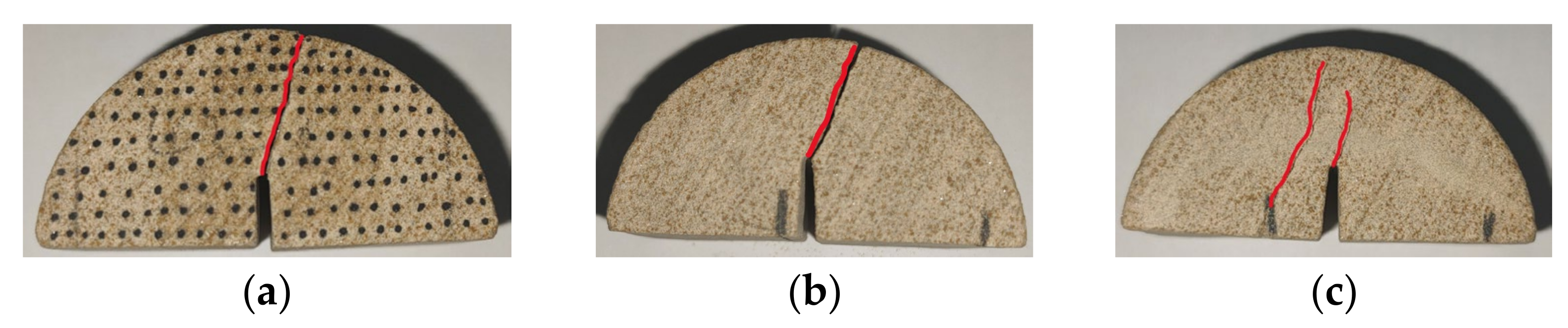
In engineering practice, layered rock masses often display obvious anisotropy while deforming and failing, and the failure mode directly impacts the engineering construction stability. In this study, the fracture failure load, fracture toughness, crack deflection angle, and failure mode of a layered rock mass under different fracture modes were analyzed by utilizing improved asymmetric semi-circular disc specimens. According to the constitutive model of transversely isotropic materials, the maximum tensile stress (MTS), maximum energy release rate (MERR), and maximum strain energy density (MSED) calculation formulas were modified, and the calculation formulas of the three prediction criteria under anisotropic materials were derived. The calculation results were compared with the experimental results. The results show that the fracture toughness and crack deflection angle were significantly affected by the weak bedding plane. As a result of applying the MTS criterion, the results are closer to the experimental results, providing a solid foundation for engineering deformation, failure, and fracture analyses.
Keywords: asymmetric semi-circular bending test; anisotropic sandstone; fracture growth; maximum tangential stress; maximum energy release rate; maximum strain energy density asymmetric semi-circular bending test; anisotropic sandstone; fracture growth; maximum tangential stress; maximum energy release rate; maximum strain energy density