Article

Thermally Assisted Optically Stimulated Luminescence (TA-OSL) from Commercial BeO Dosimeters

by
Georgios S. Polymeris
Laboratory of Archaeometry, Institute of Nanoscience and Nanotechnology, National Centre for Scientific Research “Demokritos”, 15310 Agia Paraskevi, Greece
Materials 2023, 16(4), 1494; https://doi.org/10.3390/ma16041494
Submission received: 8 January 2023 / Revised: 5 February 2023 / Accepted: 6 February 2023 / Published: 10 February 2023
(This article belongs to the Special Issue Advanced Luminescent Materials and Devices)

Abstract

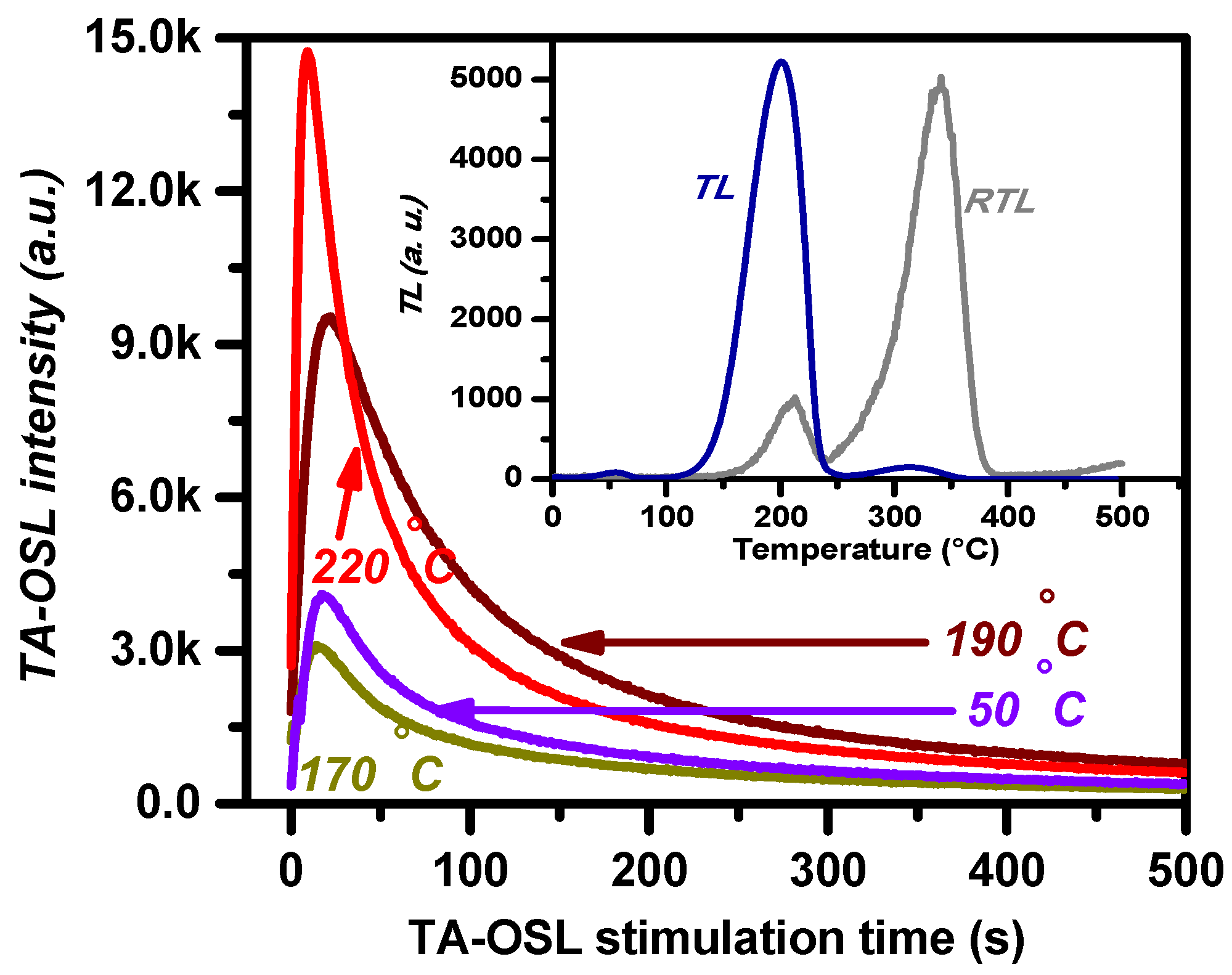
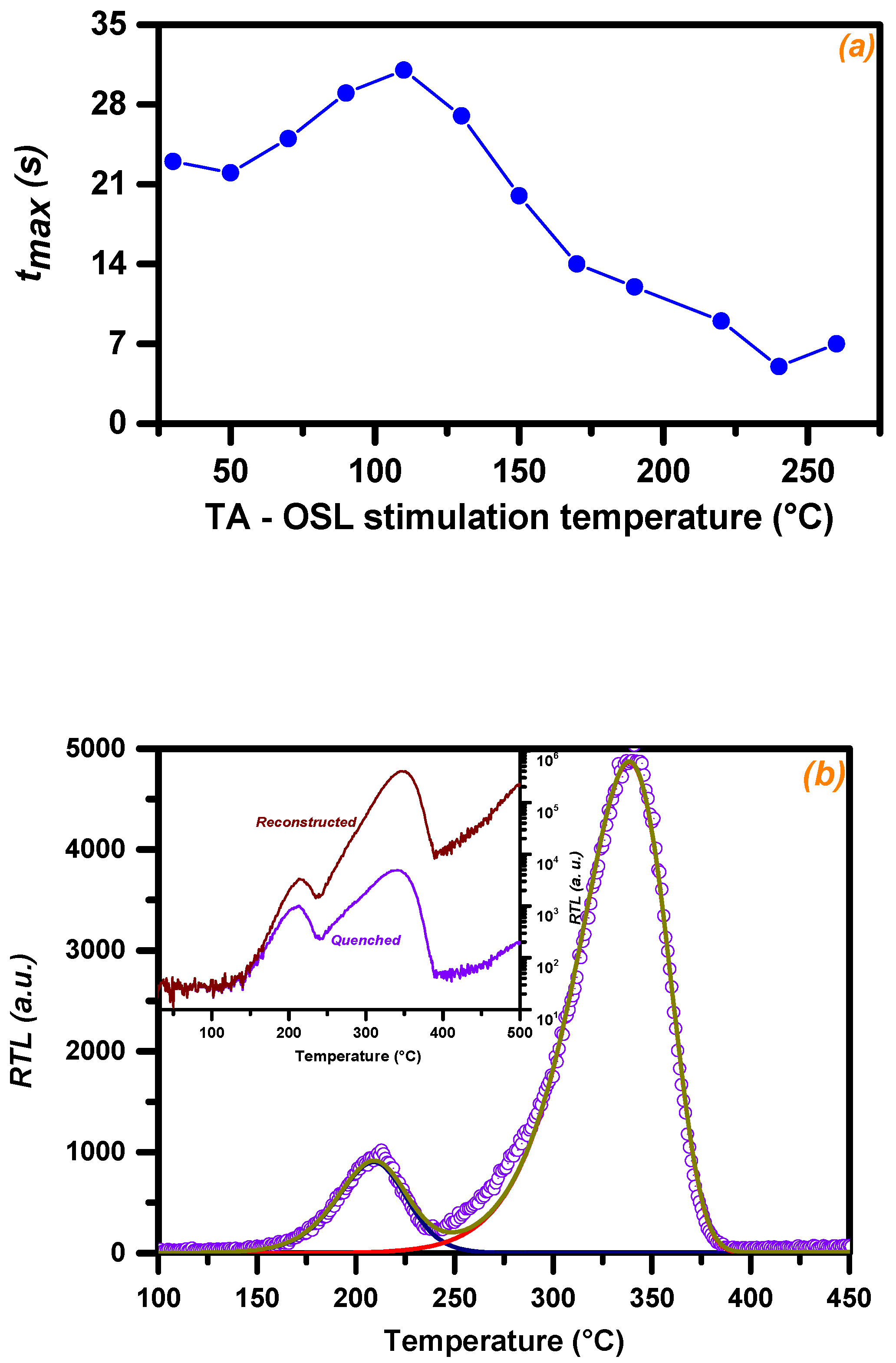
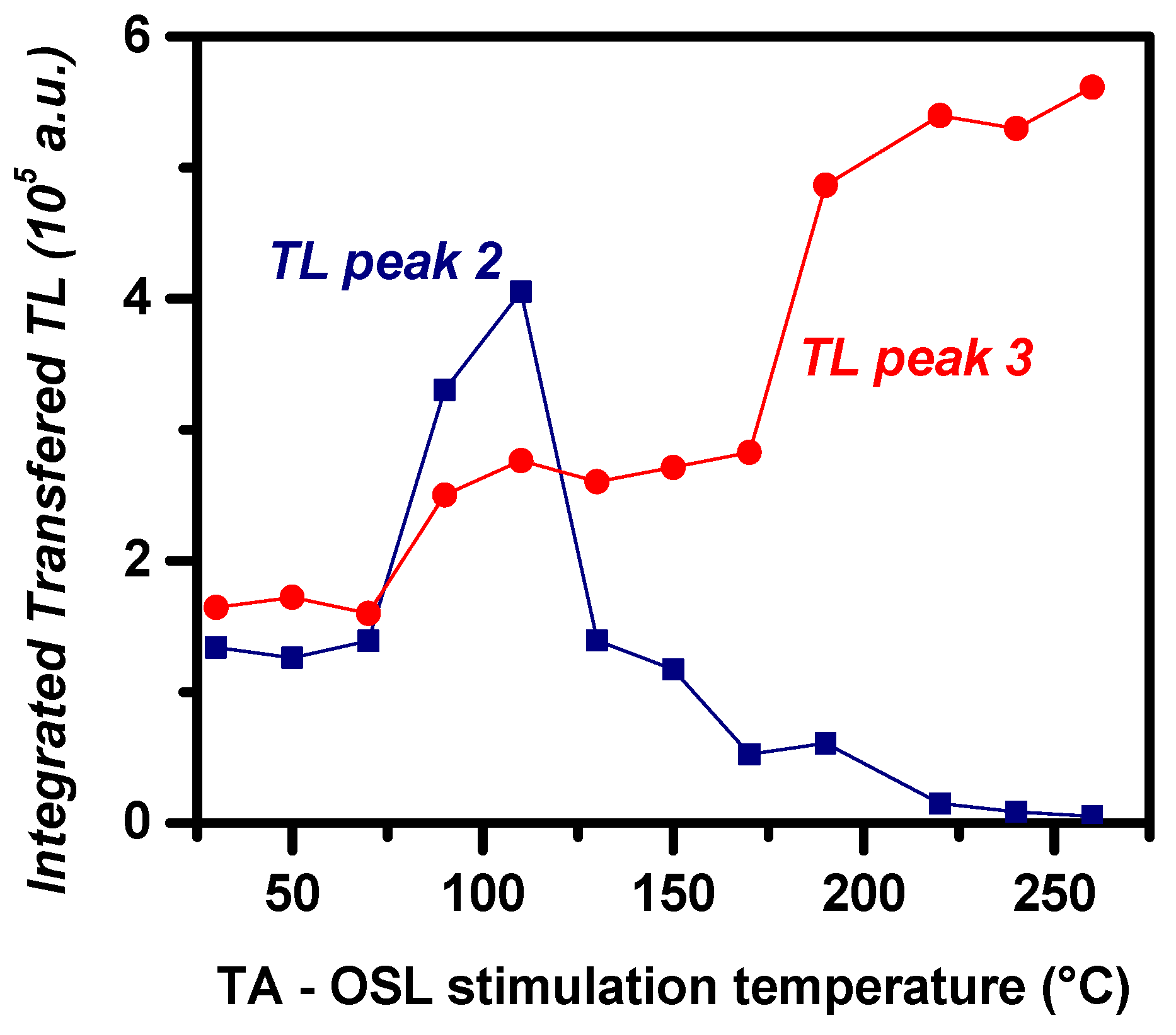
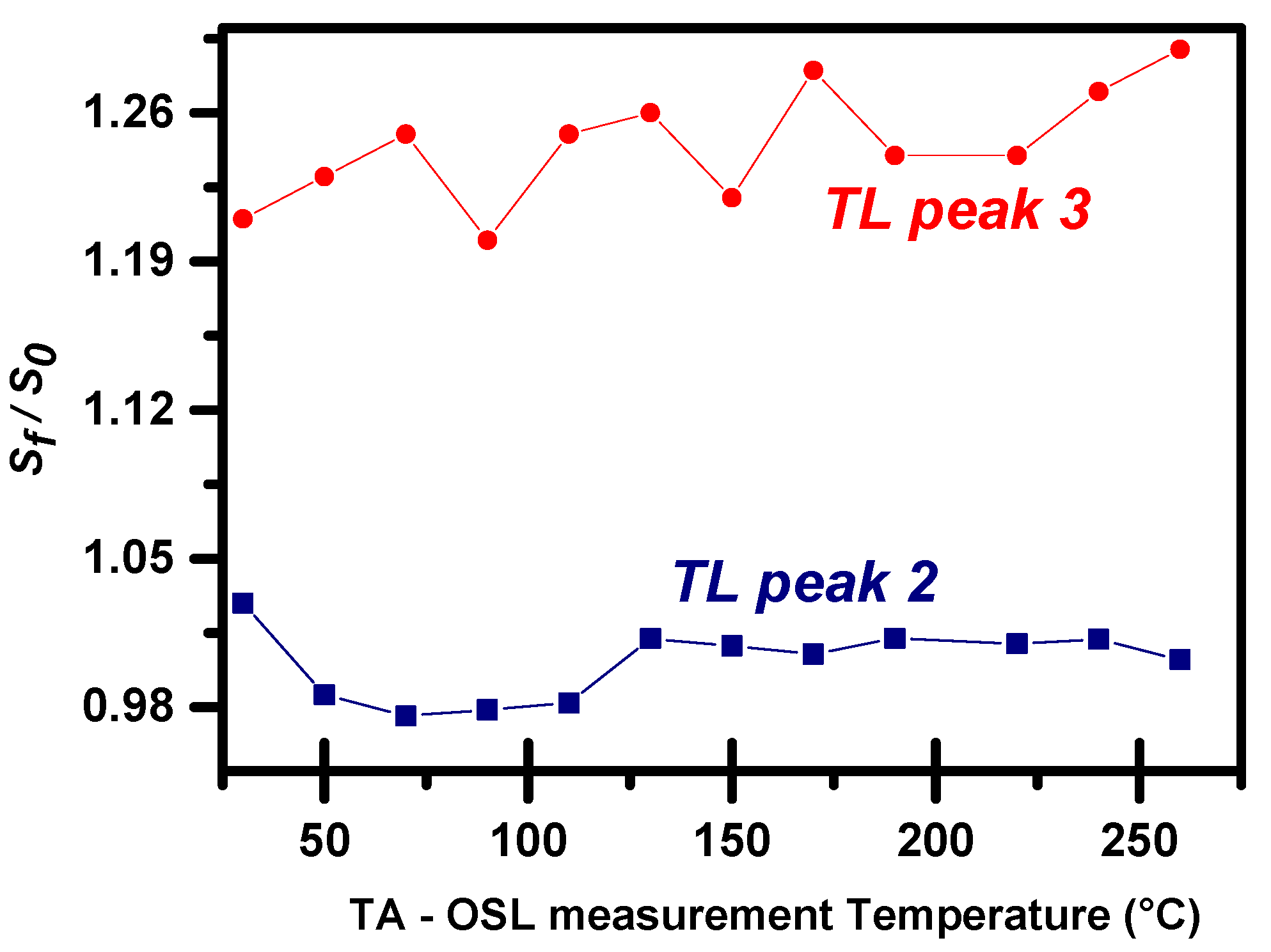
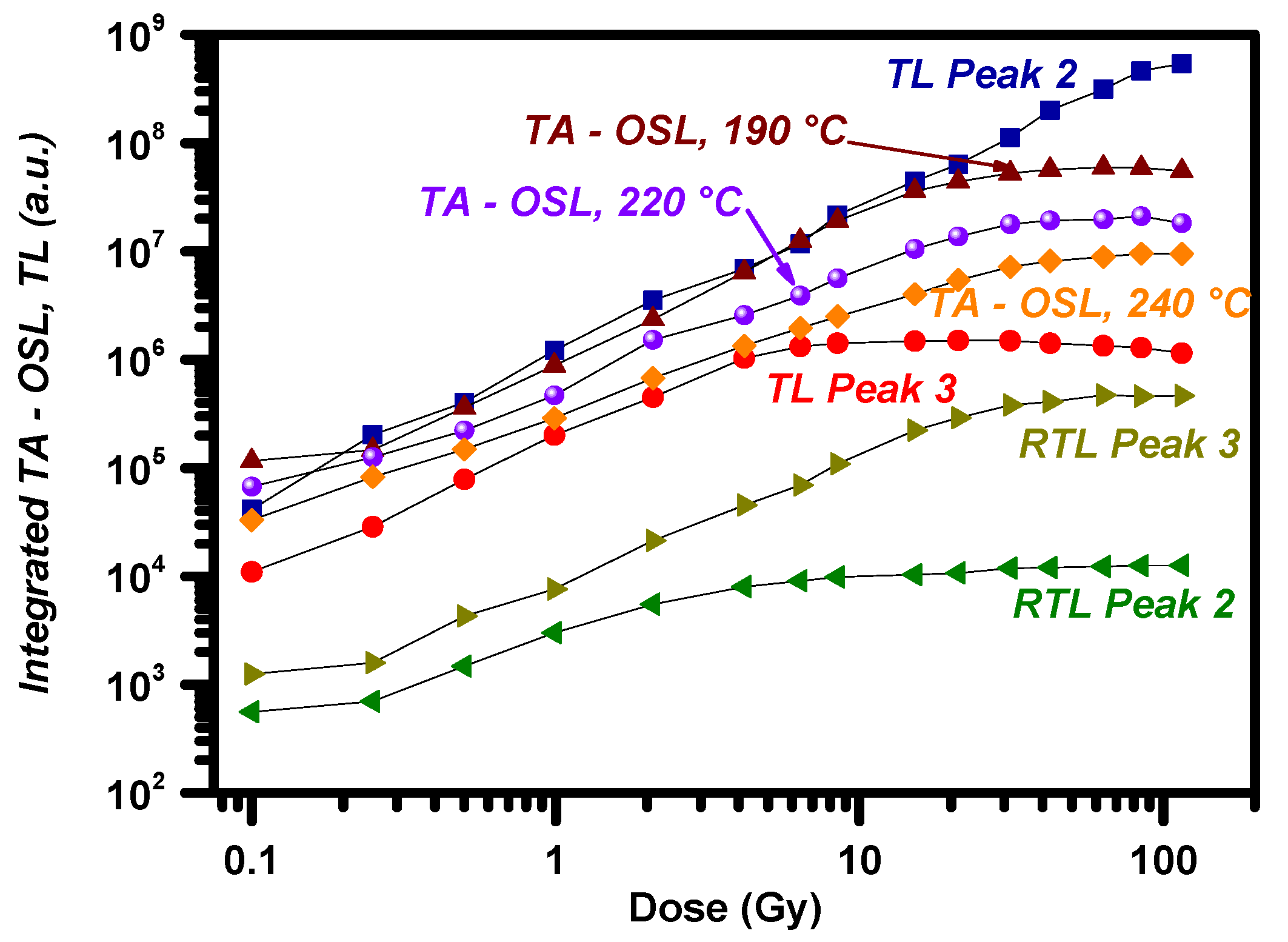
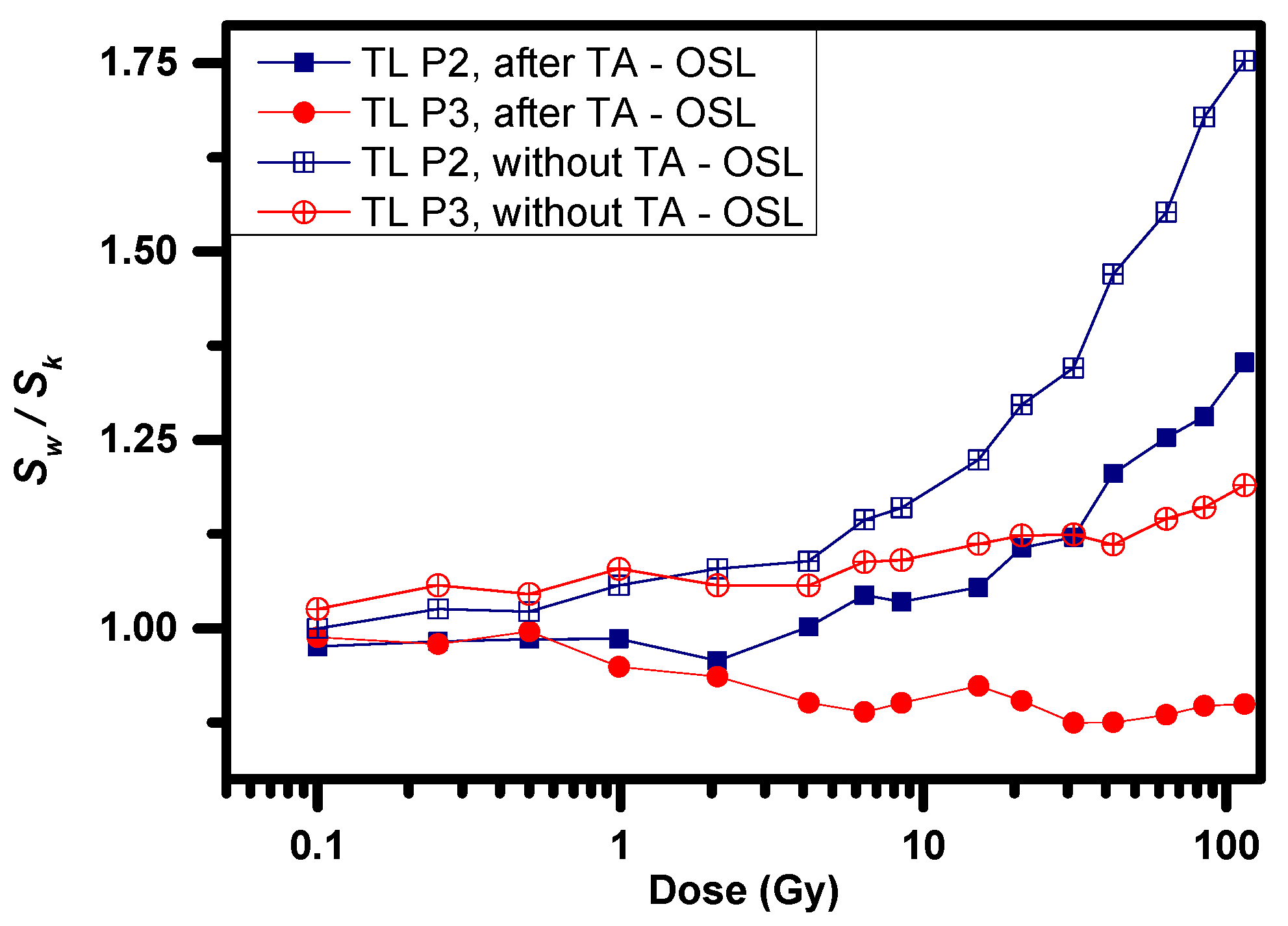
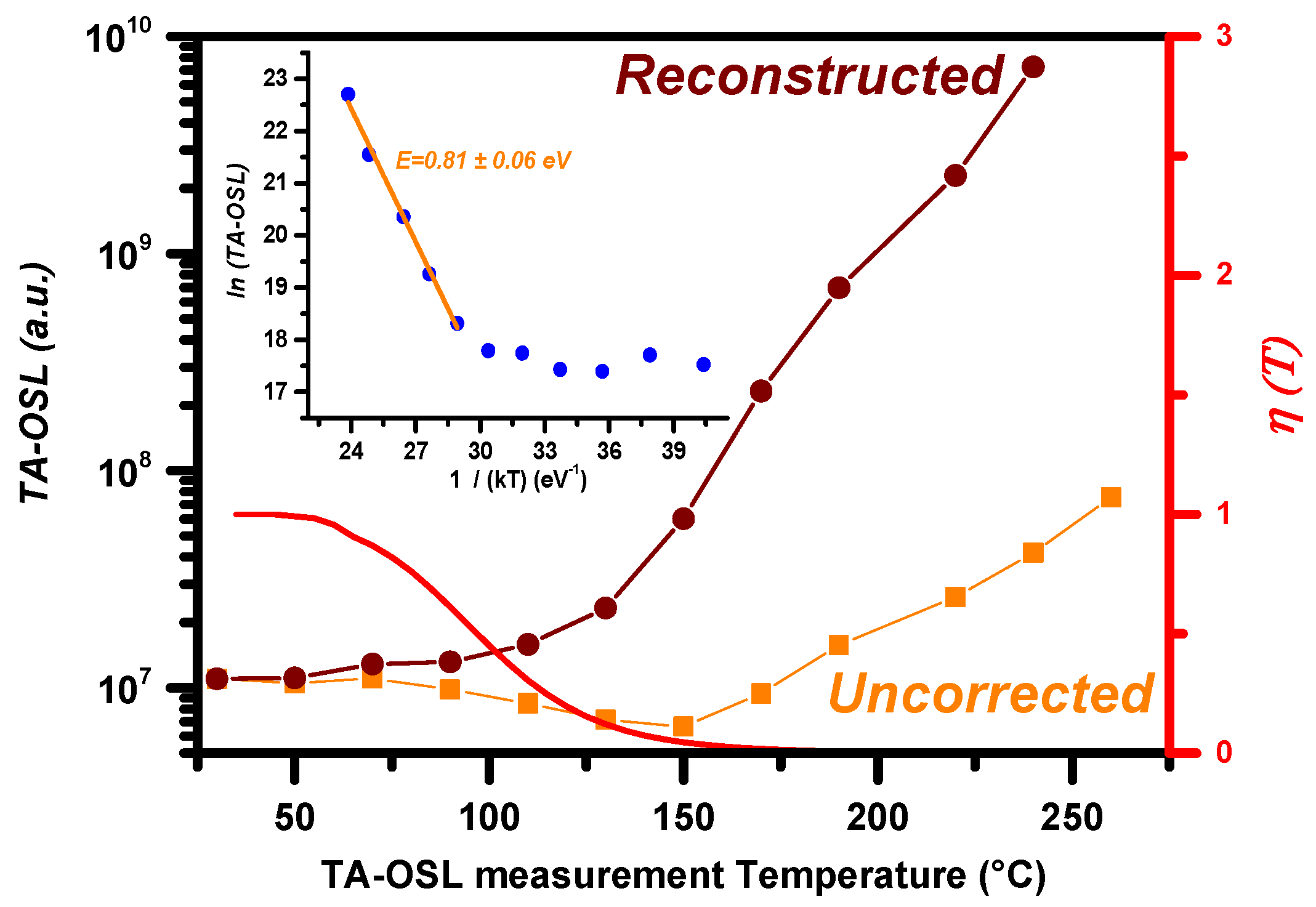
BeO is another luminescent phosphor with very deep traps (VDTs) in its matrix that could not be stimulated using either thermal or conventional optical stimulations. The present study attempts to stimulate these traps using thermally assisted optically stimulated luminescence (TA-OSL), a combination of simultaneous thermal and optical stimulation that is applied to the material following a thermoluminescence measurement up to 500 °C. An intense, peak-shaped TA-OSL signal is measured throughout the entire temperature range between room temperature and 270 °C. This signal can be explained as the transfer of charges from VDTs to both dosimetric TL traps. Experimental features such as the peaked shape of the signal along with the presence of residual TL after the TA-OSL suggest that recombination of TA-OSL takes place via the conduction band. Isothermal TA-OSL is not effective for extending the maximum detection dose thresholds of BeO, unlike minerals such as quartz and aluminum oxide. Nevertheless, TA-OSL could be effectively used in order to either (a) control the occupancy of VDTs, circumventing the intense sensitivity changes induced by long-term uses and high accumulated dose to the VDTs, or (b) measure the total dose accumulated over a series of repetitive dose calculations.
Keywords: BeO; TL; TA-OSL; supralinearity; thermally assisted processes BeO; TL; TA-OSL; supralinearity; thermally assisted processes