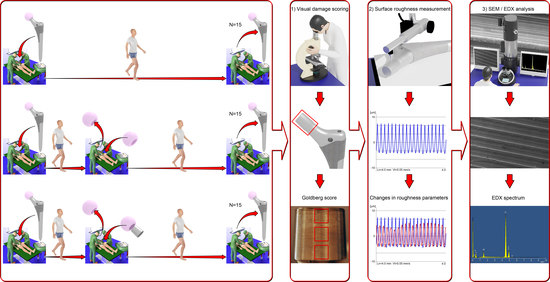
Article

Surface Analysis of Ti-Alloy Micro-Grooved 12/14 Tapers Assembled to Non-Sleeved and Sleeved Ceramic Heads: A Comparative Study of Retrieved Hip Prostheses

1
Laboratorio di Tecnologia Medica, IRCCS Istituto Ortopedico Rizzoli, 40136 Bologna, Italy
2
Dipartimento di Ingegneria Enzo Ferrari, Università degli Studi di Modena e Reggio Emilia, 41125 Modena, Italy
*
Author to whom correspondence should be addressed.
Materials 2023, 16(3), 1067; https://doi.org/10.3390/ma16031067
Submission received: 25 October 2022 / Revised: 16 January 2023 / Accepted: 18 January 2023 / Published: 25 January 2023
(This article belongs to the Special Issue Corrosion of Metals for Biomedical Applications)

Abstract

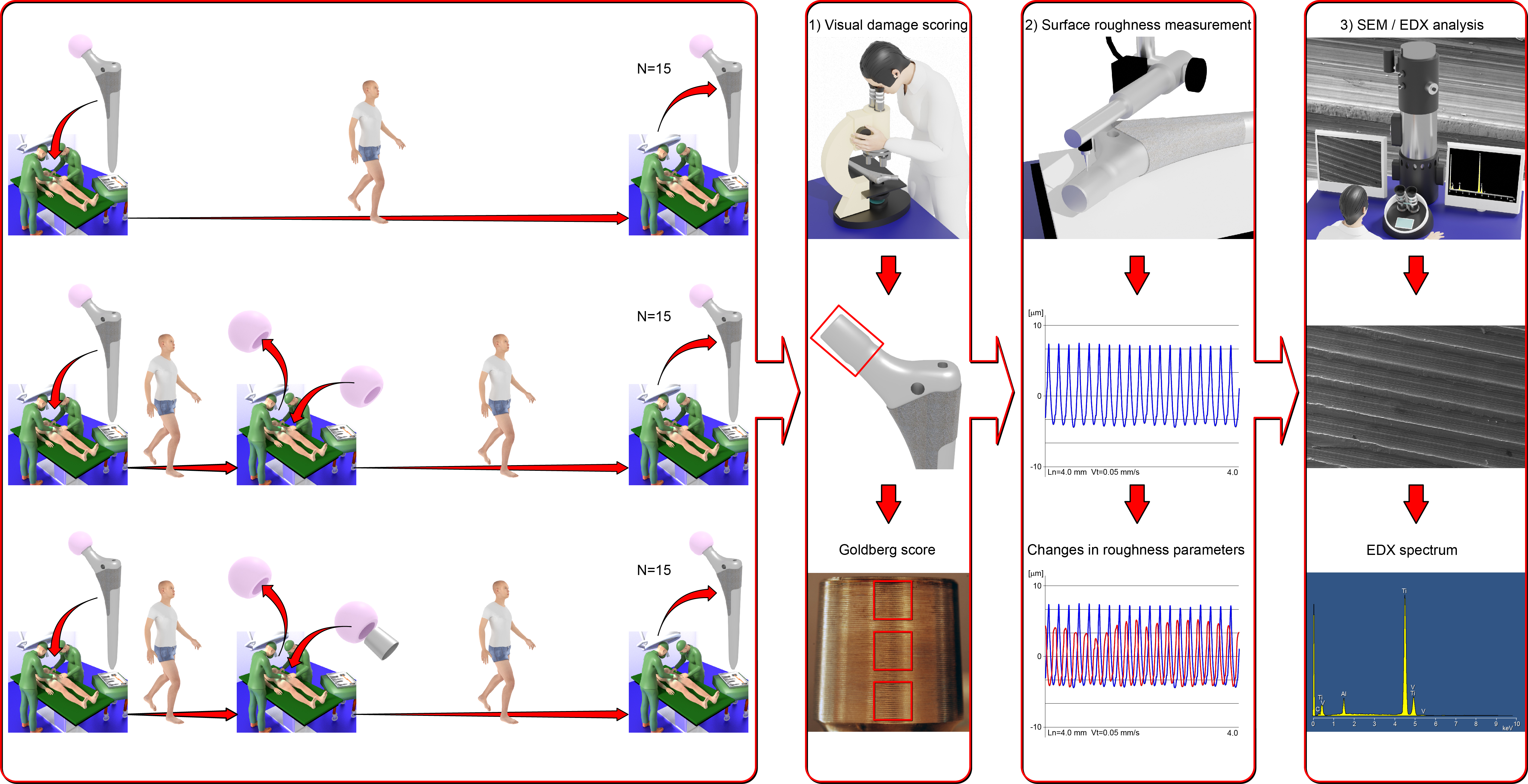
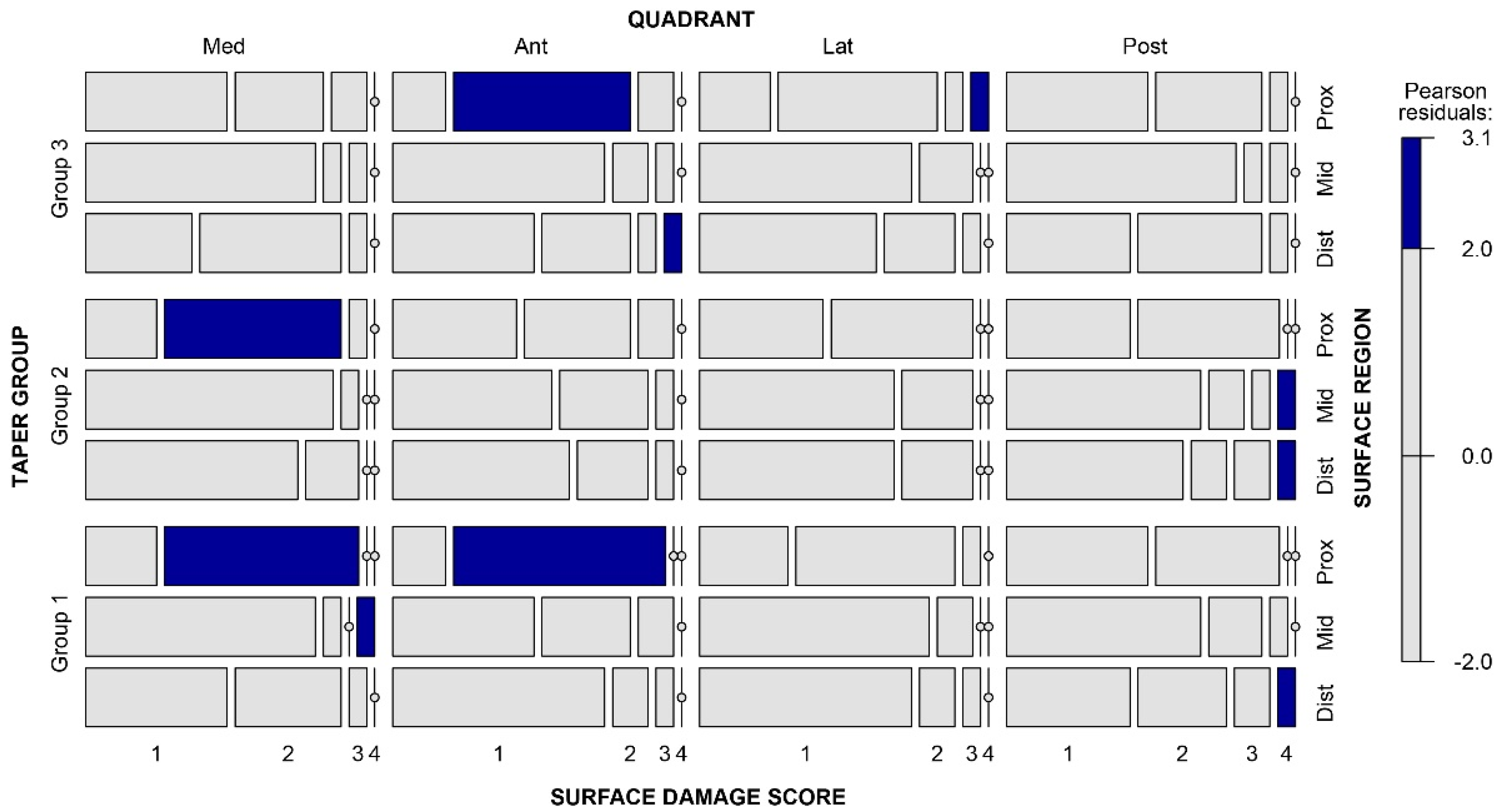
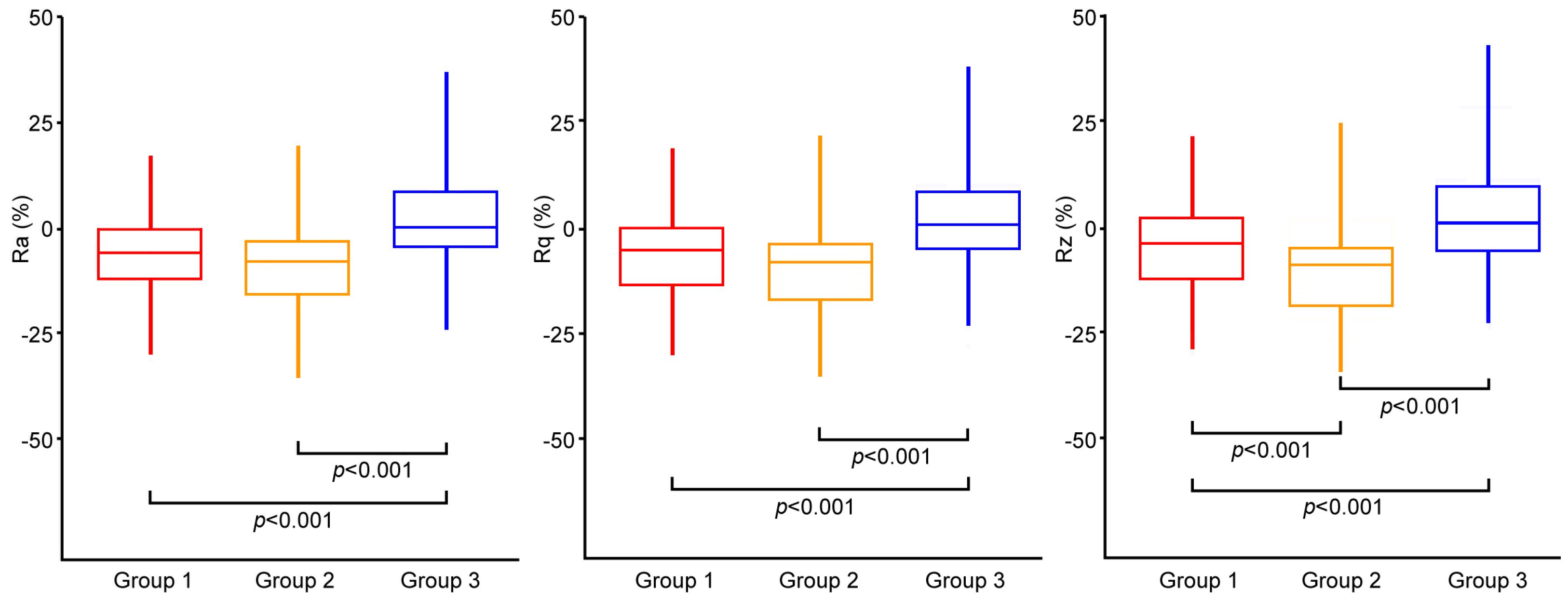
Ti6Al4V titanium alloy (Ti-alloy) sleeved ceramic heads have become widely used in revision surgery when the hip stem is left in situ. This solution guarantees a new junction between the bore of the ceramic head and the Ti-alloy sleeve, regardless of any possible, slight surface damage to the Ti-alloy taper of the stem. However, this solution introduces an additional Ti-alloy/Ti-alloy interface pairing, which is potentially susceptible to mechanically assisted crevice corrosion. This study evaluated both qualitatively and quantitatively the damage that occurred in vivo on Ti-alloy micro-grooved 12/14 tapers of (i) primary implants with non-sleeved ceramic heads (Group 1), (ii) secondary implants with non-sleeved ceramic heads (Group 2), and (iii) secondary implants with sleeved ceramic heads (Group 3). A total of 45 explants—15 for each group, including short-, medium- and long-neck heads—underwent optical evaluation for surface damage (Goldberg scoring), surface roughness analysis, and SEM/EDX analysis. The Goldberg scores did not reveal different patterns in the tapers’ surface damage; surface damage was classified as absent or mild (surface damage score ≤2) in 94%, another 94%, and 92% of the analysed regions for Group 1, Group 2, and Group 3, respectively. Small but significant differences in morphological changes occurred in the tapers of the three groups: reductions no greater than a few percentage points in median values of roughness parameters were found in Group 1 and Group 2, while negligible changes were found in Group 3. SEM/EDX analysis revealed little (i.e., a slight increase in the oxygen content) to undetectable changes in the chemical composition on the Ti-alloy surface independently of the group. These results suggest that the Ti-alloy/Ti-alloy sleeve/taper junction is only mildly susceptible to mechanically assisted crevice corrosion. Assembling a sleeved ceramic head, with variable neck lengths up to a “long-neck”, to a Ti-alloy micro-grooved 12/14 taper of a stem left in situ does not seem to increase the risk of revision due to trunnionosis, as long as junction stability (i.e., the proper seating of the sleeved ceramic head on the 12/14 taper) is achieved intraoperatively.
Keywords: 12/14 taper; adapter sleeve; ceramic heads; fretting corrosion; retrieval analysis; sleeved ceramic heads; titanium alloy; total hip arthroplasty 12/14 taper; adapter sleeve; ceramic heads; fretting corrosion; retrieval analysis; sleeved ceramic heads; titanium alloy; total hip arthroplasty
Graphical Abstract