Article

Engineering of Silica Mesoporous Materials for CO2 Adsorption

1
Institute of Organic Chemistry with Centre of Phytochemistry, Bulgarian Academy of Sciences, Acad. G. Bonchev St., Bl. 9, 1113 Sofia, Bulgaria
2
Institute of Polymers, Bulgarian Academy of Sciences, Acad. G. Bonchev St., Bl. 103A, 1113 Sofia, Bulgaria
3
Bulgarian Academy of Sciences, №1, 15 Noemvri St., 1040 Sofia, Bulgaria
*
Author to whom correspondence should be addressed.
Materials 2023, 16(11), 4179; https://doi.org/10.3390/ma16114179
Submission received: 12 March 2023 / Revised: 27 May 2023 / Accepted: 1 June 2023 / Published: 4 June 2023

Abstract

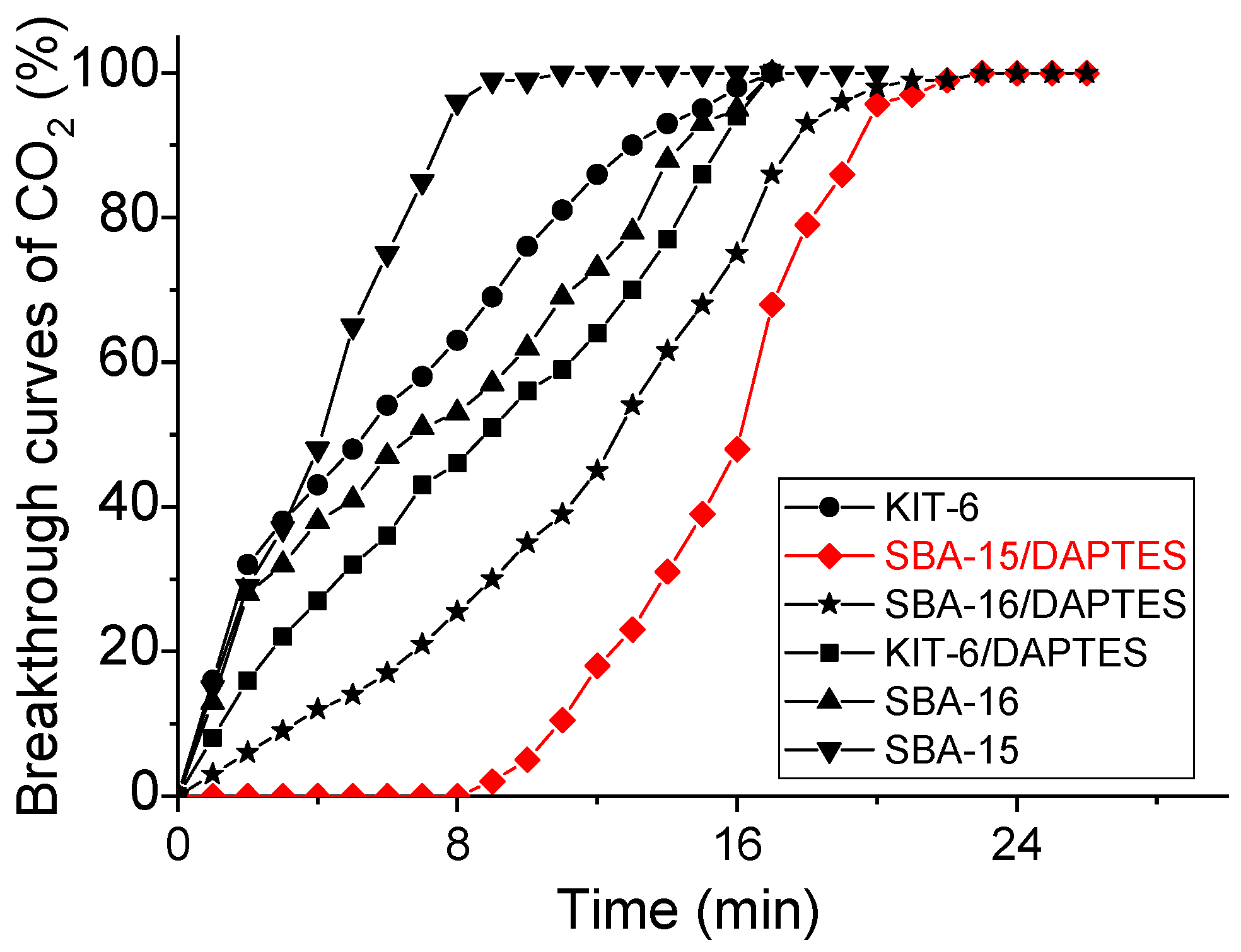
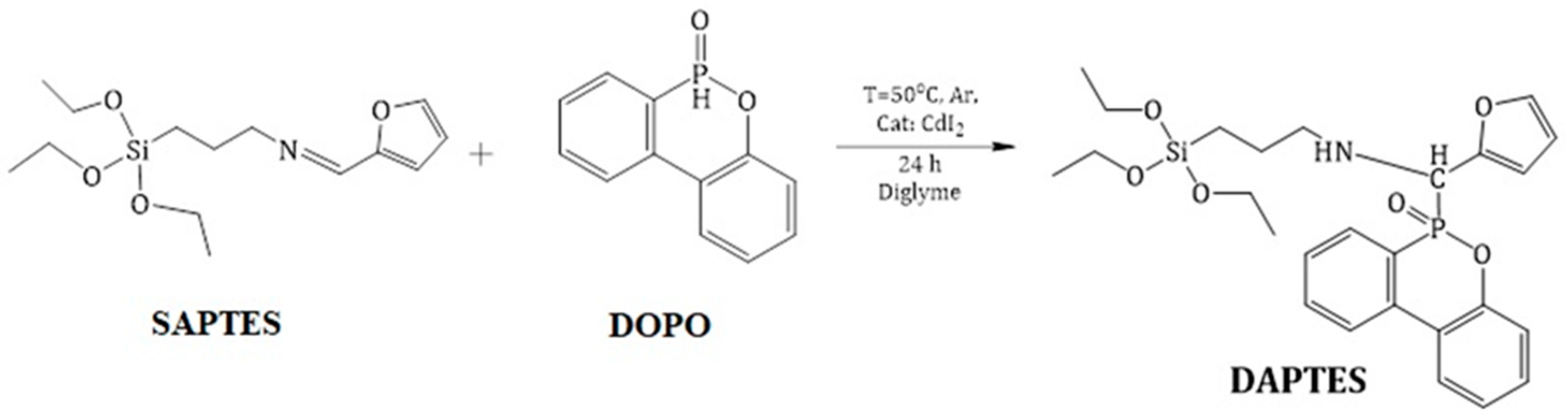
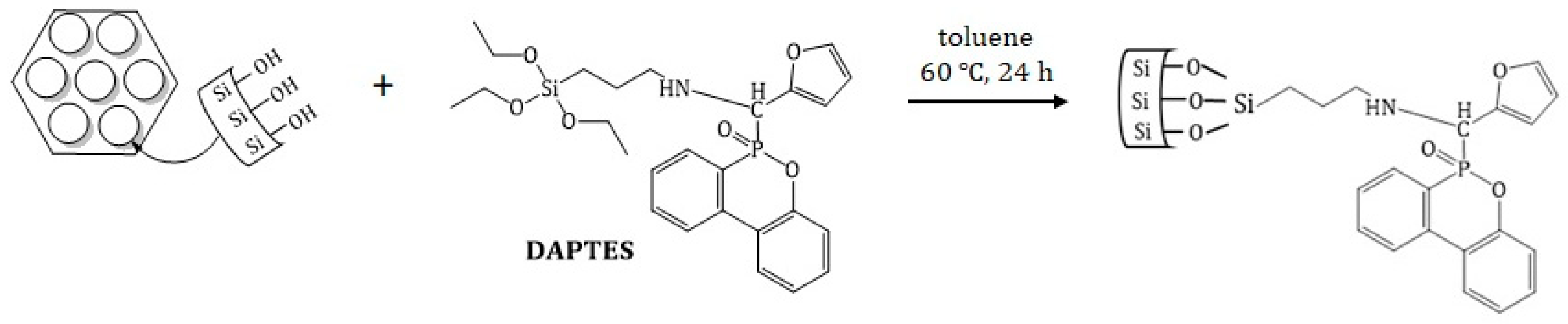
Adsorption methods for CO2 capture are characterized by high selectivity and low energy consumption. Therefore, the engineering of solid supports for efficient CO2 adsorption attracts research attention. Modification of mesoporous silica materials with tailor-made organic molecules can greatly improve silica’s performance in CO2 capture and separation. In that context, a new derivative of 9,10-dihydro-9-oxa-10-phosphaphenanthrene-10-oxide, possessing an electron-rich condensed aromatic structure and also known for its anti-oxidative properties, was synthesized and applied as a modifying agent of 2D SBA-15, 3D SBA-16, and KIT-6 silicates. The physicochemical properties of the initial and modified materials were studied using nitrogen physisorption and temperature-gravimetric analysis. The adsorption capacity of CO2 was measured in a dynamic CO2 adsorption regime. The three modified materials displayed a higher capacity for CO2 adsorption than the initial ones. Among the studied sorbents, the modified mesoporous SBA-15 silica showed the highest adsorption capacity for CO2 (3.9 mmol/g). In the presence of 1 vol.% water vapor, the adsorption capacities of the modified materials were enhanced. Total CO2 desorption from the modified materials was achieved at 80 °C. The obtained silica materials displayed stable performance in five CO2 adsorption/desorption cycles. The experimental data can be appropriately described by the Yoon–Nelson kinetic model.
Keywords: CO2 capture; modified mesoporous silicas; DOPO derivative CO2 capture; modified mesoporous silicas; DOPO derivative