Article

Fatigue Analysis of a 40 ft LNG ISO Tank Container

1
Korea Marine Equipment Research Institute, Busan 46754, Republic of Korea
2
Division of Marine Engineering, Korea Maritime and Ocean University, Busan 49112, Republic of Korea
3
Department of Mechanical IT Convergence Engineering, Korea Maritime and Ocean University, Busan 49112, Republic of Korea
4
Interdisciplinary Major of Maritime AI Convergence, Korea Maritime and Ocean University, Busan 49112, Republic of Korea
5
Division of Marine System Engineering, Korea Maritime and Ocean University, Busan 49112, Republic of Korea
*
Author to whom correspondence should be addressed.
Materials 2023, 16(1), 428; https://doi.org/10.3390/ma16010428
Submission received: 9 November 2022 / Revised: 21 December 2022 / Accepted: 25 December 2022 / Published: 2 January 2023
(This article belongs to the Special Issue Finite Element Analysis and Simulation of Materials)

Abstract

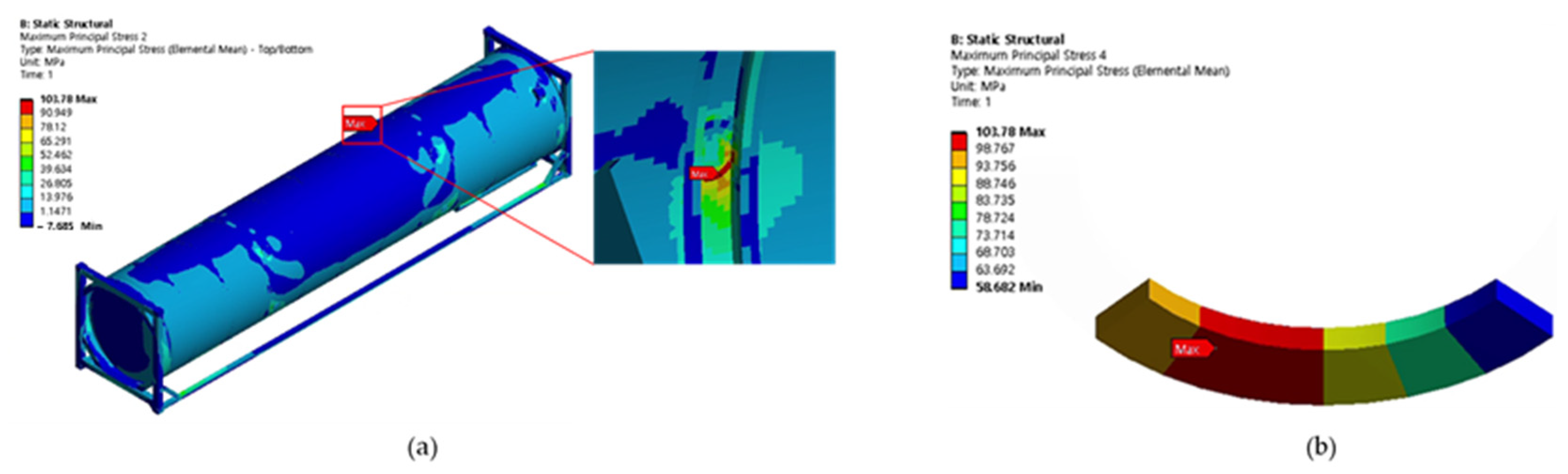
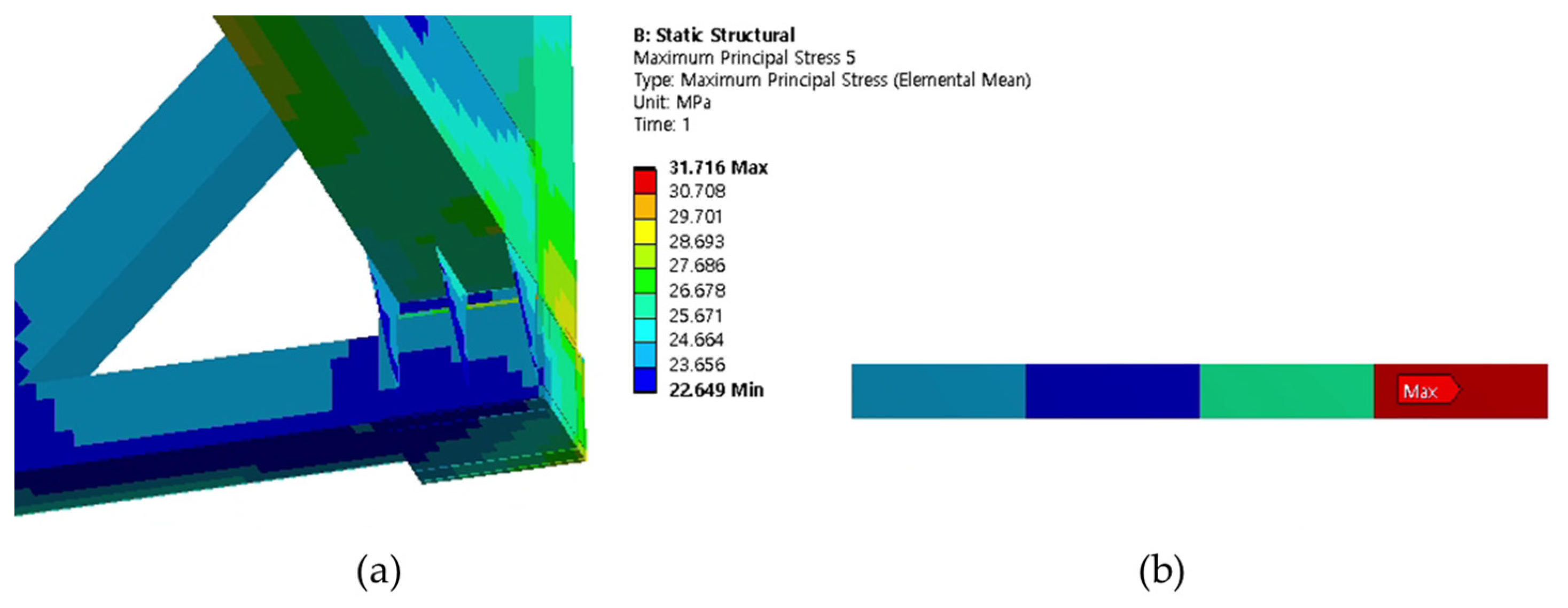
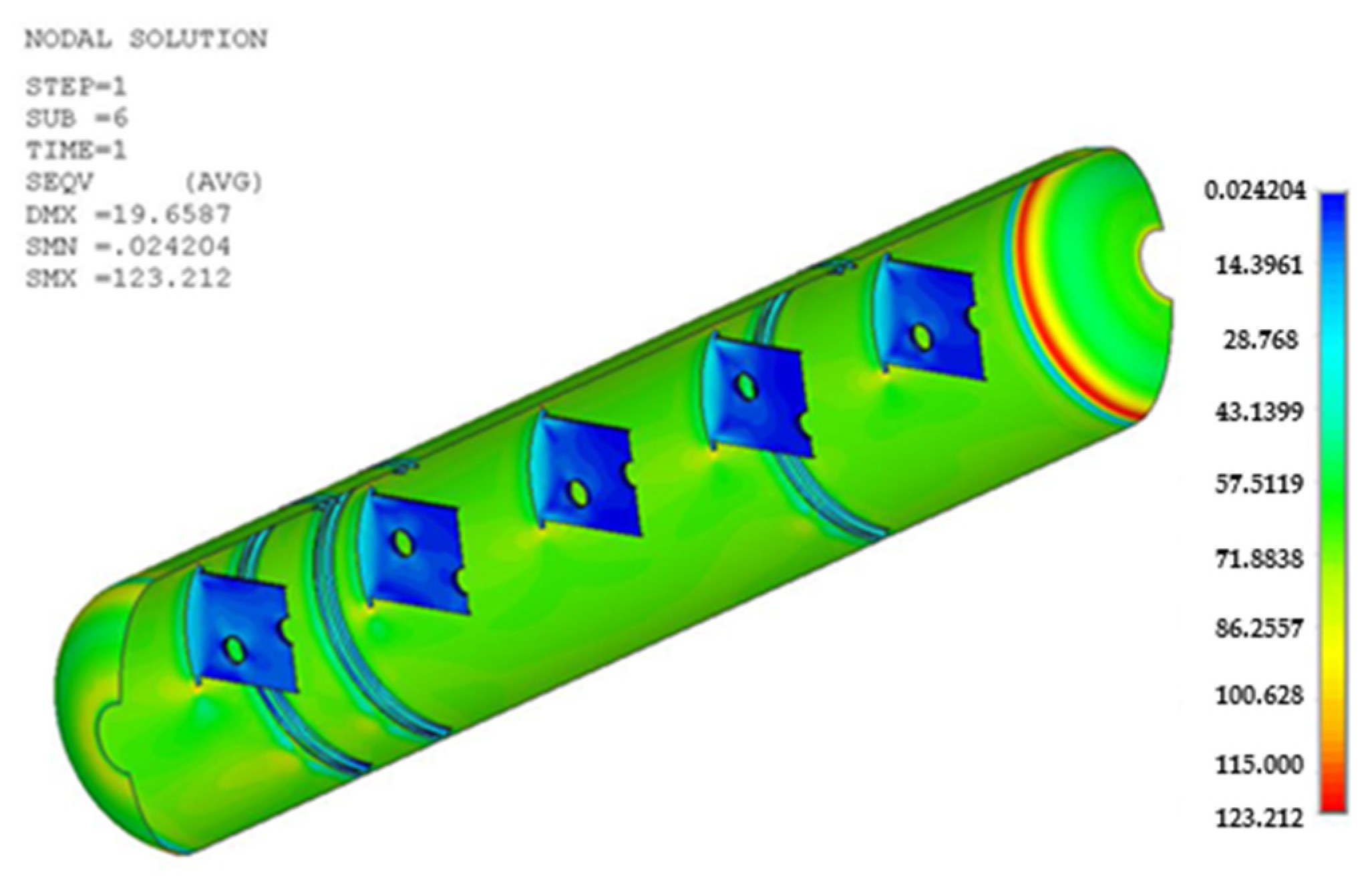
The demand for Liquefied natural gas (LNG) has rapidly increased over the past few years. This is because of increasingly stringent environmental regulations to curb harmful emissions from fossil fuels. LNG is one of the clean energy sources that has attracted a great deal of research. In the Republic of Korea, the use of LNG has been implemented in various sectors, including public transport buses, domestic applications, power generation, and in huge marine engines. Therefore, a proper, flexible, and safe transport system should be put in place to meet the high demand. In this work, finite element analysis (FEA) was performed on a domestically developed 40 ft ISO LNG tank using Ansys Mechanical software under low- and high-cycle conditions. The results showed that the fatigue damage factor for all the test cases was much lower than 1. The maximum principal stress generated in the 40 ft LNG ISO tank container did not exceed the yield strength of the calculated material (carbon steel). Maximum principal stress of 123.2 MPa and 107.61 MPa was obtained with low-cycle and high-cycle analysis, respectively, which is 50.28% less than the yield strength of carbon steel. The total number of cycles was greater than the total number of design cycles, and the 40 ft LNG ISO tank container was satisfied with a fatigue life of 20 years.
Keywords: LNG; finite element analysis (FEA); ISO tank; Ansys Mechanical LNG; finite element analysis (FEA); ISO tank; Ansys Mechanical