Article

The Relationship between Dynamic and Static Deformation Modulus of Unbound Pavement Materials Used for Their Quality Control Methodology

1
Department of Highways Engineering, University of Zilina, Univerzitna 8215/1, 010 26 Zilina, Slovakia
2
Department of Geotechnics, University of Zilina, Univerzitna 8215/1, 010 26 Zilina, Slovakia
3
Department of Structural Mechanics and Applied Mathematics, University of Zilina, Univerzitna 8215/1, 010 26 Zilina, Slovakia
4
Department of Technology and Construction Management, University of Zilina, Univerzitna 8215/1, 010 26 Zilina, Slovakia
*
Author to whom correspondence should be addressed.
Materials 2022, 15(8), 2922; https://doi.org/10.3390/ma15082922
Submission received: 17 February 2022 / Revised: 13 April 2022 / Accepted: 15 April 2022 / Published: 16 April 2022
(This article belongs to the Special Issue Advanced Experimental Research on Pavement and Subgrade Materials)

Abstract

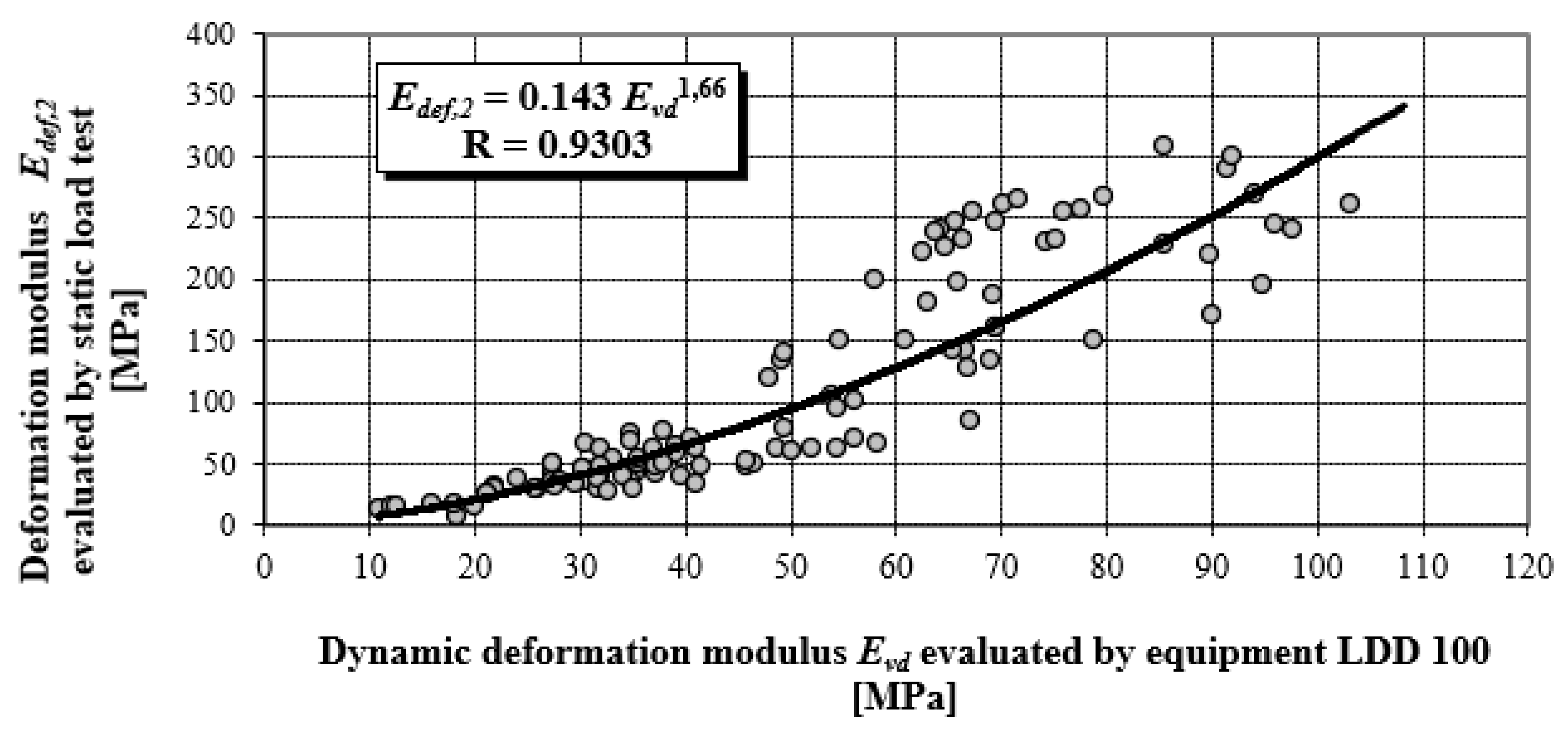
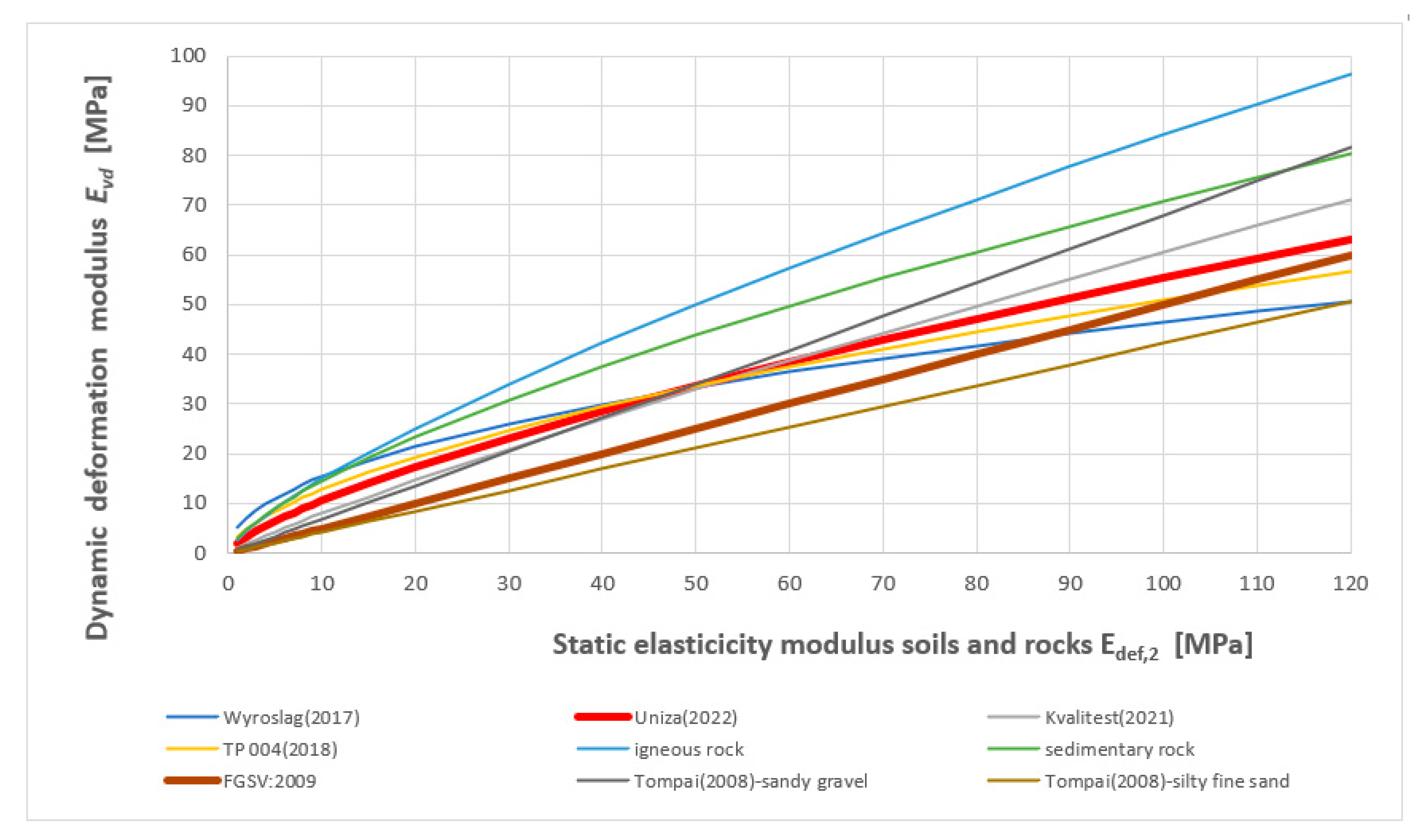
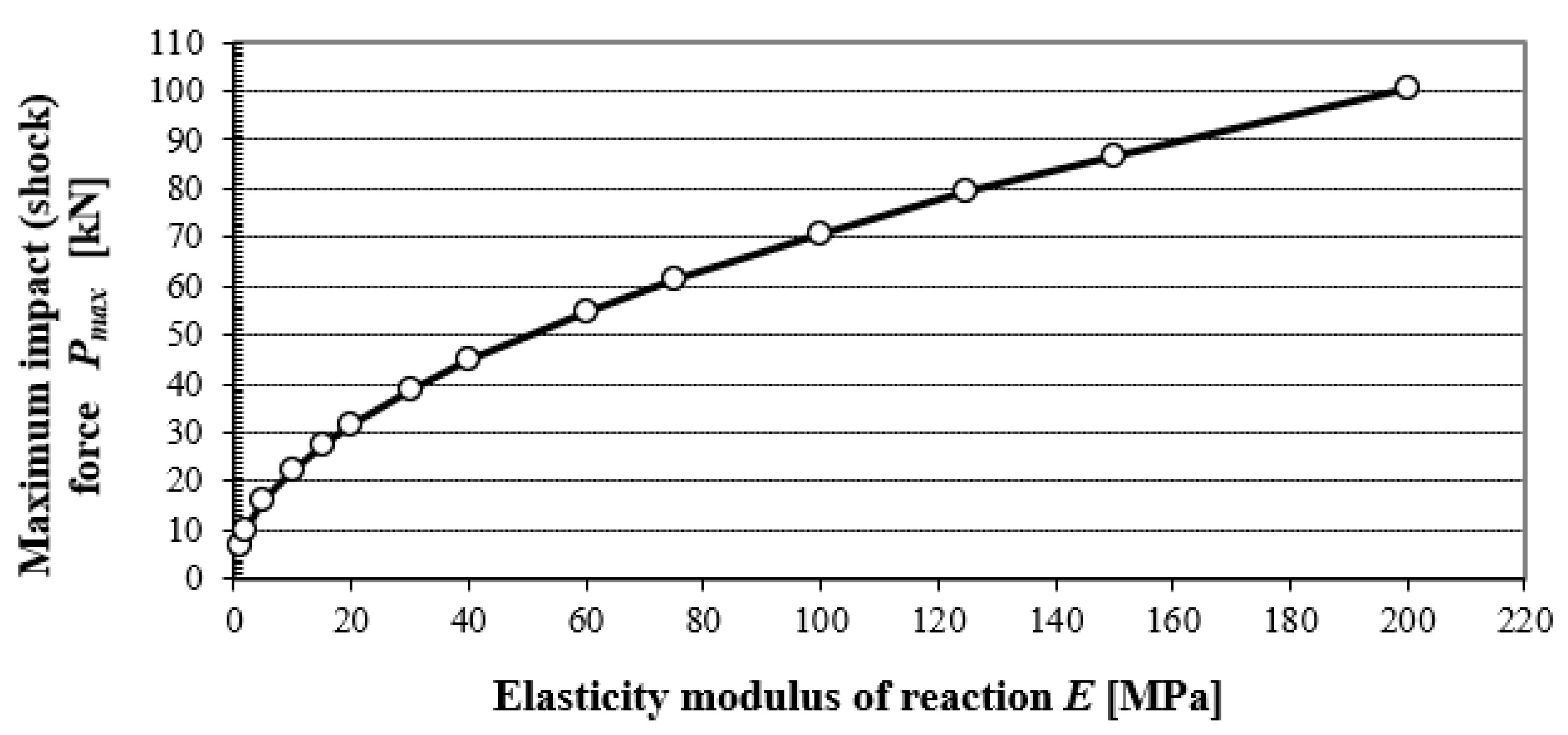
In the present study, credible analytical and numerical models are developed in order to explain the apparent discrepancies in the ratios of static and dynamic deformation models for assessing the quality of mechanical efficiency of transport structures in Central Europe. Through of experience, authors specifically deal with the comparison of two commonly used methods: the dynamic load plate test, known as the lightweight dynamic test and the static plate load test. This paper presents the relevant correlation dependency of the most commonly used quantification characteristics in earthworks quality control. Their correlation was obtained by applying the static theory of impact to earthworks quality control, which allows for the application of several quality control methods, in line with other member states of the European Union, specifically with regard to constructions under various boundary conditions (climate, soil moisture of the specified layer). According to an analysis of the results of comparisons of static and dynamic load tests, analytical and numerical models of the subsoil formed by soils and uncemented structural materials, respectively, the linear calculation usually used in the conditions of Central Europe does not have universal validity. Rather than relying on the analytical and FEM models for the soil, the authors have determined that the above dependence is a power dependence.
Keywords: deformation characteristics; correlations; dynamic force; earthworks quality control; static theory of impact deformation characteristics; correlations; dynamic force; earthworks quality control; static theory of impact