Article

Tunable Energy Absorbing Property of Bilayer Amorphous Glass Foam via Dry Powder Printing

1
Department of Aerospace Engineering, University of Maryland, College Park, MD 20742, USA
2
Microsphere Material Solutions, Rockville, MD 20852, USA
*
Author to whom correspondence should be addressed.
Materials 2022, 15(24), 9080; https://doi.org/10.3390/ma15249080
Submission received: 6 October 2022 / Revised: 6 December 2022 / Accepted: 9 December 2022 / Published: 19 December 2022

Abstract

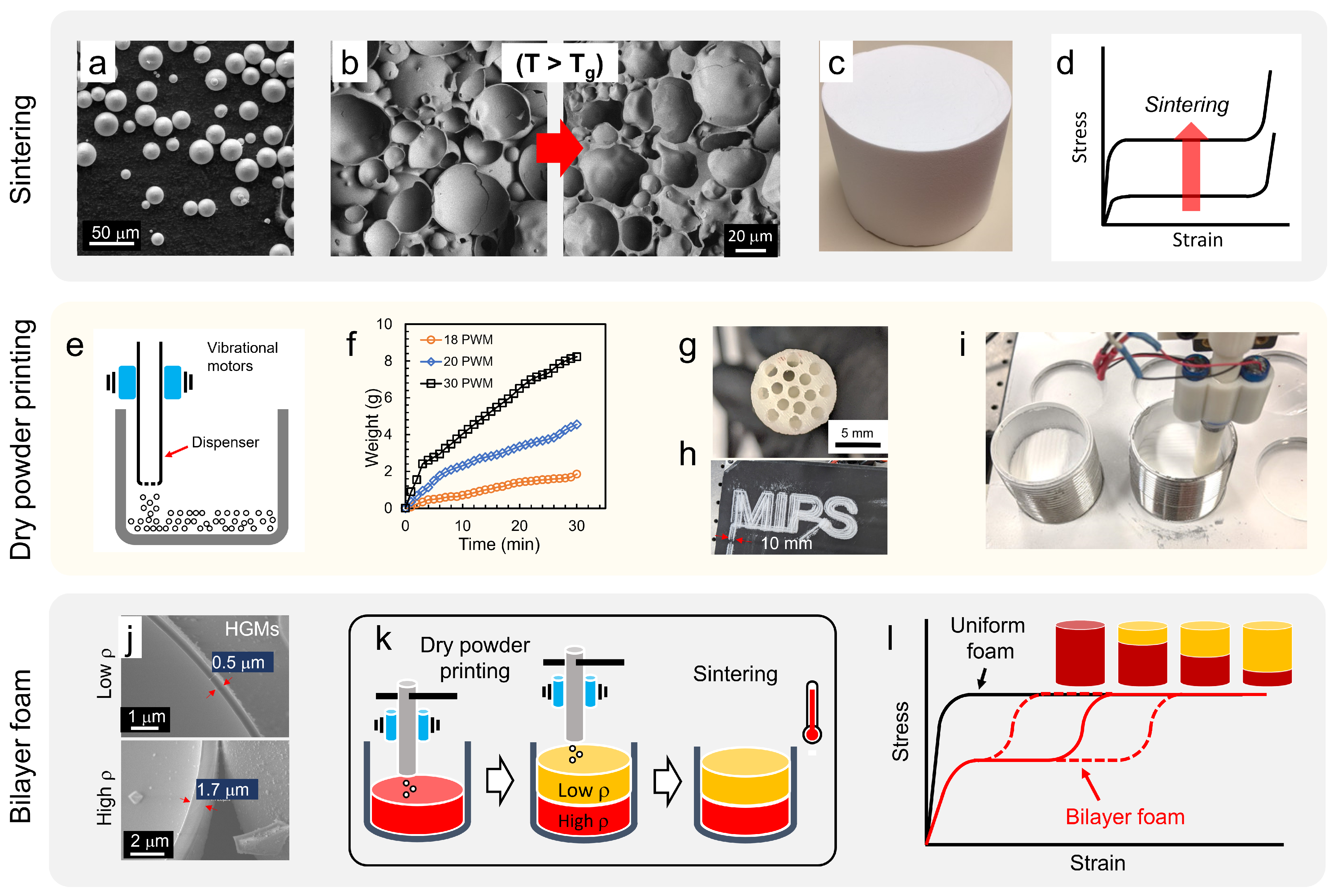
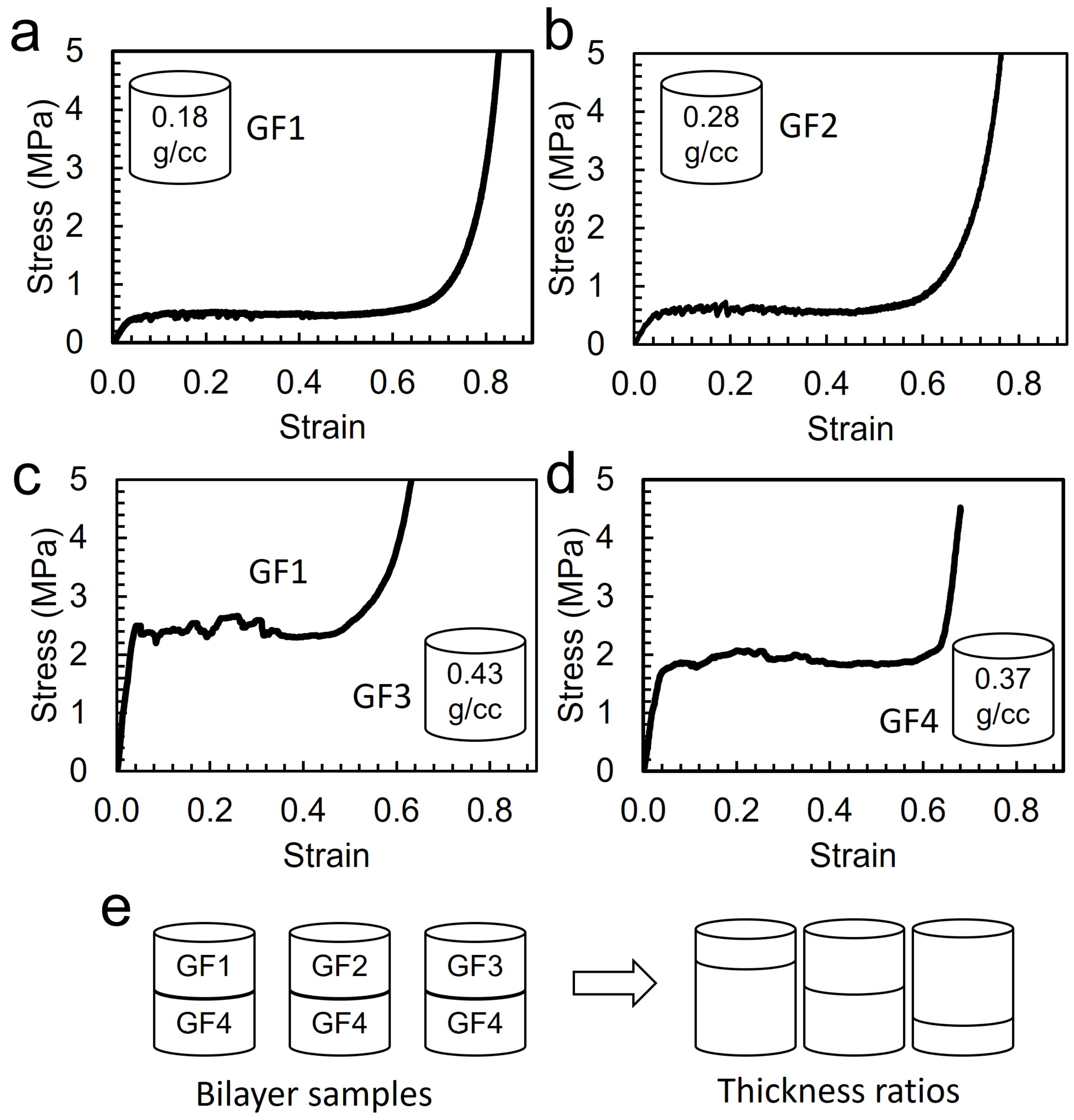
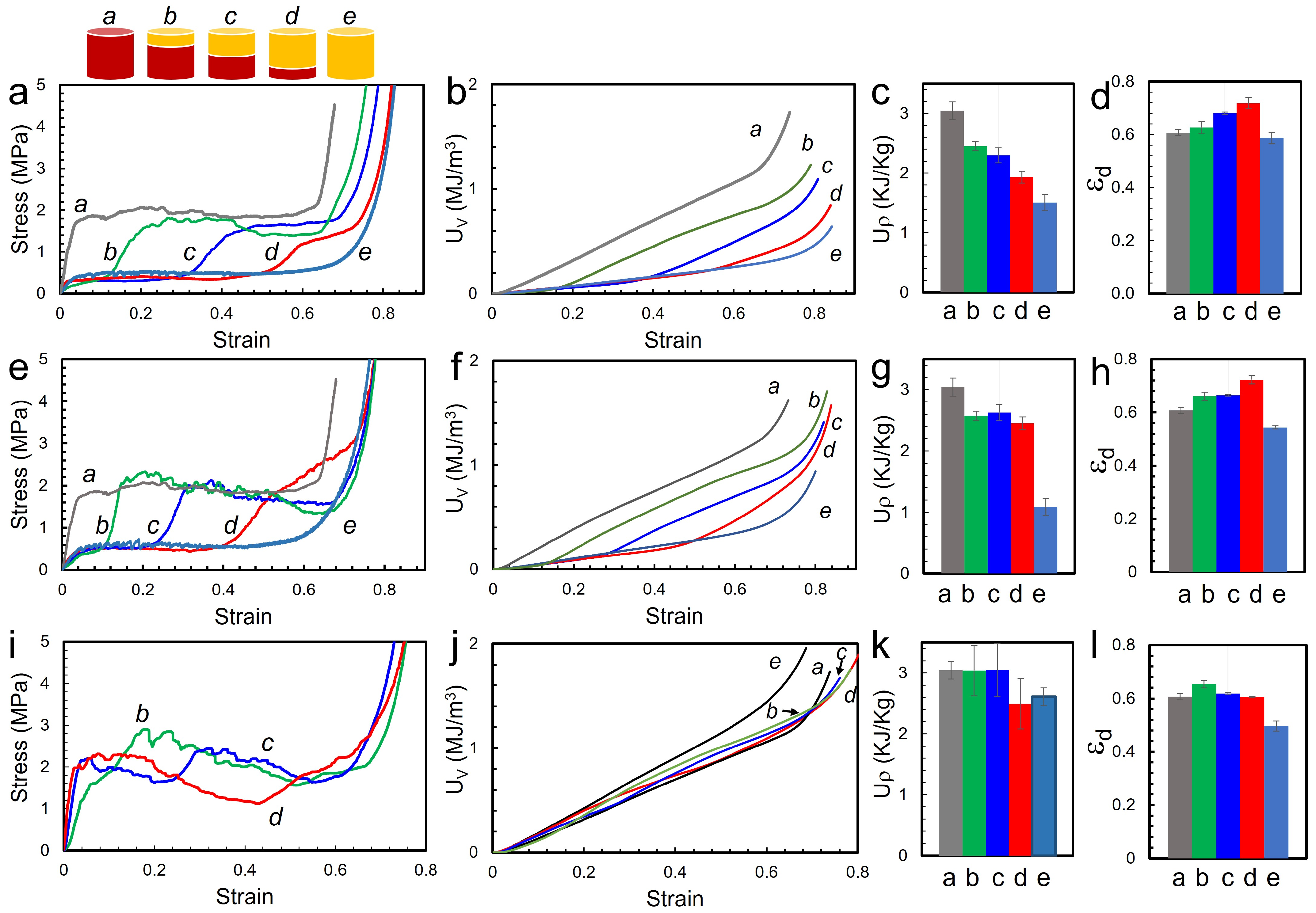
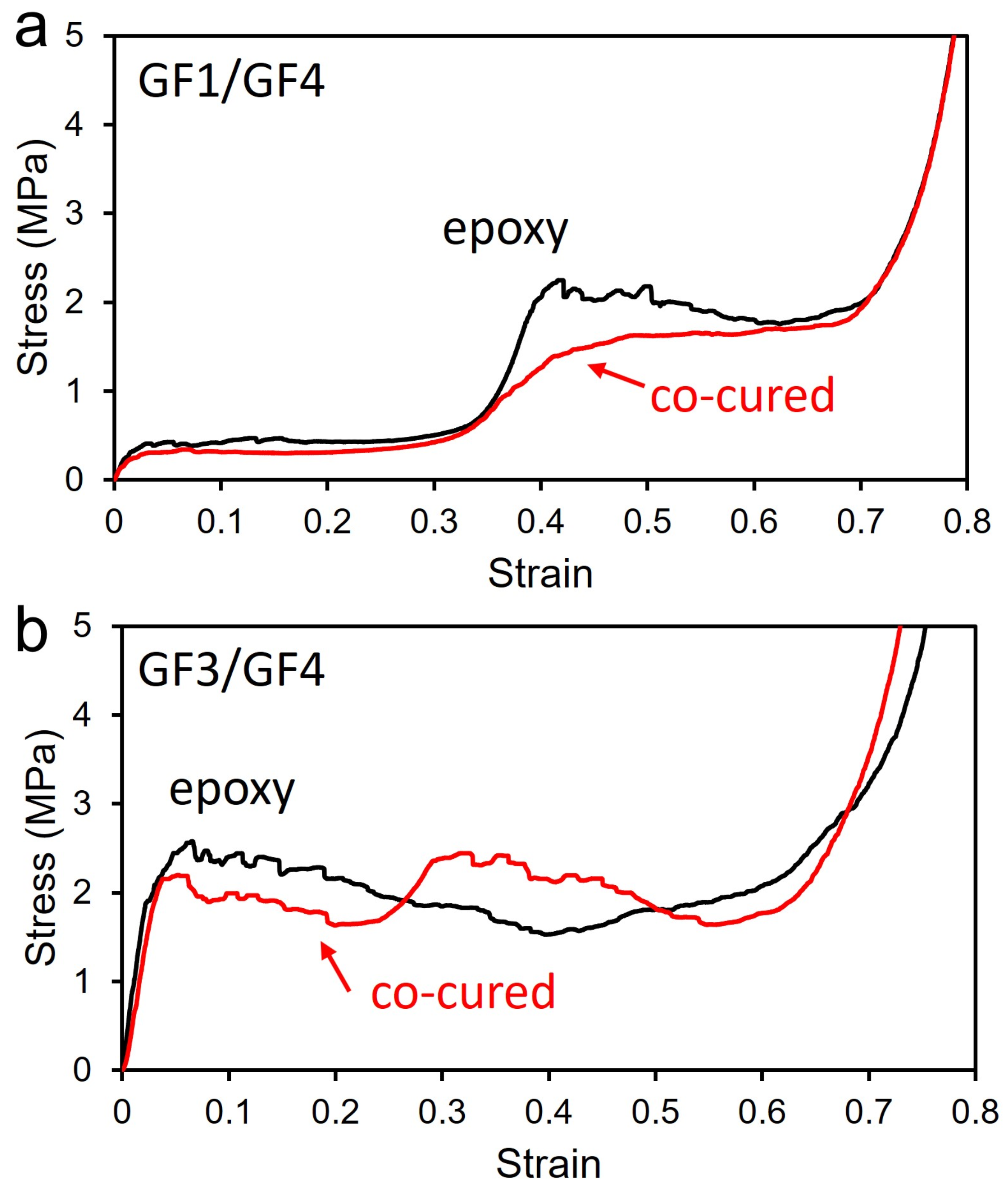
The research in this paper entails the design of material systems with tunable energy-absorbing properties. Hollow glass microspheres of different densities are layered using dry powder printing and subsequently sintered to form a cellular structure. The tunability of the bilayer foams is investigated using various combinations of hollow microspheres with different densities and different thickness ratios of the layers. The mechanical responses to quasi-static uniaxial compression of the bilayer foams are also investigated. These bilayer samples show different mechanical responses from uniform samples with a distinctive two-step stress–strain profile that includes a first and second plateau stress. The strain where the second plateau starts can be tuned by adjusting the thickness ratio of the two layers. The resulting tunable stress–strain profile demonstrates tunable energy absorption. The tunability is found to be more significant if the density values of each layer differ largely. For comparison, bilayer samples are fabricated using epoxy at the interface instead of a sintering process and a different mechanical response is shown from a sintered sample with the different stress–strain profile. Designing the layered foams allows tuning of the stress–strain profile, enabling desired energy-absorbing properties which are critical in diverse impact conditions.
Keywords: microspheres; cellular solid; dry printing; glass foam; energy absorption microspheres; cellular solid; dry printing; glass foam; energy absorption