Article

Temperature Sensor Based on Surface Plasmon Resonance with TiO2-Au-TiO2 Triple Structure

1
College of Sciences, Northeastern University, Shenyang 110819, China
2
Science and Technology on Electro-Optical Information Security Control Laboratory, Tianjin 300308, China
*
Author to whom correspondence should be addressed.
Materials 2022, 15(21), 7766; https://doi.org/10.3390/ma15217766
Submission received: 13 October 2022 / Revised: 1 November 2022 / Accepted: 1 November 2022 / Published: 3 November 2022
(This article belongs to the Special Issue Nanophotonics Materials and Devices)

Abstract

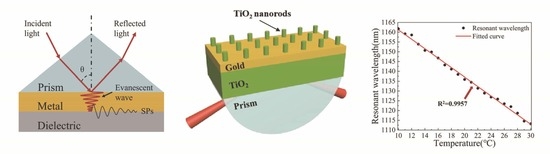
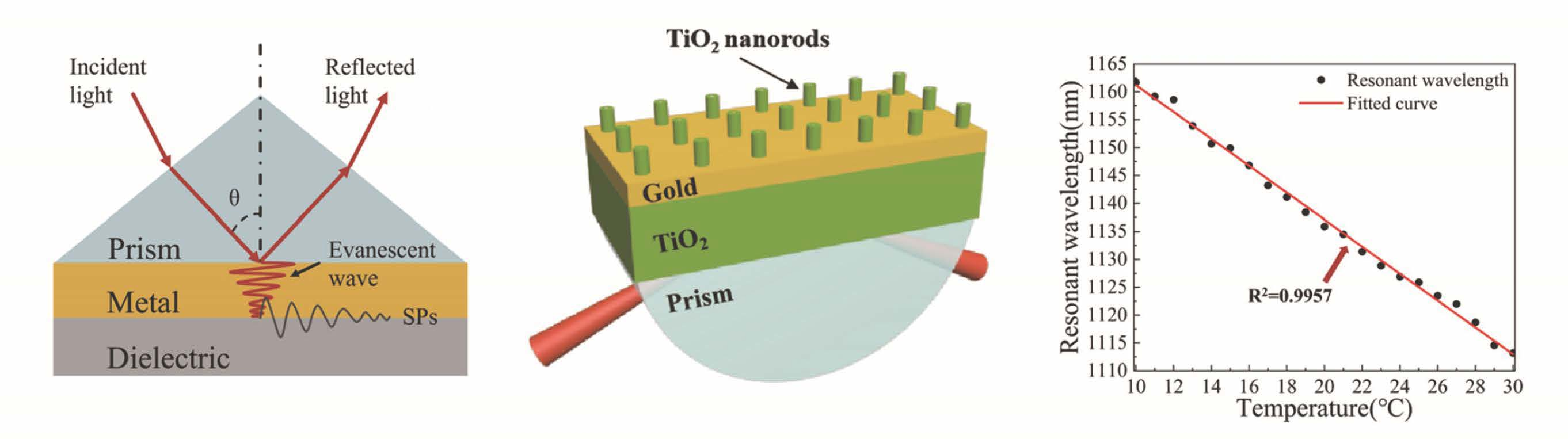
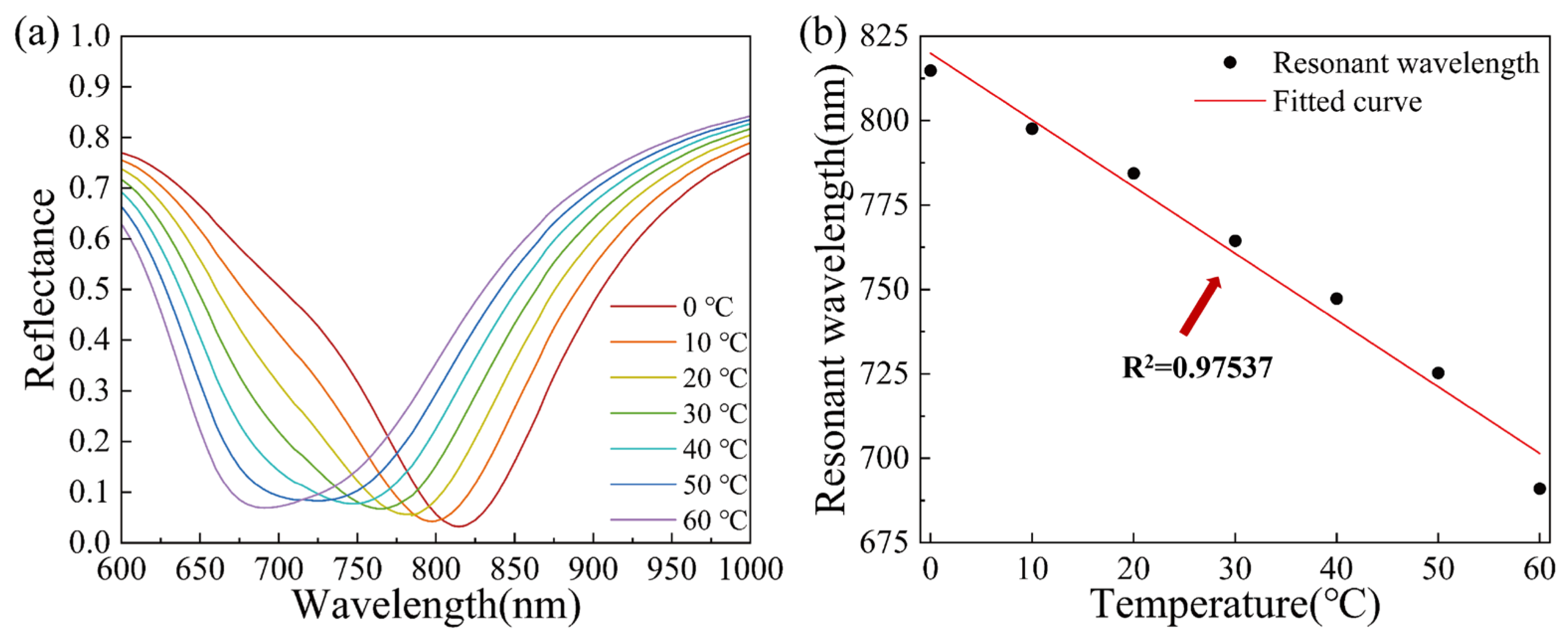
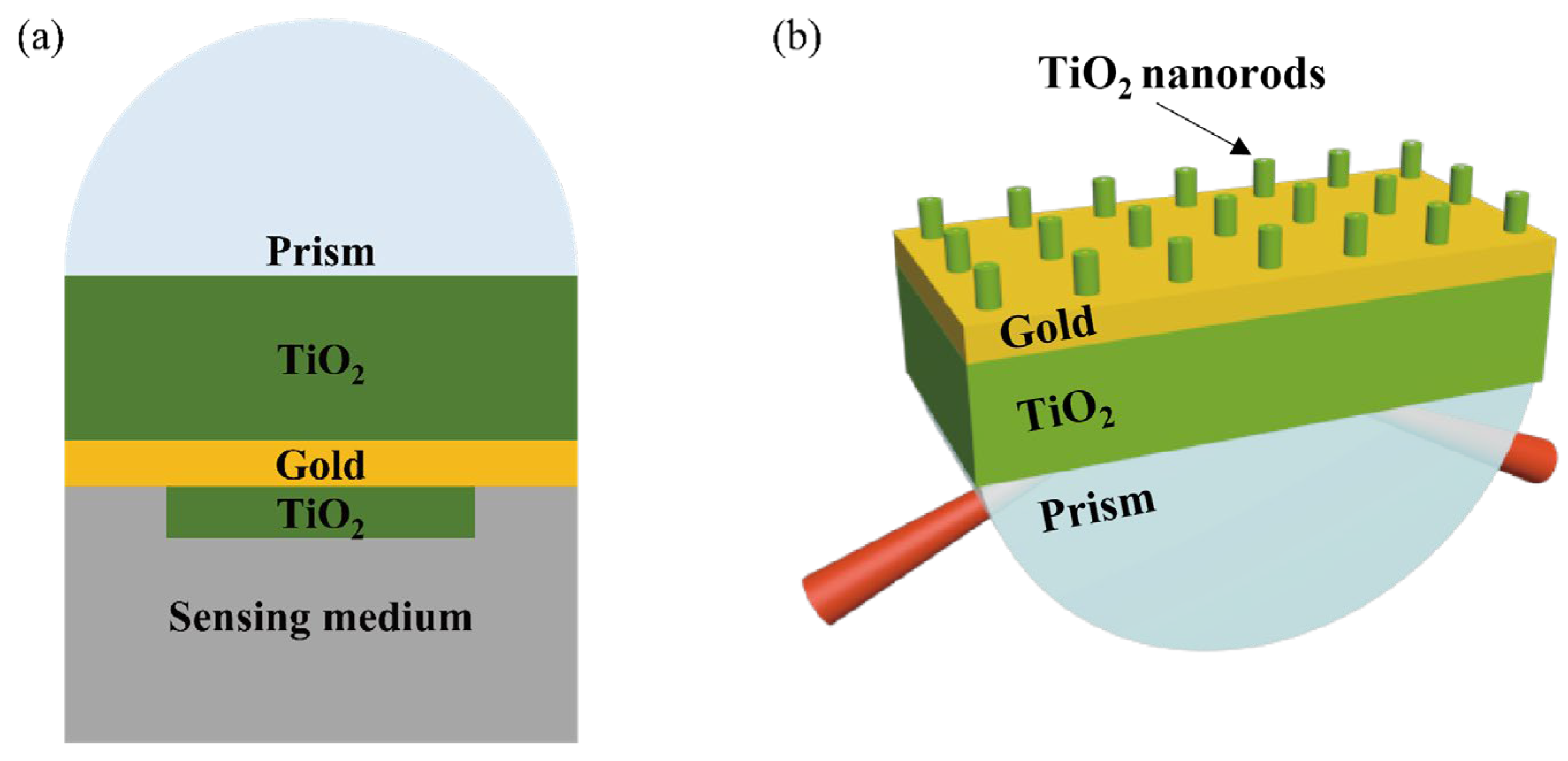
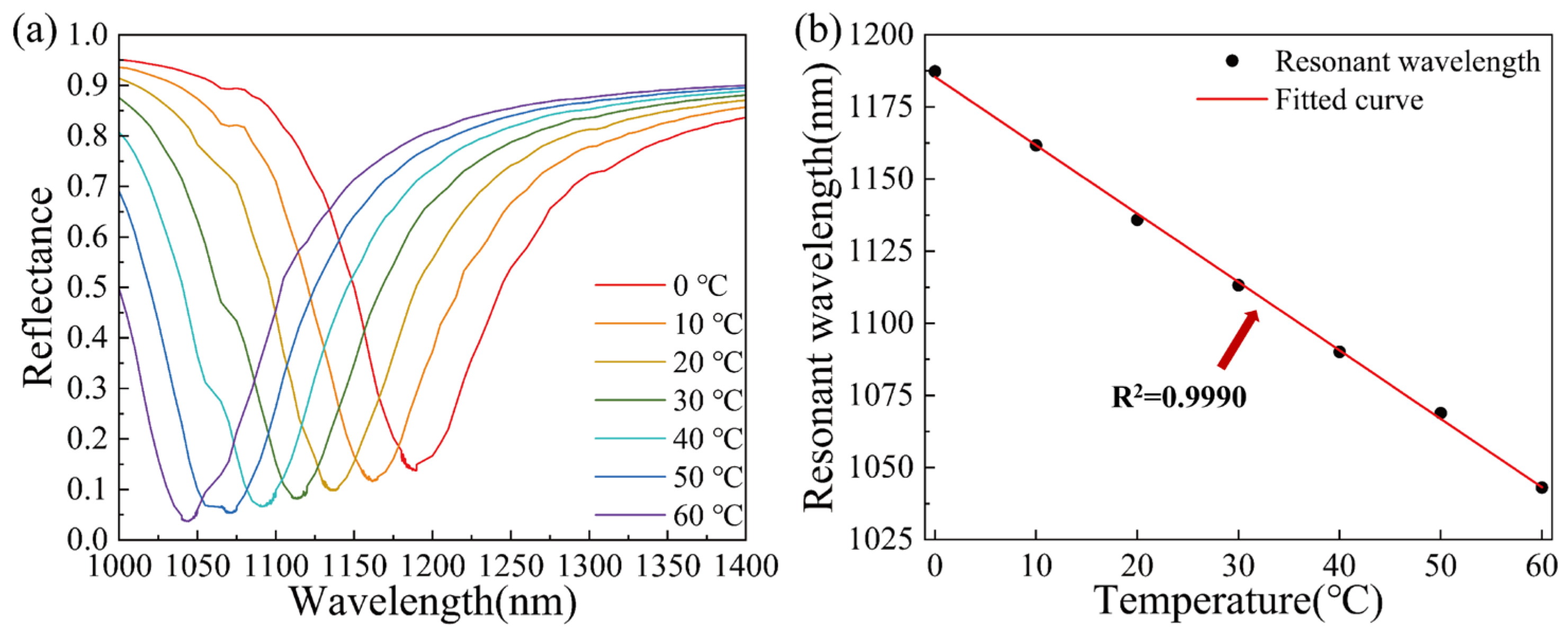
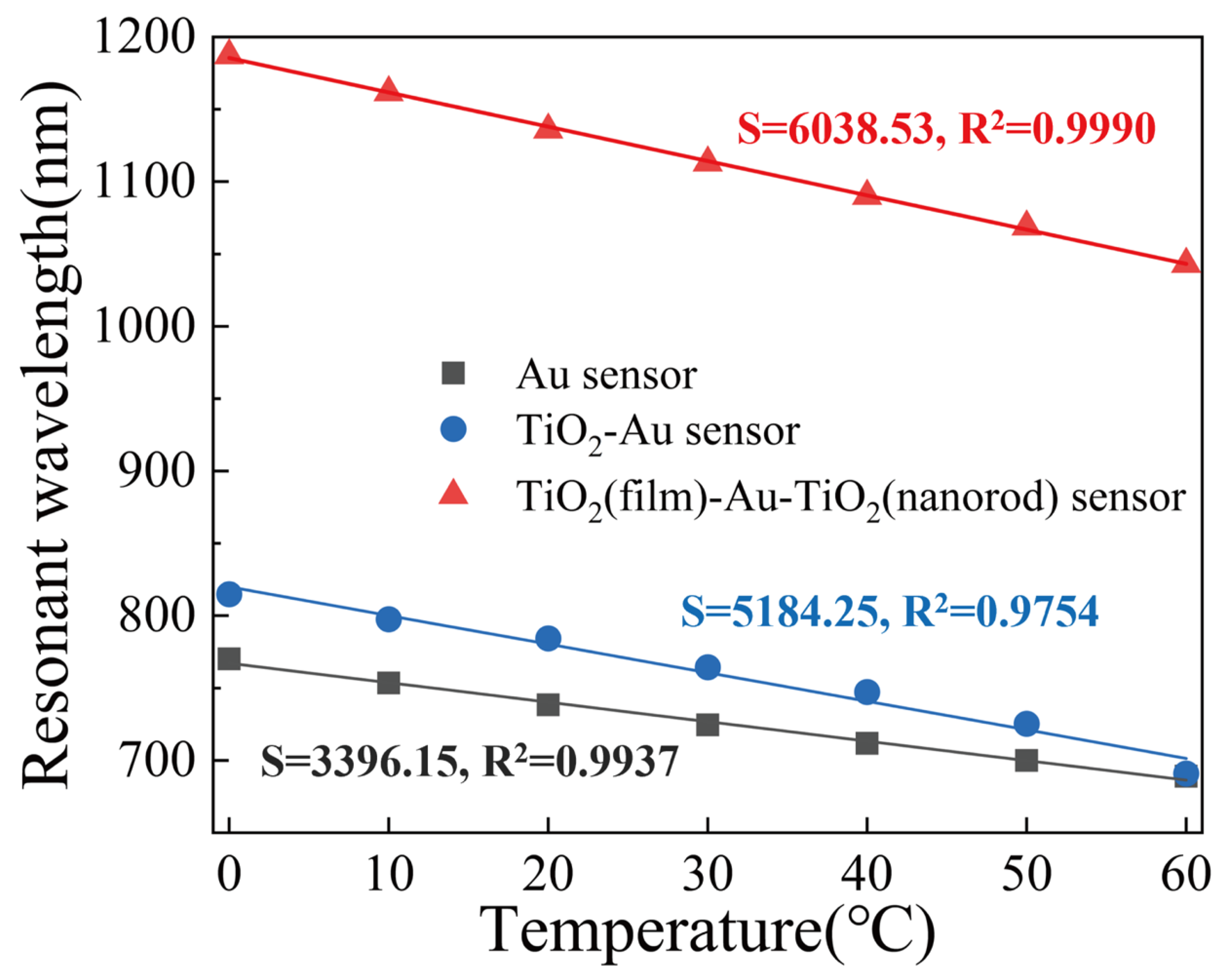
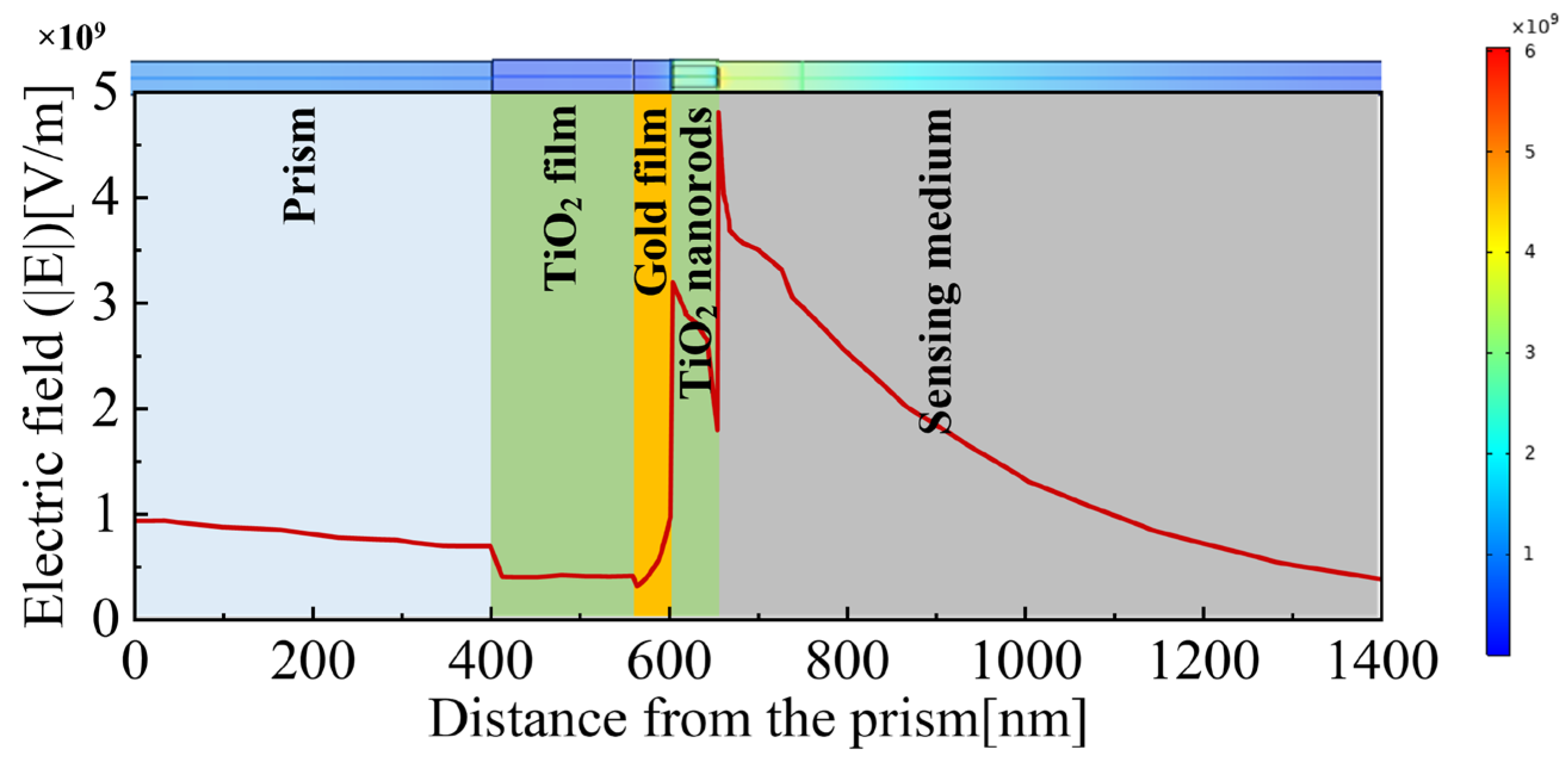
Temperature sensors have been widely applied in daily life and production, but little attention has been paid to the research on temperature sensors based on surface plasmon resonance (SPR) sensors. Therefore, an SPR temperature sensor with a triple structure of titanium dioxide (TiO2) film, gold (Au) film, and TiO2 nanorods is proposed in this article. By optimizing the thickness and structure of TiO2 film and nanorods and Au film, it is found that the sensitivity of the SPR temperature sensor can achieve 6038.53 nm/RIU and the detection temperature sensitivity is −2.40 nm/°C. According to the results, the sensitivity of the optimized sensor is 77.81% higher than that of the sensor with pure Au film, which is attributed to the TiO2(film)-Au-TiO2(nanorods) structure. Moreover, there is a good linear correlation (greater than 0.99) between temperature and resonance wavelength in the range from 0 °C to 60 °C, which can ensure the detection resolution. The high sensitivity, FOM, and detection resolution indicate that the proposed SPR sensor has a promising application in temperature monitoring.
Keywords: surface plasmon resonance (SPR); TiO2-Au-TiO2 nanostructure; temperature sensor; Finite Element Method (FEM) simulation surface plasmon resonance (SPR); TiO2-Au-TiO2 nanostructure; temperature sensor; Finite Element Method (FEM) simulation
Graphical Abstract