Review

Graphene: A Path-Breaking Discovery for Energy Storage and Sustainability

1
Chitkara University Institute of Engineering and Technology, Chitkara University, Rajpura 140401, India
2
Department of Mechanical Engineering, University Institute of Engineering and Technology, Panjab University SSG Regional Centre, Hoshiarpur 146021, India
3
Department of Mechanical Engineering, IK Gujral Punjab Technical University, Jalandhar 144603, India
4
Department of Mechanical Engineering, GLA University, Mathura 281406, India
5
Department of Medical Physics, Hilla University College, Babylon 51002, Iraq
6
Peter the Great St. Petersburg Polytechnic University, 195251 St. Petersburg, Russia
7
Division of Research & Innovation, Uttaranchal University, Dehradun 248007, India
*
Authors to whom correspondence should be addressed.
Materials 2022, 15(18), 6241; https://doi.org/10.3390/ma15186241
Submission received: 14 July 2022 / Revised: 18 August 2022 / Accepted: 25 August 2022 / Published: 8 September 2022

Abstract

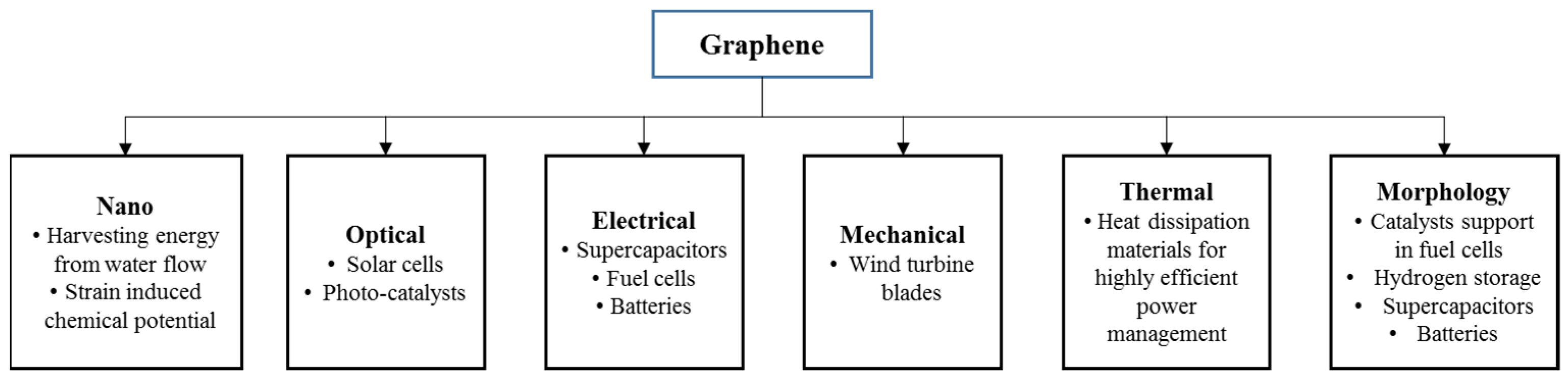
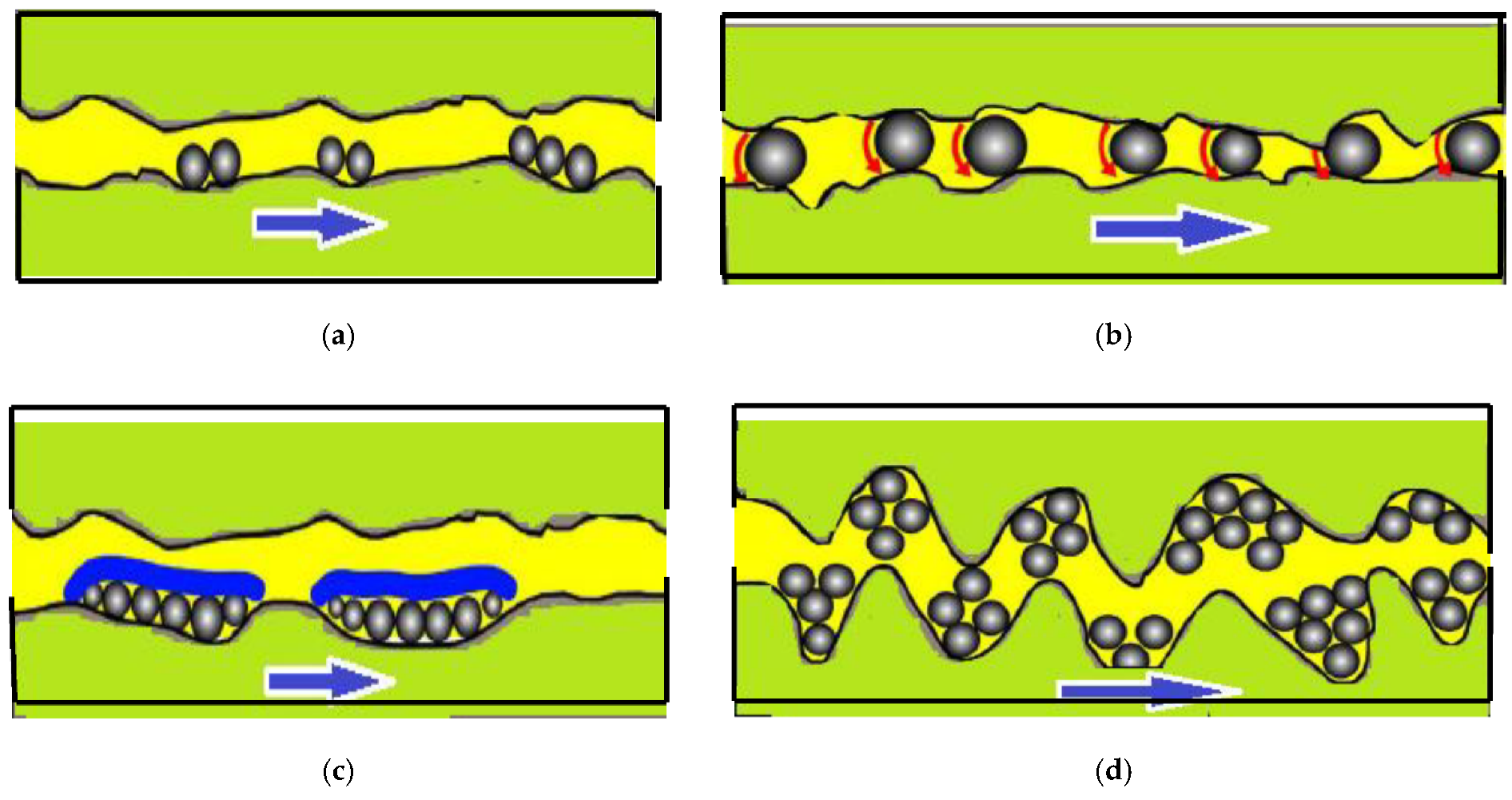
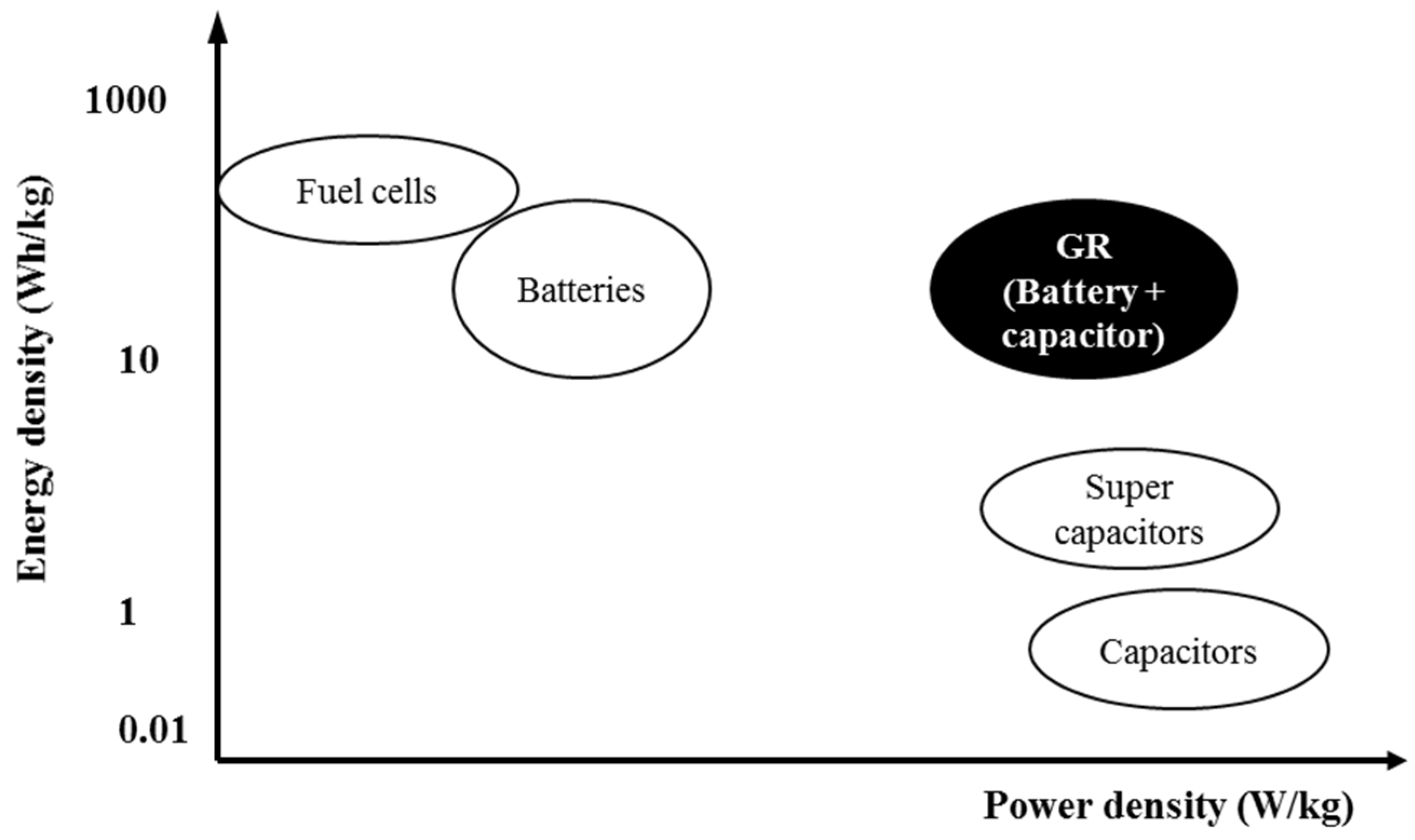
The global energy situation requires the efficient use of resources and the development of new materials and processes for meeting current energy demand. Traditional materials have been explored to large extent for use in energy saving and storage devices. Graphene, being a path-breaking discovery of the present era, has become one of the most-researched materials due to its fascinating properties, such as high tensile strength, half-integer quantum Hall effect and excellent electrical/thermal conductivity. This paper presents an in-depth review on the exploration of deploying diverse derivatives and morphologies of graphene in various energy-saving and environmentally friendly applications. Use of graphene in lubricants has resulted in improvements to anti-wear characteristics and reduced frictional losses. This comprehensive survey facilitates the researchers in selecting the appropriate graphene derivative(s) and their compatibility with various materials to fabricate high-performance composites for usage in solar cells, fuel cells, supercapacitor applications, rechargeable batteries and automotive sectors.
Keywords: graphene; renewable energy; solar cells; batteries; fuel cells; nanolubricants; supercapacitors; sustainability graphene; renewable energy; solar cells; batteries; fuel cells; nanolubricants; supercapacitors; sustainability