Article

Modeling the Properties of Curcumin Derivatives in Relation to the Architecture of the Siloxane Host Matrices


by
Florentina Monica Raduly
1,
Valentin Rădiţoiu
1,
Alina Rădiţoiu
1,*,
Adriana Nicoleta Frone
1,
Cristian Andi Nicolae
1,
Violeta Purcar
1,
Georgiana Ispas
1,
Mariana Constantin
1,2 and
Iuliana Răut
1
1
Laboratory of Functional Dyes and Related Materials, National Research and Development Institute for Chemistry and Petrochemistry—ICECHIM, 202 Splaiul Independentei, 6th District, 060021 Bucharest, Romania
2
Faculty of Pharmacy, Titu Maiorescu University, Bd. Gh. Sincai, No.16, 040441 Bucharest, Romania
*
Author to whom correspondence should be addressed.
Materials 2022, 15(1), 267; https://doi.org/10.3390/ma15010267
Submission received: 2 November 2021 / Revised: 11 December 2021 / Accepted: 28 December 2021 / Published: 30 December 2021

Abstract

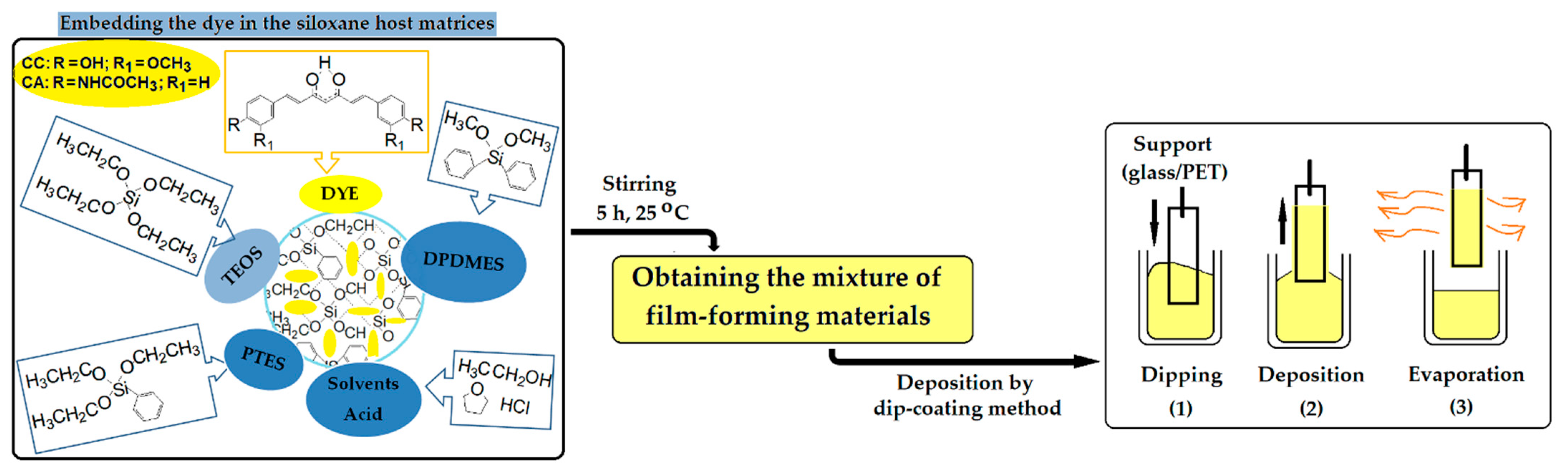
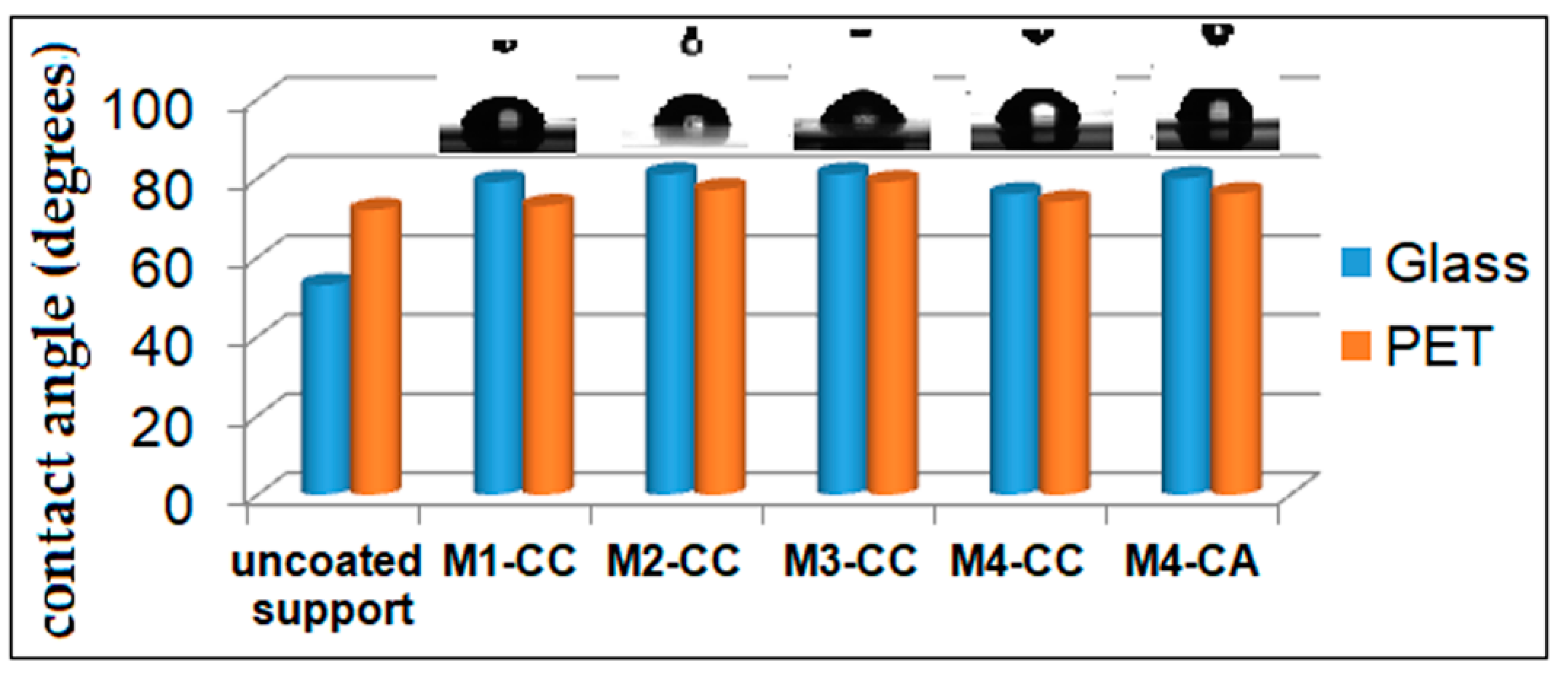
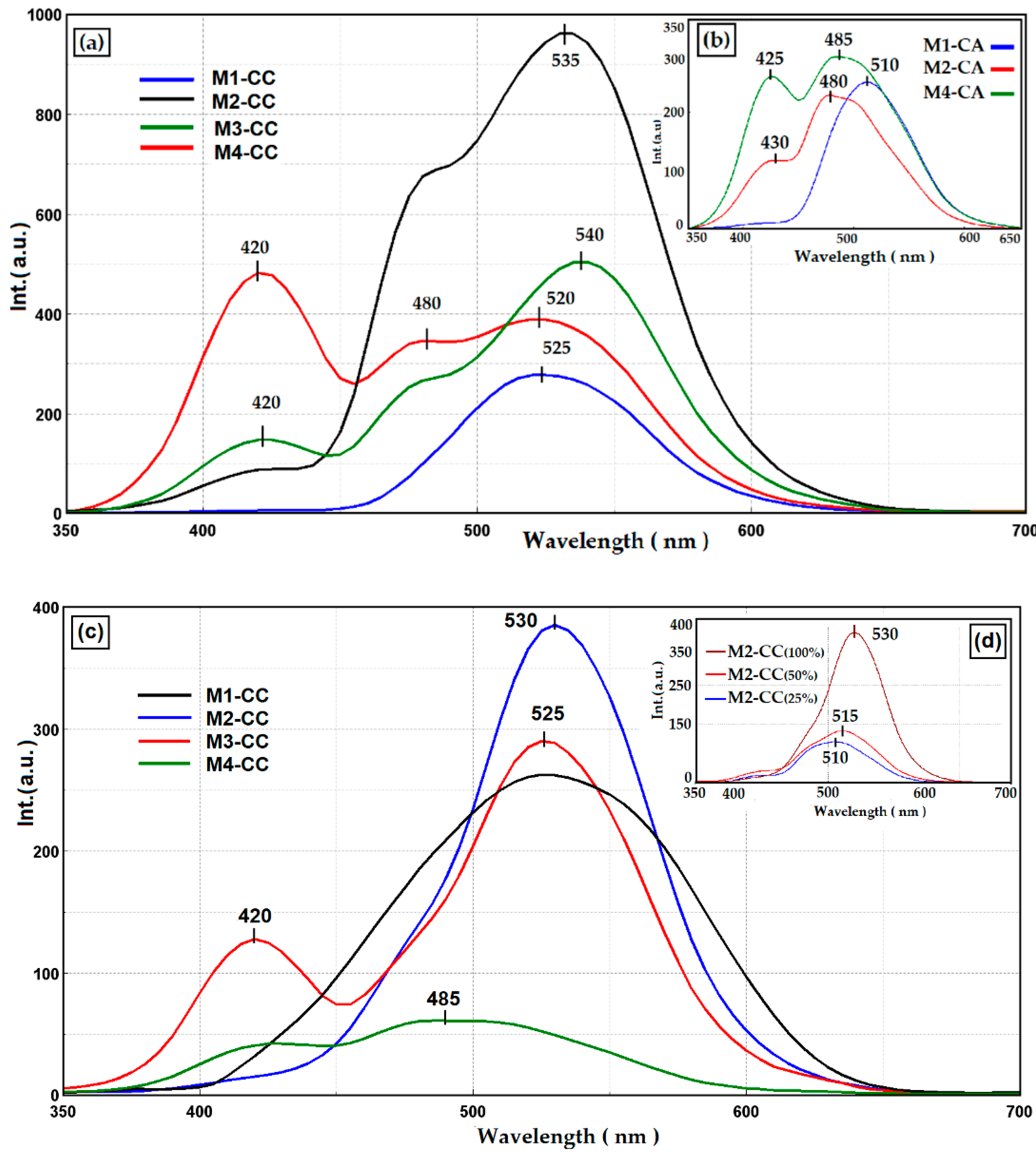
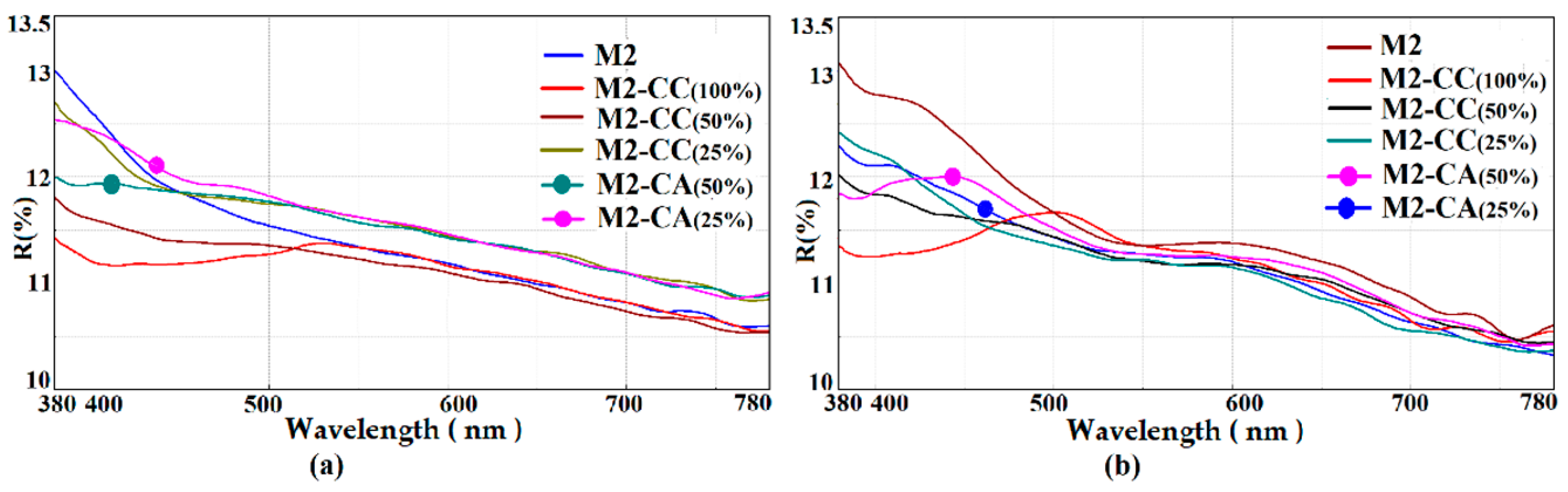
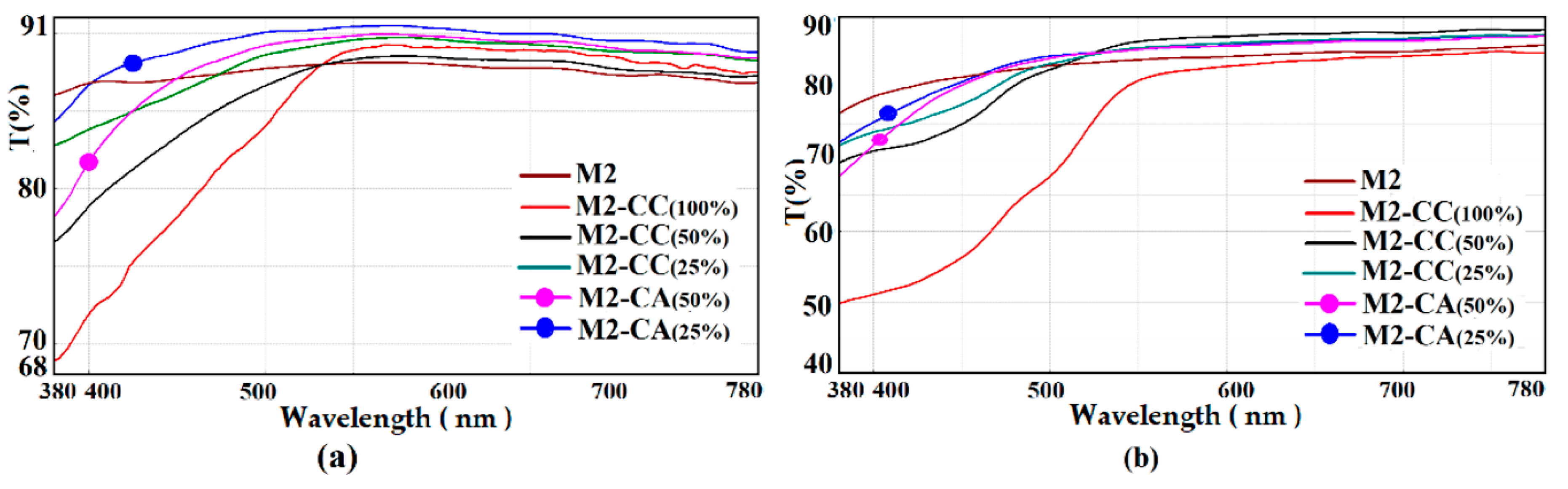
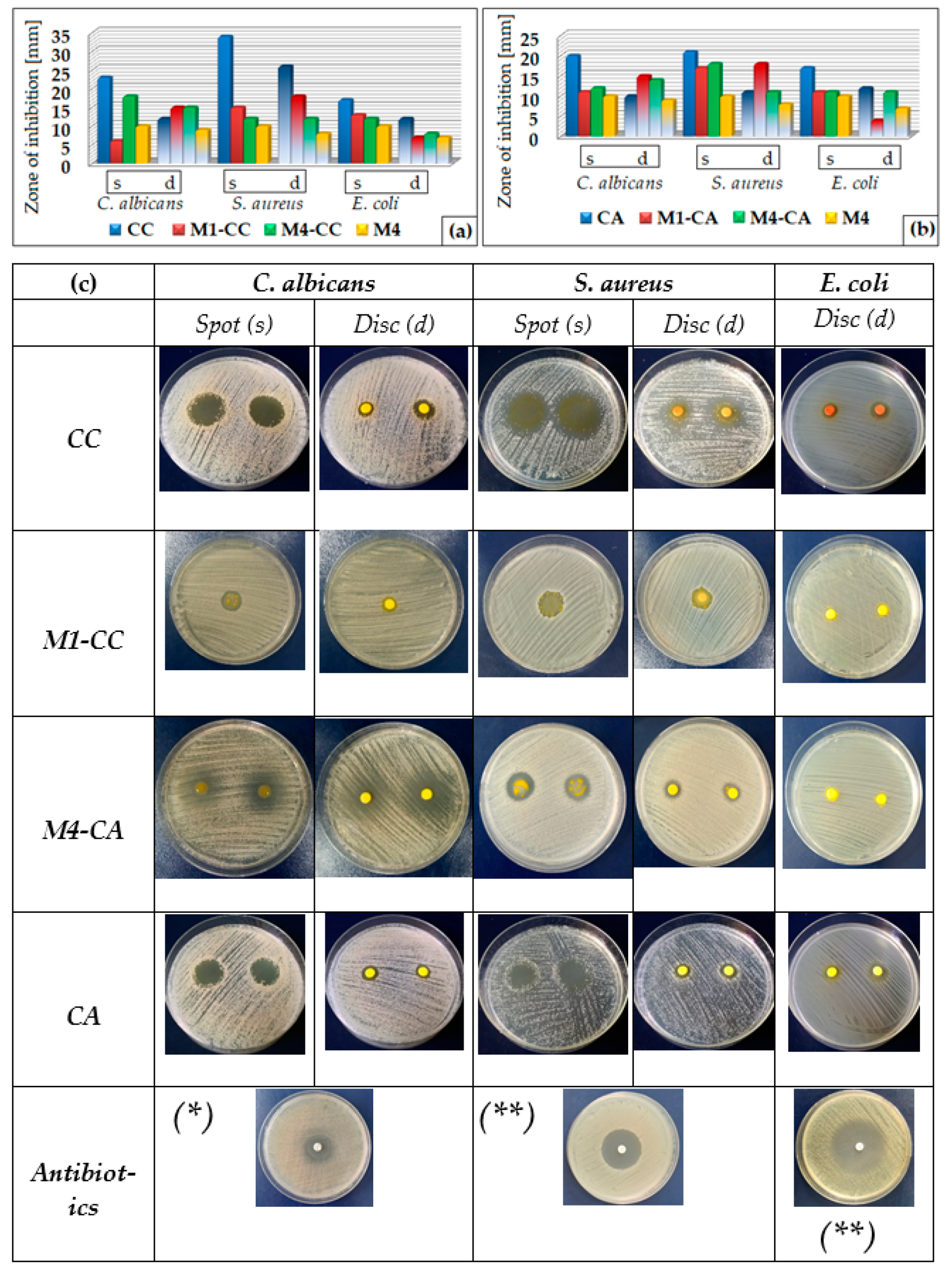
Research in the field of natural dyes has constantly focused on methods of conditioning curcumin and diversifying their fields of use. In this study, hybrid materials were obtained from modified silica structures, as host matrices, in which curcumin dyes were embedded. The influence of the silica network structure on the optical properties and the antimicrobial activity of the hybrid materials was monitored. By modifying the ratio between phenyltriethoxysilane:diphenyldimethoxysilane (PTES:DPDMES), it was possible to evaluate the influence the organosilane network modifiers had on the morphostructural characteristics of nanocomposites. The nanosols were obtained by the sol–gel method, in acid catalysis. The nanocomposites obtained were deposited as films on a glass support and showed a transmittance value (T measured at 550 nm) of around 90% and reflectance of about 11%, comparable to the properties of the uncovered support. For the coatings deposited on PET (polyethylene terephthalate) films, these properties remained at average values of T550 = 85% and R550 = 11% without significantly modifying the optical properties of the support. The sequestration of the dye in silica networks reduced the antimicrobial activity of the nanocomposites obtained, by comparison to native dyes. Tests performed on Candida albicans fungi showed good results for the two curcumin derivatives embedded in silica networks (11–18 mm) by using the spot inoculation method; in comparison, the alcoholic dye solution has a spot diameter of 20–23 mm. In addition, hybrids with the CA derivative were the most effective (halo diameter of 17–18 mm) in inhibiting the growth of Gram-positive bacteria, compared to the curcumin derivative in alcoholic solution (halo diameter of 21 mm). The results of the study showed that the presence of 20–40% by weight DPDMES in the composition of nanosols is the optimal range for obtaining hybrid films that host curcumin derivatives, with potential uses in the field of optical films or bioactive coatings.
Keywords: curcumin derivatives; hybrid films; fluorescence emission; antimicrobial activity curcumin derivatives; hybrid films; fluorescence emission; antimicrobial activity