Material Selection and Characterization for a Novel Frame-Integrated Curtain Wall
Abstract
1. Introduction
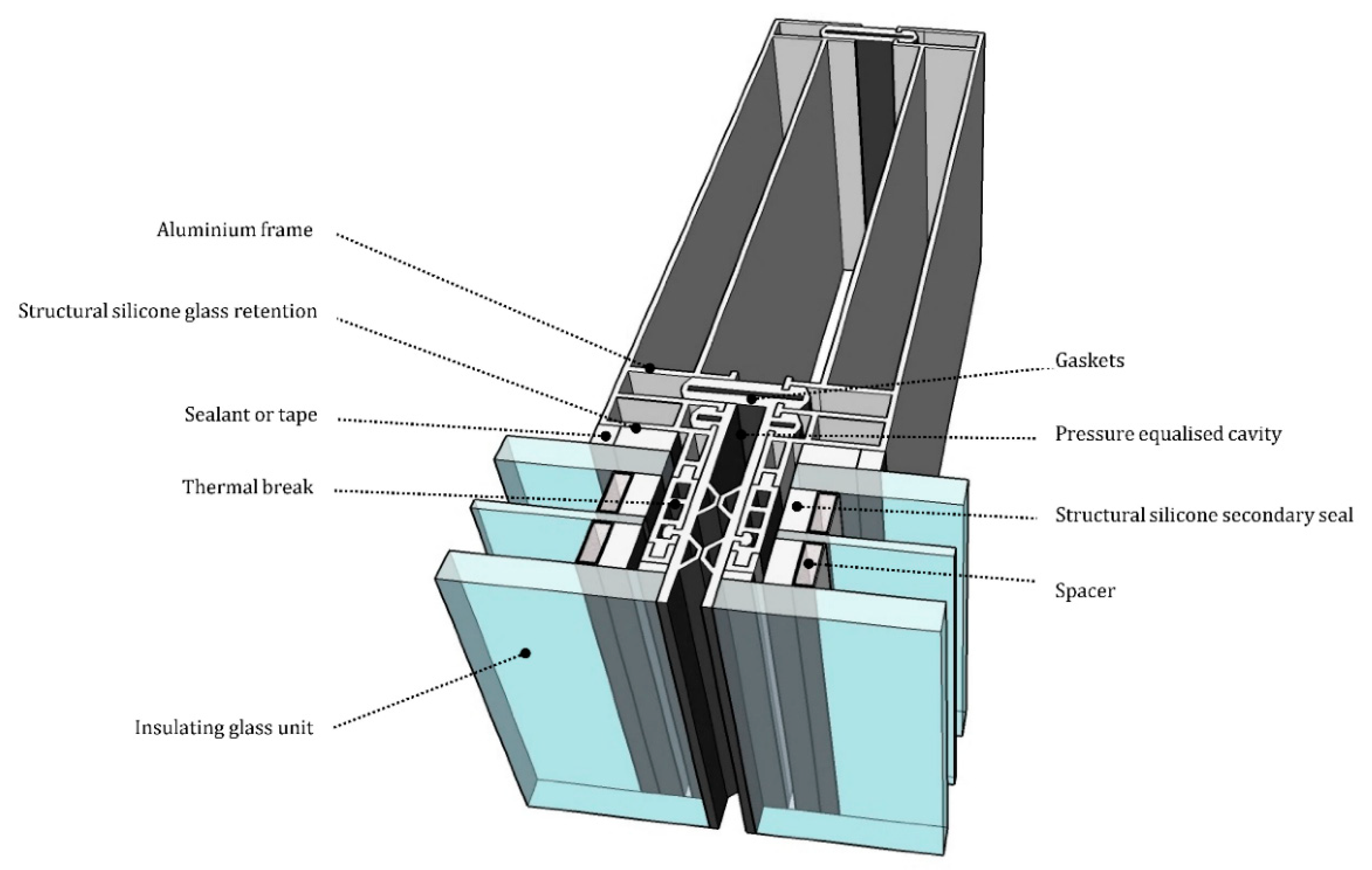
1.1. Limitations of Conventional Curtain Walls
1.2. State of the Art
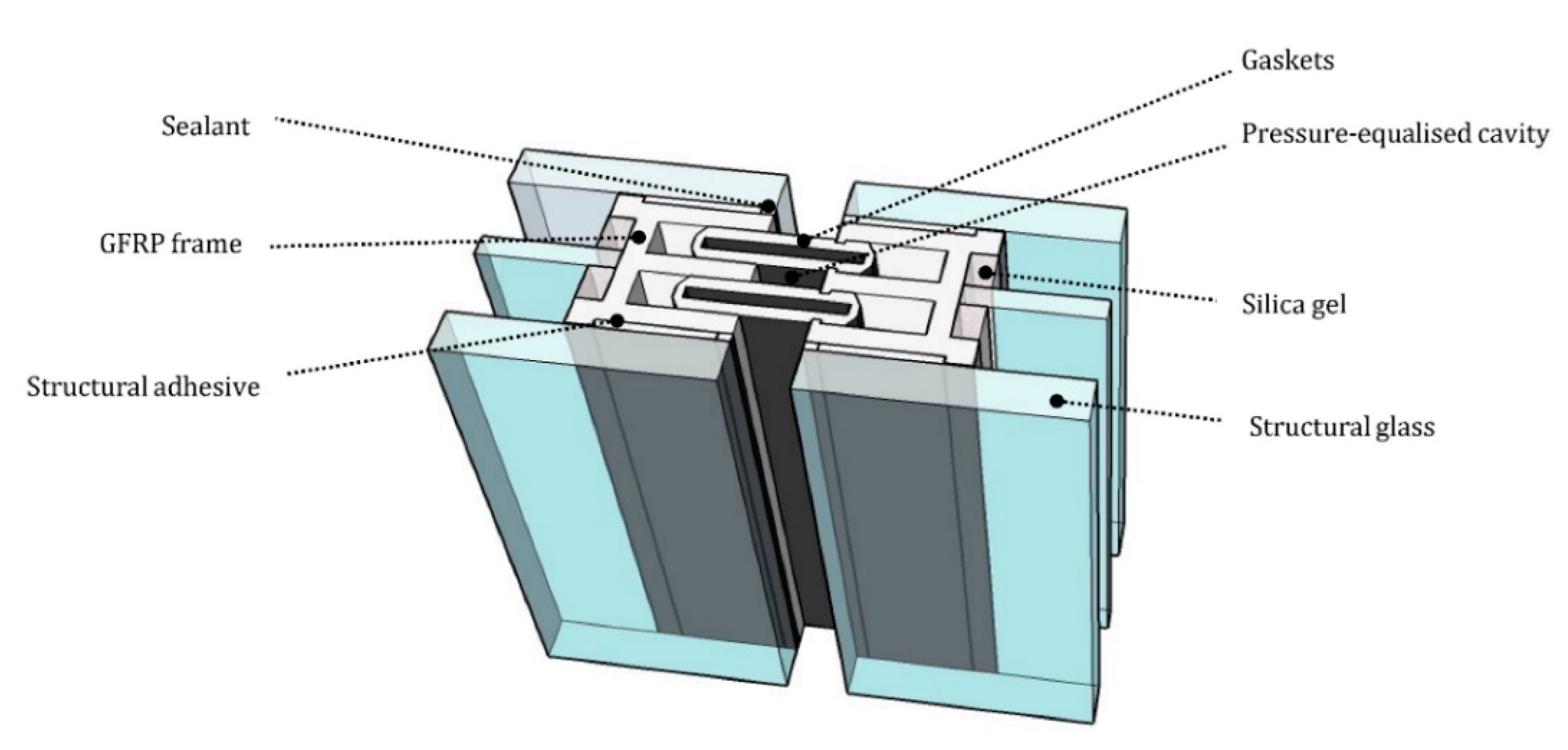
1.3. Proposed Design
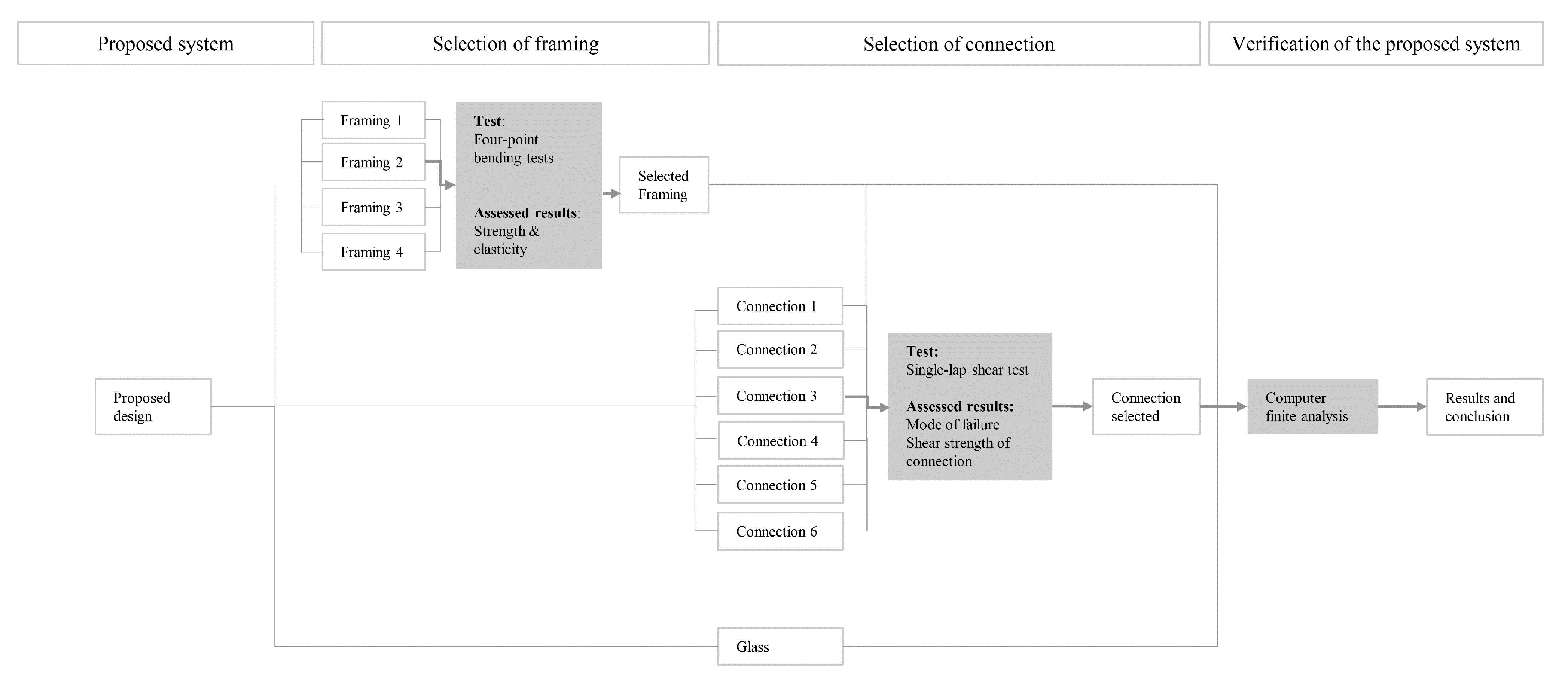
1.4. Study Aims
2. Materials and Methods
2.1. Materials
2.1.1. GFRP Specimens
2.1.2. Adhesive Specimens
- Have a shear strength in the range between 5 and 10 MPa based on preliminary wind load analytical calculations.
- Be minimum 2 mm, since the minimum permissible thickness of the bond was based on the fabrication allowable tolerances of GFRP and glass [36].
- Be dimensionally stable against moisture changes.
- Maintain not less than 75% of their shear strength at a temperature of +80 °C. The reason is that at elevated temperatures some adhesives might lose stiffness and strength [39].
2.1.3. Glass for Testing
2.2. Methods
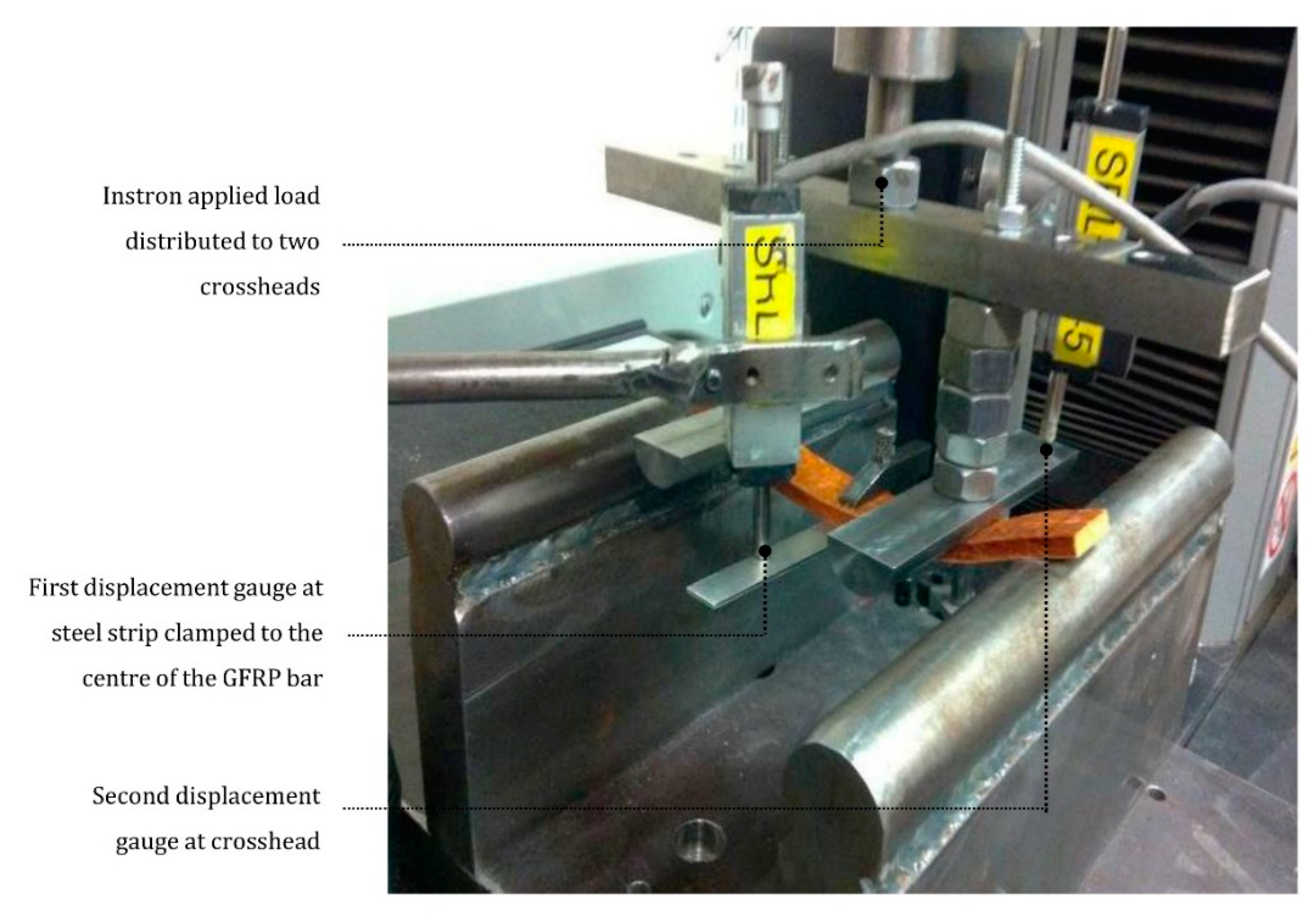
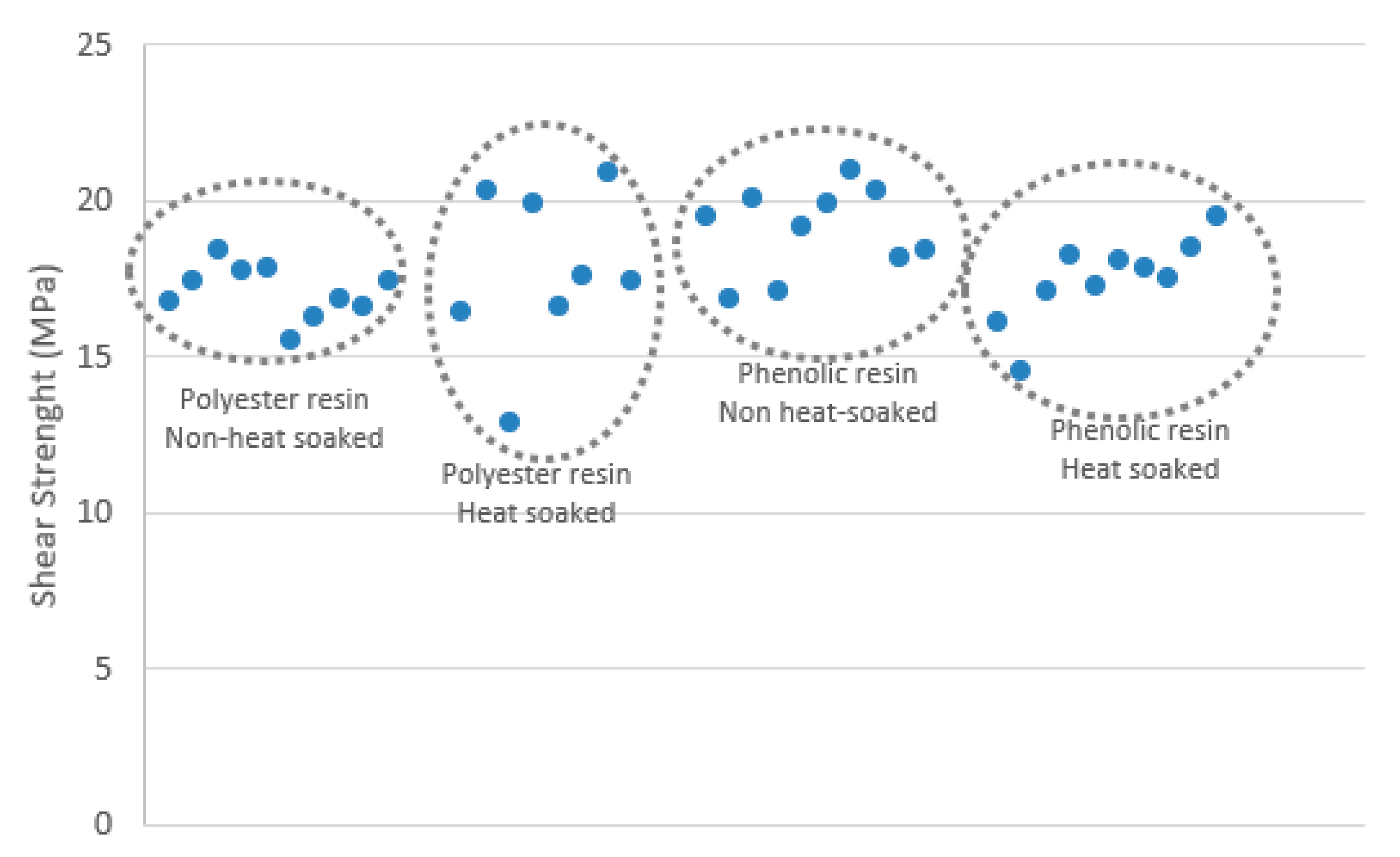
2.2.1. Four-Point Bending Test
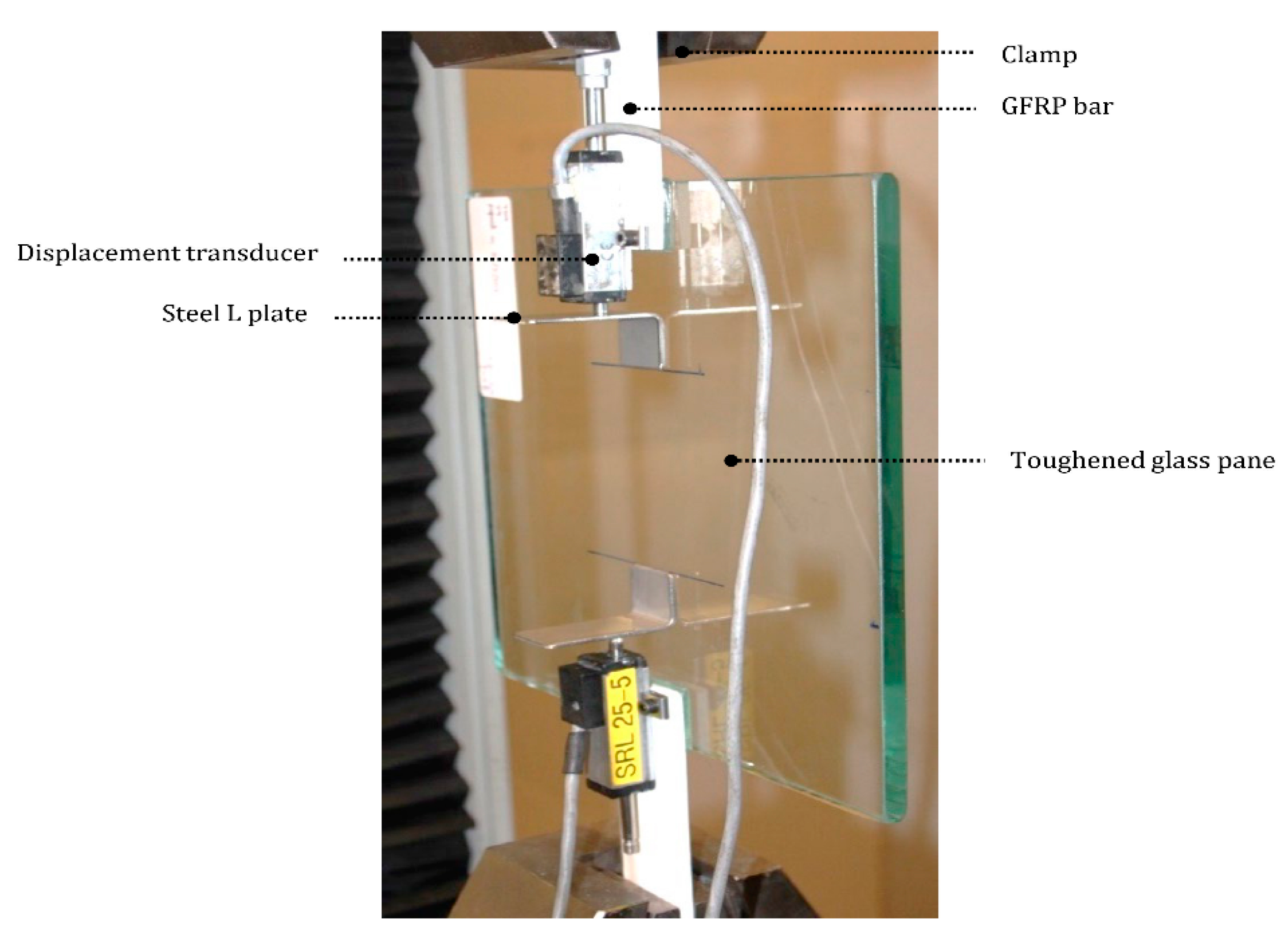
2.2.2. Single Lap Shear Test
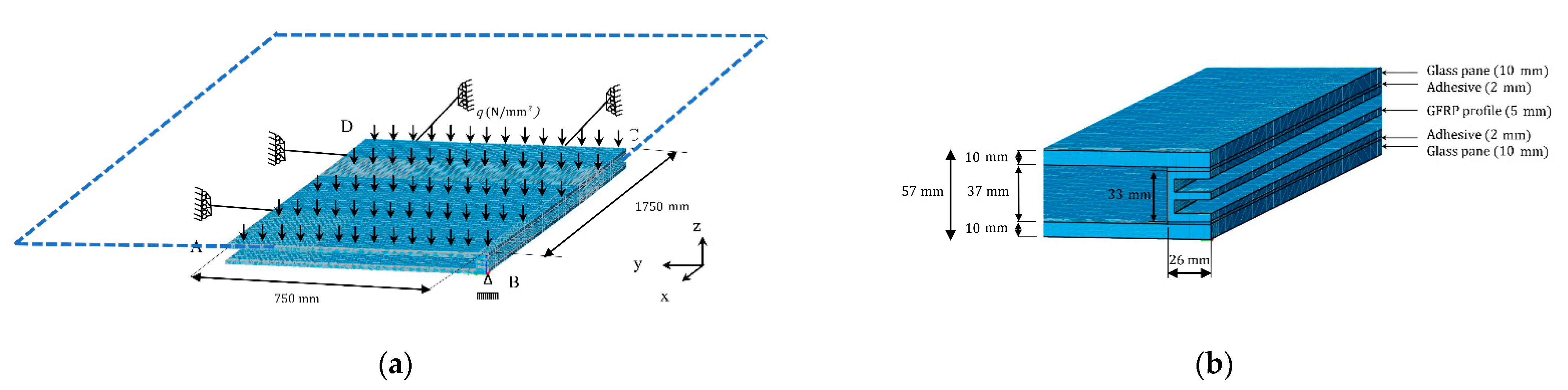
2.2.3. Computer Verification Method
Software and Model
Applied Load
- 10-min wind (qp = 750 N/m2) is Load case 1
- 1-s gust (qp = 3000 N/m2) is Load case 2
Material Properties for Computer Verification
3. Results
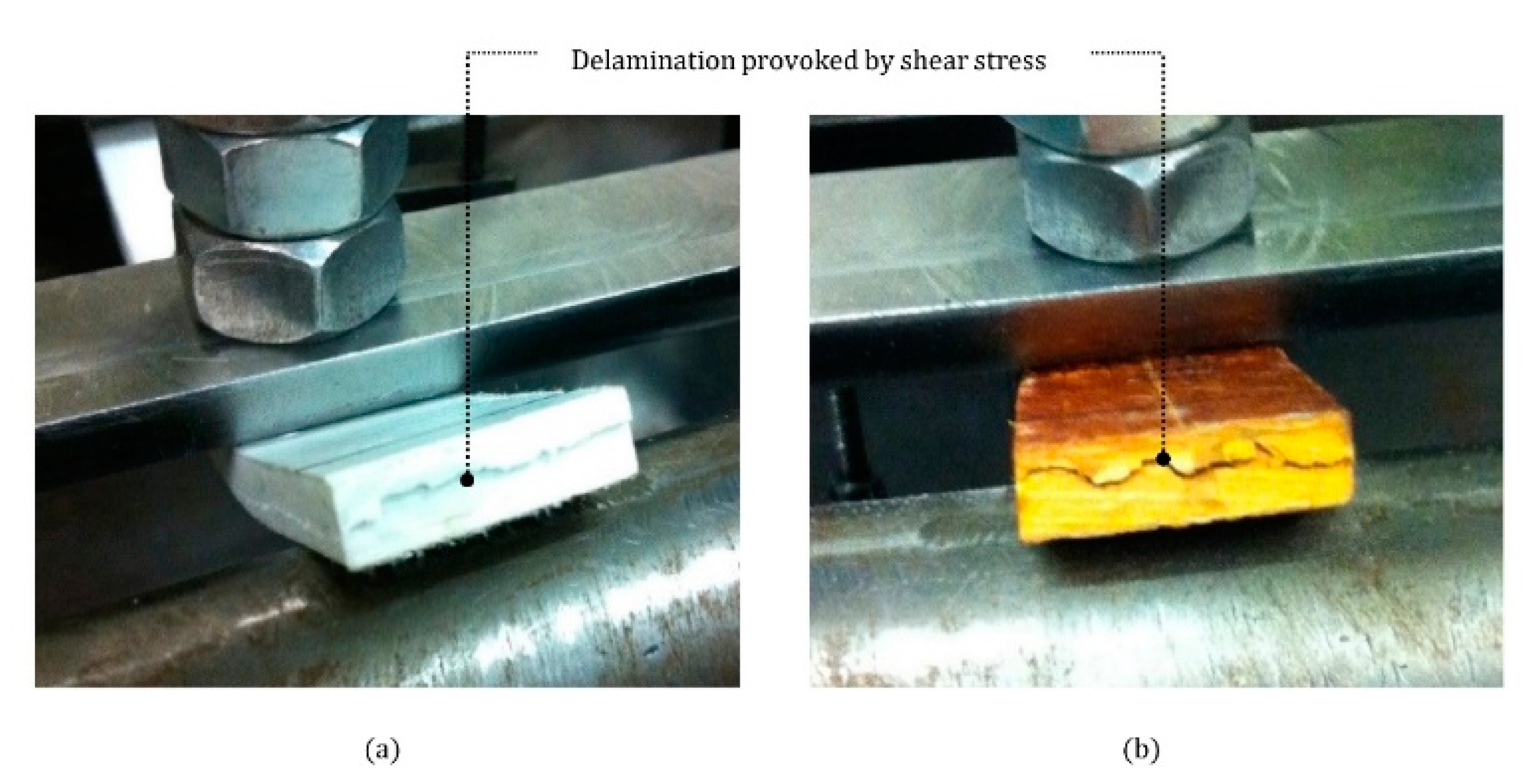
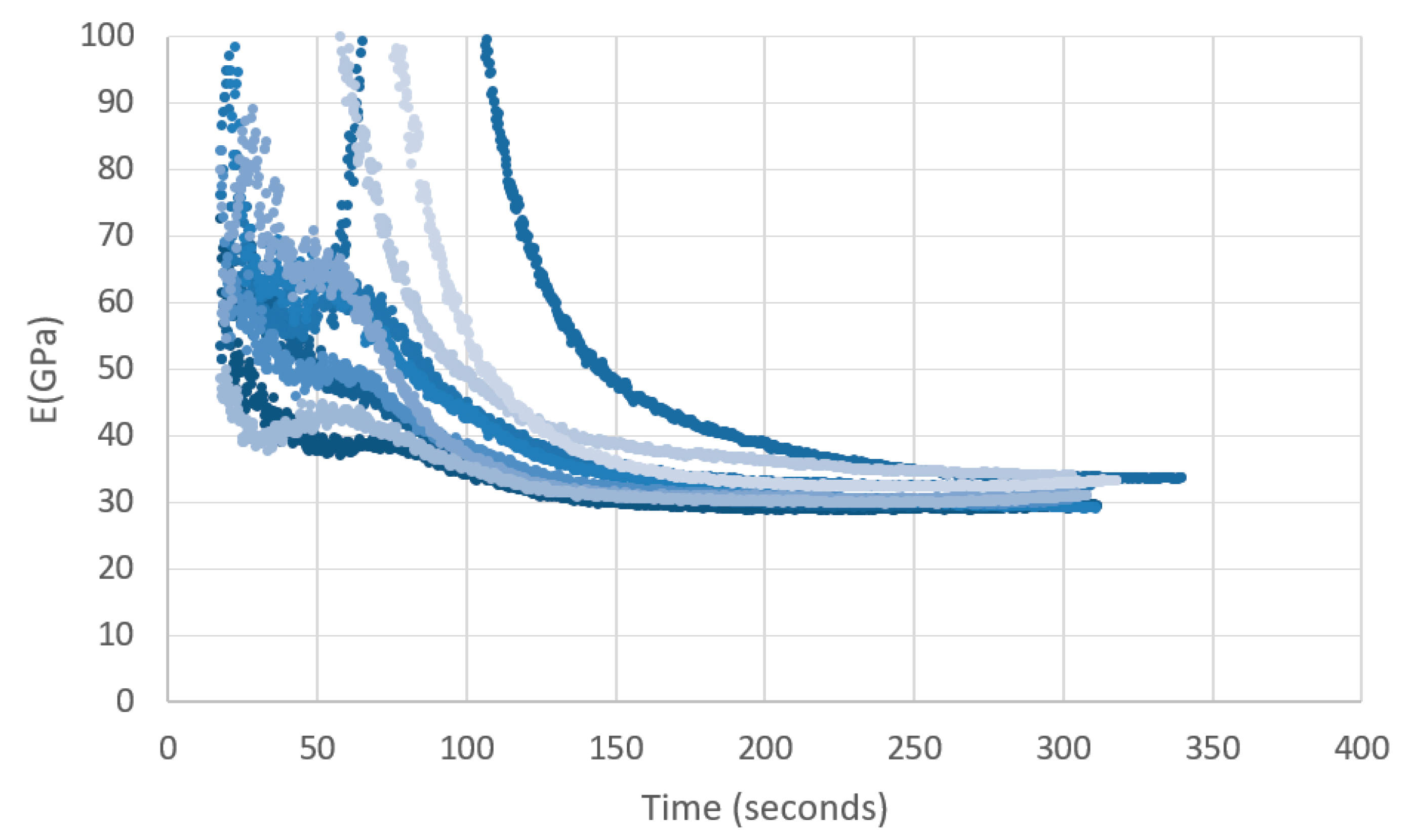
3.1. Four-Point Bending Test
3.2. Single Lab Shear Test
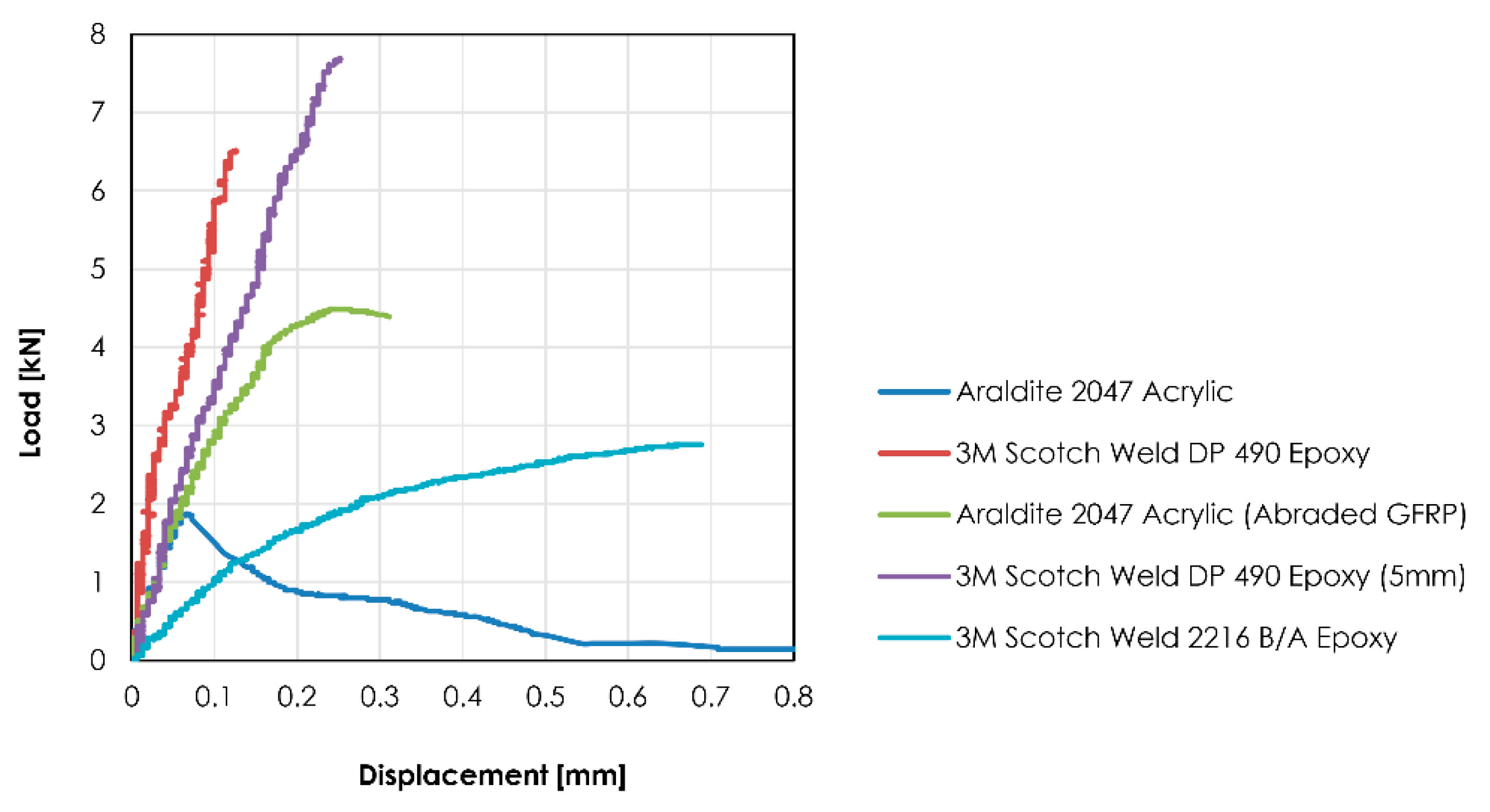
- 3M Scotch Weld DP 490 with a thickness of 3 mm: Glass failure was observed in all specimens. Mainly glass breakage and one specimen due to paring of the glass at the edge. It was considered that adhesive peak shear stress was caused by differential shear [44]. These stresses could have been transferred to the glass leading to high local stress concentration at the edge as the basis of the failure.
- 3M Scotch Weld DP 490 with a thickness of 5 mm: The thicker specimens of the DP490 ended also with glass failure. Although in this case mainly due to glass plucking. These adhesive specimens achieve the highest mean shear strength.
- 3M Scotch Weld 2216 B/A with a thickness of 3 mm: The failure mode and shear strength values shown by this adhesive during the single lab shear test was inconsistent with former studies [23].
- Dow Corning TSSA with a thickness of 3 mm: The tested shear strength of the adhesive was 0.26 MPa which is considerably lower than expected according to the information provided by the manufacturer [34] and was rejected.
- Huntsman Araldite 2047 with a thickness of 3 mm: Adhesion failure was observed in all specimens, leading to conclude that the GFRP bar surface required a level of roughness to be introduced.
- Huntsman Araldite 2047 with a thickness of 3 mm thick and abraded GFRP: Significant enhancement of the results were obtained when compared to the non-abraded GFRP and same adhesive. It is to be noted that this adhesive presented a plastic deformation before failure.
3.3. Computer Verification of the Proposed System
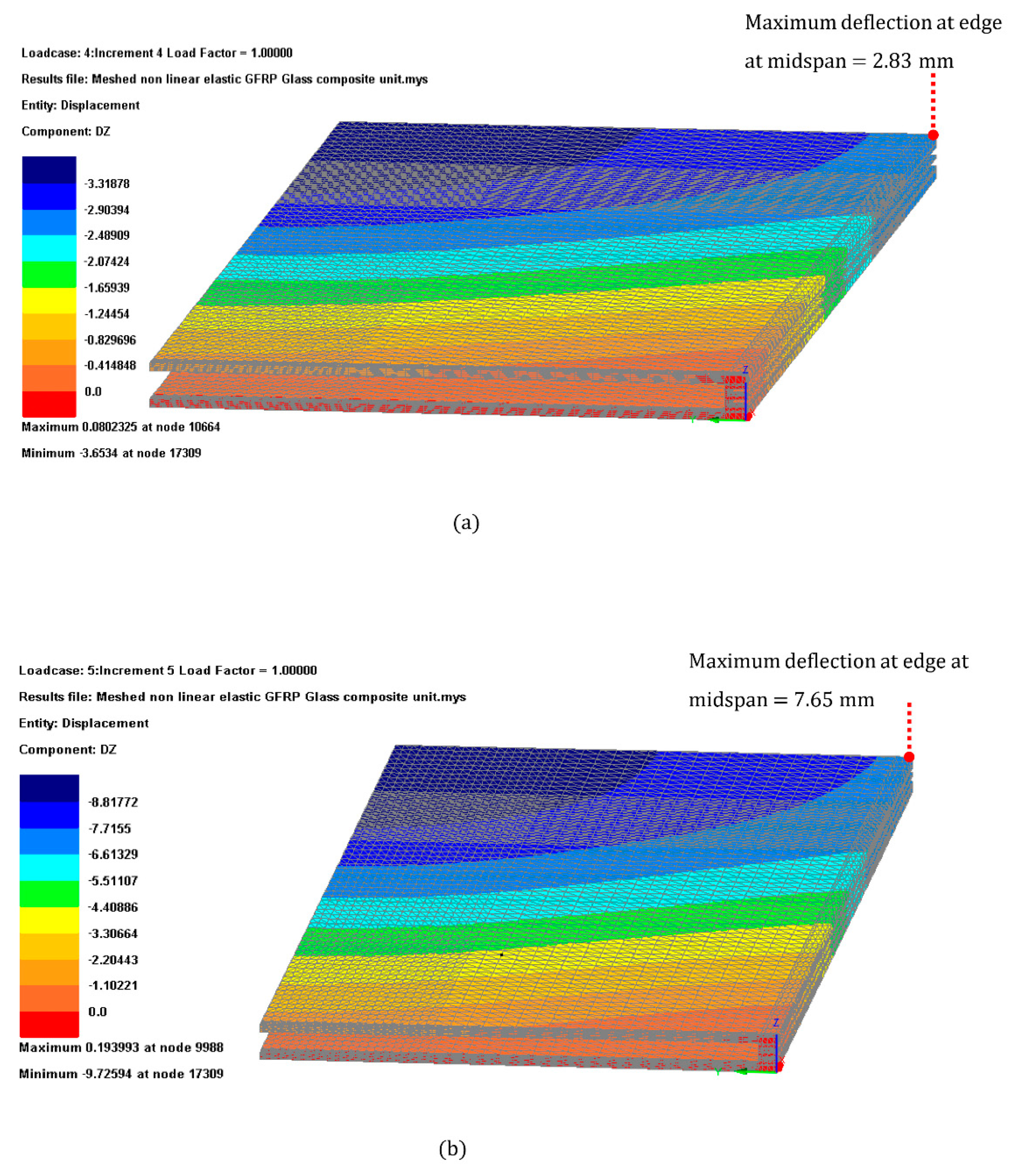
3.3.1. Glass Deflection
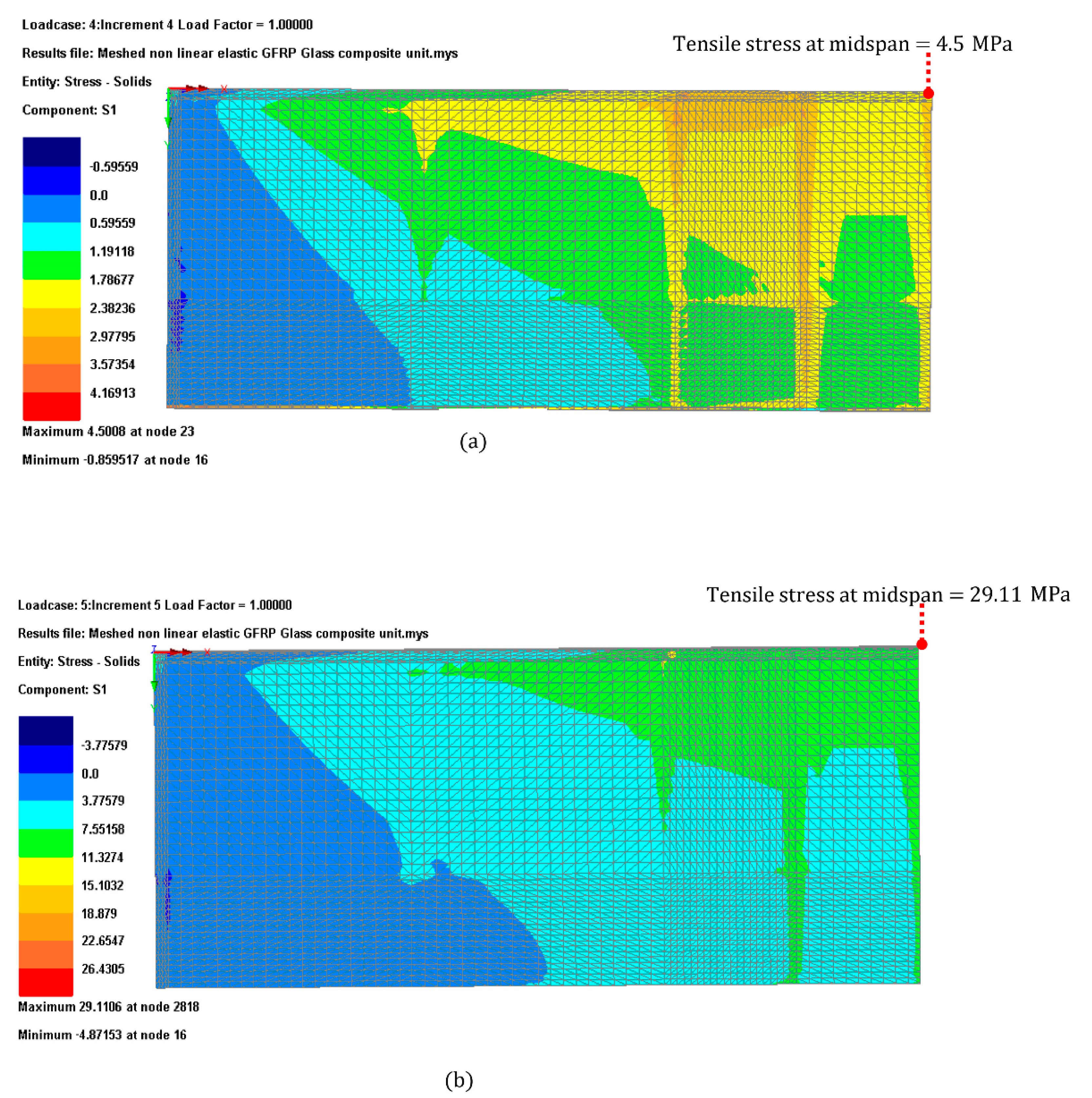
3.3.2. Glass Tensile Stress
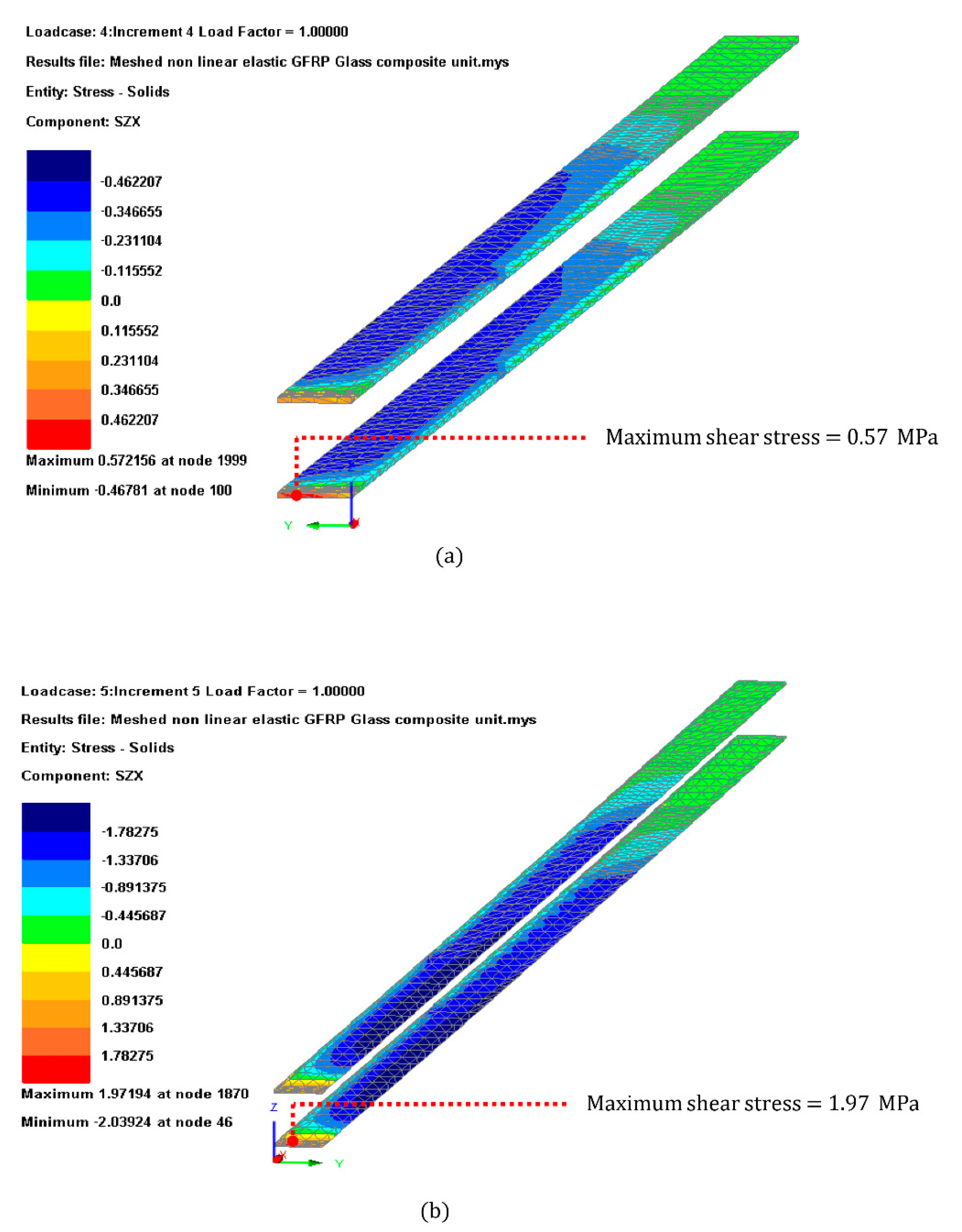
3.3.3. Adhesive Shear Stress
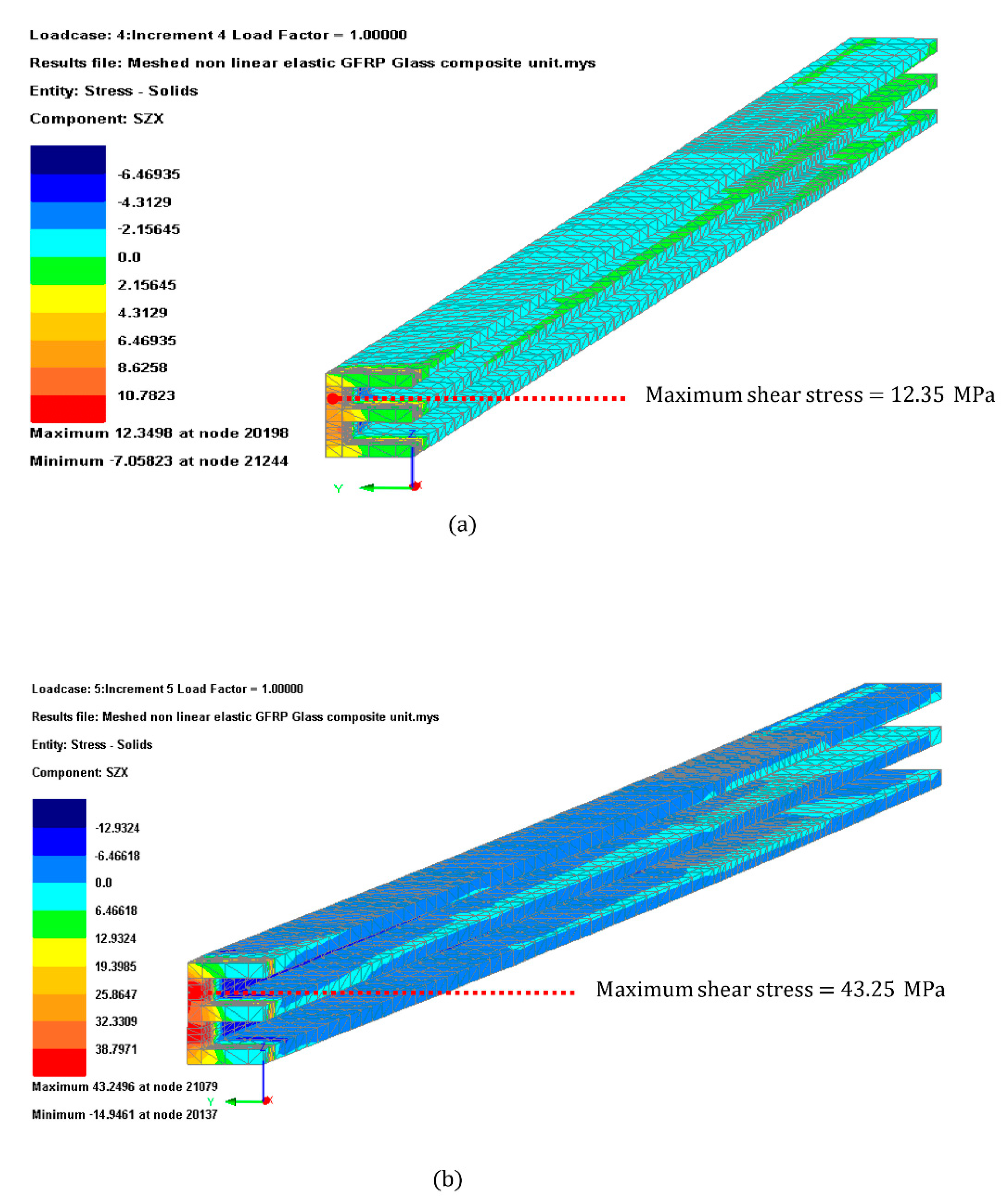
3.3.4. GFRP Shear Stress
4. Discussion
4.1. Selection of GFRP Material for Framing
4.2. Selection of Adhesive Material for Bonding
- 3M Scotch-Weld DP 490 with a thickness of 3 mm: Based on the majority of glass breakage failures, it was concluded that this adhesive was a very stiff. To increase the flexibility of the bond a 5 mm thick adhesive was used in subsequent test.
- 3M Scotch-Weld DP 490 with a thickness of 5 mm: Glass plucking was the main failure more observed with the increased thickness of this adhesive. It was concluded that a load path eccentricity might have occurred and led to bending moment at the glass edge. Since the mean shear strength was the highest, it makes this adhesive a potential candidate for the GFRP-glass composite unit.
- 3M Scotch Weld 2216 B/A with a thickness of 3 mm: The failure mode and shear strength values shown by this adhesive during the single lab shear test was inconsistent with former studies [23]. In addition, the mean shear strength obtained was low and therefore this adhesive was discarded for the GFRP-glass composite unit.
- Dow Corning TSSA with a thickness of 3 mm: The low shear strength obtained when compared to value provided by the manufacturer led to conclude the application of this adhesive was not carried out in accordance with manufacturer’s recommendations [34]. This adhesive was discarded for the GFRP-glass composite unit until further testing in line with manufacturer’s recommendations are executed.
- Huntsman Araldite 2047 with a thickness of 3 mm: Since adhesion failure was observed in all specimens, it was decided to carry out the test with abraded GFRP. The results of the non-abraded GFRP were discarded.
- Huntsman Araldite 2047 with a thickness of 3 mm thick and abraded GFRP: Significant enhancement were observed when compared to non-abraded GFRP results for the same adhesive. Before failure, the adhesive presented a plastic deformation that could be beneficial in the GFRP-glass composite unit as it might give a visual deformation as a signal of a future collapse.
4.3. Further Investigations
- GFRP framing: Investigating options to reinforce the GFRP at the areas adjacent to the supports. A solution could be reinforcing with steel plates or by arranging the glass fibers in multiple directions in the pultrusion fabrication process [47].
- Load duration: Carry out testing at full scale prototype subject to dynamic wind pressure to investigate the variable modulus of elasticity obtained in the four-point bending test.
- Adhesive: Further testing of 3M Scotch-Weld DP 490 and Huntsman Araldite 2047 could be carried out to explore the suitable thickness for each adhesive. While a 5 mm thick bond is appropriate for DP 490, the thickness of Huntsman Araldite 2047 could be reduced to 2 mm to increase its stiffness. TSSA could be re-tested ensuring that the adhesive storage and application protocol follow manufacturer’s recommendation. For all candidate adhesives, it would be good to eliminate or reduce the induced bending moment by clamping the GFRP close to the bond or performing double-lap instead of single-lap shear tests.
5. Conclusions
- The maximum deflection at the glass edge, maximum tensile stress at the glass surface and maximum shear stress at the adhesive connection are within admissible values and below 55% utilization ratio.
- The shear stress at the GFRP frame was generally within allowable values except at areas adjacent to the support, which are currently 2.5-times larger than the limit set by the four-point bending test. This indicates that the vulnerability of the GFRP-glass composite unit is the shear strength at the corner support and that increasing the strength at that area requires to be studied further.
- The short duration load is decisive for the feasibility of the GFRP-glass composite unit. The wind loading considered in this study was in accordance with BS EN 1991-1-4 [43] which assumes the short duration loads have a factor of 4 with respect to the long duration load cases. For future research, it is advisable to test a full scale prototype subject to dynamic wind pressure to investigate the modulus of elasticity.
Author Contributions
Funding
Institutional Review Board Statement
Informed Consent Statement
Data Availability Statement
Conflicts of Interest
References
- Saeedi, M. Study the Effects of Construction New Techniques and Technologies on Time, Cost and Quality of Construction Projects from the Perspective of Construction Management. Civ. Eng. Mater. Appl. 2017, 1, 61–67. [Google Scholar] [CrossRef]
- Colinart, T.; Bendouma, M.; Glouannec, P. Building renovation with prefabricated ventilated façade element: A case study. Energy Build. 2019, 186, 221–229. [Google Scholar] [CrossRef]
- Lesniak, A.; Gorka, M. Analysis of the cost structure of aluminum and glass facades. In Advances and Trends in Engineering Sciences and Technologies III, Proceedigns of the 3rd International Conference on Engineerng Sciences and Technologies (ESaT 2018), Tatranské Matliare, Slovak, 12–14 September 2018; CRC Press Taylor & Francis Group: Boca Ratone, FL, USA, 2019. [Google Scholar]
- Górka, M. Use of aluminium and glass facades in urban architecture. Civ. Eng. Arch. 2019, 18, 29–40. [Google Scholar] [CrossRef][Green Version]
- Bedon, C.; Amadio, C. Numerical assessment of vibration control systems for multi-hazard design and mitigation of glass curtain walls. J. Build. Eng. 2018, 15, 1–13. [Google Scholar] [CrossRef]
- Wu, Y.; Flemmer, C. Glass Curtain Wall Technology and Sustainability in Commercial Buildings in Auckland, New Zealand. Int. J. Built Environ. Sustain. 2020, 7, 57–65. [Google Scholar] [CrossRef]
- Vigener, B. Building Envelope Design Guide: Curtain Walls; Simpson Gumpertz & Heger: Waltham, MA, USA, 2016. [Google Scholar]
- Bedon, C. Structural Glass Systems under Fire: Overview of Design Issues, Experimental Research, and Developments. Adv. Civ. Eng. 2017, 2017, 1–18. [Google Scholar] [CrossRef]
- Bazli, M.; Abolfazl, M. Mechanical Properties of Fibre Reinforced Polymers under Elevated Temperatures: An Overview. Polymers 2020, 12, 2600. [Google Scholar] [CrossRef]
- Sirajudeen, R.S.; Sekar, R. Buckling Analysis of Pultruded Glass Fiber Reinforced Polymer (GFRP) Angle Sections. Polymers 2020, 12, 2532. [Google Scholar] [CrossRef]
- Wurm, J. Glass Structures: Design and Construction of Self-Supporting Skins; Birkhäuser: Basel, Swizerland, 2007; ISBN 978-3-7643-7608-6. [Google Scholar]
- Petersen, L. Building Façade Structure with Joined Pultruded Elements. U.S. Patent 8,402,705, 26 March 2013. [Google Scholar]
- Seele, G. Insulating Glass Unit. U.S. Patent 2010/0011703, 10 June 2010. [Google Scholar]
- Bedon, C.; Agullo, C.P.; Luna-Navarro, A.; Overend, M.; Favoino, F. Thermo-mechanical Investigation of Novel GFRP-glass Sandwich Facade Components. In Proceedings of the Challenging Glass 6—Conference on Architectural and Structural Applications of Glass, Delft, The Netherlands, 17–18 May 2018. [Google Scholar]
- Bedon, C.; Louter, C. Numerical investigation on structural glass beams with GFRP-embedded rods, including effects of pre-stress. Compos. Struct. 2018, 184, 650–661. [Google Scholar] [CrossRef]
- Pascual, C.; Montali, J.; Overend, M. Adhesively-bonded GFRP-glass sandwich components for structurally efficient glazing applications. Compos. Struct. 2017, 160, 560–573. [Google Scholar] [CrossRef]
- Barretta, R.; Fabbrocino, F.; Luciano, R.; De Sciarra, F.M.; Ruta, G. Buckling loads of nano-beams in stress-driven nonlocal elasticity. Mech. Adv. Mater. Struct. 2020, 27, 869–875. [Google Scholar] [CrossRef]
- Pinnola, F.; Faghidian, S.A.; Barretta, R.; de Sciarra, F.M. Variationally consistent dynamics of nonlocal gradient elastic beams. Int. J. Eng. Sci. 2020, 149, 103220. [Google Scholar] [CrossRef]
- Ansari, R.; Oskouie, M.F.; Roghani, M.; Rouhi, H. Nonlinear analysis of laminated FG-GPLRC beams resting on an elastic foundation based on the two-phase stress-driven nonlocal model. Acta Mech. 2021, 2, 1–17. [Google Scholar] [CrossRef]
- Magalhães, S.; Alves, L.; Medronho, B.; Fonseca, A.C.; Romano, A.; Coelho, J.F.; Norgren, M. Brief Overview on Bio-Based Adhesives and Sealants. Polymers 2019, 11, 1685. [Google Scholar] [CrossRef] [PubMed]
- Bas, G.S.; Sancaktar, E. Mechanical Behavior of Toughened Epoxy Structural Adhesives for Impact Applications. ChemEngineering 2020, 4, 38. [Google Scholar] [CrossRef]
- Overend, M.; Jin, Q.; Watson, J. The selection and performance of adhesives for a steel–glass connection. Int. J. Adhes. Adhes. 2011, 31, 587–597. [Google Scholar] [CrossRef]
- Nhamoinesu, S.; Overend, M. The mechanical performance of adhesives for a steel-glass composite façade system. Challenging Glass 2012, 3, 293–306. [Google Scholar]
- Belis, J.L.I.F.; van Hulle, A.; Out, B.; Bos, F.P.; Callewaert, D.; Poulis, H. Broad screening of adhesives for glass-metal bonds. In Proceedings of the Glass Performance Days, Tampere, Finland, 17–20 June 2011; pp. 286–289. [Google Scholar]
- Peters, S. Bonding of Fiberglass and Glass for Constructional Applications; University of Stuttgart Press: Stuttgart, Germany, 2006. [Google Scholar]
- Bues, M.; Schuler, C.; Albiez, M.; Ummenhofer, T.; Fricke, H.; Vallée, T. Load bearing and failure behaviour of adhesively bonded glass-metal joints in façade structures. J. Adhes. 2019, 95, 653–674. [Google Scholar] [CrossRef]
- Cordero, B.; García-Santos, A.; Overend, M. Thermal performance of novel frame-integrated unitised curtain wall. Rev. Constr. 2015, 14, 23–31. [Google Scholar] [CrossRef]
- Mouritz, A.P. Post-fire flexural properties of fibre-reinforced polyester, epoxy and phenolic composites. J. Mater. Sci. 2002, 37, 1377–1386. [Google Scholar] [CrossRef]
- Khaneghahi, M.H.; Najafabadi, E.P.; Bazli, M.; Oskouei, A.V.; Zhao, X.-L. The effect of elevated temperatures on the compressive section capacity of pultruded GFRP profiles. Constr. Build. Mater. 2020, 249, 118725. [Google Scholar] [CrossRef]
- The British Standards Institution. BS EN 13706-1. Reinforced Plastics Composites. Specifications for Pultruded Profiles. Designation; The British Standards Institution: London, UK, 2002. [Google Scholar]
- Fiberline. Design Manual, 2nd ed.; Fiberline: Kolding, Denmark, 2003. [Google Scholar]
- Huntsman Advanced Materials. Intertronics. Technical Data, Araldite 2047. 2007. Available online: http://www.intertronics.co.uk/data/ara2047.pdf (accessed on 7 March 2014).
- 3M Scotch-Weld. Technical Data Sheet DP 490. 1996. Available online: http://polymerteknik.com/pdf/datablad/DP_490_Tek.pdf (accessed on 8 March 2014).
- Dow Corning. Product Information, TSSA Transparent Structural Silicone Adhesive. 2013. Available online: http://www.dowcorning.com/content/publishedlit/62-1709.pdf (accessed on 25 August 2014).
- Orlowski, K.; Shanaka, K.; Mendis, P. Design and Development of Weatherproof Seals for Prefabricated Construction: A Methodological Approach. Buildings 2018, 8, 117. [Google Scholar] [CrossRef]
- Eckelt. Eckelt Glassolutions. June 2014. Available online: http://www.eckelt.at/en/downloads/produkte/tolerances_handbook.pdf (accessed on 16 March 2021).
- Machalická, K.; Vokáč, M.; Eliášová, M. Influence of artificial aging on structural adhesive connections for façade applications. Int. J. Adhes. Adhes. 2018, 83, 168–177. [Google Scholar] [CrossRef]
- Bull, E.D.; Lucas, G.M. 30 Year outdoor weathering study of construction sealants. In Durability of Building Construction Sealants and Adhesives; ASTM International: West Conshohocken, PA, USA, 2015; pp. 150–183. [Google Scholar]
- Banea, M.D.; Da Silva, L.F.M. The effect of temperature on the mechanical properties of adhesives for the automotive industry. Proc. Inst. Mech. Eng. Part L J. Mater. Des. Appl. 2010, 224, 51–62. [Google Scholar] [CrossRef]
- The British Standards Institution. BS EN 12150-2. In Glass in Building. Thermally Toughened Soda Lime Silicate Safety Glass; Evaluation of Conformity/Product Standard; The British Standards Institution: London, UK, 2004. [Google Scholar]
- American Society for Testing and Materials. ASTM D7264 and D7264M. In Standard Test Method for Flexural Properties of Polymer Matrix Composite; American Society for Testing and Materials: West Conshohocken, PA, USA, 2007. [Google Scholar]
- American Society for Testing and Materials. ASTM D 1002. Standard Test Method for Apparent Shear Strength of Single- Lap-Joint Adhesively Bonded Metal Specimens by Tension Loading (Metal-to-Metal); American Society for Testing and Materials: West Conshohocken, PA, USA, 1999. [Google Scholar]
- The British Standards Institution. BS EN 1991-1-4. Eurocode 1: Actions on Structures—Part 1-4: General Actions—Wind Actions; The British Standards Institution: London, UK, 2005. [Google Scholar]
- Adams, R.D.; Comyn, J.; Wake, W.C. Structural Adhesive Joints in Engineering, 2nd ed.; Chapman & Hall: London, UK, 1997. [Google Scholar]
- CWCT. Standard for systemised building envelopes. In Centre for Window and Cladding Technology; University of Bath: Bath, UK, 2005. [Google Scholar]
- American Society for Testing and Materials. ASTM E 1300. Standard Practice for Determining Load Resistance of Glass in Buildings; ASTM International: West Conshohocken, PA, USA, 2009. [Google Scholar]
- Cripps, A. CIRIA C564—Fibre-Reinforced Polymer Composites in Construction; CIRIA: London, UK, 2002. [Google Scholar]


| Matrix | Polyester Resin | Phenolic Resin |
|---|---|---|
| Heat soaked | 10 | 10 |
| Non-heat soaked | 10 | 10 |
| Adhesive Type | Brand | Product Name | Thickness |
|---|---|---|---|
| Acrylate | Huntsman | Araldite 2047 | 3 mm |
| Epoxy | 3M Scotch | Weld DP 490 | 3 mm |
| Epoxy | 3M Scotch | Weld DP 490 | 5 mm |
| Epoxy | 3M Scotch | Weld 2216 B/A | 3 mm |
| Silicone | Dow Corning | Transparent Silicone Structural Adhesive (TSSA) | 3 mm |
| Mechanical Property | Load Case 1 | Load Case 2 |
|---|---|---|
| Wind load duration | 600 s | 1 s |
| Wind pressure | 750 N/m2 | 3000 N/m2 |
| Glass E | 70 GPa | 70 GPa |
| Glass v | 0.23 | 0.23 |
| GFRP E | 23.37 GPa 1 | 100 GPa 2 |
| GFRP v | 0.3 | 0.3 |
| GFRP yield stress | 75 MPa | 75 MPa |
| Huntsman Araldite A2047 E | 142.35 GPa 3 | 634.90 GPa 4 |
| Huntsman Araldite A2047 v | 0.43 4 | 0.43 4 |
| Hunstman Araldite yield stress | 3.61 5 | 3.61 5 |
| Candidate Adhesive | Thickness | Total Number of Specimens | Failure Mode | Number of Specimens with Each Failure Mode | Mean Load at Failure | Mean Displacement at Failure | Mean Shear Strength |
|---|---|---|---|---|---|---|---|
| 3M Scotch Weld DP 490 | 3 mm | 10 | Breakage of glass Paring of glass at joint | 9 1 | 5.38 kN | 0.11 mm | 4.49 MPa |
| 3M Scotch Weld DP 490 | 5 mm | 3 | Breakage of glass Plucking of glass | 1 2 | 5.64 kN | 0.18 mm | 4.70 MPa |
| 3M Scotch Weld 2216 B/A | 3 mm | 3 | Adhesive failure Plucking of glass | 2 1 | 2.26 kN | 0.46 mm | 1.88 MPa |
| Dow Corning TSSA | 3 mm | 10 | Cohesion failure Adhesive failure | 9 1 | 0.26 kN | 24.09 mm | 0.21 MPa |
| Huntsman Araldite 2047 | 3 mm | 10 | Adhesion failure | 10 | 1.32 kN | 0.81 mm | 1.10 MPa |
| Huntsman Araldite 2047 with Abraded GFRP | 3 mm | 3 | Paring of glass at joint Adhesion failure | 2 1 | 4.28 kN | 0.28 mm | 3.57 MPa |
Publisher’s Note: MDPI stays neutral with regard to jurisdictional claims in published maps and institutional affiliations. |
© 2021 by the authors. Licensee MDPI, Basel, Switzerland. This article is an open access article distributed under the terms and conditions of the Creative Commons Attribution (CC BY) license (https://creativecommons.org/licenses/by/4.0/).
Share and Cite
Gargallo, M.; Cordero, B.; Garcia-Santos, A. Material Selection and Characterization for a Novel Frame-Integrated Curtain Wall. Materials 2021, 14, 1896. https://doi.org/10.3390/ma14081896
Gargallo M, Cordero B, Garcia-Santos A. Material Selection and Characterization for a Novel Frame-Integrated Curtain Wall. Materials. 2021; 14(8):1896. https://doi.org/10.3390/ma14081896
Chicago/Turabian StyleGargallo, Mercedes, Belarmino Cordero, and Alfonso Garcia-Santos. 2021. "Material Selection and Characterization for a Novel Frame-Integrated Curtain Wall" Materials 14, no. 8: 1896. https://doi.org/10.3390/ma14081896
APA StyleGargallo, M., Cordero, B., & Garcia-Santos, A. (2021). Material Selection and Characterization for a Novel Frame-Integrated Curtain Wall. Materials, 14(8), 1896. https://doi.org/10.3390/ma14081896