Article

Porous Zirconia/Magnesia Ceramics Support Osteogenic Potential In Vitro

1
Inorganic Chemistry, Center for Nanointegration Duisburg-Essen (CeNIDE), University of Duisburg-Essen, 45117 Essen, Germany
2
Department of Materials Science and Technology, University of Crete, 70013 Heraklion, Greece
3
Foundation for Research and Technology Hellas-Institute of Electronic Structure and Laser (FORTH-IESL), 70013 Heraklio, Greece
4
Tomsk State University and ISPMS RAS, 634021 Tomsk, Russia
*
Authors to whom correspondence should be addressed.
Shared first co-authorship.
Materials 2021, 14(4), 1049; https://doi.org/10.3390/ma14041049
Submission received: 17 January 2021 / Revised: 9 February 2021 / Accepted: 17 February 2021 / Published: 23 February 2021

Abstract

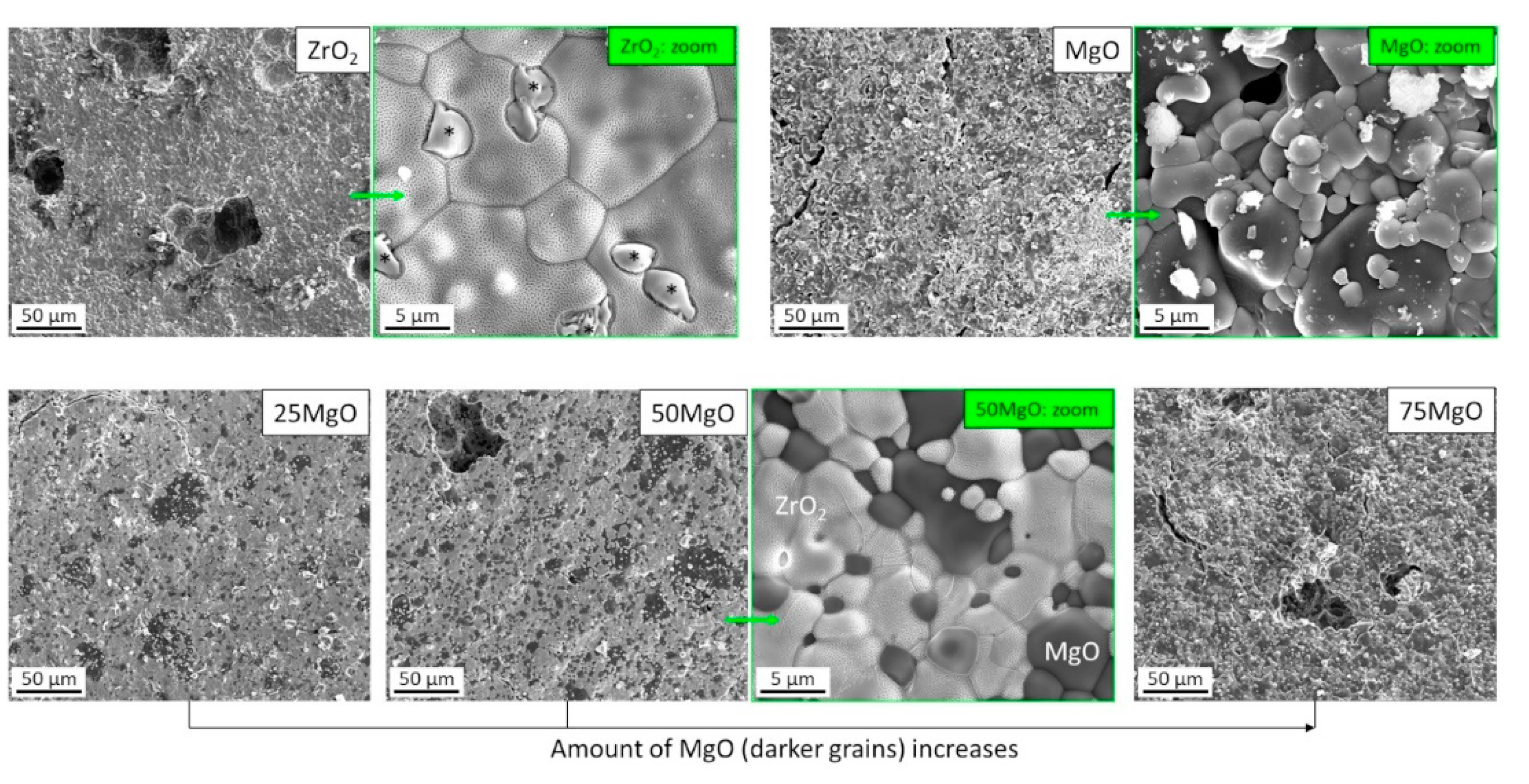
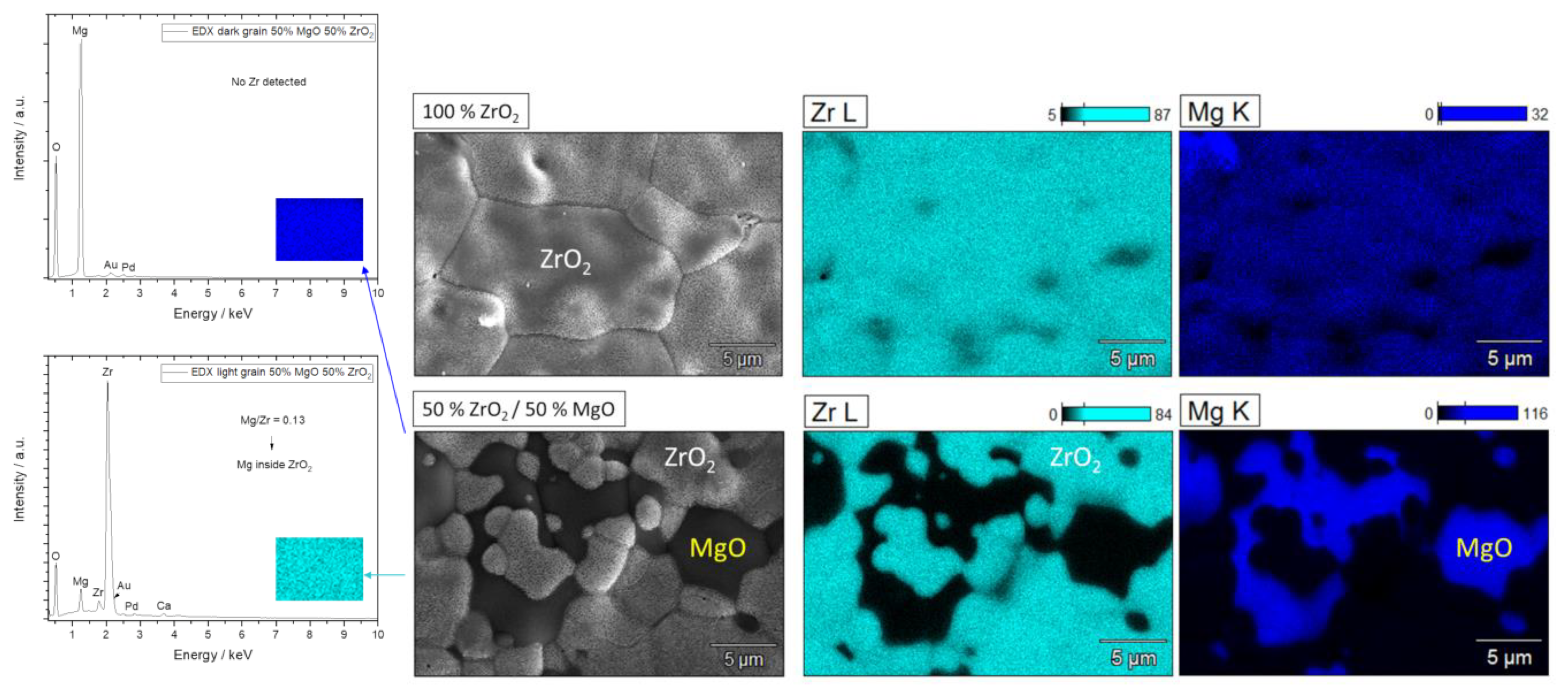
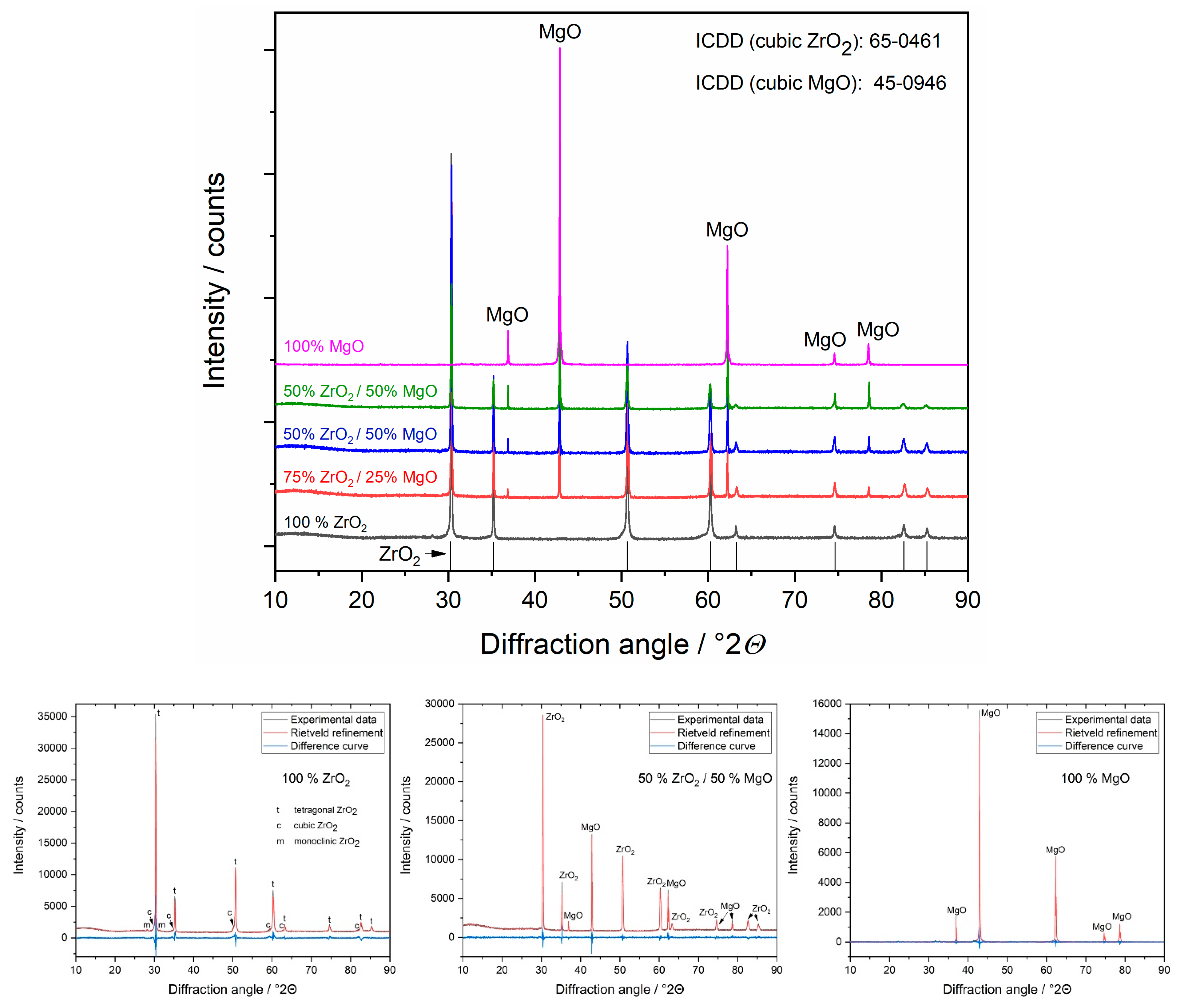
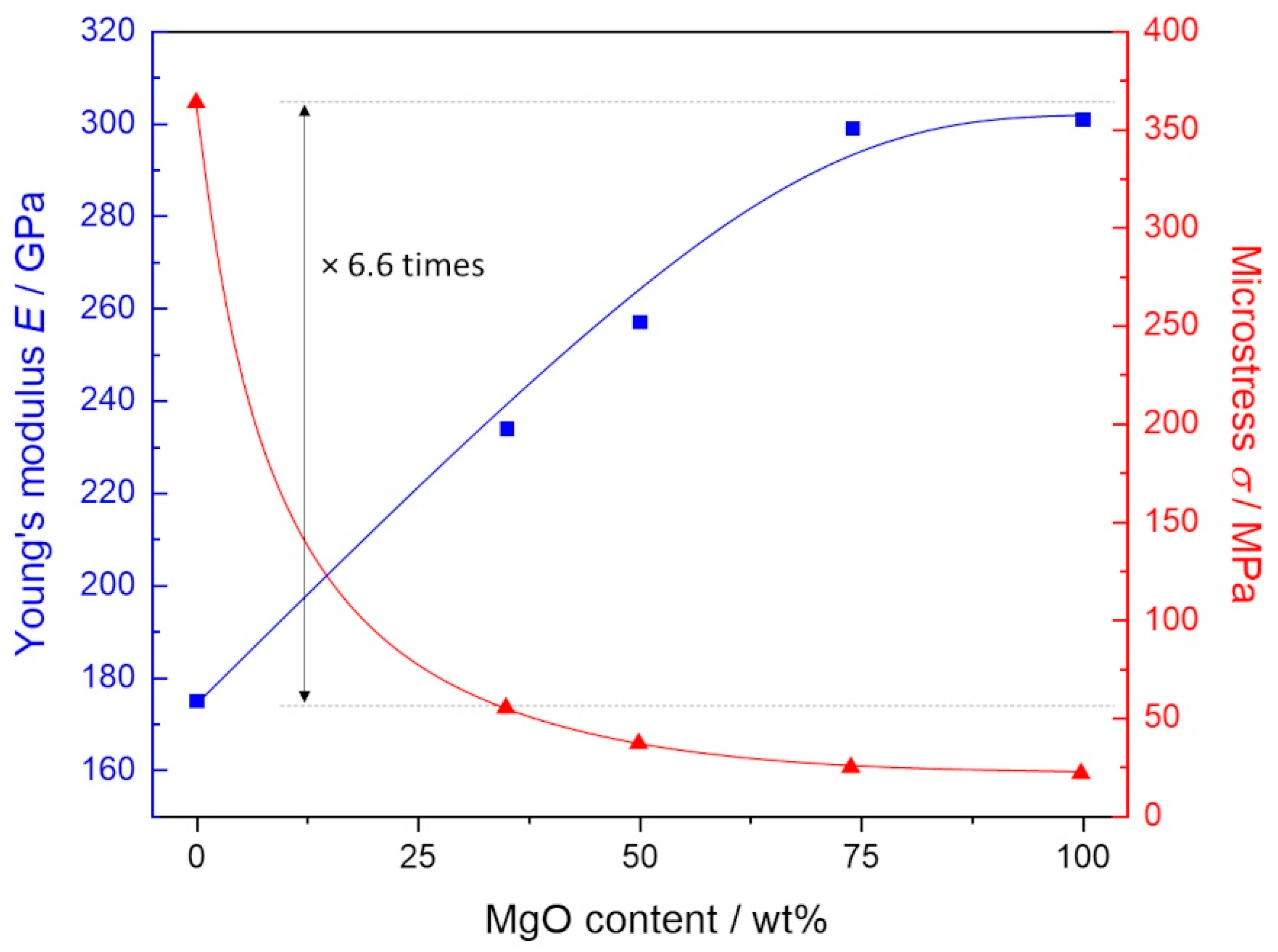
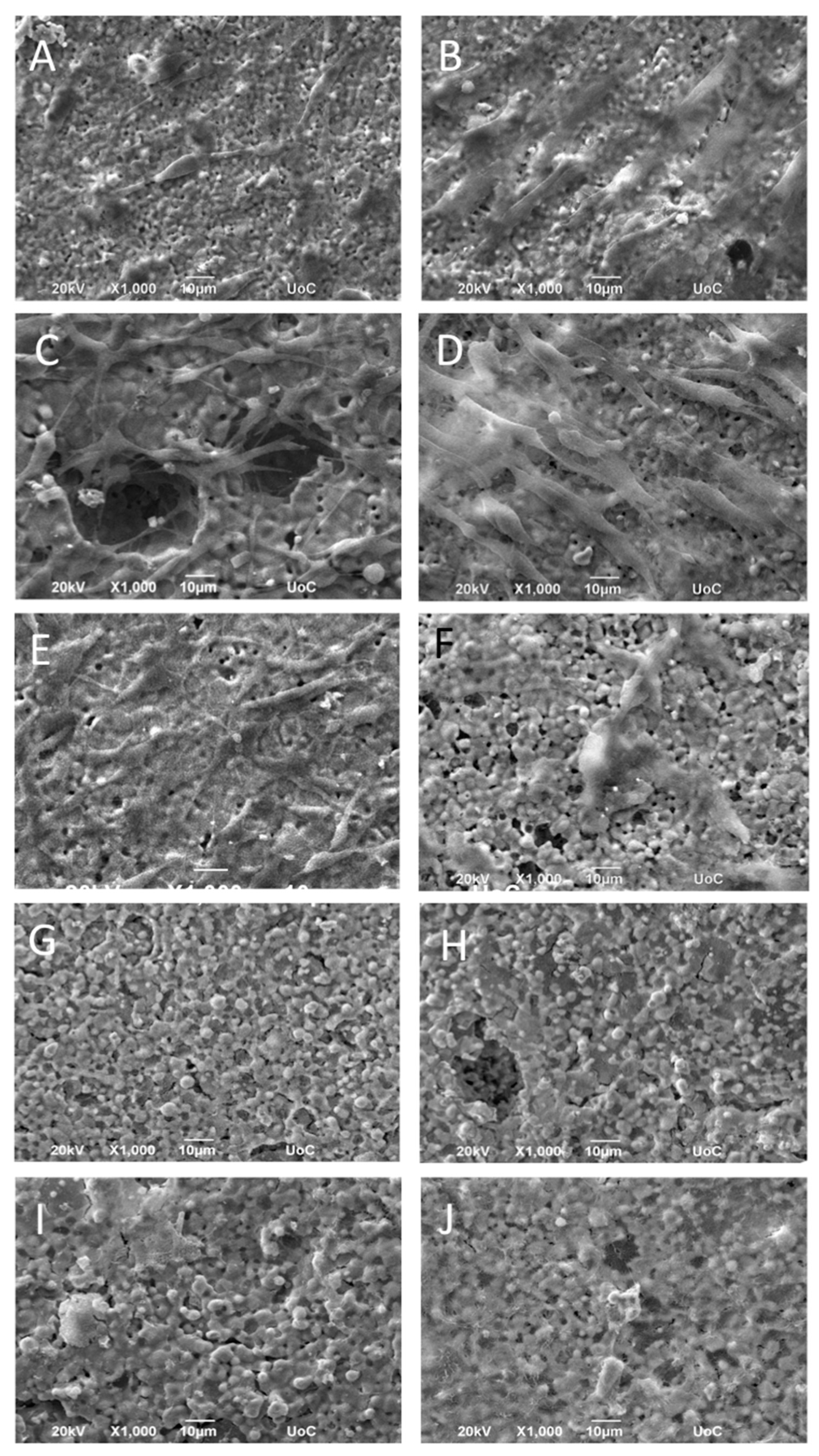
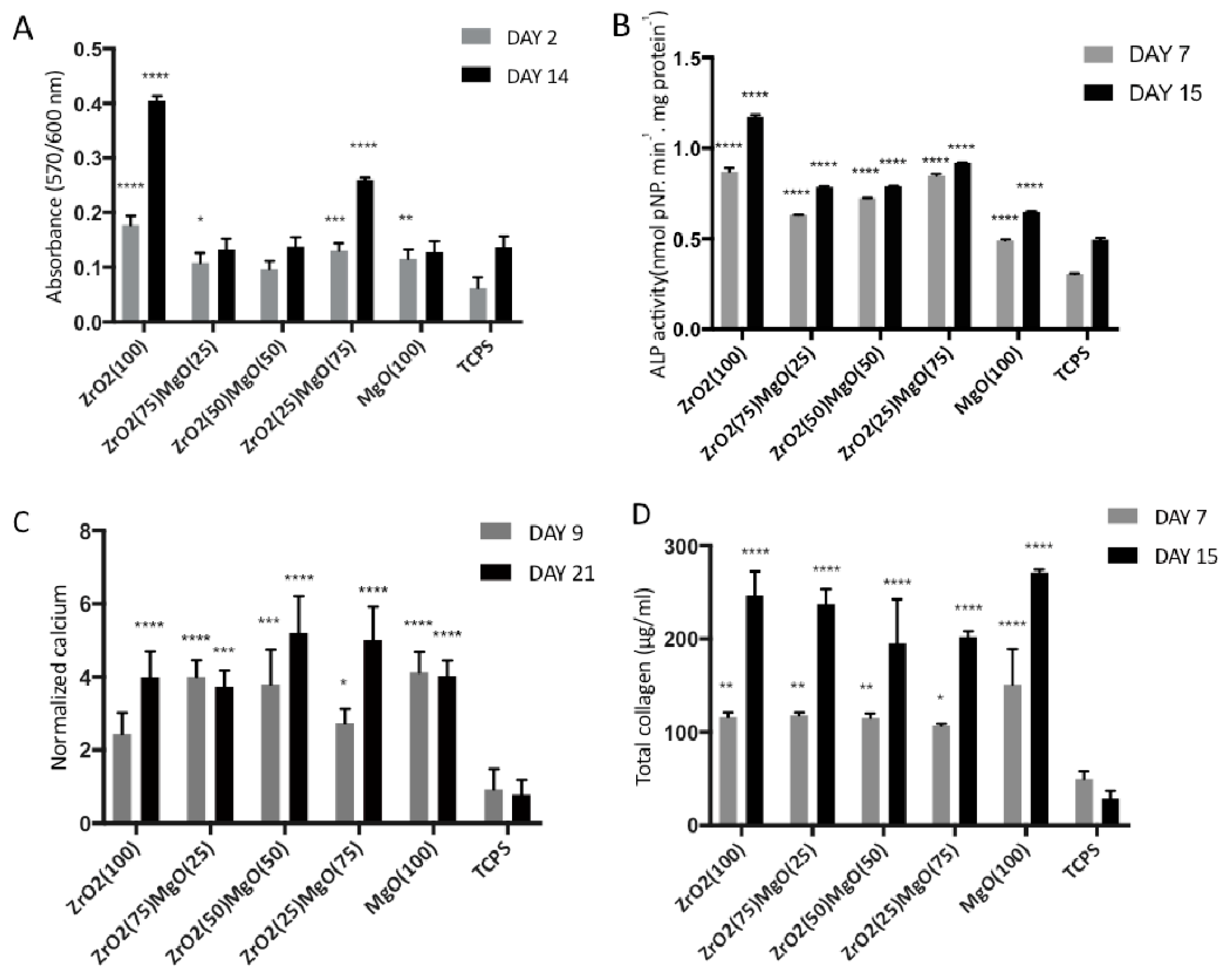
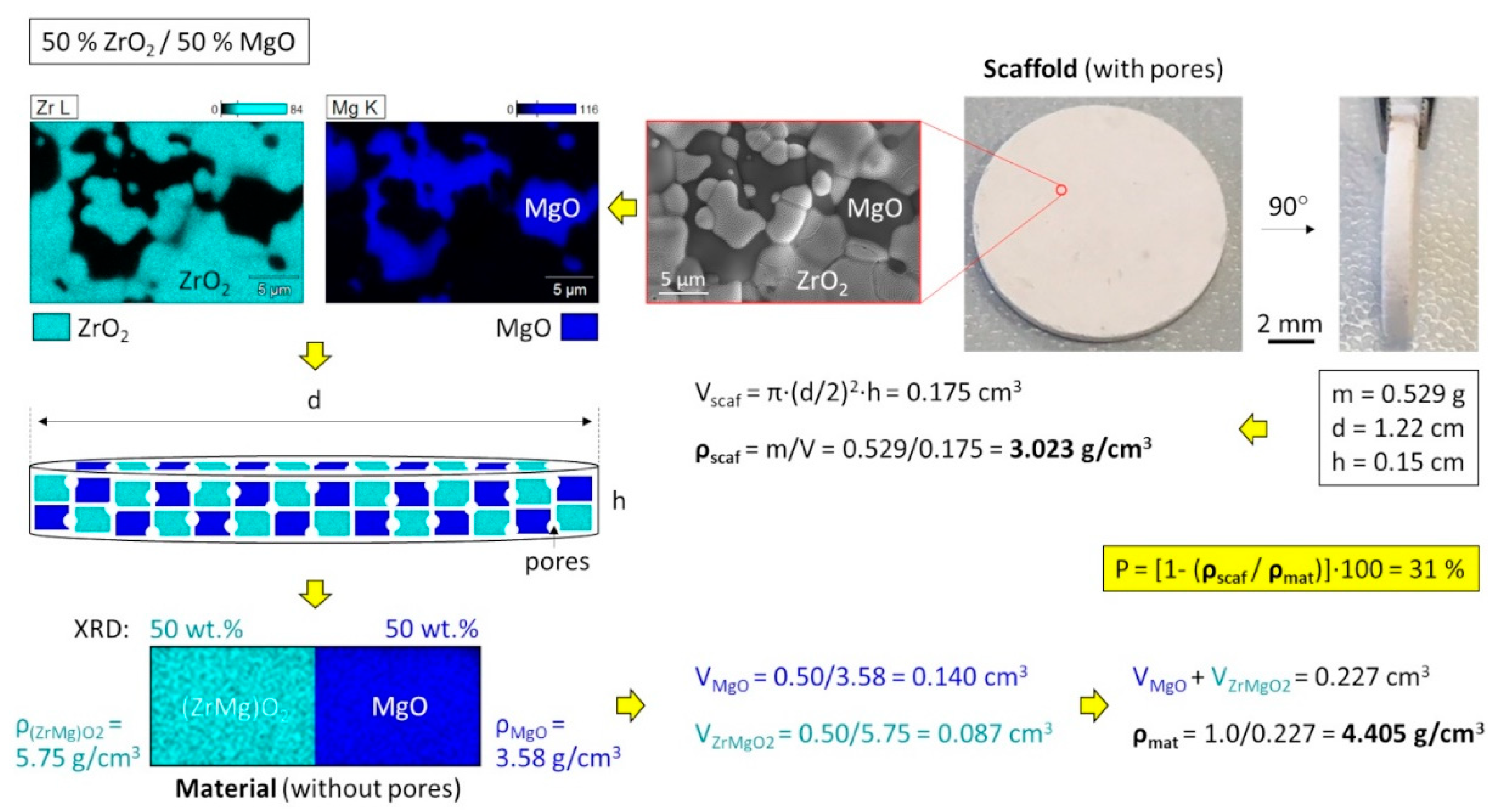
Porous zirconia (ZrO2), magnesia (MgO) and zirconia/magnesia (ZrO2/MgO) ceramics were synthesised by sintering and designated as ZrO2(100), ZrO2(75)MgO(25), ZrO2(50)MgO(50), ZrO2(25)MgO(75), MgO(100) based on their composition. The ceramic samples were characterised by means of scanning electron microscopy, X-ray diffraction, energy-dispersive X-ray spectroscopy and atomic absorption spectrometry to explore the incorporation of Mg atoms into the zirconia lattice. The resulting porosity of the samples was calculated based on the composition and density. The final porosity of the cylinder-shaped ceramic samples ranged between 30 and 37%. The mechanical analysis exhibited that the Young modulus increased and the microstress decreased with increasing magnesia amount, with values ranging from 175 GPa for zirconia to 301 GPa for magnesia. The adhesion, viability, proliferation and osteogenic activity of MC3T3-E1 pre-osteoblastic cells cultured on the zirconia/magnesia ceramics was found to increase, with the magnesia-containing ceramics exhibiting higher values of calcium mineralisation. The results from the mechanical analysis, the ALP activity, the calcium and collagen production demonstrate that the zirconia/magnesia ceramics possess robust osteoinductive capacity, therefore holding great potential for bone tissue engineering.
Keywords: functional Mg-based biomaterials; biocompatibility; magnesia and zirconia scaffolds; atomic substitution; Rietveld refinement; microstress; Young modulus; cell adhesion and proliferation; calcium production; collagen secretion functional Mg-based biomaterials; biocompatibility; magnesia and zirconia scaffolds; atomic substitution; Rietveld refinement; microstress; Young modulus; cell adhesion and proliferation; calcium production; collagen secretion