A Novel Single-Step-Labeled 212Pb-CaCO3 Microparticle for Internal Alpha Therapy: Preparation, Stability, and Preclinical Data from Mice
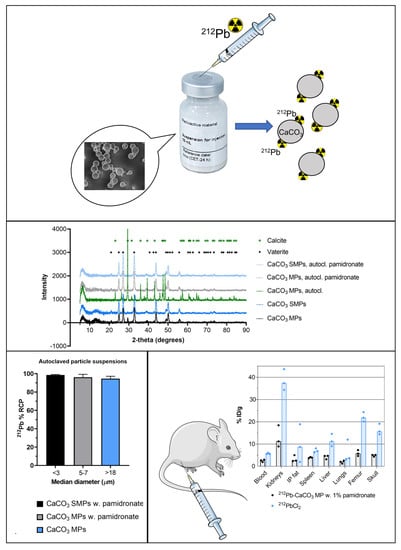
Abstract
Share and Cite
Li, R.G.; Lindland, K.; Bønsdorff, T.B.; Westrøm, S.; Larsen, R.H. A Novel Single-Step-Labeled 212Pb-CaCO3 Microparticle for Internal Alpha Therapy: Preparation, Stability, and Preclinical Data from Mice. Materials 2021, 14, 7130. https://doi.org/10.3390/ma14237130
Li RG, Lindland K, Bønsdorff TB, Westrøm S, Larsen RH. A Novel Single-Step-Labeled 212Pb-CaCO3 Microparticle for Internal Alpha Therapy: Preparation, Stability, and Preclinical Data from Mice. Materials. 2021; 14(23):7130. https://doi.org/10.3390/ma14237130
Chicago/Turabian StyleLi, Ruth Gong, Kim Lindland, Tina Bjørnlund Bønsdorff, Sara Westrøm, and Roy Hartvig Larsen. 2021. "A Novel Single-Step-Labeled 212Pb-CaCO3 Microparticle for Internal Alpha Therapy: Preparation, Stability, and Preclinical Data from Mice" Materials 14, no. 23: 7130. https://doi.org/10.3390/ma14237130
APA StyleLi, R. G., Lindland, K., Bønsdorff, T. B., Westrøm, S., & Larsen, R. H. (2021). A Novel Single-Step-Labeled 212Pb-CaCO3 Microparticle for Internal Alpha Therapy: Preparation, Stability, and Preclinical Data from Mice. Materials, 14(23), 7130. https://doi.org/10.3390/ma14237130