Article

A Facile Design of Colourimetric Polyurethane Nanofibrous Sensor Containing Natural Indicator Dye for Detecting Ammonia Vapour

by
Ayben Pakolpakçıl
* and
Zbigniew Draczyński
Institute of Materials Science of Textiles and Polymer Composites, Lodz University of Technology, 116 Żeromskiego Street, 90-924 Lodz, Poland
*
Author to whom correspondence should be addressed.
Materials 2021, 14(22), 6949; https://doi.org/10.3390/ma14226949
Submission received: 23 September 2021 / Revised: 7 November 2021 / Accepted: 15 November 2021 / Published: 17 November 2021
(This article belongs to the Special Issue Electrospinning: Nanofabrication and Application)

Abstract

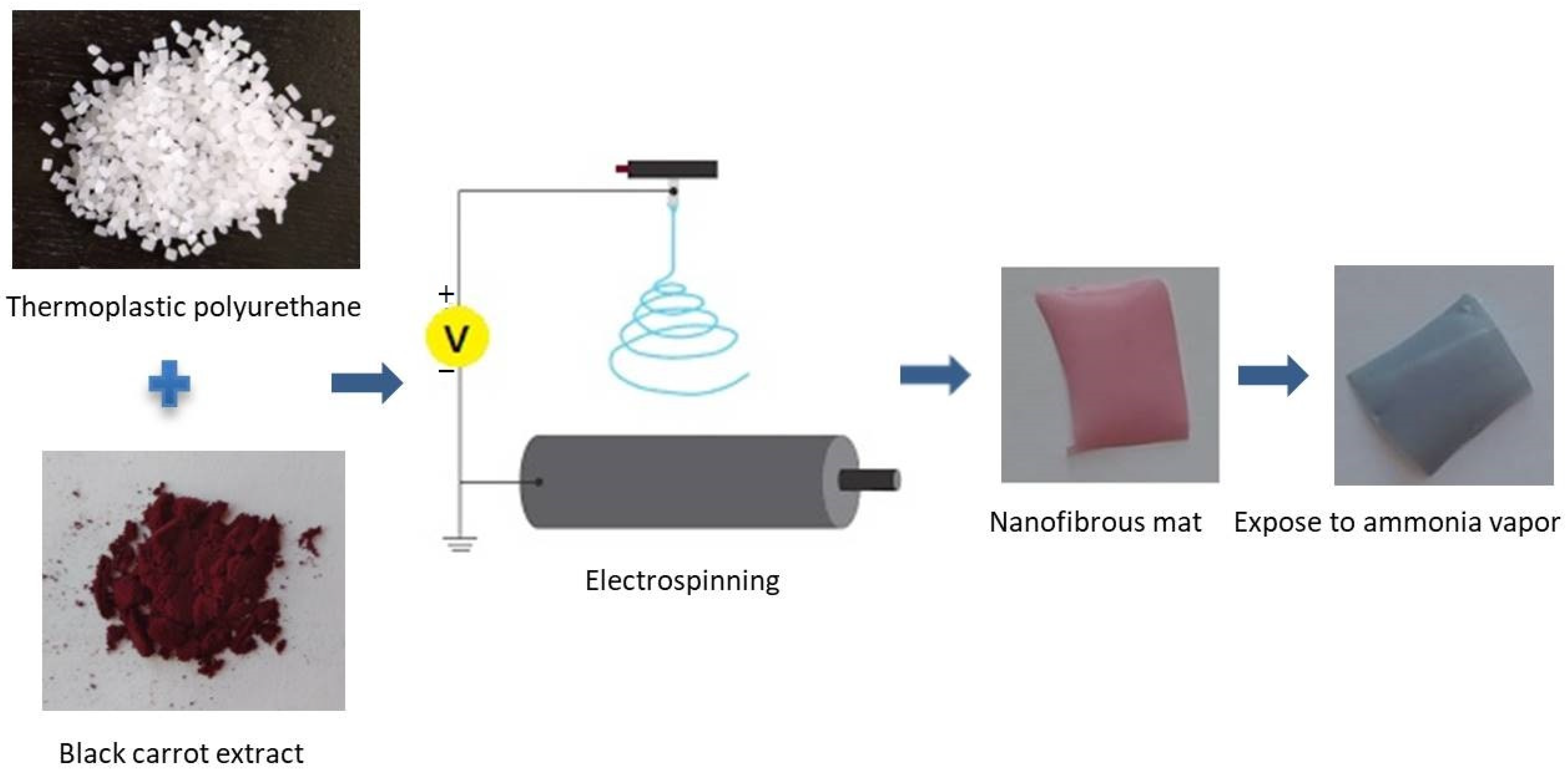
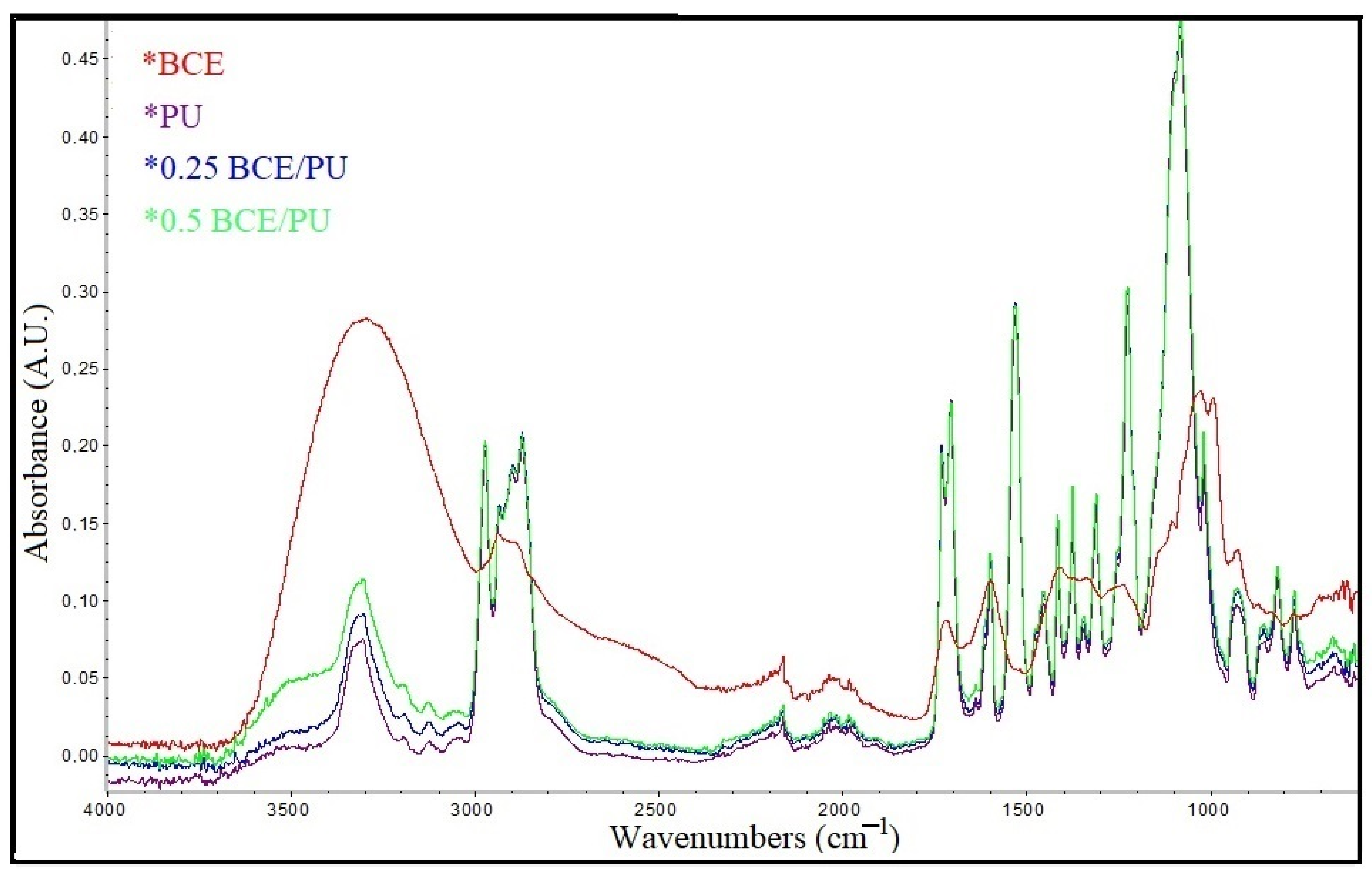
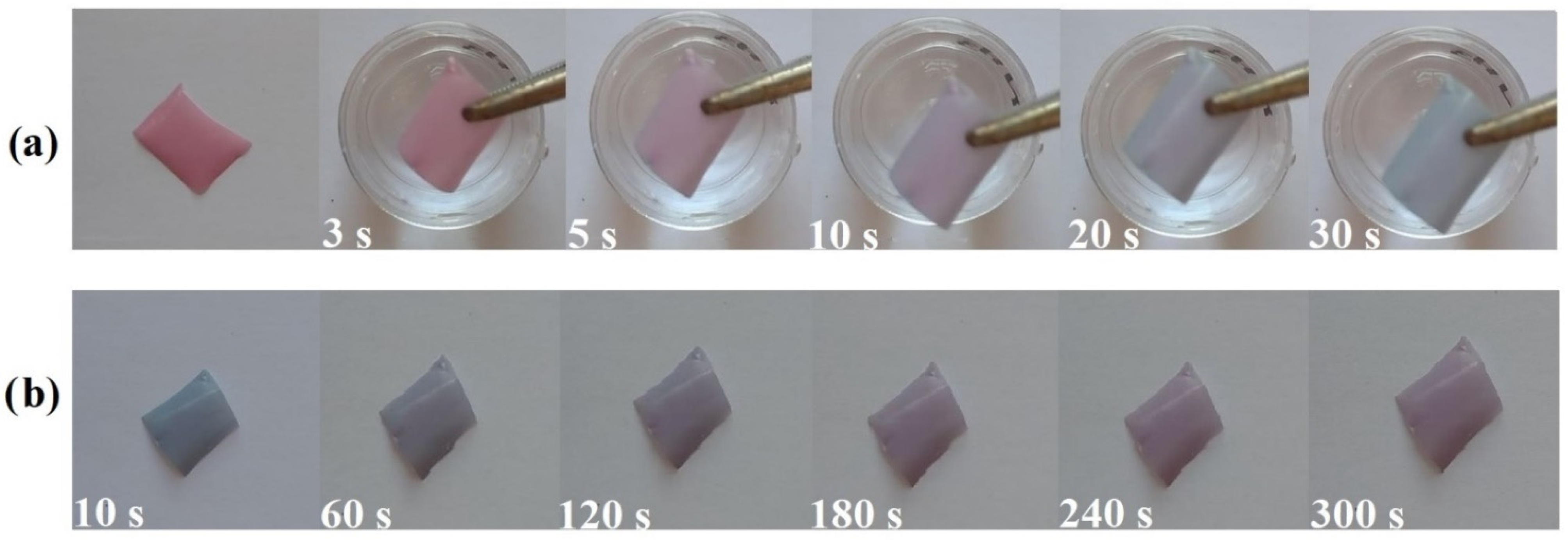
Chemicals and industrial gases endanger both human health and the environment. The inhalation of colourless ammonia gas (NH3) can cause organ damage or even death in humans. Colourimetric materials are becoming more popular in the search for smart textiles for both fashion and specific occupational applications. Colourimetric textile sensors based on indicator dyes could be very useful for detecting strong gaseous conditions and monitoring gas leaks. In this study, black carrot extract (BCE) as a natural indicator dye and polyurethane (PU) polymer were used to develop a colourimetric sensor by electrospinning. The properties of the BCE/PU nanofibrous mats were characterized by the Fourier transform infrared spectrum (FTIR) and a scanning electron microscope (SEM). The BCE caused a change in the morphology of the PU nanofibrous mat. To evaluate the colour shift due to NH3 vapour, the BCE/PU nanofibrous mats were photographed by a camera, and software was used to obtain the quantitative colour data (CIE L*a*b). The BCE/PU nanofibrous exhibited a remarkable colour change from pink–red to green–blue under NH3 vapour conditions with a fast response time (≤30 s). These findings showed that colourimetric nanofibrous textile sensors could be a promising in situ material in protective clothing that changes colour when exposed to harmful gases.
Keywords: gas detection; natural indicator dyes; protective textiles; sensor; nanofibre; electrospinning gas detection; natural indicator dyes; protective textiles; sensor; nanofibre; electrospinning