Article

Analysis of Causes of Porosity Change of Castings under the Influence of Variable Biscuit Height in the Filling Chamber
1
Department of Technical Systems Design and Monitoring, Faculty of Manufacturing Technologies with a Seat in Prešov, Technical University of Košice, Štúrova 31, 080 01 Prešov, Slovakia
2
Department of Mechanical Engineering, Faculty of Technology, Institute of Technology and Business in České Budějovice, Okružní 517/10, 370 01 České Budějovice, Czech Republic
*
Author to whom correspondence should be addressed.
Materials 2021, 14(22), 6827; https://doi.org/10.3390/ma14226827
Submission received: 5 October 2021 / Revised: 8 November 2021 / Accepted: 10 November 2021 / Published: 12 November 2021
(This article belongs to the Special Issue Study on Advanced Metal Matrix Composites)

Abstract

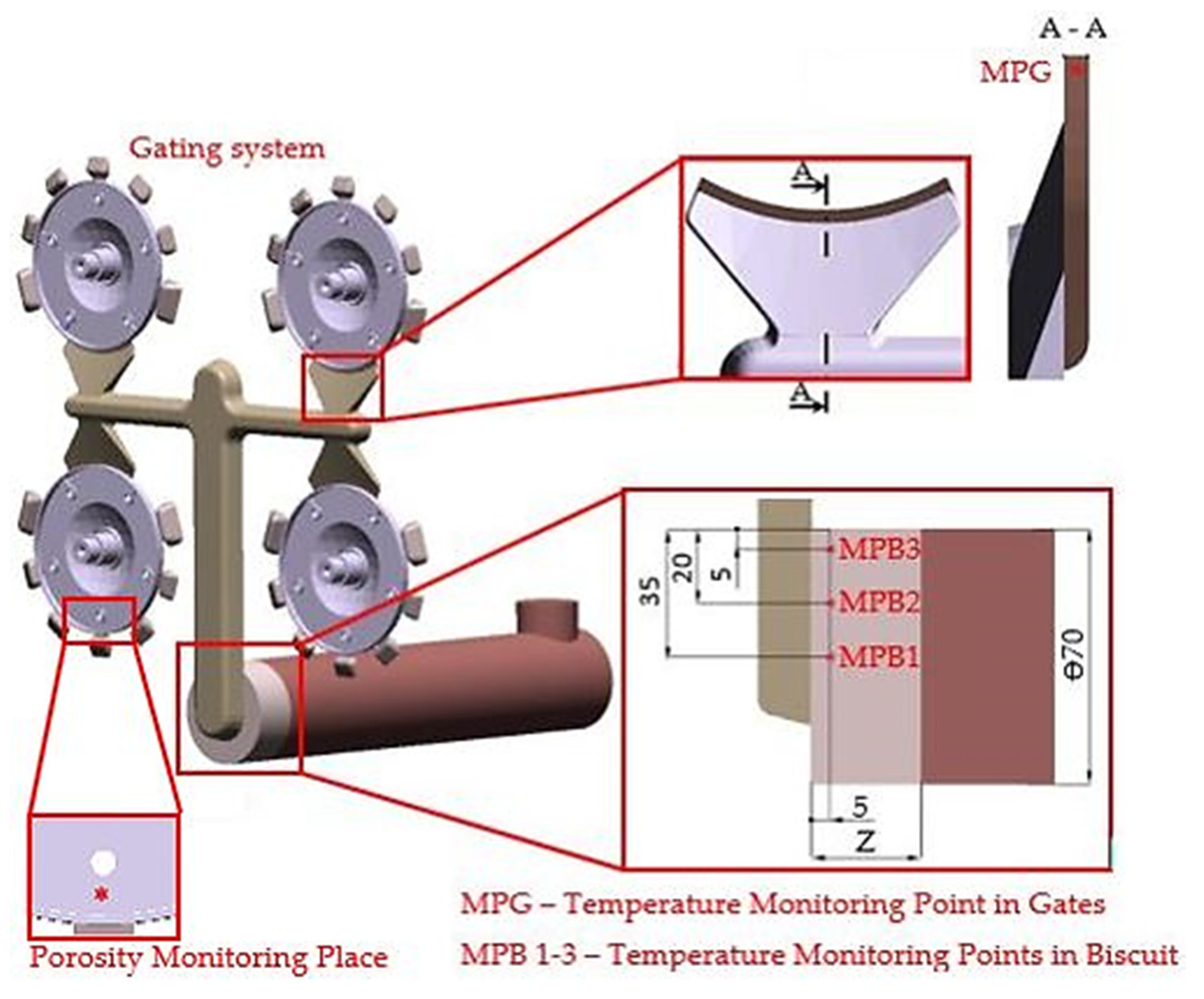
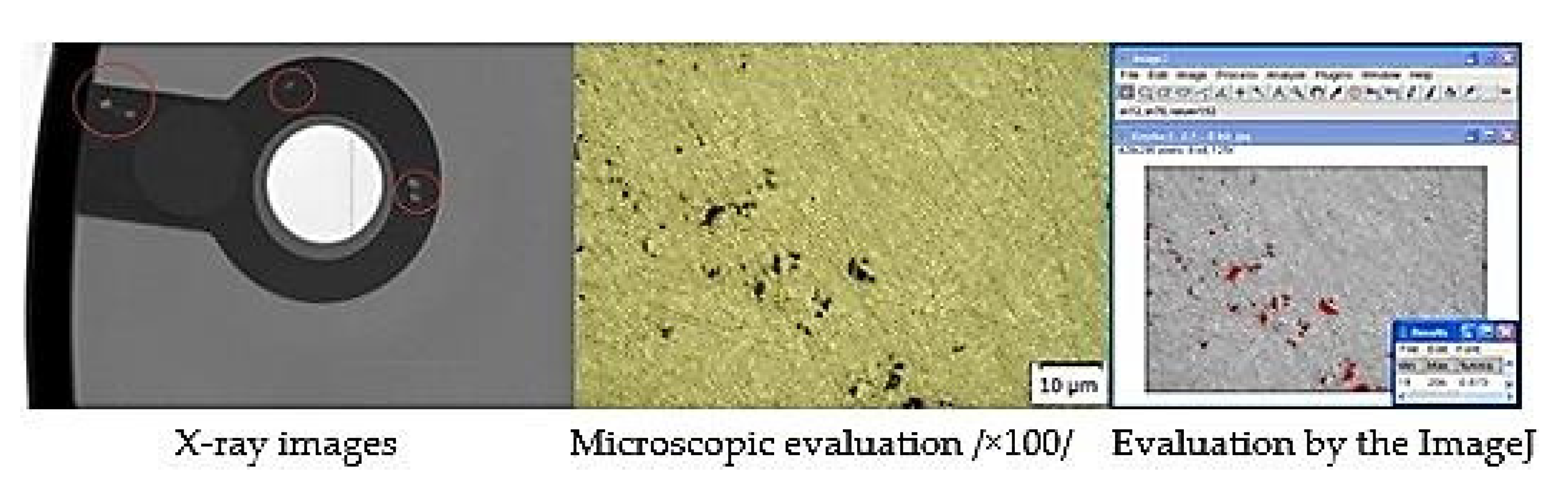
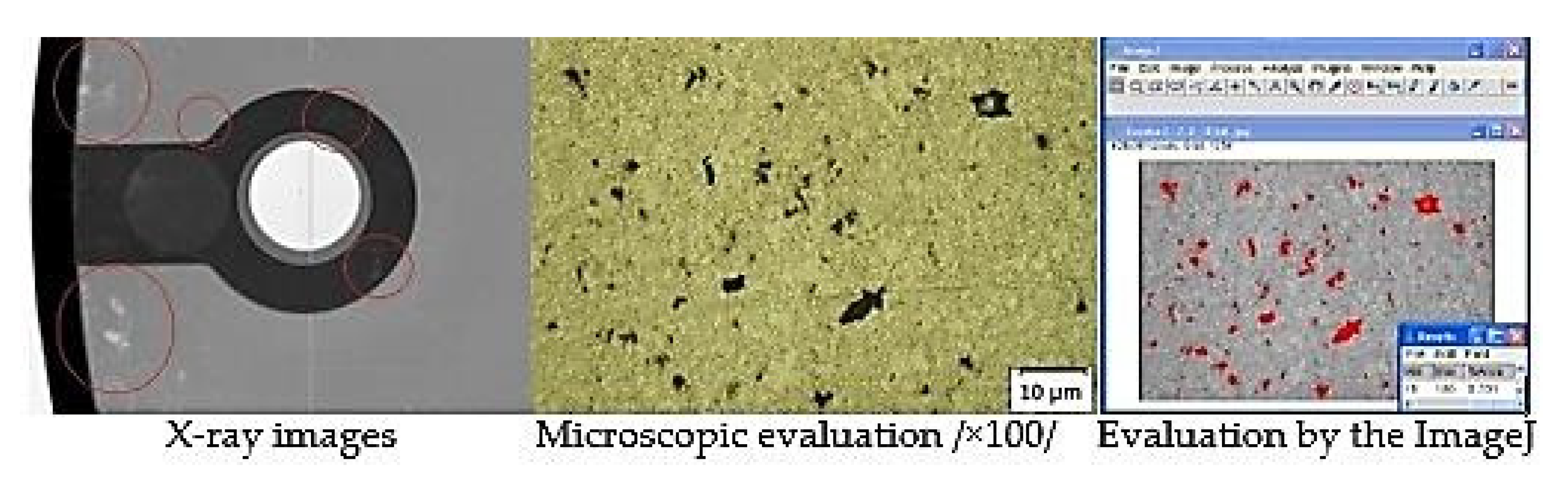
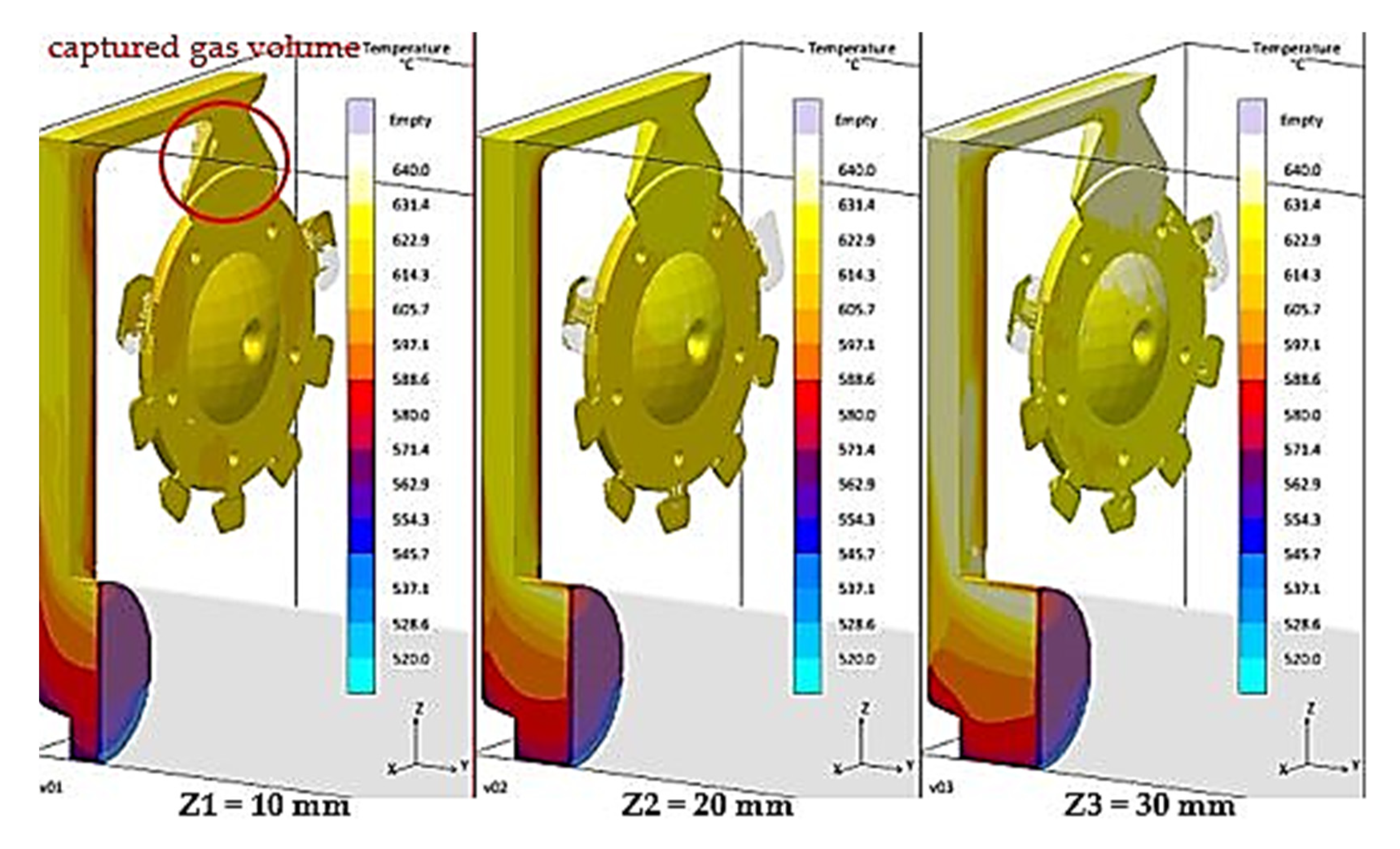
Quality properties of castings produced in a die casting process correlate with porosity that is conditioned by a number of factors, which range from input melt quality to setup of technological factors of the die casting, and through structural design of the gating system. One of the primary parameters conditioning the inner soundness of the casting is the liquid metal dose per single operation of die casting. This paper examines the issue of metal dose. The experiments are performed with casting a gate system of an electromotor flange. The gating system examined was die cast with a variable volume of metal dose per single operation. The metal dose was adjusted to reach the height of a biscuit of 10, 20, and 30 mm. The examination of the inner homogeneity of the castings of the individual variants of gating systems with variable height of the biscuit proved that decreasing biscuit height results in an increase of porosity share in the casting volume. The programme MagmaSoft 5.4 revealed the main causes of changes in porosity share. The simulations detected that the change in biscuit height and volume of liquid metal directly influence thermal conditions of the melt in the filling chamber, and in the mould by means of the period in which the holding pressure action is influenced. Simultaneously, the melt flow mode in the sprues and gas entrapment in the melt volume are affected as well. Correlation of the factors consequently influences the final porosity of castings.
Keywords: HPDC; porosity; air entrapment; aluminium alloys; gating system HPDC; porosity; air entrapment; aluminium alloys; gating system