Article

Recovery of Waste Polyurethane from E-Waste—Part I: Investigation of the Oil Sorption Potential
Department of Engineering for Environment, Land, and Infrastructures (DIATI), Politecnico di Torino, Corso Duca degli Abruzzi 24, 10129 Torino, Italy
*
Author to whom correspondence should be addressed.
Materials 2021, 14(21), 6230; https://doi.org/10.3390/ma14216230
Submission received: 9 August 2021 / Revised: 24 September 2021 / Accepted: 18 October 2021 / Published: 20 October 2021

Abstract

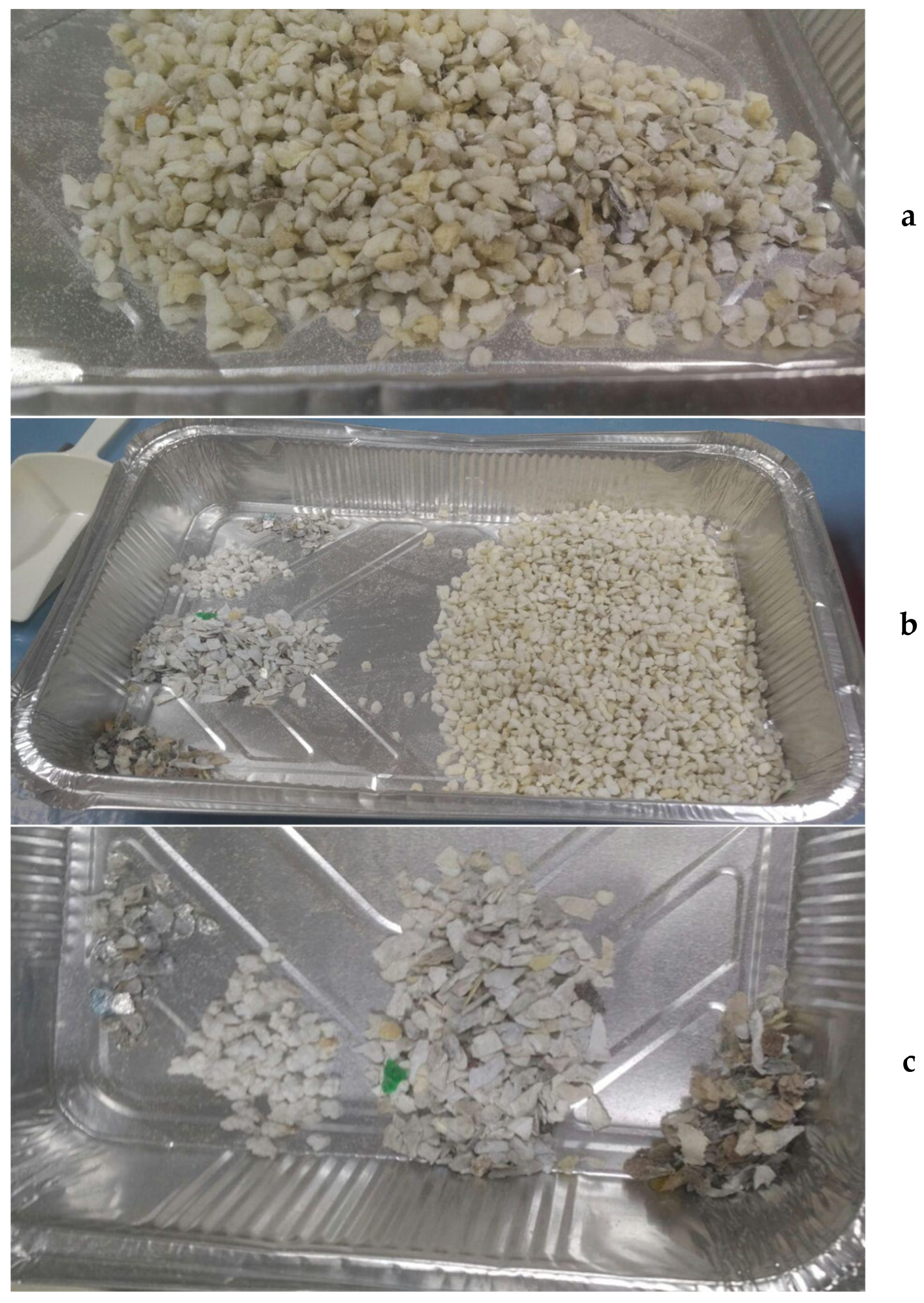
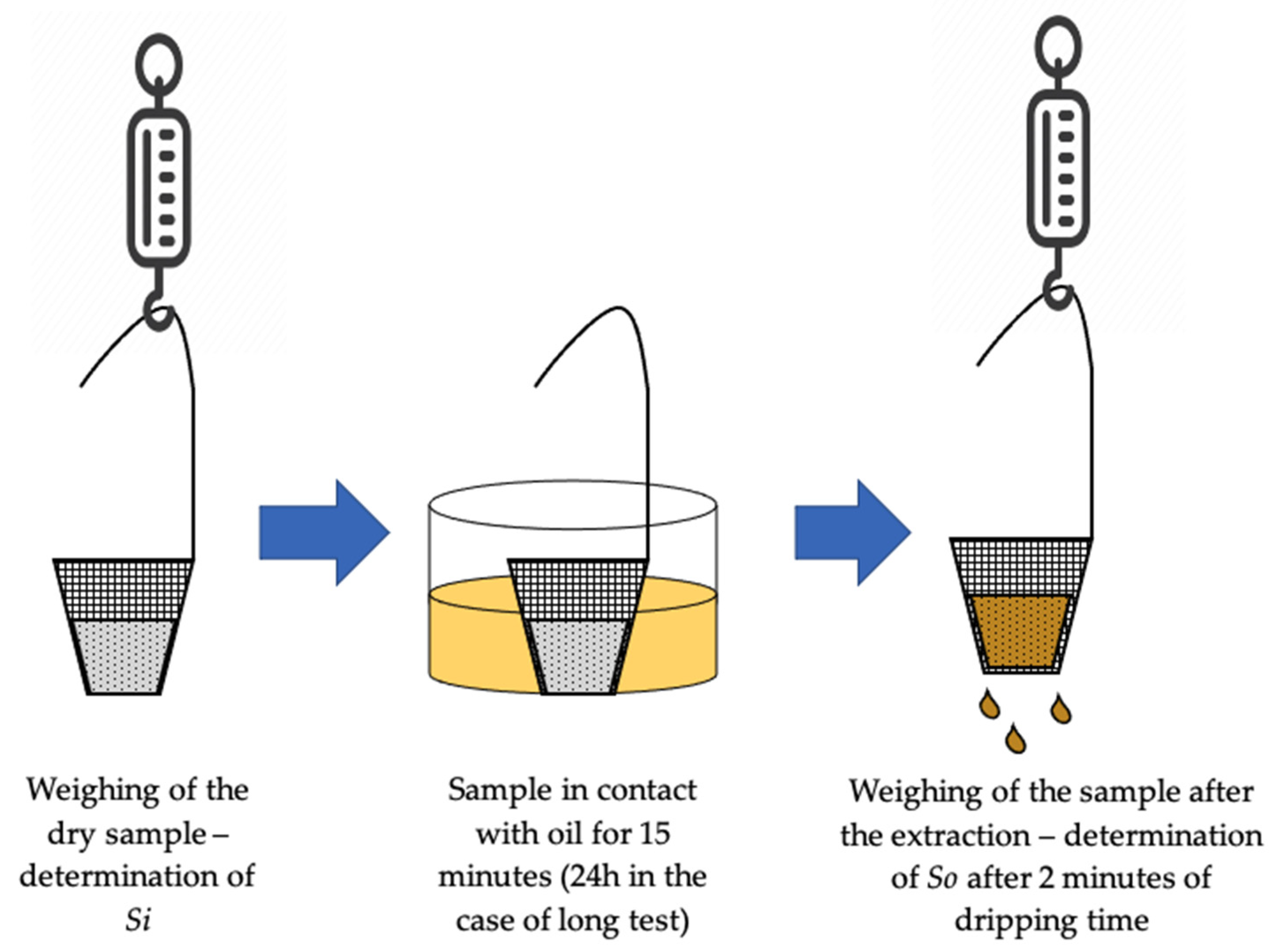
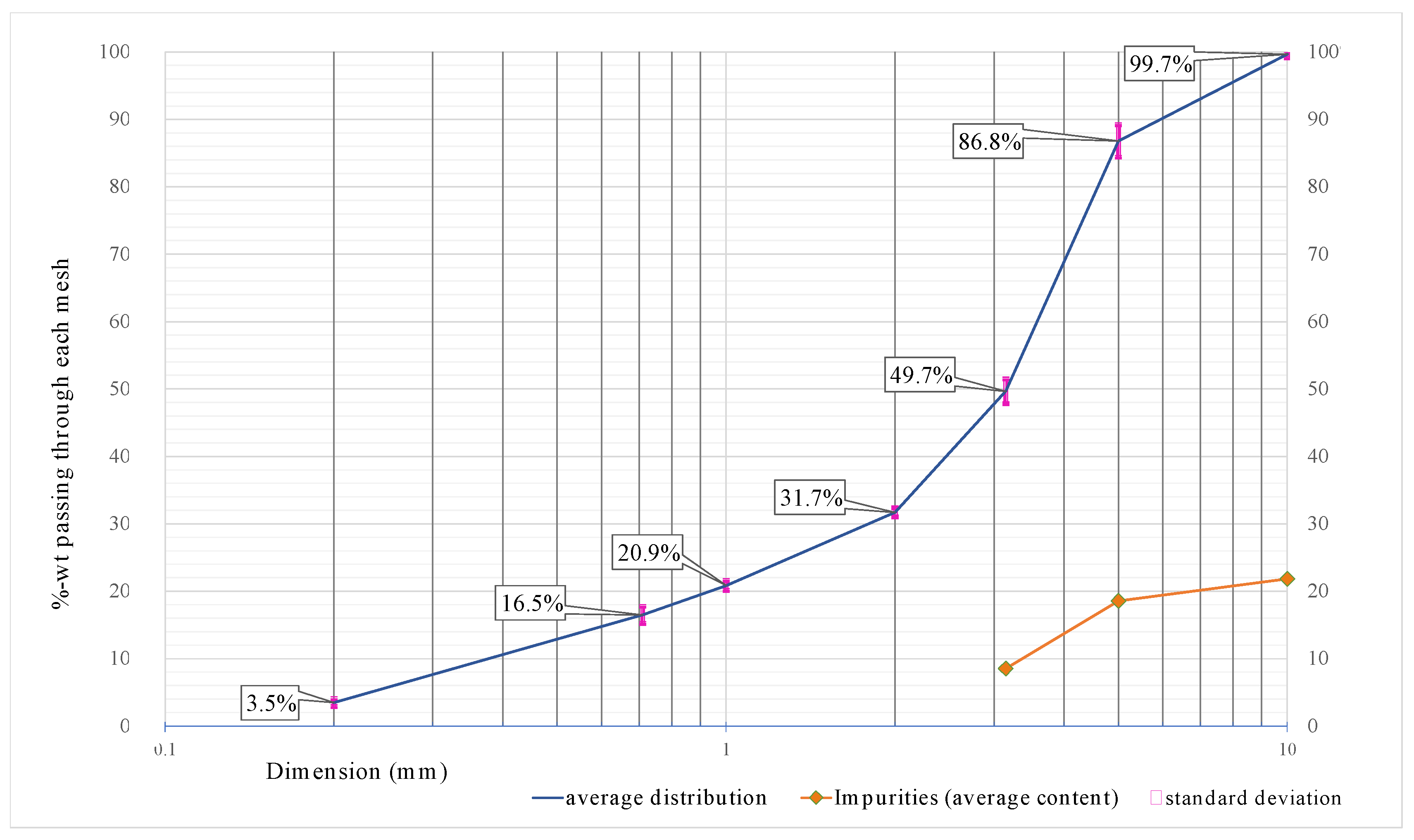
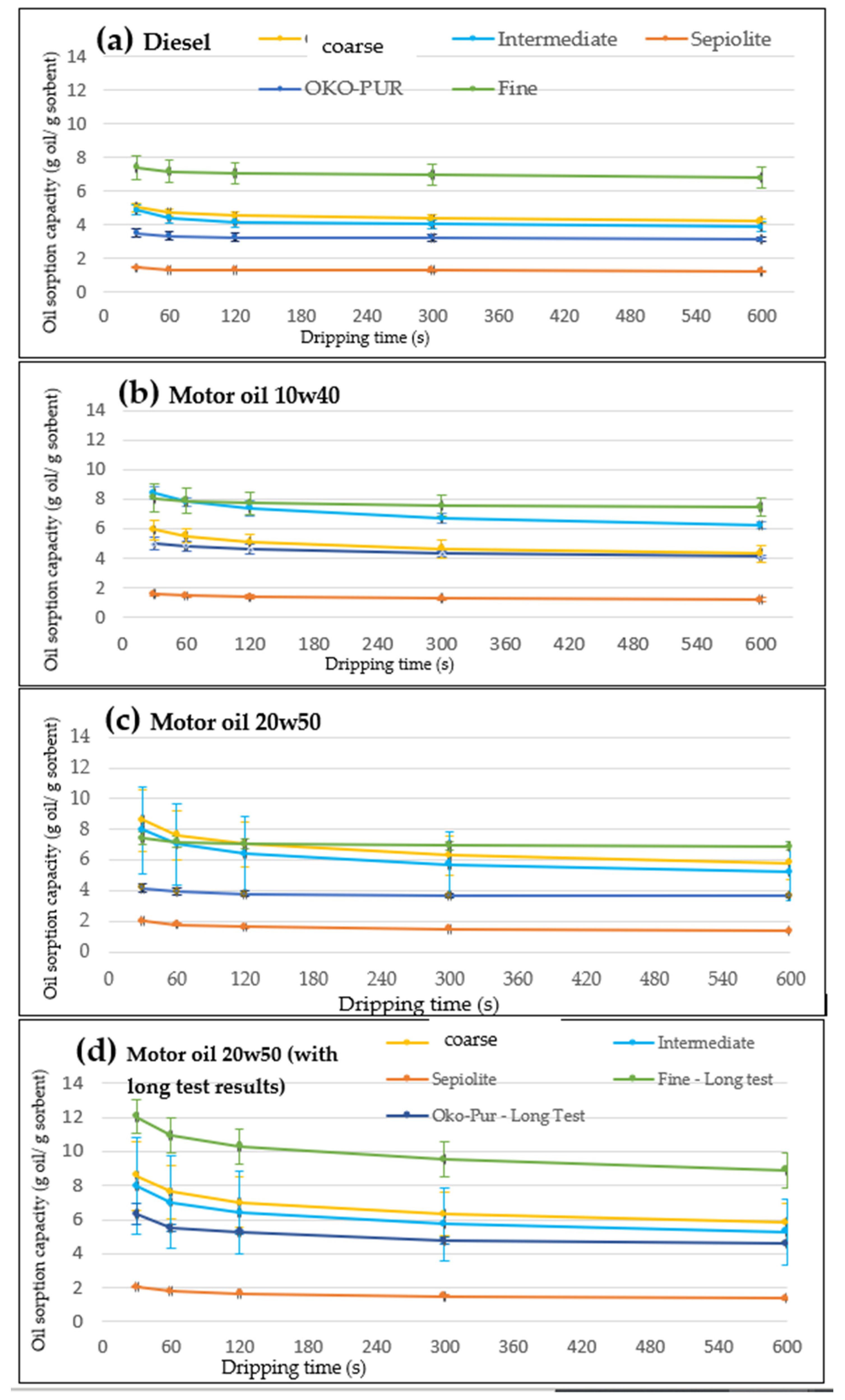
The shredding of end-of-life refrigerators produces every year in Italy 15,000 tons of waste polyurethane foam (PUF), usually destined for energy recovery. This work presents the results of the investigation of the oil sorption potential of waste PUF according to ASTM F726–17 standard. Three oils (diesel fuel and two commercial motor oils) having different densities (respectively, 0.83, 0.87, and 0.88 kg/dm3) and viscosities (respectively, 3, 95, and 140 mm2/s at 40 °C) were considered. The waste PUF was sampled in an Italian e-waste treatment plant, and its characterization showed 16.5 wt% particles below 0.71 mm and 13 wt% impurities (paper, plastic, aluminum foil), mostly having dimensions (d) above 5 mm. Sieving at 0.071 mm was applied to the waste PUF to obtain a “coarse” (d > 0.71 mm) and a “fine” fraction (d < 0.71 mm). Second sieving at 5 mm allowed an “intermediate” fraction to be obtained, with dimensions between 0.71 and 5 mm. The oil sorption tests involved the three fractions of waste PUF, and their performances were compared with two commercial oil sorbents (sepiolite and OKO-PUR). The results of the tests showed that the “fine” PUF was able to retain 7.1–10.3 g oil/g, the “intermediate” PUF, 4.2–7.4 g oil/g, and the “coarse” PUF, 4.5–7.0 g oil/g, while sepiolite and OKO-PUR performed worse (respectively, 1.3–1.6 and 3.3–5.3 g oil/g). In conclusion, compared with the actual management of waste PUF (100 wt% sent to energy recovery), the amount destined directly to energy recovery could be limited to 13 wt% (i.e., the impurities). The remaining 87 wt% could be diverted to reuse for oil sorption, and afterward directed to energy recovery, considered as a secondary option.
Keywords: absorption; circular economy; oil spill; refrigerator; WEEE absorption; circular economy; oil spill; refrigerator; WEEE