Next Article in Journal
Corrosion Resistance of Heat-Treated Ni-W Alloy Coatings
Next Article in Special Issue
Pitting Corrosion of Hot-Dip Galvanized Coatings
Previous Article in Journal
Effect of Wall Thickness on Stress–Strain Response and Buckling Behavior of Hollow-Cylinder Rubber Fenders
Previous Article in Special Issue
Characterization of PTFE Film on 316L Stainless Steel Deposited through Spin Coating and Its Anticorrosion Performance in Multi Acidic Mediums
 
 
Correction published on 25 July 2022, see Materials 2022, 15(15), 5144.
Article

Service Life and Early Age Durability Enhancement due to Combined Metakaolin and Nanosilica in Mortars for Marine Applications


by
Ramiro García
1,
Encarnación Reyes
1,
Paula Villanueva
2,*,
Miguel Ángel de la Rubia
1,
Jaime Fernández
1 and
Amparo Moragues
1
1
Department of Civil Engineering, Construction, School of Civil Engineering, Universidad Politécnica de Madrid, 28040 Madrid, Spain
2
Department of Mechanical Engineering, Chemistry and Industrial Design Department, E.T.S.I.D.I, Universidad Politécnica de Madrid, 28040 Madrid, Spain
*
Author to whom correspondence should be addressed.
Materials 2020, 13(5), 1169; https://doi.org/10.3390/ma13051169
Submission received: 8 February 2020 / Revised: 26 February 2020 / Accepted: 2 March 2020 / Published: 5 March 2020 / Corrected: 25 July 2022
(This article belongs to the Special Issue Materials and Coatings for Extreme Environments)

Abstract

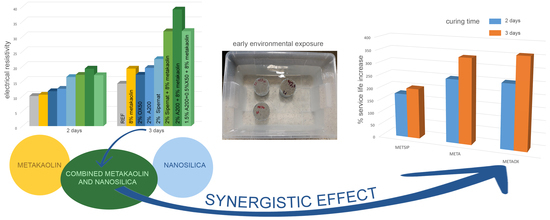
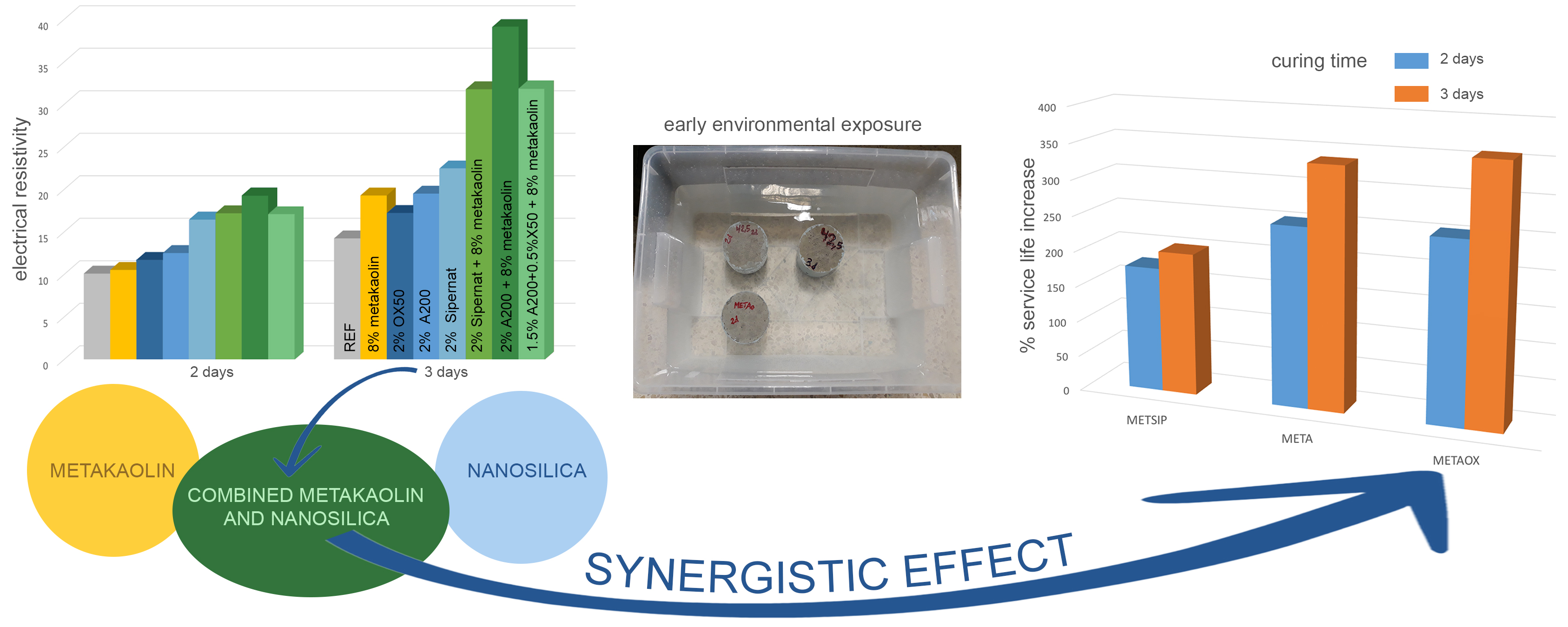
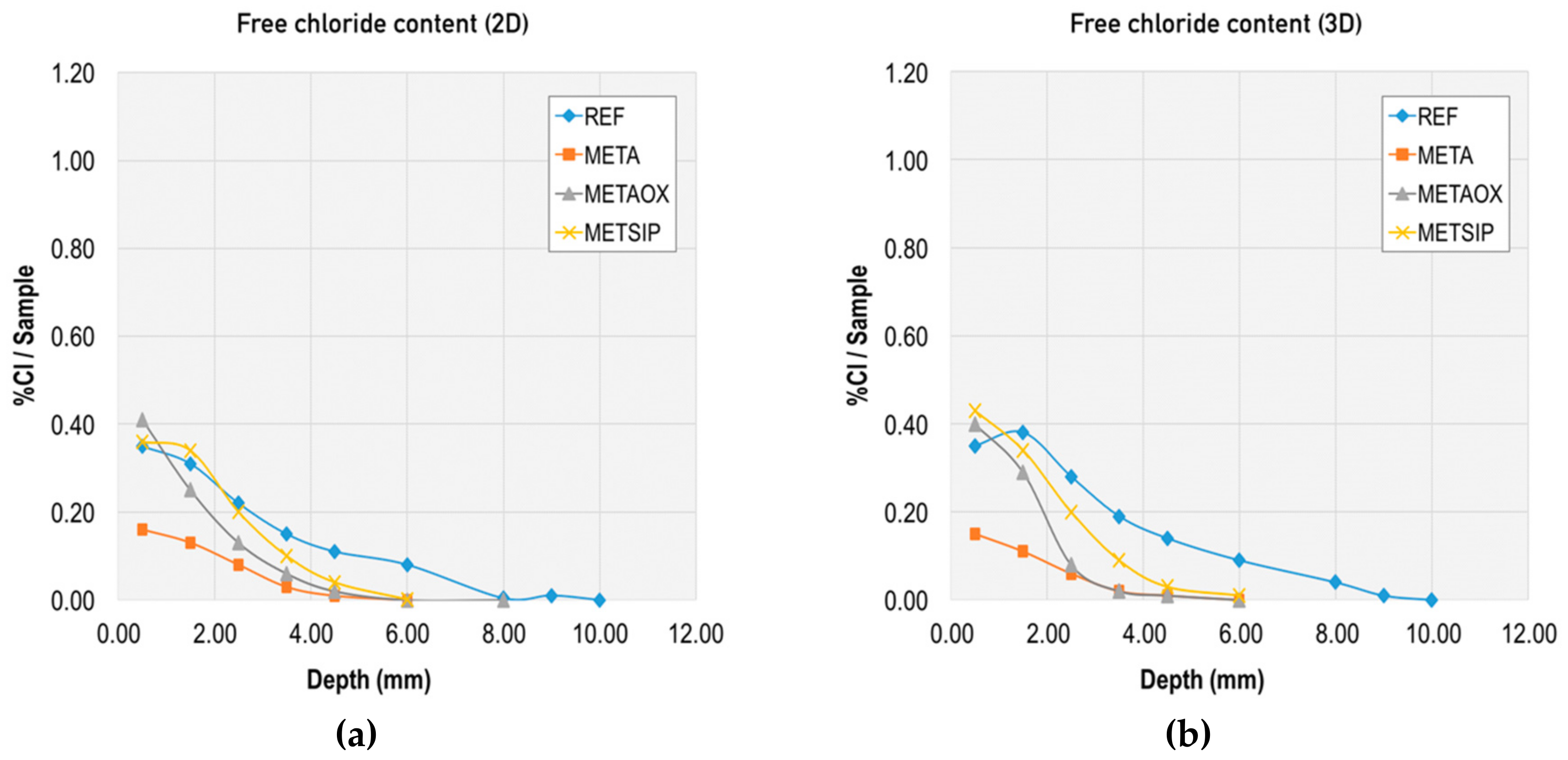
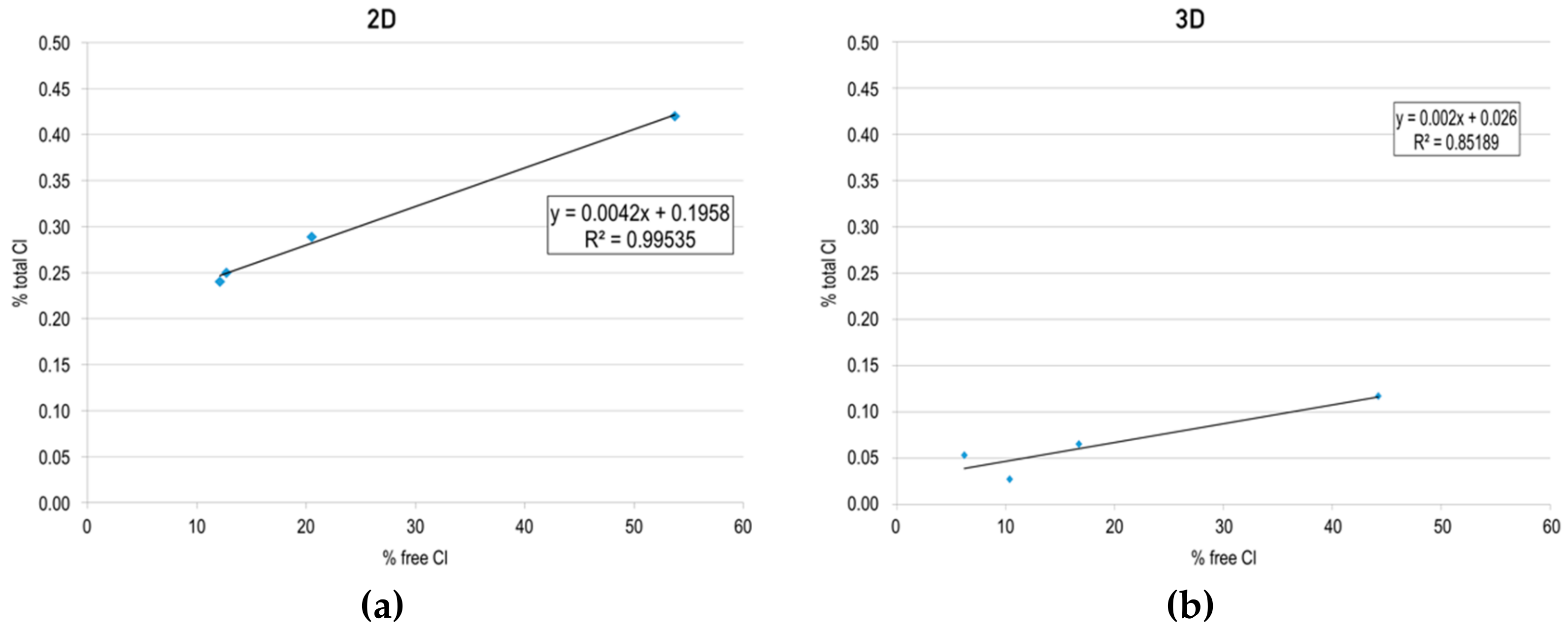
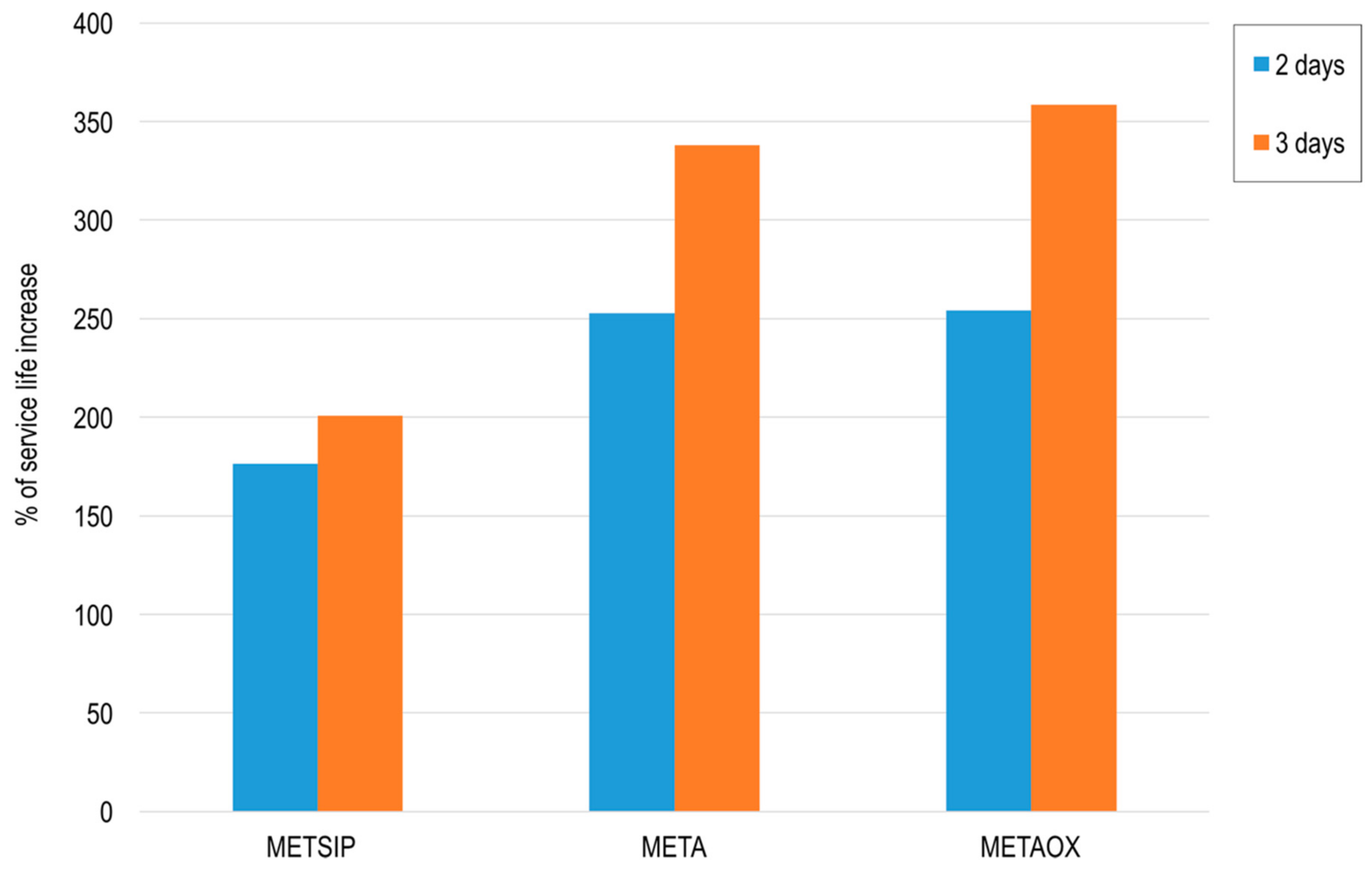
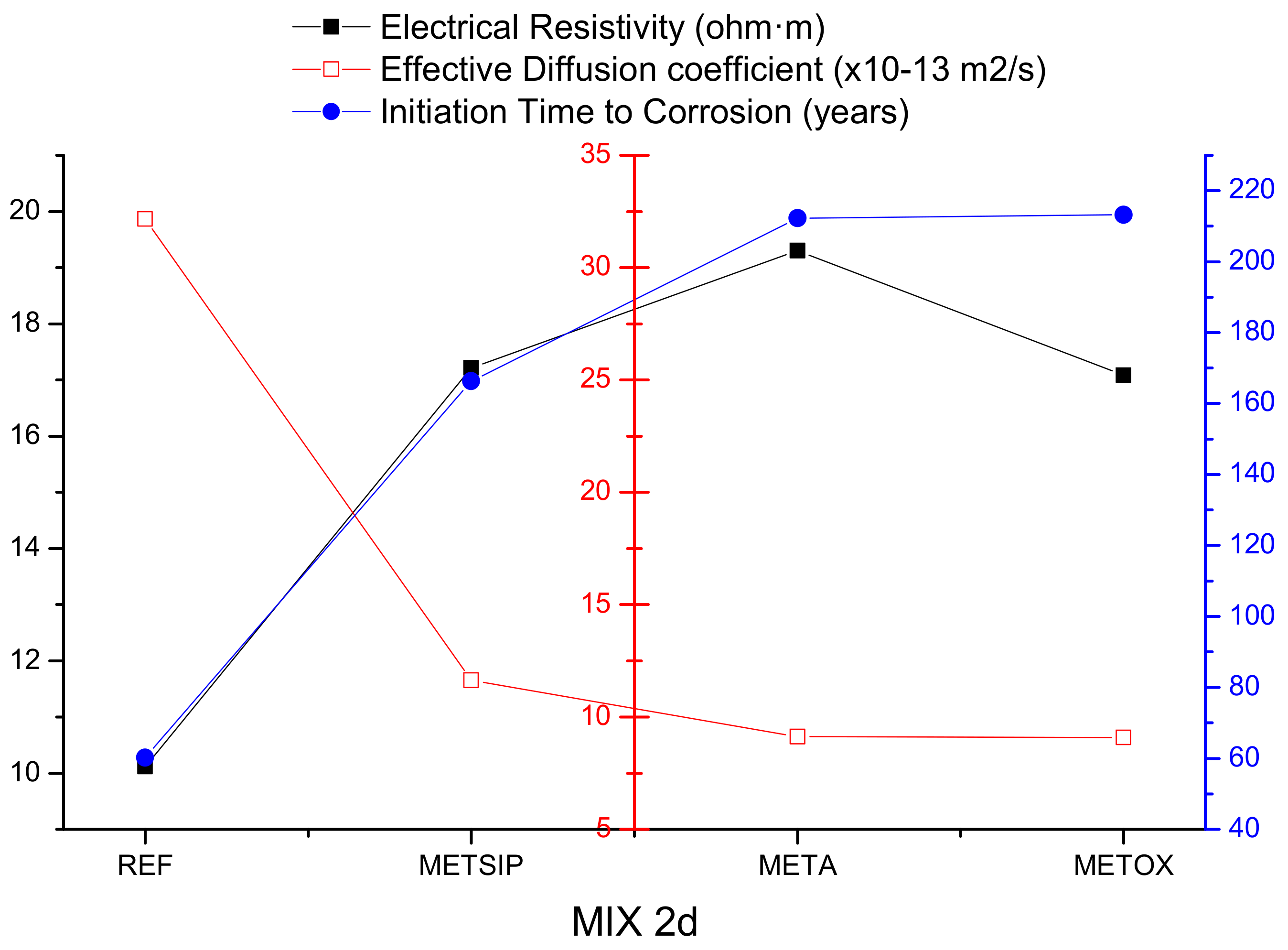
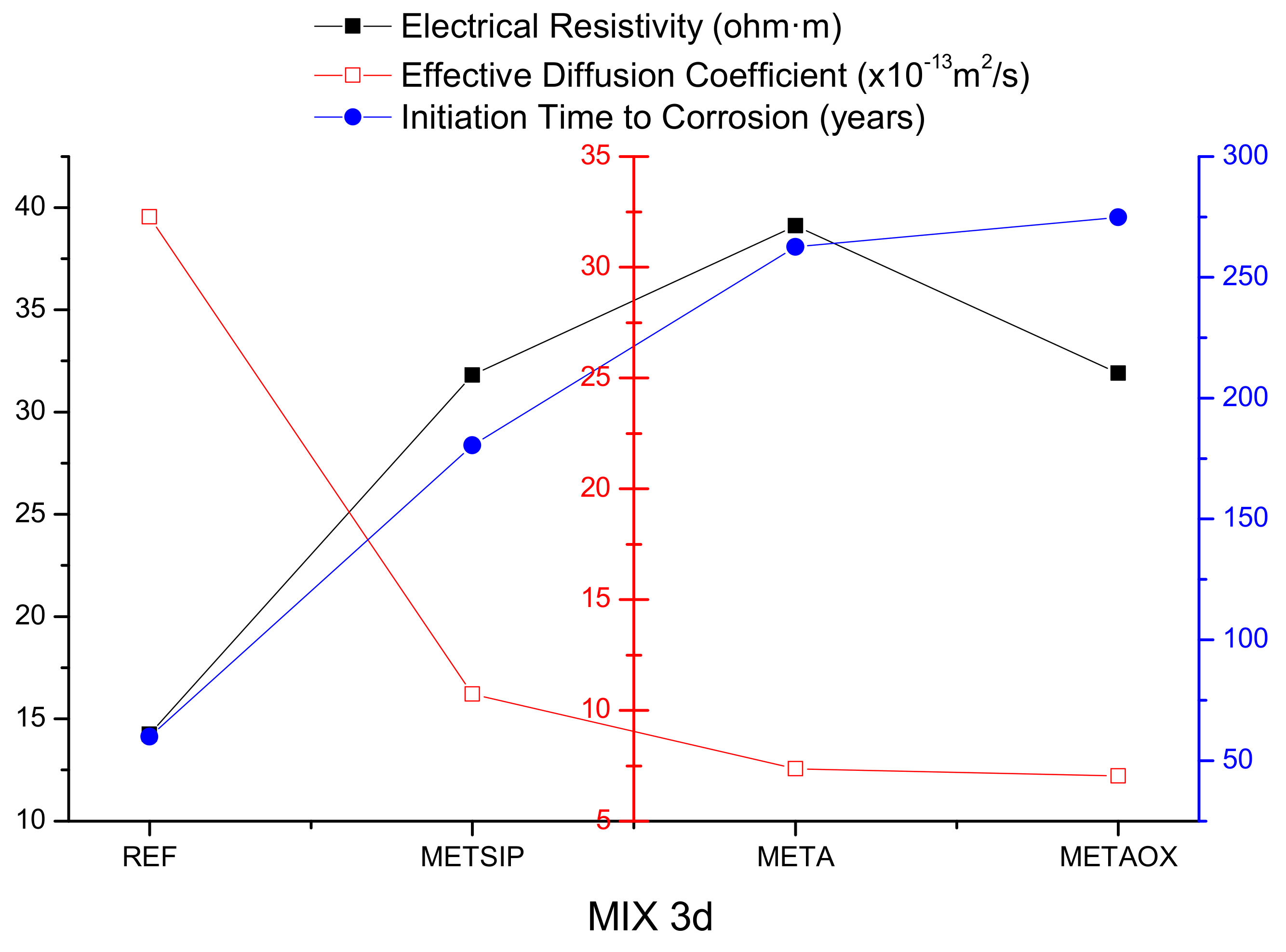
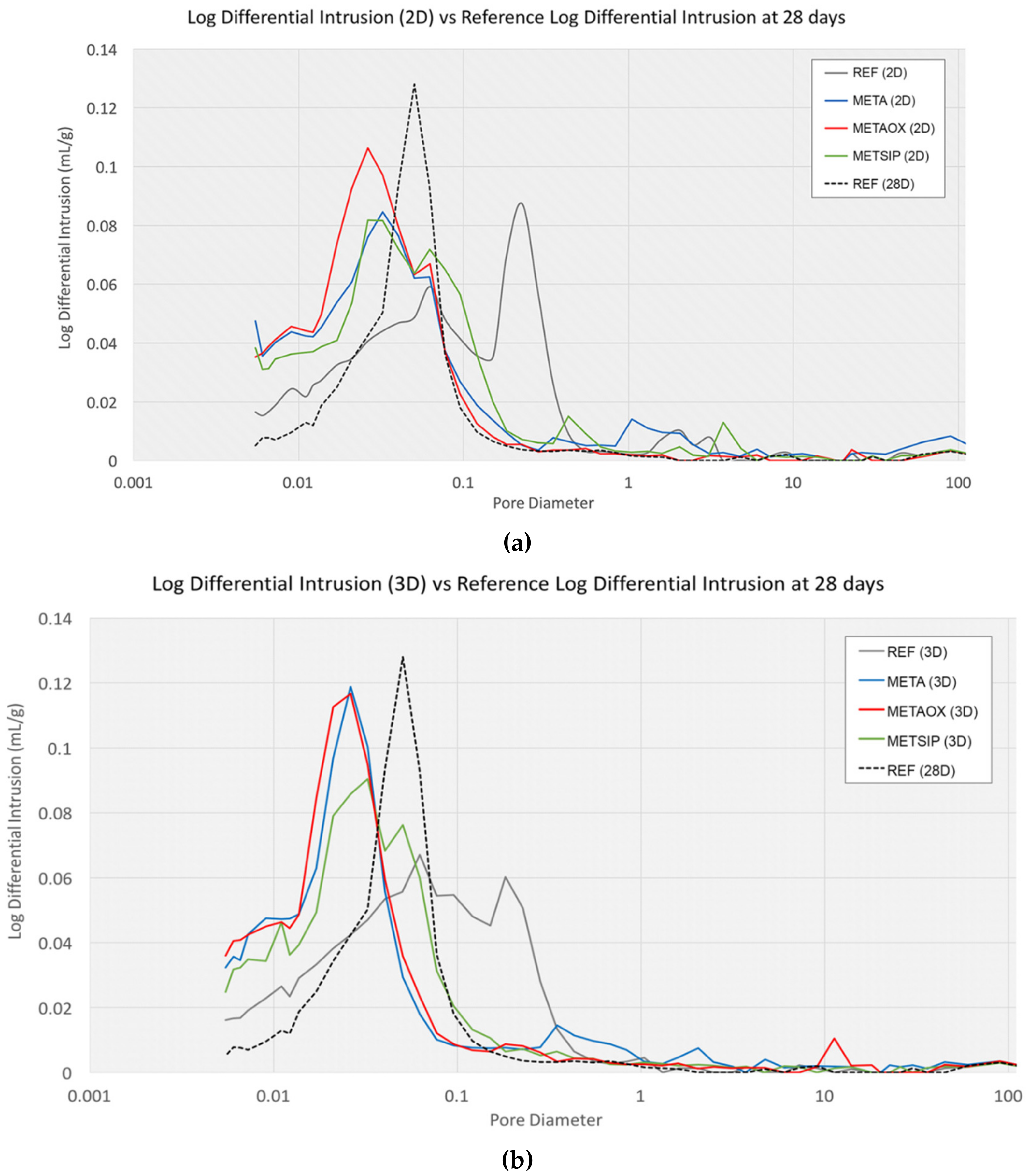
The addition of a range of micro- and nano-particles to high-performance concrete has been the focus of recent research. At present, studies are mainly aimed at designing customised mortars, providing them with specific properties for each application. Improving the durability of mortars is one of the main objectives in such research, as a result of increasing environmental concern. The research presented herein analyses the synergistic effect of nanosilica and metakaolin as additives on the service life of cement-based mortars subject to aggressive environments (i.e., chloride exposure) at early ages. The effects of the additives on the durability properties of submerged samples after two and three days of curing were analysed. Tests were conducted on several different properties: resistivity, porosity, mechanical properties, chloride diffusion, and service life. It is observed that metakaolin and nanosilica exhibit a synergistic effect as additives, which is related to porosity refinement and chloride ion binding capacity, which contributes to enhanced resistance against chloride penetration from very early ages.
Keywords: synergy nanosilica-metakaolin; durability at early ages; marine environment; service life; sustainability synergy nanosilica-metakaolin; durability at early ages; marine environment; service life; sustainability
Graphical Abstract