Article

Polycrystal Simulation of Texture-Induced Grain Coarsening during Severe Plastic Deformation

1
School of Materials Science and Engineering, Dalian University of Technology, Dalian 116024, China
2
Laboratory of Excellence on Design of Alloy Metals for Low-mAss Structures (‘LabEx DAMAS’), Université de Lorraine, F-57070 Metz, France
3
LEM3, CNRS, Arts et Métiers ParisTech, Université de Lorraine, F-57070 Metz, France
*
Author to whom correspondence should be addressed.
Materials 2020, 13(24), 5834; https://doi.org/10.3390/ma13245834
Submission received: 11 November 2020 / Revised: 13 December 2020 / Accepted: 18 December 2020 / Published: 21 December 2020

Abstract

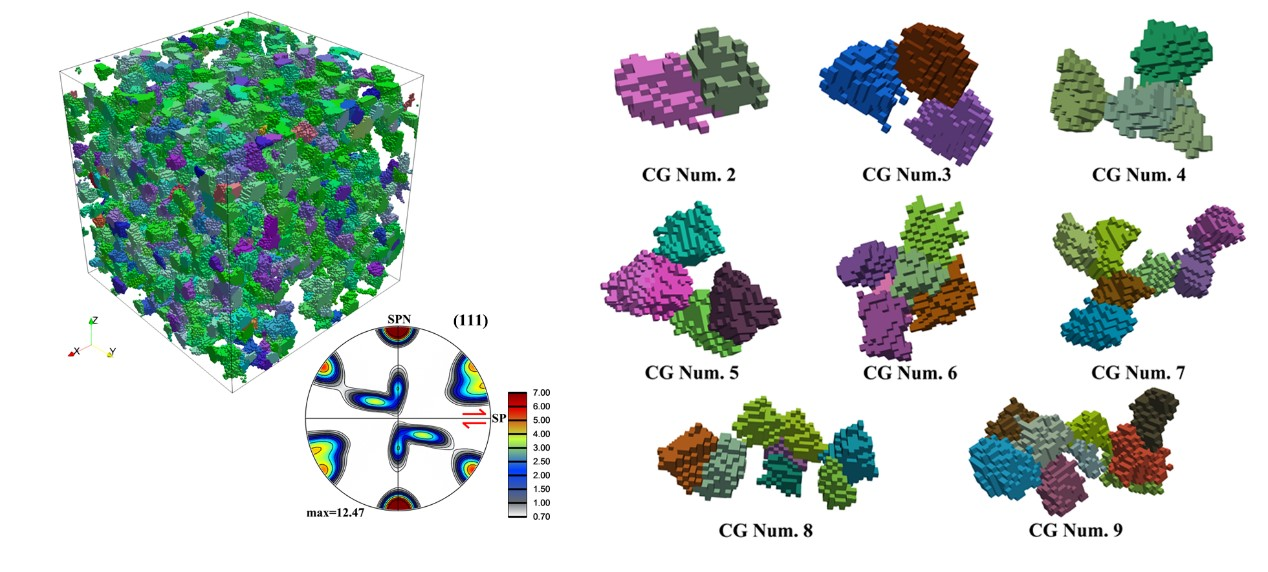
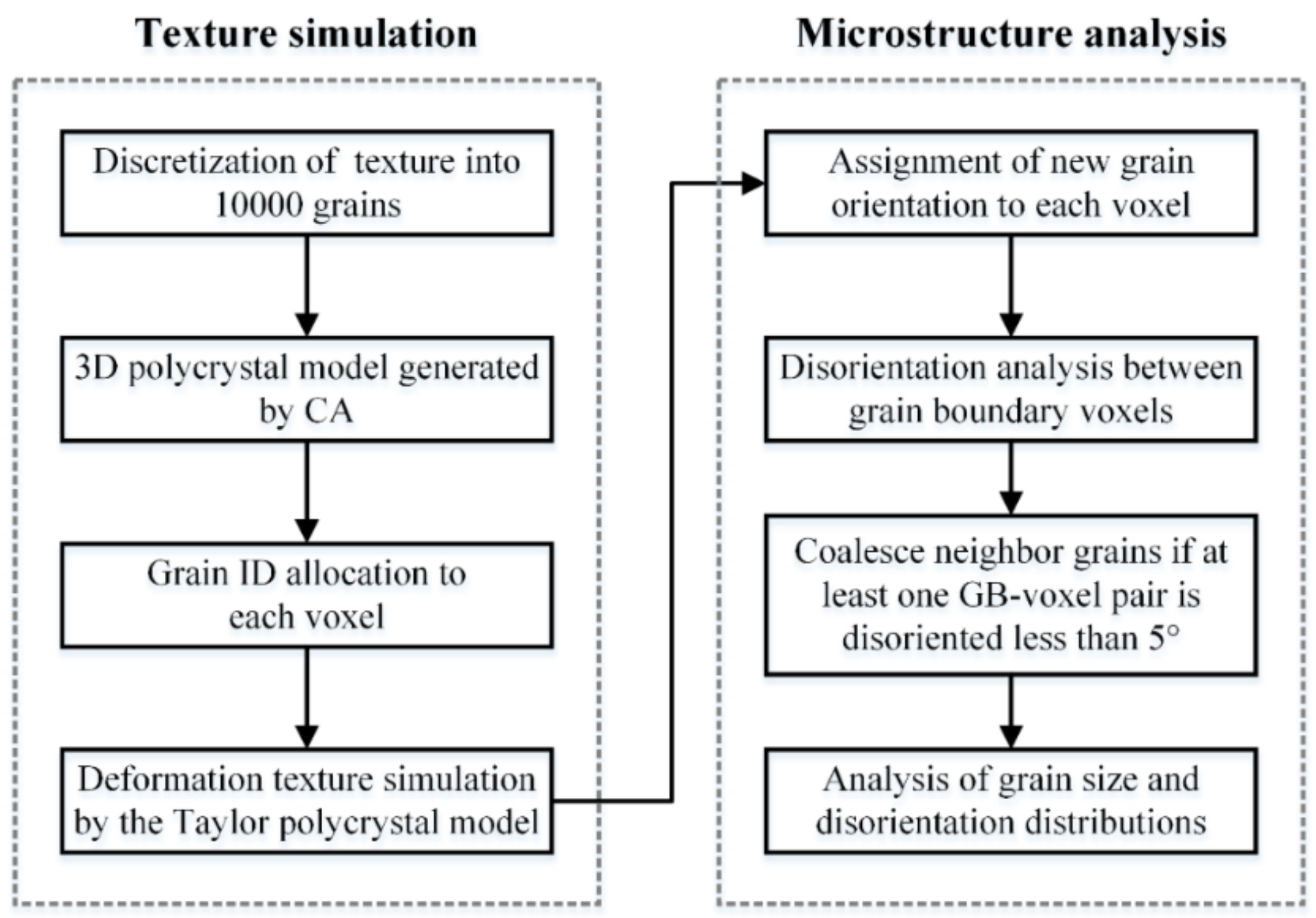
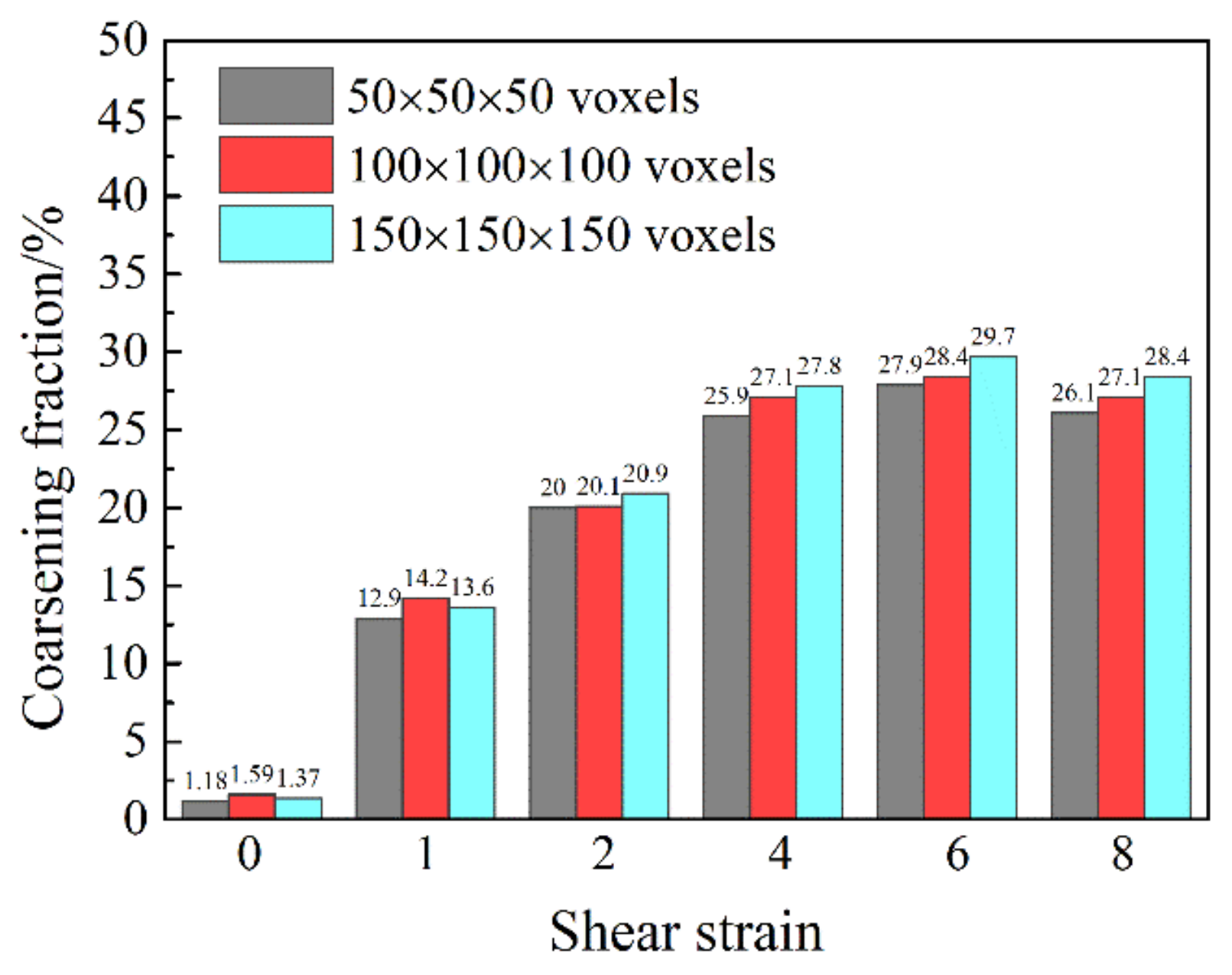
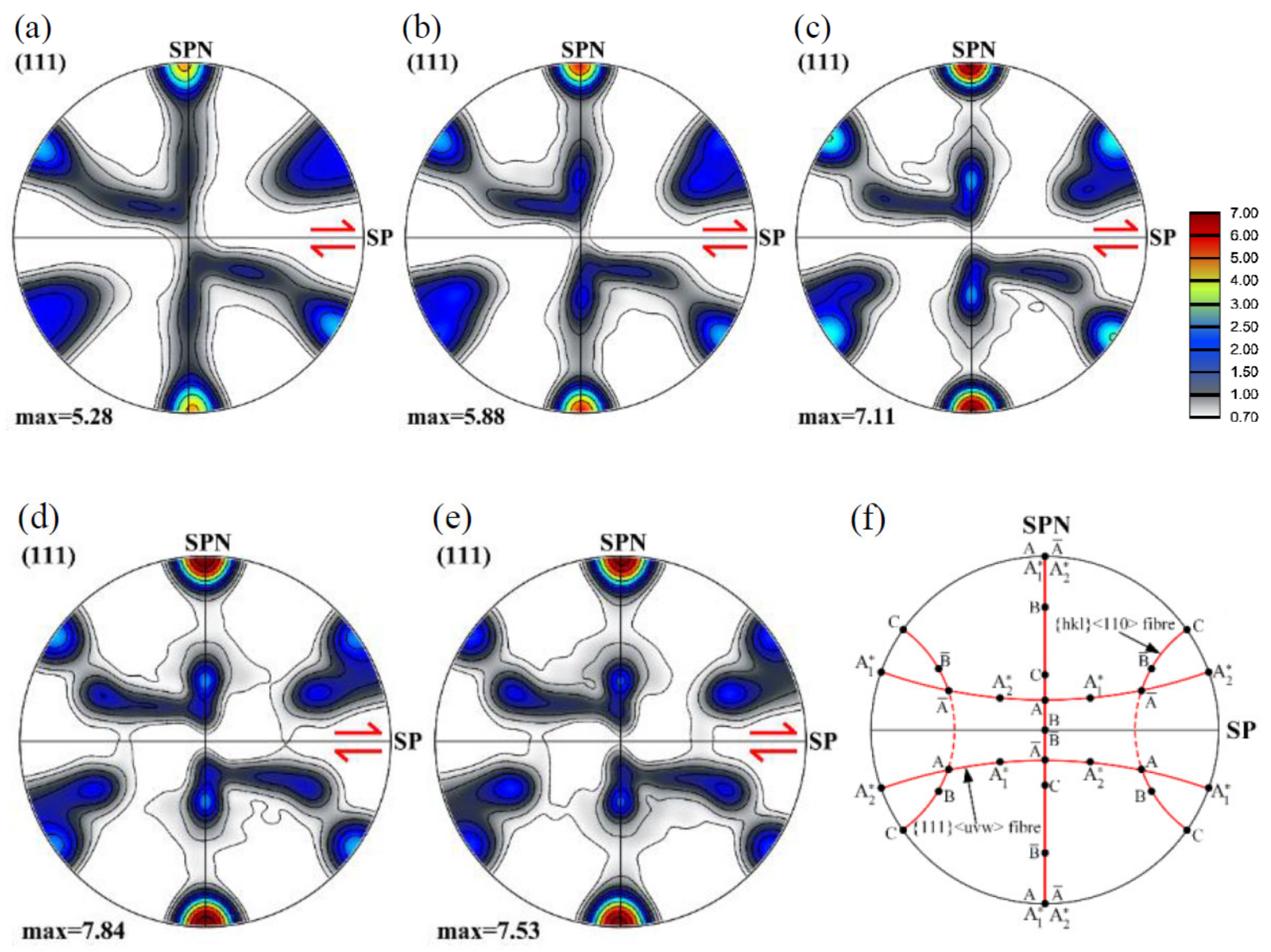
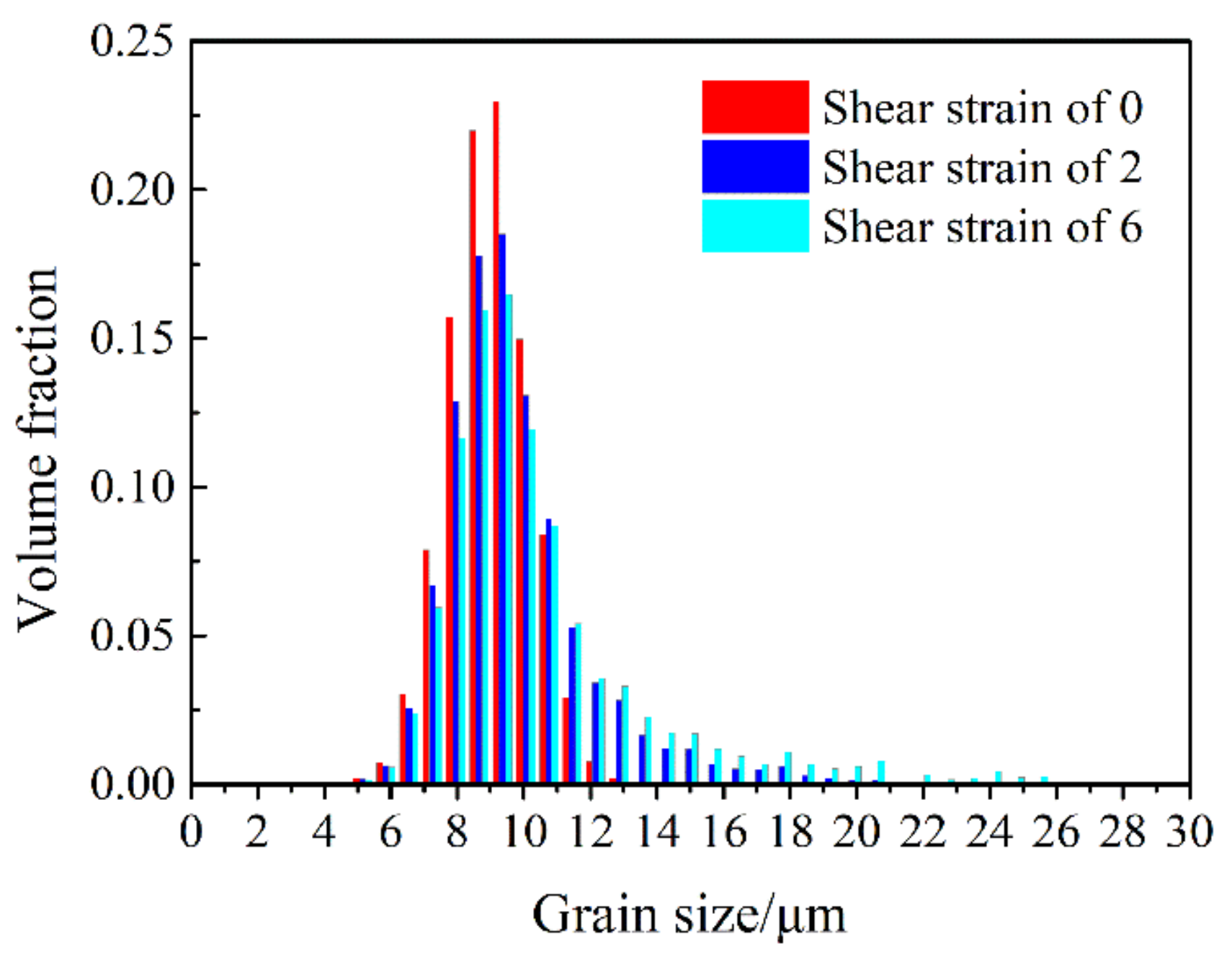
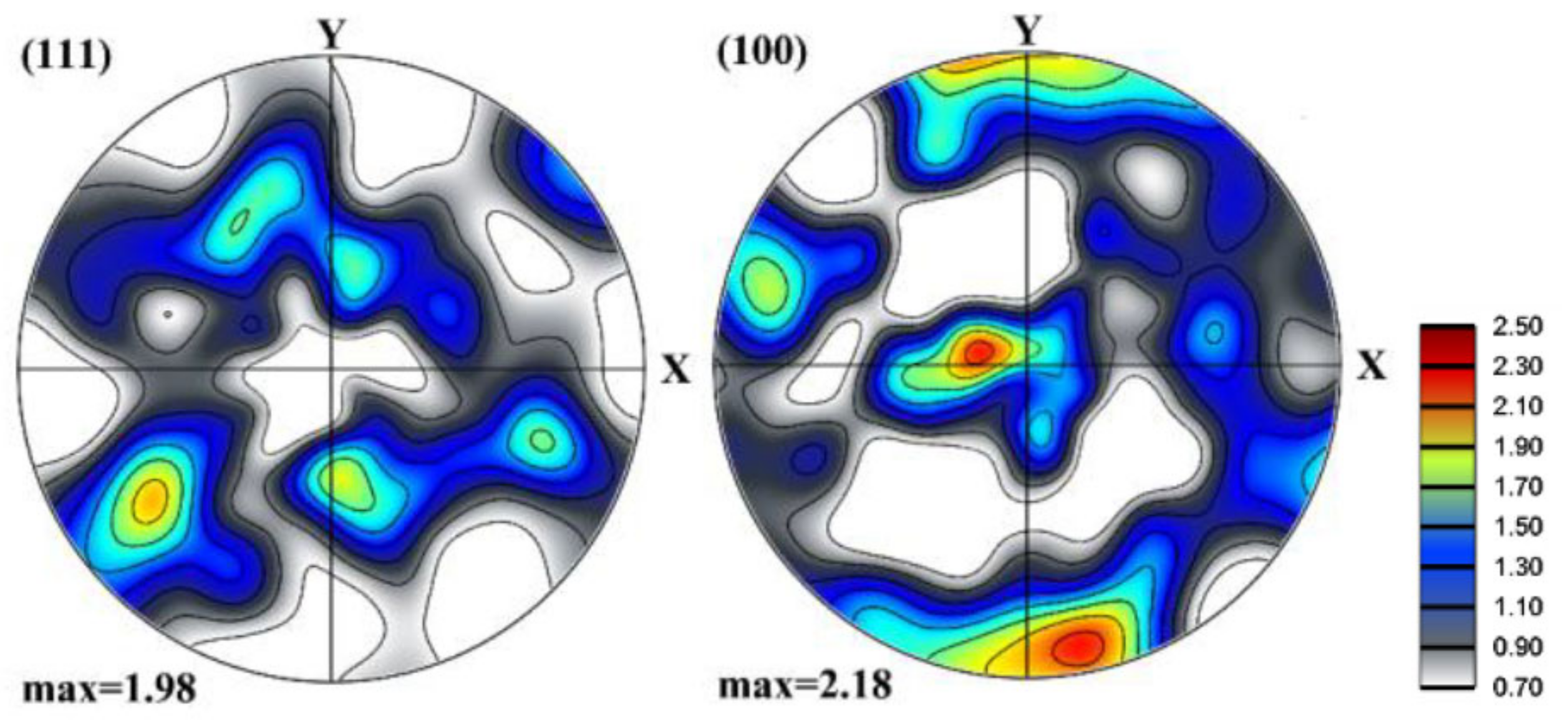
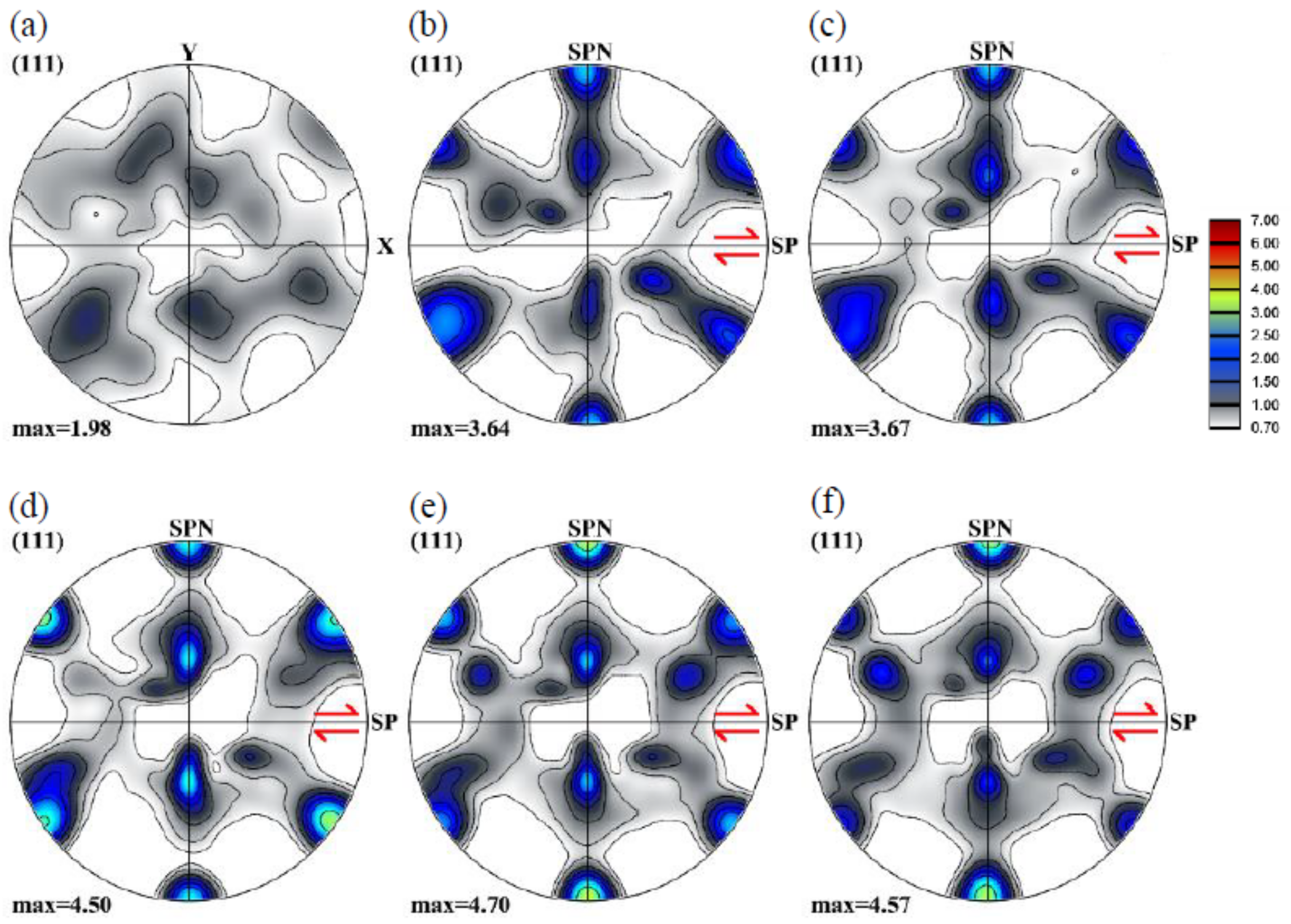
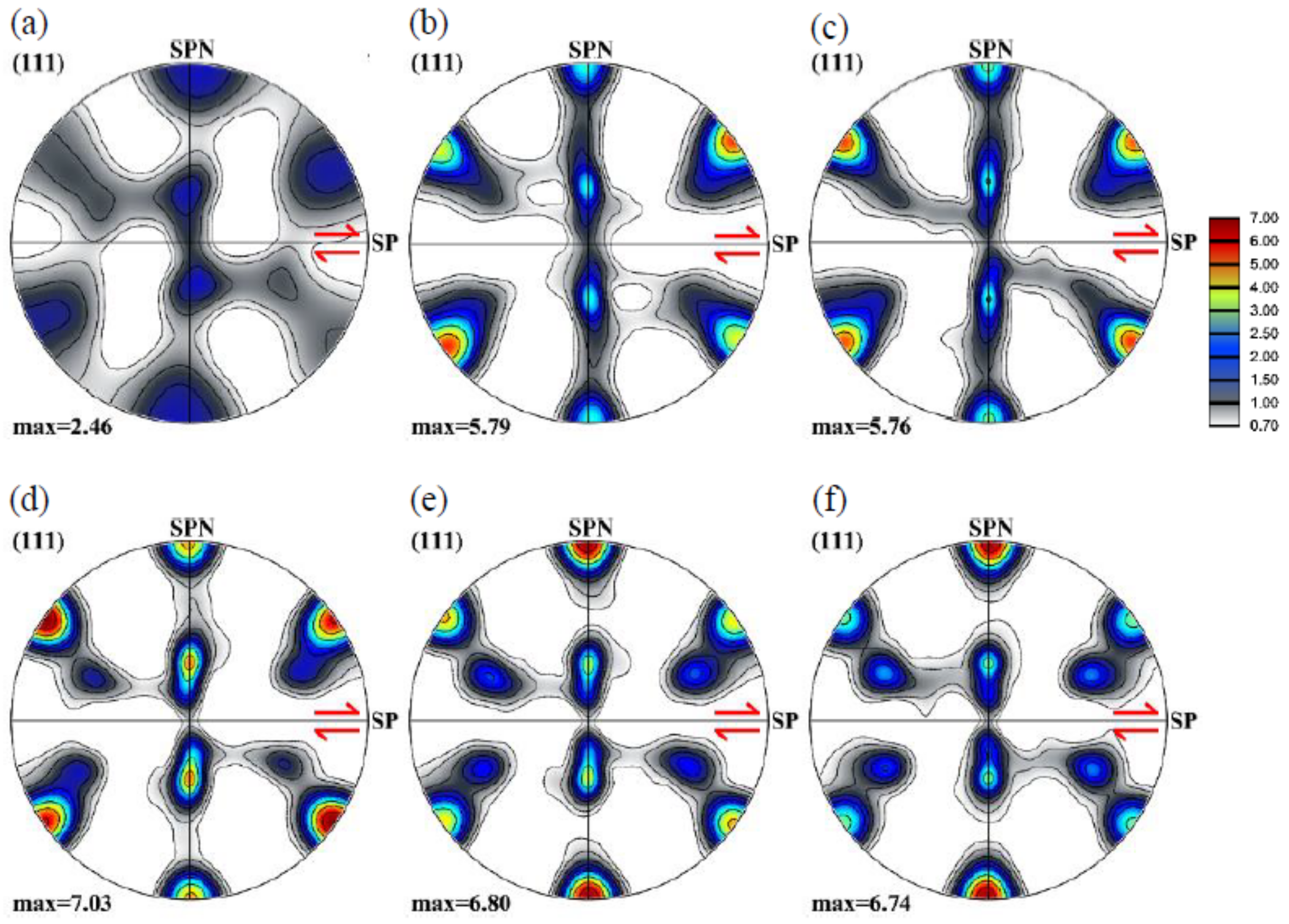
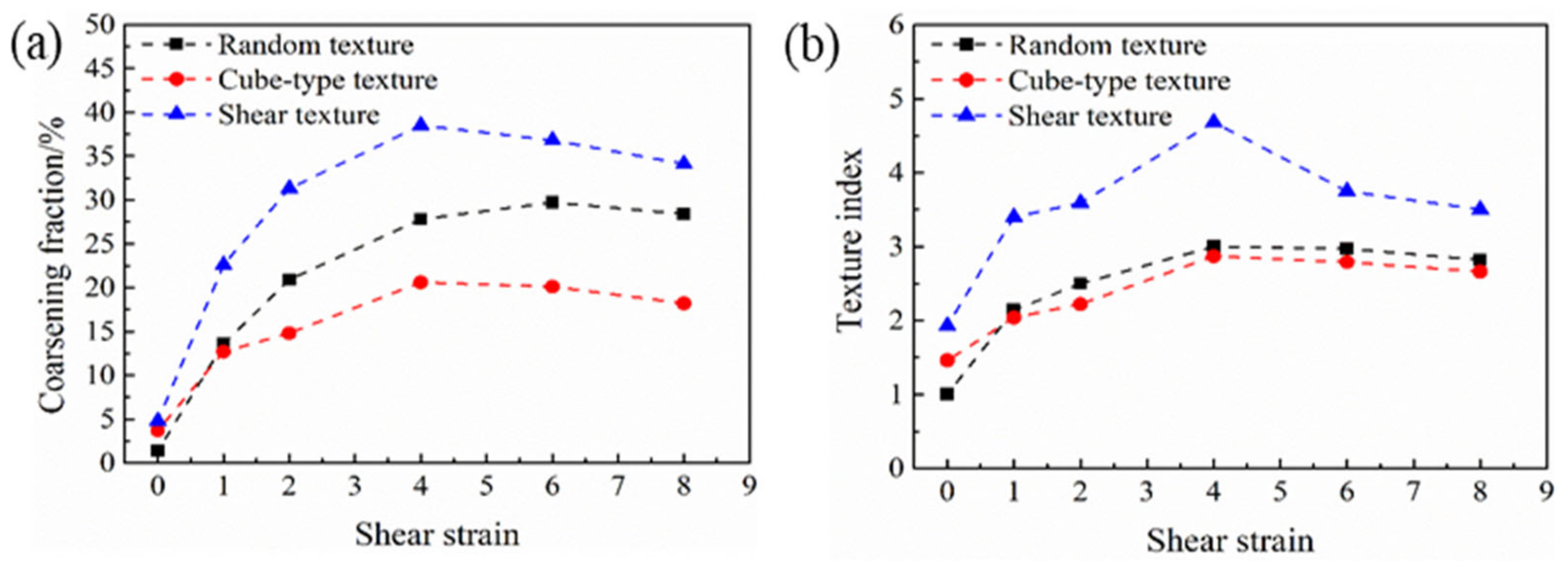
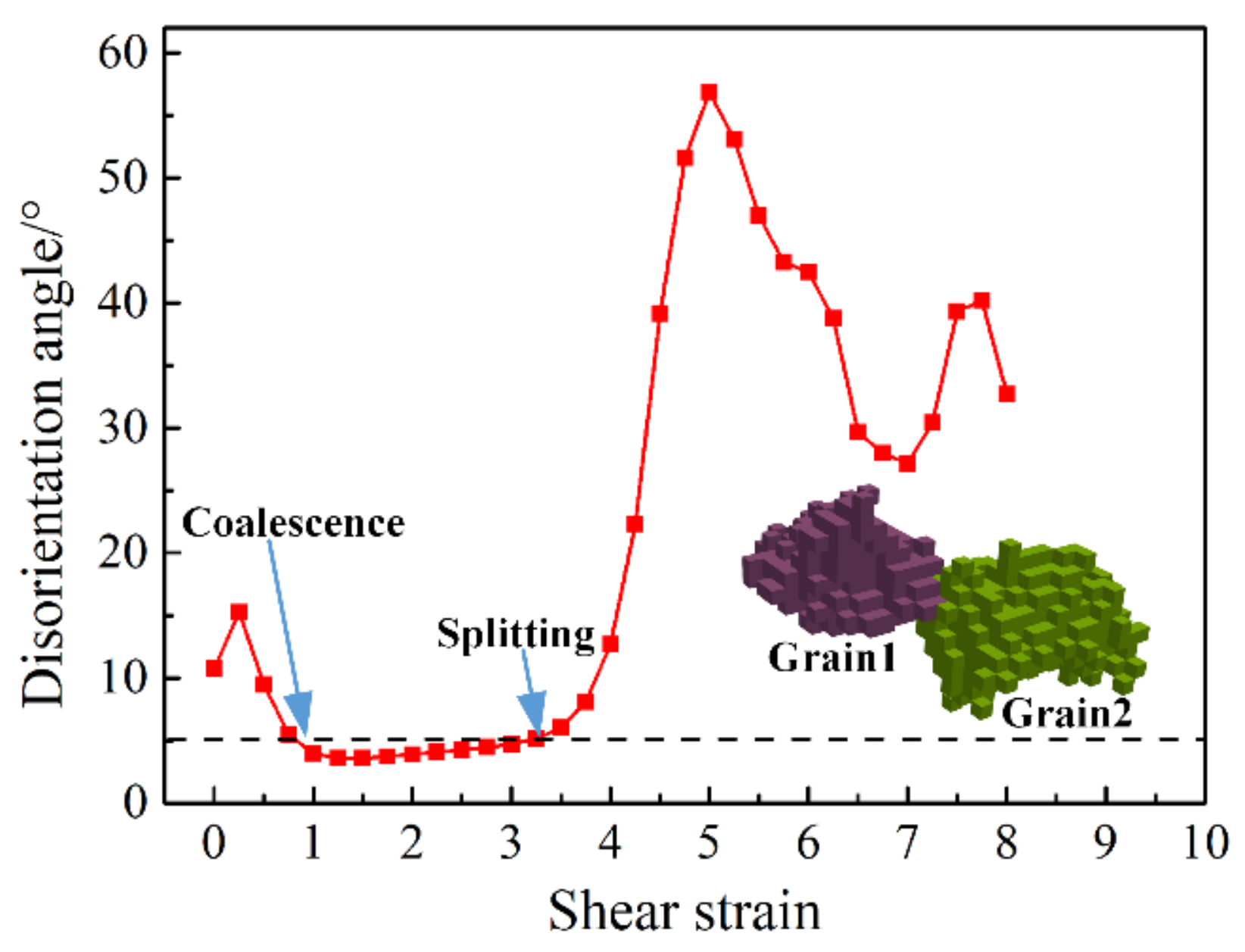
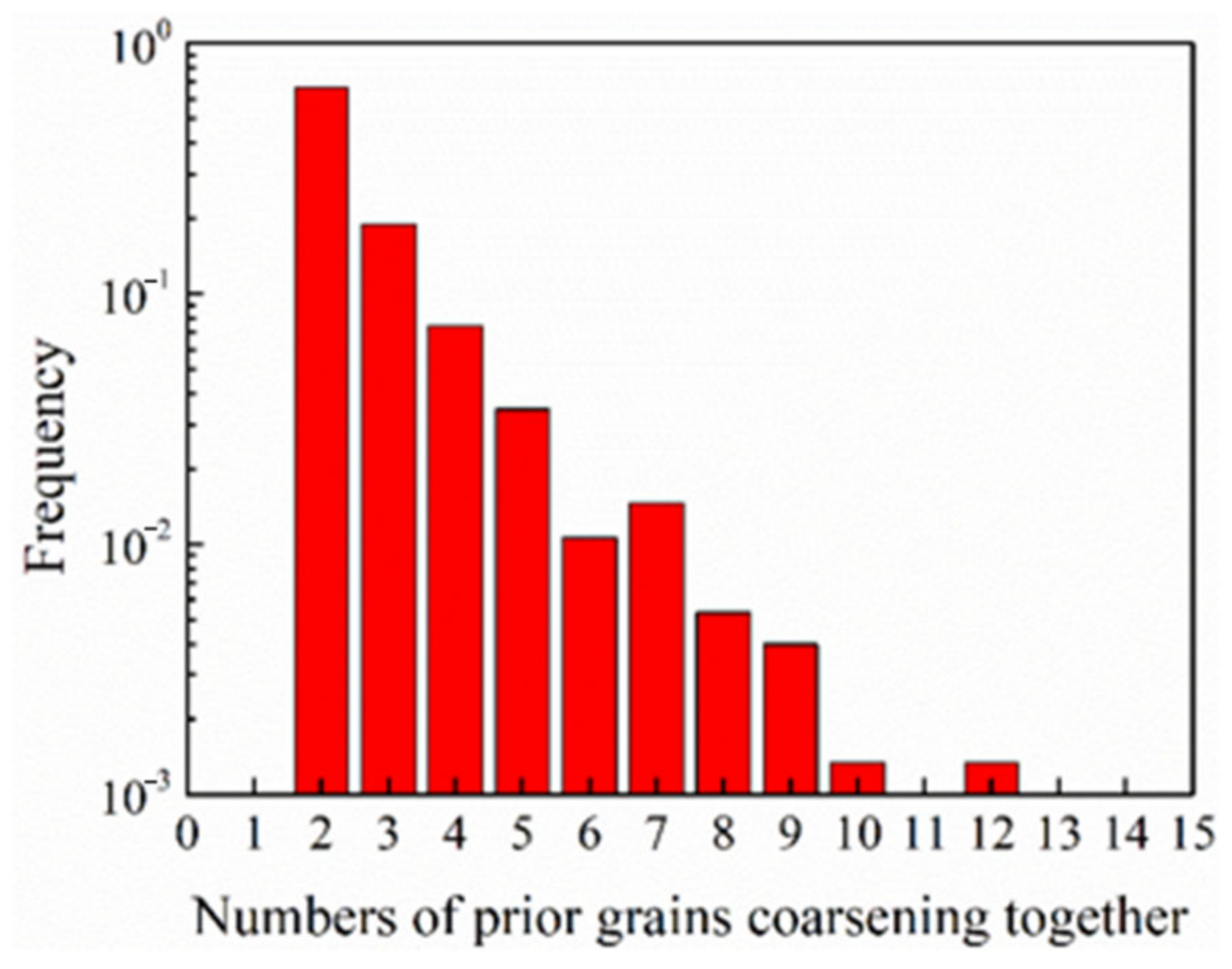
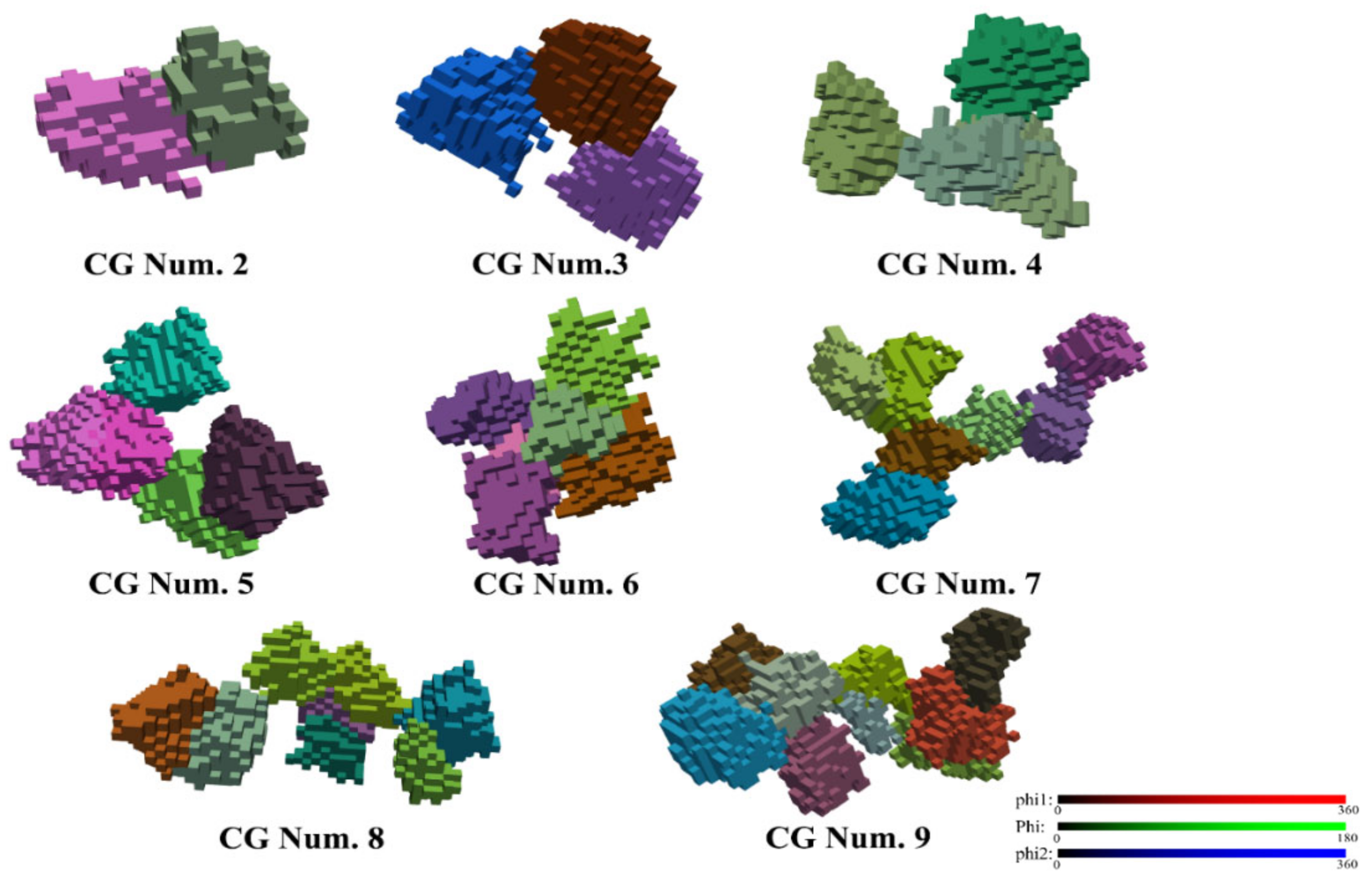
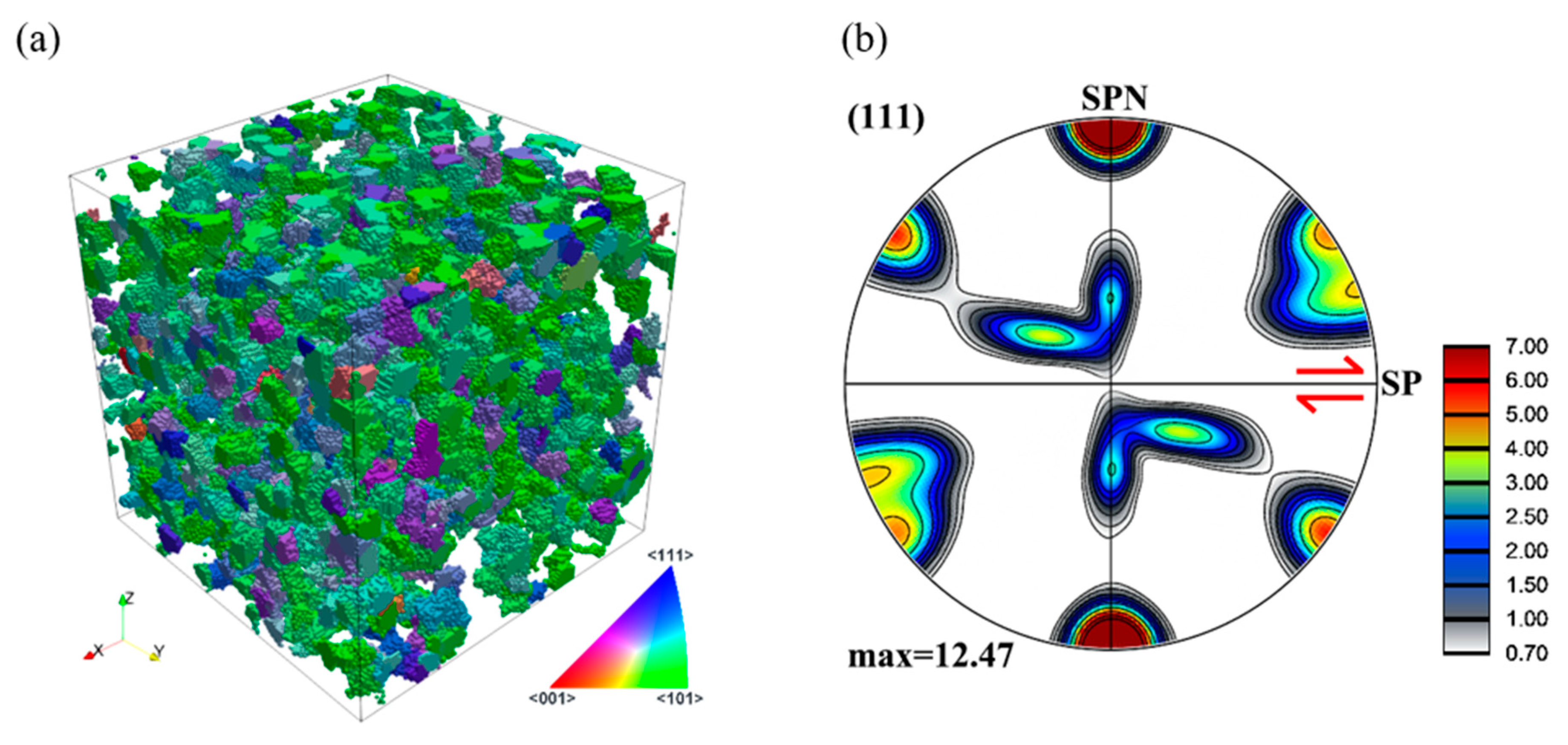
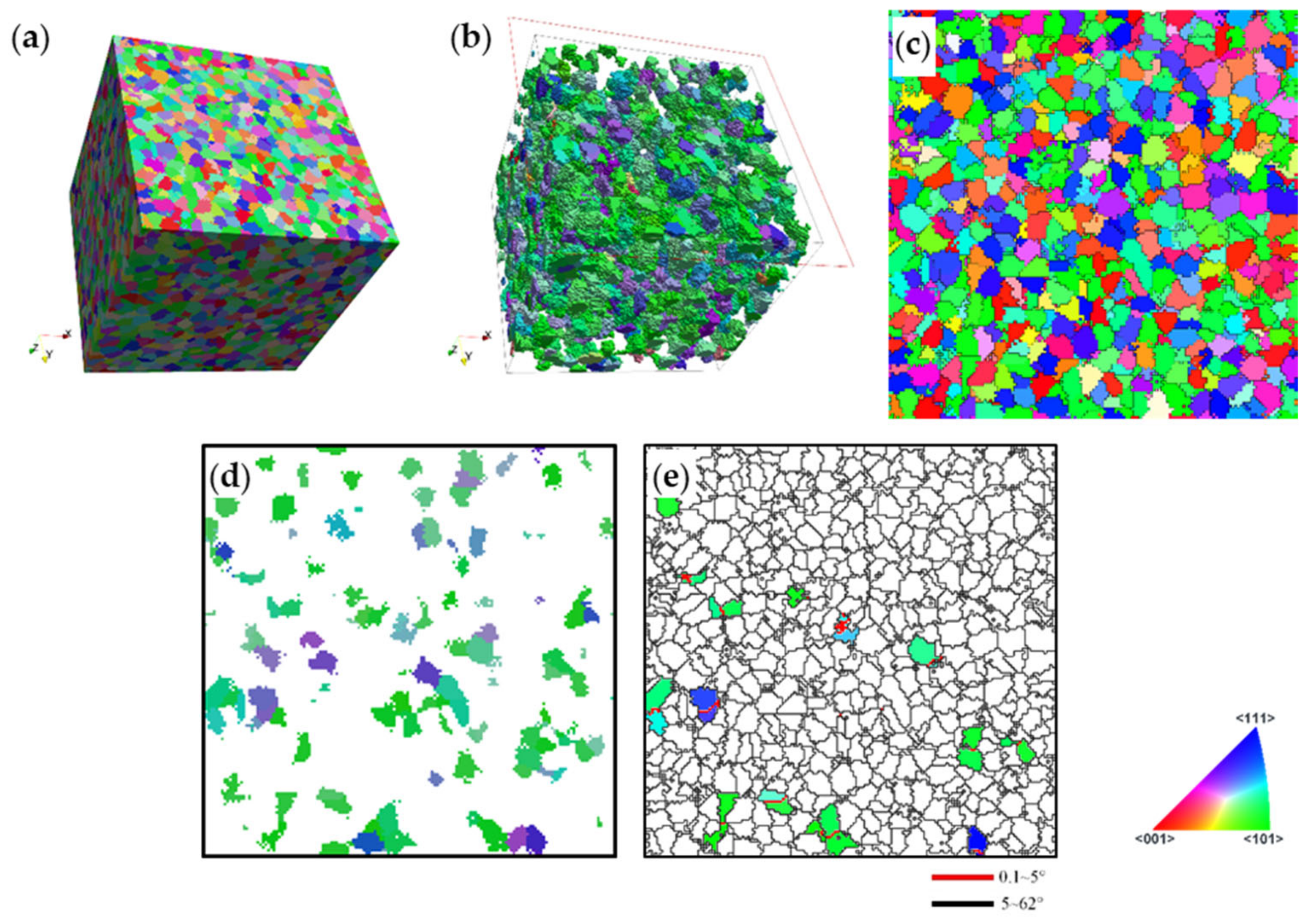
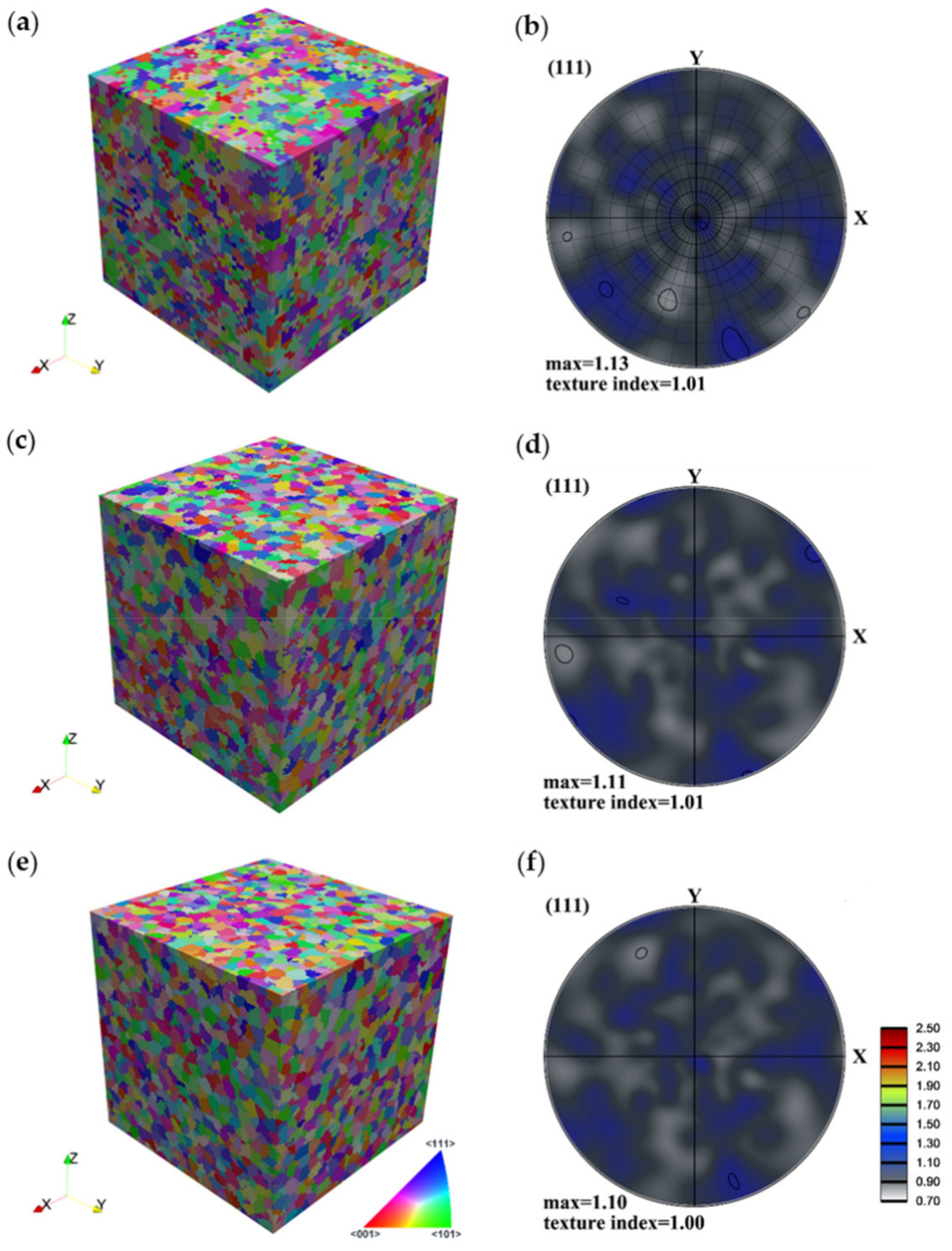
During severe plastic deformation (SPD), there is usually extended grain fragmentation, associated with the formation of a crystallographic texture. The effect of texture evolution is, however, coarsening in grain size, as neighbor grains might coalesce into one grain by approaching the same ideal orientation. This work investigates the texture-induced grain coarsening effect in face-centered cubic polycrystals during simple shear, in 3D topology. The 3D polycrystal aggregate was constructed using a cellular automaton model with periodic boundary conditions. The grains constituting the polycrystal were assigned to orientations, which were updated using the Taylor polycrystal plasticity approach. At the end of plastic straining, a grain detection procedure (similar to the one in electron backscatter diffraction, but in 3D) was applied to detect if the orientation difference between neighboring grains decreased below a small critical value (5°). Three types of initial textures were considered in the simulations: shear texture, random texture, and cube-type texture. The most affected case was the further shearing of an initially already shear texture: nearly 40% of the initial volume was concerned by the coalescence effect at a shear strain of 4. The coarsening was less in the initial random texture (~30%) and the smallest in the cube-type texture (~20%). The number of neighboring grains coalescing into one grain went up to 12. It is concluded that the texture-induced coarsening effect in SPD processing cannot be ignored and should be taken into account in the grain fragmentation process.
Keywords: grain coarsening; crystallographic texture; polycrystal plasticity modeling; severe plastic deformation (SPD) grain coarsening; crystallographic texture; polycrystal plasticity modeling; severe plastic deformation (SPD)
Graphical Abstract