Article

Spark Plasma Diffusion Bonding of TiAl/Ti2AlNb with Ti as Interlayer

1
School of Materials Science and Engineering, Dalian Jiaotong University, Dalian 116028, China
2
Institute of Special Environments Physical Sciences, Harbin Institute of Technology, Shenzhen 518055, China
3
Aeronautical Key Laboratory for Welding and Joining Technologies, AVIC Manufacturing Technology of Institute, Beijing 100024, China
*
Authors to whom correspondence should be addressed.
Materials 2020, 13(15), 3300; https://doi.org/10.3390/ma13153300
Submission received: 6 July 2020 / Revised: 21 July 2020 / Accepted: 22 July 2020 / Published: 24 July 2020
(This article belongs to the Collection Welding and Joining Processes of Materials)

Abstract

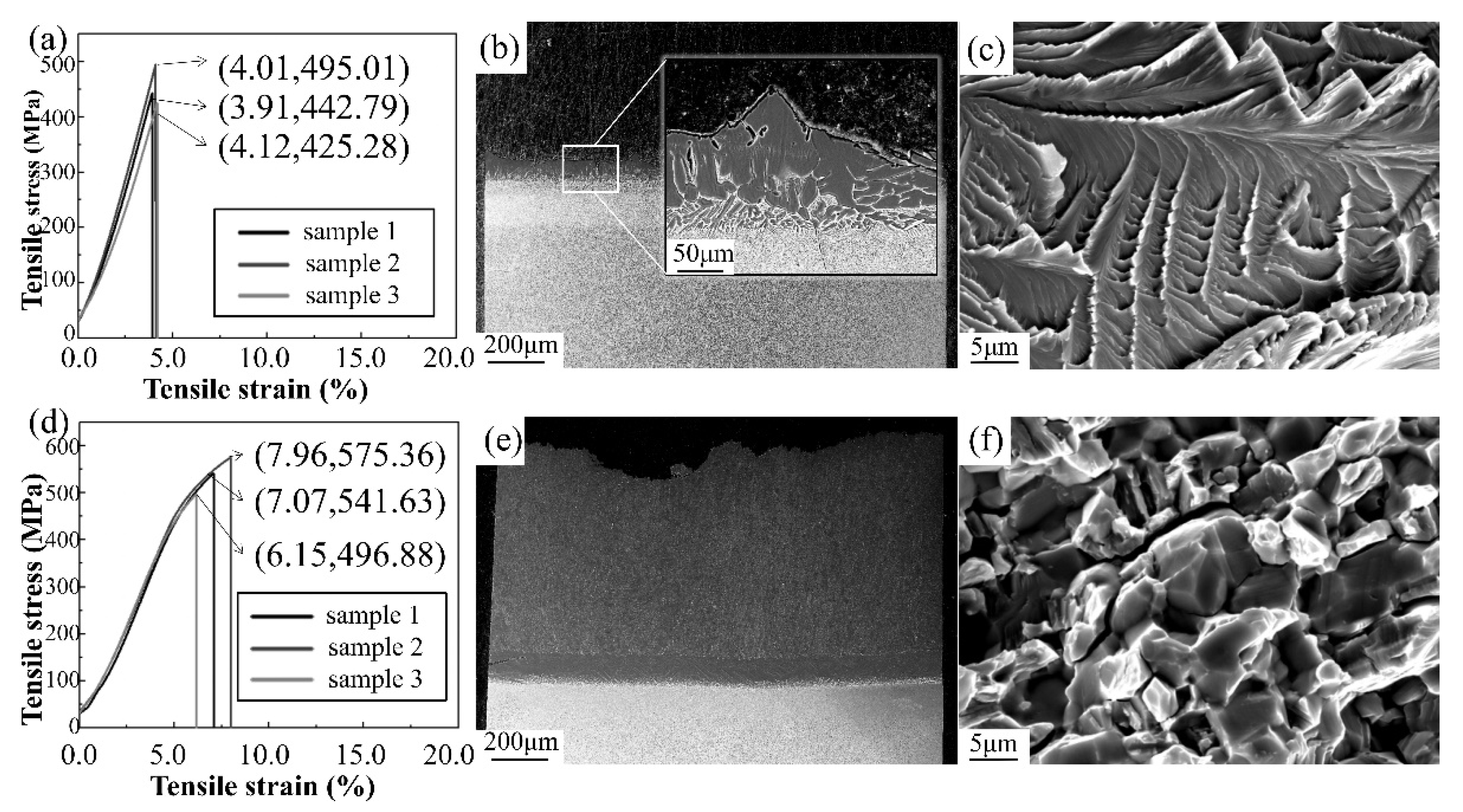
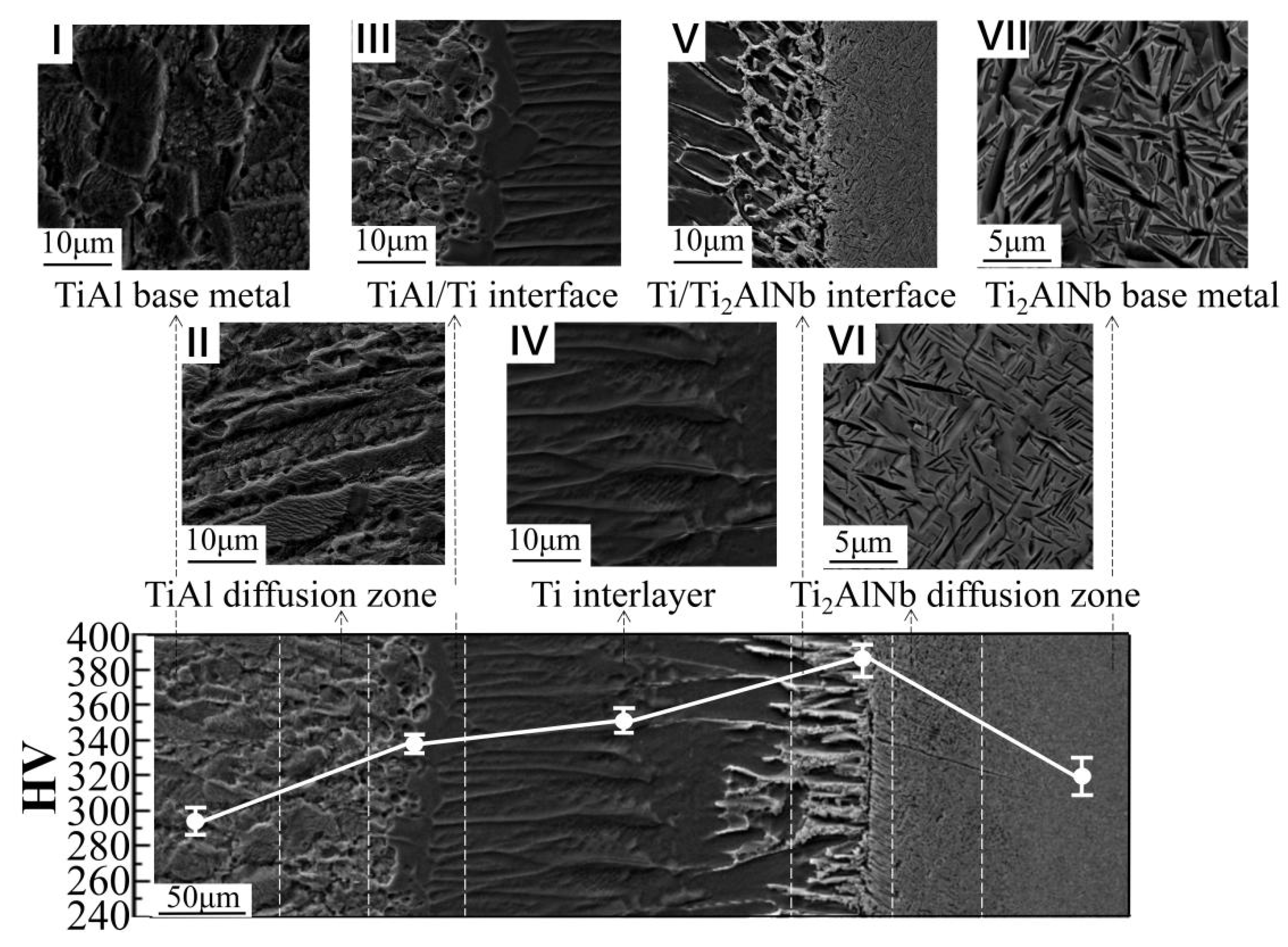
To solve the problem of poor weldability between TiAl-based and Ti2AlNb-based alloys, spark plasma diffusion bonding was employed to join a TiAl alloy and a Ti2AlNb alloy with a pure Ti foil as interlayer at 950 °C/10 KN/60 min. After welding, slow cooling was carried out at a rate of 5 °C/min, followed by homogenization at 800 °C for 24 h. The microstructural evolution and elemental migration of the joint were analyzed via a scanning electron microscope equipped with an energy dispersive spectrometer, while the mechanical properties of the joint were assessed via microhardness and tensile tests. The results show that the spark plasma diffusion bonding formed a joint of TiAl/Ti/Ti2AlNb without microcracks or microvoids, while also effectively protecting the base metal. Before heat treatment, the maximum hardness value (401 HV) appeared at the Ti2AlNb/Ti interface, while the minimum hardness value (281 HV) occurred in the TiAl base metal. The tensile strength of the heat-treated joint at room temperature was measured to be up to 454 MPa, with a brittle fracture occurring in the interlayer. The tensile strength of the joint at 650 °C was measured to be up to 538 MPa, with intergranular cracks occurring in the TiAl base metal.
Keywords: spark plasma diffusion bonding; TiAl; Ti2AlNb; microstructure; elemental migration; microhardness; tensile properties spark plasma diffusion bonding; TiAl; Ti2AlNb; microstructure; elemental migration; microhardness; tensile properties