The Tensile Strength and Damage Characteristic of Two Types of Concrete and Their Interface



Abstract
1. Introduction
2. Experimental Work
2.1. Samples Preparation
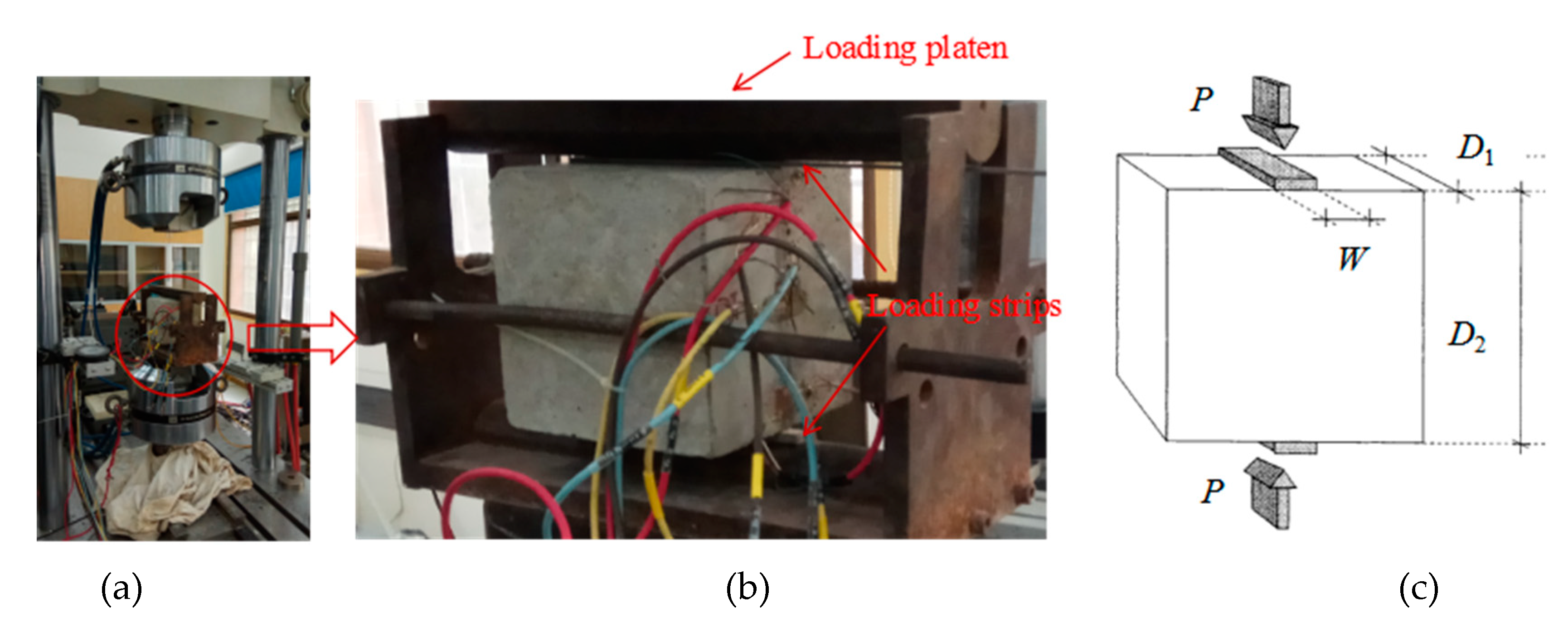
2.2. Test Procedure
3. Analysis of Experimental Results
3.1. Tensile Splitting Strength
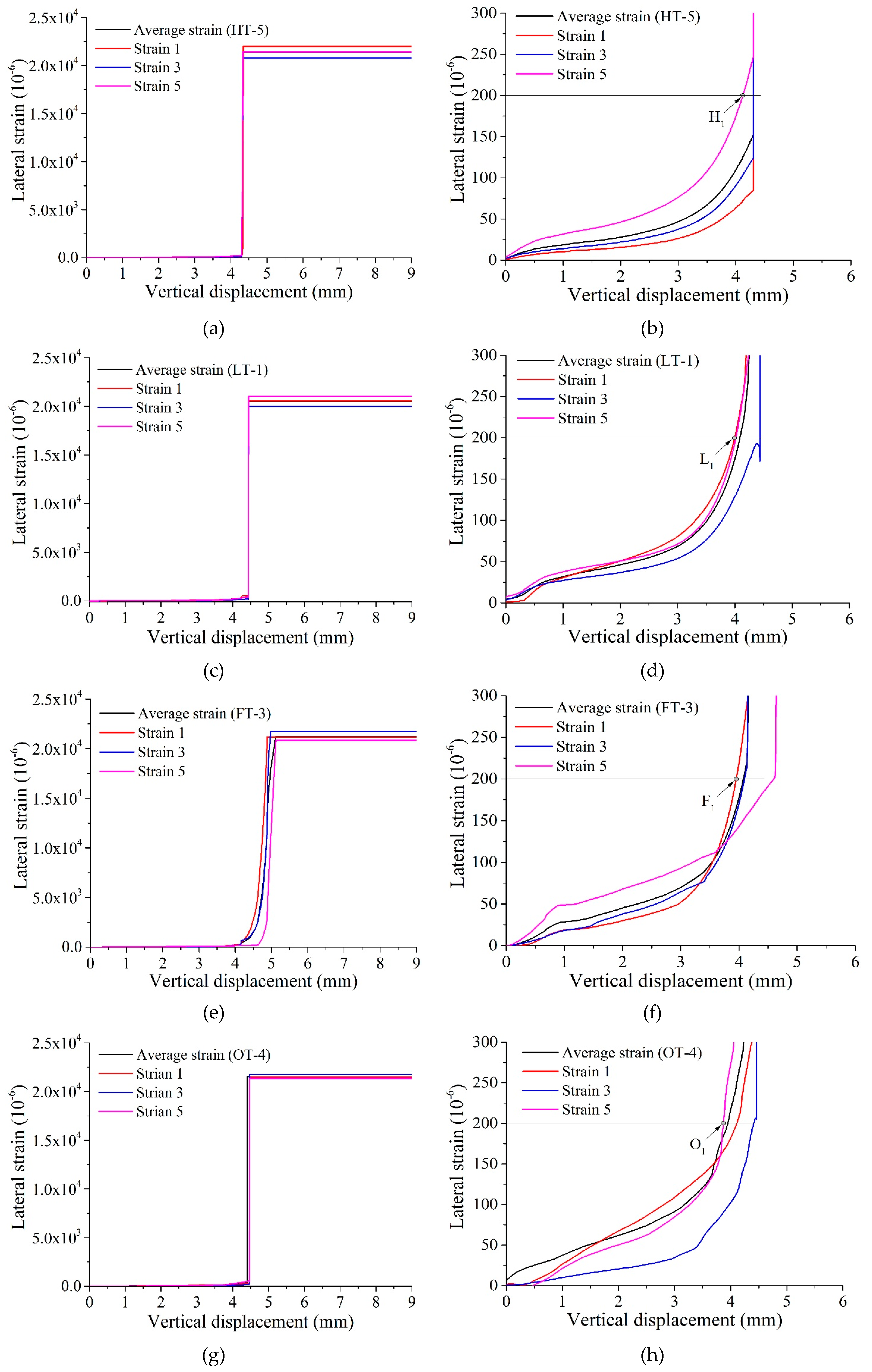
3.2. Initial Cracking Point
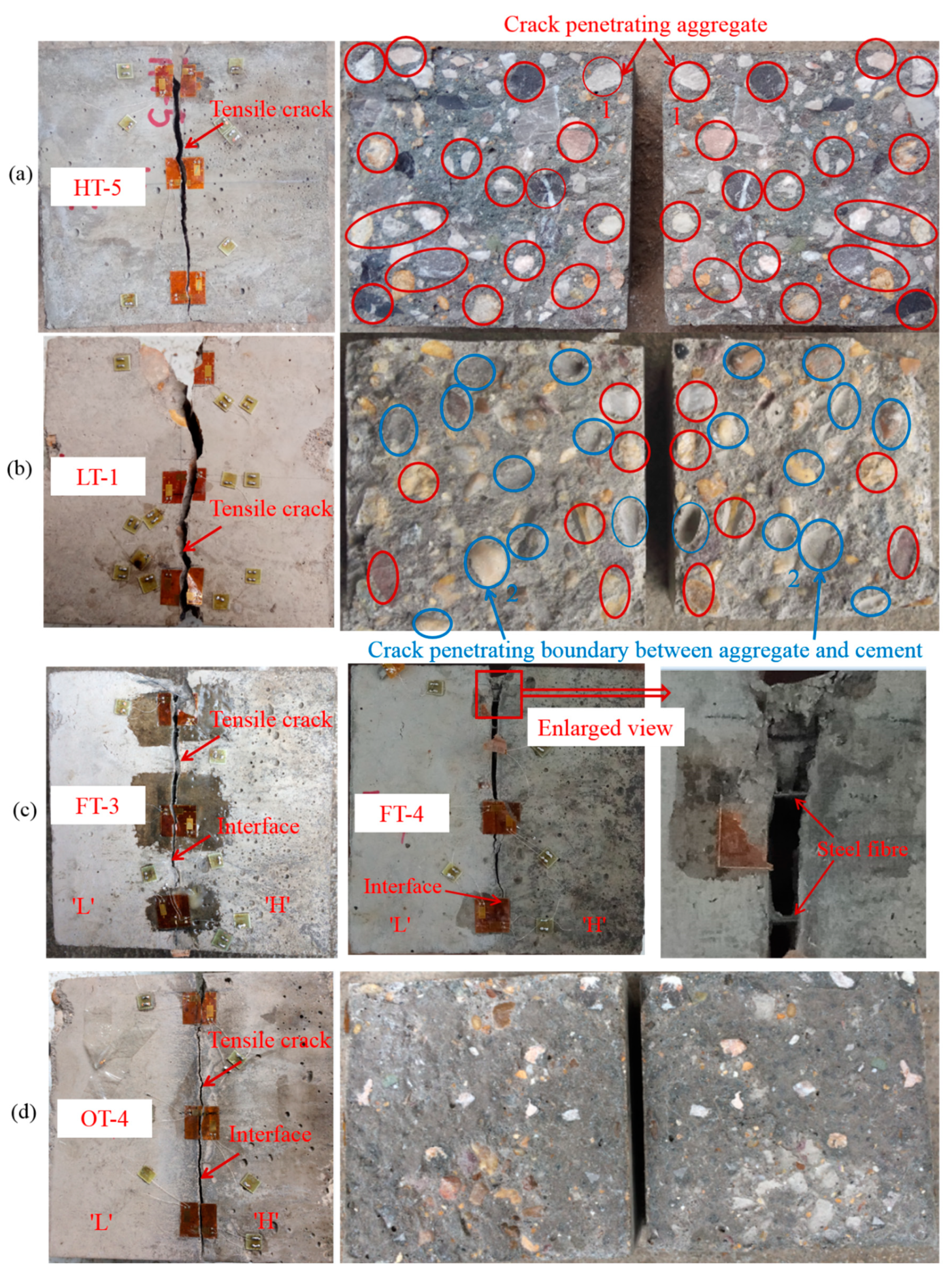
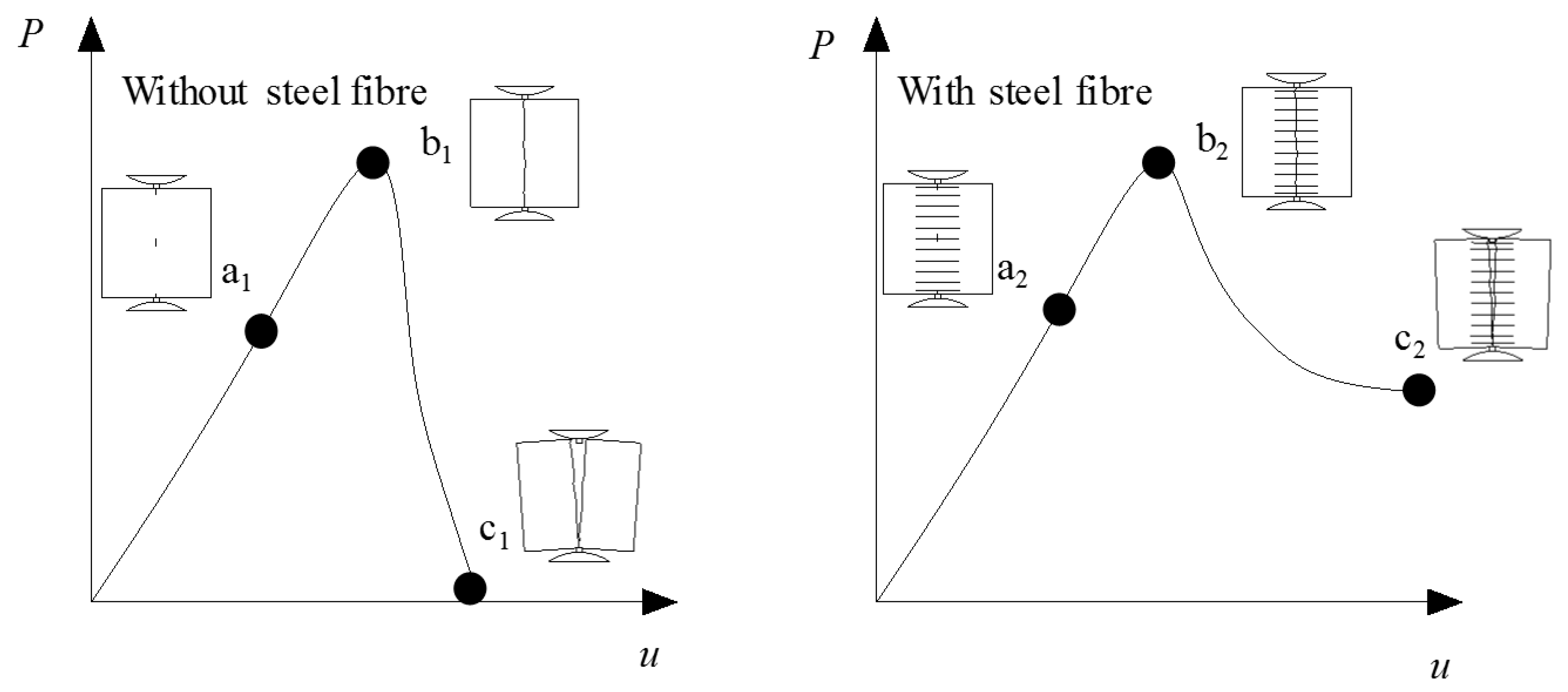
3.3. Damage Characteristics
4. Numerical Simulation
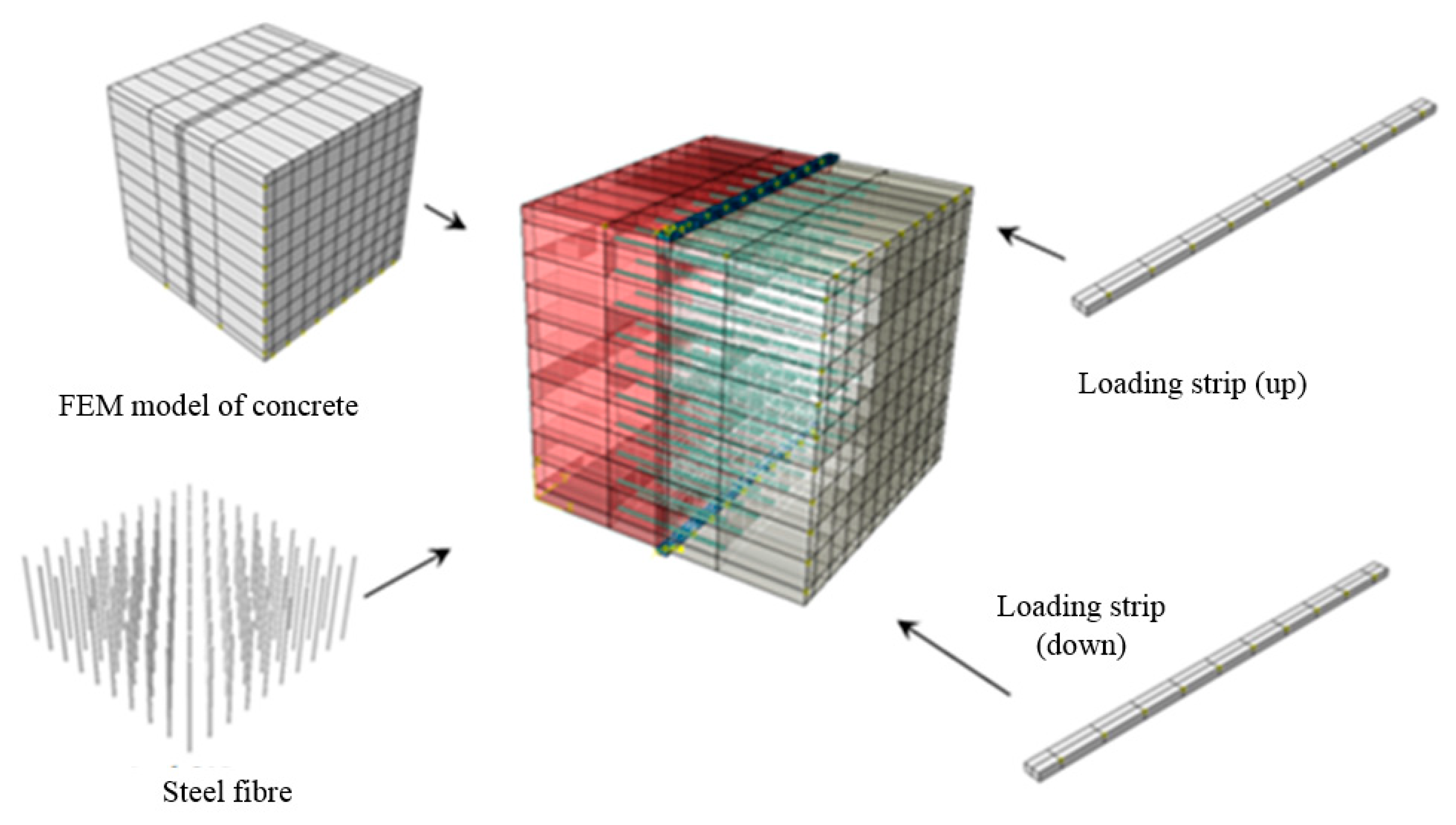
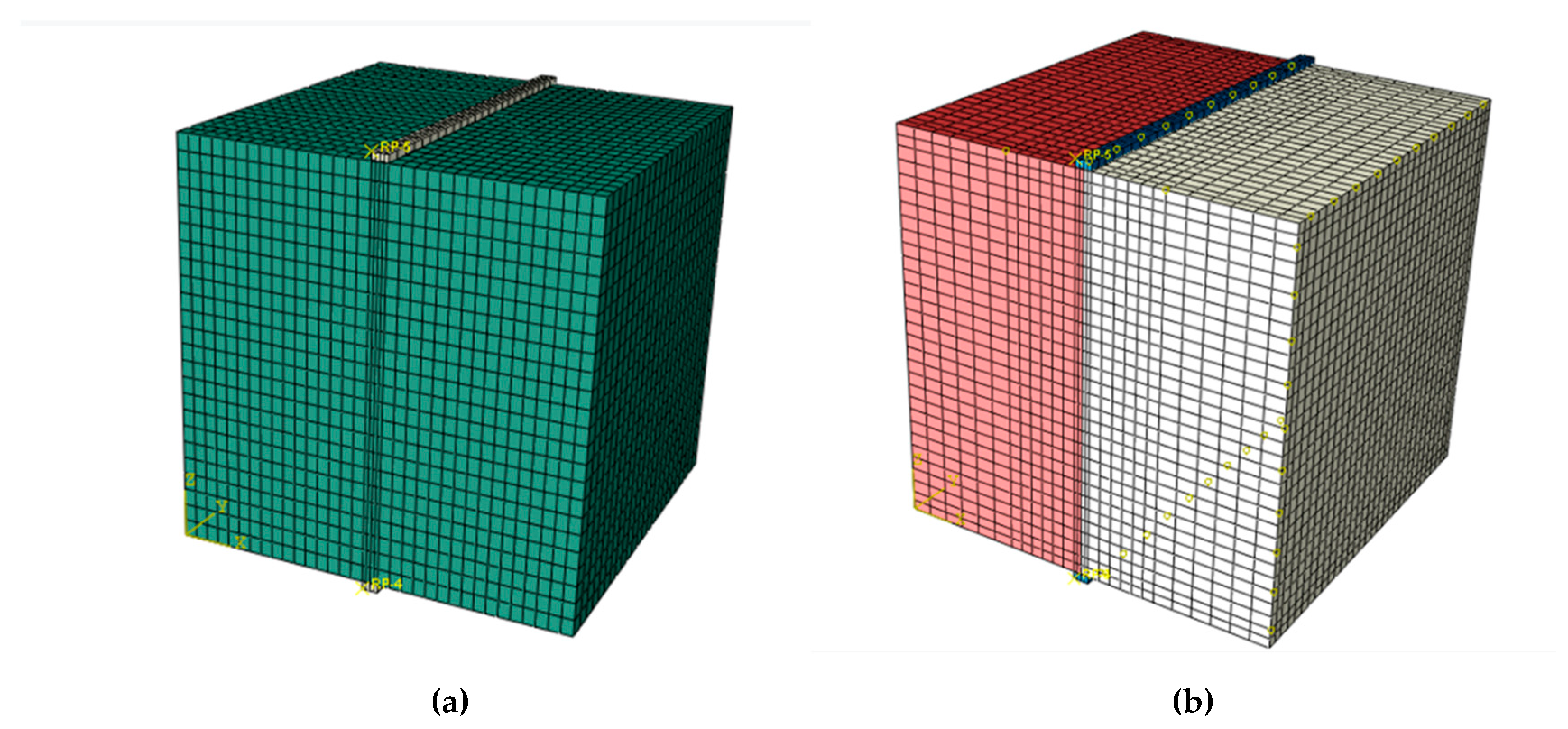
4.1. Geometry Numerical Model
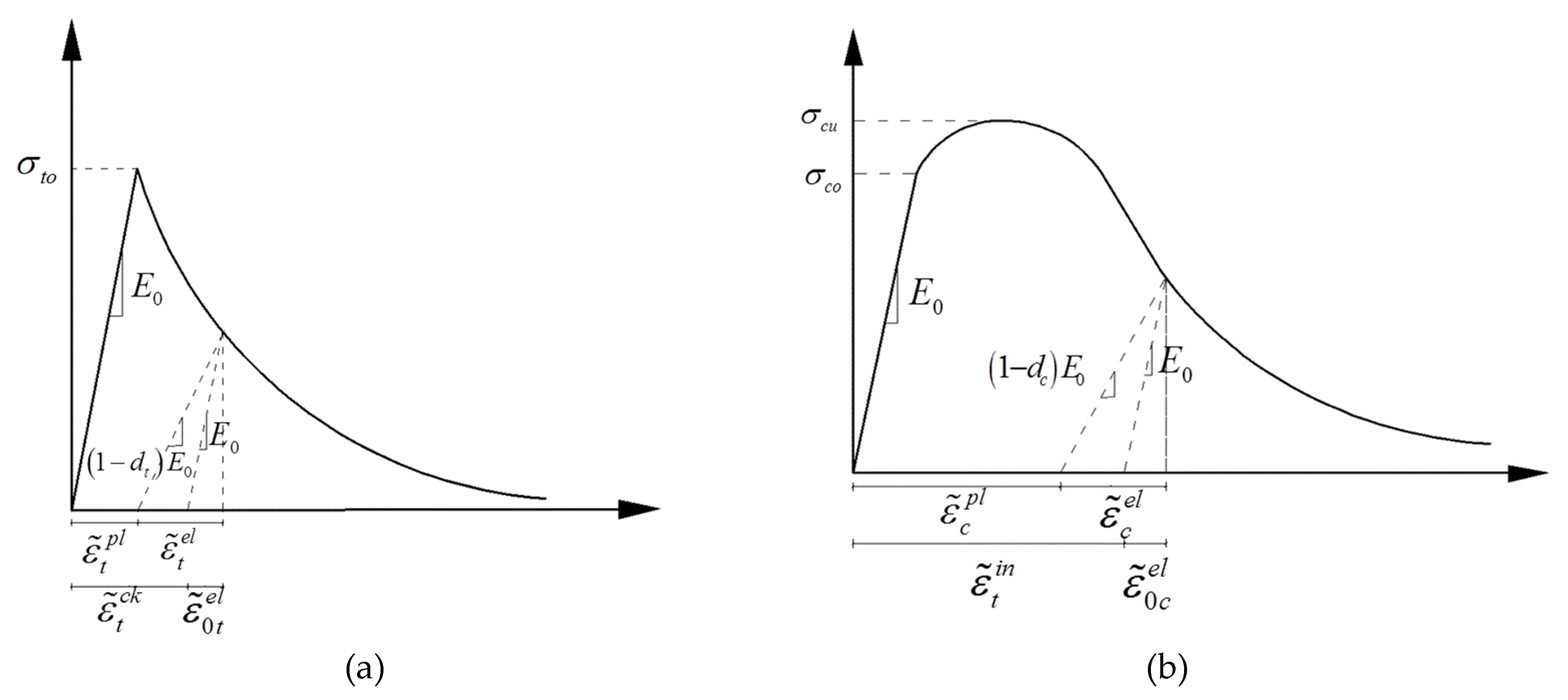
4.2. Constitutive Model of Concrete
4.3. Simulation Results
5. Conclusions
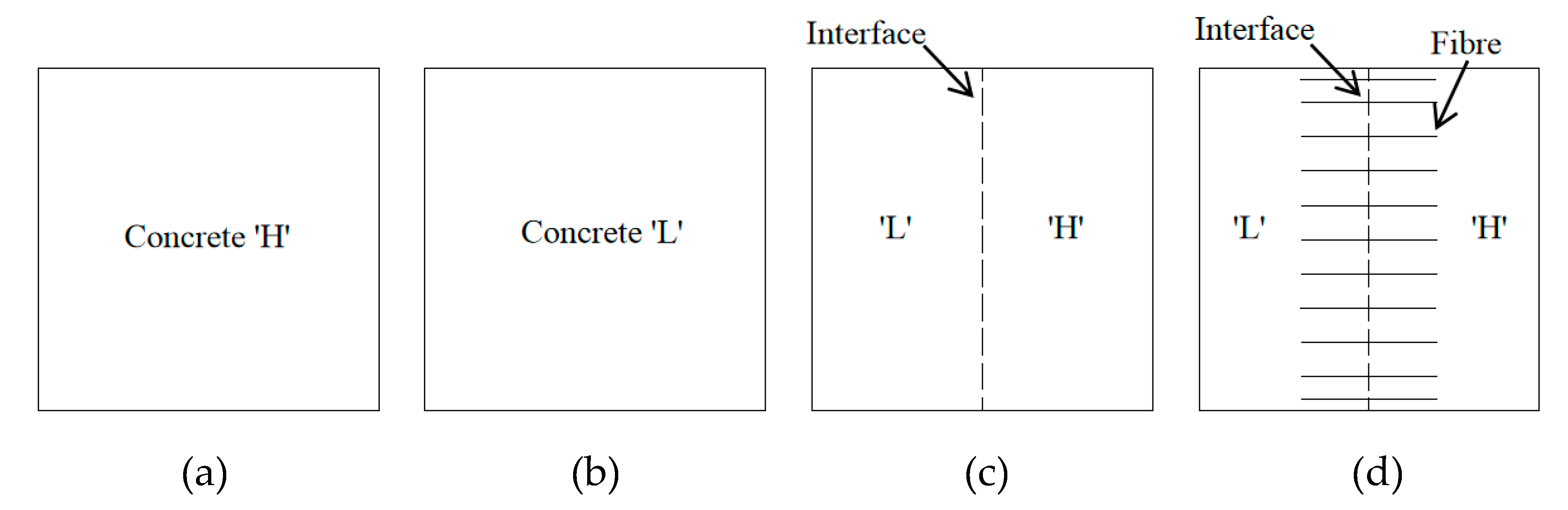
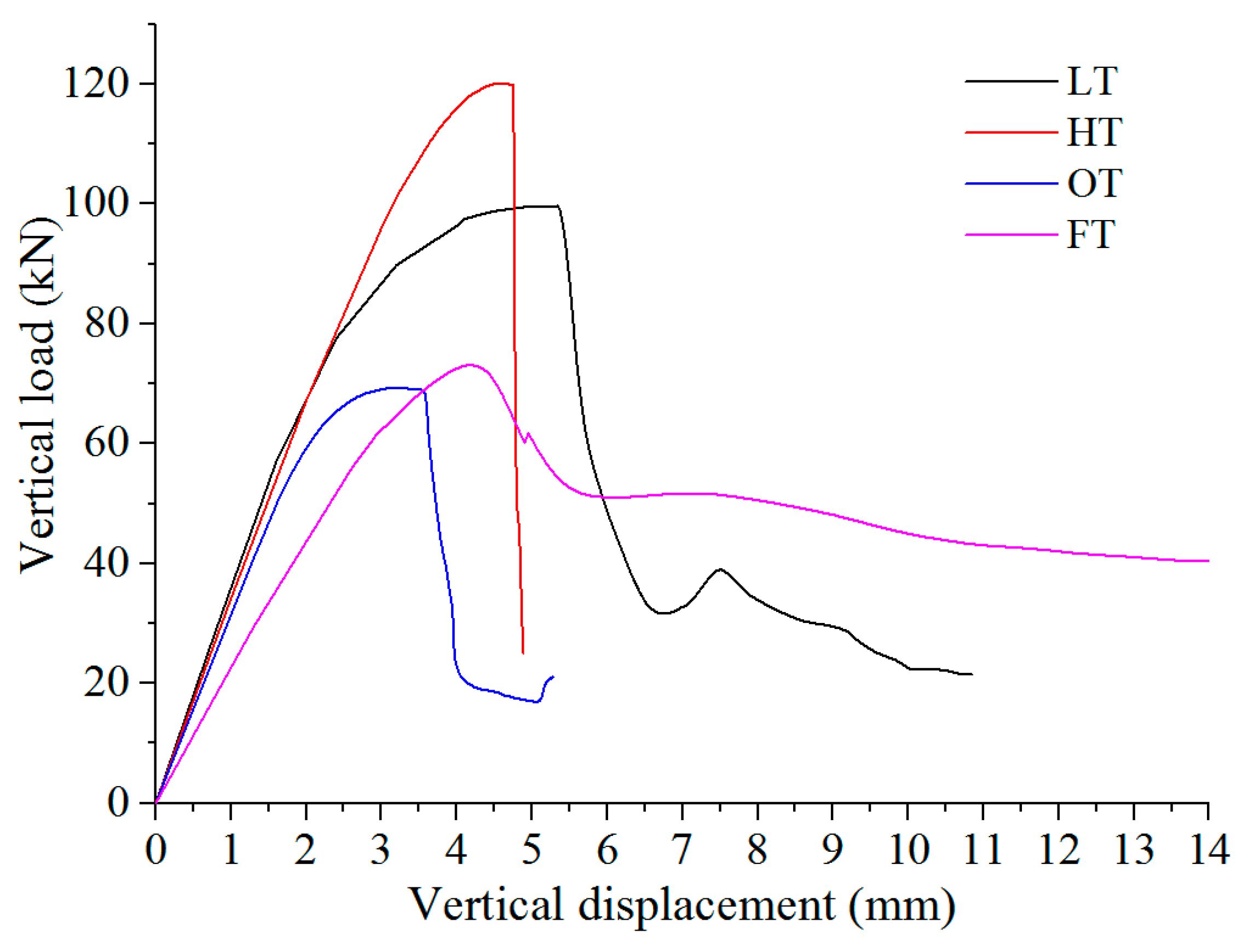
- The tensile splitting strength and initial cracking load for four types of cubical samples has the law of ‘HT’ > ‘LT’ > ‘FT’ > ‘OT’ (high strength concrete cube > low strength concrete cube > cube with interface reinforced by steel fiber > cube with interface without steel fiber). The average tensile splitting strength of ‘FT’ has increased about 10.9% compared with that of ‘OT’ due to the reinforced effects of steel fiber (the area percentage of fiber on the interface is about 0.35%). The ratio of average tensile splitting strength of ‘OT’ (interface) versus ‘HT’ and ‘OT’ versus ‘LT’ is about 48.8% and 67.4%, respectively. Therefore, the strength reduction due to the existence of the interface must be considered for designing and predicting performance of the structure.
- The tensile splitting strength is closely related to roughness of cracking surface and fractured aggregates (Higher tensile splitting strength exists if roughness is bigger and more aggregates are fractured).
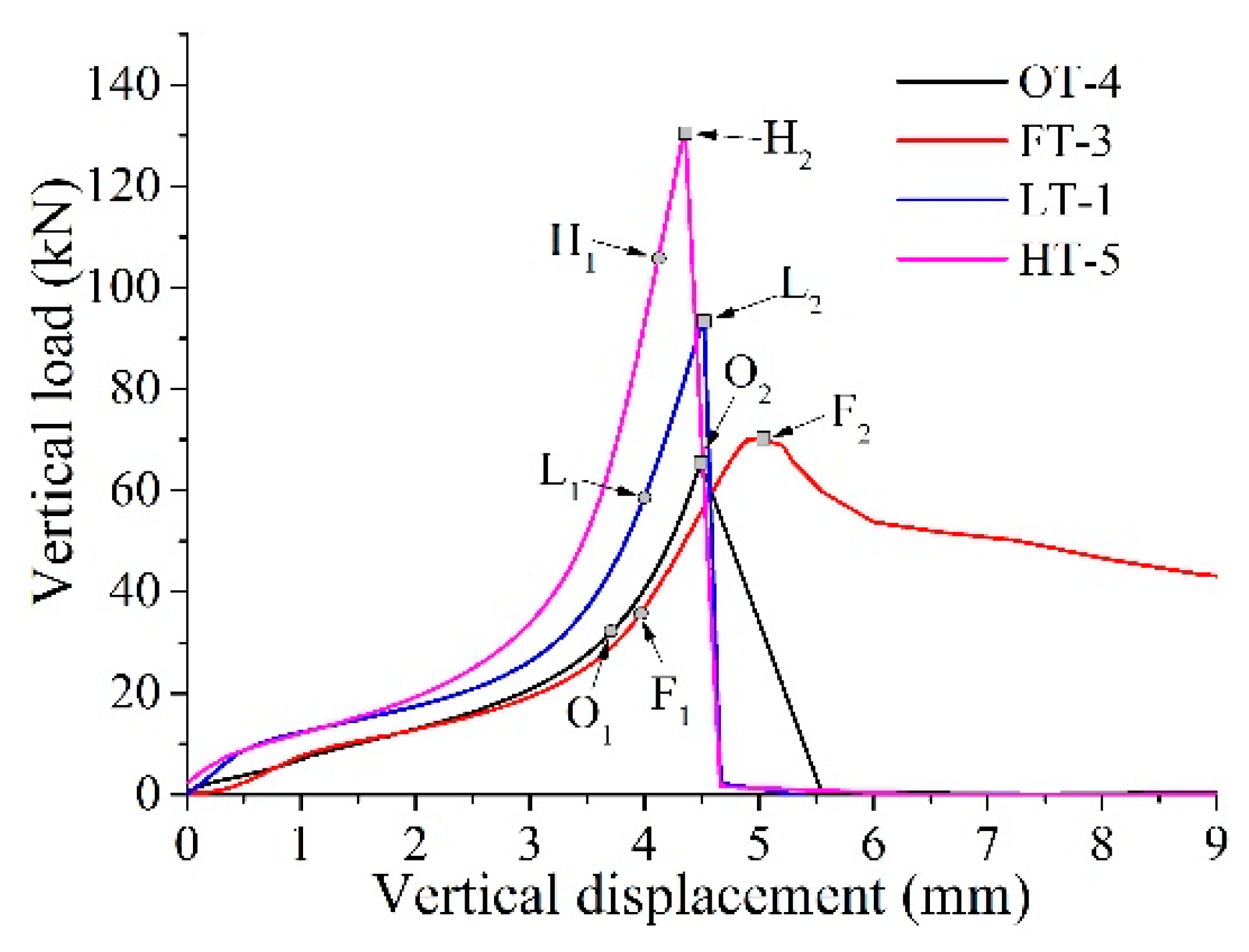
- The bridging effect of steel fiber can reinforce the interface and results in a bigger peak load and residual strength. Especially, in contrast to other samples without steel fiber, the interface reinforced by steel fiber can still sustain load with existing of cracks in post-failure stage.
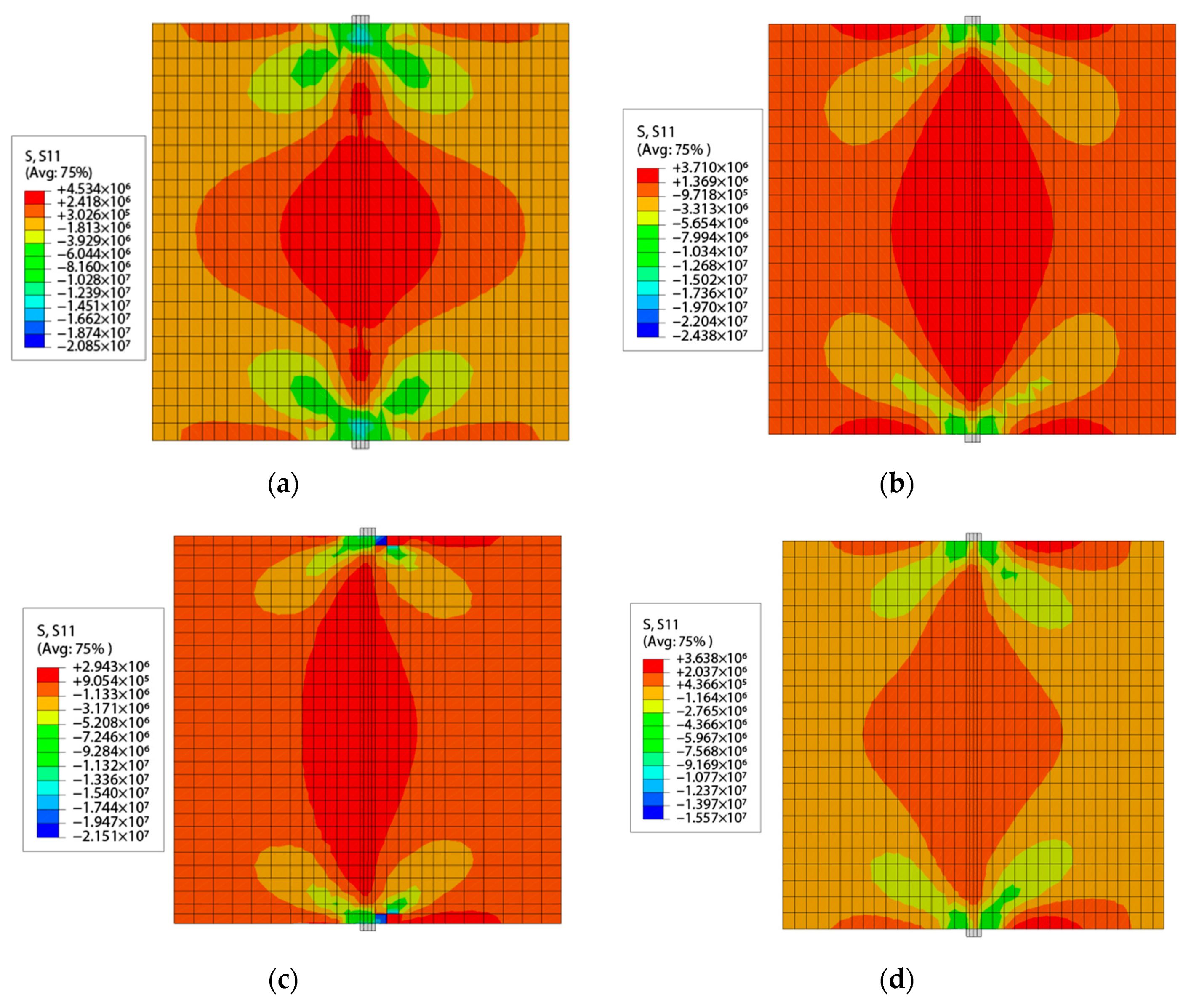
- The numerical method can not only correctly exhibit the macroscopical mechanical behavior of samples, but also showing corresponding microscopic stress state. The stress state could not be symmetrically distributed when geometry and the load is symmetrical for samples, due to the existence of the interface composited by two types of material.
Author Contributions
Funding
Conflicts of Interest
References
- ASTM C496-90, Standard Test Method for Splitting Tensile Strength of Cylindrical Concrete Specimens; Annu. Book ASTM Stand.: West Conshohocken, PA, USA, 1991; pp. 266–269.
- ISO 4108-1980 (E), Concrete Determination of Tensile Splitting Strength of Test Specimen; Int. Stand.: Farmington Hills, MI, USA, 1980.
- BS 1881: Part 117, Testing Concrete Method for the Determination of Tensile Splitting Strength; Br. Stand. Inst.: London, UK, 1983.
- Rocco, C.; Guinea, G.V.; Planas, J.; Elices, M. Rewiew of the splitting-test standards from a fracture mechanics point of view. Cem. Concr. Res. 2001, 31, 73–82. [Google Scholar] [CrossRef]
- Li, H.; Liu, G. Tensile Properties of Hybrid Fiber-Reinforced Reactive Powder Concrete after Exposure to Elevated Temperatures. Int. J. Concr. Struct. Mater. 2016, 10, 29–37. [Google Scholar] [CrossRef]
- Parra, C.; Valcuende, M.; Gómez, F. Splitting tensile strength and modulus of elasticity of self-compacting concrete. Constr. Build. Mater. 2011, 25, 201–207. [Google Scholar] [CrossRef]
- Zhao, S.; Ding, X.; Zhao, M.; Li, C.; Pei, S. Experimental study on tensile strength development of concrete with manufactured sand. Constr. Build. Mater. 2017, 138, 247–253. [Google Scholar] [CrossRef]
- Barragán, B.E.; Giaccia, G.M.; Zerbino, R.L. Fracture and failure of thermally damaged concrete under tensile loading. Mater. Struct. 2001, 34, 312–319. [Google Scholar] [CrossRef]
- Kadleček, V.L., Sr.; Modrỳ, S.; Kadleček, V.L., Jr. Size effect of test specimens on tensile splitting strength of concrete: General relation. Mater. Struct. 2002, 35, 28–34. [Google Scholar] [CrossRef]
- Chen, X.; Ge, L.; Zhou, J.; Wu, S. Dynamic Brazilian test of concrete using split Hopkinson pressure bar. Mater. Struct. 2017, 50, 1. [Google Scholar] [CrossRef]
- Carmona, S.; Aguado, A. New model for the indirect determination of the tensile stress-strain curve of concrete by means of the Brazilian test. Mater. Struct. 2012, 45, 1473–1485. [Google Scholar] [CrossRef]
- Hoang, L.C.; Andersen, M.E.; Hansen, N.T.; Jónsson, T.H. Strength prediction and failure modes of concrete specimens subjected to the split test. Mater. Struct. 2014, 47, 1953–1968. [Google Scholar] [CrossRef]
- Olesen, J.F.; Østergaard, L.; Stang, H. Nonlinear fracture mechanics and plasticity of the split cylinder test. Mater. Struct. 2006, 39, 421–432. [Google Scholar] [CrossRef]
- Giuseppe, F.; Marco, F.F.; Paolo, L. Survey and seismic vulnerability assessment of the baptistery of san giovanni in tumba (Italy). J. Cult. Herit. 2017, 26, 64–78. [Google Scholar]
- Ombres, L.; Verre, S. Flexural Strengthening of RC Beams with Steel-Reinforced Grout: Experimental and Numerical Investigation. J. Compos. Constr. 2019, 23, 04019035. [Google Scholar] [CrossRef]
- Prisco, M.D.; Ferrara, L.; Lamperti, M.G.L. Double edge wedge splitting (DEWS): An indirect tension test to indentify post-cracking behavior of fiber reinforced cementitous composites. Mater. Struct. 2013, 46, 1893–1918. [Google Scholar] [CrossRef]
- Abrishambaf, A.; Barros, A.Q., Jr.; Cunha, V.M.C.F. Tensile stress-crack width law for steel fiber reinforced self-compacting concrete obtained from indirect (splitting) tensile tests. Cem. Concr. Compos. 2015, 57, 153–165. [Google Scholar] [CrossRef]
- Boulekbache, B.; Hamrat, M.; Chemrouk, M.; Amziane, S. Failure mechanism of fiber reinforced concrete under splitting test using digital image correlation. Mater. Struct. 2017, 48, 2713–2726. [Google Scholar] [CrossRef]
- Olivito, R.S.; Zuccarello, F.A. An experimental study on the tensile strength of steel fiber reinforced concrete. Compos. Part B 2010, 41, 246–255. [Google Scholar] [CrossRef]
- Denneman, E.; Kearsley, E.P.; Visser, A.T. Splitting tensile test for fiber reinforced concrete. Mater. Struct. 2011, 44, 1441–1449. [Google Scholar] [CrossRef]
- Shalchy, F.; Rahbar, N. Nanostructural characteristics and interfacial properties of polymer fibers in cement matrix. Acs Appl. Mater. Interfaces 2015, 7, 17278–17286. [Google Scholar] [CrossRef]
- Askarinejad, S.; Rahbar, N. Effects of cement –polymer interface properties on mechanical response of fiber reinforced cement composites. J. Nanomech. Micromech. 2017, 7, 04017002. [Google Scholar] [CrossRef]
- Liu, H.; Xia, H.Y.; Zhuang, M.W. Reverse time migration of acoustic waves for imaging based defects detection for concrete and CFST structures. Mech. Syst. Signal Process. 2019, 117, 210–220. [Google Scholar] [CrossRef]
- Lim, Y.M.; Kim, M.K.; Shin, S.K.; Li, V.C. Numerical simulation for quasi-brittle interface fracture in cementitious bi-material system. In Proceedings of the Fourth International Conference on Fracture Mechanics of Concrete Structures, Cachan, France, 28 May–1 June 2001; de Borst, R., Mazars, J., Pijaudier-Cabot, G., van Mier, J.G.M., Eds.; Pergamon: Oxford, UK, 2001; pp. 73–80. [Google Scholar]
- Chandra Kishen, J.M.; Subba Rao, P. Fracture of cold jointed concrete interfaces. Eng. Fract. Mech. 2007, 74, 122–131. [Google Scholar] [CrossRef]
- Zhu, S.; Cai, C. Interface damage and its effect on vibrations of slab track under temperature and vehicle dynamic loads. Int. J. Non-Linear Mech. 2014, 58, 222–232. [Google Scholar] [CrossRef]
- Tschegg, E.K.; Stanzl, S.E. Adhesive power measurements of bonds between old and new concrete. J. Mater. Sci. 1991, 26, 5189–5194. [Google Scholar] [CrossRef]
- Tayeh, B.A.; Abu Bakar, B.H.; Megat Johari, M.A. Characterization of the interfacial bond between old concrete substrate and ultra high performance fiber concrete repair composite. Mater. Struct. 2013, 46, 743–753. [Google Scholar] [CrossRef]
- Shah, S.G.; Kishen, C. Fracture behavior of concrete-concrete interface using acoustic emission technique. Eng. Fract. Mech. 2010, 77, 908–924. [Google Scholar] [CrossRef]
- Shah, S.G.; Kishen, C. Nonlinear fracture properties of concrete-concrete interfaces. Mech. Mater. 2010, 42, 916–931. [Google Scholar] [CrossRef]
- Yi, Z.; LI, H.; Wen, H.; Xie, Y. Study on remedy technology of open joint of filling layer for CRTS II slab-type ballastless track. Railw. Eng. 2015, 1, 102–106. (In Chinese) [Google Scholar]
- ASTM C 39/C 39M-2005, Standard Test Method for Compressive Strength of Cylindrical Concrete Specimens; ASTM. International: West Conshohocken, PA, USA, 2005.
- ASTM C 469-2002, Standard Test Method for Static Modulus of Elasticity and Poisson’s Ratio of Concrete in Compression; ASTM. International: West Conshohocken, PA, USA, 2002.
- ASTM C 138-2001, Standard Test Method for Unit Weight, Yield, and Air Content (Gravimetric) of Concrete; ASTM. International: West Conshohocken, PA, USA, 2001.
- Laranjeira, F. Design-Oriented Constitutive Model for Steel Fiber Reinforced Concrete. Ph.D. Thesis, ETSECCPB, UPC, Barcelona, Spain, 2010; p. 318. [Google Scholar]
- Dassault Systèmes Simulia Corp. Abaqus User’s Manual, version 6.14; Dassault Systèmes Simulia Corp: Providence, RI, USA, 2014. [Google Scholar]
- Birtel, V.; Mark, P. Parameterised finite element modelling of RC beam shear failure. In Proceedings of the 2006 ABAQUS Users’ Conference, Boston, MA, USA, 23–25 May 2006; pp. 95–108. [Google Scholar]







| Mixtures | High Strength Concrete | Low Strength Concrete |
|---|---|---|
| Cement (kg/m3) | 388 | 227 |
| Water (kg/m3) | 145 | 149 |
| Fine sand (kg/m3) | 623 | 795 |
| Coarse aggregate (kg/m3) | 1081 | 1098 |
| Limestone powder (kg/m3) | 108 | 68 |
| Slag (kg/m3) | 50 | 44 |
| Admixture (kg/m3) | 13.65 | 6.4 |
| Concrete Samples | Compressive Strength (MPa) | Elastic Modulus (GPa) | Poisson’s Ratio | Unit Weight (kg/m3) |
| HC-1 | 69.1 | 45.2 | 0.14 | 2406 |
| HC-2 | 65.4 | 44.7 | 0.15 | 2397 |
| HC-3 | 70.4 | 47.5 | 0.14 | 2411 |
| Average | 68.3 | 45.8 | 0.14 | 2405 |
| LC-1 | 36.2 | 39.5 | 0.14 | 2390 |
| LC-2 | 35.3 | 38.4 | 0.15 | 2381 |
| LC-3 | 31.6 | 37.9 | 0.16 | 2370 |
| Average | 34.4 | 38.6 | 0.15 | 2380 |
| Materials | Length (cm) | Diameter (mm) | Tensile Strength (MPa) | Elastic Modulus (GPa) |
| Steel fiber | 6 | 1 | 600 | 200 |
| Samples | (kN) | (MPa) | Average (MPa) |
|---|---|---|---|
| HT-1 | 137.313 | 3.885 | 3.697 |
| HT-3 | 123.300 | 3.489 | |
| HT-5 | 131.344 | 3.716 | |
| LT-1 | 93.622 | 2.649 | 2.679 |
| LT-3 | 93.461 | 2.644 | |
| LT-4 | 96.940 | 2.743 | |
| OT-1 | 64.376 | 1.821 | 1.805 |
| OT-4 | 65.572 | 1.855 | |
| OT-5 | 61.423 | 1.738 | |
| FT-1 | 72.428 | 2.049 | 2.002 |
| FT-2 | 71.641 | 2.027 | |
| FT-3 | 70.373 | 1.991 | |
| FT-4 | 68.620 | 1.942 |
| Samples | Initial Cracking Point (kN) | Peak Loads (kN) | / |
|---|---|---|---|
| HT-5 | 106.283 | 131.344 | 80.9% |
| LT-1 | 58.806 | 93.622 | 62.8% |
| FT-3 | 35.754 | 70.373 | 50.8% |
| OT-4 | 32.114 | 65.572 | 49.0% |
| Sample | (%) | (%) | (%) |
|---|---|---|---|
| HT-5 | 30.9 | 3.9 | 65.2 |
| LT-1 | 12.0 | 15.5 | 72.5 |
| OT-4 | 3.7 | 5.3 | 91.0 |
| 30° | 0.1 | 1.16 | 2/3 | 0.0005 |
© 2019 by the authors. Licensee MDPI, Basel, Switzerland. This article is an open access article distributed under the terms and conditions of the Creative Commons Attribution (CC BY) license (http://creativecommons.org/licenses/by/4.0/).
Share and Cite
Shen, Q.; Chen, W.; Liu, C.; Zou, W.; Pan, L. The Tensile Strength and Damage Characteristic of Two Types of Concrete and Their Interface. Materials 2020, 13, 16. https://doi.org/10.3390/ma13010016
Shen Q, Chen W, Liu C, Zou W, Pan L. The Tensile Strength and Damage Characteristic of Two Types of Concrete and Their Interface. Materials. 2020; 13(1):16. https://doi.org/10.3390/ma13010016
Chicago/Turabian StyleShen, Qingchuan, Wei Chen, Chao Liu, Wenjie Zou, and Liufeng Pan. 2020. "The Tensile Strength and Damage Characteristic of Two Types of Concrete and Their Interface" Materials 13, no. 1: 16. https://doi.org/10.3390/ma13010016
APA StyleShen, Q., Chen, W., Liu, C., Zou, W., & Pan, L. (2020). The Tensile Strength and Damage Characteristic of Two Types of Concrete and Their Interface. Materials, 13(1), 16. https://doi.org/10.3390/ma13010016