Investigating the Mechanical Properties of ZrO2-Impregnated PMMA Nanocomposite for Denture-Based Applications




Abstract
1. Introduction
2. Material and Methods
2.1. Materials
2.2. Specimen Preparation
2.2.1. Silane Functionalization of Zirconia Nanoparticle Surfaces
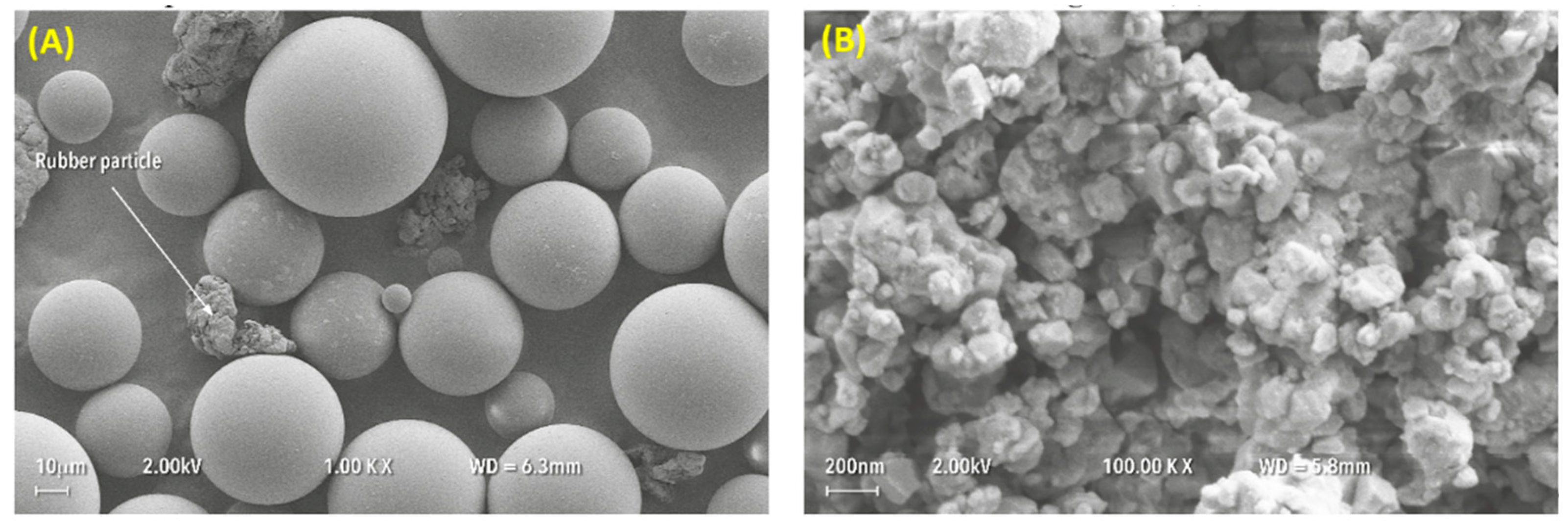
2.2.2. Selection of Appropriate Percentages of Zirconia Nanoparticles
2.2.3. Mixing of Zirconia with PMMA
2.3. Mechanical Characterization of the Nanocomposite
2.3.1. Flexural Strength Test
2.3.2. Fracture Toughness Test
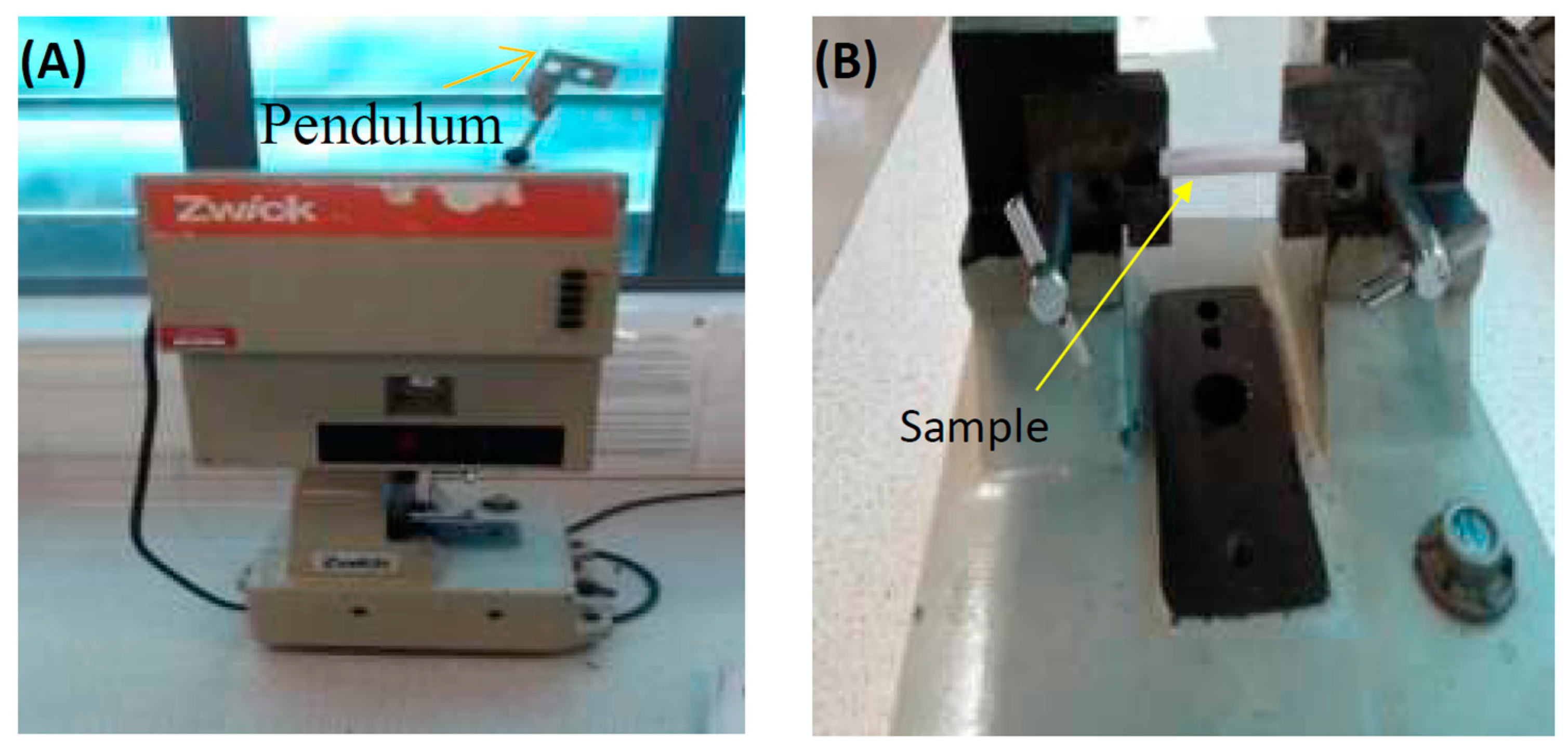
2.3.3. Impact Test
2.3.4. Hardness Test
2.4. Scanning Electron Microscopy (SEM) Examination
2.5. Statistical Analyses
3. Results
3.1. Visual Analysis
3.2. Mechanical Tests
3.2.1. Flexural Strength and Flexural Modulus
3.2.2. Fracture Toughness and Impact Strength
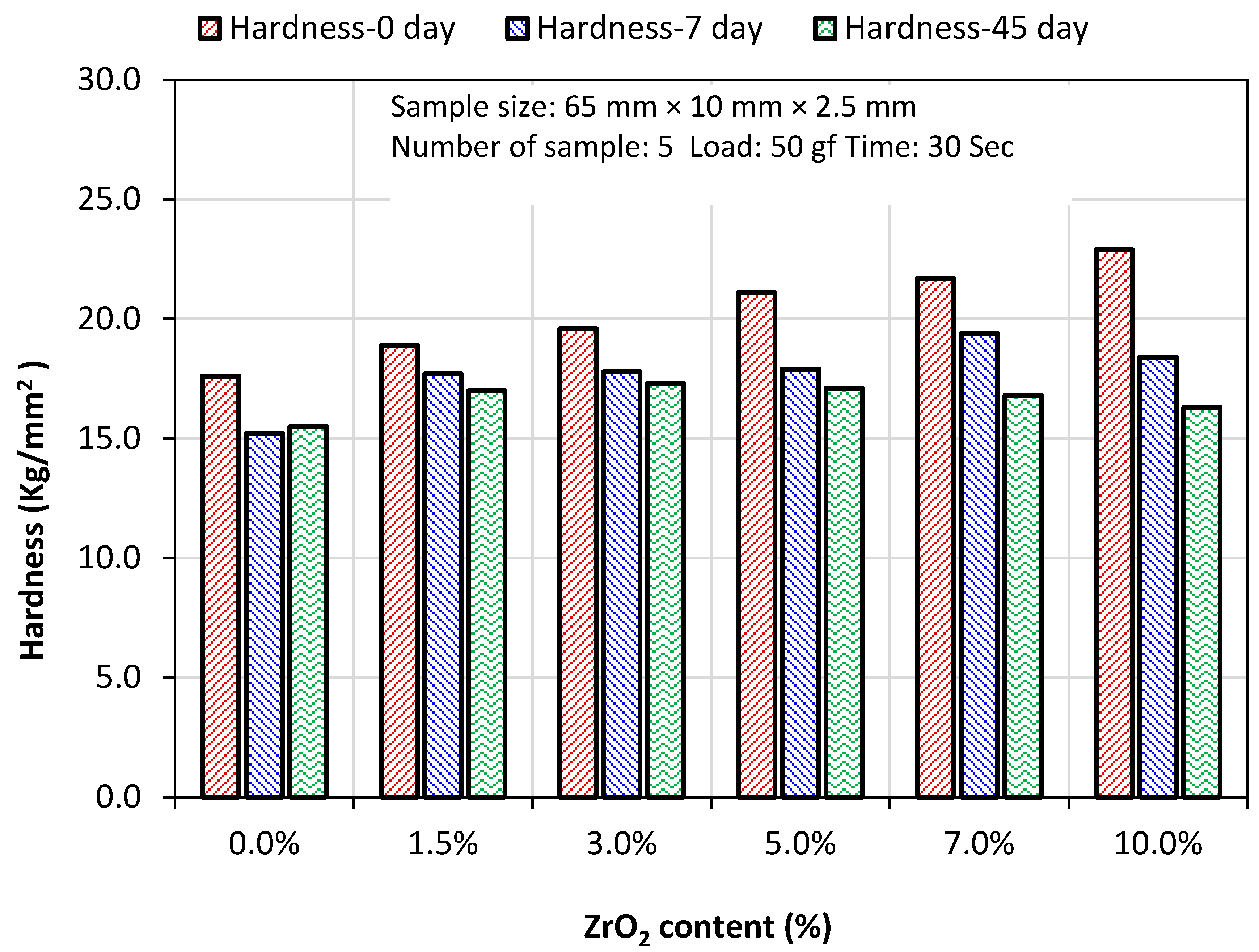
3.2.3. Hardness
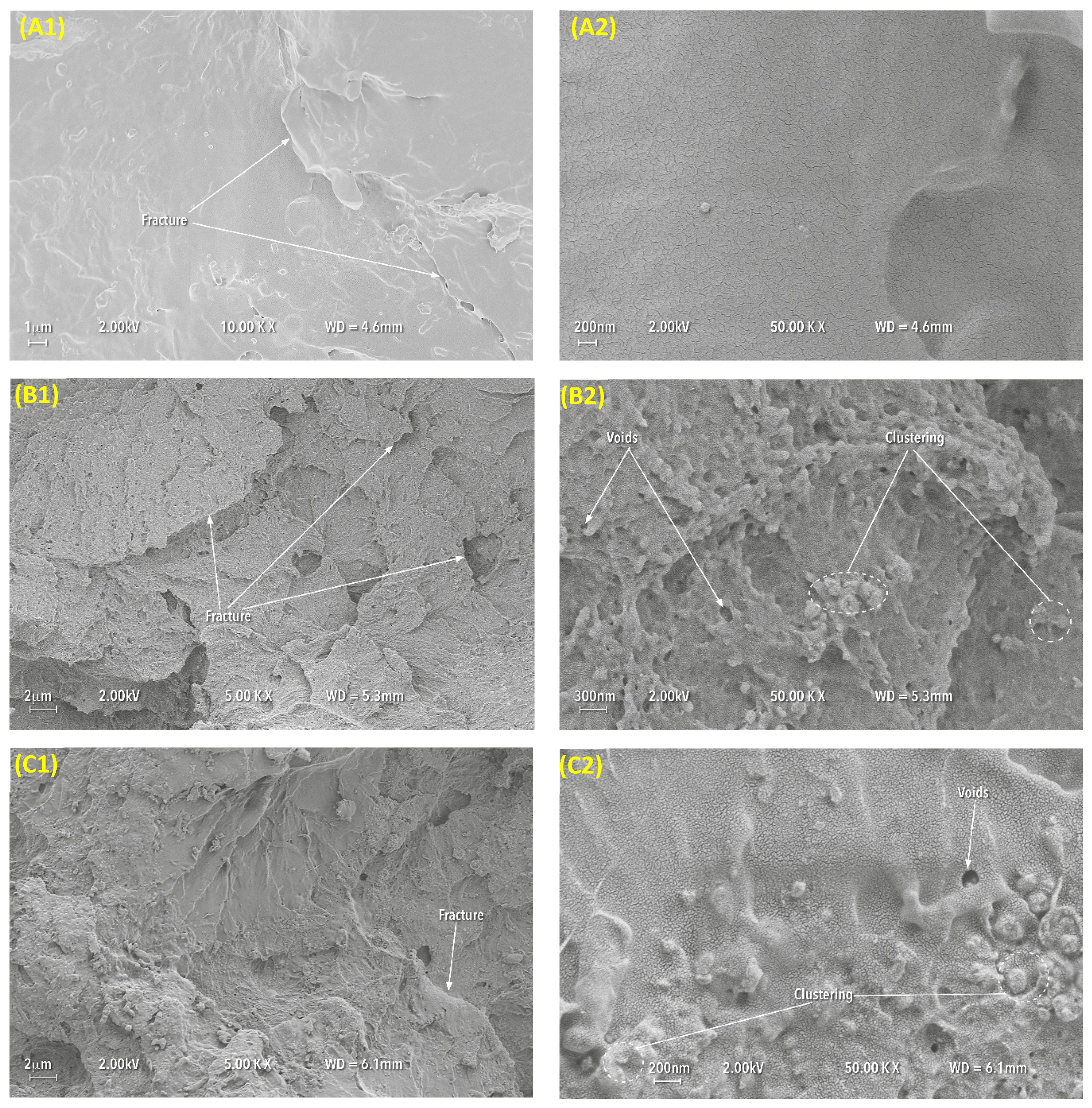
3.3. Microstructural Characteristics
4. Discussion
5. Conclusions
- The flexural strength of the high impact (HI) heat-cured PMMA denture base was significantly enhanced by the addition of zirconia nanoparticles with 3 wt% when compared to the pure acrylic material (control group).
- The flexural modulus of the high impact (HI) heat-cured PMMA denture base was significantly enhanced compared to the control group by addition of zirconia nanoparticles with 1.5 wt%, 3 wt%, 5 wt% and 10 wt%. The 7 wt% of zirconia showed a non-significant enhancement compared to the control group.
- The fracture toughness of the zirconia-reinforced PMMA was significantly decreased, particularly at 10 wt% ZrO2 concentration. The fracture toughness was slightly increased at 5 wt%, but this was not significantly different compared to the control group.
- For all zirconia contents, the impact strength of the nanocomposites was significantly lower than that of the control group. However, at 5 wt% and 3 wt% zirconia content, the proportion of reduction in impact strength was not significantly different from that of the control group.
- Surface hardness continuously increased with increase of zirconia content, in the dry condition at day 0. However, in the wet condition after seven days, and 45 days surface hardness was decreased with all groups.
- Addition of zirconia in PMMA between 3 wt% and 5 wt% zirconia would provide the optimum mechanical properties suitable for denture base applications.
Author Contributions
Funding
Acknowledgments
Conflicts of Interest
Abbreviations
| PMMA | Poly-methyl methacrylate |
| MMA | Methyl methacrylate |
| HI | High impact heat cured acrylic resin |
| HV | Vickers hardness |
| SD | Standard deviation |
| IQR | Interquartile range |
| SEM | Scanning Electron Microscope |
References
- Zappini, G.; Kammann, A.; Wachter, W. Comparison of fracture tests of denture base materials. J. Prosthet. Dent. 2003, 90, 578–585. [Google Scholar] [CrossRef]
- Kanie, T.; Fujii, K.; Arikawa, H.; Inoue, K. Flexural properties and impact strength of denture base polymer reinforced with woven glass fibers. Dent. Mater. 2000, 16, 150–158. [Google Scholar] [CrossRef]
- Vojdani, M.; Bagheri, R.; Khaledi, A.A.R. Effects of aluminum oxide addition on the flexural strength, surface hardness, and roughness of heat-polymerized acrylic resin. J. Dent. Sci. 2012, 7, 238–244. [Google Scholar] [CrossRef]
- Sasaki, H.; Hamanaka, I.; Takahashi, Y.; Kawaguchi, T. Effect of long-term water immersion or thermal shock on mechanical properties of high-impact acrylic denture base resins. Dent. Mater. J. 2016, 35, 204–209. [Google Scholar] [CrossRef]
- Jagger, D.C.; Harrison, A.; Jandt, K. The reinforcement of dentures. J. Oral Rehabil. 1999, 26, 185–194. [Google Scholar] [CrossRef]
- Nejatian, T.; Johnson, A.; van Noort, R. Reinforcement of denture base resin. Adv. Sci. Technol. 2006, 49, 124–129. [Google Scholar] [CrossRef]
- Agha, H.; Flinton, R.; Vaidyanathan, T. Optimization of Fracture Resistance and Stiffness of Heat-Polymerized High. Impact Acrylic Resin with Localized E-Glass FiBER FORCE(R) Reinforcement at Different Stress Points. J. Prosthodont. 2016, 25, 647–655. [Google Scholar] [CrossRef] [PubMed]
- Jagger, D.; Harrison, A.; Jagger, R.; Milward, P. The effect of the addition of poly(methyl methacrylate) fibres on some properties of high strength heat-cured acrylic resin denture base material. J. Oral Rehabil. 2003, 30, 231–235. [Google Scholar] [CrossRef]
- Stafford, G.; Bates, J.; Huggett, R.; Handley, R. A review of the properties of some denture base polymers. J. Dent. 1980, 8, 292–306. [Google Scholar] [CrossRef]
- Abdulwahhab, S.S. High-impact strength acrylic denture base material processed by autoclave. J. Prosthodont. Res. 2013, 57, 288–293. [Google Scholar] [CrossRef]
- Jagger, D.C.; Jagger, R.G.; Allen, S.M.; Harrison, A. An investigation into the transverse and impact strength of ‘high strength’ denture base acrylic resins. J. Oral Rehabil. 2002, 29, 263–267. [Google Scholar] [CrossRef]
- Zheng, J.; Wang, L.; Hu, Y.; Yao, K. Toughening effect of comonomer on acrylic denture base resin prepared via suspension copolymerization. J. Appl. Polym. Sci. 2012, 123, 2406–2413. [Google Scholar] [CrossRef]
- Kim, S.-H.; Watts, D.C. The effect of reinforcement with woven E-glass fibers on the impact strength of complete dentures fabricated with high-impact acrylic resin. J. Prosthet. Dent. 2004, 91, 274–280. [Google Scholar] [CrossRef]
- Yu, S.-H.; Cho, H.-W.; Oh, S.; Bae, J.-M. Effects of glass fiber mesh with different fiber content and structures on the compressive properties of complete dentures. J. Prosthet. Dent. 2015, 113, 636–644. [Google Scholar] [CrossRef]
- Gad, M.M.; Fouda, S.M.; Al-Harbi, F.; Näpänkangas, R.; Raustia, A.; Al-Harbi, F. PMMA denture base material enhancement: A review of fiber, filler, and nanofiller addition. Int. J. Nanomed. 2017, 12, 3801–3812. [Google Scholar] [CrossRef]
- Uzun, G.; Hersek, N.; Tincer, T. Effect of five woven fiber reinforcements on the impact and transverse strength of a denture base resin. J. Prosthet. Dent. 1999, 81, 616–620. [Google Scholar] [CrossRef]
- Köroğlu, A.; Özdemir, T.; Usanmaz, A. Comparative study of the mechanical properties of fiber-reinforced denture base resin. J. Appl. Polym. Sci. 2009, 113, 716–720. [Google Scholar] [CrossRef]
- Kim, H.-H.; Kim, M.-J.; Kwon, H.-B.; Lim, Y.J.; Kim, S.-K.; Koak, J.-Y. Strength and cytotoxicity in glass-fiber-reinforced denture base resin with changes in the monomer. J. Appl. Polym. Sci. 2012, 126, E260–E266. [Google Scholar] [CrossRef]
- Vallittu, P.K.; Lassila, V.P.; Lappalainen, R. Transverse strength and fatigue of denture acrylic-glass fiber composite. Dent. Mater. 1994, 10, 116–121. [Google Scholar] [CrossRef]
- Vallittu, P.K.; Lassila, V.P.; Lappalainen, R. Acrylic resin-fiber composite—Part I: The effect of fiber concentration on fracture resistance. J. Prosthet. Dent. 1994, 71, 607–612. [Google Scholar] [CrossRef]
- Pan, Y.; Liu, F.; Xu, D.; Jiang, X.; Yu, H.; Zhu, M. Novel acrylic resin denture base with enhanced mechanical properties by the incorporation of PMMA-modified hydroxyapatite. Prog. Nat. Sci. Mater. Int. 2013, 23, 89–93. [Google Scholar] [CrossRef]
- Zhang, X.-Y.; Zhang, X.-J.; Huang, Z.-L.; Zhu, B.-S.; Chen, R.-R. Hybrid effects of zirconia nanoparticles with aluminum borate whiskers on mechanical properties of denture base resin PMMA. Dent. Mater. J. 2014, 33, 141–146. [Google Scholar] [CrossRef] [PubMed]
- Wang, T.; Tsoi, J.K.-H.; Matinlinna, J.P. A novel zirconia fibre-reinforced resin composite for dental use. J. Mech. Behav. Biomed. Mater. 2016, 53 (Suppl. C), 151–160. [Google Scholar] [CrossRef]
- Kawai, N.; Lin, J.; Youmaru, H.; Shinya, A.; Shinya, A. Effects of three luting agents and cyclic impact loading on shear bond strengths to zirconia with tribochemical treatment. J. Dent. Sci. 2012, 7, 118–124. [Google Scholar] [CrossRef]
- Gad, M.M.; Rahoma, A.; Al-Thobity, A.M.; ArRejaie, A.S. Influence of incorporation of ZrO2 nanoparticles on the repair strength of polymethyl methacrylate denture bases. Int. J. Nanomed. 2016, 11, 5633–5643. [Google Scholar] [CrossRef]
- British Standards. Dentistry-Base polymers BS EN ISO 20795-1:2008; Biritish Standards Institution (BSI): London, UK, 2008; p. 36. [Google Scholar]
- British Standards. British Standard Specification for Denture base Polymers BS 2487:1989 ISO 1567:1988; Biritish Standards Institution (BSI): London, UK, 1989; p. 10. [Google Scholar]
- Jerolimov, V.; Brooks, S.; Huggett, R.; Bates, J. Rapid curing of acrylic denture-base materials. Dent. Mater. 1989, 5, 18–22. [Google Scholar] [CrossRef]
- Al-Haddad, A.; Roudsari, R.V.; Satterthwaite, J.D. Fracture toughness of heat cured denture base acrylic resin modified with Chlorhexidine and Fluconazole as bioactive compounds. J. Dent. 2014, 42, 180–184. [Google Scholar] [CrossRef] [PubMed]
- European International Standard Organization. European International Standard Organization (EN ISO 179-1:2000); International Organization for Standardization: Geneva, Switzerland, 2000. [Google Scholar]
- Neppelenbroek, K.H.; Pavarina, A.C.; Vergani, C.E.; Giampaolo, E.T. Hardness of heat-polymerized acrylic resins after disinfection and long-term water immersion. J. Prosthet. Dent. 2005, 93, 171–176. [Google Scholar] [CrossRef]
- Farina, A.P.; Cecchin, D.; Soares, R.G.; Botelho, A.L.; Takahashi, J.M.F.K.; Mazzetto, M.O.; Mesquita, M.F. Evaluation of Vickers hardness of different types of acrylic denture base resins with and without glass fibre reinforcement. Gerodontology 2012, 29, e155–e160. [Google Scholar] [CrossRef]
- Li, B.B.; Bin Xu, J.; Cui, H.Y.; Lin, Y.; Di, P. In vitro evaluation of the flexural properties of All-on-Four provisional fixed denture base resin partially reinforced with fibers. Dent. Mater. J. 2016, 35, 264–269. [Google Scholar] [CrossRef]
- Gad, M.M.; Abualsaud, R.; Rahoma, A.; Al-Thobity, A.M.; Al-Abidi, K.S.; Akhtar, S. Effect of zirconium oxide nanoparticles addition on the optical and tensile properties of polymethyl methacrylate denture base material. Int. J. Nanomed. 2018, 13, 283. [Google Scholar] [CrossRef]
- Asar, N.V.; Albayrak, H.; Korkmaz, T.; Turkyilmaz, I. Influence of various metal oxides on mechanical and physical properties of heat-cured polymethyl methacrylate denture base resins. J. Adv. Prosthodont. 2013, 5, 241–247. [Google Scholar] [CrossRef]
- Alhareb, A.O.; Ahmad, Z.A. Effect of Al2O3/ZrO2 reinforcement on the mechanical properties of PMMA denture base. J. Reinf. Plast. Compos. 2011, 30, 86–93. [Google Scholar] [CrossRef]
- Hamza, T.A.; Rosenstiel, S.F.; Elhosary, M.M.; Ibraheem, R.M. The effect of fiber reinforcement on the fracture toughness and flexural strength of provisional restorative resins. J. Prosthet. Dent. 2004, 91, 258–264. [Google Scholar] [CrossRef]
- Kundie, F.; Azhari, C.H.; Ahmad, Z.A. Effect of nano-and micro-alumina fillers on some properties of poly (methyl methacrylate) denture base composites. J. Serb. Chem. Soc. 2018, 83, 75–91. [Google Scholar] [CrossRef]
- Sodagar, A.; Bahador, A.; Khalil, S.; Shahroudi, A.S.; Kassaee, M.Z. The effect of TiO2 and SiO2 nanoparticles on flexural strength of poly (methyl methacrylate) acrylic resins. J. Prosthodont. Res. 2013, 57, 15–19. [Google Scholar] [CrossRef]
- Fan, F.; Xia, Z.; Li, Q.; Li, Z.; Chen, H. ZrO2/PMMA nanocomposites: Preparation and its dispersion in polymer matrix. Chin. J. Chem. Eng. 2013, 21, 113–120. [Google Scholar] [CrossRef]
- Ali, I.L.; Yunus, N.; Abu-Hassan, M.I. Hardness, Flexural Strength, and Flexural Modulus Comparisons of Three Differently Cured Denture Base Systems. J. Prosthodont. 2008, 17, 545–549. [Google Scholar] [CrossRef]
- Piconi, C.; Maccauro, G. Zirconia as a ceramic biomaterial. Biomaterials 1999, 20, 1–25. [Google Scholar] [CrossRef]
- Hu, Y.; Zhou, S.; Wu, L. Surface mechanical properties of transparent poly(methyl methacrylate)/zirconia nanocomposites prepared by in situ bulk polymerization. Polymer 2009, 50, 3609–3616. [Google Scholar] [CrossRef]


| Experimental Groups | Zirconia (wt%) | Zirconia (g) | HI PMMA Powder (g) | HI MMA Monomer (mL) |
|---|---|---|---|---|
| Control | 0.0 | 0.000 | 21.000 | 10.0 |
| 1.5 | 1.5 | 0.315 | 20.685 | 10.0 |
| 3.0 | 3.0 | 0.630 | 20.370 | 10.0 |
| 5.0 | 5.0 | 1.050 | 19.950 | 10.0 |
| 7.0 | 7.0 | 1.470 | 19.530 | 10.0 |
| 10.0 | 10.0 | 2.100 | 18.900 | 10.0 |
| Zirconia Content (wt%) | Flexural Strength and SD (MPa) | Flexural Modulus and SD (MPa) | Impact Strength and (IQR) (kJ/m2) | Fracture Toughness and (SD) (MPa m1/2) |
|---|---|---|---|---|
| Control (0%) | 72.4 (8.6) A | 1971 (235) A | (2.69) A | 2.12 (0.1) A |
| 1.5 | 78.7 (6.9) A | 2237 (117) B | 7.0 (4.45) A | 1.9 (0.2) A |
| 3.0 | 83.5 (6.2) B | 2313 (161) B | 7.38 (4.50) A | 1.9 (0.2) A |
| 5.0 | 78.7 (7.2) A | 2419 (147) B | (3.50) A | 2.1(0.1) A |
| 7.0 | 72.2 (7.0) A | 2144 (85) A | (1.50) A | 1.86 (0.1) A |
| 10.0 | 71.5 (5.7) A | 2204 (91) B | (2.33) B | 1.76 (0.8) B |
| Day Zero (Dry) | 7-Days Water- Immersion | 45 Days Water-Immersion | |
|---|---|---|---|
| Weight Percent Zirconia | Vickers Hardness (kg/mm2) Median (IQR) | Vickers Hardness (kg/mm2) Median (IQR) | Vickers Hardness (kg/mm2) Median (IQR) |
| Control (0.0%) | 17.6 (1.7) Aa | 15.2 (2.0) Ab | 15.5 (3.3) Ab* |
| 1.5% | 18.9 (3.2) Ab | 17.7 (1.1) Ab | 17.0 (1.8) Ab* |
| 3.0% | 19.6 (4.0) Ac | 17.8 (1.2) Ac | 17.3 (2.8) Ac |
| 5.0% | 21.1 (3.1) Ad | 17.9 (2.9) Ad | 17.1 (2.2) Ad* |
| 7.0% | 21.7 (3.0) Be | 19.4 (0.9) Be | 16.8 (2.3) Ae* |
| 10.0% | 22.9 (2.9) Bf | 18.4 (3.3) Bf | 16.3 (1.2) Af* |
© 2019 by the authors. Licensee MDPI, Basel, Switzerland. This article is an open access article distributed under the terms and conditions of the Creative Commons Attribution (CC BY) license (http://creativecommons.org/licenses/by/4.0/).
Share and Cite
Zidan, S.; Silikas, N.; Alhotan, A.; Haider, J.; Yates, J. Investigating the Mechanical Properties of ZrO2-Impregnated PMMA Nanocomposite for Denture-Based Applications. Materials 2019, 12, 1344. https://doi.org/10.3390/ma12081344
Zidan S, Silikas N, Alhotan A, Haider J, Yates J. Investigating the Mechanical Properties of ZrO2-Impregnated PMMA Nanocomposite for Denture-Based Applications. Materials. 2019; 12(8):1344. https://doi.org/10.3390/ma12081344
Chicago/Turabian StyleZidan, Saleh, Nikolaos Silikas, Abdulaziz Alhotan, Julfikar Haider, and Julian Yates. 2019. "Investigating the Mechanical Properties of ZrO2-Impregnated PMMA Nanocomposite for Denture-Based Applications" Materials 12, no. 8: 1344. https://doi.org/10.3390/ma12081344
APA StyleZidan, S., Silikas, N., Alhotan, A., Haider, J., & Yates, J. (2019). Investigating the Mechanical Properties of ZrO2-Impregnated PMMA Nanocomposite for Denture-Based Applications. Materials, 12(8), 1344. https://doi.org/10.3390/ma12081344