Influences of Horizontal and Vertical Build Orientations and Post-Fabrication Processes on the Fatigue Behavior of Stainless Steel 316L Produced by Selective Laser Melting


 ,
, 
Abstract
1. Introduction
- In some AM technologies which use high-density powers, material might be deposited or melted in keyhole mode, which is a melt pool with a deep and narrow shape. Cunningham et al. [8] showed the threshold, morphology, and different stages of keyhole formation through X-ray imaging, and suggested that different combinations of laser power density and scanning velocity might result in the formation of keyholes;
- Entrapment of gas within the powders might occur while undergoing atomization. Regular spherical gas pores might also be created if the shielding gas (which is utilized in the chamber to avert the melt pool contamination) or alloy vapors are entrapped inside the melt pool. King et al. [9] showed that in uncontrolled keyhole mode melting, unstable keyholes are repeatedly formed and collapsed and this will result in the formation of entrapped vapor inside the deposit;
- LOF defects can be formed when the melt pool of a newly deposited layer insufficiently penetrates into the substrate layer [10].
2. Materials and Methods
2.1. Specimen Manufacturing
2.2. Stress-Relieving (SR)
2.3. Chemical Composition Analysis
2.4. Shot-Peening (SP)
2.5. Wide-Angle X-ray Diffraction (WAXD)
2.6. Surface Roughness Characterization
2.7. Metallography
2.8. Tensile Testing
2.9. Fatigue Testing
2.10. SEM Analysis
3. Results and Discussion
3.1. Chemical Composition, Surface Characterization, and Neutron Diffraction
3.2. Metallography
3.3. Tensile Testing
3.3.1. Tensile Mechanical Properties
3.3.2. Tensile Fracture
3.4. Fatigue Testing
3.4.1. S-N Diagrams
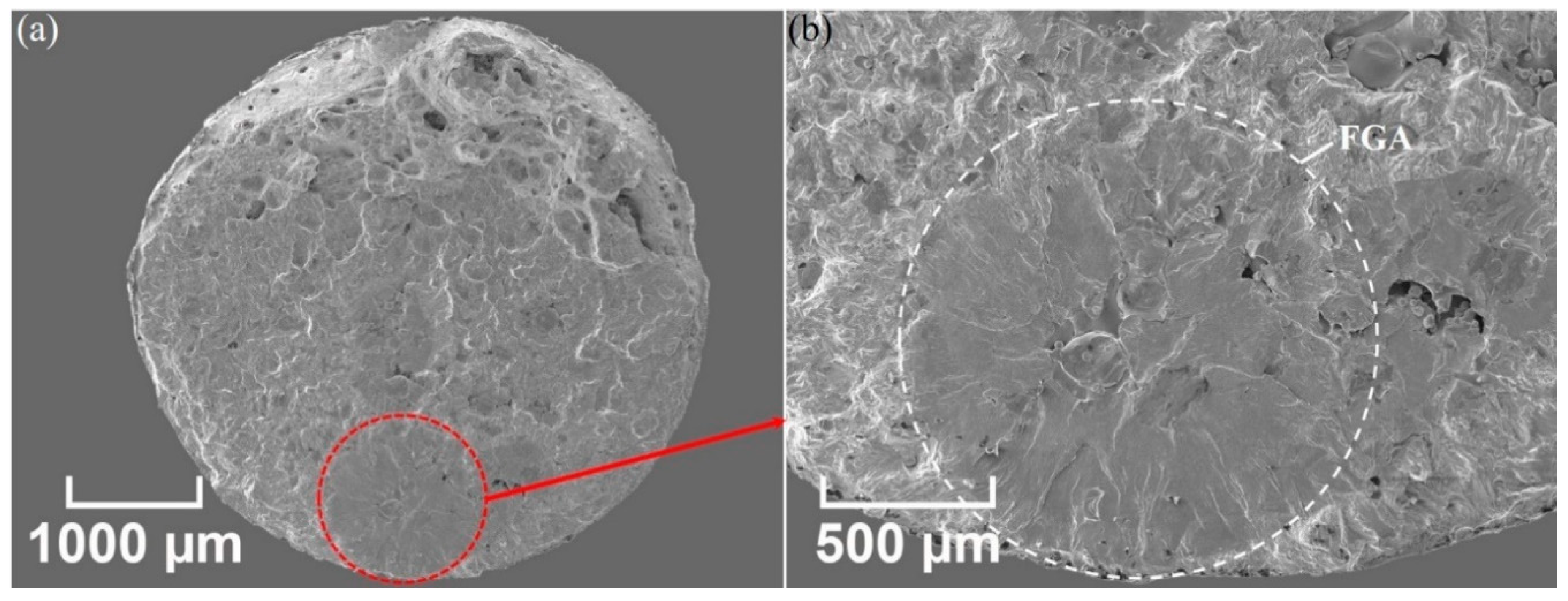
3.4.2. Fatigue Fracture
- (1)
- Small crack propagation within the FGA;
- (2)
- Crack stable propagation in the fish-eye region outside of the FGA;
- (3)
- Unstable crack propagation away from the fish-eye.
4. Summary and Conclusions
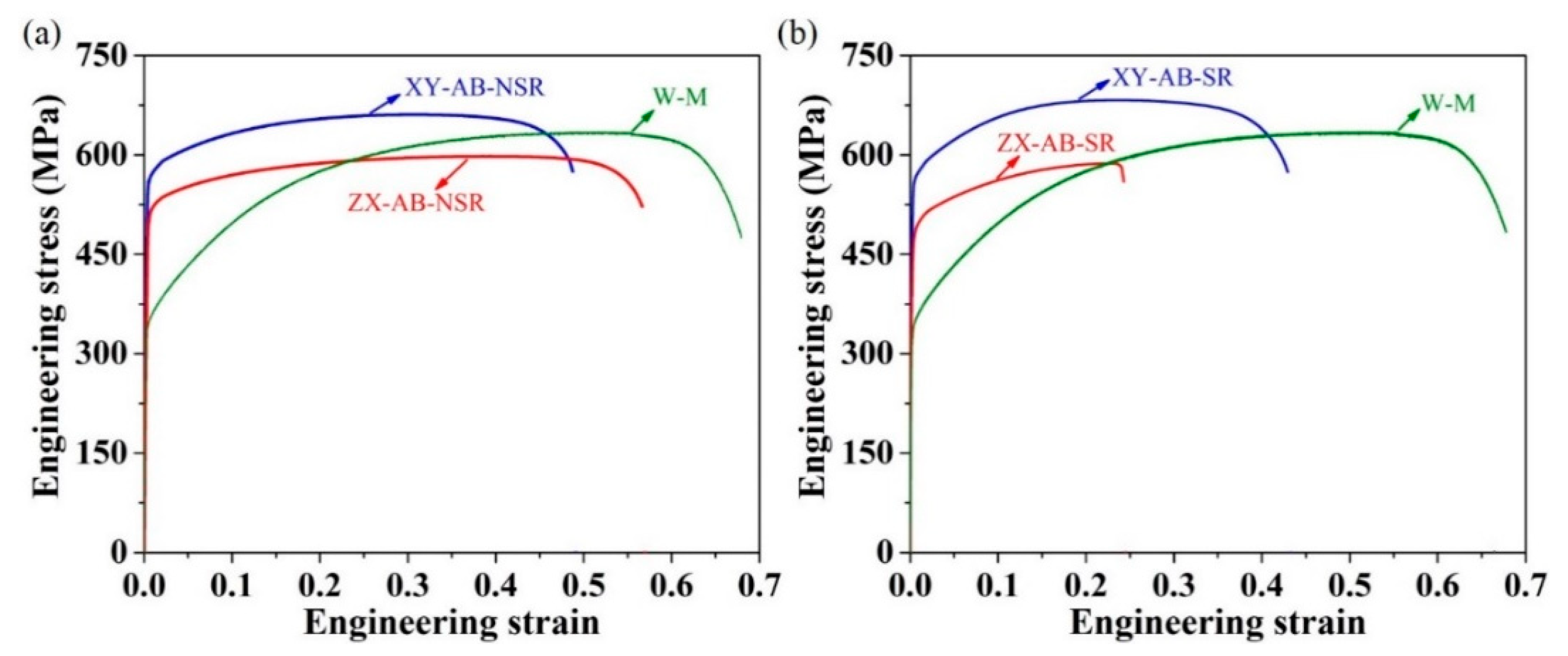
- XY test pieces in both NSR and SR conditions exhibit a higher yield stress and UTS compered to their ZX counterparts. Stress-relief resulted in a reduction in ductility of 13% and 50% for XY and ZX test pieces, respectively; XY-AB-NSR, XY-AB-SR, ZX-AB-NSR, and ZX-AB-SR showed a 65.4%, 63%, 45.1%, and 45.1% higher yield stress compared to the W-M samples, respectively;
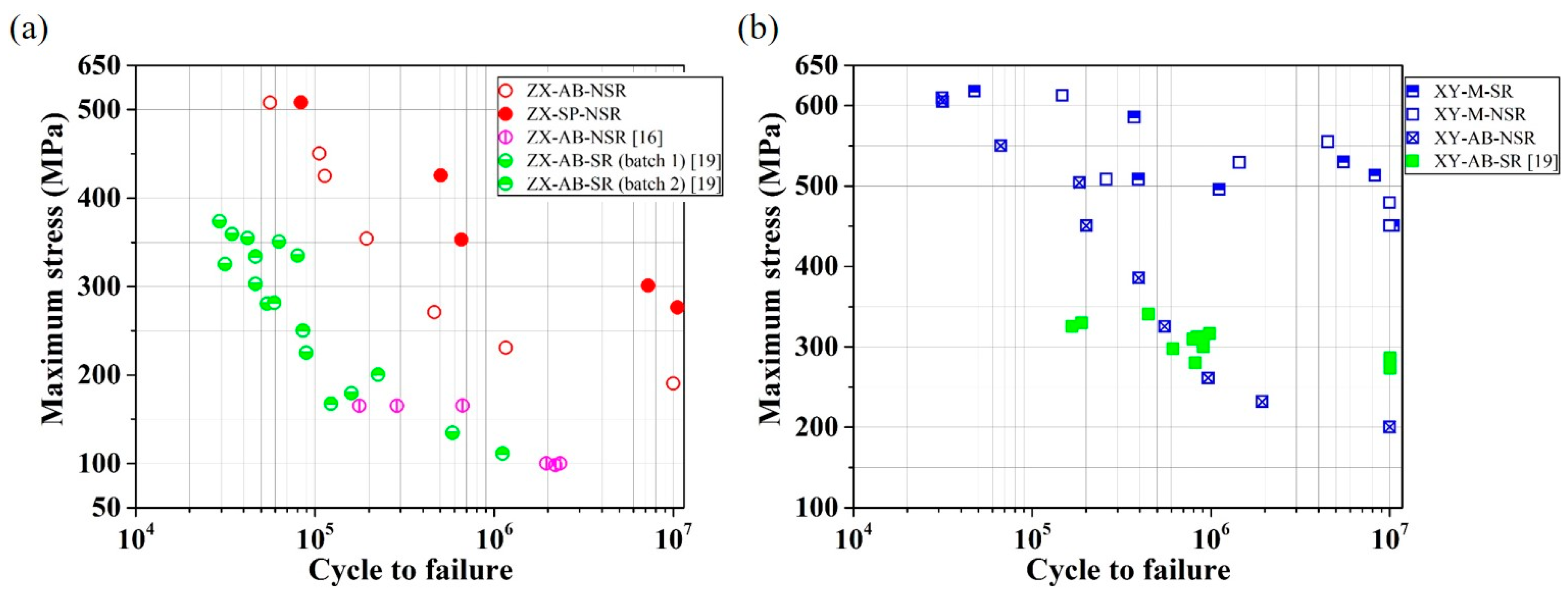
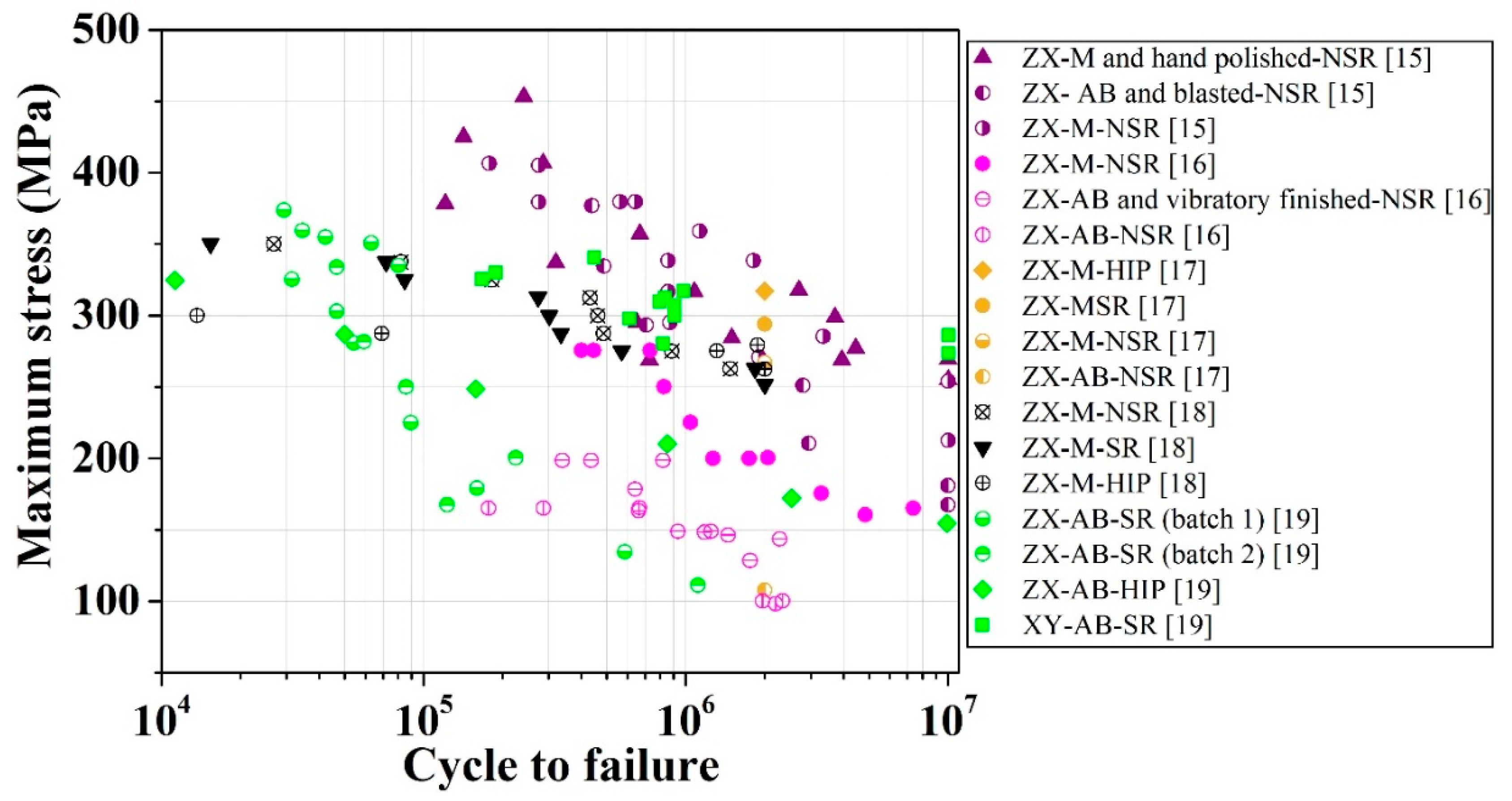
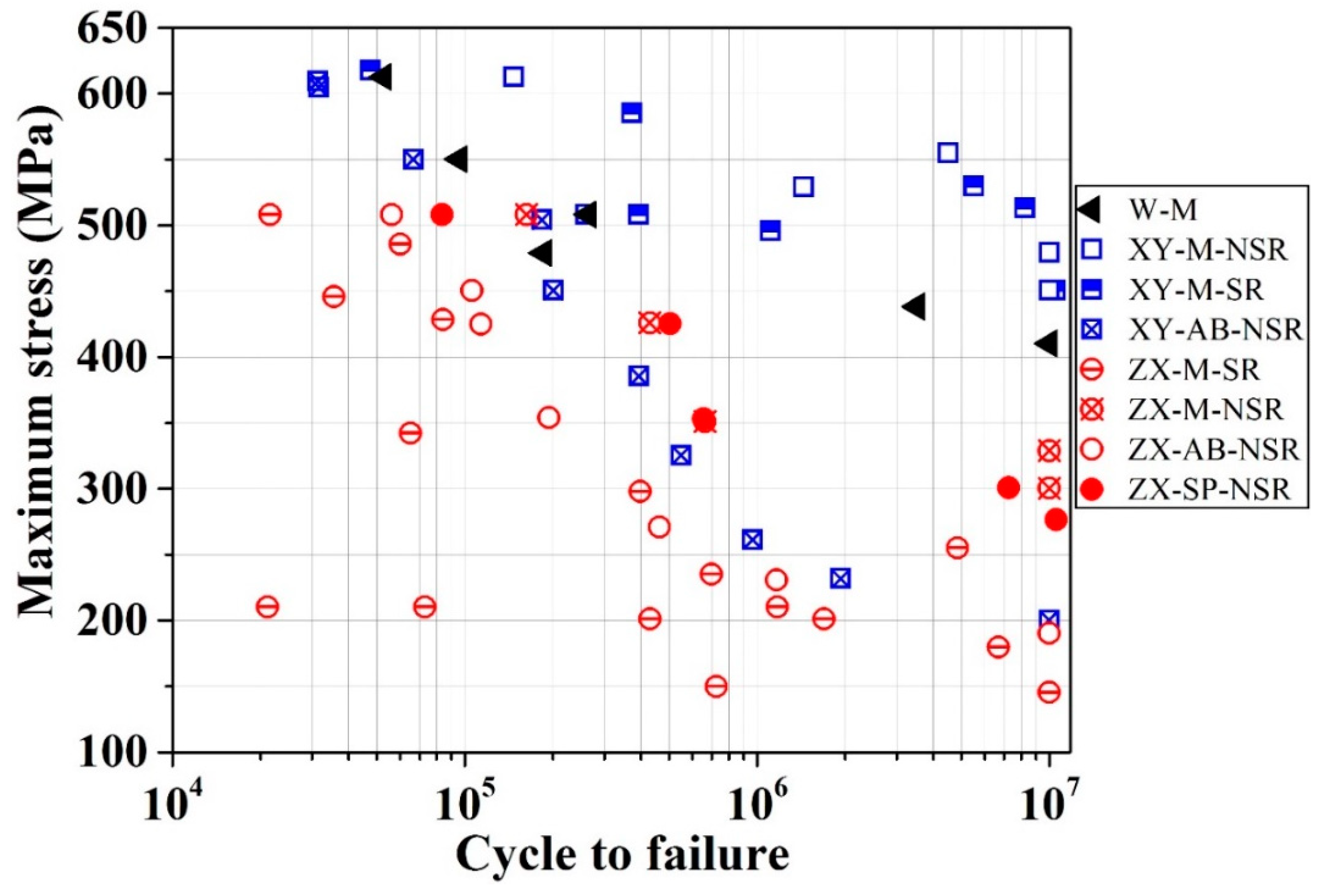
- XY-M-SR and XY-M-NSR samples show the highest fatigue strength among all the studied samples. Stress-relief does not have a considerable effect on the fatigue behavior of XY-M samples. Compared to XY-AB-NSR samples, XY-M-SR and XY-M-NSR samples show a considerably higher fatigue strength trend without a steep decrease. This is due to the detrimental prevalence of LOF and surface defects in AB samples resulting in crack initiation and a lower fatigue strength;
- ZX-M-SR samples show much larger scatter and a considerably lower fatigue strength compared to ZX-M-NSR samples. This is attributed to the lower ductility of SR samples compered to NSR samples, which results in more frequent sudden fracture due to a lower ability to deform plastically;
- The comparison of ZX-SP-NSR and ZX-AB-NSR samples showed that shot-peening increased the fatigue strength by ~20% to ~45% in the range of 1 × 10⁵ to 1 × 10⁷ cycles. This can be attributed to the lower surface roughness of SP test pieces compared to AB samples. It was also observed that ZX-SP-NSR samples show a fatigue strength very close to that of ZX-M-NSR. This implies that for the ZX fatigue behavior, the combined effects of the compressive stress and comparatively bigger surface roughness (Ra = 4.1 μm) due to shot-peening are comparable to the much lower surface roughness (Ra = 0.66 μm) due to machining;
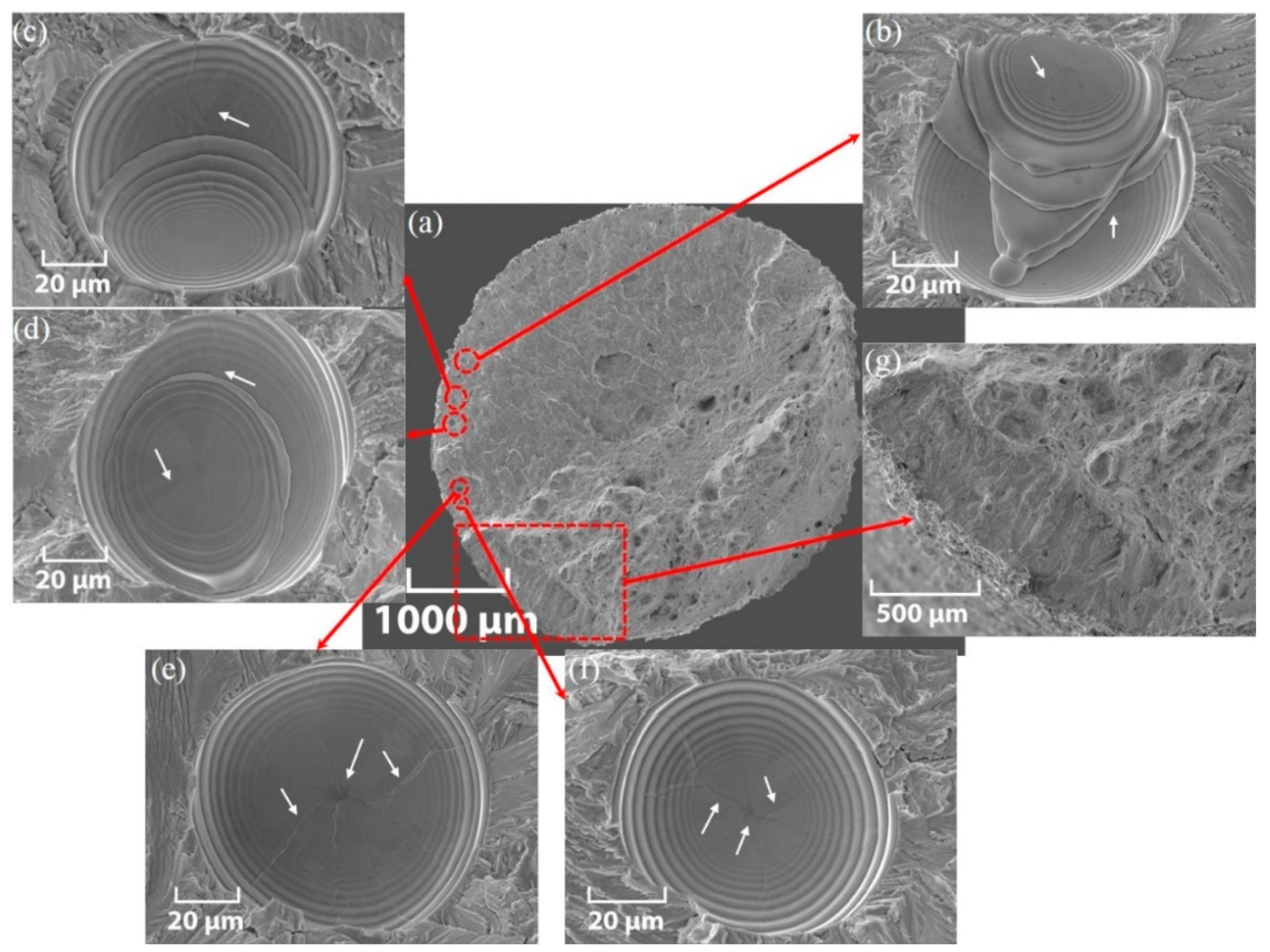
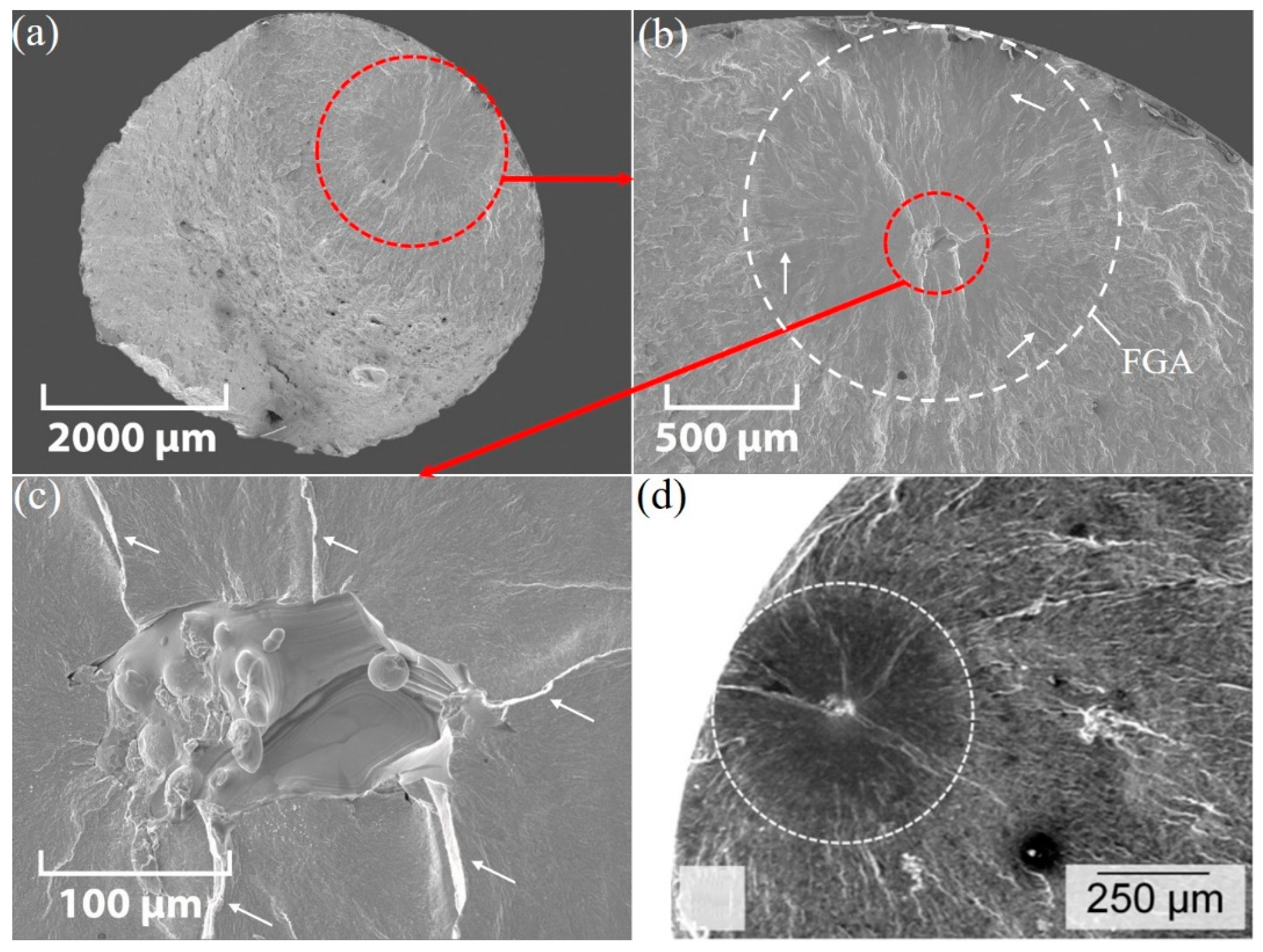
- An internal fish-eye fracture pattern with a surrounding fine granular area (FGA) was detected in the fatigue fracture surfaces of the XY-M-SR and ZX-SP-NSR samples. The shift of fracture mode from the surface to sub-surface was obvious when comparing the fracture initiation of as-built and shot-peened/machined test pieces;
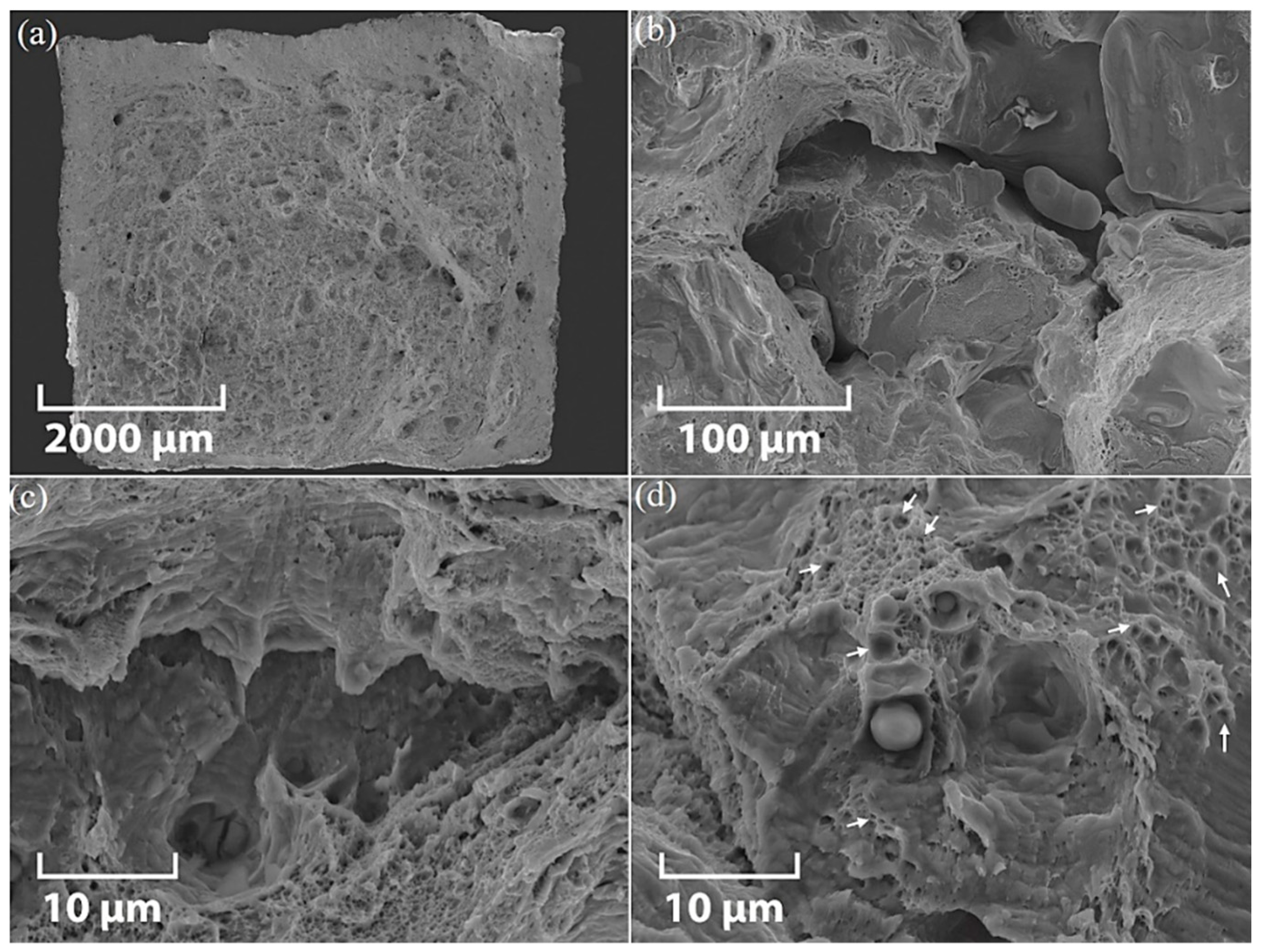
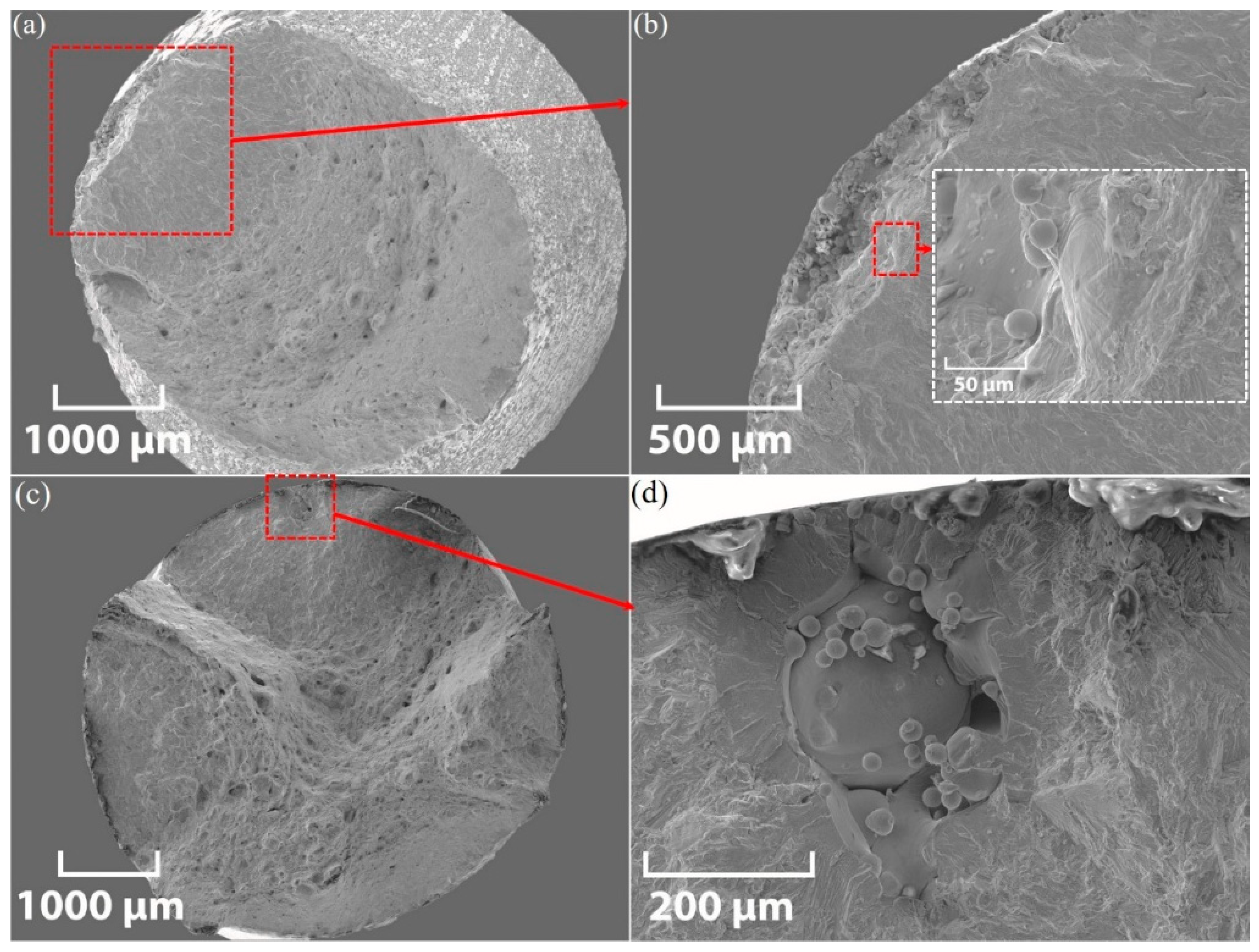
- Stair features were observed in the fatigue fracture of ZX-AB-NSR test pieces. An explanation for the formation of these features is as follows: The spherical defects in ZX test pieces formed between deposited layers during the SLM process. It is hypothesized that these defects are gradually deformed and acquire a stair-form shape upon thinning of the deposited layers under axial cyclic loading;
- Further studies need to be conducted to examine the fatigue behavior of SLM-printed samples in the gigacycle range.
Author Contributions
Funding
Acknowledgments
Conflicts of Interest
Abbreviations
| AM | Additive Manufacturing |
| AB | As-Built |
| ASTM | American Society for Testing and Materials |
| CAD | Computer-Aided Design |
| CW | Continuous Wave |
| EDM | Electrical Discharge Machining |
| FGA | Fine Granular Area |
| GBF | Granular Bright Faces |
| HIP | Hot Isostatic Pressing |
| LOF | Lack Of Fusion |
| M | Machined |
| NSR | Non-Stress-Relieved |
| PH | Precipitation Hardening |
| PBF | Powder Bed Fusion |
| R | Stress ratio |
| Ra | Arithmetic mean roughness value |
| Rz | Maximum height of the roughness profile |
| SEM | Scanning Electron Microscopy |
| SLM | Selective Laser Melting |
| SP | Shot-Peening/Shot-Peened |
| SR | Stress Relief/Stress-Relieved |
| SS | Stainless Steel |
| ST | Solution Treatment |
| STDEV | Standard deviation |
| UTS | Ultimate Tensile Strength |
| W | Wrought |
| WAXD | Wide-Angle X-ray Diffraction |
| XY | Horizontally built |
| ZX | Vertically built |
| σa | Stress amplitude |
| Nf | Number of cycles to failure or run-out cycle |
| 2θ | Diffraction angle |
References
- Gu, D.D.; Meiners, W.; Wissenbach, K.; Poprawe, R. Laser Additive Manufacturing of Metallic Components: Materials, Processes and Mechanisms. Int. Mater. Rev. 2012, 57, 133–164. [Google Scholar] [CrossRef]
- Otubusin, A.; Wood, P.; Appleby, J.; Adamczuk, R. Analysis of Parameters Influencing Build Accuracy of a SLM Printed Compressor Outlet Guide Vane. In Proceedings of the Volume 6: Ceramics; Controls, Diagnostics, and Instrumentation; Education; Manufacturing Materials and Metallurgy, Oslo, Norway, 11–15 June 2018. [Google Scholar] [CrossRef]
- Tucho, W.M.; Hansen, V. Characterization of SLM-Fabricated Inconel 718 after Solid Solution and Precipitation Hardening Heat Treatments. J. Mater. Sci. 2019, 54, 823–839. [Google Scholar] [CrossRef]
- Amir, B.; Samuha, S.; Sadot, O. Influence of Selective Laser Melting Machine Source on the Dynamic Properties of AlSi10Mg Alloy. Materials 2019, 12, 1143. [Google Scholar] [CrossRef] [PubMed]
- Wang, D.; Wu, S.; Yang, Y.; Dou, W.; Deng, S.; Wang, Z.; Li, S. The Effect of a Scanning Strategy on the Residual Stress of 316L Steel Parts Fabricated by Selective Laser Melting (SLM). Materials 2018, 11, 1821. [Google Scholar] [CrossRef]
- Shi, W.; Liu, Y.; Shi, X.; Hou, Y.; Wang, P.; Song, G. Beam Diameter Dependence of Performance in Thick-Layer and High-Power Selective Laser Melting of Ti-6Al-4V. Materials 2018, 11, 1237. [Google Scholar] [CrossRef]
- Bauereiß, A.; Scharowsky, T.; Körner, C. Defect Generation and Propagation Mechanism during Additive Manufacturing by Selective Beam Melting. J. Mater. Process. Technol. 2014, 214, 2522–2528. [Google Scholar] [CrossRef]
- Cunningham, R.; Zhao, C.; Parab, N.; Kantzos, C.; Pauza, J.; Fezzaa, K.; Sun, T.; Rollett, A.D. Keyhole Threshold and Morphology in Laser Melting Revealed by Ultrahigh-Speed x-Ray Imaging. Science 2019, 363, 849–852. [Google Scholar] [CrossRef]
- King, W.E.; Barth, H.D.; Castillo, V.M.; Gallegos, G.F.; Gibbs, J.W.; Hahn, D.E.; Kamath, C.; Rubenchik, A.M. Observation of Keyhole-Mode Laser Melting in Laser Powder-Bed Fusion Additive Manufacturing. J. Mater. Process. Technol. 2014, 214, 2915–2925. [Google Scholar] [CrossRef]
- Mukherjee, T.; Zuback, J.S.; De, A.; DebRoy, T. Printability of Alloys for Additive Manufacturing. Sci. Rep. 2016, 6, 19717. [Google Scholar] [CrossRef]
- Tang, M.; Pistorius, P.C.; Narra, S.; Beuth, J.L. Rapid Solidification: Selective Laser Melting of AlSi10Mg. JOM 2016, 68, 960–966. [Google Scholar] [CrossRef]
- Gu, D.; Hagedorn, Y.-C.; Meiners, W.; Meng, G.; Batista, R.J.S.; Wissenbach, K.; Poprawe, R. Densification Behavior, Microstructure Evolution, and Wear Performance of Selective Laser Melting Processed Commercially Pure Titanium. Acta Mater. 2012, 60, 3849–3860. [Google Scholar] [CrossRef]
- Zhao, X.; Lin, X.; Chen, J.; Xue, L.; Huang, W. The Effect of Hot Isostatic Pressing on Crack Healing, Microstructure, Mechanical Properties of Rene88DT Superalloy Prepared by Laser Solid Forming. Mater. Sci. Eng. A 2009, 504, 129–134. [Google Scholar] [CrossRef]
- Tang, M.; Pistorius, P.C. Oxides, Porosity and Fatigue Performance of AlSi10Mg Parts Produced by Selective Laser Melting. Int. J. Fatigue 2017, 94, 192–201. [Google Scholar] [CrossRef]
- Spierings, A.B.; Starr, T.L.; Wegener, K. Fatigue Performance of Additive Manufactured Metallic Parts. Rapid Prototyp. J. 2013, 19, 88–94. [Google Scholar] [CrossRef]
- Uhlmann, E.; Fleck, C.; Gerlitzky, G.; Faltin, F. Dynamical Fatigue Behavior of Additive Manufactured Products for a Fundamental Life Cycle Approach. Procedia CIRP 2017, 61, 588–593. [Google Scholar] [CrossRef]
- Riemer, A.; Leuders, S.; Thöne, M.; Richard, H.A.; Tröster, T.; Niendorf, T. On the Fatigue Crack Growth Behavior in 316L Stainless Steel Manufactured by Selective Laser Melting. Eng. Fract. Mech. 2014, 120, 15–25. [Google Scholar] [CrossRef]
- Leuders, S.; Lieneke, T.; Lammers, S.; Tröster, T.; Niendorf, T. On the Fatigue Properties of Metals Manufactured by Selective Laser Melting–The Role of Ductility. J. Mater. Res. 2014, 29, 1911–1919. [Google Scholar] [CrossRef]
- Mower, T.M.; Long, M.J. Mechanical Behavior of Additive Manufactured, Powder-Bed Laser-Fused Materials. Mater. Sci. Eng. A 2016, 651, 198–213. [Google Scholar] [CrossRef]
- Zhang, M.; Sun, C.-N.; Zhang, X.; Wei, J.; Hardacre, D.; Li, H. High Cycle Fatigue and Ratcheting Interaction of Laser Powder Bed Fusion Stainless Steel 316L: Fracture Behaviour and Stress-Based Modelling. Int. J. Fatigue 2019, 121, 252–264. [Google Scholar] [CrossRef]
- Aboulkhair, N.T.; Maskery, I.; Tuck, C.; Ashcroft, I.; Everitt, N.M. Improving the Fatigue Behaviour of a Selectively Laser Melted Aluminium Alloy: Influence of Heat Treatment and Surface Quality. Mater. Des. 2016, 104, 174–182. [Google Scholar] [CrossRef]
- DebRoy, T.; Wei, H.L.; Zuback, J.S.; Mukherjee, T.; Elmer, J.W.; Milewski, J.O.; Beese, A.M.; Wilson-Heid, A.; De, A.; Zhang, W. Additive Manufacturing of Metallic Components–Process, Structure and Properties. Prog. Mater. Sci. 2018, 92, 112–224. [Google Scholar] [CrossRef]
- Shiozawa, K.; Murai, M.; Shimatani, Y.; Yoshimoto, T. Transition of Fatigue Failure Mode of Ni–Cr–Mo Low-Alloy Steel in Very High Cycle Regime. Int. J. Fatigue 2010, 32, 541–550. [Google Scholar] [CrossRef]
- Sehrt, J.T.; Witt, G. Dynamic Strength and Fracture Toughness Analysis of Beam Melted Parts. In Proceedings of the 36th International MATADOR Conference, London, UK, 14 July 2010; Hinduja, S., Li, L., Eds.; Springer: London, UK, 2010; pp. 385–388. [Google Scholar] [CrossRef]
- Everhart, W.; Sawyer, E.; Neidt, T.; Dinardo, J.; Brown, B. The Effect of Surface Finish on Tensile Behavior of Additively Manufactured Tensile Bars. J. Mater. Sci. 2016, 51, 3836–3845. [Google Scholar] [CrossRef]
- Yadollahi, A.; Shamsaei, N. Additive Manufacturing of Fatigue Resistant Materials: Challenges and Opportunities. Int. J. Fatigue 2017, 98, 14–31. [Google Scholar] [CrossRef]
- Shrestha, R.; Simsiriwong, J.; Shamsaei, N. Fatigue Behavior of Additive Manufactured 316L Stainless Steel Parts: Effects of Layer Orientation and Surface Roughness. Addit. Manuf. 2019, 28, 23–38. [Google Scholar] [CrossRef]
- ASTM E8 Standard Test Methods for Tension Testing of Metallic Materials; ASTM International: West Conshohocken, PA, USA, 2009; E8M-09.
- ASTM E466-15, Standard Practice for Conducting Force Controlled Constant Amplitude Axial Fatigue Tests of Metallic Materials; ASTM International: West Conshohocken, PA, USA, 2015.
- Renishaw Material Data Sheets. Available online: https://www.renishaw.com/en/data-sheets-additive-manufacturing--17862 (accessed on 7 November 2019).
- Yadollahi, A.; Shamsaei, N.; Thompson, S.M.; Elwany, A.; Bian, L. Effects of Building Orientation and Heat Treatment on Fatigue Behavior of Selective Laser Melted 17-4 PH Stainless Steel. Int. J. Fatigue 2017, 94, 218–235. [Google Scholar] [CrossRef]
- Furuya, K.; Ida, M.; Miyashita, M.; Nakamura, H. Mechanical Properties of F82H/316L and 316L/316L Welds upon the Target Back-Plate of IFMIF. J. Nucl. Mater. 2009, 386, 963–966. [Google Scholar] [CrossRef]
- Krewerth, D.; Lippmann, T.; Weidner, A.; Biermann, H. Influence of Non-Metallic Inclusions on Fatigue Life in the Very High Cycle Fatigue Regime. Int. J. Fatigue 2016, 84, 40–52. [Google Scholar] [CrossRef]
- Krewerth, D.; Weidner, A.; Biermann, H. Application of in Situ Thermography for Evaluating the High-Cycle and Very High-Cycle Fatigue Behaviour of Cast Aluminium Alloy AlSi7Mg (T6). Ultrasonics 2013, 53, 1441–1449. [Google Scholar] [CrossRef]
- Shiozawa, K.; Lu, L.; Ishihara, S. S–N Curve Characteristics and Subsurface Crack Initiation Behaviour in Ultra-Long Life Fatigue of a High Carbon-Chromium Bearing Steel. Fatigue Fract. Eng. Mater. Struct. 2001, 24, 781–790. [Google Scholar] [CrossRef]
- Sakai, T.; Sato, Y.; Oguma, N. Characteristic S–N Properties of High-Carbon–Chromium-Bearing Steel under Axial Loading in Long-Life Fatigue. Fatigue Fract. Eng. Mater. Struct. 2002, 25, 765–773. [Google Scholar] [CrossRef]
- Li, W.; Sakai, T.; Li, Q.; Lu, L.T.; Wang, P. Reliability Evaluation on Very High Cycle Fatigue Property of GCr15 Bearing Steel. Int. J. Fatigue 2010, 32, 1096–1107. [Google Scholar] [CrossRef]




| Material/Element | C | Si | Mn | P | S | Cr | Mo | Ni |
|---|---|---|---|---|---|---|---|---|
| XY-NSR test piece | 0.017 | 0.65 | 1.27 | 0.024 | 0.007 | 17.99 | 2.37 | 12.59 |
| XY-SR test piece | 0.018 | 0.65 | 1.27 | 0.024 | 0.008 | 18.05 | 2.39 | 12.69 |
| Unused 316L powder | <0.03 | <0.75 | <2 | <0.025 | <0.01 | 17.5–18 | 2.25–2.5 | 12.5–13 |
| Surface Condition | Building Direction | Ra (μm) | Rz (μm) | ||
|---|---|---|---|---|---|
| Value | STDEV | Value | STDEV | ||
| As-built (AB) | ZX | 21.2 | 2.3 | 131.5 | 5.3 |
| AB | XY | 8.5 | 1.8 | 51.2 | 8.9 |
| Shot-peened (SP) | ZX | 4.1 | 0.46 | 19.7 | 2.2 |
| Machined (M) | XY/ZX | 0.66 | 0.04 | 3.7 | 0.32 |
| Process Condition | Failure Strain (%) | Yield Stress a (MP) | UTS b (MPa) | |
|---|---|---|---|---|
| W-M c | 64.3–67.3 | 341 | 637 | |
| XY-AB-NSR | 54.4–57 | 542–564 | 664–665 | |
| XY-AB-SR d | 47.3–49.6 | 544–556 | 675–689 | |
| ZX-AB-NSR | 56.5–65 | 451–495 | 587–602 | |
| ZX-AB-SR d | 23.6–32.5 | 467–495 | 583–594 | |
| XY-AB-NSR e | 45–47 | 565–577 | 680–686 | |
| ZX-AB-NSR e | 49–59 | 480–504 | 585–591 |
© 2019 by the authors. Licensee MDPI, Basel, Switzerland. This article is an open access article distributed under the terms and conditions of the Creative Commons Attribution (CC BY) license (http://creativecommons.org/licenses/by/4.0/).
Share and Cite
Wood, P.; Libura, T.; Kowalewski, Z.L.; Williams, G.; Serjouei, A. Influences of Horizontal and Vertical Build Orientations and Post-Fabrication Processes on the Fatigue Behavior of Stainless Steel 316L Produced by Selective Laser Melting. Materials 2019, 12, 4203. https://doi.org/10.3390/ma12244203
Wood P, Libura T, Kowalewski ZL, Williams G, Serjouei A. Influences of Horizontal and Vertical Build Orientations and Post-Fabrication Processes on the Fatigue Behavior of Stainless Steel 316L Produced by Selective Laser Melting. Materials. 2019; 12(24):4203. https://doi.org/10.3390/ma12244203
Chicago/Turabian StyleWood, Paul, Tomasz Libura, Zbigniew L. Kowalewski, Gavin Williams, and Ahmad Serjouei. 2019. "Influences of Horizontal and Vertical Build Orientations and Post-Fabrication Processes on the Fatigue Behavior of Stainless Steel 316L Produced by Selective Laser Melting" Materials 12, no. 24: 4203. https://doi.org/10.3390/ma12244203
APA StyleWood, P., Libura, T., Kowalewski, Z. L., Williams, G., & Serjouei, A. (2019). Influences of Horizontal and Vertical Build Orientations and Post-Fabrication Processes on the Fatigue Behavior of Stainless Steel 316L Produced by Selective Laser Melting. Materials, 12(24), 4203. https://doi.org/10.3390/ma12244203