Article

Femtosecond Laser Nano/Micro Textured Ti6Al4V Surfaces—Effect on Wetting and MG-63 Cell Adhesion


1
Microfluidics, Faculty of Mechanical Engineering and Marine Technology, University of Rostock, Justus-von-Liebig Weg 6, 18059 Rostock, Germany
2
Deptartment of Cell Biology, University Medical Center Rostock, Schillingallee 69, 18057 Rostock, Germany
3
Deptartment Life, Light & Matter, University of Rostock, Albert-Einstein-Str. 25, 18059 Rostock, Germany
*
Author to whom correspondence should be addressed.
Materials 2019, 12(13), 2210; https://doi.org/10.3390/ma12132210
Submission received: 24 May 2019 / Revised: 25 June 2019 / Accepted: 5 July 2019 / Published: 9 July 2019

Abstract

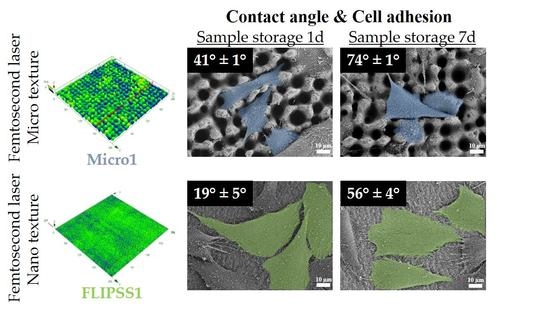
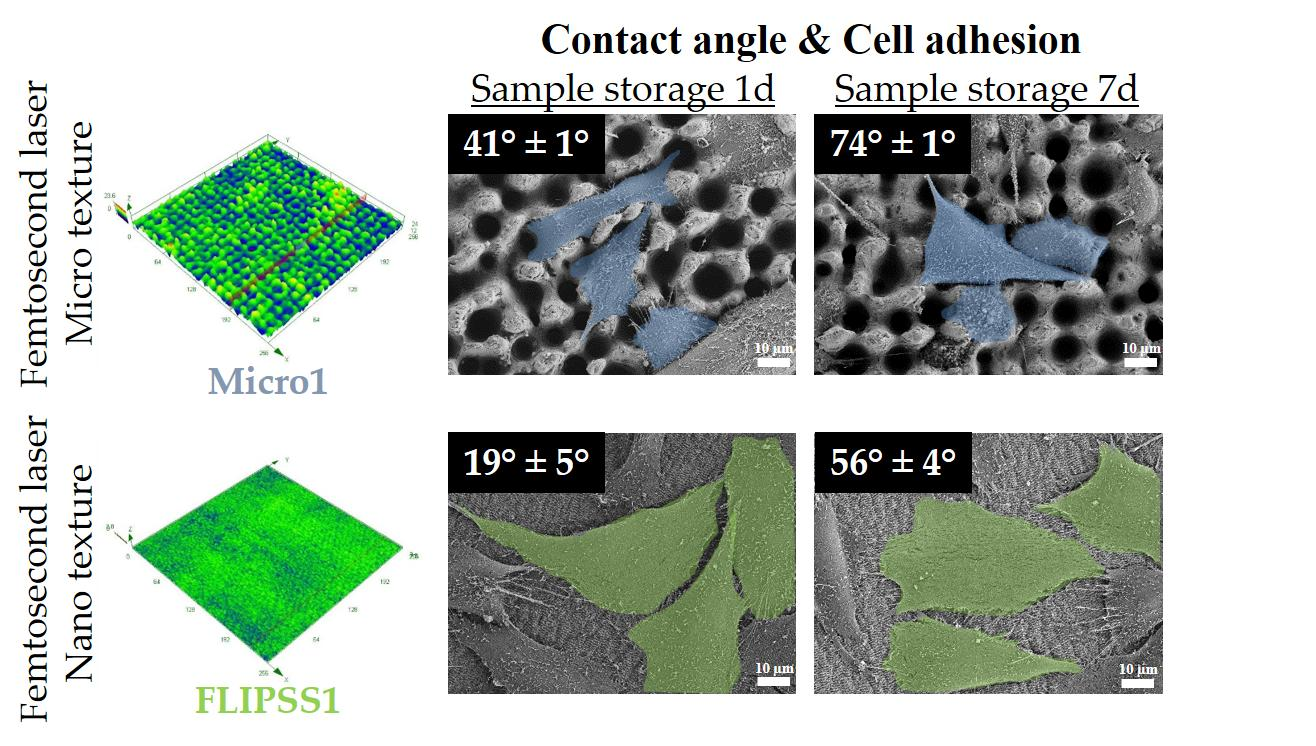
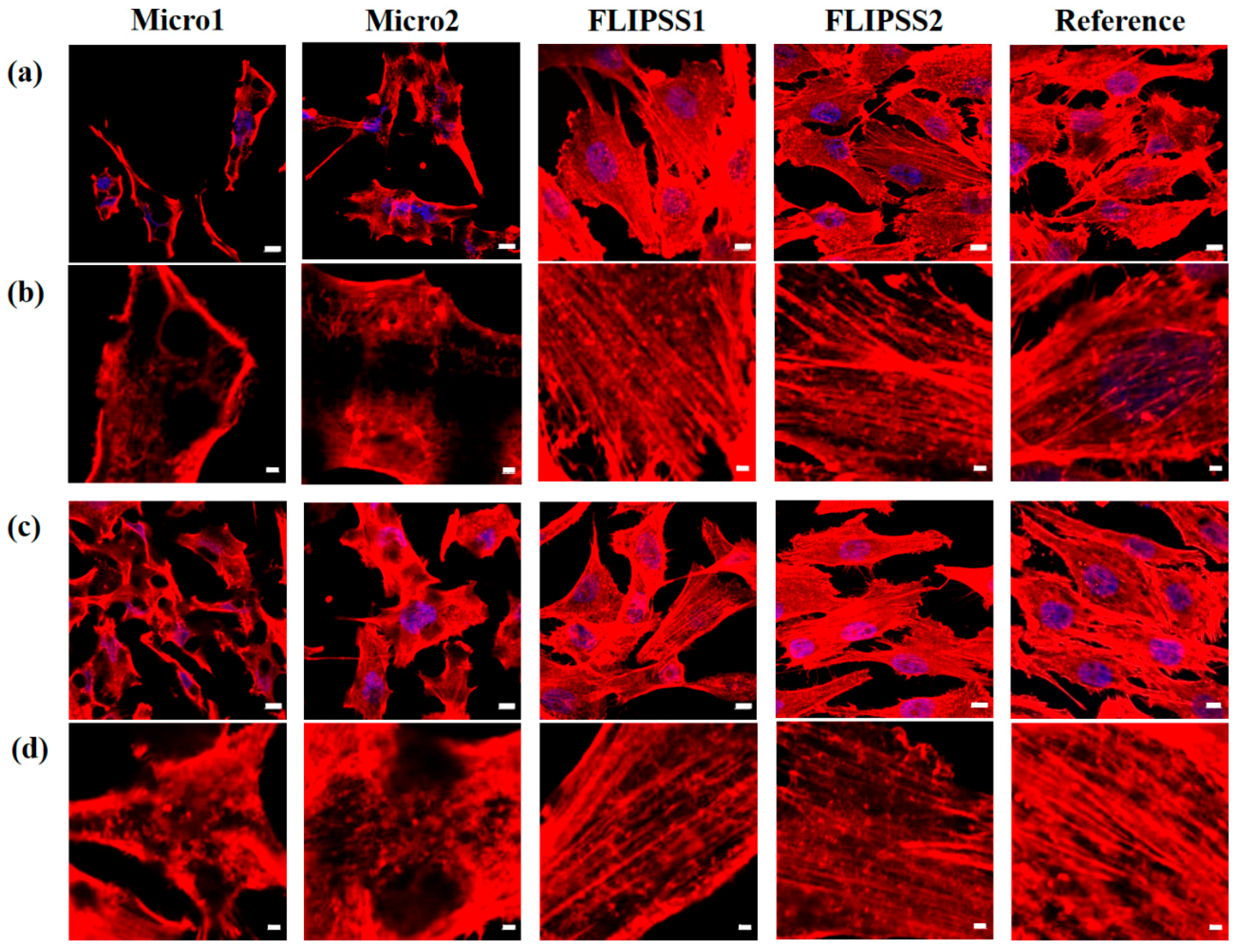
Nano- and microstructured titanium surfaces have recently attracted attention in the field of regenerative medicine because of the influence which surface characteristics such as roughness and wettability can have on cellular processes. This study focuses on the correlation of surface properties (wettability and nano/micro texture) of laser-structured Ti6Al4V samples with pronounced cell adhesion. Samples were structured with multiple laser parameters in order to create a range of surface properties. Surface characterization was performed by contact angle measurements 1 and 7 days after laser processing. The arithmetic mean roughness of the material surface in an area (Sa) was determined by means of confocal laser scanning microscopy (CLSM). Immediately after wettability tests of the laser-structured surfaces, in vitro experiments with human MG-63 osteoblasts were carried out. For this purpose, the cell morphology and actin cytoskeleton organization were analyzed using CLSM and scanning electron microscopy. On rough microstructures with deep cavities, the cell growth and spreading were inhibited. An improved cellular adhesion and growth on nanostructured and sinusoidal microstructured surfaces could be demonstrated, regardless of hydrophilicity of the surfaces.
Keywords: Ti6Al4V; femtosecond laser; microstructure; osteoblasts; morphology; actin cytoskeleton Ti6Al4V; femtosecond laser; microstructure; osteoblasts; morphology; actin cytoskeleton
Graphical Abstract