Next Article in Journal
Femtosecond Laser Nano/Micro Textured Ti6Al4V Surfaces—Effect on Wetting and MG-63 Cell Adhesion
Previous Article in Journal
Generalized Softened Variable Angle Truss Model for RC Hollow Beams under Torsion
Article

Surface Roughness Characterisation and Analysis of the Electron Beam Melting (EBM) Process

Department of Management and Production Engineering (DIGEP), Integrated Additive Manufacturing Center (IAM), Politecnico di Torino, Torino 10129, Italy
*
Author to whom correspondence should be addressed.
Materials 2019, 12(13), 2211; https://doi.org/10.3390/ma12132211
Received: 5 June 2019 / Revised: 5 July 2019 / Accepted: 8 July 2019 / Published: 9 July 2019
(This article belongs to the Section Manufacturing Processes and Systems)
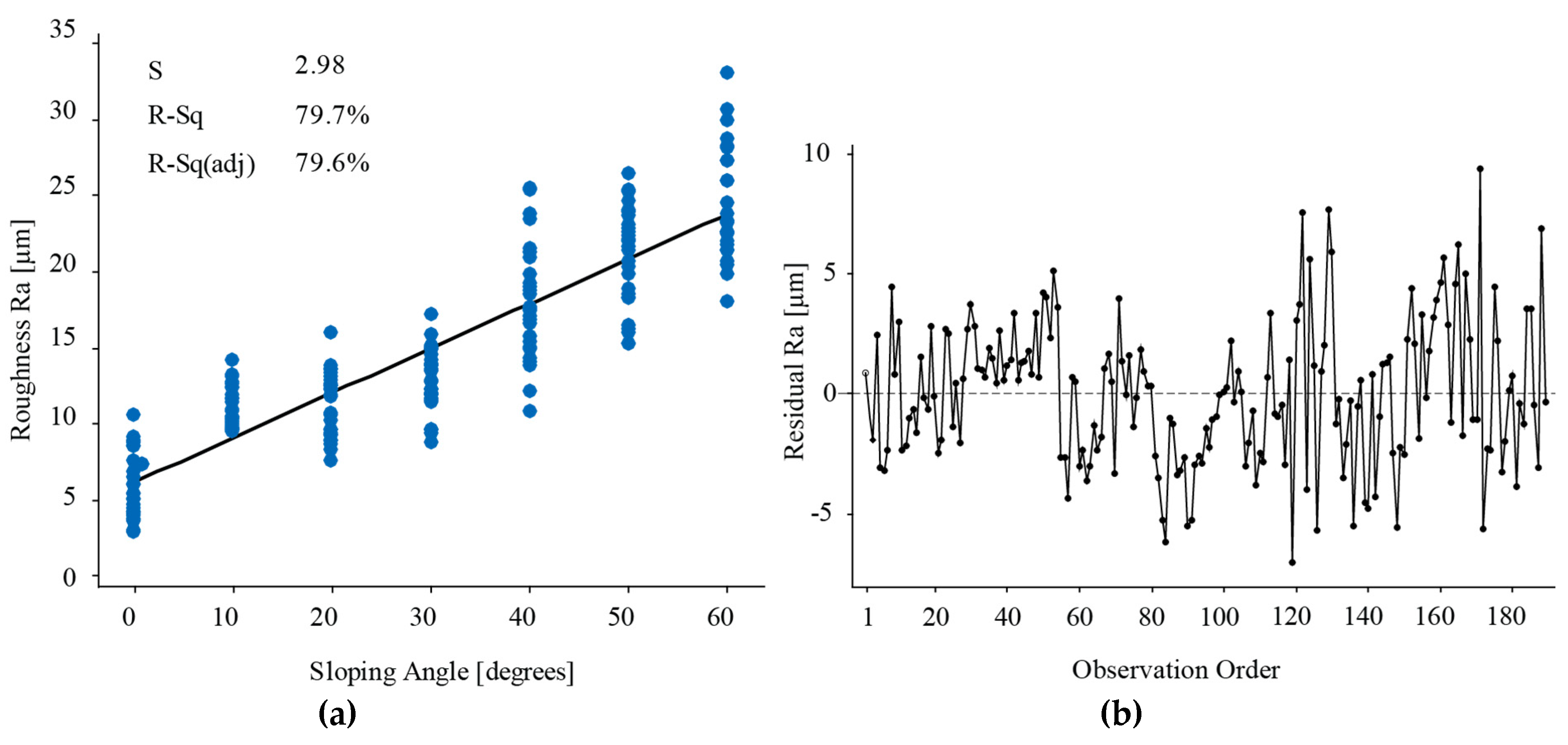
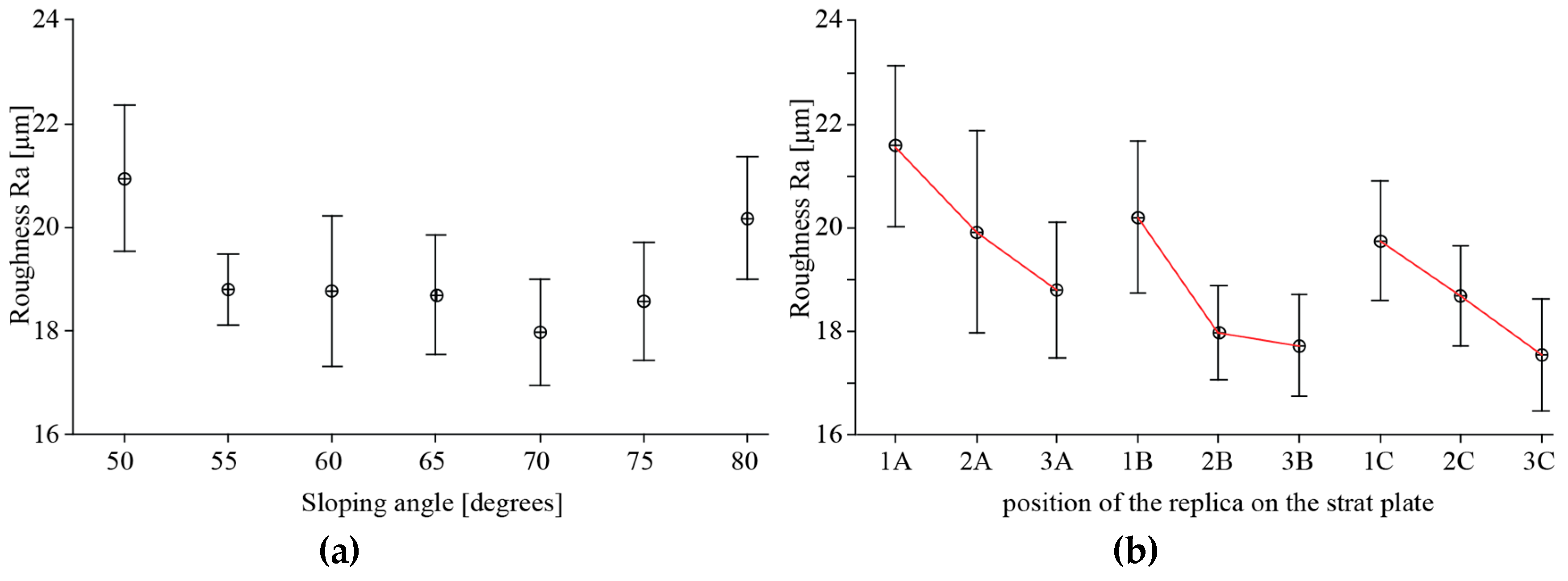
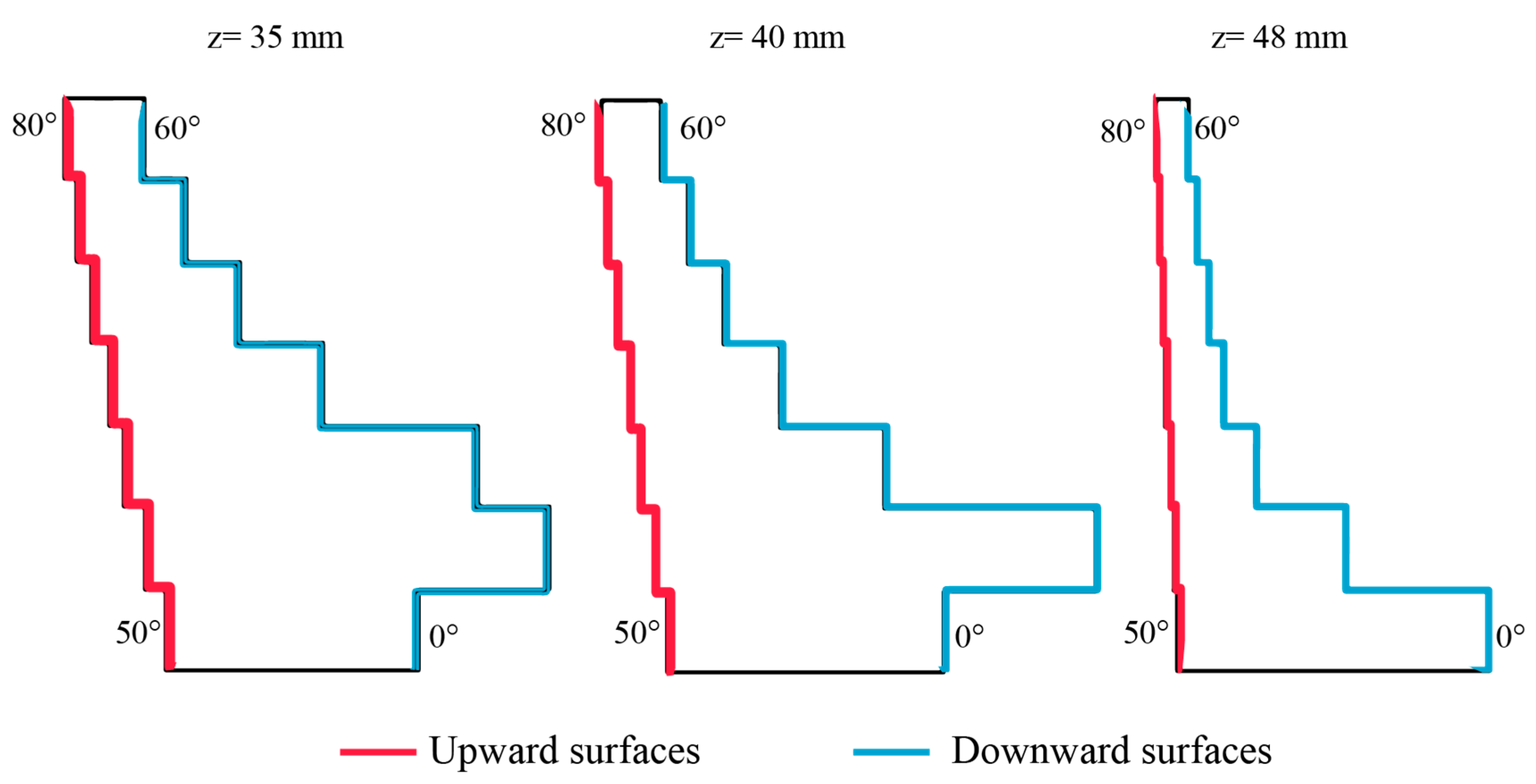
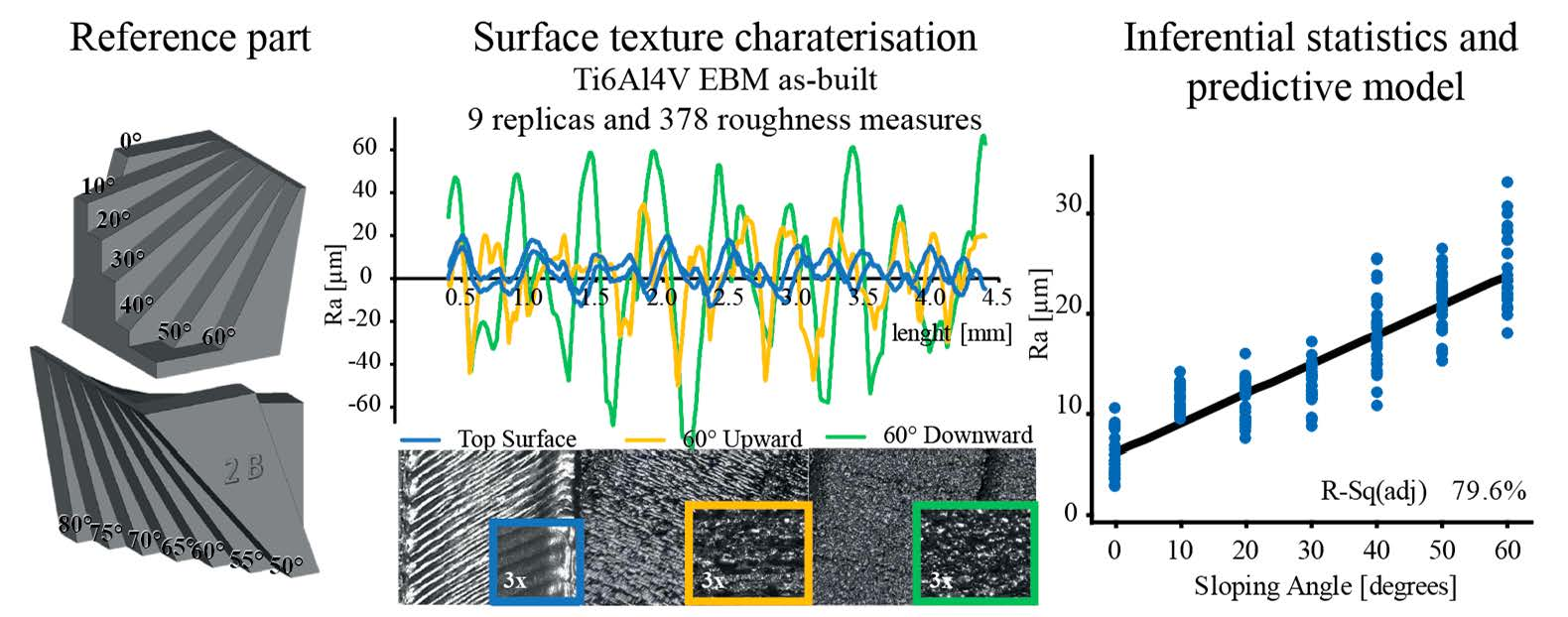
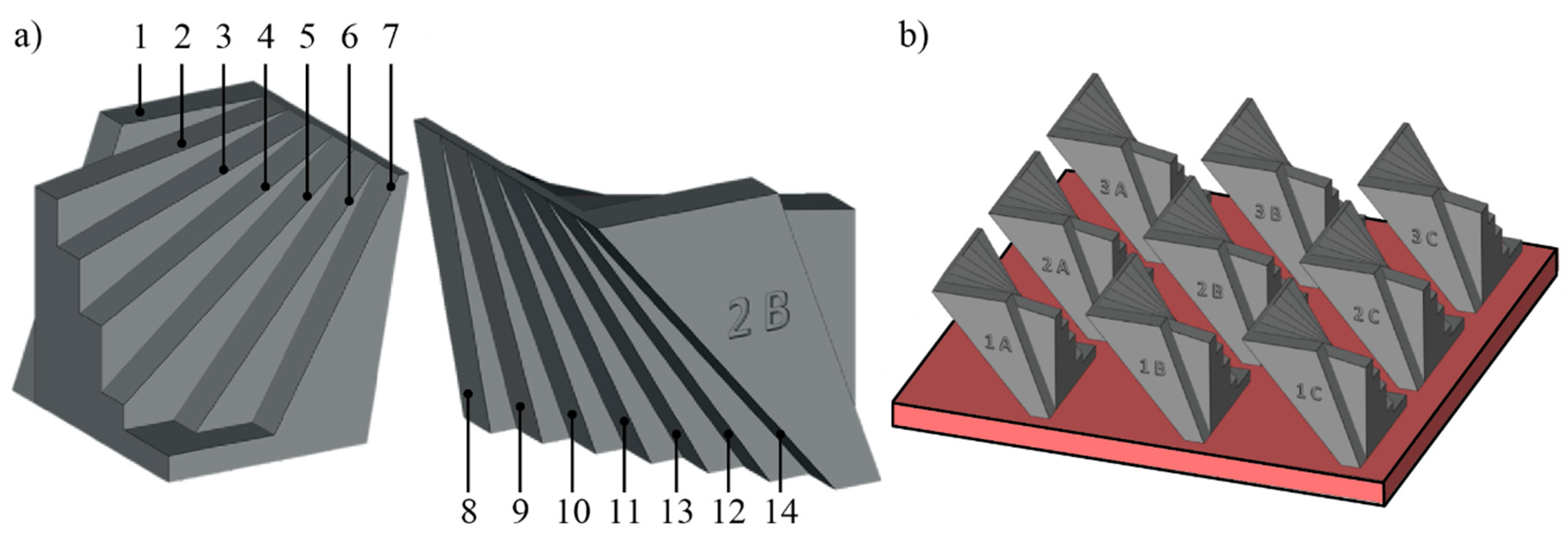
Electron Beam Melting (EBM) is a metal powder bed fusion (PBF) process in which the heat source is an electron beam. Differently from other metal PBF processes, today, EBM is used for mass production. As-built EBM parts are clearly recognisable by their surface roughness, which is, in some cases, one of the major limitations of the EBM process. The aim of this work is to investigate the effects of the orientation and the slope of the EBM surfaces on the surface roughness. Additionally, the machine repeatability is studied by measuring the roughness of surfaces built at different positions on the start plate. To these aims, a specific artefact was designed. Replicas of the artefact were produced using an Arcam A2X machine and Ti6Al4V powder. Descriptive and inferential statistical methods were applied to investigate whether the surface morphology was affected by process factors. The results show significant differences between the upward and downward surfaces. The upward surfaces appear less rough than the downward ones, for which a lower standard deviation was obtained in the results. The roughness of the upward surfaces is linearly influenced by the sloping angle, while the heat distribution on the cross-section was found to be a key factor in explaining the roughness of the downward surfaces. View Full-Text
Keywords: Ti6Al4V; roughness; electron beam melting (EBM); surface texture; part orientation; metal additive manufacturing Ti6Al4V; roughness; electron beam melting (EBM); surface texture; part orientation; metal additive manufacturing
Show Figures

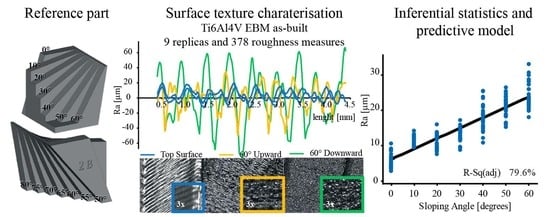
Graphical abstract

MDPI and ACS Style

Galati, M.; Minetola, P.; Rizza, G. Surface Roughness Characterisation and Analysis of the Electron Beam Melting (EBM) Process. Materials 2019, 12, 2211. https://doi.org/10.3390/ma12132211

AMA Style

Galati M, Minetola P, Rizza G. Surface Roughness Characterisation and Analysis of the Electron Beam Melting (EBM) Process. Materials. 2019; 12(13):2211. https://doi.org/10.3390/ma12132211
Chicago/Turabian Style

Galati, Manuela, Paolo Minetola, and Giovanni Rizza. 2019. "Surface Roughness Characterisation and Analysis of the Electron Beam Melting (EBM) Process" Materials 12, no. 13: 2211. https://doi.org/10.3390/ma12132211
Find Other Styles
Note that from the first issue of 2016, MDPI journals use article numbers instead of page numbers. See further details here.

Article Access Map by Country/Region

1
Back to TopTop